It’s possible that I shall make an ass of myself. But in that case one can always get out of it with a little dialectic. I have, of course, so worded my proposition as to be right either way (K.Marx, Letter to F.Engels on the Indian Mutiny)
Iran won’t have to wait for inspectors, certifications, or a long diplomatic victory lap to start earning oil revenue again.
Under the agreement expected to formally end the war between the United States and Iran, Tehran will be allowed to immediately resume oil and fuel sales, according to people familiar with the deal who spoke to the Wall Street Journal. The sanctions relief takes effect as soon as the agreement is signed and extends beyond crude exports to include the banking, shipping, and insurance services needed to move those barrels to market.
That detail may prove to be one of the most consequential parts of the entire agreement.
Oil sanctions are only effective if buyers can't pay, tankers can't ship, and insurers won't touch the cargo. By waiving restrictions across the entire supply chain, Washington is effectively giving Iran access to international energy markets from day one rather than months down the road.
Iran holds some of the world's largest oil and gas reserves and was producing well over 3 million barrels per day before the conflict. Much of that production has remained constrained by sanctions, infrastructure limitations, and wartime disruptions. The prospect of Iranian barrels returning to global markets in meaningful volumes could reshape supply expectations just as consumers and governments remain focused on energy security after months of turmoil in the Middle East.
The move also marks a striking shift in U.S. policy. Washington spent years tightening restrictions on Iran's energy sector. Now, the Trump administration appears prepared to use oil revenues as a financial incentive to secure a lasting end to the conflict.
The oil could potentially start flowing the moment the ink dries without the expected waiting period.
By Julianne Geiger for Oilprice.com
Iranian Tankers Begin to Move Out Past U.S. Blockade Line
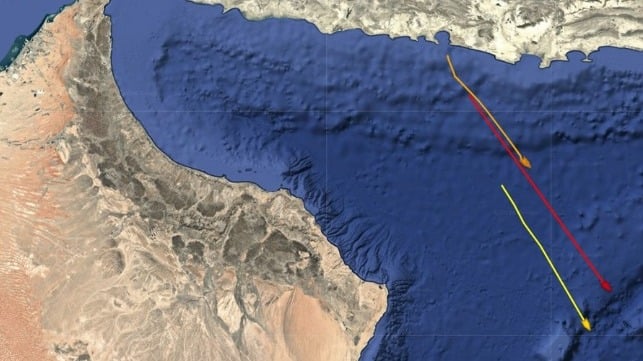
Sonia I, Diona and Hero2 (orange, yellow and red, respectively) exit the Gulf of Oman past the American blockade line (Pole Star Global)
For weeks, TankerTrackers.com has been flagging a steady drip of empty "shadow fleet" tankers working their way around the U.S. Navy blockade line and into Iranian waters, despite the clear and potentially deadly risk of a kinetic strike. The numbers have been small, but give a signal of Iran's high motivation to get more floating storage capacity into the Arabian Gulf. Now, the consultancy is seeing early movement in the other direction: full Iranian tankers are exiting the blockade for the first time in months.
U.S. Central Command advises that the waterway is still under blockade until June 19, but a handful of Iranian tankers are turning on their AIS transponders and making the outbound run. On Tuesday, TankerTrackers.com spotted two Iranian-owned VLCCs, the NITC tankers Diona (IMO 9569695) and Hero2 (IMO 9362073), exiting out past the U.S. Navy blockade line at the east end of the Gulf of Oman. Another NITC tanker, the Suezmax Sonia I (IMO 9357365), followed shortly after, confirmed by data from Pole Star Global.
"These are Iran's first crude oil exports in two months," the consultancy observed. The results were broadly confirmed by Kpler, which identified four Iran-linked tankers exiting the Gulf of Oman.
The transits are perhaps the most definitive sign yet of loosening navigational restrictions in the strait. Other signs are more questionable: NBC News reports that Iranian forces have continued to launch small-scale drone attacks at ships in the Strait of Hormuz in the days since the MOU was signed. Central Command's Joint Maritime Information Center (JMIC) continues to advise shipping of a "substantial" risk to navigation in the area.
Tanker owners are diverting substantial tonnage in ballast towards the Mideast in order to be ready to seize the moment when the Strait of Hormuz reopens. Goldman Sachs estimates that more than 800 million barrels of tanker capacity is within five days' sailing distance of the strait, ready to load stored oil and deliver it to market.
"VLCCs signaling the UAE as their next destination are tracked sailing from as far as the South China Sea and across the Indian Ocean," assessed tracking consultancy Windward in a market note. "At least 23 VLCCs are currently heading for the UAE ports of Khor Fakkan or Fujairah based on their AIS messages, joining at least 30 already at anchorage there."
War risk cover appears to be a hurdle, as it often is in conflict zones. The Trump administration is said to be encouraging insurers to begin providing commercially viable cover for the strait as quickly as possible, and has considered a possible "VIP pass" system with a pay-for element that would give shipowners access to U.S. Navy escorts, according to Politico - a security benefit that has not hitherto been available.
"Most shipowners appear to be cautiously awaiting more details before planning new transits of the Strait of Hormuz," BIMCO chief analyst Niels Rasmussen told CNBC. "They will seek reassurance that transits are not only permitted but also safe before sending their ships through the strait."
Hong Kong-Flagged Tanker Hit and Damaged in Strait of Hormuz
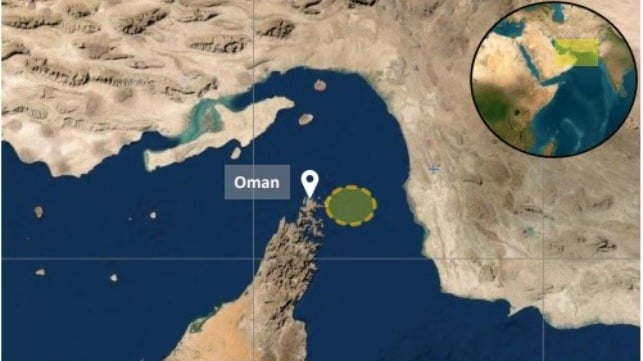
Iranian forces appear to have hit another tanker on the Omani side of the Strait of Hormuz, according to maritime security sources.
Vanguard Tech reports that on Friday, a Hong Kong-flagged tanker was struck by a projectile at a position about six nautical miles off the coast of Oman, while outbound on the east side of the strait. The vessel was using the U.S.-managed southern corridor.
The impact hit the port bow at about 0230 hours local time, damaging a ballast tank and causing a cargo leak. However, the crew were still safe and no injuries were reported. The ship carried on and reached Fujairah's anchorage, where it awaited a damage inspection. An investigation into the cause is under way.
UKMTO confirmed the attack, but withheld the vessel's name.
The U.S. military has been conducting its own strikes to enforce its own blockade on Iranian ports. Central Command hit three tankers in three days last week, including the strike on the Settebello, which killed three Indian nationals.
U.S. forces continue to operate a covert version of the "Project Freedom" overwatch program for foreign-flagged shipping in the strait, with modest success. Iran declared the complete closure of the waterway last week and is believed to be attempting to enforce the shutdown. Under the circumstances, IMO Secretary General Arsenio Dominguez has called for a moratorium on transit attempts. "[Seafarers] must not be exposed to conditions where the risks are known, significant, and clearly beyond mitigation," he warned.
Oil Tankers Reverse Course on Hopes of Hormuz Reopening
Two tankers that were heading to Africa have changed course and are now moving to the Middle East, Bloomberg reported today, citing ship-tracking data.
One of the tankers, a Suezmax, which was originally sailing for Gabon, is now signaling its destination as Fujairah, the UAE port just outside the Strait of Hormuz, Bloomberg said. The other vessel, a very large crude carrier, was originally en route to South Africa but is now also signaling Fujairah as its destination.
News about a peace deal between the United States and Iran in the making sent oil prices tumbling earlier this week but uncertainty about actual progress and the timeline for normalization of tanker flows via the Strait of Hormuz capped gains. Even so, reports about tanker and LNG vessel movements suggest a strong degree of optimism in the industry.
Meanwhile, oil tanker owners and operators are cautiously optimistic, but they will wait until they see a “material” agreement and safety guarantees before returning to the world’s critical oil and gas chokepoint, Jotaro Tamura, chief executive officer at Mitsui OSK Lines, the world’s largest tanker operator, told the Financial Times earlier this week.
“Given the experiences in the last couple of months, I think it’s reasonable to assume that it may take at least a couple of weeks or if not a month,” Tamura told FT in an interview published on Tuesday.
“What will have to come in place is not just a simple agreement between the relevant countries, but it has to be material and translated into the real situations in the Strait of Hormuz, so that shipping lines can make themselves comfortable to go through,” the executive added.
On the other hand, the chief executive of Frontline earlier this month told CNBC he expected a quick rebound in tanker traffic once Hormuz reopens. “I’m actually very optimistic the minute the tide turns, and the U.S. and Iran have found some sort of agreement, at least not to attack shipping, that those transits are going to resume pretty quickly,” Lars Barstad said.
By Irina Slav for Oilprice.com
World's Largest Tanker Operator Cautions Against Hormuz Rush
The U.S.-Iran deal has raised hopes that the oil supply disruption in the Middle East could be nearing its end, but the biggest international tanker operators aren’t rushing to return to the Strait of Hormuz.
Oil tanker owners and operators are cautiously optimistic, but they will wait until they see a “material” agreement and safety guarantees before returning to the world’s critical oil and gas chokepoint, Jotaro Tamura, chief executive officer at Mitsui OSK Lines, the world’s largest tanker operator, told the Financial Times.
Since the U.S.-Iran agreement was announced this weekend, shipping companies have made it clear that they will wait until the deal is formalized on Friday before attempting to cross the Strait of Hormuz. Even for shipowners who are willing to make the crossing, organizing insurance and other practical issues could further delay the recovery.
“Given the experiences in the last couple of months, I think it’s reasonable to assume that it may take at least a couple of weeks or if not a month,” Mitsui OSK Lines’ Tamura told FT in an interview published on Tuesday.
“What will have to come in place is not just a simple agreement between the relevant countries, but it has to be material and translated into the real situations in the Strait of Hormuz, so that shipping lines can make themselves comfortable to go through,” the executive added.
Tamura spoke to FT before the deal was announced, but Mitsui OSK Lines on Monday said the company’s view of weeks until traffic resumes remains.
President Trump on Monday posted that “Ships are starting to move, many loaded up with Oil, out of the Strait of Hormuz. They are going along the Southern “Highway,” which is totally safe, secure, and pristine.”
The U.S.-Iran deal and the potentially imminent reopening of the Strait of Hormuz do not mean that oil and gas trade will quickly return to its previous levels, tanker owners and energy analysts say.
By Tsvetana Paraskova for Oilprice.com
First LNG Tanker Clears Hormuz After U.S.-Iran Deal Announcement
An LNG carrier successfully passed through the Strait of Hormuz early on Monday, the first tanker carrying energy products to clear the chokepoint since the U.S. and Iran announced a deal to reopen the Strait later this week.
The U.S. and Iran late on Sunday announced a deal to reopen the Strait of Hormuz more than 100 days after its closure. This re-opening could happen as soon as an agreement is signed on Friday. News of the deal sent oil prices tumbling early on Monday, with Brent Crude prices down to $82 per barrel, and WTI Crude falling below the $80 a barrel handle.
While tanker owners and operators remain cautious about rushing to send vessels to the area or having the ones inside the Persian Gulf move quickly toward Hormuz, one LNG tanker passed through the Strait today, carrying LNG to India.
The LNG tanker Disha cleared Hormuz and is currently in the Gulf of Oman, ship-tracking data on MarineTraffic showed. The tanker had loaded LNG from Qatar’s Ras Laffan in early March, just when the Gulf state halted LNG production and exports amid the closed Strait of Hormuz and Iranian missile hits on its LNG infrastructure at Ras Laffan.
The tanker is now en route to India, a source close to the matter told Reuters on Monday.
India has had several LNG tankers from Qatar move through the Strait of Hormuz in the past months, after securing and negotiating corridors with Iran.
Now the tentative U.S.-Iran deal and the reopening of the Strait of Hormuz could ease the traffic congestion and allow more tankers to head to the Middle East to pick up supplies. If the deal holds.
Tanker owners and operators await clearance to proceed and are not rushing to test the passage until they have assurances it is safe to do so.
“While we are aware of signs of progress towards a ceasefire, our policy remains unchanged; we will only resume navigation once safety has been fully confirmed,” a spokesperson for Japan’s Mitsui O.S.K. Lines told Reuters on Monday.

No comments:
Post a Comment