Israel and Lebanese Hezbollah traded blows overnight on June 18 and June 19, despite Beirut officially being part of a peace deal between Iran and the US on June 19.
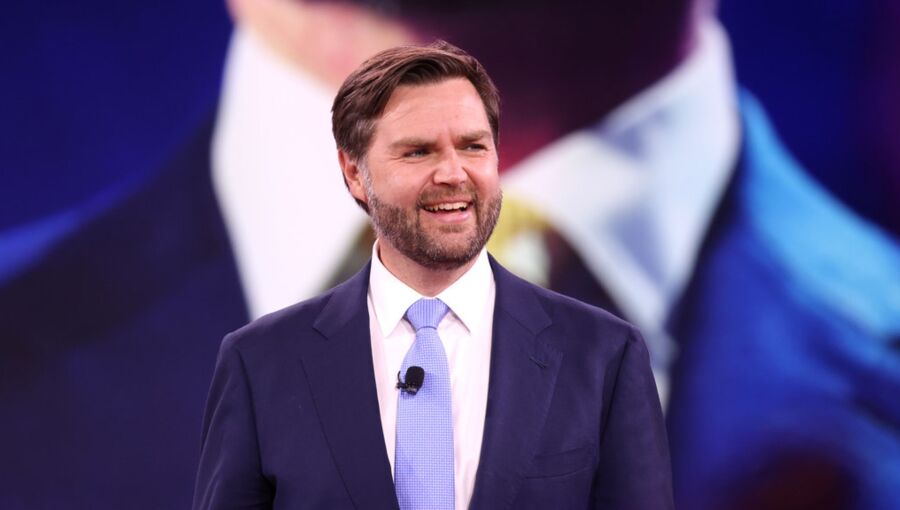
The Israeli attacks on Lebanon come as Vice President J.D. Vance postponed his trip to Switzerland for US-Iran talks on June 19 over ongoing tensions between the two sides over Israel's actions in its fight with the Lebanese militia.
The flare-up across the Israel-Lebanon border could prove to be a critical test of the fragility of the Memorandum of Understanding between the United States and Iran. It also raises questions about whether or not this fighting led to the cancellation of Vance’s trip to Switzerland. The MoU, which has been signed by both US President Donald Trump and Iranian President Masoud Pezeshkian, includes the immediate cessation of all fighting, including in Lebanon.
On the evening of June 18, the Israel Defence Forces (IDF) announced that the Israeli Air Force intercepted several rockets launched toward IDF soldiers in southern Lebanon.
“Following repeated violations of the ceasefire by the Hezbollah terrorist organisation, the IDF struck throughout the night and continues to strike Hezbollah terrorists and infrastructure sites in several areas across southern Lebanon,” the IDF wrote in a press statement.
A correspondent for Al Manar claimed that the IDF’s airstrikes targeted Al-Jabbour, Doueir, Habboush, Nabatieh, Toul, and Zebdine. Four people were killed, according to local Lebanese media.
Amid the exchanges, Hezbollah warned the Lebanese government against collaborating with Israel in an effort to combat the Shi’ite group, Al-Akhbar reported.
“To facilitate the success of the Iranian-American negotiations in Switzerland, particularly regarding the first clause of the Iranian-American memorandum of understanding, and with reference to US President Donald Trump’s statement about a ceasefire between Israel, Lebanon, and Hezbollah, I reaffirm Lebanon’s position and Hezbollah’s commitment to the ceasefire, as long as Israel adheres to it fully and comprehensively,” Lebanese Parliament Speaker Nabbi Behri announced in a public address.
During the late hours of June 18, the White House announced that Vance had decided to postpone his trip due to logistical reasons.
In a press conference on June 18, Vance said the ongoing fight between Israel and Hezbollah, noting that the deal with Iran includes Lebanon, but admitted skirmishes were ongoing between the two.
Israeli critics of any deal, “My message to them would be twofold. No 1: Donald J Trump is the only head of state in the entire world who is sympathetic to the nation of Israel at this moment in time,” Vance told journalists.
“If I was in the cabinet of the Israeli government, I might not be attacking the only powerful ally that I have anywhere left in the entire world.“
He said he would also remind those cabinet members that two-thirds of the defensive weapons that have protected Israel “have been built by American hands and paid for by American tax dollars”.
According to recent released military funding accounts, the US provides Israel with roughly $4bn in military assistance a year, but the two countries are negotiating a new agreement which would bring Israeli military gear under American control.
“The problem for Israel is not Donald J Trump, and anybody in Israel who thinks their biggest problem is the president of the United States needs to wake up and smell the reality of the situation that the country is in,” Vance said.
"The US delegation has been prepared to depart at the first available opportunity. But the logistics of these negotiations have never been simple or predictable," the White House press statement read
Kallas Israeli ‘Apartheid’ Row Boosts Her Stature – Analysis
.jpg)
EU's top diplomat, Kaja Kallas.
June 19, 2026
By EurActiv
By Eddy Wax
(EurActiv) — It has played badly in Berlin, but the diplomatic spat between Kaja Kallas and Israel might well end up playing in her favour.
The EU foreign affairs chief has been widely viewed as soft on Israel. But in recent weeks, that perception has begun to change, in no small part due to a row between her and Tel Aviv that exploded into the open as she was celebrating her 49th birthday in Brussels.
Gideon Sa’ar said he was cutting off all ties with the Kallas on Thursday, six days after Euractiv revealed she had likened Israel’s treatment of Palestinians to South African apartheid.
When asked about her stance on ‘apartheid’ in the West Bank at Thursday’s European summit, she refused to comment on remarks she made behind closed doors.
“I can’t fight the shadows all the time,” she said, urging journalists to focus on her public statements on Israel, which do not mention apartheid, as it is not official EU policy.
Kallas’ critics point to her native Estonia’s warm ties with Israel – a relationship that remains politically relevant because her party still governs in Tallinn – and her deal with Benjamin Netanyahu’s government to get humanitarian aid into the Gaza Strip without coordinating with the Berlaymont.
She has also been criticised for focusing exclusively on the war in Ukraine since taking the job in late 2024.
Her latest diplomatic row comes as Kallas fends off internal attacks from within the European Commission in a foreign-policy turf war that pits Ursula von der Leyen against her smaller, much less well-resourced European External Action Service.
The spat will help Kallas put more political distance between herself and the German von der Leyen, who is still viewed as resolutely pro-Israel.
Iratxe García, the European Parliament’s socialist chief, who is no natural ally of Kallas, even reposted her statement rebutting Sa’ar’s criticism.
Barry Andrews, a senior Irish MEP who argues that Israel is guilty of apartheid in the West Bank, said Kallas is “moving in the right direction”.
Kallas has stood up for the “many” foreign ministers she said this week have demanded that the Commission come forward with a list of legal options for banning trade with illegal Israeli settlements, something von der Leyen and other commissioners are reluctant to do.
Election mode
Antonio Tajani, the Italian foreign minister, put the Israeli diplomatic escalation in the context of the upcoming October elections in Israel. Netanyahu and his allies, like Sa’ar, are fighting tooth and nail to remain in power.
“It’s absolutely domestic politics… since the elections are coming and this is part of the campaign,” said Maya Sion Tzidkiyahu, director of Israel-Europe Relations Program, Mitvim Institute, an Israeli think tank.
“Yet it has to be said that the word ‘apartheid’ could not be ignored by any foreign minister in Israel,” she added.
The upcoming elections are also a reason why some EU governments are hesitating on imposing sanctions on two far-right ministers in Netanyahu’s government, Itamar Ben-Gvir and Bezalel Smotrich.
About EurActiv
EurActiv publishes free, independent policy news and facilitates open policy debates in 12 languages.

No comments:
Post a Comment