BRINGING THE WAR HOME
Massive drone attack puts Moscow in flames during G7 summit
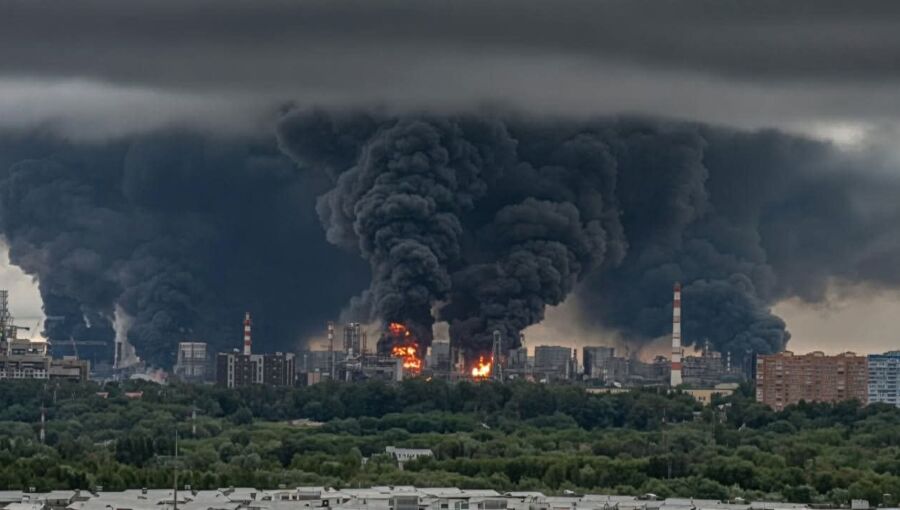
Russian authorities reported intercepting at least 200 Ukrainian drones targeting Moscow during the early hours of June 18, making it the largest drone attack on the Russian capital since the start of the war, according to official statements and regional authorities.
Ukraine has steadily expanded the scale and range of its long-distance drone campaign against Russian military, energy and infrastructure targets.
Earlier this month, the flagship Saint Petersburg International Economic Forum (SPIEF) kicked off as Ukraine struck Saint Petersburg oil terminals with long-range drones.
The timing of the latest attack on Moscow coincides with the G7 summit, where Kyiv is seeking additional air defence systems, weapons and political support from Western allies.
The previous largest attacks on Moscow occurred on March 11, 2025, when more than 90 drones were reportedly intercepted, and on May 17, 2026, when authorities reported shooting down more than 120 drones, according to The Bell.
Russian military bloggers and pro-war Telegram channels argued that some targets inevitably penetrated air defences because of the scale of the attack, while maintaining that Moscow's air defence system had generally performed effectively.
One of the most significant targets appears to have been the Moscow Oil Refinery in the Kapotnya district.
Moscow Mayor Sergei Sobyanin admitted that several drones had "managed to reach" the facility. Videos widely circulated on social media showed fires and large columns of black smoke coming from the refinery's territory. The refinery is a key supplier of fuel to Moscow and the surrounding region.
Air traffic was also disrupted. All four major airports serving Moscow, Sheremetyevo, Domodedovo, Vnukovo and Zhukovsky, temporarily suspended operations during the attack. According to reports in Russian media, passengers were evacuated from some aircraft at Sheremetyevo Airport. Telegram channel SHOT estimated that a total of 527 flights were delayed or cancelled.
The latest drone attack also caused damage to civilian infrastructure. Debris from drones intercepted by Pantsir air defence systems reportedly fell on the Sadovod shopping centre, damaging one of its buildings.
In Zhukovsky district, a drone struck a residential apartment building, while in Lyubertsy, debris damaged a fitness centre and the roof of the Belaya Dacha shopping centre, which suspended operations for what management described as technical reasons. Moscow Region Governor Andrei Vorobyov reported 16 people injured.
Ukrainian President Volodymyr Zelenskiy described the operation as a "fair response" to Russian attacks on Ukrainian cities and simultaneously called for negotiations, as cited by The Bell.
Ukraine has once more brought the war to Russia’s capital, launching its biggest drone strike against Moscow since the start of the conflict, causing what may be extensive damage to the city’s main oil refinery and sparking fears of fuel shortages.
Nearly 200 drones struck targets across the city, demonstrating Ukraine’s growing drone capability, in terms of scale, frequency and range of attacks. According to Moscow Mayor Sergei Sobyanin, almost as many drones were shot down — but enough still got through to damage critical infrastructure, disrupt airports and remind Muscovites that the war is no longer confined to Russia’s border regions.
The attack on Gazprom Neft’s 240,000 barrel per day (bpd) refinery in Moscow’s southeast Kapotnya district was the most strategically significant strike. The plant supplies 40% of the capital’s fuel supply, including jet fuel to the city’s four airports.
The extent of damage is unclear, but video footage shows multiple fires sending large plumes of black smoke into the sky. According to Reuters, a 140,000-bpd crude distillation train was damaged, along with a catalytic reformer and a diesel hydrotreatment unit. Some secondary units, piping and auxiliary equipment were also affected, and storage tanks caught fire.
It was the second strike against the refinery this week – on June 16 a drone also damaged and set alight one of the plant’s crude distillation units.
Ukraine has shifted the focus of its drone campaign over the past two months, from targeting terminals and other oil export infrastructure to the country’s refineries. Rather than causing further disruptions to global fuel supply, the aim now it seems is to intensify pressure on Russia’s domestic fuel demand, not only depriving the Russian military of critical diesel but also making average motorists aware of the toll that Moscow’s war is taking on their daily lives.
The Moscow refinery was one of a number of processing plants nationwide to be targeted over the past month – a coordinated attack aimed at inflicting maximum damage to fuel supply all at once. The consensus among analysts is that over 2mn barrels per day of refining capacity — a third of the national total – has been struck by drones since late April. How much of this capacity is still offline is unclear, however.
But the recent strikes on the Moscow plant set a precedent. While previous attacks have mostly affected only fuel supply in Russia’s regions, Kyiv’s drone campaign now risks causing shortages in the Russian capital.
For now, Moscow is not facing an obvious city-wide fuel panic. There is no evidence of long queues emerging at filling stations, and fuel prices set by Russia’s integrated oil companies such as Rosneft and Gazprom Neft have seen relatively little change, as they are best positioned to absorb supply pressure for longer. But there have been sharp increases in prices charged by some independent retailers. On June 18, Russia’s Federal Antimonopoly Service asked Neftmagistral, an independent chain with around 100 filling stations in Moscow and the surrounding region, to explain why it raised the price of AI-95 gasoline by 19% in a week.
While the city may not be facing widespread panic-buying, several motorists who spoke with IntelliNews confirmed that they had stocked up on extra fuel in the wake of the June 18 attack, anticipating that prices would rise over the coming days. Authorities have taken steps to reassure the public – the mayor’s office issued a statement on the same day as the attack that fuel supply to Moscow was “proceeding as normal.”
The government has already mostly maintained a ban on gasoline exports over the past two years because of refinery disruptions. According to Reuters, the country has even begun importing fuel following the latest strikes. The government has also eased regulations regarding fuel quality – some refineries can now sell gasoline and diesel on the domestic market that falls short of the Euro-5 standard for sulphur and other emissions. While the move will enable refiners to maximise output, lower standards could cause damage to some modern vehicles.
The main question is whether Ukraine can sustain the frequency of its attacks. While today’s refineries in Russia often have similar designs as those built during the Cold War – built to withstand major aerial bombardments, the facilities will be rendered inoperable if Kyiv can continue striking them often enough that repairs simply cannot take place.
Ukraine’s prowess in drone technology continues to grow. The US has even sought access to the country’s homegrown drone technology, which is all the more proficient as it has been tested and refined in battlefield conditions rather than merely in laboratories. Russia’s aerial defence systems – and its own drone capabilities – have simply failed to keep up.
While Russia’s fuel supply situation for now appears manageable, risks are growing. A single damaged refinery can be worked around, but repeated strikes on core processing units, storage tanks and logistics infrastructure are harder to absorb. Ukraine does not need to collapse Russia’s entire refining system to bring the war home to Muscovites. It only needs to show that the capital’s fuel supply is vulnerable, and that the costs of the war are no longer confined to the border regions or the federal budget.
In Moscow, car ownership is high, commutes can be long and driving remains central to daily life for many of the city’s citizens. Fuel shortages or sharp price rises would therefore be felt quickly and personally, creating exactly the kind of visible, everyday grievances that can fuel civil unrest and greater war fatigue.

Ukraine's President Volodymyr Zelenskyy visits the Kyiv-Pechersk Lavra monastery and a museum complex in Kyiv to inspect the aftermath of the Russian attack.
June 19, 2026
Hudson Institute
By Can Kasapoğlu
1. Battlefield Assessment
Last week the Ukrainian battlespace continued to witness over two hundred tactical engagements each day. Russian offensives again targeted Huliaipole, Pokrovsk, and Kostyantynivka, while Lyman, Sloviansk, Kramatorsk, Orikhiv, Oleksandrivka, and Kupiansk also saw increased combat. Additionally, the Ukrainian General Staff noted that Russia used thousands of attack drones to target Ukrainian positions, rear areas, and population centers.
Russian forces reached the outskirts of Kostiantynivka from multiple directions and continued to infiltrate the city. Infantry activity emerged from the east of the city through Novodmytrivka, with additional pressure from the Berestok and Illinivka axes. Kostiantynivka is quickly becoming anotherattritional flashpoint in Donetsk Oblast. Russian forces appear to hold a manpower advantage around the city and are shifting focus to a longer campaign to capture it.
In addition to their strikes against military infrastructure, Russian forces targeted the cultural symbols of Ukrainian statehood. On June 15, Russian strikes badly damaged the Dormition Cathedral at Kyiv’s historic Pechersk Lavra monastery, a vital symbol of Ukraine’s Orthodox Christian heritage and national identity. The attack set fire to the roof of one of Ukraine’s key religious sites and formed part of a larger barrage of missiles and drones that killed at least 11 people nationwide.
The Security Service of Ukraine stated that a Shahed-type drone hit the Dormition Cathedral, which had previously suffered war damage, including during a January strike that hit monastery buildings and caves. The latest attack coincided with increased diplomacy around the Group of Seven summit in France, where President Donald Trump spoke separately with Ukrainian and Russian leaders about ending the war.
Ukraine, for its part, conducted a drone strike that forced a major refinery in southeastern Moscow to suspend operations after a fire damaged its main processing unit. The refinery is a key fuel supplier for Moscow Oblast. Though a second processing unit at the installation may recover, the attack supports Ukraine’s expanding campaign against Russia’s refining and fuel distribution network.
2. Ukraine Deepens Its Strategic Defense Ties with Europe
Ukraine continued to deepen its ties with the most prominent European defense companies. The relationship between Ukraine and its private-sector European partners now reaches beyond arms deliveries to strategic systems, including missiles, turbojet and turboprop propulsion, joint production, and deep-strike and counter-drone systems.
MBDA, a multinational European defense corporation, is among the firms moving deeper into Ukraine’s long-range strike ecosystem. The European missile manufacturer signed a memorandum of understanding with LUCH, a Ukrainian designer of components for the defense industry, to support further development of the Neptune cruise missile, including the NEPTUNE2 with deep-strike capability.
This agreement matters for two reasons. First, it links Ukraine’s wartime missile experience with one of Europe’s most important weapons developers. Second, it signals that Ukraine’s long-range strike program is moving beyond wartime emergency adaptation and toward structured industrial cooperation with European partners.
MBDA also agreed to partner with Ukrainian Armor, a defense company located in Kyiv, on deep-strike and counter-drone solutions, with a focus on technology exchange, joint production, and other possible joint ventures. Additionally, Ukrainian Armor signed a separate agreement with a Czech firm, AviaNera Technologies. This partnership covers turbojet and turboprop engines for Ukrainian missile and drone platforms, and aims to expand production, localize technologies, and explore joint ventures. This agreement will likely improve Ukraine’s propulsion capabilities, which have been a critical bottleneck for Kyiv.
Collectively, Ukraine’s agreements with its European defense partners mark a shift from arms delivery to coproduction. Kyiv is securing technology and production transfers with Europe to enable scalable defense growth. In addition to seeking weapons, Ukraine is building a European-integrated industrial base for missiles, drones, air defenses, and counter-drones.
Another Ukrainian defense technology firm, Fire Point, signed a memorandum of understanding with the German radar manufacturer Hensoldt at Eurosatory 2026, the world’s largest land and air-land defense and security trade show held last week in Paris. The agreement supports the development of the Freyja air-defense system, a mobile radar designed to detect and track more than 1,500 targets at ranges of up to 155 miles.
Under the terms of the deal, Hensoldt commits to producing, testing, and supplying the Freyja ground-based missile-defense architecture. Hensoldt’sTRML-4D radar is the most important sensor in the Freyja system. Fire Point, for its part, will have overall design authority over the system. The company will produce, test, and deliver its Fire Point FP-7 missiles and integrate the main components into the system. The Ukrainian company’s FP-7.x interceptor concept is designed for high speeds and recently passed a controlled maneuvering flight test.
This deal marks Ukraine’s attempt to move from improvised wartime air-defense adaptations to a structured missile-defense industrial program. The cooperation between Fire Point and Hensoldt demonstrates tangible progress in Kyiv’s effort to add a proven European radar layer to its defense-industrial architecture. Progress in this arena may offer Ukraine a pathway to counter Russia’s missile threat using systems built to Ukrainian requirements.
3. What to Monitor in the Coming Weeks
While Kostiantynivka has turned into a meat grinder for Russia’s invading forces, Ukraine’s hold on the city is weakening. The coming weeks will determine whether Ukrainian forces can hold critical terrain and deny Russian assaults further tactical gains.
Source: This article was published by the Hudson Institute
About Hudson Institute
Hudson Institute is a nonpartisan policy research organization dedicated to innovative research and analysis that promotes global security, prosperity, and freedom.
View all posts by Hudson Institute
Russian drones hit two foreign-flagged civilian ships in the Black Sea, Ukraine says
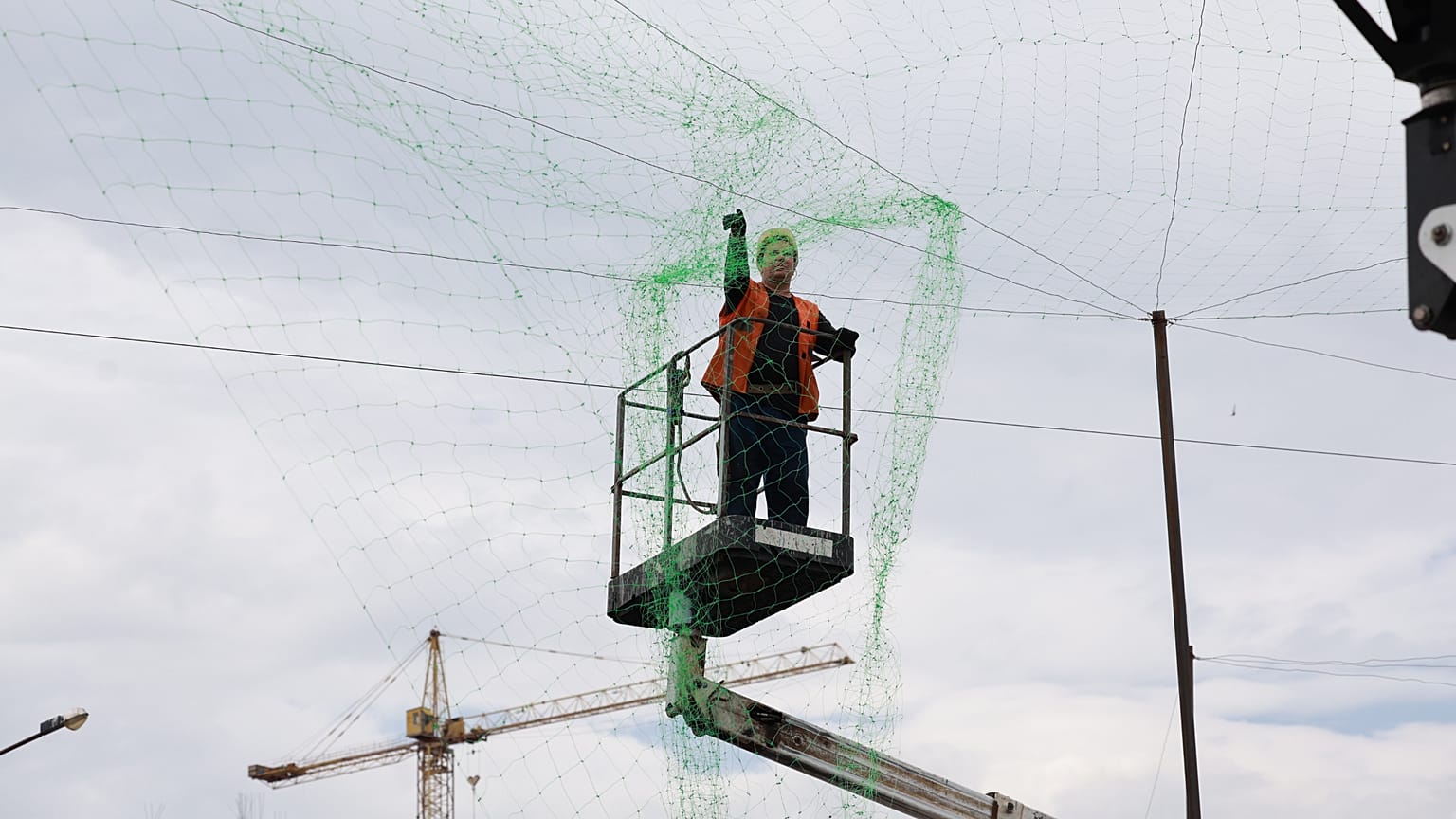
Local air defences shot down 79 of 90 Russian drones from Thursday evening into Friday morning, per Ukraine's air force.
Russian drones struck two foreign-flagged civilian ships in the Black Sea on Thursday night, Ukrainian authorities said.
According to Oleksii Kuleba, Ukraine’s Deputy Prime Minister for Restoration, the drones hit one vessel flying the flag of Saint Kitts and Nevis and one Panamanian-flagged ship, leaving one person dead and five injured. One of the injured sailors is in a critical condition, per Kuleba.
"This is yet another proof that Russia is waging a war against freedom of navigation, international trade, and global food security," he wrote.
The governor of Ukraine's Odesa region, Oleh Kiper, said the vessels were now on the move again.
The strikes came amid a wave of overnight Russian attacks across Ukraine.
Kiper said strikes in southern Odesa had resulted in a fire at a truck parking lot, killing one person and injuring four others.
At least four people were also reported to have been injured in another Russian drone strike on a minibus in the city of Kherson in southern Ukraine.
The Kherson Regional State Administration said a 46-year-old woman and three men aged 67, 46, and 59 had been taken to hospital after suffering blast injuries and shrapnel wounds in the attack.
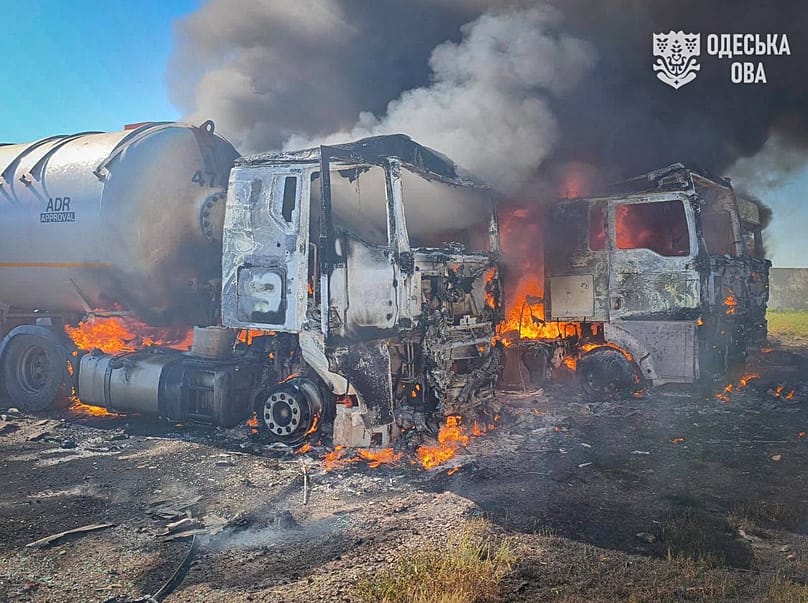
A guided bomb assault on the Kholodnohirskyi District of Kharkiv injured nine people and damaged more than 40 homes, Kharkiv Mayor Ihor Terekhov added.
Local air defences shot down 79 of 90 Russian drones from Thursday evening into Friday morning, per Ukraine's air force.
It follows a huge Ukrainian strike on a Moscow oil refinery on Thursday morning.
Video footage circulating on social media appeared to show an enormous explosion and large fire at the facility.
Ukrainian President Volodymyr Zelenskyy confirmed the strike in a post on X, calling it "a fully justified response to Russian attacks on our cities and communities".
It was the second time Kyiv had targeted the refinery this week, as it continued its efforts to hamper Moscow's energy industry.

No comments:
Post a Comment