Tuesday, July 07, 2026

Israeli Defense Ministry Comes Out Against Sale of Zim to Hapag-Lloyd
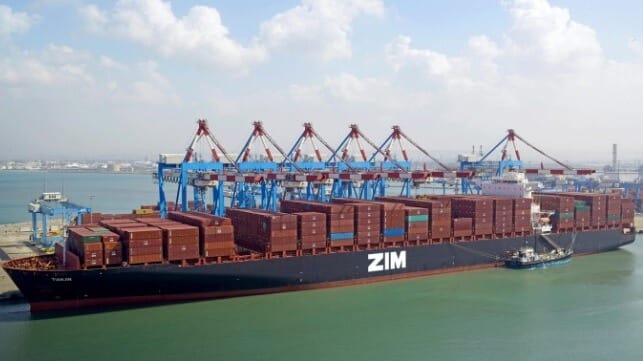
Zim containership
Opposition is building in Israel to the sale of Zim to Hapag-Lloyd and an Israeli investment firm (Haifa Port)

Published Jul 6, 2026 12:02 PM by The Maritime Executive

Opposition continues to mount in Israel to the agreed sale of Zim to Hapag-Lloyd and the formation of a smaller domestic shipping company by an investment fund. Israel’s Defense Ministry issued a statement late on Sunday saying the deal does not adequately safeguard the security interests of Israel, while media reports said Prime Minister Benjamin Netanyahu said the sale is not currently on the government’s agenda.

Israel’s Defense Ministry Director of Security Almog Cohen conducted an extensive review of the transaction and issued the opinion, which was adopted by the Defense Ministry. According to the report by the Israeli media outlet Calcalist, the Defense Ministry’s concerns center on the new Zim, which it sees as a limited shipping company. It believes the new company’s routes would be confined to the Mediterranean, significantly reducing access to the United States and the Far East.

Israel received military equipment and support from the United States and has developed supply relationships in the Far East. The review raised concerns about maintaining these supply chains and the “implications for Israel’s maritime independence.” It notes that during the war in Gaza, Israel faced shipping boycotts, sanctions, and trade restrictions, and without Zim, maintaining supply chains could be a problem

Under the terms of the sale agreement, Hapag would acquire the international services and most of Zim’s vessels, which operate under long-term charters. A small fleet of Zim-owned vessels would be maintained by the new company formed by investment firm FIMI. Others have questioned the financial strength of the new company and its ability to remain a going entity with limited routes.

Another concern that has been voiced in the past is the large investments in Hapag-Lloyd by the sovereign funds from Qatar and Saudi Arabia. Calcalist also reports that the Chilean government, which has taken a critical stance against Israel, is also among Hapag’s investors. The Ministry of Defense reportedly expressed concern that the shareholders could pressure Hapag during a future military conflict.

Israel’s Defense Minister, Israel Katz, also pointed out that the state continues to hold its Golden Share in Zim. Among the provisions, it can block a change of control of the company or the sale of assets.

Media reports said the Prime Minister responded to questions during a meeting of the Israeli parliament, saying review of the proposed transaction is currently “not on the agenda.” Media reports indicate that Hapag and Zim are preparing data from the government review, which would be required for approval and completion of the deal.

The Defense Ministry joins Israel’s Agriculture, Economy, and Transportation ministries, which have also announced opposition to the sale. Israel’s Shipping Authority has also announced its opposition, and on Sunday, the union representing Zim employees thanked the prime minister and defense ministry for joining the opposition. It said the government is taking an “unambivalent stance on the side of the Israeli economy and national strength.”

Ishay Davidi, the Chairman, CEO, and founder of FIMI Opportunity Funds, has repeatedly said the new Zim would meet all the obligations to the country and would be a strong shipping partner. Hapag has not commented on the apparent growing opposition to the acquisition.

 

Panama Canal Plans Two More Decreases in Neopanamax Draft Levels

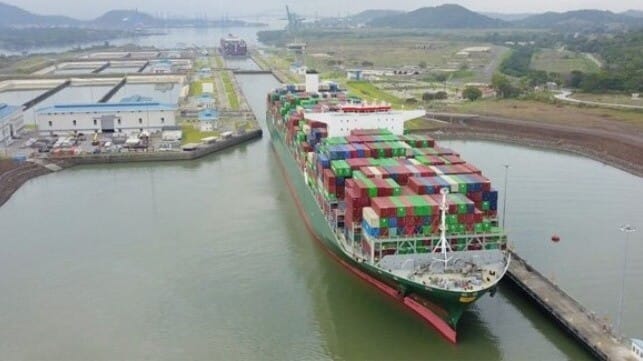
Panama Canal
Currently, the limits are for the Neopanamax locks which handle the largest vessels (ACP)

Published Jul 6, 2026 12:34 PM by The Maritime Executive


After taking what was called a preemptive step in June to lower the maximum drafts of vessels, the Panama Canal Authority announced it will step down the draft levels in two stages in July and August. It is attempting to plan and manage water levels as forecasters continue to expect one of the most severe El NiƱos in recent years.

In an announcement dated July 1, the Panama Canal Authority reports the steps are part of a water management strategy. It says it is closely monitoring water levels in Gatun Lake, which is the primary reservoir of the canal’s operations.

The maximum draft for the largest vessels, which transit the Neopanamax locks, will be lowered another half a foot on July 24 to 49 feet. It further anticipates lowering the draft another half a foot on August 15 to 48.5 feet. It is falling from the normal 50-foot draft, which had been maintained this spring. 

While the restrictions are starting, they are less significant than during the prior drought in 2022-2023, when they announced repeated steps lowering the draft to the 43-to-44-foot range and going to a low of 38.5 feet. The restrictions leveled off, but instead, the number of daily transits was lowered. 

The result of the restriction last time was growing backlogs and skyrocketing bids in the auction for booked slots. Large gas carriers diverted around South America while larger containerships offloaded boxes to be transshipped across the Isthmus.

The authority hopes to avoid some of the disruptions by acting early in the management cycle. Its online dashboard shows the operations are currently running smoothly. There are 10 ships without reservations waiting as of July 6, while 65 ships with booked slots are standing by off the canal’s terminuses. Currently, the waiting time for non-booked vessels is 4 days Northbound, which is down from a peak of 11.5 days last month. Southbound, the waiting time is 1.8 days, down from a peak of 15 days in June.

Volume at the canal surged this year after the closure of the Strait of Hormuz and the disruptions in the region. There were reports of record prices being paid at the auction of available transit slots.

The Panama Canal Authority says it appreciates the continued understanding and cooperation of the maritime community.


Boskalis Repurposes Mining Ship to Largest Subsea Rock Installation Vessel

rock installation vessel
Boskalis repurposes a vessel to become the largest rock installation vessel (Boskalis)

Published Jul 6, 2026 6:28 PM by The Maritime Executive

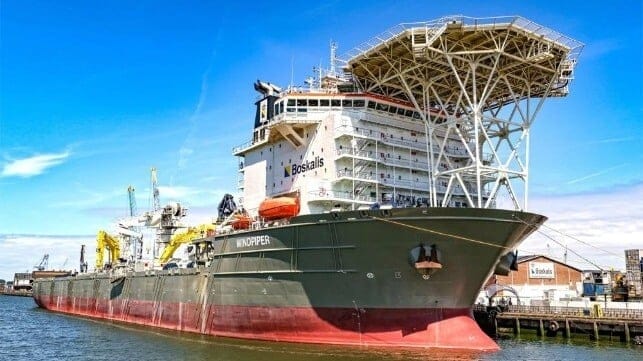
Maritime services company Boskalis celebrated the commissioning of its new vessel Windpiper, which is the largest subsea rock installation vessel. It is an interesting example of creative reuse of an existing vessel, which the company says draws on its track record in converting existing ships for new purposes.

Built in 2018 as the Mac Goliath, and later as the Nautilus New Era, the nearly 50,000-gross ton ship was designed to support offshore mining and deep-sea mining. The ship was built in China, but the original owners encountered financial difficulties, and the ship remained incomplete. Boskalis acquired the vessel in 2025 with the intent to repurpose it to support the offshore industry and specifically target offshore wind farms.


The massive ship measures 227 meters (745 feet) and is nearly 69,000 dwt. The ship was outfitted with installed power exceeding 31,000 kW. The ship is equipped with seven thrusters and DP2 positioning capabilities. It also has accommodations for up to 100 people, so in addition to its crew, it can carry project representatives and others.

In the redesign, Boskalis created two holds with a total capacity of 45,500 tons. It includes a moonpool for the fall pipe installation and features an inclined fall pipe. 

The vessel doubles Boskalis’ rock installation capacity. Further, it says the ship with its large capacity offers unique advantages as it can travel long distances between rock loading and the project site. It will be able to make fewer round trips, saving on costs and installation time.

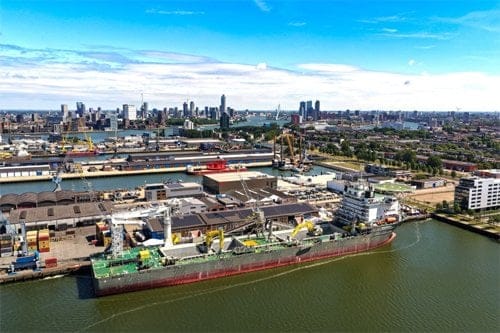
The christening took place in Rotterdam at the end of last week. This ship was also opened for public visits before its begins operations.


HII Adds Another Workboat Shipyard to its Unmanned-Vessel Program

A prototype Romulus hull under construction at Breaux Brothers (HII)

Published Jul 6, 2026 10:04 PM by The Maritime Executive

In the latest sign of the growing opportunities for smaller shipyards in the unmanned-systems sector, Huntington Ingalls Industries has contracted with a second Louisiana-based workboat yard to build its Romulus USV platform. 

Romulus is a fast, midsize USV designed to meet the Navy's MUSV program requirements: a containerized-payload carrier with a capacity of two FEU and a range of 2,500 nautical miles. It was one of seven competing designs approved to enter the "prototype evaluation phase" of the MUSV competition in May. Other competitors include Leidos, Sea Machines/St. Johns Shipbuildng, Saronic, Galliano Marine Services (Chouest), PacMar Technologies and Birdon. Those who past the Navy's underway test will receive $15 million and will be approved for follow-on production. 

To build Romulus at scale, HII set up a construction partnership with Breaux Brothers Enterprises, an aluminum-construction crewboat yard outside of New Iberia. Breaux Brothers is known for high-speed fast supply vessels, crewboats, passenger vessels, pilot boats and other working vessels; HII designed Romulus in partnership with the small yard in order to take advantage of commercial-standard hull construction methods, making the USV easily reproducible in existing small shipyard settings. HII announced in March that it would support construction of a dedicated Romulus "assembly line" facility at Breaux Brothers, centered on automated processes for high efficiency. 

"Romulus is engineered from the outset for scale," HII executive vice president Andy Green said earlier this year. "By aligning design, autonomy, and manufacturing, we are creating a production model that delivers predictable outcomes and positions us to meet growing demand for autonomous maritime capability."

In addition to Breaux Brothers, HII has now agreed to work with Halimar Shipyard to expand production of the Romulus 151. Halimar is emblematic of the promise of the Navy's new interest in USVs: it is a commercially-focused small yard in Morgan City, the historical center of the offshore oil and gas industry. Typically engaged in construction and repair for the marine towing, dredging and offshore-vessel industries, it does not have a high profile in the defense world but is known for delivering quality workboats. This puts it in good company with other new USV competitors, like Breaux Brothers, Chouest, St. Johns Shipbuilding (with Leidos) and Conrad Shipyard (with Blue Water Autonomy). 

“We are proud to partner with HII on the Romulus program and contribute to the future of autonomous maritime operations,” said William Hidalgo Jr, executive vice president and chief operating officer, Halimar Shipyard. “Our team has decades of experience building high-quality vessels, and we look forward to applying that expertise to help deliver reliable, scalable production capacity that supports evolving mission needs.”


Lockheed Buys Sub-Hunting Sonar Firm

Ultra Maritime


Ultra Maritime's Sea Spear, a covertly-deployable seabed sonar array for hunting submarines (Ultra Maritime)

Published Jul 6, 2026 
 by The Maritime Executive


American private equity firm Advent has exited its investment in British subsea acoustic sensing company Ultra Maritime, selling the sonobuoy and sonar maker to Lockheed for $3.45 billion - within the approximate range of the price paid for its purchase and improvement, after accounting for inflation.

In 2022, Advent secured UK government permission to buy Ultra Electronics, acting through Advent's UK-based subsidiary Cobham. The $3.1 million deal gave Advent access to sophisticated sonar technology and a team of experienced anti-submarine warfare engineers. The UK green-lit the proposal, with the understanding that the facilities that supply cutting-edge subsea technology to the Royal Navy would remain in place and under separate governance.

"When we invested in Ultra Maritime in 2022, we saw a business with mission-critical technology . . . but one that had been underinvested and was not yet fully delivering for its customers," said Shonnel Malani, Managing Partner at Advent. "Ultra Maritime is now a stronger, more innovative partner to allied navies."

The sale is meaningful for the U.S. Navy, the Royal Navy and their allied partners, as it puts Lockheed in control of some of the most innovative submarine- and UUV-hunting equipment on the market. Ultra has a portfolio of hull-mounted sonars, towed sonar arrays and advanced sonobuoys, all required equipment for ASW. It is the only maker of G-size sonobuoys, built extra-small for deployment from unmanned aircraft - an affordable way to deliver acoustic sensing capabilities to track opponents' subs. General Atomics is integrating these sonobuoys into the MQ-9B SeaGuardian platform; the combined capability is designed to meet the Royal Navy's requirements for detecting Russian subs in the North Sea.

It also makes more exotic products, like the Sea Spear UUV-deployable subsea sonar array, which can be installed covertly and can persist on the seabed until recovered. The device is intended for insertion in difficult, demanding environments where traditional means of deployment are impractical. Ultra plans to work with autonomous-tech defense startup Anduril on the concept of operations.

The sale of Ultra Maritime is Advent's latest divestment from its Cobham division, which it bought in 2020 for $4 billion and has been streamlining through spin-offs of individual business units. Previous Cobham divisions sold include Aviation Services, Aerospace Connectivity and Missions Systems, among others, collectively resulting in revenue of more than $7 billion.


Authorities in Turkey Turn Away Gay Cruise, Citing "Moral Values"

HUMAN RIGHTS 

VS 

RELIGIOUS RITES

Scarlet Lady
File image courtesy Virgin Voyages

Published Jul 5, 2026 11:45 PM by The Maritime Executive

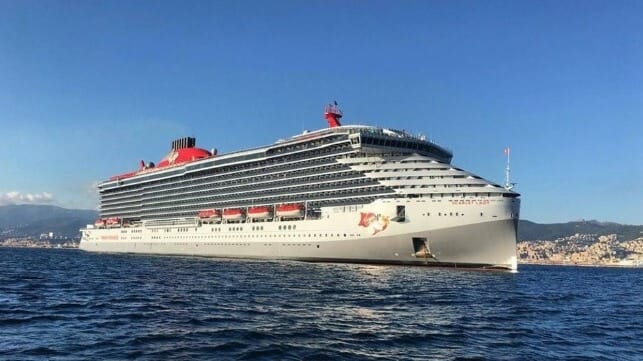
Local authorities in Turkey have decided to temporarily ban the cruise ship Scarlet Lady from calling in Istanbul and Kusadasi, forcing the organizers of the ship's LGBT-themed voyage to alter their itinerary.

The 2020-built Scarlet Lady is currently operating under charter to Atlantis Events, an organizer of gay and LGBT-themed vacations; the company is well-known, with more than 35 years of experience in its travel segment. The latest Atlantis voyage on Scarlet Lady was scheduled to depart July 5 from Athens, calling at Mykonos before arriving at Kusadasi, Turkey on the 7th. She would then head north for two days and one night in Istanbul, allowing guests an opportunity to "experience some of the city's vibrant night culture," then depart again on the 9th. 

There was one last-minute hitch, according to Atlantis: officials in Turkey decided that they did not want to have Atlantis' passengers visit their country because of who they are. In a statement, Turkish officials alleged that Atlantis is "known for behaviors incompatible with the fabric of our society and our moral values."

Provincial authorities in Aydin, home to Kusadasi, advised in no uncertain terms that there would be "absolutely no possibility of the group in question visiting our province for an event of this nature."

Atlantis has organized port calls in Turkey before, without any particular fanfare: this particular type of themed cruise is not a new idea, and the company is far from the only organizer of such voyages. But Turkey's government has been inching woards this time is different. 

"The reasoning behind it is that it’s a gay group," said Atlantis President and CEO Rich Campbell, speaking to CNN. "We are not there for anything except to spend money, have a good time, take tours and be incredibly respectful to every culture we visit."

Instead of visiting Turkey, Scarlet Lady will make a port call in Alexandria, Egypt and another on the island of Crete. Calls in Dubrovnik, Zadar and Trieste remain on the schedule. 

Broadway actress Patti LuPone, who is booked to perform on board, wrote a note of protest following the Turkish decision. "I am furious, but I am sailing, as the ship will make other ports of call. I am ready to perform for all the wonderful men on this Atlantis cruise, who deserve so much better than this," LuPone said in a social media message. 


Ukraine Strikes Russian Tankers, Ports, Refineries in Overnight Barrage

Tanker targeted in Sea of Azov
Ukraine struck two tankers in the Sea of Azov in a large coordinated campaign across Russia

Published Jul 6, 2026 3:18 PM by The Maritime Executive


Ukraine launched one of its largest coordinated attacks, coordinated by multiple units and hitting targets across Russia, as it continues to target Russia’s energy industry. In addition to hitting ports, two tankers, and refineries, Ukraine, for the first time, triggered air raid sirens in Chelyabinsk, more than 1,000 miles inside Russia.

The Commander of the Unmanned Systems Forces of the Armed Forces of Ukraine reported that they had played a key role in the attack.  He reported that on the night of July 6, they struck 47 legal military targets.

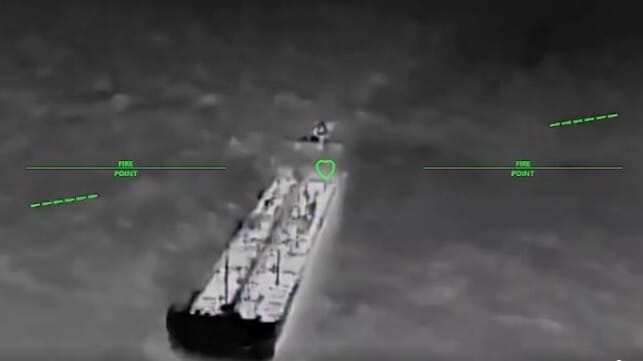
One of the focuses was on occupied Crimea. They targeted two tankers sailing in the Sea of Azov. Reportedly, the vessels were each carrying 7,000 tonnes of gasoline coming from the Taganrog area to Crimea. Images released in the video showed one of the vessels in flames.

Another target was an oil storage facility in Kerch, which Ukraine said functioned as a logistics hub to supply Russian troops in occupied Crimea. Unconfirmed reports said much of Crimea had been plunged into darkness by the attacks.


Regional Russian officials started announcing the number of drones in their areas. In Yaroslavl, the governor claimed more than 70 Ukrainian drones were shot down, and Ukraine reported hitting one of the five largest oil refineries in Russia. It was the sixth time since the start of the year that Ukraine had struck the facility, with reports of roads closed around the refinery after last night’s attack.

In the Leningrad region, the governor reported that 62 drones were intercepted. Reports said that Ukraine hit the Ust-Luga and Vysotsk seaports. Other Ukrainian targets reportedly included three aircraft hangars at the Gvardiyske air base and two Russian mobile air defense systems.

Russia’s Defense Ministry reported today that a total of 519 drones had been intercepted overnight. Russia also launched a massive attack primarily targeting the Ukrainian capital of Kyiv. Reports cited heavy damage and casualties. Ukrainian President Volodymyr Zelensky had warned earlier that Moscow was “preparing a new massive strike” and it appears that residential districts in Kyiv were hard hit.

Ukraine claimed that this year alone it has struck more than 800,000 Russian military targets. It claims to have killed or seriously wounded an estimated 167,000 Russian troops since the start of the year.

Both sides appeared to be posturing as the White House reported that Donald Trump had calls with both sides overnight, trying to renew the peace talks. Trump is also scheduled to meet with Zelensky at the upcoming NATO Summit in Turkey this week.


Drone Strike Shuts Russia's Largest Refinery as Fuel Shortages Worsen

Ukraine has landed one of its most consequential blows yet against Russia's energy sector, knocking out the country's largest oil refinery just as Moscow is scrambling to contain a widening fuel crisis.

Industry sources told Reuters that Gazprom Neft's Omsk refinery halted operations after a Ukrainian drone strike damaged key processing units at the 440,000-barrel-per-day facility. The refinery is Russia's largest gasoline producer, making the timing particularly painful for the Kremlin.

According to the sources, the attack set fire to the CDU-10 crude distillation unit, which accounts for about 38% of the refinery's processing capacity. A second major unit, CDU-11, was also shut down after damage to supporting infrastructure, although it could reportedly return to service sooner.

The refinery immediately stopped offering gasoline and diesel on Russia's St. Petersburg commodity exchange.

A few months ago, Moscow insisted fuel shortages were isolated incidents. Then came export restrictions on gasoline and jet fuel. Then President Vladimir Putin publicly admitted motorists and businesses were struggling to find fuel, convening an emergency meeting with oil executives and ordering round-the-clock government monitoring of supplies.

Now Russia's biggest refinery has gone dark.

The latest strike comes as Ukraine continues expanding its long-range drone campaign against Russia's refining network. What began with attacks on export terminals and refineries near the front has steadily moved deeper into Russian territory. Omsk, in western Siberia, sits thousands of kilometers from Ukraine.

The fallout extends well beyond Russia's borders.

Central Asian countries that rely heavily on Russian fuel have already reported shortages and higher prices. Uzbekistan has cut some flights because of jet fuel shortages, while Kazakhstan has explored fuel imports from China as insurance against further disruptions.

Russia has even begun looking abroad for supplies of its own. Last week, Reuters reported that Moscow was preparing to import jet fuel from Asia—an extraordinary reversal for one of the world's largest oil producers.

Ukraine isn't trying to destroy Russia's oil industry. It doesn't have to. It only needs to keep enough refineries offline long enough to turn fuel into one more battlefield—and one more headache for the Kremlin.

By Julianne Geiger for Oilprice.com


IMO Calls for Release of Three Ships Hijacked by Somali Pirates

Honour 25 in pirate custody (EUNAVFOR)

Published Jul 6, 2026 3:39 PM by The Maritime Executive

The IMO is growing increasingly concerned over the fate of dozens of seafarers who are currently being held for ransom by Somali pirates - including crewmembers who are suffering significant health setbacks. 

The IMO’s regional piracy initiative - formally known as the Djibouti Code of Conduct/Jeddah Amendment (DCoC/JA) - has received word from the master of the hijacked tanker Honour 25 (IMO 9109735), which was boarded and seized on April 24. All of the 17 crewmembers on board are still alive, the master reports, but conditions are difficult. Five (including the master) have health problems, and the crew are surviving on rice. They are out of safe drinking water, posing further risks to their health. Worse still, the local pirate rivalries on the Somali coast pose a new and unexpected risk to their well-being: a competing pirate action group attempted to approach the already-captured vessel, prompting the pirates aboard Honour 25 to open fire to drive them off - and potentially putting the crew at risk of violence. 

"Behind every piracy incident are innocent seafarers enduring fear, deprivation, uncertainty and prolonged psychological trauma," the committee wrote in a statement. 

The crew of the Honour 25 includes Indonesian, Pakistani, Indian and Burmese nationals, and the Indonesian government has negotiated directly with the Somali hijackers in an attempt to secure the ship's release. Indonesian foreign minister Sugiono (his full name) confirmed that talks with the pirate action group were ongoing back in May - without successful results. 

The crewmembers of two additional vessels - Sward (IMO 9174244) and MV Eureka (IMO 1022823) - are still being held as well, and pirate-like actions off the southern coast of Yemen suggest that would-be hijackers are still actively operating in the area, hoping to capture even more ships and seafarers. The committee called for all parties with influence over the outcome - including the owners, insurers, flags and the coastal state - to take action to bring the hijackings to a swift conclusion. 

The resurgence of piracy in the region could have many reasons, analysts suggest. Anti-piracy patrol efforts were redirected to cover the Red Sea during the Houthi maritime security crisis, leaving a gap in the Gulf of Aden that opportunistic actors could exploit. The fuel aboard product tankers like Honour 25 is (or was) more valuable during the surge in pricing caused by the U.S.-Iran conflict, making this vessel class in particular an attractive target. 


Whale Sinks Fire Dept. Boat Returning Home After July 4 Parade

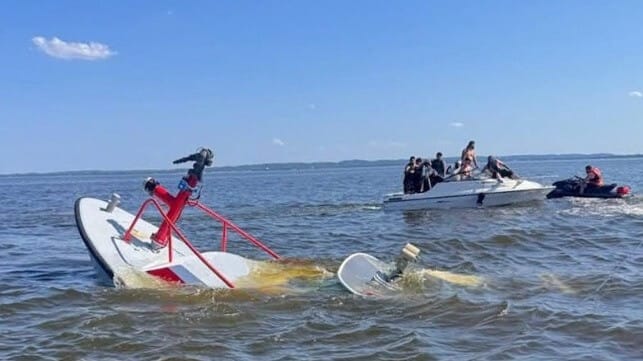
fire department boat sinking
Carteret Fire Department Marine unit sinking after whale strike

Published Jul 6, 2026 5:00 PM by The Maritime Executive


The Carteret Fire Department in New Jersey had lent its Marine Unit 2 to aid with the security detail in New York Harbor on July 4. The vessel was spotted patrolling in the harbor and participating in the spectacle for America’s 250th birthday.

After the event had wound down on Saturday afternoon, the boat and its crew were heading back to their base in New Jersey. Around 4:30 p.m. local time, they were near the mouth of Raritan Bay south of the Arthur Kill.


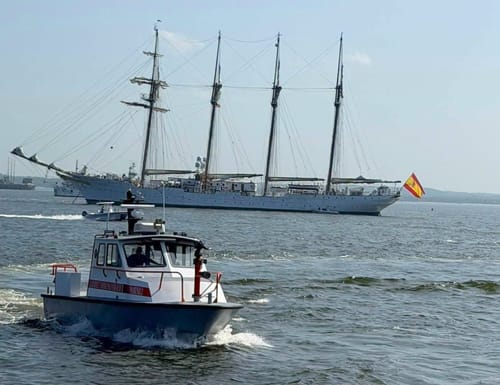
Earlier in the day, the Marine unit was on patrol with a tall ship in the background


A recreational boater in the area said they had seen a pod of whales. From time to time, the whales were surfacing or breaching the water.

CFD Marine 2 reportedly shook violently, and the crew believes it was stuck under the stern by a surfacing whale. As they relayed the story, their boat sustained significant damage and almost immediately began to sink.

The crew was following safety regulations, and each had on their required life jackets. They were forced to immediately go into the water as their boat was sinking out from under them.

A jet ski operator in the area who saw the incident rushed toward the crew in the water. Another boater also went to their aid, and the Perth Amboy Fire Department crew was also able to reach the crew in the water.

The three aided in fishing the crew out of the water with no reports of injuries. But they had a whale of a tale to tell.


Seaplane Crashes Near East River Ferry Terminal

Crash
The plane's port side wing submerged as it slows to a stop (via social media)

Published Jul 5, 2026 11:44 PM by The Maritime Executive


On Sunday, a seaplane made a hard landing in the East River, damaging the aircraft and prompting a rapid SAR response from the New York Police Department and New York Fire Department.  

At about noon on Sunday, a Kodiak 100 commuter plane was arriving from the Hamptons and coming in for a landing near the East River ferry terminal at 23rd Street. The plane's floats made contact with the surface, hit a wave and skipped upward, causing the aircraft to bounce off the water. This happened again a second time within several seconds, and then again. 

On the third contact with the water's surface, one if the Kodiak's wing struts snapped, and the port-side wing dipped into the water, followed by the propeller. Luckily the plane did not pitchpole or tumble in the rapid deceleration, and it came safely to a stop. 


Another seaplane was among the first responders, but New York emergency services personnel were on scene within minutes. All eight people on board were safely rescued by the FDNY, and efforts transitioned to securing the wreckage of the aircraft. No serious injuries were reported. 

The Quest Kodiak 100 is a single-engined turboprop with seating for 10. Designed for rough airfields and short takeoffs, it can be converted to use seaplane floats and is often seen in this configuration in commercial service.

Tank Barge Explosion Kills Five Workers on Paraguay River

Tank Barge Explosion Kills Five Workers on Paraguay River
Surveillance footage via Paraguayan social media

Published Jul 5, 2026 10:02 PM by The Maritime Executive

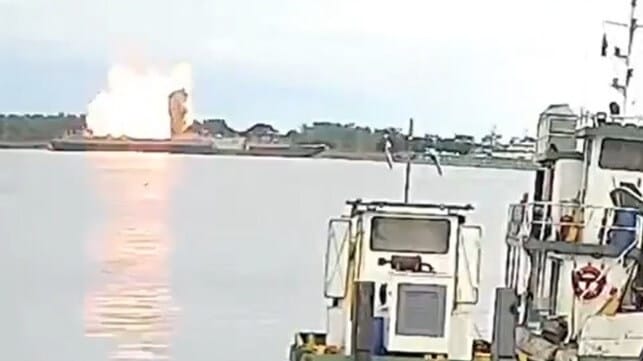
Over the weekend, a blast tore apart a tank barge on the Paraguay River, killing five personnel who were working aboard. 

On Saturday morning, a blast occurred inside a cargo tank on a barge at a mooring area across the river from Avenida Costanera Sur, a riverfront road running south from Asuncion. This stretch of the river has about half a dozen barge fleeting areas and maintenance yards. Security surveillance video from the scene show that the explosion peeled the deck off two tanks and about halfway off two more, exposing the inner bulkheads. 

According to local media, the tank barge belonged to Lineas Panchita G and was undergoing maintenance at the time of the blast. The tanks were believed to be empty of fuel.

In addition to removing any liquid hydrocarbons, tank vessel maintenance requires extensive degassing measures prior to beginning repairs. An investigation is under way to determine the cause, and authorities will evaluate whether a buildup of flammable gases in the hold could have led to the explosion. 

Three people were found dead at the scene, and two injured personnel who were evacuated later died of their wounds, according to Paraguay's General Naval Prefecture. The service identified the victims at Ever Nilson Sosa Rotela (26), Simón DĆ­az GonzĆ”lez (34), Giovani Samuel Amarilla Alegre (24), JesĆŗs Alberto Miranda Lovera (28), and Carlos David PĆ©rez Morinigo (31). 

The sole survivor of the incident was on board a transport boat at the time of the blast, not the barge itself, naval commander Rear Admiral Ɠscar Chamorro told local media.