Ukraine Strikes Russian Tankers, Ports, Refineries in Overnight Barrage
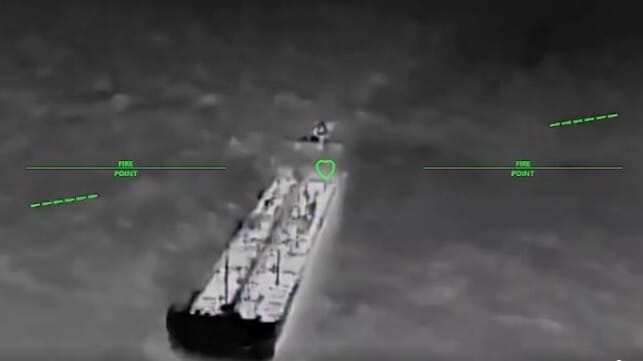
Ukraine launched one of its largest coordinated attacks, coordinated by multiple units and hitting targets across Russia, as it continues to target Russia’s energy industry. In addition to hitting ports, two tankers, and refineries, Ukraine, for the first time, triggered air raid sirens in Chelyabinsk, more than 1,000 miles inside Russia.
The Commander of the Unmanned Systems Forces of the Armed Forces of Ukraine reported that they had played a key role in the attack. He reported that on the night of July 6, they struck 47 legal military targets.
One of the focuses was on occupied Crimea. They targeted two tankers sailing in the Sea of Azov. Reportedly, the vessels were each carrying 7,000 tonnes of gasoline coming from the Taganrog area to Crimea. Images released in the video showed one of the vessels in flames.
Another target was an oil storage facility in Kerch, which Ukraine said functioned as a logistics hub to supply Russian troops in occupied Crimea. Unconfirmed reports said much of Crimea had been plunged into darkness by the attacks.
Regional Russian officials started announcing the number of drones in their areas. In Yaroslavl, the governor claimed more than 70 Ukrainian drones were shot down, and Ukraine reported hitting one of the five largest oil refineries in Russia. It was the sixth time since the start of the year that Ukraine had struck the facility, with reports of roads closed around the refinery after last night’s attack.
In the Leningrad region, the governor reported that 62 drones were intercepted. Reports said that Ukraine hit the Ust-Luga and Vysotsk seaports. Other Ukrainian targets reportedly included three aircraft hangars at the Gvardiyske air base and two Russian mobile air defense systems.
Russia’s Defense Ministry reported today that a total of 519 drones had been intercepted overnight. Russia also launched a massive attack primarily targeting the Ukrainian capital of Kyiv. Reports cited heavy damage and casualties. Ukrainian President Volodymyr Zelensky had warned earlier that Moscow was “preparing a new massive strike” and it appears that residential districts in Kyiv were hard hit.
Ukraine claimed that this year alone it has struck more than 800,000 Russian military targets. It claims to have killed or seriously wounded an estimated 167,000 Russian troops since the start of the year.
Both sides appeared to be posturing as the White House reported that Donald Trump had calls with both sides overnight, trying to renew the peace talks. Trump is also scheduled to meet with Zelensky at the upcoming NATO Summit in Turkey this week.
Drone Strike Shuts Russia's Largest Refinery as Fuel Shortages Worsen
Ukraine has landed one of its most consequential blows yet against Russia's energy sector, knocking out the country's largest oil refinery just as Moscow is scrambling to contain a widening fuel crisis.
Industry sources told Reuters that Gazprom Neft's Omsk refinery halted operations after a Ukrainian drone strike damaged key processing units at the 440,000-barrel-per-day facility. The refinery is Russia's largest gasoline producer, making the timing particularly painful for the Kremlin.
According to the sources, the attack set fire to the CDU-10 crude distillation unit, which accounts for about 38% of the refinery's processing capacity. A second major unit, CDU-11, was also shut down after damage to supporting infrastructure, although it could reportedly return to service sooner.
The refinery immediately stopped offering gasoline and diesel on Russia's St. Petersburg commodity exchange.
A few months ago, Moscow insisted fuel shortages were isolated incidents. Then came export restrictions on gasoline and jet fuel. Then President Vladimir Putin publicly admitted motorists and businesses were struggling to find fuel, convening an emergency meeting with oil executives and ordering round-the-clock government monitoring of supplies.
Now Russia's biggest refinery has gone dark.
The latest strike comes as Ukraine continues expanding its long-range drone campaign against Russia's refining network. What began with attacks on export terminals and refineries near the front has steadily moved deeper into Russian territory. Omsk, in western Siberia, sits thousands of kilometers from Ukraine.
The fallout extends well beyond Russia's borders.
Central Asian countries that rely heavily on Russian fuel have already reported shortages and higher prices. Uzbekistan has cut some flights because of jet fuel shortages, while Kazakhstan has explored fuel imports from China as insurance against further disruptions.
Russia has even begun looking abroad for supplies of its own. Last week, Reuters reported that Moscow was preparing to import jet fuel from Asia—an extraordinary reversal for one of the world's largest oil producers.
Ukraine isn't trying to destroy Russia's oil industry. It doesn't have to. It only needs to keep enough refineries offline long enough to turn fuel into one more battlefield—and one more headache for the Kremlin.
By Julianne Geiger for Oilprice.com

No comments:
Post a Comment