Oil tanker traffic through Hormuz at near standstill on fresh attacks
Oil tanker traffic through the Strait of Hormuz was at a near standstill on Thursday, according to data and sources, as shipping risks escalated after the U.S. renewed airstrikes on Iran, triggering retaliation by Tehran in the Gulf.

Just two tankers had so far sailed through the strait in the early hours of Thursday. They included the crude supertanker Berg 1, which had loaded at Iran’s Kharg Island and is subject to U.S. sanctions, according to analysis from Kpler.
The Marshall Islands-flagged chemical tanker Well Sail, also transited the strait, Kpler analysis showed. Its previous loading destination was near Sharjah in the United Arab Emirates, according to LSEG ship tracking data.
Shipping industry sources said vessels were increasingly switching off their public AIS tracking transponders, making it harder to see all of the ships crossing.
“Tanker traffic through the Strait of Hormuz has essentially stopped, which tells you more about risk perception right now than any statement from Washington or Tehran,” Jorge Leon, head of geopolitical analysis at Rystad Energy, wrote in a report.
US- Iran truce teetering
Iranian armed forces launched attacks on U.S. military infrastructure in neighbouring Gulf states on Thursday in response to U.S. strikes on Iran’s southern coastal and eastern provinces, putting further strain on a three-week-old truce.
The latest flare-up in the four-month conflict began earlier this week with attacks on three tankers in the strait that the U.S. blamed on Tehran.
Iran’s Revolutionary Guards Navy said on Thursday that U.S. attacks on Iran and intervention in redirecting shipping were disrupting the strait’s gradual reopening, warning that any further U.S. intervention would draw a “crushing response”.
The Strait of Hormuz handled about a fifth of global oil supplies before the war erupted on February 28 with U.S. and Israeli strikes against Iran.
Daily traffic in the past two weeks had risen to its highest levels since the war’s outbreak, averaging 40 ships transiting the strait, which was still far off the pre-conflict average of 125 to 140 daily sailings.
LNG tanker attack
Some war underwriters have advised shipping companies to pause voyages through the strait while others are reviewing their policy terms after the renewed vessel attacks, insurance industry sources told Reuters.
“The Hormuz reopening story looks more fragile after the latest escalation,” ship broker Clarksons said in a report.
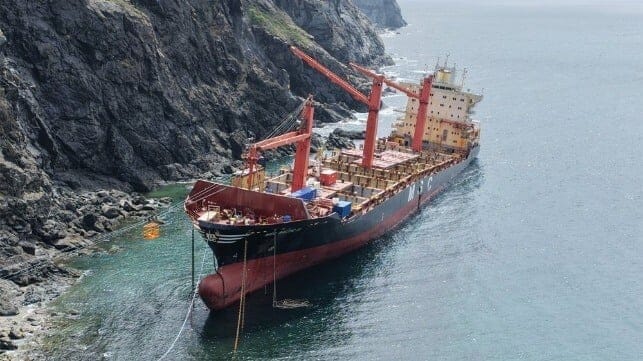
One of the three vessels hit this week, the Marshall Islands-flagged Qatari LNG tanker Al Rekayyat, remains stranded and awaiting salvage operations off Oman after a projectile strike late on Tuesday sparked a fire in its engine room.
Despite earlier fears of an explosion, industry sources said that risk was low for now and its cargo of liquefied natural gas appeared secure.
The ship registry of the Marshall Islands, one of the world’s top flag states, told Reuters there were no reported injuries or environmental impacts as a result of the incident involving the Al Rekayyat.
“As recent incidents have shown, the (marine war) market is now facing the prospect of potentially severe losses involving vessels of substantial value,” said one marine war underwriter, who asked not to be named due to the sensitivity of the situation.
(Reporting by Jonathan Saul, additional reporting by Florence Tan; Editing by Joe Bavier)
Hormuz Attacks and Counterattacks Mark a Change in Strategy
Readers of The Maritime Executive will not be surprised by the collapse of the 60-day ceasefire during which negotiations between Iran and the United States were supposed to take place on the basis of a 14-point Memorandum of Understanding (MoU). The starting position for the United States laid out in the MoU has made it difficult to envisage that the United States would emerge from the negotiations with any of its war aims achieved. In contrast, the starting position for Iran offered the prospect of a lifting of sanctions which in turn would provide the finance necessary for the Islamic regime to prolong its grip on power in Iran for decades to come. But even the minimalist gains sought by the United States – essentially, the achievement of peace in the short term to provide relief from domestic economic and electoral pressures – could only have been achieved by compromising the national security and economic wellbeing of both the Gulf States and Israel. The Gulf States and Israel seem to have been prepared to give the MoU negotiations a chance, but cannot countenance a failure in any agreement to safeguard their vital interests – and they have ample means of sabotaging the ceasefire and negotiations if such a conclusion had been imminent.
For the moment, with positions as they are, even if negotiations proceed, they have almost no hope of success. Hence both Iran and the United States are adjusting their end-game strategies, and this is apparent in the character of attacks and counter-attacks in recent days. Both are now playing a longer game, the outcome of which improves the chances that the United States will prevail.
Central Command counter-strikes following the IRGC's attacks on Al Rekayyat (IMO 9397339), Wedyan (IMO 9524970) and Cyprus Prosperity (IMO 9595216), plus the threats made to many others between July 6-8, indicate that CENTCOM is still intent on wearing down the IRGC's ability to target shipping in the Strait, striking targets in Sirik, Qeshm and elsewhere. But there can no longer be confidence that the IRGC capability in this area can be completely neutralized. It is too easy for the IRGC to hide drone mobile launchers. Given their range, they could be laagered anywhere within the 50,000 square miles of the Hormuz littoral. Moreover, many of the IRGC drone and anti-ship missiles have autonomous target acquisition in the closing stages of flight, meaning that they are not dependent on a sophisticated fixed surveillance system for targeting success.
The best that CENTCOM will probably be able to achieve is to suppress the scale of attacks that the IRGC are able to mount, and then to provide close-in air defense – largely from aerial platforms such as attack helicopters – to help protect merchant captains willing to risk taking their ships though the Strait. If such a strategy facilitates the passage of say 30 ships per day, down from the 120 transits seen before February 28, then this will likely avert or delay a global economic meltdown, particularly as alternative trade and export routes avoiding the Strait are being ramped up all the time. But in contrast, a re-imposition of the US blockade on ports and ships would be disastrous for Iran.
Increasing the economic leverage on Iran is evident also in the revocation of Iranian oil export licenses, granted temporarily during the ceasefire. It is also evident in the attacks made on port facilities in Chah Bahar, far from Hormuz, which the Iranians may have thought, being close to the border with Pakistan, was their most secure maritime escape and exit route. But perhaps the strongest evidence of the new US strategy has been the attacks in Golestan Province on railways in the northeast connecting Iran to China through Turkmenistan. One can probably expect some attacks on shipping on the Caspian Sea in the near future, attacking another Iranian import/export route. Closing down Iran's ability to import, export and raise revenue will generate huge internal pressures on the IRGC/hardliner regime, which knows that without food, water, wages and power, the Iranian population will become mutinous; for the IRGC, widespread economic unrest is much harder to quell than political dissent.
The Iranian actions in recent days also confirm that a new strategic calculus is in place. The IRGC have seen their control of the Strait beginning to slip away as the Omani coastal route becomes viable, and this is a vital tool which they must maintain if they are to retain their strong negotiating position. But the IRGC is still permitting Hormuz transits, free of charge for the moment, for those using the northern PGRA. This could be interpreted as an attempt to keep the route open for their own tanker exports, maybe to ingratiate themselves with some of the GCC countries, a tactic which clearly has not worked. Neither are GCC countries likely to be mollified by the IRGC focusing its own reprisal attacks only on US bases in their countries.
This turn of events is for the moment encouraging. The United States can apply economic pressure on Iran with a relatively small military footprint, and the B-52s have already gone home to Barksdale. It can also probably facilitate some traffic flows through the Strait, sufficient to postpone global economic meltdown – for long enough to see Iran buckle economically first.
The IRGC are avid readers of the Maritime Executive too, and are tactically adept and flexible. One can expect the IRGC to attempt to regain the initiative – for example by activating a Houthi closure of the Bab el Mandeb, if the Houthis are minded to comply. But time is not on their side. The extraordinary patience and forbearance which GCC countries have extended towards Iran, notwithstanding what social media in the Gulf characterizes as Iranian treachery, is probably now at an end. Not even the Qataris have been spared. Not content with raiding Qatar and destroying an LNG train in Ras Laffan, the IRGC is now intent on attacking Qatari LNG tankers, while at the same time accepting Qatari hospitality as the MoU technical negotiations stutter on in Doha. Local beliefs have it that kindness must be repaid with kindness, not harm.
The opinions expressed herein are the author's and not necessarily those of The Maritime Executive.
Three Survivors of Hormuz Attack File Suit Against Thai Shipping Line
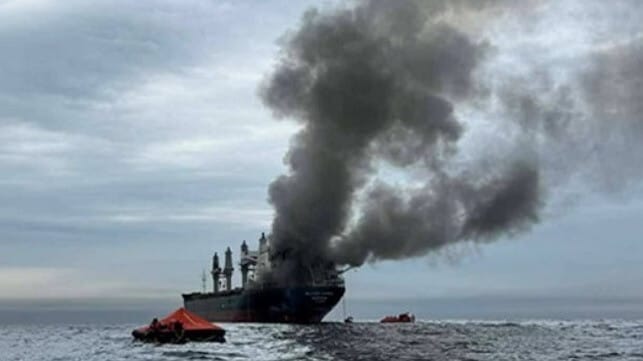
Thailand’s Central Labour Court accepted a lawsuit on Friday, July 10, filed on behalf of three crewmembers who survived the Iranian attack on the bulker Mayuree Naree in March. A lawyer for the individuals told reporters the men are suffering from Post-Traumatic Stress Disorder (PTSD) and are unable to work while alleging the shipping company is not adequately taking care of the individuals.
The 30,000 dwt bulker was attempting to make a transit through the Strait of Hormuz on March 11 when it was struck in its engine room by two projectiles. The resulting fire trapped three seafarers and extensively damaged the engine room and surrounding compartments. The 20 surviving crewmembers abandoned the ship and were rescued by the Royal Omani Navy. They were returned to Thailand on March 16.
Precious Shipping, which operated the vessel, contends the crew was each given a medical checkup, and the company arranged for professional psychologists to provide counseling and psychological support. In a statement filed today, July 10, with the Thai Stock Exchange, the company asserts it has continuously provided care and support to the affected crew and their families.
“The company wishes to clarify that it has consistently acted in compliance with applicable laws, contractual obligations, and internationally accepted maritime practices. The company has also fulfilled its obligations towards the crew in accordance with applicable laws and the relevant contractual arrangements. The company reaffirms that the safety, physical and mental well-being, and welfare of its crew members and their families have always been its highest priority,” it writes in the statement.
The lawyer, Kunpat Singhathong, is accusing the shipping company of acting negligently by ordering the ship to transit the Strait. He contends the crew’s lives were put at risk and that the company has left them unable to continue to work.
According to the reports, the suit will contend that the crewmembers were each given two months’ wages and compensated for lost belongings but then dismissed. It alleges the crewmembers had nine-month contracts that had not yet expired.
Speaking with reporters, the lawyer said doctors have diagnosed the PTSD and said it will require more than a year of treatment. He said the three crewmembers are unable to work or carry out their daily lives normally. Reuters reports that the suit seeks at least 1 million Thai baht (approximately $30,000) for each of the three plaintiffs.
Precious Shipping said it has not been served with any statement of claim or other court documents in relation to the reported legal proceedings.
At the beginning of July, the company reported that the remains of the three deceased seafarers had finally been repatriated to Thailand and that it was providing full assistance, care, and support to the bereaved families. The company had arranged for a specialized search crew to board the vessel in late March and early April, after the ship drifted ashore, grounding on the southern coast of Qeshm Island, north of Larak Island. Search teams reported that they encountered “challenging” conditions, including significant fire damage and flooding in the engine room and adjacent compartments.
The International Maritime Organization (IMO) confirmed a total of 14 deaths of seafarers during the conflict. It lists a total of 52 incidents between the end of February and July 8. It attempted to start an evacuation effort, but it was stopped when the attacks resumed. At the peak, it said over 11,000 seafarers were trapped in the Persian Gulf.
Dark Transits of Hormuz and Spoofing Increase as Ships Avoid Omani Route
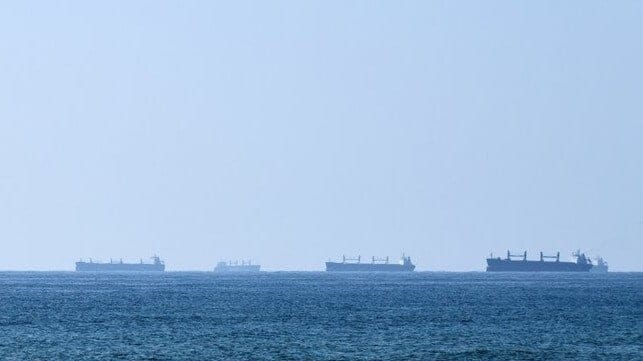
Transits through the Strait of Hormuz have not stopped this week after the renewed attacks, but have slowed dramatically, and especially along the so-called Southern Corridor hugging the Omani coast. Despite Iran’s assertions of control, U.S. Central Command continues to say the Strait is open and vessels are moving through.
The exact number of transits is difficult to establish, in part because more vessels are going dark. Maritime software and data intelligence provider AXSMarine reports that the latest attacks appear to have pushed vessels in the region toward more opaque transit behavior. It says that, except for tankers, AIS-off transits have nearly doubled in the past few days. It believes that some gas carriers are still using the southern route, making dark transits.
AI data intelligence firm Windward also notes that dark transits are climbing. It calculates that approximately 40 percent of all traffic through Hormuz has gone dark. It says this is the highest it has been in six days.
AIS spoofing activity also resumed on July 9, reports AXSMarine. It notes that spoofing had largely subsided over the previous two weeks.
The number of transits has clearly fallen, with Kpler saying it was down for a second consecutive day on July 9. It sets the number at 22 on Thursday, down from 30 on Wednesday. It believes that only one vessel crossed the Omani route.
AXSMarine thinks the number of transits was down to 20 vessels across both directions of the Strait of Hormuz. Nearly all the transits that it observed moved toward the Iranian-controlled route.
The decline in transits appears to be continuing, with Windward reporting just six vessels made the transit overnight between July 9 and 10. Further, it reports that only one vessel was outbound last night, versus between 15 and 21 in the days leading up to the latest attacks.
CENTCOM, however, issued a statement on Friday asserting, “Iran does not control the Strait of Hormuz.” It reports that since early May, U.S. forces have helped facilitate more than 800 commercial vessels and 380 million barrels of crude through the Strait. However, it does not address the current situation.
The number of vessels trapped in the Persian Gulf has clearly declined. AXSMarine said it was under 700, representing a decline of more than 370 vessels. Overall, AXSMarine says that AIS data indicate that about a third of the fleet trapped at the start of the conflict is no longer detected in the zone, but it warns that a large number of tankers and gas carriers are still in the Gulf.
The trade group INTERTANKO warned members in an update today, July 10, that the latest military exchanges were more intense and geographically broader than previous ceasefire breakdowns. It notes that the International Maritime Organization’s proposed seafarer evacuation plan remains on hold, but notes that technical discussions between the U.S. and Iran have resumed. Donald Trump, however, posted on Friday that the ceasefire is over and the U.S. would respond to any further Iranian aggression.
Speculation is also growing that the U.S. could be moving toward restoring the blockade of Iranian ports and shipping. TankerTrackers.com reported on Friday that the Iranians had shipped out “no less than 10 million barrels of crude oil and fuel oil overnight.” This comes on top of its estimates of 60 million barrels of crude oil shipped since the blockade was suspended in mid-June. However, TankerTrakers.com estimates that Iran would be stuck with as much as 50 million barrels of crude and refined products if the blockade resumes.
Beyond Claims in the Strait of Hormuz
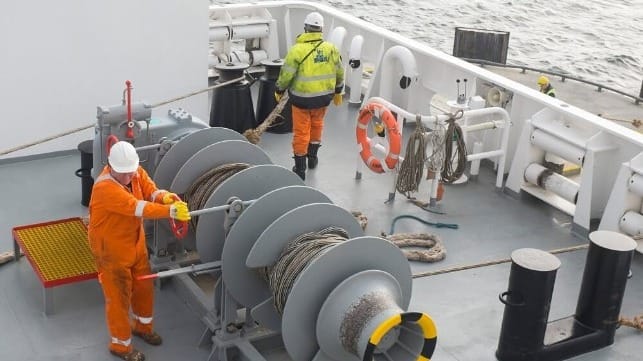
The recent disruption in the Strait of Hormuz has offered a reminder that maritime risk is rarely confined to what happens on the water. Since conflict involving Iran escalated earlier this year, much attention has focused on vessel movements, war risk premiums, sanctions exposure and the potential impact on global trade. Yet behind every routing decision, delayed transit and operational contingency plan are people tasked with making difficult judgements in an environment defined by uncertainty.
That human dimension is often overlooked. It is also where many of the most significant maritime risks originate. Marine insurance is traditionally associated with the aftermath of an incident. A collision occurs, cargo is damaged, a crew member is injured, and insurers respond. While that remains a core function of the industry, it tells only part of the story. Increasingly, insurers are devoting as much attention to preventing losses as they are to managing them.
This reflects a simple reality. Most maritime incidents are not caused by a single catastrophic failure. More often, they emerge from a combination of circumstances, decisions and behaviours that align in the wrong way at the wrong time. A checklist is rushed. A warning sign is missed. A crew member is distracted, fatigued or reluctant to challenge a developing situation. Individually these may seem insignificant. Collectively they can have serious consequences.
For insurers, understanding these patterns is one of the less visible benefits of handling claims across the global fleet. Every casualty investigation, near miss and operational incident contributes to a wider picture of how losses occur. Viewed in isolation, an accident may appear unique. Viewed across hundreds of cases, common themes begin to emerge. The value of that perspective becomes particularly apparent during periods of heightened tension such as those currently affecting the Persian Gulf.
One misconception emerging during the Strait of Hormuz crisis is the suggestion that shipping activity slowed because insurance was unavailable. In reality, capacity largely remained in place, albeit at a cost reflecting the changing risk environment. The more fundamental question facing shipowners and operators is whether the risk to vessels and crews justifies proceeding at all.
That distinction is important. Insurance can help organisations manage financial consequences. It cannot eliminate operational risk, nor can it replace the judgement of masters and operators faced with uncertain conditions. Decisions about whether to enter a region, alter a route or delay a voyage ultimately depend on an assessment of risk that extends far beyond insurance considerations.
The same principle applies to loss prevention. What might appear to be routine guidance on slips and falls, lifting operations, bunkering procedures or evidence preservation after an incident is often part of a much larger effort to influence decision-making before something goes wrong. The objective is not simply compliance. It is to encourage crews to pause, assess a situation properly and make safer choices.
This has led to a gradual institutionalisation of loss prevention across the maritime sector. Safety advice is no longer seen solely as a technical exercise. It increasingly draws upon insights from psychology, behavioural science and operational experience. The focus has shifted from asking whether procedures exist to understanding whether they are likely to be followed when crews are tired, distracted or operating under pressure.
The current environment has reinforced that thinking. For many seafarers operating in and around the Persian Gulf, the greatest challenge has not been a direct security incident but the cumulative effects of uncertainty. Concerns about regional stability, changing voyage plans, prolonged delays and family welfare can all affect concentration and decision-making onboard.
That is why modern loss prevention extends well beyond physical hazards. Mental wellbeing, fatigue and crew welfare are increasingly recognised as critical components of safe operations. A distracted or exhausted crew member can represent as significant a risk as a mechanical failure.
Addressing these challenges requires interoperability across the maritime industry. Insurers, shipowners, managers, class societies and regulators all see different aspects of risk. When those perspectives are shared effectively, lessons learned from one vessel, one incident or one region can help prevent losses elsewhere.
The maritime industry will always need insurers to respond when things go wrong. But some of the most valuable work now takes place before an incident occurs. The goal is not simply to pay claims efficiently. It is to help ensure fewer claims need to be made in the first place.
The lessons emerging from the Strait of Hormuz are ultimately not just about geopolitics or insurance. They are a reminder that safe shipping depends on informed decisions, resilient crews and a shared commitment to understanding risk before it becomes loss.
Dr. William Moore is Head of Loss Prevention at The American Club.
The opinions expressed herein are the author's and not necessarily those of The Maritime Executive.