Wednesday, March 11, 2026


Malta Prepares Contingency Plan as Burnt-Out LNG Tanker Drifts Closer
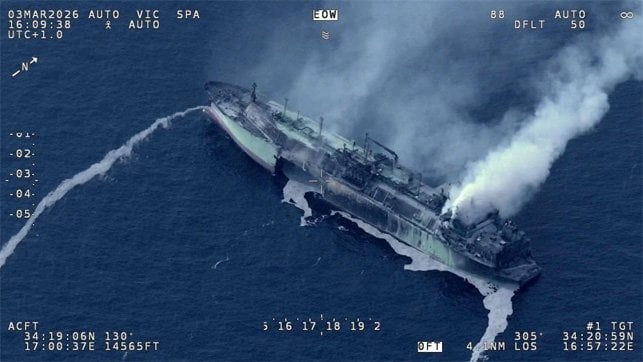
burnt-out  LNG carrier drifting
Surveillance photos of the wreck on March 4 drifting in the Mediterranean

Published Mar 10, 2026 6:07 PM by The Maritime Executive


Authorities in Malta are closely monitoring the hulk of the Russian gas carrier Arctic Metagas as it drifts toward the island nation. Earlier reports had said the vessel had sunk after a devastating explosion and fire last week, but now it is reported to be approaching Malta.

The Times of Malta reported on Monday, March 9, that the vessel was approximately 35 nautical miles to the southeast. It had not yet crossed into Malta’s territorial waters, but the authorities are closely monitoring the hulk with regular surveillance flights. 

The Maltese authorities on March 10 issued a warning to mariners about the hulk. They ordered ships to remain at least five nautical miles away from the hulk. Previously, the Libyan authorities had also warned that the vessel could still explode due to the belief that there was still LNG aboard or that it might lose stability and sink at any point.

Malta’s Prime Minister, Robert Abela, said the island has a contingency plan in case the tanker continues to approach, but he did not specify what Malta might do to control the hulk. Reports said the Maltese authorities were trying to contact the vessel’s managers to determine what actions they were planning to take.

Last week, Home Affairs Minister Byron Camilleri gave a briefing on the situation the day after the vessel exploded. It had sailed past Malta at a distance of approximately 25 nautical miles on Monday, March 2, and was approximately 150 nautical miles southeast of Malta when the explosion occurred. According to the minister, Malta received a Mayday call at approximately 1:15 pm local time on March 3, saying the vessel was on fire and required immediate assistance. They, however, believe the explosion had occurred around 0400 that morning.

A Maltese reconnaissance plane reached the area and reported that the crew was entering lifeboats. It issued another Mayday call, and the report says the crude oil tanker Respect went to assist the crew. The tanker registered in Oman is part of the Russian shadow fleet and happened to be in the same area of the Mediterranean.

Russian authorities' only comments were to accuse Ukraine of attacking the ship with a drone. They had highlighted that the event went largely unnoticed, with no condemnation from the West.

The 30 crewmembers were rescued and taken to Tobruk in Libya. Two are reported to be suffering from severe burns and were placed in a hospital in Libya.

Libya’s Ports Authority issued a follow-up on March 6, saying that with the aid of Italian and Maltese authorities, the hulk had been located. Unlike earlier reports, they said the vessel was still afloat, although listing. They suspected water was leaking into other tanks and confirmed images showed extensive fire damage. They believe the double hull of the vessel had limited the water spread and kept it afloat.

At that time, they said the hulk was drifting toward Italy and Lampedusa Island, located to the southwest of Malta. The Maltese are saying prevailing winds have, however, redirected the ship toward their territory.

Abela told The Times of Malta they were prepared to take “the necessary action” to ensure the safety of Malta. Speculation is that Malta could attempt to tow the hulk or drive it back out to sea. As the owners have likely abandoned the ship, Malta would have to undertake the operation at its expense with little hope of recovery from the owners. It is unclear if the ship had valid insurance.


Scrap Metal Barge Burns in Delaware Bay

Delaware Bay
Delaware Bay (NASA / MODIS)

Published Mar 10, 2026 6:56 PM by The Maritime Executive


On Tuesday, a scrap metal fire broke out aboard a barge on the Delaware Bay, prompting a multi-agency response from local fire departments.

At about 0800 hours, the U.S. Coast Guard received reports of a fire aboard the barge American Tracker at a position in the middle of the estuary. The crewmembers of the tug towing the barge were unharmed, and vessel traffic was not affected. 

At least three nearby cities dispatched marine firefighting assets to the scene, and fireboats applied water to the burning pile. A tall plume of smoke wafted behind the barge as efforts to contain the fire continued. 

As of Tuesday afternoon, the barge was under tow at a position about two miles off Maurice River Cove, New Jersey. In order to get the situation under control, responders want to position it further away from the shipping channel in shallow water, where it can be temporarily anchored. Firefighting was still ongoing. 

The Coast Guard has issued a warning to shipping to stay clear of the hazard as the response continues. Local public health authorities are monitoring air quality conditions, and have not seen cause for concern so far. An investigation into the cause of the fire is under way. 

Scrap metal fires are commonly ignited by unwanted contaminants - notably lithium-ion batteries, which can burst into flame when damaged. The fires grow and accelerate in the presence of flammable debris within the pile, such as oily wastes and plastics. 


Canadian Coast Guard Fires Captain Who Willfully Disregarded Distress Call

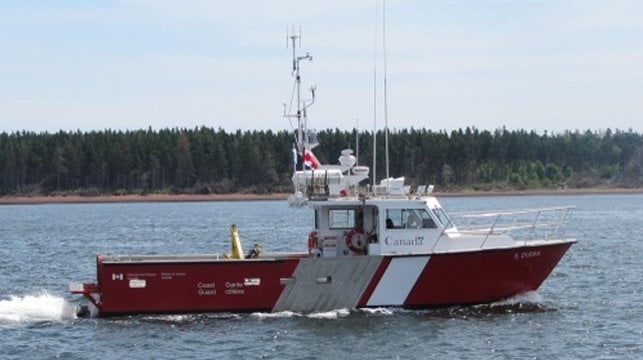
Canadian Coast Guard fisheries patrol boat
The captain was commanding the patrol boat S. Dudka (Canadian Coast Guard)

Published Mar 10, 2026 9:33 PM by The Maritime Executiv


The Canadian Coast Guard disciplined a veteran captain with 18 years of experience, firing him after an incident in which it found he “willfully disregarded a distress call.” The captain, who still contends he did nothing wrong, lodged an appeal to Canada’s Federal Public Sector Labour Relations and Employment Board, which found that the Coast Guard had “just and reasonable cause to discipline” the captain and that the termination was “justified.”

The board, in its synopsis of the decision, writes that upon hearing the distress call, Captain Lou Callaghan turned down his radio, continued on his planned course for 17 minutes, and did not render assistance until he was specifically directed to. It concluded that willfully disregarding the distress call was misconduct that justified discipline. Further, it concluded that Callagan’s actions were significant both in terms of the Coast Guard’s reputation and public safety.

Callaghan was commanding a fishery protection vessel named S. Dudka that was based on Prince Edward Island. The patrol boat is 31 gross tons and approximately 15 meters (49 feet) in length with a crew that day of three plus the captain. CBC and The National Post reconstructed the events of the day in their reporting, drawing from the board’s report, which was released after its January 30 decision on the case.

The boat was on a patrol on May 13, 2024, when a distress call went out at 0826 for a fishing boat with five people that had gone aground in Malpeque Harbour on the northwestern coast of Prince Edward Island. The call had come from a second boat that was attempting to aid the grounded boat, and according to the reports, it was a dangerous situation as the tide was coming in and waves were crashing over the boat, which was being used to retrieve mussels. The five people aboard the sinking boat climbed onto the roof of the boat as it was taking on water.

It was alleged that Callaghan ignored the call and lowered the volume on the patrol boat’s radio. He later told investigators that he did not hear the first call, although the other three crewmembers reportedly said they had heard the call and asked if they were responding. A second mayday was issued at 0833 with the position of the sinking boat, and according to the reporting, the captain waited approximately 10 more minutes before calling the marine communications center asking whether they should respond.

He reportedly asked the center if the situation was under control and was told it would be “great” if he could respond. They allege he waited another five minutes before being told for a second time by the center to go to Malpeque Harbor. They report it was not until between 0851 and 0855 that the patrol boat changed course, having to backtrack as it had passed the area and had not diverted from its course toward the boat in distress.

By the time the patrol boat arrived at the location, the five people had been rescued by the local fire department. They luckily were uninjured.

Callaghan told the investigators and asserted to the board that he committed no wrongdoing. He said Coast Guard vessels have to wait to be tasked before responding to calls. He also alleged he thought the patrol boat was 27 nautical miles from the position of the distressed boat when the reports say it was in fact between 6.3 and 9.6 nautical miles away.
The board accepted the testimony of the crew that the first distress call had been heard on the patrol boat. Callaghan said he did not hear the call, but that he might have lowered the volume if the radio was too loud. He reportedly blamed a faulty radio, an inexperienced crew, and said the S. Dudka risked also running aground in the difficult channel, according to the National Post’s recounting of the case.

The Coast Guard suspended the captain after the incident and later fired him. Callaghan had served for 18 years with an “otherwise distinguished service” history. He contended that he was made a scapegoat and railroaded and appealed to the board. The grievance was denied, and the board’s decision is final.

Australia Bans Chinese Bulker for Nonpayment of Crew Wages

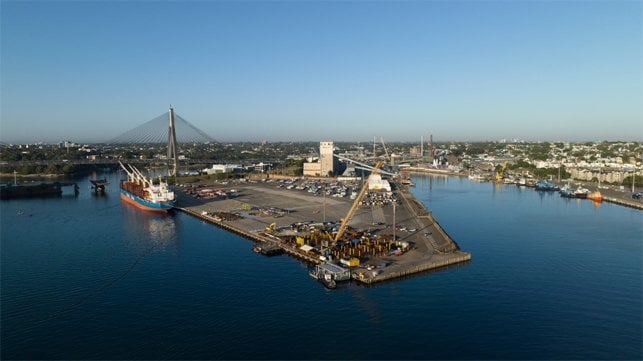
Newcastle Austrlia
The enforcement action started while the vessel was docked in Newcastle (Port Authority of NSW)

Published Mar 11, 2026 3:28 PM by The Maritime Executive


The Australian Maritime Safety Authority has issued its first ban in 15 months, prohibiting a vessel from entry into the country’s ports. It was imposed on a Chinese bulker in what AMSA is calling an action to protect seafarer welfare.

The Liberian-registered bulker Ocean Bright (75,621 dwt) departed Newcastle, Australia, on March 8 bound for China, and AMSA then issued a ban preventing the vessel from calling at any Australian port for six months. It said the vessel was directed not to enter Australian waters until September 4, 2026.

The action came after AMSA said it received a complaint that seafarers on the vessel had not been paid for two months. It launched an investigation while the vessel was docked in Newcastle. The investigation found that eight crewmembers were owed US$46,334 in unpaid wages.

In addition, a Port State inspection identified several other issues. AMSA recorded a total of 18 deficiencies, including four that prompted a detention. The ship’s owner was required to correct those issues before the ship was permitted to depart.

Built in 2006, it is a standard bulker. The ship was acquired in November 2025 by Chinese interests.

Greg Witherall, AMSA Acting Executive Director Operations, said the enforcement action reinforces AMSA’s commitment to ensuring seafarers are treated fairly and have access to their rights under the Maritime Labour Convention. 

AMSA is well-known for its strict enforcement of safety standards and efforts to protect seafarers. It inspects vessels, develops seafarer welfare guidance and programs, and processes complaints under the Maritime Labour Convention.

It had not issued a ban for a vessel, according to its website, since November 2024, when it banned a vessel for safety issues in how it was handling explosives. In 2024, it lists four bans that were placed on ships and eight bans issued in 2023. It lists more than 30 bans that were imposed in the last decade on individual vessels as well as actions against ship owners and managers.


Strike Paralyzes Shipping at Antwerp and Other Belgian Ports

Port of Anterp
Ships are stuck in port as the traffic control centers, pilots, and rescue boat crews all went on strike in Beligum

Published Mar 10, 2026 7:06 PM by The Maritime Executive


A strike that started on Monday, March 9, quickly spiraled across Belgium and has once again left most shipping at a standstill. What was originally expected to be a short-duration event has been extended and will roll into a national strike day on Thursday, raising the prospects for extensive delays and the potential for ferry and other services in Belgium to also be curtailed.

The strike is a renewal of the dispute between the unions representing the maritime trades, including the shipping control stations and the pilots, with proposed austerity measures implemented by the Belgian coalition government. The government is cutting pension plans, with the union asserting the latest plan is cutting pensions by up to 25 percent. Negotiations have been going on for more than a year, with a strike in April 2025, followed by a slowdown by the pilots in October and another national strike in November.

The unions are demanding a single unified pension plan for all their members, regardless of their role in the industry. Four unions united last fall with demands about pensions, as well as work rules for new hires and financial indexing. In October, they said over 140,000 people demonstrated in Brussels, and they coordinated a four-day strike in November.

The latest strike began Monday with the railways and was expected to last three days, followed by the national strike day on March 12. For shipping, Monday evening the controllers at the Zeebrugge traffic control center planned an overnight action from 7:30 p.m. to 7:30 a.m. The pilots who guide ships in and out of Belgium were also expected to go on a rest period from midnight to 10 a.m. on Tuesday. 

Instead of returning to work on Tuesday morning as planned, the Zeebrugge control center announced the strike was being extended until 7:30 p.m. Tuesday night, and then it said it would go until 7:30 a.m. Wednesday morning. Similarly, the pilots went on strike at 10:00 a.m. Tuesday morning, and from there the effort rapidly intensified. The traffic control center at Zandvliet announced it would close overnight from Tuesday into Wednesday, and the crews responsible for the rescue boats at Vlissingen also joined the strike, saying the rescue boats would not sail.

Shipping backups quickly grew from a report of 26 ships waiting in the North Sea on Tuesday morning to 46 by Tuesday evening. A total of 18 were struck in Antwerp, unable to depart, while five others were stuck in Zeebrugge. Antwerp was reporting that 33 inbound ships were holding offshore as of late on Tuesday, with another 18 inbound for Zeebrugge also remaining offshore, including an LNG delivery. It said that four ships have already canceled port calls.

The Port of Antwerp-Bruges authority said it was closely monitoring the situation and would provide updates when they became available. It is warning shipping to expect disruptions all week, and in the past it had said it would take days to clear the backlogs that had built up. 

Pakistan Begins Escorting Shipping as Fuel Austerity Measures are Enacted

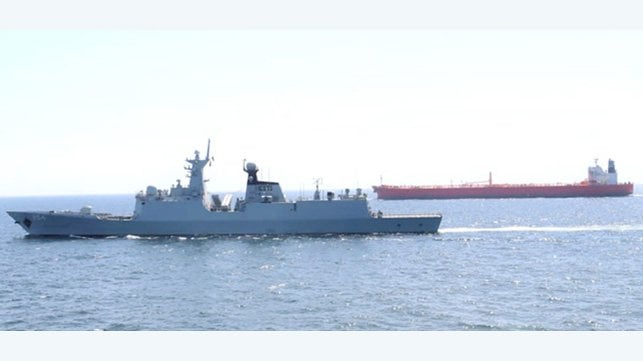
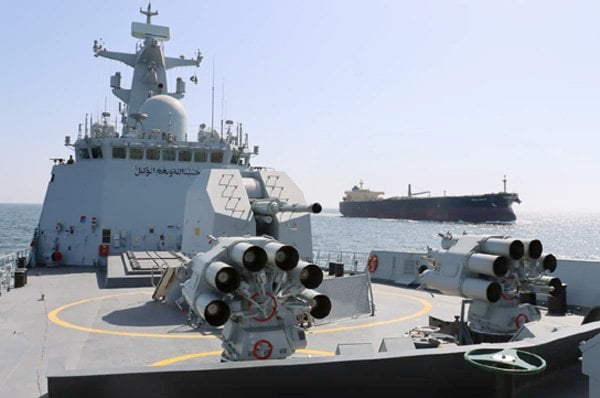
Pakistan Navy escorting tanker
The Pakistan Navy has begun escorting merchant ships to ensure security (Pakistan Navy)

Published Mar 10, 2026 2:41 PM by The Maritime Executive


Pakistan became the first nation outside the Arabian Gulf region to announce sweeping austerity measures due to the skyrocketing price of oil while also announcing it is escorting merchant ships. In a televised speech, the Prime Minister of Pakistan, Shehbaz Sharif, said the country faces difficult decisions just a day after the finance ministry had said its petroleum supplies remained at “comfortable levels.”

The Pakistan Navy launched a security mission named Operation Muhafiz-ul-Bahr (Protector of the Seas) and released photos of its warships escorting commercial vessels. One picture was of a laden tanker that was reported to be due in Karachi on March 9. The second was of a tanker traveling with ballast.

“The initiative has been undertaken to ensure the uninterrupted flow of national energy supplies and the security of Sea Lines of Communication (SLOCs),” the government said in a statement, citing the “multidimensional threats to national shipping and trade.” It said the goal of the operation is to ensure that vital sea routes remain safe, secure, and uninterrupted.


The government acknowledged that 90 percent of Pakistan’s trade is conducted by sea, while media reports highlighted the dependence on Saudi Arabia for oil and fuel and Qatar for natural gas. Last Friday, March 6, the government enacted a 20 percent increase in the price of gasoline, with reports that it triggered long lines at gas stations.

In the Prime Minister’s speech, he outlined a series of steps that would save fuel and reduce some of the financial pressures on the country from soaring prices. Schools were ordered to close for the next two weeks, and universities were told to switch to remote learning from home. At the same time, half of all non-essential government employees are being told to work from home, while all government offices will operate on four-day-a-week schedules. Foreign travel is also being restricted for most ministers and government officials.

The government is also instructing departments to reduce spending by 20 percent while it is banning the purchase of various equipment, including cars. It is also reducing the fuel allowances to government departments by 50 percent and said it would start taking 60 percent of official vehicles off the road, excluding ambulances and buses. 

Analysts note that the country, however, will likely have to work to further reduce individuals’ fuel consumption, which is mostly related to transport. However, of greater concern is that nearly a quarter of Pakistan’s electricity is generated using natural gas coming from Qatar, which has announced it has suspended gas operations.


The government of Pakistan, Reuters reports, on Tuesday called on Saudi Arabia to reroute oil supplies. They are calling for Saudi Arabia to increase fuel exports from the port of Yanbu on the Red Sea. North of Jeddah, the port has a pipeline connection, but routing would take the ships through Houthi-controlled regions of the Red Sea, with the militants having threatened to resume their attacks supporting Iran.

Pakistan is reported not to be alone in its rising concerns for the safety of shipping. A senior official in India, Captain P.C. Meena, said India is also considering sending its warships out to provide naval escorts. He said it would be in response to requests from Indian shipowners.

Kharg Island: Iran’s vital oil hub in the crosshairs?


By AFP
March 11, 2026


A satellite image of Iran's Kharg Island, which hosts the country’s main crude export terminal - Copyright EUROPEAN SPACE AGENCY/AFP -


Susannah Walden

Kharg Island, a scrubby stretch of land in the northern Gulf, handles almost all of Iran’s crude exports and any attempt to seize it would mark a major escalation in the conflict, analysts say.

The US and Israel have so far treaded carefully around the island, but an Axios report over the weekend cited Trump administration officials saying capturing Kharg was on the table as the war in the Middle East persists.

The island, located around 30 kilometres (19 miles) off the Iranian mainland, handles roughly 90 percent of Iran’s crude exports, according to a JP Morgan note released Sunday.

Any move on the territory, which is about one-third the size of Manhattan, would have swift repercussions, experts say.

“A direct strike would immediately halt the bulk of Iran’s crude exports, likely triggering severe retaliation in the Strait of Hormuz or against regional energy infrastructure,” JP Morgan said.

Iranian strikes have all but halted maritime traffic in the Strait of Hormuz — through which a fifth of global crude oil and liquefied natural gas normally pass — and have also impacted oil infrastructure in other Gulf states.

But Iranian energy assets have not been degraded so far and targeting the island would be “a very risky move”, Farzin Nadimi, senior fellow at the Washington Institute for Near East Policy, told AFP.

Iran is not only “experienced in using alternatives” in wartime, it could “cause a lot more damage on the Gulf oil and gas installations if they want to and they can do a lot more very quickly, and everybody knows that”.

“I don’t think that seizing the island will go any further than US Congressional debates,” he added — the prospect having been discussed in Washington since the hostage crisis that started in 1979 during the foundation of the Islamic republic.

Kharg underwent key developments during Iran’s oil expansion in the 1960s and 1970s, with much of the country’s coast too shallow for supertankers.

Iran has looked to diversify its export capabilities by opening the Jask terminal outside the Strait of Hormuz chokepoint in the Gulf of Oman in 2021, but Kharg remains “a critical vulnerability” for Iran, JP Morgan said.

“It is a cornerstone of Iran’s economy and a major source of revenue for the Iranian Revolutionary Guard,” JP Morgan added, referring to the well-resourced ideological branch of the Islamic republic’s army.


– ‘Very difficult’ –


The war has sent oil prices soaring, although US President Donald Trump’s suggestion on Monday that the conflict could end soon has calmed the market.

Over the weekend, the director of the White House National Energy Dominance Council Jarrod Agen told Fox News that “what we want to do is get such massive oil reserves in Iran out of the hands of terrorists”.

Also in recent days, the Washington Post reported heightened speculation that US ground forces could be being prepared to deploy, citing analysts saying Kharg Island would be an early target.

Nadimi said Washington could move to seize the island when hostilities end, but that it was “not a wise move” during combat when Kharg is “almost an entire island of oil facilities and pipelines and tank farms”.

“It is very difficult to wage a military operation on that particular island,” he said.

But other oil infrastructure could be in the crosshairs, with Trump repeatedly referencing his operation to topple Venezuelan president Nicolas Maduro and gain access to the country’s oil reserves in January as a blueprint.

Iran — the fourth-biggest crude producer within the Organization of the Petroleum Exporting Countries (OPEC) — vowed not one litre of oil would be exported from the Gulf while the war continues.

Any attack on its infrastructure would get an “eye for an eye” response, it said.

On Saturday, Israel launched its first attack of the war on oil facilities in Iran, but it said they were used “to operate military infrastructure”.

The same day, Israeli opposition leader Yair Lapid argued for stronger steps, saying in an X post: “Israel needs to destroy all of Iran’s oil fields and energy industry on Kharg Island; that’s what will crush Iran’s economy and bring down the regime.”


Thai-Owned Bulker Ablaze in the Straits of Hormuz With Three Crew Missing

bulker on fire after being struck off Oman
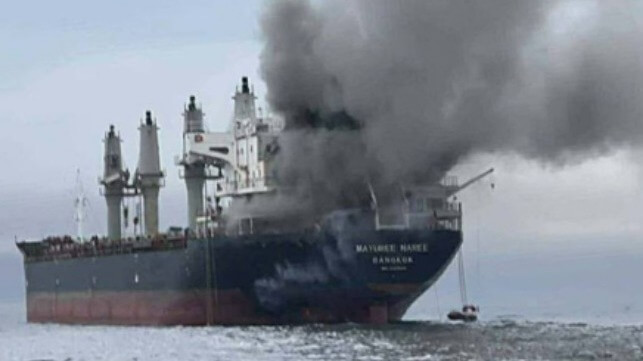
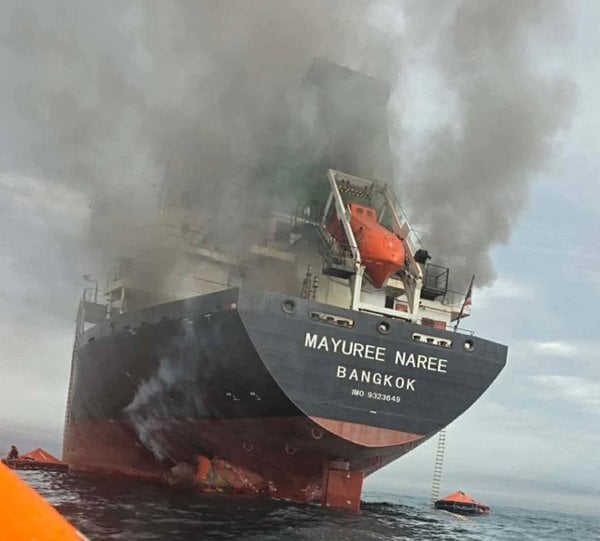
Mayuree Nari was struck by two projectiles and set ablaze off Oman (Royal Thai Navy photos)

Published Mar 11, 2026 11:49 AM by The Maritime Executive


The Thai-owned bulker Mayuree Naree (30,193 dwt) was set ablaze off the coast of Oman on Wednesday morning, March 11, as one of possibly four commercial ships attacked by Iran. Rescue efforts are underway as Iran's Islamic Revolutionary Guard Corps (IRGC) released a statement saying ships must request permission before attempting to enter the Straits.

The Royal Oman Navy responded to the Mayuree Naree while the Royal Thai Navy said it was coordinating and monitoring the rescue operations. The vessel reported being struck by two projectiles in the stern and the engine room, which caused explosions and a fire. The ship was traveling with ballast from the United Arab Emirates and was approximately 11 nautical miles off the coast of Oman.

The vessel’s owners, Precious Shipping, reported that the engine room was damaged and that 20 crewmembers had abandoned the ship in a lifeboat. They were rescued by the Omani Navy and taken ashore.

Three crewmembers are reported still aboard the ship, with the vessel’s owner saying that it believed they were trapped in the engine room. The Royal Thai Navy said additional rescue operations were underway, while at least one report said the crewmembers had stayed aboard the vessel to aid with the salvage efforts. UK Maritime Trade Operations later reported that the fires had been extinguished.

The shipping company asserts it was following the protocols and had strict safety measures in place. It said it was in constant contact with the UKMTO before the ship attempted the transit. It reports the ship is covered under War Risk Insurance.


The attack on the Mayuree Naree was the most serious of those reported by UKMTO. The containership One Majesty (79,443 dwt) owned by Mitsui OSK Lines and operated by Ocean Network Express (ONE) also reported being struck. It was about 25 nautical miles northwest of Ras Al Khaimah in the UAE. Vanguard Tech reports the ship suffered a 10-centimeter hole and was heading to a safe anchorage. The bulker Star Gwyneth (82,790 dwt) was struck by an unknown projectile approximately 50 nautical miles northwest of Dubai.

The IRGC said the Thai vessel had ignored warnings and attempted to pass through the Straits without permission. Iran had earlier said it would permit international shipping that had no ties to the United States or Israel to transit the Strait. It calls ships from the U.S., Israel, or their allies, or carrying oil cargo from these countries, “legitimate targets.” It is also claiming to have attacked another vessel, the containership Express Rome (122,961 dwt), which it alleges was also attempting to enter the Straits of Hormuz. It associated the vessel with Israel. The ship’s last AIS signal shows it is anchored along with a large grouping of vessels northeast of Dubai.

U.S. Central Command (CENTCOM) issued a warning this morning (March 11) to civilians that the Iranian regime is using civilian ports along the Strait of Hormuz to conduct military operations. It urges civilians in Iran to immediately avoid all port facilities where Iranian naval forces are operating. Iranian dockworkers, administrative personnel, and commercial vessel crews, CENTCOM says, should avoid Iranian naval vessels and military equipment. The U.S. yesterday reported it was increasing its attacks on smaller Iranian vessels capable of laying mines in the Straits of Hormuz.


U.S. Warns of Impending Strikes on Iran's Seaports

Bandar Abbas
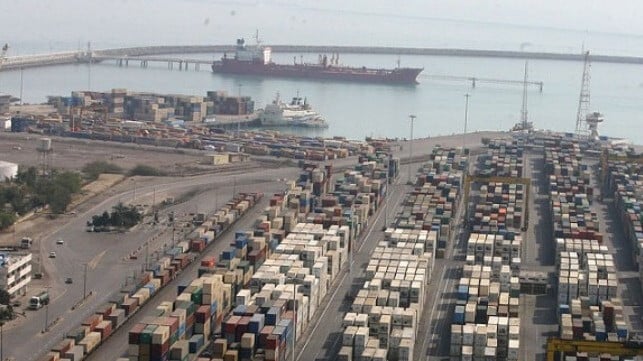
The waterfront at Bandar Abbas, Iran's main container port (file image)

Published Mar 11, 2026 2:01 PM by The Maritime Executive


On Wednesday, U.S. Central Command warned civilian personnel to stay clear of Iran's commercial seaports along the Strait of Hormuz, indicating the likely onset of a bombing campaign. CENTCOM accused Iranian forces of using the ports as staging grounds for Iran's limited, asymmetric naval operations. 

"CENTCOM urges civilians in Iran to immediately avoid all port facilities where Iranian naval forces are operating. Iranian dockworkers, administrative personnel, and commercial vessel crews should avoid Iranian naval vessels and military equipment," the command warned. "Although the U.S. military also cannot guarantee civilian safety in or near facilities used by the Iranian regime for military purposes, American forces will continue taking every feasible precaution to minimize harm to civilians."

The most prominent port in the Strait of Hormuz area, Bandar Abbas, is the principal container and breakbulk port for Iranian consumers. As they are strategic infrastructure, major seaports are often used for dual civilian and military purposes, and Bandar Abbas is no exception: it has been used before for receiving consignments of rocket fuel ingredients from China, among other military cargoes. As a practical matter, civilian ports are commonly targeted in the course of prolonged hostilities, as seen in recent events in Yemen, Ukraine and Russia. 

Iran has likewise conducted its share of strikes on port infrastructure in neighboring nations. On Wednesday, imagery of burning fuel tanks at the port of Salalah, Oman began circulating on social media, indicating Iran's willingness to strike even neutral nations that have facilitated peace negotiations. The port of Fujairah has also reportedly limited its bunker barge loading operations after damage from Iranian strikes; Fujairah is one of the world's leading bunker ports, alongside Singapore and Rotterdam. 


Report: Saudi Aramco Shuts Down Two Supergiant Offshore Oil Fields

Safaniya
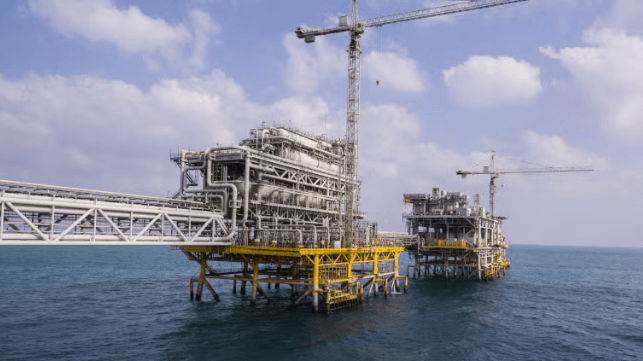
Infrastructure at the Safaniya field (Saudi Aramco)

Published Mar 9, 2026 8:46 PM by The Maritime Executive


Saudi Arabia has joined Kuwait and Iraq in beginning the process of drawing down oil production, a response to the closure of the Strait of Hormuz and a shortage of storage options. The Wall Street Journal has confirmed that Saudi Aramco has shut down the Safaniya and Zuluf fields, taking two million barrels per day of production offline. 

Safaniya is the world's largest offshore oil field, containing more than 30 billion barrels of oil in proven reserves, and Saudi Aramco has invested heavily in a program to modernize its extraction infrastructure to sustain production at levels exceeding one million barrels per day. Zuluf is another supergiant estimated at about 30 billion barrels, and has a nameplate production capacity in excess of one million bpd.

Iraq has already shut in enough production to match the sudden stoppage in exports caused by the closure of the Strait of Hormuz, and is producing just enough to satisfy domestic demand. Kuwait has signaled that it is slowing production as storage fills up, but it is hoping to preserve the ability to restart quickly once the transport situation normalizes. 

Saudi Arabia has more extensive tank storage options than its neighbors, and while it is normally dependent on Hormuz shipping for exports, it has another alternative. The Saudis operate a 750-mile pipeline connection from Gulf oil fields to a terminal at Yanbu, on the Red Sea. This circumvents the risks at Hormuz, though the Red Sea has security challenges of its own. The Saudi East-West pipeline can handle 7 million barrels per day and the Yanbu terminal can load up to 4.5 million barrels, according to Kpler - nearly half of all Saudi production, but not all of it.  

The ongoing conflict has had other effects on offshore operations. Contractor Borr Drilling has suspended operations on three of its jackup rigs in the Arabian Gulf amidst ongoing hostilities, the company said.

Two rigs in Qatari waters and another rig off the UAE have been downmanned to reduce risk, the company said. The action follows an unspecified incident aboard a customer-owned platform, which prompted Borr to shut down and evacuate the rig Arabia III. 

All of the rigs remain under contract and covered by insurance, the firm said. 


British opposition to US military action in Iran grows, new YouGov poll finds
Yesterday
Left Foot Forward

Opposition to the US-Israeli strikes on Iran has risen by 10 points


British opposition to the US military action in Iran is rising, according to new YouGov polling.

Polling carried out on 9 March found that 59% of Brits now oppose or strongly oppose the US-Israeli strikes on Iran.

This marks a 10-point increase from last week, when 49% of Britons said they opposed US military action against Iran.

On the tenth day of military action, support for the strikes on Iran has also fallen by three points, from 28% to 25% since 2 March.

Support for the US attacks is highest among Reform voters, with 57% saying they somewhat or strongly support the war.

Opposition to the war is strongest among Green, Labour and Lib Dem voters. The poll revealed that 87% of Green voters somewhat or strongly oppose the war, while 81% of Lib Dems and 76% of Labour voters are against it.

As opposition to the attacks on Iran grows, senior Reform figures appear divided on the issue, though Nigel Farage and Richard Tice have expressed support for the strikes.

Robert Jenrick MP has said that Reform would not send UK troops to join in the strikes, and that the party wants to “see the war come to an end as quickly as possible”.

By contrast, Farage said the UK “should do all we can” to help the Americans.

Asked if Reform would instruct the RAF to take part in bombing Iran, Tice said if Reform were in power “we would be helping the Americans and the Israelis in any way they saw appropriate”.

Olivia Barber is a reporter at Left Foot Forward

Majority of Britons describe themselves as anti-Trump, poll finds


Basit Mahmood 
9 March, 2026 
Left Foot Forward


It is unsurprising that a majority of Brits describe themselves as anti-Trump given that he has repeatedly criticised the UK.


A clear majority of Britons describe themselves as anti-Trump, a new poll has found, as the U.S. President continues to criticise the UK for not following his chaotic policies.

According to the poll, carried out by YouGov, 67% of Britons describe themselves as anti-Trump, with Reform UK voters the only group more likely to be pro-Trump than anti.

Trump has recently launched strikes against Iran which has caused regional turmoil, a decision that Prime Minister Keir Starmer has distanced himself from, saying UK troops would not be involved unless there was a clear legal basis.

A recent poll also found that 49% of Britons are opposed to US military action against Iran, compared to 28% who support the attacks.

It is unsurprising that a majority of Brits describe themselves as anti-Trump given that he has repeatedly criticised the UK.

Last year, Trump claimed that NATO troops, which included British soldiers, ‘stayed a little back, a little off the front lines’ in Afghanistan.

According to official UK figures, 405 of the 457 British casualties who died in Afghanistan were killed in hostile military action. Trump’s comments led to widespread condemnation.


Labour MPs criticise Tony Blair for backing Trump over Keir Starmer on US-Iran war

9 March, 2026 
Left Foot Forward

“A prolonged period of silence would be most welcome...


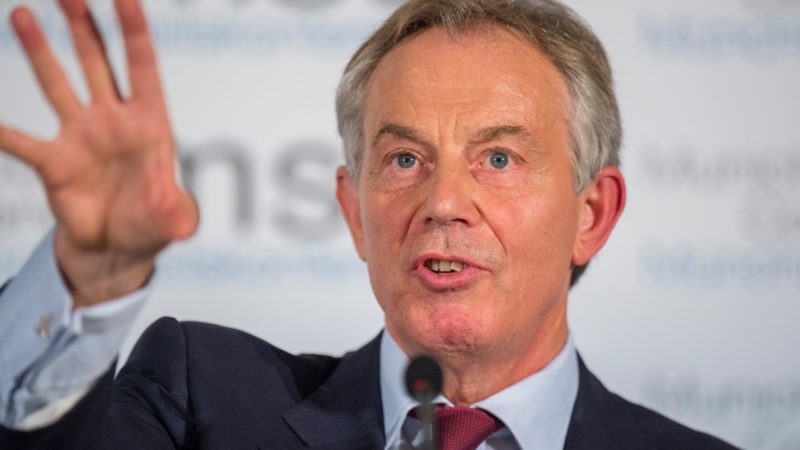
A number of Labour MPs have criticised former Prime Minister Tony Blair after he chose to back Donald Trump over Keir Starmer on the US-Israel war on Iran.

While the US-Israel strikes on Iran enter their 10th day, Prime Minister Keir Starmer has differed from U.S. President Donald Trump on his approach to the war, saying that UK troops would not be joining unless there was a lawful basis. He also told the Commons in a statement that he did not ‘believe in regime change from the skies’.

However, Former PM Sir Tony, who took the UK into the Iraq war in 2003 at the US’s urging, reportedly told a private event: “I think we should have backed America from the very beginning.”

He went on to say: “If they are your ally and an indispensable cornerstone for your security… you had better show up when they want you to.”

However, his critics accused him of failing to learn the lessons of the Iraq war.

Labour MP Jon Trickett is quoted in the Mirror as saying of Sir Tony: “A prolonged period of silence would be most welcome, particularly on matters to do with war and peace in the Middle East, where his record is disastrous.”

Fellow Labour MP Clive Lewis said: “This is the Prime Minister who led Britain into an illegal war whose consequences are still unfolding today. He’s the last person the current prime minister should be turning to for advice.”

Foreign Secretary Yvette Cooper has rejected Tony Blair’s assertion that the UK should have supported Donald Trump’s initial airstrikes on Iran, saying Britain had to “learn the lessons” of mistakes made in Iraq.

Asked about Blair’s comments, Cooper told Sunday Morning with Trevor Phillips on Sky News: “I just disagree.”

The foreign secretary added: “There are some people in politics who think that we should always agree with the US whatever. There are other people in politics who think we should never take action with the US again whatever the circumstances. I don’t think either of those positions is in the UK national interest, and it is the responsibility for Keir Starmer to act in the UK’s national interest for British citizens.”

Asked if she was calling Blair “a poodle”, she said: “I think the point is to make sure that, actually, we learn the lessons from some of the things that went wrong in Iraq, and I think that is exactly what Keir Starmer has done.”

Basit Mahmood is editor of Left Foot Forward

Calls grow for King Charles’ ‘unthinkable’ Donald Trump visit to be cancelled

9 March, 2026 
Left Foot Forward

The leader of the Lib Dems has said the King’s state visit should be cancelled given Trump’s illegal war on Iran


The Lib Dem leader has said Keir Starmer should urge King Charles to call off his visit to see the US President.

The King is due to visit the US next month to commemorate 250 years since the US declaration of independence from Britain was signed.

Ed Davey has called for the visit to be cancelled amid Donald Trump’s illegal war against Iran.

The Lib Dem leader also criticised Trump for repeatedly insulting Keir Starmer and the UK.

Trump said that Starmer had taken “far too long” to agree to allow the US to use UK military bases to carry out attacks on Iran.

He also said Starmer was “not Winston Churchill” in a jibe at his decision to hand back the Chagos Islands to Mauritius and lease back the US-UK military base on Diego Garcia.

Davey said: “Keir Starmer should advise the King that the state visit to the US scheduled for April should be called off.

“At a time when Trump has launched an illegal war that is devastating the Middle East and pushing up energy bills for British families, it’s clear this visit should not go ahead.

“A state visit from our King would be seen as yet another huge diplomatic coup for President Trump, so it should not be given to someone who repeatedly insults and damages our country.”

Backbench Labour MPs have also joined calls to cancel the visit, with one MP telling the Times: “It would be good to cancel and send a message.”

Green Party deputy leader Rachel Millward said: “Trump’s USA has become a rogue state, waging illegal wars abroad and unleashing terror on its streets through Trump’s ICE thugs.

“It is unthinkable that the King should grace Trump with a visit at this point.”

The Housing, Communities and Local Government secretary, Steve Reed, rejected Davey’s suggestion. He said: “I don’t think it’s for Ed Davey to decide what the King should or shouldn’t be doing, and I don’t think it’s appropriate for me to comment on his arrangements either.”

Olivia Barber is a reporter at Left Foot Forward
Europe Offers Little Hope for People in Iran Trying to Flee US and Israeli Bombs

The growth of far right parties like Nigel Farage’s Reform may further keep refugees from reaching European shores.
March 10, 2026

Reform UK leader Nigel Farage visits anti-Iranian government protesters during a gathering outside the Iranian Embassy in central London, on January 12, 2026.HENRY NICHOLLS / AFP via Getty Images

Earlier this week, as the U.S.-Israeli war on Iran intensified, U.K. Reform Party leader Nigel Farage doubled down on his anti-immigrant and anti-refugee stances. If, he declared, refugees start leaving Iran in large numbers, they will have to be housed in the Middle East; Britain simply can’t take in any more.

Farage spoke about the U.S.-Israeli operation in Iran in glowing terms. One outcome his country should celebrate, he argued, was that if the theocratic regime falls, large numbers of Iranians currently living in the U.K. will likely return home. Consider it a twofer, he was basically saying: a bad regime falls, and the U.K. may also rid itself of some of its Muslim immigrants.

Anti-immigrant tirades could well become official British policy in the not-too-distant future. The Starmer-led Labour government has disappointed the British public since coming to power in a landslide victory in the summer of 2024, and Prime Minister Keir Starmer himself is toxic with the electorate: Latest YouGov numbers show that 69 percent of the public views him unfavorably. (Amazingly, that’s an improvement on his January numbers, when fully 75 percent viewed him negatively.) Farage’s Reform U.K., a right-wing party backed by Donald Trump and the MAGA movement, now has a good chance of being the largest grouping in Parliament come the next general election, currently scheduled for 2029.

Amid outbreaks of violence aimed at asylum seekers housed in hotels around the country, the U.K.’s Labour government is pushing through legislation that would require refugees and asylum seekers to wait 20 years before they could gain permanent residency rights. Their ability to work would also be restricted, and they would be subject to fast-track deportation proceedings should their refugee status — which will now be reviewed every 30 months — be revoked.

The U.K.’s Labour government is pushing through legislation that would require refugees and asylum seekers to wait 20 years before they could gain permanent residency rights.

Now, as Defense Secretary Pete Hegseth announced last week that the U.S. could rain down “death and destruction from the sky all day long” on the Iranian regime (and by extension the 90 million residents of Iran) — European governments are caught in a vise. The Spanish government has explicitly decried the war as being illegal; the U.K. government initially refused the U.S. the right to use Diego Garcia and other bases in the region — though subsequently backpedaled on this; and even hard-right governments such as Giorgia Meloni’s in Italy are aware that their voters vehemently disapprove of Trump’s government and his wars in the Middle East.

Yet the disapproval of Trump’s wars, and the knowledge that European policymakers have been entirely sidelined in these momentous decisions impacting global security, global energy prices, and refugee flows, apparently doesn’t translate to a willingness to host those who might flee the bombs.

A Decade-Long Far Right Lurch Against Immigration

In 2015, hundreds of thousands of Syrians who were fleeing the civil war in their home country sought asylum or refugee status in Europe. Germany and Sweden, in particular, admitted large numbers of these war refugees. But, in the years that followed, far right anti-immigration parties — including Marine Le Pen’s National Rally in France; the Alternative for Germany party (AfD) in Germany; and Meloni’s Brothers of Italy Party — built their bases on campaigns of xenophobia, and support for them surged. Seeking to neutralize the appeal of the far right, more mainstream leaders began co-opting the latter’s anti-immigrant stances, acceding to arguments by the AfD, in particular, that millions of migrants should be “re-migrated” back to their home countries.

Seeking to neutralize the appeal of the far right, more mainstream leaders began co-opting the latter’s anti-immigrant stances.

In 2024, the European Parliament ratified the Pact on Migration and Asylum, making it easier for member states to deport would-be asylum seekers. In late 2025, the pact was amended to expand the list of third countries that asylees have transited through that they could now be deported back into. Cumulatively, these rule changes will allow for fast-track hearings (and deportations) for residents from a slew of poor, mainly southern hemisphere countries seeking refuge in Europe. The provisions of the new pact and the third country rule will kick in this summer. Amnesty International has denounced it as a “shameless attempt to sidestep international legal obligations.”

The EU alleges that, in retaliation for its support for Ukraine since the 2022 war began, Russia and Belarus are actively bringing asylum seekers in and then helping them evade EU border patrols and enter Poland and the Baltic States. In response, EU countries began rolling back the rights to claim asylum. In March of last year, the Polish government suspended this right for migrants entering the country via its border with Belarus. Finland also moved to limit the right to claim asylum for people entering the country over its border with Russia.

The moves on the eastern borders proved politically popular, and there is now a continent-wide effort to clamp down on asylum seekers.

Opinion polls in Germany show that the governing center-right Christian Democratic Union of Germany (CDU) and the extremist AfD are tied for first place, each with support from a quarter of the electorate. In France, Marine LePen’s party is in pole position to win the next parliamentary and presidential elections in 2029. Italy is governed by Meloni’s hard-right Brothers of Italy party, which has passed several anti-immigration policies. And in the U.K., with the electorate increasingly fractured and multiple parties breaking through in what has historically been a two party-dominated parliamentary system, Reform continues to lead in national polling. As politics moves rightward, with immigration proving to be a motivating force, mainstream governments are positioning themselves ever more against migrants.

In fact throughout all the large countries in Europe, only Spain, which has recently announced an amnesty for half a million undocumented immigrants, is bucking the trend and liberalizing many of its immigration laws. It’s likely that that action, as much as the Spanish government’s refusal to grant the U.S. rights to fly bombing raids from its bases, was what led to Trump’s recent threat to cut the country off from all trade with the United States.

The outlook is particularly bleak for those seeking safety from U.S. bombs.

Earlier this March, European ministers began holding a series of meetings to explore options should the war in Iran — a country of nearly 100 million that the United Nations High Commissioner for Refugees estimates currently houses up to 3.7 million refugees, most of them from Afghanistan — result in a flood westward of refugees. In those meetings, Sweden’s migration minister declared that allowing entry to a new wave of war refugees — which would not only include Iranians, but also refugees who had sought shelter in Iran — “is not an option”for Europe.

With most of Europe now firmly committed to a lockdown model that keeps desperate people caught in war zones far from the continent’s shores, and with the United States having all but ended its admission of refugees and asylum seekers, the outlook is particularly bleak for those seeking safety from U.S. bombs. Caught between the theocrats of the Iranian regime and the bombs-away brigade running Washington, D.C., Iranian civilians in 2026 have nowhere to run. The result could well be a humanitarian calamity.


This article is licensed under Creative Commons (CC BY-NC-ND 4.0), and you are free to share and republish under the terms of the license.

Sasha Abramsky


Sasha Abramsky is a freelance journalist and a part-time lecturer at the University of California at Davis. Abramsky’s latest book, American Carnage: How Trump, Musk, and DOGE Butchered the US Government, is available for pre-order now and will be released in January. His work has appeared in numerous publications, including The Nation, The Atlantic Monthly, New York Magazine, The Village Voice and Rolling Stone. He also writes a weekly political column. Originally from England, with a bachelor’s in politics, philosophy and economics from Oxford University and a master’s degree from the Columbia University Graduate School of Journalism, he now lives in Sacramento, California.
DESANTISLAND

This Fall, Florida Students Will Be Forced to Take “Anti-Communist” Classes

Florida public schools will force students to take a Heritage Foundation-backed class on the “evils of communism.”
March 10, 2026

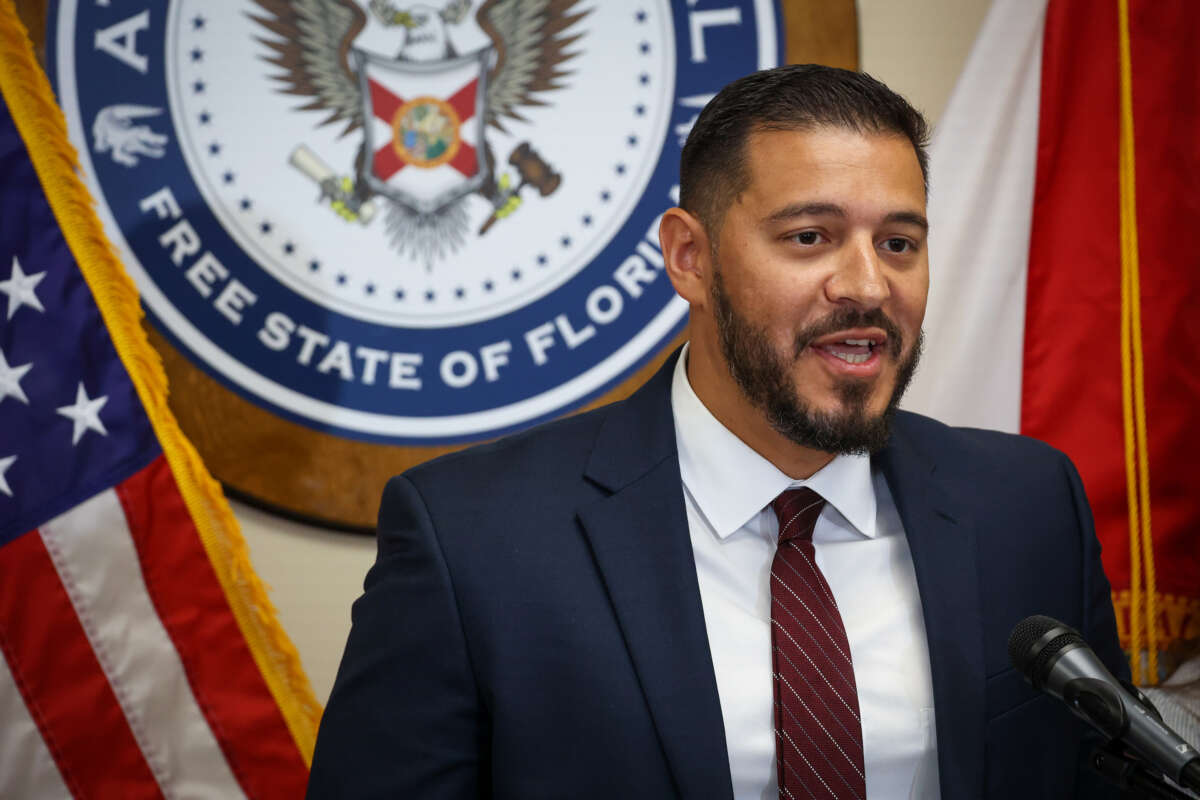
Florida Department of Education Commissioner Anastasios Kamoutsas speaks during a news conference in Orlando, Florida, on July 15, 2025.Rich Pope / Orlando Sentinel / Tribune News Service via Getty Images

First, there was democratic socialist Sen. Bernie Sanders. Then, in 2018, socialists Alexandria Ocasio-Cortez (AOC) and Rashida Tlaib won seats in the House of Representatives. Seven years later, in the fall of 2025, voters chose socialists Zohran Mamdani and Katie Wilson to lead New York City and Seattle, upping socialist representation in government to 250 people in 40 states.

These victories reflect the growing influence of socialist ideas and organizations across the U.S., driven in large part by youth. Unsurprisingly, the right wing has taken notice of this growing public appeal and has made it clear that it intends to stop the ascent of socialism — and communism — in their tracks. Their launching pad? Public education in Florida.

Beginning in the fall of 2026, all Florida middle and high school students will be required to take a yearly social studies class on the history of communism. The curriculum has already received the stamp of approval from the conservative Heritage Foundation (the group behind Project 2025), a right-wing nonprofit organization called the National Association of Scholars (NAS) and a NAS spinoff called the Civics Alliance, and it follows on the heels of the state’s 2022 imposition of Victims of Communism Day, which is now held every November 7 to mark the start of the 1917 Bolshevik revolution in Russia. The annual commemoration requires schools to provide a minimum of 45 minutes of instruction on “the horrors of communism” and the “destructiveness of Marxism-Leninism.” Programming is also expected to inculcate “an appreciation for the founding principles of the American republic.” What these principles are is not specified.

The new curriculum builds on this one-day event and also expands the Sunshine State’s commitment to “The Phoenix Declaration: An American Vision for Education,” which was developed by the Heritage Foundation and released in February 2025. According to Florida’s Education Commissioner Anastasios Kamoutsas, the state’s official approval of the Declaration — which was announced at a press conference — reflects the state’s “affiliation with the Heritage Foundation” and restricts topics the state has long viewed as pedagogically problematic, including instruction that covers sexual orientation, gender identity, racial inequality, and diversity, equity, and inclusion. Instead, the Declaration pledges curricula that foster “a love of country” and purportedly teach children to “seek the good, true and beautiful.” To date, Florida is the sole state to have signed on to the Declaration. Kamoutsas and state education officials are arguing that the new History of Communism Standards will uphold the Declaration’s principles and bolster student support for capitalism and free enterprise.

Their rationale is explicit:

Young Americans [sic] avowed fondness for socialism and communism is the corollary of never having been taught about the poverty, cruelty, and mass murder that are characteristic accompaniments of communism in practice. It is difficult to believe that Zohran Mamdani (for example) would have received such enthusiastic support if New York students had been taught about the lamentable catalog of atrocities committed in the name of communism by Lenin and Stalin, by Mao and Pol Pot, by Fidel Castro and Che Guevara.

Moreover, a state DOE press release sings the History of Communism Standards’ praises, saying: “Florida is leading the nation by equipping students with a truthful, in-depth understanding of how communist ideologies suppress individual freedoms, abuse power, and inflict widespread suffering.”

To hammer the idea, the curriculum outlines a range of topics to be covered: how communist espionage undermined U.S. national security and continues to pose a threat to the U.S. and its allies; how communists infiltrated the civil right movement; and how communist indoctrination works, among them. The curriculum presents Joseph McCarthy and the House Un-American Activities Committee as “champions of anti-communism”; it denounces collectives; and it extolls the value of private property and the acquisition of individual wealth. Cuba comes in for a particular drubbing: it is described in the curriculum as a key “exporter of revolutionary internationalism,” which, of course, is depicted in negative terms.

“Teachers Already Feel Handcuffed”

Andrew Spar, president of the Florida Education Association, is critical of the anti-communist curriculum. Nonetheless, he told Truthout:

Florida’s code of ethics requires educators to teach the state standards. That’s the challenge. Teachers already feel handcuffed. If they want to use their own resources or add a supplemental reading or film, these materials must first be approved by the district. We know that public students need and deserve more than math and reading instruction. They need the honest teaching of history. A democratic society demands that students learn how to think, not what to think. Debate and discussion drive ingenuity and the development of problem solving skills. But that’s not what is being promoted.

Indeed, Spar reports that teachers are feeling increasingly anxious about what can and cannot be taught. “The state needs to let teachers teach,” he said. “It’s concerning that the right wing says that it wants to take politics out of education, but this requirement does the exact opposite.”

Spar is far from alone in his critique. Still, despite union and community opposition to the Standards, teachers and administrators expect the curriculum to be rolled out at the start of the 2026-2027 school year.

Opponents, however, hope that negative assessments of the curriculum will deter other states from latching onto the model.

Timothy Snyder, a scholar who has written extensively about authoritarian regimes, used his Substack to denounce the curriculum for its over-simplification of the U.S. as the “best country in the world … The U.S. is to be defined as free and democratic, regardless of what Americans or their legislators actually do,” he wrote. What’s more, he concludes that the curriculum derails meaningful examination of the country’s history and limits thought about the best ways to preserve and expand equity, fairness, and liberty.

Like Snyder, historian Ellen Schrecker is an expert on right-wing repression (and especially McCarthyism) and told Truthout that the many false claims in Florida’s new curriculum need to be addressed:


They are pulling up random facts about a communist attack on so-called American values. What students will be taught is a view of a communist threat that did not, and does not, exist. The presentation of an out-of-control left — socialist and communist — that has continually tried to undermine American security is false. We also have to look at what is missing from the curriculum. For one thing, its coverage of McCarthy does not mention that people lost their jobs, really suffered, because of his attacks.

Like Snyder, Schrecker sees the portrayal of the U.S. as a world beacon as problematic. “The curriculum presents the U.S. with its great, white, male, Christian leaders, as perfect in most ways, but cautions that the country can be threatened by external socialist or communist forces,” she explained. “There is no mention of people who have been oppressed in the U.S. or even given limited opportunities. There is also a vague ‘us versus them’ positioning, with a focus on individual over collective responses.”

John White, a professor of English and Adolescent Literacy at the University of North Florida, is also troubled by the fallacies put forward in the History of Communism Standards.

“The right wing says that teachers should not indoctrinate students, but they have put forward a curriculum that indoctrinates students with a particular viewpoint,” he said. “The curriculum conflates communism and socialism as if they are one ideology.” White also agreed with Schrecker: “The curriculum ignores the fact that Joseph McCarthy was the epitome of a blowhard who has been widely discredited. Worse, the term ‘communism’ seems to be a catch phrase for any ideas that the right does not like.”

White said many of his students want to become social studies teachers because they love history and politics. “They don’t want to look at the world as a binary between good and evil or put opposing racism, sexism, and homophobia in the evil category and blind patriotism in the good category,” he continued. “Students do not need to be spoon-fed. This curriculum is the antithesis of good teaching because it undermines critical thinking.”

But these objections do not bother Florida’s Department of Education (DOE) or the DeSantis administration. Indeed, they see the History of Communism Standards as a continuation of a required class called Americanism vs. Communism that was taught to the state’s middle and high school students between 1962 and 1983. The course mandate was instituted following the Bay of Pigs invasion in April 1961 and was explicit in its intent to teach Florida kids about “the dangers of communism, the ways to fight communism, the evils of communism, the fallacies of communism and the false doctrines of communism.”

Linda Camarasana, a retired professor of English at the State University of New York at Old Westbury, took the class in 1976 while in high school in North Miami Beach. “We knew that the goal was to teach us about the evils of communism and stress that the U.S. was superior,” Camarasana told Truthout. “But at the time, the population of North Miami was very liberal and so were our teachers. We learned about the conditions that led to the Russian revolution and that caused people to rise up.” And despite knowing that the class was meant to present communism as horrible, she says that she got a balanced viewpoint that prompted independent study and research.

Both DeSantis and Kamoutsas are hell-bent on making sure that the current History of Communism Standards do not offer students or their teachers this kind of wiggle room to debate systems of governance. As Kamoutsas said in a 2025 press conference, stopping “the resurgence of communist ideologies across the United States and throughout the world,” is a Florida educational priority. He has asserted that he and the state DOE are confident the curriculum will soon be adopted by other states.


This article is licensed under Creative Commons (CC BY-NC-ND 4.0), and you are free to share and republish under the terms of the license.

Eleanor J. Bader
Eleanor J. Bader is a Brooklyn, New York-based freelance writer who focuses on domestic social issues and resistance movements. In addition to Truthout, she writes for The Progressive, Ms. Magazine, Lilith, The Indypendent, New Pages and other progressive blogs and print publications.


These also supply the proletariat with fresh elements of enlightenment and progress. Page 11. Manifesto of the Communist Party. Karl Marx and Frederick Engels.