Thursday, June 18, 2026


‘If Ukraine burns, so will Moscow,’ Zelenskyy says after refinery fire

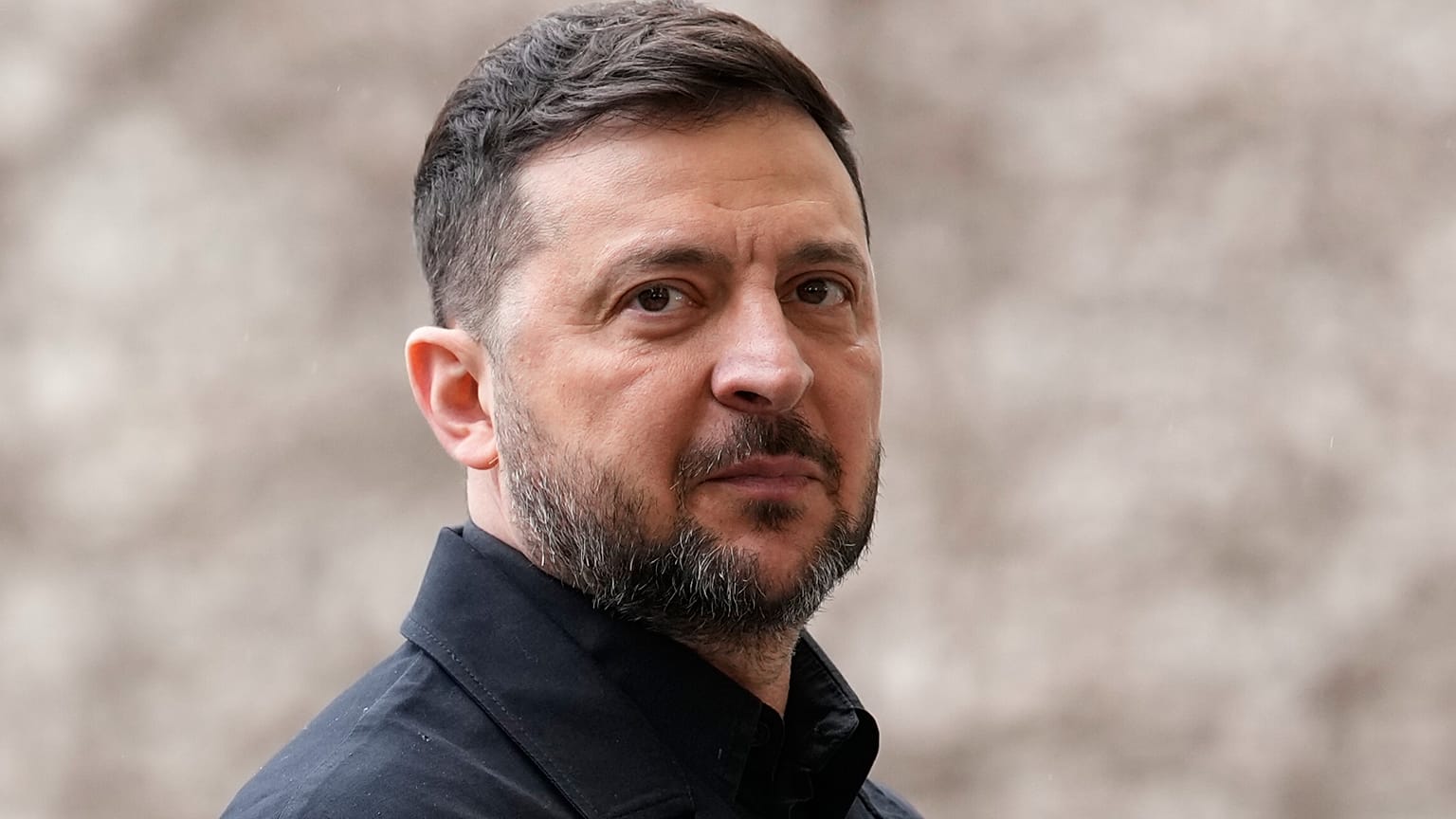
Ukraine's President Volodymyr Zelenskyy attends a welcome ceremony ahead of German-Ukrainian government consultations in Berlin Germany, Tuesday, April 14, 2026.
Copyright AP Photo
By Sasha Vakulina
Published on

The Ukrainian president said on Thursday that Kyiv will respond to all Russian attacks and that the morning strike on Moscow’s refinery — in response to Russia's attack on a UNESCO-protected cathedral earlier this week was “entirely justified.”

“If Putin does not want to end this war and wishes to continue it — we will not sit quietly, we will respond,” Ukrainian President Volodymyr Zelenskyy said in his comments on Ukraine’s strike on Moscow's oil refinery on Thursday morning.

“If Ukraine burns, so will Moscow," Zelenskyy said.

Ukraine’s president said Kyiv’s drone strike on the Moscow oil refinery is Kyiv’s response to Russia’s attack against the Kyiv-Pechersk Lavra, one of the most important historic and religious symbols of Ukraine.

“We were at the Lavra, and I said we will prepare a response and you will see it. I think you are seeing it now,” Zelenskyy said, insisting that all Kyiv wants is to end Russia’s war.

“We do not want this war and never have. Everyone knows this, and our partners know it too," he explained.

Zelenskyy also stressed that Moscow air defence — the strongest and most elaborate in the country — could not intercept Ukraine's drone attack, which he called “entirely justified”.

“As you can all see, regardless of the three rings of air defence that Moscow has in place, we have said that we will target them," he said.

Moscow oil refinery is one of the largest in Russia, supplying about 40% of the Moscow fuel market and the majority of the region's petrol.

It also provides aviation fuel to all four of Moscow's major airports and has a processing capacity of more than 12 million tonnes of crude oil per year, according to Ukraine's General Staff.

Speaking with the reporters in the presidential WhatsApp chat, Zelenskyy also called for increased pressure on Russia.

He argued that sanctions should target the country's energy sector, shadow fleet, oil and gas revenues, banking system, weapons production and defence industry “so that Russia realises there is no point in waging war. “

“The main thing is for the Russian people to begin to realise that it is just one man, Putin, who is waging this war, whilst it is the people who are paying the price for everything. “

This is why the pressure on Russia's leader Vladimir Putin should intensify from Ukraine, Europe and the US, Zelenskyy said.

“It is also time for the Russians to come to their senses and put pressure on their leader,” he concluded.


Ukraine strikes Moscow oil refinery for second time this week

Image of a reported attack on the Moscow region.
Copyright Andrey Vorobyov/Telegram

By Nathan Rennolds
Published on

It comes as Ukrainian President Volodymyr Zelenskyy met with NATO Secretary General Mark Rutte in Brussels.

Ukraine launched a wave of drone attacks across Moscow early on Thursday morning, as it continued to target the Russian energy industry.

In a series of posts on Telegram, Moscow mayor Sergey Sobyanin said air defences had intercepted 180 UAVS approaching the capital but that "several" had managed to strike a refinery in what he called a "massive" attack. It is the second time the refinery has been hit this week.

Video footage circulating on social media appears to show an enormous explosion and major fire at the scene. Emergency services are attending attack sites around the city, per Sobyanin.

Andrey Vorobyov, the governor of the Moscow region, said a fire caused by drone debris also broke out at a shopping centre in the southeast of Moscow and that another drone struck an apartment building in Zhukovsky, damaging part of a fire escape.

Ukrainian President Volodymyr Zelenskyy confirmed the attack on the refinery in a post on X, sharing a video appearing to show the aftermath of the strikes.

"Targets were also struck in the Rostov region and in temporarily occupied territories of Ukraine," he wrote.

Kyiv has stepped up strikes on Russian energy facilities in recent months in what Zelenskyy has described as a "just" campaign of "long-range sanctions" against Moscow.

Ukrainian forces have particularly targeted Russian oil facilities, including refineries, terminals and depots. Last week, Zelenskyy announced that his forces had struck the Kuibyshev refinery in Russia's Samara region, as well as two oil infrastructure facilities in the Vladimir region.

Russia carried out its own attack on the Ukrainian energy sector on Wednesday night, targeting an energy infrastructure facility in the Poltava region, per local authorities. Further strikes on an industrial facility and a business in the same region left one person injured, the Poltava Regional State Administration reported.

Zelenskyy said Russia used 1,920 attack drones, 1,790 guided aerial bombs, and 17 missiles against Ukraine last week.

It comes as the Ukrainian leader arrived in Brussels on Wednesday, where he met with NATO Secretary General Mark Rutte.

He said the pair discussed the NATO Prioritised Ukraine Requirements List (PURL), a procurement mechanism for Ukraine, as well as his talks with G7 leaders earlier in the week.

Zelenskyy had met with his G7 counterparts in France as he renewed his pleas for more air defense missiles and increased pressure on Moscow.

Zelenskyy said after the meeting that they had agreed on the "additional strengthening of Ukraine’s air defense" and new measures against Moscow.

Russian President Vladimir Putin is hosting leaders from across Southeast Asia this week at the ASEAN-Russia summit in Kazan.

Leaders from 11 countries including Cambodia, Thailand, Vietnam and Singapore will be attending the meeting, where they are expected to discuss strategic partnerships and potential new areas of political, economic and humanitarian cooperation.


Is Britain Becoming A War Economy? Russia, Ukraine And The Cost Of Confrontation – OpEd


President of Ukraine Volodymyr Zelenskyy with the United Kingdom’s Secretary of State for Defense, John Healey on January 9, 2026.
Photo Credit: Ukraine Presidential Press Service


June 17, 2026 
By Talal Nizameddin

The resignation of the Defense Secretary John Healey set in motion a string of resignations to pressure the government into major increases in military spending despite immense pressures on the British economy. This occurred within a week of the UK visit by Ukraine’s President Volodymyr Zelenskyy and ahead of a crucial G7 summit in France that announced more military support to the war effort.

While the resignation’s timing surprised many, the momentum has been building for years, fueled by a political culture that demands increased militarization that has placed Russia on top of the list of world enemies.

Russia’s President Vladimir Putin is an archetypal authoritarian ruler, if not autocrat, depending on how we perceive the system he rules over. Under him Russia has also become more militarized and more belligerent, picking up from the war on Chechnya he inherited when he first became president in 2000 to invade Georgia in 2008, occupy Crimea in 2014 as part of a wider encroachment on Ukrainian sovereignty, and finally launch a full-scale invasion against the country in 2022.

During that time Putin also sent troops to Syria to help fellow authoritarian Bashar Assad crush a popular rebellion with blood-curdling cruelty. Russia’s ultimately failed intervention in Syria was in many respects a turning point and dovetailed into Moscow’s concerns about the wider Arab Spring and the largest ever protests against Putin in Russia between 2011 and 2012. This marked Russia’s decisive pivot to the East and the point of no return with the West.


All this seems to validate British and Western belligerence towards, and isolation of, Russia and reconfirm the inevitability of war. A counter narrative suggests that Britain and the West carry a burden of guilt for pushing Russia and Putin to where they are now. Lest we forget that Putin was welcomed as a sober-minded partner in the 2000s after the excesses of the inebriated Yeltsin era.

Putin himself seemed to display every intention of joining the Western family. Russia was the first to extend support in the war against al-Qaeda in 2001, granting access to US bases in Central Asia in aid of Washington’s war on terrorism.

The US-led coalition invasion and occupation of Iraq in 2003 under deliberately false premises served to enhance the view in Moscow that the West cannot be trusted. For Putin and his security elite, this was never about Saddam Hussein but rather about control of the world’s energy supplies and to gain critical geostrategic advantage around Russia.

The Russian political elite came to consider the West as always speaking with a forked tongue. NATO expansion continued unabated since the 1990s, despite pleas and warnings from Moscow that Russia would have to respond. With the expansion came the establishment of military bases with defensive and offensive missiles that hugely undermined Russia’s ‘balance of terror’ capability that had kept the superpowers at bay for the decades of the Cold War.

Today, aside from Ukraine, an arc of countries from its Arctic northwest to its southern Black Sea are NATO members that reinforces Russia’s fear of strategic encirclement on its European front. Ukraine is the only remaining ‘outlet’ breaking the NATO chain. There is a widely circulated scene on social media of Putin’s extended laughter, he doesn’t laugh much, when a Western interviewer suggested that NATO’s military expansion towards Russia was really aimed at Iran.

Moreover, Russia has long been resentful and unconvinced by Western moralizing on human rights, which again has proven to be selective. One does not need to be a Russia sympathizer to observe how the country has been readily excluded from international cultural and sporting events while, controversially, other obvious ones in the spotlight have not.

A hopeful sign flickered when European leaders meeting in London in early June emphasized ‘deep and meaningful security guarantees’ for Ukraine, rather than explicitly insisting on NATO membership. The big three, Britain, France and Germany, are at a strategic crossroads given US fickleness exemplified by its current president and serious economic challenges.

But the continuation of the war in Ukraine may well define the character of Europe in the long run. The British economy is stuttering, with funds being diverted away from basic social services towards military spending.

The government has set a 5 percent of total GDP target exactly a year ago at the NATO summit in the Hague on security and defense that outpaces major domestic sectors and investments, including a net zero environmental target. The latest clash with the defense establishment is over Starmer’s hesitation in committing to a 3.5 percent government spending target to be front-ended at the expense of further cuts to core services. The other option is tax increases to fund defense, which comes with its own political and economic risks.

The time may have come to question the inevitability of eternal conflict with Russia and over Ukraine and whether the business of war has superseded pragmatic national security interests.

Countries that have been most vocal in their attack on Russia have been rewarded with billions of Euros and dollars, most recently a $51 billion package in SAFE loans to Poland primarily intended for defense.

When viewed from Moscow, populist newspapers particularly on the right such as The Mail and even TheTelegraph have been relentlessly stoking hostility towards Russia. The Sun in its true-to-form simplicity refers to the Russian President as Mad Vlad. Ostensibly moderate media have merely echoed the message. A recent article in The Independent authored by the controversial anti-Russia businessman Bill Browder, unabashedly incited and cheered for more confrontation and less diplomacy with Russia.


In response Russia has recoiled deeper and sought refuge in Asia. Russia’s hawks espousing the inevitable clash of civilizations model feel vindicated as politicians resolve to heal wounded cultural pride inflicted by Western rejection and haughtiness.

Putin has focused on cultivating relations with China, Turkey, Iran and other regional powers in Asia, with mixed results. More Russians, according to domestic polls, feel China and Asia as their more natural and trusted environment. Not unusual where Western hostile discrimination, sadly includes swathes of respectable academia, that considers allied Poles, Ukrainians and as bona fide Europeans and Russians as oriental Tatars.

Yet whether by design or folly, Europe and the US and their massively funded military and intelligence establishments seem not to have thought through simple scenarios for Russia after Putin, or what a transition period would look like in case of an internal collapse. Instead militarization is being normalized that is now encroaching on individual rights, as the government reviews laws to control social media and the right of protest.

The West can no longer boast the political, military, economic and yes, even cultural superiority it felt it enjoyed in the past. Economic decline is now a reality, especially for the young.

Without rewarding Russia’s invasion of Ukraine it is now time, more than ever, to rein in the war impulse and seriously recalibrate to plan for Russia to be, if not as potential partner, then at least a constructive member of the wider international community. The West needs a strong, stable Russia as much as it needs the West to rebuild fairer and more sustainable economies for the future of Europe.


About Talal Nizameddin
Dr. Talal Nizameddin is the author of "Putin and Eurasian Relations: Russia into the Shadows" (Routledge, 2026). He has written extensively on Russian foreign policy, Eurasian geopolitics and Middle Eastern affairs.
View all posts by Talal Nizameddin →

Trump-Xi Summit In May Changed Nothing In US-China Equation – OpEd


China’s President Xi Jinping with US President Donald Trump. Photo Credit: @WhiteHouse, X


June 17, 2026 
By Ayesha Sikandar

When Airforce One landed in Beijing last month for much anticipated Trump-Xi summit, carefully choreographed optics emerged depicting two major powers pledging stability. These optics became a highlight for many editorial desks who later featured it to their front page. Markets around the world inhaled breath of fresh air and analysts started talking about possibility of thaw in bilateral relations in context of the US-China competition. However, outcome of this summit looked like a managed pause in competition as neither side is willing to backdown from their position. The readouts coming from Washington and Beijing highlighted issues of trade and security as the primary issues discussed during talks. But what didn’t come out were the more imminent and pressing issues pertaining to intensifying great power competition over technology, digital infrastructure and economic security. This means that despite symbolism, meeting didn’t transform the trajectory of US-China relations.

The optics that Trump-Xi summit exuded were quite different from what it actually achieved. The main issues that were at the table before this summit remained there and tensions increased after summit as demonstrated by frictions over trade and technology. The first and foremost issue was related to trade which was also the highlight of Trump’s first administration. Being featured as the primary component of talks in the official readouts, nothing substantial came out in the end. One of the agreements that was reached during these talks was the purchase of 200 Boeing jets which, if materialized, will mark China’s first purchase in over a decade. However, the official confirmation of this deal is yet to be done by two of the three parties of this agreement that is Boeing and the China. Another thing was the reduction of tariffs over some agricultural products and resumption of poultry and beef imports to China as licenses of many facilities were renewed. However, the most important issue on table was the extension of trade truce that was signed between both parties in 2025. US Treasury Secretary Scott Bessent said that the US is “not in a rush to extend” the one-year trade truce, adding that “Things are stable.” Tariffs continue to serve as instruments of strategic leverage, while both countries increasingly view economic relations through the prism of national security.

The most consequential area that dominated the academic and policy circles debates before summit was the technological competition. The future of the US-China competition will revolve around this arena where both powers will try to secure the technological dominance over the other. The issues of technology mainly comprise of competition over semiconductors and advanced chips, Artificial Intelligence (AI) and emerging technologies, Digital infrastructure and technological standards. After the summit, President Trump suggested that there were limited discussions on these issues and only discussions that took place were the cooperation over AI safety standards. Later the remarks by U.S. Trade Representative Jamieson Greer further clarified that the issue of export controls was not discussed. This was notable given the presence of Nvidia CEO Jensen Huang in the presidential delegation and the issue surrounding sales of advanced Nvidia H200 chips to China. While Beijing subsequently announced plans for a bilateral AI dialogue, Washington has yet to signal a comparable initiative, underscoring the persistent gap between the two sides on technology-related issues.

Both the powers seek to dominate the race in domain of AI as it is becoming increasingly intertwined with economic competitiveness and military power. As US wants to maintain its lead in advanced AI models, China is trying to catch up despite restrictions. Recently, Anthropic suspended access to its advanced AI models Fable 5 and Mythos 5 for foreign users. The reason sighted was the national security concerns by the US government without giving any further details. It is public knowledge that the US accuses China of using ‘distillation’ technique to replicate capabilities of leading U.S. AI models such as such as Anthropic and OpenAI. With all these issues in AI causing frictions in the US-China relations, summit produced only limited discussion on AI safety standards.


The United States continues to impose restrictions on advanced semiconductor exports to China to limit its AI and military advancement, but these measures remain unchanged. While Washington debates their effectiveness and companies like Nvidia warn of economic costs and unintended acceleration of China’s self-reliance, Beijing is steadily expanding its domestic chip capabilities. Given that semiconductors are central to AI, computing, and defense systems, the summit ultimately made no progress on one of the most contentious issues in the bilateral relationship.

In the US policy making circles, there are growing concerns about increasing Chinese actions in cyberspace. The issue centers on ongoing U.S. allegations that China conducts sustained cyber espionage against American government institutions, private firms, and critical infrastructure, with specific concerns around intrusions attributed to groups like Salt Typhoon and Volt Typhoon that reportedly target telecommunications and essential services such as energy and water systems. U.S. intelligence views China as the most persistent cyber threat, yet the recent summit produced no meaningful agreement on cyber stability or rules of restraint. After this summit Trump talked about the discussion on issues related to cyber threats. When asked whether there were any discussions about cyber issues he stated that; ‘I did and he talked about attacks that we did in China. Y’know, what they do, we do too.” He added that, “They’re talking about the spying. Well, we do it too.” “We spy like hell on them too.” This casual equivalence also downplays the significance of cyber tensions raised in diplomatic settings, effectively stripping the issue of moral or legal distinction and reframing it as routine intelligence competition. In doing so, his comments contrast with the usual official U.S. framing, which typically emphasizes Chinese cyber threats as asymmetric and destabilizing rather than mutually mirrored behavior.

In short, Trump-Xi summit delivered little beyond carefully managed optics, creating an impression of stability without altering the underlying trajectory of U.S-China rivalry. While commentators initially read the meeting as a potential thaw, the substantive outcomes were limited to minor trade adjustments and uncertain commitments, while the most consequential issues such as technology competition, semiconductors, AI governance, and cybersecurity remained largely untouched. The absence of substantive breakthroughs at the summit suggests that future U.S-China engagement will likely remain transactional and issue-specific rather than transformative. As both powers double down on technological self-reliance and strategic hedging, the relationship is set to evolve not toward reconciliation, but toward a stable yet persistent rivalry shaped by mutual deterrence and cautious engagement.


About Ayesha Sikandar
Ayesha Sikandar is an MPhil International Relations (IR) scholar at National Defence University, Islamabad. Her areas of interests include China's domestic and foreign policy, as well as South Asian politics. She is currently affiliated with Strategic Vision Institute as Research Assistant.
View all posts by Ayesha Sikandar →


How Israel’s New ‘Security Belts’ Could Impact Middle East Stability – Analysis


AN Infographic generated by Gemini (Google AI)


June 18, 2026 
 Arab News
By Anan Tello

In what it describes as a campaign of self-defense, Israel has seized approximately 1,000 sq. km of land in Gaza, Lebanon and Syria since October 2023 — about 5 percent of its territory within the 1949 borders, according to a recent analysis.

The new zones of control, rights groups say, have displaced millions of people, razed residential areas and destroyed swathes of farmland. Israeli Prime Minister Benjamin Netanyahu has described these territorial seizures as “deep security belts” beyond Israel’s borders.

In a video message in late March, he said Israeli forces now hold about half of Gaza, control territory in Syria from the summit of Mount Hermon to the Yarmouk basin and have carved out “a vast buffer zone” in Lebanon to prevent infiltration and missile attacks.


The posture has continued to harden.

After Pakistan announced on June 14 that the US and Iran had reached a peace deal — one that observers speculate could include a halt to violence in Lebanon — Israeli Defense Minister Israel Katz said his troops would not withdraw from land seized in Lebanon, Gaza or Syria.

In a June 15 statement, Katz said Israel would remain in those areas “without a time limit” to “protect the border and Israeli communities,” the Israeli news website Ynet reported.

“The area will be cleared of local residents, and all terror infrastructure, above and below ground, including homes in contact-line villages that served as terror outposts, will be destroyed,” the statement added.

Netanyahu struck the same note that day, pledging that Israeli forces would remain in Lebanon, where Israel occupies more than 570 sq. km of territory, according to a recent analysis by the Financial Times.

“We will stay in the Lebanon security buffer zone for as long as necessary,” he told a press conference.

For critics, these statements reflect more than a short-term military doctrine.

Chris Doyle, director of the London-based Council for Arab-British Understanding, said years of Israeli “impunity” had enabled it to seize land in neighboring territories.

“Israel has expanded its territory in Palestine, in Lebanon, in Syria, occupying yet further swathes of land,” Doyle told Arab News. “It’s been able to do this because of a climate of impunity that has existed for decades and is even more favorable to Israel than ever before.”

Some of those expansions, particularly in the West Bank, are “ideological — out of a belief of a greater Israel,” he said. But others are intended to pressure states, create divisions and keep regional crises “bubbling over” to “maintain a state of tension that suits the Netanyahu coalition.

“Netanyahu requires this because he needs the Israeli population to be in a state of turmoil, of fear, that keeps him out of the courtroom, away from his trial, and with an ambition to alter the map of the Middle East and to demonstrate that he, his legacy, is one that leaves Israel as the dominant regional actor,” Doyle said.

“Of course, in doing this, he is risking going to war in Lebanon, in Palestine, Iran, and all the unforeseen consequences that war typically involves. And he’s now stuck in this eternal conflict cycle and doesn’t have an easy way out in which he can deliver on the objectives that he set.”

Whatever Netanyahu’s motivations, other analysts are skeptical that territorial expansion will deliver the security that Israel desires.

Hussein Chokr, a Beirut-based policy expert, said Israel is “stumbling in its search for security” and “does not seem to know how to secure itself.”

Like Doyle, he said the expansion would likely bring more violence, not more security.


“Further Israeli advances in Syria, for example, will make Turkiye feel that its national security is under threat, as Israel moves closer to its southern border,” Chokr told Arab News. “The same applies to Egypt in relation to Gaza.

“This will increase the likelihood of friction and deepen tensions, laying the groundwork for further rounds of violence that neither peace agreements nor normalization with these two states will necessarily prevent.”

To make that case, Chokr pointed to history.

“In the past, (Israel) believed that occupying surrounding territories, whether in Gaza or southern Lebanon, would bring it security. It did not, (and) Israel eventually withdrew under the pressure of resistance.

“Today, it is attempting the same approach once again, while sending a message first to the states on its borders and then to the wider region, that it is prepared to pursue destruction, killing, and even the occupation of territory prohibited under international law in order to feel secure.

“The region’s states will interpret this expansion collectively as a project of domination, while each will also assess it individually according to its own geopolitical implications.”

Israel occupied the Gaza Strip after the 1967 Six-Day War and carried out a unilateral disengagement in 2005. Israeli settlers were removed in August of that year, and the military completed its withdrawal from inside Gaza in September 2005.

In Lebanon, Israel invaded in 1982 and, after a partial pullback in 1985, maintained a “security zone” in the south with the South Lebanon Army as an allied force during the civil war — before withdrawing entirely on May 24, 2000.

The Iran-backed militant group Hezbollah was credited with pushing Israeli troops out.

Hezbollah emerged from militias formed in southern Lebanon to resist Israel’s 1982 invasion. Far from destroying the group, many observers believe Israeli attacks have strengthened Hezbollah politically, as it presents itself as the protector of the south.

Until today, Hezbollah has refused to disarm, citing Israel’s continued attacks and presence on Lebanese territory.

Israeli officials say the buffer zones follow sustained cross-border attacks, including the Hamas-led Oct. 7, 2023 assault from Gaza, near-daily Hezbollah rocket and drone fire from Lebanon, and periodic strikes or attempted infiltrations from Syrian territory.

They argue the expanded security belts are intended to push armed groups farther from Israel’s borders and reduce the risk of incursions, anti-tank fire, and short-range rocket attacks on civilian communities.

Although Hezbollah has reportedly been weakened since Israel’s military escalation in September 2024, which killed former leader Hassan Nasrallah, the group was able to launch an attack on northern Israel on March 2 in retaliation for joint US-Israeli strikes on Feb. 28 on Iran.

This latest conflict has killed at least 3,700 people in Lebanon and displaced more than 1.2 million, according to official figures. No reliable public count has emerged for newly displaced Israelis since March 2, though reporting points to continued temporary sheltering.


In Gaza, Israel occupies more than 60 percent of the territory, Reuters reported. Since Oct. 7, 2023, Israeli attacks have killed at least 73,000 people in the enclave, repeatedly displaced about 90 percent of the population, and rendered entire neighborhoods uninhabitable.

Meanwhile in Syria, the Israeli military has moved into the UN-patrolled buffer zone in the Golan Heights, exploiting the security vacuum immediately after President Bashar Assad’s removal in December 2024, and now controls the summit of Mount Hermon.

Israeli officials say the new Syrian government and other armed groups active in the country remain potential threats. In March 2025, Katz said the military “is prepared to stay in Syria for an unlimited amount of time.

“We will hold the security area in Hermon and make sure that all the security zone in southern Syria is demilitarized and clear of weapons and threats,” he said during a visit to the summit.

Israel has also carried out incursions into Syria’s southwestern Quneitra province, according to media reports.

On May 14, Amnesty International condemned what it called Israel’s “deliberate destruction of civilian homes” there since December 2024, saying the actions “should be investigated as war crimes.”

Amnesty reported that over the six months from Dec. 8, 2024, the Israeli military damaged or destroyed at least 23 civilian structures in three villages, displacing entire families.

Taken together, these campaigns point to what critics describe as an occupation-centered strategy that is deepening, not easing, regional instability. Chokr said Israel’s “occupation-driven approach will not bring it security.

“(Israel’s) crisis does not originate in its surroundings,” he said. “It is rooted in the nature of its own settler-colonial and exclusionary project, which struggles to accept coexistence with those who are neither Jewish nor Zionist unless they are rendered sufficiently weak.”

That strategy, Chokr argued, is also foreclosing diplomatic alternatives. He said Israel’s “expansionist policies” would push neighboring states “away from the collective Arab solution embodied in the Beirut Arab Peace Initiative.

“It is effectively forcing them to choose between submission to military pressure and the pursuit of unilateral agreements similar to Camp David,” he said.

Under the Camp David framework and the subsequent 1979 Egypt-Israel peace treaty, Israel agreed to withdraw from the Sinai Peninsula in stages, culminating in a complete military and civilian pullout.

As part of this process, all Israeli settlements in Sinai were evacuated and demolished, and military bases dismantled, despite strong resistance from many settlers and their supporters.

“Such agreements may eventually return some of the territories Israel is taking from them today. But they will not return the territories occupied in 1967, nor resolve the Palestinian question (but marginalizing it), nor prevent the cycle of violence from recurring.”

The Arab Peace Initiative, adopted by the Arab League at its Beirut summit in March 2002, offered Israel full normalization with Arab states in exchange for a full withdrawal from territories occupied since 1967, acceptance of an independent Palestinian state with East Jerusalem as its capital, and an agreed solution to the Palestinian refugee issue.

Chokr said the Arab and Muslim worlds “will not accept a Palestinian question abandoned to its fate.

“Yet any renewed demand for Palestinian rights appears to alarm the current Israeli state, with its increasingly exclusionary and settler-colonial character, prompting it to repeat the same policies it is pursuing now and has pursued before, the occupation of additional territory, as happened in 1967, 1978, and 1982.”


About Arab News
Arab News is Saudi Arabia's first English-language newspaper. It was founded in 1975 by Hisham and Mohammed Ali Hafiz. Today, it is one of 29 publications produced by Saudi Research & Publishing Company (SRPC), a subsidiary of Saudi Research & Marketing Group (SRMG).
View all posts by Arab News →


US and Iran sign deal, but who really won? Here's what to know

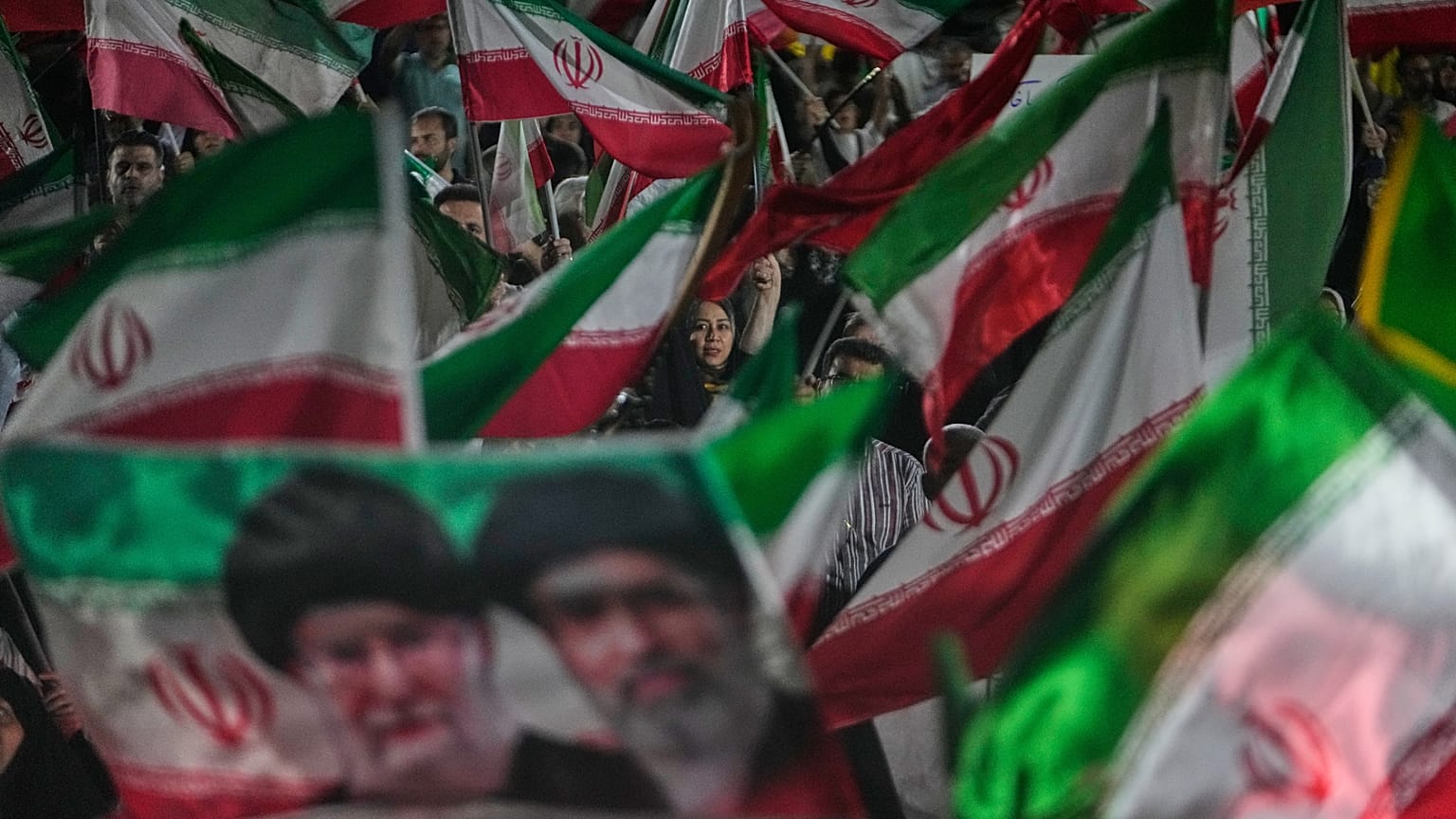
FILE: Pro-regime demonstrators wave Iranian flags and a portrait of Ayatollah Mojtaba Khamenei and his slain father in a gathering at a square in Tehran, 29 May 2026
Copyright AP Photo

By Aleksandar Brezar
Published on

Trump signed the framework deal at Versailles while Pezeshkian signed in Tehran, pledging to reopen the Strait of Hormuz and triggering 60 days of further talks. Analysts say the terms leave Tehran in a stronger position than the deal's framing suggests.

The US-Iran framework deal to reopen the Strait of Hormuz and bring the two adversaries back to the negotiating table over Tehran's nuclear programme was signed on Wednesday amid differing reports and growing confusion over its contents.

Despite an earlier announcement that the agreement would be signed at a ceremony in Switzerland on Friday, US President Donald Trump signed a physical copy of the deal while dining with French President Emmanuel Macron at the Palace of Versailles.

In Tehran, President Masoud Pezeshkian also signed the document on Wednesday, according to the state-run IRNA news agency, which posted an image of him holding up the deal with his signature next to Trump's.

Apart from the new oil revenue for Iran, the two sides are seemingly back where they were at the beginning of this year — before Israel and the US launched their intervention prompting Iranian attacks on neighbouring countries, which have left thousands dead across the region, triggered a global energy crisis and shaken the world economy.

Iran and the US will now enter a 60-day period of negotiations, with the question hanging over them of whether Trump can wrest a better deal for the US than the 2015 nuclear accord he scuttled eight years ago.

Meanwhile, Tehran has already secured significant concessions in its favour, as the Islamic Republic reportedly wrangled another boost to its coffers in the form of a $300 billion reconstruction fund.

Here is what to know based on details released by US officials, Iranian state-run media and independent analyses comparing the available documents and statements by both sides.

Neither Washington nor Tehran has officially published the agreement's text; multiple outlets have published what appears to be leaked versions, and ISW-CTP cautioned that its assessment was based on those unofficial copies.

Who stands to gain the most?

The leaked text of the agreement, if accurate, suggests that Tehran has emerged from the conflict in a stronger strategic position than the framing of the deal would imply, according to the latest analysis by the Institute for the Study of War think tank (ISW).

The ISW said the reported terms would grant Iran significant economic relief that it would likely use to try to reconstitute its missile, drone and nuclear programmes, as well as its regional network of proxies.

The think tank said it had observed no indication that Iranian decision-makers were willing to make concessions on the nuclear issues that would need to be resolved in any final agreement, despite the prospect of further economic relief tied to reaching one.

Iranian officials and state media are largely framing the agreement as a victory that formalises Iran's military gains.

Iran's English-language outlet Press TV argued on Tuesday that the signed memorandum represents "the political codification of a battlefield reality," according to ISW.

Get the oil flowing again

Under the agreement, the Strait of Hormuz will reopen, and the US will lift its blockade of Iranian ports — both of which should push gas prices down.

Passage through the waterway will be toll-free for 60 days, and the deal does not preclude fees after that, according to U.S. officials who spoke on the condition of anonymity to read details of the draft, which has not yet been officially released by Washington.

Iran's closure of the strait, through which around a fifth of the world's traded oil passed before the war, proved to be perhaps its strongest weapon.

It drove up global petrol prices, made food and other products such as fertiliser more expensive, and raised concerns about a possible air travel crisis ahead of the summer holiday season.

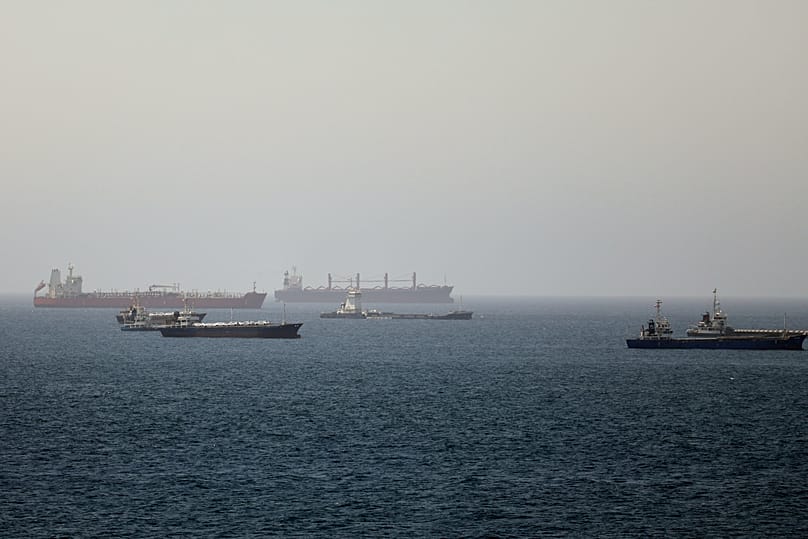
FILE: Tankers and cargo vessels are seen in the Gulf of Oman, along shipping routes in the Strait of Hormuz, 16 June 2026
FILE: Tankers and cargo vessels are seen in the Gulf of Oman, along shipping routes in the Strait of Hormuz, 16 June 2026 AP Photo

The ISW assessed that Iran will likely try to exploit ambiguous language in the agreement to maintain effective control over shipping through the strait.

The think tank said the reported text does not explicitly bar Iran from "managing" the waterway, meaning Tehran could continue to insist vessels use its traffic separation scheme in Iranian territorial waters and pay fees to the IRGC Navy — the same arrangement Washington has previously sanctioned as unlawful.

With the deal in place, the Islamic Republic has survived the most serious attempt ever by Israel and the US to topple its regime, despite the thundering opening volleys of the war that killed Iran's Ayatollah Ali Khamenei and other top officials.

Iran to sell oil freely, 'downblend' its uranium

The deal immediately waives — but does not eliminate — sanctions that Trump imposed on Iran's oil exports, allowing it once again to sell its crude on the world market and restoring a revenue stream worth billions.

Last year, Tehran earned an estimated $45 billion from oil sales. But it had only one major buyer, China, and had to ship its crude through a shadow fleet of tankers to elude sanctions, eating into its profits. Under the blockade since April, its exports have nearly ground to a halt.

With the waiver, Iran will likely be able to find more customers and sell its oil for higher prices.

The draft agreement calls for Iran's highly enriched uranium to be "downblended" — or diluted — under the supervision of the International Atomic Energy Agency IAEA), without elaborating. Negotiations on any other restrictions on Tehran's nuclear program lie ahead.

FILE: The exterior of the heavy water production facility in Arak, 360 kms southwest of Tehran, is seen in this 27 October 2004 file photo
FILE: The exterior of the heavy water production facility in Arak, 360 kms southwest of Tehran, is seen in this 27 October 2004 file photo AP Photo

Trump withdrew from a previous nuclear deal with world powers, criticising it for giving a huge windfall to Iran. The interim deal outlines even more lucrative incentives if Iran reaches a new nuclear agreement.

One is the eventual lifting of all international sanctions, which would seem to go further than the 2015 accord. That agreement lifted embargoes related to Iran's nuclear program but kept others in place over what the US alleged were Tehran's support for terrorism and rights abuses.

The interim pact also promises a $300 billion fund for postwar reconstruction. It is not clear where that money will come from — but Trump said so far the US would not contribute.

To give a sense of the extraordinary scale of the fund, the World Bank estimates that Syria, after 13 years of civil war, needs $215 billion for reconstruction. The Gaza Strip, largely devastated in two years of the Israel-Hamas war, needs $53 billion.

The deal also promises to unfreeze billions in Iranian assets held abroad through a procedure the two sides will work out, according to the text provided by US officials.

ISW also assessed that Iran had structured the deal specifically to limit Washington's ability to impose renewed pressure during the 60-day negotiating period, making it harder for the US to extract further concessions before a final agreement is reached.

Iran's missiles and support for proxies not on the table

The Trump administration repeatedly said its war aims were to "obliterate" Iran's missile arsenal, "sever its support" for armed proxies in the region, "annihilate its navy," and ensure it never acquires a nuclear weapon.

The seven weeks of US-Israeli bombardment are believed to have heavily damaged Iran's missile arsenal and production facilities as well as other parts of its military.

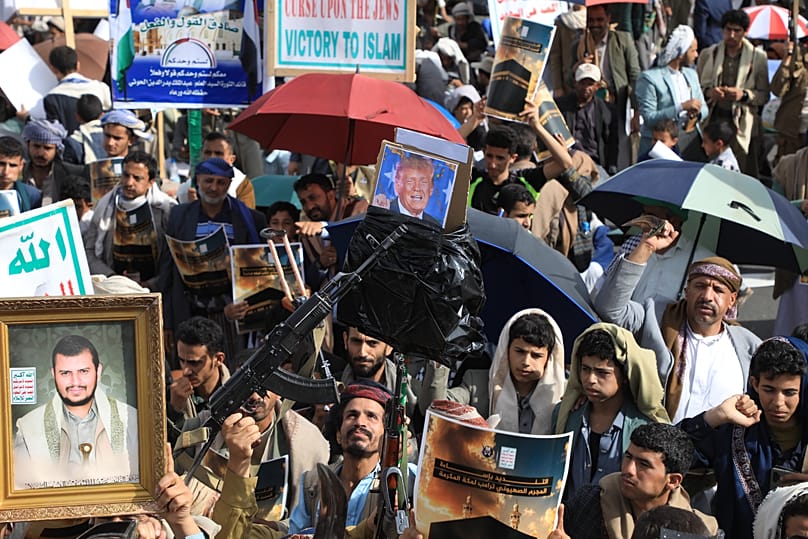
Houthi supporters raise a poster of their leader Abdul Malik al-Houthi and a poster criticising President Donald Trump during a rally in Sanaa, 16 June 2026
Houthi supporters raise a poster of their leader Abdul Malik al-Houthi and a poster criticising President Donald Trump during a rally in Sanaa, 16 June 2026 AP Photo

How heavily is not known, and Iran continued to fire on Israel as recently as last week. Meanwhile, Iran's ties with its militant proxies — Hezbollah in Lebanon, the Houthis in Yemen, Hamas in Gaza and Shiite militias in Iraq — appear as strong as ever.

Neither the missile arsenal nor Iran's support for its allies appears to be on the table in the upcoming negotiations.

US-Israeli ties strained

The deal calls for an end to the war in Lebanon, where Israel has been fighting Hezbollah.

However, Israel and Hezbollah are not parties to the agreement. Iran insists Israel must withdraw from the large swath of southern Lebanon it is occupying, but the interim deal does not explicitly require that and only ensures Lebanon's "territorial integrity".

The ISW said Tehran is interpreting the clause requiring a ceasefire "on all fronts" as obligating Israel to halt operations against Hezbollah and withdraw from Lebanon entirely — part of a broader Iranian effort to preserve Hezbollah by securing what the think tank described as Israeli capitulation in Lebanon.

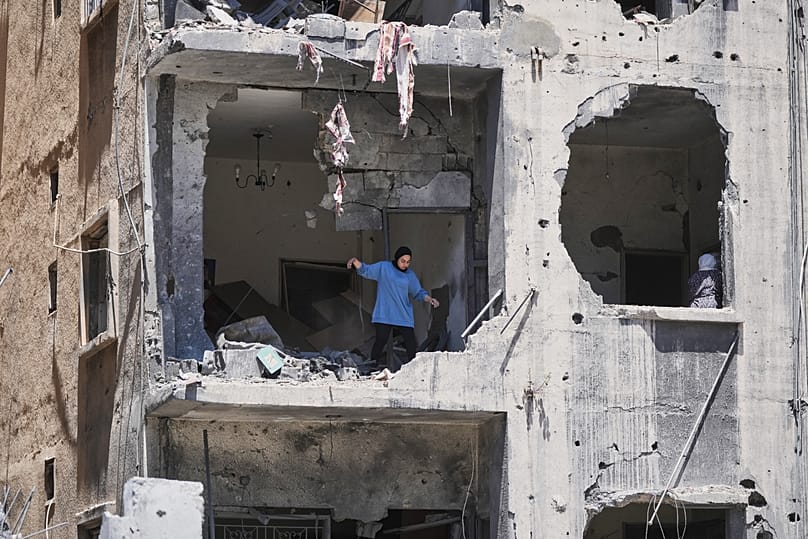
A woman walks through her apartment damaged in Israeli strikes in the southern port city of Tyre, 18 June 2026
A woman walks through her apartment damaged in Israeli strikes in the southern port city of Tyre, 18 June 2026 AP Photo

Israel has vowed to keep troops in Lebanon, while Hezbollah says it is committed to resisting Israel "until full withdrawal is achieved." Fighting between the two could derail the deal unless Washington and Tehran can rein in their respective allies.

Israel was squeezed out of the negotiations with Iran, and Israelis from across the political spectrum have called the deal a disaster, directing their fury at Prime Minister Benjamin Netanyahu.

Tensions between Trump and Netanyahu, meanwhile, have occasionally spilt into the open, including when the US president described the Israeli leader as "crazy".

At the G7 summit in France this week, Trump said that Netanyahu "has to be more responsible with respect to Lebanon."

Netanyahu is left in a precarious situation ahead of national elections later this year. His relationship with Trump may require downscaling a military campaign in Lebanon that is broadly popular in Israel.

Much depends on final agreement

The 2015 agreement negotiated by the Obama administration severely limited Iran's nuclear program for 15 years.

During that period, Iran could only enrich uranium to a low level, far below what's needed for a weapon.

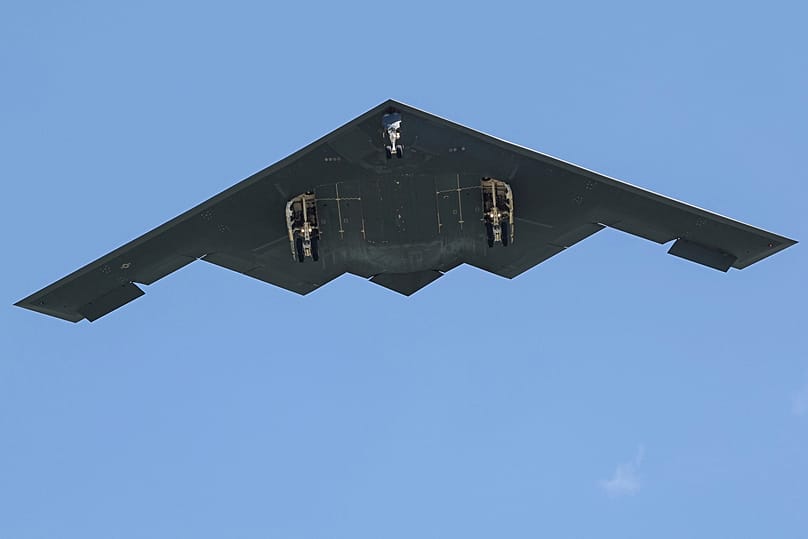
FILE: A B-2 bomber arrives at Whiteman Air Force Base, MO., on June 22, 2025, after returning from a massive strike on Iranian nuclear sites
FILE: A B-2 bomber arrives at Whiteman Air Force Base, MO., on June 22, 2025, after returning from a massive strike on Iranian nuclear sites AP Photo

It could stockpile only 300 kilograms of the material and had to sharply reduce the number of centrifuges carrying out enrichment. It was also put under stricter inspections by the IAEA.

One main criticism was the 15-year time limit, after which opponents said Iran would be able to quickly ramp up its ability to produce a bomb. Iran insists its nuclear program is for peaceful purposes.

A key question now will be whether the US can win stricter limits for the long term.


 U.S. Officials Disclose Details Of Framework Deal With Iran


June 18, 2026 
RFE RL
By Alex Raufoglu

Senior US officials have disclosed details of the framework deal with Iran that is set to be officially signed during a ceremony in Switzerland on June 19.

The memorandum of understanding envisages ending the fighting on all fronts, including in Lebanon, reopening the Strait of Hormuz to commercial traffic, and ending the US naval blockade on Iran, according to the text read out on a background call with reporters on June 17.

Upon officially signing the deal, the two sides commit to agreeing to a final settlement in 60 days that includes limits to Iran’s nuclear program and the removal of US sanctions on the Islamic republic, the US officials said.

“This is fundamentally an agreement that allows us to open the Strait of Hormuz immediately, commits the Iranians to destroying the nuclear stockpile, and then gives us a dial,” one senior US official said.

The accord, which has already been signed electronically, marks the most sweeping US-Iran diplomatic breakthrough in years and comes after months of war, maritime disruption, and back-channel negotiations involving regional mediators.

Despite presenting the agreement as a major diplomatic opening, US officials repeatedly stressed deep skepticism about Tehran’s intentions and warned military and economic pressure could quickly resume.

A second senior US official said a critical test would come at talks in Switzerland this weekend, where negotiators are expected to try to convert the memorandum into a sequencing plan for implementation.

“The meeting this weekend in Switzerland will be quite critical,” the official said. “If one party is not meeting the expectation of the other party, we’ll hopefully know within days or weeks, not months.”

Hormuz Toll-Free, US Blockade Lifted

One of the most significant provisions requires Iran to facilitate safe commercial shipping through the Strait of Hormuz free of charge for 60 days, while negotiating a longer-term maritime framework with Oman and Arab states in the Persian Gulf.

The United States will begin ending its naval blockade immediately upon the official signing and fully remove it within 30 days, according to the text.

Officials said the provision was already having an impact. “For the first time in the 100 days of this conflict, Iran did not fire at any vessels,” one official said.

The accord also provides for waivers allowing Iranian oil exports to resume, a move officials defended as economically pragmatic despite criticism from some conservative US politicians.

Iran’s Nuclear Stockpile

The nuclear provisions appear to be the most politically sensitive and strategically significant.

Iran reaffirms it “shall not procure or develop nuclear weapons,” while agreeing that its enriched uranium stockpile would at a minimum be down blended on-site, the US officials said.

“That’s the floor,” one official said. “We will push for more than that.”

A senior US official said Washington would rely heavily on the UN nuclear watchdog and US technical teams for verification. “We’re not in the trusting business,” the official said.

The official added that US personnel were prepared to assist in physically removing nuclear material, if required.

Officials also said damage from recent US air strikes on Iranian nuclear facilities had significantly limited Tehran’s ability to quickly recover the material.

Sanctions Relief Tied To Compliance


The deal envisions the eventual lifting of all US primary and secondary sanctions on Iran, but only as part of a final agreement.

The United States would also release billions in frozen Iranian assets in stages, contingent on what officials described as “good behavior.”

“What Iran wanted was access to these funds upon signing,” one official said. “What they conceded is that they wouldn’t get any money unless they performed.”

The agreement also outlines a reconstruction and development fund worth at least $300 billion, backed by Washington and regional partners, although officials emphasized Washington would not directly contribute funds.

Instead, sanctions waivers would allow Gulf investors and others to finance projects in Iran.


Alex Raufoglu is RFE/RL’s senior correspondent in Washington, D.C.


About RFE RL
RFE/RL journalists report the news in 21 countries where a free press is banned by the government or not fully established.
View all posts by RFE RL →


America’s Power Under Strain: Iran War Reveals U.S. Limits, Allies Pay The Price – OpEd

Family photo of G7 Summit in France. Photo Credit: White House, X


June 17, 2026 
By A. Jathindra

Who truly emerged victorious in the war between the United States and Iran? The conflict has yielded no clear answers, yet America’s friends have borne the brunt of Washington’s decisions. Iran’s retaliation against U.S. Gulf partners—and the deaths of three Indian seafarers in American strikes on oil tankers transiting the Strait of Hormuz—underscore Henry Kissinger’s enduring warning: “It may be dangerous to be America’s enemy, but to be America’s friend is fatal.”

That maxim now applies most directly to India, which described the incident as a “profound loss to our maritime family.” The tragedy highlights how America’s military campaigns reverberate far beyond the battlefield, leaving allies vulnerable and questioning the costs of alignment with Washington.

During and after the war, a striking question emerged: will President Trump’s place in American political history be unique, or will he be remembered as the leader who challenged America’s global image? Under “Operation Absolute Resolve,” the Trump administration captured Venezuelan president Nicolás Maduro and his wife in a twohour and twentyeightminute military raid, proclaiming a new Monroe Doctrine to reassert U.S. hegemony in the Western Hemisphere. Yet the campaign against Iran proved far less decisive, registering instead as a historic setback. Although Trump and his advisers declared victory, they have struggled to sell that narrative on the world stage.

The 40day war has inevitably raised doubts about America’s titanic military power. Belarusian president Alexander Lukashenka, a close ally of Moscow, seized on the U.S.–Iran standoff to declare that President Donald Trump had shown the world the United States is “not as powerful as it claims.” “If the Americans couldn’t handle Iran, then they should not mess with China,” he added. His remarks may be dismissed as propaganda, yet the perception that Iran held its ground against Israel—the Middle East’s strongest military—and the United States, the world’s foremost military power, has gained traction across West Asia.


Pakistan’s mediation in the conflict added further complexity. Washington’s acquiescence to Islamabad’s agenda is seen as a sign of U.S. selfdecline. President Trump claimed credit for brokering a ceasefire during India’s “Operation Sindoor,” launched after the Pakistanbacked Pahalgam terror attack that killed 26 people. India rejected Trump’s assertions, though he continued to maintain that his intervention had brought peace. Pakistan—a country that once sheltered Osama bin Laden, who was killed during a covert raid in Abbottabad—now positioning itself as a peace broker illustrates yet another slippage in America’s global image.

Why was “Operation Epic Fury” carried out? As Daniel Byman of the Center for Strategic and International Studies observed, Trump’s team set ambitious goals: ending Iran’s nuclear programme, degrading its missile and conventional forces, halting support for Hezbollah and Hamas, and ultimately regime change in Tehran. To that end, U.S. and Israeli forces killed Iranian leaders and bombed military infrastructure.

Israel launched an air campaign targeting Iran’s nuclear programme and regime leadership on 12 June 2025, aiming to “degrade, destroy, and remove [the] threat” of weaponisation. Some analysts noted that the 12day campaign succeeded to an extent by exposing structural weaknesses in the Islamic Revolutionary Guard Corps and demonstrating Israel’s technological superiority. Yet despite these tactical gains, the operation ultimately failed to achieve its strategic objectives. This failure was the reason the United States and Israel launched another war.

Washington now appears to be seeking a settlement rather than confrontation, with talks and an official signing ceremony expected on 19 June in Switzerland. This is widely seen as evidence of the failure of America’s “Big Stick Diplomacy” toward Iran. Negotiating with Iran’s theocratic regime—responsible for massacring tens of thousands of protesters—allows Tehran to claim victory simply by surviving. Even though U.S. commanders insist they achieved their objectives, including the destruction of Iran’s missile, drone, and naval capabilities, the reality is stark: Iran remains at the table with the world’s sole hegemonic power.


Chairman of the Joint Chiefs of Staff General Dan Caine stated on 8 April that the U.S. military had three objectives: to destroy Iran’s ballistic missile and drone capabilities, its navy, and its defence industrial base to ensure it could not reconstitute power beyond its borders. He declared those objectives achieved. Admiral Brad Cooper of CENTCOM echoed that claim the following day. Yet the fact that Washington is now pursuing a settlement suggests otherwise.

The truth is undeniable: Iran can claim success simply by surviving and now negotiating as an equal with the United States. For Israel, the implications are profound. A regime that continues to chant “Death to Israel” has endured, and in West Asia, Iran remains a formidable challenge to the State of Israel and its security.

Even if Washington and Tehran were to reach an agreement, profound uncertainties would remain: would it truly guarantee peace in the Middle East, end Iran’s proxy operations against Israel, or halt its nuclear ambitions? The answers are far from assured. As long as the antiIsrael regime in Tehran endures, peace in the region will remain elusive—and in that sense, America appears to have forfeited its ability to decisively shape the future trajectory of the Middle East.


About A. Jathindra
A.Jathindra is a geopolitical analyst and the founding director of the Trinco Centre for Strategic Studies, an independent think tank based in the port city of Trincomalee, Sri Lanka. His work focuses on Geopolitics and International Relations, with particular emphasis on China, South Asian security challenges, regional politics, and transnational terrorism.He is an alumnus of the U.S. Department of State’s International Visitor Leadership Program (IVLP), having participated in the regional initiative “U.S. Foreign Policy in the Indo-Pacific.”
View all posts by A. Jathindra →


Hormuz And The New Era Of Economic Warfare – OpEd

June 18, 2026 
EurActiv
By Chris Kremidas-Courtney

(EurActiv) — The Strait of Hormuz crisis is offering new lessons about how power works in the 21st century. Europe should take heed.

Despite reports of a new ceasefire agreement, the situation remains unstable and negotiations between Washington and Tehran have been opaque. Iran has previously threatened a complete closure of the Strait if it judges ceasefire terms to have been violated – a condition which shows that the economic warfare could still be ramped up.

In a world where key chokepoints are weaponised, the only two options are to shape events or be shaped by them. Right now, Europe is being shaped.

Its energy security strategy remains largely reactive and dependent on a US naval presence to keep critical waterways open, and on market diversification that is proving to be too shallow when a disruption materialises.

Having spent the years since 2022 diversifying away from dangerous energy dependencies – replacing Russian gas with LNG and building strategic reserves – the current situation reveals the underlying vulnerability was displaced but not yet solved.

Latest data from the first days of June shows that Iranian crude exports have collapsed by 84% in a single month, falling 87% below the average of the previous year. Production itself has been cut by 800,000 barrels per day.

The US has not only been sanctioning Iranian oil but also deployed warships to deter very large crude carrier movements, making the insurance and compliance cost of shadow fleet participation increasingly prohibitive.

This has forced Tehran into smaller, slower, more expensive tanker classes that reduce export capacity even when individual shipments do get through.

During the Iran-Iraq War in the 1980s, the US intervened to protect commercial traffic through the Strait of Hormuz. Today, Washington is selectively suppressing Iranian oil traffic while Iran is simultaneously blocking other vessels, including many commercial crude carriers. It is two actors using one chokepoint as a weapon simultaneously.

The post-Gulf War sanctions regime against Iraq offers a second, cautionary comparison. Those sanctions succeeded in suppressing Iraqi oil revenues and constraining rearmament, but they leaked persistently through the Oil-for-Food programme and regional workarounds involving Jordan and Turkey. The lesson was that sanctions without enforcement can leave large gaps, and the political will to close them erodes over time.

The most important enforcement gap today is also the most revealing. Chinese-affiliated vessels accounted for nearly a quarter of all ships exiting the Gulf since March, and this appears to be by arrangement rather than by accident. The US has been applying maximum pressure on Iranian revenue while declining to directly confront Beijing over its continued purchase of sanctioned crude. The exemption China enjoys signals precisely where Washington is willing to escalate, and where it is not.

The shadow fleet is also transforming in ways that will likely outlast this crisis. The emergence of mainstream shipowners taking on tankers with documented sanction histories suggests the lines between the legitimate and shadow maritime economy are beginning to blur.

This greying of the global shipping fleet is creating long-term governance gaps that existing sanctions regimes were not designed to address. Of course, the UN law of the sea (UNCLOS) was flawed from the start since geopolitical horse-trading gutted flag state accountability before the ink was dry.

Iran’s effective closure of the Strait is also an act of economic warfare whose costs are spread across global markets. Insurance premiums have spiked and rerouting shipments adds expenses to supply chains far beyond the Gulf. Tehran may be losing the export battle but its capacity to hamstring the global economy remains unchecked.

What June 2026 tells us about economic warfare is that whether wielded by a superpower or a sanctioned state, it can produce collapsing export revenue, production cuts, exhausting workarounds, and amplify risk across global markets. It’s also more viable when conducted with enough ambiguity to avoid triggering the escalatory responses that a more direct confrontation might invite.

European energy markets remain exposed to Gulf disruption, and the all-time high prices in late May were an early signal of what a prolonged crisis means for European industrial competitiveness. The EU is not a party to this conflict but is nonetheless absorbing its consequences.

About the author: Chris Kremidas-Courtney is a senior visiting fellow at the European Policy Centre, associate fellow at the Geneva Centre for Security Policy, and author of ‘The Rest of Your Life: Five Stories of Your Future.’

About EurActiv
EurActiv publishes free, independent policy news and facilitates open policy debates in 12 languages.
View all posts by EurActiv →


COMMENT: Iran and the GCC, the memory remains

COMMENT: Iran and the GCC, the memory remains
Relations across the Gulf are near zero. / bne IntelliNewsFacebook
By Professor Simon Mabon June 15, 2026

When Iranian rockets and drones hit the US 5th Fleet in Manama, videos posted on social media showed some Bahrainis celebrating the strikes. The videos revealed the deep-seated anger felt by many at the killing of Ayatollah Ali Khamenei, Iran’s Supreme Leader, and a spiritual figure for Shia Muslims around the world. For the Bahraini authorities, the videos once again raised suspicion about the loyalties of Shia inhabitants of the country, highlighting the multiple security calculations emerging from the conflict.

One hundred days into the war, and a diplomatic resolution appears within reach, albeit merely a Memorandum of Understanding at this point. Even if there is a final agreement, the memory of the past 100 days will linger for years to come. Finding a way to address the suspicion and animosity is of paramount importance.

Amongst the many different issues raised by the conflict, the question of regional security is perhaps foremost in the minds of Gulf leaders. The conflict has highlighted the vulnerabilities that come with relying on the US for security. Moreover, as several officials have stressed, Arab Gulf states cannot change their geography; they have to find a way of living alongside the Islamic Republic and, in addition, create an environment that is conducive to the security of all parties.

This conclusion had previously been reached by Saudi Arabia following the attacks on Abqaiq and Khurais oil refineries in 2019. Furious Saudi officials had expected a forceful response from the US, but this was not forthcoming. Instead, in a marked policy shift, the Kingdom embarked on a long and arduous process of resetting relations with Iran, a state with which the Saudis had severed diplomatic relations in 2016. This process took a huge amount of effort and the work of countless intermediaries who undertook track II diplomatic efforts, highlighting the depth of animosity between the two states. Ultimately, diplomatic efforts were successful, seen through the normalisation agreement signed in 2023 in Beijing. Yet recent developments appear to have derailed this progress.

The volume of strikes conducted by Iran on its Gulf neighbours makes shared security an increasingly challenging outcome to achieve. Though Tehran was initially quick to stress that strikes were on US targets, not against their Arab and Muslim brothers - statements that were swiftly rejected by Gulf leaders - as the war progressed, strikes also hit non-US targets within the Gulf states.

Across the past 4 decades, geopolitical crises have resonated within states as well as between them. A closer look at history in this time highlights this. Suspicion at the region’s Shia inhabitants has long plagued politics across the Arab Gulf states. Since the establishment of the Islamic Republic of Iran and the articulation of an expansionist foreign policy in support of the “downtrodden” of the Muslim world, the region’s Shia population has been viewed with suspicion and trepidation by many of their Sunni counterparts.

Iranian involvement in the establishment of Hezbollah, the Islamic Front for the Liberation of Bahrain, collaboration with Hezbollah al Hijaz, and other Shia groups fostered suspicion towards both Tehran and their coreligionists across the Middle East. Statements from Ruhollah Khomeini, the theological architect of the Islamic Republic, and other Iranian officials about exporting the revolution exacerbated many of these concerns.

Following the US lead invasion of Iraq in 2003, narratives of perfidious Iranian engagement across the Middle East reverberated, perhaps best captured in King Abdullah of Jordan‘s remarks about a Shi’a Crescent that spread from Iran all the way across to the Mediterranean Sea. This again hinted at the divided loyalties among local Shi’a populations and Iran's growing capacity to manipulate those divisions. What followed was the emergence of a climate of distrust and violence, exacerbated by the sectarian conflict that consumed Iraq following the fall of Saddam Hussein. Fearing the growing influence of Iran, Bahrain’s rulers sought to cultivate closer relations with Israel back in 2007, some 13 years before the signing of the Abraham Accords.

When the Arab Uprisings broke out in 2011 the legacy and memory of Iranian actions during the 1980s shaped the responses of many in Bahrain for example the ruling Al Khalifa family framed protesters as nefarious Iranian fifth colonists With some evoking memories of the 1980s to justify these actions. Others suggested that Iran had been smuggling weapons into Bahrain while similar developments were felt in Kuwait with terrorit plots allegedly thwarted by the state.

As history has shown, trust is difficult to build but easy to shatter. But geography is inescapable. Qatar shares a gas field with Iran, there is a large Iranian population in the UAE, and the Islamic Republic has cultivated positive relations with Oman. While the signing of the Saudi-Iran normalisation agreement shows that suspicion can be overcome, the sheer volume of Iranian attacks on Gulf states has provoked deep anger and concern. Add possible spoilers into the mix and the situation remains volatile, even if a final agreement can be reached.

Much of the goodwill generated between the Saudis and Iranians from March 2023 to February 2026 has dissipated. Few will trust Iran moving forward, especially if, as some suggest, the Islamic Republic is emboldened by the outcome of the war (which is looking increasingly likely). Whether trust can be restored between states in the Gulf, but also between different sectarian communities within states, remains to be seen.

Simon Mabon is Professor of International Politics at Lancaster University and the author of Schism: The Story of Sectarianism in the Modern Middle East (Yale University Press, 2026).