‘If Ukraine burns, so will Moscow,’ Zelenskyy says after refinery fire
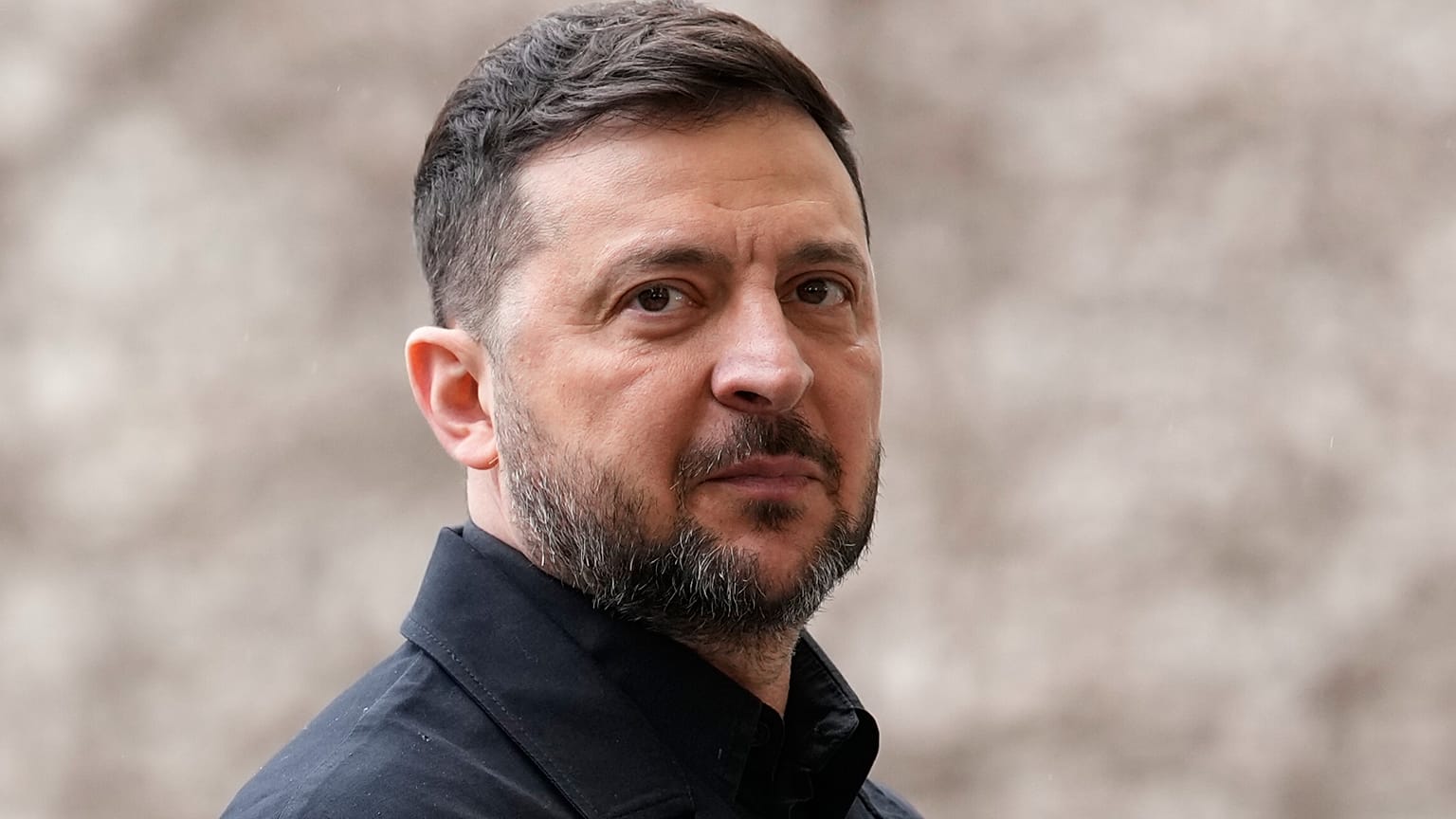
The Ukrainian president said on Thursday that Kyiv will respond to all Russian attacks and that the morning strike on Moscow’s refinery — in response to Russia's attack on a UNESCO-protected cathedral earlier this week was “entirely justified.”
“If Putin does not want to end this war and wishes to continue it — we will not sit quietly, we will respond,” Ukrainian President Volodymyr Zelenskyy said in his comments on Ukraine’s strike on Moscow's oil refinery on Thursday morning.
“If Ukraine burns, so will Moscow," Zelenskyy said.
Ukraine’s president said Kyiv’s drone strike on the Moscow oil refinery is Kyiv’s response to Russia’s attack against the Kyiv-Pechersk Lavra, one of the most important historic and religious symbols of Ukraine.
“We were at the Lavra, and I said we will prepare a response and you will see it. I think you are seeing it now,” Zelenskyy said, insisting that all Kyiv wants is to end Russia’s war.
“We do not want this war and never have. Everyone knows this, and our partners know it too," he explained.
Zelenskyy also stressed that Moscow air defence — the strongest and most elaborate in the country — could not intercept Ukraine's drone attack, which he called “entirely justified”.
“As you can all see, regardless of the three rings of air defence that Moscow has in place, we have said that we will target them," he said.
Moscow oil refinery is one of the largest in Russia, supplying about 40% of the Moscow fuel market and the majority of the region's petrol.
It also provides aviation fuel to all four of Moscow's major airports and has a processing capacity of more than 12 million tonnes of crude oil per year, according to Ukraine's General Staff.
Speaking with the reporters in the presidential WhatsApp chat, Zelenskyy also called for increased pressure on Russia.
He argued that sanctions should target the country's energy sector, shadow fleet, oil and gas revenues, banking system, weapons production and defence industry “so that Russia realises there is no point in waging war. “
“The main thing is for the Russian people to begin to realise that it is just one man, Putin, who is waging this war, whilst it is the people who are paying the price for everything. “
This is why the pressure on Russia's leader Vladimir Putin should intensify from Ukraine, Europe and the US, Zelenskyy said.
“It is also time for the Russians to come to their senses and put pressure on their leader,” he concluded.
Ukraine strikes Moscow oil refinery for second time this week
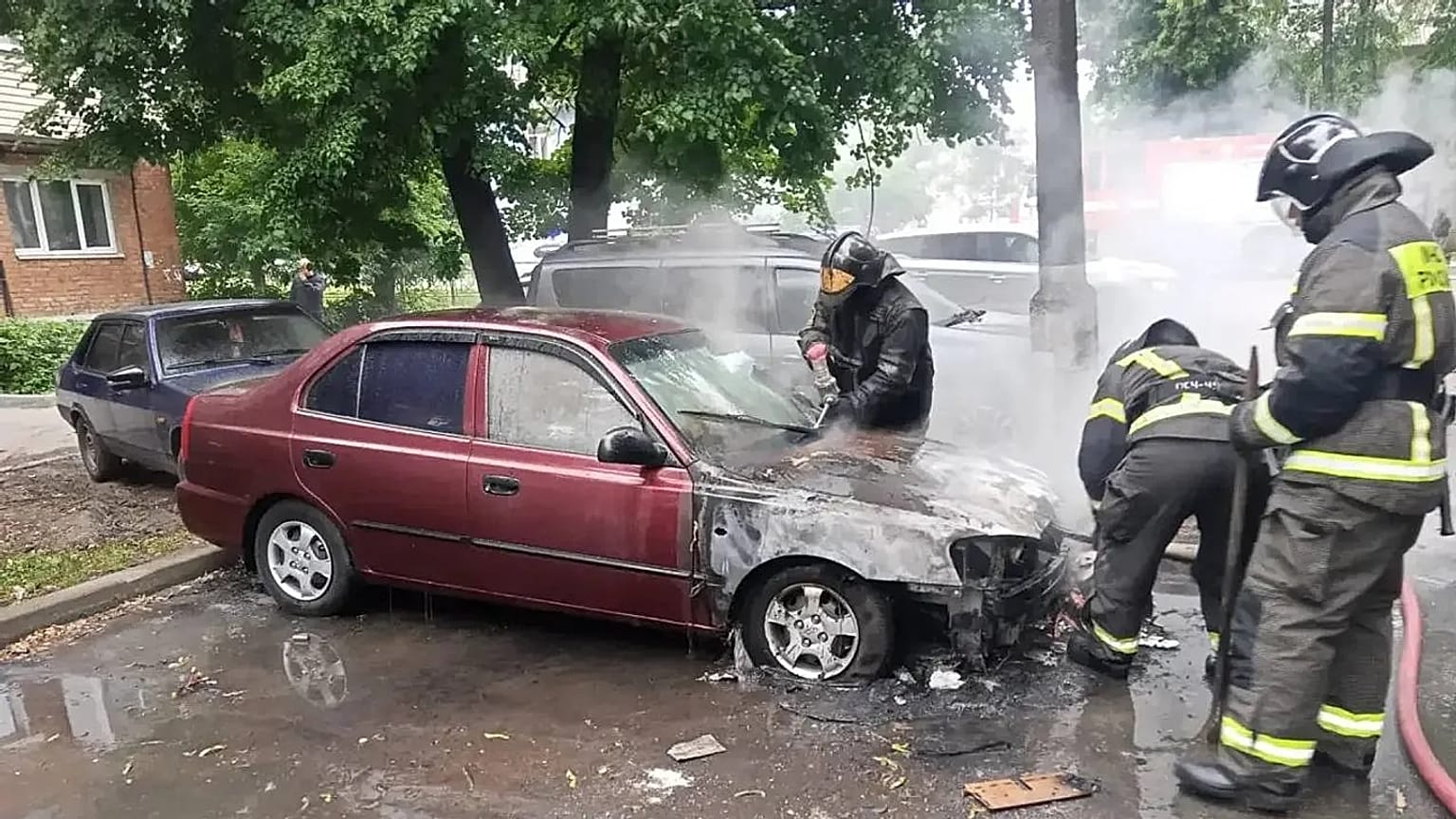
It comes as Ukrainian President Volodymyr Zelenskyy met with NATO Secretary General Mark Rutte in Brussels.
Ukraine launched a wave of drone attacks across Moscow early on Thursday morning, as it continued to target the Russian energy industry.
In a series of posts on Telegram, Moscow mayor Sergey Sobyanin said air defences had intercepted 180 UAVS approaching the capital but that "several" had managed to strike a refinery in what he called a "massive" attack. It is the second time the refinery has been hit this week.
Video footage circulating on social media appears to show an enormous explosion and major fire at the scene. Emergency services are attending attack sites around the city, per Sobyanin.
Andrey Vorobyov, the governor of the Moscow region, said a fire caused by drone debris also broke out at a shopping centre in the southeast of Moscow and that another drone struck an apartment building in Zhukovsky, damaging part of a fire escape.
Ukrainian President Volodymyr Zelenskyy confirmed the attack on the refinery in a post on X, sharing a video appearing to show the aftermath of the strikes.
"Targets were also struck in the Rostov region and in temporarily occupied territories of Ukraine," he wrote.
Kyiv has stepped up strikes on Russian energy facilities in recent months in what Zelenskyy has described as a "just" campaign of "long-range sanctions" against Moscow.
Ukrainian forces have particularly targeted Russian oil facilities, including refineries, terminals and depots. Last week, Zelenskyy announced that his forces had struck the Kuibyshev refinery in Russia's Samara region, as well as two oil infrastructure facilities in the Vladimir region.
Russia carried out its own attack on the Ukrainian energy sector on Wednesday night, targeting an energy infrastructure facility in the Poltava region, per local authorities. Further strikes on an industrial facility and a business in the same region left one person injured, the Poltava Regional State Administration reported.
Zelenskyy said Russia used 1,920 attack drones, 1,790 guided aerial bombs, and 17 missiles against Ukraine last week.
It comes as the Ukrainian leader arrived in Brussels on Wednesday, where he met with NATO Secretary General Mark Rutte.
He said the pair discussed the NATO Prioritised Ukraine Requirements List (PURL), a procurement mechanism for Ukraine, as well as his talks with G7 leaders earlier in the week.
Zelenskyy had met with his G7 counterparts in France as he renewed his pleas for more air defense missiles and increased pressure on Moscow.
Zelenskyy said after the meeting that they had agreed on the "additional strengthening of Ukraine’s air defense" and new measures against Moscow.
Russian President Vladimir Putin is hosting leaders from across Southeast Asia this week at the ASEAN-Russia summit in Kazan.
Leaders from 11 countries including Cambodia, Thailand, Vietnam and Singapore will be attending the meeting, where they are expected to discuss strategic partnerships and potential new areas of political, economic and humanitarian cooperation.

President of Ukraine Volodymyr Zelenskyy with the United Kingdom’s Secretary of State for Defense, John Healey on January 9, 2026. Photo Credit: Ukraine Presidential Press Service
June 17, 2026
By Talal Nizameddin
The resignation of the Defense Secretary John Healey set in motion a string of resignations to pressure the government into major increases in military spending despite immense pressures on the British economy. This occurred within a week of the UK visit by Ukraine’s President Volodymyr Zelenskyy and ahead of a crucial G7 summit in France that announced more military support to the war effort.
While the resignation’s timing surprised many, the momentum has been building for years, fueled by a political culture that demands increased militarization that has placed Russia on top of the list of world enemies.
Russia’s President Vladimir Putin is an archetypal authoritarian ruler, if not autocrat, depending on how we perceive the system he rules over. Under him Russia has also become more militarized and more belligerent, picking up from the war on Chechnya he inherited when he first became president in 2000 to invade Georgia in 2008, occupy Crimea in 2014 as part of a wider encroachment on Ukrainian sovereignty, and finally launch a full-scale invasion against the country in 2022.
During that time Putin also sent troops to Syria to help fellow authoritarian Bashar Assad crush a popular rebellion with blood-curdling cruelty. Russia’s ultimately failed intervention in Syria was in many respects a turning point and dovetailed into Moscow’s concerns about the wider Arab Spring and the largest ever protests against Putin in Russia between 2011 and 2012. This marked Russia’s decisive pivot to the East and the point of no return with the West.
All this seems to validate British and Western belligerence towards, and isolation of, Russia and reconfirm the inevitability of war. A counter narrative suggests that Britain and the West carry a burden of guilt for pushing Russia and Putin to where they are now. Lest we forget that Putin was welcomed as a sober-minded partner in the 2000s after the excesses of the inebriated Yeltsin era.
Putin himself seemed to display every intention of joining the Western family. Russia was the first to extend support in the war against al-Qaeda in 2001, granting access to US bases in Central Asia in aid of Washington’s war on terrorism.
The US-led coalition invasion and occupation of Iraq in 2003 under deliberately false premises served to enhance the view in Moscow that the West cannot be trusted. For Putin and his security elite, this was never about Saddam Hussein but rather about control of the world’s energy supplies and to gain critical geostrategic advantage around Russia.
The Russian political elite came to consider the West as always speaking with a forked tongue. NATO expansion continued unabated since the 1990s, despite pleas and warnings from Moscow that Russia would have to respond. With the expansion came the establishment of military bases with defensive and offensive missiles that hugely undermined Russia’s ‘balance of terror’ capability that had kept the superpowers at bay for the decades of the Cold War.
Today, aside from Ukraine, an arc of countries from its Arctic northwest to its southern Black Sea are NATO members that reinforces Russia’s fear of strategic encirclement on its European front. Ukraine is the only remaining ‘outlet’ breaking the NATO chain. There is a widely circulated scene on social media of Putin’s extended laughter, he doesn’t laugh much, when a Western interviewer suggested that NATO’s military expansion towards Russia was really aimed at Iran.
Moreover, Russia has long been resentful and unconvinced by Western moralizing on human rights, which again has proven to be selective. One does not need to be a Russia sympathizer to observe how the country has been readily excluded from international cultural and sporting events while, controversially, other obvious ones in the spotlight have not.
A hopeful sign flickered when European leaders meeting in London in early June emphasized ‘deep and meaningful security guarantees’ for Ukraine, rather than explicitly insisting on NATO membership. The big three, Britain, France and Germany, are at a strategic crossroads given US fickleness exemplified by its current president and serious economic challenges.
But the continuation of the war in Ukraine may well define the character of Europe in the long run. The British economy is stuttering, with funds being diverted away from basic social services towards military spending.
The government has set a 5 percent of total GDP target exactly a year ago at the NATO summit in the Hague on security and defense that outpaces major domestic sectors and investments, including a net zero environmental target. The latest clash with the defense establishment is over Starmer’s hesitation in committing to a 3.5 percent government spending target to be front-ended at the expense of further cuts to core services. The other option is tax increases to fund defense, which comes with its own political and economic risks.
The time may have come to question the inevitability of eternal conflict with Russia and over Ukraine and whether the business of war has superseded pragmatic national security interests.
Countries that have been most vocal in their attack on Russia have been rewarded with billions of Euros and dollars, most recently a $51 billion package in SAFE loans to Poland primarily intended for defense.
When viewed from Moscow, populist newspapers particularly on the right such as The Mail and even TheTelegraph have been relentlessly stoking hostility towards Russia. The Sun in its true-to-form simplicity refers to the Russian President as Mad Vlad. Ostensibly moderate media have merely echoed the message. A recent article in The Independent authored by the controversial anti-Russia businessman Bill Browder, unabashedly incited and cheered for more confrontation and less diplomacy with Russia.
In response Russia has recoiled deeper and sought refuge in Asia. Russia’s hawks espousing the inevitable clash of civilizations model feel vindicated as politicians resolve to heal wounded cultural pride inflicted by Western rejection and haughtiness.
Putin has focused on cultivating relations with China, Turkey, Iran and other regional powers in Asia, with mixed results. More Russians, according to domestic polls, feel China and Asia as their more natural and trusted environment. Not unusual where Western hostile discrimination, sadly includes swathes of respectable academia, that considers allied Poles, Ukrainians and as bona fide Europeans and Russians as oriental Tatars.
Yet whether by design or folly, Europe and the US and their massively funded military and intelligence establishments seem not to have thought through simple scenarios for Russia after Putin, or what a transition period would look like in case of an internal collapse. Instead militarization is being normalized that is now encroaching on individual rights, as the government reviews laws to control social media and the right of protest.
The West can no longer boast the political, military, economic and yes, even cultural superiority it felt it enjoyed in the past. Economic decline is now a reality, especially for the young.
Without rewarding Russia’s invasion of Ukraine it is now time, more than ever, to rein in the war impulse and seriously recalibrate to plan for Russia to be, if not as potential partner, then at least a constructive member of the wider international community. The West needs a strong, stable Russia as much as it needs the West to rebuild fairer and more sustainable economies for the future of Europe.
About Talal Nizameddin
Dr. Talal Nizameddin is the author of "Putin and Eurasian Relations: Russia into the Shadows" (Routledge, 2026). He has written extensively on Russian foreign policy, Eurasian geopolitics and Middle Eastern affairs.
View all posts by Talal Nizameddin →

No comments:
Post a Comment