US and Iran sign deal, but who really won? Here's what to know
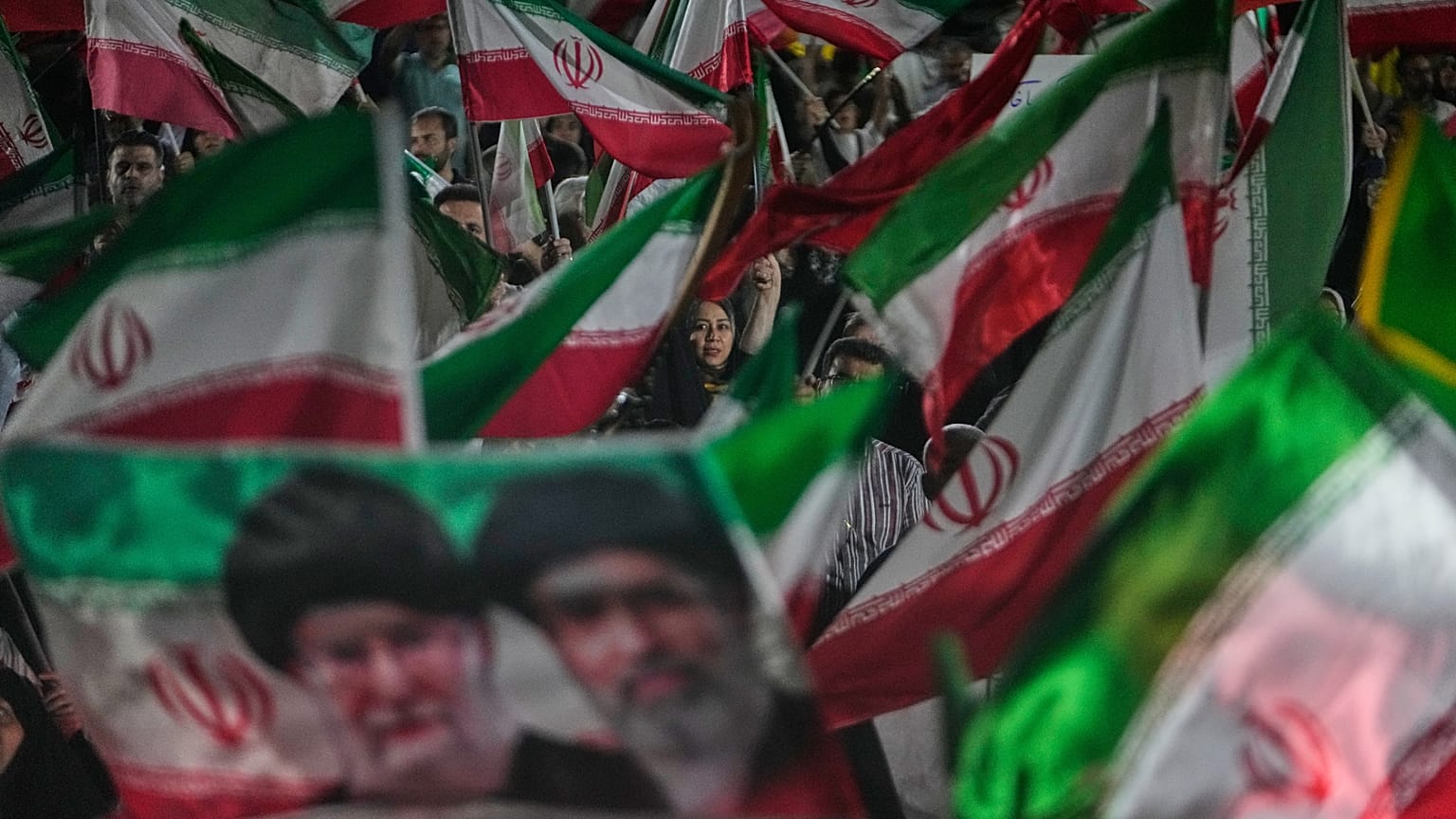
Trump signed the framework deal at Versailles while Pezeshkian signed in Tehran, pledging to reopen the Strait of Hormuz and triggering 60 days of further talks. Analysts say the terms leave Tehran in a stronger position than the deal's framing suggests.
The US-Iran framework deal to reopen the Strait of Hormuz and bring the two adversaries back to the negotiating table over Tehran's nuclear programme was signed on Wednesday amid differing reports and growing confusion over its contents.
Despite an earlier announcement that the agreement would be signed at a ceremony in Switzerland on Friday, US President Donald Trump signed a physical copy of the deal while dining with French President Emmanuel Macron at the Palace of Versailles.
In Tehran, President Masoud Pezeshkian also signed the document on Wednesday, according to the state-run IRNA news agency, which posted an image of him holding up the deal with his signature next to Trump's.
Apart from the new oil revenue for Iran, the two sides are seemingly back where they were at the beginning of this year — before Israel and the US launched their intervention prompting Iranian attacks on neighbouring countries, which have left thousands dead across the region, triggered a global energy crisis and shaken the world economy.
Iran and the US will now enter a 60-day period of negotiations, with the question hanging over them of whether Trump can wrest a better deal for the US than the 2015 nuclear accord he scuttled eight years ago.
Meanwhile, Tehran has already secured significant concessions in its favour, as the Islamic Republic reportedly wrangled another boost to its coffers in the form of a $300 billion reconstruction fund.
Here is what to know based on details released by US officials, Iranian state-run media and independent analyses comparing the available documents and statements by both sides.
Neither Washington nor Tehran has officially published the agreement's text; multiple outlets have published what appears to be leaked versions, and ISW-CTP cautioned that its assessment was based on those unofficial copies.
Who stands to gain the most?
The leaked text of the agreement, if accurate, suggests that Tehran has emerged from the conflict in a stronger strategic position than the framing of the deal would imply, according to the latest analysis by the Institute for the Study of War think tank (ISW).
The ISW said the reported terms would grant Iran significant economic relief that it would likely use to try to reconstitute its missile, drone and nuclear programmes, as well as its regional network of proxies.
The think tank said it had observed no indication that Iranian decision-makers were willing to make concessions on the nuclear issues that would need to be resolved in any final agreement, despite the prospect of further economic relief tied to reaching one.
Iranian officials and state media are largely framing the agreement as a victory that formalises Iran's military gains.
Iran's English-language outlet Press TV argued on Tuesday that the signed memorandum represents "the political codification of a battlefield reality," according to ISW.
Get the oil flowing again
Under the agreement, the Strait of Hormuz will reopen, and the US will lift its blockade of Iranian ports — both of which should push gas prices down.
Passage through the waterway will be toll-free for 60 days, and the deal does not preclude fees after that, according to U.S. officials who spoke on the condition of anonymity to read details of the draft, which has not yet been officially released by Washington.
Iran's closure of the strait, through which around a fifth of the world's traded oil passed before the war, proved to be perhaps its strongest weapon.
It drove up global petrol prices, made food and other products such as fertiliser more expensive, and raised concerns about a possible air travel crisis ahead of the summer holiday season.
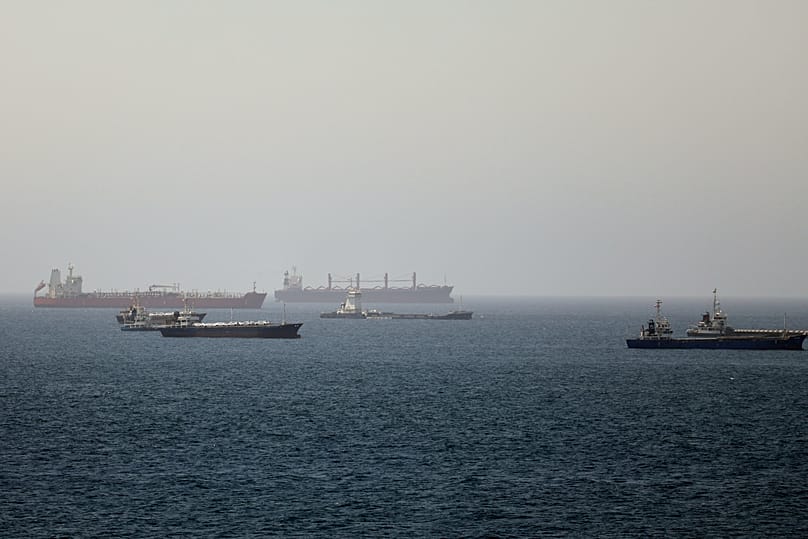
The ISW assessed that Iran will likely try to exploit ambiguous language in the agreement to maintain effective control over shipping through the strait.
The think tank said the reported text does not explicitly bar Iran from "managing" the waterway, meaning Tehran could continue to insist vessels use its traffic separation scheme in Iranian territorial waters and pay fees to the IRGC Navy — the same arrangement Washington has previously sanctioned as unlawful.
With the deal in place, the Islamic Republic has survived the most serious attempt ever by Israel and the US to topple its regime, despite the thundering opening volleys of the war that killed Iran's Ayatollah Ali Khamenei and other top officials.
Iran to sell oil freely, 'downblend' its uranium
The deal immediately waives — but does not eliminate — sanctions that Trump imposed on Iran's oil exports, allowing it once again to sell its crude on the world market and restoring a revenue stream worth billions.
Last year, Tehran earned an estimated $45 billion from oil sales. But it had only one major buyer, China, and had to ship its crude through a shadow fleet of tankers to elude sanctions, eating into its profits. Under the blockade since April, its exports have nearly ground to a halt.
With the waiver, Iran will likely be able to find more customers and sell its oil for higher prices.
The draft agreement calls for Iran's highly enriched uranium to be "downblended" — or diluted — under the supervision of the International Atomic Energy Agency IAEA), without elaborating. Negotiations on any other restrictions on Tehran's nuclear program lie ahead.
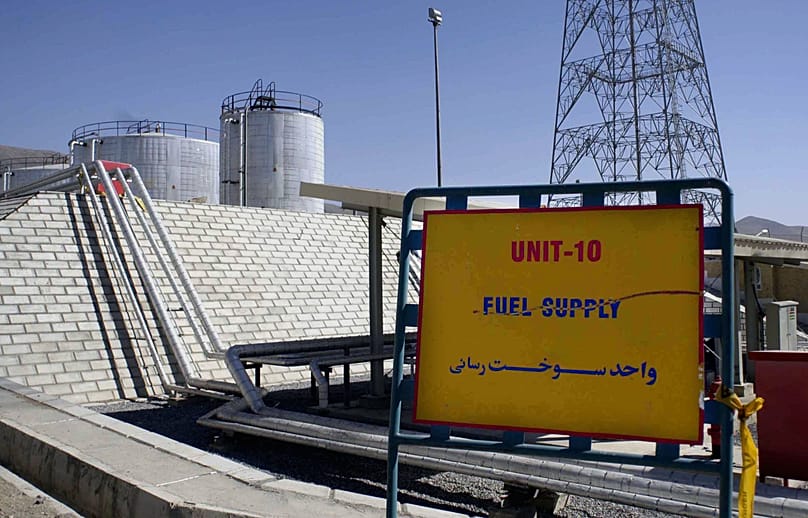
Trump withdrew from a previous nuclear deal with world powers, criticising it for giving a huge windfall to Iran. The interim deal outlines even more lucrative incentives if Iran reaches a new nuclear agreement.
One is the eventual lifting of all international sanctions, which would seem to go further than the 2015 accord. That agreement lifted embargoes related to Iran's nuclear program but kept others in place over what the US alleged were Tehran's support for terrorism and rights abuses.
The interim pact also promises a $300 billion fund for postwar reconstruction. It is not clear where that money will come from — but Trump said so far the US would not contribute.
To give a sense of the extraordinary scale of the fund, the World Bank estimates that Syria, after 13 years of civil war, needs $215 billion for reconstruction. The Gaza Strip, largely devastated in two years of the Israel-Hamas war, needs $53 billion.
The deal also promises to unfreeze billions in Iranian assets held abroad through a procedure the two sides will work out, according to the text provided by US officials.
ISW also assessed that Iran had structured the deal specifically to limit Washington's ability to impose renewed pressure during the 60-day negotiating period, making it harder for the US to extract further concessions before a final agreement is reached.
Iran's missiles and support for proxies not on the table
The Trump administration repeatedly said its war aims were to "obliterate" Iran's missile arsenal, "sever its support" for armed proxies in the region, "annihilate its navy," and ensure it never acquires a nuclear weapon.
The seven weeks of US-Israeli bombardment are believed to have heavily damaged Iran's missile arsenal and production facilities as well as other parts of its military.
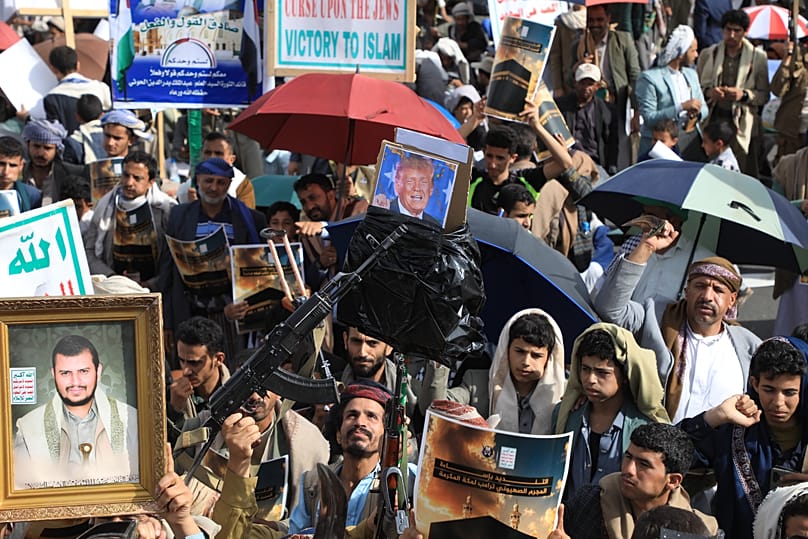
How heavily is not known, and Iran continued to fire on Israel as recently as last week. Meanwhile, Iran's ties with its militant proxies — Hezbollah in Lebanon, the Houthis in Yemen, Hamas in Gaza and Shiite militias in Iraq — appear as strong as ever.
Neither the missile arsenal nor Iran's support for its allies appears to be on the table in the upcoming negotiations.
US-Israeli ties strained
The deal calls for an end to the war in Lebanon, where Israel has been fighting Hezbollah.
However, Israel and Hezbollah are not parties to the agreement. Iran insists Israel must withdraw from the large swath of southern Lebanon it is occupying, but the interim deal does not explicitly require that and only ensures Lebanon's "territorial integrity".
The ISW said Tehran is interpreting the clause requiring a ceasefire "on all fronts" as obligating Israel to halt operations against Hezbollah and withdraw from Lebanon entirely — part of a broader Iranian effort to preserve Hezbollah by securing what the think tank described as Israeli capitulation in Lebanon.
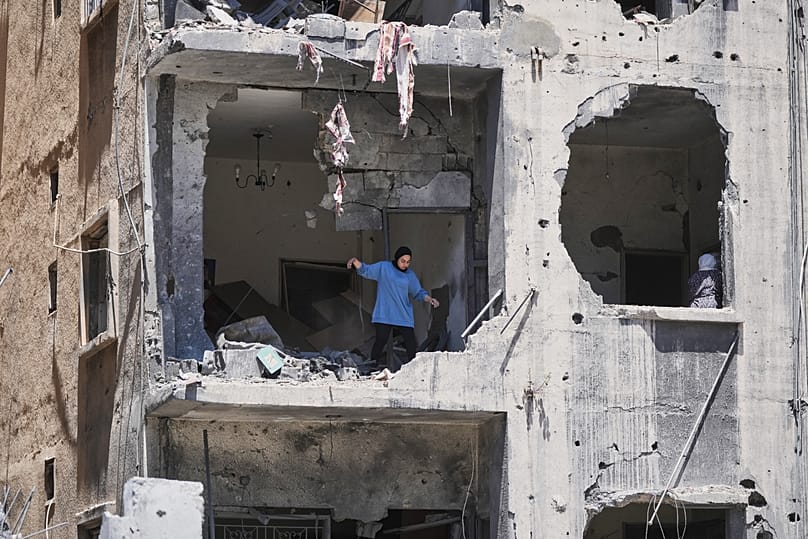
Israel has vowed to keep troops in Lebanon, while Hezbollah says it is committed to resisting Israel "until full withdrawal is achieved." Fighting between the two could derail the deal unless Washington and Tehran can rein in their respective allies.
Israel was squeezed out of the negotiations with Iran, and Israelis from across the political spectrum have called the deal a disaster, directing their fury at Prime Minister Benjamin Netanyahu.
Tensions between Trump and Netanyahu, meanwhile, have occasionally spilt into the open, including when the US president described the Israeli leader as "crazy".
At the G7 summit in France this week, Trump said that Netanyahu "has to be more responsible with respect to Lebanon."
Netanyahu is left in a precarious situation ahead of national elections later this year. His relationship with Trump may require downscaling a military campaign in Lebanon that is broadly popular in Israel.
Much depends on final agreement
The 2015 agreement negotiated by the Obama administration severely limited Iran's nuclear program for 15 years.
During that period, Iran could only enrich uranium to a low level, far below what's needed for a weapon.
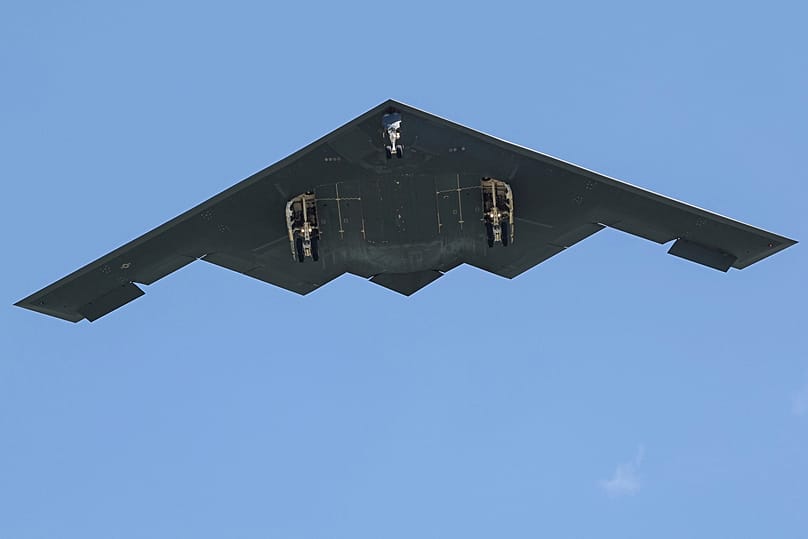
It could stockpile only 300 kilograms of the material and had to sharply reduce the number of centrifuges carrying out enrichment. It was also put under stricter inspections by the IAEA.
One main criticism was the 15-year time limit, after which opponents said Iran would be able to quickly ramp up its ability to produce a bomb. Iran insists its nuclear program is for peaceful purposes.
A key question now will be whether the US can win stricter limits for the long term.
U.S. Officials Disclose Details Of Framework Deal With Iran
June 18, 2026
RFE RL
By Alex Raufoglu
Senior US officials have disclosed details of the framework deal with Iran that is set to be officially signed during a ceremony in Switzerland on June 19.
The memorandum of understanding envisages ending the fighting on all fronts, including in Lebanon, reopening the Strait of Hormuz to commercial traffic, and ending the US naval blockade on Iran, according to the text read out on a background call with reporters on June 17.
Upon officially signing the deal, the two sides commit to agreeing to a final settlement in 60 days that includes limits to Iran’s nuclear program and the removal of US sanctions on the Islamic republic, the US officials said.
“This is fundamentally an agreement that allows us to open the Strait of Hormuz immediately, commits the Iranians to destroying the nuclear stockpile, and then gives us a dial,” one senior US official said.
The accord, which has already been signed electronically, marks the most sweeping US-Iran diplomatic breakthrough in years and comes after months of war, maritime disruption, and back-channel negotiations involving regional mediators.
Despite presenting the agreement as a major diplomatic opening, US officials repeatedly stressed deep skepticism about Tehran’s intentions and warned military and economic pressure could quickly resume.
A second senior US official said a critical test would come at talks in Switzerland this weekend, where negotiators are expected to try to convert the memorandum into a sequencing plan for implementation.
“The meeting this weekend in Switzerland will be quite critical,” the official said. “If one party is not meeting the expectation of the other party, we’ll hopefully know within days or weeks, not months.”
Hormuz Toll-Free, US Blockade Lifted
One of the most significant provisions requires Iran to facilitate safe commercial shipping through the Strait of Hormuz free of charge for 60 days, while negotiating a longer-term maritime framework with Oman and Arab states in the Persian Gulf.
The United States will begin ending its naval blockade immediately upon the official signing and fully remove it within 30 days, according to the text.
Officials said the provision was already having an impact. “For the first time in the 100 days of this conflict, Iran did not fire at any vessels,” one official said.
The accord also provides for waivers allowing Iranian oil exports to resume, a move officials defended as economically pragmatic despite criticism from some conservative US politicians.
Iran’s Nuclear Stockpile
The nuclear provisions appear to be the most politically sensitive and strategically significant.
Iran reaffirms it “shall not procure or develop nuclear weapons,” while agreeing that its enriched uranium stockpile would at a minimum be down blended on-site, the US officials said.
“That’s the floor,” one official said. “We will push for more than that.”
A senior US official said Washington would rely heavily on the UN nuclear watchdog and US technical teams for verification. “We’re not in the trusting business,” the official said.
The official added that US personnel were prepared to assist in physically removing nuclear material, if required.
Officials also said damage from recent US air strikes on Iranian nuclear facilities had significantly limited Tehran’s ability to quickly recover the material.
Sanctions Relief Tied To Compliance
The deal envisions the eventual lifting of all US primary and secondary sanctions on Iran, but only as part of a final agreement.
The United States would also release billions in frozen Iranian assets in stages, contingent on what officials described as “good behavior.”
“What Iran wanted was access to these funds upon signing,” one official said. “What they conceded is that they wouldn’t get any money unless they performed.”
The agreement also outlines a reconstruction and development fund worth at least $300 billion, backed by Washington and regional partners, although officials emphasized Washington would not directly contribute funds.
Instead, sanctions waivers would allow Gulf investors and others to finance projects in Iran.
About RFE RL
RFE/RL journalists report the news in 21 countries where a free press is banned by the government or not fully established.
View all posts by RFE RL →
Read the full text of the 14-point US-Iran agreement as released by Tehran
After a draft agreement was leaked earlier this week, Iranian President Masoud Pezeshkian published Tehran's copy of the framework deal he and US President Donald Trump separately signed on Wednesday. Here are its contents.
Iran's President Masoud Pezeshkian published Tehran's copy of the 14-point framework deal on Thursday, after he and US President Donald Trump separately initialled its physical copies, bringing the two countries closer to the end of the war that enveloped the Middle East following its opening salvos in February.
Despite an earlier announcement that the agreement would be signed at a ceremony in Switzerland on Friday, Trump put his signature on the deal while dining with French President Emmanuel Macron at the Palace of Versailles.
In Tehran, Pezeshkian also signed the document on Wednesday, according to the state-run IRNA news agency, which posted an image of him holding up the deal with his signature next to Trump's.
The deal calls for Tehran to dilute its stockpile of highly enriched uranium and waives US-backed sanctions on the country, immediately allowing Iran to sell its oil freely in a major concession from Washington, according to details released by both countries.
Pezeshkian published the facsimile of the document on Thursday on X, stating that it is "a historical document and a message from a powerful Iran: peace will be realised in the shadow of mutual respect."
"The Islamic Republic of Iran has always been committed and steadfast to global peace while preserving its dignity and independence, as well as to progress and regional cooperation," Pezeshkian said on X.
A separate document purporting to be the draft of the framework deal, initially published in Arabic-language media, had gained much attention on Wednesday despite not being officially confirmed by either Washington or Tehran.
The 14-point draft circulated at G7 meetings in France saw Tehran committing not to build nuclear weapons while Washington pledged $300 billion for Iran's reconstruction.
Trump appeared irritated by the leaks, telling reporters on the sidelines of the summit that "no one knows what it (the deal) is, but it will be very strong."
Here is the full text of the agreement as shared by Pezeshkian, titled "Islamabad Memorandum of Understanding Between the Islamic Republic of Iran and the United States of America":
1. The Islamic Republic of Iran and the United States of America, and their allies in the current war, by signing this MoU, declare the immediate and permanent termination of military operations on all fronts, including in Lebanon, and undertake from now on not to initiate any war or any military operation against each other, and to refrain from the threat or use of force against each other, and ensuring the territorial integrity and sovereignty of Lebanon. The final Deal will confirm the permanent termination of the war on all fronts, including in Lebanon, and other provisions of this paragraph.
2. The Islamic Republic of Iran and the United States of America undertake to respect each other's sovereignty and territorial integrity and to refrain from interfering in each other's internal affairs.
- The Islamic Republic of Iran and the United States of America commit to negotiating and achieving the final Deal, in maximum 60 days extendable with mutual consent.
- Immediately upon the signing of this MoU, the United States of America will begin the removal of its naval blockade and any disturbances or impediments against the Islamic Republic of Iran, and will fully end the naval blockade within 30 days. During this period, the traffic of vessels will be in proportion to the numbers of pre-war traffic being restored by the Islamic Republic of Iran. The United States of America further undertakes to remove its forces from the proximity of the Islamic Republic of Iran within 30 days after the final Deal.
- Upon the signing of this MoU, the Islamic Republic of Iran will make arrangements using its best efforts for the safe passage of commercial vessels, with no charge for 60 days only, from the Persian Gulf to the Sea of Oman, and vice versa. The traffic of commercial vessels will immediately start, and considering the need for removing the technical and military obstacles, and de-mining by the Islamic Republic of Iran, will be instated within 30 days. The Islamic Republic of Iran will conduct dialogue with the Sultanate of Oman, to define the future administration and maritime services in the Strait of Hormuz, in discussions with other Persian Gulf Littoral States, in line with applicable international law and the sovereign rights of coastal states of the Strait of Hormuz.
- The United States of America undertakes, with regional partners, to develop a definitive mutually agreed plan with at least USD 300 billion, for the reconstruction and economic development of the Islamic Republic of Iran. The mechanism for the implementation of this plan will be finalised as part of final Deal within 60 days. All required licenses, waivers and permissions needed for the relevant financial transactions will be granted by the United States of America.
- The United States of America undertakes to terminate all types of sanctions against the Islamic Republic of Iran, including the United Nations Security Council resolutions, IAEA Board of Governors resolutions and all unilateral U.S. sanctions, primary and secondary, in an agreed-upon schedule as part of the final Deal. The Islamic Republic of Iran and the United States of America acknowledge the critical importance of the sanctions termination issue above mentioned and express their intentions to immediately address these issues in the negotiations in order to achieve mutual agreement on them.
- The Islamic Republic of Iran reaffirms that it shall not procure or develop nuclear weapons. The Islamic Republic of Iran and the United States of America have agreed to resolve the disposition of stockpiled enriched material pursuant to a mechanism that will be mutually agreed upon, in accordance with the schedule mentioned in paragraph 7, with the minimum methodology to be down-blending on-site, under the supervision of the IAEA. The two Parties also agree to discuss the issue of enrichment, and other mutually agreed matters related to the Islamic Republic of Iran's nuclear needs, based on a satisfactory framework being agreed upon in the final Deal. The final Deal will confirm the provisions of this paragraph. The Islamic Republic of Iran and the United States of America acknowledge the critical importance of the nuclear issues above mentioned and express their intentions to immediately address these issues in the negotiations in order to achieve mutual agreement on them.
- Pending the final Deal, the Islamic Republic of Iran and the United States of America agree to maintain the status quo; the Islamic Republic of Iran will maintain the current status quo of its nuclear program, and the United States of America will not impose any new sanctions, and will not deploy additional forces in the region.
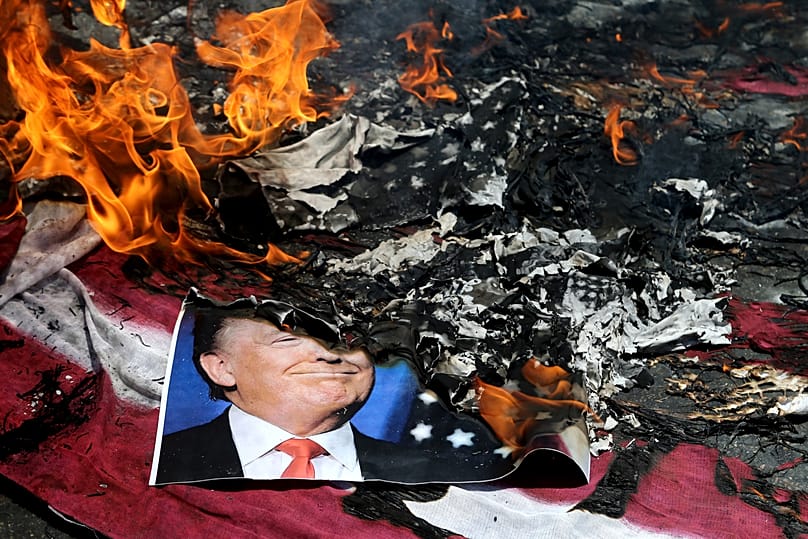
- The United States of America undertakes that immediately upon the signing of this MoU, and until the termination of sanctions, the U.S. Department of Treasury will issue waivers for the export of Iranian crude oil, petroleum products and derivatives, and all associated services including banking transactions, insurances, transportation, etc.
- The United States of America undertakes to make fully available for use, the frozen or restricted funds and assets of the Islamic Republic of Iran upon the implementation of this MoU. The United States of America and the Islamic Republic of Iran will mutually agree on the procedures related to the release of these funds during the negotiations. Such funds, whether retained in the original account or transferred, shall be made fully usable for payment to any ultimate beneficiary designated by the Central Bank of the Islamic Republic of Iran. The United States of America undertakes to issue all necessary licenses and authorisations accordingly.
- The Islamic Republic of Iran and the United States of America agree that an executive mechanism will be established to monitor the successful implementation of this MoU and the future compliance of the final Deal.
- Following the signing of this Memorandum of Understanding, and upon receipt of assurances regarding the commencement of implementation of Articles 4, 5, 10, and 11 of this Memorandum of Understanding, and the continued implementation of these steps, the Islamic Republic of Iran and the United States will enter into negotiations for a Final Agreement solely with respect to the remaining Articles.
- The final agreement will be approved through a binding resolution of the UN Security Council.
Trump’s Iran Accord And The 2015 Nuclear Deal: What’s Different This Time? – Analysis
June 18, 2026
By Ray Furlong
The US-Iranian deal to end their war and reopen the Strait of Hormuz is inevitably being compared with the 2015 Joint Comprehensive Plan of Action (JCPOA) agreed with Tehran by then US President Barack Obama.
That deal was fiercely criticized by his successor, Donald Trump, who pulled the United States out of JCPOA in 2018 during his first term of office. Trump has repeatedly said his deal would be better, although the text he signed in Versailles on June 17 is not the final one — it leaves many issues to be negotiated over the next 60 (or more) days.
“If it were easy we would have resolved it, you know, two wars ago,” Naysan Rafati, Iran Senior Analyst at the International Crisis Group, told RFE/RL, referring both to the 12-Day War in June last year and to this year’s hostilities, that reignited with US and Israeli air strikes on February 28.
“The fundamentals of the Iranian nuclear program since last June have been different to what they were like under the JCPOA,” he added.
What Was In The JCPOA?
One thing that is unchanged is that Iran has always denied wishing to develop nuclear weapons but possesses enriched uranium to grades beyond what is needed for civilian purposes.
This was a core problem then and remains so today.
Key elements of the JCPOA were for Iran to ship 98 percent of its enriched uranium stockpile out of the country, accept limits on future enrichment to well below weapons-grade levels, mothball some centrifuges that are used for enrichment, and allow all this to be checked by inspectors from the International Atomic Energy Agency (IAEA).
Wrapped in all this was a wealth of technical details, for example on exact levels of enrichment, quantities of enriched material, storage locations, and specific models of centrifuges. In addition, Iran pledged not to develop nuclear weapons.
In return, international sanctions related to the nuclear program (but not other issues such as Iran’s support for armed proxy groups across the Middle East, its missile program, or its human rights abuses) would be lifted based on verification that Iran was complying.
Additionally, Iran was granted access to overseas frozen assets whose value was greatly disputed (and variously calculated), with claims and estimates varying between $50-$100 billion, as well as payments from the US government totaling $1.3 billion.
The deal had a dispute resolution mechanism and a 2030 sunset clause. It was approved by the UN Security Council.
The agreement faced political resistance in Congress from both sides of the aisle from lawmakers who criticized it for limiting Iran’s nuclear program rather than dismantling it completely. Others pointed out that it failed to address the wider issues beyond the nuclear program that had also made Iran an international pariah.
Sanctions on Iran were lifted following IAEA verification in January 2016, with Washington certifying twice in 2017 that Iran was sticking to the deal.
The Road To War
In May 2018, President Trump withdrew from the agreement, which he described as “horrible, one-sided.”
From 2020-2021, Iran began ramping up both its numbers of centrifuges and its uranium enrichment, according to IAEA reports. This led Britain, France, and Germany (known as the E3) to say Tehran was no longer complying with the JCPOA.
In June last year, Israel and the United States carried out air strikes on Iranian nuclear facilities, warning that Iran was close to developing nuclear weapons. The Pentagon later assessed that operation Midnight Hammer had put back the program by up to two years, though there were conflicting reports about the exact extent of the damage.
“There has been widespread damage both to its facilities and across many of its senior nuclear-related personnel. But we also have not had on-the-ground inspections at the damage sites. The IAEA has been able to go into a couple of facilities, but not the major enrichment facilities that were targeted under Midnight Hammer,” said Rafati.
Iran began to restrict IAEA monitoring after the June conflict. Then, in September last year, another JCPOA provision, its so-called snapback clause, took effect.
This meant UN sanctions lifted under the terms of the deal were reimposed following Iranian noncompliance. The E3 initiated the move after Iran refused to meet their demands of full access for IAEA inspectors and transparency regarding enriched material stockpiles.
After the June 2025 conflict, Washington and Iran reengaged in nuclear talks. Those talks were abandoned when US and Israeli air strikes on Iran began on February 28.
What Now?
The memorandum of understanding (MOU) signed by Trump and Iranian President Masud Pezeshkian on June 17 provides for the immediate waiving of US oil sanctions on Iran, while tying the end of wider sanctions and the release of frozen assets to Iran implementing commitments, such as “down-blending” its stocks of highly enriched uranium under IAEA supervision.
“We’re not in the trusting business,” a senior US official said during a background callwith journalists on June 17.
The issue of enrichment is also left to be dealt with in further negotiations, while Iran “reaffirms that it shall not procure or develop nuclear weapons.”
As with the JCPOA, the MOU has been criticized, including with rumblings of discontent from Republican lawmakers who suggest Washington has given up too much for too little.
Max Meizlish, a senior analyst at the Foundation for Defense of Democracies, voiced concern over the oil sanction waivers.
“What we should be doing, if this is truly a performance-based deal, is tying any sanctions relief to actual conduct by the regime that goes beyond just participating in the negotiation, signing the memorandum of understanding, and opening up the strait,” he told RFE/RL.
“The US Congress is not going to give up easily here, absent significant reforms by Iran. And we’ll have to see. We’ll have to see what the US ultimately pushes for,” he added, referring to the talks yet to come.
Meizlish also criticized the lack of any reference to Iran’s other “malign activities” such as its missile program and support for groups such as Hezbollah, which is designated a terrorist organization by Washington.
As noted, the JCPOA was criticized on the same grounds.
The situation now, following two wars that have devastated Iran’s economy and damaged its nuclear facilities, is very different from 2015. Those conflicts have also substantially eroded trust, further complicating talks.
The JCPOA was not just a bilateral US-Iranian process: Russia, China, Britain, France, and Germany were all involved in negotiations lasting nearly two years. The MOU says negotiators will aim for a deal within 60 days but also that this time period can be extended.
Rafati said the talks will need to be more technical and complex than they have been so far in 2025-26.
“Even when they were in Oman or in Rome, they were this cumbersome process of indirect negotiations in fairly kind of short bursts of time, kind of between brunch and dinner,” he said.
“Are they going to be accompanied by expert delegations that are actually going to get into the granularities of the nuclear nonproliferation side of things and the sanctions-relief side of things? Those technical delegations were present at some, but not all of the past negotiations…if there’s any kind of aspiration for getting this wrapped up in 60 days, it would have to be a fairly regular and empowered and technically competent set of experts from both sides,” he added.
About RFE RL
RFE/RL journalists report the news in 21 countries where a free press is banned by the government or not fully established.
View all posts by RFE RL →
.jpeg)
By A. Jathindra
Who truly emerged victorious in the war between the United States and Iran? The conflict has yielded no clear answers, yet America’s friends have borne the brunt of Washington’s decisions. Iran’s retaliation against U.S. Gulf partners—and the deaths of three Indian seafarers in American strikes on oil tankers transiting the Strait of Hormuz—underscore Henry Kissinger’s enduring warning: “It may be dangerous to be America’s enemy, but to be America’s friend is fatal.”
That maxim now applies most directly to India, which described the incident as a “profound loss to our maritime family.” The tragedy highlights how America’s military campaigns reverberate far beyond the battlefield, leaving allies vulnerable and questioning the costs of alignment with Washington.
During and after the war, a striking question emerged: will President Trump’s place in American political history be unique, or will he be remembered as the leader who challenged America’s global image? Under “Operation Absolute Resolve,” the Trump administration captured Venezuelan president Nicolás Maduro and his wife in a twohour and twentyeightminute military raid, proclaiming a new Monroe Doctrine to reassert U.S. hegemony in the Western Hemisphere. Yet the campaign against Iran proved far less decisive, registering instead as a historic setback. Although Trump and his advisers declared victory, they have struggled to sell that narrative on the world stage.
The 40day war has inevitably raised doubts about America’s titanic military power. Belarusian president Alexander Lukashenka, a close ally of Moscow, seized on the U.S.–Iran standoff to declare that President Donald Trump had shown the world the United States is “not as powerful as it claims.” “If the Americans couldn’t handle Iran, then they should not mess with China,” he added. His remarks may be dismissed as propaganda, yet the perception that Iran held its ground against Israel—the Middle East’s strongest military—and the United States, the world’s foremost military power, has gained traction across West Asia.
Pakistan’s mediation in the conflict added further complexity. Washington’s acquiescence to Islamabad’s agenda is seen as a sign of U.S. selfdecline. President Trump claimed credit for brokering a ceasefire during India’s “Operation Sindoor,” launched after the Pakistanbacked Pahalgam terror attack that killed 26 people. India rejected Trump’s assertions, though he continued to maintain that his intervention had brought peace. Pakistan—a country that once sheltered Osama bin Laden, who was killed during a covert raid in Abbottabad—now positioning itself as a peace broker illustrates yet another slippage in America’s global image.
Why was “Operation Epic Fury” carried out? As Daniel Byman of the Center for Strategic and International Studies observed, Trump’s team set ambitious goals: ending Iran’s nuclear programme, degrading its missile and conventional forces, halting support for Hezbollah and Hamas, and ultimately regime change in Tehran. To that end, U.S. and Israeli forces killed Iranian leaders and bombed military infrastructure.
Israel launched an air campaign targeting Iran’s nuclear programme and regime leadership on 12 June 2025, aiming to “degrade, destroy, and remove [the] threat” of weaponisation. Some analysts noted that the 12day campaign succeeded to an extent by exposing structural weaknesses in the Islamic Revolutionary Guard Corps and demonstrating Israel’s technological superiority. Yet despite these tactical gains, the operation ultimately failed to achieve its strategic objectives. This failure was the reason the United States and Israel launched another war.
Washington now appears to be seeking a settlement rather than confrontation, with talks and an official signing ceremony expected on 19 June in Switzerland. This is widely seen as evidence of the failure of America’s “Big Stick Diplomacy” toward Iran. Negotiating with Iran’s theocratic regime—responsible for massacring tens of thousands of protesters—allows Tehran to claim victory simply by surviving. Even though U.S. commanders insist they achieved their objectives, including the destruction of Iran’s missile, drone, and naval capabilities, the reality is stark: Iran remains at the table with the world’s sole hegemonic power.
Chairman of the Joint Chiefs of Staff General Dan Caine stated on 8 April that the U.S. military had three objectives: to destroy Iran’s ballistic missile and drone capabilities, its navy, and its defence industrial base to ensure it could not reconstitute power beyond its borders. He declared those objectives achieved. Admiral Brad Cooper of CENTCOM echoed that claim the following day. Yet the fact that Washington is now pursuing a settlement suggests otherwise.
The truth is undeniable: Iran can claim success simply by surviving and now negotiating as an equal with the United States. For Israel, the implications are profound. A regime that continues to chant “Death to Israel” has endured, and in West Asia, Iran remains a formidable challenge to the State of Israel and its security.
Even if Washington and Tehran were to reach an agreement, profound uncertainties would remain: would it truly guarantee peace in the Middle East, end Iran’s proxy operations against Israel, or halt its nuclear ambitions? The answers are far from assured. As long as the antiIsrael regime in Tehran endures, peace in the region will remain elusive—and in that sense, America appears to have forfeited its ability to decisively shape the future trajectory of the Middle East.
About A. Jathindra
A.Jathindra is a geopolitical analyst and the founding director of the Trinco Centre for Strategic Studies, an independent think tank based in the port city of Trincomalee, Sri Lanka. His work focuses on Geopolitics and International Relations, with particular emphasis on China, South Asian security challenges, regional politics, and transnational terrorism.He is an alumnus of the U.S. Department of State’s International Visitor Leadership Program (IVLP), having participated in the regional initiative “U.S. Foreign Policy in the Indo-Pacific.”
View all posts by A. Jathindra →
June 18, 2026
EurActiv
By Chris Kremidas-Courtney
(EurActiv) — The Strait of Hormuz crisis is offering new lessons about how power works in the 21st century. Europe should take heed.
Despite reports of a new ceasefire agreement, the situation remains unstable and negotiations between Washington and Tehran have been opaque. Iran has previously threatened a complete closure of the Strait if it judges ceasefire terms to have been violated – a condition which shows that the economic warfare could still be ramped up.
In a world where key chokepoints are weaponised, the only two options are to shape events or be shaped by them. Right now, Europe is being shaped.
Its energy security strategy remains largely reactive and dependent on a US naval presence to keep critical waterways open, and on market diversification that is proving to be too shallow when a disruption materialises.
Having spent the years since 2022 diversifying away from dangerous energy dependencies – replacing Russian gas with LNG and building strategic reserves – the current situation reveals the underlying vulnerability was displaced but not yet solved.
Latest data from the first days of June shows that Iranian crude exports have collapsed by 84% in a single month, falling 87% below the average of the previous year. Production itself has been cut by 800,000 barrels per day.
The US has not only been sanctioning Iranian oil but also deployed warships to deter very large crude carrier movements, making the insurance and compliance cost of shadow fleet participation increasingly prohibitive.
This has forced Tehran into smaller, slower, more expensive tanker classes that reduce export capacity even when individual shipments do get through.
During the Iran-Iraq War in the 1980s, the US intervened to protect commercial traffic through the Strait of Hormuz. Today, Washington is selectively suppressing Iranian oil traffic while Iran is simultaneously blocking other vessels, including many commercial crude carriers. It is two actors using one chokepoint as a weapon simultaneously.
The post-Gulf War sanctions regime against Iraq offers a second, cautionary comparison. Those sanctions succeeded in suppressing Iraqi oil revenues and constraining rearmament, but they leaked persistently through the Oil-for-Food programme and regional workarounds involving Jordan and Turkey. The lesson was that sanctions without enforcement can leave large gaps, and the political will to close them erodes over time.
The most important enforcement gap today is also the most revealing. Chinese-affiliated vessels accounted for nearly a quarter of all ships exiting the Gulf since March, and this appears to be by arrangement rather than by accident. The US has been applying maximum pressure on Iranian revenue while declining to directly confront Beijing over its continued purchase of sanctioned crude. The exemption China enjoys signals precisely where Washington is willing to escalate, and where it is not.
The shadow fleet is also transforming in ways that will likely outlast this crisis. The emergence of mainstream shipowners taking on tankers with documented sanction histories suggests the lines between the legitimate and shadow maritime economy are beginning to blur.
This greying of the global shipping fleet is creating long-term governance gaps that existing sanctions regimes were not designed to address. Of course, the UN law of the sea (UNCLOS) was flawed from the start since geopolitical horse-trading gutted flag state accountability before the ink was dry.
Iran’s effective closure of the Strait is also an act of economic warfare whose costs are spread across global markets. Insurance premiums have spiked and rerouting shipments adds expenses to supply chains far beyond the Gulf. Tehran may be losing the export battle but its capacity to hamstring the global economy remains unchecked.
What June 2026 tells us about economic warfare is that whether wielded by a superpower or a sanctioned state, it can produce collapsing export revenue, production cuts, exhausting workarounds, and amplify risk across global markets. It’s also more viable when conducted with enough ambiguity to avoid triggering the escalatory responses that a more direct confrontation might invite.
European energy markets remain exposed to Gulf disruption, and the all-time high prices in late May were an early signal of what a prolonged crisis means for European industrial competitiveness. The EU is not a party to this conflict but is nonetheless absorbing its consequences.
About EurActiv
EurActiv publishes free, independent policy news and facilitates open policy debates in 12 languages.
View all posts by EurActiv →
.jpg)
When Iranian rockets and drones hit the US 5th Fleet in Manama, videos posted on social media showed some Bahrainis celebrating the strikes. The videos revealed the deep-seated anger felt by many at the killing of Ayatollah Ali Khamenei, Iran’s Supreme Leader, and a spiritual figure for Shia Muslims around the world. For the Bahraini authorities, the videos once again raised suspicion about the loyalties of Shia inhabitants of the country, highlighting the multiple security calculations emerging from the conflict.
One hundred days into the war, and a diplomatic resolution appears within reach, albeit merely a Memorandum of Understanding at this point. Even if there is a final agreement, the memory of the past 100 days will linger for years to come. Finding a way to address the suspicion and animosity is of paramount importance.
Amongst the many different issues raised by the conflict, the question of regional security is perhaps foremost in the minds of Gulf leaders. The conflict has highlighted the vulnerabilities that come with relying on the US for security. Moreover, as several officials have stressed, Arab Gulf states cannot change their geography; they have to find a way of living alongside the Islamic Republic and, in addition, create an environment that is conducive to the security of all parties.
This conclusion had previously been reached by Saudi Arabia following the attacks on Abqaiq and Khurais oil refineries in 2019. Furious Saudi officials had expected a forceful response from the US, but this was not forthcoming. Instead, in a marked policy shift, the Kingdom embarked on a long and arduous process of resetting relations with Iran, a state with which the Saudis had severed diplomatic relations in 2016. This process took a huge amount of effort and the work of countless intermediaries who undertook track II diplomatic efforts, highlighting the depth of animosity between the two states. Ultimately, diplomatic efforts were successful, seen through the normalisation agreement signed in 2023 in Beijing. Yet recent developments appear to have derailed this progress.
The volume of strikes conducted by Iran on its Gulf neighbours makes shared security an increasingly challenging outcome to achieve. Though Tehran was initially quick to stress that strikes were on US targets, not against their Arab and Muslim brothers - statements that were swiftly rejected by Gulf leaders - as the war progressed, strikes also hit non-US targets within the Gulf states.
Across the past 4 decades, geopolitical crises have resonated within states as well as between them. A closer look at history in this time highlights this. Suspicion at the region’s Shia inhabitants has long plagued politics across the Arab Gulf states. Since the establishment of the Islamic Republic of Iran and the articulation of an expansionist foreign policy in support of the “downtrodden” of the Muslim world, the region’s Shia population has been viewed with suspicion and trepidation by many of their Sunni counterparts.
Iranian involvement in the establishment of Hezbollah, the Islamic Front for the Liberation of Bahrain, collaboration with Hezbollah al Hijaz, and other Shia groups fostered suspicion towards both Tehran and their coreligionists across the Middle East. Statements from Ruhollah Khomeini, the theological architect of the Islamic Republic, and other Iranian officials about exporting the revolution exacerbated many of these concerns.
Following the US lead invasion of Iraq in 2003, narratives of perfidious Iranian engagement across the Middle East reverberated, perhaps best captured in King Abdullah of Jordan‘s remarks about a Shi’a Crescent that spread from Iran all the way across to the Mediterranean Sea. This again hinted at the divided loyalties among local Shi’a populations and Iran's growing capacity to manipulate those divisions. What followed was the emergence of a climate of distrust and violence, exacerbated by the sectarian conflict that consumed Iraq following the fall of Saddam Hussein. Fearing the growing influence of Iran, Bahrain’s rulers sought to cultivate closer relations with Israel back in 2007, some 13 years before the signing of the Abraham Accords.
When the Arab Uprisings broke out in 2011 the legacy and memory of Iranian actions during the 1980s shaped the responses of many in Bahrain for example the ruling Al Khalifa family framed protesters as nefarious Iranian fifth colonists With some evoking memories of the 1980s to justify these actions. Others suggested that Iran had been smuggling weapons into Bahrain while similar developments were felt in Kuwait with terrorit plots allegedly thwarted by the state.
As history has shown, trust is difficult to build but easy to shatter. But geography is inescapable. Qatar shares a gas field with Iran, there is a large Iranian population in the UAE, and the Islamic Republic has cultivated positive relations with Oman. While the signing of the Saudi-Iran normalisation agreement shows that suspicion can be overcome, the sheer volume of Iranian attacks on Gulf states has provoked deep anger and concern. Add possible spoilers into the mix and the situation remains volatile, even if a final agreement can be reached.
Much of the goodwill generated between the Saudis and Iranians from March 2023 to February 2026 has dissipated. Few will trust Iran moving forward, especially if, as some suggest, the Islamic Republic is emboldened by the outcome of the war (which is looking increasingly likely). Whether trust can be restored between states in the Gulf, but also between different sectarian communities within states, remains to be seen.
Simon Mabon is Professor of International Politics at Lancaster University and the author of Schism: The Story of Sectarianism in the Modern Middle East (Yale University Press, 2026).

No comments:
Post a Comment