Row between Elon Musk and German broadcaster ZDF sparks major controversy
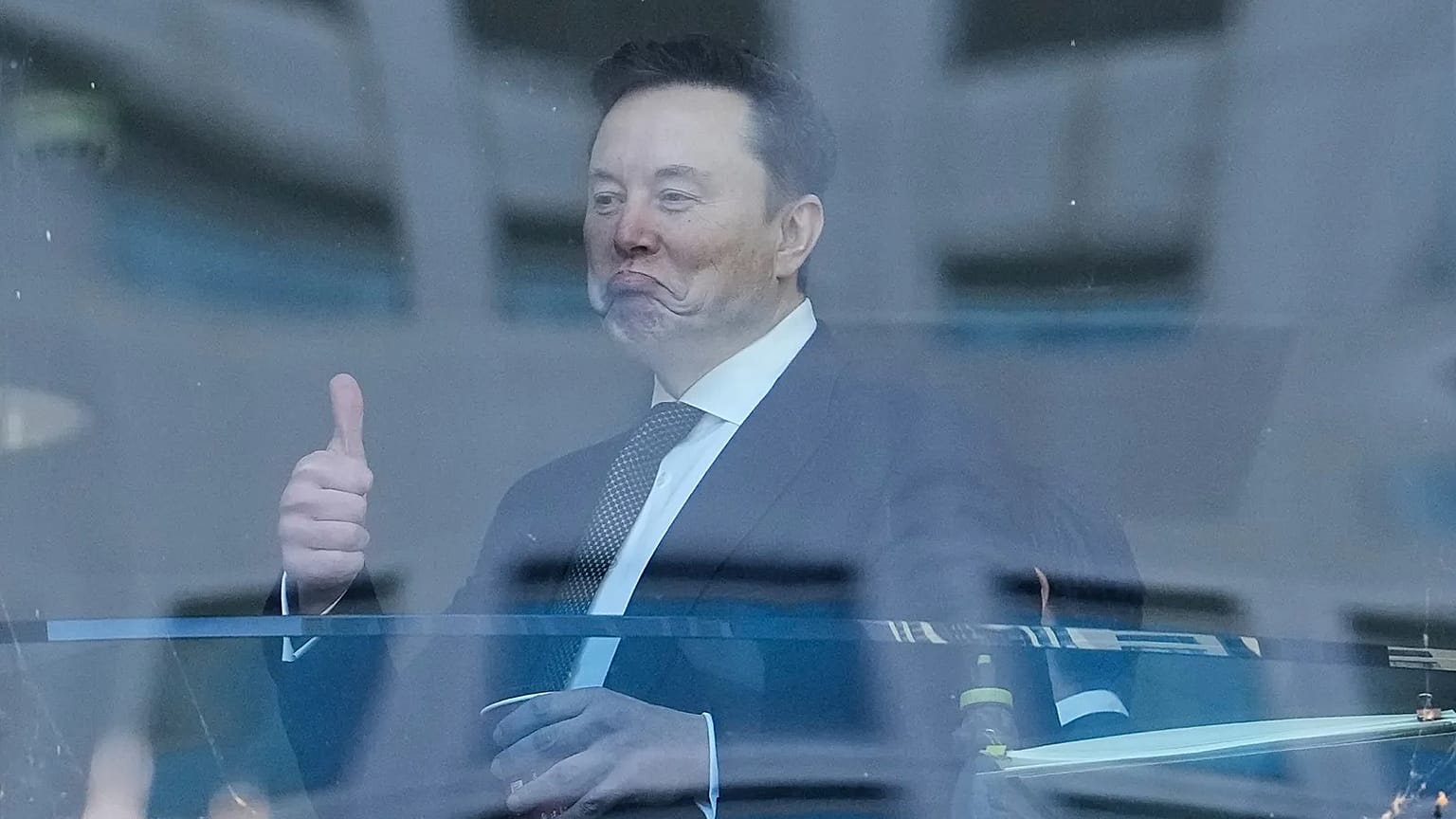
German broadcaster ZDF has reacted to a cease-and-desist suit from Elon Musk, deleting a line from a programme intro over his links to UK right-wing activist Tommy Robinson.
The dispute between US tech entrepreneur Elon Musk and the public broadcaster ZDF is causing a major stir across Germany.
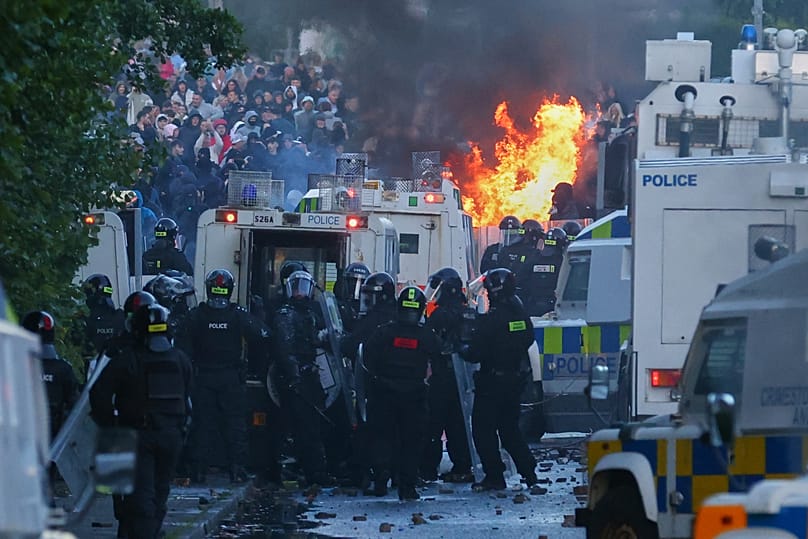
In its coverage of last week's anti-immigrant riots in Belfast, an edition of "ZDFheute live" said that Musk had called for "a migrant hunt" in his social media posts about Northern Ireland.
On Monday, Musk called ZDF's characterisation of his words a "terrible lie" and said he was pursuing legal action against the broadcaster, which has since removed the contested passage.
On 9 June, Musk shared a post by British far-right activist Tommy Robinson in which Robinson, following the knife attack by a Sudanese man in Belfast, called for protests.
Musk commented: "Only by protesting REPEATEDLY and LOUDLY will there be any change!!"
ZDF has since confirmed "that Elon Musk, via a German law firm, demanded a cease-and-desist declaration concerning the opening presentation of the 12 June 2026 edition of 'ZDFheute live' entitled 'Riots in Belfast – How Musk is fuelling the protests.' ZDF has complied and removed the disputed passage from the introduction. As early as Saturday, ZDF had added a corrective transparency note to the programme."
The broadcaster added a disclaimer to the online version of the broadcast in question in which it admitted that its words were "imprecise and potentially misleading."
According to the BBC, the US-based Centre for Countering Digital Hate said social media had played a "key role" in stoking the violence in Belfast.
At the same time, the organisation accused Musk of having amplified "anti-migrant narratives" spread by others and extended their reach to millions of users.
Support from the German right
The far-right Alternative for Germany (AfD) came out in support of Musk in the row with ZDF.
Joining in on the debate, AfD co-leader Alice Weidel posted on X saying: "Defamation shouldn't go without consequences. Don't let them get away with it."
Musk has been a vocal supporter of the AfD in recent years and has also backed other far-right parties in Europe.
The row is being further fuelled by editor-in-chief of the right-wing news portal, Julian Reichelt.
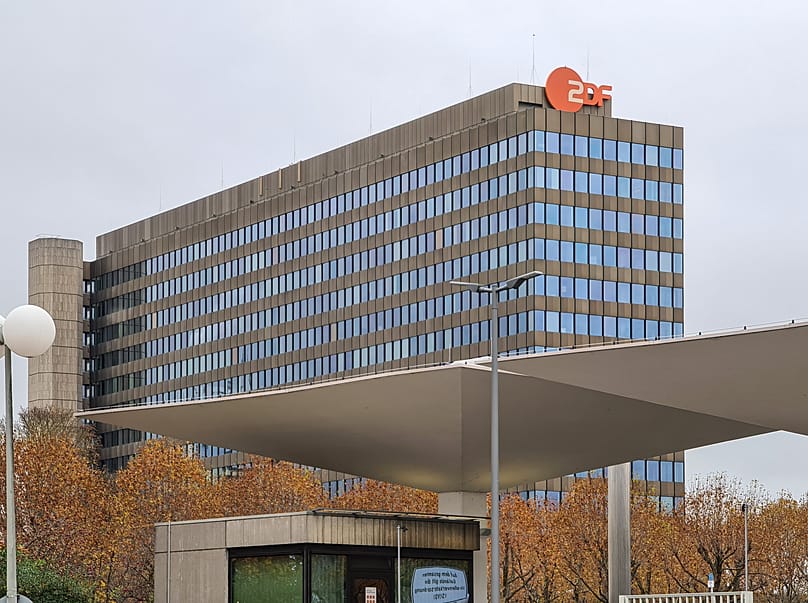
The former editor-in-chief of the daily tabloid Bild wrote on X: "Lerchenberg is a fortress of lies. ZDF simply invents the claim that Elon Musk 'called for a hunt for migrants.' In fact, Musk wrote on X: "Only by protesting REPEATEDLY and LOUDLY will there be any change!!" How much longer are we going to accept that this state forces us to pay for the propaganda lies it tells us? And how can it be that at ZDF heute there is constant lying, deception and manipulation with words and AI, without any personal consequences?'"
In his statement in support of Musk, Reichelt also mentioned Germany's public broadcasting licence fees, whose abolition the AfD has made one of its flagship policy points.
The UK’s Slow Descent Into Disorder And Intolerance – OpEd
.jpeg)
June 18, 2026
Arab News
By Mohamed Chebaro
Rioting and violent protests taking place after a crime is carried out by a migrant — or someone believed to be one — are becoming a feature in the UK. They are slowly starting to form a serious challenge to law and order and community cohesion in a multiethnic and multireligious society.
The pictures from Belfast in Northern Ireland last week of violent and unnecessary riots were a reminder of the confrontations from the dark days of communal strife between Catholics and Protestants, republicans and unionists. The violence perpetrated by masked men against peaceful people who happened to look different to them calls for an examination of the root causes.
Yes, a savage knife attack took place. The suspect, Hadi Alodid, a 30-year-old Sudanese man who had claimed asylum in the UK, has been charged with attempted murder. He is alleged to have used a kitchen knife to blind Stephen Ogilvie in the left eye and carve deep wounds on his head, face and back. Graphic footage of the stabbing and the response of passersby, who subdued the attacker, quickly spread on social media. Before the police had even determined whether to treat the incident as a terrorist act, all hell broke loose.
Protests flared into violence in Belfast and several other areas. Masked men set fire to several homes they believed housed immigrants, torched a bus and pelted police with rocks and other objects. The government’s Northern Ireland Secretary Hilary Benn called the attacks acts of “racist thuggery.”
But this thuggery, amplified by some British and foreign activists and political personalities, aided by digital radicalization, is becoming more frequent. It is increasingly threatening democracy, the supremacy of law and order, and trust in the system in many Western societies.
This violence is not new. It is reminiscent of the riots that swept England and parts of Northern Ireland two years ago after a teenager — wrongly portrayed on social media as an immigrant — killed three girls and seriously wounded 10 other people in a stabbing rampage at a dance class near Liverpool.
The latest round of violence in Belfast broke out a week after protesters clashed with police in the southern English city of Southampton over the fatal stabbing of a university student and the subsequent release of a video showing police apprehending the victim rather than the perpetrator, a British-born Sikh of Indian origin.
All three of these crimes featured Black or Asian-origin suspects and victims who were white. Race and immigration are clearly a motive for whipping up anger, especially against the Labour government of Prime Minister Keir Starmer.
Such events in the streets and the wider reaction to the stabbings reflect the broader rise in anti-immigrant sentiment in the UK and Europe, which is being fueled by political debate over asylum policies, illegal immigration and small-boat crossings. There is also the alleged pressure this has been adding to the welfare state, but often all that has been magnified and heightened by an extreme and toxic online debate.
The dangerous aspects of the story we are seeing unraveling on the UK’s streets are also directly linked to the country’s persistently poor economic outlook and the failure of the state to deal with this. The unrest is also being fueled by sinister forces and social media, which allows extremism to incubate and even flourish. Politicians are trying but failing to separate the relationship between migration and the economic downturn, while racism against foreigners is becoming a normalized expression of social discontent, sometimes expressed violently.
The role of far-right political parties like Reform UK and activists colluding with the tech mogul Elon Musk, among others, is not an accident. Musk’s tweets about British politics, which have a strong focus on the failure of the police and the state, echo the words of US Vice President J.D. Vance, who blamed the Southampton stabbing on the “mass invasion of migrants.” Starmer snapped back against such interventions, criticizing people “trying to interfere in our democracy and seeking to stir up division on our streets.”
The organized nature of the protests carried out by masked men remove any spontaneous, peaceful motives. These are not individuals merely expressing their democratic right to demonstrate and raise their voice about certain ills in society. One can easily see that the rioters’ actions show signs of foreign interference and the use of immigration as a tool to sow discontent and even chaos for political ends.
Many commentators in Britain fear that the social media posts of influential personalities are toxic and not innocent acts of free expression. They are seen as a dangerous practice that could harm the fabric of society in a country still deeply divided 10 years after the Brexit vote. One can even see them as part of a larger ploy to engineer chaos in Western societies in the hope of eroding domestic peace and shaking government stability — a tool of foreign forces that use hybrid forms of criminality to sow discord, aided by the digital media and which many Western intelligence agencies have repeatedly warned about, particularly since the start of the war between Russia and Ukraine.
The state versus the agitators is a battle that could have dire implications. It must be addressed urgently. The UK’s slow descent into disorder and intolerance should be stopped in its tracks through decisive policies that regulate social media companies and punish misinformation and disinformation. The digital realm’s toxic narrative, if left unpoliced, could spread chaos and divide communities everywhere. The target is not just peace and law and order but the trust of society as a whole in the legitimacy and validity of the state and its institutions to protect people and keep them safe. If the UK or any country loses that trust, there might be no turning back.
About Arab News
Arab News is Saudi Arabia's first English-language newspaper. It was founded in 1975 by Hisham and Mohammed Ali Hafiz. Today, it is one of 29 publications produced by Saudi Research & Publishing Company (SRPC), a subsidiary of Saudi Research & Marketing Group (SRMG).
View all posts by Arab News →


No comments:
Post a Comment