Showing posts sorted by relevance for query Force Majeure. Sort by date Show all posts

Monday, March 09, 2026

Iran denies striking Turkey, Azerbaijan and Cyprus, says 'false flag'

Iran denies striking Turkey, Azerbaijan and Cyprus, says 'false flag'
Drone hit the Nakhchivan area of Azerbaijan. / bne IntelliNews
By bne IntelliNews March 9, 2026

Iran's Foreign Ministry spokesman Esmail Baghaei denied that Iranian forces carried out attacks against Turkey, Azerbaijan or Cyprus, saying no offensive actions were launched from Iranian territory against those countries, he said in his morning presser on March 9. 

Baghaei suggested some of the reported strikes "may have been staged," saying Iranian authorities had already warned about the possibility of such provocations.


"No offensive actions were carried out from Iranian territory against these countries," he said.

The denial covers incidents across all three nations reported in recent days. Azerbaijan said Iranian drones struck Nakhchivan International Airport and a village on March 5, injuring two civilians.

A ballistic missile heading toward Turkish airspace was intercepted on March 4, prompting a phone call between the Turkish and Iranian foreign ministers. Cyprus temporarily closed Larnaca International Airport after an unidentified object was detected in its airspace.

Iran's General Staff had previously blamed Israel for the Nakhchivan strikes, calling them a "false flag" operation designed to damage relations between Muslim nations. Azerbaijan attributed the attacks directly to Iran and said they "will not go unanswered."


Baghaei said Tehran wished to maintain friendly relations with its neighbours but reserved the right to take retaliatory measures if neighbouring states' territories were used for strikes against Iran.

The spokesman accused the United States of sabotaging peace negotiations and said Washington and Israel were violating international law. He claimed the true aim of the US military campaign was to seize Iranian oil resources.

"Their plans are clear, their intentions are completely obvious: they want to divide our country to illegally seize our oil wealth," Baghaei said.

VIDEO: Bahrain’s Bapco halts oil operations following Iranian attack

VIDEO: Bahrain’s Bapco halts oil operations following Iranian attack
The aftermath of a drone strike on Bapco's refinery complex in Sitra, Bahrain. / bne IntelliNews
By bnm Gulf bureau March 9, 2026

Bahrain's national energy company Bapco Energies declared a force majeure on operations following an Iranian drone attack on its refinery complex in Sitra during the early hours of March 9. 

Bahrain's government confirmed that at least 32 people were injured in the strikes, with four in critical condition.

Below is footage of the incident:


The Bapco attack shows the rapid spread of Persian Gulf energy shutdowns as the region remains under fire amid the Iran-Israel-US war.

QatarEnergy previously declared force majeure on LNG deliveries following production suspensions at its facilities, whilst the Kuwaiti National Guard reported intercepting a drone early on March 9.

Bahrain's Defence Force confirmed during the early hours of March 9 that it had so far intercepted 95 missiles and 164 drones from Iran since the outbreak of the current conflict.

The strike on Bapco's refinery poses substantial risks to Bahrain's energy sector, given the national oil company's central role in the country's petroleum industry.

While Bahrain's government maintains that food stocks remain secure despite the escalating regional conflict, the force majeure declaration signals significant operational damage to the energy sector and the economy at large by extension.

The broader impact on Gulf energy production capabilities remains a critical concern as Iranian attacks target key petroleum infrastructure across the region.

The accumulation of force majeure declarations from major Gulf producers threatens global energy supply chains, particularly as refining and LNG export operations face extended disruptions from the ongoing conflict.

Bapco declares force majeure as Iran sets Bahrain's only refinery ablaze
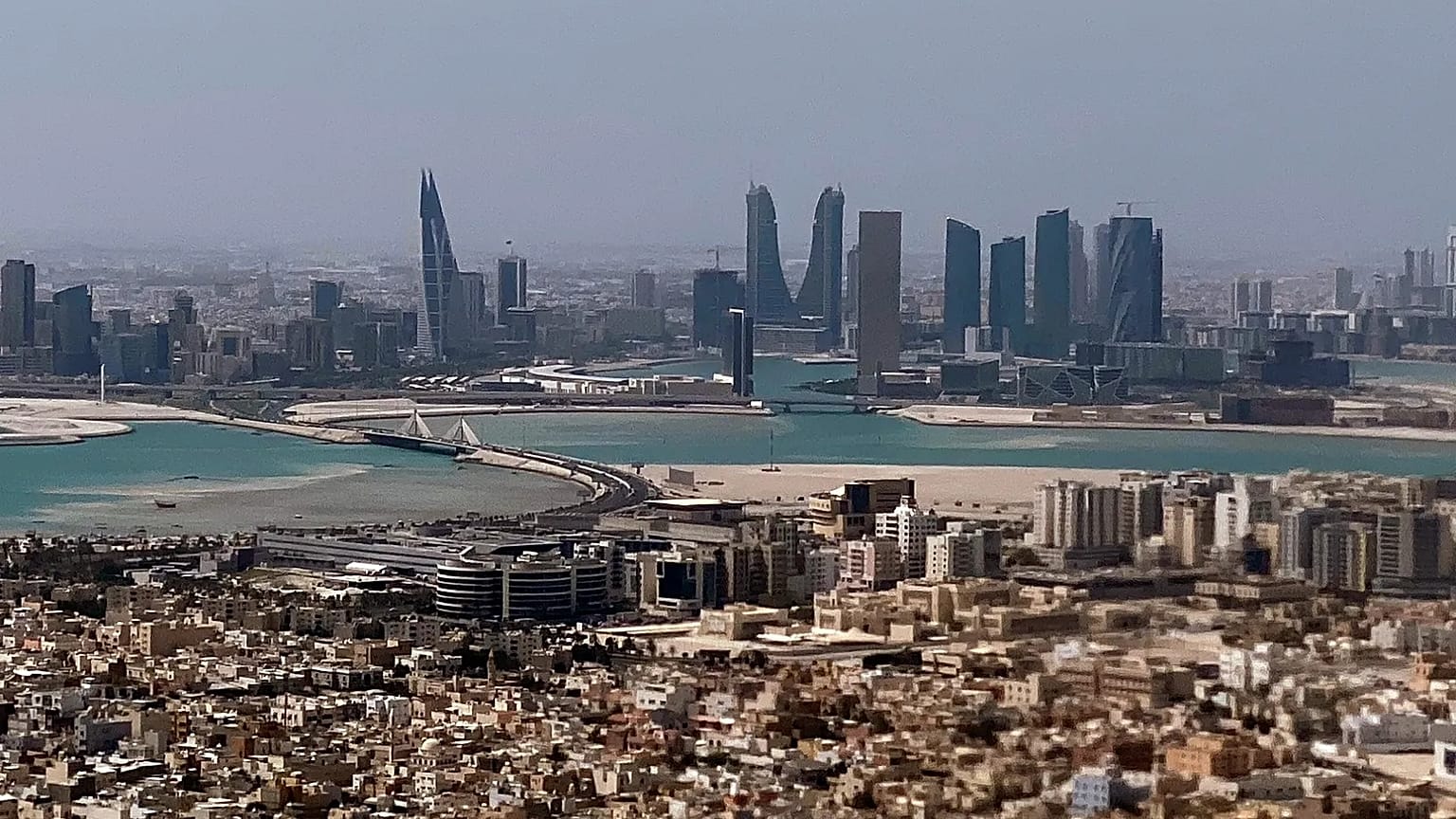
FILE - A general arial view of Bahrain Financial Harbour is seen. 29 March 29 2021
Copyright AP Photo/Kamran Jebreili

By Una Hajdari
Published on 

Bapco Energies invoked force majeure on Monday after a strike set the Al-Ma'ameer facility ablaze, joining Qatar and Kuwait in suspending shipments as Iran escalates its attacks on Gulf energy infrastructure.

Bahrain's state energy company declared force majeure on its oil shipments on Monday after an Iranian attack set its only refinery ablaze, becoming the latest Gulf state to invoke the clause as Iran widens its campaign against regional energy infrastructure.

A strike targeting Bahrain's sprawling Al-Ma'ameer oil facility caused a fire at the complex along with material damage, the Bahrain News Agency reported, though no casualties were recorded and firefighting operations were under way.

Videos widely shared on social media showed thick smoke billowing from the industrial zone housing the refinery.

In its force majeure notice, Bapco Energies said its "group operations have been affected by the ongoing regional conflict in the Middle East and the recent attack on its refinery complex."

Force majeure is a legal provision that frees parties from liability when failure to meet contractual obligations results from events beyond their control.

The company said it could still meet domestic demand.

The 90-year-old refinery was first reported damaged last week.

Bapco had recently modernised the plant and boosted its capacity to up to up to 380,000 barrels per day, upgrading units capable of producing more jet fuel and diesel.

Bahrain is not the first Gulf state to take the step.

QatarEnergy made a similar declaration last Wednesday after two of its liquefied natural gas facilities were struck, forcing a production pause and sending fresh volatility through global energy markets.

Qatar's energy minister had warned that all Gulf exporters would be forced to follow suit within days. Kuwait has also declared force majeure on oil sales after cutting output at its fields and refineries.

The energy shock comes as Iran also targeted a residential area in Bahrain, wounding 32 people including children and as a separate Iranian drone attack damaged one of the kingdom's desalination plants — the first time an Arab country had reported Iran targeting a desalination facility during the nine-day conflict, raising concern across a region that depends on such plants for its water supply.

Bahrain is an archipelago of 33 natural islands spanning approximately 760 square kilometres, roughly the size of Greater London, with a population of about 1.6 million, making it the third-smallest nation in Asia.

It is one of the most densely populated countries on earth, and one of the Gulf's smallest but most strategically significant oil producers.

Brent crude surged above $114 a barrel on Monday, roughly 60% higher than when the US and Israel first struck Iran on 28 February.

President Donald Trump sought to play down the spike, writing on social media that short-term oil prices "will drop rapidly when the destruction of the Iran nuclear threat is over".


Thursday, August 11, 2022

Exclusive: Freeport LNG retracts force majeure, widening losses for gas buyers - sources

By Julia Payne and Marwa Rashad - Yesterday

 An LNG tanker is tugged towards a thermal power station in Futtsu

LONDON (Reuters) - Top U.S. gas exporter, Freeport LNG, has retracted the force majeure it initially declared after an explosion in June, a development that could cost its buyers billions of dollars in losses, a document showed and three trading sources said.

Force majeure is a notice used to describe events outside a company's control, such as a natural disaster, which usually releases it from contractual obligation without penalty.

The force majeure would also have allowed Freeport’s LNG buyers to exit their own agreements to deliver gas to end users. Instead, they are facing a collective loss of up to $8 billion as they source alternative supplies at elevated spot market prices, according to the trading sources, who have knowledge of the matter, and calculations by a consultancy.

Those buyers include BP, TotalEnergies, Osaka Gas, Japan’s top power generator JERA and South Korea’s SK Gas Trading and trading house Trafigura that holds a small contract.

Freeport and the buyers declined to comment on the force majeure, its retraction and potential losses.

Freeport accounts for 20% of U.S. LNG exports but stopped shipments after the explosion on June 8, causing a spike in global gas prices which had already soared on falling Russian supplies to Europe and other outages.

Freeport declared force majeure on June 9, before retracting the notice around the end of June, two of the three sources with knowledge of the matter said, adding that Freeport blamed human error.

"No facts have been revealed that would indicate that the incident was a result of Force Majeure," Freeport told market participants on Aug. 3 in a notice seen by Reuters.

Neither the retraction nor the notice has been previously reported.

Related video: OPEC and its allies agree to raise output by 100,000 barrels per day from September (CNBC)   View on Watch

Freeport does not expect full operations to resume until the end of the year, although a partial restart is scheduled for October. Without the force majeure, the company needs to pay compensation to its gas buyers and the buyers still need to supply end users.

The outage leaves a hole of about 80 cargoes based on an October restart date, according to Reuters calculations and an LNG consultancy, although Freeport's buyers may not need to replace them all depending on how they negotiate their onward contracts.

The buyers had paid Freeport around $30-$50 million per LNG cargo, according to two of the sources, with the fuel then sold to end users at a premium usually amounting to a few millions of dollars per cargo.

Freeport's buyers would have to pay $100 million per cargo based on Wednesday's spot market prices to replace the lost volumes as LNG prices have doubled since the explosion, which happened when markets were already tight.

However, Freeport is offering buyers compensation of around 10% of the value of the purchased and undelivered cargoes or lump sums of between $3 million-$5 million per cargo, according to the two sources.

"There are ongoing discussions taking place right now with Freeport as the compensation they are offering will not cover taking a spot cargo at today's rates," one of the sources said.

Freeport declined to comment on its compensation policy.

"The potential losses Freeport's offtakers may face... will probably be within the range of about $6-$8 billion, on a collective basis," said Tamir Druz, managing director at Capra Energy, an LNG consultancy.

“While some of these cargoes may not need to be replaced, on a mark-to-market basis, it remains a significant loss.”

Oil major BP has the largest contract at 4.4 million tonnes per annum (mtpa) through 2040. JERA and Osaka Gas have contracts at 2.3 mtpa each through 2039, while SK and TotalEnergies each have 2.2 mtpa contracts running through 2040, according to the International Group of Liquefied Natural Gas Importers.

Based on Freeport paying 10% compensation per lost cargo, losses may amount to about $2.3 billion for BP and $1.1 billion for TotalEnergies on a mark-to-market basis, Capra Energy's Druz said.

BP and TotalEnergies declined to comment on any losses.

Mark-to-market is a way of measuring the fair value of accounts based on current market prices, which is likely different to the price paid to acquire them.

Osaka Gas sharply cut its annual net profit forecast this month citing a nearly 80 billion yen ($611 million) hit from the Freeport outage for the second quarter alone.

(Reporting by Julia Payne and Marwa Rashad; Editing by Kirsten Donovan)

Monday, November 10, 2025


Lukoil Declares Force Majeure at Huge Iraqi Oilfield After U.S. Sanctions

Russian oil giant Lukoil has declared force majeure at the 400,000-barrels-per-day West Qurna-2 oilfield in Iraq after the U.S. sanctions on Russia’s top oil firms, sources familiar with the matter told Reuters on Monday. 

Following the October 22 U.S. sanctions on Lukoil and Rosneft, Iraq has stopped all cash and crude payments to Lukoil, according to Reuters’ sources. 

Last week, reports emerged that Iraq’s state oil marketing company SOMO had canceled three crude loadings from Lukoil this month after the U.S. sanctioned the second-biggest Russian oil producer last month. 

The three loadings from Lukoil from its production at West Qurna-2 were scheduled for November 11, 18, and 26, but Iraq apparently doesn’t want to handle the now-sanctioned barrels, market sources told Reuters last week. 

Lukoil has a 75% equity stake in Iraq’s giant West Qurna-2 oilfield, which produces more than 400,000 barrels per day (bpd) of crude oil.

Following the U.S. sanctions on Lukoil and Rosneft, oil traders and operators globally are steering clear of any cargoes of the two biggest Russian oil firms to avoid drawing the attention of the Trump Administration and being slapped with secondary sanctions.

After the U.S. sanctions on Lukoil and Rosneft, “as a result of Russia’s lack of serious commitment to a peace process to end the war in Ukraine,” Lukoil announced it would sell all of its international assets, and reached a preliminary agreement with Switzerland-based commodity trader Gunvor to sell these.

However, Gunvor last week pulled the $22-billion bid for Lukoil’s international business after the U.S. Treasury Department signaled it was not happy with the deal, calling the company a Russian “puppet”. 

“President Trump has been clear that the war must end immediately. As long as Putin continues the senseless killings, the Kremlin’s puppet, Gunvor, will never get a license to operate and profit,” the U.S. Treasury said in an X post.

With no immediate deal for Lukoil to sell international assets, West Qurna-2 being one of the biggest, the near-term production and supply from the giant Iraqi oilfield looks increasingly uncertain.  

By Charles Kennedy for Oilprice.com 


Force majeure refers to extraordinary events or circumstances beyond the control of the parties involved in 
contract, which can prevent them from fulfilling their contractual obligations.


Sanctions Force Lukoil Into Force Majeure at Giant Iraqi Oilfield

Lukoil
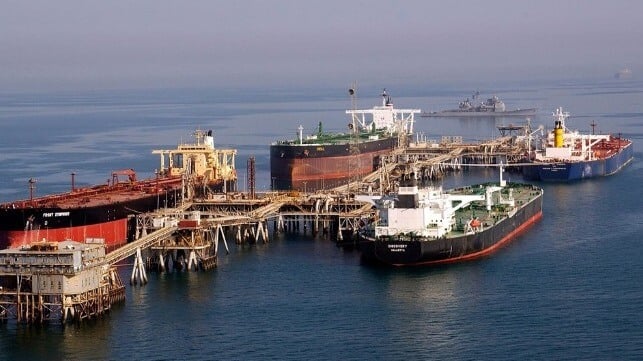
Iraqi officials had reportedly blocked three Lukoil export loadings at Iraqi terminals, among other measures (USN file image)

Published Nov 10, 2025 5:39 PM by The Maritime Executive


American sanctions on Russian oil giant Lukoil have forced the company to declare force majeure for its Iraqi operations, taking nearly 10 percent of the nation's entire production offline through the closure of the giant West Qurna-2 oilfield, according to local and international media sources. The move follows the Iraqi government's decision to cancel payments and export loadings for Lukoil over sanctions concerns. 

West Qurna-2 is a supergiant 12.9 billion barrel reservoir near the port of Basra, Iraq. It was developed by Lukoil and Statoil (now Equinor) in the 2010s, and currently produces about 480,000 bpd of crude. It is part of the braoder West Qurna Field, one of the largest oilfields in the world (by total recoverable barrels). 

Lukoil owns 75 percent of West Qurna-2, and it is the firm's most valuable foreign asset. It had planned to invest billions of dollars to increase the field's output in the years ahead, but given Iraq's strict application of U.S. sanctions on the Russian firm, those plans appear off the table unless there is a change in regulatory circumstances. Iraq has cut off cash payments and in-kind oil allocations to Lukoil, and has reportedly canceled three of the firm's export loadings for the month of November. Lukoil has also reportedly had to lay off its international staff at the West Qurna-2 field, though it has been able to retain its Russian and Iraqi workforce. 
  
If the sanctions situation does not change, local officials told Reuters that Lukoil could exit the field entirely within six months. If the company seeks a buyer for its Iraqi holdings, any would-be purchaser could encounter U.S. compliance difficulties: Russian-linked commodity trader Gunvor was in talks to buy all of Lukoil's international holdings, including West Qurna-2, but backed out after threats of sanctions from the U.S. Treasury Department. 

If Lukoil exits the West Qurna-2 field without selling its rights to a successor, it could clear the way for a Western operator to step in, according to Oilprice.com. American, British and French oil majors might all take an interest in West Qurna-2's abundant reserves. 

In the meantime, the force majeure declaration will lower Iraq's oil production by about 480,000 barrels per day, about 0.5 percent of the global oil market. Brent futures were largely unaffected, closing at $64 per barrel. 

Friday, March 06, 2026

India's Petronet LNG declares force majeure after QatarEnergy notice

India's Petronet LNG declares force majeure after QatarEnergy notice
/ Shaah Shahidh - Unsplash
By bno - Mumbai Office March 6, 2026

India’s biggest LNG importer, Petronet LNG (NSE: PETRONET), has received a Force Majeure notice from QatarEnergy (QE), and as a result, Petronet LNG has issued corresponding Force Majeure notices to companies that it supplies LNG to, the company said in a stock exchange filing on March 5.

Petronet’s offtakers include GAIL (NSE: GAIL), Indian Oil Corporation Limited (NSE: IOC) and Bharat Petroleum Corporation Limited (NSE: BPCL). The company added that the likely impact of Force Majeure, which is currently an ongoing event, cannot be estimated at this point of time.

“The company is closely monitoring the developments and will keep the stock exchanges informed of any material updates in this regard,” Petronet stated. The company operates two LNG import terminals in India at Dahej and Kochi. 

In light of the ongoing war in the Middle East region involving Iran and Israel, vessels are presently unable to safely transit through the Strait of Hormuz to reach Ras Laffan, the loading port of QatarEnergy.

A disruption at Qatar’s LNG plant, which supplies nearly 40–50% of India’s LNG imports, could result in a short-term supply shock for the domestic gas market, CNBCTV18 reported, citing JM Financial analyst Dayanand Mittal. Gas utilities such as Gujarat Gas and GAIL may come under pressure as a result of higher spot LNG prices and reduced transmission volumes.

Mittal said that the disruption may last about a month, potentially affecting earnings and gas supply across the sector.

GAIL in a separate filing said that due to supply restrictions imposed by Petronet, the allocation of LNG quantities to GAIL has been reduced to zero with effect from March 4. GAIL said it is currently assessing the situation with respect to any supply curtailment that may need to be imposed on its downstream customers. LNG supplies to GAIL from other suppliers are currently unaffected, it said.

Reuters has reported that GAIL and Indian Oil have already informed their customers about the reduction of gas supplies due to the Petronet Force Majeure. To offset the shortfall, companies including Indian Oil, GAIL and Petronet LNG are preparing to float spot tenders to secure additional cargoes, Reuters added. 

Saturday, July 23, 2022

Keystone Force Majeure Cuts Oil Flows To U.S.

  • TC Energy, the operator of the Keystone Pipeline, declared force majeure on Monday.
  • The operator cited a power outage in South Dakota as the main reason for the force majeure status.
  • The company did not provide a timeline for restoring crude flows to full capacity.

TC Energy, the operator of the Keystone Pipeline, declared force majeure on Monday following a power outage in South Dakota, which reduced the flows on the link carrying crude from Canada to the U.S.

TC Energy said in a statement late on Monday that it was made aware of a non-operational incident resulting from third-party damage to the power supply to a facility on the Keystone Pipeline System near Huron, South Dakota. The system continues to operate safely, but it is operating at a reduced rate due to damage to the third-party power utility.

“Initial damage assessments have been completed with no material impact to TC Energy owned facilities,” the company said.

As a result of the power outage, TC Energy declared force majeure on the Keystone Pipeline, but did not provide a timeline for restoring crude flows to full capacity.   

“Repairs are being undertaken and we are working to restore full service as soon as possible. A timeline for full-service restoration is not available at this time,” the company said.

The 2,687-mile Keystone Pipeline System plays a key role in connecting Alberta’s crude oil supplies to U.S. refining markets in Illinois, Oklahoma, and Texas, as well as connecting U.S. crude oil supplies from the Cushing, Oklahoma, hub to refining markets in the U.S. Gulf Coast through the Marketlink Pipeline System.

The reduced flows of crude from Canada to the United States comes days after U.S. President Joe Biden returned from his trip to the Middle Eastern without receiving a specific commitment from the top OPEC producers to boost oil supply in the near term.

Meanwhile, gasoline prices in the U.S. continued to fall for a fifth consecutive week, to a national average of $4.51 per gallon as of July 18, according to data compiled by fuel-savings app GasBuddy. 

“Barring major hurricanes, outages or unexpected disruptions, I forecast the national average to fall to $3.99/gal by mid-August,” said Patrick De Haan, head of petroleum analysis at GasBuddy.

In the past three days, South Carolina and Texas became the first two states to see state average gasoline prices return to below $4 per gallon, according to GasBuddy.

By Tsvetana Paraskova for Oilprice.com