AUSTRALIA
Working class support for One Nation (Part I): Towards an honest explanation
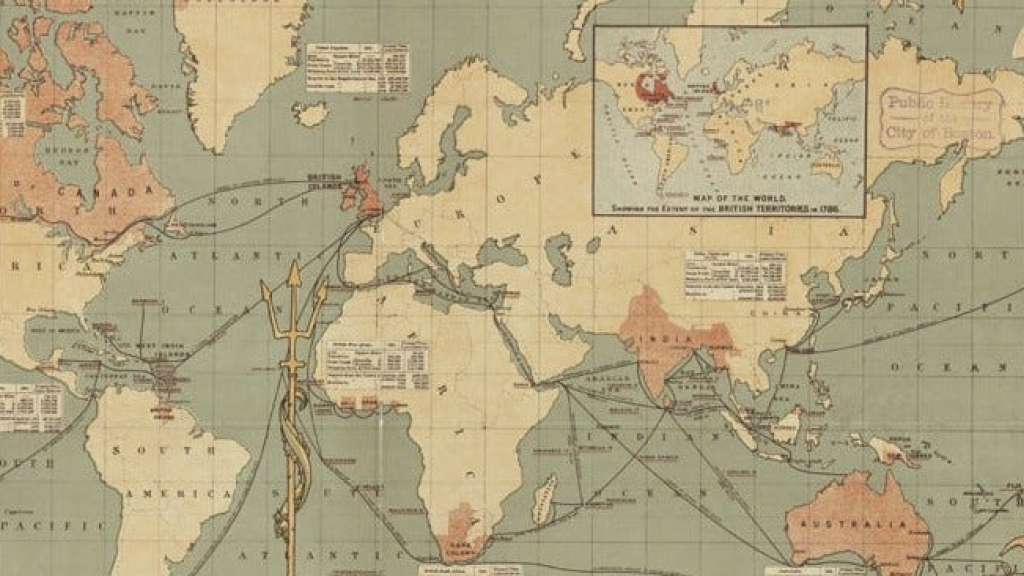
First published at Revitalising Labour. Read Part II here.
The rapid surge in support for Pauline Hanson’s One Nation has forced a question the Australian left has consistently avoided answering honestly: why do sections of the working class support a politics that appears to cut against their own material interests?
Recent Red Flag articles by Mick Armstrong and Tom Bramble offer the dominant far-left answer. Armstrong argues that One Nation’s base is primarily the small-town middle class, real estate agents, pharmacists, newsagents, dentists, bank managers rather than workers. He acknowledges that some conservative workers, particularly in rural areas, did vote One Nation in the 1990s, but insists that Hanson overwhelmingly attracted former Coalition voters, not Labor voters, and that unionised workers were the most hostile to her movement.
This account has a basic arithmetic problem. When Guardian polling shows that 58% of Australians are considering a vote for One Nation, the claim that its support base is primarily petty bourgeois becomes untenable. The petty bourgeoisie is simply not large enough as a proportion of the Australian population to produce a 58% consideration figure. Sections of the working class have to be in that number in significant proportions, because workers are the majority of the population. That is not an analytical claim, it is arithmetic.
Armstrong is not entirely wrong about the 1990s. The small-town middle class was indeed a significant component of One Nation’s early base. But using the 1990s class composition to deny what the current data shows is a different kind of error. The Samaras research on Australian dual populism documents a significant movement of outer suburban Gen X workers toward One Nation in the current period, not primarily the rural petty bourgeoisie of 1996 but workers in Werribee and Penrith and Logan experiencing the long-term consequences of deindustrialisation, wage erosion, housing unaffordability, and the breakdown of the post-war industrial settlement that provided their parents with a degree of economic security.
Howard’s battlers are the historical bridge that Armstrong’s analysis cannot accommodate. These were workers, outer suburban and regional working-class voters, who shifted from Labor to Howard and then to One Nation, and in some cases back again, over the past three decades. That movement is not the middle class being manipulated by ruling class ideology. It is sections of the working class navigating genuine material anxiety and making political choices that reflect, however distortedly, their actual situation.
The left’s inability to explain this, its insistence that workers who support One Nation are either not really workers or are simply deceived by ruling class propaganda, produces political practice that cannot address the actual terrain. You cannot win sections of the working class away from One Nation if you cannot account for why they went there in the first place, or you deny that it is occurring at all.
Theories as maps
Before developing the framework I think is more adequate, a methodological point is worth making. Theories are maps. Like all maps, they are useful simplifications of a complex reality, necessarily imperfect, necessarily selective, necessarily more useful for some terrains than others. A street map of Melbourne and a topographic map of Victoria are both accurate and both incomplete. Neither is wrong; they are designed for different purposes. The question is not which map is correct but which map you need for the task at hand.
This matters because a lot of the debate around the labour aristocracy thesis and whiteness studies operates at cross-purposes. Critics attack the frameworks for not doing things they were not designed to do, and defenders claim more than the frameworks can deliver. Both errors stem from treating theory as if it should be a perfect map of the entire territory rather than a useful simplification adequate to specific analytical tasks.
Finding aspects of reality that a theory cannot fully account for does not disprove the theory, unless that specific aspect is what the theory is designed to explain. The labour aristocracy thesis is designed to explain why sections of the working class in advanced capitalist countries develop a material and psychological basis for accommodation to capitalism and imperialism. Showing that well-paid workers can also be industrially militant does not refute this, it just demonstrates that industrial militancy and revolutionary political outlook are different things, which the theory never denied.
The labour aristocracy thesis
Marx and Engels first confronted the problem in relation to England. The most advanced capitalist economy, with one of the largest colonial empires, also had one of the least revolutionary labour movements in Europe. English workers showed significant levels of support for British imperialism’s colonial crimes, and most notably hostility toward Irish liberation. To account for this apparent contradiction, they developed the concept of the labour aristocracy, a relatively privileged section of the English working class that English capital could afford to pay higher wages, funded by the higher rates of profit extracted from colonial possessions. This relative privilege, they argued, provided the material basis for political accommodation to capitalism.
Lenin and the Bolsheviks revisited the concept in the wake of the great betrayal of 1914, when the majority of Second International parties supported their own governments’ war drives. Rather than the labour aristocracy contracting as other capitalist economies developed, as Marx and Engels had predicted, Lenin argued that it had expanded across all advanced capitalist countries with the emergence of monopoly capitalism and imperialism. The surplus extracted from the periphery enabled sections of capital to pay relatively higher wages to sections of workers in the imperial core, and this relative privilege provided the material basis for the opportunism of the social democratic parties and their working-class base.
This is a tendency, a pressure that operates on sections of the working class in specific directions, not a deterministic outcome. Lenin’s point was precisely that identifying the tendency as a tendency was the precondition for organising against it. You cannot fight what you cannot name. The labour aristocracy concept gives political practitioners a framework for understanding why sections of the working class resist socialist politics, which is necessary for developing strategies adequate to that resistance.
Whiteness studies and the psychological wage
Theodore Allen’s work on the invention of the white race provides a complementary framework developed from the specific conditions of the United States. Allen’s central argument is that whiteness was constructed as a political project, initially by the planter class in the colonial Chesapeake to divide Black and white servants after the threat of Bacon’s Rebellion, that delivered real if limited material privileges to white workers while dividing them from their potential allies and securing the conditions for racial slavery and, subsequently, racial capitalism. Allen developed this argument across two volumes, The Invention of the White Race, Vol. 1: Racial Oppression and Social Control (Verso, 1994) and Vol. 2: The Origin of Racial Oppression in Anglo-America (Verso, 1997), with an accessible precursor available in his 1975 pamphlet held in the UMass Amherst digital collections, and his earlier 1967 article available via the Marxists Internet Archive.
Building on W.E.B. Du Bois’s observation that the Southern labour movement after the Civil War failed to grasp “the kernel and the meaning of the labor movement in the United States” by not building cross-racial solidarity, Allen traces how the category of whiteness was extended, maintained, and reproduced through specific legal, political, and institutional mechanisms that delivered differential access to employment, housing, legal protection, and social recognition.
David Roediger’s contribution, drawing on Du Bois’s concept of the psychological wage, provides the connecting mechanism between Allen’s historical materialism and Lenin’s labour aristocracy thesis. Roediger argues that the benefit of whiteness is not exclusively or even primarily monetary. White workers receive a psychological wage: public deference, a sense of social superiority, the daily affirmation of belonging to the dominant group rather than being identified with the most marginalised. This perceived benefit has a real grip precisely because it is psychological, it is somewhat robust to the contradiction between the perception and reality, and it generates a consistent orientation of political anxiety toward the threat of the non-white other. (David R. Roediger, The Wages of Whiteness: Race and the Making of the American Working Class, rev. ed., Verso, 2007.)
The psychological wage explains something that neither Allen nor Lenin fully accounts for on their own: why accommodation to racial hierarchy persists through changing material conditions, why the grip of white supremacy survives even when the direct material benefits are diminishing, and why the political response to the erosion of that privilege takes cultural forms, anxiety about immigration, about demographic change, about the loss of a recognisable Australia, rather than the class forms that would more directly address the underlying material conditions.
Taken together, Allen, Lenin, and Roediger produce something more analytically useful than any of the three alone. Allen explains the construction of the privilege. Lenin explains its material basis in imperial accumulation. Roediger explains how it is reproduced through identity and psychological investment in ways that make it politically resilient even when the underlying material conditions change. The synthesis explains both why the accommodation persists and why contesting it requires more than either exposing ideology or waiting for class struggle to dissolve it.
The psychological wage within radicalism
The most authoritative available statement of this problem comes not from a European critic of the left but from Ho Chi Minh, writing in 1922 directly at the Section Française de l’Internationale Communiste, the French communist formation that had just formally committed to supporting colonial liberation as a condition of Comintern membership. Two years after that formal commitment, Ho Chi Minh found it necessary to point out that metropolitan proletarian indifference to the colonies remained the central practical obstacle to building the internationalism the commitment required. “There are many militants,” he wrote, “who still think that a colony is nothing but a country with plenty of sand underfoot and of sun overhead; a few green coconut palms and coloured folk, that is all. And they take not the slightest interest in the matter.”
The problem was not simply indifference but the specific form that engagement took when it did occur. French militants, Ho Chi Minh observed, looked upon colonial peoples as “an inferior and negligible human being, incapable of understanding and still less of taking action”, while colonial peoples in turn regarded all French people as exploiters. Imperialism, he noted, did not fail to take advantage of “this mutual suspicion and this artificial racial hierarchy to frustrate propaganda and divide forces which ought to unite.” The critique was not directed at the French right or at social democratic reformists who had never fully committed to anti-colonialism. It was directed at the revolutionary formation that had formally adopted that commitment and was still reproducing the racial assumptions of the society it claimed to be contesting.
This is Roediger’s psychological wage operating within radicalism at its most precisely documented. The SFIC militants Ho Chi Minh was addressing were not consciously racist in the sense of defending colonial rule, they were people who had made the theoretical and political break with European chauvinism that most of their contemporaries had not. And they still related to colonial peoples through a framework shaped by assumptions of European centrality and agency that the formal commitment to anti-colonialism had not dissolved. The formal commitment changed the political position; it did not automatically change the psychological formation that made metropolitan workers treat colonial peoples as objects of solidarity rather than as equal political agents.
Ho Chi Minh’s five articles published in L’Humanité and Le Paria between May and July 1922 — “Some Considerations on the Colonial Question”, “In a ‘High Civilization’”, “Equality!”, “The Civilizers”, and “Racial Hatred”, document both the theoretical problem and its material foundation. The latter four pieces record in direct terms the specific forms of colonial violence and racial economic discrimination that constituted the material basis for the psychological wage’s operation across the empire. Together they represent the most complete available contemporary account of how the psychological wage of European racial identity operated within the revolutionary left at the moment when that left had formally committed to contesting it.
The post-war compromise and its breakdown
The post-war settlement in Australia, rising real wages, the social wage of public education and housing support, the centralised arbitration system that delivered consistent real wage growth, was not capital’s gift to labour. It was forced by the specific balance of forces of the period: strong union density, the militant shop floor traditions of key industries, and critically, the leverage created by the communist threat that made capital willing to make concessions it would otherwise have resisted. The threat of a more radical alternative made the managed accommodation of labour’s immediate interests the rational choice for Australian capital. The political economy of that breakdown, the specific mechanisms through which the post-war boom contained the seeds of its own demise, and the neoliberal response that converted the crisis of capitalist accumulation into a sustained assault on working class institutional power, is developed in more detail elsewhere. What matters for the current argument is the specific consequence for the labour aristocracy’s material and psychological position.
Understanding that settlement requires acknowledging something the standard application of Lenin’s imperialism framework tends to obscure: Australia as a settler colonial state occupied a different position in the imperial hierarchy than the colonies whose extraction Lenin was primarily analysing. As a direct extension of British empire populated primarily by British settlers, Australia was developed as an extension of the imperial core rather than as a site of pure extraction, allowed to retain much of the profit generated within its economy, permitted to develop manufacturing behind tariff walls, and subject to a more even development of productive capacity across sectors than the extractive colonial model produced elsewhere. Protectionism was central to this, redistributing the surplus of the extractive pastoral and mining sectors into manufacturing and secondary industry, providing the industrial base that made the centralised arbitration system and the living wage politically achievable, and simultaneously managing the tensions between competing capital fractions by giving manufacturing capital a stake in the national settlement. The result was a labour aristocracy whose material basis was distinctively Australian, produced not just by imperial accumulation but by the specific institutional architecture of a settler colonial state that retained and redistributed a significant share of the surplus it generated.
The Accord of the 1980s reflected the attempt to preserve the terms of that settlement in changed conditions, with limited decline in union density prior to the Accord, the collapse of the post-war boom, and the shifting global balance of forces. The role of the mining industry in accelerating capital’s international restructuring away from manufacturing, leaving the protected industrial base that had sustained the arbitration settlement increasingly exposed, is a critical part of this story that the Accord’s architects were working against rather than with. The early Accord period delivered real social wage gains, but real wages fell relative to productivity across the Accord years as a whole, and the enterprise bargaining system it produced did not contain the seeds of erosion, it was the erosion, restructuring industrial relations in ways that systematically weakened the position of workers in less organised workplaces and created the conditions for the Howard government’s assault on union power. Decentralising wage determination to the enterprise level weakened the cross-sector redistribution that the centralised arbitration system had provided, progressively detaching the gains of the most organised workers from the outcomes for the least organised.
The outer suburban Gen X worker that Samaras documents, working in retail, logistics, or construction on variable hours, with no clear path upward and no family wealth to fall back on, is experiencing the long tail of that breakdown. The psychological wage of whiteness and Australianness that his parents’ generation received as part of the post-war settlement, the sense of belonging to a society that was improving, that had a stake in its future, that rewarded work with dignity and security, has been progressively devalued by three decades of wage stagnation, housing unaffordability, and the erosion of the institutional protections that made working class life stable.
One Nation offers the psychological wage in a different form, the identification with a politics that treats his anxiety as real, that names the loss of belonging he has experienced, that provides a community of people who share his sense that something has been taken from him. That the politics misdirects his anxiety toward immigration and cultural change rather than toward the structural conditions that actually produced his situation does not make the anxiety less real or the appeal less comprehensible.
The German case
The German case provides the most developed contemporary illustration of the tendency being actively contested. The deindustrialisation of the former East Germany following reunification produced material and psychological conditions that the labour aristocracy thesis would predict as fertile ground for the accommodation tendency, the specific forms of economic dispossession, the sense of second-class citizenship within a unified Germany, the erosion of the institutional protections that had structured working class life in the German Democratic Republic. The AfD has successfully captured sections of this constituency through exactly the cultural nationalist politics the thesis predicts. But the contest is not over. The ninth trend study “Youth in Germany 2026”, a representative survey of 2,012 young people aged 14 to 29 conducted in early 2026, documents the material conditions producing this polarisation: 23% of young people in debt, one in five concretely planning to emigrate, growing doubt that performance still pays off in Germany, and psychological stress at a new high of 29%. In Sunday polling, Die Linke leads among this age group at 25%, with the AfD in second position at 20%, CDU/CSU at 14%, the Greens at 13%, the SPD at 10%, and BSW at 5%. The same material conditions producing the accommodation tendency toward the AfD are simultaneously producing a substantial constituency for a politics that takes those conditions seriously without the racial and nationalist misdirection. The specific political work of contesting the tendency rather than accommodating to it determines which direction sections of the working class move. The tendency is real; the outcome is not predetermined.
The Bündnis Sahra Wagenknecht (BSW, the Alliance Sahra Wagenknecht) is a party formed in 2024 following a split from Die Linke led by its former parliamentary leader Sahra Wagenknecht. BSW combines left economic demands, opposition to austerity, support for public services, scepticism of NATO policy, with cultural conservatism on migration and a nationalist framing of Germany’s economic interests that Die Linke’s mainstream rejected as accommodation to the right. It represents the most developed contemporary expression of the red-brown tendency, the political formation that attempts to capture working class anxiety about economic dispossession through a combination of material demands and cultural nationalist misdirection rather than contesting the misdirection directly. BSW’s 5% among young voters, compared to the AfD’s 20%, suggests something analytically important: among younger voters at least, the accommodation toward cultural nationalism is more successful when it dispenses with the left economic framing than when it attempts to combine them. The straight nationalist right outperforms the red-brown synthesis in this demographic, which complicates any argument that left economic demands alone can capture the cultural nationalist constituency without contesting the misdirection toward racial and cultural targets.
The Australian case
The White Australia Policy is the foundational Australian illustration of the labour aristocracy thesis and the psychological wage operating together in the specific conditions of a settler colonial society. The policy was substantially a labour movement project, not merely accepted by the early union movement but actively championed by it. The early Labor Party’s platform included immigration restriction as a core demand. The argument for excluding Chinese and other non-European workers was framed as protecting Australian workers’ wages and conditions from cheap labour competition. A framing that contained a genuine element of material interest while simultaneously delivering the psychological benefits of belonging to the dominant racial category in a society organised around racial hierarchy.
The White Australia Policy was not an isolated Australian peculiarity but an expression of a general tendency operating across different national contexts through different specific mechanisms. The colour bars maintained by craft unions in the United States, the explicit exclusion of Black workers from skilled trades, the separate locals, the apprenticeship restrictions that maintained racial job classifications, reflect the same underlying dynamic. So do the broader craft union efforts across the advanced capitalist world to limit the number of workers in their trade through apprenticeship restrictions, closed shops, and licensing requirements. All are expressions of sections of the working-class using exclusion to defend their relative labour market position, not simply as racial prejudice, but as a mechanism for maintaining the scarcity of skilled labour that gave those sections their bargaining power.
The employer dimension adds further analytical precision. Employers frequently attempted to break down the skilled labour divide precisely because craft union control over access to the trade gave workers leverage that employers wanted to undermine, through the introduction of machinery, the subdivision of tasks, the employment of less skilled workers at lower rates. The craft union’s exclusionary practices were therefore directed simultaneously against less organised workers whose inclusion would dilute the privilege and against employer attempts to dilute the skilled labour category from above. That dual direction of the exclusionary practice reveals its genuine character, it was about the defence of relative labour market position against pressure from both directions, with racial and gender exclusion serving as the available mechanisms in the specific historical conditions of each national context. This is the labour aristocracy tendency in its most active and most organised form. Simultaneously militant in its defence of the craft boundary and accommodating to capitalism as a system, because the defence of relative privilege within capitalism presupposes and reproduces the system that makes that privilege possible.
The consequences of that accommodation were not abstract. The League of Revolutionary Black Workers, and its constituent formations including DRUM, the Dodge Revolutionary Union Movement, emerged in Detroit in the late 1960s in direct response to the experience of racism from co-workers on the shop floor and the UAW’s consistent failure to contest it. The union that had been built through some of the most significant industrial organising in American history, and that maintained a formally progressive political identity, reproduced racial hierarchy in its day-to-day institutional practice, in whose grievances were pursued, whose complaints were taken seriously, who received the solidarity the union formally committed to providing. The LRBW’s formation was not a response to a different employer or a different industry. It was a response to the specific behaviour of white co-workers and the union apparatus that reflected and accommodated that behaviour. It is the most precise available illustration of the labour aristocracy tendency operating not at the level of policy or formal position but at the level of daily working-class practice, and of the political formations that emerge when that tendency is contested rather than accommodated.
The more honest historical account of the Australian case, which the IST (the International Socialist Tendency, the global current whose Australian expressions include Solidarity and, in a more contested relationship with the tradition, Socialist Alternative) tradition’s Australian formations have consistently resisted, is that workers and unions were central drivers of the anti-Chinese racism and violence of the colonial period, not passive recipients of ruling class ideology. The Lambing Flat riots of 1861 were not organised by mining company managers. The colour bar in Australian unions was not simply imposed from above. The labour movement’s racial exclusionism was organic, generated from within the specific material and psychological conditions of working-class life in a settler colonial society, and therefore more durable and more politically significant than any top-down imposition of ruling class ideology could have been.
The Eureka Stockade of 1854 is the foundational Australian labour movement mythology. The armed uprising of gold miners against colonial authority, the Southern Cross flag, the democratic demands for manhood suffrage and the abolition of the licence fee. It is claimed by the Australian left as the origin of radical democratic tradition and by the far-right as the origin of nationalist resistance to state power. Both claims have some basis, which is precisely what makes it analytically revealing rather than simply historically complex.
The Eureka rebellion was simultaneously a genuinely radical democratic uprising against colonial authority and a movement substantially animated by hostility to Chinese miners on the goldfields. The democratic demands its participants raised were understood by many of them as democracy for white men rather than as universal democratic rights. The militancy and the racial exclusion were not contradictions in the experience of the participants, they were both expressions of the same underlying sense of entitlement to the benefits of the colonial economy as white male workers, the psychological wage of whiteness operating within radicalism at the foundational moment of Australian labour movement mythology. As Matthew Allanby documents, imagery of the Southern Cross was used at the anti-Chinese Lambing Flat riots of 1860 and 1861, the same symbol flown at Eureka deployed six years later against Chinese miners on the NSW goldfields. (Matthew Allanby, “Who ‘Owns’ the Eureka Flag?” Agora 57:3 (2022), 6–10.)
The contestation over Eureka’s meaning, the left managing the anti-Chinese dimension, the far-right managing the democratic and anti-colonial dimensions, reflects the same selective engagement with historical evidence that the broader debate has been identifying throughout. Both are using Eureka as an identity marker rather than engaging honestly with what the historical record shows: that the labour aristocracy tendency and the psychological wage were present from the beginning of organised working class politics in Australia, and that the radical democratic tradition the left rightly claims was constituted through the racial exclusion the far-right conveniently ignores.
The militant waterfront workers who refused to load pig iron for Japan in 1938, documented in Mike Donaldson and Nick Southall’s account of the Dalfram dispute, or who supported Indonesian independence through the Black Armada dispute, demonstrate that cross-racial solidarity and political anti-imperialism were possible within the same tradition. But even in those cases, and this is important, the solidarity was extended from above rather than developed between equals. The paternalism toward Indonesian and Chinese workers that inflected even the most principled acts of international solidarity reflects the psychological wage operating within radicalism rather than being dissolved by it.
The practical consequences of failing to understand this are most visible at the level of concrete union organising. If racism within the working class is primarily false consciousness imported from the ruling class rather than organically generated within specific material and psychological conditions, then the appropriate response when racist frames emerge in union contexts is consciousness-raising, explaining that workers have been deceived, that their real interests lie in solidarity rather than racial identification. That response is both analytically wrong and practically inadequate.
What is actually happening when racist frames are deployed in union contexts is more accurately understood as the reflexive articulation of ideas with a long history within the working class itself, ideas that are available precisely because they have been organically generated and reproduced within working class culture over generations, and that are reached for in specific moments because they serve specific immediate purposes more efficiently than the harder work of building united action. The union official who deploys a racist frame in a factional dispute, the shop steward who frames a workplace grievance in racial terms, the meeting that allows a racist argument to pass without challenge, these are not primarily episodes of false consciousness requiring correction. They are expressions of a long historical sedimentation of racist ideas within working class culture, ideas whose grip is maintained by the psychological wage Roediger identifies and whose reflexive availability makes them a consistently easier path than the sustained political work of cross-racial solidarity.
Understanding this distinction matters practically. A framework adequate to contesting racist frames in union contexts requires understanding why those frames are available and useful in specific moments. What material and psychological conditions make the reflexive articulation more accessible than united action, what the specific political work is that makes cross-racial solidarity a more available response over time. The IST’s false consciousness framework cannot ask these questions because it cannot acknowledge the organic roots of the racism it is trying to contest. The result is a left that is consistently surprised when racist ideas emerge within the labour movement, consistently inadequate in its response, and consistently unable to develop the sustained political work that would actually reduce the reflexive availability of those ideas over time.
The contemporary expression of the psychological wage is visible in how progressive patriotism discourse operates: cultural markers make you suspect until you prove yourself white in cultural terms, while One Nation voters are welcomed by the political mainstream despite explicitly rejecting the stated values of Australian civic life. Palestinian protesters are treated as threats to social cohesion while expressing values that Australia’s own Values Statement endorses. The same structure of conditional belonging that the White Australia Policy institutionalised has been reproduced in modified form, not as explicit racial exclusion but as the selective naturalisation of some diaspora attachments and the treatment of others as inherently threatening.
The Minneapolis illustration
The Minneapolis Teamsters organising is often presented as the straightforward application of sound revolutionary leadership to a militant workforce. The reality is more analytically interesting. As Farrell Dobbs documents in his account of the 1934 strikes, the Minneapolis city cartage drivers of Local 574 were not, prior to the organising campaign, straightforwardly a labour aristocracy in the way that established AFL craft unions were, trucking companies paid as little as ten dollars for a work week of up to ninety hours, with workers often needing supplementary public assistance to support a family. They lacked the institutional protections, the craft traditions, and the established relative privilege that the labour aristocracy thesis identifies as the material basis for accommodation to capitalism. They had the potential to develop in that direction as the union consolidated, or they could be organised in ways that pushed against that potential.
The decision to push for industrial unionism within an AFL craft structure was precisely this kind of political choice. As Dobbs records, “Local 574 also passed beyond the IBT norm of confining its membership more or less to truck drivers and helpers. Wherever possible workers whose jobs were in any way related to trucking, in shipping rooms, warehouses, etc., were brought into the local. A shift was being made from the narrow craft form toward the broader industrial form of organization.” Organising inside workers alongside drivers, building alliances with unemployed workers and farmers, refusing the craft boundary that would have delivered relative privilege to a narrow section while leaving the broader workforce unorganised, all were interventions against the tendency toward labour aristocracy accommodation rather than simply good organising practice. The Local 574 leadership was building the union in ways that contested the accommodation tendency rather than reproducing it.
What this framework makes possible
The labour aristocracy thesis, Allen’s historical materialism, and Roediger’s psychological wage together do something that the IST’s ruling class project account cannot: they explain working class racism and right-wing populism as the product of specific material and psychological conditions that have a real, if distorted and ultimately self-defeating, logic, without either naturalising it as inevitable or dismissing it as false consciousness that class struggle will automatically dissolve.
The political implication is not that sections of the working class are irredeemably racist or that One Nation voters cannot be won to a different politics. It is that winning them requires understanding why the current politics makes sense to them from within their actual experience and material situation, and developing the specific political work that addresses the material conditions producing the anxiety while contesting the misdirection of that anxiety toward cultural and racial targets.
Roediger’s contribution is most important here. The psychological wage framework is not just a diagnostic tool. It points toward the specific political work that can contest it. If the psychological benefits of whiteness derive from the sense that relative privilege reflects racial characteristics rather than the specific historical and political conditions that produced it, then contesting the psychological wage requires reattributing the source of those benefits. The gains that sections of the working class have won, the real gains, the wages, the conditions, the social wage, are products of collective struggle, not racial characteristics. Making that reattribution visible and credible, building cross-racial solidarity that demonstrates collective power as the source of working class gains rather than racial solidarity, is the political work that the framework points toward. The AMWU’s hot shop strategy, concentrating organising effort and militancy in the most strategically placed workplaces to maximise leverage across an industry, is one of the clearest available Australian illustrations of what this kind of political work looked like in practice within a skilled trades union.
What this looks like in current practice is visible in the contrast between two responses to One Nation’s surge. One approach explains One Nation’s support as primarily the product of billionaire funding and media amplification, Murdoch, Stokes, the algorithm, and calls for protests to demonstrate that opposition is larger than support. The other, exemplified by the ACTU’s recent video on One Nation’s parliamentary voting record, does something different: it occupies the terrain where One Nation is winning, accepts the claim that workers deserve a fair go, and then contests One Nation’s claim to represent that value vote by vote. Penalty rates opposed. Labour hire pay parity opposed. Casual conversion rights opposed. Wage theft criminalisation opposed. Industrial manslaughter liability opposed. Silica dust bans opposed. Not once, across its entire parliamentary history, has One Nation voted in favour of workers’ rights at work.
That approach is doing the reattribution work Roediger’s framework points toward, demonstrating that the source of workers’ gains is collective institutional struggle, not One Nation’s advocacy, and that One Nation’s actual practice contradicts its populist claim at every point where it matters. It is more likely to reach the constituency the left needs to reach than protest at branch meetings, because it contests the psychological investment in One Nation on its own terrain rather than from outside it.
But the approach has a limit worth naming honestly. When McManus names the general principle, workers deserve a fair go, workers have rights at work, the language is inclusive. But when she names who One Nation has failed, the framing contracts: it becomes “Aussie workers” and “Aussie battlers.” That narrowing at the moment of naming the harm is precisely where the exclusionary logic operates. The workers most exposed to the specific harms One Nation has voted against, migrant workers in construction breathing silica dust, labour hire workers on temporary visas being paid below award rates, workers in horticulture and hospitality subject to systematic wage theft, are the workers least naturalised within the “Aussie” frame. “Workers” would have implied the same audience while not explicitly excluding anyone. “Aussie workers” answers the question of whose silica dust death counts as a political claim in the negative, by not asking it. Do we not care if a migrant worker dies on the job?
This is the psychological wage operating within the labour movement’s own political communication, not as conscious exclusion but as the unreflective reproduction of the available political language, which is itself shaped by the long history the pieces have been tracing. Contesting it requires the patient work of building cross-racial solidarity that makes a different political language available over time, one in which “workers” means workers, without the national qualifier that has always done exclusionary work within the Australian labour movement tradition.
This is the psychological wage operating within the labour movement’s own political communication, not as conscious exclusion but as the unreflective reproduction of the available political language, which is itself shaped by the long history the pieces have been tracing. Contesting it requires the patient work of building cross-racial solidarity that makes a different political language available over time, one in which “workers” means workers, without the national qualifier that has always done exclusionary work within the Australian labour movement tradition.
This is not a comfortable analysis for the Australian left. It requires taking seriously that sections of the working class have genuine, if ultimately self-defeating, material and psychological reasons for the political positions they hold, rather than explaining those positions as the product of external manipulation. It requires engaging with the actual terrain of working-class politics rather than the terrain the theory says should exist. And it requires developing the patient, sustained political work of building cross-racial solidarity and making the structural conditions producing working class anxiety both visible and contestable, rather than simply denouncing One Nation or waiting for class struggle to dissolve the racial divisions it consistently reproduces.
The most radical thing is to bring people into motion. The analysis that makes that possible is the one that starts from where people actually are.
Working class support for One Nation (Part II): In defence of the explanation
First published at Revitalising Labour. Read Part I here.
The labour aristocracy thesis has generated sustained criticism from Marxists and non-Marxists alike. In Australia, the most sustained engagement with these criticisms comes from within the International Socialist Tendency (IST) tradition. This piece takes those criticisms seriously and argues that they rest on a series of analytical errors. Errors worth examining carefully, because they illuminate something important about why the left consistently struggles to explain working class support for One Nation.
Starting with the evidence
Before engaging with the specific criticisms, a methodological point needs to be established. Both the IST and Theodore Allen reject the labour aristocracy thesis, but the more interesting analytical question is whether their rejection is warranted by the evidence or driven by the implications the thesis would have for their respective political frameworks.
Allen’s rejection is the more interesting case. His historical evidence, the invention of the white race as a political project, the specific legal and institutional mechanisms through which racial privilege was constructed and maintained, the real if limited material benefits that whiteness delivered to white workers, actually supports the labour aristocracy thesis rather than refuting it. Allen rejects the concept primarily because he believes it implies that white workers’ accommodation to racial hierarchy reflects a rational material interest, which he fears would make anti-racist politics within the white working class appear futile. His two-volume work, The Invention of the White Race, Vol. 1: Racial Oppression and Social Control (Verso, 1994) and Vol. 2: The Origin of Racial Oppression in Anglo-America (Verso, 1997), provides the most comprehensive historical account of whiteness as a constructed political project, with an accessible precursor in his 1975 pamphlet held in the UMass Amherst digital collections.
But this is a misreading of what the thesis requires. The labour aristocracy concept identifies a tendency, a pressure that operates on sections of the working class in specific directions, not a deterministic outcome. A tendency can be contested. Lenin’s entire point was that identifying the tendency was the precondition for organising against it. Treating the tendency as deterministic is the same error Allen attributes to the thesis, but it is an error in the reading, not in the original concept.
The IST’s rejection is more straightforwardly political. The thesis creates analytical difficulties for the IST’s foundational commitment to the revolutionary potential of the whole working class without differentiation, and its rejection of explanations for working class accommodation to capitalism that locate the source of that accommodation within specific sections of the class rather than in ruling class manipulation. As one IST theorist puts it, the labour aristocracy thesis amounts to lying to workers by implying that sections of the class have interests that conflict with revolutionary politics. This criticism is both wrong about the thesis and, as we will see, sits awkwardly alongside the IST’s own analytical practice.
The well-paid workers can be militant objection
The most common IST criticism of the labour aristocracy thesis is that well-paid workers not only can be but often are industrially militant. The skilled craft unions of the late nineteenth century were among the most combative industrial formations in the world. The AMWU’s hot shop tradition in Australian manufacturing combined high wages with a culture of shop floor militancy that produced significant industrial achievements. How can the thesis identify higher wages as a basis for political accommodation when higher wages were often the product of industrial militancy?
This criticism conflates two different things: industrial militancy and revolutionary political outlook. They are not the same.
The labour aristocracy thesis does not claim that well-paid workers cannot be industrially militant. It claims that their relative material privilege provides a basis for political accommodation to capitalism as a system, for reformist rather than revolutionary politics, for defending the specific gains of the organised section rather than challenging the system that produces them, for accepting the terms of labour market inclusion rather than contesting the terms of exploitation itself.
The craft union militant who fought successfully for higher wages and better conditions often did so partly by controlling access to the trade, by maintaining the scarcity of skilled labour that gave the union its bargaining power. Racial exclusion, the colour bar, restrictive apprenticeship practices, these were mechanisms of labour market control that simultaneously won relative privilege for organised workers and divided them from potential allies. The militancy and the accommodation were not contradictions; they were both expressions of the same underlying interest in maintaining a privileged position within capitalism rather than contesting capitalism itself.
Moreover, and this is crucial, the labour aristocracy’s relative privilege was historically the product of militancy at some point. That is precisely why capital paid the higher wages: because the specific industrial leverage of craft workers made it rational to do so rather than face disruption. The relative privilege is the product of past militancy that has calcified into a defended position, not evidence against the thesis.
The Australian metal trades provide the clearest local illustration. The AMWU’s hot shop tradition was genuinely impressive, real industrial achievements, real gains for members, real capacity for collective action. And the tradition’s most politically sophisticated practitioners understood that the gains were the product of collective struggle, not of any inherent superiority of the trade or the tradesmen. When that understanding was strong, the tradition produced the kind of cross-sector solidarity and political consciousness that the labour aristocracy thesis predicts should be possible. When the craft identity and the defence of relative privilege became the primary orientation, the same tradition produced the colour bar and the marginalisation of less organised workers.
The productivity objection
The IST’s more theoretically developed criticism argues that higher wages in the imperial core reflect the higher productivity of workers there rather than any redistribution of imperial surplus. Workers in advanced capitalist countries are more exploited, produce more surplus value, than workers in the periphery, because they work with more capital-intensive equipment and produce more output per worker. The differential in wages reflects the differential in productivity, not a sharing of imperial super-profits.
This argument requires engaging with the question of the organic composition of capital and how it shapes the rate of surplus value production across different periods. During the early period of imperialism and in the post-war period, the extraction of super-profits from the periphery was primarily based on the extraction of raw materials; as manufacturing shifted from the imperial core to the periphery, it shifted primarily to low capital-intensive industries, and the extraction of super-profits became almost entirely based on the enforced lower cost of labour reproduction in the periphery. During these periods it is arguable that the rate of exploitation in core manufacturing was higher than in the periphery, the IST’s productivity argument has some purchase here.
But the argument has become substantially weaker as conditions have changed. With the deindustrialisation of much of the core and the movement of wider forms of manufacturing into the periphery, the organic composition of capital in the periphery is no longer markedly lower than in the core, yet wages have not markedly increased at the same time. This divergence between rising capital intensity and stagnant wages in the periphery demonstrates that the wage differential reflects structural conditions of exploitation rather than inherent productivity characteristics of different workforces.
More fundamentally, the productivity argument ignores something the IST consistently passes over: even if there were at particular periods higher relative rates of exploitation in the core, the standards of living of workers in the core were still far higher than those in the colonies and neo-colonies of the periphery. The super-exploitation of workers in the periphery helped to subsidise this through two mechanisms, driving down the prices of consumer goods in the core, while companies with productive activity in the core extracted super-profits through the additional mechanisms that Mandel identified in Late Capitalism (London: New Left Books, 1975): technological rents, monopoly pricing, and the terms of unequal exchange. This is precisely why there can be an apparent discontinuity between the extraction of super-profits in the periphery and relatively high wages and living standards in the core. The benefit is transmitted through price mechanisms and overall profit rates, not only through a direct wage transfer that would show up in investment flow data.
Attributing the global wage differential primarily to the productivity characteristics of different workforces, rather than to the structural conditions of colonial and neocolonial exploitation that have historically prevented capital accumulation and technological development in the periphery, also reproduces the civilisational hierarchy argument that justified colonial exploitation in its contemporary economic form. The productivity of US or Australian workers relative to Indonesian or Bangladeshi workers does not reflect inherent characteristics of those workforces. It reflects the specific historical conditions under which capital has been accumulated, technology has been developed, and labour has been organised. Conditions that were themselves shaped by colonialism and imperial exploitation.
The argument also fails to explain why capital consistently made wage concessions to organised workers in the post-war period rather than simply relocating production, which it subsequently did when the balance of forces allowed. The post-war compromise was not the expression of an economic law relating wages to productivity; it was the product of a specific balance of class forces at a specific historical moment, forced by working class industrial power and the political leverage created by the communist threat.
The post-war compromise and its logic
There is a deeper explanatory problem here. The IST’s framework cannot adequately explain why capital entered the post-war compromise in the first place, or why workers accepted it. The deliberate incorporation account, that capital strategically designed the compromise to demobilise working class militancy, runs into the same class fractions problem that the White Australia analysis below identifies. Different fractions of capital had different and sometimes conflicting interests in the specific elements of the compromise, many resisted specific provisions, and the form the settlement took in different national contexts reflected the specific balance of class forces rather than a unified ruling class strategic design. The honest account is that capital made concessions because the specific balance of forces, working class industrial power combined with the political leverage created by the communist threat, made concessions the rational response at a specific historical moment.
The question of why workers accepted the compromise is equally important, and the same applies to why workers fought for and defended the arbitration system and the award structure in the Australian context. For any of these to work politically, there had to be genuine benefit. Workers correctly identified that the arbitration system delivered real wage improvements and real protections against employer power. They were not clueless or deceived. They were making rational assessments of genuine improvements in their material situation, improvements worth having and worth defending.
A framework that must treat workers as either deceived or irrational whenever they accept improvements in their material conditions cannot explain why those improvements were fought for, why they were defended, or why their erosion produces the specific political formations it produces. The labour aristocracy thesis explains this directly: the benefits were real, the accommodation they produced had a genuine material basis, and understanding that basis honestly is the precondition for understanding what contesting it requires.
The IST’s response to this problem is bureaucratic misleadership, the union bureaucracy led workers away from their revolutionary potential toward accommodation with capitalism. But this restates the problem at a different level without resolving it. Why did workers follow that misleadership over a sustained historical period? The only honest answer is that the misleadership delivered sufficient real material benefits that workers chose to follow it, which is, in different language, the labour aristocracy thesis.
The ruling class project account of White Australia
Duncan Hart’s account of the White Australia Policy in Red Flag exemplifies the IST’s alternative explanation for working class racism: the ruling class project account. Hart argues that the core driver of the White Australia Policy was the ruling class need to build a national identity against external threats, particularly the rising Japanese empire, and rejects as post-hoc blame-shifting the historical research that places greater responsibility on the labour movement itself.
This account runs into an immediate historical problem: the Anglo-Japanese Alliance.
Japan was a formal British ally from 1902 through to 1923, when the alliance was allowed to lapse under American pressure. That alliance period covers exactly the formative years of White Australia’s institutional consolidation after federation in 1901. The Commonwealth was building its racial exclusion architecture at precisely the moment when Japan was Britain’s most important Pacific ally, whose defeat of Russia in 1905 demonstrated its strategic value.
A ruling class project designed to build national identity against the Japanese threat would not have been developing during the period of the Anglo-Japanese Alliance. The contradiction reveals that the racial ideology had its own organic momentum, driven substantially by working class and labour movement pressure, that operated independently of and sometimes contrary to the strategic calculations of the ruling class at any given moment.
This is precisely what Carlotta Kellaway’s 1953 paper in The Australian Quarterly documents (library access may be required). Writing when White Australia remained bipartisan policy, Kellaway gives considerably greater responsibility to the labour movement in the development of the policy, and outlines the competing interests between the labour movement and capital. The policy’s specific form, dictation tests rather than explicit racial exclusion, reflected a genuine class contest: capital actively moderated the labour movement’s more extreme exclusionary demands, while labour consistently pushed for more extreme exclusion than any fraction of capital wanted. The Kellaway evidence is not anomalous, it is contrary evidence that the ruling class project account simply does not engage with.
There is also an internal logical gap that the evidence does not need to close. Even accepting the premise that Australian capital needed to construct a common national identity after federation, the ruling class project account does not explain why that identity took a racial exclusionary form rather than the other forms available — civic nationalism, imperial loyalty, labour movement solidarity, or various combinations of these that other settler colonial societies experimented with in the same period. More fundamentally, it cannot explain why the policy took a form that ran directly against the interests of specific and significant sections of capital, the shipping companies whose trade relationships with Asia depended on the movement of Asian labour, the sugar planters whose production model relied on Pacific Islander and Chinese workers, the financial institutions with commercial interests across the Asia-Pacific region.
There is a further historical error worth noting. The argument that White Australia was driven by the need to construct a common national identity against external threats requires Australian ruling class nationalism to have been the operative political framework in the post-federation period. It was not. The national identity actually constructed after federation was explicitly imperial British identity, Australia as part of Greater Britain, as an outpost of the British race in the Pacific, whose defence depended on British naval power. Hart’s account substitutes a nationalist framework that was not operative for the imperial British identity framework that was, and in doing so misrepresents both the character of the post-federation political settlement and the specific form the racial exclusion took within it.
Hart also draws an equivalence between Australian federation-era protectionism and contemporary Trumpian protectionism that collapses a fundamental difference in political economy. Trump’s protectionism operates between competing imperial capitals. Australian protectionism in the federation period was operating in an entirely different structural context, redistributing the surplus of a narrow extractive sector into manufacturing and secondary industry, providing the industrial base that made the centralised arbitration system and the living wage politically achievable, and managing the tensions between competing capital fractions by giving manufacturing capital a stake in the national settlement. These are not equivalent political economies.
What the framework cannot see
There is a revealing asymmetry in how the IST’s approach treats working class racism and capital’s response to it. Workers who take racist positions are treated as passive, deceived by ruling class ideology, responding to external manipulation, incapable of generating racist ideas organically. Capital, meanwhile, is treated as either omnisciently strategic, deliberately constructing racial hierarchy to divide the working class, or as irrelevant to the explanation.
The White Australia Policy illustrates the problem precisely. The ruling class project account requires capital to have been sufficiently omniscient and unified to design a racial exclusion policy serving its strategic national identity interests, while simultaneously designing that policy in a form that directly damaged the concrete interests of the shipping companies, sugar planters, and financial institutions whose trade and production relationships with Asia the exclusion threatened. The class fractions analysis dissolves this contradiction: different fractions of capital had different and sometimes contradictory interests in the policy, the labour movement pushed for more extreme exclusion than any fraction of capital wanted, and the specific form the policy took reflects the contest between those forces.
Both attributions, workers as passive victims of ruling class ideology, capital as omniscient and unified, produce a framework that is simultaneously too charitable to working class agency and too credulous about capital’s coherence. Workers can and do generate racist ideas organically, from within their specific material and psychological conditions, from their experience of labour market competition and cultural change, from the psychological investment in whiteness that Roediger documents. When they do, the ruling class is likely to promote and amplify those organic racist ideas, precisely because their organic character makes them more durable and more politically effective than top-down imposition could achieve.
This matters practically. If workers are essentially good but contaminated by ruling class ideology, the political response is to correct their consciousness, to explain that they have been deceived, that their real interests lie in class solidarity rather than racial identification. That is a fundamentally patronising political intervention that treats workers as objects of consciousness-raising rather than as agents whose own experience and reasoning need to be engaged with seriously. The result is a left that is consistently surprised when racist ideas emerge within the labour movement, and consistently unable to develop the sustained political work that would actually reduce their reflexive availability over time.
The lying to workers objection
The IST’s most explicit objection to the labour aristocracy thesis is that it involves lying to workers, presenting them with a political framework that implies some of them have interests that conflict with revolutionary politics, which the IST considers both false and politically demoralising.
This criticism is wrong about the thesis. The labour aristocracy thesis does not require deceiving anyone. It requires honestly acknowledging that the material and psychological conditions of specific sections of the working class create real pressures toward accommodation to capitalism, pressures that are contested by the tradition’s best political work, from the Minneapolis Teamsters organising to the AMWU’s hot shop tradition at its most sophisticated. Naming those pressures honestly is the opposite of lying to workers; it is the precondition for developing the political practice that can contest them.
The irony is that the IST’s own engagement with the historical evidence on this question is characterised by exactly the selective presentation and analytical simplification it attributes to the labour aristocracy thesis. Armstrong’s account of One Nation’s class base in the 1990s is accurate as far as it goes — but it omits the evidence of Howard’s battlers, the specific movement of sections of the working class toward One Nation that the Samaras data documents for the current period, and the basic arithmetic problem that a 58% consideration figure creates for any exclusively petty bourgeois class base account. Hart’s ruling class project account simply does not engage with contrary evidence, such as that provided by Kellaway, that capital actively moderated labour’s more extreme exclusionary demands. The productivity objection presents a simplified account of the relationship between wages and productivity that ignores both the reality of large-scale western capital investment in fixed capital across the global south and the structural conditions of colonial and neocolonial underdevelopment that produced the global wage differential in the first place.
The selective use of evidence is compounded by a consistent pattern of misrepresenting the position being argued against. The IST’s critique attacks a version of the labour aristocracy concept that treats it as a deterministic outcome. The claim that well-paid workers cannot be militant, that sections of the working class are irredeemably accommodated to capitalism, that revolutionary work within labour aristocracy formations is futile. Lenin’s actual argument was none of these things. The thesis identifies a tendency to be contested through specific political work, not a condition to be accepted. Refuting the straw man version leaves the actual argument entirely untouched.
A framework that cannot account honestly for why sections of the working class support One Nation, that dismisses contrary historical evidence, and that argues against a position its opponents do not hold, cannot develop the political practice adequate to the terrain it claims to be navigating.
The Charlie Post criticism
Charlie Post, the most rigorous contemporary IST critic of the labour aristocracy thesis, argues that the thesis implies abandoning organising in privileged sectors of the working class. That if skilled white workers have a material interest in racial hierarchy, political work among them is futile. This reading would indeed be politically paralysing, and Post is right to contest it.
Post’s critique engages primarily with the formulation of the labour aristocracy thesis developed by Max Elbaum and Robert Seltzer in their 1982 pamphlet, which became the base education document on the topic within formations influenced by the Democratic Socialist Party tradition, and with Jonathan Strauss’s subsequent academic reformulation, published through Links International Journal of Socialist Renewal, in articles on Engels and the theory of the labour aristocracy, the labour aristocracy and working-class politics, and its application to Australian working-class history. Engaging with those specific texts is legitimate, but it means Post’s critique is operating at one remove from Lenin’s original formulation, and the politically consequential argument at the core of that formulation, that the thesis identifies a tendency to be contested through specific political work, not a deterministic outcome, is not what his critique actually engages with.
Post’s criticism is therefore doubly wrong, both because his arguments against the thesis fail at the level of Lenin’s original formulation, and because his reading of its political implications is wrong. The thesis identifies a tendency to be contested, not a condition to be accepted.
Lenin never drew the conclusion Post attributes to him. As Tony Cliff’s own account of the Bolsheviks’ work in the Russian trade union movement documents, the Bolsheviks worked extensively in the labour aristocracy, the metalworkers, the skilled trades, precisely because they understood that the tendency identified was a tendency to be contested through political work. Cliff himself identifies the printers as “skilled labour aristocrats” who resisted Bolshevik influence in Petrograd, the exception that proved the rule. The specific political work required in those sectors was different from the work required in less privileged sectors: reattributing the source of gains from sectional characteristics to collective struggle, building cross-sector solidarity, developing transitionary demands that united rather than divided sections whose immediate interests appeared to conflict.
The Local 574/544 Teamsters organising in Minneapolis is the most developed historical illustration of this work being done well. The Trotskyist leadership was working with workers who had the potential to develop into a labour aristocracy as the union consolidated, and made specific political choices, including the push for industrial unionism within an American Federation of Labor craft structure, that contested that potential rather than accommodating to it. The alliance with the Farmers Union, the organisation of unemployed workers, the industrial unionism that broke craft boundaries, all were political interventions against the narrowing of horizon that craft unionism produces.
Post also argues against Lenin’s imperialism analysis on the basis that the volume of direct foreign investment flowing from core to periphery is too small relative to total global investment to account for the wage differential between core and periphery workers. The data is accurate as far as it goes: the majority of DFI does flow between core countries rather than from core to periphery. But the argument stops exactly where it needs to continue. Post finds a data point sufficient to set the theory aside rather than following the argument through to ask what the actual transmission mechanisms are. Had he followed it through, he would have had to engage with the multiple mechanisms through which super-profits are generated and transmitted. The super-exploitation of workers in the periphery driving down consumer goods prices in the core, the overall profit rate effect raising investment and employment demand across the imperial economy, the specific super-profit mechanisms operating through companies whose productive activity remains in the core, and with the question of why there can be an apparent discontinuity between super-profit extraction in the periphery and relatively high wages in the core. That discontinuity is precisely what the thesis needs to explain, and explaining it does not require the majority of DFI to flow from core to periphery.
Mandel’s 1964 engagement with this question makes a move that is worth following more carefully, because it is more coherent than Post’s but shares the same fundamental methodological error at a deeper level. Mandel’s argument is that Engels was right: the original labour aristocracy was constituted by the differential between skilled and unskilled workers within the metropolitan working class, not primarily by a core-periphery differential. But industrial unionism, the organising of previously “unskilled” workers in mass production industries around their strategic location in the economy, had substantially closed that internal differential. The factory workers who had been the unorganised mass beneath the skilled craft aristocracy had, through the Congress of Industrial Organisations wave and its equivalents, achieved wages and conditions that made the internal differential much less marked. The labour aristocracy in its original sense had therefore largely dissolved. What remained was a differential between the metropolitan working class as a whole and workers in the colonies and neo-colonies. Hence Mandel’s conclusion: the real labour aristocracy is now the proletariat of the imperialist countries as a whole.
This was a coherent historical observation given what was knowable in 1964, at the height of the long boom. Industrial unionism had closed much of the skilled-unskilled differential within the metropolitan working class, and the post-war settlement, the arbitration system, the award structure, the welfare state, appeared as a stable achieved outcome rather than as a historically contingent product of a specific balance of forces. What Mandel could not see from 1964 was that the material basis of that settlement, the long boom itself, was about to crumble. The profit rate crisis of the late 1960s and early 1970s, the breakdown of Bretton Woods, the shift to neoliberalism, the deindustrialisation of the core, the reopening of internal differentials through enterprise bargaining and casualisation, much of this happened after Mandel wrote, and much of it after he died in 1995. In that moment, he took the post-war settlement as permanent just as its foundations were giving way.
Both Post and Mandel make the same methodological error: taking a snapshot of the differential at a specific historical moment and using it to make a claim about the thesis as a whole. Mandel’s snapshot is the height of the long boom, when the internal differential appeared to have closed permanently; Post’s snapshot is the DFI flow data of the neoliberal period. Neither engages with the thesis as a historical framework designed to track the opening and closing of differentials across different periods of capitalist development. Which is precisely what the thesis, properly understood, is doing. The labour aristocracy is not a fixed stratum but a historically produced relationship that is made and unmade through specific class struggles, institutional arrangements, and phases of accumulation. Taking a snapshot at any particular moment and finding that the differential does or does not match what the thesis predicts is not a refutation, it is a misunderstanding of what kind of claim the thesis is making.
The subsequent history confirms this. The reopening of internal differentials through deindustrialisation and enterprise bargaining has not simply reversed the process Mandel described. It has produced new meanings, new forms of anxiety and resentment, new political formations that his reformulation, which collapses the internal variation into a uniform core-periphery distinction at a specific historical moment, cannot account for
Both Post and Mandel are making the same fundamental error at different levels: they find an argument sufficient to set the theory aside, the DFI volumes, the closing of the internal differential, without following the argument through to see whether it actually refutes what the theory claims. If either had followed through, the argument would have led them back toward something like the original thesis rather than away from it.
But there is a more fundamental problem that neither Post nor Mandel engages with at all, and it is the problem the psychological wage framework supplies. Both are operating within an essentially economist frame, asking whether objective differentials in wages or living standards are large enough, or structured in the right way, to produce the political effect Lenin identified. The question of how large a differential needs to be to produce accommodation is being answered by the authors’ own assessment of what seems politically significant. But it is not their assessment that matters. What produces political accommodation is not the size of any differential in some objective sense, but the meanings workers give to their relative position, and those meanings are produced through specific historical, institutional and cultural processes that are not determined by the size of the gap.
A relatively modest material differential can produce intense psychological investment if it is institutionally structured, culturally reinforced and historically sedimented in the right ways. The White Australia Policy illustrates this precisely: whatever the material benefit to Australian workers of excluding Chinese labour, what made it politically powerful was not its size but the meaning it carried within a specific colonial institutional context: the sense of belonging to a racially defined community with a stake in the colonial economy, the psychological wage of whiteness operating through a specific institutional form. Conversely, the closing of the skilled-unskilled differential through industrial unionism that Mandel correctly identifies did not dissolve the psychological investment in relative privilege. It transformed it, producing new forms of identification with the institutional arrangements that had delivered the gains, which is exactly what the post-war compromise and its Australian expression in the arbitration system and award structure represent. And when those arrangements eroded through deindustrialisation and enterprise bargaining, the psychological investment did not simply dissolve. It produced the specific political formations the pieces are trying to explain. One Nation’s outer suburban support base is not the labour aristocracy of the post-war settlement, it is the dissolution products of that formation, workers whose parents had the institutional arrangements that produced a specific form of social belonging and who are experiencing their removal.
The labour aristocracy thesis, properly understood, is not a hydraulic model in which super-profits flow from periphery to core in sufficient volume and political accommodation results. It is a framework for asking how workers understand their material position, what institutional and cultural forms give that position its political significance, and what happens to those meanings when the material conditions shift. That question is what neither Post nor Mandel can ask within their shared economist frame, and it is the question that Du Bois’s psychological wage concept, developed through Roediger and applied to the Australian context, is precisely designed to answer.
There is a further irony in Post’s theoretical position worth naming directly. His alternative explanation for working class reformism draws heavily on Mandel’s bureaucratisation thesis, the account of the labour officialdom as a distinct social layer with its own institutional interests in managing class conflict. But Mandel’s Late Capitalism is simultaneously one of the primary theoretical sources for the monopoly super-profits analysis that Strauss draws on and that Post is contesting. Post selectively inherits Mandel, taking the bureaucratisation account while setting aside the Late Capitalism economic analysis that underpins what he is contesting. This mirrors at the level of a specific theoretical debate the broader pattern of selective inheritance the piece has been identifying throughout.
The Australian case also illustrates an important variation within Lenin’s framework. Australia as a settler colonial state occupied a different position in the imperial hierarchy than the colonies Lenin’s analysis was primarily developed to explain. It developed as an extension of the imperial core rather than as a site of pure extraction, permitted to develop manufacturing behind tariff walls, subject to more even development of productive capacity. Understanding this variation is part of what is required to explain why the labour aristocracy thesis takes the specific Australian form it does, and why a simplified application of the framework consistently misses it.
What the framework cannot explain
The IST’s rejection of the labour aristocracy thesis has specific political consequences that the tradition then has to explain away through other means.
If working class racism is primarily the product of ruling class manipulation rather than of organic material and psychological conditions within specific sections of the class, then the explanation for working class support for One Nation must be found in Rupert Murdoch, Sky News, and Gina Rinehart rather than in the specific experience of workers whose material position has been eroding for three decades. Both sets of factors are real, but ruling class amplification is considerably more politically significant when what is being amplified is organic rather than externally imposed. Murdoch is more effective when he is cultivating something that already exists than when he is creating it from nothing.
Without the labour aristocracy framework, there is no adequate account of why the post-war compromise’s breakdown takes the specific political forms it does. Why working class anxiety about downward mobility takes cultural and racial form rather than class form, why One Nation attracts the specific constituencies it does, why the ALP consistently loses ground to the cultural right in outer suburban seats where working class voters are actually concentrated.
And without it, there is no theoretical basis for the kind of patient, differentiated political work that the terrain requires, work calibrated to where specific workers actually are rather than where the theory says they should be, building the material and psychological conditions for more ambitious political development rather than simply asserting the correct political line and waiting for workers to arrive at it.
The tradition the thesis draws on
The labour aristocracy thesis connects to a broader theoretical tradition worth making explicit, partly because that tradition is also the IST’s claimed inheritance.
Rosa Luxemburg’s argument in The Accumulation of Capital, that capitalism requires continuous expansion into non-capitalist peripheries for the realisation of surplus value, and that the destruction of those peripheries through colonial incorporation is both the mechanism of capitalist expansion and its ultimate limit, implies something like the labour aristocracy thesis without fully developing it.
Gramsci’s concept of hegemony provides the most sophisticated account of why the accommodation is durable. The ruling class is most effective not when its ideology is experienced as external imposition but when it has been genuinely absorbed into the common sense of subaltern classes. Contesting that hegemony requires the long, patient cultural and political work that taking the labour aristocracy thesis seriously points toward.
Lenin identified the labour aristocracy tendency and its material basis in imperial accumulation. Trotsky agreed with the concept, engaging with it in his 1940 notes on trade unions, where the labour aristocracy’s integration into imperialist super-profits is central to the analysis, while developing the Transitional Programme explicitly from the actual political conditions of the working class as it existed rather than from an idealised revolutionary subject. The IST claims Trotsky as the continuator of Leninism, yet its position requires departing from both.
These departures follow a consistent pattern. Tony Cliff’s state capitalism thesis resolved the political inconvenience of Trotsky’s degenerated workers’ state position, which required defending the Soviet Union against imperialism while calling for political revolution against the Stalinist bureaucracy, by finding a theoretical redefinition that resolved the inconvenient conclusion. The rejection of the labour aristocracy thesis and Lenin’s imperialism analysis follows similar logic: both produced political conclusions that were demanding and complicated, and both were replaced with the permanent arms economy thesis, a framework that made the political task appear simpler by allowing the imperial dimension of metropolitan working class privilege to be sidestepped entirely.
This is not unique to the IST, it is a recurring tendency in political formations under organisational and political pressure. The relevant question is not whether this has happened but whether the resulting frameworks are adequate to the terrain they claim to explain. On the evidence of One Nation’s class base, on the history of the White Australia Policy, on the question of why workers accepted the post-war compromise, the answer is that they are not.
There is something worth noting directly about the analytical method involved. The selective use of evidence, the straw man formulation of opposing positions, and the management of contradictory evidence through the false consciousness frame. These are failures not just of specific arguments but of the materialist and dialectical method the tradition claims as its foundational commitment. Marxism as a method requires engaging honestly with evidence that complicates the preferred conclusion. Dialectical thinking requires engaging with contradiction, the way phenomena contain opposing tendencies, the specific processes through which those contradictions develop and resolve. The labour aristocracy’s simultaneous militancy and accommodation, the White Australia Policy’s simultaneous character as labour movement project and site of capital fraction resistance, Eureka’s simultaneous radicalism and racial exclusion, all are dialectical unities that require holding both dimensions rather than selecting one and explaining away the other. That is a challenge for any political formation, but it is particularly acute for one that claims dialectical materialism as its foundational method.
The mischaracterisation of Australia as a particularly aggressive independent imperial power, visible across a number of Red Flag pieces including Hart’s, compounds these analytical failures and produces specific political errors. The moments that look most like Australian imperial aggression are precisely the moments of deepest alignment with US strategic priorities: AUKUS has Australia acquiring nuclear submarine capability it cannot operate independently, within a strategic framework entirely determined by US priorities in relation to China. Understanding Australia as sub-imperial rather than independently aggressive is not just analytically more accurate, it changes the assessment of what political pressure on the ALP can achieve and through what mechanisms, as explored in more detail elsewhere.
The political conclusion
The labour aristocracy thesis, Allen’s historical materialism, and Roediger’s psychological wage together produce a more adequate framework for understanding working class racism and right-wing populism. Not because they make the political task easier but because they make it more honest.
They explain why the accommodation persists through changing material conditions. They identify the specific mechanisms through which it is reproduced and the specific political work that can contest those mechanisms. They point toward cross-racial solidarity, transitionary demands, and the reattribution of the source of gains from racial to collective characteristics: the political work that can actually shift the terrain rather than simply denouncing the positions that the terrain currently produces.
The alternative framework is preferred precisely because it makes the task appear easier. If sections of the working class are essentially good but contaminated by ruling class ideology, the task is exposing the contamination and waiting for crisis to strip it away. The labour aristocracy framework makes the task appear harder because it is harder. But a framework that cannot explain the actual terrain cannot develop the political practice adequate to it, regardless of how comfortable its simplifications are.

No comments:
Post a Comment