“Responsibility for these crimes also lies with Israel’s allies, who continue to allow the Netanyahu government to commit them with impunity.”
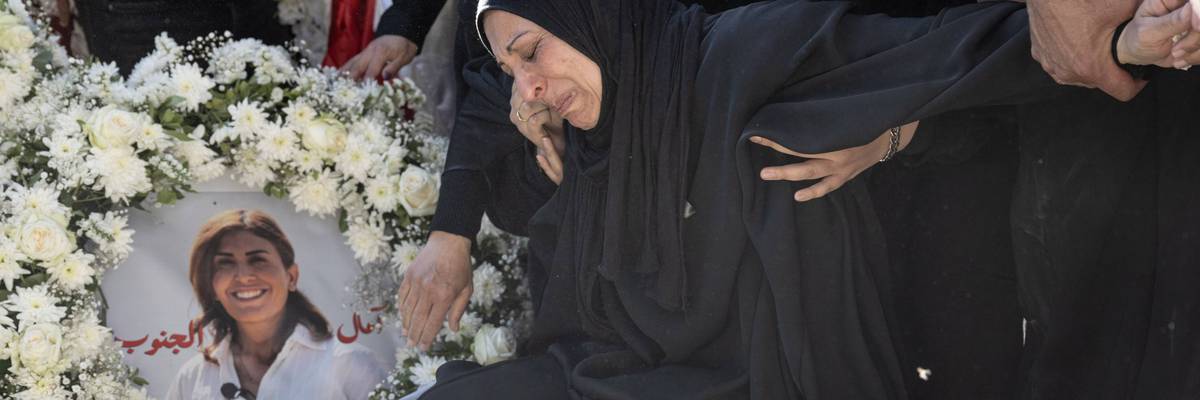
People attend a funeral ceremony for journalist Amal Khalil, who was killed in an Israeli strike in southern Lebanon on April 23, 2026.
(Photo: Anadolu via Getty Images)
Jake Johnson
Apr 25, 2026
COMMON DREAMS
Global press freedom organizations are demanding an immediate international probe into the Israeli military’s apparently targeted killing of Lebanese journalist Amal Khalil, who died trapped under the rubble of a home bombed by Israeli forces earlier this week.
The calls for an urgent independent investigation came as the details surrounding Khalil’s killing in southern Lebanon continued to emerge. Khalil’s body was recovered by the Lebanese army and Red Cross rescue workers around six hours after the Israeli military bombed the house in which she took cover with fellow journalist Zeinab Faraj—who was badly injured in the attack—following an Israeli strike near their car. Israeli forces obstructed rescue operations by continuing to attack the area.
Lebanese PM Condemns Israel’s Killing of Journalist Amal Khalil as ‘Clear-Cut War Crime’
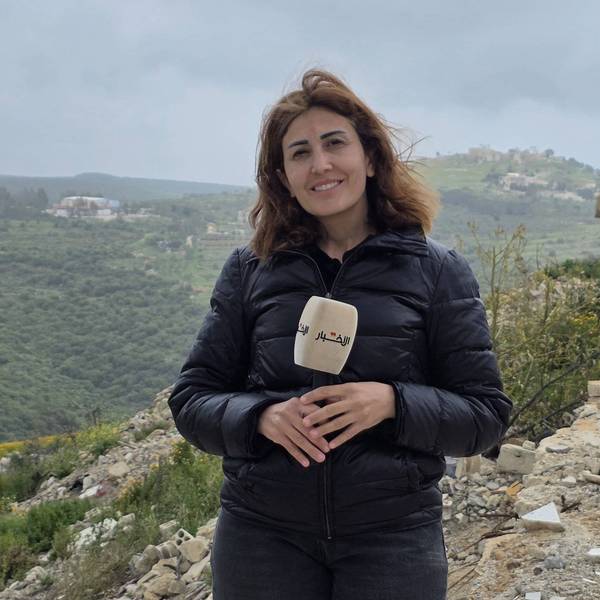
Reporters Without Borders, known internationally as Reporters Sans Frontières (RSF), published an in-depth timeline of events, making the case that the Israeli military intentionally targeted Khalil and interfered with rescue efforts:At around 14:30 [Paris time]: a first Israeli strike targets a car near the vehicle carrying Amal Khalil and Zeinab Faraj. The two journalists survive the attack and manage to exit their vehicle.
14:52: Amal Khalil is contacted by Al Jazeera’s correspondent in southern Lebanon, Carmen Joukhadar. The call lasts nine seconds. “I could clearly hear that she was running and out of breath while speaking to me, but she told me she was fine,” he told RSF.Between 15:00 and 16:00: rescuers await authorization from the diplomatic committee—known as the “mechanism”—which, among other roles, serves as guarantor and mediator for the ceasefire between Lebanon and Israel, in order to access the site. The committee, established in November 2024 under the auspices of France and the United States, also includes the United Nations Interim Force in Lebanon (UNIFIL).Around 16:00: a second strike targets the journalists’ car. Hiding nearby, Amal Khalil calls her colleagues to inform them of the attack, then takes refuge, with Zeinab Faraj, in a three-story house located nearby.16:22: last contact with Amal Khalil. According to her sister, who was on the phone with her at the time, Amal Khalil was unharmed. After this call, the journalist’s phone went dead.16:27: a third Israeli strike targets the house. According to RSF, the strike was carried out by a military aircraft, not a drone. Smoke was captured in a photograph taken by Carmen Joukhadar from the neighboring village of Khiam.Around 16:40: Lebanese army and nearby rescue teams are unable to reach the location of the two journalists due to ongoing strikes.Around 18:00: the Red Cross finally manages to evacuate Zeinab Faraj, who was suffering from fractures. According to the Lebanese TV channel LBCI, a flash grenade fired by Israeli forces forced the ambulance to retreat without being able to save Amal Khalil. Zeinab Faraj was taken to the local hospital in the nearby village of Tibnin.Around 19:20: the Lebanese army decides to accompany the Red Cross despite lacking authorization from the “mechanism” given the urgency of the situation.Around 20:20: the Red Cross returns to the scene, accompanied by the Lebanese army and bulldozers begin rescue operations.23:10: the army and the Red Cross publicly announce that they have found Amal Khalil’s lifeless body on the ground floor of the building. The exact time of her death is yet to be determined.
Jonathan Dagher, head of RSF’s Middle East desk, said in a statement that “so long as impunity prevails, crimes will continue to be committed.”
“The Israeli army has very likely committed two more war crimes on 22 April, by targeting journalists who were identified as such, obstructing rescue operations, and continuing strikes that killed one journalist and injured another,” said Dagher. “Responsibility for these crimes also lies with Israel’s allies, who continue to allow the Netanyahu government to commit them with impunity.”
“We call on the international community to take firm measures to ensure that the Israeli government brings its massacre of journalists in Lebanon and Palestine to an end,” Dagher added. “We also call on the Lebanese government to investigate this crime, which took place on Lebanese territory, and will continue to work to ensure that justice is served for Amal Khalil and every single other journalist killed in Lebanon and the wider region.”
The Committee to Protect Journalists (CPJ) also demanded an independent investigation into Khalil’s killing, which the group described as a possible war crime.
CPJ noted that Khalil “received numerous threats prior to her killing, including a reported death threat in September 2024, and public incitement against her by an Israeli military official days before her killing, leading to widespread accusations that she was deliberately targeted. The reported obstruction of rescue operations, claimed by Lebanese government officials, constitute an additional grave violation of international humanitarian law.”
Jodie Ginsberg, CPJ’s chief executive, said in a statement that “this is not the first time that Israel has prevented emergency services from reaching journalists injured in their strikes.”
“Journalists are civilians and protected under international law,” said Ginsberg. “Israel’s blatant disregard for such norms—and the international community’s failure to hold them accountable—is abhorrent.”
A spokesperson for the United Nations High Commissioner for Human Rights told reporters on Friday that “deliberately targeting” journalists or rescue workers “would amount to a war crime,” pointing specifically to Israel’s killing of Amal Khalil and obstruction of emergency teams.
“UN High Commissioner for Human Rights Volker Türk calls for prompt, thorough, independent, and impartial investigations into all incidents involving allegations of violations of international humanitarian law,” said the commissioner’s spokesperson. “Findings must be disclosed, and those responsible held to account.”
Israel Condemned for Bombing Rescue Workers Trying to Reach Journalist Buried Under Rubble
“Israel treats journalism as a crime,” said one Beirut-based editor.
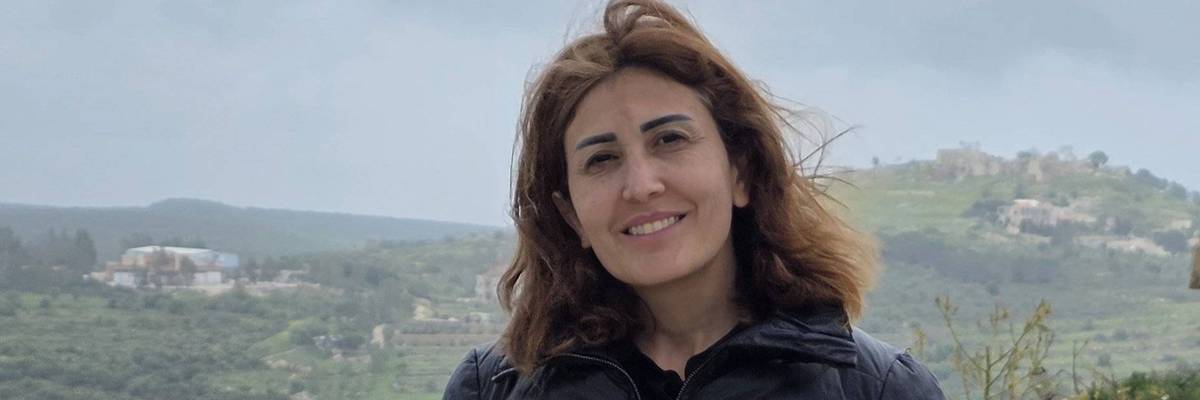
Al-Akhbar journalist Amal Khalil stands overlooking the shrine of the Prophet Shimon al-Safa in the village of Shamaa in southern Lebanon in a photo posted to social media on April 20, 2026.
(Photo by Amal Khalil/X)
Stephen Prager
Apr 22, 2026
COMMON DREAMS
The Israel Defense Forces were condemned on Wednesday following reports that the IDF dropped a grenade on Red Cross workers as they attempted to rescue a Lebanese journalist believed trapped beneath rubble in southern Lebanon.
Two journalists from the local media outlet al-Akhbar, Amal Khalil and Zeinab Faraj, were attacked by the IDF after arriving to report at the scene of a previous strike that had killed two civilians in a car in the village of Al-Tiri, according to Al Jazeera correspondent Heidi Pett.
The journalists, who were wounded, found that their own car was stuck under rubble from the second strike and that they were unable to leave.
Red Cross workers then spent hours attempting to reach the reporters. But according to the National News Agency (NNA), other Israeli attacks targeted a major road leading to the village “to prevent ambulance teams from reaching the two journalists.”
Faraj was rescued and brought to the hospital, where she is being treated for severe injuries that require surgery. The NNA and other Lebanese outlets reported that as she was transported to the hospital, the Red Cross vehicle came under Israeli fire, leaving visible bullet holes.
While Faraj was evacuated, however, Khalil remained trapped. According to Reuters, the Lebanese army asked the Israeli military to allow rescuers to retrieve her.
Lebanon’s president, Joseph Aoun, also urged the Lebanese Red Cross to cooperate with the Lebanese army and United Nations peacekeepers to “carry out the rescue operation in the shortest possible time.”
But as the rescue workers lifted Khalil from the rubble, an Israeli drone dropped a stun grenade on them, believed to be a warning, which forced the workers to withdraw from the town, according to the Lebanese outlet LBCI. The Red Cross is expected to return later to continue the search for Khalil.
A recent profile of Khalil in the Beirut-based Public Source magazine celebrated her more than two-decade career, which began shortly before Israel invaded Lebanon in 2006. Though she resisted the label of “war correspondent,” much of her work since 2023 has again focused on covering what she’s described as “resistance” to Israeli aggression.
“I always highlight the steadfastness of ordinary people in their border villages, like the farmers who continued tending their land while the Israeli settlements across from them in northern Palestine were empty,” Khalil said. “I debunk the enemy’s narrative of targeting only military sites by showing evidence of them bombing homes, farms, and killing children. After the [2024] ceasefire, I also started documenting how the destruction that followed was many times greater than what had occurred during the war itself.”
According to Reporters Without Borders, Khalil previously received death threats from an Israeli phone number in September 2024, while she was reporting on the war that broke out between Israel and Lebanon earlier that year.
She received a message reading, “We know where you are, and we will reach you when the time comes.” The message concluded, “I suggest you flee to Qatar or somewhere else if you want to keep your head connected to your shoulders.”
The deliberate killing of journalists who are civilians constitutes a war crime under international humanitarian law.
The IDF said it was aware of reports that journalists were injured in Wednesday’s attacks, but did not confirm them to The Associated Press. The IDF denied that it was preventing rescue teams from reaching the area. The military also said it “does not target journalists and acts to mitigate harm to them.”
The Committee to Protect Journalists (CPJ) found that last year was the deadliest year for journalists in the more than three decades since they began collecting data. An unprecedented 129 journalists and media workers were killed on duty last year. Israel was responsible for two-thirds of the press killings in 2024 and 2025, most of whom were Palestinians in Gaza.
Lara Bitar, editor of Public Source magazine, wrote on social media Wednesday that Khalil and her rescuers had come under attack “because Israel treats journalism as a crime.”
Bitar said, “Amal has been tirelessly and lovingly covering communities impacted by war, occupation, and displacement for decades.”
“Israel treats journalism as a crime,” said one Beirut-based editor.
Al-Akhbar journalist Amal Khalil stands overlooking the shrine of the Prophet Shimon al-Safa in the village of Shamaa in southern Lebanon in a photo posted to social media on April 20, 2026.
(Photo by Amal Khalil/X)
Stephen Prager
Apr 22, 2026
COMMON DREAMS
The Israel Defense Forces were condemned on Wednesday following reports that the IDF dropped a grenade on Red Cross workers as they attempted to rescue a Lebanese journalist believed trapped beneath rubble in southern Lebanon.
Two journalists from the local media outlet al-Akhbar, Amal Khalil and Zeinab Faraj, were attacked by the IDF after arriving to report at the scene of a previous strike that had killed two civilians in a car in the village of Al-Tiri, according to Al Jazeera correspondent Heidi Pett.
The journalists, who were wounded, found that their own car was stuck under rubble from the second strike and that they were unable to leave.
Red Cross workers then spent hours attempting to reach the reporters. But according to the National News Agency (NNA), other Israeli attacks targeted a major road leading to the village “to prevent ambulance teams from reaching the two journalists.”
Faraj was rescued and brought to the hospital, where she is being treated for severe injuries that require surgery. The NNA and other Lebanese outlets reported that as she was transported to the hospital, the Red Cross vehicle came under Israeli fire, leaving visible bullet holes.
While Faraj was evacuated, however, Khalil remained trapped. According to Reuters, the Lebanese army asked the Israeli military to allow rescuers to retrieve her.
Lebanon’s president, Joseph Aoun, also urged the Lebanese Red Cross to cooperate with the Lebanese army and United Nations peacekeepers to “carry out the rescue operation in the shortest possible time.”
But as the rescue workers lifted Khalil from the rubble, an Israeli drone dropped a stun grenade on them, believed to be a warning, which forced the workers to withdraw from the town, according to the Lebanese outlet LBCI. The Red Cross is expected to return later to continue the search for Khalil.
A recent profile of Khalil in the Beirut-based Public Source magazine celebrated her more than two-decade career, which began shortly before Israel invaded Lebanon in 2006. Though she resisted the label of “war correspondent,” much of her work since 2023 has again focused on covering what she’s described as “resistance” to Israeli aggression.
“I always highlight the steadfastness of ordinary people in their border villages, like the farmers who continued tending their land while the Israeli settlements across from them in northern Palestine were empty,” Khalil said. “I debunk the enemy’s narrative of targeting only military sites by showing evidence of them bombing homes, farms, and killing children. After the [2024] ceasefire, I also started documenting how the destruction that followed was many times greater than what had occurred during the war itself.”
According to Reporters Without Borders, Khalil previously received death threats from an Israeli phone number in September 2024, while she was reporting on the war that broke out between Israel and Lebanon earlier that year.
She received a message reading, “We know where you are, and we will reach you when the time comes.” The message concluded, “I suggest you flee to Qatar or somewhere else if you want to keep your head connected to your shoulders.”
The deliberate killing of journalists who are civilians constitutes a war crime under international humanitarian law.
The IDF said it was aware of reports that journalists were injured in Wednesday’s attacks, but did not confirm them to The Associated Press. The IDF denied that it was preventing rescue teams from reaching the area. The military also said it “does not target journalists and acts to mitigate harm to them.”
The Committee to Protect Journalists (CPJ) found that last year was the deadliest year for journalists in the more than three decades since they began collecting data. An unprecedented 129 journalists and media workers were killed on duty last year. Israel was responsible for two-thirds of the press killings in 2024 and 2025, most of whom were Palestinians in Gaza.
Lara Bitar, editor of Public Source magazine, wrote on social media Wednesday that Khalil and her rescuers had come under attack “because Israel treats journalism as a crime.”
Bitar said, “Amal has been tirelessly and lovingly covering communities impacted by war, occupation, and displacement for decades.”

No comments:
Post a Comment