Right now, Iranian civilians are paying the highest price. But the collapse of the rule of law makes the future more dangerous for everyone else, too.
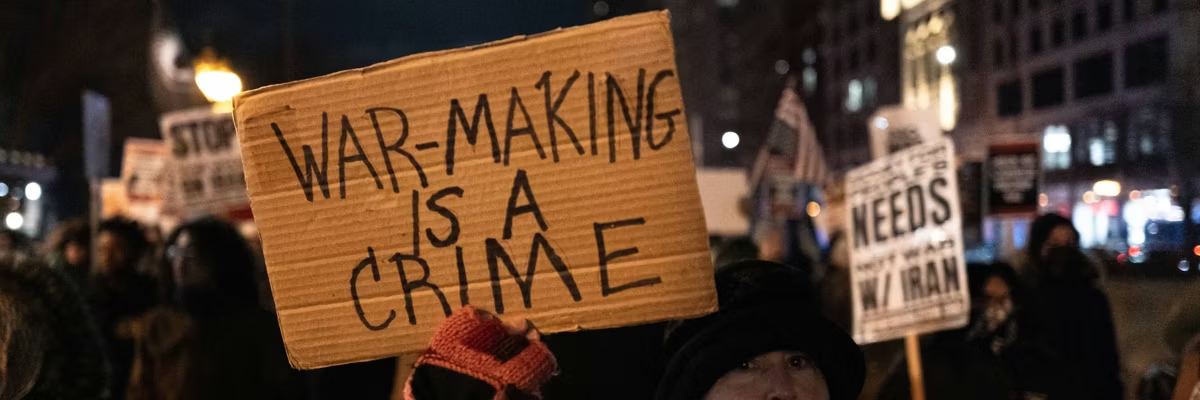
A protester holds placards reading ‘’war making is a crime’’ during a demonstration against the war in Iran, in Chicago, Illinois, on February 28, 2026.
(Photo by Jerome Gilles/NurPhoto via Getty Images)
Phyllis Bennis
Mar 31, 2026
Foreign Policy In Focus
The US and Israeli war has, from its very beginning, violated both US domestic and international law.
The legal consequences go beyond specific violations. Washington and Tel Aviv’s breaches of the United Nations Charter and other legal frameworks also undermine the very foundations of the rule of law. Even while international legal institutions too often lack sufficient capacity to enforce their decisions, they still provide a crucial framework for protest, for pressure on individual governments, and for the hope of a future world where the rule of law is paramount.
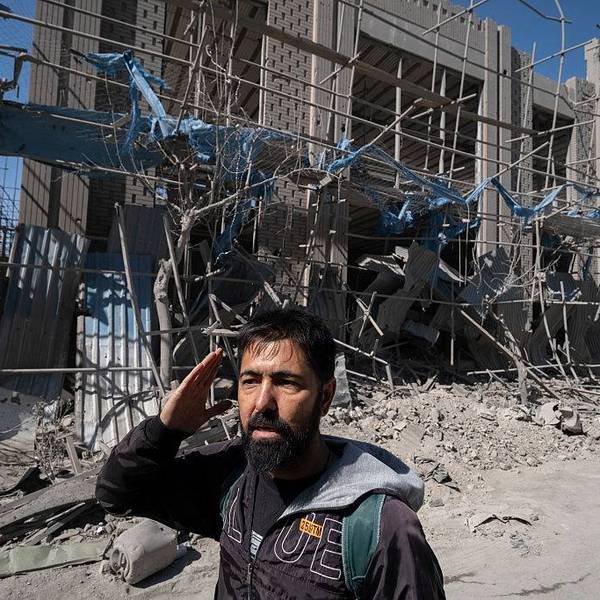
Experts Worldwide Agree: US-Israel Attack on Iran a Clear Violation of International Law
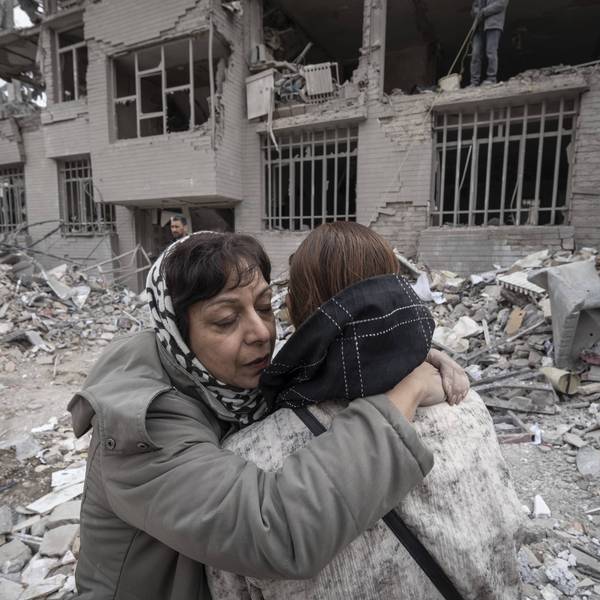
Unlike Security Council, UN Experts Condemn US and Israel for Waging ‘Illegal War’ on Iran
Now, however, that future is in more danger than any other time in recent memory. Right now, Iranian civilians are paying the highest price. But the collapse of the rule of law makes the future more dangerous for everyone else, too.
What Are the Laws of War?
On the domestic front, the US Constitution is very clear that only Congress, not the president, has the power to declare war. But President Donald Trump did not even consult with Congress before attacking Iran, let alone receive a congressional declaration of or even authorization for war.
This US war against Iran is deepening the ongoing delegitimization of the rule of law—something that must be taken seriously if future wars are to be averted.
This is nothing new, of course. In recent years, successive Congresses have abandoned their constitutional prerogative, allowing various presidents of both parties to initiate and continue the use of massive military force without even the pretense of asserting their power to declare war.
Indeed, both houses of Congress voted, in overwhelmingly partisan votes, to reject War Powers Resolutions which could have prevented or at least constrained Trump’s reckless and illegal war. They didn’t even hold votes at all until the United States and Israel had already launched their war against Iran.
International law is equally clear. The Nuremberg trials following World War II determined that the “supreme international crime” was that of aggression. The International Military Tribunal ruled in 1946 that initiating a war of aggression differed from other war crimes because “it contains within itself the accumulated evil of the whole.” War crimes, crimes against humanity, and all the related international crimes, therefore, are understood to stem from that fundamental crime of going to war illegally.
The US and Israel went to war illegally. They are waging a war of aggression against Iran. The UN Charter declares that no country may attack another country, and that “all Members shall settle their international disputes by peaceful means in such a manner that international peace and security, and justice, are not endangered.” It also prohibits UN member states from using “the threat or use of force against the territorial integrity or political independence of any state, or in any manner inconsistent with the purposes of the United Nations.”
There are only two exceptions to that prohibition on the use of force. One is if the Security Council itself authorizes the use of military force. The other is for immediate self-defense, which applies only “if an armed attack” occurs and then only “until” the Council decides collectively how to deal with the crisis.
Neither of those happened here. The Council was never asked, and certainly had not authorized anything, and Iran had not attacked the US or Israel. The US claim that it “had to” attack Iran to prevent some potential imagined retaliatory attack at some unknown point in the future does not legitimize so-called “preventive” use of force when no such imagined future attack had occurred.
The Danger of International Lawlessness
Despite the dangerous trends toward international lawlessness in recent years, it wasn’t that long ago that US leaders at least made a pretense of trying to follow them.
In 2002, George W. Bush officially won congressional authorization for war against Iraq and grudgingly acknowledged the need for a UN Security Council authorization as well. For months he tried—using lies, threats, and pressure—to get a Security Council resolution passed that would authorize a US-U.K. war. Those efforts failed.
In the absence of global institutions able and willing to enforce international law, these popular movements are essential. Without them, there’s no one to hold the powerful to account.
The Council majority stood defiant, and the Bush-Blair team finally launched the war illegally, without UN approval, and without any “armed attack” by Iraq that might have justified a claim of self-defense. International law didn’t stop the war, but it lent moral and political weight to a global anti-war movement that the Bush administration was forced to contend with.
But today, Trump has consistently refused to acknowledge any need for either congressional approval or UN authorization of his war against Iran. Trump himself dismissed international law entirely, saying that the only limit on his global power was “my own morality. My own mind….I don’t need international law.” Trump’s Secretary of Defense, Pete Hegseth, infamously said that his Pentagon would have “no stupid rules of engagement” to limit its killing.
Practically no one—not the UN, not Congress, not the mainstream press, and few among foreign governments too often cowed by Trump’s threats—seems to be even mentioning the UN Charter’s restrictions against launching new wars. And although Congress debated new War Powers Resolutions designed to prevent a rogue presidential decision to go to war, there were not enough votes to pass them.
In short, this US war against Iran is deepening the ongoing delegitimization of the rule of law—something that must be taken seriously if future wars are to be averted. The weakness and lack of political will in both Congress and the United Nations have failed to prevent the US and Israel from launching a destructive new war.
Their lack of enforcement capacity means that people—in social movements and civil society organizations in the US and around the world—must step up to demand their governments actually follow the law. In the absence of global institutions able and willing to enforce international law, these popular movements are essential. Without them, there’s no one to hold the powerful to account.
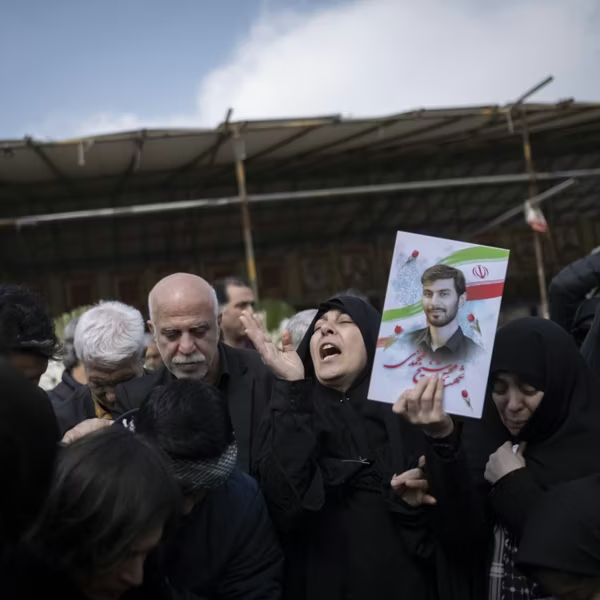
The war in Iran has already killed thousands of people, displaced millions more, and put millions of others throughout the region at risk as it continues to expand. It’s created what some are calling the “Gazafication” of Tehran, causing a vast humanitarian and economic crisis that is continuing to spread. It’s undermining the very foundations of international law and the institutions created to uphold it.
And if this war continues without accountability, it threatens even more dire consequences in years ahead.
© 2023 Foreign Policy In Focus
Phyllis Bennis
Phyllis Bennis is a fellow of the Institute for Policy Studies and serves on the national board of Jewish Voice for Peace. Her most recent book is "Understanding Palestine and Israel" (2025). Her other books include: "Understanding the US-Iran Crisis: A Primer" (2008) and "Challenging Empire: How People, Governments, and the UN Defy US Power" (2005).
Full Bio >
The US and Israeli war has, from its very beginning, violated both US domestic and international law.
The legal consequences go beyond specific violations. Washington and Tel Aviv’s breaches of the United Nations Charter and other legal frameworks also undermine the very foundations of the rule of law. Even while international legal institutions too often lack sufficient capacity to enforce their decisions, they still provide a crucial framework for protest, for pressure on individual governments, and for the hope of a future world where the rule of law is paramount.
Experts Worldwide Agree: US-Israel Attack on Iran a Clear Violation of International Law
Unlike Security Council, UN Experts Condemn US and Israel for Waging ‘Illegal War’ on Iran
Now, however, that future is in more danger than any other time in recent memory. Right now, Iranian civilians are paying the highest price. But the collapse of the rule of law makes the future more dangerous for everyone else, too.
What Are the Laws of War?
On the domestic front, the US Constitution is very clear that only Congress, not the president, has the power to declare war. But President Donald Trump did not even consult with Congress before attacking Iran, let alone receive a congressional declaration of or even authorization for war.
This US war against Iran is deepening the ongoing delegitimization of the rule of law—something that must be taken seriously if future wars are to be averted.
This is nothing new, of course. In recent years, successive Congresses have abandoned their constitutional prerogative, allowing various presidents of both parties to initiate and continue the use of massive military force without even the pretense of asserting their power to declare war.
Indeed, both houses of Congress voted, in overwhelmingly partisan votes, to reject War Powers Resolutions which could have prevented or at least constrained Trump’s reckless and illegal war. They didn’t even hold votes at all until the United States and Israel had already launched their war against Iran.
International law is equally clear. The Nuremberg trials following World War II determined that the “supreme international crime” was that of aggression. The International Military Tribunal ruled in 1946 that initiating a war of aggression differed from other war crimes because “it contains within itself the accumulated evil of the whole.” War crimes, crimes against humanity, and all the related international crimes, therefore, are understood to stem from that fundamental crime of going to war illegally.
The US and Israel went to war illegally. They are waging a war of aggression against Iran. The UN Charter declares that no country may attack another country, and that “all Members shall settle their international disputes by peaceful means in such a manner that international peace and security, and justice, are not endangered.” It also prohibits UN member states from using “the threat or use of force against the territorial integrity or political independence of any state, or in any manner inconsistent with the purposes of the United Nations.”
There are only two exceptions to that prohibition on the use of force. One is if the Security Council itself authorizes the use of military force. The other is for immediate self-defense, which applies only “if an armed attack” occurs and then only “until” the Council decides collectively how to deal with the crisis.
Neither of those happened here. The Council was never asked, and certainly had not authorized anything, and Iran had not attacked the US or Israel. The US claim that it “had to” attack Iran to prevent some potential imagined retaliatory attack at some unknown point in the future does not legitimize so-called “preventive” use of force when no such imagined future attack had occurred.
The Danger of International Lawlessness
Despite the dangerous trends toward international lawlessness in recent years, it wasn’t that long ago that US leaders at least made a pretense of trying to follow them.
In 2002, George W. Bush officially won congressional authorization for war against Iraq and grudgingly acknowledged the need for a UN Security Council authorization as well. For months he tried—using lies, threats, and pressure—to get a Security Council resolution passed that would authorize a US-U.K. war. Those efforts failed.
In the absence of global institutions able and willing to enforce international law, these popular movements are essential. Without them, there’s no one to hold the powerful to account.
The Council majority stood defiant, and the Bush-Blair team finally launched the war illegally, without UN approval, and without any “armed attack” by Iraq that might have justified a claim of self-defense. International law didn’t stop the war, but it lent moral and political weight to a global anti-war movement that the Bush administration was forced to contend with.
But today, Trump has consistently refused to acknowledge any need for either congressional approval or UN authorization of his war against Iran. Trump himself dismissed international law entirely, saying that the only limit on his global power was “my own morality. My own mind….I don’t need international law.” Trump’s Secretary of Defense, Pete Hegseth, infamously said that his Pentagon would have “no stupid rules of engagement” to limit its killing.
Practically no one—not the UN, not Congress, not the mainstream press, and few among foreign governments too often cowed by Trump’s threats—seems to be even mentioning the UN Charter’s restrictions against launching new wars. And although Congress debated new War Powers Resolutions designed to prevent a rogue presidential decision to go to war, there were not enough votes to pass them.
In short, this US war against Iran is deepening the ongoing delegitimization of the rule of law—something that must be taken seriously if future wars are to be averted. The weakness and lack of political will in both Congress and the United Nations have failed to prevent the US and Israel from launching a destructive new war.
Their lack of enforcement capacity means that people—in social movements and civil society organizations in the US and around the world—must step up to demand their governments actually follow the law. In the absence of global institutions able and willing to enforce international law, these popular movements are essential. Without them, there’s no one to hold the powerful to account.
The war in Iran has already killed thousands of people, displaced millions more, and put millions of others throughout the region at risk as it continues to expand. It’s created what some are calling the “Gazafication” of Tehran, causing a vast humanitarian and economic crisis that is continuing to spread. It’s undermining the very foundations of international law and the institutions created to uphold it.
And if this war continues without accountability, it threatens even more dire consequences in years ahead.
© 2023 Foreign Policy In Focus
Phyllis Bennis
Phyllis Bennis is a fellow of the Institute for Policy Studies and serves on the national board of Jewish Voice for Peace. Her most recent book is "Understanding Palestine and Israel" (2025). Her other books include: "Understanding the US-Iran Crisis: A Primer" (2008) and "Challenging Empire: How People, Governments, and the UN Defy US Power" (2005).
Full Bio >
Everyone But Egomaniacal Trump Knows His Iran War Is Reckless, Unjustified, and Strategically Incoherent
.png)
The US president, trapped by his own ego, has wrought unparalleled destruction to the people of Iran, the Middle East, and the world.
Ramzy Baroud
Mar 31, 2026
.png)
Ramzy Baroud
Mar 31, 2026
Common Dreams
The judgment on the Trump administration’s war on Iran is already largely settled across mainstream media, public opinion, and much of the analytical sphere.
What remains supportive of the war is limited to two predictable camps: official government discourse and the president’s most loyal supporters, along with entrenched pro-Israel constituencies.
RECOMMENDED...
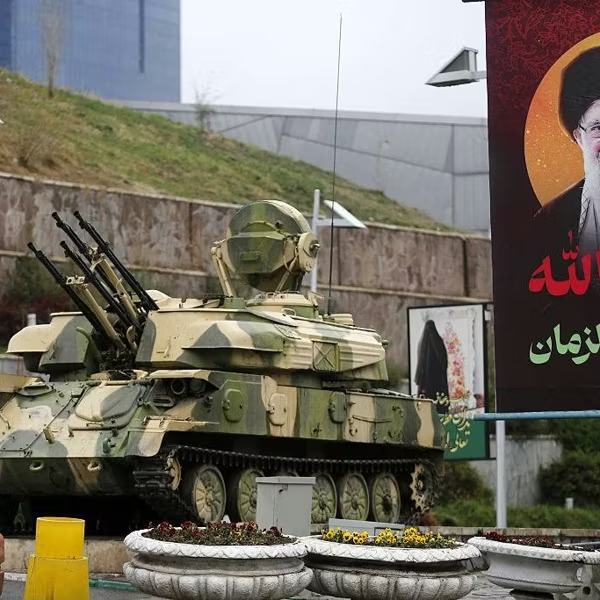
‘This War Is Dumb as Hell’: Military Historian Assesses Trump’s Disaster in Iran
Amid Alarm That Trump Has No Plan for Iran, Critic Contends None ‘Could Possibly Justify This’
Beyond these circles, the war is widely understood as reckless, unjustified, and strategically incoherent.
Among the wider American public, this conclusion is not abstract. It is shaped by growing unease, economic anxiety, and a mounting sense that the war lacks both purpose and direction.
A defeat in Iran would not simply be a policy failure; it would represent the collapse of that identity. For a leader driven by narcissistic imperatives, such a collapse is existential, threatening not only his political standing but his relationship with his own base.
Since the outbreak of the war on February 28, 2026, polling has consistently pointed in one direction. A Pew Research poll in late March found that 61 percent of Americans disapprove of Trump’s handling of the conflict.
Another AP-NORC survey showed that six in ten Americans believe US military action against Iran has already “gone too far,” while even Fox News polling found 58 percent opposition.
These numbers confirm a broader trend that began early in the war and has only intensified. Reuters reported on March 19 that just 7 percent of Americans support a full-scale ground invasion.
In that same reporting, nearly two-thirds of respondents said they believe Trump is likely to pursue one anyway, highlighting a growing disconnect between policy and public will.
Days later, Reuters noted that Trump’s approval rating had dropped to 36 percent, with rising fuel prices and economic instability cited as key drivers.
The longer the war continues, the more its consequences are internalized by ordinary Americans, turning distant conflict into immediate economic pressure.
Among the American intelligentsia, opposition is no longer confined to traditional anti-war circles. It now spans ideological boundaries, including segments of Trump’s own political base.
Reporting from the 2026 Conservative Political Action Conference, The Guardian observed that many MAGA supporters warned the war risks becoming another “forever war.”
This convergence is significant, reflecting not a passing disagreement but a deeper structural shift in public perception.
Yet mainstream media—from CNN to Fox News—has largely avoided confronting what many Americans already recognize: that the war aligns closely with the agenda of Israeli Prime Minister Benjamin Netanyahu.
Within Washington itself, unease is also becoming more explicit. The Wall Street Journal reported in March that lawmakers from both parties are increasingly skeptical of the administration’s approach.
At the strategic level, the war’s foundational assumptions have already begun to unravel. Israel’s early calculations that escalation might trigger internal collapse in Iran have failed to materialize.
Iran’s political system remains intact, its leadership stable, and its military cohesion unbroken under Supreme Leader Ali Khamenei.
At the same time, Tehran has demonstrated its ability to retaliate across multiple fronts, targeting Israeli territory and US military assets in the region.
Its geographic leverage over the Strait of Hormuz continues to exert pressure on global energy markets, amplifying its strategic position despite sustained attacks.
The structural reality is therefore unavoidable. Regime change in Iran would require a massive ground invasion, a broad coalition, and a prolonged occupation.
Even under such conditions, success would remain uncertain, as the experience of Iraq has already demonstrated with devastating clarity.
This raises the central question: why continue a war whose strategic premises are already collapsing?
Part of the answer lies not in strategy, but in psychology. A substantial body of political psychology research, frequently cited in relevant 2026 analyses, describes Trump’s leadership style as deeply narcissistic. Traits such as grandiosity, hypersensitivity to criticism, and an overriding need to project dominance are not incidental—they actively shape decision-making.
Trump’s rhetoric has long relied on humiliation, domination, and spectacle, framing politics as a contest of strength rather than negotiation.
Within this framework, escalation becomes a psychological necessity. To retreat risks appearing weak, while compromise risks humiliation.
For a leader whose identity is built on projecting strength, such outcomes are politically and personally intolerable.
This dynamic is reinforced by the broader culture of the administration, where senior officials have repeatedly relied on language such as “obliteration” and “total destruction.”
Such rhetoric, however, has not been matched by evidence of a coherent long-term strategy, exposing a widening gap between performance and planning.
At the same time, the administration’s fixation on masculine power—on dominance, strength, and spectacle—has contributed to a profound underestimation of its adversary.
Iran is not a fragmented state waiting to collapse, but a regional power with decades of experience in asymmetric warfare and strategic resilience.
Yet Trump appears to have operated under the assumption that American power alone guarantees outcomes, an illusion reinforced by past displays of military force.
Reuters reported in late March that Trump is now increasingly pressured to “end the war” quickly, as the administration confronts what it described as “only hard choices.”
The same report cited officials acknowledging that there is no clear exit strategy, leaving the administration caught between escalation and political fallout.
One official told Reuters that there are “no easy solutions” left, underscoring the depth of the strategic impasse.
Another added that any withdrawal would have to be framed carefully to avoid appearing as a defeat, reflecting the administration’s concern with optics as much as outcomes.
This is where the psychological dimension becomes decisive. Trump has constructed a political identity rooted in strength, dominance, and victory.
A defeat in Iran would not simply be a policy failure; it would represent the collapse of that identity. For a leader driven by narcissistic imperatives, such a collapse is existential, threatening not only his political standing but his relationship with his own base.
This is why some analysts—and even figures within Trump’s own orbit—have begun to float a theatrical exit strategy. As Reuters reported on March 14, White House adviser David Sacks stated bluntly that the United States should “declare victory and get out” of the war on Iran, calling for disengagement despite the absence of a clear strategic outcome.
Such a move would allow Trump to claim success while disengaging from an increasingly untenable conflict, preserving the image of strength even in the face of strategic failure.
But this reveals the deeper truth of the war. The “victory” being pursued is not military—it is psychological.
The US-Israeli war on Iran is therefore not only a moral and legal crisis. It is also a geopolitical catastrophe shaped, in no small part, by the psychology of a leader unwilling to confront the consequences of his own disastrous decisions.
The judgment on the Trump administration’s war on Iran is already largely settled across mainstream media, public opinion, and much of the analytical sphere.
What remains supportive of the war is limited to two predictable camps: official government discourse and the president’s most loyal supporters, along with entrenched pro-Israel constituencies.
RECOMMENDED...
‘This War Is Dumb as Hell’: Military Historian Assesses Trump’s Disaster in Iran
Amid Alarm That Trump Has No Plan for Iran, Critic Contends None ‘Could Possibly Justify This’
Beyond these circles, the war is widely understood as reckless, unjustified, and strategically incoherent.
Among the wider American public, this conclusion is not abstract. It is shaped by growing unease, economic anxiety, and a mounting sense that the war lacks both purpose and direction.
A defeat in Iran would not simply be a policy failure; it would represent the collapse of that identity. For a leader driven by narcissistic imperatives, such a collapse is existential, threatening not only his political standing but his relationship with his own base.
Since the outbreak of the war on February 28, 2026, polling has consistently pointed in one direction. A Pew Research poll in late March found that 61 percent of Americans disapprove of Trump’s handling of the conflict.
Another AP-NORC survey showed that six in ten Americans believe US military action against Iran has already “gone too far,” while even Fox News polling found 58 percent opposition.
These numbers confirm a broader trend that began early in the war and has only intensified. Reuters reported on March 19 that just 7 percent of Americans support a full-scale ground invasion.
In that same reporting, nearly two-thirds of respondents said they believe Trump is likely to pursue one anyway, highlighting a growing disconnect between policy and public will.
Days later, Reuters noted that Trump’s approval rating had dropped to 36 percent, with rising fuel prices and economic instability cited as key drivers.
The longer the war continues, the more its consequences are internalized by ordinary Americans, turning distant conflict into immediate economic pressure.
Among the American intelligentsia, opposition is no longer confined to traditional anti-war circles. It now spans ideological boundaries, including segments of Trump’s own political base.
Reporting from the 2026 Conservative Political Action Conference, The Guardian observed that many MAGA supporters warned the war risks becoming another “forever war.”
This convergence is significant, reflecting not a passing disagreement but a deeper structural shift in public perception.
Yet mainstream media—from CNN to Fox News—has largely avoided confronting what many Americans already recognize: that the war aligns closely with the agenda of Israeli Prime Minister Benjamin Netanyahu.
Within Washington itself, unease is also becoming more explicit. The Wall Street Journal reported in March that lawmakers from both parties are increasingly skeptical of the administration’s approach.
At the strategic level, the war’s foundational assumptions have already begun to unravel. Israel’s early calculations that escalation might trigger internal collapse in Iran have failed to materialize.
Iran’s political system remains intact, its leadership stable, and its military cohesion unbroken under Supreme Leader Ali Khamenei.
At the same time, Tehran has demonstrated its ability to retaliate across multiple fronts, targeting Israeli territory and US military assets in the region.
Its geographic leverage over the Strait of Hormuz continues to exert pressure on global energy markets, amplifying its strategic position despite sustained attacks.
The structural reality is therefore unavoidable. Regime change in Iran would require a massive ground invasion, a broad coalition, and a prolonged occupation.
Even under such conditions, success would remain uncertain, as the experience of Iraq has already demonstrated with devastating clarity.
This raises the central question: why continue a war whose strategic premises are already collapsing?
Part of the answer lies not in strategy, but in psychology. A substantial body of political psychology research, frequently cited in relevant 2026 analyses, describes Trump’s leadership style as deeply narcissistic. Traits such as grandiosity, hypersensitivity to criticism, and an overriding need to project dominance are not incidental—they actively shape decision-making.
Trump’s rhetoric has long relied on humiliation, domination, and spectacle, framing politics as a contest of strength rather than negotiation.
Within this framework, escalation becomes a psychological necessity. To retreat risks appearing weak, while compromise risks humiliation.
For a leader whose identity is built on projecting strength, such outcomes are politically and personally intolerable.
This dynamic is reinforced by the broader culture of the administration, where senior officials have repeatedly relied on language such as “obliteration” and “total destruction.”
Such rhetoric, however, has not been matched by evidence of a coherent long-term strategy, exposing a widening gap between performance and planning.
At the same time, the administration’s fixation on masculine power—on dominance, strength, and spectacle—has contributed to a profound underestimation of its adversary.
Iran is not a fragmented state waiting to collapse, but a regional power with decades of experience in asymmetric warfare and strategic resilience.
Yet Trump appears to have operated under the assumption that American power alone guarantees outcomes, an illusion reinforced by past displays of military force.
Reuters reported in late March that Trump is now increasingly pressured to “end the war” quickly, as the administration confronts what it described as “only hard choices.”
The same report cited officials acknowledging that there is no clear exit strategy, leaving the administration caught between escalation and political fallout.
One official told Reuters that there are “no easy solutions” left, underscoring the depth of the strategic impasse.
Another added that any withdrawal would have to be framed carefully to avoid appearing as a defeat, reflecting the administration’s concern with optics as much as outcomes.
This is where the psychological dimension becomes decisive. Trump has constructed a political identity rooted in strength, dominance, and victory.
A defeat in Iran would not simply be a policy failure; it would represent the collapse of that identity. For a leader driven by narcissistic imperatives, such a collapse is existential, threatening not only his political standing but his relationship with his own base.
This is why some analysts—and even figures within Trump’s own orbit—have begun to float a theatrical exit strategy. As Reuters reported on March 14, White House adviser David Sacks stated bluntly that the United States should “declare victory and get out” of the war on Iran, calling for disengagement despite the absence of a clear strategic outcome.
Such a move would allow Trump to claim success while disengaging from an increasingly untenable conflict, preserving the image of strength even in the face of strategic failure.
But this reveals the deeper truth of the war. The “victory” being pursued is not military—it is psychological.
The US-Israeli war on Iran is therefore not only a moral and legal crisis. It is also a geopolitical catastrophe shaped, in no small part, by the psychology of a leader unwilling to confront the consequences of his own disastrous decisions.

No comments:
Post a Comment