Showing posts sorted by relevance for query LUCY EDMONTON. Sort by date Show all posts

Monday, January 04, 2021

Famous animal activist Jane Goodall is urging Edmonton City Council to “free Lucy the lonely elephant” and let her retire “in a more humane setting

© Provided by ET Canada EPA/FACUNDO ARRIZABALAGA

Goodall is best known for her 60-year study of social and family interactions of wild chimpanzees.

She posted a video message Tuesday, asking that Lucy be transferred from the Edmonton Valley Zoo to a sanctuary in Tennessee.

“Lucy is a very lonely elephant,” Goodall says in the video. “Of course there are people who care about and love and care for Lucy but that can’t make up for the lack of elephant companionship.”

READ MORE: Animal rights group ranks Edmonton zoo fourth-worst for elephants

Goodall says elephants are highly intelligent and extremely social and Lucy is the only elephant at the zoo. The activist says elephants develop friendships that last throughout their lives, they recognize each other, are sentient and share similar emotions to humans: joy, sorrow, grief and pain.

“Each day she spends at the zoo is another day of sadness, and especially during your long, cold, dark winter,” Goodall says.

“There’s a wonderful and accredited sanctuary in Tennessee that’s offered to take her in. I know there are concerns as to whether Lucy is healthy enough to be moved but other older elephants have been successfully transported over long distances.

“I beg of you to invite an independent veterinarian with an appropriate knowledge of elephants to examine Lucy and determine how best she can be prepared for and supported for her journey.”

Lucy, a 45-year-old Asian elephant, has lived at Edmonton’s zoo since 1977. The zoo has long maintained that moving her to a sanctuary would worsen her condition or kill her.

READ MORE: Latest examination recommends Lucy stay at Edmonton Valley Zoo

In 2016, Lucy’s condition was reviewed by an independent veterinarian. At the time the vet said Lucy was suffering from dental and respiratory issues even then, but if the zoo chose to move her she was “highly likely” to “potentially” die en route to a sanctuary.

The latest examination, performed in November 2019 by the University of Calgary School of Veterinary Medicine, showed that Lucy has several respiratory and molar issues.

According to Lindsey Galloway, executive director of the Edmonton Valley Zoo, moving the elderly elephant would be “unethical.” Instead, the zoo plans to make changes to her enclosure and routine to make her as comfortable as possible.

The zoo reportedly plans on reaching out to outside experts who specialize in working with geriatric elephants to learn more about what could be done for Lucy.

READ MORE: Bob Barker takes Free Lucy campaign to elephant’s Edmonton zoo

Animal rights activists have been calling for Lucy to be moved for a number of years, citing things like the elephant’s cramped space, Edmonton’s cold weather and the fact that Lucy is alone as reasons to relocate her.

The November 2019 examination found results continue to show that Lucy the elephant should not be moved to a sanctuary.

READ MORE: City of Edmonton defending Lucy’s care after ‘dishonourable mention’ on Worst Zoos for Elephants list

However, in her video, Goodall stresses Lucy should be in a place “where she can enjoy the companionship of other elephants.”

“It seems to me that after the four decades Lucy has ‘worked’ for your city, she has earned her retirement in a more humane setting.”

READ MORE: New ‘Jane Goodall Act’ seeks to ban ivory imports, hunting trophies

The Jane Goodall Act was recently introduced in the Senate of Canada. Sen. Murray Sinclair said he has teamed up with primatologist Goodall
to propose a law to protect captive animals and ban imports of elephant ivory and hunting trophies into Canada.

Sinclair says the bill would ban new captivity of great apes and elephants unless it’s licensed and for their best interests, including for conservation and non-harmful scientific research. That would allow courts to issue orders to move them to new care or to improve their living conditions.

Bill S-218 had its first reading on Nov. 17.


“This is exactly the sort of inappropriate conditions the Jane Goodall Act would prohibit, and why it is so necessary,” Sinclair said. “A key element of the act, the ‘Noah Clause,’ authorizes the federal cabinet to extend legal protections to additional captive, non-domesticated species through regulation.”

Goodall encourages supporters of the Jane Goodall Act to send a letter to members of Parliament and the Senate.


Tuesday, March 28, 2023

SAME OLD, SAME OLD

Ailing Lucy the elephant will remain in Edmonton, zoo decides

47-year-old not fit to travel, city zoo concludes with

advocacy group Free the Wild

A man walks beside an old elephant on a lawn of brown grass.
Lucy, accompanied by a member of her care team, on her daily walk Tuesday. (Travis McEwan/CBC)

Lucy, the Edmonton Valley Zoo's ailing 47-year-old Asian elephant, is now breathing solely through her mouth and is not fit to travel, a recent medical assessment has concluded.

"Lucy's breathing issue is more serious than the visiting experts anticipated," the City of Edmonton said in a news release Tuesday.

Despite calls over the years for Lucy to be moved to an elephant sanctuary, she will live out her remaining years at the zoo.

Canada's Accredited Zoos and Aquariums requires an independent assessment of Lucy yearly to keep her in Edmonton as a lone elephant. The most recent assessment provided "great insights into Lucy's health and wellness, including medical information previously unknown," the city said.

The assessment was performed by four elephant veterinary and husbandry experts: Dr. Frank Goeritz, Dr. Thomas Hildebrandt, Dr. Patricia London and Ingo Schmidinger.

Their findings — in three reports — have been published by Free the Wild.

"Aside from her ineligibility to travel, she is a geriatric patient and would not be able to cope with her new environment (unfamiliar habitat, new caretaker staff, and other elephants)," Goeritz and Hildebrandt wrote in their report.

Not unanimous

Not all of the visiting experts agreed that Lucy is not fit for travel. 

"Lucy is being kept more like a pet and not being allowed to be the wild elephant she is," London wrote in her report.

"It is also highly possible that the cold dry environment may be adding to her respiratory problems."

Lucy's mouth breathing was first reported in 2009, when endoscopic exploration of her trunk discovered a narrowing of the nasal passage.

Her breathing problems have since worsened, and now include "very severe" hypoxemia and hypercapnia — low oxygen and high carbon dioxide levels in her blood and tissues, Goeritz and Hildebrandt  found.

The root cause of the condition remains undiagnosed. 

The experts also discovered a large uterine tumour, (leiomyoma) which they say is common in female elephants who have never given birth. The tumour is being treated with a vaccine recommended by the visiting veterinarians. 

Recommended changes to Lucy's diet and medical treatments have resulted in a 326-kilogram weight loss since the assessment was conducted four months ago, the release said.

Goeritz and Hildebrandt concluded Lucy potentially has another four to eight years to live, and "would not survive independently from humans.

"[The] ultimate goal is to keep Lucy stimulated and engaged and to provide her with good care for the rest of her life," they wrote.

London, however, said Lucy could live another 15 years or longer, and recommended she be transported to an elephant sanctuary in the United States.

"Both the temperature and the decreased amount of sunlight in Edmonton creates an inhospitable and cruel environment for an Asian elephant," London wrote.

"The forced walks on the snow and ice in –15 C weather borders on absurd." 

Lucy was born in the wild and brought to Edmonton from Sri Lanka as a two-year-old orphan in 1977. 

The zoo began her gradual retirement from public activities in 2020.

An elephant walks on grass with one person walking behind her and another walking ahead.
Lucy, seen here in May 2022, was born in the wild and brought to Edmonton as a two-year-old orphan in 1977. (Kory Siegers/CBC)

Zoo director Gary Dewar said Lucy's caretakers are dedicated to her well-being.

"Over the past 45 years, staff at the Edmonton Valley Zoo have worked tirelessly to give Lucy the best care and best home she deserves," Dewar said in the city's news release.

"We will strive to ensure she continues to receive excellent care." 

The zoo will continue to monitor Lucy's weight and overall health, as well as look at possible changes to her housing, enrichments and routines, Dewar said.

He said some of the experts will return later this year to do follow-up examinations.

Thursday, April 01, 2021

LUCY, ANOTHER LONELY ELEPHANT
Cher Fighting To Free Elephant From Edmonton Zoo


In addition to being an Oscar-winning actress, music icon and international superstar, Cher is also co-founder of Free the Wild, an organization devoted to freeing animals held in captivity in zoos and repatriating them in their natural habitats.
© Ethan Miller/Getty Images

In that role, notes the organization's website, the "Moonstruck" star wrote a letter to Edmonton Mayor Don Iveson and Gary Dewar, director of the Edmonton Valley Zoo, calling for the release of an elephant named Lucy after 45 years of captivity.

In Cher's letter, the organization offers to send an independent elephant expert vet to examine Lucy in order to "determine the genuine status of her health."

RELATED: Cher And Lily Tomlin Urge Los Angeles Zoo To Release Billy The Elephant: ‘He Is In Pain’

Cher's letter follows a previous letter, sent in February, to Free the Wild co-founder Gina Nelthorpe Cowne, from Dr. Rick Quinn, a veterinarian and director of the Jane Goodall Institute.

In Quinn's letter, Lucy is described as "an Asian elephant who has lived in the sub-artic conditions of Canada for over 40 years. She has never been with another Asian elephant and her only companion was taken away in 2006. Edmonton Valley Zoo’s limited operating times means even the company of humans is few and far between.”

Lucy is also suffering significant health issues due to captivity. "She is 1,000 lbs overweight and suffers from significant arthritis and foot disease. She has difficulty bearing weight on her back legs and, due to an inappropriate diet, suffers dental issues and painful colic issues which have caused her to collapse – seen lying down, slapping her stomach with her trunk. With no place to swim, no mud in which to wallow or trees to scratch against, Free The Wild aims to work with Edmonton Valley Zoo to find an amicable solution in securing her release. Despite being 45 years old, Lucy has another 15-20 years left of her life,” the letter continues.

RELATED: Cher Greets The ‘World’s Loneliest Elephant’ Upon Its Arrival In Cambodia

Cher has used her celebrity in recent years to to assist in freeing elephants from zoos.

In November 2020, Cher travelled to Cambodia to watch as Kavaan — dubbed by the media as "the world's loneliest elephant — was released into an elephant sanctuary after being freed from a Pakistani zoo after more than three decades of captivity.

Saturday, April 08, 2023

Inside the den: Edmonton's urban coyotes rear their young close to human habitat, study finds

Story by Wallis Snowdon • CBC

A discarded shopping cart, a shipping container, an abandoned vehicle — all have provided refuge for Edmonton's newest generation of urban coyotes, wild canines that are building their dens surprisingly close to human habitat.

With Edmonton's population of coyotes growing, a recent survey of their dens shows that pups are emerging each spring from busy, unexpected places deep within the city landscape, increasing the risk of conflict with people and pets.

As spring's pup-rearing season begins, researcher Sage Raymond says her survey of 120 coyote dens demonstrates that, in urban landscapes, coyotes dens are closer than expected.

The animals are hiding in plain sight — rearing their pups surprisingly close to homes and other buildings, but under dense cover on steep slopes to conceal their young from people and their dogs.

Keeping dens at a safe distance may help reduce bad encounters with the animals, especially when coyotes are aggressively protecting their young, said Raymond, a grad student researcher at the University of Alberta and the Edmonton Urban Coyote Project.

"I think of kind of coyotes during the period when they have pups as just being a little bit more trigger-happy," she said.

"They fear a threat to their young, which are very vulnerable at that time."


Researcher Sage Raymond used her tracking skills to locate 120 coyote dens in Edmonton.
© David Bajer/CBC

With prairie grasslands to the south and boreal forest to the north, and a river valley cutting across the city, Edmonton has long been home to a large population of urban coyotes.

Between 500 and 1,000 are believed to roam the city.

Raymond began searching for dens in January 2022. She followed a total of 500 kilometres of coyote tracks in the snow.

She focused her searches on urban green spaces, including parks and golf courses, and also quiet industrial yards.

Raymond expected coyotes would tend to choose secluded places for their dens. Instead, she found them in areas busy with humans and dogs.

Dens were located, on average, 85 metres from the nearest building, she said.

For their dens, coyotes prefer dense cover, steep slopes and eastern exposure. Within this high-quality habitat, coyotes "weren't too fussy" about where they chose to have their dens, Raymond said.

She likens Edmonton's coyotes to homebuyers who may not be picky about the neighbourhood they live in but are very fussy about the style and size of their home.


Related video: Nature nuts loving this 'amazing example of biodiversity' so close to Edmonton (cbc.ca)
Duration 2:27   View on Watch

FREE LUCY 


"What we found is that coyotes can be very, very selective about their den sites ... so that the den feels very remote, even though it's actually quite close to buildings," she said.

When coyotes are giving birth and caring for their young, they are especially vulnerable, she said. Finding dens so close to human habitat demonstrates the species' incredible ability to adapt to the city landscape and blend "their lifestyle with the urban lifestyle," she said.

To measure the frequency of conflict between coyotes and people and their pets, Raymond relied on the Edmonton Urban Coyote Project's community reporting database.

Citizen complaints about coyotes collected between 2010 and 2020 were coded so that each event included a GPS location, a date, and coyote behaviour. She cross-referenced that information with the location of each den.

The prevalence of conflict increased during the pup‐rearing period.

Conflict also increased near known den sites in the most exposed locations, outside of naturalized areas, Raymond said.

"Those dens that are way out in the river valley aren't really a big problem," she said.

"That is a really important result because it suggests that we could have better coexistence with coyotes by preventing denning near human-dominated spaces.

"Even though they're closer than you might think, they're not necessarily problematic."

Raymond tracked the dens exclusively in winter, when they were vacant.

She returned in late summer, after the pups had grown and moved out, to get a closer look.

At each site, she measured the den, took soil samples, and measured the proximity to major features within the urban landscape, including roads and the North Saskatchewan River.

Most commonly, coyotes chose shelter under tree roots, Raymond found. Other dens were under shipping containers or built using urban waste including concrete blocks, scrap metal, tires and a discarded door.

Raymond surveyed each site for the availability of fresh water, tree cover and a problematic food source in the city— garbage.

The prevalence of trash inside many of the dens suggests coyotes are being habituated to human food and scents at a young age, she said.

Dens on private property were not included in the survey, although they may represent an important source of physical conflict between people, pets and coyotes, Raymond said.

The city doesn't track numbers on complaints specific to coyote dens but does monitor the sites in partnership with the coyote project research team.

Park rangers can respond to dens on public lands by closing the area, putting up signs, or hazing the adults after the pups have grown, said city spokesperson Chrystal Coleman.

The animals may be destroyed but lethal management is always a last resort, she said.

Coyotes are a fixture in the city and rarely pose a threat to humans but keeping dens out of a residential areas should be a priority, Raymond said.

Residents and city managers should work to keep urban landscapes clean of garbage, food waste, dense vegetation and debris, she said.

"People don't actually know they have a den, sometimes even in their own yard, until the pups emerge," she said.

"And so our best option is preventative measures."

Thursday, February 08, 2007

Pachyderm Liberation

No sooner do they get criticized for the prison conditions that they keep elephants in, than the Edmonton Zoo folks tell us all is well.

Except it ain't. Last fall one of the elephants injured her trunk on the fence at the zoo. The zoo enclosure is too small and what the heck are we doing keeping tropical animals in a boreal region in an outdoors Zoo.

And this is the same reactionary defense of the indefensible, that Zoo Check got when they denounced West Edmonton Mall for their enclosure and imprisonment of Dolphins,all died except Howard who was secretly shipped out in the middle of the night.

Zoocheck Canada, a Toronto-based animal rights group, says Edmonton’s cold climate and small zoo enclosure are making the zoo’s two elephants, Lucy and Samantha, sick, stressed and bored.

Spokesman Julie Woodyer said today that renowned African elephant expert Winnie Kiiru, project manager of the Amboseli Human-Elephant Conflict Project in Kenya, visited several Canadian zoos last fall and determined that the climate is too cold and enclosures too compact at many facilities in Alberta, Ontario and Quebec.

“After reviewing all of the elephant enclosures in Canadian zoos, it is my opinion that the Edmonton Valley Zoo is the worst at this time,” Kiiru said in her report, released last month.

“The climate in Edmonton is completely inappropriate for elephants.”

In her conclusion, she recommends that the “City of Edmonton take immediate action to move Lucy and Samantha to a sanctuary that can provide them with a more appropriate physical and social environment and to close the elephant exhibit at this zoo.”


And it's not just Edmonton, Zoo Check has criticized the famous Calgary Zoo for elephant breeding.

Female elephants are matriarchal social animals, needing to be in a group, which is not what occurs in Zoo's or circuses.

Elephants live in a very structured social order. The social lives of male and female elephants are very different. The females spend their entire lives in tightly knit family groups made up of mothers, daughters, sisters, and aunts. These groups are led by the eldest female, or matriarch. Adult males, on the other hand, live mostly solitary lives.

The social circle of the female elephant does not end with the small family unit. In addition to encountering the local males that live on the fringes of one or more groups, the female's life also involves interaction with other families, clans, and subpopulations. Most immediate family groups range from five to fifteen adults, as well as a number of immature males and females. When a group gets too big, a few of the elder daughters will break off and form their own small group. They remain very aware of which local herds are relatives and which are not.

Elephants are also self aware, that is they have the ability to think and communicate. Thus it is unconscionable to keep them imprisoned and neither Zoo can defend its actions as being good for the animals, the species, or science.

From a study reported in Proceedings of the National Academy of Sciences, an Asian elephant housed at the Bronx Zoo in New York, repeatedly touched a white cross painted above its eye, when it saw this mark reflected in a large mirror. Another mark made on the forehead in colourless paint, was ignored, showing that it was not the smell or feeling which caused the interest. Elephants are among the very small number of species such as the great apes and Bottlenose Dolphins capable of self-recognition.


Elephants in Zoos and Circuses in North America are the direct result of the Slave Trade and are the last vestige of that original Atlantic trade that brought Africa to the attention of North America's colonizers.

The Geography Of The Atlantic Slave Trade

"Chart of the Sea Coasts of Europe, Africa, and America . . ."
From John Thornton, The Atlas Maritimus of the Sea Atlas.
London, ca. 1700.
Geography and Map Division. (1-11)

This map's elaborate cartouche (drawing), embellished with an elephant and two Africans, one holding an elephant tusk, emphasizes the pivotal role of Africa in the Atlantic trading network. The South Atlantic trade network involved several international routes. The best known of the triangular trades included the transportation of manufactured goods from Europe to Africa, where they were traded for slaves. Slaves were then transported across the Atlantic--the infamous middle passage--primarily to Brazil and the Caribbean, where they were sold. The final leg of this triangular trade brought tropical products to Europe. In another variation, manufactured goods from colonial America were taken to West Africa; slaves were carried to the Caribbean and Southern colonies; and sugar, molasses and other goods were returned to the home ports.


19th Century European Zoo's contained not just Elephants and other African flora and fauna, but Africans as well. Today we keep Elephants in their place. And our attitudes towards Elephants, as well as other species, as being self aware and cognitive is the same as it was towards indigenous peoples.

A Human zoo (also called "ethnological expositions" or "Negro Villages") was a 19th and 20th century public exhibit of human beings usually in their natural or "primitive" state. These displays usually emphasized the cultural differences between indigenous and traditional peoples and Western publics. Ethnographic zoos were often predicated on unilinealism, scientific racism, and a version of Social Darwinism. A number of them placed indigenous people (particularly Africans) in a continuum somewhere between the great apes and human beings of European descent
A herd of elephants march in on Coney Island
Entrepreneur William Reynolds, who billed the city as The Riviera of the East, had a herd of elephants march in from his Dreamland on Coney Island in about 1907, ostensibly to help build the boardwalk, but in reality to generate publicity.
(Long Beach Historical and Preservation Society)


Find blog posts, photos, events and more off-site about:
, , , , , , , , , , , , , , ,

Sunday, August 27, 2023

RIP
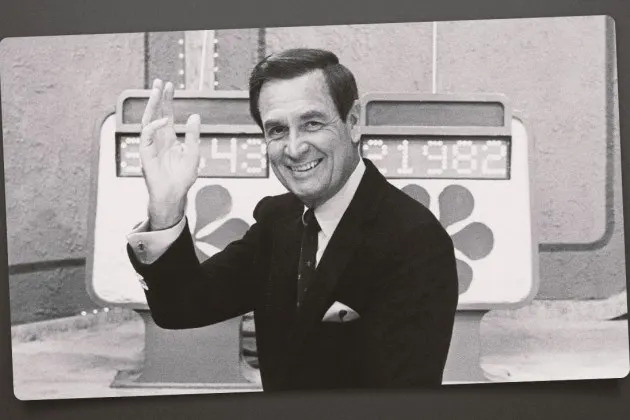
Bob Barker, Famed Game Show Host, Dies at 99

Mike Barnes
Sat, August 26, 2023


Bob Barker, the energetic game show legend who for more than 50 years made every day entertaining as host of Truth or Consequences and The Price Is Right, has died. He was 99.

Barker, who also was celebrated for his animal-rights activism and for one hilarious brawl with Adam Sandler in the 1996 golf comedy Happy Gilmore, died Saturday morning of natural causes in his longtime Hollywood Hills home, his representative, Roger Neal, told The Hollywood Reporter.

“It is with profound sadness that we announce that the World’s Greatest MC who ever lived, Bob Barker, has left us,” Neal said in a statement.

After a decade toiling on the radio, Barker was named host of the nationally televised Truth or Consequences in December 1956 and stayed with that program through 1975. He joined a revival of The Price Is Right in September 1972 and remained the host there until June 2007, breaking Tonight Show host Johnny Carson’s record for continuous performances on the same network TV program.

On both audience-participation shows (on Truth or Consequences, contestants were asked a question, and if they didn’t have the right answer, they had to perform a zany stunt), Barker mastered the art of interviewing and coaxing the fun out of regular folks.

“So many hosts will ask a question of a contestant and pay no attention because they’re so busy thinking about what they, the host, will say next,” he said in a 2003 interview with the St. Petersburg Times. “If you ask a question or make a remark and listen, often that contestant will provide you with a little gem you can work with.”

Barker collected 15 Emmy Awards, including 12 for hosting. He was presented a Daytime Emmy Lifetime Achievement Award in 1999 and was inducted into the Academy of Television Arts & Sciences Hall of Fame five years later.

The Guinness World Records named him TV’s Most Durable Performer as well as the Most Generous Host in Television History, having doled out, by its estimation, more than $200 million worth of prizes.

In 1987, Barker stopped coloring his gray hair because of the animal products used in dyes and chastised the Miss USA and Miss Universe pageants, which he hosted, for their use of furs.

Upon arriving as host of the 1987 Miss USA Pageant, he declined to go on after learning that the contestants would be wearing animal skins. When fake furs were substituted, it generated huge publicity for animal rights activists.

Barker later severed ties with both pageants and, soon, he was closing each edition of The Price Is Right with the line, “Have your pets spayed and neutered.” He donated a total of $3.1 million to his alma mater Drury College/University to establish and support the school’s interdisciplinary Animal Studies Program.

In a statement, PETA noted that Barker was “one of the first stars to go vegetarian more than 30 years ago, urged families to stay away from SeaWorld, demanded the closure of cruel bear pits masquerading as tourist attractions, implored Hollywood to take action to protect animals used in film and TV and, as a Navy veteran, called for the end of military medical drills on live animals.

“His generous donation allowed PETA to open its West Coast headquarters, the Bob Barker Building, in 2012, and it stands as a testament to his legacy and profound commitment to making the world a kinder place. To us — and to so many animals around the world — Bob will always be a national animal rights treasure.”

Robert Barker was born on Dec. 12, 1923, in Darrington, Washington, but raised on the Rosebud Indian Reservation in South Dakota, where his mother, Tillie, was a teacher. After his father died, he and his mom moved to Springfield, Missouri, where he attended high school and then Drury on a basketball scholarship, graduating in 1947. He trained as a Navy fighter pilot during World War II.

Following his discharge, Barker returned to Springfield, working at radio station KTTS while he completed his degree in economics. He read news and sports, and when one staffer failed to show up at the last minute, did his first audience-participation show.

Afterward, “My wife [Dorothy Jo] told me, ‘You did that better than you’ve done anything else,” Barker recalled in a 2000 interview for the Television Academy Foundation’s The Interviews website. He had found his calling.

“I was doing shows from grocery markets, drug stores, from movie theaters, from my own little studio,” he said. “I did man on the street shows when you are out on the street with a hand mic — live — and you are just talking with whomever comes along. And you have to make it entertaining.”

After spending time at a Florida station, Barker moved to Los Angeles and was hosting The Bob Barker Show on the radio when Ralph Edwards, the creator and original host of Truth or Consequences, heard him in his car while driving his daughters to an ice-skating lesson.

Edwards was looking for a host, and Barker, then 32, got an audition. He performed before 11 execs and later learned he got just one vote — “but I got the right one, from Ralph Edwards,” he said.

Edwards called Barker at five minutes past noon on Dec. 21, 1956, and told him he had the job. (For years, he and Edwards had lunch on that date and toasted their good fortune at 12:05 p.m.)

“It’s the greatest thing that ever happened to me professionally and the greatest thing that ever will,” he said. Truth or Consequences became the No. 1 show on daytime television and then went on five times a week in syndication.

In 1970, Barker gave future Family Feud host Richard Dawson his first game-show job (on Lucky Pair).

While he was doing Truth for nighttime viewing, Barker accepted producer Mark Goodson’s offer to host a daytime show, a new version of The Price Is Right. He said he would have asked for more money had he known that CBS daytime head Bud Grant would not have bought the show unless Barker was on board.

In 1998, upon the taping of the 5,000th episode of The Price Is Right, CBS dedicated Stage 33 at CBS Television City as the Bob Barker Studio.

Barker, who at age 50 began studying karate with Chuck Norris, gained a new generation of fans when he exchanged blows with Sandler’s hockey-player character, his partner in a golf tournament, in Happy Gilmore. (“The price is wrong, bitch,” Happy says after he slugs the game show host.)

“Nobody had heard of Adam Sandler until I beat him up,” Barker joked. They won the 1996 MTV Award for best fight, beating out the likes of Arnold Schwarzenegger and Jean-Claude Van Damme.

Wrote Sandler on Saturday: “The man. The myth. The best. Such a sweet funny guy to hang out with. Loved talking to him. Loved laughing with him. Loved him kicking the crap out of me. He will be missed by everyone I know! Heartbreaking day. Love to Bob always and his family! Thanks for all you gave us!”

Outside of game shows, Barker flirted with a young lass on Bonanza in 1960; contributed his voice to Family Guy and Futurama; played Mel Harris’ father on the NBC drama Something So Right; and appeared as himself on episodes of The NannyYes, Dear and How I Met Your Mother.

Dorothy Jo, whom he married in 1945, died of lung cancer in 1981. Barker never remarried but had a relationship with Dian Parkinson, a Price Is Right model, from 1989-91. She sued him and the program for sexual harassment (she dropped that suit) and wrongful termination (a judge dismissed that one). Several other former models also sued Barker and the show.

Survivors include his half-brother, Kent; half-nephews Robert and Chip; and half-niece Vickie.

The Hollywood Reporter

Through Philanthropy and Activism, Bob Barker Fought Animal Cruelty
Chris Cameron
Sun, August 27, 2023 

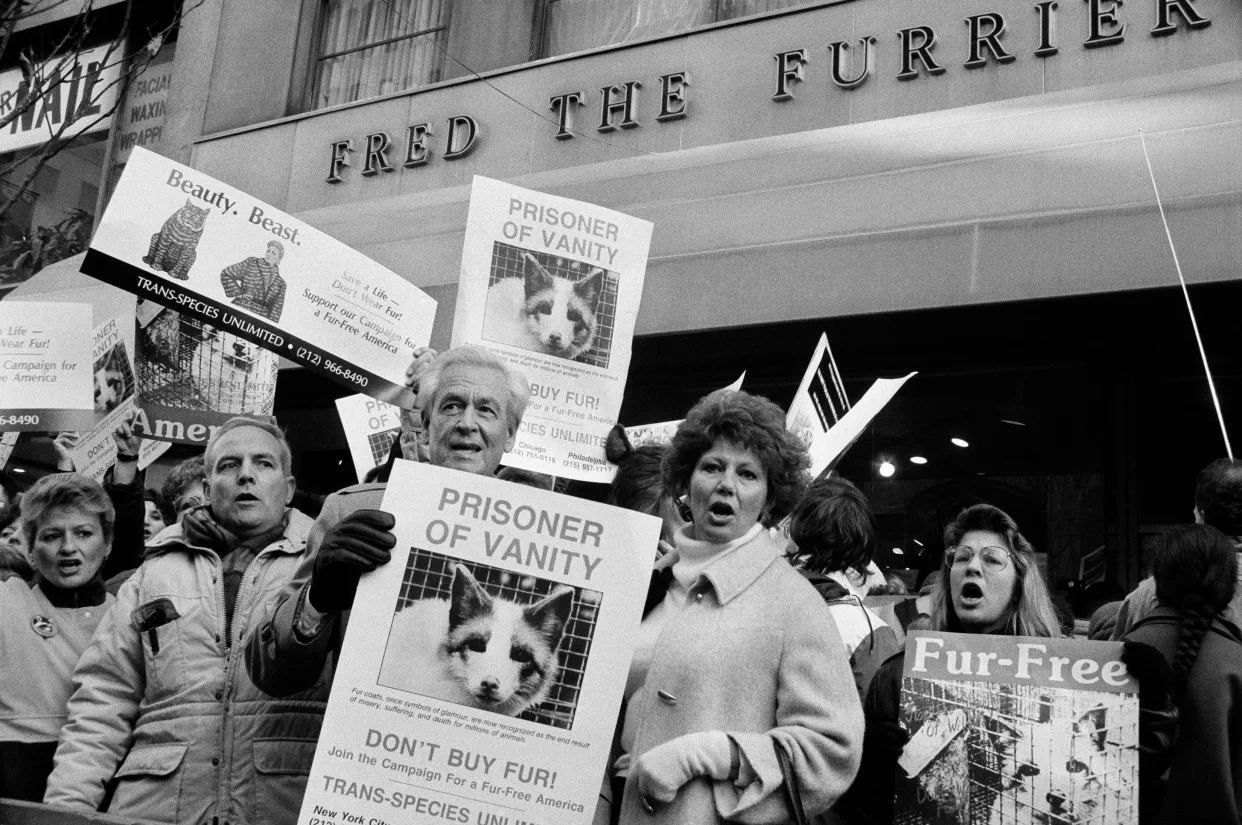
Bob Barker joins an anti-fur demonstration outside Fred the Furrier, a store on Fifth Avenue in New York on Nov. 25, 1988. (Don Hogan Charles/The New York Times)

Bob Barker, the longtime host of television game show “The Price Is Right” who died Saturday, made animal welfare advocacy a hallmark both of his career in show business and his life after retirement.

Over decades as the host of the longest-running game show in American television history, Barker, beginning in the 1980s, used his bully pulpit to remind millions of viewers to “help control the pet population; have your pet spayed or neutered.”

In one instance in 1996, he powered through his announcement even as an excited contestant clung at his arm, unable to contain her joy at having just won $51,676, or $99,602 when adjusted for inflation.

He continued that tradition for more than 20 years, until his very last show on June 15, 2007.

“There are just too many cats and dogs being born,” he explained in an interview with The New York Times in 2004. “Animals are being euthanized by the millions simply because there are not enough homes for them. In the United States, there is a dog or cat euthanized every 6.5 seconds.”

Barker supported a wide range of efforts to fight what activists saw as rampant animal cruelty in American society.

As one of the most prominent allies of the movement in Hollywood, he became a strict vegetarian, stopped dyeing his hair because the products were tested on animals and quit his job as host of the Miss USA and Miss Universe pageants because their organizers refused to remove fur coats from the prize packages.

“I am so proud of the trailblazing work Barker and I did together to expose the cruelty to animals in the entertainment industry,” Nancy Burnet, a fellow animal welfare activist who had been overseeing his care, said in a statement Saturday.

Barker put $25 million into founding the DJ&T Foundation, which finances clinics that specialize in spaying and neutering. The foundation was named after Barker’s wife, Dorothy Jo, and his mother, Matilda Valandra, who was known as Tilly.

Estimates show that the number of dogs and cats euthanized in shelters has been reduced to a fraction of what it was in the 1990s, at least partially attributable to “the drive to sterilize pet dogs and cats,” according to a 2018 study.

Barker also donated $5 million to the Sea Shepherd Conservation Society at the urging of its founder Paul Watson, who used the money to buy a ship named for Barker for use in the organization’s anti-whaling campaigns.

“He said he thought he could put the Japanese whaling fleet out of business if he had $5 million,” Barker said of Watson in an interview with The Associated Press. “I said, ‘I think you do have the skills to do that, and I have $5 million, so let’s get it on.’”

Ingrid Newkirk, the president of animal rights group PETA, said in a statement Saturday that Barker had a “profound commitment to making the world a kinder place.”

Newkirk added, “To us — and to so many animals around the world — Bob will always be a national animal rights treasure.”

Barker’s efforts were born from a lifelong affinity for animals.

“I always had a pack of dogs with me,” he said in 2004, recalling his upbringing in the small town of Mission on the Rosebud Sioux Indian Reservation in South Dakota. “There were a lot of dogs in Mission. Not many people, but a lot of dogs.”

His dedication to opposing animal cruelty continued well into his retirement, as Barker continued to donate to organizations such as PETA, which named its West Coast headquarters in Los Angeles for Barker after he made a $2.5 million donation in 2012 for renovations.

c.2023 The New York Times Company

HE CAME TO EDMONTON TO PLEAD TO HAVE LUCY THE ELEPHANT REMOVED FROM THE CITY ZOO TO A SANCTUARY. HIS PLEAS FELL ON DEAF EARS.

Jane Goodall reverses stance, says Lucy the elephant should stay in Edmonton | Globalnews.ca

THIS IS THE ZOO'S USUAL GO TO EXCUSE

https://kitchener.citynews.ca/2023/03/22/edmonton-zoo-says-lucy-the-elephant-too-sick-to-be-moved-to-sanctuary-6734946/

Monday, September 04, 2023

WILDLIFE: MADHUBALA’S LAST STAND

Muzhira Amin Published September 3, 2023 
Zoo authorities hope Madhubala’s health will improve once she is relocated to Safari Park
 | Photo by Fahim Siddiqui


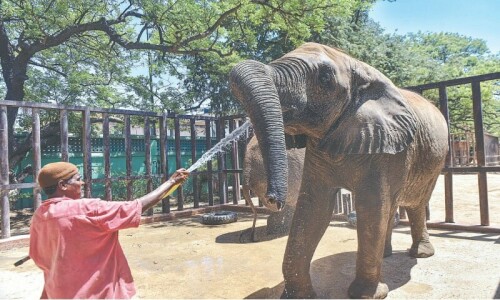
Five months after her ‘pen pal’ Noor Jehan passed away, Madhubala, caged behind concrete bars at the Karachi Zoo, stands under the tree where her best friend is now buried. She gazes at onlookers with vacant eyes that only show emotion when her mahout enters her enclosure with sugar cane.

Approximately 12 kilometres away, Madhubala’s herd partners Sonu and Malaika, housed at the Safari Park, suffer from knee swellings, cracked feet and joint pains.

All these African elephants, the last of the species in Pakistan, are suffering a fate they never signed up for. They — along with Noor Jehan — arrived in Pakistan 14 years ago. They were captured from Tanzania, after poachers shot their mother in front of them.

According to the zoo staff, these young ladies, now between the ages of 16 and 17, were just young calves when they were brought as captives to Karachi. They were then separated: Noor Jehan and Madhubala were sent off to the zoo, while Malaika and Sonu were kept at the Safari Park.

While the three remaining elephants are inching towards a reunion, it is at the cost of losing one of their companions.

The African pachyderm Madhubala will join two elephants from her original herd when she is rehomed at Karachi’s Safari Park. But will this guarantee a better life for her?

After Noor Jehan’s painful death earlier this year due to a tumour, the international animal welfare organisation Four Paws — which is closely working with the Karachi Metropolitan Corporation (KMC), which runs the Karachi Zoo — recommended immediately moving Madhubala to the Safari Park, a relatively greener and calmer place, for a “better chance at life.”

After some back and forth, a decision was made to move Madhubala to the Safari Park by mid-September, says an official at Karachi Zoo who did not want to be named.

He says Four Paws — who are currently in the city — had visited Madhubala and declared her fit to be moved to the new abode. “They said she is absolutely fine,” he says.

The elephant’s mahout Yusuf, on the other hand, says he was given special instructions by the doctors to ensure Madhubala was stress-free. “For the next few days, we have been told to stay with her day and night,” he says.

But a visit to the zoo shows Madhubala was anything but relaxed. She repeatedly made attempts to break down the door of her enclosure and kept banging her head on the steel bars of the cage — what experts call a “clear” sign of distress.

Yusuf has also noticed this. “She just doesn’t want to be alone. She wants you to sit next to her and talk to her. She gets agitated whenever she is alone,” he says.

“Imagine losing someone you have spent over a decade with… it gets very lonely,” says Yusuf. The mahout, who has been looking after the elephants at the zoo, adds that he had no idea what he would do once Madhubala was moved to the Safari Park. “We have spent a lifetime with these elephants.”

A closer view of Madhubala’s enclosure proves that preparations for her relocation are in full swing. Apart from her main cage, two other small pens have been taken down and transported to the Safari Park.

“They want to save money,” the official at the zoo says, pointing at the dismantled pens.

At the Safari Park too, a 25 foot by 38 foot concrete cage, identical to the one at the zoo, is under construction.

Earlier, Dr Amir Khalil, who is heading the Four Paws team, visited the Safari Park to oversee arrangements there for Madhubala’s enclosure. After the assessment, he suggested some measures, including a larger allocation of space for the elephants, from three acres to five acres.

Dr Khalil adds that Four Paws would also train the on-ground staff before Madhubala is rehomed. But given the KMC’s tainted past , doubts remain regarding whether relocating Madhubala is the solution to the wildlife crisis.

Despite living at Safari Park, which is termed a better place for elephants, Malaika and Sonu have been diagnosed with several diseases over the past several years. Recently, a report found that Sonu was suffering from a foot injury that seemed to have occurred due to the damaged concrete floor and moist conditions in her enclosure. Meanwhile, Malaika had developed a parasitic infection, the same that had eventually led to Noor Jehan’s death.

Zohare Ali Shariff, who has hands-on experience of captive wildlife management, explains to Eos that one common reason that captive animals, including elephants, were less immune to illnesses was the non-fulfilment of their basic needs.

“Elephants are highly intelligent animals, who have a very strong memory, they remember everything,” he says. “From the day they were put in captivity, these animals have been mistreated and tortured. They are beaten with sticks and are screamed at. All of this causes the elephants continuous stress and ultimately affects their health.”

Shariff says Madhubala may be suffering from several traumas. The primary one may be the loss of a loved one. “She was attached to Noor Jehan and witnessed the entire drama that unfolded before her death… this must be deeply embedded in her memory.” This explains her long visits to Noor Jehan’s grave.

Solitary confinement at the zoo and years of abuse have also deeply affected Madhubala, and a new enclosure at the Safari Park may not help with her healing, as Shariff says it is “too small and another torture cell.”

Elephants, he elaborates, need an environment that, if not a mirror, is similar to their natural habitat — land spread over hundreds of acres, earth underneath and abundant trees.

“Even with captive elephants, they should be provided an environment that functions according to the animal’s needs,” he points out.

Shariff also highlights how it may take Madhubala several months to adjust with the other elephants, even if they were originally members of her herd. He says elephants are not predators and the chances of a fight among them are relatively low, but there is a standard protocol in such matters that must be followed.

This includes first introducing the elephants to each other from a distance — or adjacent enclosures — and then slowly increasing their interaction.

Shariff hopes that moving Madhubala to the Safari Park would improve the quality of her life, but at the same time expresses apprehensions on whether government organisations, such as the KMC, can be trusted with taking care of the elephant.

He laments the KMC’s previous mismanagement, adding that neither the diet nor the veterinary care provided to captive animals in the city was at par with international standards.

“It is not possible to release these animals in the wild, they have been in captivity almost their entire life,” the expert adds. “The only option is to make zoos better.”

On the other hand, Jude Alan, animal activist and founder of the ‘I Am Noor Jehan Movement’, says the elephants in Karachi should be sent to an international sanctuary, such as the Islamabad elephant Kaavan was.

He tells Eos that when talks pertaining to Madhubala’s relocation had first started circulating, the KMC had agreed on providing 16-18 acres of land at the Safari Park. “But they have now agreed over less than five acres… Is this a joke?”

Elephants, on an average, walk for over 30km in a day. The Safari Park land cannot even be regarded as a drop in the ocean.

“The government does not care about these animals or their well-being, they have robbed the elephants of their rights,” Alan asserts, adding that African elephants belonged to Africa and should be sent back. “Let’s show them some dignity, we owe them this.”

The activist added that he, along with 22 other people, were working on taking this battle to court.

According to a 2008 study, zoo life can be deadly for elephants. It states that elephants born and raised in zoos live less than half as long as elephants living in their native areas. African elephants live an average of 60-70 years in the wild.

Scientists link most of these deaths to obesity because, even though the animals are well-fed, they get very little exercise. More recently, science has also revealed that elephants possess elements of neural wiring in their cerebral cortex, just like humans, linked with higher cognitive functions such as social awareness and language.

However, the same networks also makes these giant mammals susceptible to extreme boredom, depression and stereotypical behaviour during imprisonment — as in the case of the Karachi elephants.

And yet, all that zoos care about in Pakistan is entertainment for people during holidays.

The writer is a staff member of Dawn.com and tweets @NMuzhira

Published in Dawn, EOS, September 3rd, 2023


Read more


Elephant Madhubala may have to wait till Sept-end for move to Safari Park, say experts

Solitary confinement at Karachi zoo takes toll on elephant Madhubala

Karachi zoo’s Madhubala again tests positive for potentially fatal blood parasites


Thursday, December 03, 2020

How Cher is helping save the world's loneliest elephant
MAYBE SHE WILL COME TO EDMONTON FOR LONELY LUCY THE ELEPHANT

Islamabad — Pop music icon Cher was in Pakistan over the weekend to join a lonely elephant on his long-awaited journey to salvation. Kaavan, dubbed the world's loneliest elephant, finally escaped the meager confines of a zoo in Islamabad and was well on his way to a wildlife sanctuary in Cambodia on Monday.
© CBS/Maria Usman cher-kaavan-elephant.jpg

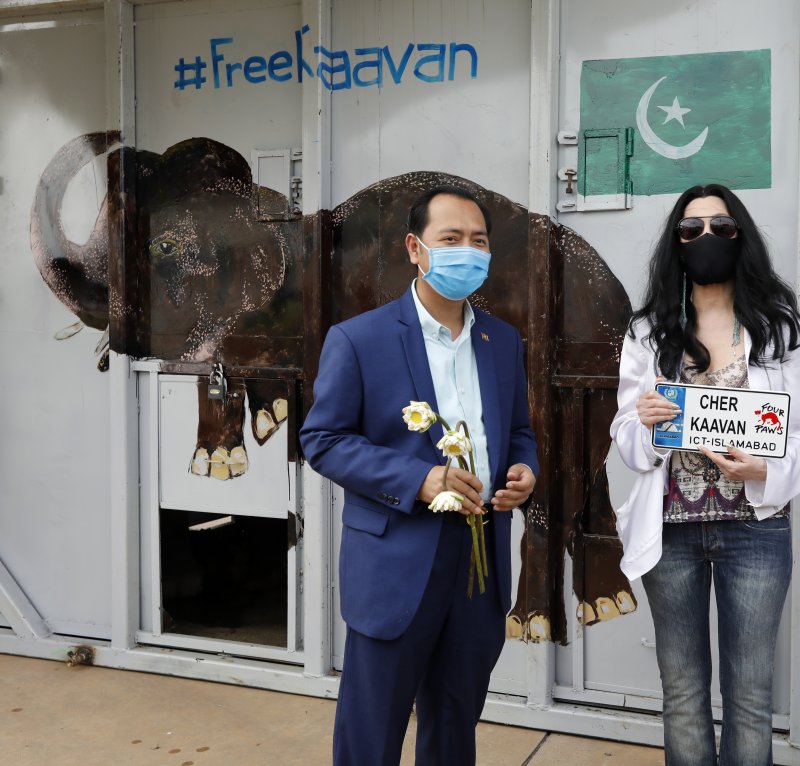
The American singer and actress campaigned for years to get Kaavan out of the Marghazar Zoo. Along with U.S. businessman Eric Margolis and the group Four Paws International, she helped pay for his relocation through her charity, Free the Wild. Local Pakistani activists first put Kaavan's plight on Cher's radar with a Twitter campaign, aiming messages with the hashtag #SaveKaavan and #FreeKaavan at celebrities worldwide. 

"World's loneliest elephant" arrives to new home
© Provided by CBS News U.S. singer Cher poses in front of the crate containing Kaavan the Asian elephant upon his arrival in Cambodia from Pakistan, at Siem Reap International Airport, November 30, 2020. / Credit: TANG CHHIN SOTHY/AFP/Getty

At just about a year old, Kaavan was gifted to Pakistan by Sri Lanka in the mid-1980s. He spent decades at the Islamabad zoo in a small enclosure with few of the amenities required for the physical or mental health of an animal of such high intelligence. He performed for visitors, reportedly prodded by handlers to collect cash.

In 2012, Kaavan lost his only companion, a female elephant called Saheli, and his demeanor rapidly deteriorated. He became angry, despondent, and given his unhealthy diet, obese.

The conditions were so dire at the zoo that a Pakistani court ordered it to be shut down in May this year, and all the animals to be relocated. That sparked a global effort to evacuate the animals, and especially Kaavan.   
  
© Provided by CBS News Kaavan the elephant is seen in his enclosure at the Marghazar Zoo in Islamabad, Pakistan on November 28, 2020, where he spent more than 30 years before being transferred to an animal sanctuary in Cambodia. / Credit: CBS/Maria Usman

When news of Kaavan's grim circumstances reached Cher on Twitter, she reached out to Mark Cowne, a global talent agency boss with a passion for wildlife whom she had met years earlier. 

"She had met Mark, who had previously moved 300 elephants, and said, 'Listen, we gotta do something,' so he started coming over here and finding out what's happening, and they decided to form Free the Wild, hoping that we can get big animals, at least starting with big animals, out of zoos," Cher's assistant Jennifer Ruiz told CBS News in Islamabad.

The superstar had originally focused her efforts on trying to get an elephant out of the Los Angeles Zoo, Ruiz said, but they've had no success so far in California. "So this came up and, you know, she always tells me, 'you do your best with what falls in your lap.' If someone asks you, you try to do your best."

Teaming up with Free the Wild, a team of vets and experts from the U.K.-based international animal welfare group Four Paws has spent months on-site, working with Kaavan to prepare him for his big move. 

Four Paws' head of communications Hannah Baker told CBS News that Kaavan's journey is the biggest elephant transfer the charity has ever undertaken, and their first by plane. Elephants have been moved by plane from one state to another in the U.S., for instance, but never an animal as large, or a move as logistically complicated, as this. 

Pulling it all off during a global pandemic has posed some unique challenges, but fortunately Kaavan's pre-flight COVID-19 test came back negative, and arrangements for a 30-day quarantine in Cambodia were in place. 

Kaavan's new home is the vast Kulen Promtep Wildlife Sanctuary in Cambodia. While he'll be confined to just three acres for his quarantine period, even that will be a significant upgrade as his enclosure at the Islamabad zoo was just a half-acre, and largely devoid of natural materials.  
© Provided by CBS News A caretaker feeds Kaavan the elephant as he awaits his flight to a sanctuary in Cambodia, during a farewell ceremony at the Marghazar Zoo in Islamabad, Pakistan November 23, 2020. / Credit: SAIYNA BASHIR/REUTERS

Once he completes his quarantine, the plan is to introduce him to three female elephants, and he'll have 25,000 acres to roam.
Rehab with a new friend

Egyptian veterinarian Dr. Amir Khalil, Four Paws International Director of Project Development, is known for rescuing animals from areas stricken by war or disasters. He's become Kaavan's best friend, forming a close bond with him over the last few months as the elephant was brought back to health for his trip. 

"When I first met Kaavan he was severely overweight, had issues with his nails and was displaying what is known as stereotype behavior: Animals in captivity need to move, but if chained they resort to moving their head from side to side in order to release endorphins and all their pent up energy."

Khalil told CBS News that this sad behavior, which Kaavan would engage in for up to 15 hours a day, was mistaken by his previous handlers in Pakistan as dancing. 

"My initial plan was just to examine Kaavan and work on making him fit for travel, but for some reason he seemed to like my voice," said Khalil, who spent hours standing by a tree at the back of Kaavan's enclosure just trying to get the animal to accept him. He would sing Frank Sinatra songs as he stood there and, before long, he realized that Kaavan seemed to be a fan of his rendition of "I did it my way," and other classics. 

The elephant started to trust the vet, and Khalil would often find Kaavan waiting for him.

"All relationships, whether between humans or humans and animals, must be based on trust," he said.  
© Provided by CBS News
 Dr. Amir Khalil, head of project development at Four Paws International, stands outside a crate and feeds Kaavan the elephant before the animal is transported to a sanctuary in Cambodia, at the Marghazar Zoo in Islamabad, Pakistan, November 29, 2020. 
/ Credit: SAIYNA BASHIR/REUTERS

Kaavan's diet plan was also crucial if he was going to squeeze into his travel cage. He had been gorging on about 440 pounds per day of sugar cane, but Khalil knocked that on the head quickly. On a more pachyderm-friendly diet of fresh fruit and veggies, Kaavan dropped from 5.5 tons down to a healthy 4.8. The chains that had often bound his legs for more than two decades were removed, forced performances were dropped and his daily routine was made more natural. The changes made him a much calmer and happier elephant before his journey.

For the last four weeks Kaavan underwent routine crate training to get him used to his custom-made travel cage – which he fit into comfortably given his lean new physique. 

Kaavan was celebrated at the Islamabad zoo over the last couple weeks. There was a party and well-wishers were able to come and see him for the last time, bidding farewell to the animal who had for three decades been the main attraction. A slew of government officials stopped by to say goodbye, including President Arif Alvi who paid a visit over the weekend.
© Provided by CBS News 
Singer Cher (third from right) meets Kaavan the elephant at a zoo in Islamabad, Pakistan, along with veterinarian Dr. Amir Khalil, International Director of Project Development for the Four Paws International charity, on November 28, 2020. 
 / Credit: CBS/Maria Usman

On Saturday, Cher finally got to meet her elephant friend for the first time, taking the opportunity to serenade the music-lover and offer him a bite to eat.

On Monday, the Russian cargo plane hired for the trip touched down in Cambodia, and the next chapter of Kaavan's life began.

Khalil said he hoped the elephant's story would serve as "a symbol for humanity, and doing what is right for the animals."

Documentary to feature journey of 'world's loneliest elephant' greeted by Cher


Singer Cher (C) greeted the "world's loneliest elephant" Monday as he arrived at Siem Reap Airport in Siem Reap province, Cambodia to be transported to a sanctuary. Photo by Mak Remissa/EPA-EFE

Nov. 30 (UPI) -- A Smithsonian documentary will feature Kaavan, dubbed the "world's loneliest elephant," who Cher greeted Monday in Cambodia after her charity's rescue flight.

Kaavan was sent to Pakistan more than three decades ago as a gift from former Sri Lanka dictator Gen. Zia-ul-Haq. In 2012, his mate for 22 years, Saheli, died, leaving him alone for eight years and leading to him becoming known as "world's loneliest elephant."

Grammy-winning singer Cher, 74, had campaigned for Kaavan's freedom from a zoo in Pakistan's capital, Islamabad, where he was on occasion restrained in chains, and suffered malnourishment and negligence leading to cracked nails and behavioral issues.

In May, the Islamabad Hight Court ruled the elephant could be released from the zoo.

Cher greeted the 36-year-old elephant on the tarmac at an airport in Cambodia Monday after his flight from Pakistan in a custom-made crate with more than 440 pounds of food after her charity, Free the Wild, assisted the move. Animal rescue organization Four Paws said Kaavan would be released from the crate in daylight Tuesday to a sanctuary in Cambodia with space to roam and 600 fellow pachyderms.

The documentary to air on the Smithsonian Channel in 2021 is tentatively titled "Cher's Elephant Airlift."

The rescue was a first for the charity Free the Wild, which Cher co-founded to help stop captive animals suffering.

"This is Free the Wild's first big rescue and I am so proud," Cher said. "We are thrilled to partner with the Smithsonian Channel who will be helping to bring our story to the world."

Last week Cher arrived in Pakistan to thank the government for Kaavan's release and join him for his flight.

"I found out about Kaavan from the people on my Twitter," Cher said in a statement regarding the upcoming documentary. "They would not stop saying, 'Cher, you have to do something, you have to fix this, you have to save him.' I thought, how can I fix this?"