Sunday, July 19, 2026

No to Crypto

Source: Robert Reich's Substack

I’m sorry to say that several Democratic senators appear willing to support the CLARITY Act—a sweeping pro-crypto bill that will be voted on next week. All they’re demanding is that Republicans agree to a few cosmetic changes such as a slight toughening of ethics rules, a modest expansion of law-enforcement authority, and a tad-bit strengthening of financial regulators.

All worthwhile improvements, but they don’t cure the bill’s fundamental defects.

Let me get right to the point. Congress should not enact legislation that further legitimizes and expands an industry whose promised public benefits are zilch while its costs and risks are increasing by the day.

There’s simply no legitimate use for crypto. Its only practical uses are tax evasion, money laundering, fraud, speculation, and crime.

The crypto lobby is large and well-financed. It has already bought off many members of Congress including, sad to say, a number of Democrats.

There’s no lobby on the other side to guard small investors who are losing their shirts on crypto, or to guard the public against the crime, money laundering, and human trafficking that crypto facilitates.
The crypto lobby says blockchain technology and digital assets will foster innovative companies, create new payment systems, strengthen small businesses, generate wealth, and expand opportunities for younger Americans.

Bullsh*t. There’’s no evidence of these benefits. Even if crypto did any of these things, crypto’s costs and risks significantly exceed them.

Aren’t Trump’s crypto conflicts of interest evidence enough? Isn’t the Ponzi scheme he created sufficient proof of how many people will get snookered?

The CLARITY Act would narrow the authority of the Securities and Exchange Commission over digital assets and give authority over crypto to the Commodity Futures Trading Commission.
This means investors will be shafted and the public will be left in the dark because of the lack of disclosures, the absence of fiduciary obligations, and the deficiency of investor safeguards. All these would apply under federal securities law; but none of these exist under laws governing futures contracts.

In other words, the CLARITY Act would give crypto even more cover. It would make crypto even more opaque. It would allow even more tax evasion, more money laundering, more fraud, more speculation, more ripoffs, and more crime.

I have no hope for Republican politicians. They’ve already sold their souls to Trump and the crypto lobby. But shame on any Democratic senator or representative who votes for this abomination.
It’s well worth your time to phone your senators and representative and tell them NO to the “Clarity Act.” The congressional switchboard is (202) 224-3121. You can call this number to be directly connected to the office of your specific senators or representative.
The vote is next week. Please phone now.


This article was originally published by Robert Reich's Substack; please consider supporting the original publication, and read the original version at the link above.Email
avatar

Robert Bernard Reich is an American professor, author, lawyer, and political commentator. He worked in the administrations of Presidents Gerald Ford and Jimmy Carter, and served as Secretary of Labor from 1993 to 1997 in the cabinet of President Bill Clinton. He was also a member of President Barack Obama's economic transition advisory board. Reich has been the Chancellor's Professor of Public Policy at the Goldman School of Public Policy at UC Berkeley since January 2006. He was formerly a lecturer at Harvard University's John F. Kennedy School of Government and a professor of social and economic policy at the Heller School for Social Policy and Management of Brandeis University.

From Fracking to Data Centers — the Same Old Song and Dance

Source: Originally published by Z. Feel free to share widely.

As a community organizer and environmental activist for over 15 years, I’ve often used the metaphor that “we are spinning on a hamster wheel.” That phrase gets mixed reactions. Some nod in agreement, and some get angry. The truth is not always easy to hear. I understand that from my own experiences.

In 2012, I learned that fracking for natural gas and oil was happening in my community. I started researching fracking, and found out about air pollution, toxic chemicals being injected underground, threats to water, farmland being bought up at unprecedented pace, and tax incentives subsidizing all this. And in the end, the community wouldn’t even have lower energy costs.

The fracking boom was hitting communities all over Ohio, Pennsylvania, Texas, Colorado — anywhere the fossil fuel industry sniffed out profits — and people were angry. So my neighbors and I tried to use the tools we had been taught we have in our supposed democracy.

We went to local and state officials, regulatory agencies like the EPA and Health Department, and environmental organizations. With help from the Community Environmental Legal Defense Fund, we passed a citizen initiative to ban fracking. The people voted for it — but then two drilling companies sued to have our democratically-enacted law overturned for violating their corporate “rights.” The court agreed with them and overturned our law.

Afterwards, I convinced myself that it was our fault. I believed that if more communities took action like we had, positive change would come. So, I started organizing with other communities across Ohio and in other states which found themselves in the same position. But the same cycle of corporate power overriding the people was repeated over and over. The people in these communities had no legal authority to stop fracking.

Some communities, like New York, banned fracking. However, they didn’t ban the use of fracked gas, so my community and many others were sacrificed to make sure Times Square stayed lit up. No offense to New Yorkers, but that’s the hard truth. It is how the system is set up to work.

Other communities turned to regulations. People convinced themselves that if frackers had to have further setbacks from schools and homes, we’d be protected from toxic water injections, airborne chemicals from waste pits and hundreds of trucks, and water depletion due to the between 1.5 and 16 million gallons of water used for each frack well. Communities enacted stricter regulations, but the harm continued.

It became all too clear that we the people were indeed like hamsters spinning in a wheel. All the tools which we grew up believing would protect us and our communities didn’t work. They were just diversions to keep us occupied as the government and the fracking industry drilled well after well.

Now it’s 2026 and communities are up in arms again over an issue that causes many of the same harms as fracking: data centers. I get calls and emails every week from communities all over the country with people sharing concerns — farmland being purchased at unprecedented rates, massive water withdrawals, air pollution and toxification, astronomical energy usage, skyrocketing power rates, and tax subsidies for mega tech corporations. Sound familiar?

It reminds me of the Aerosmith song, Same Old Song and Dance. The song is about how the “justice system” does not apply equally to all. They weren’t singing about fracking or data centers, but they may as well have been. Whether we use metaphors like spinning in a hamster wheel or cliches like “same old song and dance,” this is how the system is set up to work: it protects industry, capitalism and the profits of a few, not the people and environment. Folks fighting mining, toxic waste, big agriculture, industrial energy of any kind, clear cutting of forests, plastic pollution, etc. are all trapped in the hamster wheel.

We must jump out. This will take facing hard truths, like the fact that holding up signs in front of public meetings, writing letters, and giving testimony to regulatory agencies won’t protect you and your community. Once we can begin reckoning with these truths, maybe we can turn toward each other and turn away from the existing system. Maybe we can free our imaginations and creativity to experiment with new ideas. Maybe we can work together in community to build grassroots power, take direct action, disrupt unjust systems, and resist corporate encroachment rather than jumping back into the hamster wheel. Maybe we can start being effective.Email

Tish O’Dell is the Consulting Director for the Community Environmental Legal Defense Fund (CELDF). She started in her own community of Broadview Heights, Ohio, leading to the adoption of Ohio’s first Home Rule charter amendment creating a Community Bill of Rights banning fracking and recognizing Rights of Nature, and today works with communities all over the country and internationally.

A Protest Leader in Bolivia Speaks

Source: Originally published by Z. Feel free to share widely.

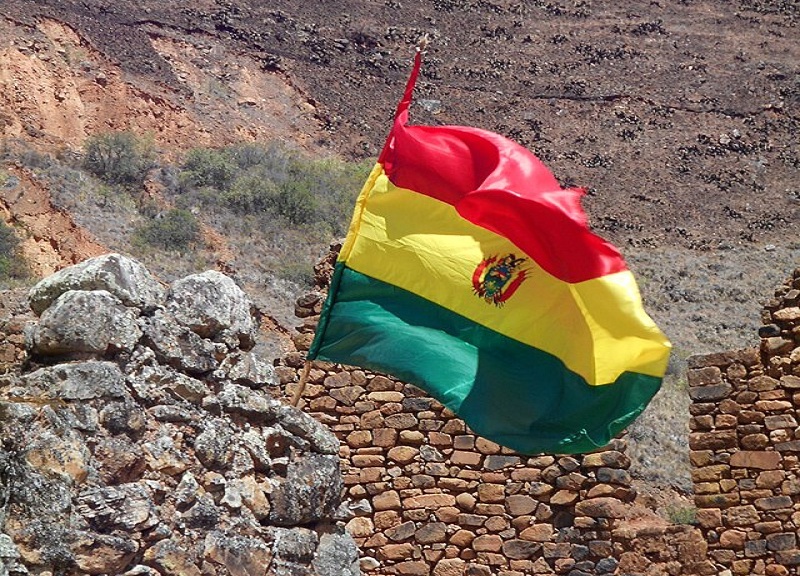
Bolivia has been rocked since early May by strikes, mass marches, and road blockades across the country as people demand the resignation of center-right president Rodrigo Paz. Paz’s election last fall brought an end to the two-decade-long political dominance of the left-wing Movement for Socialism (MAS) party and was viewed as another sign of a rightward political shift across Latin America. Yet Bolivia’s Indigenous groups, miners, urban workers, teachers, and peasants rose up again after the president broke a series of campaign promises and returned to the neoliberal agenda of austerity and political repression imposed on Bolivia prior to the MAS’s coming to power.

Though Paz reached an agreement with the country’s main union federation, a couple of days later, on June 20, he declared a state of emergency and ordered police and armed forces to clear roadblocks. Protest leaders say they nonetheless will keep up the pressure on the government.

To learn more about the protests and what the future may hold, Hammer & Hope spoke in early June with a Quechua Indigenous woman who is a protest leader and member of the National Confederation of Indigenous Peasant Women of Bolivia–Bartolina Sisa.

Hammer & Hope What led to the wave of protests?

Quechua activist To win our vote, President Paz made commitments to the working people who make up the majority of the country. He promised to resolve the fuel crisis, the dollar shortage, and the crises in health and education.

But he didn’t keep his promises. The government cut the fuel subsidy and provided very poor-quality fuel — total garbage — and it ruined many machines, tools, and vehicles. That caused deep anger not only in the transport sector but also among those who work in agriculture and production — basically everyone who uses fuel.

Popular organizations of Indigenous people, women, and workers repeatedly requested hearings and dialogue. Instead, Paz responded with repression. So people began to mobilize more and more, day after day. The government has never had the humility to listen to the people, not even to acknowledge that the people voted for them. Paz has repaid the people who voted for him with rubber pellets and tear gas. This government speaks of dialogue but offers only political persecution, including kidnappings of women leaders from the doorsteps of their homes.

HH In the face of the protests, Paz repealed Law 1720, an agrarian reform measure that the legislature had passed just one month earlier and he had previously supported. What would the law have done?

QA The government wanted to offer peasants the possibility of taking out loans and mortgaging their land as collateral. Peasants marched from Pando and Beni to La Paz to protest the proposal, but the government didn’t listen to them. [Pando and Beni are remote areas in northern Bolivia.] This government has no heart at all and treats workers worse than animals.

HH The uprising continued even after apparent concessions, including the agrarian law’s repeal, the replacement of government ministers responsible for energy policy, and Paz’s creation of a new Economic and Social Council meant to appease the protesters. Why do workers’ organizations consider these measures insufficient?

QA The council is made up of people who do not represent workers. They are public officials and relatives of members of the government. The country is completely shaken by protest. Workers, campesinos, and Indigenous people have been blockading roads for almost two months, but the government continues abducting them and violating Bolivians’ constitutional rights.

HH On June 8, President Paz signed a law that allows the government to take extraordinary measures when a state of emergency is declared. The armed forces can now intervene in internal conflicts, including using troops to dismantle roadblocks. How do you view this new law?

QA That law is not going to solve anything. On the contrary, the situation is going to get worse. What do you think the protesters are going to do? They are not afraid of it, and they remain strong at all the roadblocks currently set up in Bolivia. The Plurinational Legislative Assembly that approved the law is not made up of representatives of the workers, chosen from our communities, but rather of the elites, a small minority of the population. That is why we are demanding that those representatives of the elites must leave together with Rodrigo Paz. They are the enemies of the people.

HH How do the popular organizations propose to solve the political crisis?

QA This government has to go. The vice president has to assume the presidency constitutionally and call new elections. That way, we can have a new government for the people.

HH What is the role of the former president Evo Morales, the Indigenous militant who led the MAS for many years, in the current popular uprising?

QA Comrade Evo is not leading this uprising. The mobilizations are led by representatives elected organically by their bases.

The people recognize that Evo was a better president, and that bothers the government. That is why government officials blame him for everything and wash their hands of responsibility. He is facing severe repression. In the small town where he lives, Lauca Eñe in Cochabamba, his supporters have maintained a constant security watch to protect him from violence for almost two years. They fear that Evo might be kidnapped or arrested, as happened with Maduro in Venezuela. He offers moral support, but saying that he is behind everything is completely false. Blaming him is part of a political attack meant to confuse people, including the international press.

HH The United States, together with the governments of Bolivia, Argentina, Chile, Ecuador, Paraguay, and seven other Latin American and Caribbean countries, issued a joint statement condemning the workers’ actions as antidemocratic and an attempt to undermine the elected government. How do you view foreign interference in Bolivia today?

QA Bolivia possesses many natural resources, such as lithium; minerals, including rare-earth metals; fresh water; and forests. That is why those countries have their eyes on us. They want to plunder our wealth. In 2019, there was a coup d’état over control of lithium resources. The mobilizations today are also a response to the international threat. Indigenous peoples will not allow interference, because we do not want to gamble away our children’s future.

These countries talk about drug trafficking, but that is a pretext to try to bring the U.S. Drug Enforcement Administration back into the country, something the Bolivian people do not accept. That would serve to open the door to the plunder of our natural resources. Indigenous peasant peoples have a clear position: Those resources must be respected and preserved for the future, especially lithium. That is why, today more than ever, the people are standing up.

This article was produced by Hammer & Hope

No Country on Earth Fully Respects Workers’ Rights, and it’s Getting Worse


 July 17, 2026


Class warfare continues to be waged incessantly. And that war’s offensives continue to be more intense. In just the past year, the world’s working people have seen more attacks on the rights of free speech and assembly, more attacks on civil liberties, more arrests and imprisonments, more refusals to engage in collective bargaining with unions and more technology used to monitor, discipline and silence workers.

None of this is new, but it is getting worse. The International Trade Union Confederation (ITUC) has issued its 2026 Global Rights Index report, and as has been the case in past years, the annual report makes for grim reading. Once again, no country on Earth fully protects workers’ rights.

In past years, there were only nine countries that met the qualifications for the best category, “sporadic violations of rights,” defined as where “Violations against workers are not absent but do not occur on a regular basis.” That was the case for the 2023 and 2022 reports. This year? Only eight countries were found to be merely “sporadic violations of rights.” Those countries are Austria, Denmark, Germany, Iceland, Ireland, Norway, Sweden and Uruguay, with Uruguay newly promoted to this level from a year ago.

Before we dip into the details, the larger picture is alarming. And the advanced capitalist countries, you won’t be surprised to know, are no exceptions. “In Europe and the Americas, workers’ rights are suffering an alarming decline. Both regions registered their worst average country rating since the Index began in 2014, and the increasing influence of the far right is putting workers and unions at risk in countries such as Argentina and France – two out of four countries to be downgraded in 2026,” the ITUC said in its report. Nor are the reasons behind these developments a mystery. “This year’s results reinforce the ITUC’s view that we are witnessing a global erosion of democratic principles – a ‘billionaire coup against democracy’ – funded by the rich and delivered by far-right and authoritarian leaders,” the report said. “As a snapshot of the violations of workers’ rights, the 2026 Index exposes a pattern that the powerful would rather keep hidden: the systematic weakening of democracy through attacks on workers, unions and collective bargaining. From repression of strikes to the erosion of legal protections and the criminalisation of unions, these are not isolated incidents but part of a broader strategy to silence dissent and entrench inequality.”

Fully half of the world’s national governments launched attacks on the rights to free speech and assembly, and half also arrested or detained workers, the highest total yet. Workers in three-quarters of the world’s countries had their right to union organizing impeded, also a record high, and 80 percent of countries restricted the right to collectively bargain. Worse still, 87 percent of countries violated the right to strike.

For the past decade, the number of countries that exclude workers from the right to establish or join a union, that violate the right to collective bargaining, that violate the right to strike, that arbitrarily arrest and detain trade union members, and that deny or constrain freedom of speech and assembly have all risen.

The global rise of hard right governments has gone hand-in-hand with the deterioration of workers’ rights. Argentina, where President Javier Milei has carried out his promise to impose the harshest variety of austerity that he can get away with, achieved the unprecedented “accomplishment” of falling in the ratings for two consecutive years. Argentina is now classified in the ITUC survey as a 5 rating, the worst category, representing the worst offenders where workers “have effectively no access to rights.” The ITUC lists Argentina as one of the world’s ten worst. “Milei has led a staunchly anti-union agenda since coming to power in 2023, undermining basic workers’ rights, civil liberties and union activity,” the Confederation reports. “Workers and unionists face systematic abuse and the shrinking of civic space. … Union offices, including the headquarters of the glassworkers’ union, were infiltrated and vandalised.” High union officials have fled the country after a police roundup. “Employers in Argentina engage in union busting and exploitative practices with impunity,” the report concludes.

In France, which also saw its rating decline, there is a “sustained deterioration of workers’ rights, an increasingly hostile political atmosphere, and incrementally regressive government policy since nationwide protests against pension reform deeply shook the political landscape in 2023.” Furthermore, in an atmosphere of the government attempting to impose regressive labor policies, “more than 1,000 Confédération Générale du Travail (CGT) activists have fallen foul of state and employer crackdowns and a spate of violent attacks by far-right groups.”

And what of the two countries that love to claim their defense of democracy is unwavering and endlessly point fingers at other countries? The United Kingdom was rated as a “regular violator of rights,” a ranking of 3, the middle of the five categories. That was actually an improvement from a year earlier, with the ITUC crediting the outgoing Starmer administration for “repeal[ing] excessive restrictions to industrial action introduced in the previous Conservative government’s 2016 Trade Union Act.” And the United States? Once again given a rating of 4, the category for countries that have “systematic violations of rights,” the second worst ranking.

“In 2025, Trump stripped collective bargaining rights from more than a million federal workers across more than 30 agencies — perhaps the biggest act of union busting in the nation’s history,” the report said. “The move, reserved in the past for emergencies, was portrayed by the Republican administration as being in the interest of national security. It means entire departments, such as the Departments of State and Justice, and even the Food and Drug Administration, are excluded from this basic right.” The ITUC also cited Trump leaving the federal labor arbitration body, the National Labor Relations Board, without a quorum so that no cases brought by unions can be heard, as well as imposing an intimidating environment for immigrant workers, the excessive force used by Immigration and Customs Enforcement (ICE) and arbitrary arrests of union leaders. “The harm caused by these militarised enforcement practices extends well beyond these high-profile cases, as hundreds of other workers and trade unionists have been arrested and deported or detained in life-threatening conditions without charges or due process,” the report said.

The Global Rights Index ranks the world’s countries from 1 to 5, with 1 the best category, denoting “sporadic violations of rights,” defined as where “Violations against workers are not absent but do not occur on a regular basis.” Those are the aforementioned eight countries.

Rating 2 countries are those with “repeated violations of rights,” defined as where “Certain rights have come under repeated attacks by governments and/or companies and have undermined the struggle for better working conditions.” Countries with this rating include Australia, Italy, Japan, the Netherlands, New Zealand, Portugal and Spain.

Rating 3 countries are those with “regular violations of rights,” defined as where “Governments and/or companies are regularly interfering in collective labour rights or are failing to fully guarantee important aspects of these rights” due to legal deficiencies “which make frequent violations possible.” Countries with this rating include Belgium, Canada, Chile, France, Mexico, South Africa and Switzerland.

Rating 4 countries are those with “systematic violations of rights,” defined as where “The government and/or companies are engaged in serious efforts to crush the collective voice of workers, putting fundamental rights under threat.” Countries with this rating include Brazil, Greece, Israel, Peru, the United States and Vietnam.

Rating 5 countries are those with “no guarantees of rights,” defined as where “workers have effectively no access to these rights [spelled out in legislation] and are therefore exposed to autocratic regimes and unfair labour practices.” Countries with this rating include Argentina, China, Colombia, Ecuador, India, the Philippines, Russia, South Korea and Turkey. In addition, there are countries with a 5+ rating, those with “No guarantee of rights due to the breakdown of the rule of law.” The dozen countries listed here include Afghanistan, Myanmar, Syria and Yemen.

The ITUC determines its ratings by checking adherence to a list of 97 standards derived from International Labour Organization conventions. Those 97 standards pertain to civil liberties, the right to establish or join unions, trade union activities, the right to collective bargaining and the right to strike. As a self-described confederation of national trade union centers, it says it represents 191 million workers in 169 countries and has 340 national affiliates.

Outside the scope of the International Trade Union Confederation’s report is the ability of workers to even have a job. Unemployment statistics notoriously greatly understate the number of people out of work and ignore altogether those with part-time work who need a full-time job. Even those lesser known statistics, such as the U-6 in the United States and R8 in Canada, that reveal higher numbers because of a more expansive definition of counting unemployment than the standard measures, undercount. One estimate of the true rate of un- and under-employment is 24.3 percent, calculated by the Ludwig Institute for Shared Economic Prosperity. The International Labour Organization estimates that 2.1 billion workers are employed informally, far fewer than those with regular work. The ILO notes that “Informality is typically associated with lower job quality due to limited access to social protection, rights at work, workplace safety and job security.” And all this at a time when the gigantic sums of money shoveled into the pockets of billionaires and other capitalists is so high that there is not enough outlet for investment or other productive use, and instead the money is shoveled into financial speculation — the volume of trading in currency (foreign exchange), stocks, bonds and their derivatives exceeds the size of the global economy in 10 business days.

As we yet again have cause to note, class warfare is intensifying and remains decisively one-sided. For how long?

Pete Dolack has been an activist with several groups, most recently Trade Justice New York Metro. He writes the Systemic Disorder blog and is the author of the books What Do We Need Bosses For?: Toward Economic Democracy and It’s Not Over: Learning From the Socialist Experiment.