Showing posts sorted by relevance for query PAKISTAN TALIBAN. Sort by date Show all posts

Monday, October 20, 2025

Taliban’s new ploy


Aizaz Ahmad Chaudhry 
Published October 19, 2025 
DAWN

The writer is chairman, Sanober Institute, and former foreign secretary of Pakistan.

THE Afghan Taliban regime is living under an illusion. Visiting India, its interim foreign minister recently stated that Afghanistan had defeated the British, the Soviets and the Americans. No, they had not. The Afghan rulers of the time were decisively defeated in the second Anglo-Afghan war (1878-80) by the British, enabling the latter to effectively make Afghanistan a buffer zone in the Great Game between the Raj and the Russian empire. Abdul Rahman Khan accepted the Durand Line as the border with British India, which was endorsed by subsequent Afghan rulers. As for the Soviets, it was the concerted effort by the US and Pakistan that pushed them out and rescued the Afghan people in the 1980s. America’s presence in Afghanistan since 2001 also ended only when the US itself decided to exit in August 2021 because of American public opinion turning against distant wars and the strategic depth the Taliban had received in Pakistan.

For over four years now, the world has expected the Taliban to honour their commitments under the 2020 Doha peace accord with the US. However, they have violated all three promises: forming a true representative government, respecting women’s rights, and not allowing terrorist entities on Afghan soil.

With Pakistan, the Taliban have adopted a particularly hostile attitude, having lately embarked upon a two-pronged manoeuvre. The first prong is teaming up with India to not only benefit from Indian investments in healthcare, education and infrastructure, but to also doubly squeeze Pakistan under the mistaken belief that Pakistan’s enemy is their friend. For its part, India, which has severely criticised Taliban in the past, has reversed its policy in order to leverage the Taliban against Pakistan, just as the Taliban are leveraging it against Pakistan. India hopes to wean the Taliban further away from Pakistan and even China.

The second prong is an upsurge in the Taliban’s kinetic aggression to destabilise the Pak-Afghan border (Oct 11-12, 2025) while ignoring Pakistan’s consistent protests against the Taliban’s support to the TTP (and other anti-Pakistan elements) who have killed children and other innocent civilians in Pakistan. For now, Pakistan has repulsed the assaults and inflicted heavy losses on the Taliban forces and their TTP associates. However, it is evident that the Taliban won’t heed Pakistan’s advice to not allow terrorist elements on their soil. Instead, the Afghan leadership tends to shift the burden of any action to Pakistan, arguing that these terrorists should be handled inside this country. The Taliban media is also spreading disinformation, taking a leaf out of the Indian media’s playbook.


Why are the Taliban inimical towards Pakistan?

Why are the Taliban so ungrateful and inimical towards Pakistan? It appears that they are trying to be nationalist in order to garner support from the wider Afghan society. Perhaps they wish to give the impression that they aren’t under Pakistan’s influence. They are hosting the TTP probably as a leverage against Pakistan. In doing all this, they are overestimating their power potential, and may be in for a rude shock. It would be prudent for them not to underestimate Pakistan’s resolve to defend its borders and defeat Taliban-backed terrorists.

How should Pakistan deal with the Taliban? Several steps can be considered in the immediate term: One, Pakistan should maintain its robust defence at the borders with Afghanistan (and India). Only strength can deter aggression. Two, it should send a clear message to Kabul that the doors for dialogue are open, provided the Taliban firmly commit to ending their support to the TTP. If they do not commit to that, then kinetic options wou­ld remain on the table. Three, Paki­s­tan must keep up the pressure on the Taliban through diplomatic outreach to Saudi Arabia (now a partner in mutual defence), China, Russia, Iran, the Central Asian Republics, Turkiye, the UAE and America. Given the Taliban’s past association with Al Qaeda, the global community would not want to see the Taliban hosting terrorist entities again. Pakistan should also register its complaints in the UN under the UNSCR 1988 (1267) sanctions regime.

In the medium term, Pakistan should develop a nationwide consensus on a review of its previously generous policies regarding Afghan refugees, scholarships for Afghan students, special desks in its hospitals for Afghans, collecting custom duties on transit trade through Pakistani ports, and media outreach to Afghan society. Experts could be invited to suggest doable measures. In the long term, an effort could be mounted to win the hearts and minds of our nationals living in the erstwhile Fata region bordering Afghanistan through development work. They are the first line of defence against terrorism from Afghanistan.

Published in Dawn, October 19th, 2025

Another Doha pact

Muhammad Amir Rana 
Published October 19, 2025
DAWN

THERE is little optimism or even enthusiasm surrounding the post-ceasefire talks between Afghanistan and Pakistan taking place in Doha. Yet, it would be unwise to dismiss them outright. If one assesses the potential pragmatically, these discussions could evolve into a ‘Doha pact’ of their own, echoing the 2021 agreement between the Taliban and the US that altered the regional geopolitical landscape.

Facilitated by Qatar and Saudi Arabia, the Taliban have agreed to sit down with their Pakistani counterparts in Doha to discuss bilateral relations and the possible extension of the ceasefire, which was initially agreed upon for just 48 hours after recent border clashes between the two countries.

Should the two sides reach an understanding akin to the earlier Doha accord, where the Taliban provide verifiable guarantees that the TTP and other Afghan-based militants will not operate against Pakistan, it could prove transformative. Such an agreement would not only redefine the troubled bilateral relationship but could also reshape the regional landscape. The prospects for transnational connectivity, trade and mega infrastructure projects linking Central and South Asia would expand dramatically, offering tangible improvements to the lives of millions across the region.

However, the Taliban leadership does not have such a vision, and the major problem with the Taliban leadership lies in its deeply conventional mindset in both political and religious thinking. This rigidity stems mainly from their madressah education, whether in Pakistan or Afghanistan. Most of their leaders, whether graduates or dropouts, share the same worldview, cutting across all factions and shades of leadership, from the so-called ‘moderates’ like Abbas Stanikzai to the Haqqanis and hardliners such as Mullah Abdul Hakim Haqqani.


The Taliban perceive the world as something that must learn to accommodate them.

They perceive the world as something that must learn to accommodate them or strive to understand them, while they see no reason to change themselves. They consider themselves victorious, having defeated great powers, and believe the world should now deal with them on their terms. Consequently, they show little willingness to reconsider their orthodox, religiously driven policies of moral policing or their severe restrictions on women and other vulnerable segments of society, despite appeals from respected religious scholars across the Islamic world.

Their mindset is incompatible with evolving global norms, and even with the political realities of authoritarian yet relatively modern Muslim societies. Why, then, should others be expected to give them time or understand their so-called compulsions, which they often cite when discussing terrorism-related issues with Pakistan and neighbouring countries? Why should Pakistan and others continue to listen to them and at what cost? Must Pakistan continue to bleed at the hands of the TTP and other militant groups while the Taliban offer themselves as mediators between the state and terrorists?

In contrast, when militant groups rooted in Al Qaeda and Daesh captured parts of Syria, their behaviour, both internally and in their engagement with the world, was notably different. One understands that Afghanistan is not Syria. Syria, despite its devastation, is attempting to rebuild through a fragile but ongoing national consensus and is showing a willingness to align, at least partially, with regional and global norms. The Taliban, by comparison, have failed to foster any such consensus at home.

Unlike in Syria, where elements of the leadership remain visible, reachable, and at times open to dialogue with world powers, including the US and Russia, the Taliban’s supreme leader, Mullah Hibatullah Akhundzada, remains hidden. The reasons for his seclusion are unclear. Officially, it is attributed to ‘security concerns’, but these explanations no longer hold much weight. What is he afraid of? Lack of confidence, fear of dissent, or simply an inability to step out of a wartime mindset? No one truly knows who is making decisions on his behalf. The Taliban’s internal communications are riddled with contradictions, and myths continue to swirl around their leadership.

One recent example illustrates this opacity and confusion. Reports emerged that Mullah Hibatullah had ordered an internet shutdown across Afghanistan, citing concerns that WhatsApp and other social media apps were spreading obscenity, vulgarity, and music. Yet, just a few days later, he reportedly asked an aide why he was no longer receiving WhatsApp messages. When informed that the services had been suspended on his own orders, he reluctantly directed that internet access be restored.

Such incidents, while almost absurd on the surface, reveal a deeper problem within the Taliban’s governance structure — a leadership trapped between ideological rigidity and the demands of a connected, modern world.

The Taliban leadership is neither innovative nor forward-looking in shaping better relations with its neighbours, particularly Pakistan and China, despite the long-term advantages such engagement could bring. Instead, they continue to rely on the old Afghan template of suspicion and defiance towards Pakistan, a posture that frustrates Islamabad even more than the persistent terrorist threat the country faces daily.

India, fully aware of these sensitivities, has been quick to exploit the Taliban’s posture to its advantage, skilfully playing on Pakistan’s insecurities. For the Taliban, this dynamic serves as a convenient balancing act, using the Indian card to counter Pakistan’s pressure on issues of terrorism and border security-related affairs.

In Doha, the Taliban are unlikely to change. Neither Qatar nor Saudi Arabia possess the leverage to compel them to abandon their closest militant ally, the TTP. China, too, has failed to persuade them on this issue, and it remains unclear what strategy the Gulf mediators can employ to convince the Taliban to address Pakistan’s concerns about cross-border terrorism seriously. The likelihood is that the Taliban will continue to deny responsibility, insisting that the TTP problem is an ‘internal matter’ for Pakistan and offering, at best, vague proposals for dialogue.

To avoid embarrassing their hosts, the ceasefire between Afghanistan and Pakistan may be extended for a few weeks. But the real solution does not lie in diplomatic gestures or temporary truces. It lies in the Taliban’s willingness to completely sever ties with all forms of terrorism, something they had promised to the US in the original Doha Agreement, and a commitment they may now be compelled to make once again, this time to Pakistan.

The writer is a security analyst.

Published in Dawn, October 19th, 2025

Tuesday, October 14, 2025

As Pakistan battles Afghan Taliban, fears of major war rise


Haroon Janjua i
n Islamabad
DW
October 13, 2025

Both Pakistani forces and the Taliban in Afghanistan are reeling after deadly clashes. Observers warn that border violence could escalate into a full-blown conflict.


Both Pakistan and the Taliban regime in Afghanistan claim to have inflicted heavy losses on the opposing side
 (file photo)Image: Wakil Kohsar/AFP


Fierce fighting erupted between the Pakistani military and Afghan Taliban forces over the weekend, marking the deadliest conflict between the neighbors since the Taliban returned to power in Kabul in 2021.

Both Pakistani officials and the Taliban regime in Afghanistan claim to have inflicted heavy losses on the opposing side.

The Taliban said on Sunday that they had killed 58 Pakistani soldiers in overnight border operations. Pakistan's army gave far lower casualty figures, saying 23 of its troops were killed. The Taliban also claimed to have captured 25 Pakistani army posts.

Pakistan's military claimed to have killed more than 200 Afghan fighters. The Taliban said only nine soldiers on its side were killed.

Claims from both sides could not be independently verified. Access to the border region remains heavily restricted.

Pakistan, Afghan Taliban border clashes: What's next? 05:28


Why are Pakistan and Afghan Taliban fighting?

Tensions between the countries, which were once allies, increased after Islamabad demanded that Kabul take action against the Tehreek-e-Taliban Pakistan (TTP), a separate group closely linked to the Afghan Taliban.

The TTP seeks to impose a hard-line interpretation of Islam, particularly on Pakistan's northwestern Khyber Pakhtunkhwa province, which borders Afghanistan.

According to Pakistan's government, the group operates from Afghan soil with impunity. The Afghan Taliban deny that.

TTP militants have stepped up attacks against Pakistani security forces in recent years.

A UN report this year found that the TTP "receive substantial logistical and operational support from the de facto authorities," referring to the Taliban government in Kabul.

More than 500 people, including 311 troops and 73 policemen, were killed in attacks from January through September 15, the AFP news agency reported, citing a Pakistan military spokesman.

Pakistan's government has also accused India of backing the Pakistani Taliban and other insurgent outfits in a bid to destabilize Pakistan. India denies such accusations and says Pakistan itself is involved in supporting secessionist militant groups operating in India-administered Kashmir.


Fragile cross-border situation

Last week, the Afghan Taliban accused Pakistan of bombing Kabul and a market in the country's east.

Pakistan's government did not confirm or deny the airstrikes. But Pakistan has repeatedly stressed the right to defend itself against what it said is a surging cross-border militancy.

Afghan Taliban forces said they launched attacks on Pakistani troops late Saturday as a "retaliation for airstrikes carried out by the Pakistani army on Kabul."

Michael Kugelman, a Washington-based South Asia analyst, told DW that the latest clashes between Pakistan and Afghanistan are "driven by Islamabad's failure to curb Afghanistan-based anti-Pakistan terrorism."

"Despite trying various strategies, including talks and limited military operations primarily within Pakistan, success has been elusive," Kugelman said. He added that "intensified counterterrorism operations" against targets in Afghanistan by Pakistan have now sparked a Taliban response, leading to the escalation.

Though the fighting seems to have largely ended for now, the situation remains fragile and tensions run deep.

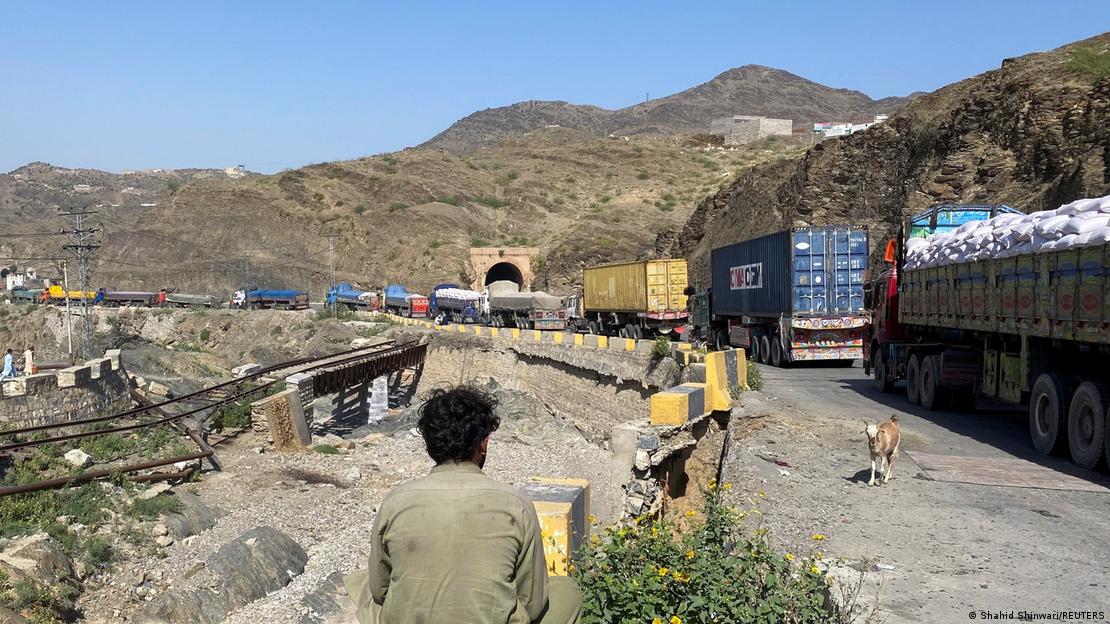
The clashes also prompted a halt in border trade between the countries as Pakistan closed crossings along the 2,600-kilometer (1,600-mile) frontier.

The move stranded scores of loaded goods vehicles on either side, a Pakistani industry representative told the Reuters news agency.

Trade between Afghanistan and Pakistan halted as Pakistan closed border crossingsImage: Shahid Shinwari/REUTERS
Will TTP increase attacks?

Omar Samad, former ambassador of Afghanistan to Canada and a nonresident senior fellow at the Atlantic Council, told DW that hostility between the two sides "can escalate into widespread violence and military action beyond what we are experiencing" and cause irreparable damage to the relationship between the countries.

"Tensions between the Pakistan military establishment and the de facto Afghan government have been rising for the past two years, partly caused by missteps, misunderstandings and mismanagement," Samad said.

Kugelman is of the view that one consequence of the crisis could be increased reprisal attacks by the TTP, "which has a strong presence in Pakistan despite its main base in Afghanistan."

He said the Afghan Taliban were not a match for Pakistan's military, despite being capable of staging operations at border posts.

"Thus, TTP reprisals, possibly encouraged by the Afghan Taliban, remain a major concern for Pakistan's future," he said.

Imtiaz Gul, a security expert and executive director of Center for Research and Security Studies in Islamabad, had a similar view.

"Pakistan will now face a growing threat of increased militancy from TTP more than ever after the clashes with Afghanistan," he told DW. "It now requires a strengthening of counterterrorism operations and intelligence capabilities to combat these threats and eliminate terrorism."


Is it time to deescalate?


Despite the rocky relationship between the governments, the neighbors have made attempts over the past year to improve ties.

In May, Pakistan's government announced that it would upgrade its diplomatic ties with the Afghan Taliban and designate an ambassador to Kabul, even though Islamabad has yet to formally recognize the Taliban government.

The neighboring nations also share close historical, cultural and people-to-people ties.

Millions of Afghans who fled their war-ravaged country over the past 40 years have found shelter in Pakistan.

But, amid strained ties with the Afghan Taliban, Pakistan's government started a massive initiative to repatriate approximately 4 million Afghans living in the country in 2023.

Pakistan's government has since deported more than 800,000 Afghans, creating another source of tension with Kabul.

'No time for deception'

Samad said both sides should hold constructive talks to resolve their issues instead of engaging in belligerent tactics.

"Despite bravado and hubris, both countries have vulnerabilities and strengths that are unmatched and contradictory," Samad said. "Afghans have little to lose against overwhelming military odds, but Pakistan is fragile from within."

"Now is the time for statesmanship, caution and honest dialogue," Samad said. "There is no time for deception, spin and bluster," he added.

Under Taliban shadow, Afghans in Pakistan look to Germany  03:52


Edited by: Srinivas Mazumdaru


Haroon Janjua Journalist based in Islamabad, focusing on Pakistani politics and societyJanjuaHaroon

Afghanistan-India-Pakistan: Renewed Flashpoint – Analysis


October 14, 2025 
By SATP
By Ajit Kumar Singh

The overnight clashes of October 11–12, 2025, along the volatile 2,640-kilometre Durand Line between Afghanistan and Pakistan marked one of the deadliest confrontations in recent years, resulting in several deaths and reigniting deep-seated tensions across South Asia. The violence followed Pakistan’s controversial airstrike in Kabul on October 9, 2025, which Islamabad claimed targeted Tehreek-e-Taliban Pakistan (TTP) chief Noor Wali Mehsud. The attack, however, allegedly struck a crowded civilian market, killing at least 15 non-combatants.

The incident triggered a spiral of artillery exchanges, drone strikes, and cross-border incursions across Pakistan’s northern sectors, particularly in Afghanistan’s Kunar and Paktika provinces. By dawn on October 12, heavy smoke was visible over Pakistan’s Bajaur and Khyber districts, as satellite imagery captured destroyed outposts and damaged fencing. The fighting also paralyzed vital trade arteries, including the Torkham and Spin Boldak crossings that handle over USD 2.5 billion in annual bilateral commerce, leaving thousands of traders stranded and compounding the economic distress in both countries. As of October 13, a fragile ceasefire mediated by Saudi and Qatari officials was in place, but hostility persisted.

Pakistan’s military swiftly characterised its actions as defensive operations, framing its response as a legitimate countermeasure to what it called “unprovoked Taliban aggression” against more than 20 border checkpoints. The Inter-Services Public Relations detailed a series of precision airstrikes and commando raids that reportedly neutralised over 200 Taliban fighters and associated TTP operatives, while dismantling 21 Afghan positions and several terrorist training camps inside Afghan territory. Islamabad confirmed the deaths of 23 Pakistani Security Force (SF) personnel and injuries to 29 others.

Pakistan’s Interior Minister Mohsin Naqvi denounced the Afghan actions as “barbaric and unprovoked,” vowing a calibrated response. Pakistan’s Foreign Ministry summoned the Afghan Ambassador, condemning Kabul for providing sanctuary to TTP cadres, while denying that its October 9 airstrike had violated Afghan airspace. Pakistan further invoked Article 51 of the UN Charter, asserting that its cross-border actions constituted legitimate self-defence.

The Taliban administration in Kabul offered a starkly different account, depicting the clashes as a justified retaliation against blatant Pakistani violations of Afghan sovereignty. The Defense Ministry confirmed retaliatory strikes on Pakistani border outposts as a response to the October 9 bombing that killed civilians. Taliban spokesperson Zabihullah Mujahid claimed that their forces eliminated 58 Pakistani soldiers while sustaining only nine fatalities, portraying the outcome as proof of Afghan military superiority. The Taliban described the confrontation as a defence of the Islamic Emirate’s territorial integrity against Islamabad’s “imperialist encroachments,” vowing to protect the Afghan side of the Durand Line, which they continue to reject as an artificial colonial boundary. While independent verification remains limited, reports from local Pashtun networks indicated that Taliban units briefly overran some Pakistani border posts.

By midday on October 12, artillery exchanges subsided following urgent mediation by Saudi Arabia and Qatar. Riyadh, leveraging its extensive financial and religious influence, pressured both sides to cease hostilities, warning that instability could jeopardise Hajj pilgrim logistics and USD 10 billion in Gulf remittances to the region. Qatar complemented these efforts by hosting virtual talks, invoking its past role in the Doha Accords. Both Kabul and Islamabad accepted the ceasefire, with Taliban Acting Foreign Minister Amir Khan Muttaqi crediting Saudi and Qatari diplomacy for “averting a greater calamity.” Nevertheless, the truce remained fragile. On October 13, Torkham remained closed, halting an estimated USD 50 million in daily truck traffic. United Nations observers reported approximately 5,000 displaced civilians, primarily Pashtuns, caught in the crossfire.

The record of Afghanistan–Pakistan border clashes dates back to April 2007, when the first SF-to-SF confrontation erupted over disputed outposts, establishing a pattern of recurring violence driven by fencing disputes and militant infiltration. According to South Asia Terrorism Portal (SATP) data, at least 39 such incidents occurred up to October 10, 2025, causing 60 deaths on the Pakistani side — 41 SF personnel and 19 civilians. The Durand Line continues to represent one of South Asia’s most combustible borders. As of 2025, Pakistan reports 98 per cent completion of its border fence, a project that has repeatedly triggered Afghan opposition. In 2024 alone, 16 SF-to-SF confrontations were documented, resulting in eight Pakistani deaths (five SF personnel and three civilians) and 24 persons injured – all SF personnel. Afghanistan acknowledged 19 deaths (eight SF and 11 civilians) and 25 military personnel injured in 2024.

United Nations High Commissioner for Refugees assessments highlight that such periodic exchanges have displaced thousands of civilians annually, further eroding confidence in bilateral security arrangements. The first nine months of 2025 recorded 12 SF-to-SF clashes before the October 11 escalation, resulting in three Pakistani SF fatalities and nine injured (six SF and three civilians). Kabul’s official tallies for the same period included one SF fatality and six injured (three civilian and three military). Analysts correlate the Taliban’s 2021 return to power with a 25 per cent uptick in such encounters, attributed to Pakistan’s USD 500 million fencing project.

Beyond state-on-state engagements, cross-border militant infiltration from Afghan territory into Pakistan has surged, primarily involving TTP operatives. SATP data shows 17 infiltration attempts in 2025 (up to October 10), resulting in 202 fatalities – 194 militants killed during counter-operations and eight Pakistani SF deaths – along with 33 injured (25 SF and eight militants). This represents a marked escalation from 2024, which recorded 19 attacks causing 74 deaths (68 militants and six SF personnel) and 14 injured (nine SF and five militants).

These infiltration attempts, largely launched from Afghan provinces such as Kunar and Nangarhar, embody Pakistan’s core grievance that Kabul tolerates TTP sanctuaries. Islamabad cites this evidence to justify its “hot pursuit” doctrine of limited cross-border strikes. The persistent threat has also imposed economic costs: repeated Torkham closures in 2025 have already inflicted USD 300 million in trade losses. While Pashtun leaders denounce the fencing as a “wall of shame,” Pakistani military officials insist it is a defensive necessity.

Saudi Arabia’s and Qatar’s mediation has proven central to preventing further escalation. Building on earlier interventions, Riyadh dispatched senior envoys, linking restraint to prospective USD 1.5 billion in bailout funding and Afghan wheat support. Kabul reciprocated by promising to restrict TTP cross-border movement. Qatar hosted a trilateral video dialogue, proposing the establishment of joint border monitors. Both Pakistan and Afghanistan publicly thanked the Gulf mediators. However, as of October 13, the implementation of joint patrols had yet to begin, illustrating the ceasefire’s fragility. Analysts interpret the Gulf mediation as motivated partly by the protection of Gulf investments in the China-Pakistan Economic Corridor, and regional Hajj security concerns.

At the centre of these developments was the ongoing visit of Taliban Acting Foreign Minister Amir Khan Muttaqi to India, which ran from October 9 to 16, 2025. The visit, the highest-level Taliban delegation to India since 2021, took place amid the border crisis and underscored Kabul’s attempt to diversify its diplomatic ties. Muttaqi met External Affairs Minister S. Jaishankar in New Delhi, where both sides agreed to elevate India’s Kabul mission to full embassy status and reopen USD 500 million in humanitarian corridors for Afghan aid. In joint statements, Muttaqi expressed Afghanistan’s “enduring affinity” for India and interest in channelling USD three billion investments through Iran’s Chabahar Port to bypass Pakistani trade routes.

During an October 12 Press Conference, Muttaqi criticised Pakistan’s “rogue elements” for fostering Islamic State-Khorasan Province networks and warned that Afghanistan would safeguard its sovereignty if Islamabad rejected dialogue. His remarks drew sharp reactions in Pakistan, where officials accused India of orchestrating Kabul’s rhetoric to isolate Islamabad diplomatically.

The Taliban regime in Afghanistan has intensified accusations against Pakistan for sponsoring Islamic State-Khorasan Province (IS-KP) terrorism to destabilize the country, alleging that Pakistan’s Inter-Services Intelligence provides safe havens, training camps, and logistical aid across the porous Durand Line border, particularly in Balochistan and Khyber Pakhtunkhwa. These claims escalated amid 2025 border clashes, with Taliban spokesperson Zabihullah Mujahid warning on October 12, 2025, that Pakistan ignores Islamic State presence on its soil, demanding expulsion of key members and revealing recruit funnelling through Karachi and Islamabad airports for attacks planned from there.

On September 11, Taliban’s intelligence chief Abdul Haq Wasiq stated that ‘foreign powers’, implying Pakistan, dispatch IS-KP operatives abroad, noting that the group holds no Afghan territory but poses an external threat warranting international action. According to reports, IS-KP mounted 24 attacks in Afghanistan in 2024, killing 135 civilians and 22 Taliban fighters; 16 IS fighters were also killed in these operations. These attacks dropped to 11 in 2025 (till October 12), with two civilian and 35 Taliban fatalities, as well as 11 IS terrorists – signalling reduced civilian tolls but persistent regime assaults, amid bolstered defences. Pakistan counters that Taliban-controlled Afghanistan harbours TTP militants, fuelling mutual reprisals and proxy war fears that threaten regional stability.

Muttaqi’s visit signalled a strategic recalibration in Afghanistan’s regional posture, shifting from historical dependence on Pakistan toward engagement with India. Pakistan denounced the India–Afghanistan joint communiqué as a “malign diversion” and expelled several Afghan diplomats in protest. The timing of the visit, coinciding with the Durand Line clashes, amplified its geopolitical weight.

The diplomatic shifts now risk redefining South Asia’s security equilibrium. Pakistan, once the principal sponsor of the Taliban, finds itself in open confrontation with the forces it helped ascend to power in Kabul. Economically, India’s renewed engagement with Afghanistan offers Kabul a pathway to bypass Pakistani toll routes. Yet the regional security fallout has already been tangible: TTP attacks in Pakistan surged following Muttaqi’s India meetings. Observers note that, while Saudi and Qatari diplomacy may temporarily calm tensions, lasting peace along the Durand Line will require verifiable Taliban action against TTP sanctuaries and sustained bilateral dialogue, including talks reopening the issue of the permanent border between Afghanistan and Pakistan.

The October 2025 border crisis encapsulates the fragility of Afghan–Pakistani relations, where overlapping insurgencies, disputed borders, and external alignments perpetuate instability. The Saudi-Qatari ceasefire has temporarily halted escalation, yet structural grievances remain unresolved. A Pakistan increasingly isolated by an Afghan–Indian rapprochement may intensify counter-insurgency as well as covert operations, risking wider regional repercussions. As Torkham’s gates tentatively reopened on October 13, a semblance of normalcy returned. However, until Kabul and Islamabad reconcile their divergent approaches to the Durand Line, terrorist sanctuaries, and trade sovereignty, the frontier will remain a powder keg. In the words of Amir Khan Muttaqi from New Delhi, “Afghanistan craves peace first — but its resolve is eternal.”

Ajit Kumar Singh
Senior Fellow; Institute for Conflict Management


SATP

SATP, or the South Asia Terrorism Portal (SATP) publishes the South Asia Intelligence Review, and is a product of The Institute for Conflict Management, a non-Profit Society set up in 1997 in New Delhi, and which is committed to the continuous evaluation and resolution of problems of internal security in South Asia. The Institute was set up on the initiative of, and is presently headed by, its President, Mr. K.P.S. Gill, IPS (Retd).


Taliban visit to India upsets Pakistan, signals New Delhi's changing Afghan posture

Taliban visit to India upsets Pakistan, signals New Delhi's changing Afghan posture
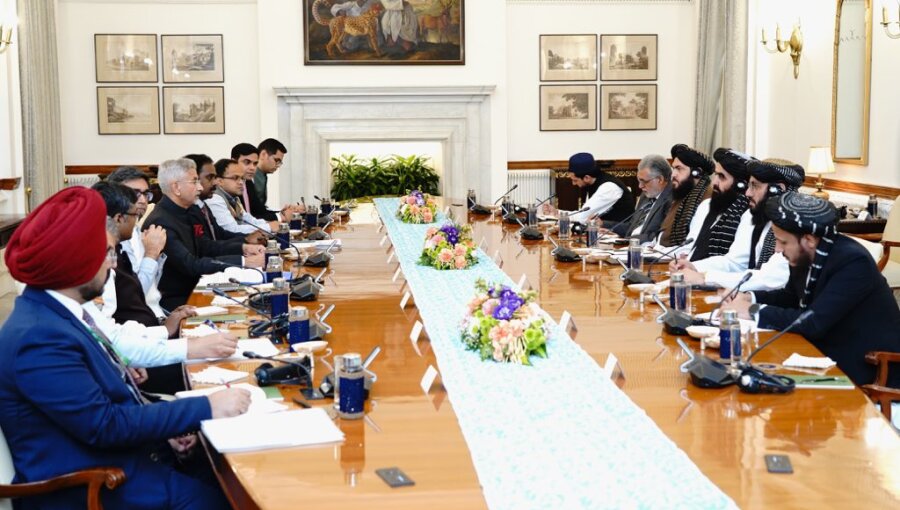
Dr. S. Jaishankar (left, centre) - External Affairs Mininister of India meeting the Afghan delegation / India External Affairs Mininister - X
By bno Chennai Office October 13, 2025

India’s hosting of the Taliban’s Foreign Minister Amir Khan Muttaqi marked a pivotal moment in New Delhi’s pragmatic realignment of its Afghan policy, reflecting a calculated effort to secure national interests amid shifting regional dynamics and ongoing security challenges.

The visit, notable for its diplomatic symbolism and the controversy surrounding a press conference, took place against the backdrop of violent border clashes between Pakistan and the Tehreek-e-Taliban Pakistan (TTP), as well as mounting scrutiny over women’s rights in Afghanistan and India’s diplomatic engagement standards. Until recently, India’s interaction with the Taliban regime was limited to humanitarian aid and emergency support managed by a small technical team at its shuttered Kabul embassy.

Muttaqi’s visit, made possible through a temporary UN travel exemption, marked a shift from this cautious stance. India announced that its technical mission would be upgraded to a fully operational embassy during the minister’s stay, while unveiling six new development projects and expanding trade opportunities. This engagement came without extending formal diplomatic recognition to the Taliban government.

The decision to open diplomatic channels likely reflects recognition of the realities on the ground rather than endorsement of the regime. The Afghan foreign minister expressed similar pragmatism, encouraging Indian firms to invest in mining and reconstruction, and pledging that Afghan territory would not be used for hostile activities against other nations. The joint statement issued after prolonged discussions outlined several key commitments.

India reaffirmed its support for Afghanistan’s sovereignty, independence, and territorial integrity, and promised assistance for forcibly repatriated Afghan refugees. Both sides condemned all forms of cross-border terrorism, avoiding direct reference to Pakistan but clearly alluding to recent attacks and border incidents linked to Islamabad.

Development cooperation was expanded, with India resuming infrastructure and humanitarian projects across Afghan provinces. The Taliban assured India of security guarantees, stating that no group would be allowed to plan or launch attacks against third countries from Afghan soil. Both governments also agreed to maintain dialogue aimed at promoting regional peace, stability, and mutual trust, signalling their rejection of external interference.

These commitments directly address India’s national security concerns, particularly after the Pahalgam attack earlier this year, which reportedly involved coordination from Afghan territory. The timing of Muttaqi’s visit coincided with rising violence between Pakistani forces and the Taliban’s affiliate group in Pakistan, the Tehrik-i-Taliban Pakistan(TTP).

Coinciding with Muttaqi’s visit, Pakistan conducted military operations targeting TTP leaders inside Afghanistan, followed by airstrikes on multiple border towns. The TTP retaliated by attacking police training facilities and border outposts, causing heavy casualties on both sides. As hostilities intensified, Pakistan accused Afghanistan of harbouring TTP militants and launched further artillery and airstrikes along the Durand Line.

The Taliban claimed to have inflicted several Pakistani casualties and captured a number of border posts, underscoring the deteriorating situation and complicating both India’s outreach and Pakistan’s regional calculations. In New Delhi, Amir Khan Muttaqi’s first press conference at the Afghan embassy drew widespread criticism after female journalists were barred from attending.

The exclusion triggered condemnation from Indian media associations, opposition parties, and international observers. Indian opposition leaders described it as gender discrimination, while journalist unions called it deeply concerning. The Indian Ministry of External Affairs distanced itself from the event, clarifying that it was organised independently by the Afghan embassy.

At a subsequent press conference attended by female journalists, Muttaqi attributed the incident to a technical oversight rather than deliberate intent. He stated that girls’s education was not prohibited in Afghanistan, claiming that 2.8mn out of 10mn schoolchildren were girls in his country. The controversy, however, renewed global attention on restrictions facing Afghan women and raised questions about India’s commitment to gender equality in its diplomatic engagements.

Muttaqi’s visit and India’s recalibrated approach highlight New Delhi’s attempt to safeguard its strategic interests in Afghanistan from both Pakistani interference and the influence of regional militant groups. India’s goals include restoring its presence in Afghan development and mining sectors to counter Pakistan and China, ensuring Afghan soil is not used for cross-border attacks, maintaining open diplomatic channels for crisis management and humanitarian coordination, and reaffirming its rights-based approach by publicly responding to gender exclusion.

Critics, however, argued that India’s response to the press controversy was too restrained. This pragmatic engagement reflects India’s evolving foreign policy in a region defined by fluid alliances and enduring instability. By reopening its embassy, India is neither endorsing the Taliban regime nor retreating from Afghanistan. Rather, it is positioning itself to influence outcomes in Central Asia while countering Pakistani and Chinese ambitions.

For the Taliban, the visit offered a platform to seek legitimacy, investment, and diplomatic credibility. For Pakistan, it was viewed with unease as India refrained from supporting its claims of Afghan complicity with the TTP and avoided direct criticism of Islamabad in the joint communiqué. The future of India-Taliban relations remains uncertain and will depend on the Taliban’s ability to uphold its security assurances and gradually expand women’s participation in public life. India’s continued engagement will test whether it can balance strategic pragmatism with its stated democratic principles.

The visit marked the emergence of a new phase in Indian diplomacy, characterised by engagement without recognition, investment without illusion, and cautious advocacy for rights within the confines of regional power politics. It is a policy born of necessity but pursued with quiet determination.

Saturday, March 07, 2026

A war neglected by the world — Afghanistan and Pakistan


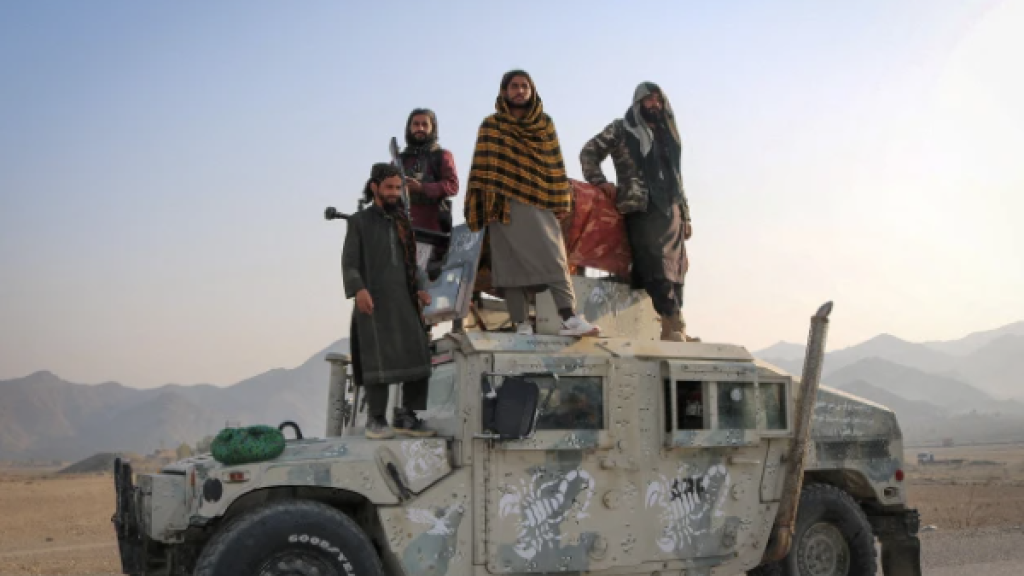
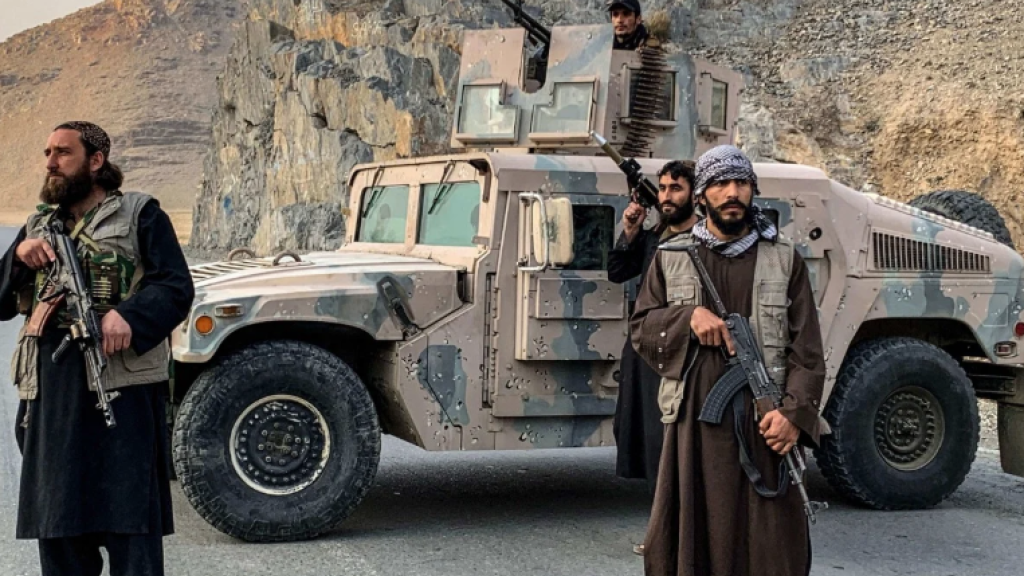
Taliban soldiers pose as they stand on a Humvee in Afghanistan’s Nangarhar province, which shares a border with Pakistan on February 28, 2026.

First published at Europe Solidaire Sans Frontières.

The recent war between Afghanistan and Pakistan has been overshadowed by the attack on Iran by U.S. and Israeli imperialism. Yet the Afghan-Pakistan war, which began 21-22 February 2026 has resulted in heavy causalities on both sides. It was launched by the Pakistan Air Force airstrikes on Eastern Afghanistan (Nangarhar, Paktika, and Khost provinces).

The right-wing Pakistan Government of Mian Shahaz Sharif described these strikes as a response to consistent militant attacks inside Pakistan. He called them “targeted” on the camps of the Tehrik-i-Taliban Pakistan (TTP) and Islamic State — Khorasan Province.

On 26 February 2026, the Afghan Taliban government launched retaliatory attacks beginning with massive border clashes. Pakistan then launched a military campaign called “Operation Ghazab Lil Haq.” Pakistan’s defense minister announced the countries were in “open war” after several days of fighting. Airstrikes and artillery exchanges reportedly hit areas including Kabul, Kandahar, and Paktia. As of 5th March 2026, heavy shelling continued along the disputed Durand Line border between the two countries.

While both sides claim heavy military losses, actual numbers are disputed. Yet civilians are the main causalities as in any war, and tens of thousands of people are displaced near the border.

Despite’s Trump initially describing the Pakistani Air Force attack on different districts of Afghanistan as “good”, the coordinated attack on Iran by the United States and Zionist Israel has shifted world attention and Trump has also forgotten to comment on this war.

How has religious fanaticism spread in Afghanistan and Pakistan?

With complete silence by all the main imperialist countries toward this escalating war between Afghanistan and Pakistan, the role of U.S. imperialism in promoting religious fundamentalism in Afghanistan during the 1980s has been forgotten. Yet to understand the present war we must revisit the past.

A radical Afghan military officers’ group led by Noor Mohammed Tarakai was able to bring down the corrupt Daud government in 1978. A year later, the Soviet Union sent forces to shore up the new government.

This triggered Washington to work with the Saudi Kingdom to pour modern weapons and unleash massive economic support to the religious fanatic groups interested in bringing down the regime. Along with its support to these reactionary forces, U.S. foreign policy felt no shame in siding with the Zia Ul Haq military dictatorship in Pakistan. This despite the regime’s having just hanged deposed Prime Minister Zulfiqar Ali Bhutto in April 1979 on a false accusation of murder.

For over 10 years after the suspicious death of dictator Zia Ul Haq in an airplane accident, U.S. imperialism supported religious fanaticism in both countries. This meant support to the Pakistani governments led by Benazir Bhutto and Mian Nawaz Sharif, while aiding the Mujahidin in Afghanistan to come into power in 1992.

The Taliban used Pakistan to educate and train itself before being able to take over Kabul in 1996.

The Pakistan ruling elite welcomed Taliban government and gave an impression that this was their act. The Taliban’s first actions on assuming governmental power were the public hanging of Najib Ullah (who had remained in the UN headquarters in Kabul after being deposed in 1992) and the banning of girls’ education.

However, after 9/11, NATO forces led by the United States overthrew the Taliban. Despite the Taliban’s control over less than half of the country, toppling the regime and occupying the country was Washington’s demand, while other options were available for removing Taliban from power. By installing a pseudo-civilian government, the NATO occupation of Afghanistan led to the spread of religious fundamentalism in Pakistan.

In Pakistan General Musharaf had overthrown the Mian Nawaz Sharif right-wing government in 1999. The Khaiber PukhtonKhwa province, bordering Afghanistan, was led by the religious fanatic MMA [Islamic coalition ed] government, which provided support to the Taliban fleeing to Pakistan in the aftermath of the NATO attack. They encouraged the setting up of thousands of Madrassas, since 1980 which enabled the Taliban to capture real street power.

Following the withdrawal of U.S.-led forces on August 15, 2021, the Taliban returned to power. Despite vague promises, they established an all-male government led by Supreme Leader Mullah Hibatullah Akhundzada. This “second time” regime, following their 1996–2001 rule, prioritizes Taliban interpretation of strict Sharia laws.

The Indian connection

As of early 2026, the relationship between the Taliban government in Afghanistan and Indian right-wing government of Modi instituted a pragmatic relationship. While India does not formally recognize the Taliban regime, it upgraded its technical presence in Kabul to a full embassy and is actively engaging to protect its strategic, economic, and security interests in the region.

This relationship was created in response to the changing geopolitics of the South Asian region. Following the India-Pakistan four-day war in May 2025, U.S. imperialism lowered its relationship with India, apparently because Trump was annoyed at Modi’s refusal to stop the war. Although Pakistan had received and spent US$45 billion from China for developing the China-Pakistan Economic Corridor (CPEC), Trump was favored by military generals and civilian government of Shahbaz Sharif over China.

The Trump card

Trump, to ensure that Pakistan was on his side before attacking Iran in June 2025, invited and warmly welcomed to the White House field marshal Asim Munir, anointing him as his “more favored general”. Days later, the U.S. Air Force and Navy attacked three nuclear facilities in Iran as part of its Twelve-Day War, carried out under the code name Operation Midnight Hammer. President Trump said the strikes “completely and totally obliterated” Iran’s key nuclear enrichment facilities. Despite this claim, Trump has again attacked Iran with the same excuse this February.

Meanwhile, Indian imperialism responded to the deepening U.S.-Pakistan relationship by providing more support to the Taliban. This resulted in more attacks inside Pakistan during the last six months,

The war

Pakistan’s launching a full-fledged attack on the Taliban-led government is related to escalating terrorist activities in KP province. It is estimated that almost 30% of the Khaiber Pakhtunkhawa (KP) province is effectively controlled by Tehreek Taliban Pakistan (TTP) at least at night, with full support from the Taliban in Afghanistan.

In January 2026, Pakistan recorded 87 militant attacks nationwide, 38 of them in KP, the highest among provinces. According to statistics released by the Islamabad-based think tank Pakistan Institute for Conflict and Security Studies (PICSS), combat-related deaths in January 2026 rose by 43% compared to December 2025. A total of 361 people were killed during the month.

In February 2026, there were major terrorist attacks in Khaiber Pakhtunkhwa Province. In a 6 February 2026 suicidal attack on an Islamabad Mosque, 40 were killed and more than 170 injured. The Islamic State–Khorasan (IS-K) targeted the Shia Mosque during Friday prayers.

In another major attack on 16 February 2026 at Bajaur district in Khyber Pakhtunkhwa, 11 security personnel plus one child) were killed. The TTP claimed responsibility for bombing and shooting what were merciless and unrelenting attacks on mosques and markets. They were daring enough to take on hard targets, including army bases and airports, and shameless enough to take on soft ones, such as schools and shrines. They decapitated Pakistani police officers and soldiers, then uploaded videos to social media for the world to see.

The growing influence and persistent terrorist attacks are becoming a challenge to the Pakistani state. Between 2018-2022, Pakistan Prime Minister Imran Khan from the Tahreek Insaf (PTI), promoted negotiations with religious fanatics as a way to counter their influence. While he was in office, 12 hard-core members of the TTP were released from custody. In fact, Pakistan has previously negotiated at least a half-dozen “peace deals” with the TTP. These negotiations have reinforced the influence of religious fanatics, turning Pakistan into another Afghanistan.

As Ashan Butt, Associate Professor at George Mason University, wrote in Aljazeera on 27 Oct 2021:

The TTP’s desire is to overthrow, violently or otherwise, the Pakistani state and impose their interpretation of Sharia throughout the country. There is no offering short of this, no concession or act of generosity, that Islamabad will be able to buy TTP forbearance with.

In fact, all a peace deal will do — all it has ever done, when it comes to the TTP — is allowing it to regroup, reorganise, rearm, and bolster its capacity for death and destruction.

Imran Khan was the avatar for a deeply sympathetic position towards the Taliban. Not for nothing did he earn the moniker ‘Taliban Khan’.

Negotiation with religious fanatics is never an option for peace. Imran Khan, now imprisoned on corruption charges, later revealed that he had invited 5000 Taliban to Pakistan in the name of rehabilitation. After his government lost a vote of no confidence, the Taliban terrorist activities grew to a record level in all parts of Pakistan. Still till the present day, the PTI government in KP province continues to promote negotiations with fanatics.

Over 50,000 Pakistanis have been killed by terrorist attacks by the Taliban in Pakistan over the past 20 years.

After a series of disappointing performances by consecutive civilian governments since the departure of General Musharaf’s dictatorship in 2008, the overall Pakistani political landscape has moved further right. This is very favorable constituency for promotion of religious fundamentalist groups and ideology.

The civilian governments, instead of learning lessons, promote one or another other religious groups, only turning against them on another occasion. Then they attempt to rid the country of these state-sponsored religious fanatics by banning, jailing and killing them.

None of these religious fanatic organizations are Indigenous to Pakistan.

Despite these experiences, the military-dominated civilian governments never sever their relationship with those ideologies or develop effective strategies to counter them. Yet the military remains the de facto power broker, forging and dissolving alliances and governments, however best suited its interests. As a result, of Pakistan’s 29 Prime Ministers since independence in 1947, none has completed a full five-year term.

Military operations have never been a real solution to end the domination of religious fanaticism.

Military operations by Pakistan army

Pakistani forces have conducted at least 10 major military operations, along with numerous smaller operations, since 2001:

  1. Operation Enduring Freedom (2001–2002),
  2. Operation Al Mizan (2002–2006),
  3. Operation Zalzala (2008),
  4. Operations Sher Dil, Rah-e-Haq,
  5. Rah-e-Rast (2007–2009),
  6. Rah-e-Nijat (2009–2010),
  7. Operation Zarb-e-Azb (2014–2016): Launched in June 2014 in North Waziristan after the Karachi airport attack, this massive, sustained offensive aimed to dismantle the TTP and allied foreign fighters, displacing hundreds of thousands,
  8. Operation Radd-ul-Fasaad (2017–Present): A nationwide, broad-spectrum operation launched to eliminate the “residual/latent threat” of terrorism, combining military action with intelligence-based operations (IBOs),
  9. Operation Azm-e-Istehkam (Announced 2024): A proposed, highly contentious, and, in some accounts, unlaunched operation aimed at curbing the resurgence of militants in the frontier regions,
  10. Recent Kinetic Actions (2025):

None has resulted in the elimination of fanaticism, on the contrary more fanatic groups emerged.

The military has continued targeting militant hideouts in mountainous regions near the Afghan border, often using helicopters and, according to recent reports, initiating “open war” against the TTP due to increased insurgency.

Pakistan has two religious states on its borders: Iran and Afghanistan, but while the Taliban is always seeking to expand their religious revolution to Pakistan, Iran has never done so because of minority Shia community. The presence of these two states with religious extremist in power is another favorable objective realty for the spread of religious fundamentalist ideas.

After failing to curb the consistent rise of religious fanatic groups, a war has been started but it cannot lead to a permanent solution for either Afghanistan or Pakistan.

There will be more bloodshed despite a possible ceasefire between the two.

We cannot support this war. The bombing of Afghanistan or terrorism in Pakistan will not bring peace. Instead, we demand war and terrorist activities by the Taliban must stop immediately.

Neither Pakistan nor any other nation should recognise the Taliban government as the legitimate Afghan government. Trade must be restored with Afghanistan through the traders’ community independently of Afghan government.

Pakistani government must change its policies towards the fanatic religious groups. They must sever their state links to help them. There should be no state subsidies and no discriminatory laws against any religion or religious minority.

Further, the government must separate itself from the U.S. Trump administration. There should be no Pakistani representation on Trump’s so-called Board of Peace and a withdrawal of nominating Trump for the Noble Peace Prize.

These transitional measures cannot be expected of the present government of Pakistan, which has broken all records of sycophancy in support of Trump.

We must build our own political power independent of these capitalist and feudal led parties. That would be a permanent solution to the rise of religious fundamentalism — and a road towards Socialism.

Farooq Tariq is President Haqooq Khalq Party Pakistan, member global council Fight Inequality Alliance and executive committee member Asian Peoples Movement on Debt and Development (APMDD).


Afghanistan–Pakistan war, militarism and a left response to the regional crisis

Taliban

A version of this was first published at Alternative Viewpoint.

As cross-border strikes intensify and Pakistan’s defence minister declares “open war” against the Afghan Taliban government, the long arc of Islamabad’s Afghanistan policy appears under severe strain. Is this merely another episode in a volatile frontier relationship — or the blowback of decades of militarised strategy and proxy politics?

In this conversation, Pakistani left activist, academic and journalist Farooq Sulehria examines the crisis through a structural lens: the legacy of “strategic depth,” the Frankenstein logic of jihadist patronage, the ideological character of the Taliban regime, and the dangers of campism within sections of the left. Rejecting both state militarism and theocratic authoritarianism, Sulehria argues that the current confrontation reflects a deeper crisis of the regional order — one whose costs will be borne overwhelmingly by working people on both sides of the Durand Line.

Pakistan’s defence minister has declared “open war” on the Afghan Taliban government. Is this escalation a tactical rupture or does it mark the exhaustion of Pakistan’s long-standing Afghanistan doctrine?

It is neither a tactical rupture nor the exhaustion of Pakistan’s “strategic depth” policy. Instead, the recent declaration of war by defence minister Khawaja Asif reflects Islamabad’s frustration over the ongoing conflict.

Prior to declaring war, Pakistan would have made preparations. It was only after exhausting other alternatives that Pakistan ultimately designated the Taliban regime — which they had assisted in establishing — as an adversary. Ironically, Asif expressed gratitude to Allah Almighty on his X account when the Taliban defeated the US and regained control of Kabul.

Border clashes between the two countries have escalated into Pakistani attacks on Kabul and other towns since October. Qatar, Turkey and China have facilitated 65 rounds of talks between Kabul and Islamabad since then. However, the Movement of Pakistani Taliban/Tehrik-e-Taliban Pakistan (TTP) has intensified its terrorist activities in Pakistan, having been provided safe havens in Afghanistan by the Taliban regime.

The dispute between Kabul and Islamabad arises from the TTP’s presence in Afghanistan. The TTP is targeting military and police forces in addition to civilians. Last year, nearly 1000 terror attacks were reported, the majority claimed by the TTP.

Since October, Pakistan has closed its border and halted trade with Afghanistan. As a landlocked country, Afghanistan relies on Pakistan for trade with India and has a significant dependence on Pakistani imports, particularly wheat, vegetables and medicines.

In the Balochistan province, nationalists have intensified their militant activities, occasionally attracting global attention. Pakistan accuses India of supporting these Baloch separatists. Furthermore, the Taliban regime has established relations with New Delhi, much to Islamabad’s frustration, to counter Pakistani pressure.

Domestically, Pakistan has justified the existence of safe havens for the Afghan Taliban in the aftermath of 9/11 under the concept of strategic depth. This concept suggests using Afghanistan as Pakistan’s “friendly backyard,” in the event of a conflict with the significantly larger India.

The concept of “strategic depth” has influenced Islamabad’s policy for decades. Has this doctrine now collapsed, and if so, what might take its place?

On the contrary, mainstream media commentators viewed as unofficial spokespersons of the Pakistani establishment have been talking of regime change in Kabul. At this stage, it is difficult to substantiate whether Islamabad is planning regime change in Kabul, especially given the lack of concrete evidence. However, such thinking cannot be ruled out.

Islamabad has been exploring the possibility of a coup or regime change that would benefit Pakistan. While such a coup or regime change would not solve Pakistan’s problems, such wild ideas reflect Islamabad’s obsession with strategic depth.

One may dismiss regime change as a conspiracy theory or conjectural fantasy, but the escalation to rein in the Taliban regime mirrors Islamabad’s desperation to pursue the idiomatic strategic depth.

Islamabad portrays the crisis as being centred on TTP sanctuaries in Afghanistan. To what degree is this conflict a result of Pakistan’s historical engagement in proxy warfare and its support for militant groups?

This is a classic example of Frankenstein’s monster or the sorcerer’s apprentice, as expressed in the German idiom.

Pakistan is both the origins and a fertile breeding ground for Islamic fundamentalism. Since the so-called “Afghan Jihad”, which was derisively termed the “Dollar Jihad” by domestic critics, Pakistan has fostered the Jihad industry.

Initially, the objective was to support the Afghan Mujahideen against the Soviet occupation; later, it was directed against India. The state’s classification of some Taliban members as “good” and others as “bad” indicates that its policy remains unchanged.

At the same time, how should we assess the Taliban regime’s responsibility? Has Kabul failed — or refused — to restrain cross-border militancy for ideological or strategic reasons?

Yes, the Afghan regime appears to have done little to rein in the TTP. Commentators have noted the regime’s inability to exert control over this group. There are ideological reasons for such an outcome as well as practical considerations and geopolitical calculations. The Taliban regime has adeptly and strategically utilised the TTP, to garner support from New Delhi.

Should the current confrontation be viewed primarily as a clash between two regimes driven by security concerns, both influenced by decades of conflict, or as merely a straightforward instance of aggression and retaliation?

Neither side appears willing to pursue diplomatic avenues.

This raises questions about the nature of the Taliban regime, which has implemented policies akin to women’s apartheid and has effectively introduced slavery, demonstrating a lack of belief in contemporary diplomatic practices and norms.

The Taliban has a limited social base and maintains control through fear and intimidation. Their support primarily derives from extremist religious factions within the country.

Meanwhile, the military, which governs the Islamic Republic of Pakistan, approaches every issue through a lens of securitisation.

Since returning to power in 2021, the Taliban have struggled with economic collapse, diplomatic isolation and internal factional tensions. How do these pressures shape their stance toward Pakistan?

As soon as they recaptured Kabul, they rebelled against Pakistan. It appears they recognised that Pakistan lacked the economic and diplomatic influence needed to provide the Taliban regime with legitimacy and stability.

They sought to establish relations with China, Russia, Turkey and the Gulf states, along with India, to Pakistan’s frustration. Islamabad was excluded from these developments.

Notably, immediately after the Taliban solidified their rule, second-tier officials began issuing statements critical of Pakistan. My Afghan comrades interpret these statements as attempts to garner social support within Afghanistan, where Pakistan is widely unpopular.

From a left perspective, how should one characterise the Taliban regime today: as a nationalist-Islamist formation seeking sovereignty or as a fundamentally reactionary project whose regional behaviour reflects its ideological core?

Unfortunately, there has been a tendency to characterise the Afghan Taliban as a form of nationalists. Tariq Ali’s work, The Forty-Year War in Afghanistan: A Chronicle Foretold, exemplifies this view, as he seeks to portray the Taliban as Islamo-nationalists. Such perspectives reveal a profound misunderstanding of the Taliban movement, which represents one of the most extreme manifestations of Islamic fundamentalism.

Nationalism emphasises the concepts of nation and national identity, language, history and culture. In contrast, Islamic fundamentalism prioritises Sharia, aiming to return to a perceived Muslim (Arab) past, in which the nation is regarded as a fifth column that threatens to divide the Ummah. Culture is perceived as an impurity, with cultural practices such as music and dance deemed sinful under Sharia law.

Interestingly, some leftist perspectives have absurdly characterised the Taliban as an expression of class struggle. During the war against Iraq, the Ayatollahs in Iran incorporated and subsumed nationalism into their Sharia project. Similarly, in their conflict with Pakistan, the Taliban regime references the nation alongside religion. However, this does not fundamentally alter their character.

In my opinion, attempts to frame the Taliban as nationalists or as subalterns involved in class struggle were early indicators of campism emerging in the aftermath of 9/11.

The Taliban claims that it defends Afghan sovereignty against violations by Pakistan. How does one critically engage that claim without romanticising a deeply authoritarian regime?

The Taliban regime is framing the Pakistani attacks as a violation of sovereignty. However, Pakistan is framing the TTP safe havens and their infiltration as a violation of sovereignty. It is a clash of barbarisms. Neither side can claim any moral superiority.

From one viewpoint, the monster had legitimate grievances against Herr Frankenstein. From another viewpoint, one may express sympathy for Victor Frankenstein. Tragically, innocent civilians will bear the consequences.

Since 1979, Afghans have continued living under hellish conditions. People in Pakistan, particularly in the bordering Khyber Pakhtunkhwa province, have suffered greatly since 9/11. Thousands of lives have been claimed through senseless violence by the Taliban, military operations conducted by the Pakistani state, and endless tribal and sectarian disputes triggered by this conflict.

We should avoid reducing it to an Af-Pak affair, however. Western imperialism is the original sinner here.

Regional powers — China, Iran, Russia, and Gulf states — have moved quickly to call for de-escalation. What does this episode reveal about the fragility of the wider regional order?

A couple of days after Pakistan’s declaration of war, the US-Israel attack on Iran and the ensuing situation have overshadowed the Af-Pak conflict.

This conflict is not only regional, but underscores the growing number of nation-state wars. The United Nations has been rendered obsolete. No matter how hypocritical and problematic the global liberal order was, the Trumpist alternative is proving even more dangerous.

Incidentally, Trump has praised the Pakistani attack on Afghanistan.

Both Pakistan and Afghanistan are grappling with severe economic crises. How does the militarised escalation relate to the realities of class — including unemployment, displacement, and refugees — on both sides of the Durand Line?

Indeed, this situation will disproportionately impact the working classes. Life is set to become even more arduous. The continuing conflict in West Asia will exacerbate their suffering.

In a conflict between a militarised post-colonial state and a theocratic regime, what principle should the left adopt? How can it oppose both militarism and religious authoritarianism without sliding into geopolitical campism?

To defeat the Taliban, Pakistan must adopt a secular approach. This is a fundamental precondition. The Taliban regime should not be recognised. Nevertheless, it is crucial to express solidarity with the Afghan people, particularly Afghan women.

The Af-Pak conflict has fostered chauvinism on both sides, which undermines working-class solidarity. The left should not align itself with either Islamabad or Kabul.

We oppose the war and demand justice and democracy, as well as an end to the apartheid faced by women in Afghanistan. We must hold both the Taliban and their imperial or regional backers accountable for their war crimes, just as we did with their predecessors, the Mujahideen.

Ironically, I have observed social media posts from some Pakistanis, including self-proclaimed leftists, who support the Pakistani invasion, citing the Taliban’s barbaric and fundamentalist nature as justification. This mindset can be described as “internal Orientalism”, rooted in Pakistani chauvinism to frame this conflict within the narrative of a Clash of Civilisations.

Does this crisis create an opening to rethink security-state politics across the region and is there any realistic space today for cross-border progressive solidarity between Pakistani and Afghan civil society forces?

Rather than focusing solely on an Af-Pak cross-border solidarity initiative, I propose a broader South Asia-wide project. We can realistically rely primarily on the diasporic Afghan progressives, given the severe repression of Afghanistan's civil society.

In Pakistan, progressive voices are marginalised. However, we urgently need such a project. By extending our efforts to encompass South Asia, we can strengthen and consolidate these initiatives. The newspaper I co-edit, Daily Jeddojehad (Struggle), will be taking some modest initial steps in this direction.