COMMENT: Turkey’s opposition leader scales water cannon. Round of applause, but autocracy looks here to stay
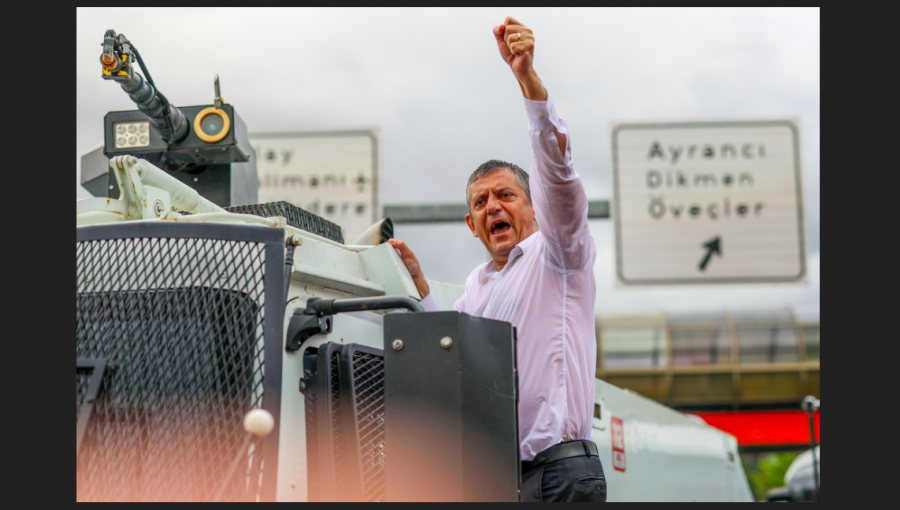
It’s a striking image that captures the surreal decay of Turkey’s political institutions. Ozgur Ozel, the embattled leader of the country’s main opposition Republican People’s Party (CHP), on May 24 scaled a police water cannon truck after police forced their way into the party’s HQ.
From atop the steel-plated vehicle, drenched in spring rain, Ozel chanted slogans together with a crowd of stunned supporters.
Video: Action Man Ozel drenched by rain, climbing on to a water cannon truck and chanting with a crowd.
Police burst in
Earlier in the day, riot police breached the perimeter of the CHP headquarters in Ankara. Armed with a controversial court order, security forces deployed tear gas and rubber bullets inside the building to forcefully evict party officials who had been holed up there for three days.
On May 21, the 36th civil chamber of the Ankara regional (istinaf) court (an appeals court that works above courts of first instance and below the supreme court (yargitay)) stripped Ozel of his post and reinstated his predecessor Kemal Kilicdaroglu.
In the evening hours of that day, the court-deposed Ozel held a press conference at the headquarters and addressed a crowd of supporters that gathered in front of the building. He said he would defy the ruling and declared that he would not hand over the headquarters. No incidents were observed.
On May 22 and May 23, the political atmosphere in the country remained calm, with both Ozel and Kilicdaroglu opting to not escalate tensions.
Kilicdaroglu’s petition
On May 24, dramatic scenes were circulated by world media after a lawyer (appointed on May 22 by Kilicdaroglu to replace the lawyers previously appointed by Ozel to legally represent the CHP) filed a petition at the Ankara provincial police directorate, demanding the immediate evacuation of the HQ and a handover to Kilicdaroglu.
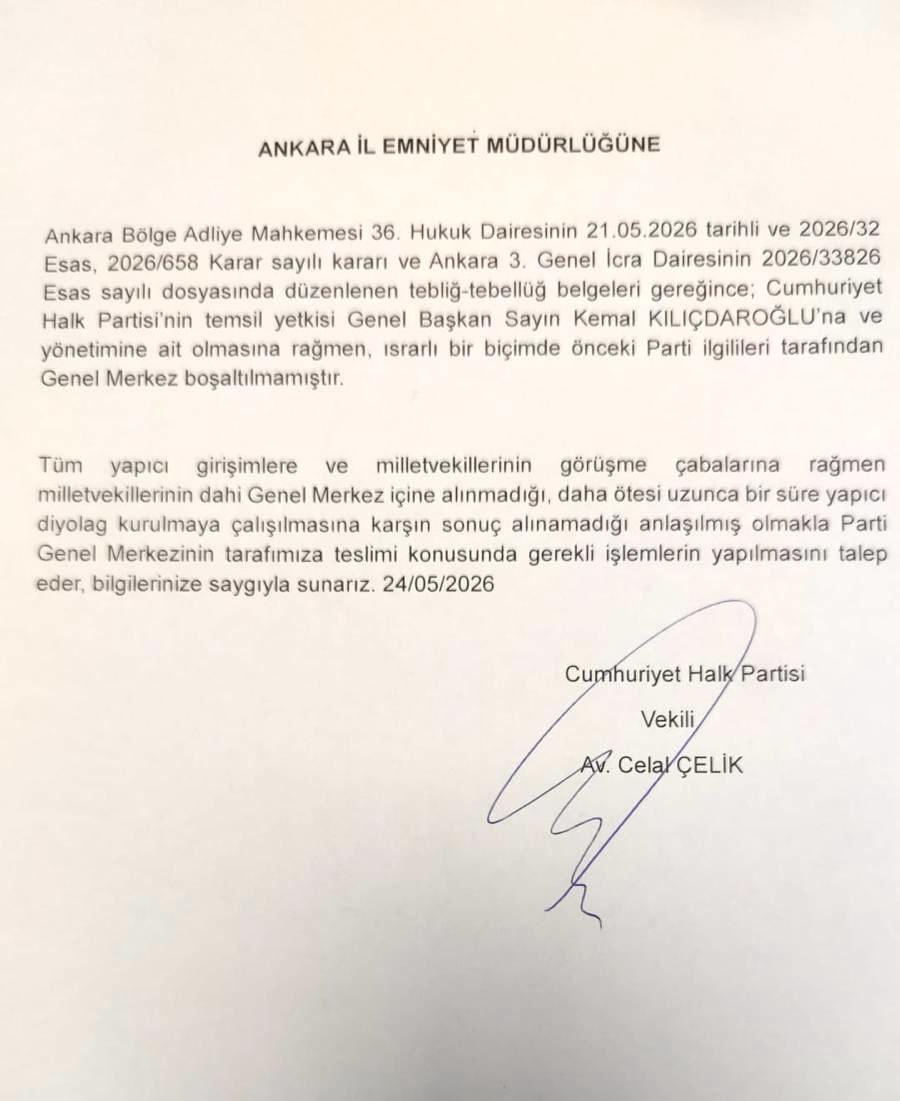
Screenshot: The petition.
On paper, the enforcement mechanism for the police raid was not triggered directly by the government, but rather by the fractured rivalries inside the CHP. To seasoned observers of Turkish politics, the bizarre spectacle of state security apparatuses acting as executioners in an internal party feud is a sign of a deeper malaise taking hold.
Video: Police forces opened up a way into the CHP headquarters by firing tear gas.
Video: Outside view of the police entering the building.
Unending end of democracy in Turkey
The action movie-type scenes underline once again how thoroughly the government has co-opted both the judiciary and opposition politics. For many Turks inside and outside the country, any lamentation over a “sudden end” to Turkish democracy rings hollow.
The death of Turkey's democratic institutions is a narrative that is already more than a decade stale. The trajectory of Turkey’s autocracy was cemented long before the police raid at the CHP.
The definitive turning point can perhaps be traced back over a decade to the suppression of the Gezi Park protests in 2013 and to the subsequent consolidation of executive power following the 2016 attempted coup.
The weaponisation of the legal system to settle internal opposition scores has effectively neutralised parliament as a venue for meaningful resistance.
For Turks, the images of riot police patrolling the corridors of the CHP, one of the oldest political parties in the world that is still active, do not signal a new authoritarian dawn. Instead, they serve as a stark reminder of a long-established status quo where the boundaries enabling independent political activity have effectively ceased to exist.
Ozel shines
Ahead of the pitiful, wrong-headed requiems for Turkey’s democracy, Ozel on May 24 brought energy and action not only to the country’s politics but to media reports that spread across the globe.
Before being forced from his office, he staged a scene in which he ripped up the eviction notice. After the police raided the HQ, he led hundreds of supporters on an arduous, rainswept march to the parliament building.
Video: Ozel rips up the eviction notice.
Ozel then delivered a speech to his supporters in front of parliament before heading inside to his office.
Good action… but nothing else
With the CHP’s central apparatus effectively shut down by the government and its top figures bogged down in a mire of litigation, the path back to institutional relevance for the party remains unclear.
On May 22, Ozel gathered together the party MPs, who proceeded to elect him head of the parliamentary group.
So as things stand, Kilicdaroglu is the party chairman and Ozel is the head of the parliamentary group. The CHP is fractured and exposed. Its presidential candidate, Istanbul mayor Ekrem Imamoglu, has been behind bars since March last year.
More than two dozen CHP mayors, along with many other party and municipal officials, are also in prison.
Turkey's president scraps move to close liberal Bilgi University following outcry
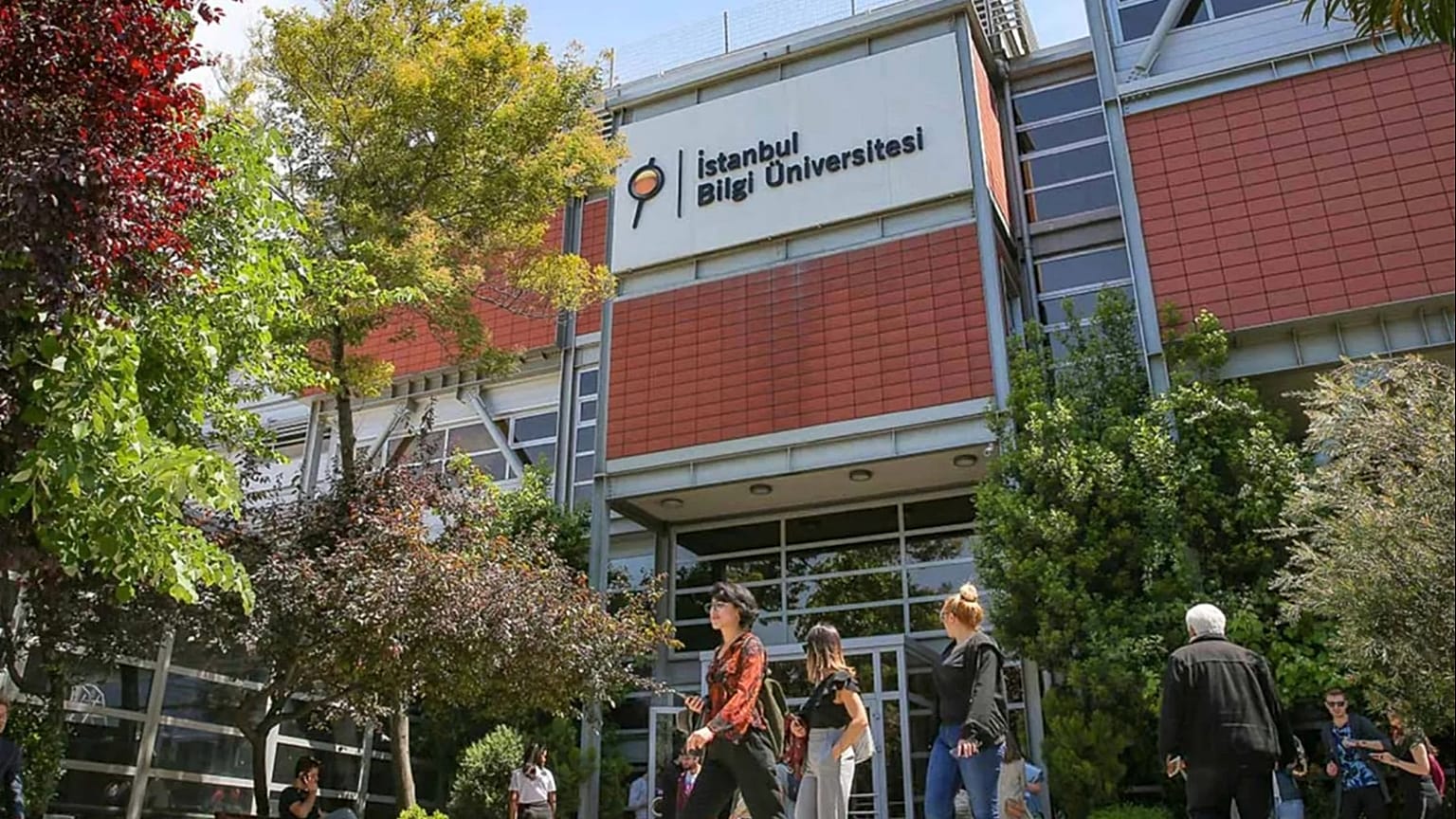
Founded on 7 June 1996 as Turkey's fourth private foundation university, Bilgi became part of the Laureate International Universities network, a US-based group operating universities across multiple continents, in 2006.
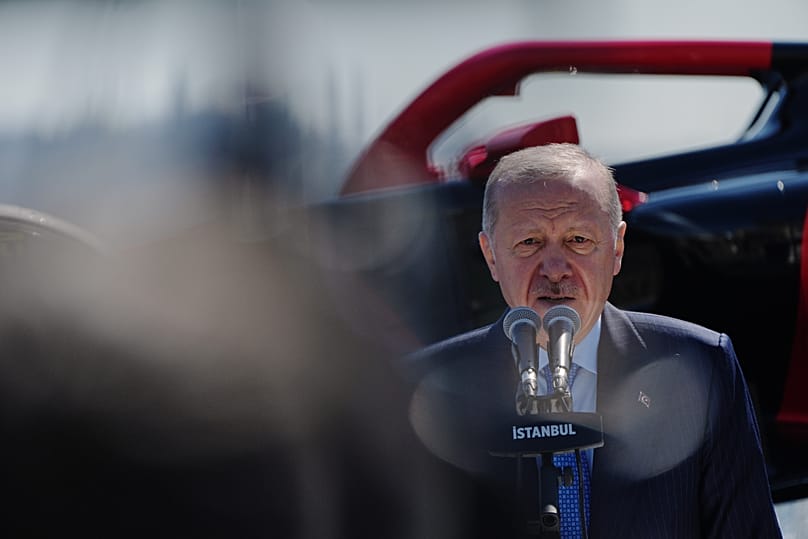
Turkey's President Recep Tayyip Erdoğan reversed his controversial decision on Sunday to close a liberal private university in Istanbul, according to a decree published in the official gazette.
Hundreds of students and lecturers demonstrated earlier in the day outside the main campus of Istanbul Bilgi University, which has been closed since Friday, to demand its reopening.
Erdoğan on Friday ordered its closure in the middle of the school year, in an official decree.
It cited a law allowing for the closure of a private institution if "the expected level of education and training...is insufficient," a charge rejected by Bilgi students and staff.
"We will stay here until the university reopens its doors," said student union activist Emir Aydogan, demonstrating at the university on Sunday.

The decree to close the university, one of the country's oldest private higher education institutions, came eight months after its owner was seized by the state in a criminal investigation into alleged fraud and money laundering.
The Küçükçekmece Chief Public Prosecutor's Office launched its investigation into Can Holding in September 2025, alleging that the group's principals had established a criminal organisation and engaged in money laundering and tax evasion.
Detention orders were issued for 10 people, including principals Mehmet Şakir Can, Kemal Can and Kenan Tekdağ.
As part of the operation, 121 Can Holding companies were seized and placed under the management of the Savings Deposit Insurance Fund (TMSF). Among those seized were the television channels Habertürk and Show TV, the financial news channel Bloomberg HT, the Doğa school network, and Istanbul Bilgi University.
Investigators said at the time they had discovered that “large amounts of money of unknown origin were entered via companies operating under Can Holding,” which were transferred between companies to conceal the origin. Forged documents were also allegedly used to reduce tax liability, they said in a statement.
The three media outlets had been acquired by Can Holding in December 2024.
Prosecutors added that some of Can Holding’s activities were “directly financed with criminal revenues.”
The TMSF was established in 1983 as a banking deposit insurance body but its mandate was significantly expanded by government decrees following the 2016 coup attempt and further broadened by legislative amendments that came into force in January 2025. It currently controls more than 1,000 companies.
Founded on 7 June 1996 as Turkey's fourth private foundation university, Bilgi became part of the Laureate International Universities network, a US-based group operating universities across multiple continents, in 2006. Can Holding acquired it in 2019 for $90 million.
Bilgi, which participates in the EU's Erasmus exchange programme, has more than 20,000 students from both Turkey and abroad, and some of its researchers are renowned in their fields.
Erdoğan, in office since 2003 as prime minister and then president, has been fiercely criticised by rights groups for authoritarian moves against his opponents.

No comments:
Post a Comment