Macron, EU’s Kallas condemn Russian attack on Ukraine with Oreshnik ballistic missile
French President Emmanuel Macron and the European Union’s foreign policy chief Kaja Kallas on Sunday condemned Russia’s use of a nuclear-capable Oreshnik hypersonic ballistic missile in its massive overnight attack on Ukraine. While Macron said the strikes targeting civilians signalled “the dead end of Russia’s war of aggression”, Kallas accused Moscow of engaging in “reckless nuclear brinkmanship”.
Issued on: 24/05/2026
By: FRANCE 24
Video by: Gulliver CRAGG

01:51
Russia pounded Kyiv with a massive missile and drone attack that killed four people, authorities said Sunday, after President Vladimir Putin threatened retaliation for strikes in Russian-occupied eastern Ukraine.
Multiple rounds of loud explosions were heard in the Ukrainian capital throughout the early hours of the morning, in a barrage the air force said involved 600 drones and 90 missiles.
Kyiv Mayor Vitali Klitschko said two people had been killed in the capital and dozens wounded, while the head of the surrounding Kyiv region said two people had also been killed there.
Russia launches massive missile strike on Kyiv

01:40
Air defences intercepted 549 of the drones and 55 missiles, the air force said. Ukraine’s President Volodymyr Zelensky said Russia had fired its nuclear-capable hypersonic Oreshnik missile and wounded 69 people in the capital in the barrage.
“Three Russian missiles against a water supply facility, a market burnt down, dozens of residential buildings damaged, several ordinary schools, and he (Putin) launched his ‘Oreshnik’ against Bila Tserkva (in central Ukraine),” Zelensky said on Telegram.
“They are genuinely deranged.”

01:39
Russia’s army confirmed it had launched the Oreshnik at Ukraine, saying it was “in response to Ukraine’s terrorist attacks on civilian infrastructure on Russian territory”.
The blasts in the capital caused a residential building near the government district to shake, while dozens of people took shelter in an underground metro station in the city centre.
“Russia hit a dead-end on the battlefield, so it terrorises Ukraine with deliberate strikes on city centres,” the European Union’s top diplomat, Kaja Kallas, wrote on X.
“Moscow reportedly using Oreshnik intermediate-range ballistic missiles—systems designed to carry nuclear warheads—is a political scare-tactic and reckless nuclear-brinkmanship.”
French President Emmanuel Macron joined the criticism, saying the strikes signalled “the dead end of Russia’s war of aggression”.
'We don't know what the death toll among military personnel is': Kyiv reels from Russian strikes

02:37
Klitschko said damage had been recorded in every district of Kyiv, adding that a strike on a school had sparked a fire and another on a business centre led to people being trapped in a shelter.
The building housing the studio of German broadcaster ARD was also damaged, the outlet said in a statement.
Ukrainian authorities said Russian strikes had also wounded 12 people in the Kharkiv region, 11 in the Cherkasy region and seven in the Dnipropetrovsk region.
Retaliation
Ukraine had been expecting a major attack after its own forces launched a drone barrage on Starobilsk, in the Russian-occupied east of the country, which Moscow said hit a college dormitory and killed at least 18 people.

01:48
Launched overnight on Thursday to Friday, the drone salvo—one of Ukraine’s deadliest such strikes in months—also wounded 42 in the city, located in the occupied Lugansk region.
Ukraine denied targeting civilians, saying it had hit a Russian drone unit stationed in the area.
Russia’s foreign ministry said on Friday those responsible would face “inevitable and severe punishment”.
Ukraine regularly targets Russian-controlled areas of the country with drones, arguing that the strikes are retaliation for Russian attacks.
Occupied territory
Russia’s emergency ministry said on Saturday it had pulled two more bodies from the rubble of the dormitory in Starobilsk, taking the death toll to 18.
Video shared by the ministry showed dozens of rescuers sifting through what remained of a section of the five-storey building.
Most of those killed and missing were young women born between 2003 and 2008, according to a list of casualties published by the Moscow-backed governor of occupied Lugansk, Leonid Pasechnik.
Starobilsk lies about 65 kilometres from the front line in eastern Ukraine. It was captured by Russian forces in the early months of the offensive in 2022.
Kyiv has recently expanded its drone capabilities and stepped up strikes on undisputed Russian territory, including residential areas and oil export infrastructure.
Moscow has hit Ukraine almost daily with barrages of missiles and drones since launching its full-scale invasion of the country in 2022, also hitting infrastructure and causing civilian deaths. It denies targeting civilians.
US-led efforts to negotiate an end to more than four years of war have slowed in recent months, with Washington’s attention diverted towards its conflict in the Middle East.
(FRANCE 24 with AFP)
'Reckless escalation': Europe condemns Russia’s use of 'Oreshnik' missile
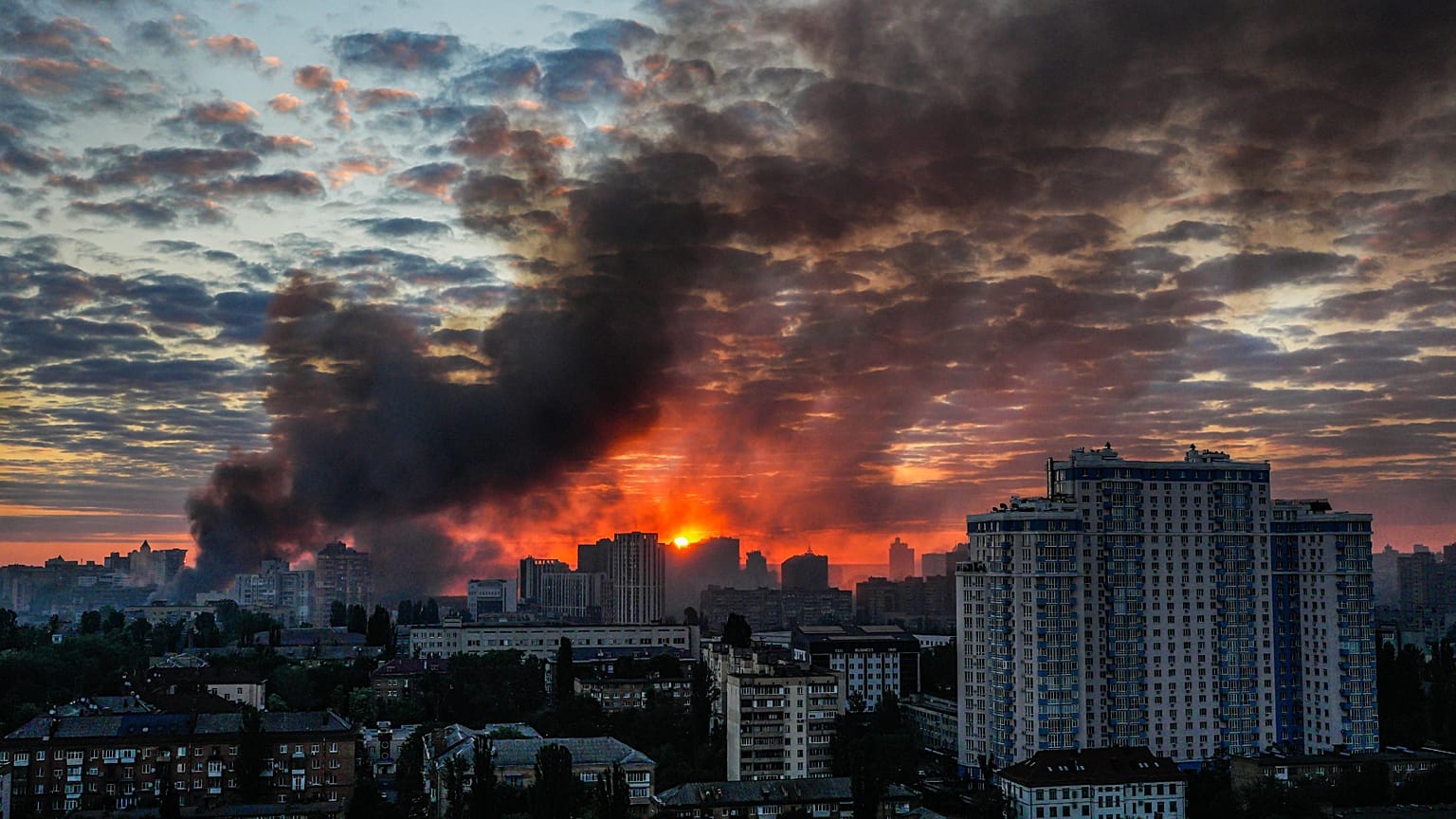
Russia’s use of the “Oreshnik” missile has drawn international attention. According to Moscow, the intermediate-range missile is capable of striking targets across large parts of Europe.
On Sunday, Ukrainian President Volodymyr Zelenskyy said Russia had again deployed its "Oreshnik" intermediate-range ballistic missile, this time in the Kyiv region.
The Russian Defence Ministry later confirmed the launch, saying it came as part of a retaliatory attack following Ukrainian strikes against "civilian targets," which Kyiv has denied.
Moscow's use of the "Oreshnik" missile has sparked strong reactions abroad.
German Chancellor Friedrich Merz condemned the attack as a "reckless escalation" in a post on X and reaffirmed Germany’s support for Ukraine.
French President Emmanuel Macron also condemned the latest Russian strikes, saying civilian targets in Ukraine had once again come under attack. He described the reported use of the nuclear-capable "Oreshnik" missile as a sign of both the deadlock in Russia’s war effort and a dangerous escalation of the conflict. Macron added that France would continue supporting Ukraine and efforts towards a just and lasting peace.
European Commission President Ursula von der Leyen said the massive Russian assault demonstrated "the Kremlin’s brutality and disregard for both human life and peace negotiations."
Terror against civilians, she said, was "not strength" but "desperation." She added that the European Union would continue supporting Ukraine, particularly by strengthening its air defence systems.
EU foreign policy chief Kaja Kallas described the attacks as "abhorrent acts of terror" against the Ukrainian civilian population. She said Russia had reached a military dead end and was therefore deliberately targeting city centres.
Kallas called the reported use of the "Oreshnik" missile particularly alarming, describing it as "reckless nuclear brinkmanship." EU foreign ministers are expected to discuss further pressure on Russia next week.
The "Oreshnik" missile's first known use came in 2024 during an attack on the Ukrainian city of Dnipro. Since then, the weapon system has become one of the Kremlin’s most closely watched military projects.
Russian President Vladimir Putin has described the ballistic missile as a "state-of-the-art".
Moscow says it is an intermediate-range ballistic missile. It is reportedly capable of hitting targets between 3,000 and 5,500 kilometres away. Russian military officials have claimed this would put large parts of Europe within range.
Belarus is also believed to possess the missile system.
The deployment of the “Oreshnik” missile came as part of a large-scale Russian offensive overnight into Sunday. According to the Ukrainian Air Force, Moscow launched 90 missiles and cruise missiles as well as around 600 drones. Although many of the targets were intercepted, dozens of hits were still reported.
Among the sites damaged was the centrally located studio of German public broadcaster ARD, which was heavily damaged and partially destroyed. According to the broadcaster, a massive blast wave likely caused the destruction, shattering windows and devastating parts of the studio.
No one was injured in the attack. At the time of the strike, no employees were inside the building.
European leaders condemn Russia's deadly
ballistic missile attack on Ukraine
European Union leaders are considering putting further pressure on Russia in response to intense bombing of the Ukrainian capital in the early hours of Sunday. Russian forces fired a nuclear-capable missile in one of their heaviest barrages of the war so far.
Issued on: 24/05/2026 - RFI

At least four people died when Russia pounded Kyiv overnight, Ukrainian authorities said, two in the capital and two in the surrounding region.
More than 80 people were reported wounded after the assault left damage in some 50 locations across Kyiv, including residential buildings, schools and shopping centres.
Russia confirmed it fired its powerful hypersonic Oreshnik ballistic missile, capable of carrying nuclear or conventional warheads. It is the third time Russia has used the missile during four years of war in Ukraine.
Kaja Kallas, the EU's foreign policy chief, called its use "a political scare tactic and reckless nuclear brinkmanship". She said the bloc's top diplomats would meet within days to "discuss how to dial up the international pressure on Russia".
'Dead end'
The attack also included 600 strike drones and 90 missiles, according to Ukraine's air force.
Saying the Oreshnik struck the city of Bila Tserkva in the Kyiv region, Ukrainian President Volodymyr Zelensky called Russia "genuinely deranged".
German Chancellor Friedrich Merz described Russia's decision to use the ballistic missile as a "reckless escalation", while French President Emmanuel Macron said the strikes signalled "the dead end of Russia's war of aggression".
"Terror against civilians is not strength. It's despair," European Commission president Ursula von der Leyen wrote on X.
The attacks came after Russian President Vladimir Putin threatened retaliation for Ukrainian strikes in Russian-occupied territory in the east of the country.
Ukraine had been expecting a major attack after its own forces launched a drone barrage on the city of Starobilsk last week that Moscow said hit a college dormitory and killed at least 21 people, mostly students.
The Ukrainian air force said it intercepted 549 drones and 55 of the missiles fired in Sunday's strikes, highlighting its shortage of air defence missiles.
The country relies on US-made air defence systems to down such weapons, but interceptors remain in short supply, especially since the United States and Israel launched their air campaign against Iran.
(with newswires)
What is Russia’s Oreshnik missile?
Russia’s Oreshnik missile is a nuclear-capable intermediate-range ballistic missile that Moscow says can evade air defences and strike targets across Europe at hypersonic speeds.
Russia’s Oreshnik missile has returned to the spotlight after Moscow confirmed using the nuclear-capable weapon in overnight strikes on Ukraine, sparking fierce criticism from French President Emmanuel Macron and EU officials.
The Oreshnik missile is an intermediate-range ballistic missile that Moscow says can strike targets across Europe and evade modern air defence systems.
Its first known use came in a strike on the Ukrainian city of Dnipro in 2024. The weapon has since become one of the Kremlin’s most closely watched weapons systems.
Russian President Vladimir Putin has described Oreshnik as a “state-of-the-art” weapon capable of carrying multiple warheads and travelling at hypersonic speeds.
How far can the Oreshnik travel?
Russia classifies the Oreshnik, whose name comes from the Russian word for “hazel tree,” as an intermediate-range ballistic missile, meaning it can hit targets between 3,000 and 5,500 kilometres away. Russian military officials say it would be capable of striking targets across much of Europe.
Belarusian leader Alexander Lukashenko has said the missile has also been deployed in Russian ally Belarus.
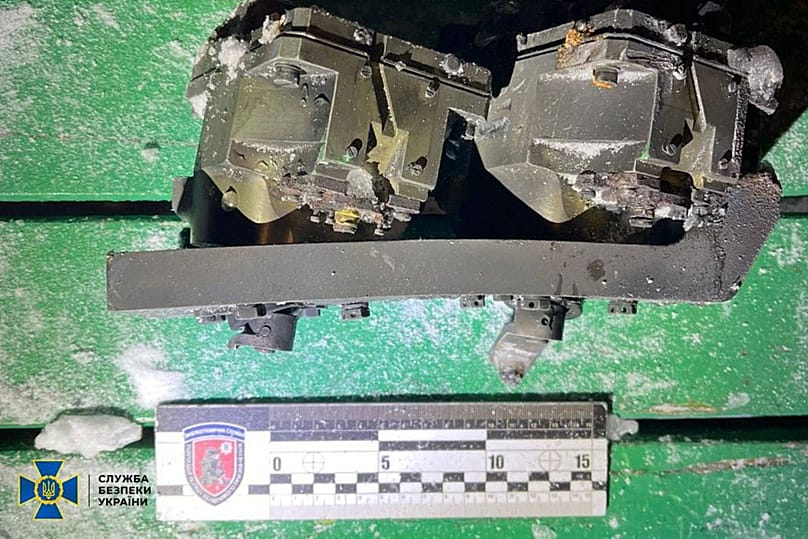
Can it carry nuclear warheads?
Russian officials say the missile is nuclear-capable, although the first known strike in Ukraine appeared to use non-nuclear or dummy warheads. Military analysts believe Oreshnik could eventually be equipped with nuclear payloads.
Putin has claimed the missile’s impact generates extreme heat and can destroy deeply protected targets, though the first strike in Dnipro caused relatively limited visible damage, Ukrainian authorities said.
Why is the missile difficult to intercept?
According to the Kremlin, Oreshnik travels at around Mach 10, or roughly 10 times the speed of sound. Russian officials claim this makes it almost impossible for current air defence systems to intercept.
The Center for Strategic and International Studies' Missile Threat project says it is "not uncommon" for ballistic missiles or their reentry vehicles to reach hypersonic speeds.
Where did the missile come from?
The US Department of Defense has described Oreshnik as an experimental system based on Russia’s RS-26 Rubezh, a road-mobile intercontinental ballistic missile. Putin has insisted it is not simply a Soviet-era upgrade, but an entirely modern weapon developed after an order issued in 2023.

No comments:
Post a Comment