It’s possible that I shall make an ass of myself. But in that case one can always get out of it with a little dialectic. I have, of course, so worded my proposition as to be right either way (K.Marx, Letter to F.Engels on the Indian Mutiny)
Monday, May 25, 2026
AI has invaded the LA mayoral race. Some fear it's just the start
25.05.2026, DPA
Photo: Sebastian Gollnow/dpa
New technology is being used to make hyper-cinematic memes, creating buzz in US state election campaigns. No comprehensive federal rules govern the use of artificial intelligence content in political ads or messaging. As fan-generated AI videos are widely shared in California, this technology is reshaping political messaging.
By Jenny Jarvie, Los Angeles Times
The Hollywood sign is ablaze as Spencer Pratt, the reality TV star now running for mayor of Los Angeles, suits up as Batman, enters City Hall and leads the people to overthrow a cabal of corrupt, out-of-touch progressives intent on destroying the city.
Then he is Luke Skywalker. Dressed in a Jedi robe, he swoops through the city on an Imperial speeder bike, as California Gov. Gavin Newsom (Emperor Palpatine) rebukes incumbent Mayor Karen Bass (Darth Vader) for not burning the city down to the ground in her first term.
"Make sure you finish the job in your second," Newsom tells Bass with a tilt of the head and a smirk.
"The only thing that can stop us is someone telling the truth," Bass replies. "As long as they don't have any hope, the city's ours."
Pratt's fan-generated AI election campaign videos have been praised and mocked, but heavily shared. And some see them as a harbinger of how artificial intelligence could reshape political messaging across the country.
His supporters are far from the first to create AI-generated ads. But political experts say it's remarkable the degree to which they have used new technology to churn out a stream of outlandish, hyper-cinematic memes, creating buzz around his campaign and his message.
Some warn, however, that as the technology becomes more sophisticated, it will become harder for many people to distinguish between AI and real videos.
"When you're creating content that is not based in reality, and then platforms are amplifying it in order to attract more eyeballs, you are putting a burden on the public for figuring out what is real and what is factual, and what is fake and misleading," said Mark Jablonowski, the chief executive of DSPolitical, a progressive advertising firm.
Pratt's campaign did not create the viral AI videos depicting him as a superhero taking on a cast of California Democratic villains. But he has shared the ads crafted by AI filmmaker Charlie Curran, founder of L.A.'s Menace Studio.
Supercharged and Hollywood inspired, the videos represent a brazen new era of fan-generated AI in political campaign advertising. Deploying generative AI tools to clone human voices and images, they bolster a hyperbolic and ultra-conspiratorial political narrative that depicts L.A. under Democratic rule as a hellscape in which Newsom and Bass deliberately conspire to harm the people.
Bass has condemned the ads, describing them as "very scary" and "absolutely 150% fiction."
"His social media is now taking on a violent turn," Bass told CNN, citing the Batman ad that depicts Angelenos pelting her with tomatoes.
Some political experts dismiss such fears of AI campaign ads as overblown. Most AI videos shared by political campaigns and their fans, they note, are more comedic than deliberately misleading.
"Spencer Pratt is using AI the way it should be used, which is to sharpen reality," said Matt Klink, an L.A.-based Republican political consultant. "His whole shtick is that Los Angeles is broken, the insiders have failed, and the political class wants to explain away what voters are seeing with their own eyes."
"Obviously, you don't run an AI ad where you have someone saying something that they didn't say, and you should disclose that they're generated by AI," Klink noted. But when it comes to ads that depict Pratt as Batman or Luke Skywalker, he said, "if you don't know that they're AI generated, you're pretty clueless to begin with."
For as long as political candidates and their supporters have experimented with new technology — from the pamphlets of the 1600s to the memes of the 21st century — they have faced complaints that they mislead the public.
As large language models ushered in a new era of AI, Sen. Richard Blumenthal (D-Conn.) warned in 2024 that "a deluge of deception, disinformation and deepfakes are about to descend on the American public."
The term "deepfake" was first coined in 2017 by a Reddit user who used open-source face-swapping technology to splice celebrity faces onto porn performers' bodies. Within months, it entered the mainstream lexicon as a way to describe any AI-generated synthetic media that realistically clones a person's image or voice.
Blumenthal cited a "chilling example." In January 2024, Republicans placed robo calls using an AI "deepfake" voice mimicking President Biden to New Hampshire residents to discourage Democrats from voting in the presidential primaries.
New Hampshire authorities said the message violated the state's voter suppression laws. A month later, the Federal Communications Commission outlawed robocalls that use voices generated by AI. The company that sent the messages agreed to pay a $1-million fine.
But others kept pushing the boundaries of AI — mostly as overt parody or satire, an arena that offers greater 1st Amendment protection.
In July 2024, an AI content creator created a mock campaign ad of Democratic presidential candidate Kamala Harris with a computer-generated voiceover to make it seem she was describing herself as the ultimate "diversity hire" and "deep state puppet." The post was titled 'Kamala Harris Campaign Ad PARODY.'
Newsom slammed the post, saying on X, "Manipulating a voice in an 'ad' like this one should be illegal." Two months later, he signed into law a series of bills that clamped down on AI in politics.
But a federal judge blocked one of the new laws that regulated election-related content that is "materially deceptive," saying it probably violated the 1st Amendment.
No comprehensive federal rules govern the use of AI content in political ads or messaging. According to the National Conference of State Legislatures, 29 states have passed laws restricting the use of deepfakes in political campaigns: Some states, such as Texas and Minnesota, prohibit the use of deepfakes a certain number of days before an election; the other 27 states require a media disclosure if content contains a deepfake.
Some political advertising experts call for more federal regulation. The state-by-state patchwork of regulations, they argue, makes it very difficult for social media platforms to be compliant.
"At the end of the day, we really need to see platforms being more responsible with the content that they're sharing," Jablonowski said. "We need to have clear guidelines and a level playing field across the country, so we're not in a position where what's OK in one state is not OK in another."
Pratt's embrace of AI is part of a larger 2026 political trend.
In January, Texas Atty. Gen. Ken Paxton released an ad depicting two of his opponents for a Senate seat — Republican Sen. John Cornyn and Democratic Rep. Jasmine Crockett — waltzing and swinging. A few months later, the National Republican Senatorial Committee shared a video that used a manipulated image of James Talarico, the Democratic nominee for the Texas Senate seat, mouthing his own tweets.
But Pratt has been particularly successful in using fan-based AI to help garner attention, pulling in a number of content creators to craft AI videos for his campaign.
One posted a video parody of the 2004 Downfall film, portraying Bass as Hitler. Another created an animated video,geared to a Latino audience, showing Angelenos lining the streets to cheer as Pratt wheels a garbage can piled with trash and the incumbent mayor. The slogan "SPENCER, SACA LA BASSURA" [Spencer, take out the trash] flashes atop the screen.
A recent survey from the American Assn. of Political Consultants shows that AI adoption is growing rapidly among political consultants — and Republicans are more likely to use it than Democrats.
But political observers in L.A. note that leading Democrats in the mayoral race are unlikely to follow Pratt in using AI. Bass, they note, is a more cautious political figure than Pratt, a brash online influencer who relished playing the role of villain on MTV's "The Hills."
While Pratt's user-generated AI ads have inspired giddy delight from out-of-state Republicans — conservative radio host Buck Sextonpraised the Batman video for ushering in "a new era of online persuasion" — it's still not clear if they will convince Angelenos to vote for him.
Certainly, the ads have helped Pratt gain recognition. They have also given voice to a groundswell of frustration with L.A.'s Democratic establishment and created space for more pressing debate on the future direction of the city.
But there is little evidence that the AI ads, in themselves, are persuading new voters.
So far, none of the AI ads that Pratt has shared have received as many views on his X account as a non-AI ad his campaign produced that has racked up more than 14 million views.
In it, Pratt stands outside Bass' city-owned Hancock Park mansion and Nithya Raman's home in leafy Silver Lake, then pans to an Airstream on the charred ruins of his own home, which burnt down during the Palisades fire.
"They don't have to live in the mess they've created," Pratt says as he walks down an L.A. street littered with homeless tents.
Meghan Daum, a former Los Angeles Times columnist who has endorsed Pratt and dubs herself a self-appointed "liberal elite whisperer for Pratt," said she thought Pratt's Airstream ad was more effective than the AI superhero ads. She voiced concern his sharing of AI videos could actively undermine his campaign.
"They will be repellent to the undecided voters Pratt needs to catch, most of whom will think they're coming directly from the campaign," she said on X. "Get smarter, guys."
Using AI, she told The Times, could turn off voters in a town where so many film workers have lost jobs to AI. She also worried about the legality of ads — such as one video purporting to be a Bass campaign ad — that put words in the mouth of computer-generated politicians.
But Daum noted that others told her this was the aesthetic of the new world and a way of getting people who have not voted in the past excited about something.
"That may be true," she said.
So far, there is little evidence that AI in US political campaigns has affected elections.
"There's a lot more fear about the effects of AI in politics than evidence of the effects of AI in politics," said Brendan Nyhan, a political scientist at Dartmouth College who co-authored a recent report on AI and persuasion.
During the 2024 election, Nyhan noted, AI was frequently used to create "obviously false" images of attention-grabbing, funny or raging content. "It seems to be more of a mechanism for reaching your base," he said, "rather than persuading voters who haven't made up their mind or might stay home."
Some L.A. political observers admit they were surprised by Pratt's performance in a May 6 televised debate with Bass and Raman.
"Spencer Pratt was kind of a laughingstock when he first announced that he was going to run, and he has dramatically exceeded expectations," said Klink, the GOP strategist. "I think that he surprised people in his ability to come up with solutions. ... That's what's going to convince people to vote, not the Batman or Star Wars ad."
As millions of people click on Pratt videos — in some cases more than the 3.8 million people living in L.A. — Klick said there was one question Pratt needs to be asking: "Do views of his ads translate into votes?"
(c) 2026 dpa Deutsche Presse Agentur GmbH
Spotify is doubling down on AI-generated music
25.05.2026, DPA
Photo: Robert Michael/dpa
Slowly but surely, music platforms are firming up their stances on AI. As fake artists dupe hundreds of thousands of listeners and artists like Ye allegedly use the tool to punch in synthetic verses, platforms are split between embracing and rejecting the technology.
In January, Bandcamp banned AI-generated music outright, in the interest of "putting human creativity first." In March, Apple Music launched a "transparency tag" system, by which labels must flag AI use in music, album art, music videos or composition. (Apparently, what qualifies as AI use is up to a label's discretion.)
Spotify, the world's most popular music streaming service, has taken a soft approach. Although it announced a series of "AI protections" last year, the streamer does not require artists to disclose AI use, although they can choose to do so voluntarily.
Now, the streamer is doubling down on AI-generated music. On Thursday, Spotify inked a licensing agreement with Universal Music Group (UMG), which would allow Spotify users to create AI-generated covers and remixes. Choosing from a pool of participating artists — presumably a large one, given that UMG is the world's biggest music company — a user can generate music in the styles of his favorite artists.
That means that there is a foreseeable future in which a Spotify user could make an AI-generated version of "Not Like Us," rendered in Drake's voice (depending on contract obligations).
In a blog post announcing the agreement, Spotify celebrated the forthcoming tool as a responsible use of AI, one that would allow participating artists to share in revenue from streams of AI-generated covers.
Laura Batey, a Spotify spokesperson, did not answer questions about the tool from SFGATE, noting that the company would have more information once the new product launches.
"Solving hard problems for music is what Spotify does, and fan-made covers and remixes are next," Alex Norström, Spotify's co-chief executive, wrote in the blog post. "What we're building is grounded in consent, credit, and compensation for the artists and songwriters that take part."
According to the blog post, the tool will be offered as a paid add-on to Spotify Premium. Although it has yet to be released, it's already proving lucrative. On the day of the announcement, the company's stock shot up 13%.
(c) 2026 dpa Deutsche Presse Agentur GmbH
Pope Leo XIV warns of 'new forms of slavery' linked to Artificial Intelligence
In his encyclical "Magnifica Humanitas," the pontiff warned against "a race for ever more powerful algorithms and larger datasets, driven by the desire to secure geopolitical or commercial dominance."
Pope Leo XIV on Monday warned about the "new forms of slavery" behind artificial intelligence, from content moderators to miners, and called for greater regulation.
"If technology promises emancipation, yet produces new forms of global subordination, it stands in contradiction to the fundamental principle of human dignity. The fight against new forms of slavery is a decisive test for the ethical discernment of AI," the pope wrote in the encyclical "Magnifica Humanitas" (Magnificent Humanity).
The pontiff also called for AI to be "disarmed" and made "human-friendly" in a major text on the ethical challenges raised by the boom of the new technology.
Pope Leo XIV warned against "a race for ever more powerful algorithms and larger datasets, driven by the desire to secure geopolitical or commercial dominance."
The comments come after the pontiff marked Pentecost on Sunday with a plea for peace, praying that humanity might be saved “from the evil of war."
"Let's pray that it may free humanity from misery, which is redeemed not by incalculable wealth, but by an inexhaustible gift," said the pontiff during the mass.
Pope Leo XIV attends the presentation of his first encyclical, "Magnifica humanitas” at the Vatican, 25 May, 2026 Gregorio Borgia/Copyright 2026 The AP. All rights reserved
The service, which marks the 50th day after Catholic Easter, was celebrated in St Peter’s Basilica in the presence of more than 5,000 worshippers.
"Dearest friends, with ardent hearts, let's pray today that the Spirit of the Risen One may save us from the evil of war, which is overcome not by a superpower but by the Omnipotence of love. Let's pray that He may free humanity from misery, which is redeemed not by incalculable wealth but by an inexhaustible gift."
The pope warned that some changes "do not bring new life to the world, but make it grow old through error and violence."
By contrast, he said, "The Holy Spirit enlightens minds and instils new vitality in our hearts."
His words tally with recent sermons and comments regarding the current state of the world, particularly when the Trump administration in April attempted to portray its military operation in Iran as a "just war" supported by divine power.
This was categorically denied by Pope Leo XIV, who insisted that Jesus "does not listen to the prayers of those who wage war."
Relat
According to the Vatican, the Pope centred his homily on Sunday on the Risen Christ’s appearance to the disciples in the Upper Room, where Jesus showed them "his hands and his side" before breathing the Holy Spirit upon them
"The Lord reveals his glorious body, specifically his wounds, the marks of the Crucifixion," Pope Leo said. "These signs of the Passion, more eloquent than words, are now transfigured; he who was dead lives forever."
The same Upper Room that had been marked by fear and betrayal became, through Christ’s gift of the Spirit, "for the entire Church, the womb of the Resurrection," the pope said.
Pentecost is widely celebrated across Europe as both a major Christian festival and a public holiday.
Pope Leo XIV calls for 'robust' regulation of
AI in sweeping manifesto
Pope Leo XIV on Monday published his long-awaited manifesto on artificial intelligence outlining the Catholic Church’s response to the technology’s ethical and social challenges. The US-born pontiff presented the eagerly awaited “Magnifica Humanitas” encyclical at the Vatican alongside senior Church officials and leading AI experts after having announced upon his election that he considered AI to be the biggest challenge facing humanity today.
Pope Leo XIV called Monday for robust regulation of artificial intelligence and for its developers to work for the common good rather than profit, issuing a sweeping manifesto on safeguarding humankind as the technology impacts everything from work to war.
“Magnifica Humanitas” (Magnificent Humanity), Leo’s first encyclical, has been eagerly awaited ever since history’s first US-born pope announced days after his election that he considered AI to be the biggest challenge facing humanity today.
In the text, Leo denounced the “culture of power” driving the AI race, especially in developing ever more sophisticated methods of remote warfare. He declared that it was “not permissible” to entrust irreversible, lethal decisions to AI systems, setting up another flash point between the American pope and the Trump administration, which has worked aggressively to deregulate AI development.
Experts in the tech industry, academia and Catholic morality said the document will likely become a benchmark in the debate over AI, a point of reference for policymakers, researchers and ordinary folk alike. It comes as the near-daily developments in the technology trigger concerns rise over AI replacing human jobs and even human intelligence.
“It lends itself to people who are at the forefront of these tools and able to see the incredible things that they’re able to do, to have questions about their own ‘What does it mean to be human?’” said Taylor Black, a Microsoft AI executive and director of Catholic University of America’s AI institute.
The pope was to present the text at a Vatican launch Monday that featured the co-founder of Anthropic, which is currently locked in a legal battle with the Trump administration over access to its AI technology. The Vatican decided to involve Anthropic as part of its decade-long effort to engage Silicon Valley in dialogue over the human cost of AI.
And yet in his text, Leo repeatedly blasted the concentration of power and data in the hands of so few people in the private sector as a danger, especially to children and the most vulnerable, and called for external regulation of their work.
“It is not enough to invoke ethics in the abstract; robust legal frameworks, independent oversight, informed users and a political system that does not abdicate its responsibility are required,” he wrote. “A more moral AI is not enough if that morality is determined by a few.”
Leo appealed several times to AI developers and political leaders responsible for regulating them to just slow down and reflect on what they are doing. He urged them to use ethical and spiritual guidelines to make the choice to work not for their own profit or power, but the betterment of humanity.
AI competitors OpenAI and Anthropic are the second- and third-most valuable US private companies, each valued at hundreds of billions of dollars, more than the GDP of many nations.
In a methodical text, the math major pope traced the history of the Catholic Church’s social teaching and applied its core concepts – justice, solidarity, the dignity of work and the universal destination of resources – to the digital revolution.
“I am convinced that this will prove to be a defining document for our era, a profound and prophetic document,” said Paolo Carozza, law professor at Notre Dame Law School and chair of the Meta oversight board.
“Pope Leo is offering a clear, comprehensive, and coherent voice urging us to take responsibility for constructing a world in which technology will serve humans rather than degrade them,” he said. Denounces AI in warfare
In its strongest chapters, Leo denounced how AI had helped accelerate the “normalisation of war” by desensitising people to its cost. He didn’t name specific conflicts, but cited “opposing imperialisms, between powers that wish to preserve their supremacy, and those that aspire to seize that supremacy.”
He demanded transparency and accountability by AI developers so that the chain of decision-making command in ordering strikes with AI weaponry is always known. He declared that the Catholic Church’s “just war” theory, which provides specific criteria for when force can be justified, was now “outdated” given the technological advances of warfare.
Leo signed the text May 15, the 135th anniversary of the publication of “Rerum Novarum” (Of New Things), the most important teaching document of Leo’s hero and namesake, Pope Leo XIII. That document addressed workers’ rights, the limits of capitalism, and the obligations that states and employers owed workers as the Industrial Revolution was underway.
It became the foundation of modern Catholic social thought, and the current pope cited it at the start of his pontificate in relation to the AI revolution, which he believes poses the same existential questions that the Industrial Revolution posed over a century ago. “Magnifica Humanitas” thus becomes the latest chapter in a century-long history of popes adapting “Rerum Novarum” to the social questions of their times, often dwelling on the dignity of work for human flourishing.
AI is evoking both existential fears and utopian vision amid an intensifying debate on whether it will become a catalyst that enriches humanity or a technological toxin that dulls human intelligence while wiping out millions of high-paying jobs.
“The pursuit of greater profits cannot justify choices that systematically sacrifice jobs, because the human person is an end, not a means, and the economic order must remain subordinate to human dignity and the common good,” Leo wrote. First-ever papal apology for slavery
Leo extended his concern for upholding human dignity in labor to issue the first-ever papal apology for the Holy See’s own role in legitimising slavery.
Past popes have apologised for Christians’ involvement in the trans-Atlantic slave trade. But no pope has ever publicly acknowledged, much less apologised for, the role that popes themselves played in giving European sovereigns explicit authority to subjugate and enslave “infidels.”
Vatican officials declined to say who exactly contributed to Leo’s encyclical. But Vatican and church officials have been engaged in a dialogue with Silicon Valley tech firms for a decade. Toward the end of his pontificate, Pope Francis began speaking out more about AI and the risks it poses to humanity.
The decision to include Anthropic at the Vatican launch was criticised by some who considered it a papal stamp of approval of the AI firm.
In February, the Trump administration ordered all US agencies to stop using Anthropic’s technology after it refused to allow the US military unrestricted use of it. Anthropic, which bills itself as the AI company that puts safety and risk-mitigation at the forefront of its research, is currently suing the administration.
Brian Boyd, US faith liaison for the nonprofit Future of Life Institute, read the inclusion of Anthropic’s co-founder Christopher Olah as similar to a papal audience with a head of state: not an endorsement.
“I think it’s more like a recognition of (how) this is an extremely powerful company that’s currently winning this race to replace human workers,” Boyd said.
Anthropic is an “enormous corporation that is taking onto itself an enormous risk and responsibility,” Boyd continued, but said the company has “demonstrated genuine goodwill and integrity and interest in dialogue.”
(FRANCE 24 with AP)
Pope Leo takes on Silicon Valley in landmark AI encyclical
Pope Leo has urged governments to slow down the development of artificial intelligence in his first major document on the technology. He warned that AI systems spread misinformation, prioritise conflict and risk leading the world down a path of unending war.
In a lengthy text, known as an encyclical. Pope Leo called for ownership of AI data not to be left solely in private hands, for developers and policy-makers not to use it for war, and to protect the rights of workers and keep children safe.
"What is needed is a more active political involvement that is capable of slowing things down when everything is accelerating," Leo wrote in the text entitled "Magnifica Humanitas" (Magnificent Humanity), urging the cooling of competition between AI companies and more oversight and legal frameworks regulating the technology. Impact of the encyclical
The release of “Magnifica Humanitas” follows several years of study by the Church of AI-related technologies. Leo’s predecessor Pope Francis spoke extensively on the subject, calling for AI to be regulated and warning that it could exacerbate inequalities.
The encyclical "is a text that speaks to believers and non-believers alike, as it restores the technological debate to its fundamental direction," said Antonio Spadaro, Under-Secretary of the Vatican's Dicastery for Culture and Education.
"Not what the machine can do, but what we humans must remain."
"The voice of the Church is very much sought after in the world of technology," Éric Salobir, a French Catholic priest who has specialised in new technology, told RFI.
"Its experience with ethical questions, the equal footing confrontation between tech and the humanities, and then the Church is also the voice of the most vulnerable, the voice of the Global South, the voice of users who are not heard in Silicon Valley or in the tech world."
Much like like Pope Francis’s 2015 “Laudato Si” climate manifesto, which sparked political and civic reactions, "Magnifica Humanitas" could become a key point in the debate over AI. No new ‘Tower of Babel’
Invoking the biblical story of the Tower of Babel, where a human tribe is driven by pride to try to create a tower tall enough to reach Heaven, angering God, the pope in the document said the story shows the risk of any enterprise that "aspires to reach heaven without God's blessing."
"With the heart of a shepherd and a father, I ask everyone to abandon the construction of yet another Tower of Babel and to join forces in building up the common good," he said.
Leo repeatedly blasted the concentration of power and data in the hands of so few people in the private sector.
“It is not enough to invoke ethics in the abstract; robust legal frameworks, independent oversight, informed users and a political system that does not abdicate its responsibility are required,” he wrote.
“A more moral AI is not enough if that morality is determined by a few.”
He urged AI developers and political leaders to use ethical and spiritual guidelines to make the choice to work not for their own profit or power, but the betterment of humanity. No AI for war
The document, addressed AI as its main theme, but also decried the number of wars roiling the world, lamented the weakening of multilateral organisations and warned that arms industry profits were a driving force behind conflicts.
"Humanity is slipping into a violent culture of power, where peace no longer appears as a responsibility to be taken on, but as a fragile interval between conflicts," he said.
Leo has denounced the race for AI in warfare, and he wrote that it "must be subject to the most rigorous ethical constraints" and called it "not permissible" to entrust AI systems with lethal decisions.
This comes as the AI company Anthropic is in a legal battle with the US military after refusing to change its internal policy prohibiting the use of its Claude model for lethal autonomous warfare or mass surveillance.
No ‘just war’
In the encyclical he made one of the clearest statements yet from a pope repudiating the just war theory, a doctrine the Church has used since at least the fifth century to evaluate global conflicts.
The doctrine, which generally says that wars should only be waged in order to defend against aggression, has also been invoked by Trump administration officials, including Vice President JD Vance, a Catholic, to defend the Iran war.
"The 'just war' theory which has all too often been used to justify any kind of war, is now outdated," wrote Leo.
"The use of force, violence and weapons reflects a relational poverty that always has disastrous consequences for civilian populations." Apology for slavery
Leo cited centuries of prior papal teachings on social justice issues before addressing the ethics of AI systems.
He specifically invoked his predecessor Leo XIII, who published an encyclical in 1891 that called for better pay and conditions for labourers during the Industrial Revolution.
In his encyclical, the current pope decried what he called "new forms of slavery" imposed on people tending AI systems and factory workers who produce the computers and smartphones that make the technology possible.
"In some regions of the world, children and adolescents work in dangerous conditions, crushing the materials from which rare earth elements are extracted," wrote the pope.
"This reality deeply challenges the moral conscience of our time."
The pope also acknowledged that the Catholic Church did not forcefully condemn transatlantic slavery until the 19th century, which he called “a wound in Christian memory".
"For this, in the name of the Church, I sincerely ask for pardon,” he wrote.
(with newswires)
We have no time to waste': Germany launches €125M push to build Europe’s frontier AI
Euronews Next spoke with SPRIND’s Jano Costard to hear whether Europe can still catch up in the AI race and what Europe can still do differently.
Germany is launching a €125 million artificial intelligence (AI) competition to help Europe build its own frontier artificial intelligence labs amid a global race.
The initiative by Germany’s federal innovation agency SPRIND, called “Next Frontier AI,” aims to fund companies that could eventually become Europe’s own OpenAI or DeepSeek.
Next Frontier AI comes as governments across Europe are becoming more concerned about dependence on American and Chinese AI companies.
“Germany is leading this because we have no time to waste in waiting for other actors to get in that space. A competition globally is not waiting. So we need to act now. And that's why we do this in a European manner,” Jano Costard, SPRIND’s head of challenges, told Euronews Next.
Most leading AI firms, including OpenAI and Anthropic, are based in the US and have raised billions of dollars in private investment. China is also moving quickly. DeepSeek released its V4 model in April, adding pressure on Europe to build stronger AI companies of its own.
SPRIND’s initiative will run in three stages over 24 months, according to the agency.
In the first stage, up to ten teams can each receive up to €3 million in funding. Up to six teams will continue to the second stage with funding of up to €8 million each. In the final stage, up to three teams can receive up to €15.5 million each.
Costard said the agency expects “several hundred to thousands of applications” from across Europe.
However, with the US and China pouring billions into frontier AI, €125 million is unlikely to be enough on its own to give Europe an edge.
“The 125 million euros that we provide are only the first step,” Costard said.
“It is the very explicit goal of this challenge to be able to unlock billions in additional funding. So what we use the 125 million for is kind of building the tech to a stage where we really see the potential of these new AI paradigms that we are after,” he added.
For a company to “provide the billions in euros”, which Costard says will definitely be possible, he believes Europe needs to focus less on improving current AI systems and more on trying to develop entirely new approaches.
“We cannot try to compete with today's Anthropic and their products,” he said. “We need to rely on our ability to create new paradigms, new capabilities for AI that the current methods cannot develop,” Costard said.
Smoother public funding will be key for Europe in the AI race
Part of the initiative is also tied to a wider European debate about technology sovereignty and startup growth.
European policymakers and founders have increasingly argued that promising startups often struggle to scale in Europe and eventually move to the US.
In March, the European Commission formally proposed the EU Inc, a single company law across the continent.
While Costard agrees that a more borderless European startup environment would help, he said public funding also needs to become faster and less cumbersome if Europe wants to keep top AI talent.
According to Costard, Europe’s best chance may lie in its own strengths such as industrial data, manufacturing know-how and privacy-focused AI.
“We don't lack in the research pedigree,” Costard said.
“It's not that we lack the technological ability. I think what we lack is the ability to translate that into companies, into products and services that make up the Anthropic, the OpenAI, the DeepSeek of our time”.
A group of companies including EDF has come together in the AION consortium to support the bid for a European AI Gigafactory in France.
The French utility has joined an alliance with tech companies Artefact, Bull and Capgemini, telecommunications companies the iliad Group, its data centre arm Scaleway, and Orange, and private equity firm Ardian to combine their expertise within the AION consortium to support the French application within the framework of the European AI Gigafactories programme.
The future competitiveness of European economies will depend directly on their ability to access massive, available, competitive, and sovereign computing power, the companies said. "The challenge is industrial, economic, and strategic: enabling European companies to train, deploy, and operate their AI models under controlled conditions of performance, cost, and sovereignty. This is the ambition of the project led by the AION consortium."
AION was launched in June 2025 by European cloud and AI provider Scaleway, bringing together public, private, and academic partners to support the development of sovereign, high-performance infrastructure for AI in Europe in response to an invitation for expressions of interest in contributing to the future development of AI Gigafactories in the European Union. The invitation was issued by the European Union and EuroHPC Joint Undertaking, a joint initiative between the EU, European countries and private partners set up in 2018 to coordinate their efforts and pool their resources to develop a world-class supercomputing ecosystem.
AI Gigafactories will be high-capacity AI infrastructure hubs that build on the existing EU AI Factories initiative - with significantly greater compute power, integrated data resources, and automation.
France would be a "strategic choice" to host a European AI Gigafactory, the companies said, with unique advantages including "abundant, competitive, sovereign, and low-carbon electricity thanks to its mix mainly composed of nuclear and hydroelectric power, robust digital infrastructure and recognised expertise across the entire value chain, particularly in data centres, cloud computing and high-performance computing".
The AION consortium is based on four fundamental pillars:
Performance: deploying a world-class AI infrastructure to serve the European economy;
Trust: strengthening European strategic autonomy through complete control of the AI value chain with the support of sovereign actors;
Openness: promoting the use of open source technologies and partnerships serving the European ecosystem;
Responsibility: to develop AI to serve research, businesses and European citizens with particular attention to controlling its environmental footprint.
Béatrice Bigois, Group Executive Director in charge of EDF's Customers, Services and Territories division, said France has major assets to drive the development of AI infrastructure, including competitive, sovereign and low-carbon electricity. "With this consortium, we are choosing a collective ambition: to build a world-class European AI Gigafactory from France. EDF intends to fully contribute to this strategic dynamic for Europe," she said.
The EU simplified its toughest AI law: what changed and why it matters
EU lawmakers have agreed to simplify the bloc’s landmark AI Act. Supporters call it a pragmatic fix to cut red tape, while critics see a concession to Big Tech. What is changing and what could it mean for businesses and citizens?
When the EU's Artificial Intelligence Act entered into force in August 2024, it was hailed as the world's strictest AI law. Almost two years later, Europe has already agreed to change it.
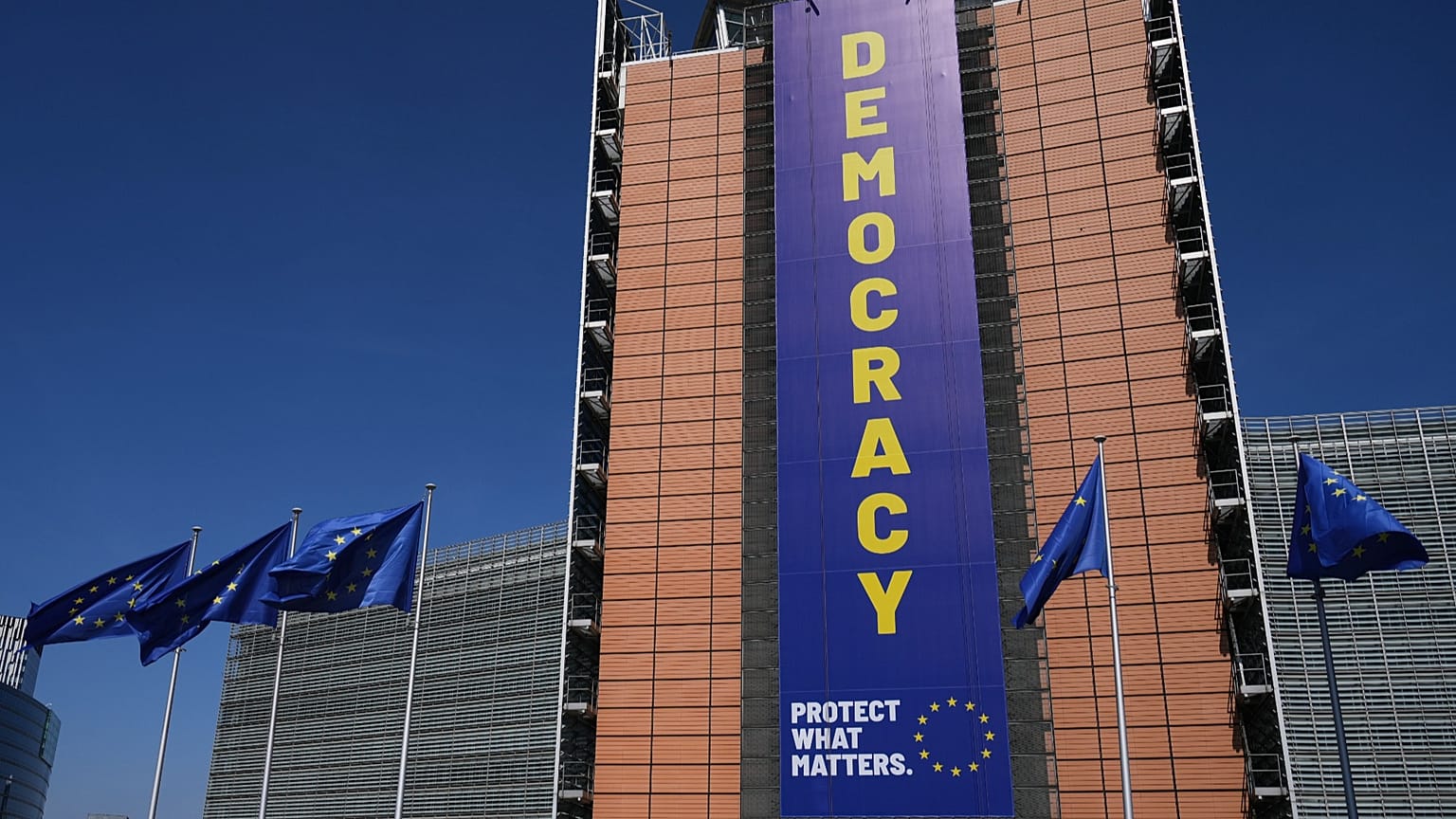
On May 7, EU governments and European Parliament lawmakers struck a deal on the so-called "AI omnibus", a package of targeted amendments within a broader digital simplification drive. The goal is to cut red tape, fix overlapping rules, and give businesses more breathing room without dismantling the law's core risk-based logic.
The result is a retooled rulebook that extends deadlines, narrows obligations, and reshapes how the EU's most ambitious digital legislation will be enforced. Whether it is smart course-correction or quiet deregulation depends on who you ask.
What changed?
The most immediate impact is time. High-risk AI systems under Annex 3 of the AI Act, covering employment, education, and health insurance, now face a compliance deadline of December 2, 2027, delayed from summer 2026. AI embedded in physical products like medical devices or industrial machinery gets more time, with obligations delayed until August 2028.
The scope of what counts as "high-risk" has narrowed. Only AI systems whose failure would create genuine health or safety risks face the heaviest obligations. Tools that assist users or optimise performance no longer automatically trigger the full regime, a change welcomed by manufacturers but viewed with suspicion by consumer advocates.
Overlaps with other EU laws have been trimmed. Where sector-specific legislation regulates AI functions in aviation, medical devices, or financial services, companies will no longer face parallel assessments under both regimes.
One of the more contested moves: machinery has been entirely carved out of the AI Act and is now governed by its own sector-specific regulation. Companies like Siemens and ASML had lobbied hard for the change. For Sergey Lagodinsky, Green MEP and one of the Parliament's key voices on digital regulation, it is a warning sign.
"By having excluded machinery, we're making a first step into fragmenting AI regulation," he told Euronews. He pointed to the United States as a cautionary tale, a market where the absence of clear federal guardrails has left a patchwork of conflicting state rules in place of any coherent framework.
"On the one side, everyone is saying how free and unregulated the US market of AI is. And on the other side, many don't know which state regulates how," Lagodinsky said. "There are no clear guidelines and guardrails."
The deal also adds one significant new prohibition: a ban on AI tools that generate non-consensual sexually explicit images, including deepfakes, taking effect December 2, closing a gap that existing rules had failed to address.
What it means for businesses
For companies, the package offers more time and less paperwork. SMEs and small mid-cap firms benefit from simplified technical documentation, extended deadlines, and broader access to regulatory sandboxes where AI systems can be tested under temporarily relaxed rules.
The changes are proportional by design: a small company using an off-the-shelf chatbot faces far less than one selling high-risk AI for hiring decisions. But compliance still brings real costs, and fines remain on the table for those who fall short.
Lagodinsky said he can live with the overall outcome. "The final agreement is something that we can be okay with. I do not belong to those who say this is a catastrophe." But he was pointed about the limits of this kind of legislating. "We cannot constantly reopen the legislative process and try to take shortcuts. There is a process which is lengthier, and the integrity of this process should not be put into question."
The core challenge
Beneath the technical adjustments lies a harder question: can any law keep pace with AI? Lagodinsky was candid. "I am concerned that our legislative processes are much slower than the fast pace of innovation," he said, calling on the EU AI Office and the Commission to act as regulators-in-between, filling gaps through guidance, codes of conduct, and enforcement action faster than full legislative cycles allow.
"The commission is sometimes very timid or slow or late on acting, and that's why it's even more important that the commission and AI Office take their responsibilities even more seriously."
The AI Act remains, even after these changes, the world's most comprehensive AI law. Its risk-based framework is intact. But the deal sets a precedent: the rulebook can be reopened. The next test is whether the AI Office and member states enforce what remains, or whether delays and carve-outs quietly hollow out the law's ambitions.
Formal approval by EU governments and the European Parliament is expected in the coming months.
Inside the world’s largest AI personality contest: Are virtual influencers the future?
Body positivity nightmare or a chance to redefine beauty standards? A new awards contest for AI-generated personalities is testing how far virtual influencers can go.
Thousands of AI-generated “personalities” are competing in a new global awards programme that organisers say is the largest contest of its kind.
The AI Personality of the Year Awards, co-organised by AI creation platform OpenArt and creator subscription platform Fanvue, asked participants to build, post and grow virtual characters across categories including entertainment, lifestyle, comedy, fitness, and anime, cartoon or fantasy personas.
The competition ran over several weeks, with entrants required to publish at least four posts during the challenge period. Winners will be announced this month, according to OpenArt.
“We saw an incredible response, around 3,300 total submissions,” Chloe Fang, OpenArt’s head of partnerships, told Euronews Next. She added that the awards would offer more than $90,000 (about €76,000) in prizes and gifts.
Organisers describe it as the largest competition dedicated specifically to AI personalities, a field they say is becoming increasingly mainstream.
Over the past 18 months, AI-generated personalities have embedded themselves into popular culture, building loyal fanbases and landing major brand deals, according to organisers.
While the winners have not yet been announced, one of the contest’s most-followed entrants, according to information shared by organisers, is Jae Young Joon, an AI-generated Korean male model persona with more than 400,000 followers across Instagram and TikTok.
Jae's profile clearly states that he is AI-generated, but according to organisers, fans still send heartfelt messages and love letters.
The account is run by Luc Thierry, a Canadian creator. Thierry's takeaway, organisers said, is that audiences may care less about whether a persona is real than whether the emotional connection feels real.
Related
Criticism about AI-generated images of humans
That blurring of reality and fiction is also what makes AI personalities ethically complicated.
Generative AI has already sparked concerns about job security, copyright and deepfake pornography.
In January, Elon Musk's xAI chatbot Grok faced scrutiny over users repeatedly generating sexually explicit images of women and minors. This prompted X to restrict some of Grok’s image-generation features and added to wider concerns about how quickly AI tools can be used to create intimate images without consent.
Meanwhile, critics say AI image generation risks pushing unrealistic body images, which social media has been criticised for promoting for years, even further. The “perfect” influencer no longer needs lighting, genetics, cosmetic procedures, filters or even a physical body.
Research has suggested that even neutral prompts can produce highly skewed results. A 2026 study by the University of Toronto, Canada, found that AI image generators disproportionately created young, white and, in the case of women, thin people with symmetrical features and blemish-free skin.
The criticism is not entirely new for Fanvue. Last year, the platform co-organised what it described as the world's first AI beauty pageant, Miss AI, which attracted criticism over whether synthetic contestants could reinforce narrow and unrealistic standards of attractiveness rather than diversify them.
However, Fang said the awards are not judged primarily on appearance but on quality, inspiration, brand appeal and fan engagement.
Fang said early AI influencers were often associated with “pretty ladies on Instagram”, but that submissions now include music-related personas, entertainment characters, fantasy figures, male AI personalities and creators building around LGBTQ+ and cultural representation.
She also said OpenArt and Fanvue had put guardrails in place. On the platform side, OpenArt uses tools intended to identify potential copyright risks and harmful content, and submissions are reviewed by humans on the competition side.
"Our guidelines prohibit hate speech, harassment, and sexually explicit content," Fang said.
OpenArt also said participants came from diverse backgrounds, which organisers believe reflects a broad range of perspectives entering the space. According to OpenArt, 37% of creators came from Europe and the UK, around 30% from North America, 18% from Asia, 5% from Latin America, 4% from Africa and 4% from the Middle East.
However, those figures refer to the human creators behind the submissions. Organisers did not provide Euronews Next with demographic data on the AI personalities themselves.
How the EU plans to ban non-consensual ‘nudifier apps’
The European Parliament and Council outlaw “nudifier apps”. Starting 2 December, the ban targets companies developing AI systems for sexual deepfakes and users creating false intimate content of real people without consent.
On 7 May, co-legislators agreed to ban "nudifier apps" under the Digital Omnibus on AI. These controversial tools can generate AI-created sexual images or videos that “undress” individuals without consent, raising concerns over privacy and ethical use of technology.
New-generation AI makes the creation of synthetic content increasingly affordable and realistic. About 8 million deepfakes were online in 2025, with 90 per cent of online content set to be AI-generated by 2026, the European Parliament Research Service found.
So far, EU law has addressed deepfakes indirectly by treating them as violations of privacy and transparency, sparking calls for stronger protection under an outright EU-wide ban.
“[...], there was perceived to be a lacuna in the law in addressing them [deepfakes]. That's why the Omnibus was seen as an opportunity to address that”, said MEP Michael McNamara from Renew Europe in the European Parliament and co-rapporteur for the Civil Liberties, Justice and Home Affairs committee.
While co-legislators still need to formally greenlight their position, Europe is already giving a clear signal: “nudifier apps” are a serious form of sexual digital abuse that must be banned before they enter the market.
What is a “nudifier”?
“Nudification” apps like “undressers”, “nudify tools”, and “clothes removers” manipulate ordinary photos to create increasingly realistic, sexually explicit images (“deepfakes”) using generative AI. According to current estimates, as many as 96 percent were created without the subject's knowledge.
These tools use deep-learning models, image recognition, and body reconstruction technology to synthesise realistic-looking images based on the lighting, pose, and skin tone of the original photo. They essentially trace or deduce the subject’s shape through their clothes and invent a nude body that matches.
The proliferation of deepfakes in the last five years
This technology is accessible through many mobile applications – the App Store used to host apps like “DeepNude” and “ClothOff” – specialised websites, and automated bots on platforms like Telegram, frequently marketed as "AI art" or entertainment.
Elon Musk’s X made it extremely easy to access these apps; by early January 2026, chatbot Grok was creating approximately 6.700 sexualised images per hour, dozens of which involved children.
The European Commission launched a formal investigation into Grok’s digital safety laws, and the backlash caused X to implement restrictions. Now, generating images of real people in “revealing clothing” is blocked in some countries. The feature is limited to paying subscribers – though users on the site still find ways to trick the AI using prompts.
These tools turn generative AI into a targeted instrument for harassment and digital abuse, stripping away the subject's bodily autonomy. Non-consensual explicit content directly violates fundamental privacy rights and undermines digital ethical standards. These programs are increasingly categorised as predatory technologies.
“There are certain practices that are not jokes. It's about people. And in this battle, dignity should always be on the winning side”, said German Greens MEP Sergey Lagodinsky.
These tools cause psychological distress and reputational damage to victims: a 2026 UNICEF study across 11 countries revealed that at least 1.2 million children had their image manipulated into sexual deepfakes in 2025. A study from the same year noted that threats to post non-consensual, sexually explicit media increase the odds of suicide plans, attempts, and self-harm.
The tools also disproportionately target women and girls, who represent 99percent of deepfake victims. They fuelled a 26.385 percent increase in generated child sexual abuse imagery (CSAM) since 2024 and an increase crimes like sextortion and blackmail.
How the ban works
The 7 May provisional agreement targets AI creators across the board, banning any system specifically designed to generate this kind of content (including images, video, and audio).
It makes developers of large-scale AI models directly responsible if their systems are used to create non-consensual nude images. These companies must now build permanent safety blocks into their core software to stop users from generating it.
It also forbids realistic depictions of intimate parts and sexually explicit acts.
The ban will affect providers, any company that places these systems on the EU market or offers them to people in the bloc.It affects organisations that use or host these softwares and allow non-consensual explicit content, and, crucially, users caught exploiting the AI to generate this kind of content.
The EU is shifting the primary burden of responsibility away from individual end users and onto the companies building the models. As Lagodinsky said, “we cannot enforce human behaviour here. So, we are going against the technology itself.”
Providers are now forced to assess any "foreseeable misuse" of their technology before it reaches the public. They must implement measures to prevent users from bypassing filters with clever prompts or minor image alterations. To ensure compliance, the AI Office will monitor whether these safeguards are integrated into the model’s core architecture.
“Platforms would restrict access to certain prompts and to certain conduct, just like ChatGPT or Grok already say certain requests are not permissible”, said Lagodinsky.
“Legislative processes are much slower than innovation. We will only be able to cope with this if we have a principled way of regulating based on risk. That’s why, for example, there are possibilities for the Commission to add certain new technologies as risky technologies in the AI Act”, he added.
If a company fails to implement these rules, it faces severe enforcement actions under the AI Act’s framework. Penalties for non-compliance are hefty, with fines reaching up to €35 million or 7 percent of a company’s total global turnover.
The agreement also empowers national authorities to pull unsafe AI products from the EU market entirely. By 2 December 2026, all providers must prove their systems meet these safety standards or face financial sanctions. This oversight applies to both EU-based firms and international developers who offer their AI services to European residents.
Legal instruments before the ban
“I don't think policymakers necessarily underestimated it [the AI evolution]. Certainly, there has been a big lack of legal certainty until now”, said McNamara.
Prior to the ban, the EU primarily labelled deepfakes and “nudification” as content issues and violations of privacy and transparency. While no single law specifically prohibited these activities, a mix of regulations on data protection, image rights, privacy, and platform liability regulated them as general-purpose AI (GPAI) or limited-risk systems.
“One the key contentions has been [...] whether to regulate or not to regulate [AI-generated content] with the current administration of the United States advocating a hands-off approach”, McNamara told Euronews.
Who are the biggest victims of deepfake porn?
The Digital Services Act (DSA) is a key regulation for online platforms. Yet it serves as a reactive tool, requiring Very Large Online Platforms (VLOPs) to address illegal content and misinformation by removing deepfakes only after they become aware of them. It also mandates deepfake-notification mechanisms and other measures to mitigate systemic risks arising from their platforms.
The AI Act’s current deepfake rules do not prevent the creation or sharing of non-consensual images. They only require providers to disclose the use of AI in online content creation and users to clearly label synthetic content. Redress for victims is also not foreseen. The act handles non-consensual intimate images (NCII) and child sexual abuse material (CSAM) in terms of transparency, allowing significant discretion to the provider under the GPAI Code of Practice.
The General Data Protection Regulation (GDPR) is a general privacy regulation, not specifically tailored to synthetic content. It addresses the unlawful processing of individuals’ data without prohibiting deepfakes in their existing form or creating victim-centred remedies. Non-consensual intimate images lead to humiliation and reputational harm, which require remedies beyond data protection, including harassment, defamation, and criminal law.
The EU’s 2024/1385 directive on online and offline violence against women criminalises technology-facilitated gender-based violence (TFGBV). These include digital tools to monitor, harass, and silence women and girls. While guaranteeing legal protections against deepfake sexual content, the text does not specifically target nudifier apps.


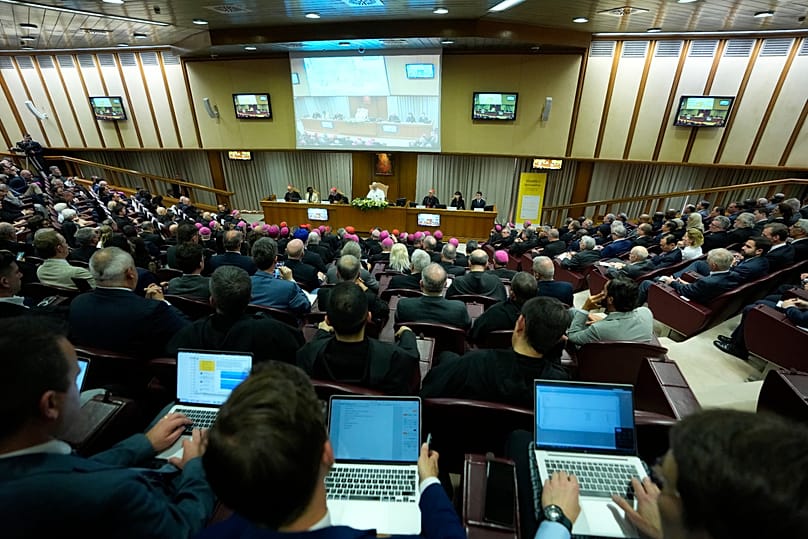 Pope Leo XIV attends the presentation of his first encyclical, "Magnifica humanitas” at the Vatican, 25 May, 2026 Gregorio Borgia/Copyright 2026 The AP. All rights reserved
 Leo is marking a year since his election as the first-ever pope from the United States. © Filippo Monteforte, AFP
 Pope Leo XIV at the presentation of his first encyclical, "Magnifica humanitas: On Safeguarding the Human Person in the Time of Artificial Intelligence," at the Vatican, 25 May 2026. © Alessandra Tarantino/AP
 Copyright AP Photo/Michael Dwyer
No comments:
Post a Comment