Thursday, March 12, 2020


Visualize the Entire World’s Wealth Inequality

Wealth inequality shows up in a variety of different ways. You can see it in the uneven distribution of millionaires around the world. You can find it in a series of maps we published this time last year, showing the average wealth per adult in each country in the world. And it’s the same story when you look at median wealth per adult around the world.


People living in developed countries remain the wealthiest in the world.
The Swiss are the richest with median wealth per adult at $227.9K.
Haiti is the poorest country in the world with an estimated median wealth of only $214 per adult.
Venezuela might be in worse shape, but given the economic instability, researchers could not provide an accurate estimate.
There are only two countries in Africa where the median wealth exceeds $10,000 per adult.

The best way to compare levels of wealth around the world is by looking at median figures. A median number simply indicates that 50% of all people have more than that much money, and 50% have less. Our map visualizes the median total net worth per adult living in each country according to a new report from Credit Suisse. You can read the details of Credit Suisse’s methodology for yourself, including how the authors estimated the value of nonfinancial wealth. The result is a fascinating and nuanced portrait of global and regional wealth inequality.


Top 3 Countries in the Americas by Median Wealth per Adult

1. Canada: $107K

2. United States: $65.9K
3. Aruba: $21.8K

It’s no surprise that Canada ($107K) and the U.S. ($65.9K) are by far the wealthiest in the Western Hemisphere. One place that’s become measurably worse over the last year is Venezuela. The Venezuelan economy has almost entirely collapsed, destroying an untold amount of wealth. The country essentially has a worthless currency, and half of all the country’s transactions now take place in American dollars. People are now buying gasoline with cigarettes. It’s hard to see how things could get much worse.


Top 3 Countries in Africa by Median Wealth per Adult

1. Seychelles: $22.6K
2. Mauritius: $20.9K
3. Libya: $8.3K

Our map demonstrates how poor Africa is. There isn’t a single country on the continent where median wealth exceeds $10K. The only standout countries are island nations in the middle of Indian Ocean, where rich tourists and celebrities vacation.


Top 3 Countries in Europe by Median Wealth per Adult

1. Switzerland: $227.9K
2. Iceland: $166K
3. Luxembourg: $139.8K

Western European countries are clearly very wealthy, led by the Swiss. It’s an open question to what extent Swiss banking is responsible for increasing that country’s overall median wealth figures. Nevertheless, the contrast between West and East is stark. Ukraine, for example, only has $1.2K per adult, on par with many countries in Africa.


Top 3 Countries in Oceania by Median Wealth per Adult

1. Australia: $181.4K
2. New Zealand: $116.4K
3. Tonga: $19.7K

Australia and New Zealand are by far the wealthiest countries in Oceania. They are surrounded by islands with comparatively little wealth, like Fiji ($6.1K) and Vanuatu ($6.1K).


Top 3 Countries in Asia by Median Wealth per Adult

1. Hong Kong: $146.9K
2. Japan: $110.4K
3. Singapore: $97K

Some countries in the Middle East are relatively wealthy given their abundance of oil, like Kuwait ($46.2K). Places connected to the global economy are the clear standouts in Asia, such as Hong Kong, Japan and Singapore. It will be very interesting to see where Hong Kong is on global wealth rankings next year. The recent protests have plunged the city into a recession.

It’s always helpful to balance these types of maps with a couple different ways of breaking down the cost of living. For example, how much does a pint of beer cost around the world? After all, it’s one thing to be wealthy on paper, but quite another to afford the types of things that make up a good life.

Given all this, where do you think the best place to live in the world is? Let us know in the comments.


About the article Published: 6 November 2019

Mapping Filthy Rich Families Around the World

Forget the top one percent. The 25 richest people in the world belong to an ultra-elite group of families who control astonishing amounts of wealth. But where do these families come from? And who has the most dynastic wealth?
  • The Walton family remains the world’s wealthiest at $190.5 billion.
  • The Al Saud royal family of Saudi Arabia makes its debut among the world’s wealthiest at $100 billion.
  • The Koch family remains among the world’s richest after brother David’s death.
  • The wealth of the Ambani family, India’s richest, increased $7 billion to $50 billion.
The data comes from Bloomberg's annual report of the twenty-five wealthiest families. Our viz maps out the top 25 wealthiest families and their businesses. A larger circle and darker shade of green indicate a larger net worth.

Top 10 Richest Families in the World

1. Walton family, Walmart - $190.5 B
2. Mars family, Mars - $126.5 B
3. Koch family, Koch Industries - $124.5 B
4. Al Saud family - $100.0 B
5. Wertheimer family, Chanel - $57.6 B
6. Hermes family, Hermes - $53.1 B
7. Van Damme-De Spoelberch-De Mevius family, Anheuser-Busch InBev - $52.9 B
8. Boehringer-Von Baumbach family, Boehringer Ingelheim - $51.9 B
9. Ambani family, Reliance Industries - $50.4 B
10. Cargill-MacMillan family, Cargill - $42.9 B
Most of the world’s wealthiest families reside in the northern hemisphere: our top ten list features four families from North America, four from Europe and two from Asia. American families take the top three positions with the Walton, Marses and Kochs, respectively. The Waltons, of Walmart fame, retain a majority stake in the company founded by Sam Walton in 1962. This allows the family to maintain considerable control of the company’s strategy, and its profits: the family becomes a staggering $100 million wealthier every day from their stake in the family business. In close competition for the number two spot (indeed, their positions were reversed last year) are the Mars and Kochs family. The latter had a death in the family this year as Koch Industries co-founder David died in August, leaving his wife Julia and their three children an estate that CNN valued at $47.5 billion in 2015.
A newcomer to Bloomberg’s list this year is the Al Saud royal family of Saudi Arabia. While the wealth is estimated based on payouts from Saudi Arabia’s executive office of the king, the Royal Diwan, Bloomberg concedes the estimate may be too low -- after all, the state-owned Saudi Aramco oil company is the world’s most profitable company. Saudi Aramco, which has recently been taken public, did not perform quite as well as expected by Saudi Crown Prince Mohammed bin Salman, and shares have dropped an additional 10% from the IPO high amid tensions between the United States and Iran.
So, how do these family fortunes compare to that of the Trumps and the British royal family? The London Evening Standard put the worth of the entire royal family in 2019 at $88 billion. This estimate would put the Windsors squarely in the top five wealthiest families. So why are they missing from the list? Well, as Bloomberg’s methodology states: “clans whose source of wealth is too diffuse or opaque to be valued are excluded. As for the Trumps, Business Insider put their wealth at $4 billion: that’s still quite a sum, but it pales compared to that of the Walton or Mars family fortune.
Which of these family fortunes are new to you? Is wealth inequality a concern to you after reading these statistics? Let us know in the comments and share with your friends.

About the article

Mapping The World's Trade Domination: USA & China's Clout Since 1980

The U.S. and China have long been the world’s two largest economic powerhouses, and their impact can be seen in trading activity around the world. By comparing the U.S. and China’s biggest trade partners between 1980 and 2018, we can see how international relations have changed over the years and how these two superpowers have shaped the world economy.
  • In 1980, the U.S. more or less dominated world trade. However, as the decades have passed, China has become a major trade partner for many countries around the world.
  • The U.S. and China trade war has had a major impact on the world economy, and while a trade deal has been reached, many are concerned this trade deal leaves too many questions unanswered.
  • Some believe that the U.S.-China trade deal is a major positive for the financial sectors in both countries.
  • The IMF says the U.S.-China trade deal provides a “pathway to peace” and is a positive sign for the future of the global economy.
To compare the U.S. and China’s major trade partners over the years, we pulled data from the International Monetary Fund (IMF), which tracks a variety of metrics and data regarding the performance of the world economy. By looking at the Direction of Trade Statistics (DOTS), we can see “the value of merchandise exports and imports disaggregated according to a country’s primary trading partner.”
Our visualization compares the dollars traded between China and the chosen country to that same country’s trade with the U.S. For example, if country ABC did $100m in trade with China and did $200M with the U.S., the ratio would show 50% in favor of the U.S.

Top 5 U.S. Top Trade Partners in 2018 (Total Merchandise Trade, $M)

1. Canada: $617,382
2. Mexico: $611,528
3. Japan: $217,563
4. Germany: $183,558
5. Republic of Korea: $130,635

Top 5 China Top Trade Partners in 2018 (Total Merchandise Trade, $M)

1. Japan: $328,043
2. Republic of Korea: $312,520
3. Hong Kong: $312,258
4. Taiwan: $225,780
5. Germany: $184,368
After taking a look at our visualization, one of the first things you’re likely to notice is that very few countries actively participated in trade with China. Instead, the U.S. remained the largest trading partner for most of the world’s countries until around 2000 — at which point we can see China take a more active role in the global economy.
Since 1980, countries like Japan, which at one point almost exclusively traded with the United States, now rely on China for a majority of their trading activity. As demonstrated by the visualization, the world economy depends largely on these two economic powerhouses, which makes the prospect of a successful trade deal even more significant. While a “phase one” deal has been reached, it leaves many questions unanswered, making it difficult to predict the implications of the deal on the global economy. Still, though many questions remain, many believe this trade deal to be a step in the right direction, with the IMF calling it a “pathway to peace.”
The U.S. and China have been the world’s leading economic powers for some time, and by examining their trade activity over the last several decades, we can see the impact these countries have had on the global economy.
What do you think these numbers say about the state of the global economy? Do you think the U.S.-China trade deal is a step in the right direction? Let us know in the comment section below.

About the article

This is the real reason outbreaks like the coronavirus are so quick to inspire racism

Throughout the 20th century, we have seen the worst effects of the politicisation of health and viral infections. We need to be vigilant to the subtle racial politics at work


Brad Evans Thursday 12 March 2020 

The outbreak of coronavirus has now become a global health concern. Italy has been put into a country-wide lockdown, the state of California effectively declared a state of emergency after one single fatality, President Trump has now announced a full ban on travel from Europe to the US, and citizens in many countries are being advised to consider self-isolation should they exhibit any potential symptoms. While these would appear to be reasonable contingency measures, it is important that we remain attentive to the discriminatory politics at work.

The problematic assumption that certain humans bring death through infection is well documented. During the first outbreak of the Black Death in Europe, we see clear signs of antisemitism appearing (some believe for the very first time in a truly systematic way) with the massacres of Jewish communities who were blamed for bringing the disease into Europe (from the Far East along the silk routes through Northern Italy). While many Jewish communities were destroyed from Barcelona to Basel, in Strasbourg on 14 February 1349 some 2000 Jewish persons were burned alive in the Valentine's Day massacre.

As the plague spread throughout Europe, notably in France, there was a need to partition populations into infected versus non-infected, healthy versus unhealthy. As the sociologist Michel Foucault once explained, this gave rise to the first census based on recording infection and the very idea of the modern state was thus born. This idea of healthy versus unhealthy life would become pivotal in the design of the first modern city, Baron Von Haussmann’s Paris – whose very system of planning was based on the ideas of human circulation (like a system of arteries) as previously discovered by William Harvey.


BIO POLITICS
The notion of circulation here has proved to be central to how we have ordered, governed and regulated all forms of life – from the local to the planetary. In the context of Paris, as elsewhere, the idea of health was a political convenient way for instigating a widespread transformation in the ecology of life. This was a pivotal lesson: Life is never static. It is vital. And its politics always biologically framed.

It is also worth noting one of the greatest artists to have ever lived, Michelangelo Merisi de Caravaggio, lost most of his family to the bubonic plague. He nearly contracted it himself as all the infected in Italy at the time were put into prisons where he was serving a sentence. No artist has since mastered the use of black with such dramatic potency.


If healthy life was all about encouraging positive forms of circulation, our very conception of freedom demanded its regulation. But racial prejudice was already loaded into this system. This was especially the case when the capacity or potentiality for contagion was factored in. Cities like Mexico City, for example, were compartmentalised between vibrant populations (white mestizo) and unhealthy (indigenous). Such ghettoisation would have a marked impact on the urban mapping of racial politics.

Throughout the 20th Century, we have seen the worst effects of the politicisation of health and viral infections. Relying upon forms of propaganda and political animalisation, the strategy of comparing humans with vermin (the carriers of disease) has been apparent in nearly every modern genocide, from the Holocaust to Rwanda. It is far easier to exterminate human life if it appears like some infectious rodent or cockroach.

What is bringing fear to populations today is precisely the indiscriminate nature of the virus. In many ways, this is similar to the logics that governed the wars on terror, whose violence was also indiscriminate in its arbitrary selection of victims. The effects of violence and death seem to be tolerable if they can be targeted and only concern certain groups. When however, we become the potential victim, the narrative changes.

With each passing day we are now subjected to the terror of the numbers, more infections recorded, and more deaths announced. Leaving aside issues about how headline numbers are limited when informing about who exactly are truly vulnerable, we could only imagine what this same alarmist approach might look like if it was replicated for other preventable diseases such as the spread of HIV in Africa (a disease again that was loaded with political symbolism) or even deaths from homelessness back home.

While governments around the world are therefore presenting a range of emergency measures, the question of who are presented as being the contagious and whose lives truly matter needs to be accounted for. We need to be vigilant to the subtle racial politics at work, and the ways the virus can be politicised to police and regulate the flows of human traffic in ways that the naked appeal to sovereignty alone could never achieve.

So, as cruise ships full of relatively wealthy Europeans sit docked on various coastlines like some newly discovered JG Ballard novel, maybe it is time to remind ourselves of the real dangers here.

Brad Evans is professor of Political Violence and Aesthetics at the University of Bath

THE INDEPENDENT 
Meteoric spread of coronavirus in the US is down to Trump wanting 'low numbers', experts suggest

12/3/2020 by Moya Lothian-McLean

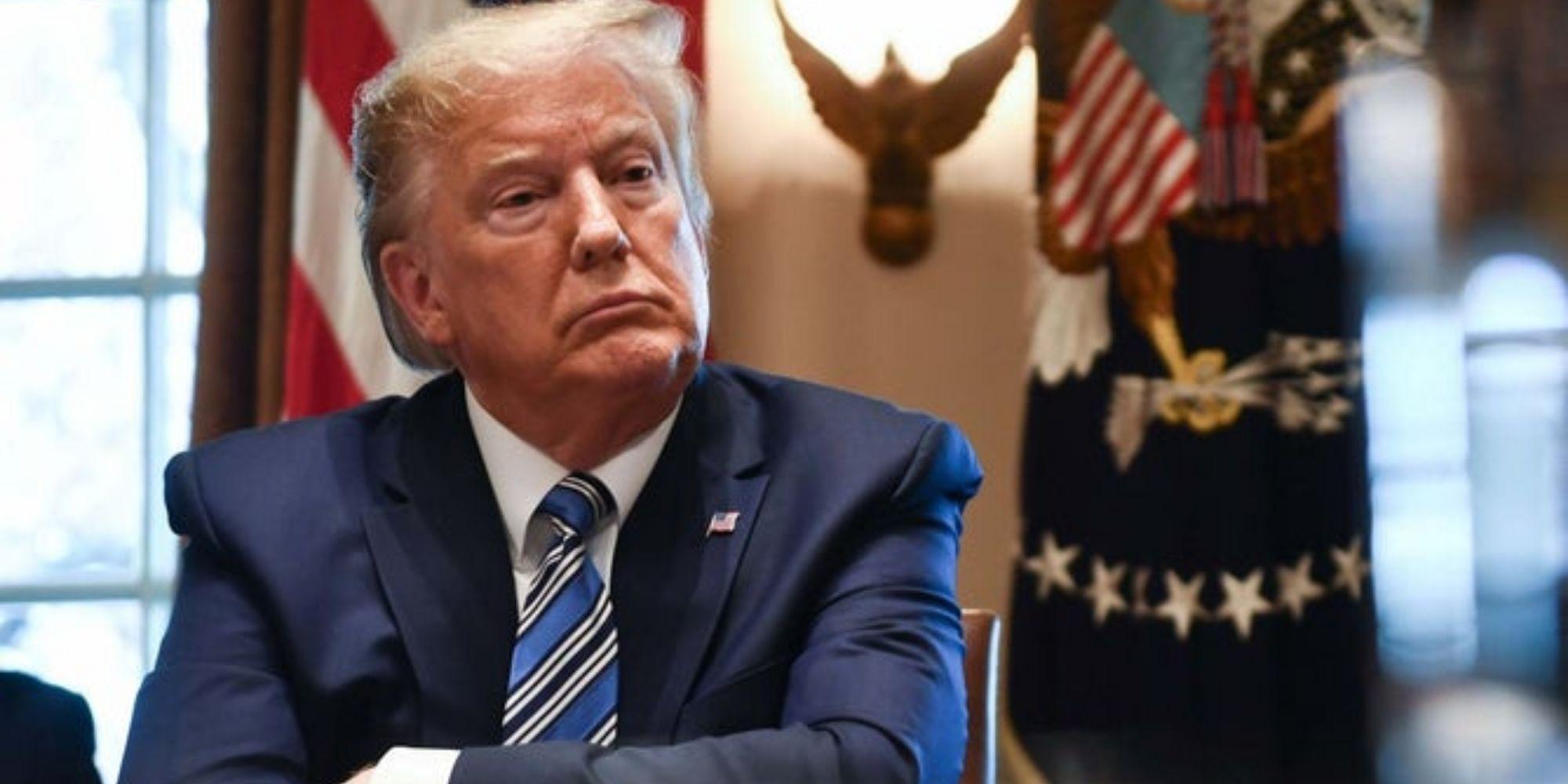
Brendan Smialowski/AFP/Getty

Despite Donald Trump’s sniffily speech from the Oval Office yesterday, the coronavirus crisis in the US does not seem to be abating.

Officials warned it’s “going to get worse” as cases rose to over 1,000 across the country and Donald Trump announced a European travel ban – excluding the countries he has resorts in

In comparison, Asian countries like Vietnam and South Korea have managed to slow the spread of coronavirus using diligent testing and tracing methods. Vietnam has currently reported only 33 cases of coronavirus, with no fatalities at the time of writing.South Korea has had over 7,000 cases and 66 deaths, a fatality rate of 0.9 per cent, with the rate of new cases reported dropping from 909 to around 114 a day.

So people are starting to ask how the virus has spread so quickly in the USA, a wealthy, ‘developed’ country with a well-oiled – if extortionately expensive – healthcare system. Experts are posting their theories on Twitter – and they’re pretty compelling.

Congressman Ted Lieu, who has extensive experience in foreign policy, outlined his thoughts on how the outbreak had exploded so quickly and why Trump failed to contain it.

“By focusing on China, he failed to stop the virus coming in from other countries,” he posted, before also highlighting the lack of testing as a factor.
Meanwhile, world renowned economist Nouriel Roubini attributed the spread to the lack of testing, thanks to Trump refusing to acknowledge the problem and wanting to keep numbers “very low”.

Which works; data can’t show the spread of an epidemic if you simply refuse to collect it!
ABC journalist James Longman also blamed the lack of available testing but added that no nationwide healthcare system meant tracking cases was proving extremely difficult.

Richard N Haass, president of the Council on Foreign Relations (aka he is important) said that a ban was needed on large gatherings, rather than travel, as the disease was already in the US. Trump finally agreed to postpone a planned campaign rally after Democratic rivals suspended theirs as the outbreak worsened.So basically, the US is in such a worrying position because authorities didn’t test, trace or take action to make sure the public could self-isolate with support.Absolutely nothing to worry about in the UK then

---30---

Experts can't work out why coronavirus is spreading so slowly in Africa

Posted  by Louis Staples in people
UPVOTE
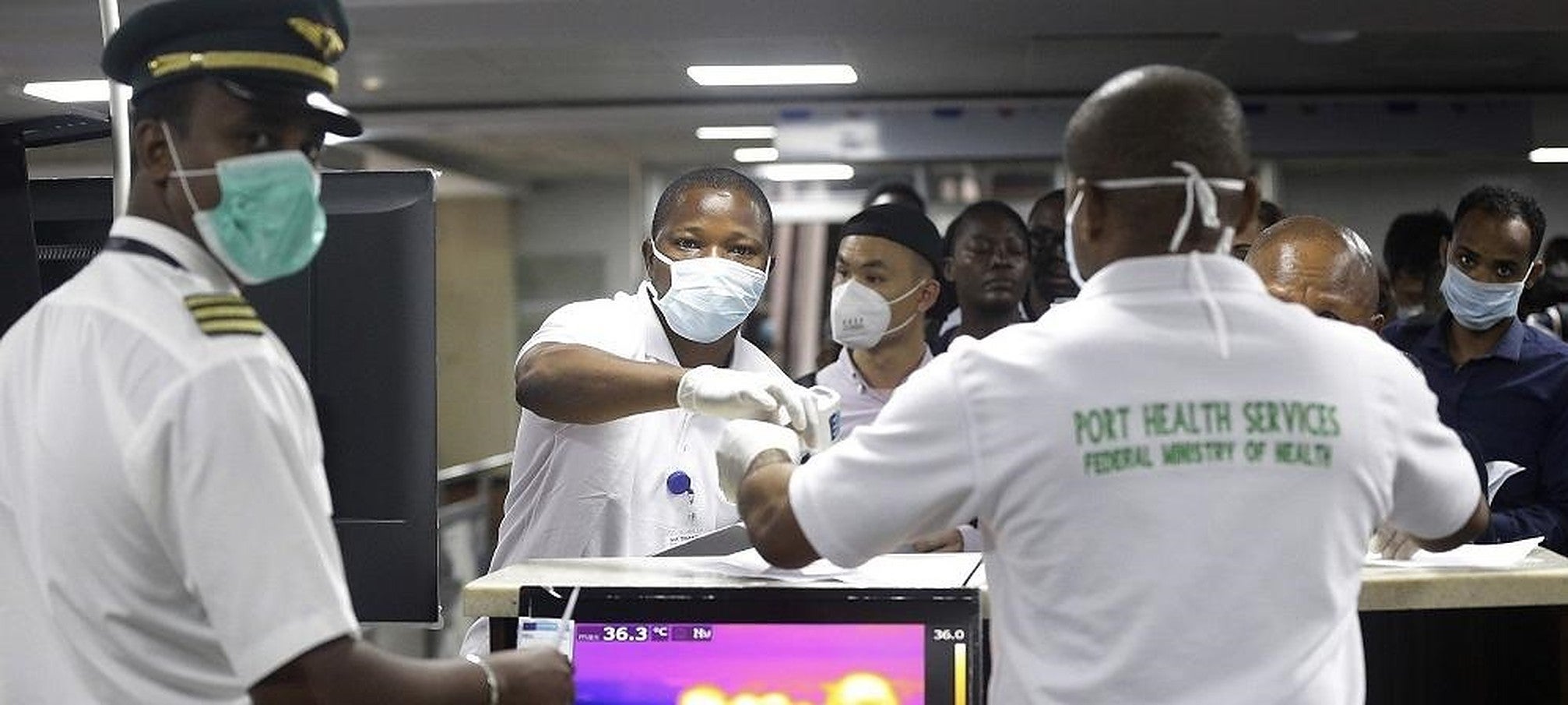
Image: Getty
Since the coronavirus pandemic began spreading across the world, experts have been fairly united in the belief that it’s an extremely serious threat.
But there’s one part of the world that’s dividing opinion in the public health community: Africa.
Other continents, from North America to Europe and Asia, have struggled to contain the pandemic, with cases continuing to rise everywhere outside China – yet Africa has registered a tiny number of confirmed cases by comparison.
France 24 reported that on 1 March Africa only had three confirmed cases. According to the most up-to-date figures from the World Health Organisation, this number is currently 101 across 11 African nations (Algeria, Burkina Faso, Cameroon, Democratic Republic of Congo, Egypt, Nigeria, Senegal, South Africa, Tunisia and Togo). This is a tiny figure in such a populous continent, given that there's over 500 in the UK alone and 10,000 in Italy.

There have been no recorded deaths of coronavirus in the entire continent of Africa so far. But why?

There could be numerous factors influencing Africa’s low tally. It could be faulty detection, climatic factors or simple fluke. But the low rate in a continent with infamously fragile health systems continues to perplex (and worry) some experts.
Shortly after the coronavirus appeared, there were warnings of the virus spreading quickly in Africa because of the continent’s close commercial links with Beijing and its fragile and inconsistent medical services. On 22 February Tedros Adhanom Ghebreyesus, the head of WHO, told African Union health ministers gathered in Ethiopia:
Our biggest concern continues to be the potential for Covid-19 to spread in countries with weaker health systems.
In a study published in The Lancet medical journal, a team of scientists identified Algeria, Egypt and South Africa as the most likely to import new coronavirus cases into Africa. Thankfully, though, the study also noted that these countries have the best prepared health systems in the continent.

But other experts admit that “nobody knows” why coronavirus hasn’t become more widespread in Africa.

Professor Thumbi Ndung’u, from the African Institute for Health Research in Durban, said:
Perhaps there is simply not that much travel between Africa and China.
But Ethiopan Airlines – Africa’s largest airline – never even suspended flights to China. Chinese airlines even resumed flying to Kenya, and no spike in cases was detected.

Africa’s hot climate could be a factor.

Professor Yazdan Yazdanpanah, head of the infectious diseases department at Bichat hospital in Paris, said:
Perhaps the virus doesn’t spread in the African ecosystem, we don’t know.
But Professor Rodney Adam, of the infection control task force at the Aga Khan University Hospital in Nairobi, doesn’t agree.
There is no current evidence to indicate that climate affects transmission.
While it is true that for certain infections there may be genetic differences in susceptibility...there is no current evidence to that effect for Covid-19.

Africa's history might have made it well-equipped to respond to viruses and diseases.

The Lancet study found that Nigeria is one of the best prepared in the continent to handle an epidemic like coronavirus.
Mathias Altmann, an epidemiologist at the University of Bordeaux, told France 24 that Africa’s history of responding to epidemics might have made them more adept at how to stop viruses from spreading.
Neighbouring countries are less able to respond than Nigeria. But Altmann says that also an advantage: that people are often outdoors. He said:
Viruses like this one prefer closed spaces and are less likely to spread in a rural setting.
Whatever the reason, it's a hugely positive thing that, so far, Africa seems to be responding effectively to the pandemic. And it's fascinating that sometimes even experts can't agree on exactly why something is happening. 
H/T: France 24
Minnesota Representative Ilhan Omar has announced that she secretly got married to Tim Mynett, a political adviser.

Last night she posted a picture on Instagram of herself and Mynett with the caption:
Got married! From partners in politics to life partners, so blessed. Alhamdulilla

(Alhamdulillah is an Arabic phrase meaning "praise be to God", or "bless you".)

Their relationship was not particularly public and many weren't aware they were dating, although Mynett's ex-wife did accuse them of having an affair, which they both denied.


Omar was elected to congress in the 2018 midterms, alongside Alexandria Ocasio-Cortez, Rashida Tlaib and Ayanna Pressley.

The four representatives became known as "The Squad" due to their similarly progressive ideologies and the fact that they were all newly elected, relatively young women of colour, and the frequent targets of Trump's rage. The president even encouraged racist conspiracy theories that Omar was married to her brother.

Fellow "squad" member Tlaib congratulated Omar in the comments section, saying: "Alf Mabrook ["congratulations" in Arabic] sis. So happy for you."

Omar, who was born in Somalia, is the first refugee to serve as a member of congress.
Republicans reject plans to save millions of Americans from coronavirus bankruptcy – and come for AOC instead

Moya Lothian-McLean in news

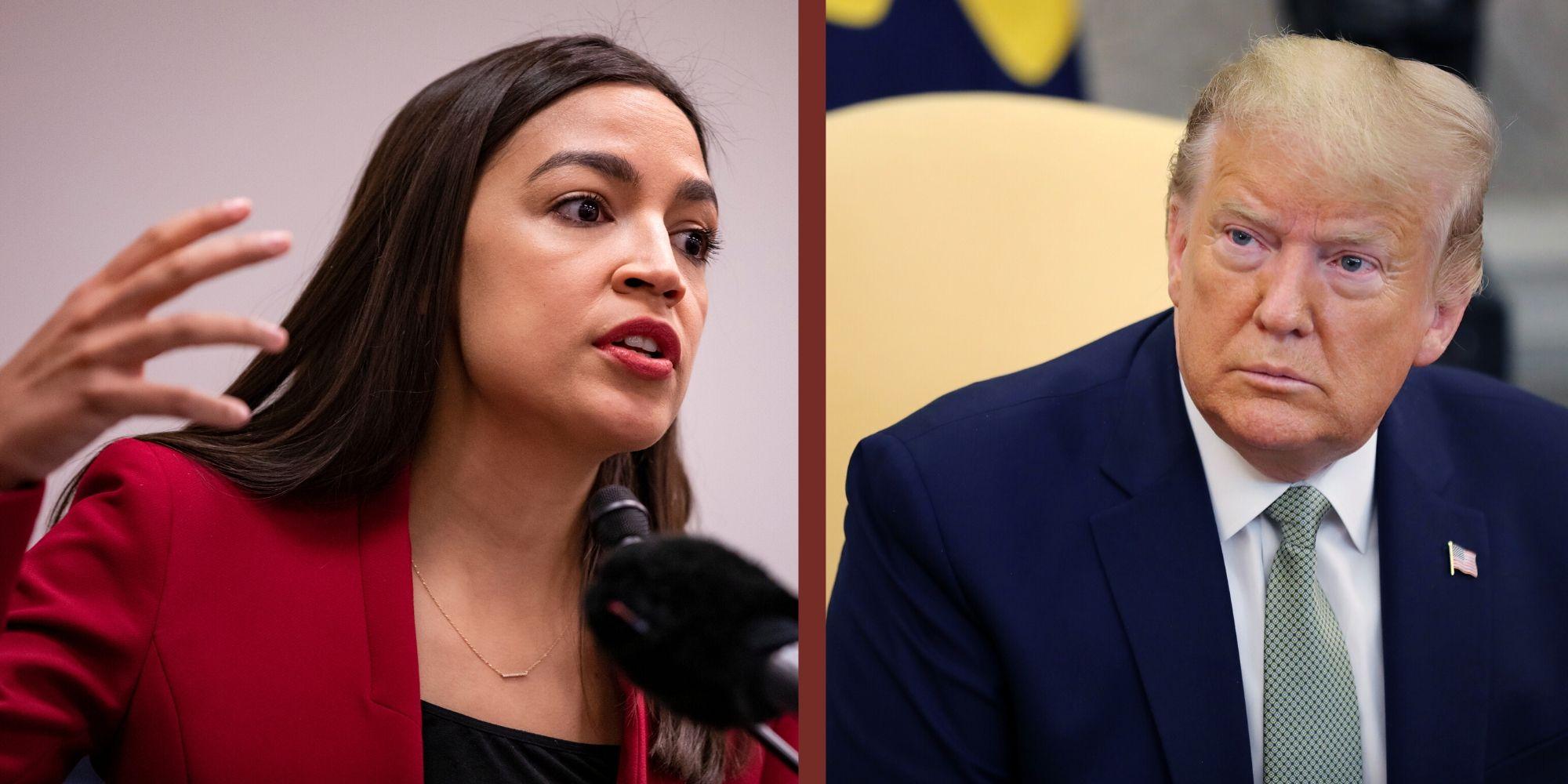
Getty/indy100

As the coronavirus crisis causes society as we know it to shut down around our ears, it is also prompting some… questions.

Like the structures capitalism is built upon that we’re told are fundamentally just part of life and for which there is no alternative.

You know: paying rent, paying mortgages, getting meagre sick pay, having to accrue capital in order to access certain premium stratas of healthcare and education etc.

But due to coronavirus, it’s emerged that these inalienable “facts of life” can be suspended to ensure people don’t suffer when their ability to earn money is hampered.

Like Italy pausing all mortgage payments.

Or flights suddenly becoming strangely “affordable” (you mean... cost price) as demand has gone down.

It’s almost like the value of money is… made up.

Now Congresswoman Alexandria Ocasio-Cortez aka AOC aka a big pain in Donald Trump’s butt has suggested perhaps the US could take a brief leave from its arch-capitalism and cut people a little slack by suspending collection on student loan debt.

She also threw in some mortgage relief, as a treat!

Student loan debt in the US totals around $1.6 trillion (£1.27 trillion).

On average, students carry $32,731 in loan debt.

Democratic candidate Bernie Sanders has proposed wiping out all student debt if elected president, while rival Joe Biden wants to make it easier for people to repay the loan.

As for Donald Trump… he’s supported legislation that would make it more difficult for struggling students to have their debts "forgiven". Plus his administration just called a Democrat-led coronavirus response bill a "radical left" agenda because it wants to give people things like free testing and extended unemployment insurance.

It's not just student loan debt, either. If coronavirus stops Americans from being able to keep up with medical bills or any owed payments, millions could be at risk of bankruptcy.

59 per cent of Americans live paycheque to paycheque, and coronavirus poses a significant risk to their financial security if there's no safety net or emergency measures.

But given the Republican response to Pelosi, it’s unlikely he will take any notice of AOC’s proposal.

So, as of today, the financial security of Americans hangs in the balance.


Coronavirus: Senate Republicans block emergency sick leave bill as outbreak spreads across US

In New York, Democratic governor announces guaranteed paid sick leave for government employees
THE INDEPENDENT

Senate Republicans have blocked an emergency paid sick leave bill aimed at helping deal with complications stemming from the coronavirus outbreak, arguing that the federal government should foot the bill — not employers — for the measure that Democrats claim is a public health imperative.

The Republican resistance to paid sick leave for employees in the United States comes as the deadly virus continues to spread throughout the country, which has led state governments to consider their paid leave policies and how those might impact worker safety.

“Employees are struggling, our employers are struggling, and it’s not a cure for the coronavirus to put a big new expensive federal mandate on employers who are struggling in the middle of this matter,” said Republican senator Lamar Alexander, who spiked the bill in the Senate’s health committee even though he also called it a “good idea”.

The measure was introduced by Democrats, who have argued that forced isolation for those who might come into contact with the virus could ruin people financially — and that not paying for sick leave provides a dangerous incentive to employees to go to work even if they are sick.

“For many of our workers — restaurant workers, truck drivers, service industry workers — they may not have an option to take a day off without losing their pay or losing their job,” said Senator Patty Murray, a Washington Democrat who tried to speed the measure through the health committee to the Senate floor for a vote

She continued: “That’s not a choice we should be asking anyone to make in the United States in the 21st century.”

The Republican effort to kill the bill comes as outbreaks have spread across the country, including in Ms Murray’s home state of Washington — where 281 cases have been confirmed alongside 24 deaths — and Democratically controlled New York — where 212 cases have been confirmed.

On Wednesday, as the Senate considered the emergency paid sick leave policy, New York governor Andrew Cuomo announced that he would enforce a new rule ensuring at least two full weeks of paid leave for any government worker who cannot work because of the coronavirus.

“No one should face economic hardship because a quarantine prevents them from working,” Mr Cuomo wrote on Twitter. “New York State is going to set an example by guaranteeing 2 full weeks of paid leave for all state workers who are quarantined or in isolation due to #Coronavirus.”

Beyond state and federal governments, arguments that the coronavirus outbreak shows the need for paid sick leave in the US — there are no federal mandates on this —have been met with some major companies in the US updating their sick leave policies in recent days, hoping to stem the spread of the novel coronavirus.

Those companies include Walmart, McDonald’s, Apple, Instacart, Uber, Lyft and Darden Restaurants, which operates the popular restaurant chain Olive Garden.
Trump's coronavirus travel ban conveniently excludes the only countries where he owns resorts


President Trump has announced a string of new travel restrictions between America and Europe in a bid to stop the global spread of coronavirus.


But eagle-eyed observers have pointed out that Trump’s new European travel restrictions have one (very convenient) thing in common: they avoid countries where Trump-owned golf resorts are located.


Trump’s obsession with promoting his own properties while serving as president has already come under criticism.


After staying at many of his resorts, he’s been served numerous lawsuits and investigations alleging that he’s violating the Constitution by accepting taxpayer money other than a salary (which he doesn't take). People have also speculated whether his recent trip to India, or his political bromance with Turkish president Recep Tayyip ErdoÄŸan, are partly linked to Trump Organisation dealings in both countries.

How does Trump’s travel ban exclude his resorts?

The US government travel ban targets 26 European countries that comprise a visa-free travel zone known as the “Schengen Area”.

The UK is home to two Trump resorts (Trump Turnberry and Trump International Golf Links). Ireland is home to another Trump-branded hotel and golf course at Doonbeg. Both of these countries, as well as Bulgaria, Croatia and Romania, are not part of the Schengen Area.

So rather conveniently Trump’s travel ban has no affect at all on his business at a time when they are struggling financially. Hmm.


The administration’s European travel statement reads:

The Schengen Area has exported 201 COVID-19 cases to 53 countries. Moreover, the free flow of people between the Schengen Area countries makes the task of managing the spread of the virus difficult.

On social media, people think it’s pretty odd that Trump’s ban excludes the UK, particularly seeing as Britain just recorded its biggest single rise in cases.

So it’s not entirely clear what’s driven the loophole.

"FOUR"

---30---