Monday, May 02, 2022

Embracer Group to buy game studios behind 'Tomb Raider,' 'Deus Ex' for $300M


May 2 (UPI) -- Embracer Group is acquiring video game development studios Crystal Dynamics, Eidos-Montreal and Square Enix Montreal from Square Enix alongside a catalog of intellectual properties that includes Tomb Raider, Deus Ex and Thief.

Embracer Group is paying $300 million for the studios and the associated IPs on a "cash and debt-free basis, to be paid in full at closing," according to the Sweden-based company.

The acquisition includes about 1,100 employees across three studios and eight global locations. If it goes through, the deal is expected to close during the second quarter of Embracer's 2022-23 financial year.

"We are thrilled to welcome these studios into the Embracer Group," Lars Wingefors, co-founder and CEO of Embracer Group, said in a news release Monday. "We recognize the fantastic IP, world class creative talent, and track record of excellence that have been demonstrated time and again over the past decades.

"It has been a great pleasure meeting the leadership teams and discussing future plans for how they can realize their ambitions and become a great part of Embracer.

Once the agreement is finalized, Embracer will have more than 14,000 employees, 10,000 game developers and 124 internal studios.


The agreement comes about a month after Crystal Dynamics announced it was developing a brand-new Tomb Raider game on Unreal Engine 5.


Crystal Dynamics also is the studio behind Marvel's Avengers, and it has been helping Microsoft's The Initiative develop the new Perfect Dark title.

Eidos Montreal, meanwhile, is the studio behind Thief 4, Deus Ex Human Revolution and Shadow of the Tomb Raider, among others. Square Enix Montreal is responsible for games like Hitman Go, Tomb Raider Go and Deus Ex Go, and it will continue to focus on mobile games.

Embracer has been undergoing a rapid expansion in recent years and currently owns Gearbox, THQ Nordic, Saber Interactive, Dark Horse Comics and 3D Realms.
President Biden, first lady mark Eid al-Fitr with White House reception


President Joe Biden hosted a reception celebrating the Eid al-Fitr holiday at the White House on Monday in which praised the accomplishments of Muslim Americans. 
Photo by Bonnie Cash/UPI | License Photo

May 2 (UPI) -- President Joe Biden and first lady Jill Biden celebrated Eid al-Fitr at a White House reception Monday with calls for religious tolerance and praise for the contributions of Muslim Americans.

The Bidens, Vice President Kamala Harris and other dignitaries honored the three-day Muslim holiday marking the end of fasting for Ramadan with a well-attended event at the East Room after last year's celebration was held virtually due to the COVID-19 pandemic.

Muslims typically practice month-long dawn-to-sunset fasting during Ramadan.

Muslim countries across the world have already started celebrating the three-day-long Eid al-Fitr.

RELATED More U.S. public schools close for Islamic holiday Eid al-Fitr

In his remarks, Biden honored the national and civic accomplishments of Muslims in the United States, despite facing challenges from racial and religious bigotry.

"Muslims make our nation stronger every single day, even as they still face real challenges and threats in our society, including targeted violence and Islamophobia. ... It's just astounding," he said.

The Roman Catholic president noted "there's a lot of similarities between all the three major religions" before jokingly adding, "You have a slight advantage for Ramadan. For Lent, I've got to go forty days with no sweets and no ice cream -- [but] I did it."

RELATED Saudi Arabia announces official start of Eid al-Fitr

Biden declared the United States is the only country in the world founded not on a religious or racial grouping, but rather on "an idea" embodied in the preamble to Declaration of Independence, that "all men are created equal."

"We've never met that goal, but we've never walked away from it -- except one brief moment. And we're back," he said.

Jill Biden called Eid is a "joyous" celebration that brings families and communities together.

"It is the wholeness that comes when we give ourselves to others, the lightness we feel when we lay down our burdens at last," she said.

Also speaking at the reception were Talib Shareef, imam of The Nations Mosque in Washington, D.C., and Pakistani vocalist and composer Arooj Aftab.

Some public school districts across the nation will be closed Monday or Tuesday in observance of the Islamic holiday.

"Eid marks the completion of a holy month dedicated to devotion and reflection, when families and communities come together to celebrate their blessings," Biden said in a prepared statement issued ahead of the reception.

"And Eid is also an occasion for Muslims to remember all those who are struggling or impacted by poverty, hunger, conflict, and disease, and to recommit to building a better future for all."

Vegetarian diets are healthy for growing kids, study suggests

By Amy Norton, HealthDay News

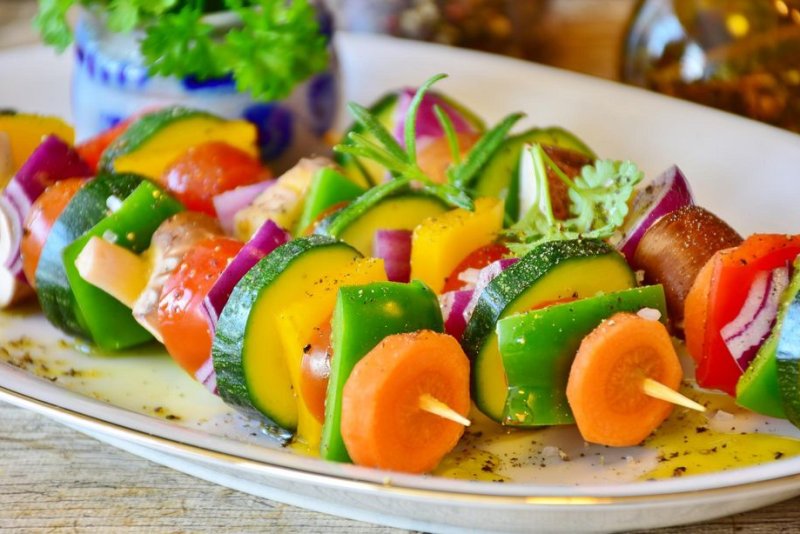
A recent study found that children on vegetarian diets were, on average, of similar weight and height as their peers who ate meat. Photo by RitaE/Pixabay

Vegetarian diets are a healthy choice for growing kids -- though they may slightly raise the odds of youngsters being underweight, a new study suggests.

The study, of nearly 9,000 young children, found that those on vegetarian diets were, on average, of similar weight and height as their peers who ate meat. They were also on par when it came to blood levels of iron and vitamin D -- which could potentially be harder to get on a diet free of meat, fish and, sometimes, dairy products.

The one trouble spot was that vegetarian children were twice as likely as other kids to be underweight. However, the vast majority -- 94% -- were not.

The findings, published online Monday in the journal Pediatrics, support existing guidelines. The Academy of Nutrition and Dietetics, for example, says that well-planned vegetarian diets are appropriate for people of all ages, including young children.


But while such diets are considered healthful, relatively few studies have looked at the impact on kids' growth and nutritional status, said Dr. Jonathon Maguire, the senior researcher on the new work.

He called his team's findings "good news."

"More and more parents are choosing vegetarian diets for their kids," said Maguire, a pediatrician at St. Michael's Hospital of Unity Health Toronto.


And those parents, more than likely vegetarians themselves, are typically "very thoughtful" about ensuring their kids get the nutrients they need, Maguire said.

"This study suggests that whatever these parents are doing, it's working out well," he said.

When vegetarian diets are done right, Maguire noted, they are rich in vegetables, fruit, high-fiber grains, beans and -- often -- dairy products and eggs. They also typically eschew processed foods high in added sugars and low in nutritional value.


As for the higher likelihood of vegetarian kids being underweight, Maguire said that is something for pediatricians to keep an eye on. Underweight children should have their growth more closely tracked, and their parents may need help from a nutrition specialist in crafting a balanced diet.

Amy Reed is a pediatric dietitian at Cincinnati Children's Hospital and a spokesperson for the Academy of Nutrition and Dietetics.

She said that for some young children on vegetarian diets, the high fiber content can be an issue: Fiber-rich foods are filling but often fairly low in calories.

Reed, who was not involved with the study, said that if a child is underweight or there are concerns about nutritional deficiencies, parents can ask for a referral to a dietitian.

With meat-free diets, Reed said, certain nutrients might be harder to get in the right amounts -- including zinc, vitamin B12, protein and calcium. But, she added, that depends on which foods kids are eating.

When they are consuming eggs and dairy, Reed said, those shortfalls are typically not a worry. Plus, kids can get those nutrients from plant foods such as beans, nuts and fortified nondairy "milks," cereals and nutritional yeasts.

"It's important to have an open mind," Reed said. "Vegetarian diets can be healthy at any age."

The study findings are based on 8,907 Canadian children who were 2 years old, on average, at the outset, and followed for an average of three years. At the study's start, 248 children were vegetarian.

Overall, the researchers found, children on meat-free diets were similar to peers as far as growth, weight and blood levels of iron, vitamin D and cholesterol. The only difference was in the risk of being underweight: About 6% of vegetarian kids were underweight, versus roughly 3% of their meat-eating peers.

The large majority of kids on meat-free diets were vegetarian, not vegan (free of all animal products, including dairy and eggs). And vegetarian children consumed about as much cow's milk as non-vegetarian kids -- at just over a cup a day.

Because of that, Maguire said, it's not possible to draw conclusions about vegan diets for young kids.

Reed noted that, in general, children often get "fixated" on a small number of foods between the ages of 2 and 5.

"A lot of kids that age are self-imposed vegetarians, and don't eat meat," she said.

Young children can find meat difficult to chew and swallow, Reed pointed out, and they may prefer protein sources like beans.

She also stressed the importance of parents and kids alike eating plenty of plant foods, which, Reed noted, does not require going meat-free.

More information

The Nemours Foundation has more on vegetarian diets for children.

Copyright © 2022 HealthDay. All rights reserved.

Study: Food, beverage marketing increase kids' use of promoted products
NOT FREE SPEECH BUT HYPNOTIC REPETITIVE BRAND PROGRAMING*


Exposure to food advertising appears to increase consumption of those advertised brands among children, a new study suggests.
 Photo by mojzagrebinfo/Pixabay

May 2 (UPI) -- Exposure to food and beverage marketing and advertising boosts consumption of these products appreciably among children and adolescents, an analysis published Monday found.

Seeing marketing campaigns for food and beverage products boosts intake of these brands among people age 19 years and younger by up to 25%, the analysis of data from 80 previously published studies showed.

In addition, young people exposed to these campaigns were up to 30% more likely to indicate a preference for the promoted food and beverage brands, the researchers said in an article published Monday by JAMA Pediatrics.

Several studies included in the analysis also suggest that exposure to food and beverage marketing increased purchase requests for certain brands among children and adolescents, they said.


In this study, food marketing exposure was associated with increases in children's food intake, choice of and preference toward test items and purchase requests," researchers from the University of Liverpool in England wrote.

However, "there was little evidence to support associations with food purchasing by or on behalf of children, while data relating to dental health and body weight outcomes were scarce," they said.

The findings are based on an analysis of data from 80 studies that collectively enrolled more than 19,000 people age 19 years and younger in dozens of countries globally, according to the researchers.


In the United States, the Children's Food and Beverage Advertising Initiative, a voluntary program enacted in 2006, establishes standards for food and beverage product advertising and marketing to children.

Nineteen food and beverage companies have voluntarily pledged to limit unhealthy food advertising to children age 12 years and younger.

However, a recent report by the Rudd Center for Food Policy and Health at the University of Connecticut found that more than one-third of food products advertised to kids are not considered healthy dietary options.


In addition, recent research suggests that social media influencers are promoting unhealthy food choices to young people online and that fast-food companies target Black and Hispanic youth with their advertising.

The World Health Organization recommends that all member countries, including the United States, enact policies to restrict children's exposure to unhealthy food marketing.

"Food and/or non-alcoholic beverage marketing that largely promotes products high in fat, sugar and/or salt is prevalent across television, digital media, outdoor spaces and sport," the researchers wrote.

"Children and adolescents are particularly vulnerable to the effects of food marketing given their immature cognitive and emotional development, peer-group influence and high exposure," they said.


*SUBLIMINAL PROGRAMMING
New Zealand's Mount Ruapehu shows increased volcanic activity

May 2 (UPI) -- The temperature at New Zealand's crater lake Te Wai a-moe has risen about 35 degrees Fahrenheit over the past three days, highlighting continued unrest on Mount Ruapehu and concerning experts about its ongoing volcanic tremors, experts said Monday.

Geoff Kilgour said Mount Ruapehu has shown its strongest volcanic activity "in two decades" with volcanic alert levels remaining at 2. Volcano eruptions are much more likely at Level 2 in than Level 1.


"Over the last week, the level of volcanic tremor has varied, with bursts of strong tremor interspersed by short, periods of weaker tremor," Kilgour said, according to the New Zealand Herald.

"This represents a change in character in the tremor, and the driving processes remain unclear."

Staffers from GNS Science, New Zealand's leading geoscience and isotope research service, have noticed an increased frequency of aerial gas measurements in sampling and a gas measurement flight last week.

"Mount Ruapehu is an active volcano and has the potential to erupt with little or no warning when in a state of elevated volcanic unrest," Kilgour said. "Volcanic Alert Level 2 indicates the primary hazards are those expected during volcanic unrest; steam discharge, volcanic gas, earthquakes, landslides and hydrothermal activity."

Kilgour said the chances for a prolonged eruptive episode or a larger eruption, similar to an episode in 1995-96, though, is unlikely.

"Such an eruption would most likely only follow a sequence of smaller eruptions," Kilgour said.
Researchers blame fungicides for rise in drug-resistant mold infections
By HealthDay News

Aspergillus fumigatus from soil in culture. 
Photo by Dr. David Midgley/Wikimedia Commons https://commons.wikimedia.org/wiki/File:Aspergillus_fumigatus.jpg

British researchers are warning of one more rising health danger: a drug-resistant mold found in the environment that infects certain people's lungs.

Aspergillus fumigatus can cause a fungal lung infection called aspergillosis in people with lung conditions or weakened immune systems. Aspergillosis, which affects 10 to 20 million people worldwide, is usually treated with antifungal drugs, but there's evidence of emerging resistance to these drugs.

This resistance is due to the widespread agricultural use of azole fungicides, which are similar to azole drugs used to treat aspergillosis, according to the study authors.

"Understanding the environmental hotspots and genetic basis of evolving fungal drug resistance needs urgent attention, because resistance is compromising our ability to prevent and treat this disease," said study co-author Matthew Fisher, a professor in the School of Public Health at Imperial College London.

The researchers analyzed the DNA of 218 samples of A. fumigatus from England, Wales, Scotland and Ireland between 2005 and 2017. Around seven in 10 samples were from infected people, and the other samples were from the environment, including from soil, compost, plant bulbs, the air and other sources.

The researchers found six strains of A. fumigatus that spread from the environment and infected six patients, according to the study. The results were published recently in the journal Nature Microbiology.

Of the 218 samples, almost half were resistant to at least one first-line azole drug. Specifically, 48% were resistant to itraconazole, 29% to voriconazole and 21% to posaconazole.

RELATED Isolated cases of deadly 'black fungus' spotted in U.S. COVID-19 patients

More than 10% of samples (including 23 environmental samples and three from patients) were resistant to two or more azole drugs.

In the 218 samples, the researchers found 50 new genes associated with drug resistance, and five new combinations of DNA changes associated with drug resistance, including one resistant to multiple drugs.

"The prevalence of drug-resistant aspergillosis has grown from negligible levels before 1999 to up to 3%-40% of cases now across Europe," Fisher explained in a college news release.

RELATED CDC says drug-resistant 'superbug' fungus seen among patients in D.C., Texas

"At the same time, more and more people might be susceptible to Aspergillus fumigatus infection because of growing numbers of people receiving stem cell or solid organ transplants, being on immunosuppressive therapy, or having lung conditions or severe viral respiratory infections," he said.

The findings show the need for greater monitoring of A. fumigatus in the environment and patients to help understand the risk it poses, according to the researchers.

More information

There's more on aspergillosis at the U.S. Centers for Disease Control and Prevention.

Copyright © 2022 HealthDay. All rights reserved.
Emergency workers in Ukraine rescue cat from bombed-out high-rise


May 2 (UPI) -- Emergency workers in Ukraine rescued a cat from a bombed-out high-rise building in Borodianka, video released by Ukraine's emergency services shows.

Located east of Kyiv, Borodianka has been devastated by intense shelling and airstrikes by Russian forces.

The video shows rescue workers use an aerial ladder truck to reach the cat. A worker tucks the feline into his jacket for the ride down to the ground, where the disheveled animal is placed in a crate and given a bowl of water.

Twitter user "Lorenzo The Cat" posted photos, videos and updates on the rescue effort on Twitter, crediting the rescue to Eugene Kibets and saying "amid the horror of war, we have to celebrate the good in humanity."


Another Ukrainian cat gained Internet fame last year when Britney Spears posted content from the cat's social media.

With more than a million followers on Instagram and TikTok, that cat, named Stepan, relieved followers in March when his owner posted an update detailing how they escaped Ukraine with Stepan after their house was damaged in Russian shelling.
American Indians, Alaska Natives see 5-fold rise in overdose deaths, study finds

American Indian and Alaska Native communities have seen higher rates of deaths caused by drug overdoses than other populations, a new study reports. 
File photo courtesy of West Virginia Attorney General's Office/Twitter

May 2 (UPI) -- The opioid overdose death toll has increased more than five-fold among American Indian and Alaska Native communities over the past two decades, a study published Monday found.

Nearly 800 opioid-overdose deaths among American Indian and Alaska Natives in the United States occurred in 2019, up from fewer than 100 in 1999, data published Monday by BMJ Open showed.


Men of American Indian and Alaska Native origin were about 50% more likely to die from an opioid overdose compared to women, the researchers said.

The rise in overdose deaths outpaced a roughly 30% rise in the cumulative populations of these communities, to nearly 2.3 million in 2019 from 1.8 million 20 years earlier, they said.

RELATED Opioid deaths in young Americans often involve other drugs

"Deaths due to opioids ... in the American Indian and Alaska Native community have increased significantly over time," Fares Qeadan, a co-author of the study, told UPI in an email.

"Therefore, it is important that substance use treatment programs, interventions and policies consider complexities surrounding polysubstance use and improved access to ... treatment," said Qeadan, an associate professor of biostatistics at Loyola University Chicago.

When a person takes a drug to increase or decrease the effects of a different drug or wants to experience the effects of the combination of the two, this is called intentional polysubstance use, according to the Centers for Disease Control and Prevention.

RELATED More than 100,000 people died of drug overdoses in one year in U.S., report says

However, when a person takes drugs that have been mixed or cut with other substances, such as fentanyl, unknowingly, this is called unintentional polysubstance use, the agency says.

Both forms of polysubstance use have been linked with an increased risk for overdose and death as a result, research suggests.

More than 100,000 across the United States died of drug overdoses in 2020, according to recent estimates, and that number is expected to rise over the next decade.

RELATED Report: 1.2M more opioid overdose deaths expected in North America by 2029

Many of these deaths have involved opioids, a class of drugs that includes prescription pain relievers as well as "street" drugs such as heroin, according to the CDC.

Earlier this year, Native American tribes reached a $590 million settlement with prescription drug distributors over lawsuits alleging their involvement in the so-called opioid crisis.

Qeadan and his colleagues reviewed national death records data from 1999 to 2019, focusing on overdose deaths involving opioids alone or opioids combined with other drugs, such as alcohol or methamphetamine, among American Indians and Alaska Natives ages 12 years and older.

Over the 20-year period, overdose deaths from opioids alone in these communities rose more than five-fold, to 16 per 100,000 people in the general population, from three per 100,000, in men, and to 26 per 100,000, from five per 100,000, in women, the data showed.

All overdose deaths involving opioids increased to 34 per 100,000 American Indian and Alaska Native people in the general population from five per 100,000 during the same period, the researchers said.

Overdose deaths due to opioids plus alcohol or benzodiazepines or methamphetamine also spiked -- up to 1,000%, over the course of two decades, they said.

Analysis of death rates attributable to specific types of opioids showed that those caused by heroin and prescription opioids such as oxycodone, hydrocodone and fentanyl increased, as well, according to the researchers.

"Our findings highlight how severely this community has been hit by the opioid crisis and continues to face rising levels of overdose mortality due to the use of opioids alone and in combination with other substances," Qeadan said.

"To address this issue, policymakers should advocate for interventions for American Indian and Alaska Native populations that are comprehensive, culturally centered and address ... socioeconomic factors and racial and ethnic discrimination," he said.
ECOCIDE
Missile attack causes tank fire in oil refinery in Iraq


May 2, 2022

The sun sets over an oil refinery in the southern Iraqi town of Nasiriyah on March 8, 2021
 [ASSAAD AL-NIYAZI/AFP via Getty Images]

May 2, 2022 

A missile attack targeted an oil refinery in Iraq's northern city of Erbil on Sunday causing a fire in one of its main tanks that was later brought under control, the Iraqi security forces said in a statement, reports Reuters.

A missile also landed on the outer fence of the refinery without causing any casualties, the statement added.

Earlier on Sunday, the anti-terrorism authorities in Kurdistan region said six missiles landed near the KAR refinery in Erbil, adding they were launched from Nineveh province.

The security forces said they found a launch pad and four missiles in the Nineveh Plain after the attack and defused them.

Iraqi Prime Minister Mustafa al-Kadhimi said the armed forces will pursue the perpetrators of what he called a "cowardly attack" while discussing the security situation in a phone call with Kurdish leader Masoud Barzani, the prime minister's office said on Twitter.

READ: Protesters shut down oil facilities in southern Iraq

Three missiles also fell near the refinery on April 6, without causing any casualties. Sources in the Kurdistan Regional Government told Reuters then that the refinery is owned by Iraqi Kurdish businessman Baz Karim Barzanji, CEO of major domestic energy company the KAR Group.

In March, Iran attacked Erbil with a dozen ballistic missiles in an unprecedented assault on the capital of the autonomous Iraqi Kurdish region that appeared to target the United States and its allies. Only one person was hurt in that attack.
Years after IS defeat, northern Iraq struggles to rebuild


Eight years after heavy fighting between Islamic State jihadists 
and the Iraqi army, the reconstruction of Hanash in northern Iraq 
is at a standstill 
(AFP/AHMAD AL-RUBAYE)

Guillaume Decamme
Mon, May 2, 2022, 

In Iraq, "maku" means "nothing", and father-of-five Issa al-Zamzoum says "maku" a lot: no electricity, no home, no rebuilding and no job.

Eight years after heavy fighting between Islamic State jihadists and the army, the reconstruction of his war-ravaged village in northern Iraq is at a standstill.

"There is nothing here, no electricity," 42-year-old Zamzoum sighed. "Even work, there is none."

Zamzoum lives with his wife and family in Habash, some 180 kilometres (110 miles) north of the capital Baghdad, a village dotted with dozens of bomb-blasted houses still ruined from intense fighting in 2014.

Part of their roof, which caved in during the bombardment, still lies in crumbling and bullet-scarred wreckage.

In one room, a hen watches over her chicks. In another, filthy mattresses are piled up against the wall.

The building does not even belong to Zamzoum: his own home was left uninhabitable.

While the Baghdad government eventually celebrated military "victory" over IS in December 2017, the scale of destruction was immense.

"Reconstruction? We do not see it," Zamzoum said gloomily. "Nothing has happened since the war."

- Sunni-Shiite tensions -


Habash paid a heavy price during IS's siege of Amerli, a town less than 10 kilometres away.

In 2014, the jihadists, who controlled the key northern city of Mosul and surrounding areas, moved south to attack Amerli, using surrounding settlements such as Habash as bases for their assault.

The combined forces of the Iraqi army, Shiite militias and Kurdish forces launched a counterattack to break the siege with gruelling street fighting, and IS forces were pushed out.

But for residents of the already hard-hit area, it was not the end of their suffering.

According to Human Rights Watch, after the siege "pro-government militias and volunteer fighters as well as Iraqi security forces raided Sunni villages and neighbourhoods" surrounding Amerli, including Habash.

HRW used satellite imagery to map "heavy smoke plumes of building fires, likely from arson attacks" in the village.

Today, nearly 20,000 people displaced by the conflict need aid in the area, according to the Norwegian Refugee Council, an aid agency.

"Humanitarian needs are significant," the NRC said.

As well as basic needs like clean water and electricity, even obtaining identity papers is a challenge for many.

"Many people have been displaced across governorates and face major barriers to travel to obtain civil documents," the NRC said.

"Others face security clearance issues related to perceived affiliation with the Islamic State" group, it added.

Like most of the residents of Habash, Zamzoum's neighbour Abdelkarim Nouri is a Sunni Muslim.

In Shiite-majority Iraq, Sunnis have sometimes been viewed with distrust, suspected of being complicit in past support of the extremists.

IS jihadists follow a radical interpretation of Sunni beliefs.

"Our life is a shame," Nouri said. "I don't have a job. I have five sheep, and they are the ones who keep me alive."

He said he had appealed to his member of parliament for support, but nothing had changed.

- 'Beyond our control' -


Nouri does not mention religion or talk of sectarianism -- a deeply sensitive topic in a country where tens of thousands of people died during bloody inter-religious conflict in 2006-2008.

Now, over four years since the end of IS's self-proclaimed "caliphate" in Iraq, many Sunnis say they are victims of harassment and discrimination.

A US State Department report last year cited concerns among Sunni officials that "government-affiliated Shia (Shiite) militia continued to forcibly displace Sunnis".

The report quoted officials describing "random arrests of Sunnis in areas north of Baghdad" and detentions made on suspicion of IS links.

In Salaheddin province, where Habash is located, officials speak of "security risks" which are delaying reconstruction -- without mentioning IS jihadists by name.

While Habash is under government control, the militants still operate just 15 kilometres further north.

On the road that leads to the village of Bir Ahmed, forces of the Hashed al-Shaabi -- a Shiite-led former paramilitary coalition now integrated into Iraq's state security apparatus -- stand guard.

"The situation in Bir Ahmed is beyond our control and that of the army," a senior officer said. "You can get in, but I can't guarantee you can get out."

gde/tgg/pjm/lg