It’s possible that I shall make an ass of myself. But in that case one can always get out of it with a little dialectic. I have, of course, so worded my proposition as to be right either way (K.Marx, Letter to F.Engels on the Indian Mutiny)
Thursday, September 22, 2022
GRIFTER CAPITALI$T
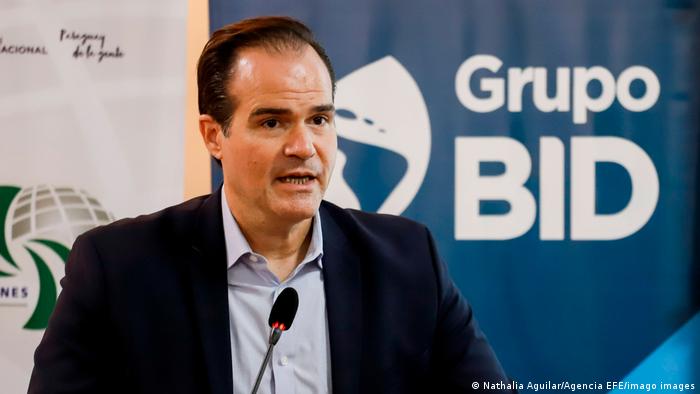
Latin America bank directors urge firing Trump-nominated chief
Mauricio Claver-Carone, president of Latin America's largest development bank, was found to have violated ethics rules by investigators. US President Joe Biden's administration has been pushing for his removal.
Claver-Carone has been president of the IDB since October 2020
The 14 directors on the board of the Inter-American Development Bank (IDB) have voted unanimously to recommend firing President Mauricio Claver-Carone, sources said on Thursday.
The move comes after an independent investigation confirmed misconduct allegations against Claver-Carone, who was nominated for the job in 2020 by then-US President Donald Trump.
His fate now lies in the hands of the governing board of the IDB representing all 48 of the bank's member nations.
US Treasury Department wants him out
A US Treasury spokesperson said Washington backed Claver-Carone's removal from office and urged "swift resolution" by the IDB's governors.
"His creation of a climate of fear of retaliation among staff and borrowing countries has forfeited the confidence of the [IDB's] staff and shareholders and necessitates a change in leadership,'' the spokesperson said.
The US is the bank's largest shareholder, with 30% of its voting shares.
An independent probe was set up against Claver-Carone after a complaint that he allegedly had an intimate relationship with an employee in violation of the bank's rules.
According to a report cited by The Associated Press, the investigation found that he had favored this top aide with whom he had had a romantic relationship.
In a statement, Claver-Carone slammed the US Treasury's comments. "It's shameful the US commented to the press before notifying me and that it is not defending two Americans against what is clearly fabricated information," he said.
He also claimed that Washington was "handing" the IDB to China by backing his removal from office.
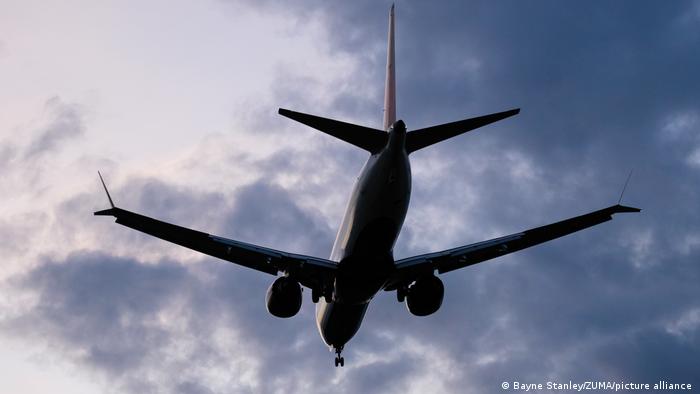
Boeing to pay $200 million over misleading investors on 737 MAX
US authorities said Boeing and its former leader, Dennis Muilenburg, had "put profits over people" and misled investors about the safety of its 737 MAX planes after the 2018 and 2019 crashes.
The crashes led regulators around the world to ground the plane for nearly
two years until Boeing made fixes
Aviation giant Boeing has agreed to pay $200 million (€203 million) to settle charges it misled investors over the safety of its 737 MAX planes, US authorities said on Thursday.
The model has come under intense criticism for years after two crashes involving the 737 MAX 8 killed 346 people. Both planes, in Indonesia and Ethiopia, had been in service for just a few months when they crashed.
Dennis Muilenburg, Boeing's former CEO, is set to pay $1 million to settle the same charges.
Muilenburg had been ousted in December 2019, nine months after the second 737 MAX 8 crash.
What charges is Boeing paying to settle?
The Securities and Exchange Commission (SEC) said in a statement that Boeing "negligently violated the antifraud provisions" of US securities laws.
The SEC charged the company and its former leader with making misleading statements about the safety of the planes involved in the 2018 and 2019 crashes.
Boeing and Muilenburg "put profits over people by misleading investors about the safety of the 737 MAX all in an effort to rehabilitate Boeing's image" after the crashes," the SEC said.
What did Boeing say?
The company said that it had made "broad and deep changes" since the two accidents to improve the safety and quality of its models.
"Today's settlement is part of the company's broader effort to responsibly resolve outstanding legal matters related to the 737 MAX accidents in a manner that serves the best interests of our shareholders, employees and other stakeholders,'' Boeing said in a statement.
fb/aw (AFP, AP)
CRIMINAL CAPITALI$M 'Fat Leonard' fugitive in US Navy scandal captured in Venezuela
Issued on: 22/09/2022
An undated handout picture released on September 21, 2022 by the Instagram account of Interpol Venezuela shows Malaysian fugitive Leonard Francis, known as "Fat Leonard," after his capture in Venezuela - Interpol Venezuela Instagram account/AFP
Caracas (AFP) – A military contractor known as "Fat Leonard" who pleaded guilty in the US Navy's worst ever corruption scandal has been captured in Venezuela after fleeing the United States, the Interpol office in Caracas said.
Leonard Francis cut off his GPS monitor and escaped house arrest in California in early September.
"The fugitive was arrested at the Simon Bolivar de Maiquetia International Airport when he was about to leave the country," a post shared on Instagram Wednesday by the Caracas Interpol office said.
Leonard "entered the country coming from Mexico with a stop in Cuba" and aimed to travel to Russia, the post said, adding that he was the subject of an Interpol red notice.
Francis, a Malaysian national who ran a military contracting company out of Singapore, pleaded guilty in 2015 to offering some $500,000 in bribes to Navy officers to steer official work to his shipyards, carrying out work on US vessels that prosecutors say he overcharged the Navy for, to the tune of $35 million.
Police were sent to his San Diego residence on September 4 after the agency monitoring his ankle bracelet reported a problem with the device, and found that he was gone, the US Marshals Service said.
Francis was arrested in 2013 and pleaded guilty two years later. He suffered numerous health problems, including kidney cancer, which led to him being released to house arrest in 2018 while acting as a cooperating witness for federal prosecutors.
He was due to be sentenced on September 22.
Four Navy officers have been found guilty in the case so far, while another 29 people, including naval officials, contractors and Francis himself, have pleaded guilty, US media said.
Spain plans temporary wealth tax amid high inflation
A government plan calls for a tax on Spain's "big fortunes" would help offset inflation relief measures to assist low and middle-income Spaniards.
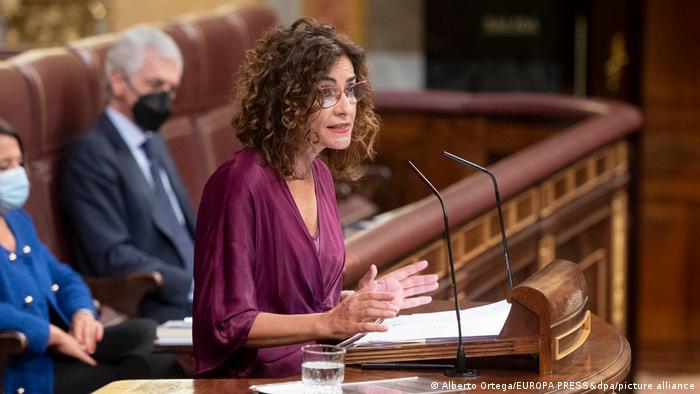
Montero says an "exceptional" tax would affect "no more than one percent" of the population
Spain's left-wing government said it would slap a temporary tax on the wealthiest 1% of the country's population to help pay for inflation relief measures.
"We are talking about millionaires, those who are in the 1% of income," Finance Minister Maria Jesus Montero told the laSexta television channel on Thursday.
She said it was important that "we can finance the aid" to support "the middle class and workers" but did not provide details on the tax rate or how much it would raise.
The government has introduced a raft of measures to help people cope with soaring prices, such as free public transport, stipends for students to stay in school and subsidized petrol.
The country's annual inflation rate hit 10.4% in August. It has remained in double digits since June, a level not seen since the mid-1980s.
Spain already targeting banks and energy firms
In July, the government introduced a bill to create a temporary levy on banks and large energy companies.
"We are going to use a similar scheme to that for energy companies and banking. For the next two years...the big fortunes of this country will be asked to make a temporary effort," Montero said on Thursday.
She still has to negotiate the plan with her Socialist party's coalition partner Unidas Podemos and acknowledged that parliamentary approval procedures mean it might not be ready by the start of 2023.
lo/wmr (AFP, Reuters)
Africa: After the drought comes the flood
Africa's rivers are lifelines. But extreme weather often poses a threat to those who live on their banks. Early-warning weather systems are in need of improvement, experts say.
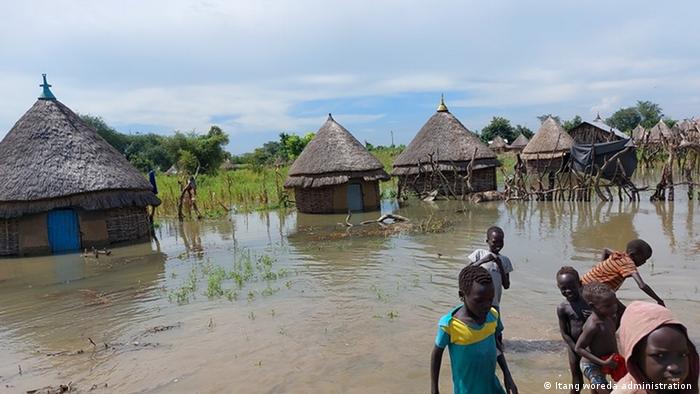
Flooding forced people from their homes in Ethiopia's Gambela region in September 2022
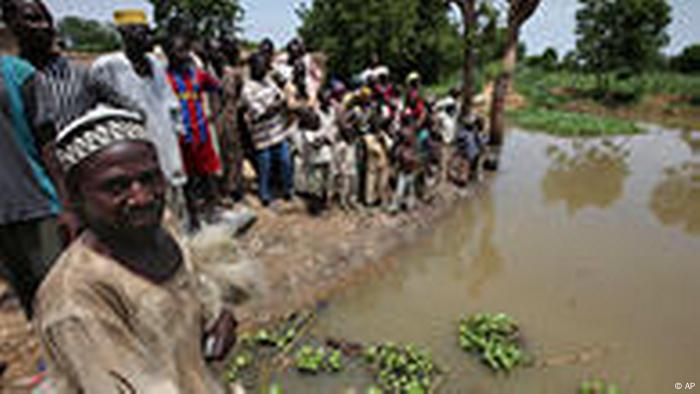
The flooding in Nigeria is extreme. Houses have been swept away, more than 300 lives have been lost and more than 100,000 people are displaced, according to the authorities.
The National Emergency Management Agency (NEMA) says the floods are the worst in decades and has warned that the situation could deteriorate further.
Speaking after an emergency meeting on Monday, NEMA Director General Mustapha Habib Ahmed said the flooding was a result of regular rains since July.
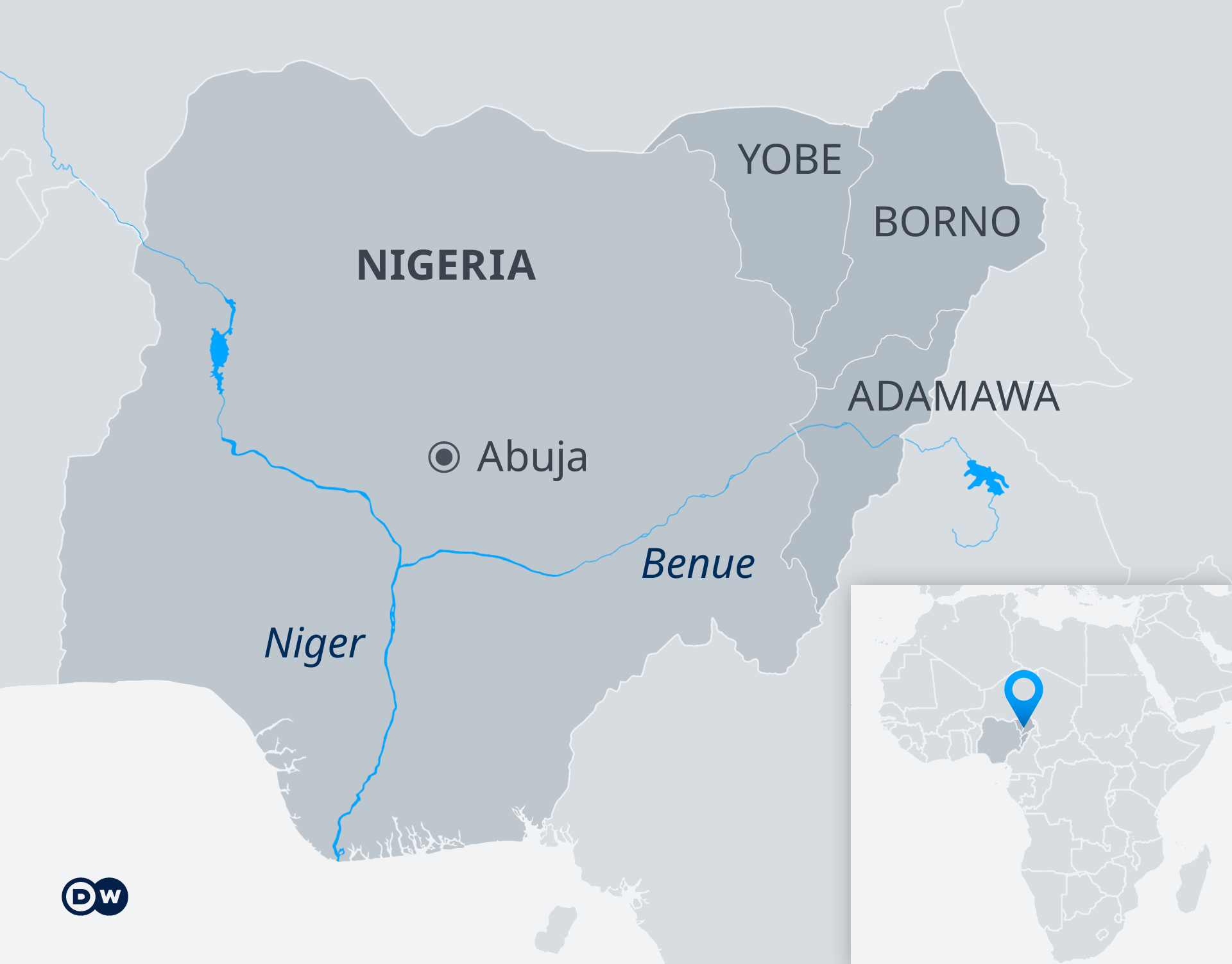
The Niger River and its largest tributary, the Benue, have been carrying immense amounts of water. Experts say that several dams in Nigeria and neighboring Cameroon could overflow in the coming weeks.
Large swathes of arable land are already flooded.
Experts are warning that floods could exacerbate hunger in Nigeria
Warnings come too late
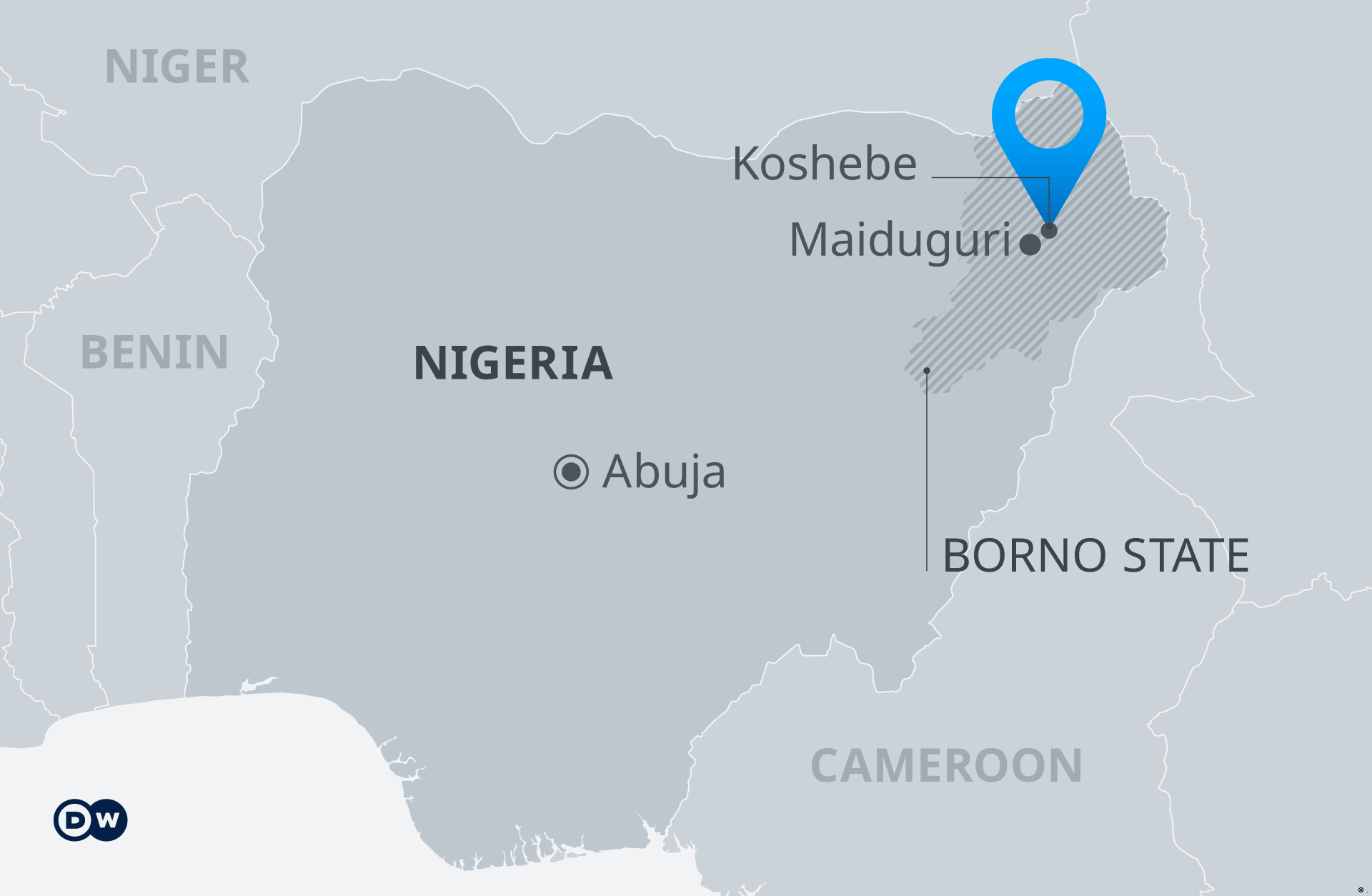
Three of Nigeria's northern states are particularly affected by the flooding: Yobe, Adamawa and Borno.
Yerma Ahmad Adamu, a senior physician at Yerma Memorial Hospital in Maiduguri, the capital of Borno State, is dissatisfied with the government's response.
Flooding has hit northern Nigerian states particularly hard, with neighboring
Cameroon also affected
The call by NEMA and neighboring states for people to evacuate to high-lying places and stockpile foodstuffs came too late, Adamu said in a DW interview.
Authorities had warned of the floods six months ago, Adamu said. But concrete forecasts about the extent were lacking, although they would have helped those now affected to prepare better.
"People need to boil water, and health centers should have zinc oxide ready — that's given to children and adults to protect them from diarrhea — plus a combination of salt and water," the physician told DW.
Adapting to climate change
Across Africa, extreme weather events have increased in recent years, with sometimes devastating consequences. A recent report by the World Meteorological Organization (WMO) points to severe flooding in South Sudan, Nigeria, the Republic of Congo and the Democratic Republic of Congo in 2021 — and extreme drought that led to forest fires, particularly in northern Africa.
Only 40% of Africa's population currently access early warning systems to protect them from extreme weather and the effects of climate change, according to the WMO.
As a key task for the future, the WMO recommends intensified cross-border cooperation, data and expertise-sharing, as well as more investment in climate change adaptation.
Nigeria is battling its worst floods in a decade with more than 300 people killed in 2022 including at least 20 this week, authorities said on Monday, admitting the situation is “beyond our control.” FRANCE 24's Sam Olukoya reports.
Niger: Measuring stations and flood maps
Approaches to this have been in place in West Africa for decades. For example, the Niger Basin Authority (ABN) has been bringing together nine states affected by the Niger River system since 1980.
At around 4,200 kilometers (2,600 miles), the Niger is Africa's third-longest river. Some 160 million people live alongits banks. They depend on its water, but have to live with its risks.
ABN area manager Issa Bakayoko told DW about the dangerous interplay between floods and drought.
"In times of drought, the vegetation cover is attacked, and the land is exposed to wind and rain. Then, when there is heavy rainfall, the runoff water washes sand and rain with it. The riverbed silts up, and the river can no longer carry the large volumes of water," Bakayoko said.
In order to cope with the risks, riverside states have set up a measuring system that records water levels and outflowing water volumes, and maps which water levels can be expected when and where. The German Society for International Cooperation (GIZ) provides support in this regard.
The satellite-based early warning system, consisting of 27 measuring stations, enablesprecise advance warnings within 24 hours, the GIZ project manager Jochen Rudolph told DW.
Flood maps generated from the data also allow conclusions to be drawn about when and where the population should be evacuated.
Planning larger dams and urban development
However, implementing the recommendations drawn from this analysis is not always possiblein the Niger Basin. Some states simply cannot afford the costs, according to Rudolph. despite contributing significant sums.
A number of commissions in Africa work similarly to the ABN, Rudolph told DW. These include the Nile Basin Initiative and commissions for Lake Victoria in East Africa, the Okavango in southern Africa,or the Volta River system in Ghana and Burkina Faso.
But there is room for improvement, Rudolph told DW. Floods could be mitigated with larger dams. "Three are being planned and already built on the Niger. With retention basins that prevent the runoff of water masses in the rainy season from being as violent as it often was i
No matter how great the efforts to regulate water masses, the effects of climate change will increasingly force people to adapt. The WMO report comes to this conclusion, as do experts interviewed by DW.
Especially in the face of a growing population, a sustainable plan for urban development is essential, says Issa Bakayoko: "Such a plan must define the flood-prone areas and keep them free as catchment areas, so it must not make them available for people to live in." If countries can do that, he says, it could drastically reduce the impact of flooding.
Antonio Cascais and Al-Amin Suleiman Mohammad in Nigeria contributed to this article.
Edited by: Benita van Eyssen
Nepal struggles to control a dengue outbreak
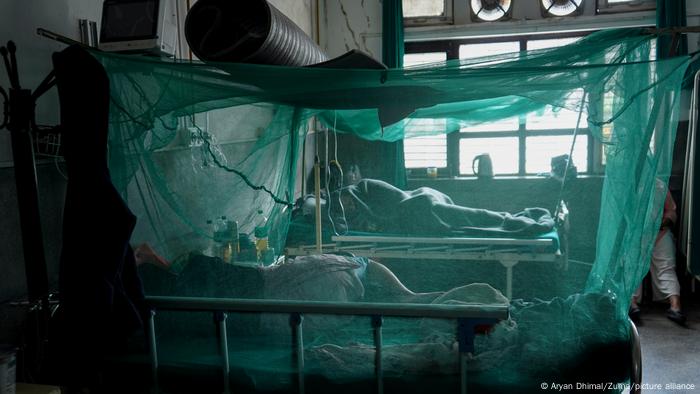
Dengue cases have been recorded in 75 out of 77 districts throughout the country, including remote hilly and mountainous regions.
Dengue is a mosquito-borne disease transmitted by female Aedes aegypti
and Aedes albopictus mosquitoes
Nepal has been battling a dengue outbreak, with the country recording over 17,500 infections and 21 related deaths in the past few months.
According to the health ministry, dengue has been recorded in almost all of the country but experts say that most infections are going unreported and that the authorities can only record a small percentage of the total cases.
Sher Bahadur Pun, chief of the clinical research unit at Sukraraj Tropical and Infectious Disease Hospital (STIDH) in Kathmandu, said that many patients don't visit health care centers to seek treatment as they consider the disease a seasonal viral infection and are aware that there is no specific treatment for dengue.
"In some affected areas, entire familes have been infected. But only one or two family members have visited doctors, and only these cases are being recorded," he told DW.
Runa Jha, director of the National Public Health Laboratory (NPHL) in Kathmandu pointed out the lack of adequate monitoring and testing capacities.
"In the case of the dengue outbreak, many cases might have gone unreported in the absence of fixed testing labs and due to the lack of systematic databases like the one we had during the COVID-19 pandemic," she said.
Avoiding mosquito bites is key
Though dengue, which primarily occurs in tropical and sub-tropical regions, is often mild it can be fatal in some cases.
It is a mosquito-borne disease transmitted by female Aedes aegypti and Aedes albopictus mosquitoes. The same vector also transmits the chikungunya, yellow fever and Zika viruses, according to the World Health Organization.
Symptoms of dengue include mild to high fever, severe muscle pain, rashes, severe headache, and pain in the eyes.
Many dengue patients in Nepal are reportedly using strong painkillers
and antibiotics without prescription
Nepal already experienced a major dengue outbreak in 2019, in which six people died and over 17,000 were hospitalized.
Health experts have long called on the government to put in place effective measures to prevent the spread of disease.
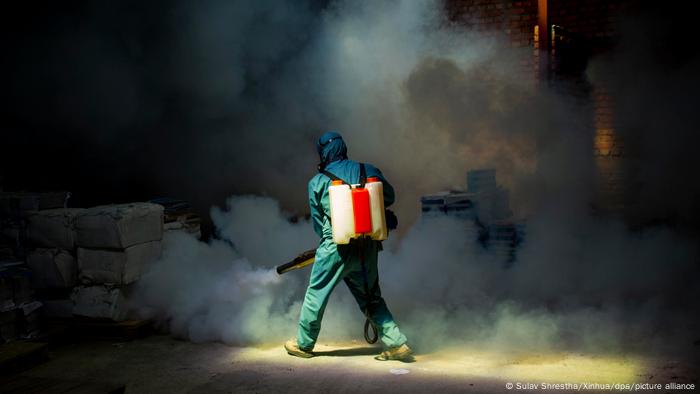
Jha said that authorities need to launch a campaign to eliminate mosquito breeding sites and raise awareness about the precautions people need to take.
She added that measures should be taken to avoid mosquito bites in schools and offices as well as at home.
"Dengue prevention and control depend on effective vector control measures. The best way to this effect is taking necessary precautions by people and communities themselves."
Outbreak could last weeks
The government has faced criticism for its handling of the current outbreak so far.
Pun blamed authorities for not paying enough attention to warnings from public health experts and putting in place proper measures.
"Even though awareness campaigns and disinfection drives have now begun, they won't be effective as dengue-virus-infected mosquitoes have already reached our homes," he said.
Speaking at a public function on Tuesday, Gagan Thapa, a former health minister and senior leader of the ruling Nepali Congress party, said that all tiers of government — federal, provincial, and local — had failed to come up with a coordinated response.
Responding to the criticism, Roshan Pokharel from the health ministry, told DW that the government had initiated public awareness campaigns as well as stepped up efforts to destroy the possible breeding sites of mosquitoes.
However, he acknowledged a lack of coordination among authorities and predicted that the current outbreak could last another four to six weeks due to the rainy season.
Battling medicine shortages
Another health ministry official, who asked not to be named, said that the government was considering declaring a dengue epidemic in the country, in the hope that it would improve coordination among various branches and tiers of government.
In recent days, reports have emerged that health facilities are struggling with shortages of medical testing kits as well as vital medicines such as paracetamol, which doctors recommend to bring down fever and ease body pains.
Many patients are reportedly using strong painkillers and antibiotics without prescription.
Ramesh Koirala, a cardiologist, said that using such medicines without consulting a physician could lead to severe health problems — and sometimes even death.
Edited by: Srinivas Mazumdaru
Russia's sham referendums in Ukraine: What does it hope to achieve?
Russian-occupied territories in Ukraine are holding referendums so that they can be absorbed into the Russian Federation. The process is reminiscent of the annexation of Crimea in 2014 — with differences.
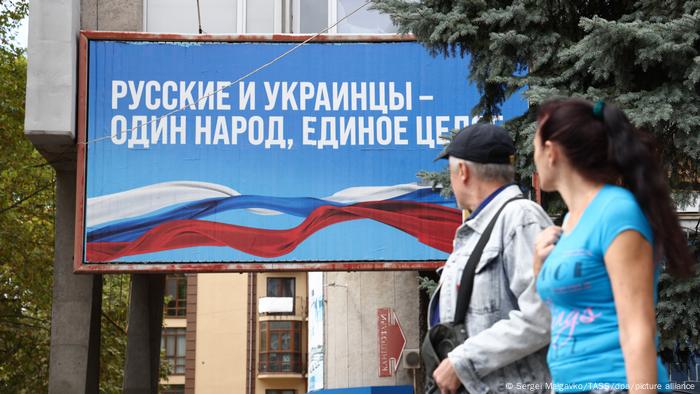
According to this poster in Kherson, Russians and Ukrainians are one people
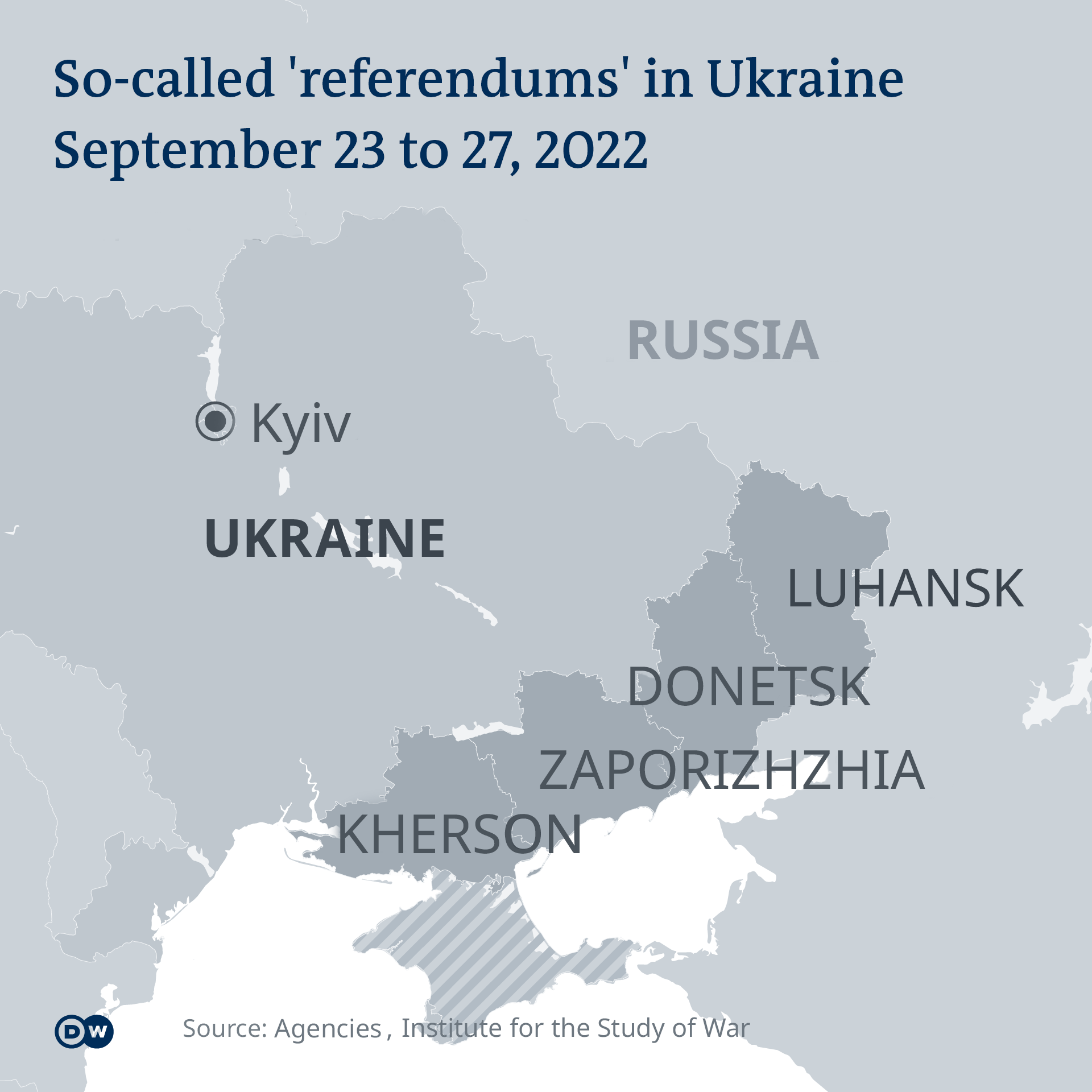
Russia had already declared its intent in spring, and is now going ahead with plans to annex the territories it has occupied in the south and east of Ukraine on a fast-track basis. Simultaneous votes in the Donetsk, Luhansk, Kherson and Zaporizhzhia regions have been scheduled from September 23 to September 27. In a speech on Wednesday, Russian President Vladimir Putin suggested that Moscow would recognize the results.
Just as it did with the Crimean annexation in 2014, Russia is making a point of appearing not to be involved. It was local Ukrainian politicians supported by the Russian military who announced the so-called "referendums." As in the case of Crimea eight years ago, the vote has been brought forward from a previously suggested date — that of November 4. Regional referendums are banned in Ukraine. Like in Crimea, there will be no independent election monitoring.
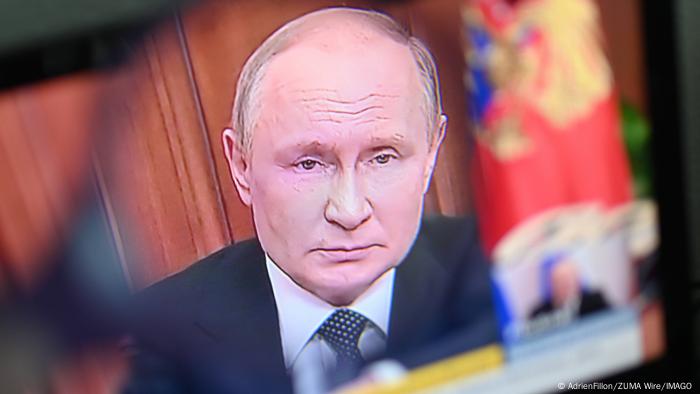
President Vladimir Putin made a speech on Russian TV on Wednesday
'Yes' or 'no'
However, that is as far as the similarities go — there are far more differences.
Donetsk and Luhansk are separatist republics that have effectively been under Russian control since 2014. Vladimir Putin recognized them as independent states shortly before the Russian invasion of Ukraine in February.
The Kherson and Zaporizhzhia regions, on the other hand, were occupied almost entirely or partially by Russia only after the invasion began. Fighting continues in all four regions to this day. A referendum had also been planned in the areas east of Kharkiv, which were occupied until a few days ago. The successful Ukrainian counteroffensive seems to have dashed that idea.
Russian media are reporting that there will be regional differences. In Donetsk and Luhansk, the ballot will pose a single question, to be answered with a "yes" or a "no," on whether to join the Russian Federation.
In Kherson and Zaporizhzhia, three questions will be asked but only one "yes" or "no" answer will be possible: "Are you for secession from Ukraine, establishing an independent country and joining the Russian Federation?"
Voting will also take place in Russia, where hundreds of thousands of Ukrainians have fled since 2014. The majority of Ukrainian refugees, however — several million — have fled to regions controlled by Kyiv and abroad
There will be no electronic voting. Mobile election teams escorted by police are scheduled to make house visits in the Zaporizhzhia region, the Russian-appointed head of administration, Yevgeny Balitsky, told Russian state broadcaster Rossiya 24 on Tuesday.
Russia's goals
Once the annexation has been formalized, the idea is that fighters from Donetsk and Luhansk will be able to join the Russian army. But Moscow plans to recruit volunteers in Kherson and Zaporizhzhia. The annexation of the new territories would allow Russia to use "all the forces of self-defense," former Russian President Dmitry Medvedev wrote on his Telegram channel on Tuesday. Many observers interpreted that as a threat to use nuclear weapons. However, a Ukrainian attack on a Russian military airport in the Russian-annexed territory of Crimea last month did not trigger an immediate Russian response.
Russia is suffering considerable losses in Ukraine
Russia's original plan to hold what was to look like an orderly vote has been scrapped, said Dmitry Oreshkin, a Russian political scientist. He told DW that a vote taking place "during a war that almost half of the population has fled," could not be taken seriously.
2019 survey in Donbas: no majority for annexation
There is no reliable data on the current mood in Ukraine's Russian-occupied territories. According to a 2019 survey commissioned by the Berlin Center for East European and International Studies (ZOiS), fewer than one out of two, or about 45%, of the residents of the separatist regions of Donetsk and Luhansk were in favor of annexation to Russia. At that time, 27% supported an autonomous status — and 54% of respondents in the two regions advocated a return to Ukraine.
Germany considers nationalizing another major gas importer — reports
SEFE, formerly known as Gazprom Germania, could become the second German gas importer to be protected from bankruptcy after Russia cut off supplies.
Germany's natural gas importers are threatened with bankruptcy as costs skyrocket
Following the nationalization of gas giant Uniper earlier in the week, the German government on Thursday confirmed it was considering the takeover of SEFE, the German subsidary of Russia's energy behemoth Gazprom.
Plans to nationalize SEFE were first reported in German news magazine Der Spiegel. Later, a spokeswoman for Economy Minister Robert Habeck said the government talks about the future of the company are ongoing.
She could not provide further details. SEFE had no immediate comment.
"Discussions are ongoing in the federal government regarding the future of Sefe," a spokeswoman for the Ministry of Economics told Reuters news agency.
SEFE under federal trusteeship since April
In June, the government placed Gazprom Germania, as it was then known, into long-term administration and provided it with a loan of up to €10 billion ($10.4 billion) to stop the company from insolvency.
With assets and subsidiaries in Germany, Britain, Switzerland, Belgium, the Czech Republic and outside Europe, the firm's activities are essential for the European gas market and supplies to industry and households.
Germany's winter gas woes
As winter approaches, Germany was doing all it can to save natural gas. Gas storage tanks were over 90% full.
On Thursday Habeck said Germany must fully utilize its fiscal policy to preserve the economy and keep business and industry investments going.
He added that being forced to replace Russian energy imports would cost Europe's biggest economy some €60 billion ($58.89 billion) this year and €100 billion next year.
Germany last week also took control of a Russian-owned oil refinery, which supplies 90% of the capital's fuel.
With the Uniper nationalization, Germany is pumping at least €40 billion ($39.49 billion) into its three biggest Russian gas importers Uniper, SEFE and EnBW's VNG division.
Fukushima: Japan attempts to safely remove nuclear fuel from crippled reactors
More than a decade after the second-worst nuclear disaster in history, engineers want to construct a huge water-filled tank around one of the damaged reactors and carry out underwater dismantling work.
The proposal would permit experts to deploy robots to more closely examine
the condition of the crippled reactor
Nuclear experts pondering the safest way to decommission the three crippled reactors at the Fukushima Daiichi atomic energy plant have devised a new plan to recover highly radioactive debris at the site, with even anti-nuclear campaigners giving the proposal their qualified support.
They warn, however, that the situation at the plant — on the northeast coast of Japan— remains precarious more than a decade since three of the six reactors suffered meltdowns after an offshore earthquake of magnitude 9 triggered a series of powerful tsunamis.
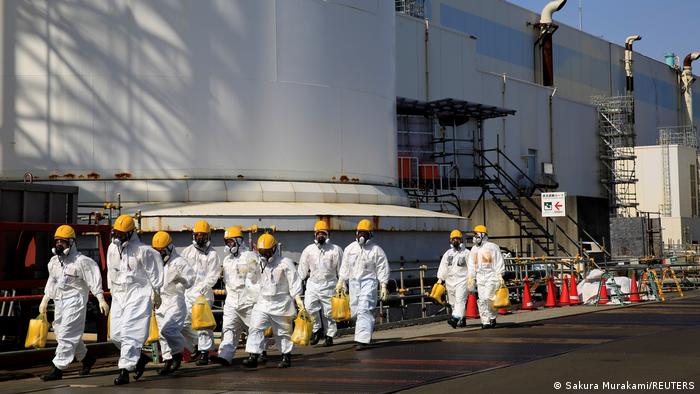
In their latest annual strategy report on progress at the plant, experts at the Nuclear Damage Compensation and Decommissioning Facilitation Office (NDF) have proposed the construction and filling with water of a massive concrete tank to completely enclose one of the reactor buildings.
The water would act as a shield to prevent radiation from escaping into the surrounding environment and give engineers more space, in which to operate heavy equipment to dismantle and remove the outer shell of the reactor building.
NDF experts plan to construct a massive concrete tank arond one of the reactor buildings
That, in turn, would permit experts to deploy robots to more closely examine the condition of the reactor, as well as the fuel that has escaped and pooled in the building's basement levels.
The plan was presented to the government at a meeting in Iwaki, just south of the plant, in early September, during which NDF President Hajimu Yamana explained the benefits.
Safe from radioactivity
"No radioactive materials would be swirling up underwater, so there would be almost zero impact on the outside," Yamana told the Asahi newspaper.
He emphasized, however, that the proposal was in the initial stages and no final decision had been taken. If it worked, however, then the same strategy could be deployed to help in the decommissioning of the remaining two damaged reactors at the facility.
"I cannot say anything for sure yet," Yamana said. "We are still in the very, very early stages of the concept study. There are still a lot of things to study as the attempt would be the first of its kind in the world."
Hajime Matsukubo, secretary-general of the Tokyo-based Citizens' Nuclear Information Center, remains a vocal critic of the Japanese government's insistence on the need for atomic energy, but agreed that the NDF plan appeared to offer a number of benefits for the decommissioning process.
"The work cannot go ahead without the water shield because it would expose workers to dangerously high levels of radiation so this idea for the construction of a tank around one of the reactors is positive," he told DW.
"But that does not mean that I am not concerned," he said. "It will be very difficult to construct this tank, to make sure it does not leak, and it will be very expensive and take more time, of course."
ARTISTS REFLECT ON THE FUKUSHIMA DISASTER AFTER 10 YEARS 'Artists and the Disaster: Imagining in the 10th Year' By organizing the exhibition "Artists and the Disaster: Imagining in the 10th Year," the art center in the city of Mito (photo), which suffered damage from the earthquake of 2011, looked back on the catastrophe after one decade through the eyes of Japanese artists. 12345678
Another earthquake
Another concern that has been a constant since the March 2011 disaster is the possibility of another major earthquake or tsunami damaging the tank and potentially exposing radioactive debris to the air.
"We have already seen what long-term exposure to salt water at the site does to metal and other materials, and if there was another major tremor then that could very easily affect the tank and even see it collapse," Matsukubo said. "To me, that is the biggest worry."
He also questioned why it had taken the Tokyo Electric Power Company (TEPCO), decommissioning experts, the government and Japan's nuclear regulators more than a decade to think up the plan. It is likely that the delay will further extend the schedule and total cost of rendering the site safe.
Government estimates put the cost of decommissioning at 8 trillion yen (€56 billion, $55.3 billion), although that figure may increase if new complications crop up, while the work will probably continue for another 30 years.
Kazuto Suzuki, a professor of science and technology policy at Tokyo University, agreed that the new approach to the decommissioning of the reactors "seems to be a good one, but the problem will be in the execution."
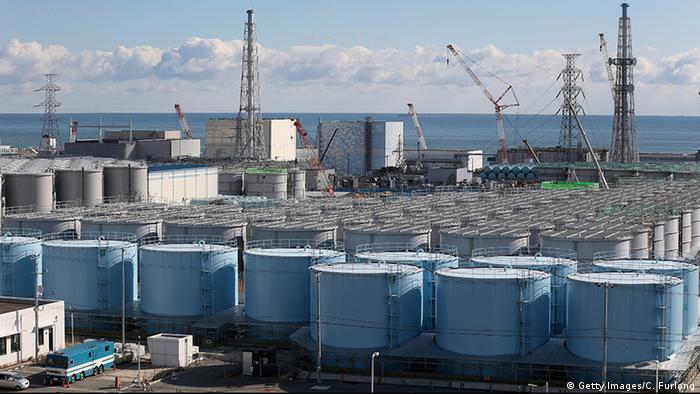
"I'm not an expert, but I can see problems with leaks — as they have already experienced from the tanks holding contaminated water at the site — and then that water escaping into the sea," he said. "This is a really big issue for the people still living in the region and they have to be able to guarantee a safe level of water within the tank surrounding the reactor."
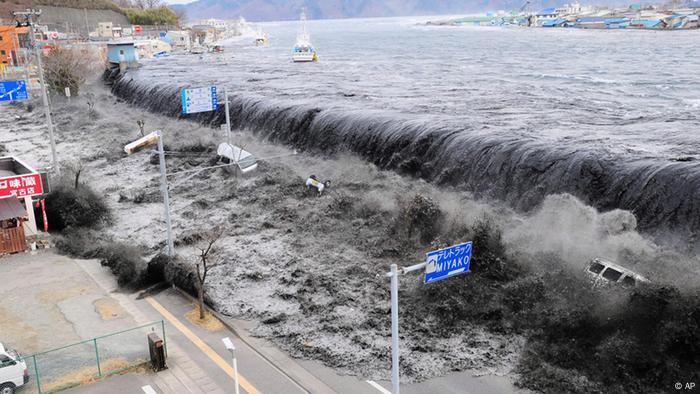
Thousands died in 2011 when a tsunami swept inland and led to a meltdown
at the Fukushima nuclear power plant
Seismic concerns
There are also concerns about the stability of the ground that the tank will stand on due to the immense weight it will have to bear, Suzuki pointed out.
He was less worried, however, about the possibility of another earthquake wreaking further havoc at the site.
"Concern about another earthquake is legitimate, but we have to remember that the original damage to the Fukushima plant was almost entirely the result of the tsunami, not the earthquake," he said.
"I actually believe that Japan can be quite proud of the sophisticated anti-seismic technology that is incorporated into all buildings here, but especially our nuclear plants," Suzuki said.
"I am confident that thanks to the lessons we have learned at Fukushima already, the impact of another earthquake on the walls of a tank around a reactor would be factored into the construction process."
Edited by: Keith Walker
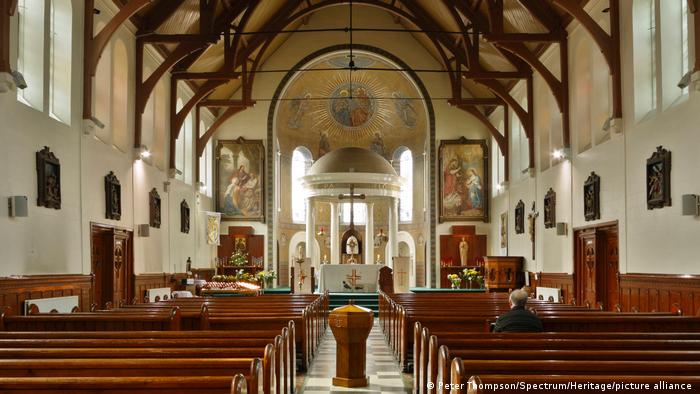
N. Ireland has more Catholics than Protestants for first time, census shows
The first-time demographic shift could have repercussions for British unity. When Northern Ireland was founded in 1921 as part of the United Kingdom, two-thirds of the population were Protestant
Catholics now outnumber Protestants in Northern Ireland
For the first time in the century of its existence, Northern Ireland has more residents who identify as Catholic than those call themselves Protestants, a census has shown, according to results published on Thursday.
When Northern Ireland was founded in 1921 as part of the United Kingdom, two-thirds of the population was Protestant, in strong contrast to the largely Catholic Irish state to the south.
Some observers believe the shift in religious affiliation could boost support for the region to break with the UK, creating a united Ireland on the entire island of the same name.
What did the census show?
Data from the 2021 census showed 45.7% of respondents identified as Catholic or were brought up Catholic, compared with 43.5% identifying as Protestants.
The previous census, which was carried out in 2011, showed Protestants outnumbered Catholics 48% to 45%.
The shift is one that has been long predicted by demographers, as Catholics tend to be younger and have higher birth rates.
Another census question found that 32% of respondents identified solely as British, down from 40% in 2011. Twenty-nine percent saw themselves as Irish, up from 25%, while 20% said they were Northern Irish.
What could the result mean for the UK?
The landmark shift is likely to lead to more calls for a referendum on reuniting Northern Ireland with the Republic of Ireland. Such a reunification is permitted under the Good Friday Agreement if a majority in Northern Ireland is in favor.
The Irish nationalist Sinn Fein party, which spoke of the census results as "a clear indication that historic change is happening across this island," is among those demandin a vote on the issue. It has stepped up its calls for a poll particularly since Britain decided in 2016 to leave the EU, a move opposed by 56% of Northern Irish voters.
However, such a poll can be carried out only with the approval of the British government, and so far surveys have consistently shown a clear majority of voters wanting to remain part of the United Kingdom.
Sectarian issues played a role in the often violent unrest in the region known as The Troubles lasting from around the late 1960s to 1998, when the so-called Good Friday Agreement led to a power-sharing government.
More than 3,000 died in the fighting between mainly Catholic Irish nationalist militants seeking a united Ireland, and mainly Protestant pro-British loyalists and the British Army.