Monday, June 26, 2023

Op-Ed: The grim future of entertainment – Neuroforecasting sales by focus groups

By Paul Wallis
Published June 25, 2023

Queen guitarist Brian May lights up the Platinum Party outside Buckingham Palace. 
— © AFP/File

Yes, a focus group could dictate your entertainment. New research has achieved a 97% accuracy in predicting what people like in music. This isn’t the same thing as playlists predicated on your past history. This is a result of machine learning processing neurological and physical responses.

This is neuroforecasting, or somewhat less elegantly, total bonehead behaviorism a la mode. Psychology for plodders. The absolute nadir of insight into humanity.

Better still, this could be applied to all forms of entertainment. Formulaic crud can be monetized using this method. You just mass—produce mainstream, and you’re a market-savvy genius. It’s exactly like media sales pitches. They bought it before, so they’ll buy it again.

What future bliss awaits? Trundle furiously to your playlist and be enriched by its utter predictability, perhaps? Another somewhat self-serving description of this invasive, senseless approach to human experience could be “guaranteed stagnation of the arts”.

I think the word is “Meh”. That overworked word may also be an overstatement in this case. This has been going on for years. We already have plenty of that stuff in ponderous patches, recycled raps, and hip-hopeless dreck in the streaming charts. The difference is this is proven by neuroscience.

I guess it boils down to whatever cookie-cutter crap choices you have. Some more schmaltzy garbage? Or some hard rock schmaltzy garbage? There can be no real choices if that’s how you decide what to market.

There’s an irony rattling around here. The most successful musical acts and songs in history are all unique. They’re one-offs. So if neuroforecasting can predict a playlist, or a pre-market sample, it can’t predict artists. It can generate a shopping list – to be fair, most people can’t – but not trends or emerging art forms.

There are places this tech simply can’t access. Meaning that mindblowing unforgettable performances can’t even be on the map for prediction. That song that stays with you forever isn’t registerable on this basis.

Anyway – What’s the point of predicting after the fact? Of course, all this is to be used to predict sales. We’ll leave out the bit about sub-sectored transient demographics and social environments. What you like as a tween isn’t going to be what you like 5 or 10 years later.

This tech has all the hallmarks of yet another media psychology tyranny-bureaucracy in progress. It’s a good fit for all those little inclusions in a personal profile that seem to pop up in your personal information at the wrong times. It could also be used for mapping “neurodivergence”, that terrible crime against statistics.

For a rather banal example – You like whatever type of music or art, therefore you’re neurodivergent, you unspeakable brute, you. You have been known to like jazz. Therefore you’re not the person we need for a busboy or executive sycophant, so there.

I’m looking forward to neuroforecasting being applied to comedy. People obviously like references to bodily functions, non-existent sex, and slapstick. Let’s do thousands of hours of that instead of anything else. Makes you wonder how Fox News will survive, doesn’t it?

Neuroforecasting in this form is a target at point blank range. The target is unmissable. Is that good enough?

A law that bans sex toys as obscene and morally harmful is being challenged by women in Zimbabwe


A woman in Zimbabwe says she and other women are “tired of oppression” and is challenging a law that bans sex toys and threatens those found in possession of them with jail sentences

By FARAI MUTSAKA - Associated Press


HARARE, Zimbabwe (AP) — Sitabile Dewa was content with her sex life when she was married, but after her divorce, she found her prospects for erotic pleasure rather bleak.

In socially conservative Zimbabwe, divorced women and single mothers are often cast as undesirable partners for men, and in her frustration Dewa decided she wanted to use sex toys.

The problem is sex toys are against the law in Zimbabwe.

“I should not be deprived of self-exploration and indulgence in self-gratification,” said Dewa, 35.

Part of Zimbabwe's "censorship and entertainments control" law makes the importation or possession of sex toys illegal as they are deemed “indecent” or “obscene” and harmful to public morals. Owning sex toys can put a woman in prison.

Dewa said the law is “archaic” and is challenging part of it in court on the basis that it is repressive and infringes on her freedom. She filed court papers in March suing the Zimbabwe government and seeking to have parts of the law repealed. The court is considering her case.

Her bold, open references to masturbation and women's sexuality are bound to make many Zimbabweans uncomfortable.

But her crusade is significant, say women's rights campaigners, as part of a broader challenge to the nation's patriarchal outlook, where women's choices on a range of other issues that affect them and their bodies — including contraception, marriage and even what they wear — are scrutinized and often limited.

Dewa is a women's rights activist herself, and says she applied her own life experience in her stand against the ban on sex toys.

Proof that the law is actively enforced came last year when two women were arrested over sex toys.

One of them was running an online business selling sex aids to women and offering advice on their use. She spent two weeks in detention and was sentenced to six years in jail or 640 hours of unpaid community work.

The thing that appears to rile authorities the most on the sex toy issue is the sidelining of men, said Debra Mwase, a programs manager with Katswe Sistahood, a Zimbabwean group lobbying for women's rights. Sexually liberated women frighten the men who dominate Zimbabwe’s political, social and cultural spaces, she said.

“Sex is not really seen as a thing for women," Mwase said. "Sex is for men to enjoy. For women, it is still framed as essential only for childbearing."

“Sex without a man becomes a threat," she added.

Dewa boils it down to this: “These laws would have been repealed a long time ago if the majority of users were men," she said.

Also significant is Zimbabwe's history. While untangling the effects colonialism might have had on women's rights in sub-Saharan Africa today, multiple studies have shown that African women were far more sexually expressive before European laws, culture and religion were imposed.

Prominent Ugandan academic Sylvia Ramale wrote in the introduction to a book she edited titled “African Sexualities” that pre-colonial African women were “relatively unrestrained” when it came to their sexuality. For one thing, they wore revealing clothing, Ramale said.

But colonialism and the foreign religion it carried with it “stressed the impurity and inherent sin associated with women's bodies,” she said.

Mwase quips at what she sees as a great irony now in Zimbabwe, which has been independent and free of the oppression of white minority rule for 43 years and yet retains laws like the one that deals with sex toys, which is a carryover from colonial times.

"African societies still vigorously enforce values and laws long ditched by those who brought them here. It is in Europe where women now freely wear less clothing and are sexually liberal, just like we were doing more than a century ago,” she said.

Dewa's campaign for access to sex toys falls into the bigger picture in Zimbabwe of women being “tired of oppression," and is clearly forward-thinking, she said. But there has recently been evidence of a throwback to the past that might also be welcome.

Some parts of a pre-colonial southern African tradition known as "Chinamwari" are being revived, in which young women gather for sex education sessions overseen by older women from their families or community.

Advice on anything from foreplay to sexual positions to sexual and reproductive health is handed out, giving Chinamwari a risqué reputation but also the potential to empower young women.

In modern-day Zimbabwe, Chinamwari meetings are advertised on the internet. But they also now come with guarantees of secrecy, largely because of the prevailing attitudes toward sex and backlash from some men uncomfortable with the thought of women being too good at it.

More Associated Press Africa news: https://apnews.com/hub/africa

Controversy raised over sex toy ban in Zimbabwe

By NKOSANA DLAMINI |

 chinadaily.com.cn | Updated: 2023-02-08 


A  Zimbabwean feminist group, Women's Academy for Leadership and Political Excellence, has taken the government to court to challenge a ban on the importation of sex toys in a move that has reignited debate on the morality of people using synthetic products to derive sexual satisfaction.

Zimbabwe criminalizes the importation of goods regarded as indecent according to the law.

But WALPE executive director Sitabile Dewa says the law is "archaic and infringes on women's rights to sexual pleasure" and is an ill-advised attempt by authorities to police the bedroom.

"We cannot have two women in 2022 alone ending the year with criminal records for just choosing to pleasure themselves differently," she said.

She was referring to the arrest and conviction of university lecturer Shirley Chapunza, who was recently jailed for six months with the option of paying a fine after being accused of importing sex toys from Germany.

Popular Twitter user Ayanda Muponda was also ordered to perform 640 hours of unpaid work after she was convicted of trading and advertising her sex toys on various social media platforms.

Sex toys — also called adult toys or "marital aids" — are often described as objects people use to pleasure themselves during sex or masturbation.

In its court challenge, WALPE has enlisted the services of the Zimbabwe Lawyers for Human Rights, a prominent group of experienced attorneys.

"This is a public litigation case challenging women's rights to health; it is a case of sexual reproductive health justice," Dewa said.

"We are appealing to the courts to review section 47 (1) of the Customs and Excise act which has been overtaken by modernity. The clause is also vague in terms of possession. If they are manufactured locally, does it mean women are allowed to use them?"

Outside the courts, the move has generated a lot of debate among Zimbabweans, with some men arguing the energy shown by women in asserting their rights to sex toys is an indirect insult to their bedroom credentials.

"The rising demand for sex toys is a vote of no confidence in the current generation of men," said Jacob Rukweza, a politician and social commentator, via social media.

Some argue sex is an interactive process and toys are an unnecessary element.

Political activist Brian Tembo said the litigation filed by the NGO was much ado about nothing and an attention-seeking stunt, arguing women have more serious issues that need to be tackled as opposed to "chasing after dildos".

Some Zimbabweans argue the right to sex toys is an elite preoccupation in a largely conservative society which views artificial forms of sexual pleasure as taboo.

Defending her organization's action, the WALPE director insists Zimbabwean men's views are driven by chauvinistic tendencies she claims erroneously granted them false rights over women's bodies.

"Men must not feel insecure, as there is no way the toys can replace them. Sex toys are legal in South Africa; why have we not seen men being replaced there?" Dewa said.

The argument over sex toys has in years past come in for heated debate in Zimbabwe's parliament, with some supporting lifting the ban. Zimbabwe licensed its first premium sex toy shop in 2020 in the capital Harare.


Third attack on Sikh community in Pakistan: Shopkeeper shot dead in Peshawar

Yudhvir Rana / Jun 25, 2023

Manmohan Singh was shot dead in Peshawar.


AMRITSAR: Tragedy struck the Sikh community in Pakistan as Manmohan Singh, a Pakistani Sikh shopkeeper, was shot and killed by unidentified motorcyclists in the city of Peshawar on Saturday evening. This is the third such incidence in Pakistan this year.

The 29-year old victim operated a cosmetic shop near Rasheed Garhi Chowk, a mere five-minute distance from Gurdwara Bhai Joga Singh.

Peshawar-based religious and social activist Baba Ji Gurpal Singh said that Manmohan was attacked by assailants while he was returning home on an autorickshaw. The assailants, riding a motorcycle, targeted him with bullets to his heart and head, resulting in his immediate demise at the scene.

The incident occurred just two days after another Sikh shopkeeper, Tarlok Singh, a Hakim (traditional healthcare professional) narrowly escaped a similar attack. “The three assailants shot five rounds but Tarlok hid under the counter and survived the attack,” Gurpal said.


Tarlok Singh survived a similar attack on Friday.

While terrorist organisation Daesh had claimed responsibility for the attack on Tarlok, Gurpal said that no organisation has claimed responsibility behind Manmohan's killing. He also questioned why the peaceful Sikh community was being targeted by terrorist organisations.

Peshawar’s Sikh community made an earnest appeal to the international Sikh community, including the Shiromani Gurdwara Parbandhak Committee (SGPC), seeking assistance for their safety and security. Gurpal said that these incidents had ignited deep concerns regarding the safety and security of the Peshawar Sikh community.

Gurpal said that out of the approximately 7,000 Sikh population in Peshawar, a significant number had chosen to migrate to other cities within Pakistan such as Nankana Sahib and Lahore.

“This migration itself reflects the growing concerns for the safety and well-being of the Sikh community in Peshawar, prompting some individuals to seek refuge in other areas of the country” he said.

The last rites of Manmohan Singh would be performed on Sunday, he added.
Europe’s moral compass, lost at sea

GEMMA BIRD 
SOCIAL EUROPE
20th June 2023


The Greek migrant shipwreck was another preventable tragedy at the borders of Europe.
An image of the boat captured by the Hellenic Coastguard

The Mediterranean route between Libya and Italy has been described as the ‘world’s most dangerous maritime crossing‘. This was proved once again last week in the tragic shipwreck of a boat full of men, women and children, around 50 miles from the southern Greek town of Pylos.

The boat was being tracked by the Hellenic Coastguard, which said that those on board refused assistance repeatedly and wanted to continue to Italy. It was for this reason that no active rescue took place, according to the coastguard.

But activist groups, including Alarm Phone, an emergency hotline for refugees in distress in the Mediterranean, have contested this account. In an email to authorities, published by the investigative journalists We Are Solomon, Alarm Phone alerted authorities to the vessel’s location and reported that ‘several people, among them some babies, are very sick. The people on the boat said that they cannot go on.’

Mixed reports and timelines have continued to come out and survivors’ stories and experiences are starting to be reported. Alarm Phone claimed that Maltese and Italian authorities were also aware of the vessel’s situation and that ‘European authorities could have sent out adequate rescue resources without delay. They failed to do so because their desire to prevent arrivals was stronger than the need to rescue hundreds of lives.’

International lawyers and former members of the Hellenic Coastguard have said that authorities should have rescued the boat regardless of whether passengers requested help, not least because the vessel was unseaworthy and overcrowded. As the Royal National Lifeboat Institution in the UK has made clear, it is a duty—both moral and under international maritime law—to save lives at sea.
Pushbacks

This is far from the first time the Hellenic Coastguard has faced accusations of endangering asylum-seekers’ lives at sea. In March 2020, Ursula von der Leyen, president of the European Commission, thanked Greece for acting as the European Union’s ‘shield’. She pledged to work in solidarity with the country to ensure that as a priority ‘order is maintained‘ at Greece’s external border, also an external border of the European Union.

What this means in practice has become clear with accusations and mounting evidence that the Hellenic Coastguard is conducting illegal pushbacks, preventing access to the right to claim asylum once a person has entered a state’s territory. Human-rights advocates, MEPs and other non-governmental organisations have repeatedly accused both the Hellenic Coastguard and Frontex (the European border and coastguard agency) of involvement in pushbacks.

In October 2022, a report by the EU anti-fraud watchdog, OLAF, published by German media, accused Frontex of covering up or failing to investigate serious allegations of human-rights violations. A video published by the New York Times last month appeared to show coastguard vessels abandoning at sea people who had landed in Greece. Again, this would be a violation of their right under international law to claim asylum, having landed on the island of Lesbos, in Greek territory.

If the Hellenic Coastguard’s account of the recent shipwreck is true, and those on board the vessel wanted to continue to Italy and avoid Greek territory, it’s important to consider why this would be the case. One reason might very well be the growing awareness of the risk of pushbacks.

These events suggest that Europe’s ‘shield’ is not prioritising saving the lives of those seeking safety, but rather, as von der Leyen said in that same press conference in 2020, making sure ‘order is maintained’ when ‘migrants that have been lured through false promises into this desperate situation’ find themselves at Europe’s door.
Deterrence policies

In 2016, Donald Tusk, then president of the European Council, warned people against making dangerous crossings to the EU. He said: ‘Do not come to Europe. Do not believe the smugglers. Do not risk your lives and your money. It is all for nothing.’

Statements like this wrongly suggest that people make these journeys out of choice, that a far easier alternative exists. But, as the Somali-British poet Warsan Shire put it poignantly, ‘You have to understand, no one puts their children in a boat unless the water is safer than the land.

Making these journeys less safe will not prevent them from happening. The failure to rescue, the decision to push back, only puts the lives of people in boats at risk. It does not prevent other people making those journeys in the future.

Shipwrecks such as this are preventable, but only if EU policy moves away from its focus on closing borders and ‘maintaining order’, towards one of humanitarian action. This would mean the opening of genuinely safe routes for people seeking safety, that do not rely on them entering the territory of a state on a crowded, dangerous vessel to be able to make an asylum claim.

This article is republished from The Conversation under a Creative Commons licence


Gemma Bird is a senior lecturer in politics and international relations at the University of Liverpool and a senior research fellow at the Centre for Global Cooperation Research, University of Duisburg-Essen. Her research focuses on migration and humanitarianism.
What the Titanic submersible saga and the Greek migrant shipwreck say about our reactions to tragedy


By Associated Press
 Jun 26, 2023

Across the span of nearly a week, the saga of a lost submersible that had gone into the depths of the ocean to see the Titanic wreckage rippled across the global conversation — culminating in news that the craft had imploded and its five occupants were dead.

But a far bigger disaster days earlier, the wrecking of a ship off Greece filled with migrants that killed at least 80 people and left a horrifying 500 missing, did not become a moment-by-moment worldwide focus in anywhere near the same way.

One grabbed unrelenting, moment-to-moment attention. One was watched and discussed as another sad, but routine, news story.

READ MORE: What's next in the search for the imploded submersible?
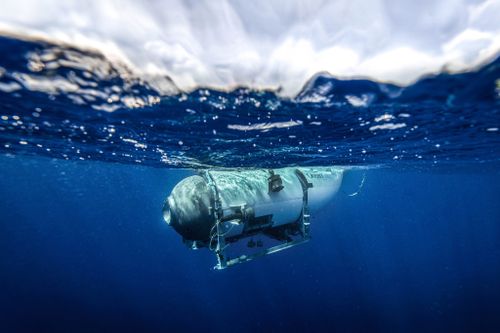
A small OceanGate submersible (OceanGate)

What makes these two events at sea different in how they were received? Viewed next to each other, what do they say about human reactions to tragic news? And why did the saga of the submersible grab so much attention?

There was an unknown outcome and (we thought) a ticking clock

By the time the world learned about the Greek shipwreck, the event had already taken place and, to some extent, the outcome was already known. All that was left was the aftermath.

Conversely, the Titan (the world thought) was an event in the process of happening — something that unfolded in real time with a deadline attached. As with any narrative, a ticking clock increases tension and attention.

The fact that no one could communicate with the submersible — or learn anything about what the people inside were experiencing — only added to the potential for close attention.

And the possibility of a happy ending — at least for a while — also helped sustain attention, said Jennifer Talarico, a psychology professor at Lafayette College in Pennsylvania who studies how people form personal memories of public events.


This undated handout image provided by Greece's coast guard on Wednesday, June 14, 2023, shows scores of people on a battered fishing boat that later capsized and sank off southern Greece. (Hellenic Coastguard via AP)

A renowned historical tragedy was back in the news

Before anything even went awry, the Titan was already venturing into a realm of existing high interest — the wreck of the Titanic, itself the archetype of modern disasters long before James Cameron's popular 1997 film. So there was an interest already baked in that had nothing to do with the submersible itself.

Cameron's reaction to the Titan disaster only intensified that connection.

He told the BBC in an interview broadcast on Friday that he "felt in my bones" that the Titan submersible had been lost soon after he heard it had lost contact with the surface during its descent to the wreckage of the ocean liner at the bottom of the Atlantic Ocean.
He said focus in the media over the next few days about the submersible having 96 hours of oxygen supply — and that banging noises had been heard — was a "prolonged and nightmarish charade".


Director James Cameron spoke about the loss of the five people aboard the Titan sub. (Mario Anzuoni/Reuters)

Class and race played a role

Many reactions and memes this week centred around the notion — fair or not — that one event involved rich people using the ocean as a playground, while the other was a sadly frequent recurrence of misfortune befalling people who lack status, resources or even a voice in the modern marketplace of ideas.

Apryl Alexander, a public health professor at University of North Carolina-Charlotte who has studied trauma and survivors, said the migrants on the ship in Greece didn't seem to engender the same interest from the public as did the wealthy individuals who paid $US250,000 ($374,000) apiece to explore the Titanic.

That reminded Alexander of the differences in news coverage of crime in the United States. Crimes get more attention when the victim is white and wealthy compared to a person of colour in poverty, Alexander said.


Apryl Alexander, a public health professor at University of North Carolina-Charlotte who has studied trauma and survivors, said the migrants on the ship in Greece didn't seem to engender the same interest. (AP)

A small group of people had the media's ear

Tim Recuber, an assistant professor of sociology at Smith College who studies mass media, digital culture and emotions, said people tend to be drawn to stories that allow them to empathise with the suffering of others — and that it's easier to empathise when there are smaller numbers of people involved.

"I think some people are calling out this time around the sort of inequalities that are baked into it around class," Recuber said.

"We are able to learn who the people on the sub are because of who they are. They're wealthy and they have access to the press.

"Divisions of race and national identity matter in terms of who gets empathised with."

Survivors of a shipwreck are seen inside a warehouse where they're taking shelter at the port in Kalamata, Greece. (AP)

The public lives vicariously through the risks others take

Individuals who choose their risks have grabbed headlines almost since there have been headlines. So the public was likely enthralled about others cheating death by doing something dangerous, said Daryl Van Tongeren, a psychology professor at Hope College in Michigan who has studied the meaning around big events and their effect on people.
In other words, he said, readers and viewers can feel alive by living vicariously through others who are taking risks.

"There's this fascination with people who engage in these high-risk experiences," Van Tongeren said.

"Even though we know that death is the only certainty in life, we invest in these activities where we get close to death but overcome it. We want to demonstrate our mastery over death," he said.

The five aboard were pilot Stockton Rush, the CEO of OceanGate; French explorer and Titanic expert Paul-Henry Nargeolet; British adventurer and billionaire Hamish Harding; and Pakistani businessman Shahzada Dawood and his son Suleman. (9News)

Disaster fatigue is a factor, too

The pandemic. Mass shootings. Economic problems. War. Climate change. It can be hard for another piece of bad news to punch through.

"People are starting to tune out," Alexander said.

In the end, she said, she'd like to see the same level of societal interest in human tragedies regardless of race, religion, demographics, or other factors.

"For all of us, we hope that if any of our loved ones go missing that the media and the public would pay the same attention to all stories," she said.
Pufferfish has long roots in culture

June 25, 2023
Annette Tan

CNA – James Bond had a close call with pufferfish in the 1957 novel From Russia With Love.

Captain James Cook, too, had an unpleasant experience after eating its roe and liver, experiencing a prickling sensation that only subsided with “a vomit and sweat”, according to Tom Parker Bowles’ The Year Of Eating Dangerously. Legendary Japanese kabuki actor Bando Mitsugoro VIII famously perished after downing four servings of it in 1975.

More recently, an incident in Malaysia in April resulted in the unfortunate deaths of an elderly couple who consumed it, which led to calls for more awareness regarding its risks and how it’s sold.


DEADLY REPUTATION


The pufferfish’s notorious and sometimes deadly reputation precedes it. It’s down to a potent neurotoxin called tetrodotoxin (TTX), which is produced by the small crustaceans it’s fond of consuming. TTX is estimated to be up to 1,200 times more poisonous than cyanide – and a mere two milligrammes of it can disrupt nerve impulses, leading to nausea, paralysis and cardiac arrest.

So it’s no surprise that the sale of pufferfish is strictly controlled or outright banned in some countries.

In Singapore, for instance, restaurants can only buy farmed ones (meaning it’s got no chance of eating its deadly TTX-carrying prey) and only through proper channels.

The Singapore Food Agency (SFA) strictly regulates its import. Only the TTX-free muscles, fins, skin and milt of farmed pufferfish, and the prepared muscle of wild pufferfish are permitted. Additionally, all imported pufferfish must be prepared by SFA-accredited establishments certified and licensed by the Japanese government.

A health certificate from Japanese authorities, detailing where the fish was sourced and prepared, must also be provided.

The SFA also reminds the public never to consume pufferfish caught in the wild and prepared by amateurs.

FINE DINING IN JAPAN

Despite the strict rules regarding its consumption – or precisely because of that – it continues to be a source of culinary fascination for many, and a huge part of their history and culture for others.

No other country is associated with pufferfish more than Japan, which is the largest consumer of fugu, as it’s called there, in the world.

For over 2,000 years, eating it has been a daredevil pursuit entrusted to the hands of specially trained chefs, who complete two years of specialised training before they are tested on their ability to identify different pufferfish species and accurately determine the TTX levels in each. Only after demonstrating their proficiency in properly gutting the fish are they deemed ready to prepare fugu for consumption.

“Fugu is an element of fine dining in Japanese dining traditions. Eating pufferfish, which is very expensive for Japanese people, gives you a sense of happiness. Personally, I enjoy fugu as well as I find it very delicious,” said Kenta Yamauchi, chef-owner of Hazuki, an upscale Japanese restaurant in Singapore which sources its farmed fugu from the Yamaguchi, Oita and Fukuoka prefectures.

According to him, fugu season is from November to February, with its soft roe (shirako) becoming fattier and more delicious at the start of the year.

Upmarket Japanese restaurants like Hazuki typically present gossamer slivers of fugu sashimi (that is, done the usuzukuri way) fanned out on a plate to resemble a chrysanthemum flower, a flex of the chef’s slicing skills. Another way would be as a hot pot, as the fish bones lend themselves to a tasty broth.

Despite its long history of consuming pufferfish and preparation by expert chefs, the country has not been immune to its dangers. In 1948, Japan’s prefectures began requiring licenses for those who serve fugu, leading to a decline in annual fugu poisonings. The banning of fugu kimo (the liver) in 1983 resulted in even fewer incidents.


GOOD FAITH AND FOLKTALES

And while we automatically associate pufferfish with Japan, it’s not the only place where it’s considered a delicacy.

In Singapore, it was a treat among the Malay and Orang Laut (Malay for “people of the sea”) community who, like the Japanese, relied on the sea as a source of sustenance in the days of old.

“Our people have always had a tacit understanding of how to treat the bounty from the sea,” explained Khir Johari, author of The Food Of Singapore Malays, a landmark book that chronicles the history, geography and cultural beliefs that have shaped Malay gastronomy.

“It’s fascinating that our ancestors somehow figured out how to clean ikan buntal (Malay for pufferfish).

“Many people in the village, not just the elders, but also housewives trained by their mothers, knew how to handle it.”

According to Khir, pufferfish were typically cleaned on the boat by those who’d fished it. “They would remove the innards… most importantly, the ovaries and the liver. If any of that breaks during the cleaning, they would throw the fish back into the sea.

“The part near the ventral fin had to be removed. If you could not find those fins, you couldn’t bring it home because that would mean that the poison would be all over the fish (making it unsafe to eat).”

Firdaus Sani, a fourth-generation Orang Laut from Pulau Semakau and founder of Orang Laut SG, said his community elders would take six to eight hours to clean the fish, after which, it

was “double-boiled with the innards tied into a little braid so they don’t break.” Preparing it was a “community effort. A medium-sized fish (weighing between five and six kilogrammes) could feed about 25 people.”

‘PANTANG LARANG’

Like other traditional delicacies such as buah keluak and durian, the consumption of pufferfish in Singapore’s coastal communities of the past comes with some pantang larang (superstitions or taboos).

“For instance, you cannot consume coffee when you eat pufferfish,” said Firdaus. “It will cause you to feel mabuk (a sense of disembodiment, like dizziness).

Another taboo is eating fruit with sap, like mangosteens… The belief is it has some properties that don’t go well with it.”

Whether or not these taboos hold any water is anyone’s guess and the community is not about to contradict these time-honoured diktats.

“These folklore are important and we don’t go against it because they are the words of the orang lama, individuals who have tried and tested them,” Firdaus said.

Meanwhile, Khir told of another folklore shared by Malay elders: “If, when boiling the fish, the water gets dark and murky, it means the poison has gone into the flesh. So you cannot eat it,” he said.

While both Malay and Orang Laut cultures parlay the fish to a dish called kerabu buntal (loosely translated to mean pufferfish salad), their versions differ from one another.

For one, the Orang Laut version includes the potentially poisonous liver. “The liver becomes a rich base along with chillies, lemongrass and kangkong (water spinach),” explained Firdaus.

The pounded base is cooked down with the pufferfish meat to a thickish sambal.

“While the texture of the meat – somewhat like that of Patagonian toothfish – is great, you need spices like red chillies, ginger, garlic, and lots of black pepper and lemongrass to bring out the lemak-ness (richness) of the fish,” said Khir. “We cook it down till the entire mix reduces so that it’s quite dry, hence the name kerabu buntal.”

FEWER FUGU CHEFS

With strict rules regarding its consumption in place, both in Japan and Singapore, the art of preparing pufferfish is slowly becoming one that’s limited to a few.

According to Firdaus, the number of individuals skilled at preparing pufferfish in the Orang Laut community has dwindled since fishing requires “the luxury of time” in modern Singapore. And even in Japan, Yamauchi reckoned that the rise of farmed fugu and an increasing number of Japanese fishmongers skilled at preparing fugu have led to fewer qualified chefs.

Nevertheless, the fascination with pufferfish remains intact for now – whether served as a seasonal delicacy during the winter months at Japanese restaurants or even as part of yusheng during Chinese New Year. And for anyone mulling the prospect, it pays to fall back on the adage that when in doubt, sit it out.
OPINION: What Should be Done with Ukraine and Russia-Muscovy: Veteran Canadian Diplomat Reflects

Former Canadian diplomat argues the case for admitting Ukraine to NATO and renaming Russia as Muscovy.

By Nestor Gayowsky
Kyiv Post.
June 25, 2023,
Kyiv, Ukraine. Photo credit: AFP.

In December 1991, in my capacity as Consul General, I recognized Ukraine as an independent country on behalf of Canada. Before and since I have followed Ukrainian events closely. Here are some thoughts on the present situation which I initially wanted to name “War Rations and Other Nonsense.”

I despair at the lack of understanding in the leadership of democratic countries as to what they are dealing with in Russia. I suspect President Zelensky also thinks that but cannot say it. I can.

Seventeen months ago, Western countries hardly knew a Ukraine existed and were oblivious to centuries of Russian efforts to strangle Ukrainian identity and culture. Did they know that many Ukrainians commonly refer to Russia as Muscovy? Or that they refer to the inhabitants of Moscow as "Moskali”, a northeast city from which "a cold wind has always blown over Ukraine."

Russia has broken international law, flagrantly ignored the United Nations charter, committed war crimes, pursued anti-democratic methods via the Internet, and supported criminal hacking groups to disturb the life of democratic countries. Despite this, Russia is treated as a somewhat normal but misguided state.

Russian society is in the grip of two major malignant forces. The first is age-old, comprised of self-professed exceptionalism, a historic paranoia cultivated by isolation, a culture of brutality inherited from the Mongol hordes, and, finally, a religion so distorted that it can hardly be called that. The second malignant force concerns Russia's government which is riddled with kleptocracy and gangsterism.


Make no mistake, Putin hates Ukrainians and has made it clear more than once that he would prefer to see them wiped off the face of the earth. The operations of his military machine show unmistakable signs of genocidal undertones. Ukrainian culture, language, music libraries, schools, books, and educational institutions have been targeted for destruction in the occupied territories. Major cities and towns have been razed to extinction by the Russian military. Can there be any doubt about Putin's intentions?

Ukrainians intensely desire to enjoy their language and culture on their territory. That depth of feeling underlies its population's surprising, ingenious, and thoroughly glorious resistance to the barbarians from the northeast. Ukrainians refer creatively to those invaders as Orcs. We know from the writings of Tolkien that the "Orcs were cruel, sadistic, black-hearted, vicious, and hateful of most things, particularly of those who were orderly and prosperous."

Western ignorance, sadly, has led to a piecemeal delivery of its military support. In effect, this has been a form of rationing. A "just-in-almost- time" practice does not work well in wartime. The fate of a culture, people and nation is at stake. Rationing has led to prolonged suffering for ordinary Ukrainians and unnecessary death for its military.

Despite this dilatory approach, Ukrainians have demonstrated an astonishing ability to incorporate the donated Western military weaponry into their operations quickly. Ukraine still needs fighter aircraft and long-range precision artillery shells.

If the NATO countries, led by the United States, do not accept Ukraine's determination to expel Russia from its territory, then, by all means, continue rationing. But then answer how long the Ukrainian population can sustain a war against an opponent hell-bent on its destruction. Imagine the deadly consequences of Ukraine's collapse and defeat. The security of Eastern Europe would be immediately endangered. NATO countries would need to look to their defenses immediately because the Ukrainian buffer would have disappeared. Politically and economically, that would be unsettling and expensive.

Currently, NATO is defending itself and its values by employing a bargain-basement solution where its Ukrainian proxy fights with NATO weaponry. Such a long-term solution is untenable.

What must be done? A simple and direct answer stares us in the face. The war can only end with Ukraine regaining its borders on 1 January 2014. There can be no compromise on that. Otherwise, international law is declared meaningless. Afterwards, admit Ukraine to NATO membership immediately.

Ukraine is already a member of NATO in one sense. Its Western supporters recognize its striving for democratic and civilized values, unlike its neighbor. That recognition has allowed weaponry and ammunition to flow from NATO countries to Ukraine's fighting forces. Indeed, it is evident that the principles of NATO are on the Ukrainian battlefield.

The argument that Ukraine cannot be considered for NATO membership because it is in "conflict" needs re-examination. Before Russia invaded Ukraine on 24 Feb. 2022, there was NO conflict. Between the two countries, there was only a difference in cultural values and democratic aspirations- just two countries with different cultural and value systems. Those differences have led one country to relentless aggression.

It is difficult to understand how Ukrainian self-defense gets a black mark because it is in conflict! The parsing of that interpretation must bring joy to lawyers and diplomats. Let us be clear. Russia violated international law and international treaties through its aggression. In response, unlike Russia, NATO countries recognized Ukraine as being like them.

NATO membership for Ukraine would end Russia's centuries-long bloated impression of its exceptionalism. Once and for all, Russia would be forced to live in a different reality, something it has never done. In czarist times, Russia's aristocracy and the general population were, in terms of political development, "frozen." Each lived a separate existence between themselves and in respect of the civilized world.

The Soviet system (really a Russian one) did nothing but repeat the past creating a Soviet nomenklatura aristocracy which exploited its masses. Putin's Russia has followed the same historical past – isolated and unable to move towards a democratic culture. Under Putin's leadership, Russia has carved out a strange, dangerous reality unconnected to the modern world, constantly threatening democratic values.

In closing, I shall indulge in a bit of whimsy. Peter the Great appropriated part of the title of Kyivan Rus in changing the name of his country from Muscovy to Russia. But what's good for the goose is good for the gander. It’s time for Ukraine to take her Rus back from Rus-sia as a point of historical justification. From this time forward, I recommend Ukrainians and the world refer to Russia as Muscovy in the interests of historical accuracy.

The views expressed in this opinion article are the author’s and not necessarily those of Kyiv Post.


Nestor Gayowsky is a former Canadian diplomat. From 1981 to 1983, he was posted to Moscow as Trade Commissioner, becoming in i1989 Executive Director of the Canada-Soviet Union Trade Task Force. In December 1990 he became Canada’s first domestic diplomatic representative to the Ukrainian and Belarusian Soviet Socialist Republics and Consul General. In December 1991, Nestor delivered Canada’s formal diplomatic recognition of Ukraine to the newly elected President. Subsequently he had the honor of establishing Canada’s Embassy in Kiev in January 1992 as Charge d’Affaires.
Activists celebrate victory after Peru drops ‘Genocide Bill’

ROGER MCKENZIE
SUNDAY, JUNE 25, 2023

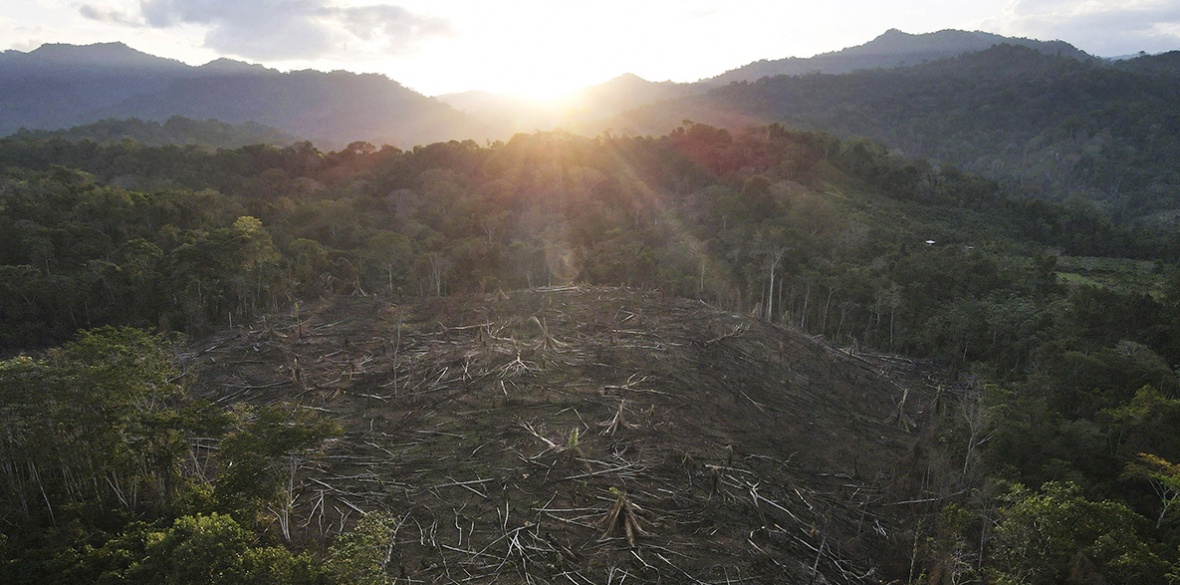
Cut down trees lie within view of the Cordillera Azul National Park in Peru's Amazon, October 3, 2022


ACTIVISTS welcomed on Saturday the decision by lawmakers to drop plans for a new law labelled a “Genocide Bill” by Peru’s indigenous people.

In a dramatic reversal of fortune, the country’s Decentralisation Committee blocked the law on a Friday which had been drafted by politicians with close ties to the powerful oil and gas industry.

Teresa Mayo of Survival International described this as “a huge victory for Peru’s Indigenous peoples, their organisations, and for thousands of ordinary people around the world who had joined the campaign against the proposals.”

Indigenous organisations in Peru, such as the Inter-ethnic Association for the Development of the Peruvian Jungle (AIDESEP) and the Regional Organisation of the Indigenous Peoples of the East (Orpio), had lobbied intensively to stop the Bill, and more than 13,000 Survival supporters had written to the committee, urging them to block it.

The Bill would have opened up indigenous lands for industrial exploitation.

Tabea Casique of AIDESEP said: “The scrapping of the draft Bill protects our uncontacted relatives, their rights and their lives and avoids the genocide and ecocide that it would have unleashed.”

Roberto Tafur of Orpio said they intended to “continue fighting for our brothers and sisters in the jungle, who don’t know that we’re fighting for them.”

GEMOLOGY

Local dealers decry influx of illegal Chinese traders to Myanmar jade town

Chinese are overtaking the market in Kachin state, driving some out of business
By RFA Burmese
2023.06.25


Local dealers decry influx of illegal Chinese traders to Myanmar jade townJade mines near Hpakant in Kachin state in July 2020. More Chinese national jade traders have come to Myanmar’s jademine town of Phakant in Kachin state after the military coup and started making illegal purchases which hurt the local dealers, local jade traders told RFA.
 Credit: Ye Aung Thu/AFP

Burmese gemstone dealers are frustrated over the influx of Chinese jade traders who have set up shop in a northern mining town in Myanmar since the 2021 military coup, residents say.

The traders are purchasing gems illegally at lower cost, making already tight margins razor thin for brokers in Hpakant township in Kachin state, driving some out of business out of business, they say.

Myanmar’s Law for Gemstone Trading, enacted by the country’s parliament in 2019, limits foreign nationals seeking to buy stones to gem fairs in Mandalay and Naypyidaw. 

The illegal export and sale of jade is punishable by up to 10 years in prison, but the junta has held few offenders accountable in Kachin – nestled between India to the west and China to the east – since coming to power.


A resident of Hpakant told RFA that, in the past, only Myanmar nationals bought raw stones directly from township mines and then washed, cut, or transported them for resale in the country’s official gem fairs.

“But these days, Chinese buyers use the WeChat messaging app and come to buy everything, including loose soil, directly from the mines,” said the resident who, like others interviewed for this article, spoke on condition of anonymity citing security concerns.

“It’s only natural that the prices directly offered by major traders are better than local dealers in the sale of any goods, including rice, beans and other crops,” he said. “The price gap is hurting local dealers.”

According to a report by international rights group Global Witness, from 2014-2017, the annual revenue from the legal sale of jade and other gemstones in Myanmar ranged from US$346 to $417 million, while the illegal jade market netted US$1.73 billion to $2.07 billion annually.

Black market

The situation presents a conundrum for Myanmar’s jade dealers, who rely heavily on demand from China’s domestic market for their gems. 

That demand has led to entrepreneurs seeking to eliminate the middleman by going straight to the source of the jade, to the point where approximately half of the people traveling to Hpakant to buy gemstones are Chinese, residents said.

Aung Hein Min, a former lawmaker who was elected to represent Hpakant in Myanmar’s 2020 election, told RFA that it is critical for authorities to enforce the ban on the illegal purchasing of gemstones.

ENG_BUR_JadeDealers_06162023_02.jpg
Jade night market in Hpakant in Kachin state, in July 2020. Credit: Ye Aung Thu/AFP

“The jade and gemstones purchased directly from jade-mining towns by Chinese nationals will not be transported via legal routes, they will arrive in China through the black market,” he said. “That’s why it doesn’t do any good for our country or our people.”

However, junta Social Affairs Minister and Kachin state spokesman Win Ye Tun told RFA that foreigners are restricted from traveling to Hpakant, and that those caught skirting the ban are arrested and deported.

He also noted that not all of the Chinese using WeChat in Hpakant are foreign nationals.

“They may be [ethnic] Chinese Myanmar nationals,” he said. “We carefully inspect the situation and take action against them in accordance with the law, rather than criticizing baselessly … And it isn’t just Chinese – we do not accept any foreign nationals in those areas and we have always taken action accordingly.”

ENG_BUR_JadeDealers_06162023_03.jpg
Jade night market in Hpakant in Kachin state July 2020. Credit: Ye Aung Thu/AFP

Win Ye Tun said that some Chinese nationals had been arrested and deported during the more than two years since the military coup, although he could not provide an exact number.

He claimed that the junta has not granted any extensions or new permits for jade mining in Hpakant since the takeover.

‘Industry is hurting’

Meanwhile, traders in Hpakant told RFA that the domestic jade market has declined since the coup and that only bright, translucent jade is selling in China, adding to the pressure faced by local brokers.

“If you buy stones for resale, you can only earn money for a day’s worth of meals and you won’t make a living to provide for your family,” one local trader said. “The gemstone industry is hurting. There is no longer demand for the opaque stones that used to sell and could earn us an income.”

Complicating matters further, Myanmar’s military and a joint force of anti-junta Kachin Independence Army and paramilitary People’s Defense Force fighters have been locked in a standoff in Hpakant since early this year. Imports of food and fuel from Myanmar’s heartland are regularly blocked from entering the region by military checkpoints.

But despite the conflict, jade traders said Chinese nationals are “freely entering and exiting” Hpakant and illegally shipping jade from the area back home.

Translated by Myo Min Aung. Edited by Joshua Lipes and Malcolm Foster.


IMPERIALI$M THE HIGHEST STAGE OF CAPITALI$M


Qatar delivers last batch of mobile homes for quake victims in Türkiye

25 June 2023


Qatar said it had shipped the last batch of mobile homes prepared for the victims of the Feb. 6 earthquake disaster in Türkiye and Syria, Azernews reports, citing Anadolu Agency.

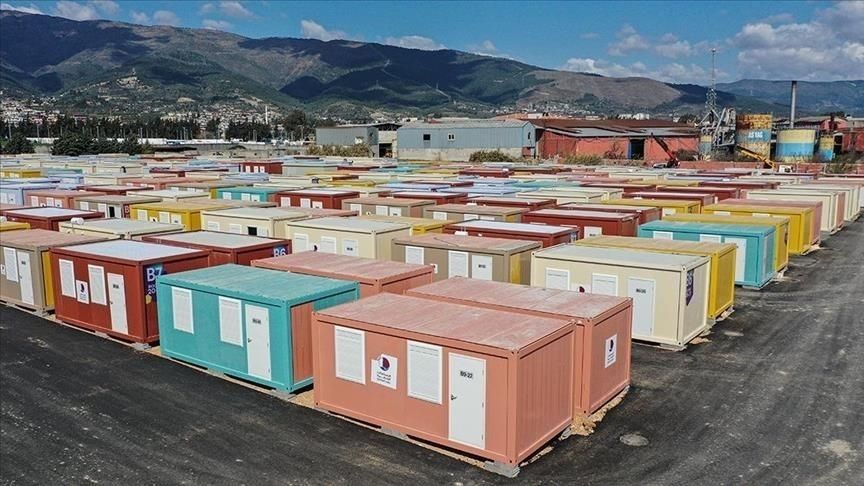
In a statement, the Qatar Fund for Development (QFFD) said the mobile homes had arrived in Hatay in southern Türkiye on Saturday.

“Over the course of three months following the earthquake, QFFD delivered 10,000 fully furnished, insulated shelters to over 15 different cities and towns across southeast Türkiye,” QFFD said.

QFFD “continues to improve the livelihood of vulnerable communities worldwide by providing the necessary aid to save lives, give hope, and promote peace and justice through sustainable and inclusive development,” it added.

Following the earthquake disaster, Qatar has pledged 10,000 mobile homes for the victims. The first batch of 306 fully equipped homes arrived in Türkiye on Feb. 12.

On June 13, the Qatar Red Crescent Society launched a donation campaign for establishing the Hayat Sehir city in Istanbul, to house orphans affected by the earthquakes.

More than 50,000 people were killed in two powerful earthquakes that struck southern Türkiye on Feb. 6.

The 7.7- and 7.6-magnitude quakes that were centered in Kahramanmaras province, affected more than 13 million people across 11 provinces.

Several countries in the region, including Syria and Lebanon, also felt the strong tremors that struck in less than 10 hours.