Monday, December 30, 2024

Anti-Israel protesters disrupt Israeli player’s tennis match in New Zealand

Demonstrators chant ‘Free Palestine,’ ‘Israel is a terror state,’ and ‘Israel out’ as Lina Glushko faces off against Naomi Osaka, forcing game to be stopped several times


Lina Glushko during WTA 125 Polish Open 2024 tennis tournament in Warsaw, Poland on 25 July, 2024. (Foto Olimpik/NurPhoto via Reuters)

Anti-Israel protesters disrupted a tennis match between Israeli player Lina Glushko and Japanese champion Naomi Osaka in New Zealand on Monday, forcing the match to be paused twice in the first set.

The chants of “Free Palestine,” “Israel is a terror state,” and “Israel out” from outside the tennis court could be heard inside, as the demonstrators used microphones.

Organizers were unable to move the protesters, however, as they were on a public street.

Monday’s disruptions of the match came after Glushko saw incitement against her on social media in New Zealand over the last few days, according to the Ynet news site. The online attacks included references to pro-Israel posts she has made.

In the lead-up to the match, New Zealand’s media referred to it as a face-off between “Naomi Osaka and a former IDF soldier,” Channel 12 News reported on Monday.

Glushko told the Kan public broadcaster that the experience was scary and that she had to be given a bodyguard.

I started hearing anti-Israel chants, and then they got closer to the court. They shouted ‘Lina murders children.’ This has never happened to me,” she said.

“I’m continuing my hasbara (public diplomacy) work. I go to many places around the world, and I see people who don’t understand what they’re protesting about. They have no knowledge of what is happening [in Israel], and they do what they do to tell themselves that they’re doing something for peace,” she added.

Other delays in the match were caused by swirling wind on the court and a long break when Glushko had to leave for treatment for a hip injury.

Despite the disruptions, the match was close, with Osaka beating Glushko with a 6-4, 6-4 score.

Osaka broke Glushko in the third game of the first set and held comfortably to win 6-4.

The second set was tighter. Osaka broke Glushko in the third game but Glushko converted her only break point of the match to level at 2-2.

Croatian presidential election heads to runoff

CGTN

Croatia's presidential election will head to a runoff on January 12 as no candidate secured more than half of the votes in Sunday's election, the Croatian State Election Commission (SEC) announced.

Source(s): Xinhua News Agency

Incumbent Milanovic to face Primorac in Croatian presidential election runoff 

Incumbent Milanovic to face Primorac in Croatian presidential election runoff
President Zoran Milanovic speaks to journalists ahead of the presidential election first round. The outspoken politician fell just short of a first round victory. / Zoran Milanovic via Facebook
By bne IntelliNews December 30, 2024

Croatia's incumbent President Zoran Milanovic will face the ruling Croatian Democratic Union (HDZ) candidate Dragan Primorac in the presidential election runoff after narrowly failing to secure a first round victory. 

Exit polls had initially indicated an outright win for the outspoken president, but as the vote count got underway it became clear Milanovic had taken just under the 50% of the vote needed for a first round victory. 

Provisional results published by the Central Election Commission on the morning of December 30 showed Milanovic backed by the opposition Social Democratic Party (SDP) and its allies, had 49.09% of the vote. 

Primorac was on 19.35% and third placed candidate Marija Selak Raspudic had 9.25%. 

While Primorac trailed Milanovic in the first round, the HDZ is hopeful of a turnaround in the runoff. 

"As of tomorrow, it's a new ballgame," Prime Minister and HDZ leader Andrej Plenković said on December 30, reported Croatian news agency Hina. 

However, the SDP expressed optimism that Milanovic would take the presidency in the second round, pointing to the president’s popularity across the country. 

“Congratulations to Zoran! We look forward to winning the second round, because voters have clearly shown that they believe in a better, fairer and freer Croatia. This is a message to Andrej Plenković and his candidate that people see and watch what is happening in our country,” wrote SDP president Sinisa Hajdas Doncic on X (formerly Twitter). 

“Message to Andrej Plenkovic: all of Croatia is in the red,” wrote SDP vice president Mirela Ahmetovic, alongside an electoral map. 

The election, marked by low voter turnout compared to the previous presidential election in 2019, has reinforced Milanovic’s position as one of Croatia’s most polarising yet popular politicians.

Should he pull off a second round victory, the stage would be set for a continuation of the tense cohabitation with Plenkovic’s government, which has frequently erupted into public arguments between president and prime minister.

While the presidency in Croatia is largely ceremonial, Milanovic’s combative leadership and controversial rhetoric have made the election a litmus test for the country’s alignment with Western policies and its stance on the war in Ukraine.

Since taking office in 2020, Milanovic has often clashed with Plenkovic, adopting positions critics label as populist and at times “pro-Russian”. His opposition to Zagreb’s policy on Ukraine has sparked heated disputes with the HDZ-led government.

The issue repeatedly came to a head this autumn, with public spats erupting over Croatia’s involvement in a Nato training mission in Ukraine. 

In October, Plenkovic accused Milanovic of an "attempted coup" following a decision by the president to block General Tihomir Kundid, the chief of the general staff, from attending a parliamentary Defence Committee meeting. Milanovic, who serves as commander-in-chief of the armed forces, refused to allow Kundid to brief lawmakers on the mission. 

Earlier in 2024, he announced plans to run for the prime minister position, which holds more powers than the largely ceremonial presidency, but was blocked from doing so by the the Constitutional Court

Primorac, a university professor and paediatrician, ran on a platform emphasising unity and Croatia’s Western alliances. 

He was picked as the candidate for the ruling HDZ, which won the general election earlier this year, as well as taking more seats than the SDP in the European Parliament elections. 

However, his campaign was overshadowed by a corruption scandal involving the health minister from the HDZ, who was arrested recently on bribery charges and subsequently sacked. The scandal left Plenkovic’s government struggling to restore confidence in the healthcare system.

The HDZ-led government has also come under pressure from public sector workers, who have pushed for pay rises in the weeks ahead of the election. A deal was reached on an increase in the base pay for state and public services on December 27. 

Milanovic seems set for 2nd term, while his main challenger Dragan Primorac reportedly trails with 19.04% of vote

Lejla Biogradlija |29.12.2024 - TRT/AA


ZAGREB, Croatia

The Social Democratic Party (SDP)-backed Zoran Milanovic won a second term as Croatia's president on Sunday, according to exit polls.

Based on Ipsos polls, Milanovic secured 50.74% of the votes in the first round, earning him another term as president without having to compete in a second round.

Milanovic expressed his gratitude through a brief message on social media, saying simply: "Thank you."

Milanovic's main challenger, Dragan Primorac, candidate of the ruling center-right Croatian Democratic Union (HDZ) and a former education minister, reportedly trailed with 19.04% of the vote, finishing a distant second.

Croatia’s left-leaning president Milanovic is known for his outspoken criticism of Western military support for Ukraine in its war against Russia.

*Writing by Muhammed Enes Calli


MEDIA MOGUL & OLIGARCH

HBO founder and cable TV pioneer Charles Dolan dies aged 98

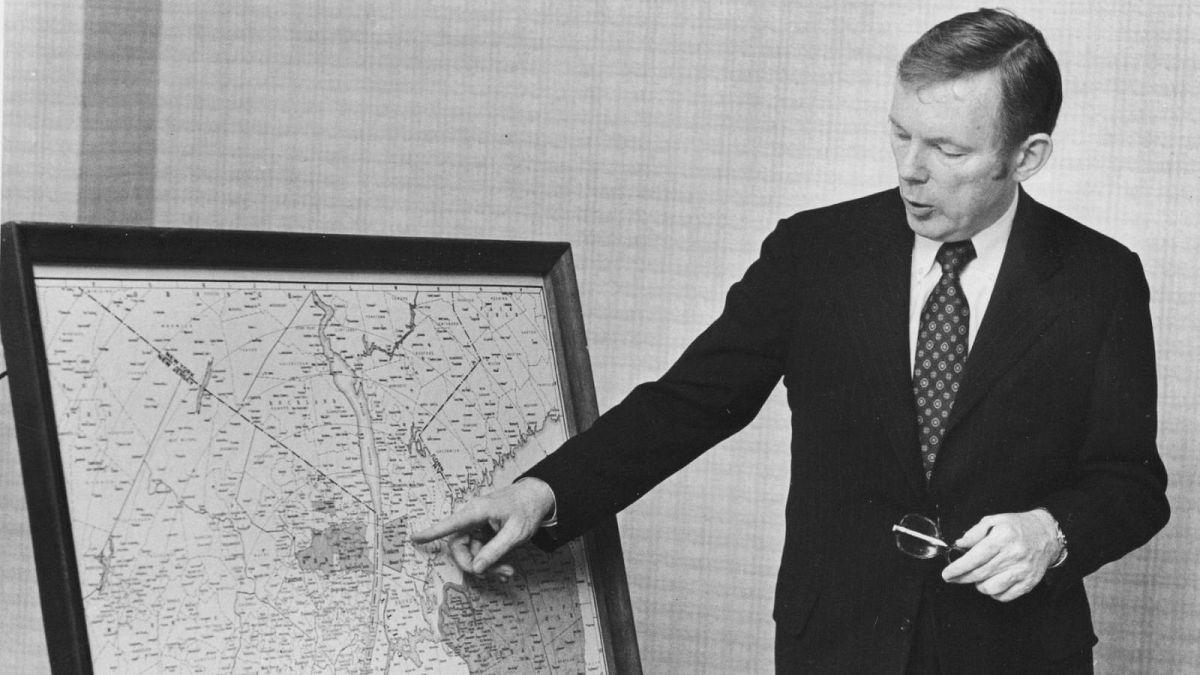
At the time of his death, Charles Dolan and his family had a net worth of $5.4 billion, Forbes reported.


Copyright Newsday via Getty Images

By Euronews
Published on 30/12/2024 - 

Dolan also created Cablevision and the AMC Network, and later owned Madison Square Garden and Radio City Music Hall.

Charles F. Dolan, who founded some of the most prominent US media companies including Home Box Office Inc. and Cablevision Systems Corp., has died at age 98.


A statement issued Saturday by his family said Dolan died of natural causes, Newsday reported.

“It is with deep sorrow that we announce the passing of our beloved father and patriarch, Charles Dolan, the visionary founder of HBO and Cablevision,” the statement said.

Dolan's legacy in cable broadcasting includes the 1972 launch of Home Box Office, later known as HBO, and founding Cablevision in 1973 and the American Movie Classics television station in 1984. He also launched News 12 in New York City, the first 24-hour cable channel for local news in the US, Newsday reported.

The Cleveland native, who dropped out of John Carroll University in suburban Cleveland, completed the sale of Cablevision to Altice, a European telecommunications and cable company, for $17.7 billion in June 2016.

Dolan, whose primary home was in Cove Neck Village on Long Island in New York, also held controlling stakes in companies that owned Madison Square Garden, Radio City Music Hall and the New York Knicks and New York Rangers sports franchises, Newsday reported.

James L. Dolan, one of his sons, was the Cablevision CEO from 1995 until the 2016 sale to Altice. He now is the executive chairman and CEO of Madison Square Garden Sports Corp. The company owns the Knicks and Rangers, among other properties, according to the MSG Sports website.

A statement from MSG Entertainment, MSG Sports and Sphere Entertainment recalled Dolan’s “vision.”

“Mr. Dolan’s vision built the foundation for the companies we are today, and as a member of our Boards he continued to help shape our future. The impact he made on the media, sports, and entertainment industries, including as the founder of Cablevision and HBO, is immeasurable,” the statement said. “We do not expect this to directly or indirectly change ownership by the Dolan family.”

Newsday, which Cablevision purchased in 2008, also came under the control of Altice with the sale. Patrick Dolan, another son of Charles Dolan, led a group that repurchased 75% of Newsday Media Group in July 2016. Patrick Dolan then purchased the remaining 25% stake in 2018.

At the time of his death, Charles Dolan and his family had a net worth of $5.4 billion, Forbes reported.

Dolan was a founder and chairman emeritus of The Lustgarten Foundation in Uniondale, New York, which conducts pancreatic cancer research.

He is survived by six children, 19 grandchildren and five great-grandchildren. His wife, Helen Ann Dolan, died in 2023.
Serbian prosecutors indict 13 over deadly canopy collapse that sparked mass protests


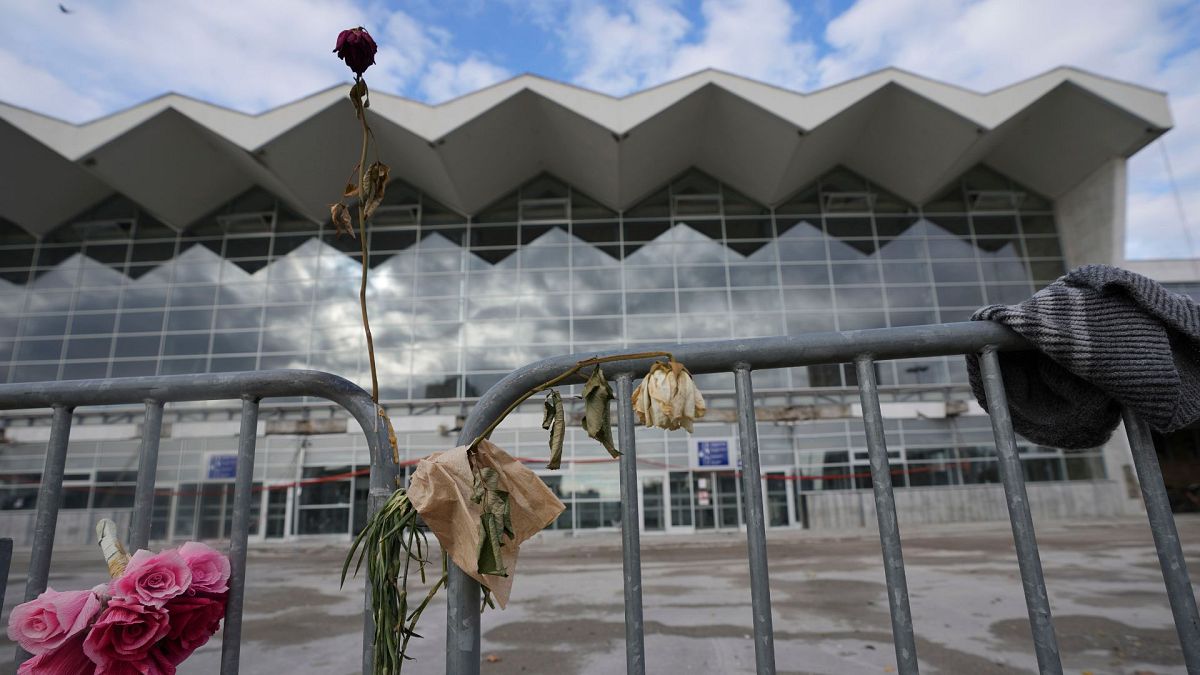
Copyright AP Photo/Darko Vojinovic
By Oman Al Yahyai
Published on 30/12/2024 - 

The suspects face charges of endangering public safety and improper construction practices, with potential prison sentences of up to 12 years.

Serbia’s public prosecutor announced on Monday that 13 people, including a former minister, have been indicted over the collapse of a concrete canopy that claimed 15 lives last month and sparked weeks of mass anti-government demonstrations.

The suspects, charged in the northern city of Novi Sad where the incident occurred on 1 November, face accusations of severe criminal offences against public safety and irregular execution of construction work.

If convicted, they could face prison sentences of up to 12 years.

The collapsed canopy was part of a railway station building that had undergone two recent renovations as part of an infrastructure agreement with Chinese companies.

Public outrage has centred on allegations of corruption and substandard construction practices, believed by many to have contributed to the deadly incident.

Initially, 14 people were reported dead and three injured, with one more victim ultimately succumbing to their injuries in hospital.

The tragedy has ignited widespread anger, fuelling street protests against populist President Aleksandar Vučić and his administration.

15 minutes for 15 lives: Students in Serbia demand accountability for Novi Sad tragedy

Serbian students gather in Belgrade in another protest over deadly train station awning collapse

The indictment must now be validated by a court before proceedings can move forward. Prosecutors in Novi Sad have also requested that the accused be detained during the trial.

Among those indicted is former Construction Minister Goran Vesić, as well as officials and contractors involved in the station’s renovation.

Vesić was previously detained but later released, prompting scepticism about the integrity of the investigation and the independence of Serbia’s judiciary.

It remains unclear when the trial might begin.

The ongoing street protests and a university student strike have posed a challenge to Vučić's grip on power. Although the Serbian leader outwardly advocates for European Union membership, he faces mounting accusations of undermining democratic freedoms rather than advancing them.
Syria’s dwindling Jewish community can return to one of the world’s oldest synagogues


Copyright Omar Sanadiki/Copyright 2024 The AP. All rights reserved.

By Euronews with AP
Published on 30/12/2024 -

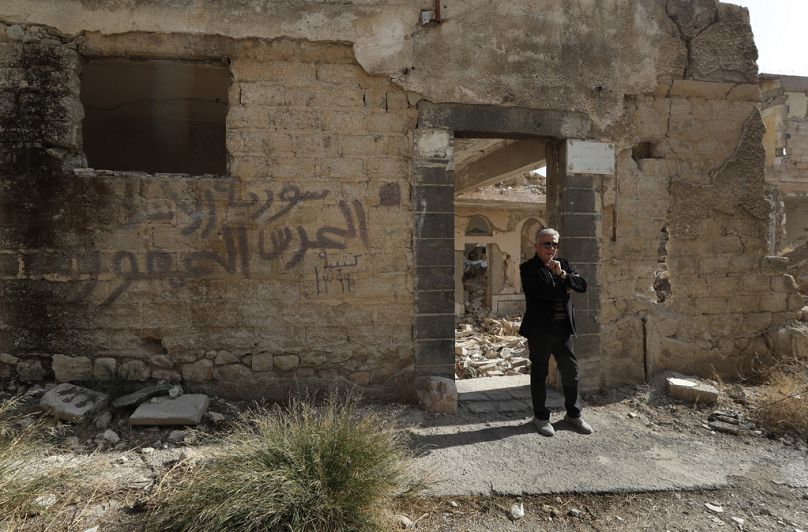
After 13 years of civil war, Syria’s dwindling Jewish community can return to the Jobar Synagogue in Damascus, one of the world’s oldest, where they once gathered for prayers before the conflict left it partially destroyed.


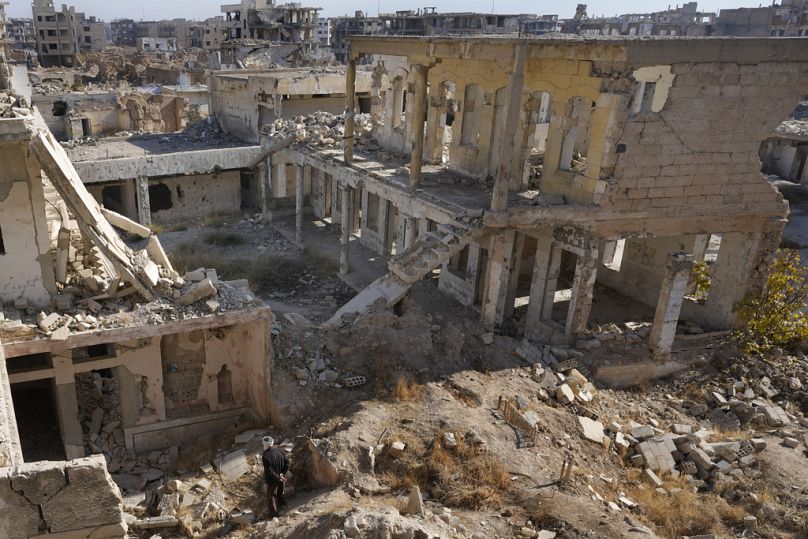
Jobar, a Damascus suburb that was heavily bombed during the war, is now accessible again, following the overthrow of President Bashar Assad's regime earlier in December. The Jobar Synagogue, or Eliyahu Hanavi Synagogue, is one of the few religious landmarks still standing in a region that was once home to a thriving Jewish community, dating back thousands of years.

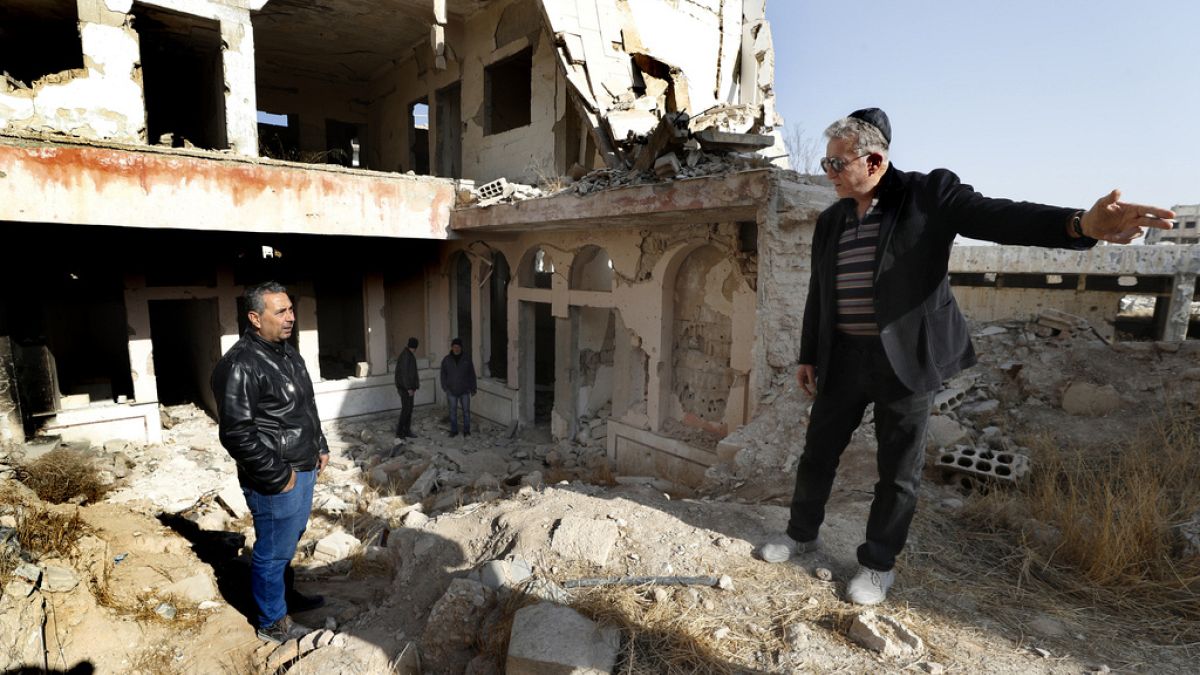
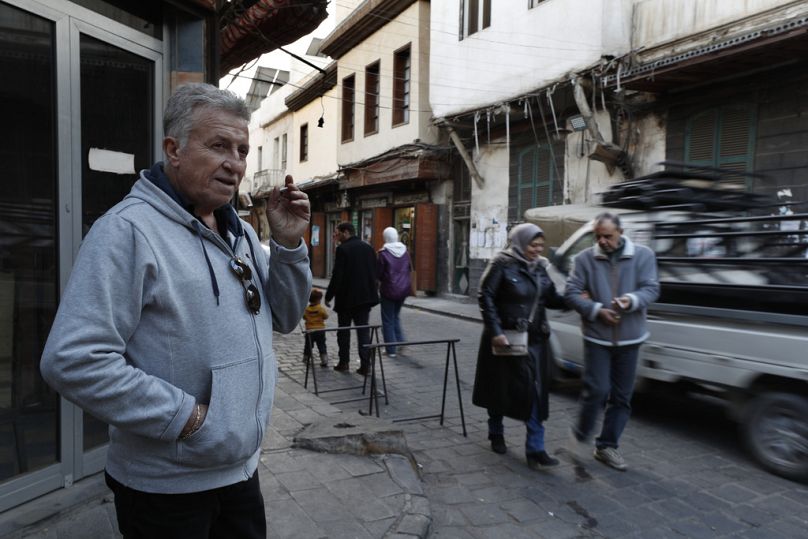
Bakhour Chamntoub, the 74-year-old head of the Jewish community in Syria, recently visited the synagogue for the first time in 15 years.

A Syrian man observes the destroyed Jobar Synagogue, also known as Eliyahu Hanavi.
Hussein Malla/Copyright 2024 The AP. All right reserved

“This synagogue means a lot to us,” he told The Associated Press, his voice heavy with emotion. Although he had heard of the damage, he was not prepared for the devastation: “I am frankly disturbed,” he said, surveying the pile of rubble where walls and roofs had collapsed, and valuable artefacts disappeared, likely looted.

Syria's Jewish population has dramatically declined since the founding of Israel in 1948, and today only nine Jews remain in the country. Most are elderly, with the community expecting that no Jews will remain in Syria in a few years.

Chamntoub, who has spent his life in Syria, is among the few who openly maintain their faith in a country where anti-Israel sentiment often makes such openness dangerous. “I never faced discrimination,” he remarked, however, explaining that others keep their Jewish identity private for fear of being labelled spies or collaborators.

Bakhour Chamantoub, 74, right, the head of the Jewish community in Syria, stands in front the destroyed Jobar Synagogue.Omar Sanadiki/Copyright 2024 The AP. All rights reserved.

The Jobar Synagogue was once a centre of Jewish life in Damascus, where Chamntoub and his community prayed on Saturdays, a practice disrupted by the war. The synagogue’s destruction is a painful reminder of the community’s fragility. “It was a beautiful religious place,” said Barakat Hazroumi, a Muslim who lived nearby, recalling how he would assist Jewish worshippers by lighting candles on the Sabbath.

The Jewish community in Syria has a history spanning nearly 3,000 years, beginning with the prophet Elijah’s time in Damascus. After the First Crusade in 1099, around 50,000 Jews fled Jerusalem and settled in Damascus, forming a significant portion of the city’s population.


Later, Jews arrived from Europe, escaping the Spanish Inquisition. By the early 20th century, Syria’s Jewish population numbered about 100,000. Following the creation of Israel tensions rose and many Jews emigrated, particularly in the post-1948 period.

Under the Assad regime, Jews were allowed to practice their faith, but travel restrictions were imposed to prevent emigration, particularly to Israel. These restrictions eased in the early 1990s leading to further emigration.
Bakhour Chamantoub stands outside his house in Damascus.
Omar Sanadiki/Copyright 2024 The AP. All rights reserved.

In the aftermath of the war, there is hope for the rebuilding of the synagogue and the wider Jewish quarter of Damascus, which has largely been abandoned. But with the community shrinking, Chamntoub now marks the Jewish festival of Hanukkah alone at home, cooking vegetarian meals and receiving parcels of kosher meat from family abroad.

"I am a Jew and I am proud of it," he said, expressing hope that with the fall of Assad, Syrians will enjoy more freedoms, economic and otherwise.


Frankincense: I uncovered the story behind the traditional Christmas scent on a trip to Oman

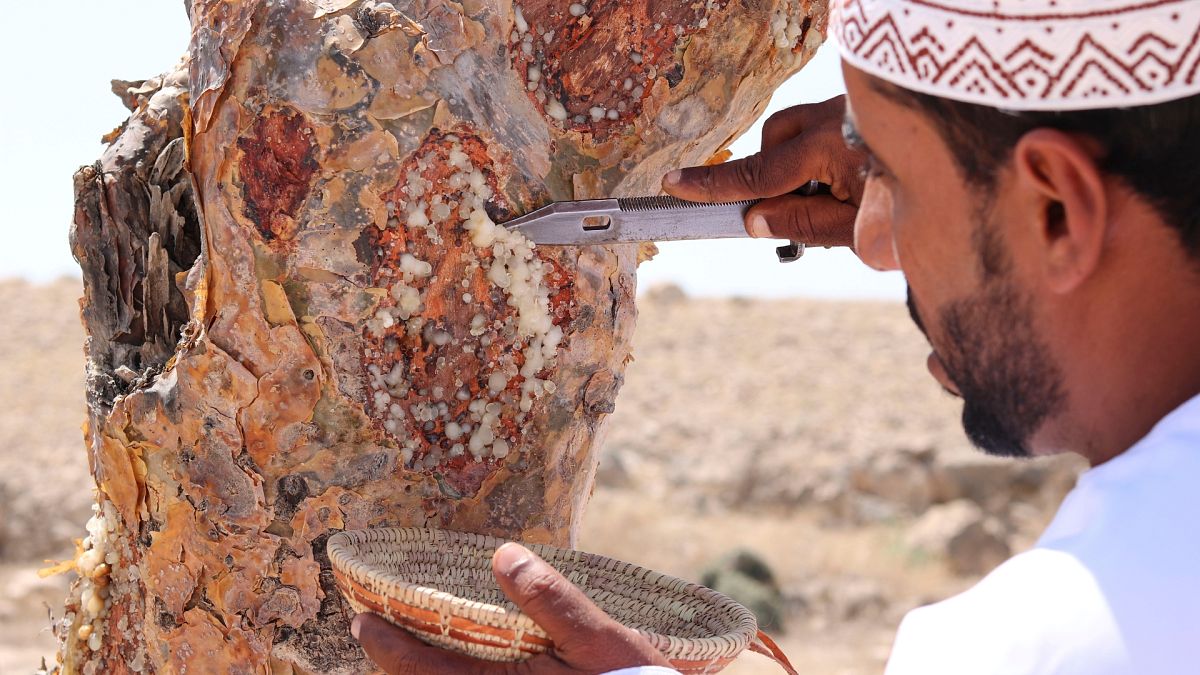
Local guide Hussain Balhaf collecting frankincense resin in Wadi Dawkah.
Copyright Anantara
By Nicole Trilivas
Published on 

Once more valuable than gold, frankincense is indelibly linked to Oman.

Mention frankincense, and it’s hard not to instantaneously think of Christmas.

Cited in the story of the birth of Christ in the Bible’s Book of Matthew, it was one of the precious gifts (alongside gold and myrrh) given to the baby Jesus by the three wise men.

But there’s more to this ancient, aromatic tree resin than its Biblical association. This becomes immediately clear on my first trip to the Sultanate of Oman, the epicentre of frankincense.

Exploring Salalah: The land of frankincense

The mystical, rich scent of frankincense (known locally as luban) is unavoidable in Oman. This is especially true in the city of Salalah in the southernmost governorate of Dhofar, where frankincense trees grow wild.

Before I even land in the sun-blasted seaside city, I get my first whiff. An undernote of frankincense can be detected in the hand lotion on Oman Air, where amenity kits come care of Oman’s most famous perfumery, the high-end Omani heritage brand Amouage, which uses frankincense in around 60 per cent of its products. From that moment on, the scent of frankincense is never far from me.

As I swan through the ultra-modern, sleek Salalah Airport, frankincense hydrosol wafts from industrial-grade diffusers to scent and clean the air.
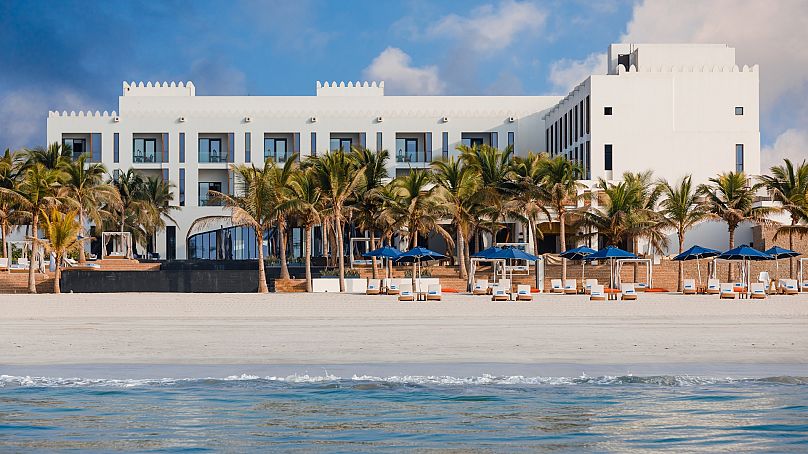

Al Baleed Resort Salalah by Anantara sits seaside, within viewing distance of The Museum of the Frankincense Land.Anantara

When my taxi pulls up under the elegant Arabian arches of my hotel, Al Baleed Resort Salalah by Anantara, I spy a trio of ornamental frankincense trees in gleaming gold pots. The property lounges seaside, within viewing distance of The Museum of the Frankincense Land.

My room is like a magical setting from a Scheherazade story with frangipani trees, bronze lanterns, and traditional majlis seating. The air is fragrant with the faint, slightly sweet traces of incense smoke from recently burned resin.


At Al Baleed Resort Salalah by Anantara's spa, frankincense essential oil is used for massages.Anantara

And at the gleaming spa, with its lavish marble hammam, frankincense essential oil is worked into sore muscles, and frankincense-infused elixirs are offered in lieu of herbal tea.

Even after just a few hours in Salalah, it’s immediately apparent why this is known as the land of frankincense.

Khor Rori and Wadi Dawkah: UNESCO World Heritage Sites in need of protection

Also called the perfume capital of Arabia, Salalah is home to the most valued species of frankincense trees in the world, Boswellia sacra, from which sap is sourced and dried to become little crystals of frankincense resin - once worth more than gold. The resin is burned as incense or distilled into oil for various uses. Though also native to Yemen and Somalia, this top species is most commonly found in Oman and played a major role in establishing the region as a prosperous trade hub in the ancient world.

Hussain Balhaf, the in-house tour guide at Al Baleed Resort, takes me to see the UNESCO heritage site of Khor Rori (Sumhuram), a fortified port city once used for the frankincense trade, dating back to the 3rd century BCE.

“During excavation, incense burners were found with frankincense still on them,” says Hussain as we walk quickly through the crumbling, biscuit-hued ruins to avoid the heat.

Later, when we visit the Frankincense Museum, Hussain points out several of these burners, which were excavated from homes in Sumhuram, as well as in religious areas - something that still occurs today. Frankincense is still burned in mosques, churches, and temples all over the world, its smoke symbolic of sanctification and purification.
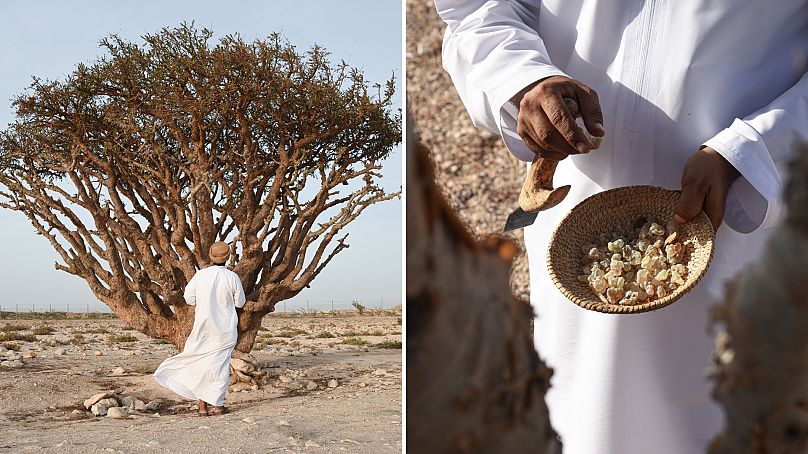

Oman's government has teamed up with heritage brand Amouage to protect the country's frankincense trees.Amouage

Next, Hussain takes me to Wadi Dawkah, another UNESCO-sanctioned site of stony, semi-desert, which is a natural habitat for frankincense trees.

“Seventy years ago, this wadi [valley] would have been filled with frankincense trees,” says Hussain, citing climate change and overharvesting as causes for the decline. He shows me how in harvest months, the bark is scored so that a sap emerges. This sap is then scraped away so a second sap forms, which later dries and crystallises.

In previous counts, there were only 1,200 ancient perennial trees in Wadi Dawkah. To increase numbers and protect Oman’s heritage, the government has planted a frankincense farm and developed a visitors’ centre on the site, run in partnership with Amouage. As custodian of the trees, the brand ensures harvesting is sustainable and regulated.

Learning about frankincense harvesting with a local guide

Harvesting frankincense is a time-consuming process that is done by hand and cannot be rushed. Even after harvest, the work still isn’t done. To learn more about how frankincense is processed and sold, I enlist the help of Adnan Safrar, an expert local guide from ToursByLocals, to take me to a workshop.

“We’re very lucky to get to visit,” Adnan says, as we turn down a quiet street in the industrial area of Salalah. “Most workshops are very protective of the process.”
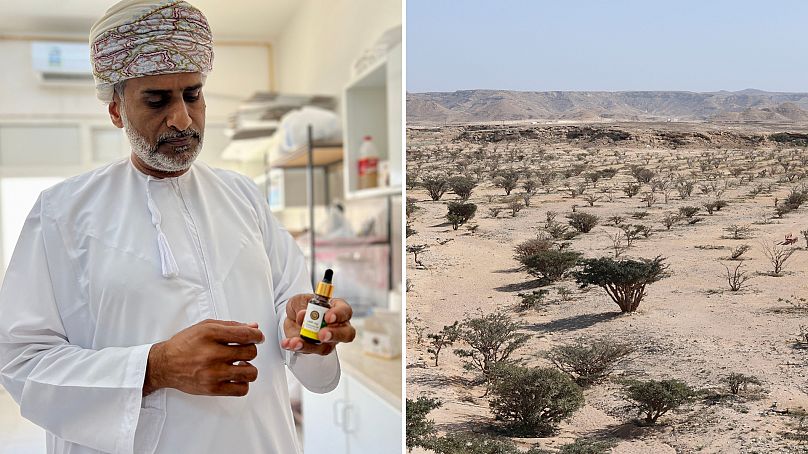


Amer Mohammed Alameri is the general director of Luban Dhofar, a frankincense distillation company in Salalah,Anantara

Despite this warning, Amer Mohammed Alameri, general director of Luban Dhofar, a frankincense distillation company based in Salalah, couldn’t be more welcoming. He ushers me into his workshop, pointing out the stainless-steel tanks, vats of ice-cold purified water, and finished products - soap, powder, hydrosol, and essential oil for cosmetics, fragrances and natural remedies.

Amer’s family has worked with frankincense for generations, and he is generous with his time and treasures.

“Our policy is to make known all the benefits of frankincense to the world. For thousands of years, we’ve known this. Now, there is research being done to prove it,” says Amer, showing me studies done by Omani universities on the promising effects of frankincense on infections and diseases.

What is frankincense used for in Oman?

While the medical benefits of frankincense are still being studied and shared around the world, in Omani society the product remains a cherished resource - used to purify, scent and flavour.

Back in the relaxing, sprawling grounds of Al Baleed Resort, I sit under umbrellas of palm trees with Dina Macki, an Omani chef born and raised in the UK.

“We’ve always said that frankincense is an elixir of life,” she says. “It’s actually just a really good thing to have for medicinal purposes. We put the edible resin in water, and when I first started drinking it, I noticed that my digestion was better, and my skin cleared up…It’s also really common to burn frankincense and stand over [the smoke] in dresses to let the frankincense come up through us for purifying purposes and for the smell,” continues Dina.

Of the four varieties, top-grade hojari frankincense is used in cooking. Dina is in Salalah to cook at Al Baleed Resort’s Food Festival, a week-long culinary extravaganza in its second year. Every night, a new chef from a different country delights guests with dishes reflecting their hometown restaurants (most of which are Michelin-starred).

For her night, Dina dishes up Omani specialities at the hotel’s poolside Sakalan restaurant, including a dessert topped with edible frankincense pearls. “I personally love [the taste of] frankincense; it works really well with sweet things, like when you infuse it in crème brûlée and panna cotta,” says Dina.

The smoke can also be used to flavour meat and fish, while milk flavoured with frankincense can be found in Oman’s grocery stores. For a newer twist on the ancient product, you can even find frankincense ice cream. I recommend you enjoy the icy treat on one of Oman’s countless postcard-perfect beaches - because frankincense isn’t the only spectacular natural wonder in this part of the world.

Nicole Trilivas was a guest of Al Baleed Resort Salalah by Anantara and Experience Oman with support from Oman Air and ToursByLocals.

 

Sony boss defends worst films of 2024 - ‘Madame Web’ & ‘Kraven The Hunter’ - takes shots at critics

Script writers who are actually making ChatGPT look like a scriptwriting powerhouse. 
Why Sony boss is wrong to blame critics for 2024 flops
Copyright Sony Pictures Releasing
By David Mouriquand
Published on 

Sony CEO says that critics are to blame for ‘Madame Web’ and ‘Kraven The Hunter’ flopping. Here’s why he’s talking utter nonsense.

2024 has seen plenty of terrific films released and a handful of terrible ones too. 

Take your pick: Rebel Moon – Part Two: The ScargiverBorderlandsMufasaSalem’s LotThe Crow... All underperformed at the box office and underwhelmed audiences.

There were some audacious big swings like Joker: Folie à Deux and Megalopolis, which – to continue with the baseball metaphor – still failed to be home runs and struck out.

Like every year, some 2024 duds did fall into the “so bad they’re fun / not worth getting too angry about” category, while others simply served as chewing gum for the brain which made the competition shine brighter by comparison. And that's fine: they can’t all be gems and there’s nothing wrong with a bit of dumb escapist fun from time to time.

However, Sony really pulled out all the stops this year, with three Spider-Man spin-offs that showed that nothing good ever comes from churning out creatively barren dross for the sake of maintaining IP rights.

There was Madame WebVenom: The Last Dance and Kraven The Hunter – three of worst films you’re likely to have seen on the big screen this year.

Now, the CEO of Sony Pictures has laid the blame for the box office failure of Madame Web and Kraven The Hunter at critics’ doorsteps. (He omitted Venom: The Last Dance, as the third and final instalment in the Tom Hardy-led trilogy did do good numbers at the global box office.)

Tony Vinciquerra, in an interview with the Los Angeles Times, blamed the critical reactions to the films for their dismal commercial performance.

“Madame Web underperformed in the theatres because the press just crucified it,” Vinciquerra said. “It was not a bad film, and it did great on Netflix. For some reason, the press decided that they didn’t want us making these films out of Kraven and Madame Web, and the critics just destroyed them.” 

He added: “These are not terrible films. They were just destroyed by the critics in the press, for some reason.” 

Sure, it’s all the critics’ faults. It couldn’t have anything to do with the fact that Kraven The Hunter was plotless nonsense and that Madame Web was a shameless Pepsi commercial masquerading as a superhero flick drained of all vitality, imagination and thrills, written by the same duo behind the likes of The Gods of EgyptThe Last Witch Hunter and Morbius – writers who are actually making ChatGPT look like a scriptwriting powerhouse. 

“For some reason”?

Perhaps that reason is that these movies were irredeemably soulless and showed Sony hitting absolute rock bottom by focusing less on entertainment potential and more on bean counting.

Critics were right to call out how genuinely maddening it is that anyone involved thought these were good enough to charge for a cinema ticket, and Vinciquerra’s comments are the frustrating equivalent of “we made this for the fans and not the critics”. You know, that phrase trotted out by directors who know they’re behind a terrible film and fail to understand that the reason critics do their jobs is because they are fans in the first place.

Vinciquerra did, however, concede that the company’s Spider-Man Universe cannot carry on in the way it has been for much longer.

“I do think we need to rethink it, just because it’s snake-bitten,” he said. “If we put another one out, it’s going to get destroyed, no matter how good or bad it is.” 

Again, there’s a reason for “snake-bitten”... If you deliver lazy, sub-par movies, don’t expect plaudits for it.

Do better, Sony. And don’t blame the critics for your failed strategy. We didn’t decide to collectively slam your output for funsies during our monthly Illuminati-style get-togethers; we were just honest about relaying that moviegoers deserve better than to waste their hard-earned cash on a hollow, cookie cutter snoozefests when there are far better flicks are out there.

Loathe or defend Megalopolis, at least it was trying to do... something.

Thankfully, 2024 is reportedly the end of Sony’s Spider-Man Universe spin-off series.

So long Venom, Morbius, Madame Web and Kraven. The unvarnished truth is that critical reception wasn’t the “why?” behind these flops; it was Sony chucking bags of money at projects that weren’t properly handled, the sign of a studio refusing to admit that wasting resources on half-baked projects all in the name of retaining ownership and licensing of the Spider-Man IP just wasn't a good creative or business endeavour.

Untangle yourself from this web and see you next year.