Friday, May 23, 2025


Half the remaining habitat of Australia's most at-risk species is unprotected


Griffith University


Australia needs to urgently prioritise state and national conservation policies according to a new study, with the findings warning more than 220 critically endangered species are at risk of being lost due to their small distributions coupled with uneven protections. 

In the first known study of its kind, the team led by Griffith University, assessed how much of each species’ habitat in Australia was outside protected areas and considered to have agricultural capability, potentially elevating risk of conversion. 

They identified critically endangered species with narrow ranges of more than 20,000sqm, and were distributed in fewer than six separate, distinct patches.  

The authors urged around 85,000sqm of habitat (which equated to about 1% of Australia) for these species must receive protection and management if the nation was going to meet its commitment to halt new extinctions. 

“Globally, we know species with small distributions face disproportionate extinction risk, with the impacts of land use change more likely to have catastrophic consequences,” said Dr Michelle Ward, from Griffith’s School of Environment and Science. 

“Identifying, protecting and managing sites where such species occur is essential for minimising their extinction risk.  

“Yet across Australia, efforts to protect and manage such species' habitats have hitherto been insufficient.” 

Key findings: 

  • About half of the 85,000sqm habitat was outside the protected area estate, including the entire distribution of 39 species 

  • About 55 % of habitat outside of protected areas had at least some agricultural capability, elevating the area's risk of being lost to agriculture 

  • Most of the at-risk critically endangered species were plants (228 species), followed by reptiles (20 species), frogs (14 species), other animals (invertebrates other than freshwater crayfish; 14 species), freshwater crayfish (11 species), freshwater fish (10 species), birds (five species), mammals (three species). 


Jody Gunn, CEO of the Australian Land Conservation Alliance (ALCA) which is the peak body for private land conservation, said: “It’s so important to have a clear picture of exactly which species are teetering on the edge - those with very small ranges, or restricted to a single area of private land.  

“This research reinforces what we see on the ground every day: that the future of many species depends on what happens on private land. Conservation doesn't stop at the fence line of national parks. 

“We know that land managers care deeply about the plants and animals that their land provides a home for. There are thousands of landholders across Australia, already giving nature a helping hand. What we need is the policy and investment to turn that willingness into long-term outcomes.” 

Dr Ward echoed that protecting and managing the habitats of these narrow-range species should be a high priority in local, state and national conservation policy.  

“Our case study serves as a template for the identification of important habitat for threatened species and could be applied in other regions of the world,” she said. 

The study’ Half of the habitat for Australia’s highly imperilled narrow-range species is outside protected areas’ has been published in Biological Conservation


Study reveals influence behind illegal bear bile consumption in Việt Nam


Findings highlight the role of gift-giving in sustaining demand; offer strategies for conservation campaigns


San Diego Zoo Wildlife Alliance

Sun Bear at San Diego Zoo 

image: 

Sun bear lounging at San Diego Zoo. 

view more 

Credit: San Diego Zoo Wildlife Alliance


SAN DIEGO (May 22, 2025) – A new scientific study led by San Diego Zoo Wildlife Alliance researchers sheds light on the social dynamics that drive the continued consumption of bear bile in Việt Nam, revealing that gift-giving among close social networks plays a crucial role in sustaining demand. The findings suggest that conservation efforts could be more effective if they focus on shifting behaviors within influential social groups rather than broad public awareness campaigns. 

Bear bile, extracted from the gallbladders of Asiatic black bears and sun bears, has been used in traditional medicine for centuries across parts of Asia. Despite the availability of synthetic and plant-based alternatives, demand for bear bile persists—particularly in Việt Nam, where it is not only used medicinally but also gifted to others to reinforce social bonds within families, and between business colleagues. 

For decades, this demand has fueled the illegal wildlife trade, leading to the poaching of wild bears and the operation of bear bile farms, where bears are kept in substandard conditions and subjected to painful bile extraction procedures. While bear bile farming is now illegal in Việt Nam, the trade continues due to farms that continue to operate illegally, making demand-reduction efforts critical for conservation. 

This new study, published in the journal People and Nature, explores the complex motivations behind bear bile consumption in Hà Nội and Nghê An, two key areas in northern Việt Nam. While bear bile is one of the most well-researched illegal wildlife products in the country, the complexity of consumer motivations continues to be poorly understood. This research provides fresh insights into how and why it is gifted and consumed. 

“Our research found that bear bile is frequently exchanged within intimate social circles, often as a token of gratitude, a remedy for illness, or even as part of male drinking culture,” said Elizabeth Oneita Davis, lead author and researcher from San Diego Zoo Wildlife Alliance. “Our findings underscore how social influence shapes wildlife product consumption and suggests that targeting key individuals within these networks could have a ripple effect in reducing demand.” 

Key findings of the study include: 

  • Common occasions for gifting bear bile included family gatherings, expressions of appreciation, and as a status symbol. 

  • Older, respected members of social networks often play a pivotal role in reinforcing or discouraging bear bile consumption. 

  • Behavior change within a small but influential group could neutralize demand across entire networks. 

The study’s findings present a new approach to conservation efforts. By shifting the focus from large-scale awareness campaigns to targeted behavior change strategies, demand-reduction initiatives could achieve an even greater impact. 

“Rather than attempting to change the social norms of an entire community, we may find more success by working with respected individuals who have the power to influence their peers,” added Davis. “In Vietnam, older individuals can be particularly powerful to influence.” 

With the illegal wildlife trade continuing to drive biodiversity loss across the globe, understanding the human behaviors and motivations behind consumption is critical for developing effective solutions. This research offers a fresh perspective on tackling demand for illegal wildlife products, with implications for broader conservation strategies beyond bear bile. 

### 


About San Diego Zoo Wildlife Alliance  

San Diego Zoo Wildlife Alliance, a nonprofit conservation leader, inspires passion for nature and collaboration for a healthier world. The Alliance supports innovative conservation science through global partnerships and groundbreaking efforts at the world-famous San Diego Zoo and San Diego Zoo Safari Park, both leading zoological institutions and accredited botanical gardens. Through wildlife care expertise, cutting-edge science and continued collaboration, more than 44 endangered species have been reintroduced to native habitats. The Alliance reaches over 1 billion people annually through its two conservation parks and media channels in 170 countries, including San Diego Zoo Wildlife Explorers television, available in children’s hospitals across 14 countries. Wildlife Allies—members, donors and guests—make success possible.  


Link includes:  


PERMITTED USE: Images and video(s) are provided to the media solely for reproduction, public display, and distribution in a professional journalistic non-commercial and non-sponsored context in connection with newspaper, magazine, broadcast media (radio, television) or internet media (ad enabled blog, webcasts, webinars, podcasts). Image(s) and video(s) may not be made available for public or commercial download, licensing or sale.  


ADDITIONAL LIMITATION: Media acknowledges and agrees that San Diego Zoo Wildlife Alliance specifically does not grant a right to sublicense any image and/or video without the prior express written consent of San Diego Zoo Wildlife Alliance in each instance and at its sole discretion.  


REQUIRED CREDIT AND CAPTION: All image and/or video uses must bear the copyright notice and/or be properly credited to the relevant photographer, as shown in the image metadata, and must be accompanied by a caption that makes reference to the San Diego Zoo and/or San Diego Zoo Safari Park. Any uses in which the image and/or video appears without proper copyright notice, photographer credit and a caption referencing the San Diego Zoo, San Diego Zoo Safari Park, and/or San Diego Zoo Wildlife Alliance are subject to paid licensing.  


AP PERMITTED USE: Specific to the Associated Press (“AP”) only, San Diego Zoo Wildlife Alliance has provided to the AP one or more photograph(s) and/or video(s) for distribution by the AP to its subscribers and customers solely for editorial publication. San Diego Zoo Wildlife Alliance is the sole copyright owner of the photograph(s) and/or video(s) furnished to AP for editorial publication by AP and its subscribers and customers in all media now known or hereafter created. Said content is a factually accurate rendering of what it depicts and has not been modified or augmented except for standard cropping and toning. 

Trump’s Chaotic Tariffs Benefit His Best Buddy Elon (As We Predicted)


Musk’s proximity to the White House and Trump’s innermost circle has provided him with powerful new leverage to push his businesses on foreign governments.


Sarah Grace Spurgin
May 23, 2025
Common Dreams

A series of internal government messages reveal how U.S. embassies and the State Department have pushed governments to clear regulatory barriers for Elon Musk’s Starlink. In the messages obtained by The Washington Post, Secretary of State Marco Rubio directs U.S. officials to push for permit approvals for the satellite internet service. Governments facing chaotic tariff threats have gotten the message and are rolling out the red carpet for Musk in the hope of avoiding costly tariffs.

This scandal has drawn widespread attention and condemnation, with dozens of members of Congress and senators calling for investigations into Musk and the government agencies that may have pressured countries on his behalf.

While this corruption is shocking, it’s hardly surprising. Before the “Liberation Day” tariff announcement, Public Citizen issued a report documenting how the tariff process in President Donald Trump’s first term enabled a quid-pro-quo spoils system that rewarded the rich and well-connected. We warned that Musk’s powerful and ill-defined role in the U.S. government could lead other countries to decide that giving special privileges to Musk’s companies would help them earn brownie points with the Trump administration.

U.S. Government’s Sales Pitch for Starlink

Elon Musk has been pushing for Starlink expansion across the world for years, but some countries have been wary of permitting the service to enter their markets for a number of reasons. For example, experts have raised concerns about threats to “data sovereignty,” a group or individual’s right to control and maintain their own data. To the extent that communications on the Starlink network are routed through the U.S., they may be accessible to U.S. law enforcement and intelligence agencies.

And it is not unreasonable for countries to consider that access to Starlink services could be weaponized and a nation’s internet access held hostage at the whim of a single man or wayward administration. Alarmingly, claims abound that the U.S threatened to withdraw Ukrainian access to Starlink if the country did not sign the U.S.-Ukraine minerals agreement (though this has been denied by Musk).

But now, Musk’s proximity to the White House and Trump’s innermost circle has provided him with powerful new leverage to push his businesses on foreign governments: the threat of Trump’s chaotic tariffs. For some countries weighing the pros and cons, the chance that approval for Starlink helps stave off tariffs has changed the equation.

Trump and his cronies have made it clear since Day 1 of his 2015 presidential primary campaign that he will bend public policy to benefit himself and his wayward inner circle of Yes Men.

The Washington Post exposé highlighted several diplomatic cables from various embassies commenting on foreign governments’ decision-making on the satellite internet service.

For example, aMarch cable from the U.S. Embassy in Cambodia explains it “has observed the Cambodian government—likely due to concern over the possibility of U.S. tariffs—signal its desire to help balance our trade relationship by promoting the market entry of leading U.S. companies such as Boeing and Starlink.” Leaders of the American Chamber of Commerce in Cambodia advised the Ministry of Economy and Finance to take “decisive action in offering concessions to the United States… recommending that Cambodia… expeditiously approve Starlink’s market entry request.”

Cambodia is facing a 49% Trump tariff rate.

Another cable from April highlighted that Starlink was pushing for a license to operate in Djibouti. State Department staffers noted Starlink’s approval would be an opportunity to open the country’s market and boost “an American company.” Embassy officials “will continue to follow up with Starlink in identifying government officials and facilitating discussions.”

Djibouti is facing a 10% Trump tariff rate.

The Pressure Is Working—At the Expense of Public Interest Policies

Sec. Rubio “encouraged Vietnam to address trade imbalances,” in an early March 2025 phone call with the nation’s Foreign Ministry. Shortly thereafter, the Vietnamese government laid out a battery of appeasements to the Trump administration, including a waiver of their domestic partnership requirements, enabling the launch of a five-year pilot program with Starlink. An unnamed source speaking with Reuters said this can be seen as “an olive branch” to Musk and his company, a “demonstration from the Vietnamese side that they can play the transactional diplomacy game if the Trump administration wants that.”

Vietnam is facing a 46% Trump tariff rate.

A Bangladeshi representative visited the White House in mid-February to offer concessions to stave off the promised tariffs and was brought to a surprise meeting with Elon Musk. Musk wanted to discuss the ongoing negotiations between Starlink and Bangladesh’s regulatory agency—the implication being that Bangladesh would not get favorable trade terms from the U.S. if Starlink wasn’t permitted. Early April saw Bangladesh’s Telecommunication Regulatory Commission issue what was described as “the swiftest recommendation” in its history for a Starlink license. When Trump announced a punishing 37% reciprocal tariff on Bangladesh, the export-dependent country wrote a letter to Trump requesting leniency and detailing the ways in which it was already taking action to benefit U.S. businesses—including its access for Starlink.

Bangladesh is facing a 37% Trump tariff rate.

Lesotho also granted a license to Starlink in April, despite local objections to foreign-owned businesses. Local NGOs called the licensing decision “a betrayal—a shameful sellout by a government that appears increasingly willing to place foreign corporate interests above the democratic will and long-term developmental needs of the people of Lesotho.” An internal State Department memo states, “As the government of Lesotho negotiates a trade deal with the United States, it hopes that licensing Starlink demonstrates goodwill and intent to welcome U.S. businesses.” Subtle.

Lesotho is facing a 50% Trump tariff rate.


Musk has infamously complained on social media over South Africa’s post-Apartheid reparations rules, claiming that Starlink is “not allowed to operate in South Africa simply because [he’s] not Black [sic]”—despite having never even applied for a license. The Washington Postnoted that “the story about Bangladesh was making its way around political and business circles in South Africa,” and it’s assumed that approval of a Starlink license has become “a prerequisite for getting a favorable trade deal.” Legislators have introduced a controversial measure to exempt Starlink from the Black empowerment law.

South Africa is facing a 30% Trump tariff rate.

Musk has been looking to break into the Indian market for years—even launching, then retracting, services in 2022 without the necessary licenses. Around the time of the Bangladesh meeting, Musk also met with Prime Minister Narendra Modi near the White House. According to India Today, a “key agenda” item was Starlink’s pending approval in India. In May of 2025, India dropped two proposed security rules that Starlink had refused during earlier discussions.

India is facing a 26% Trump tariff rate.

In March of 2024, Starlink was prohibited in theDemocratic Republic of the Congo, citing concerns from military experts who warned it could be misused by armed insurgent groups including M23. That ban was recently lifted, and Starlink launched in May 2025. This policy reversal comes at a time of mounting frustrations from Congolese civil society over secretive dealmaking with the United States. The resurgence of rebel group M23 has pushed President Felix Tshisekedi’s government toward a controversial deal that has the private military corporation Blackwater’s Erik Prince at the center. The deal would exchange U.S. security assistance for access to DRC critical minerals, not unlike the recent U.S.-Ukraine minerals deal.

The DRC is facing an 11% Trump tariff rate


The list goes on. Mali, Somalia, Namibia, and others are also considering regulatory approval of Starlink and facing varying degrees of resistance from civil society.

Namibia is facing a 21% Trump tariff rate, with Mali and Somalia at 10%.


The Blueprint

Paving the way for Starlink in other countries is just the tip of the iceberg. Trump and his cronies have made it clear since Day 1 of his 2015 presidential primary campaign that he will bend public policy to benefit himself and his wayward inner circle of Yes Men. Anything that can limit their personal gain is on the chopping block.

The attacks on other governments’ legitimate domestic policies aren’t just predictable, they’re predicted. In detail. Not just by Trump’s erratic speeches and TruthSocial policy changes, but across nearly 400 pages, readily available to us all at ustr.gov: the 2025 National Trade Estimate (NTE) Report.

This year’s report targets a litany of public interest laws and policies adopted by countries around the world to regulate the digital ecosystem. Notably, the 2025 NTE report calls out the satellite licensing and approval processes in Brazil, South Korea, and Malaysia, and points out that a number of countries impose import restrictions on certain types of internet and telecommunications equipment. Removing these would smooth regulatory hurdles for Starlink in those countries. The NTE report is also chock-full of other privacy, AI accountability, and competition policies that Big Tech companies want to get rid of around the world.

The report was drafted in large part based on comments submitted by corporations in October 2024 under then-President Joe Biden and before the presidential election. Given the Trump administration’s brazen willingness to openly push the agenda of his billionaire buddies, we can now expect even more extreme demands from companies like Starlink. For instance, in a submission to the Trump administration ahead of the “reciprocal tariffs” announcement, SpaceX complained about governments imposing “non-tariff” barriers impeding global roll-out of Starlink, including having to pay governments for access to spectrum—a standard practice in a number of countries, including the U.S.

As Trump wields his chaotic tariff threats to extract concessions in dozens of closed-door negotiations, we should not be surprised to see even more Big Tech giveaways and lucrative favors for Musk. It is imperative that Congress demand transparency in these trade talks and hold the Trump administration accountable for such inappropriate coercion.


Our work is licensed under Creative Commons (CC BY-NC-ND 3.0). Feel free to republish and share widely.


Sarah Grace Spurgin
Sarah Grace works at Public Citizen as international campaigns coordinator in the Global Trade Watch division.
Full Bio >
Trump and His Feral Crew of Wreckers Want to Kill America’s Future


The House budget is the Make America Immobile Act. Trump is doing his best to freeze things in place: on behalf of oil companies that want to keep pumping oil, on behalf of automakers that want to keep churning out SUVs.


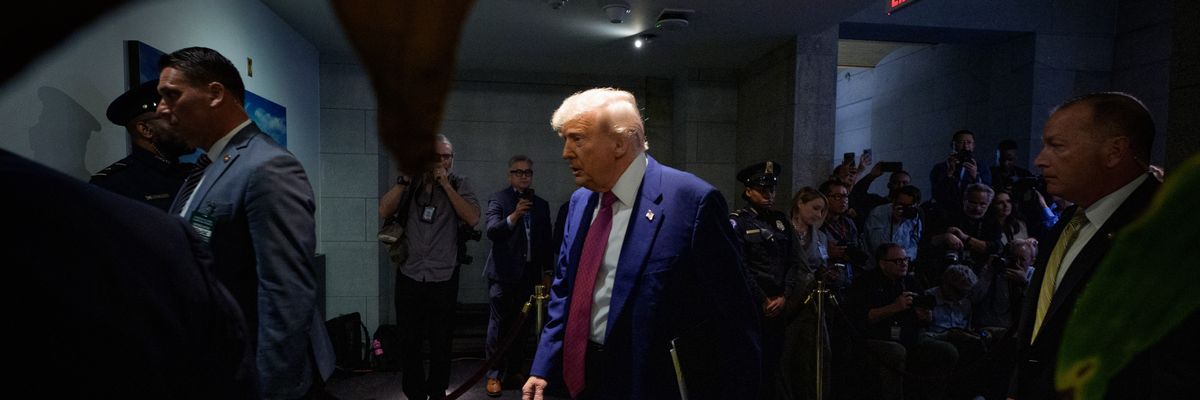
U.S. President Donald Trump arrives for a House Republican meeting at the U.S. Capitol on May 20, 2025 in Washington, D.C. Trump joined conservative House lawmakers to help push through their budget bill after it advanced through the House Budget Committee on Sunday evening.
(Photo: Andrew Harnik/Getty Images)


Bill Mckibben
May 23, 2025
The Crucial Years

Credit where due: I am ever impressed by the feral energy of U.S. President Donald Trump and his crew, who are able to do an extraordinary amount of damage every single damned day. And somehow their energetic cruelty seems to drain my own reserves: I want to stay in bed. But we fight as best we can, and so here’s my assessment of one dire day, and more importantly what we still might be able to do about it.

It began, early Thursday morning, with House passage of the budget bill, which somehow managed to get even worse in the wee hours. Among other things, a single sentence was amended in such a way as to potentially kill off most of the rooftop solar industry in the U.S. As Heatmap’s Matthew Zeitlin explains:
While the earlier language from the Ways and Means committee eliminated the 25D tax credit for those who purchased home solar systems after the end of this year (it was originally supposed to run through 2034), the new language says that no credit “shall be allowed under this section for any investment during the taxable year” (emphasis mine) if the entity claiming the tax credit “rents or leases such property to a third party during such taxable year” and “the lessee would qualify for a credit under section 25D with respect to such property if the lessee owned such property.”

That arcane piece of language was enough to knock 37% off the share price of SunRun today, the biggest rooftop installer in the country. And it was only a cherry on the top of this toxic sundae, which would essentially repeal all of the Inflation Reduction Act (IRA). Nuclear power gets a little bit of a reprieve, and of course ethanol (Earth’s dumbest energy source) does great. But it’s a wipeout far greater than anyone expected even a few weeks ago. Here’s how Princeton’s Jesse Jenkins and his team at REPEAT (Rapid Energy Policy Evaluation and Toolkit) sum it up:Increase U.S. greenhouse gas emissions by roughly 0.5 billion metric tons per year in 2030 and more than 1 billion metric tons per year in 2035.
Raise U.S. household and business energy expenditures by $25 billion annually in 2030 and over $50 billion in 2035.
Increase average U.S. household energy costs by roughly $100-160 per household per year in 2030 and roughly $270-415 per household per year in 2035.
Reduces cumulative capital investment in U.S. electricity and clean fuels production by $1 trillion from 2025-2035.
Imperil a total of $522 billion in announced but pending investments in U.S. clean energy supply and manufacturing.
Reduce annual sales of electric vehicles by roughly 40% in 2030 and end America’s battery manufacturing boom.
Substantially slow electricity capacity additions, raising national average retail electricity rates and monthly household electricity bills by about 9% in 2030—and as much as 17% in some states (including Texas, Oklahoma, and Pennsylvania).

In the midst of all this, the Senate—ignoring its parliamentarian—bowed to the wishes of the auto industry and told California (and the 11 states that had followed it) that it couldn’t demand the phaseout of internal combustion vehicles by the middle of the next decade. (This is among other things federalism in reverse).
“Attacking these waivers will devastate our ability to advance the use of electric vehicles in the state,” California Attorney General Rob Bonta said in a press conference after the vote, flanked by California Gov. Gavin Newsom and other officials. “We won’t let it happen, not when we’re facing an air pollution and climate crisis that’s getting worse by the day.”

The 1970 Clean Air Act permits California to receive waivers from the Environmental Protection Agency that enable the state to enact clean air regulations that go further than federal limits.


Oh, and then at day’s end the Department of Homeland Security told Harvard that 27% of its student body couldn’t study there beginning in the fall because they came from foreign countries.

If you add it up, this is all an effort to keep America precisely where it is now. It’s the Make America Immobile Act. Trump is doing his best to freeze things in place: on behalf of oil companies that want to keep pumping oil, on behalf of automakers that want to keep churning out SUVs. That depends, among other things, on shutting down research at universities, because they keep coming up with things that point us in a different direction, be it temperature readings demonstrating climate change or new batteries that enable entirely different technologies. If America lived alone on this planet that would be truly terrible; luckily for everyone else, there are other places (China, and the E.U.) that are not making the same set of stupid decisions. But if this stands it will kill the future for America.

It will also, of course, kill the present. I’m not bothering to talk about the deep cruelty of the Medicaid cuts (and the fact that they will destroy America’s rural hospital system). There’s also the not-small matter of the intense attacks on transgender people the bill contains. And I won’t bother gassing on about the utter grossness of handing over yet more money to the richest among us. (The top 0.1% of earners gain $390,000 a year on average, while Americans making less than $17,000 lose on average about $1,000. This is, among other things, Christianity in reverse).

So, our job is to do what we can to make it… less worse. The U.S. Senate still has to pass its own version of the bill. Given the GOP majority, they’ll pass something very bad. Perhaps, at Trump’s urging, they’ll rush it through in the next 24 hours; more likely it will take a little longer. We need to put as much pressure as we can on that process, in order to take out the most egregious parts of the bill. Here’s what Third Act sent out on Thursday, and here’s the link we want you to use to register your opposition with Senators. It comes from our very able partners at Solar United Neighbors, who have done as much as anyone in America to help people build clean energy. Fill it out so you can get a call script and the numbers to use. Again, here’s the link. If you want a little inspiration, check out Will Wiseman’s video of rural Americans talking about one particular part of the IRA that’s helping change their lives.

I’m not going to bother pretending that this is guaranteed to work. The bad guys here are riding hard and fast, and they’re trying to shock and cow us into submission. But—don’t go easy. If they can summon the feral energy to wreck the country, we can summon the humane energy to try and save it.


© 2022 Bill McKibben


Bill Mckibben
Bill McKibben is the Schumann Distinguished Scholar at Middlebury College and co-founder of 350.org and ThirdAct.org. His most recent book is "Falter: Has the Human Game Begun to Play Itself Out?." He also authored "The End of Nature," "Eaarth: Making a Life on a Tough New Planet," and "Deep Economy: The Wealth of Communities and the Durable Future."
Full Bio >
Lina Khan Calls Republican FTC's Decision to Drop PepsiCo Suit 'Disturbing Behavior'

"This meritless dismissal is a win for monopolists and billionaires," said the senior legal counsel for the American Economic Liberties Project.


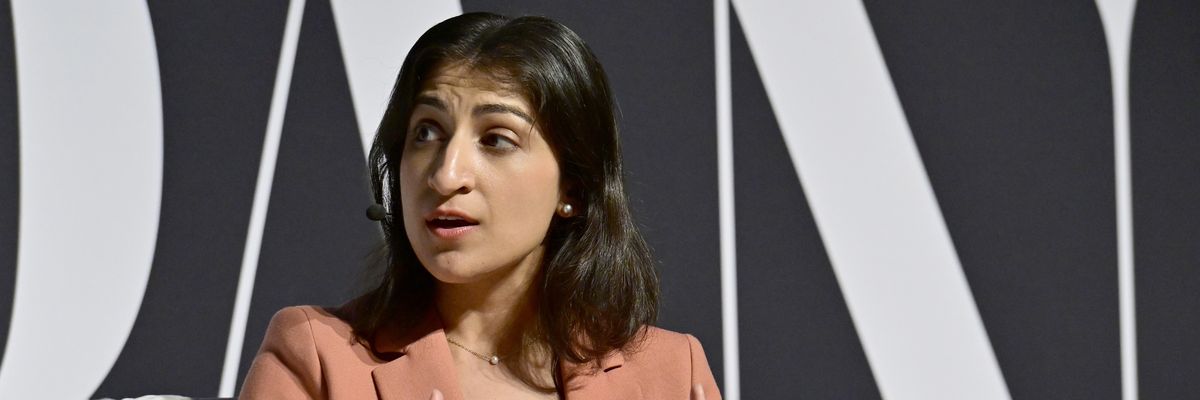
Then-Federal Trade Commission Chair Lina Khan speaks onstage during the Fast Company Innovation Festival 2024 at BMCC Tribeca PAC on September 19, 2024 in New York City, New York.
(Photo: Eugene Gologursky/Getty Images for Fast Company)


Eloise Goldsmith
May 23, 2025
COMMON DREAMS

The U.S. Federal Trade Commission on Thursday dismissed a price discrimination lawsuit against the drink and food giant PepsiCo, a move that former FTC Chair Lina Khan, who served under former President Joe Biden, called "disturbing behavior."

The lawsuit, filed only a few days before U.S. President Donald Trump returned to the White House, accused PepsiCo of providing a big box retailer customer, Walmart, with pricing advantages, while increasing prices for competing customers and retailers.

"This lawsuit would've protected families from paying higher prices at the grocery store and stopped conduct that squeezes small businesses and communities across America," Khan wrote on X on Thursday. "Dismissing it is a gift to giant retailers as they gear up to hike prices."

The three members of the FTC, all Republicans, voted 3-0 to drop the suit. Current FTC Chair Andrew Ferguson, who was named chairman by Trump, cast the lawsuit as a "nakedly political effort to commit this administration to pursuing little more than a hunch that Pepsi had violated the law." He also said that the FTC under Biden "rushed to authorize the case." Ferguson also opposed the lawsuit when the FTC first voted to pursue it.

Antimonopoly groups were quick to criticize Thursday's move.

"This meritless dismissal is a win for monopolists and billionaires," said Lee Hepner, senior legal counsel at the American Economic Liberties Project, in a statement on Thursday. "Adding insult to injury, the agency dropped the case just one day before the parties were due to justify extensive redactions in the complaint, denying the public the ability to review the facts and judge the merits for themselves. This is a corporate pardon for Walmart and PepsiCo."

Open Markets legal director Sandeep Vaheesan said the move illustrates that despite their rhetoric, the current FTC commissioners are "not willing to faithfully apply the law enacted by Congress."

Stacy Mitchell, co-director at the Institute for Local Self-Reliance, which is an advocate for independent businesses, called it "effectively an endorsement of the predatory tactics Walmart uses to crush local grocery sores, create food deserts, and drive up prices."

The agency had sued PepsiCo under the Robinson-Patman Act, a 1936 law intended to prevent price discrimination but has been little used in recent decades.

The announcement of the dropped lawsuit came the same day it was reported that the FTC is investigating the progressive watchdog group Media Matters for America over potential coordination with other groups, including the Global Alliance for Responsible Media, which was a World Federation of Advertiser initiative. Media Matters president Angelo Carusone confirmed in a statement to Axios that the investigation is over claims Media Matters and other groups coordinated advertising boycotts of the social media site X.

X's owner, billionaire Elon Musk, who has played a core role in the Trump administration, has ongoing lawsuits against both the World Federation of Advertisers and Media Matters.
Experts Warn Trump Attack on Nuclear Regulator Raises Disaster Risk


"Simply put," said one critic, "the U.S. nuclear industry will fail if safety is not made a priority."

Brett Wilkins
May 23, 2025
COMMON DREAMS


U.S. President Donald Trump on Friday signed a series of executive orders that will overhaul the independent federal agency that regulates the nation's nuclear power plants in order to speed the construction of new fissile reactors—a move that experts warned will increase safety risks.

According to a White House statement, Trump's directives "will usher in a nuclear energy renaissance," in part by allowing Department of Energy laboratories to conduct nuclear reactor design testing, green-lighting reactor construction on federal lands, and lifting regulatory barriers "by requiring the Nuclear Regulatory Commission (NRC) to issue timely licensing decisions."

The Trump administration is seeking to shorten the yearslong NRC process of approving new licenses for nuclear power plants and reactors to withinf 18 months.

"If you aren't independent of political and industry influence, then you are at risk of an accident."

White House Office of Science and Technology Director Michael Kratsios said Friday that "over the last 30 years, we stopped building nuclear reactors in America—that ends now."

"We are restoring a strong American nuclear industrial base, rebuilding a secure and sovereign domestic nuclear fuel supply chain, and leading the world towards a future fueled by American nuclear energy," he added.

However, the Union of Concerned Scientists (UCS) warned that the executive orders will result in "all but nullifying" the NRC's regulatory process, "undermining the independent federal agency's ability to develop and enforce safety and security requirements for commercial nuclear facilities."

"This push by the Trump administration to usurp much of the agency's autonomy as they seek to fast-ttrack the construction of nuclear plants will weaken critical, independent oversight of the U.S. nuclear industry and poses significant safety and security risks to the public," UCS added.

Edwin Lyman, director of nuclear power safety at the UCS, said, "Simply put, the U.S. nuclear industry will fail if safety is not made a priority."

"By fatally compromising the independence and integrity of the NRC, and by encouraging pathways for nuclear deployment that bypass the regulator entirely, the Trump administration is virtually guaranteeing that this country will see a serious accident or other radiological release that will affect the health, safety, and livelihoods of millions," Lyman added. "Such a disaster will destroy public trust in nuclear power and cause other nations to reject U.S. nuclear technology for decades to come."

Friday's executive orders follow reporting earlier this month by NPR that revealed the Trump administration has tightened control over the NRC, in part by compelling the agency to send proposed reactor safety rules to the White House for review and possible editing.

Allison Macfarlane, who was nominated to head the NRC during the Obama administration, called the move "the end of independence of the agency."

"If you aren't independent of political and industry influence, then you are at risk of an accident," Macfarlane warned.

On the first day of his second term, Trump also signed executive orders declaring a dubious "national energy emergency" and directing federal agencies to find ways to reduce regulatory roadblocks to "unleashing American energy," including by boosting fossil fuels and nuclear power.

The rapid advancement and adoption of artificial intelligence systems is creating a tremendous need for energy that proponents say can be met by nuclear power. The Three Mile Island nuclear plant—the site of the worst nuclear accident in U.S. history—is being revived with funding from Microsoft, while Google parent company Alphabet, online retail giant Amazon, and Facebook owner Meta are among the competitors also investing in nuclear energy.

"Do we really want to create more radioactive waste to power the often dubious and questionable uses of AI?" Johanna Neumann, Environment America Research & Policy Center's senior director of the Campaign for 100% Renewable Energy, asked in December.

"Big Tech should recommit to solutions that not only work but pose less risk to our environment and health," Neumann added.
Trump's FEMA thumbs nose at state that backed him 3 times: 'Gonna cost a lot'


Matthew Chapman
May 23, 2025 
RAW STORY


A drone view shows a damaged area following the passing of Hurricane Helene, in Lake Lure, North Carolina, US, October 1, 2024. © Marco Bello, Reuters

Under President Donald Trump, the Federal Emergency Management Agency has turned down a request from a storm-ravaged state that narrowly voted for him three times.

Western North Carolina saw massive devastation last year from Hurricane Helene, which killed over 100 people and left the city of Asheville, along with a number of small communities in the Appalachian Mountains, struggling to pick up the pieces after flooding in areas that had hardly ever seen floods before. At the time, Trump supporters spread baseless conspiracy theories that the federal government was ignoring communities there, or only giving aid to Democratic areas, and Trump himself vowed to improve emergency management.

According to Rolling Stone, however, Trump's administration is now denying an extension of a commitment to pay the full amount for a vital portion of the recovery process.

"Four months into his administration North Carolina Governor Josh Stein, a Democrat, has become the latest lawmaker from a disaster-ravaged state who has been forced to beg the president to provide much-needed aid," said the report. "On Friday, Stein published a video on social media informing the public that the Trump administration had denied the state’s request for FEMA to honor a Biden-era commitment to pay for 100 percent of debris removal costs."

FEMA is still expected to pay for 90 percent of the debris removal, which the agency argues is already larger than the standard 75 percent commitment — but this still falls short of what the agency has done in similar disasters, Stein argued.

“It’s going to cost a lot, up to $2 billion to fully clean the roads and waterways of western North Carolina,” said Stein in the video. “That’s why I asked the federal government to continue to pay 100 percent of our cleanup costs beyond the first 180 days, just like it did with hurricanes Ike, Maria, and Katrina.”

With Trump rejecting the state's request, he continued, "It will cost North Carolina taxpayers a lot more to clean up west through North Carolina, and debris removal is just one of the many categories of relief we need."

Since taking unified control of government, Republicans have increasingly toyed with the idea of making political demands of areas that require disaster relief. After wildfires destroyed several neighborhoods in Los Angeles months ago, for instance, House Speaker Mike Johnson (R-LA) repeatedly suggested Congress should impose new policy changes in California as a condition of receiving aid to rebuild.
Judge smacks down Trump in retribution case

Sarah K. Burris
May 23, 2025 
RAW STORY

U.S. District Judge John D. Bates, a Republican appointee, permanently blocked President Donald Trump’s executive order targeting the law firm Jenner & Block, finding the retribution unconstitutional.

The order, issued Friday afternoon, alleged that Trump was trying “to chill legal representation the administration doesn’t like, thereby insulating the Executive Branch from the judicial check fundamental to the separation of powers."

Trump targeted the law firm, citing lawyer Andrew Weissmann, a top prosecutor who worked on special counsel Robert Mueller's team that investigated Trump and his connections to Russia in the 2016 election. Weissmann hadn't worked for the firm since 2011 and has been teaching at New York University Law School.

The executive order attempted to kill any government contracts with the firm and block any of the firm's lawyers from accessing federal buildings like courthouses.

Jenner & Block isn't the only firm Trump targeted. He's gone after several, and nine of them struck a deal with him to give nearly $1 billion in free legal services to allied Trump causes.

This is the second time a court has struck down Trump's target of a law firm. The others involved include Perkins Coie, WilmerHale and Susman Godfrey, all of which filed suits in federal court. Judges in all four cases have issued temporary blocks to enforce the executive orders.

Read the order here.
'Anxious' farmers are already 'rethinking' support for Trump: journalist

Sarah K. Burris
May 23, 2025
RAW STORY


A farmer (Shutterstock)

Farmers are starting to turn on President Donald Trump, one reporter from rural Wisconsin warned Friday.

Speaking to MSNBC, The Nation's national affairs correspondent, John Nichols, said that most of the folks he grew up with were farmers or in a business related to farming.

He said that in the U.S., farmers are the largest block of individual small businesses or mid-level businesses.

"They're in a real crisis situation right now because they don't know who they can send goods to," said Nichols. "They've got their seeds in the field, but they don't know, you know, where they're going to be able to send things. They don't know where they're going to be able to sell stuff. They don't know when they might be blocked in short order with a new tariff or something else."

He noted that polls have shown that "farmers who voted for Trump are opposed to the way he is approaching tariffs. They're very, very uncomfortable."

The trade war extends to larger manufacturing as well, he said, such as auto plants where "they're very aware of these issues."

"They may vote for someone who promises them a better deal. That's not uncommon and it's not shocking," Nichols continued. "But then they watch how that deal plays out. And I can tell you without a doubt, having been in Kenosha, Wisconsin, and Belmont, Wisconsin, and over the border in Illinois, and in Iowa, and other places. Every place I go, I hear a discussion of tariffs at the level that I have never, ever heard before. And it is something that, frankly, has people nervous, anxious and, and politically kind of rethinking a lot of their choices."

MSNBC host Katy Tur noted that in the new budget bill, Republicans have cut "the social safety net to catch everybody in case the worst does come to pass."

"In order for Donald Trump to get to some, you know, euphoric future that he promises — it's just coming up around the corner. Don't worry. I don't understand that political contradiction. I don't understand how that wins you elections," she questioned.

See his full comments below or at the link here.


'Unprofessional!' Over 100 national security staffers given minutes to clear out


Daniel Hampton
May 23, 2025 
RAW STORY


More than 100 National Security Council staffers at the White House were placed on administrative leave on Friday afternoon, and they were given just a half-hour to clean out their desks, CNN reported.

The Trump administration's move was part of a restructuring under interim national security adviser and Secretary of State Marco Rubio, two US officials and another source familiar with the matter told CNN.

The staffers learned they'd been dismissed in an email from the council's chief of staff Brian McCormack, that was sent around 4:20 p.m. The staffers were given 30 minutes to clean out their desks, an official said. Anyone not on campus would have to email an address and figure out when they could retrieve their belongings and turn in devices, according to the report.

The chaos led to a deluge of emails from staffers who just learned their fate as they passed along contact information. One official called it "as unprofessional and reckless as could possibly be," CNN reported.

The National Security Council serves as the main platform for the president to discuss national security and foreign policy issues with top advisors and cabinet members. It helps the president combine domestic, foreign, and military strategies related to national security and ensures these policies are coordinated among different government agencies.