It’s possible that I shall make an ass of myself. But in that case one can always get out of it with a little dialectic. I have, of course, so worded my proposition as to be right either way (K.Marx, Letter to F.Engels on the Indian Mutiny)
Tuesday, July 08, 2025
SPACE/COSMOS
Artificial solar eclipses in space could shed light on Sun
Credit: Miloslav Druckmuller, Shadia Habbal, Pavel Starha
Recreating artificial solar eclipses in space could help astronomers decipher the inner workings of our Sun much quicker than if they had to wait for the celestial show on Earth.
The Moon-Enabled Sun Occultation Mission (MESOM) proposes a novel way to study the inner solar corona – the innermost layer of the Sun's atmosphere, which is usually only visible during fleeting total solar eclipses on Earth.
It is being presented by researchers from the Mullard Space Science Laboratory at University College London (UCL), Aberystwyth University, and the Surrey Space Centre, part of the University of Surrey.
If approved, MESOM could operate for two years and capture the equivalent of 80 Earth-based eclipses – an unprecedented opportunity for solar science which could also help researchers gain important clues about how space weather originates.
MESOM would place a small satellite into a special orbit that allows it to align with the Moon's shadow roughly once every 29.6 days – the length of a synodic (lunar) month.
These alignments would mimic the effects of total eclipses, but viewed in space, up to a maximum of 48 minutes – 10 times longer than typical eclipses seen from Earth. Unlike terrestrial observations, the satellite would capture data without interference from Earth's atmosphere.
Co-investigator Dr Nicola Baresi, from the Surrey Space Centre, said: "MESOM capitalises on the chaotic dynamics of the Sun-Earth-Moon system to reproduce total solar eclipse conditions in space while using the Moon as a natural occulter (something which blocks light from a celestial object)."
MESOM's goal is to explore the corona's innermost region, which holds key insights into space weather, solar storms and coronal heating, yet remains poorly understood, partly because it can only be studied under eclipse conditions.
Thanks to its innovative orbital configuration, MESOM would effectively experience a total solar eclipse every synodic month as it naturally passes through the apex of the Moon's umbral cone, or the darkest part of its shadow (every two of its revolutions).
This would allow it to see closer to the Sun than ever before. For comparison, the European Space Agency's (ESA) existing Proba-3 mission observes the corona out from approximately 1.1 solar radii (765,000 km), while MESOM's would reach below 1.02 solar radii (710,000 km), allowing it to get 56,000 km closer to the Sun.
MESOM would carry a suite of instruments, including a high-resolution coronal imager (a telescope to take high-res pictures) proposed to be led by the US Naval Research Laboratory; a corona mass spectrometer (Aberystwyth University and Mullard Space Science Laboratory UCL) to analyse the composition and properties of coronal plasma; and a spectropolarimeter (Spanish Space Solar Physics Consortium, S3PC, Spain) to study the Sun's magnetic field and solar phenomena, like sunspots and flares.
Dr Baresi said: "When the Sun is near the orbital plane of the Moon, we can experience total eclipses as long as 48 minutes, which would enable unprecedented and prolonged measurements of physical processes from which adverse space weather events, namely solar flares and coronal mass ejections, may originate."
The team submitted MESOM to ESA's F-class mission call in May 2025 and expects a response later this year. If selected, it could be launched between 2026-28.
F-class missions are designed to be smaller, faster, and more cost-effective than ESA's larger "M-class" missions, with a ceiling cost of €205 million (£175 million) and a development timeline of less than eight years from selection to launch.
ENDS
The same total solar eclipse with the fields of view of the MESOM instruments superimposed on top of it (i.e. HiBri,LoBri, CHILS and Mag-CHILS).
Caption: The same total solar eclipse with the fields of view of the MESOM instruments superimposed on top of it (i.e. HiBri,LoBri, CHILS and Mag-CHILS).
Credit: Miloslav Druckmuller, Shadia Habbal, Pavel Starha
Caption: The video is a simulation of how the Moon moves during MESOM observations.
Credit: Miloslav Druckmuller, Shadia Habbal, Pavel Starha
Further information
The talk 'Re-creating total solar eclipses in Space. The Moon-Enabled Sun Occultation Mission concept MESOM' will take place at NAM at 15:35 BST on Wednesday 9 July 2025 in room TLC101. Find out more at: https://conference.astro.dur.ac.uk/event/7/contributions/468/
If you would like a Zoom link and password to watch it online, please email press@ras.ac.uk
● The MESOM concept is led by Mullard Space Science Laboratory UCL (UK) in collaboration with Aberystwyth University and the Surrey Space Centre, University of Surrey. International partners include the Naval Research Laboratory (USA) and the Spanish Space Solar Physics Consortium, S3PC, Spain.
● The concept builds on a feasibility study funded under the UK Space Agency's National Space Technology Programme and a recent UK Space Agency-funded bilateral study, which helped refine the science case and evaluate instrument options.
● The mission was submitted to the European Space Agency's F3 call in May 2025.
Notes for editors
The NAM 2025 conference is principally sponsored by the Royal Astronomical Society and Durham University
Probing the cosmic Dark Ages from the far side of the Moon
An artist’s impression of the UK-led CosmoCube spacecraft, which would orbit be tasked with listening out for an “ancient whisper” from the early universe on the far side of the Moon.
Astronomers want to unlock the secrets of the 'Cosmic Dawn' by sending a miniature spacecraft to listen out for an "ancient whisper" on the far side of the Moon.
The proposed mission will study the very early universe, right after the Big Bang, when it was still quite dark and empty before the first stars and galaxies appeared.
But to probe the cosmic 'Dark Ages', silence is essential. And Earth is a very 'noisy' place for radio signals, with interference from our atmosphere and all our electronics.
"This makes it really hard to pick up those faint signals from billions of years ago. To detect a special radio signal that comes from hydrogen – the first, most basic and most abundant chemical element – in the early universe, we need it to be quiet.
"That's why we're proposing to send a small satellite to orbit the Moon and detect a signal which could hold clues about how everything began and how structures like galaxies eventually formed."
The UK-led CosmoCube mission would observe from the far side of the Moon, which acts like a giant shield, blocking out all the radio noise from Earth.
This would create a clear, quiet spot to "listen" for an "ancient whisper" and learn more about the universe's Dark Ages and Cosmic Dawn – periods that are currently largely unexplored.
"By doing this, CosmoCube aims to help us better understand how our universe transformed from a simple, dark state to the complex, light-filled cosmos we see today, with all its stars and galaxies," said de Lera Acedo, head of Cavendish Radio Astronomy and Cosmology at the University of Cambridge.
"Crucially, it will also help scientists investigate the mysterious dark matter and its role in shaping these cosmic structures."
CosmoCube will feature a precision-calibrated, low-power radio radiometer operating from a low-cost satellite platform in lunar orbit. It would operate at low frequencies (10–100 MHz), engineered to detect extremely faint signals amidst a sea of noise.
The mission could help shed light on the Hubble tension, which refers to the discrepancy in the measured expansion rate of the universe, specifically between the value based on observations of the early universe and value related to observations of the local universe.
It may also provide insights into dark matter-baryon interactions (potential, non-gravitational interactions between dark matter particles and ordinary matter) and the physics of the early universe.
This so-called 'Dark Ages' period is one of the last unexplored frontiers in observational cosmology. The pre-stellar epoch offers a pristine view into the formation of structure, the properties of dark matter, and early cosmic evolution.
"It's incredible how far these radio waves have travelled, now arriving with news of the universe's history," said fellow CosmoCube researcher Professor David Bacon, from the University of Portsmouth.
"The next step is to go to the quieter side of the Moon to hear that news."
Cosmo Cube is supported under the UK Space Agency's Science Bilateral Programme and is being developed by a UK-led international consortium with researchers based at the University of Cambridge, University of Portsmouth and STFC RAL Space.
Instrument development is well under way, with functioning lab prototypes and environmental testing taking place and key collaboration with industry partners, such as SSTL Ltd, developing the space platform and mission concept.
The team behind the project are planning for a 4–5 year roadmap to launch, with the goal of reaching lunar orbit before the end of the decade.
ENDS
A model of the CosmoCube satellite undergoes thermal vacuum tests at the RAL Space facilities.
Credit
Dr Will Grainger, RAL Space
Depiction of the Dark Ages era of the universe, right after the Big Bang, and before the formation of the first starts and galaxies.
Caption: An artist's impression of the UK-led CosmoCube spacecraft, which would orbit be tasked with listening out for an "ancient whisper" from the early universe on the far side of the Moon.
Caption: Depiction of the Dark Ages era of the universe, right after the Big Bang, and before the formation of the first starts and galaxies.
Credit: University of Colorado, Boulder
Further information
The talk 'CosmoCube: Probing the Cosmic Dark Ages with a Miniature Radiometer in Lunar Orbit' will take place at NAM at 16:45 BST on Wednesday 9 July 2025 in room TLC10. Find out more at: https://conference.astro.dur.ac.uk/event/7/contributions/484/
If you would like a Zoom link and password to watch it online, please email press@ras.ac.uk
A new UK-led satellite mission concept aims to strengthen the country's position in space weather observation and forecasting by deploying a suite of homegrown scientific instruments on a low-cost spacecraft in low-Earth orbit.
UK-ODESSI (UK-Orbital pathfinDEr for Space-borne, Space-weather Instrumentation) would act as a pathfinder for a new generation of UK-developed space weather instruments.
It would carry a baseline payload including a solar coronagraph (SCOPE), developed at the Science and Technology Facilities Council's (STFC) RAL Space, and a high-energy particle instrument (HEPI), developed at the University of Surrey. Both are designed to fill current UK and European capability gaps in key areas of space weather monitoring.
SCOPE is the only solar coronagraph currently under development in Europe for space weather operations. Coronagraphs allow scientists to track coronal mass ejections (CMEs) from the Sun and forecast their arrival at Earth, with lead times of no less than 15 hours.
Accurate CME arrival forecasts are a central component of space weather mitigation strategies. Currently, Europe relies on US-operated assets for this crucial observational capability. Amid growing uncertainty around the future of US scientific infrastructure, the development of sovereign UK and European coronagraph capability is increasingly important.
Dr Jackie Davies, science lead for UK-ODESSI at STFC RAL Space and SCOPE instrument lead, said: "Testing a coronagraph, with its challenging stray-light requirements, is difficult on the ground.
"A low-cost LEO platform is an ideal test-bed for performance verification, while also providing a level of resilience for current assets. With a validated coronagraph design, we would develop UK sovereign and European capability that could potentially be deployed on spacecraft in multiple locations."
HEPI is designed to measure highly energetic solar particles, specifically those with energies above 300 MeV.
Professor Keith Ryden, director of Surrey Space Centre at the University of Surrey and HEPI instrument lead, added: "These particles are hazardous because they are highly penetrating and can affect systems even on Earth's surface or on aircraft.
"In situ observations of such particles are extremely limited, with data currently available from only a few locations in geostationary orbit. A validated instrument like HEPI, deployed on multiple spacecraft, would significantly improve current models used for forecasting particle radiation events."
UK-ODESSI would use a small satellite platform developed by Surrey Satellite Technology Ltd (SSTL), placed in a sun-synchronous terminator orbit around 500–600 km above Earth. The orbit would allow near-continuous collection of operational data, with only short eclipse periods at one solstice.
The mission would also serve as a testbed for other satellite technologies developed in the UK, and could help pave the way for future deployments beyond low-Earth orbit.
At present, the development of the SCOPE and HEPI instruments is well underway, while the UK-ODESSI mission and spacecraft concept are still at a conceptual level. A design study is therefore being sought to move the mission forward, with a potential launch target within five years if funding is secured.
The project would aim to align with a cost and timeframe comparable to an ESA mini-F-class mission.
"Space weather is an acknowledged UK national risk," Dr Davies said. "The development and deployment of instruments for forecasting, nowcasting and model validation is a critical element in the successful mitigation of this critical national risk."
Caption: An artist’s impression of what the UK-ODESSI space monitor could look like. Credit: SSTL and STFC RAL Space
Further information
The talk ‘UK-ODESSI: A Low-Cost, Low-Earth Orbit, In-Orbit Pathfinder for UK Space Weather Instrumentation’ will take place at NAM at 17:15 BST on Wednesday 9 July 2025 in room TLC101. Find out more at: https://conference.astro.dur.ac.uk/event/7/contributions/457/
If you would like a Zoom link and password to watch it online, please email press@ras.ac.uk
The SCOPE (Solar Coronagraph for OPErations) instrument is under development at STFC RAL Space. In July 2024, the project received £770,000 in funding from the UK Space Agency’s National Space Innovation Programme to support design, testing and initial validation.
HEPI (High-Energy Particle Instrument) is being developed at the University of Surrey. Recent progress was presented at ESA/ESTEC in June 2025, including simulation results and breadboard hardware development.
UK-ODESSI would use a small satellite platform from Surrey Satellite Technology Ltd (SSTL) in a sun-synchronous terminator orbit (~500–600 km altitude).
Notes for editors
The NAM 2025 conference is principally sponsored by the Royal Astronomical Society and Durham University.
About the Royal Astronomical Society
The Royal Astronomical Society (RAS), founded in 1820, encourages and promotes the study of astronomy, solar-system science, geophysics and closely related branches of science.
The RAS organises scientific meetings, publishes international research and review journals, recognises outstanding achievements by the award of medals and prizes, maintains an extensive library, supports education through grants and outreach activities and represents UK astronomy nationally and internationally. Its more than 4,000 members (Fellows), a third based overseas, include scientific researchers in universities, observatories and laboratories as well as historians of astronomy and others.
The RAS accepts papers for its journals based on the principle of peer review, in which fellow experts on the editorial boards accept the paper as worth considering. The Society issues press releases based on a similar principle, but the organisations and scientists concerned have overall responsibility for their content.
About the Science and Technology Facilities Council
The Science and Technology Facilities Council (STFC), part of UK Research and Innovation (UKRI), is the UK’s largest public funder of research into astronomy and astrophysics, particle and nuclear physics, and space science. We operate five national laboratories across the UK which, supported by a network of additional research facilities, increase our understanding of the world around us and develop innovative technologies in response to pressing scientific and societal issues. We also facilitate UK involvement in a number of international research activities including the ELT, CERN, the James Webb Space Telescope and the Square Kilometre Array Observatory.
Durham University is a globally outstanding centre of teaching and research based in historic Durham City in the UK.
We are a collegiate university committed to inspiring our people to do outstanding things at Durham and in the world.
We conduct research that improves lives globally and we are ranked as a world top 100 university with an international reputation in research and education (QS World University Rankings 2026).
We are a member of the Russell Group of leading research-intensive UK universities and we are consistently ranked as a top five university in national league tables (Times and Sunday Times Good University Guide and The Complete University Guide).
Image of the Northest Africa 16286 sample obtained using a scanning electron microscope. These are what’s referred to as “backscattered electron images”, and the different shades of grey highlight different chemical compositions of the minerals making up the rock.
Credit: Dr Joshua Snape / University of Manchester
A 2.35-billion-year-old meteorite with a unique chemical signature, found in Africa in 2023, plugs a major gap in our understanding of the Moon’s volcanic history.
Presented today [Wednesday 9 July] at the Goldschmidt Conference in Prague, findings from analyses of the Northwest Africa 16286 meteorite offer fresh insights into how the Moon’s interior evolved, highlighting the long-lived nature of its volcanic activity.
Analyses by researchers from the University of Manchester, UK, lend weight to a theory that the Moon retained internal heat-generating processes that powered lunar volcanic activity in several distinct phases.
Lead isotope analysis dates the rock’s formation to around 2.35 billion years ago, during a period from which few lunar samples exist, making it the youngest basaltic lunar meteorite discovered on Earth. Its rare geochemical profile sets it apart from those returned by previous Moon missions, with chemical evidence indicating it likely formed from a lava flow that solidified after emerging from deep within the Moon.
Dr Joshua Snape, a Research Fellow at the University of Manchester, UK, is presenting the research at the Goldschmidt Conference. He said: “Lunar rocks from sample return missions are fantastic in the insights they provide us, but they are limited to the immediate areas surrounding those mission landing sites. By contrast, lunar meteorites can potentially be ejected by impact cratering occurring anywhere on the Moon’s surface. As such, there’s some serendipity surrounding this sample; it just happened to fall to Earth and reveals secrets about lunar geology without the massive expense of a space mission.”
Containing relatively large crystals of mineral olivine, the rock is a type of lunar volcanic basalt called olivine-phyric basalt. It contains moderate levels of titanium, high levels of potassium. In addition to the unusual age of the sample, this study found that the Pb isotope composition of the rock – a geochemical fingerprint retained from when the rock formed – points to it originating from a source in the Moon’s interior with an unusually high uranium-to-lead ratio. These chemical clues may help identify the mechanisms that have enabled periods of ongoing internal heat generation on the Moon.
“The age of the sample is especially interesting because it fills an almost billion-year gap in lunar volcanic history,” said Dr Snape. “It’s younger than the basalts collected by the Apollo, Luna and Chang’e 6 missions, but older than the much younger rocks brought back by China’s Chang’e 5 mission. Its age and composition show that volcanic activity continued on the Moon throughout this timespan, and our analysis suggests an ongoing heat generation process within the Moon, potentially from radiogenic elements decaying and producing heat over a long period.
“Moon rocks are rare, so it’s always interesting when we get something that stands out and looks different to everything else. This particular rock provides new constraints about when and how volcanic activity occurred on the Moon. There is much more yet to learn about the Moon’s geological past, and with further analysis to pinpoint its origin on the surface, this rock will guide where to land future sample return missions.”
The 311-gram meteorite is only one of 31 lunar basalts officially identified on Earth. Its distinct composition, with melted glassy pockets and veins, suggests it was likely shocked by an asteroid or meteorite impact on the Moon’s surface before being ejected and eventually falling to Earth. This shock event makes it more challenging to interpret the date obtained for the rock, but the researchers estimate its age with a margin of plus or minus 80 million years.
The research was funded by the Royal Society, and the researchers plan to publish their findings in full in a peer-reviewed journal later this year.
The Goldschmidt Conference is the world’s foremost geochemistry conference. It is a joint congress of the European Association of Geochemistry and the Geochemical Society (US), and over 4000 delegates attend. It takes place in Prague, Czech Republic, from 6-11 July 2025.
Is Earth inside a huge void? 'Sound of the Big Bang' hints at possible solution to Hubble tension
If we are located in a region with below-average density such as the green dot, then matter would flow away from us due to stronger gravity from the surrounding denser regions, as shown by the red arrows.
Earth and our entire Milky Way galaxy may sit inside a mysterious giant hole which makes the cosmos expand faster here than in neighbouring regions of the universe, astronomers say.
Their theory is a potential solution to the 'Hubble tension' and could help confirm the true age of our universe, which is estimated to be around 13.8 billion years old.
The Hubble constant was first proposed by Edwin Hubble in 1929 to express the rate of the universe's expansion. It can be measured by observing the distance of celestial objects and how fast they are moving away from us.
The stumbling block, however, is that extrapolating measurements of the distant, early universe to today using the standard cosmological model predicts a slower rate of expansion than measurements of the nearby, more recent universe. This is the Hubble tension.
"A potential solution to this inconsistency is that our galaxy is close to the centre of a large, local void," explained Dr Indranil Banik, of the University of Portsmouth.
"It would cause matter to be pulled by gravity towards the higher density exterior of the void, leading to the void becoming emptier with time.
"As the void is emptying out, the velocity of objects away from us would be larger than if the void were not there. This therefore gives the appearance of a faster local expansion rate."
He added: "The Hubble tension is largely a local phenomenon, with little evidence that the expansion rate disagrees with expectations in the standard cosmology further back in time.
"So a local solution like a local void is a promising way to go about solving the problem."
For the idea to stand up, Earth and our solar system would need to be near the centre of a void about a billion light-years in radius and with a density about 20 per cent below the average for the universe as a whole.
Directly counting galaxies does support the theory, because the number density in our local universe is lower than in neighbouring regions.
However, the existence of such a large and deep void is controversial because it doesn't mesh particularly well with the standard model of cosmology, which suggests matter today should be more uniformly spread out on such large scales.
Despite this, new data presented by Dr Banik at NAM 2025 shows that baryon acoustic oscillations (BAOs) – the "sound of the Big Bang" – support the idea of a local void.
"These sound waves travelled for only a short while before becoming frozen in place once the universe cooled enough for neutral atoms to form," he explained.
"They act as a standard ruler, whose angular size we can use to chart the cosmic expansion history.
"A local void slightly distorts the relation between the BAO angular scale and the redshift, because the velocities induced by a local void and its gravitational effect slightly increase the redshift on top of that due to cosmic expansion.
"By considering all available BAO measurements over the last 20 years, we showed that a void model is about one hundred million times more likely than a void-free model with parameters designed to fit the CMB observations taken by the Planck satellite, the so-called homogeneous Planck cosmology."
The next step for researchers is to compare their local void model with other methods to estimate the history of the universe's expansion, such as cosmic chronometers.
This involves looking at galaxies that are no longer forming stars. By observing their spectra, or light, it is possible to find what kinds of stars they have and in what proportion. Since more massive stars have shorter lives, they are absent in older galaxies, providing a way to establish a galaxy's age.
Astronomers can then combine this age with the galaxy's redshift – how much the wavelength of its light has been stretched – which tells us how much the universe has expanded while light from the galaxy was travelling towards us. This sheds light on the universe's expansion history.
ENDS
\\\
Baryon acoustic oscillations (BAOs) – the “sound of the Big Bang” – support the idea of a local void.
Credit
Gabriela Secara, Perimeter Institute
The main techniques for charting the cosmic expansion history, such as supernovae – or standard candles – and cosmic chronometers.
Caption: If we are located in a region with below-average density such as the green dot, then matter would flow away from us due to stronger gravity from the surrounding denser regions, as shown by the red arrows.
If you would like a Zoom link and password to watch it online, please email press@ras.ac.uk
The Hubble constant was first proposed by Edwin Hubble in 1929 to express the rate of the universe's expansion. It can be measured by observing the distance of celestial objects and how fast they are moving away from us.
The Hubble tension refers to the discrepancy in the measured expansion rate of the universe, specifically between the value based on observations of the early universe and value related to observations of the local universe.
Baryon acoustic oscillations are a pattern of wrinkles in the density distribution of the clusters of galaxies spread across the universe. They provide an independent way to measure the expansion rate of the universe and how that rate has changed throughout cosmic history.
Notes for editors
The NAM 2025 conference is principally sponsored by the Royal Astronomical Society and Durham University.
About the Royal Astronomical Society
The Royal Astronomical Society (RAS), founded in 1820, encourages and promotes the study of astronomy, solar-system science, geophysics and closely related branches of science.
The RAS organises scientific meetings, publishes international research and review journals, recognises outstanding achievements by the award of medals and prizes, maintains an extensive library, supports education through grants and outreach activities and represents UK astronomy nationally and internationally. Its more than 4,000 members (Fellows), a third based overseas, include scientific researchers in universities, observatories and laboratories as well as historians of astronomy and others.
The RAS accepts papers for its journals based on the principle of peer review, in which fellow experts on the editorial boards accept the paper as worth considering. The Society issues press releases based on a similar principle, but the organisations and scientists concerned have overall responsibility for their content.
About the Science and Technology Facilities Council
The Science and Technology Facilities Council (STFC), part of UK Research and Innovation (UKRI), is the UK’s largest public funder of research into astronomy and astrophysics, particle and nuclear physics, and space science. We operate five national laboratories across the UK which, supported by a network of additional research facilities, increase our understanding of the world around us and develop innovative technologies in response to pressing scientific and societal issues. We also facilitate UK involvement in a number of international research activities including the ELT, CERN, the James Webb Space Telescope and the Square Kilometre Array Observatory.
Durham University is a globally outstanding centre of teaching and research based in historic Durham City in the UK.
We are a collegiate university committed to inspiring our people to do outstanding things at Durham and in the world.
We conduct research that improves lives globally and we are ranked as a world top 100 university with an international reputation in research and education (QS World University Rankings 2026).
We are a member of the Russell Group of leading research-intensive UK universities and we are consistently ranked as a top five university in national league tables (Times and Sunday Times Good University Guide and The Complete University Guide).
China’s SJ-6 Satellites—Tactics, Techniques, and Procedures Published July 7, 2025 China Aerospace Studies Institute
The recent on-orbit behavior of China’s Shi Jian 6 (SJ-6) satellite series, together with newly acquired commercial non-Earth imagery (NEI), helps expand our existing knowledge of the satellite constellations’ tactics, techniques, and procedures (TTPs). As of January 2025, China appears to have completed a nearly ten-month demonstration of rendezvous and proximity operations (RPOs) with mostly three, but at times four satellites, one of which was SJ-6I (49961, SJ-6 05A). In discussion of these RPOs, U.S. Vice Chief of Space Operations General Michael Guetlein stated that the [Chinese] satellites were “practicing tactics, techniques and procedures,” which is consistent with prior research.
This article will cover what we already know about the SJ-6 satellites, in terms of on-orbit behavior and payloads. This article will then present an argument that their recent engagement with the Shi Yan-24C (SY-24C) triplets shares important consistencies with past behavior. An examination across the SJ-6 series reveals similar trends in space environment detection payloads on the larger B satellites, and incrementally improving maneuverability of the smaller A satellites. In particular, SJ-6’s primary mission seems to be TTP development for tipping and queuing for maritime surveillance, based on patent filings and newly acquired NEI. The secondary mission continues to be support of RPO tests for satellites outside the series. These consistencies reveal an evolving challenge, rather than an immediate threat.
Credit: Image created by Sissa Medialab staff with Adobe Illustrator
The Anglo-USA team behind the study named them dark dwarfs. Not because they are dark bodies—on the contrary—but because of their special link with dark matter, one of the most central topics in current cosmology and astrophysics research. “We think that 25% of the universe is composed of a type of matter that doesn’t emit light, making it invisible to our eyes and telescopes. We only detect it through its gravitational effects. That’s why we call it dark matter,” explains Jeremy Sakstein, Professor of Physics at the University of Hawai‘i and one of the study’s authors.
What we know today about dark matter is that it exists and how it behaves—but not yet what it actually is. Over the past fifty years, several hypotheses have been proposed, but none have yet gathered enough experimental evidence to prevail. Studies like the one by Sakstein and colleagues are important because they offer concrete tools to break this deadlock.
Among the most well-known dark matter candidates are the Weakly Interacting Massive Particles (WIMPs)—very massive particles that interact very weakly with ordinary matter: they pass through things unnoticed, don’t emit light and don’t respond to electromagnetic forces (so they don’t reflect light and remain invisible), and reveal themselves only through their gravitational effects. This type of dark matter would be necessary for dark dwarfs to exist. “Dark matter interacts gravitationally, so it could be captured by stars and accumulate inside them. If that happens, it might also interact with itself and annihilate, releasing energy that heats the star,” Sakstein explains.
Ordinary stars—like our Sun—shine because nuclear fusion processes occur in their cores, generating large amounts of heat and energy. Fusion happens when a star’s mass is large enough that gravitational forces compress matter toward the centre with such intensity that they trigger reactions between atomic nuclei. This process releases a huge amount of energy, which we see as light. Dark dwarfs also emit light—but not because of nuclear fusion. “Dark dwarfs are very low mass objects, about 8% of the Sun’s mass,” Sakstein explains. Such a small mass is not sufficient to trigger fusion reactions. For this reason, such objects—although very common in the universe—usually only emit a faint light (due to the energy produced by their relatively small gravitational contraction) and are known to scientists as brown dwarfs.
However, if brown dwarfs are located in regions where dark matter is particularly abundant—such as the centre of our galaxy—they can transform into something else. “These objects collect the dark matter that helps them become a dark dwarf. The more dark matter you have around, the more you can capture,” Sakstein explains. “And, the more dark matter ends up inside the star, the more energy will be produced through its annihilation.”
But all of this relies on a specific type of dark matter. “For dark dwarfs to exist, dark matter has to be made of WIMPs, or any heavy particle that interacts with itself so strongly to produce visible matter,” Sakstein says. Other candidates proposed to explain dark matter—such as axions, fuzzy ultralight particles, or sterile neutrinos—are all too light to produce the expected effect in these objects. Only massive particles, capable of interacting with each other and annihilating into visible energy, could power a dark dwarf.
This entire hypothesis, however, would have little value if there weren’t a concrete way to identify a dark dwarf. For this reason, Sakstein and colleagues propose a distinctive marker: “There were a few markers, but we suggested the Lithium-7 because it would really be a unique effect” the scientist explains. Lithium-7 burns very easily and is quickly consumed in ordinary stars. “So if you were able to find an object which looked like a dark dwarf, you could look for the presence of this lithium because it wouldn’t be there if it was a brown dwarf or a similar object.”
Tools like the James Webb Space Telescope might already be able to detect extremely cold celestial objects like dark dwarfs. But, according to Sakstein, there’s another possibility: “The other thing you could do is to look at a whole population of objects and ask, in a statistical manner, if it is better described by having a sub-population of dark dwarfs or not.”
If in the coming years we manage to identify one or more dark dwarfs, how strong would that clue be in support of the hypothesis that dark matter is made of WIMPs? “Reasonably strong. With light dark matter candidates, something like an axion, I don’t think you’d be able to get something like a dark dwarf. They don’t accumulate inside stars. If we manage to find a dark dwarf, it would provide compelling evidence that dark matter is heavy, interacts strongly with itself, but only weakly with the Standard Model. This includes classes of WIMPs, but it would include some other more exotic models as well,” concludes Sakstein. Observing a dark dwarf wouldn’t conclusively tell us that dark matter is a WIMP, but it would mean that it is either a WIMP or something that, for all intents and purposes, behaves like a WIMP.”
The paper “Dark Dwarfs: Dark Matter-Powered Sub-Stellar Objects Awaiting Discovery at the Galactic Center”, authored by Djuna Croon, Jeremy Sakstein, Juri Smirnov, and Jack Streeter, was published in the Journal of Cosmology and Astroparticle Physics (JCAP).
Journal
Journal of Cosmology and Astroparticle Physics
Method of Research
Computational simulation/modeling
Article Title
Dark Dwarfs: Dark Matter-Powered Sub-Stellar Objects Awaiting Discovery at the Galactic Center
The birth of a solar system revealed by planet 'pebbles'
An e-MERLIN map showing the tilted disc structure around the young star DG Tauri where pebble-sized clumps are beginning to form. Its long axis is southeast to northwest (lower left to upper right). Emission from an outflow of material from the central star is also seen in the northeast and southwest directions.
Credit: Hesterly, Drabek-Maunder, Greaves, Richards, et al.
A fascinating glimpse into how a solar system like our own is born has been revealed with the detection of planet-forming ‘pebbles’ around two young stars.
These seeds to make new worlds are thought to gradually clump together over time, in much the same way Jupiter was first created 4.5 billion years ago, followed by Saturn, Uranus, Neptune, Mercury, Venus, Earth and Mars.
The planet-forming discs, known as protoplanetary discs, were spotted out to at least Neptune-like orbits around the young stars DG Tau and HL Tau, both around 450 light-years from Earth.
“These observations show that discs like DG Tau and HL Tau already contain large reservoirs of planet-forming pebbles out to at least Neptune-like orbits,” said researcher Dr Katie Hesterly, of the SKA Observatory.
“This is potentially enough to build planetary systems larger than our own solar system.”
The latest research is part of the PEBBLeS project (Planet Earth Building-Blocks – a Legacy eMERLIN Survey), led by Professor Jane Greaves, of Cardiff University.
By imaging the rocky belts of many stars, the team are looking for clues to how often planets form, and where, around stars that will evolve into future suns like our own.
The survey uses e‑MERLIN, an interferometer array of seven radio telescopes spanning 217 km (135 miles) across the UK and connected by a superfast optical fibre network to its headquarters at Jodrell Bank Observatory in Cheshire.
It is currently the only radio telescope able to study protoplanetary discs – the cosmic nurseries where planets are formed – at the required resolution and sensitivity for this science.
"Through these observations, we’re now able to investigate where solid material gathers in these discs, providing insight into one of the earliest stages of planet formation,” said Professor Greaves.
Since the 1990s, astronomers have found both disks of gas and dust, and nearly 2,000 fully-formed planets, but the intermediate stages of formation are harder to detect.
"Decades ago, young stars were found to be surrounded by orbiting discs of gas and tiny grains like dust or sand,” said Dr Anita Richards, of the Jodrell Bank Centre for Astrophysics at the University of Manchester, who has also been involved in the research.
"Enough grains to make Jupiter could be spread over roughly the same area as the entire orbit of Jupiter, making this easy to detect with optical and infra-red telescopes, or the ALMA submillimeter radio interferometer.
“But as the grains clump together to make planets, the surface area of a given mass gets smaller and harder to see.”
For that reason, because centimetre-sized pebbles emit best at wavelengths similar to their size, the UK interferometer e-MERLIN is ideal to look for these because it can observe at around 4 cm wavelength.
In one new e‑MERLIN image of DG Tau’s disc, it reveals that centimetre-sized pebbles have already formed out to Neptune-like orbits, while a similar collection of planetary seeds has also been detected encircling HL Tau.
These discoveries offer an early glimpse of what the Square Kilometre Array (SKA) telescope in South Africa and Australia will uncover in the coming decade with its improved sensitivity and scale, paving the way to study protoplanetary discs across the galaxy in unprecedented detail.
“e-MERLIN is showing what’s possible, and SKA telescope will take it further,” said Dr Hesterly.
“When science verification with the SKA-Mid telescope begins in 2031, we’ll be ready to study hundreds of planetary systems to help understand how planets are formed.”
Caption: An e-MERLIN map showing the tilted disc structure around the young star DG Tauri where pebble-sized clumps are beginning to form. Its long axis is southeast to northwest (lower left to upper right). Emission from an outflow of material from the central star is also seen in the northeast and southwest directions.
Credit: Hesterly, Drabek-Maunder, Greaves, Richards, et al.
Caption: The HL Tau disc captured by e-MERLIN is shown overlaid on an ALMA image, revealing both the compact emission from the central region of the disc and the larger scale dust rings.
Credit: Greaves, Hesterly, Richards, and et al./ALMA partnership et al.
Caption: e‑MERLIN is an interferometer array of seven radio telescopes spanning 217 km (135 miles) across the UK, connected by a superfast optical fibre network to its headquarters at Jodrell Bank. Observatory in Cheshire.
PEBBLES is an ultra-deep continuum survey of the circumstellar disks that are predicted to be the most conducive to planet formation. Imaging the thermal emission from pebble-sized dust grains shows where and when planet-core growth is proceeding, helping to identify actual accreting proto-planets. The survey sample comprises a mass-limited cut from all known northern disks with long-millimetre wavelength dust emission, above a threshold of 2.5 times the minimum-mass Solar-nebula, at the theoretical boundary for forming the Sun's planets.
The survey results will show how planet growth proceeds - where, when, and with what outcomes - for comparison to inferred histories of the Sun and extrasolar planetary systems. The scientific legacy will also include measuring quantities vital to theoretical progress - particle sizes, disk surface densities and radial distributions, for the first time on few-AU scales - and providing a database of proto-planet targets for future followup with EVLA, ALMA and SKA.
Notes for editors
The NAM 2025 conference is principally sponsored by the Royal Astronomical Society and Durham University.
About the Royal Astronomical Society
The Royal Astronomical Society (RAS), founded in 1820, encourages and promotes the study of astronomy, solar-system science, geophysics and closely related branches of science.
The RAS organises scientific meetings, publishes international research and review journals, recognises outstanding achievements by the award of medals and prizes, maintains an extensive library, supports education through grants and outreach activities and represents UK astronomy nationally and internationally. Its more than 4,000 members (Fellows), a third based overseas, include scientific researchers in universities, observatories and laboratories as well as historians of astronomy and others.
The RAS accepts papers for its journals based on the principle of peer review, in which fellow experts on the editorial boards accept the paper as worth considering. The Society issues press releases based on a similar principle, but the organisations and scientists concerned have overall responsibility for their content.
About the Science and Technology Facilities Council
The Science and Technology Facilities Council (STFC), part of UK Research and Innovation (UKRI), is the UK’s largest public funder of research into astronomy and astrophysics, particle and nuclear physics, and space science. We operate five national laboratories across the UK which, supported by a network of additional research facilities, increase our understanding of the world around us and develop innovative technologies in response to pressing scientific and societal issues. We also facilitate UK involvement in a number of international research activities including the ELT, CERN, the James Webb Space Telescope and the Square Kilometre Array Observatory.
Durham University is a globally outstanding centre of teaching and research based in historic Durham City in the UK.
We are a collegiate university committed to inspiring our people to do outstanding things at Durham and in the world.
We conduct research that improves lives globally and we are ranked as a world top 100 university with an international reputation in research and education (QS World University Rankings 2026).
We are a member of the Russell Group of leading research-intensive UK universities and we are consistently ranked as a top five university in national league tables (Times and Sunday Times Good University Guide and The Complete University Guide).
The HL Tau disc captured by e-MERLIN is shown overlaid on an ALMA image, revealing both the compact emission from the central region of the disc and the larger scale dust rings.
Credit
Greaves, Hesterly, Richards, and et al./ALMA partnership et al.
An artist’s impression of dust and tiny grains in a protoplanetary disc surrounding a young star.
Credit
NASA/JPL-Caltech
e‑MERLIN is an interferometer array of seven radio telescopes spanning 217 km (135 miles) across the UK, connected by a superfast optical fibre network to its headquarters at Jodrell Bank. Observatory in Cheshire.
Credit
e‑MERLIN
‘Ice in a volcano’ reveals age of gas cloud at Milky Way’s center
Researchers have found clouds of cold gas embedded deep within larger, superheated gas clouds – or Fermi bubbles – at the Milky Way’s center. The finding challenges current models of Fermi bubble formation and reveals that the bubbles are much younger than previously estimated.
“The Fermi bubbles are enormous structures of hot gas that extend above and below the disk of the Milky Way, reaching about 25,000 light years in each direction from the galaxy’s center – spanning a total height of 50,000 light years,” says Rongmon Bordoloi, associate professor of physics at North Carolina State University and corresponding author of the research.
“Fermi bubbles are a relatively recent discovery – they were first identified by telescopes that ‘see’ gamma rays in 2010 – there are different theories about how it happened, but we do know that it was an extremely sudden and violent event, like a volcanic eruption but on a massive scale.”
Bordoloi and the research team used the U.S. National Science Foundation Green Bank Telescope (NSF GBT) to observe the Fermi bubbles and get high resolution data about the composition of the gas within and the speed at which it is moving. These measurements were twice as sensitive as previous radio telescope surveys of the Fermi bubbles and allowed them to observe finer detail within the bubbles.
Most of the gas inside the Fermi bubbles is around 1 million degrees Kelvin. However, the research team also found something surprising: dense clouds of neutral hydrogen gas, each one measuring several thousand solar masses, dotted within the bubbles 12,000 light years above the center of the Milky Way.
“These clouds of neutral hydrogen are cold, relative to the rest of the Fermi bubble,” says Andrew Fox, ESA-AURA Astronomer at the Space Telescope Science Institute and coauthor of the paper.
“They’re around 10,000 degrees Kelvin, so cooler than their surroundings by at least a factor of 100. Finding those clouds within the Fermi bubble is like finding ice cubes in a volcano.”
Their existence is surprising because the hot (over 1 million degrees Kelvin), high-velocity environment of the nuclear outflow should have rapidly destroyed any cooler gas.
“Computer models of cool gas interacting with hot outflowing gas in extreme environments like the Fermi bubbles show that cool clouds should be rapidly destroyed, usually within a few million years, a timescale that aligns with independent estimates of the Fermi bubbles’ age,” Bordoloi says. “It wouldn’t be possible for the clouds to be present at all if the Fermi bubbles were 10 million years old or older.
“What makes this discovery even more remarkable is its synergy with ultraviolet observations from the Hubble Space Telescope (HST),” Bordoloi says. “The clouds lie along a sightline previously observed with HST, which detected highly ionized multiphase gas, ranging in temperatures from a million to 100,000 Kelvin – which is what you’d expect to see if a cold gas is getting evaporated.”
The team was also able to calculate the speed at which the gases are moving, which further confirmed the age.
“These gases are moving around a million miles per hour, which also marks the Fermi bubbles as a recent development,” Bordoloi says. “These clouds weren’t here when dinosaurs roamed Earth. In cosmic time scales, a million years is the blink of an eye.”
“We believe that these cold clouds were swept up from the Milky Way’s center and carried aloft by the very hot wind that formed the Fermi bubbles,” says Jay Lockman, an astronomer at the Green Bank Observatory and coauthor of the paper. “Just as you can’t see the motion of the wind on Earth unless there are clouds to track it, we can’t see the hot wind from the Milky Way but can detect radio emission from the cold clouds it carries along.”
This discovery challenges current understanding of how cold clouds can survive the extreme energetic environment of the Galactic Center, placing strong empirical constraints on how outflows interact with their surroundings. The findings provide a crucial benchmark for simulations of galactic feedback and evolution, reshaping our view of how energy and matter cycle through galaxies.
The work appears in Astrophysical Journal Letters and is supported by the National Science Foundation under grant number AST-2206853.
-peake-
Note to editors: An abstract follows.
“A New High-latitude H I Cloud Complex Entrained in the Northern Fermi Bubble”
Authors: Rongmon Bordoloi, North Carolina State University; Andrew Fox, Space Telescope Science Institute; Felix Lockman, Green Bank Observatory Published: July 7 in Astrophysical Journal Letters
Abstract: We report the discovery of eleven high-velocity H I clouds at Galactic latitudes of 25–30 degrees, likely embedded in the Milky Way’s nuclear wind. The clouds are detected with deep Green Bank Telescope 21 cm observations of a 3.2◦×6.2◦ field around QSO 1H1613-097, located behind the northern Fermi Bubble. Our measurements reach 3σ limits on NHI as low as 3.1 × 1017 cm−2, more than twice as sensitive as previous H I studies of the Bubbles. The clouds span −180 ≤ vLSR ≤ −90 kms−1 and are the highest-latitude 21 cm HVCs detected inside the Bubbles. Eight clouds are spatially resolved, showing coherent structures with sizes of 4–28 pc, peak column densities of log(NHI/cm2)=17.9–18.7, and H I masses up to 1470M⊙. Several exhibit internal velocity gradients. Their presence at such high latitudes is surprising, given the short expected survival times for clouds expelled from the Galactic Center. These objects may be fragments of a larger cloud disrupted by interaction with the surrounding hot gas.
The composition of NES-AVS and its installation position on flexible rod is shown in the above figure. The NES-AVS device comprises small steel plate and a piezoelectric actuator that adjusts compression force. Genuinely, on the basis of structural design and working principle, NES-AVS is responsible for an effective vibration suppression of flexible rod during detumbling operation.
Under the growing threat of space debris proliferation, researchers have long been seeking effective solutions to address the increasingly severe challenges posed by defunct satellites. Servicing spacecraft equipped with flexible rods have emerged as a promising approach for on-orbit detumbling malfunctioning satellites that act as debris, before their capture by a robotic arm in order to remove it from the working orbits. Yet the contact-induced vibrations and severe disturbances bring critical challenges to safe and efficient operations. While numerous studies have explored vibration suppression and control methods for detumbling systems, the integration of active variable stiffness (AVS) with nonlinear energy sink (NES) technologies to simultaneously mitigate vibrations and ensure robust detumbling control remains underexplored, despite its potential to revolutionize on-orbit servicing capabilities.
Recently, a team led by Xiaokui Yue from Northwestern Polytechnical University, China, unveiled a novel solution combining an NES-AVS device with a composite prescribed performance controller. The research, published in the Chinese Journal of Aeronautics, not only addresses the vibration challenges in flexible rod operations but also demonstrates enhanced efficiency during the detumbling processes.
The team published their work in Chinese Journal of Aeronauticson May 9, 2025.
“The key challenge lies in the dual problem of suppressing flexible rod vibration and maintaining control accuracy,”said Honghua Dai, a professor specializing in aerospace dynamics and control.“We designed an NES-AVS device that adapts its stiffness in real-time using a piezoelectric actuator, while the composite controller ensures both transient and steady-state performance constraints.”
The NES-AVS device integrates a cubic stiffness element with an AVS mechanism, where a small steel plate’s buckling effect generates negative stiffness adjusted by the actuator. This design enables rapid vibration attenuation: simulations show the NES-AVS reduces flexible rod tip displacement by 84% within 15 seconds, outperforming conventional NES systems by 35%. Meanwhile, the composite controller, based on fast non-singular terminal sliding mode control (NSTSMC), incorporates a performance function to constraint tracking errors and an adaptive law to reject disturbance. For high velocity satellite with initial angular velocity of 12°/s, the controller achieves detumbling to below 3°/s within 450 seconds.
“Our approach integrates vibration suppression techniques with advanced control theory,”explained by Prof. Dai. “The NES-AVS dynamically adapts to vibration frequencies, while the controller ensures finite-time convergence even under actuator saturation that is a critical factor for real space operations.”
The study also highlights the devices energy dissipation efficiency: the NES-AVS absorbs mechanical energy 1.8 times faster than traditional NES, as validated through comparisons of kinetic and potential energy decay rates. Additionally, the controller demonstrates superior robustness against contact-induced disturbance, with adaptive estimation of disturbance bounds enabling stable operation in both low-velocity and high-velocity detumbling scenarios.
However, Prof. Dai highlighted that further research is needed to optimize the NES-AVS for long-term space missions. “Future work will focus on enhancing resistance to space environmental factors like radiations and debris, as well as improving suppression efficiency for extended operations,”he said.
Other contributors include Hongwei Wang from the School of Astronautics at Northwestern Polytechnical University in Xi’an, China.
Original Source
Hongwei Wang, Honghua Dai, Xiaokui Yue. Vibration suppression and composite prescribed performance detumbling control for a tumbling satellite [J]. Chinese Journal of Aeronautics, 2025, https://doi.org/10.1016/j.cja.2025.103570.
About Chinese Journal of Aeronautics
Chinese Journal of Aeronautics (CJA) is an open access, peer-reviewed international journal covering all aspects of aerospace engineering, monthly published by Elsevier. The Journal reports the scientific and technological achievements and frontiers in aeronautic engineering and astronautic engineering, in both theory and practice. CJA is indexed in SCI (IF = 5.7, Q1), EI, IAA, AJ, CSA, Scopus.
Ultrasound triggers anomalous Co-57 decay via Deformed Space-Time effects. Just nanoseconds of sonication induce non-classical nuclear transformations, offering new evidence for Lorentz Invariance violation and metric-dependent nuclear reactions.
A team of Italian researchers has uncovered compelling evidence of anomalous radioactive decay in cobalt-57 (Co-57) under ultrasonic stimulation, offering strong experimental support for the Deformed Space-Time (DST) theory. The findings, published by Stefano Bellucci (INFN-Frascati) and Fabio Cardone (ISMN-CNR), suggest that brief ultrasonic exposure can trigger a departure from conventional exponential decay laws, mediated by energy-dependent space-time distortions that violate local Lorentz invariance (LLI).
In a groundbreaking study exploring the frontier between nuclear physics and space-time geometry, Stefano Bellucci and Fabio Cardone report anomalous radioactive decay behavior in the isotope cobalt-57 (Co-57) when exposed to ultrasound at 2.25 MHz. This unexpected deviation from the standard exponential decay curve—specifically in the 14.4 keV Fe-57 emission line—is interpreted through the lens of Deformed Space-Time (DST) theory, which posits that under certain energy conditions, nuclear processes occur in a locally non-Minkowskian metric.
"Only a few nanoseconds of ultrasonic activation—less than one percent of a single wave cycle—are enough to trigger measurable effects consistent with a deformed space-time," explains Bellucci. These effects include enhanced transformation of Co-57 nuclei without traditional radioactive decay emissions, suggesting an alternative, non-weak-interaction-driven nuclear transformation.
At the heart of the study lies the hypothesis that Ridolfi cavities—microcavities formed under ultrasonic stress—act as "nuclear micro-reactors," enabling strong-interaction pathways not accessible under standard conditions. This dual-path decay mechanism, combining traditional weak decay with DST-induced transformation, offers a radical reinterpretation of nuclear stability and decay in dynamic fields.
Notably, the research draws parallels to previous DST-based experiments conducted by the same team involving isotopes like thorium-228 (Th-228) and nickel-63 (Ni-63), where cavitation led to significant reductions in radioactivity. The new findings from the Hagelstein-type experiment with Co-57 serve as an independent confirmation, revealing persistent metric deformation effects (latency) and energy coupling between fields—phenomena consistent with the so-called Mignani mimicry.
“This work challenges the long-held assumption that radioactive decay is immutable under classical field exposure,” says Cardone. “If space-time itself can deform in response to external stress, our understanding of fundamental interactions—and their constraints—must be revisited.”
The authors emphasize that the observed decay anomalies imply a deeper violation of Local Lorentz Invariance, hinting at broader implications for causality and even the constancy of the speed of light. Future experiments are proposed to determine whether the observed transformations result from an increase in decay rate—or a true metamorphosis of nuclear identity, absent radiation emission.
As a forward-looking application, the authors propose real-time radioactivity monitoring during sonication. “If sonication leads to more radiation, it implies faster decay,” notes Bellucci. “If not, we are looking at a fundamentally different reaction altogether.”
This study opens new avenues in nuclear science, cosmology, and the physics of space-time—where matter, energy, and geometry may interact more dynamically than previously imagined.
This paper ”On anomalous radioactive decay according to the energy metrics formalism in the Deformed Space-Time (DST) theory” was published on 30 June 2025 in ELSP Asymmetry.
Stefano Bellucci and Fabio Cardone, On anomalous radioactive decay according to the energy metrics formalism in the Deformed Space-Time (DST) theory. Asymmetry 2025(1):0005, https://doi.org/10.55092/asymmetry20250005.
On anomalous radioactive decay according to the energy metrics formalism in the Deformed Space-Time (DST) theory
West Bank Palestinians
'Palestinian families and children continue to be forced to leave their homes in the West Bank because of repeated settler attacks,' says Hadja Lahbib
Necva Tastan Svinc |08.07.2025 - TRT/AA
ISTANBUL
European commissioner for equality, preparedness and crisis management, Hadja Lahbib, on Tuesday expressed concern over the growing number of Palestinian families forced from their homes in the occupied West Bank due to repeated attacks by Israeli settlers.
“Palestinian families and children continue to be forced to leave their homes in the West Bank because of repeated settler attacks,” Lahbib said on X.
She stressed that it is taking place “with total impunity,” and urged the international community to ensure accountability.
Lahbib also called for the protection of displaced civilians and emphasized the right to return.
“Safe and voluntary returns must be guaranteed,” she said.
According to Israeli government data, illegal settlers staged 414 attacks against Palestinians in the West Bank in the first half of this year, up 30% from 2024.
Since the start of Israel’s genocidal war on Gaza on Oct. 7, 2023, at least 989 Palestinians have been killed and more than 7,000 injured in the West Bank by Israeli forces and settlers, the Palestinian Health Ministry said.
In a landmark opinion last July, the International Court of Justice declared Israel’s occupation of Palestinian territory illegal and called for the evacuation of all settlements in the West Bank and East Jerusalem.
Pink waters of Lac Rose in Senegal return after nearly 3 years
Heavy rains, floods in Dakar, surroundings in 2022 caused Lac Rose to turn green
Fatma Esma Arslan Ozdel |08.07.2025 - TRT/AA
LAC ROSE, Senegal
The pink waters of Lac Rose in Senegal have returned after it turned green nearly three years ago because of heavy rains and floods.
Located 35 kilometers (21.7 miles) from Dakar, it is known as "Retba" in the local Wolof language. Pink Lake is among the saltiest lakes in the world.
The lake takes on its pink hues due to the presence of "Dunaliella salina" algae and holds significant tourist and economic importance for Senegal.
The lake, which has been used as the end point of the Paris-Dakar Rally for years, is one of the first natural beauties that comes to mind when Senegal is mentioned.
Pink Lake is also noted for its salt production, an important resource for the Senegalese economy. Approximately 60,000 tons of salt are extracted from the lake annually. It is where 3,000 people earn a living.
Salt production occurs from November to June, the dry season, in the lake, which has a maximum depth of 3 meters (10 feet).
Seasonal workers, usually from Niger, Mali and Burkina Faso, extract salt by hand. Source of pink color is green alga
The pink color of the lake is caused by the proliferation of the salt-loving (halophilic) green algae called Dunaliella salina.
The microscopic algae produce a red pigment to protect themselves and adapt to the salty environment, thus giving the lake a pink color.
As the salinity level in the lake, which contains approximately 400 grams of salt per liter, decreases, the algae become unable to produce pigment and the lake begins to turn green.
Pink Lake, which is on the UNESCO World Heritage candidate list, has been searching for its pink color since 2022. Greened in heavy rainfall
Excessive rainfall in Dakar and the surrounding areas in 2022 caused floods that lasted for weeks in the affected regions.
As a last resort, the flood waters were discharged directly into Pink Lake, and the water level in the lake rose from 3 meters to 6.
The increase in the water levels also reduced the salt concentration in the lake, preventing the algae from producing red pigments.
The lake’s greening not only altered its appearance but also negatively impacted tourism and salt mining in the region.
To restore the lake’s pink color, excess water was drained into a nearby basin, lowering the water level back to its original state.
Marseille chokes as massive wildfire halts flights, rail services and scorches 700 hectares
Flights to and from Marseille were suspended Tuesday and traffic at the city's main train station was disrupted due to a wildfire threatening the southern French port city, local authorities said
Our Web Desk & Agencies Published 08.07.25
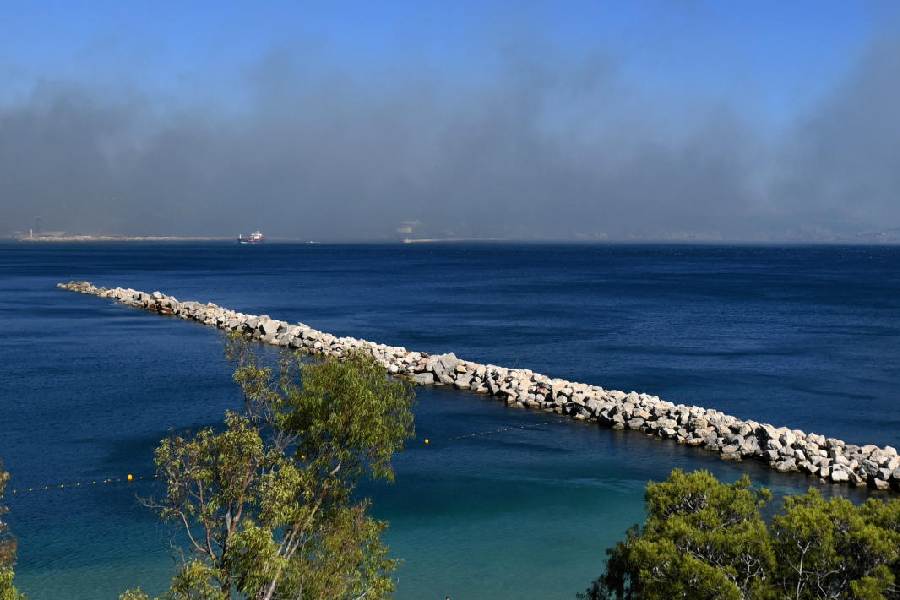
A wildfire on the outskirts of France's second city of Marseille has burned 700 hectares and damaged more than 10 buildings, a local official told reporters on Tuesday.
Flights to and from Marseille were suspended Tuesday and traffic at the city's main train station was disrupted due to a wildfire threatening the southern French port city, local authorities said.
Smoke rises from a wildfire in Marseille(Reuters)
The prefecture urged people in the affected areas to stay indoors and off the roads. With the fire approaching Marseille, the prefecture also advised residents in the north of the city to remain inside with doors and windows closed to prevent toxic smoke from entering their homes.
Live TV footage showed light smoke giving the sky over Marseille's old port a dusty aspect as water-dropping plane tried to extinguish the fire in the outskirts of the city with some 900,000 inhabitants.
A plane flies by as smoke rises from a wildfire in Marseille (Reuters)
More than 700 firefighters were deployed to tackle the fire, which broke out near the town of Les Pennes-Mirabeau, with 350 hectares (865 acres) hit.
There have been no reports of casualties.
Marseille airport announced that the runway had been closed at around midday. Sections of two major motorways were also closed to traffic.
Smoke rises over Marseille as a fast-moving wildfire spreads on the outskirts the city(Reuters)
French railway operator SNCF said the circulation of trains between Marseille and the Miramas-Aix high-speed TGV train station was stopped due to a fire nearing the tracks in L'Estaque, a pittoresque neighbourhood of Marseille.
As a safety measure, the city's Hospital Nord switched to generators “due to micro power cuts.”
A view from L'Estaque shows a large plume of smoke rising over Marseille as a fast-moving wildfire spread at Les Pennes-Mirabeau(Reuters)
"The aim is to secure the imaging sector. We are not worried as we have a high level of autonomy,” the University Hospitals of Marseille said, adding that because of the disrupted traffic it asked workers to remain at their posts until the next teams starts its shift.
Several weeks of heat waves combined with strong winds have increased the risk of wildfires in southern France, with several breaking out over the past couple of days.
Residents wear masks as volcanic ash blankets villages near erupting Indonesian volcano
“The smell of sulfur and ash hung so thickly in the air that breathing was painful”
ADDS DETAILS OF THE DIGITAL IMPRINTS AT LOWER RIGHT - In photo released by the Geological Agency (Badan Geologi) of the Indonesia’s Ministry of Energy and Mineral Resources, Mount Lewotobi Laki Laki spews volcanic materials during an eruption in East
By Niniek Karmini and Jacobus Herin - Associated Press - Tuesday, July 8, 2025
MAUMERE, Indonesia — Residents wore masks to protect themselves from thick volcanic ash that blanketed roads and green rice fields in villages in south-central Indonesia as rumbling Mount Lewotobi Laki Laki erupted Tuesday for a second straight day.
The eruption at dawn sent lava and clouds of ash up to 4 kilometers (2.4 miles) high. That followed an eruption around midday Monday that sent a column of volcanic materials up to 18 kilometers (11 miles) into the sky and an evening burst that spewed lava and send volcanic ash as high as 13 kilometers (8 miles) into the air.
Photos and videos circulating on social media showed terrified residents ran for their lives under the rain of ash and gravel and motorists struggled to drive motorbikes and cars in the reduced visibility as the ash clouds from Monday’s eruption expanded into a mushroom shape.
No casualties have been reported from the latest eruptions of the volcano that has been at the highest alert level since June 18 when its no-go zone was expanded to a 7-kilometer (4.3-mile) radius, said Abdul Muhari, the National Disaster Mitigation Agency spokesperson.
“People around the volcano have increasingly understood how to minimize the impact of disaster risks as eruptions became more frequent since the end of 2023,” Muhari said in a statement.
The eruptions of the volcano on on Flores Island affected more than 10,000 people in 10 villages in East Flores and Sikka districts, according to initial assessments by the local disaster management agency.
Thick volcanic ash and rocks were reported to have fallen in villages of Nawakote, Klantanio, Hokeng Jaya, Boru, Pululera and Wulanggitang, where roads and green rice fields were transformed into grey thick mud and rocks, said Very Awales, an public information official at Sikka district administration, adding that schools were closed in those affected areas since Monday to protect students and staff from various hazards due to volcanic activities.
“The smell of sulfur and ash hung so thickly in the air that breathing was painful,” Awales said.
Authorities distributed 50,000 masks and urged residents to limit outdoor activities to protect themselves from volcanic materials. Residents were also urged to be vigilant about heavy rainfall that could trigger lava flows in rivers originating from the volcano.
The eruption of Lewotobi Laki Laki followed its eruption in November 2024 that killed nine people and injured dozens.
The Geology Agency recorded an avalanche of searing gas clouds mixed with rocks and lava traveling up to 5 kilometers (3 miles) down the slopes of the 1,584-meter (5,197-foot) mountain Monday. Observations from drones showed lava filling the crater, indicating deep movement of magma that set off volcanic earthquakes. Volcanic materials, including hot thumb-size gravel, were thrown up to 8 kilometers (5 miles) from the crater.
Muhari said two airports in the cities of Maumere and Larantuka in East Nusa Tenggara province remained closed Tuesday.
Dozens of flights to and from the Ngurah Rai international airport on the resort island of Bali were delayed or canceled, but airport spokesperson Ahmad Syaugi Shahab said the airport was running normally despite the cancellations, as monitoring showed the volcanic ash had not affected Bali’s airspace.
Monday’s initial eruption of Lewotobi Laki Laki was one of Indonesia’s largest since 2010 when Mount Merapi, the country’s most volatile volcano, erupted on the densely populated island of Java. That killed 353 people and forced over 350,000 people to evacuate.
Indonesia is an archipelago of more than 280 million people with frequent seismic activity. It has 120 active volcanoes and sits along the “Ring of Fire,” a horseshoe-shaped series of seismic fault lines encircling the Pacific Basin.
___
Karmini reported from Jakarta. Associated Press journalists Edna Tarigan and Firdia Lisnawati contributed to this report.
The Bayeux Tapestry will be displayed in the U.K. for the first time in nearly 1,000 years
This photo taken Wednesday, Sept. 18, 2019 shows the 11th century Bayeux tapestry chronicling the Norman conquest of England, in Bayeux, Normandy, France.
(AP Photo/Kamil Zihnioglu, File)
By Associated Press - Tuesday, July 8, 2025 LONDON — The Bayeux Tapestry, the 11th-century artwork depicting the conquest of England, will be displayed in the U.K. for the first time in almost 1,000 years.
Officials said Tuesday that the treasured medieval tapestry will be on loan from France and arrive next year at the British Museum, where it will star in a blockbuster exhibition from September 2026 to July 2027.
The loan was announced during French President Emmanuel Macron’s state visit to the U.K.
The fragile 70-meter (230-foot) cloth depicts the events leading up to the Norman conquest of England by William the Conqueror in 1066. The artwork was believed to have been commissioned by Bishop Odo of Bayeux and has been displayed in various locations across France, including most recently at the Bayeux Museum in Normandy.
“The Bayeux Tapestry is one of the most iconic pieces of art ever produced in the U.K. and I am delighted that we will be able to welcome it here in 2026,” Culture Secretary Lisa Nandy said in a statement.
“This loan is a symbol of our shared history with our friends in France, a relationship built over centuries and one that continues to endure,” she added.
In return, the British Museum will loan treasures from the Sutton Hoo collection - artifacts from a 7th-century Anglo-Saxon ship burial - to museums in Normandy. The excavation of Sutton Hoo was dramatized in the 2021 film “The Dig” starring Ralph Fiennes and Carey Mulligan.
Other items to be loaned to France include the Lewis Chessmen, the mysterious medieval chess pieces carved from walrus tusks and whales’ teeth dating from around the 12th century that were discovered on the Isle of Lewis in Scotland.
Power to End Poverty, Inequality ‘Is in All Our Hands’, Says Secretary-General, in Message for Nelson Mandela International Day
8 July 2025
Following is UN Secretary-General António Guterres’ message for the Nelson Mandela International Day, observed on 18 July:
Nelson Mandela’s extraordinary life showed how one person can transform oppression, struggle and subjugation into reconciliation, social justice and unity.
Just as Madiba’s life was a triumph of the human spirit, his legacy is a call to rekindle our global commitment to peace, justice and human dignity.
This year’s theme reminds us that the power to end poverty and inequality is in all our hands.
Mandela believed in the power of collective, grassroots action. He knew that ordinary people could bend the arc of history, and that lasting change started not in capitals and boardrooms, but in neighbourhoods and communities.
Mandela’s life of service and progress continues to inspire our own efforts at the United Nations, as we celebrate our eightieth anniversary.
On this important day, and every day, let us all be guided by Madiba’s lifelong commitment to freedom, justice, equality and the rights that belong to every person on earth.
Chinese premier urges UN to play ‘better role’ for world peace
Li Qiang meets with UN Secretary-General Antonio Guterres on sidelines of 17th BRICS Summit
Berk Kutay Gokmen |08.07.2025 - TRT/AA
Chinese Premier Li Qiang on Tuesday urged the UN to play a “better role” to achieve peace in the world that is not yet in tranquility, state-run Xinhua News reported.
During his meeting with UN Secretary-General Antonio Guterres on the sidelines of the 17th BRICS Summit in Rio de Janeiro, Brazil, Li warned that the world is experiencing increasing instability and uncertainty.
He emphasized that China is prepared to strengthen its solidarity and collaboration with the United Nations to promote a fairer and more equitable system of global governance.
Li also stated that China supports the UN as the primary platform for addressing governance challenges in emerging fields such as artificial intelligence (AI), cyberspace, the polar regions, and outer space.
BRICS was formed in 2009 by Brazil, Russia, India, and China, with South Africa joining in 2010. Saudi Arabia, Egypt, the United Arab Emirates, Ethiopia, Indonesia, and Iran later joined, expanding the group to 11 members, alongside 10 strategic partner countries.
The grouping aims to create alternative financial mechanisms, reduce dollar dependency, and increase Global South representation in international institutions, challenging Western-led governance structures.
Germany has made progress in renewable energy, but its green transition faces challenges of slow advancements in transport and industry, along with controversial policy decisions
Ahmet Gencturk |08.07.2025 - TRT/ AA
‘While there have been some advancements, sectors like steel and chemicals have not moved quickly enough toward low-carbon solutions like green steel,’ says Bill Dare, CEO and senior scientist at the Berlin-based Climate Analytics institute
ATHENS
Germany, long regarded as a pioneer in climate action, faces mounting challenges in meeting its environmental commitments, casting doubt on its ability to reach its 2030 goals and align with the EU’s ambitious 2040 emissions reduction targets.
Despite recent progress in renewable energy, slow advancements in transport and industry, along with controversial policy decisions, highlight the complexities of Germany’s green transition.
Bill Dare, CEO and senior scientist at the Berlin-based Climate Analytics institute, told Anadolu that Germany has failed to move quickly enough, jeopardizing its ability to meet the EU’s 2030 climate and energy framework.
“In the renewable energy sector, Germany’s account is rather mixed. Its feed-in tariff law two decades ago sparked a global renewable energy surge, following Denmark’s lead. However, progress stalled over the past decade due to slow wind and solar rollouts,” he said.
“Having said that, recent years have seen some improvement, with the government addressing barriers to renewable energy, especially offshore wind, and accelerating grid connections from the wind-rich north to the industrial south,” he explained.
Dare emphasized that the automotive sector, a critical pillar of Germany’s economy, has significantly underperformed, particularly regarding the transition to electric vehicles (EVs).
“The infamous Volkswagen emissions scandal in 2015 highlighted efforts to circumvent EU emissions standards, reflecting a broader reluctance to decarbonize vehicles. This slow pivot has left German carmakers vulnerable to competition from Chinese manufacturers, who have scaled up EV production rapidly,” he said, adding that this delay now fuels pressure to weaken EU CO2 emission standards for vehicles.
Progress in industrial decarbonization, another crucial area in Germany’s climate strategy, has also been slow, according to Dare.
“While there have been some advancements, sectors like steel and chemicals have not moved quickly enough toward low-carbon solutions like green steel. Instead, there’s still reliance on carbon capture and storage, which is less effective and delays true decarbonization. The narrative is one of progress, but consistently too slow to align with global climate goals or Germany’s own targets,” he remarked.
New government’s policies
Dare also raised concerns regarding the climate action approach of the current coalition government led by Chancellor Friedrich Merz.
“The first concern is at the EU level, where the government’s position remains ambiguous regarding the target of reducing carbon emissions by 90% by 2040 compared to 1990 levels,” he remarked.
He further cautioned that Germany’s advocacy for international carbon credits under Article 6 of the Paris Agreement risks creating loopholes rather than achieving genuine emissions reductions.
“Past experiences with international credits in the EU Emissions Trading System (ETS) led to market crashes and ineffective outcomes, suggesting this approach could undermine progress,” Dare warned.
While welcoming the government’s pledge to scale up solar power and renewable energy, Dare criticized the proposal to build 20 gigawatts of gas power capacity as unnecessary and contradictory to Germany’s decarbonization objectives.
“Gas infrastructure and carbon capture increase power prices, countering the cost benefits of renewables, which lower electricity costs when scaled effectively. High power prices are a critical issue for Germany’s industrial competitiveness, and this move could exacerbate the problem,” he elaborated.
Dare also pointed to the government’s decision to abolish the heating law as another setback, arguing that it risks locking in costly oil and gas heating systems, thus delaying essential electrification efforts to reduce building emissions.
On the positive side, he noted the government’s commitment to increased investment in rail infrastructure, which is crucial for reducing transport emissions, and the allocation of approximately $10 billion for energy efficiency improvements in industry and households.
He also mentioned that reintroducing EV incentives would support both the German automotive sector and the overall green transition.
Achieving a just green transformation
Dare stressed that Germany’s core issue is its economic and social transformation, which he described as poorly managed.
The shift from internal combustion engines – supported by a century-long ecosystem of suppliers and skilled workers – to electric vehicles has not been handled well, leaving small and medium enterprises, essential to Germany’s manufacturing base, vulnerable without sufficient support for retooling and retraining, he argued.
“This unpreparedness has fueled political resistance to rapid decarbonization, as the socioeconomic impacts are significant. Germany’s political system has long recognized these challenges but has avoided tackling them head-on, leaving the country in a difficult position,” Dare said.
Additionally, Dare highlighted growing competition from China, which has emerged as a leading power in green technologies, noting that coordinated government action at national and EU levels is necessary to address this substantial challenge.
Reflecting on the broader EU approach, Dare expressed optimism, emphasizing the bloc’s history of overcoming complex challenges, such as those faced in the Eurozone and Schengen area.
“The Green Deal, if sustained, could drive competitiveness in high-tech sectors while addressing social inequalities, which fuel populist movements. Germany’s role as a major EU player makes its commitment to this vision critical,” he said.
According to Dare, the next four years will be decisive, with political leaders under pressure to deliver policies that balance environmental, economic, and social priorities effectively.
“Failure risks deepening inequality and strengthening far-right movements, threatening democratic stability,” he warned.
“Without addressing inequality and ensuring equitable economic transformation, populist backlash could derail climate and economic progress, making the social dimension of the green transition as critical as technological advancement.”
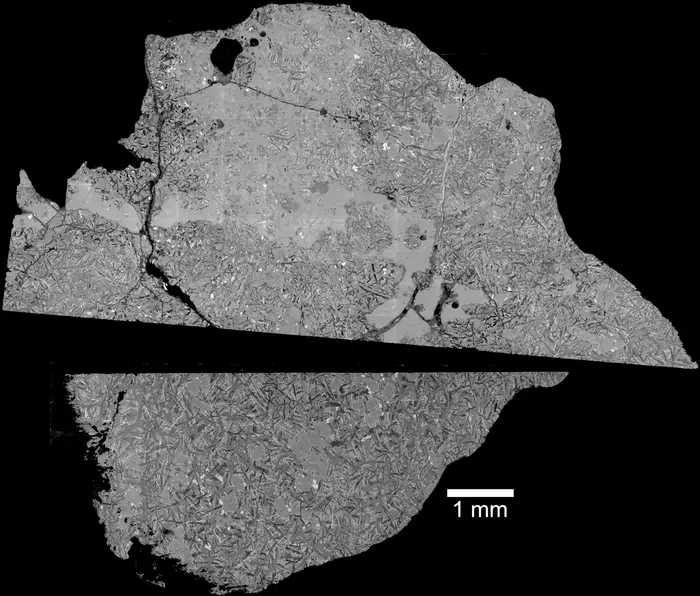

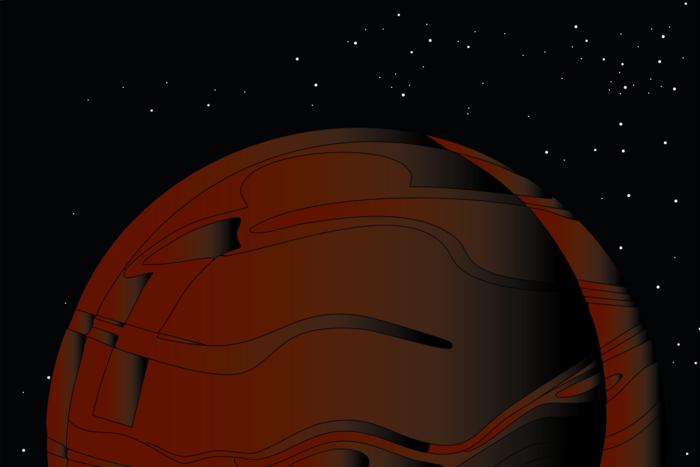



;-ms-transform:%20translate(-0%,-50%);}%20.w3-display-right%20{%20position:%20absolute;%20top:%2050%;%20right:%200%;%20transform:%20translate(0%,-50%);-ms-transform:%20translate(0%,-50%);}%20.w3-btn,%20.w3-button%20{-webkit-touch-callout:%20none;-webkit-user-select:%20none;%20-khtml-user-select:%20none;-moz-user-select:%20none;%20-ms-user-select:%20none;user-select:%20none;}%20.w3-btn,%20.w3-button%20{border:%20none;display:%20inline-block;outline:%200;padding:%208px%2016px;vertical-align:%20middle;overflow:%20hidden;text-decoration:%20none;color:%20inherit;background-color:%20inherit;text-align:%20center;cursor:%20pointer;white-space:%20nowrap;}%3C/style%3E%3Cdiv%20style=%22background:#000;%22%20class=%22photoembed%22%3E%3Cdiv%20class=%22w3-content%20w3-display-container%22%3E%3Cimg%20class=%22mySlides%22%20src=%22https://cdnuploads.aa.com.tr/uploads/PhotoGallery/2025/07/08/thumbs_b2_bf97395d61dc5ed565b9fff331bdade3.jpg%22%20title=%22Senegal's%20Pink%20Lake%20regains%20its%20color%20after%203%20years%22%20style=%22width:100%;display:block;%22%20%3E%3Cimg%20class=%22mySlides%22%20src=%22https://cdnuploads.aa.com.tr/uploads/PhotoGallery/2025/07/08/thumbs_b2_6fda776c4ed64a00aa6db7deaca78651.jpg%22%20title=%22Senegal's%20Pink%20Lake%20regains%20its%20color%20after%203%20years%22%20style=%22width:100%;display:none;%22%20%3E%3Cimg%20class=%22mySlides%22%20src=%22https://cdnuploads.aa.com.tr/uploads/PhotoGallery/2025/07/08/thumbs_b2_4e013509fdc07d69bb40a0e5c811ed8e.jpg%22%20title=%22Senegal's%20Pink%20Lake%20regains%20its%20color%20after%203%20years%22%20style=%22width:100%;display:none;%22%20%3E%3Cimg%20class=%22mySlides%22%20src=%22https://cdnuploads.aa.com.tr/uploads/PhotoGallery/2025/07/08/thumbs_b2_14f928784315094fef009e5e0d6c02a0.jpg%22%20title=%22Senegal's%20Pink%20Lake%20regains%20its%20color%20after%203%20years%22%20style=%22width:100%;display:none;%22%20%3E%3Cimg%20class=%22mySlides%22%20src=%22https://cdnuploads.aa.com.tr/uploads/PhotoGallery/2025/07/08/thumbs_b2_cf017ecefe04319160185c88c2a80d5a.jpg%22%20title=%22Senegal's%20Pink%20Lake%20regains%20its%20color%20after%203%20years%22%20style=%22width:100%;display:none;%22%20%3E%3Cimg%20class=%22mySlides%22%20src=%22https://cdnuploads.aa.com.tr/uploads/PhotoGallery/2025/07/08/thumbs_b2_d921cf8d1d9fdafafafc287008e9e744.jpg%22%20title=%22Senegal's%20Pink%20Lake%20regains%20its%20color%20after%203%20years%22%20style=%22width:100%;display:none;%22%20%3E%3Cimg%20class=%22mySlides%22%20src=%22https://cdnuploads.aa.com.tr/uploads/PhotoGallery/2025/07/08/thumbs_b2_54f9ae83992cbdaa9d37636ab9de0438.jpg%22%20title=%22Senegal's%20Pink%20Lake%20regains%20its%20color%20after%203%20years%22%20style=%22width:100%;display:none;%22%20%3E%3Cimg%20class=%22mySlides%22%20src=%22https://cdnuploads.aa.com.tr/uploads/PhotoGallery/2025/07/08/thumbs_b2_9291f7db64078d16971faefd26bce8d9.jpg%22%20title=%22Senegal's%20Pink%20Lake%20regains%20its%20color%20after%203%20years%22%20style=%22width:100%;display:none;%22%20%3E%3Cimg%20class=%22mySlides%22%20src=%22https://cdnuploads.aa.com.tr/uploads/PhotoGallery/2025/07/08/thumbs_b2_8dc90e85094a523bc80228c69c0dfa57.jpg%22%20title=%22Senegal's%20Pink%20Lake%20regains%20its%20color%20after%203%20years%22%20style=%22width:100%;display:none;%22%20%3E%3Cimg%20class=%22mySlides%22%20src=%22https://cdnuploads.aa.com.tr/uploads/PhotoGallery/2025/07/08/thumbs_b2_f02cf76040dcfcdf50bd0b01607d00f1.jpg%22%20title=%22Senegal's%20Pink%20Lake%20regains%20its%20color%20after%203%20years%22%20style=%22width:100%;display:none;%22%20%3E%3Cimg%20class=%22mySlides%22%20src=%22https://cdnuploads.aa.com.tr/uploads/PhotoGallery/2025/07/08/thumbs_b2_700a5b3f128cd2189479a2ac9196573b.jpg%22%20title=%22Senegal's%20Pink%20Lake%20regains%20its%20color%20after%203%20years%22%20style=%22width:100%;display:none;%22%20%3E%3Cimg%20class=%22mySlides%22%20src=%22https://cdnuploads.aa.com.tr/uploads/PhotoGallery/2025/07/08/thumbs_b2_938d508f64e2b196c650185ace9107d9.jpg%22%20title=%22Senegal's%20Pink%20Lake%20regains%20its%20color%20after%203%20years%22%20style=%22width:100%;display:none;%22%20%3E%3Cimg%20class=%22mySlides%22%20src=%22https://cdnuploads.aa.com.tr/uploads/PhotoGallery/2025/07/08/thumbs_b2_b9e4cafea5985a5e59439ce22dd2a3aa.jpg%22%20title=%22Senegal's%20Pink%20Lake%20regains%20its%20color%20after%203%20years%22%20style=%22width:100%;display:none;%22%20%3E%3Cimg%20class=%22mySlides%22%20src=%22https://cdnuploads.aa.com.tr/uploads/PhotoGallery/2025/07/08/thumbs_b2_fb0b60535aece89003ac8b6bc1197662.jpg%22%20title=%22Senegal's%20Pink%20Lake%20regains%20its%20color%20after%203%20years%22%20style=%22width:100%;display:none;%22%20%3E%3Cimg%20class=%22mySlides%22%20src=%22https://cdnuploads.aa.com.tr/uploads/PhotoGallery/2025/07/08/thumbs_b2_bcbf44b9fb48f14d77a0a906a11c1336.jpg%22%20title=%22Senegal's%20Pink%20Lake%20regains%20its%20color%20after%203%20years%22%20style=%22width:100%;display:none;%22%20%3E%3Cimg%20class=%22mySlides%22%20src=%22https://cdnuploads.aa.com.tr/uploads/PhotoGallery/2025/07/08/thumbs_b2_890af596242ac9bf1673dde29a6e9324.jpg%22%20title=%22Senegal's%20Pink%20Lake%20regains%20its%20color%20after%203%20years%22%20style=%22width:100%;display:none;%22%20%3E%3Cimg%20class=%22mySlides%22%20src=%22https://cdnuploads.aa.com.tr/uploads/PhotoGallery/2025/07/08/thumbs_b2_5d66337802cb0c7c4c9d3a792c921151.jpg%22%20title=%22Senegal's%20Pink%20Lake%20regains%20its%20color%20after%203%20years%22%20style=%22width:100%;display:none;%22%20%3E%3Cimg%20class=%22mySlides%22%20src=%22https://cdnuploads.aa.com.tr/uploads/PhotoGallery/2025/07/08/thumbs_b2_ff70d66097a0592a980e7d261b3ba3a7.jpg%22%20title=%22Senegal's%20Pink%20Lake%20regains%20its%20color%20after%203%20years%22%20style=%22width:100%;display:none;%22%20%3E%3Cimg%20class=%22mySlides%22%20src=%22https://cdnuploads.aa.com.tr/uploads/PhotoGallery/2025/07/08/thumbs_b2_6e85dfb3effd136ac70626ad5e8d05b0.jpg%22%20title=%22Senegal's%20Pink%20Lake%20regains%20its%20color%20after%203%20years%22%20style=%22width:100%;display:none;%22%20%3E%3Cbutton%20class=%22w3-button%20w3-black%20w3-display-left%22%20onclick=%22plusDivs(-1)%22%3E❮%3C/button%3E%3Cbutton%20class=%22w3-button%20w3-black%20w3-display-right%22%20onclick=%22plusDivs(1)%22%3E❯%3C/button%3E%3C/div%3E%3Cdiv%3E%3Ch2%20class=)