Thursday, September 25, 2025

Spain and Italy Send Warships to Escort Gaza Aid Flotilla
P46
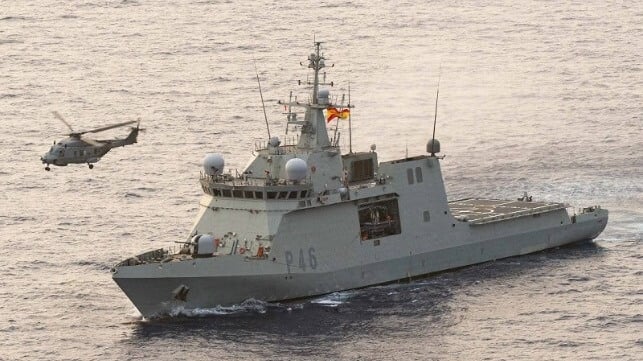
The Spanish patrol vessel Furor (Armada de Espana file image)

Published Sep 25, 2025 7:05 PM by The Maritime Executive


Both Italy and Spain have announced plans to send naval vessels to escort a convoy of pro-Palestinian activists en route to Gaza, citing risks to their well-being after a series of apparent drone attacks. 

The Global Sumud Flotilla is a protest group with a mission to deliver baby formula, medicine and food to the beach in Gaza, symbolically breaching Israel's naval blockade on the territory. All previous attempts have ended in interdictions and arrests by the Israeli Navy, all in international waters far from Gaza. 

This latest mission set off from Barcelona on August 31, headed for a marshalling point in Tunisia. On September 8, while anchored off the small port of Sidi Bou Said, the group reported what its organizers believed to be a drone attack involving an incendiary device. A second, similar incident was reported on September 9. 

Undeterred, the group got under way for Gaza with a combined force of 50 small vessels - a mix of fishing boats, workboats and yachts, most under 100 feet in length. On September 24, the group reported another round of suspected drone attacks at a position south of Crete. More than a dozen unique occurrences were reported, including percussion grenades, radio jamming, and an apparently malicious VHF broadcast of a popular song by the band ABBA. 

Italian Defense Minister Guido Crosetto condemned the attack and said that the Italian Navy frigate Alpino would be dispatched to provide an escort for security purposes, in addition to frigate Virginio Fasan. Spanish Prime Minister Pedro Sanchez followed suit on Wednesday and said that his government would provide an additional warship, the Furor, a lightly-armed offshore patrol vessel. Both nations have citizens aboard vessels in the flotilla. 

"The government of Spain demands that international law be complied with and that the right of its citizens to navigate the Mediterranean under safe conditions be respected," he said. 

Israel alleges that the flotilla has been infiltrated by terrorist group Hamas, and that it intends to carry goods to Gaza for Hamas' benefit. Israeli officials have instructed the flotilla's organizers to divert to Ashkelon and offload their supplies in port, where the goods could be loaded on trucks and added to the queue at Gaza's tightly-restricted land border with Israel.  

The flotilla's digital tracking platform shows that the boats have paused to regroup off the island of Koufonisi, off the southeastern end of Crete within Greek territorial seas. The tally suggests that so far, 42 vessels have arrived at this staging area.


Italy and Spain deploy navy ships to assist Gaza aid flotilla
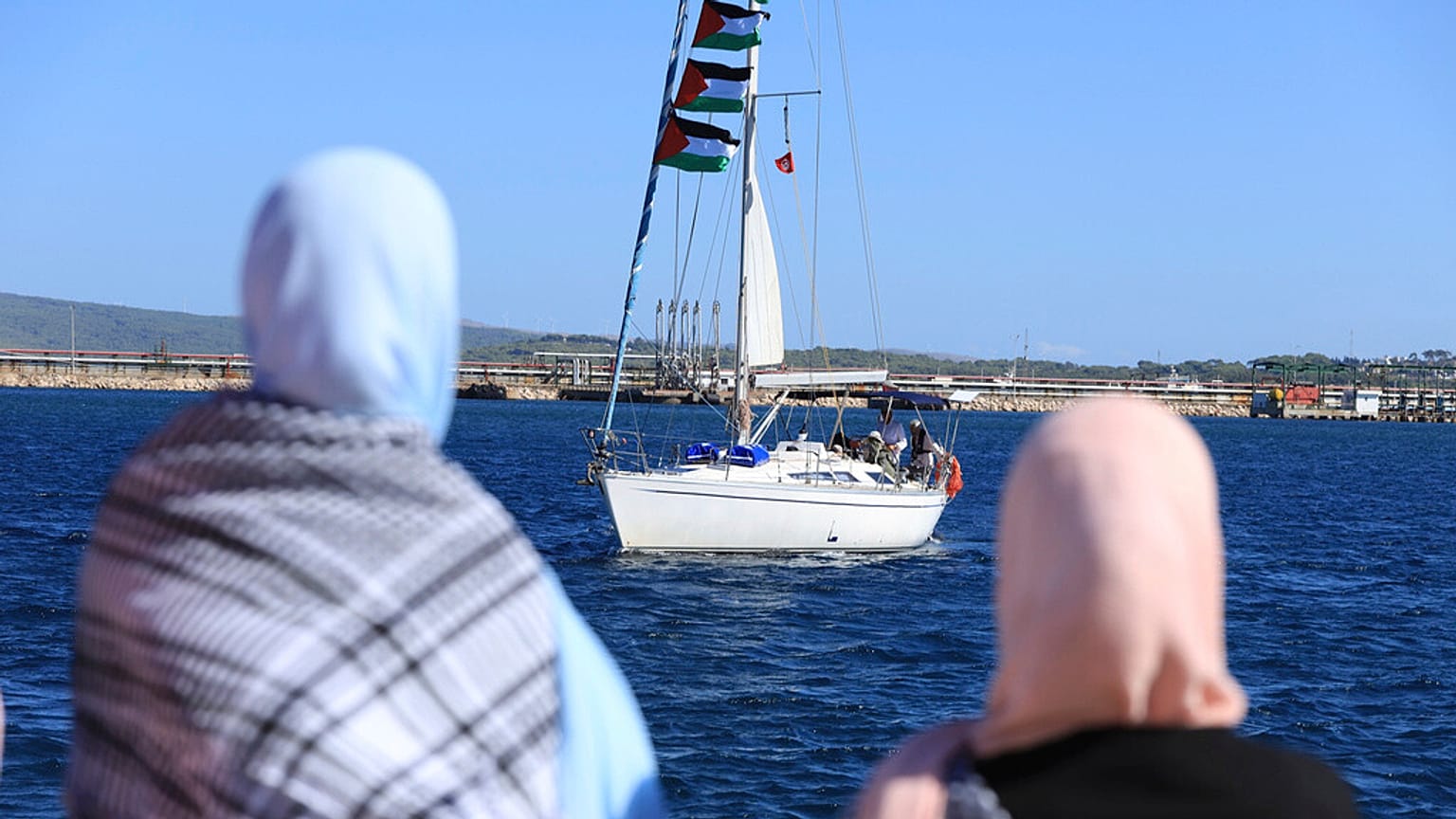
Supporters watch as a boat that is part of the Global Sumud Flotilla departs to Gaza to deliver aid, Tunisia, Saturday, Sept. 13, 2025.
Copyright Anis Mili/Copyright 2025 The AP. All rights reserved


By Evelyn Ann-Marie Dom
Published on 


The announcements by Rome and Madrid to deploy navy vessels to assist and protect the flotilla come after activists reported several attacks on its ships overnight on Tuesday.

In separate decisions on Wednesday, Spain and Italy announced they would send a navy ship each to assist the aid flotilla to the famine-stricken Gaza, set to break Israel's longstanding blockade of the Strip and deliver crucial aid.

Rome and Madrid's decisions were in response to the latest attack late on Tuesday when activists reported "at least 13 explosions," while drones or aircraft dropped "unidentified objects" on at least 10 boats.

On Wednesday, Italy condemned the attack by "currently unidentified perpetrators" and deployed Fasan multi-purpose frigate for potential rescue operations to assist mainly Italian citizens participating in the flotilla, Italy's Defence Minister Guido Crosetto said. Italy informed Israel about the decision.

“In a democracy, demonstrations and forms of protest must also be protected when they are carried out in accordance with international law and without resorting to violence,” Crosetto said.

The country's Prime Minister Giorgia Meloni also condemned the overnight attack on the flotilla, but called the aid initiative "dangerous and irresponsible." Meloni proposed a plan to hand over the aid in Cyprus to the Latin Patriarchate of Jerusalem, which would then be in charge of delivering the aid.

According to the Italian premier, the governments of Italy, Cyprus and Israel support the proposal and are awaiting response from the flotilla.

Addressing the Italian Chamber of Deputies on Thursday, Crosetto said another frigate, Alpino, will join the Fasan to further strengthen the Italian naval presence in the area.

"We will continue to do everything possible to avoid incidents, and I ask for your help in this, regardless of political differences. But I want to be very clear: outside of international waters, we are unable to guarantee the safety of the vessels," the Italian defence minister said in his briefing.

Crosetto pointed out that he recommended that the flotilla accept Italy's proposal to deliver the aid through the Church.

"Is it necessary to jeopardise the safety of Italian citizens to bring aid to Gaza? The government has supported the humanitarian effort, we are capable of delivering the aid the flotilla is bringing safely and in a few hours," he emphasised.

Shortly after Italy's announcement on Wednesday, Spanish Prime Minister Pedro Sánchez said Spain will also deploy a patrol vessel "with all necessary resources" to protect and assist the flotilla on its journey to Gaza.

“The Spanish government demands that international law be complied with and that the right of our citizens to navigate the Mediterranean safely be respected,” Sánchez said at the United Nations General Assembly in New York.

Israel not to 'allow vessels to enter an active combat zone'

Israel has repeatedly said it would not allow the flotilla to reach the Strip, claiming without providing evidence that the convoy is "organised by Hamas".

"If the flotilla participants’ genuine wish is to deliver humanitarian aid rather than serve Hamas, Israel calls on the vessels to dock at the Ashkelon Marina and unload the aid there, from where it will be transferred promptly in a coordinated manner to the Gaza Strip," Israel's Foreign Ministry wrote on X on Monday.

"Israel will not allow vessels to enter an active combat zone and will not allow the breach of a lawful naval blockade," the ministry said. "Is this about aid or about provocation," it concluded.

Brazilian activist and one of the activists on the flotilla, Thiago Ávila, emphasised the group would not abandon its mission.

"The Global Sumud Flotilla is a peaceful, non-violent, humantarian mission, which is abiding by international law, wich says in the ICJ (International Court of Justice) provisional ruling that no country can hinder humanitarian aid trying to get to Gaza," Ávila said in a video statement on Instagram.
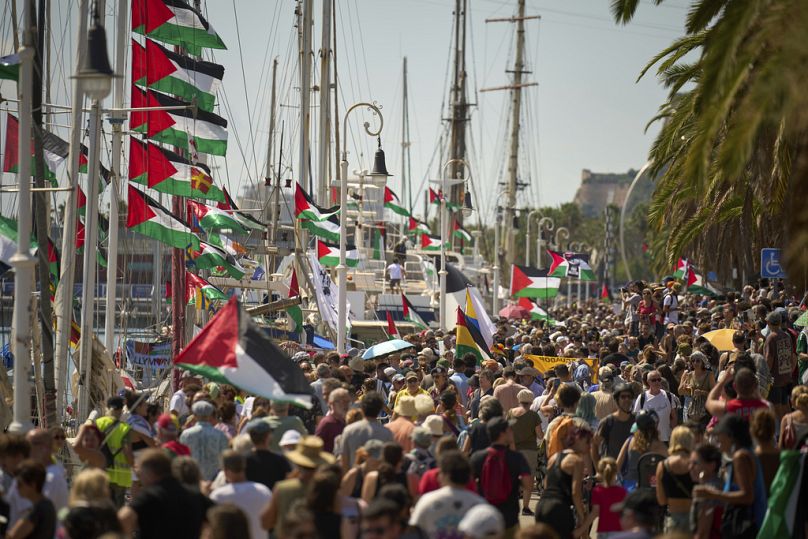
People crowd the dock ahead of the launch of the flotilla bound for Gaza, aiming to break Israel's blockade and deliver humanitarian aid in Barcelona, Spain, Aug. 31, 2025.
 Emilio Morenatti/Copyright 2025 The AP. All rights reserved.

The flotilla is a civilian fleet of over 50 small vessels from 44 countries, aimed at breaking an 18-year-long Israeli blockade of the Strip, long predating Israel's current war in Gaza, which started in October 2023 following an attack by Hamas-led militants on southern Israel. Israel says the blockade is needed to keep Hamas from importing arms, while critics call it collective punishment.

Since the aid flotilla set sail from Spain at the start of September, activists have reported several attacks on the convoy, including on several boats in Greek waters on Tuesday, and on two leading ships in Tunisian waters earlier this month.

While there is no concrete evidence, activists have accused Israel of being behind the attacks.

In July, the unarmed Freedom flotilla was boarded by Israeli forces in international waters, while it was en route carrying supplies to the Strip.


UN urges probe into Gaza-bound flotilla


drone ‘attacks’ as Italy sends warship


The UN on Wednesday called for an independent probe into alleged drone attacks on a Gaza-bound aid flotilla off Greece, while Italy dispatched a navy frigate to assist. The convoy, carrying 500+ activists including Greta Thunberg, aims to break Israel’s blockade of Gaza.


Issued on: 24/09/2025
By: FRANCE 24
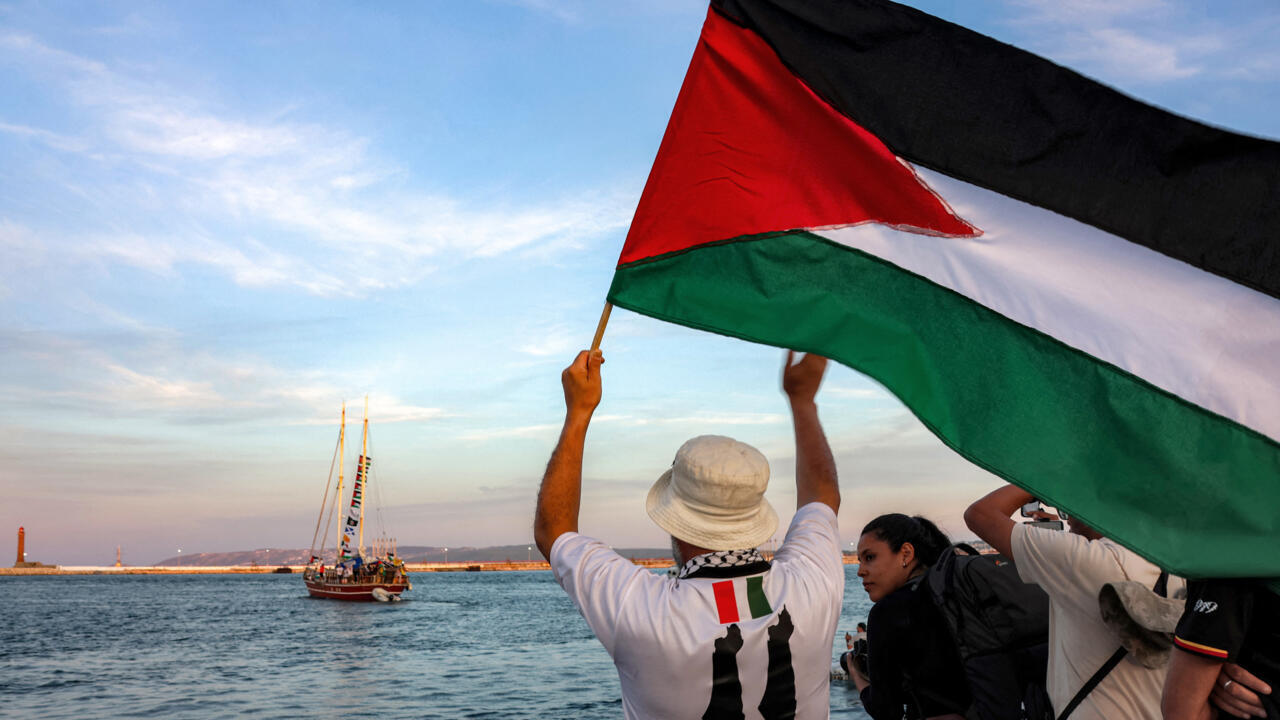

A man waves a Palestinian flags to other activists and human rights defenders riding aboard a vessel departing for Gaza. © Mohamed Fliss, AFP

The United Nations called Wednesday for an investigation into alleged drone "attacks" against a Gaza-bound aid flotilla, saying anyone responsible for the "violations" should be held accountable.

"There must be an independent, impartial and thorough investigation into the reported attacks and harassment by drones and other objects" on the Global Sumud Flotilla, which said a dozen explosions were heard around its ships late Tuesday, UN Human Rights Office spokesperson Thameen Al-Kheetan said in a statement.

Italy's Defence Minister Guido Crosetto announced earlier Wednesday that his country will send a navy frigate to assist the Gaza-bound aid flotilla, after organisers said several of their boats had been targeted by drones off Greece.

The Global Sumud Flotilla said more than a dozen explosions were heard around the flotilla late Tuesday, with damage caused by "unidentified objects" dropped on deck.

Crosetto said he "authorised the immediate intervention of the Italian Navy's multi-purpose frigate Fasan, which was sailing north of Crete as part of Operation Safe Sea".

"The vessel is already en route to the area for possible rescue operations", he said in a statement posted on X.

The Global Sumud Flotilla (GSF) set sail from Barcelona this month with the aim of breaking the Israeli blockade of Gaza and delivering humanitarian aid.

Israel, which blocked two previous attempts by activists to reach Gaza by sea in June and July, has said it will not allow the flotilla to reach the embattled Palestinian territory.

"Israel will not allow vessels to enter an active combat zone and will not allow any breach of the lawful naval blockade," foreign ministry spokesman Oren Marmorstein told AFP.

"If their intentions are sincere, they should transfer any such aid to the nearby Ashkelon Marina so it can be forwarded promptly to the Gaza Strip in a non-violent manner," he said.

'Strongest condemnation'

Several of the boats reported explosions Tuesday and unidentified objects being dropped on and near boats, causing damage and widespread obstruction in communications, GSF said.

It accused Israel of "endangering the 500+ unarmed civilians aboard the flotilla" that is carrying activists from 45 countries, including Swedish environmentalist Greta Thunberg.

"The drones that have been following us for days have detonated an explosive device, knocking off the boat's jib, and we're at risk of the mast falling," said Stefano Bertoldi, an Italian activist with the climate group "Ultima Generazione" (Last Generation) that is sailing in the flotilla.

Bertoldi issued several maydays as the explosions rang out, Last Generation said in a statement.

Crosetto expressed "the strongest condemnation" of the "attack" by "currently unidentified perpetrators".

Italian Foreign Minister Antonio Tajani said he had asked Israel to ensure the safety of "Italian citizens, along with members of parliament and MEPs".

He has already informed Israel that "any operation entrusted to Israeli forces must be conducted in compliance with international law and the principle of absolute caution," the ministry said in a statement.

Tajani has also asked the Italian Embassy in Tel Aviv to "reiterate its previous request to the Israeli government to guarantee the absolute protection of the personnel on board," it said.

The Global Sumud Flotilla currently numbers 51 vessels, most of which are off the Greek island of Crete.

Vessels waiting to join the flotilla had already been targeted in two suspected drone attacks in Tunisia.

Flotilla thumbnail © France24
01:05


Maritime escort

The Greek coastguard told AFP that a patrol boat from the EU borders agency Frontex had approached one vessel and saw no evidence of damage.

Contacted at its Warsaw headquarters, Frontex could not immediately confirm or deny the incident.

Italy's anti-establishment Five Star Movement, which has a senator on one of the boats, called on the EU "to intervene immediately to defend the vessels flying the flags of member states" by providing "protection and maritime escort through the deployment of Frontex vessels".

The pro-Palestinian Global Sumud Flotilla describes itself as an independent group not linked to any government or political party.

Sumud is Arabic word for "resilience".

Israel has launched a major air and ground offensive on Gaza City in a bid to root out Hamas after nearly two years of war.

During that time, Israeli military operations have killed at least 65,419 Palestinians, mostly civilians, according to the health ministry in Hamas-run Gaza, figures the UN considers reliable.

Hamas's attack that sparked the war resulted in the deaths of 1,219 people, mostly civilians, according to an AFP tally based on Israeli figures.

(FRANCE 24 with AFP)


Sweden recognised Palestine 11 years ago – Here’s what happened

Explainer


In the fall of 2014, Sweden became the first western EU country to recognise the state of Palestine. The small Nordic nation had hoped to spark a European-wide tide of recognitions. Instead, it found itself isolated – and left to pay a steep price in its diplomatic relations with Israel. More than a decade on, here is what France and other Western states who have recently followed suit can learn from Sweden's experience.


Issued on: 25/09/2025 - 07:27
FRANCE24
By: Louise NORDSTROM

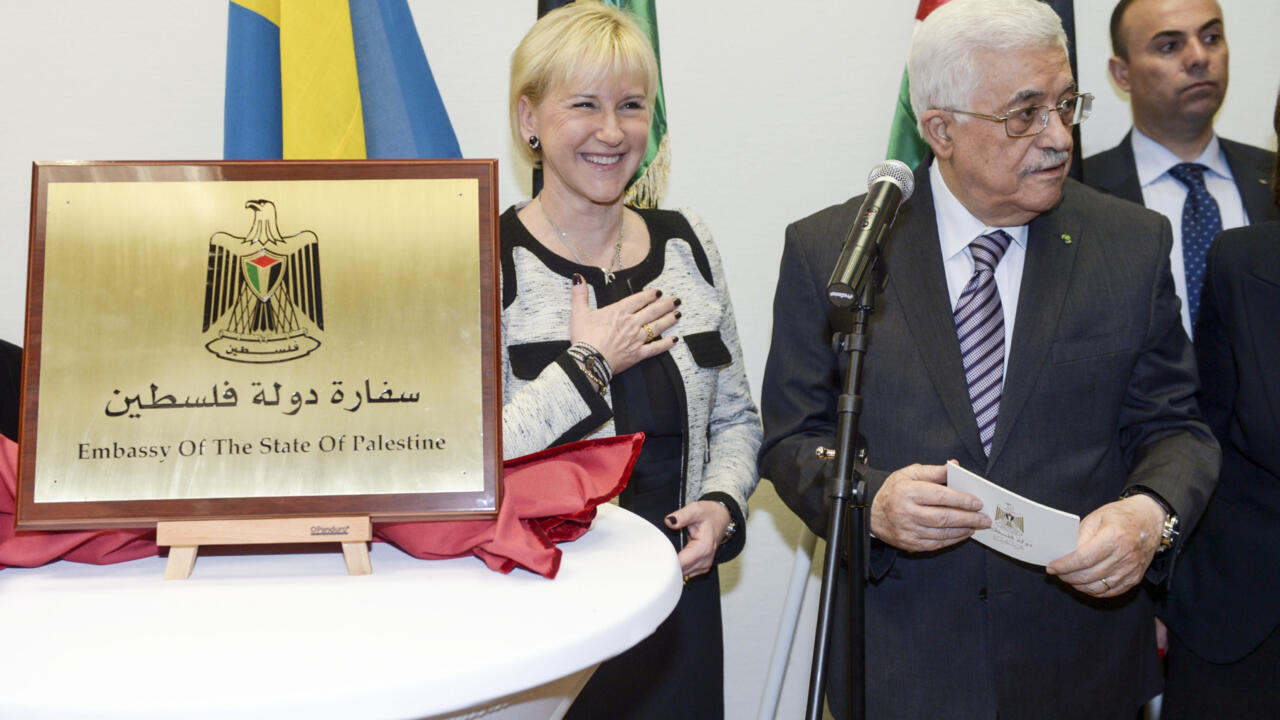
Sweden’s then-foreign minister Margot Wallstrom and Palestinian President Mahmoud Abbas inaugurate the embassy of the state of Palestine in Stockholm, on February 10, 2015, just months after Sweden’s Palestinian statehood recognition. © Fredrik Sandberg, TT, AP

Sweden’s Foreign Minister Margot Wallstrom had not even been on the job for a month when she announced her country was officially recognising the state of Palestine.

“We want to contribute to creating more hope ... among young Palestinians and Israelis who might otherwise ... [believe] there is no alternative to violence and the status quo,” she wrote in the nation’s biggest newspaper Dagens Nyheter.

It was October 30, 2014, and Sweden was the first country to recognise Palestinian statehood as a current European Union member. (Some eastern European countries, including Poland and Hungary, had already done so in connection with Palestine’s declaration of independence in 1988, but the acknowledgements carried less weight since they were made prior to EU admission.)


The Socialist-led government in Stockholm had hoped that the move – which was widely described as both surprising and bold in European media – would put the Israelis and Palestinians on a more equal footing, and thus help revive the hopes of a two-state solution.

“Some will argue that the decision is premature,” Wallstrom wrote. “I’m afraid it might be too late.”

Gaza had also just been the scene of a third armed conflict: the 50-day war had taken place in the Hamas-run enclave over the summer, and more than 2,200 Palestinians and just over 70 Israelis had been killed.
Going at it alone

“Sweden wanted to steer the broader Israeli-Palestinian conflict away from confrontation and towards diplomacy,” Anders Persson, a specialist on the EU’s role in the Israeli-Palestinian conflict and senior lecturer at Sweden’s Linnaeus University, recalled of the decision.

But for the Swedish plan to work, the tiny nation of barely 10 million needed other, more powerful, Western countries to follow suit.

No one did.


“I think they were afraid of the Israeli backlash, and that it could hurt relations with [Israel’s main ally] the United States,” Persson said.

Instead, he said, many nations – including Britain, Spain, France and Ireland – chose to pass non-binding resolutions recognising Palestinian statehood “when the timing was right”.

“So Sweden was on its own,” he said.


Death threats

Israel reacted to Sweden's decision with fury. Tel Aviv immediately recalled its ambassador, and local trade groups threatened with boycotts.

Israel’s then foreign minister Avigdor Liberman labelled the decision “unfortunate” and ridiculed the Swedish government by saying that “relations in the Middle East are more complex than one of IKEA’s flat-pack pieces of furniture".

When Wallstrom, in 2016, called for an investigation into whether Israeli killings of Palestinian knife-attackers might constitute “extrajudicial killings” she was declared persona non grata. She was not allowed back to Israel for the rest of her term, which ended in 2019.

In a recent interview with French daily Le Monde, Wallstrom, who is now retired, said the years following Sweden’s recognition of the state of Palestine, weighed heavily on both her and her family.

“My family and I received death threats, and my security had to be reinforced.” She said she was also accused of anti-Semitism. “That was perhaps the most offensive,” she told the newspaper.

Still, 11 years after the fact, Wallstrom is convinced Sweden made “the right decision” in recognising a Palestinian state.

“If the European Union had committed itself back then, and used the political and economic tools it has at its disposal to stop the settlement expansion and encourage a two-state solution, we might not have been where we are today.”

Laid the ground?

Persson said that although Sweden’s recognition may not have changed much on the ground – more than 65,000 Palestinians have been killed in the latest Gaza war following Hamas’s deadly October 7 attacks on Israel two years ago – it is reasonable to believe it at least laid the ground for the wave of recognitions that began last year, and now includes major Western powers such as Britain and France.

Although Israel’s Prime Minister Benjamin Netanyahu's government has warned of a “unilateral response”, Persson said a key EU player like France is unlikely to pay the price that Sweden did.

The main difference, he said, is that France is not standing alone, and economically and politically, it is a much bigger force to reckon with.

“Israel doesn’t want to become more isolated or have more sanctions imposed on it than already is the case,” he said.

“But Israel could retaliate in other ways without directing it at France: By worsening the situation on the ground – through annexations and so on – or by rendering the prospect of a Palestinian state more difficult.”

Some countries, however, have seen their recognitions drive their diplomatic ties with Israel to an all-time low. One example is Spain, which along with Norway and Ireland spearheaded the latest acknowledgement wave.

While Israel has yet to reinstall its ambassador to Madrid, Spain has imposed a ban on the sale of arms and military equipment to the country. Prime Minister Pedro Sanchez has also called for Israel to be excluded from international sports events.

'Put Your Soul on Your Hand and Walk': Haunting tribute to Gaza journalist who refused a quiet death


Interview

Palestinian photojournalist Fatma Hassona refused to be a mere statistic in Israel’s methodical destruction of Gaza. Her endeavour to document her people’s ordeal is the subject of “Put Your Soul on Your Hand and Walk”, a timely and heart-wrenching documentary by exiled Iranian director Sepideh Farsi, which opens in French cinemas on Wednesday.


Issued on: 24/09/2025
FRANCE24
By: Benjamin DODMAN

Gaza photojournalist Fatma Hassona seen in a still from Sepideh Farsi's "Put Your Soul on your Hand and Walk". © Courtesy of Sepideh Farsi, Rêves d'Eau Productions


Fatma Hassona had many modest hopes, only one of which was fulfilled. She asked for a “loud death”, one that would shake the world from its torpor. It has grown louder by the day.

“I don’t want to be just breaking news, or a number in a group,” Hassona, a trained photographer and talented poet, wrote on social media. “I want a death that the world will hear, an impact that will remain through time, and a timeless image that cannot be buried by time or place.”

On April 16, just days before her wedding, the 25-year-old was killed in an Israeli air strike on her home in northern Gaza, along with 10 members of her family, including her pregnant sister and 10-year-old brother.

Fatma Hassona's pictures documented the resilience of Gaza's population.
© Fatma Hassona, courtesy of Sepideh Farsi


She did not live to see the end of the war that has wiped out most of her beloved Gaza. Nor did she cross the walls and barbed wire that confined her to the narrow stretch of land throughout her short life.


Since her death, however, outrage has rippled across the world, sparking unprecedented protests and ensuring her voice remains louder than the bomb that killed her.

Few films at this year's Cannes Film Festival attracted greater attention than Sepideh Farsi’s documentary on Hassona, which drew tears and a lengthy standing ovation at an emotional premiere.


“Put Your Soul on Your Hand and Walk” tells the story of Gaza’s plight through filmed video conversations between Hassona and Farsi, offering rare insight into a war that has ravaged the Palestinian enclave and killed more than 52,000 people, most of them women and children, according to health officials.

As Farsi describes, Hassona became “my eyes in Gaza (...) fiery and full of life. I filmed her laughs, her tears, her hopes and her despair".
‘If we don’t, who will?’

“Put Your Soul on Your Hand and Walk” stems from a meeting between two women – one yearning to break out of Gaza and get a taste of the outside world, the other desperate to break into the closed-off enclave to document the atrocities under way.

Farsi, who once filmed a documentary in Tehran on a mobile phone to evade a government ban, is accustomed to censorship, blackouts and danger. Gaza, a bombed-out blackhole that foreign journalists are barred from entering, presented a whole different challenge.

She describes her interactions with Hassona as “bits of sound and pixels in an ocean of disconnect” – fleeting exchanges hampered by poor connection and spread out across months of anguished wait.

In between conversations, Hassona’s photographs detail the scale of the destruction around her and the unfiltered gruesomeness of war. Her audio clips of bombs rumbling and jets screeching overhead highlight the risks she is willing to take.


“Gaza needs me,” Fatem, as she was known to her loved ones, explains. “If we don’t document what’s happening, who will?”

Hassona doesn’t just document the war. Hers is an act of resistance, a dogged determination, as she puts it, to “find some life in all this death”. Her pictures underscore the resilience of Gaza’s population when all around them is rubble.

“We’re living, we’re laughing,” she says early in the film, her radiant smile instantly infectious. “They cannot defeat us, because we have nothing to lose.”
Scars of war

“Put Your Soul on Your Hand and Walk” covers an eight-month period starting in the spring of 2024, when the media focus gradually shifts to Israel’s looming offensive on the southern city of Rafah.

We see hopes of a ceasefire raised and dashed, hear of aid drying out as the Israeli army cuts off the last open checkpoint, and follow Hassona as evacuation orders force her family to move from one shelter to another.

In segments from news bulletins, filmed on Farsi’s television, aid workers and UN officials detail the worsening humanitarian catastrophe and the Israeli government’s blatant failure to meet its obligations under international law.

There are brief moments when the war takes a back seat and the two discuss other matters, such as wearing headscarves, Hassona’s favourite movie (“The Shawshank Redemption”) or Virginia Woolf. We hear Fatem relish her first crisps in 10 months and dream of a little chocolate.

A still from "Put Your Soul on Your Hand and Walk". 
© Courtesy of Sepideh Farsi, Rêves d'Eau Productions

But the psychological scars become increasingly apparent as the bombing drags on, the smiles grow sparser, and Hassona opens up about her emotional numbness.

The palpable horror of the war – the relentless shelling, the children going hungry, her aunt’s severed head found streets away from her shattered home – she describes as the Gaza “normal”. It is the inability to say goodbye to her loved ones that brings her to tears.
‘Targeted assassination’

Farsi last spoke to Hassona on April 15 to inform her that their film would be screened in Cannes. She has described the missile strike that killed the photojournalist the very next day as a “targeted assassination”, citing an investigation by UK-based group Forensic Architecture.

Read more
Fatma Hassona's death in Gaza was ‘targeted’ killing, film director tells Cannes

The Israeli military has said the strike targeted a Hamas operative, without offering details.

More than 200 journalists have been killed in Gaza since the start of the war, the deadliest toll on record for a military conflict, according to media watchdog Reporters Without Borders. Journalists reporting from Gaza have repeatedly warned that they are being deliberately targeted by the Israeli military.

This year's Cannes Film Festival opened against a backdrop of mounting outrage at the ongoing war, which began in the wake of the Hamas-led October 7, 2023, massacre in southern Israel.

“Just like there was no justification for what happened on October 7, nothing can justify what is happening in Gaza,” Farsi told FRANCE 24 in Cannes, lamenting a collective failure to confront and sanction Israel’s far-right government over the ongoing war and its stated aim to expel Gaza’s population.

“We cannot just stand by and let the massacre go on,” she said. “What will we tell our children when they ask, ‘Why did you do nothing?’ We cannot pretend we didn’t know.”

Fatma Hassona made it her mission to document the daily lives of Gaza's residents under Israeli bombardment. © Fatma Hassona, Courtesy of Sepideh Farsi

On the eve of the festival, “Schindler’s List” actor Ralph Fiennes and Hollywood star Richard Gere were among more than 380 figures to sign an op-ed slamming the film industry’s silence over “genocide” in Gaza. The text paid tribute to Hassona, as did Cannes jury president Juliette Binoche on the festival’s opening night, which saw her read excerpts from a poem by the Palestinian photojournalist.

“I hoped she would be here with me so we could make some noise together,” said Farsi, who organised tributes to Hassona and exhibitions of her work in Cannes. “Now that she’s been taken away from us, I will do what I can with this film, her pictures, her poems and her words.”

This article was first published in May during the 78th Cannes Film Festival.
TikTok should do more to keep children off the platform, Canada's privacy watchdog says


Copyright Spencer Colby/The Canadian Press via AP

By Euronews with AP
Published on 24/09/2025 

TikTok’s efforts to keep children off the platform and prevent the collection and use of their sensitive personal information are “inadequate" but the company is taking steps to address concerns, Canadian privacy authorities said Tuesday.

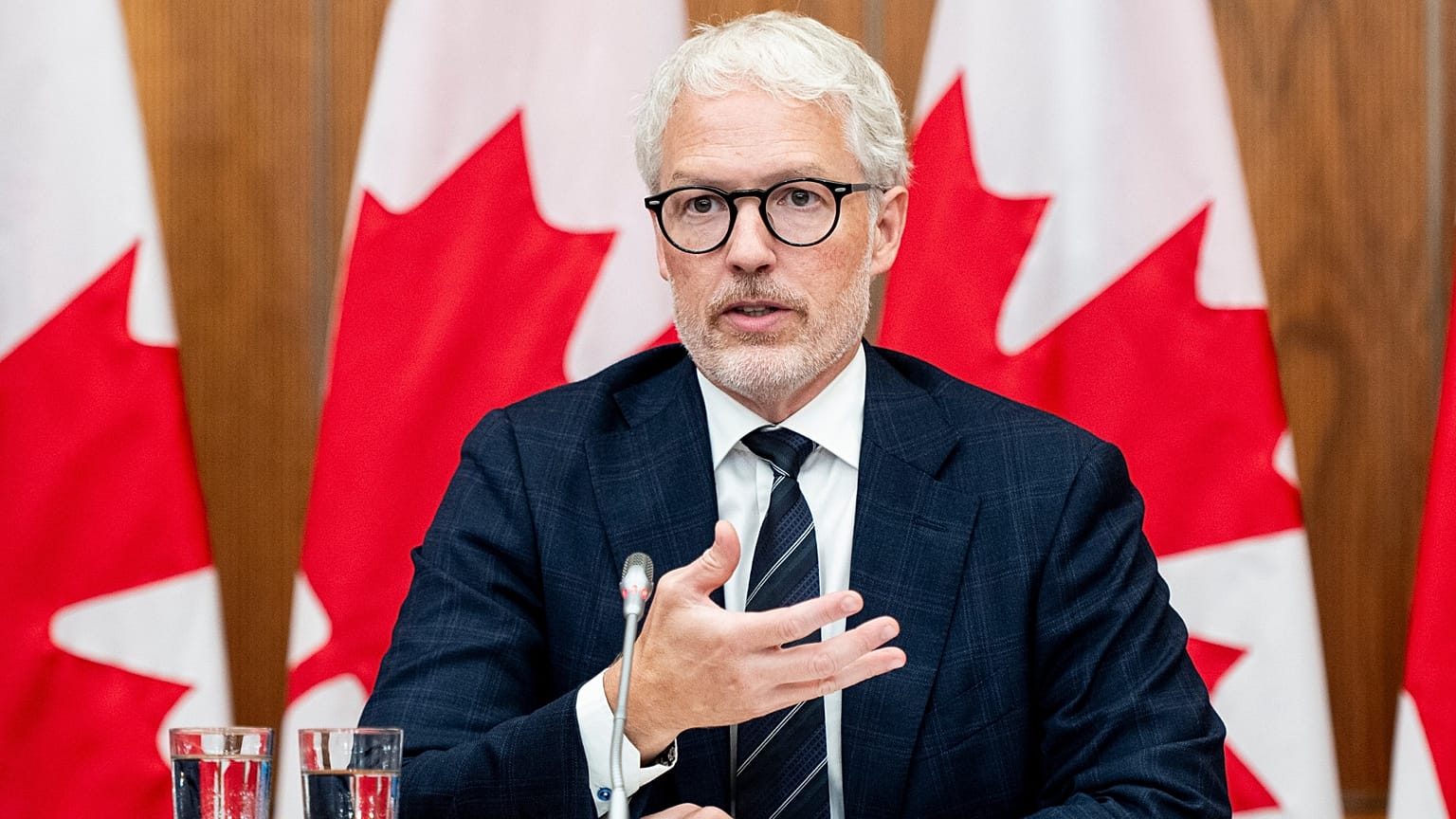
Federal Privacy Commissioner Philippe Dufresne said TikTok must do more to keep underage children off its platform and must better explain its data collection practices, especially to youth. The company has said the platform is not intended for people under the age of 13.

“Our investigation found that measures that TikTok uses to keep children off the popular video sharing platform and to prevent the collection and use of their sensitive personal information ... were inadequate," Dufresne said.

Dufresne said TikTok has agreed to enhance underage assurance methods to keep underage users off the platform and agreed to strengthen privacy communications so that users understand how their data is being used.

“There’s some steps that they still have to take. … For the moment, we find it’s conditionally resolved,” he said. “We are going to be monitoring the situation”.

Dufresne said the privacy policies lack details and are hard to find.

The federal, Quebec, Alberta, and British Columbia privacy commissioners released the results of their joint investigation, which they launched in 2023.

The investigation noted that in Quebec, 40 per cent of young people aged 6 to 17 have a TikTok account. It said among 6- to 12-year-olds, the proportion is 17 per cent.

“We were certainly struck by how elaborate a profiling that was being used by TikTok,” British Columbia Privacy Commissioner Michael Harvey said.


“What information was being collected with these facial and voice analytics and how they were always being used in combination with things – like your location, information to create elaborate inferences about users, like what their spending power was – and to use that, to then to decide what content, including advertising to feed back to them,” Harvey added.

Last year, the Canadian government said it would not block access to the popular video-sharing app but ordered the dissolution of its Canadian business after a national security review of the Chinese company behind it.

US President Donald Trump said tech company Oracle and prominent billionaires – including media mogul Rupert Murdoch and tech founder Michael Dell – could be part of a deal in which the US will take control of the social video platform in that country.


Man arrested in UK over alleged link to cyberattack that affected European airports

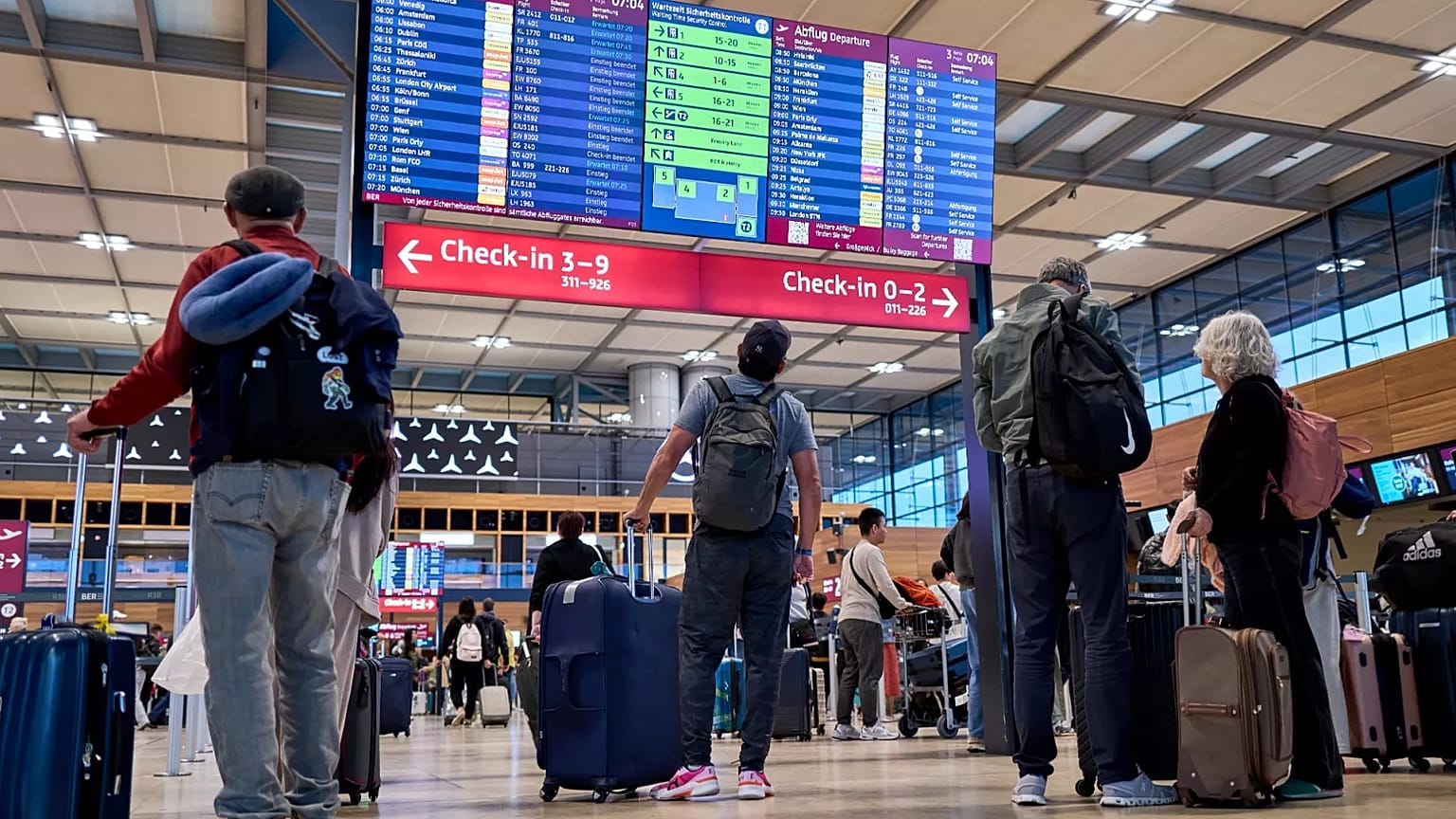
Passengers are seen in front of the check-in counters at Berlin Brandenburg Airport in Schönefeld, 22 September, 2025
Copyright AP Photo

By Gavin Blackburn
Published on 

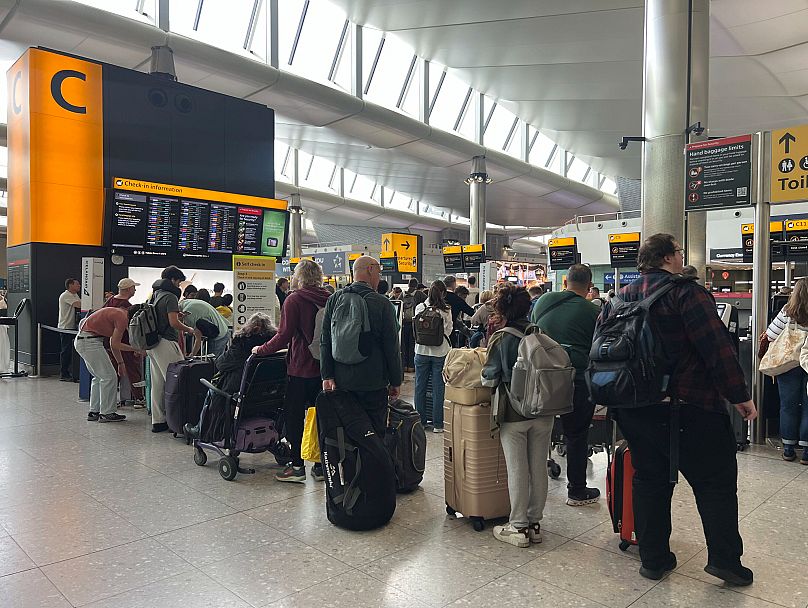
Starting on Friday, airports in Berlin, Brussels and London were hit by disruptions to their electronic check-in and boarding systems, forcing ground staff to resort to handwriting boarding passes.

A man in his 40s has been arrested in southern England in connection with his alleged role in a cyberattack that caused disruption at several European airports, law enforcement officials said on Wednesday.

The UK's National Crime Agency said the suspect was detained in West Sussex on Tuesday on suspicion of offences involving the misuse of computers. He has been released on conditional bail.

"Although this arrest is a positive step, the investigation into this incident is in its early stages and remains ongoing," said Paul Foster, head of the NCA’s national cybercrime unit.

"Cybercrime is a persistent global threat that continues to cause significant disruption to the UK.

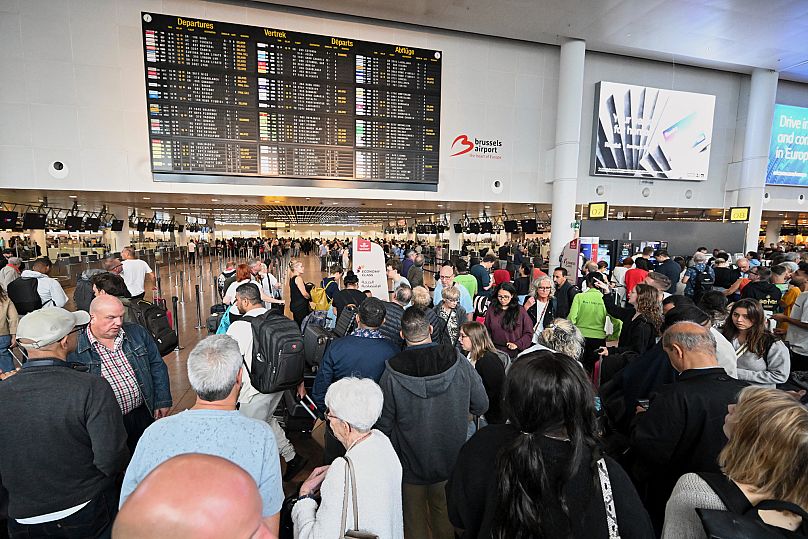
People stand in front of a departure board after a cyber attack caused delays at Brussels International Airport in Zaventem, 20 September, 2025 AP Photo


Starting late on Friday, airports in Berlin, Brussels and London were hit by disruptions to their electronic check-in and boarding systems, forcing ground staff to resort to handwriting boarding passes or using backup laptops

The cyberattack affected the software of Collins Aerospace, whose systems help passengers check in, print boarding passes and bag tags and dispatch their luggage.

The US-based company cited a "cyber-related disruption" to its software at "select" airports in Europe.

It was not immediately clear who might be behind the cyberattack, but experts said it could turn out to be hackers, criminal organisations or state actors.

Disruptions continued for several days

The chaos to flight schedules lasted into Monday, with Brussels Airport apparently the hardest hit, asking airlines to cancel nearly 140 flights that were due to depart that day.

Brussels Airlines was still operating only manual check-in and boarding on Monday.

At the beginning of the week, other airports were also advising passengers to check the status of their flights before travelling to the airport and use alternative check-in methods.

A rolling message on the Berlin Brandenburg Airport's website read: "Due to a systems outage at a service provider, there are longer waiting times. Please use online check-in, self-service check-in and the fast bag drop service."

People queuing at Heathrow Airport after flights were delayed and cancelled after an alleged cyberattack, 20 September, 2025 AP Photo

The airport was facing higher-than-usual passenger numbers due to the Berlin Marathon, adding to the delays.

And a message on Heathrow Airport's website on Monday said that work was continuing to resolve and recover from the system outage that impacted check-in.

"We apologise to those who have faced delays, but by working together with airlines, the vast majority of flights have continued to operate," it read.

The US cloud security company NETSCOUT said that more than 8 million cyberattacks had been reported in the first half of this year, with Europe one of the hardest-hit continents.

Artificial intelligence (AI) is driving cyberattacks and is used by states and hacktivists to breach security on various fronts, spreading attacks across multiple internet providers (IPs) to avoid detection, the company said. 


French unions call new strike and protest day for October 2


French unions announced Wednesday a fresh nationwide strike and protest day for October 2 after inconclusive talks with new Prime Minister Sébastien Lecornu, following mass demonstrations last week against new austerity measures and pension reforms.


Issued on: 24/09/2025 - 
By: FRANCE 24


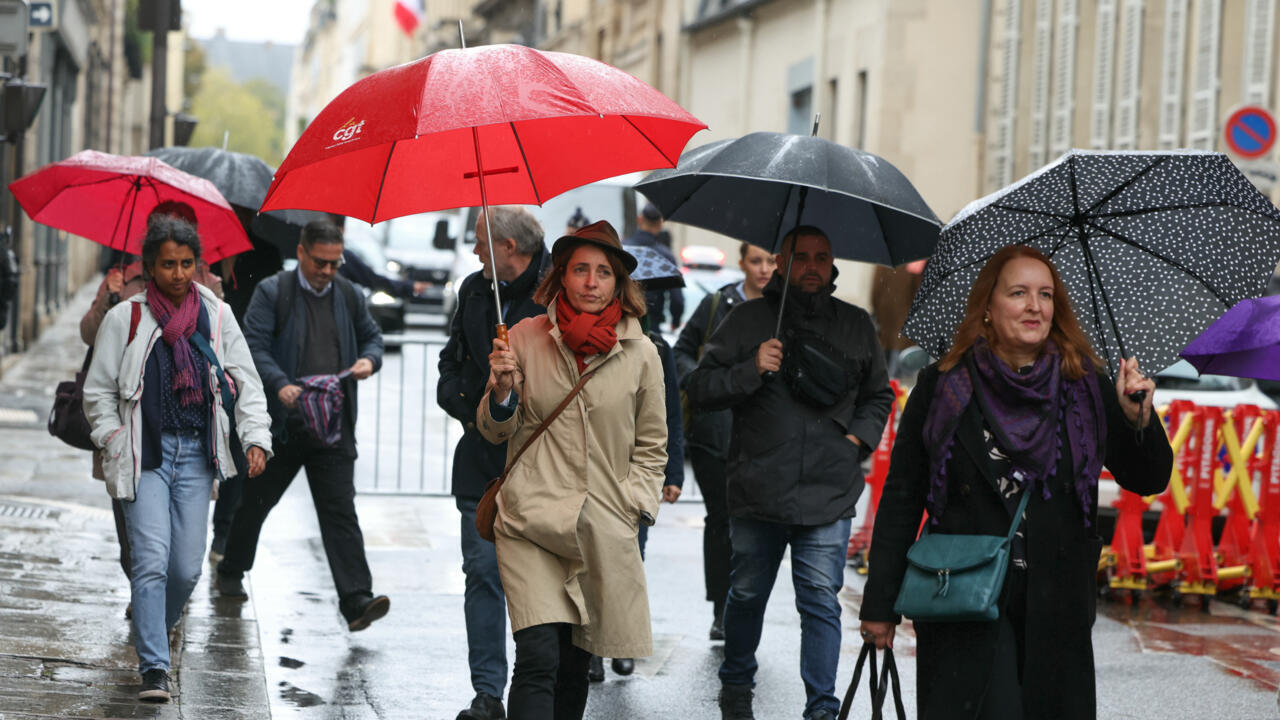
French trade union General Confederation of Labour (CGT) General Secretary Sophie Binet (C) arrives ahead of an inter-union meeting with France's prime minister at the Hotel de Matignon in Paris on September 24, 2025. © Alain Jocard, AFP


French unions will hold another day of strike and protests on October 2 to put pressure on new Prime Minister Sébastien Lecornu over their demands to scrap his predecessor's austerity fiscal programme, union leaders said.

Union leaders who met with Lecornu on Wednesday said they were not satisfied by his response to their last day of protest, attended by hundreds of thousands of people on September 18.

"The prime minister did not provide any clear answers to the workers' demands, so for the unions, it's a missed opportunity. It doesn't add up," said Marylise Leon, the head of CFDT, France's largest union.

Just over two weeks after President Emmanuel Macron appointed Lecornu as his fifth prime minister in less than two years, the 39-year-old loyalist has yet to pull together a government or a draft budget for 2026. He has to deal with a divided parliament and pressure to fix France's finances.

"There was a big turnout on September 18, and we need to step it up again on October 2," said Sophie Binet, of the CGT union, describing Wednesday's meeting as a missed opportunity where Lecornu made no clear commitment.

Lecornu has been little seen or heard in public since his appointment and has instead held a series of talks with party leaders and unionists to try and gather some support.

The prime minister and Macron are under pressure on one side from protesters and left-wing parties opposed to budget cuts and, on the other, from investors concerned about the deficit. None of parliament's three main groups has a majority.

France's budget deficit last year was close to double the EU's 3% ceiling. Lecornu will face a battle to gather parliamentary support for a budget for 2026.

Lecornu's predecessor, Francois Bayrou, was ousted by parliament on September 8 over his plan for a 44 billion euro budget squeeze. Lecornu has not yet said what he will do with Bayrou's plans.

(FRANCE 24 with Reuters)

French unions announce fresh day of strikes after talks with PM Lecornu collapse
Copyright Thibault Camus/Copyright 2025 The AP. All rights reserved.

By Sophia KhatsenkovaPublished on 24/09/2025 - EURPNEWS

France's trade unions call for new nationwide strike on 2 October to pile the pressure on new French Prime Minister Sebastien Lecornu.

French unions will hold another nationwide day of strikes and protest on 2 October after talks with France's Prime Minister Sébastien Lecornu on Wednesday were unsuccessful

"The Prime Minister did not provide any clear answers to the expectations of workers. It’s a missed opportunity," said trade union CFDT leader Marylise Léon, speaking on behalf of the inter-union coalition.

Union leaders who met with Lecornu on Wednesday said they were frustrated by his reaction to their last day of protest on 18 September.

Appointed just over two weeks ago as France's fifth prime minister in less than two years, Lecornu still has yet to form a government or finalise next year's budget.

"What we are waiting for is a precise response, not polite listening," said CGT General Secretary Sophie Binet before entering the talks.

More than 500,000 people protested across France on 18 September against the government's austerity measures, according to French authorities.

Trade unions have claimed that more than one million participated in the strike.

At that time, unions issued an ultimatum to Lecornu: abandon the pension age increase, scrap unemployment benefit reforms, stop planned cuts to 3,000 civil service jobs, and bury the draft budget prepared under former Prime Minister François Bayrou.

Pressure mounting on Lecornu

As social tensions mount, Lecornu has tried to set his own agenda. Last Friday, he announced the creation of an initiative dubbed "Effective State", tasking two senior civil servants with continuously proposing measures to streamline public administratio

According to the Prime Minister’s office, the goal is to make state structures "simpler and more effective".

Lecornu has already confirmed the shutdown of three inter-ministerial delegations and a freeze on all government communications spending until the end of the year.

He also confirmed he would abandon Bayrou’s controversial proposal to cut two public holidays and said he planned to end "lifetime" benefits for former prime ministers.

But the pressure is not only coming from unions. Business organisations were scheduled to meet Lecornu on Wednesday afternoon.

France's largest employer federation, Medef, has announced an "enormous rally" of employer groups.

According to French newspaper L’Union, the date has been set for 13 October in Paris.

More than two weeks into his tenure, Lecornu has yet to form his cabinet.

But French President Emmanuel Macron defended him on French TV, saying the prime minister "is right to take his time" in putting a team together.

Time, however, may be running out. With unions promising a new day of action on October and employers mobilising for mid-October, Lecornu finds himself caught between two fronts.

Wednesday, September 24, 2025


As Jesus Would Do


A Chaplain's Cry against Empire and Erasure


America loves war. Not peace. Not justice. War.

It baptizes bombs in democracy and calls the ashes liberation. It funds genocide with tax dollars and calls it foreign aid. It builds empires on the backs of brown bodies, then asks the world to applaud its “exceptionalism.”

Jay Janson, the people’s historian, has been shouting this truth for decades. He’s documented every U.S. invasion, every CIA coup, every massacre dressed in stars and stripes. And when he met me—chaplain, poet, exile—he said it plainly:

“Sammy does as Jesus will do.”

That’s not flattery. That’s indictment. Because Jesus did not bless empire. He flipped its tables. He walked with the poor. He wept with the occupied. And today, if Jesus walked through Gaza, he’d be dodging drones funded by Congress.

Palestinians are not collateral damage. They are human beings. Children. Elders. Artists. Farmers. And they are being erased—systematically, brutally, publicly. America sends weapons. Israel drops them. And the world watches, anesthetized by propaganda.

This is not complicated. It is criminal.

Jay Janson taught me that silence is complicity. That history will not forgive our neutrality. That chaplaincy is not about comforting the comfortable—it’s about confronting the violent.

So I write this not as a poet, but as a witness. I have seen the Bronx bleed. I have walked with mothers who lost sons to police bullets. I have stood in Riverside Church, baptized by Rev. Dr. James Forbes, consecrated to speak truth. And I will not be quiet.

America loves war. But I love the wounded.
America funds annihilation. But I feed the hungry.
America erases Palestine. But I remember.

“Sammy does as Jesus will do.”
Feed the hungry.
Walk with the poor.
Speak truth to power.
Weep with the wounded.
Resurrect the forgotten.

Jesus would not stand with empire.
He would stand with Gaza.

Sammy Attoh is a Human Rights Coordinator, poet, and public writer. A member of The Riverside Church in New York City and The New York State Chaplains Group, he advocates for spiritual renewal and systemic justice. Originally from Ghana, his work draws from ancestral wisdom to explore the sacred ties between people, planet, and posterity. Read other articles by Sammy.


The Freedom to Teach about Freedom

by Robert Jensen / September 24th, 2025

I had my share of political critics when I taught in Texas, back in what today seems like the quaint era of professor watchlists, but I never felt my job was in jeopardy. Things have changed. The firing of two professors at Texas universities, one for what was said in class and one for speech outside the university, is bad news for academic freedom and the independence of universities.


The first professor watchlist that included my name was produced in 2003 by the Young Conservatives of Texas chapter on the University of Texas at Austin campus. In 2006, I was one of the “101 Most Dangerous Academics in America,” the subtitle of conservative activist David Horowitz’s book. The last time I was branded an impermissibly leftist professor was Turning Point USA’s 2016 watchlist, two years before I retired. The political climate of the time seems tame in comparison to today, and showing up on these lists didn’t change my teaching, which I was happy to defend.

Today, I wonder what my fate would be if I were in the classroom in the era of Trump’s targeting of higher education.

My political views certainly shaped my ideas about teaching, which is true about everyone in the humanities and social sciences. Faculty members’ political and moral philosophies can’t help but influence what questions they think are worth asking and which answers are worth investigating. But in part because I was involved in very public activity outside the university, I thought a lot about how to justify my decisions in the classroom when I was challenged. My appearances on those conservative lists of bad professors were mostly about what I wrote for the public, which I also was happy to defend.

The current right-wing criticism of universities includes an attack on diversity initiatives and a demand that professors put American greatness at the center of the curriculum. That got me wondering what the current critics would say about the last class I developed at UT, a course on the concept of freedom for the university’s Signature Course program, special classes designed for first-year students. Below is the syllabus for that course, which might have left conservatives unsure of whether to praise or condemn me.

I began the class with John Stuart Mill’s classic defense of freedom of speech, On Liberty. I suppose I would get a point from conservatives for assigning a dead white male, albeit a classical liberal. Then the class read Eric Foner’s book on freedom in U.S. history, which examines slavery and racism in detail. Subtract a point for bringing up subjects that make MAGA folks feel bad. Students finished by reading about the feminist critique of pornography, which would win me points for raising concerns about the sexually explicit media that most conservatives condemn but lose me points for doing it from a feminist perspective.

My point is simple: Independent of ideology, the worst teaching is simplistic teaching. Trying to understand a complex topic in philosophy can’t be done through platitudes. Grappling with the complex history of the United States takes more than political slogans. And our most vexing cultural problems won’t be solved by dogma. There is simplistic teaching on the left, the right, and in the center. In my experience, no political or moral inquiry is immune from being presented simplistically.

I don’t want to pretend that my time at UT was without serious struggles, most notably when politicians, pundits, and a lot of the public called for me to be fired after 9-11 for my antiwar writing. But I always felt that I had the freedom to teach about freedom in ways I thought were appropriate. I can’t help but wonder if I would feel that on campus today.

I can’t know what every student thought about how I designed the course, but I like to think it was a good introduction to critical thinking for students new to campus. Take a look at what I presented to them and make your own decision.

Freedom: Philosophy, History, Law

UGS 303 / Fall 2017
Professor: Robert Jensen
Course Description:

Freedom is a simple idea that is difficult to define. Freedom is essential to our political system but impossible to achieve. Do we even have the free will that is necessary to make political freedom a relevant concept? You think you are free, but look at yourself: You are reading a stupid syllabus from a stupid professor in a course you are taking to fulfill a stupid requirement that will leave you stuck in a lecture hall twice a week with 349 other students. You call that freedom? You’re a sucker.

Are you free to stand up on the first day of class and tell the stupid professor that you’re already bored by his stupid class? If you were really free, you could do that. Go on, I dare you. But you aren’t going to do it because you don’t want to be free. You’re a coward.

OK, let’s not get so worked up about all this. If “freedom’s just another word for nothing left to lose,” and you’re registered for the course, and you have to take a Signature Course, why not spend the next 15 weeks trying to figure all this out? You have nothing to lose but your freedom. Or your chains. Or both.

In this course we are going to explore the complexity of freedom and liberty (we’ll use the terms interchangeably, as do most philosophers). The first segment of the course will be philosophical, using Mill’s On Liberty to help us ask basic questions about what we mean by the term. The second and third segments examine how the idea of freedom has been understood and used throughout the history of the United States, with Foner’s The Story of American Freedom as our guide. The fourth segment tackles difficult questions about freedom in a hierarchical, mass-mediated world by examining the pornography industry.

Readings:

Mill, John Stuart, On Liberty (1859). Any edition of this book is acceptable. The text is also online at http://www.bartleby.com/130/ and http://www.utilitarianism.com/ol/one.html.

Foner, Eric, The Story of American Freedom (New York: W.W. Norton, 1998). (at University Co-op and elsewhere)

Frye, Marilyn, “Oppression,” in The Politics of Reality (Freedom, CA: Crossing Press, 1983), pp. 1-16. (on Canvas)

Paul, Pamela, “Introduction,” in Pornified: How Pornography Is Transforming Our Lives, Our Relationships, and Our Families (New York: Times Books, 2005), p. 1-11. (on Canvas)

Ezzell, Matthew B., “Current Controversies: Pornography and Violence Against Women,” in Claire M. Renzetti, Jeffrey L. Edleson, and Raquel Kennedy Bergen, eds., Sourcebook on Violence Against Women, 3rd ed. (Thousand Oaks, CA: Sage, 2017), pp. 219-224. (on Canvas)

Dworkin, Andrea, “I Want a Twenty-Four-Hour Truce During Which There Is No Rape,” in Letters from a War Zone: Writings 1976-1987 (London: Secker & Warburg, 1988), pp. 162-171. (on Canvas)

Jensen, Robert, “Choices, His and Hers,” in Getting Off: Pornography and the End of Masculinity (Boston: South End Press, 2007), pp. 79-95. (on Canvas and online at https://robertwjensen.org/books/getting-off/)

Supplemental Videos: (blunt descriptions but no pornographic images)

“The Price of Pleasure: Pornography, Sexuality & Relationships” (Media Education Foundation: 2008). https://utexas.kanopystreaming.com/video/price-pleasure

“The Truth about Pornography.” https://vimeo.com/truthaboutporn

Dines, Gail, “Media’s Impact on Youth Sexuality,” 2016 American Academy of Pediatrics National Conference.
FacebookTwitterRedditEmail
Robert Jensen, an Emeritus Professor in the School of Journalism and Media at the University of Texas at Austin, is the author of It’s Debatable: Talking Authentically about Tricky Topics from Olive Branch Press. His previous book, co-written with Wes Jackson, was An Inconvenient Apocalypse: Environmental Collapse, Climate Crisis, and the Fate of Humanity. To subscribe to his mailing list, go to http://www.thirdcoastactivist.org/jensenupdates-info.html. Read other articles by Robert.

Please Don’t Step In It! 💩


I gotta get back to doing stand-up comedy. I mean the **** is so smelly and deep no matter where you look. Don’t you just love those countless television and radio commercials showing Americans how those lovely corporations are there to help you? I mean, everything being sold, even healthcare and medicines, is there to make our lives better. Thank God they haven’t yet taken away the listing of side effects on most of the drugs Big Pharma insists we need to take in order to live. (Of course, there are cases when a [slight] percentage of us are in quite dire straits, in actual life and death struggles). How about those commercials where everyone taking the newest miracle drug dances around with each other like they did on VE Day 1945?

The car commercials are great. Especially when the average price of a new car or SUV or pickup truck is well over $50k, or with a BMW or Mercedes well over $70k. Factor in the overwhelming number of working stiffs out there, duh, like 90% of us, who have trouble affording a $20k used car. The bandits in corporate Amerika have the whole deck rigged when $20k a year covers about six month’s rent for so many families. We haven’t even gotten to health care costs yet:

A few years ago my wife, who was not yet eligible for Medicare, was  costing us $7k a year in hospitalization insurance premiums.  For the first time in her life she gets a kidney stone. Knowing how much an ambulance costs ($ 600-700 for the ride over to the ER) she was in so much pain she could not literally get out of bed. Between the ambulance and the ER charge ( and let me say that everyone involved in caring for her, from the paramedics to the nurses and doctor, were top shelf human beings). The next month we get a bill for over $2500 as Blue Cross only paid like $400 or $500 of the $3000 visit to the ER. You see, technically she was not admitted to the hospital, only to the ER. Blue Cross was shrewd enough to call their plan Hospitalization, so we got squat!

It seems like the politicians, from both parties, have copied the accident attorneys with their mantra: “I’m out there fighting for you!” No boxing gloves needed for these jokers. We should know by now that the Republicans are only out there fighting for YOU when they send undocumented laborers away from their **** jobs. They are fighting to keep the top bracket of Americans (duh, like less than one percent of us) from paying their fair share, as the rest of us pay through the nose for housing, food, clothing, doctor bills etc. Let’s call a spade a spade (No pun intended). The Republican Party has a history of making sure that people with black (and now brown) skin don’t live near us white people or go to school with our kids… except the high school football and basketball stars who they find a way in. Now, the Democrats, who say they “Feel your pain,” with 10% few exceptions suck up to their corporate or billionaire donors and turn a blind eye to the needs of us working stiffs. Instead of fighting to stop funding phony wars and other foreign interventions, they go right ahead with this empire. Lip service is what they decide to give us.

So, that is why this writer says you must be careful where you step when you walk outside of your little cocoon.

Philip A Farruggio is regular columnist on itstheempirestupid website. He is the son and grandson of Brooklyn NYC longshoremen and a graduate of Brooklyn College, class of 1974. Since the 2000 election debacle Philip has written over 500 columns on the Military Industrial Empire and other facets of life in an upside down America. He is also host of the It’s the Empire… Stupid radio show, co produced by Chuck Gregory. Philip can be reached at paf1222@bellsouth.netRead other articles by Philip.