TRUMP AND NETANYAHU’S CRUSADE

SMOKERS CORNER
March 15, 2026
EOS/DAWN
The bilateral relationship between the United States and Israel has long been characterised as an enduring alliance. Yet, it remains arguably the most contentious partnership in modern geopolitical history. To many observers, this bond is viewed as a primary source of destabilisation in the Middle East, providing a perpetual spark for conflict.
In the early months of this year, this partnership has reached a volatile peak. While historically framed as a marriage of shared ‘democratic values’ and common security interests, the alliance has evolved into a radical ideological project, personified by a messianic theological synergy between US President Donald Trump and Israeli Prime Minister Benjamin Netanyahu.
The theological dimension of the relationship has dramatically shifted from a matter of private belief to a central pillar of statecraft and military justification. This ‘sacralisation’ of foreign policy is driven by a convergence of interests between Netanyahu’s religious-nationalist coalition and Trump’s second term administration, which relies heavily on the support of Christian-Evangelical and Zionist votes.
Historically, though, the American commitment to a Zionist state was far from absolute. According to the American political scientist Robert O. Freedman, US President Woodrow Wilson (1913–21) offered little more than symbolic gestures toward the Zionist movement.
The US-Israel partnership has evolved from a strategic Cold War alliance into a religiously infused political project that is holding the Middle East hostage
Franklin D. Roosevelt (1933–45) was hesitant to support the creation of a Jewish state in Palestine. He prioritised the security of oil interests through his growing relationship with the then newly formed Kingdom of Saudi Arabia.
According to Freedman, had Roosevelt survived past 1945, the creation of Israel might never have received American backing. It was Roosevelt’s successor, Harry S. Truman (1945–53), who, against the stern counsel of his secretary of state, recognised Israel at the time of its creation in 1948.
Even then, the relationship between the two countries remained cool. In 1956, President Dwight D. Eisenhower (1953–61) famously forced Israel, alongside Britain and France, to withdraw their troops from Egypt during the Suez Crisis. Eisenhower threatened Israel with severe economic sanctions if it failed to comply.
The presidency of John F. Kennedy (1961–63) was also marked by a deep-seated suspicion towards Israel. The most significant point of contention was the discovery of a nuclear reactor by the US at Dimona in Israel. Kennedy issued an ultimatum that American support to Israel could be “seriously jeopardised” if it did not allow regular inspections of the Dimona site. Kennedy brokered a deal in 1962 to sell Hawk anti-aircraft missiles to Israel, marking the first major US arms sale to the country. This was Kennedy offering a carrot to ensure cooperation on the nuclear issue.
According to declassified documents from the National Security Archive in the US, Israeli officials engaged in elaborate deceptions, such as disguising parts of the Dimona site to prevent American inspectors from discovering the true nature of Israel’s weapons programme. However, the US was also becoming increasingly concerned about the growing influence of the Soviet Union in Arab countries, such as Iraq, Syria, Egypt and the erstwhile South Yemen, and within most anti-Israel Palestinian groups.
A definitive turn in the US-Israel relationship occurred following the 1967 Six-Day War, in which Israel defeated the Soviet-backed forces of Egypt and Syria. This is when the US started to view Israel as a Cold War asset and ‘special ally.’
By the early 1980s, military and intelligence cooperation between the two countries had become deeply entrenched, though not without some friction. A report in The Washington Post in January 1982 highlighted that Israeli intelligence agencies had engaged in the bugging, wiretapping and bribery of American government employees to secure sensitive data. But despite such episodes, the strategic ‘blind support’ provided by the US to Israel continued to grow, often bypassing the pragmatism that governs relations between most nation states.
In 2026, the partnership has moved beyond mere realpolitik into the realm of a ‘civilisational crusade.’ This shift is most evident in the rhetoric of Trump and Netanyahu. Trump has increasingly framed military action as a struggle between ‘civilisation and barbarism’, frequently utilising biblical language to justify unilateral strikes and bypass Congressional oversight.
Netanyahu, cast by Trump as a ‘divine wartime leader’, has mirrored this sentiment. The Times of Israel recently quoted Netanyahu as describing the current war by the US and Israel against Iran as a messianic mission to “extinguish darkness and preserve the light of the West.”
This religious framing by Trump and Nethanyahu serves a dual purpose. It solidifies both leaders’ respective populist bases through Judeo-Christian identity politics while providing a moral gloss to operations that ignore international law. The apex of this collaboration is Operation Epic Fury, the massive joint military offensive launched in February this year against Iran. The operation has targeted the Iranian leadership and its infrastructure with multiple strikes, killing thousands of Iranians.
Iran’s subsequent retaliation has been swift, involving ballistic missile swarms against Israel and at US bases in Bahrain, Qatar and the UAE. Despite the military ‘successes’ touted by Washington and Tel Aviv, the alliance is facing a profound crisis of legitimacy at home. For the first time in the history of modern Middle Eastern conflicts, American domestic sentiment has seen a reversal. A recent Gallup poll revealed that 41 percent of Americans now express more sympathy for Palestinians, compared to just 36 percent for Israelis.
This shift is driven largely by younger demographics, who view the conflict through the lens of human rights. The furious nature of recent Israeli military actions, combined with the heavy-handed religious rhetoric of the Trump administration, is failing to resonate with the still largely secular polity in the US.
The US-Israel relationship has transformed from a cautious partnership into a full-scale regional ‘crusade’, driven by personal and religious agendas. While the alliance currently wields unprecedented military power, its reliance on messianic fervour and unilateral force has continued to isolate it from traditional allies.
Criminal charges hovering over Trump and Netanyahu are making both men desperate to emerge as ‘heroes’ from their war against Iran. But even if the alliance ‘wins’, it will be a pyrrhic victory, because the future of the relationship may no longer depend on shared strategic necessity. Instead, it will depend on whether it can survive the internal and external fallouts of its own making.
Trump and Netanyahu might be curating a new world, but it could be one which may not have any room for its curators.
Published in Dawn, EOS, March 15th, 2026

Nadeem F. Paracha is a researcher and senior columnist for Dawn Newspaper and Dawn.com. He is also the author of ten books on the social and political history of Pakistan.
He tweets @NadeemfParacha
In the early months of this year, this partnership has reached a volatile peak. While historically framed as a marriage of shared ‘democratic values’ and common security interests, the alliance has evolved into a radical ideological project, personified by a messianic theological synergy between US President Donald Trump and Israeli Prime Minister Benjamin Netanyahu.
The theological dimension of the relationship has dramatically shifted from a matter of private belief to a central pillar of statecraft and military justification. This ‘sacralisation’ of foreign policy is driven by a convergence of interests between Netanyahu’s religious-nationalist coalition and Trump’s second term administration, which relies heavily on the support of Christian-Evangelical and Zionist votes.
Historically, though, the American commitment to a Zionist state was far from absolute. According to the American political scientist Robert O. Freedman, US President Woodrow Wilson (1913–21) offered little more than symbolic gestures toward the Zionist movement.
The US-Israel partnership has evolved from a strategic Cold War alliance into a religiously infused political project that is holding the Middle East hostage
Franklin D. Roosevelt (1933–45) was hesitant to support the creation of a Jewish state in Palestine. He prioritised the security of oil interests through his growing relationship with the then newly formed Kingdom of Saudi Arabia.
According to Freedman, had Roosevelt survived past 1945, the creation of Israel might never have received American backing. It was Roosevelt’s successor, Harry S. Truman (1945–53), who, against the stern counsel of his secretary of state, recognised Israel at the time of its creation in 1948.
Even then, the relationship between the two countries remained cool. In 1956, President Dwight D. Eisenhower (1953–61) famously forced Israel, alongside Britain and France, to withdraw their troops from Egypt during the Suez Crisis. Eisenhower threatened Israel with severe economic sanctions if it failed to comply.
The presidency of John F. Kennedy (1961–63) was also marked by a deep-seated suspicion towards Israel. The most significant point of contention was the discovery of a nuclear reactor by the US at Dimona in Israel. Kennedy issued an ultimatum that American support to Israel could be “seriously jeopardised” if it did not allow regular inspections of the Dimona site. Kennedy brokered a deal in 1962 to sell Hawk anti-aircraft missiles to Israel, marking the first major US arms sale to the country. This was Kennedy offering a carrot to ensure cooperation on the nuclear issue.
According to declassified documents from the National Security Archive in the US, Israeli officials engaged in elaborate deceptions, such as disguising parts of the Dimona site to prevent American inspectors from discovering the true nature of Israel’s weapons programme. However, the US was also becoming increasingly concerned about the growing influence of the Soviet Union in Arab countries, such as Iraq, Syria, Egypt and the erstwhile South Yemen, and within most anti-Israel Palestinian groups.
A definitive turn in the US-Israel relationship occurred following the 1967 Six-Day War, in which Israel defeated the Soviet-backed forces of Egypt and Syria. This is when the US started to view Israel as a Cold War asset and ‘special ally.’
By the early 1980s, military and intelligence cooperation between the two countries had become deeply entrenched, though not without some friction. A report in The Washington Post in January 1982 highlighted that Israeli intelligence agencies had engaged in the bugging, wiretapping and bribery of American government employees to secure sensitive data. But despite such episodes, the strategic ‘blind support’ provided by the US to Israel continued to grow, often bypassing the pragmatism that governs relations between most nation states.
In 2026, the partnership has moved beyond mere realpolitik into the realm of a ‘civilisational crusade.’ This shift is most evident in the rhetoric of Trump and Netanyahu. Trump has increasingly framed military action as a struggle between ‘civilisation and barbarism’, frequently utilising biblical language to justify unilateral strikes and bypass Congressional oversight.
Netanyahu, cast by Trump as a ‘divine wartime leader’, has mirrored this sentiment. The Times of Israel recently quoted Netanyahu as describing the current war by the US and Israel against Iran as a messianic mission to “extinguish darkness and preserve the light of the West.”
This religious framing by Trump and Nethanyahu serves a dual purpose. It solidifies both leaders’ respective populist bases through Judeo-Christian identity politics while providing a moral gloss to operations that ignore international law. The apex of this collaboration is Operation Epic Fury, the massive joint military offensive launched in February this year against Iran. The operation has targeted the Iranian leadership and its infrastructure with multiple strikes, killing thousands of Iranians.
Iran’s subsequent retaliation has been swift, involving ballistic missile swarms against Israel and at US bases in Bahrain, Qatar and the UAE. Despite the military ‘successes’ touted by Washington and Tel Aviv, the alliance is facing a profound crisis of legitimacy at home. For the first time in the history of modern Middle Eastern conflicts, American domestic sentiment has seen a reversal. A recent Gallup poll revealed that 41 percent of Americans now express more sympathy for Palestinians, compared to just 36 percent for Israelis.
This shift is driven largely by younger demographics, who view the conflict through the lens of human rights. The furious nature of recent Israeli military actions, combined with the heavy-handed religious rhetoric of the Trump administration, is failing to resonate with the still largely secular polity in the US.
The US-Israel relationship has transformed from a cautious partnership into a full-scale regional ‘crusade’, driven by personal and religious agendas. While the alliance currently wields unprecedented military power, its reliance on messianic fervour and unilateral force has continued to isolate it from traditional allies.
Criminal charges hovering over Trump and Netanyahu are making both men desperate to emerge as ‘heroes’ from their war against Iran. But even if the alliance ‘wins’, it will be a pyrrhic victory, because the future of the relationship may no longer depend on shared strategic necessity. Instead, it will depend on whether it can survive the internal and external fallouts of its own making.
Trump and Netanyahu might be curating a new world, but it could be one which may not have any room for its curators.
Published in Dawn, EOS, March 15th, 2026
Nadeem F. Paracha is a researcher and senior columnist for Dawn Newspaper and Dawn.com. He is also the author of ten books on the social and political history of Pakistan.
He tweets @NadeemfParacha
Iran’s asymmetric warfare
Abbas Nasir
Abbas Nasir
Published March 15, 2026
DAWN
ISRAEL and, in this case, its proxy the US launched their war on Iran two weeks ago. Despite President Donald Trump claiming victory multiple times, no end to the hostilities is in sight because of Tehran’s asymmetric response.
The stated objectives of the illegal war were the destruction of Iran’s nuclear programme (which, last year, Trump claimed his B2 bombers had decimated during the ‘12-day war’), the degradation of its missile production and launch capability and regime change.
All Tehran needed to do was survive to claim the upper hand in the conflict. Yes, just survive. It seems to have done better than merely survive. At least so far. It hit back, and continues to do so, despite the strikes that took out its Supreme Leader Ayatollah Ali Khamenei and several key military and IRGC (Islamic Revolutionary Guard Corps) figures.
And its retaliation commenced within hours of the Israel-US attack. Its decentralisation of command and assets with their strike target lists seems to have delivered after the decapitation attack.
Bombs from planes and missiles have been slamming into Iran in their thousands. Yet, Iran retains its capacity to retaliate and, surprisingly retains, despite having no air cover, its command and control coherence. Statements have by and large been from the same page, implying its communications network has survived the massive aerial assault.
Experts point out that Iran is larger than the combined landmass of France, Germany, Spain and the UK. Quite a lot of its terrain is rocky and mountainous. Therefore, even an air force the size of the US operating from UK bases on the mainland and Diego Garcia and Israeli bases and aircraft carriers have so far failed to attain the main military aims of silencing Iran’s missile launchers.
It was clear to Iran’s astute military planners that a strategy was needed to cope with this challenge.
There is a reason for that, as many experts have pointed out. They say that Iran observed the 2003 Gulf War with great interest. The US air superiority meant that within a matter of weeks Iraq’s military infrastructure and equipment from airports, air force, radars, tanks and missile launchers and artillery were degraded to the point where they had zero impact on the war. All this happened before the land invasion.
It was clear to Iran’s astute military planners that a strategy was needed to cope with this challenge as crippling international sanctions meant they would not be able to have an air force that could provide them air cover and protection from far superior (numerically and technologically) enemy air forces.
The nearly decade-long Western-backed war that began with Iraq’s attack on Iran and ingress into it taught the Iranians how to defend themselves against a better-equipped enemy in a ground war and also withstand air attacks. That war saw the rise to eminence of the IRGC as a military fighting force, not just a paramilitary force to protect the aims of the 1979 Revolution.
The main lesson learnt from the 2003 Gulf war was not to repeat Iraq’s folly. Iran would not have the assets/ resources to protect its military assets on the ground as they’d be sitting ducks for the Israeli-US joint aerial attack. They took a leaf out of the North Vietnamese playbook. They took their entire warfare capacity underground, often buried in tunnels hundreds of metres under mountains of granite or similar hard rocky formations where, some experts, including those formerly of the US military, believe they were out of reach of even the massive ordnance penetrators or ‘bunker-buster’ bombs. Side by side, these tunnels are said to have many concealed openings which are covered by sand to enable missile launches. Missiles and drones are produced in underground units.
Also, Iran has so far prosecuted a multipronged war on those attacking it or those it believes are complicit in the aggression by attacking with its effective drones and missiles, economic targets in the Gulf. So far, though, its main targets have been US bases and assets in the region including reportedly a billion-dollar hi-tech radar. Interceptor missile radars have also been degraded.
This weekend’s US air attack on the Iranian oil terminal on Kharg Island in the northern Gulf has raised the spectre of Tehran’s retaliatory strikes against the Arab Gulf’s energy infrastructure. This could threaten to cripple oil supplies which could have resumed after some agreement on the opening of the Strait of Hormuz.
A surprising decision was the US despatch of sending a nearly 2,500-strong Marine Expeditionary Force to the Middle East. This number is far from what may be required to consider a ground operation. A former US Navy admiral has said that Iran retains the capacity to mine the Strait of Hormuz which would take many months to clear even if there were no hostile fire coming from Iran.
Another former UK diplomat and former British security analyst says that Iran has the ability to deliver from underwater shore tunnel openings both manned and unmanned submersible vehicles (small submarines and underwater drones) which can play havoc in the strait. He says the claims of ‘decimating’ some of Iran’s best and most lethal missiles that are yet to be used are as credible as of Hezbollah having become a spent force in Lebanon. You believe it at your own peril. The Houthis have also started to stir on the Red Sea.
Without doubt, Iran has so far suffered huge losses. But its ongoing asymmetric response is threatening to derail the global economy and plunge the region into more chaos. The US economy can’t remain immune either. With Congressional mid-term elections due in November, surely poor US numbers will influence decisions.
This week Trump had an hour-long phone conversation with Russian leader Vladimir Putin. In two weeks, he is due to arrive in China. One hopes President Xi Jinping can talk some sense into the US leader.
Smaller nations such as Pakistan, Saudi Arabia and Turkiye, too, can play, and are said to be playing, a role for a diplomatic solution. Coupled with Iran’s effective asymmetric warfare these efforts may pave the way for something positive.
Published in Dawn, March 15th, 2026
The writer is a former editor of Dawn.
abbas.nasir@hotmail.com
He tweets @abbasnasir59.
ISRAEL and, in this case, its proxy the US launched their war on Iran two weeks ago. Despite President Donald Trump claiming victory multiple times, no end to the hostilities is in sight because of Tehran’s asymmetric response.
The stated objectives of the illegal war were the destruction of Iran’s nuclear programme (which, last year, Trump claimed his B2 bombers had decimated during the ‘12-day war’), the degradation of its missile production and launch capability and regime change.
All Tehran needed to do was survive to claim the upper hand in the conflict. Yes, just survive. It seems to have done better than merely survive. At least so far. It hit back, and continues to do so, despite the strikes that took out its Supreme Leader Ayatollah Ali Khamenei and several key military and IRGC (Islamic Revolutionary Guard Corps) figures.
And its retaliation commenced within hours of the Israel-US attack. Its decentralisation of command and assets with their strike target lists seems to have delivered after the decapitation attack.
Bombs from planes and missiles have been slamming into Iran in their thousands. Yet, Iran retains its capacity to retaliate and, surprisingly retains, despite having no air cover, its command and control coherence. Statements have by and large been from the same page, implying its communications network has survived the massive aerial assault.
Experts point out that Iran is larger than the combined landmass of France, Germany, Spain and the UK. Quite a lot of its terrain is rocky and mountainous. Therefore, even an air force the size of the US operating from UK bases on the mainland and Diego Garcia and Israeli bases and aircraft carriers have so far failed to attain the main military aims of silencing Iran’s missile launchers.
It was clear to Iran’s astute military planners that a strategy was needed to cope with this challenge.
There is a reason for that, as many experts have pointed out. They say that Iran observed the 2003 Gulf War with great interest. The US air superiority meant that within a matter of weeks Iraq’s military infrastructure and equipment from airports, air force, radars, tanks and missile launchers and artillery were degraded to the point where they had zero impact on the war. All this happened before the land invasion.
It was clear to Iran’s astute military planners that a strategy was needed to cope with this challenge as crippling international sanctions meant they would not be able to have an air force that could provide them air cover and protection from far superior (numerically and technologically) enemy air forces.
The nearly decade-long Western-backed war that began with Iraq’s attack on Iran and ingress into it taught the Iranians how to defend themselves against a better-equipped enemy in a ground war and also withstand air attacks. That war saw the rise to eminence of the IRGC as a military fighting force, not just a paramilitary force to protect the aims of the 1979 Revolution.
The main lesson learnt from the 2003 Gulf war was not to repeat Iraq’s folly. Iran would not have the assets/ resources to protect its military assets on the ground as they’d be sitting ducks for the Israeli-US joint aerial attack. They took a leaf out of the North Vietnamese playbook. They took their entire warfare capacity underground, often buried in tunnels hundreds of metres under mountains of granite or similar hard rocky formations where, some experts, including those formerly of the US military, believe they were out of reach of even the massive ordnance penetrators or ‘bunker-buster’ bombs. Side by side, these tunnels are said to have many concealed openings which are covered by sand to enable missile launches. Missiles and drones are produced in underground units.
Also, Iran has so far prosecuted a multipronged war on those attacking it or those it believes are complicit in the aggression by attacking with its effective drones and missiles, economic targets in the Gulf. So far, though, its main targets have been US bases and assets in the region including reportedly a billion-dollar hi-tech radar. Interceptor missile radars have also been degraded.
This weekend’s US air attack on the Iranian oil terminal on Kharg Island in the northern Gulf has raised the spectre of Tehran’s retaliatory strikes against the Arab Gulf’s energy infrastructure. This could threaten to cripple oil supplies which could have resumed after some agreement on the opening of the Strait of Hormuz.
A surprising decision was the US despatch of sending a nearly 2,500-strong Marine Expeditionary Force to the Middle East. This number is far from what may be required to consider a ground operation. A former US Navy admiral has said that Iran retains the capacity to mine the Strait of Hormuz which would take many months to clear even if there were no hostile fire coming from Iran.
Another former UK diplomat and former British security analyst says that Iran has the ability to deliver from underwater shore tunnel openings both manned and unmanned submersible vehicles (small submarines and underwater drones) which can play havoc in the strait. He says the claims of ‘decimating’ some of Iran’s best and most lethal missiles that are yet to be used are as credible as of Hezbollah having become a spent force in Lebanon. You believe it at your own peril. The Houthis have also started to stir on the Red Sea.
Without doubt, Iran has so far suffered huge losses. But its ongoing asymmetric response is threatening to derail the global economy and plunge the region into more chaos. The US economy can’t remain immune either. With Congressional mid-term elections due in November, surely poor US numbers will influence decisions.
This week Trump had an hour-long phone conversation with Russian leader Vladimir Putin. In two weeks, he is due to arrive in China. One hopes President Xi Jinping can talk some sense into the US leader.
Smaller nations such as Pakistan, Saudi Arabia and Turkiye, too, can play, and are said to be playing, a role for a diplomatic solution. Coupled with Iran’s effective asymmetric warfare these efforts may pave the way for something positive.
Published in Dawn, March 15th, 2026
The writer is a former editor of Dawn.
abbas.nasir@hotmail.com
He tweets @abbasnasir59.
Who will win?
Aizaz Ahmad Chaudhry
Aizaz Ahmad Chaudhry
Published March 15, 2026
DAWN
The writer is chairman Sanober Institute and former foreign secretary of Pakistan.
WILL Iran win the war with the US and Israel? It depends on how one defines victory. By most counts, Iran is not likely to lose the war. Firstly, for Iran, this is an existential war, a war to survive. If the Iranian government is able to hold on long enough, it would have won despite the massive devastation caused by the relentless American and Israeli bombing of its cities.
Secondly, the people of Iran are too proud and nationalistic to surrender, and are likely to fight on. Shia Islam honours martyrdom in ways that can hardly be appreciated by the Western world. The killing of the rahbar Ayatollah Ali Khamenei has united the nation. Thirdly, the Iranian regime seems to possess enough missiles and drones to drag on the war. Reportedly, the Chinese and Russians are helping Iran covertly.
Will the US win this war? Given the military dominance that the US enjoys, it will not lose the war, but may not win it either. Firstly, the US has no clear objectives in this war. Is it to topple the present Iranian government, replace it with an acceptable one, decimate Iran’s nuclear programme, occupy Iran’s oil and gas fields as in Venezuela, fragment the country, or seek Iran’s unconditional surrender? Since the objectives are undefined, the end point of the war remains unclear. Secondly, it is difficult for the US to politically afford a long war because there is little appetite left in that country for distant wars, and Trump himself had argued against ‘forever’ wars. The disruption of oil supplies and vulnerability of the US allies in the Gulf have added to America’s despair.
Is Israel winning the war? Israel regards Iran as the only major resistance left to its cherished dream of a Greater Israel encompassing the Arab lands between the Euphrates and Nile. It has always been keen to change Iran’s regime, and finally managed to co-opt the US in this war. While the US ambassador to Israel calls it America’s biblical duty to help Israel, there are growing American voices resenting the overwhelming influence of Israel or its lobby AIPAC on American policies. If Iran survives this war, it would shatter any prospects of Israel’s dream of establishing its hegemony in the region or creating a Greater Israel.
Already, Israel is feeling the heat as Iran’s missiles are reportedly piercing through its iron dome and causing devastation.
Why has Iran embroiled the Gulf states in this conflict? Iran may argue that its war is not against the Gulf countries, but against the US bases in those countries which were being used against it. Nevertheless, the Gulf states are upset with Iran, fearful of the prospect of the latter bombing their desalination plants or oil installations. It seems that Iran’s strategy is to raise the cost of war for the entire region and beyond. The blockade of the Strait of Hormuz has raised serious concerns for the world economy and pressure is building to find an off-ramp to end this crisis.
Where, then, is the war headed? It appears that Iran is preparing for a long war. It first targeted America’s air defence systems installed in the region, and then started firing lethal missiles at positions in Israel and the US bases. Having failed to dislodge the Iranian regime, the US and Israel have opted for carpet bombing and mass murder of Iranians. If the Iranians refuse to surrender, one probable end point could be that Trump declares victory, and ends the war. Alternatively, the Gulf states, being the most vulnerable, pressurise the US to stop the war.
As the war drags on, it is becoming clear that no one would win. Each party to the conflict is losing something in this war. When the war ends, hopefully soon, American credibility would have been seriously damaged. The Gulf states would wonder whether they should host the US bases, which failed to provide security to them, and turned out to be a vulnerability. Iran would have to work much harder to reconstruct the infrastructure that has been destroyed, though it can take pride in pushing back the most powerful military machine.
Pakistan is not a party to the conflict. Yet, it is also suffering, mainly due to higher fuel costs and possible loss of remittances. Diplomatically, Pakistan has played its cards well. It has condemned both the US aggression against Iran and Iranian attacks against the Gulf states. Given the Pak-Saudi strategic mutual defence agreement, Pakistan is using its good offices for peace between Iran and Saudi Arabia. When the fog of war settles, whichever way it does, the Middle East, as we know it now, would be a very different place.
Published in Dawn, March 15th, 2026
The writer is chairman Sanober Institute and former foreign secretary of Pakistan.
WILL Iran win the war with the US and Israel? It depends on how one defines victory. By most counts, Iran is not likely to lose the war. Firstly, for Iran, this is an existential war, a war to survive. If the Iranian government is able to hold on long enough, it would have won despite the massive devastation caused by the relentless American and Israeli bombing of its cities.
Secondly, the people of Iran are too proud and nationalistic to surrender, and are likely to fight on. Shia Islam honours martyrdom in ways that can hardly be appreciated by the Western world. The killing of the rahbar Ayatollah Ali Khamenei has united the nation. Thirdly, the Iranian regime seems to possess enough missiles and drones to drag on the war. Reportedly, the Chinese and Russians are helping Iran covertly.
Will the US win this war? Given the military dominance that the US enjoys, it will not lose the war, but may not win it either. Firstly, the US has no clear objectives in this war. Is it to topple the present Iranian government, replace it with an acceptable one, decimate Iran’s nuclear programme, occupy Iran’s oil and gas fields as in Venezuela, fragment the country, or seek Iran’s unconditional surrender? Since the objectives are undefined, the end point of the war remains unclear. Secondly, it is difficult for the US to politically afford a long war because there is little appetite left in that country for distant wars, and Trump himself had argued against ‘forever’ wars. The disruption of oil supplies and vulnerability of the US allies in the Gulf have added to America’s despair.
Is Israel winning the war? Israel regards Iran as the only major resistance left to its cherished dream of a Greater Israel encompassing the Arab lands between the Euphrates and Nile. It has always been keen to change Iran’s regime, and finally managed to co-opt the US in this war. While the US ambassador to Israel calls it America’s biblical duty to help Israel, there are growing American voices resenting the overwhelming influence of Israel or its lobby AIPAC on American policies. If Iran survives this war, it would shatter any prospects of Israel’s dream of establishing its hegemony in the region or creating a Greater Israel.
Already, Israel is feeling the heat as Iran’s missiles are reportedly piercing through its iron dome and causing devastation.
Why has Iran embroiled the Gulf states in this conflict? Iran may argue that its war is not against the Gulf countries, but against the US bases in those countries which were being used against it. Nevertheless, the Gulf states are upset with Iran, fearful of the prospect of the latter bombing their desalination plants or oil installations. It seems that Iran’s strategy is to raise the cost of war for the entire region and beyond. The blockade of the Strait of Hormuz has raised serious concerns for the world economy and pressure is building to find an off-ramp to end this crisis.
Where, then, is the war headed? It appears that Iran is preparing for a long war. It first targeted America’s air defence systems installed in the region, and then started firing lethal missiles at positions in Israel and the US bases. Having failed to dislodge the Iranian regime, the US and Israel have opted for carpet bombing and mass murder of Iranians. If the Iranians refuse to surrender, one probable end point could be that Trump declares victory, and ends the war. Alternatively, the Gulf states, being the most vulnerable, pressurise the US to stop the war.
As the war drags on, it is becoming clear that no one would win. Each party to the conflict is losing something in this war. When the war ends, hopefully soon, American credibility would have been seriously damaged. The Gulf states would wonder whether they should host the US bases, which failed to provide security to them, and turned out to be a vulnerability. Iran would have to work much harder to reconstruct the infrastructure that has been destroyed, though it can take pride in pushing back the most powerful military machine.
Pakistan is not a party to the conflict. Yet, it is also suffering, mainly due to higher fuel costs and possible loss of remittances. Diplomatically, Pakistan has played its cards well. It has condemned both the US aggression against Iran and Iranian attacks against the Gulf states. Given the Pak-Saudi strategic mutual defence agreement, Pakistan is using its good offices for peace between Iran and Saudi Arabia. When the fog of war settles, whichever way it does, the Middle East, as we know it now, would be a very different place.
Published in Dawn, March 15th, 2026
WHAT’S THE US-ISRAELI ENDGAME IN IRAN?
Ejaz Haider
TRUMP’S WAR AIMS MIGHT BE SHIFTING, NETANYAHU’S ARE CONSISTENT
Much is being made of Trump’s shifting, even contradictory, war objectives. I won’t go into the details of his flip-flops because, by now, they have been identified and discussed to death. What is important, though, is to appreciate how Trump’s vast inner vacuousness, which informs his narcissism, has allowed Netanyahu to play him.
Democrat Senator Chris Von Hollen told the media that Netanyahu had been trying to drag the US into a war with Iran for the past four decades and has “finally found a [US] president stupid enough to do his bidding.”
My own assessment, given the evidence, is that Trump decided to replicate his Venezuela moment. This is borne out by his various statements, especially those related to regime change and his cretinously naive assertion after the assassination of Iran’s supreme leader that he (Trump) must have a role in choosing Iran’s next leader.
While the decapitation strikes were conducted by Israel, it is safe to assume that the US was privy to the decapitation strategy. Oozing hubris, Trump did not even pause to think why Ayatollah Ali Khamenei had decided to stay overground in his compound and not hide in a bunker — ie why was he prepared for martyrdom, given that it is now evident that Iran’s strategists were prepared for decapitation as Israel’s gambit.
Had Trump focused on this, he would have realised that Iran is not Venezuela. Now, as identified by an increasing number of analysts, civilian and military, in the US and elsewhere, Plan A having failed, Trump doesn’t have a Plan B.
The shifting timeline for the operation further underscores ambiguity. Trump has projected the conflict to last “four to five weeks” but has also conceded it could go on “as long as it takes.”
This equivocacy, as noted by Jon Alterman of the Washington DC-based Centre for Strategic and International Studies, suggests that the Trump administration may not be “committed to any particular outcome”, leaving the objectives open-ended. Doing so also means it becomes harder for Trump to declare victory down the road, unless he can spin it, which it seems to me is the only course open to him now.
And pray, what is Netanyahu’s objective? It is very clear: state collapse through regime collapse. Netanyahu’s rhetoric began in 1992 when he warned the Knesset that Iran was “three to five years” from a nuclear bomb, a prediction he repeated in his 1995 book. In 2002, he advocated for the invasion of Iraq before a US congressional committee, linking it to the Iranian threat. His warnings became iconic in 2012, when he brandished a cartoon bomb at the UN General Assembly, drawing a red line to illustrate his claim that Iran was close to developing a nuclear weapons capability.
Netanyahu has consistently clashed with US presidents over Iran, most notably publicly opposing Barack Obama’s 2015 nuclear deal. He viewed the agreement as insufficient and a threat to Israel’s security. He has also been consistent in framing the Iranian threat in stark, historical terms.
In his address justifying the 2025 strikes, he evoked the Holocaust, stating that “Nearly a century ago, facing the Nazis, a generation of leaders failed to act in time… Never again is now today.” This framing portrays any compromise as appeasement and the destruction of Iran as a moral imperative.
What is important to note, however, is the fact that while being about Iran, it is also about a bigger Zionist agenda: over the past two years, Netanyahu has repeatedly stated that Israel is “changing the face of the Middle East” and pursuing a “systematic plan” to alter the region’s strategic reality. Eliminating Iran’s nuclear programme and ensuring Israel’s unchallenged military superiority is a central feature of this vision that rests on the concept of Eretz Yisrael [Greater Israel]. And that vision did not begin with Netanyahu; it began with Zionism itself and its early leaders.
Put another way, the war is going perfectly for Israel. It has got US support and it believes it has the opportunity to sow chaos in Iran. Netanyahu’s only fear is that domestic pressure on Trump might trump his plan. That, by most evidence, has begun happening.
Given that, he would want the US to continue for as long as possible, giving Israel the space to repeatedly strike Iran and, ideally, to also have the time to provoke Kurdish and Baloch insurgencies in that country.
DOMESTIC AND INTERNATIONAL DIMENSIONS
Beyond the strategic confusion, the military action has drawn sharp condemnation for its apparent violation of both international and US domestic law.
The International Commission of Jurists (ICJ) and a group of UN human rights experts have both issued strong statements condemning the US and Israeli attacks. The core argument is simple. The use of force against a sovereign state is only lawful in two circumstances: in self-defence against an armed attack, or when authorised by the UN Security Council. Neither condition was met. The call for regime change is also a direct assault on the principle of political independence enshrined in the UN Charter.
The legal case is further strengthened by reports of significant civilian casualties, including the bombing of a girls’ school in Minab, which has reportedly killed over 160 schoolgirls. Iran has claimed that the US-Israeli strikes have targeted civilian infrastructure, including hospitals, energy infrastructure and desalination plants. Evidence gathered by independent sources supports Iran’s claims.
For its part, Israel says it is applying the Dahiya Doctrine, an Israeli military strategy of asymmetric warfare that advocates the use of massive, disproportionate force against an enemy, deliberately targeting civilian infrastructure to create long-term deterrence. It is eponymous with the Dahiya locality in southern Beirut, considered a Hezbollah stronghold and which has been repeatedly bombed by Israel.
The UN Secretary General and other states have also condemned Iran’s retaliatory strikes in the Gulf, though experts maintain that any action taken in self-defence, which is what Iran is doing, is justified on the condition that it is proportionate and necessary. We will come to this a little later.
On the domestic front, Trump’s decision to push the US into a war violated the constitutional provision — War Powers Resolution — which requires the president to notify Congress and, within 60 days, to seek authorisation for the use of military force or withdraw troops.
While Trump did formally notify Congress, he provided no timeline for the operation, essentially asking for a blank cheque. On March 5, 2026, the House of Representatives narrowly rejected a War Powers Resolution (219-212) that would have required congressional authorisation for further military action. The US Senate similarly defeated measures to rein in the president’s powers, along party lines. That might have given Trump the space for now but the split in his Maga [Make America Great Again] base is a cause for concern, as is the rising cost of war for the US and its allies.


Ejaz Haider
Published March 15, 2026
DAWN
“I do the wrong and first begin to brawl.
The secret mischiefs that I set abroach
I lay unto the grievous charge of others…
And thus I clothe my naked villainy
With odd old ends stol’n forth of Holy Writ,
And seem a saint when most I play the devil.”
— Richard III (Act 1, Scene 3) by William Shakespeare
THE HOOK
The US-Israeli war of aggression against Iran is the biggest story across the world. It is being reported by the minute and hour. Given the latency between writing this article and its publication, I cannot and do not intend to follow the news cycle.
Advertisements
Instead, the purpose here is to (a) dissect the conflict’s opening phase by examining its war aims; (b) briefly discuss its illegality, a central issue that has been pushed to the back-burner; (c) the dynamics of the US-Israeli alliance; (d) Iran’s strategic response and how it could be reshaping the region; (e) the efficacy of air power in light of classical strategic theory; and, finally, the likely scenarios, albeit given the fluidity and the complexity of the situation such a venture is akin to sticking one’s neck out.
Let’s begin with using the device of the inverted pyramid and state some facts.
FACT 1: This war is as sickeningly deceitful as the one Israel launched on June 13, 2025. Then as now, the United States was negotiating with Iran. Then as now, the war was imposed on Iran just days before the next round of talks was to take place. Then as now, to quote William Shakespeare again, the devil is citing Scripture for his purpose.
FACT 2: This flows from the above: negotiations were a ruse. In fact, as was broadly and consistently noted by multiple analysts, the talks were designed to fail. The fact that a war was being planned and deliberated has been established by multiple reports and analyses, notably by a detailed story in The New York Times dated March 3, 2026 and titled How Trump Decided to Go to War with Iran. Benjamin Netanyahu began lobbying for war in December last year, when he went to Mar-a-Lago. The central objective was to decapitate Iran’s civil and military leadership. Then, during a February 11, 2026 meeting at the White House, Netanyahu “discussed the prospects of war and even possible dates for an attack.”
From this point onwards, despite the ongoing negotiations, Trump began expressing his scepticism about talks and even determined, in answer to a question, that it “seems like [regime change] would be the best thing that could happen.”
FACT 3: The Gulf states and also Turkiye were trying to prevent the war but appear to have been supportive of the expansive agenda. War is problematic but it’s a good moment to force Tehran into conceding more than just nuclear-related demands. In other words, these Muslim states, traditionally wary of Iran, and some like the United Arab Emirates and Bahrain working in collusion with the Zionist entity, did not want a war but definitely wanted the US to defang Iran. They have got the war. In the end, the Zionist duo did not even bother to inform them of the timing of the attack.
FACT 4: Since Iran’s regime is being constantly referred to as a theocracy that must be uprooted, it’s important to flag the point about the Biblical references emanating from the US and Israel. The initial name of the operation, Shield of Judah, was Biblical, later rebranded by the US as Operation Epic Fury and Israel as Operation Rising Lion.
The US-Israeli war against Iran reveals a deeper strategic puzzle amid shifting American objectives,Israel’s consistent pursuit of regime collapse and an Iranian strategy built on horizontal escalation.As air power collides with geopolitical reality, the only certainty is that this confl ict will permanently scar the Middle East. How did we get here and what happens next?
US Secretary of Defence Pete Hegseth, during a press briefing, referred to “Biblical wisdom”, and Netanyahu again invoked the massacre of Amalek, a persistent enemy of the Israelites described in the Hebrew Bible and Old Testament, to describe the war on Iran. Then, on March 5, 2026, Christian leaders held an Oval Office prayer for Trump, featuring strong evangelical overtones, including laying hands on him, invoking Jesus’ name, and calling for wisdom and protection. The US ambassador to Israel, Mike Huckabee believes Jewish right to Palestine is rooted in a Biblical deed. Examples abound, going back to the founders of the Zionist entity who stole the Palestinian land.
We can now proceed to what this war is about and whether Trump’s and Netanyahu’s objectives are the same.
“I do the wrong and first begin to brawl.
The secret mischiefs that I set abroach
I lay unto the grievous charge of others…
And thus I clothe my naked villainy
With odd old ends stol’n forth of Holy Writ,
And seem a saint when most I play the devil.”
— Richard III (Act 1, Scene 3) by William Shakespeare
THE HOOK
The US-Israeli war of aggression against Iran is the biggest story across the world. It is being reported by the minute and hour. Given the latency between writing this article and its publication, I cannot and do not intend to follow the news cycle.
Advertisements
Instead, the purpose here is to (a) dissect the conflict’s opening phase by examining its war aims; (b) briefly discuss its illegality, a central issue that has been pushed to the back-burner; (c) the dynamics of the US-Israeli alliance; (d) Iran’s strategic response and how it could be reshaping the region; (e) the efficacy of air power in light of classical strategic theory; and, finally, the likely scenarios, albeit given the fluidity and the complexity of the situation such a venture is akin to sticking one’s neck out.
Let’s begin with using the device of the inverted pyramid and state some facts.
FACT 1: This war is as sickeningly deceitful as the one Israel launched on June 13, 2025. Then as now, the United States was negotiating with Iran. Then as now, the war was imposed on Iran just days before the next round of talks was to take place. Then as now, to quote William Shakespeare again, the devil is citing Scripture for his purpose.
FACT 2: This flows from the above: negotiations were a ruse. In fact, as was broadly and consistently noted by multiple analysts, the talks were designed to fail. The fact that a war was being planned and deliberated has been established by multiple reports and analyses, notably by a detailed story in The New York Times dated March 3, 2026 and titled How Trump Decided to Go to War with Iran. Benjamin Netanyahu began lobbying for war in December last year, when he went to Mar-a-Lago. The central objective was to decapitate Iran’s civil and military leadership. Then, during a February 11, 2026 meeting at the White House, Netanyahu “discussed the prospects of war and even possible dates for an attack.”
From this point onwards, despite the ongoing negotiations, Trump began expressing his scepticism about talks and even determined, in answer to a question, that it “seems like [regime change] would be the best thing that could happen.”
FACT 3: The Gulf states and also Turkiye were trying to prevent the war but appear to have been supportive of the expansive agenda. War is problematic but it’s a good moment to force Tehran into conceding more than just nuclear-related demands. In other words, these Muslim states, traditionally wary of Iran, and some like the United Arab Emirates and Bahrain working in collusion with the Zionist entity, did not want a war but definitely wanted the US to defang Iran. They have got the war. In the end, the Zionist duo did not even bother to inform them of the timing of the attack.
FACT 4: Since Iran’s regime is being constantly referred to as a theocracy that must be uprooted, it’s important to flag the point about the Biblical references emanating from the US and Israel. The initial name of the operation, Shield of Judah, was Biblical, later rebranded by the US as Operation Epic Fury and Israel as Operation Rising Lion.
The US-Israeli war against Iran reveals a deeper strategic puzzle amid shifting American objectives,Israel’s consistent pursuit of regime collapse and an Iranian strategy built on horizontal escalation.As air power collides with geopolitical reality, the only certainty is that this confl ict will permanently scar the Middle East. How did we get here and what happens next?
US Secretary of Defence Pete Hegseth, during a press briefing, referred to “Biblical wisdom”, and Netanyahu again invoked the massacre of Amalek, a persistent enemy of the Israelites described in the Hebrew Bible and Old Testament, to describe the war on Iran. Then, on March 5, 2026, Christian leaders held an Oval Office prayer for Trump, featuring strong evangelical overtones, including laying hands on him, invoking Jesus’ name, and calling for wisdom and protection. The US ambassador to Israel, Mike Huckabee believes Jewish right to Palestine is rooted in a Biblical deed. Examples abound, going back to the founders of the Zionist entity who stole the Palestinian land.
We can now proceed to what this war is about and whether Trump’s and Netanyahu’s objectives are the same.
TRUMP’S WAR AIMS MIGHT BE SHIFTING, NETANYAHU’S ARE CONSISTENT
Much is being made of Trump’s shifting, even contradictory, war objectives. I won’t go into the details of his flip-flops because, by now, they have been identified and discussed to death. What is important, though, is to appreciate how Trump’s vast inner vacuousness, which informs his narcissism, has allowed Netanyahu to play him.
Democrat Senator Chris Von Hollen told the media that Netanyahu had been trying to drag the US into a war with Iran for the past four decades and has “finally found a [US] president stupid enough to do his bidding.”
My own assessment, given the evidence, is that Trump decided to replicate his Venezuela moment. This is borne out by his various statements, especially those related to regime change and his cretinously naive assertion after the assassination of Iran’s supreme leader that he (Trump) must have a role in choosing Iran’s next leader.
While the decapitation strikes were conducted by Israel, it is safe to assume that the US was privy to the decapitation strategy. Oozing hubris, Trump did not even pause to think why Ayatollah Ali Khamenei had decided to stay overground in his compound and not hide in a bunker — ie why was he prepared for martyrdom, given that it is now evident that Iran’s strategists were prepared for decapitation as Israel’s gambit.
Had Trump focused on this, he would have realised that Iran is not Venezuela. Now, as identified by an increasing number of analysts, civilian and military, in the US and elsewhere, Plan A having failed, Trump doesn’t have a Plan B.
The shifting timeline for the operation further underscores ambiguity. Trump has projected the conflict to last “four to five weeks” but has also conceded it could go on “as long as it takes.”
This equivocacy, as noted by Jon Alterman of the Washington DC-based Centre for Strategic and International Studies, suggests that the Trump administration may not be “committed to any particular outcome”, leaving the objectives open-ended. Doing so also means it becomes harder for Trump to declare victory down the road, unless he can spin it, which it seems to me is the only course open to him now.
And pray, what is Netanyahu’s objective? It is very clear: state collapse through regime collapse. Netanyahu’s rhetoric began in 1992 when he warned the Knesset that Iran was “three to five years” from a nuclear bomb, a prediction he repeated in his 1995 book. In 2002, he advocated for the invasion of Iraq before a US congressional committee, linking it to the Iranian threat. His warnings became iconic in 2012, when he brandished a cartoon bomb at the UN General Assembly, drawing a red line to illustrate his claim that Iran was close to developing a nuclear weapons capability.
Netanyahu has consistently clashed with US presidents over Iran, most notably publicly opposing Barack Obama’s 2015 nuclear deal. He viewed the agreement as insufficient and a threat to Israel’s security. He has also been consistent in framing the Iranian threat in stark, historical terms.
In his address justifying the 2025 strikes, he evoked the Holocaust, stating that “Nearly a century ago, facing the Nazis, a generation of leaders failed to act in time… Never again is now today.” This framing portrays any compromise as appeasement and the destruction of Iran as a moral imperative.
What is important to note, however, is the fact that while being about Iran, it is also about a bigger Zionist agenda: over the past two years, Netanyahu has repeatedly stated that Israel is “changing the face of the Middle East” and pursuing a “systematic plan” to alter the region’s strategic reality. Eliminating Iran’s nuclear programme and ensuring Israel’s unchallenged military superiority is a central feature of this vision that rests on the concept of Eretz Yisrael [Greater Israel]. And that vision did not begin with Netanyahu; it began with Zionism itself and its early leaders.
Put another way, the war is going perfectly for Israel. It has got US support and it believes it has the opportunity to sow chaos in Iran. Netanyahu’s only fear is that domestic pressure on Trump might trump his plan. That, by most evidence, has begun happening.
Given that, he would want the US to continue for as long as possible, giving Israel the space to repeatedly strike Iran and, ideally, to also have the time to provoke Kurdish and Baloch insurgencies in that country.
DOMESTIC AND INTERNATIONAL DIMENSIONS
Beyond the strategic confusion, the military action has drawn sharp condemnation for its apparent violation of both international and US domestic law.
The International Commission of Jurists (ICJ) and a group of UN human rights experts have both issued strong statements condemning the US and Israeli attacks. The core argument is simple. The use of force against a sovereign state is only lawful in two circumstances: in self-defence against an armed attack, or when authorised by the UN Security Council. Neither condition was met. The call for regime change is also a direct assault on the principle of political independence enshrined in the UN Charter.
The legal case is further strengthened by reports of significant civilian casualties, including the bombing of a girls’ school in Minab, which has reportedly killed over 160 schoolgirls. Iran has claimed that the US-Israeli strikes have targeted civilian infrastructure, including hospitals, energy infrastructure and desalination plants. Evidence gathered by independent sources supports Iran’s claims.
For its part, Israel says it is applying the Dahiya Doctrine, an Israeli military strategy of asymmetric warfare that advocates the use of massive, disproportionate force against an enemy, deliberately targeting civilian infrastructure to create long-term deterrence. It is eponymous with the Dahiya locality in southern Beirut, considered a Hezbollah stronghold and which has been repeatedly bombed by Israel.
The UN Secretary General and other states have also condemned Iran’s retaliatory strikes in the Gulf, though experts maintain that any action taken in self-defence, which is what Iran is doing, is justified on the condition that it is proportionate and necessary. We will come to this a little later.
On the domestic front, Trump’s decision to push the US into a war violated the constitutional provision — War Powers Resolution — which requires the president to notify Congress and, within 60 days, to seek authorisation for the use of military force or withdraw troops.
While Trump did formally notify Congress, he provided no timeline for the operation, essentially asking for a blank cheque. On March 5, 2026, the House of Representatives narrowly rejected a War Powers Resolution (219-212) that would have required congressional authorisation for further military action. The US Senate similarly defeated measures to rein in the president’s powers, along party lines. That might have given Trump the space for now but the split in his Maga [Make America Great Again] base is a cause for concern, as is the rising cost of war for the US and its allies.

A yacht sails past a plume of smoke rising from the port of Jebel Ali after a reported Iranian attack on Dubai on March 1: Iran has adopted a calculated strategy of horizontal escalation that aims to broaden the conflict’s geographic and economic scope | Reuters
IRAN’S COUNTER-STRATEGY: THE LOGIC OF HORIZONTAL ESCALATION
A central tenet of war is to not fight it on the enemy’s terms. Confronted by the vastly superior conventional militaries of Israel and the US, Iran has responded with a calculated strategy of horizontal escalation. This approach aims to broaden the conflict’s geographic and economic scope, turning the very strength of its adversaries into a potential liability.
To this end, it is (a) attacking US bases across the region; (b) targeting critical infrastructure and shipping in the Gulf; and (c) fraying the coalition.
Iran has launched missile and drone strikes at US military installations in Qatar (Al Udeid), Kuwait (Ali Al Salem), the UAE (Al Dhafra) and Bahrain (US Fifth Fleet HQ). The goal is to inflict casualties and demonstrate to the US and its allies that no US asset in the region is safe.
By threatening commercial shipping and energy facilities in the Gulf, Iran aims to spook global oil markets. Spiking crude oil prices and creating inflationary pressures — the government in Pakistan, for instance, has already decided to jack up prices — can turn the international community against the conflict, potentially prompting US allies to call for de-escalation.
The strategy involves salvos with a mix of legacy and new-generation missiles and slow- and low-flying direct attack munitions, to strain stocks of US and Israeli critical munitions (interceptors for ballistic/cruise missiles defences) and push world powers to demand the war cease before spiralling out of control.
Even small attacks on the territories of Gulf states undermines their carefully cultivated image of stability, imperative for investment and infrastructure development. Besides, by getting the US to focus more on defending its own and Israeli assets, it erodes their trust in the US security umbrella. Further, all the Gulf states, but most notably the UAE and Saudi Arabia, are aggressively attracting investment in digital technology and artificial intelligence, as well as tourism. That needs peace. Suddenly, there’s a great deficit of that.
Iran’s calculation is to pressure these governments into distancing themselves from the US campaign. The sweet irony is that the Gulf states had entered into bilateral Defence Cooperation Agreements with the US to offset any threat from Iran and to acquire the latest military equipment (systems and platforms). Iran’s strikes show that these bases, far from guaranteeing security, have helped drag these states into a war of aggression launched by the US and Israel.
Even the neoconservative Jewish Institute for National Security of America (Jinsa) has conceded in one of its recent reports that Iran has “prepared for precisely this kind of conflict, reflecting its ability to adapt between and amid exchanges of fire with the United States and Israel. It pre-dispersed authorities and locations of its launchers after Israel devastated its over-centralised command and control last June.”
Two sub-headings are important here before we proceed.
THE EFFICACY OF AIR POWER: A TEST OF THEORY
The current conflict provides a real-world laboratory for testing the theories of strategic thinkers like Mark Clodfelter, Colin Gray and Robert Pape. Their works serve as a powerful lens through which to assess the likely effectiveness of the US-Israeli air campaign. Professor Pape’s view is already known through his recent writings and interviews so I will focus on the other two.
Clodfelter, another American scholar, in his seminal work The Limits of Air Power, argued that the effectiveness of air power is entirely dependent on its ability to achieve specific political objectives within a given conflict’s unique context. He distinguished between positive objectives (what you want to achieve) and negative objectives (what you must avoid, like widening the war). The failure of Operation Rolling Thunder in Vietnam, he posited, was due to the vast gap between its immense positive goals (nation-building) and its many self-imposed restraints.
Applying this framework to the current war is revealing. The initial US-Israeli strikes were a stunning tactical success, decapitating key leadership and degrading Iran’s air defences. However, in the US case, the strategic confusion over war aims (identified above) is precisely the kind of politico-military disconnect Clodfelter warned against.
Is the positive objective a limited one (degrading missiles and strategic infrastructure) or an unlimited one (regime change)? If the US cannot clearly define what winning looks like, Clodfelter would argue that even the most impressive application of air power will ultimately prove strategically futile.
Gray, arguably the doyen of British strategists, consistently argued against the “fallacy of air power as an inherently strategic weapon.” His work emphasised that air power’s value is not inherent but is derived from the strategic effects it produces within a specific context.
In his monograph Understanding Airpower: Bonfire of the Fallacies, one of the three books he penned on the subject, he dismantled the notion that air power can be decisive on its own, independent of a coherent strategy. The idea that bombing alone can break an enemy’s will (a fallacy he identifies) is precisely what is being tested now.
Iran’s strategy of horizontal escalation is a direct counter to the idea of a quick, decisive air campaign. By broadening the war, Iran is forcing the US to confront the limits of air power, proving Gray’s point that the control of territory and people — a function of land power — is often the ultimate arbiter in conflict. The US and Israel can dominate the skies, but if they cannot stop Iran from firing missiles from mobile launchers or from using its allies, that demonstrates the relevance of Gray’s argument that “context rules.”
So, how is Iran countering this?
DISPERSAL AND DELEGATION: IRAN’S OPERATIONAL ADAPTATION
Facing an unrelenting air campaign, Iran’s military has had to adapt to survive. Initial reports, as also statements by Iran’s foreign minister, indicate that Tehran learnt critical lessons from previous encounters with Israel.
After the 12-day war in 2025, the Islamic Revolutionary Guard Corps (IRGC) recognised the vulnerability of its centralised command and control system. In preparation for this conflict, knowing that US and Israel will begin with decapitation strikes, it dispersed its offensive forces and delegated authority to the field commanders. It has also created succession redundancies.
This means a cat-and-mouse game in the skies over Iran. For their part, the US and Israel have shifted tactics, using slow surveillance aircraft to loiter over known ‘missile city’ complexes. According to reports in the US media, strikes are triggered only when activity is detected, targeting launchers as they emerge from their hardened bunkers.
For Iran, the central and crucial task is to ensure survival of its offensive capability: missiles and launchers as also attack drones. This is the ledge on which this war is perched now. The US (not Israel) wants to settle this quickly; Iran needs to drag it out. Israel is on a clock. Much as it wants this to continue, it also knows that once Trump wants it to be over, Israel will have no option but to stand down.
ROAD AHEAD: THREE LIKELY SCENARIOS
Predicting the future in such a volatile environment is fraught with risk, but by synthesising the analysis above, three primary scenarios emerge.
• Scenario 1: Protracted Attrition (current trajectory). In this scenario, the US and Israel continue their air campaign, steadily degrading Iran’s missile arsenal and leadership. Iran, in turn, continues with horizontal escalation, launching smaller but persistent drone and missile attacks on US bases and shipping, aiming to inflict a slow trickle of casualties and economic pain. In this scenario, this becomes a war of endurance, testing the political will in Washington and Tel Aviv against the regime’s survival instinct in Tehran. The absence of a credible mediator makes this a dangerous but likely path.
• Scenario 2: Contained De-escalation (becoming more likely). International pressure, particularly from China, Russia, European powers and the beleaguered Gulf, could force a ceasefire. Both China and Russia, despite their rhetorical support for Iran, are pragmatic actors with a strong interest in stability. The US may calculate that it has sufficiently degraded Iran’s nuclear programme and achieved a level of deterrence, accepting a diplomatic off-ramp. This scenario would likely leave the Iranian regime battered but in place, and the region in a tense, cold-war state. It will also constitute a pause, not an end to hostilities.
• Scenario 3: Uncontrolled Regional Conflagration (unlikely at this stage but high-impact). This worst-case scenario could be triggered by a major Iranian success, such as the sinking of a US warship or the effective closure of the Strait of Hormuz. That could force a massive US escalation, including a possible ground invasion, which Trump has so far ruled out. That would send the region in a complete tailspin, wreaking devastation in Iran, causing refugee outflows and exacerbating a global energy crisis. It would fundamentally destabilise the entire Middle East and put an end to the investment model of the Gulf states.
EPILOGUE
Urdu has an idiom about the dhobi’s [washerman’s] dog. That about sums up the Gulf states.
In essence, the US-Israeli war on Iran has no profitable exit for the state actors within and outside the region and stands at a precarious crossroads. It is being fought against an adaptive Iran intent, at least for now, on standing its ground. Given the existential nature of the threat, there are no red lines for Iran.
The coming days will reveal whether the combined US-Israeli air power, guided by real-time intelligence, can achieve a coherent political end, or whether it will prove, yet again, that the limit of air power is ultimately the limit of the strategy that guides it. My own sense is that the US is looking for a way out.
What is clear is that the Gulf will not be the same again. The Gulf states have to decide which side of the conflict they want to stand on. Israel’s attack in Doha had caused a brief moment of introspection. But they lost that moment and have landed in a mess.
Gulf states are not united. Iran’s attacks are calculated in terms of which states to target and to what extent. It should be clear to the Gulf that, no matter what they do and how much they might invest in the US, Washington’s priority will always be Israel. And Israel’s priority will always be to create chaos in order to maintain and sustain its regional hegemony.
Evidence is emerging through social media posts and other commentary, however, that a realisation is setting in that the Gulf has made a Faustian bargain and the region requires a reset in a collective security framework that includes, not excludes, Iran. If that happens, this war might actually have caused some good in the long term.g
The writer is a journalist interested in security and foreign policies. X: @ejazhaider
Published in Dawn, EOS, March 15th, 2026
IRAN’S COUNTER-STRATEGY: THE LOGIC OF HORIZONTAL ESCALATION
A central tenet of war is to not fight it on the enemy’s terms. Confronted by the vastly superior conventional militaries of Israel and the US, Iran has responded with a calculated strategy of horizontal escalation. This approach aims to broaden the conflict’s geographic and economic scope, turning the very strength of its adversaries into a potential liability.
To this end, it is (a) attacking US bases across the region; (b) targeting critical infrastructure and shipping in the Gulf; and (c) fraying the coalition.
Iran has launched missile and drone strikes at US military installations in Qatar (Al Udeid), Kuwait (Ali Al Salem), the UAE (Al Dhafra) and Bahrain (US Fifth Fleet HQ). The goal is to inflict casualties and demonstrate to the US and its allies that no US asset in the region is safe.
By threatening commercial shipping and energy facilities in the Gulf, Iran aims to spook global oil markets. Spiking crude oil prices and creating inflationary pressures — the government in Pakistan, for instance, has already decided to jack up prices — can turn the international community against the conflict, potentially prompting US allies to call for de-escalation.
The strategy involves salvos with a mix of legacy and new-generation missiles and slow- and low-flying direct attack munitions, to strain stocks of US and Israeli critical munitions (interceptors for ballistic/cruise missiles defences) and push world powers to demand the war cease before spiralling out of control.
Even small attacks on the territories of Gulf states undermines their carefully cultivated image of stability, imperative for investment and infrastructure development. Besides, by getting the US to focus more on defending its own and Israeli assets, it erodes their trust in the US security umbrella. Further, all the Gulf states, but most notably the UAE and Saudi Arabia, are aggressively attracting investment in digital technology and artificial intelligence, as well as tourism. That needs peace. Suddenly, there’s a great deficit of that.
Iran’s calculation is to pressure these governments into distancing themselves from the US campaign. The sweet irony is that the Gulf states had entered into bilateral Defence Cooperation Agreements with the US to offset any threat from Iran and to acquire the latest military equipment (systems and platforms). Iran’s strikes show that these bases, far from guaranteeing security, have helped drag these states into a war of aggression launched by the US and Israel.
Even the neoconservative Jewish Institute for National Security of America (Jinsa) has conceded in one of its recent reports that Iran has “prepared for precisely this kind of conflict, reflecting its ability to adapt between and amid exchanges of fire with the United States and Israel. It pre-dispersed authorities and locations of its launchers after Israel devastated its over-centralised command and control last June.”
Two sub-headings are important here before we proceed.
THE EFFICACY OF AIR POWER: A TEST OF THEORY
The current conflict provides a real-world laboratory for testing the theories of strategic thinkers like Mark Clodfelter, Colin Gray and Robert Pape. Their works serve as a powerful lens through which to assess the likely effectiveness of the US-Israeli air campaign. Professor Pape’s view is already known through his recent writings and interviews so I will focus on the other two.
Clodfelter, another American scholar, in his seminal work The Limits of Air Power, argued that the effectiveness of air power is entirely dependent on its ability to achieve specific political objectives within a given conflict’s unique context. He distinguished between positive objectives (what you want to achieve) and negative objectives (what you must avoid, like widening the war). The failure of Operation Rolling Thunder in Vietnam, he posited, was due to the vast gap between its immense positive goals (nation-building) and its many self-imposed restraints.
Applying this framework to the current war is revealing. The initial US-Israeli strikes were a stunning tactical success, decapitating key leadership and degrading Iran’s air defences. However, in the US case, the strategic confusion over war aims (identified above) is precisely the kind of politico-military disconnect Clodfelter warned against.
Is the positive objective a limited one (degrading missiles and strategic infrastructure) or an unlimited one (regime change)? If the US cannot clearly define what winning looks like, Clodfelter would argue that even the most impressive application of air power will ultimately prove strategically futile.
Gray, arguably the doyen of British strategists, consistently argued against the “fallacy of air power as an inherently strategic weapon.” His work emphasised that air power’s value is not inherent but is derived from the strategic effects it produces within a specific context.
In his monograph Understanding Airpower: Bonfire of the Fallacies, one of the three books he penned on the subject, he dismantled the notion that air power can be decisive on its own, independent of a coherent strategy. The idea that bombing alone can break an enemy’s will (a fallacy he identifies) is precisely what is being tested now.
Iran’s strategy of horizontal escalation is a direct counter to the idea of a quick, decisive air campaign. By broadening the war, Iran is forcing the US to confront the limits of air power, proving Gray’s point that the control of territory and people — a function of land power — is often the ultimate arbiter in conflict. The US and Israel can dominate the skies, but if they cannot stop Iran from firing missiles from mobile launchers or from using its allies, that demonstrates the relevance of Gray’s argument that “context rules.”
So, how is Iran countering this?
DISPERSAL AND DELEGATION: IRAN’S OPERATIONAL ADAPTATION
Facing an unrelenting air campaign, Iran’s military has had to adapt to survive. Initial reports, as also statements by Iran’s foreign minister, indicate that Tehran learnt critical lessons from previous encounters with Israel.
After the 12-day war in 2025, the Islamic Revolutionary Guard Corps (IRGC) recognised the vulnerability of its centralised command and control system. In preparation for this conflict, knowing that US and Israel will begin with decapitation strikes, it dispersed its offensive forces and delegated authority to the field commanders. It has also created succession redundancies.
This means a cat-and-mouse game in the skies over Iran. For their part, the US and Israel have shifted tactics, using slow surveillance aircraft to loiter over known ‘missile city’ complexes. According to reports in the US media, strikes are triggered only when activity is detected, targeting launchers as they emerge from their hardened bunkers.
For Iran, the central and crucial task is to ensure survival of its offensive capability: missiles and launchers as also attack drones. This is the ledge on which this war is perched now. The US (not Israel) wants to settle this quickly; Iran needs to drag it out. Israel is on a clock. Much as it wants this to continue, it also knows that once Trump wants it to be over, Israel will have no option but to stand down.
ROAD AHEAD: THREE LIKELY SCENARIOS
Predicting the future in such a volatile environment is fraught with risk, but by synthesising the analysis above, three primary scenarios emerge.
• Scenario 1: Protracted Attrition (current trajectory). In this scenario, the US and Israel continue their air campaign, steadily degrading Iran’s missile arsenal and leadership. Iran, in turn, continues with horizontal escalation, launching smaller but persistent drone and missile attacks on US bases and shipping, aiming to inflict a slow trickle of casualties and economic pain. In this scenario, this becomes a war of endurance, testing the political will in Washington and Tel Aviv against the regime’s survival instinct in Tehran. The absence of a credible mediator makes this a dangerous but likely path.
• Scenario 2: Contained De-escalation (becoming more likely). International pressure, particularly from China, Russia, European powers and the beleaguered Gulf, could force a ceasefire. Both China and Russia, despite their rhetorical support for Iran, are pragmatic actors with a strong interest in stability. The US may calculate that it has sufficiently degraded Iran’s nuclear programme and achieved a level of deterrence, accepting a diplomatic off-ramp. This scenario would likely leave the Iranian regime battered but in place, and the region in a tense, cold-war state. It will also constitute a pause, not an end to hostilities.
• Scenario 3: Uncontrolled Regional Conflagration (unlikely at this stage but high-impact). This worst-case scenario could be triggered by a major Iranian success, such as the sinking of a US warship or the effective closure of the Strait of Hormuz. That could force a massive US escalation, including a possible ground invasion, which Trump has so far ruled out. That would send the region in a complete tailspin, wreaking devastation in Iran, causing refugee outflows and exacerbating a global energy crisis. It would fundamentally destabilise the entire Middle East and put an end to the investment model of the Gulf states.
EPILOGUE
Urdu has an idiom about the dhobi’s [washerman’s] dog. That about sums up the Gulf states.
In essence, the US-Israeli war on Iran has no profitable exit for the state actors within and outside the region and stands at a precarious crossroads. It is being fought against an adaptive Iran intent, at least for now, on standing its ground. Given the existential nature of the threat, there are no red lines for Iran.
The coming days will reveal whether the combined US-Israeli air power, guided by real-time intelligence, can achieve a coherent political end, or whether it will prove, yet again, that the limit of air power is ultimately the limit of the strategy that guides it. My own sense is that the US is looking for a way out.
What is clear is that the Gulf will not be the same again. The Gulf states have to decide which side of the conflict they want to stand on. Israel’s attack in Doha had caused a brief moment of introspection. But they lost that moment and have landed in a mess.
Gulf states are not united. Iran’s attacks are calculated in terms of which states to target and to what extent. It should be clear to the Gulf that, no matter what they do and how much they might invest in the US, Washington’s priority will always be Israel. And Israel’s priority will always be to create chaos in order to maintain and sustain its regional hegemony.
Evidence is emerging through social media posts and other commentary, however, that a realisation is setting in that the Gulf has made a Faustian bargain and the region requires a reset in a collective security framework that includes, not excludes, Iran. If that happens, this war might actually have caused some good in the long term.g
The writer is a journalist interested in security and foreign policies. X: @ejazhaider
Published in Dawn, EOS, March 15th, 2026
REGION: DEATH OF THE ‘RULES-BASED ORDER’
Published March 8, 2026
THE CONVERSATION
THE CONVERSATION
Dawn, EOS
The joint US-Israeli strikes on Iran represent a further erosion of the international legal order. Under international law, these attacks are neither preemptive nor lawful.
Israel and the United States launched Operation Shield of Judah and Operation Epic Fury while diplomatic negotiations between Washington and Tehran were actively underway on Iran’s nuclear programme.
Just two days earlier [on February 27], the most intense round of US-Iran talks concluded in Geneva, with both sides agreeing to continue. US President Donald Trump indicated he would give negotiators more time. Then came the bombs.
Neither preemptive nor legal, US‑Israeli strikes on Iran have blown up international law
The illegality of the attack
Israel said the strikes were “preventive”, meaning they were to prevent Iran from developing a capacity to be a threat. But preventive war has no legal basis under international law. The UN Security Council did not authorise any military action, meaning the sole lawful pathway for the use of force for self-defence was never pursued.
Article 2(4) of the UN Charter prohibits the use of force against the territorial integrity or political independence of any state. Preemptive self-defence, as we have argued previously, has extremely narrow prescriptions under the Caroline doctrine. It requires a threat to be “instant, overwhelming, and leaving no choice of means.” No such conditions existed with Iran on February 28.
Central to the current crisis is that it was [US President Donald] Trump who ended the Joint Comprehensive Plan of Action (JCPOA) in 2018, which had regional support for controlling Iran’s nuclear programme. The US director of national intelligence testified in March 2025 that Iran was not pursuing nuclear weapons, which the head of the International Atomic Energy Agency affirmed.
US intelligence also reportedly indicated it would take three years for Iran to build a nuclear weapon. Moreover, US and Israeli strikes on Iran last year had put the programme back by months. Trump claimed Iran’s nuclear program had been obliterated.
Regime change by force is unlawfulMourners attend a funeral for girls and staff who lost their lives when a primary school in Minab in southern Iran’s Hormozgan province was hit on the first day of US-Israeli attacks on Iran on February 28, 2026: at least 171 people, mostly schoolgirls between the ages of seven and 12, were killed in the airstrike | Anadolu
Trump said the attacks were intended to end Iran’s nuclear weapons programme and bring about regime change. Trump urged Iranians to “take over your government”, while Israeli Prime Minister Benjamin Netanyahu declared the goal was to “remove the existential threat posed by the terrorist regime in Iran.”
Forcible regime change violates the foundational principles of state sovereignty and non-intervention under the UN Charter.
The strikes targeted Iran’s supreme leader, president and military chief of staff, as well as military infrastructure. Deliberately targeting heads of state also crosses a threshold that distinguishes military operations from acts of aggression.
Attacking heads of state is illegal under the New York Convention, for obvious reasons of stability. With the death of Iran’s supreme leader, Ayatollah Ali Khamenei, the power vacuum will only increase the hardship on the ground for Iranians.
In addition, promises to return the shah — Iran’s previous monarch — have not considered the authoritarian implications of such rule.
Reports that an airstrike on an elementary school in Minab killed at least 100 girls [latest count: 171 fatalities] aged between seven and 12 underscore the human cost of unplanned regime change.
US and Israeli statements imply that regime change is prioritised over any plans of a replacement. But just like the aftermath of the death of Libyan leader Muammar Qaddafi that saw slavery return to Libya, or how Islamic State filled the power vacuum after the death of dictator Saddam Hussein in Iraq, regime change requires extremely careful planning.
In this case, there is no obvious plan to rebuild or stabilise Iran after these strikes. Western allies have expressed concern that Washington lacks a coherent strategy for the aftermath of the attacks, noting the minimal preparation for post-conflict reconstruction and government transition.
As Mexico’s representative stated at the UN Security Council following recent US actions in Venezuela, the historical record of regime change shows it has only “exacerbated conflicts and weakened the social and political fabric of nations.” According to The Atlantic, “complete chaos” is likely.
Launching strikes during active negotiations violates the principle of good faith in Article 2(2) of the UN Charter. As the Arms Control Association noted, Iranian policymakers had already accused the US of bad faith after the June 2025 strikes disrupted previously scheduled talks.
Iran’s Foreign Ministry denounced the February 28 attacks as striking during negotiations, violating international law.
World leaders’ response
We should be dismayed by the worrying acceptance of increased brazen illegality by Western leaders, including our own [Australia’s] prime minister. [Australian PM] Anthony Albanese has supported the strikes as “acting to prevent Iran from obtaining a nuclear weapon.” This places Australia, once again, in open contradiction with basic principles of liberal international order.
France, Germany and the United Kingdom issued a joint statement urging Iran to negotiate a solution, condemning Iranian retaliatory attacks. However, they did not directly comment on the US and Israeli strikes on Iran. Their silence is deafening.
Russia and China criticised the US-Israeli actions and urged an immediate end to military operations and a return to diplomatic negotiations.
The international legal order is now in free-fall. When powerful states conduct illegal wars under the guise of prevention, weaponise diplomacy as cover and openly pursue regime change, the “rules-based order” is literally dead.
Shannon Brincat is Senior Lecturer in Politics and International Relations at the University of the Sunshine Coast in Queensland, Australia
Juan Zahir Naranjo Cáceres is a PhD Candidate in Political Science, International Relations and Constitutional Law at the University of the Sunshine Coast in Queensland, Australia
Republished from The Conversation
Published in Dawn, EOS, March 8th, 2026
The joint US-Israeli strikes on Iran represent a further erosion of the international legal order. Under international law, these attacks are neither preemptive nor lawful.
Israel and the United States launched Operation Shield of Judah and Operation Epic Fury while diplomatic negotiations between Washington and Tehran were actively underway on Iran’s nuclear programme.
Just two days earlier [on February 27], the most intense round of US-Iran talks concluded in Geneva, with both sides agreeing to continue. US President Donald Trump indicated he would give negotiators more time. Then came the bombs.
Neither preemptive nor legal, US‑Israeli strikes on Iran have blown up international law
The illegality of the attack
Israel said the strikes were “preventive”, meaning they were to prevent Iran from developing a capacity to be a threat. But preventive war has no legal basis under international law. The UN Security Council did not authorise any military action, meaning the sole lawful pathway for the use of force for self-defence was never pursued.
Article 2(4) of the UN Charter prohibits the use of force against the territorial integrity or political independence of any state. Preemptive self-defence, as we have argued previously, has extremely narrow prescriptions under the Caroline doctrine. It requires a threat to be “instant, overwhelming, and leaving no choice of means.” No such conditions existed with Iran on February 28.
Central to the current crisis is that it was [US President Donald] Trump who ended the Joint Comprehensive Plan of Action (JCPOA) in 2018, which had regional support for controlling Iran’s nuclear programme. The US director of national intelligence testified in March 2025 that Iran was not pursuing nuclear weapons, which the head of the International Atomic Energy Agency affirmed.
US intelligence also reportedly indicated it would take three years for Iran to build a nuclear weapon. Moreover, US and Israeli strikes on Iran last year had put the programme back by months. Trump claimed Iran’s nuclear program had been obliterated.
Regime change by force is unlawfulMourners attend a funeral for girls and staff who lost their lives when a primary school in Minab in southern Iran’s Hormozgan province was hit on the first day of US-Israeli attacks on Iran on February 28, 2026: at least 171 people, mostly schoolgirls between the ages of seven and 12, were killed in the airstrike | Anadolu
Trump said the attacks were intended to end Iran’s nuclear weapons programme and bring about regime change. Trump urged Iranians to “take over your government”, while Israeli Prime Minister Benjamin Netanyahu declared the goal was to “remove the existential threat posed by the terrorist regime in Iran.”
Forcible regime change violates the foundational principles of state sovereignty and non-intervention under the UN Charter.
The strikes targeted Iran’s supreme leader, president and military chief of staff, as well as military infrastructure. Deliberately targeting heads of state also crosses a threshold that distinguishes military operations from acts of aggression.
Attacking heads of state is illegal under the New York Convention, for obvious reasons of stability. With the death of Iran’s supreme leader, Ayatollah Ali Khamenei, the power vacuum will only increase the hardship on the ground for Iranians.
In addition, promises to return the shah — Iran’s previous monarch — have not considered the authoritarian implications of such rule.
Reports that an airstrike on an elementary school in Minab killed at least 100 girls [latest count: 171 fatalities] aged between seven and 12 underscore the human cost of unplanned regime change.
US and Israeli statements imply that regime change is prioritised over any plans of a replacement. But just like the aftermath of the death of Libyan leader Muammar Qaddafi that saw slavery return to Libya, or how Islamic State filled the power vacuum after the death of dictator Saddam Hussein in Iraq, regime change requires extremely careful planning.
In this case, there is no obvious plan to rebuild or stabilise Iran after these strikes. Western allies have expressed concern that Washington lacks a coherent strategy for the aftermath of the attacks, noting the minimal preparation for post-conflict reconstruction and government transition.
As Mexico’s representative stated at the UN Security Council following recent US actions in Venezuela, the historical record of regime change shows it has only “exacerbated conflicts and weakened the social and political fabric of nations.” According to The Atlantic, “complete chaos” is likely.
Launching strikes during active negotiations violates the principle of good faith in Article 2(2) of the UN Charter. As the Arms Control Association noted, Iranian policymakers had already accused the US of bad faith after the June 2025 strikes disrupted previously scheduled talks.
Iran’s Foreign Ministry denounced the February 28 attacks as striking during negotiations, violating international law.
World leaders’ response
We should be dismayed by the worrying acceptance of increased brazen illegality by Western leaders, including our own [Australia’s] prime minister. [Australian PM] Anthony Albanese has supported the strikes as “acting to prevent Iran from obtaining a nuclear weapon.” This places Australia, once again, in open contradiction with basic principles of liberal international order.
France, Germany and the United Kingdom issued a joint statement urging Iran to negotiate a solution, condemning Iranian retaliatory attacks. However, they did not directly comment on the US and Israeli strikes on Iran. Their silence is deafening.
Russia and China criticised the US-Israeli actions and urged an immediate end to military operations and a return to diplomatic negotiations.
The international legal order is now in free-fall. When powerful states conduct illegal wars under the guise of prevention, weaponise diplomacy as cover and openly pursue regime change, the “rules-based order” is literally dead.
Shannon Brincat is Senior Lecturer in Politics and International Relations at the University of the Sunshine Coast in Queensland, Australia
Juan Zahir Naranjo Cáceres is a PhD Candidate in Political Science, International Relations and Constitutional Law at the University of the Sunshine Coast in Queensland, Australia
Republished from The Conversation
Published in Dawn, EOS, March 8th, 2026

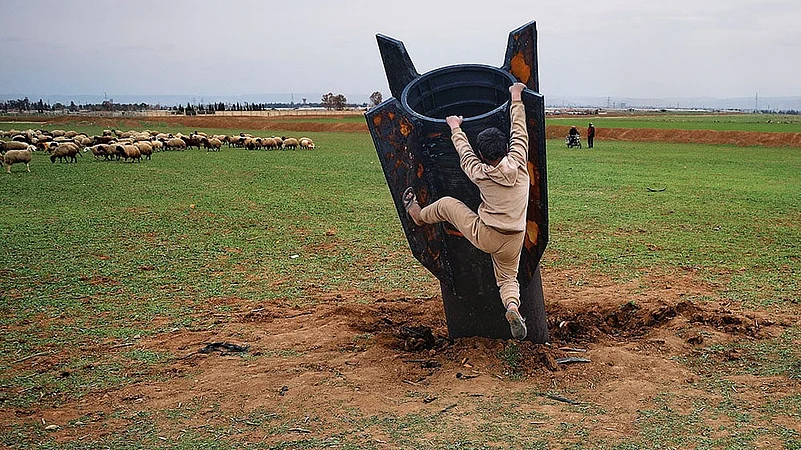


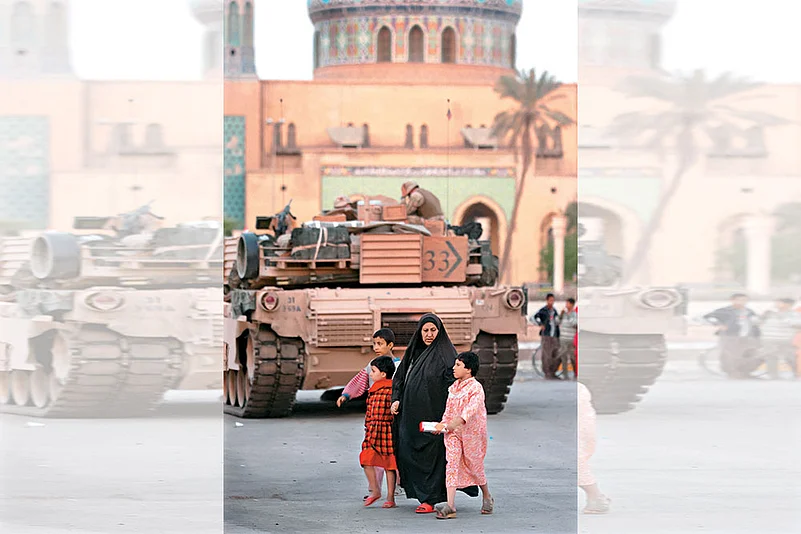



.jpg)
