Sunday, May 10, 2026


Iran Conflict: Geoeconomics, Fragmentation, And The Possible Trajectories – Analysis


May 10, 2026 
 IFIMES
By Dr. Adnan Shihab-Eldin

We are in a moment when geopolitical tensions in the Gulf—particularly the ongoing conflict involving Iran—are once again intersecting with global energy markets, economic stability, and the trajectory of the energy transition. Beyond the immediate crisis, however, what we are witnessing reflects a deeper structural shift.

As I emphasized in my lecture earlier this year, we are entering an era of fragmentation—of geopolitics, of trade, and increasingly of energy systems.

This is no longer a temporary deviation; it is becoming a defining feature of the global landscape. The current developments in the Gulf are a clear manifestation of this transformation.

The global energy system is today both highly interconnected and structurally vulnerable. Around 20% of globally traded oil passes through the Strait of Hormuz, alongside a substantial share of LNG exports. This concentration creates a critical chokepoint. Recent events demonstrate that even partial disruptions—on the order of 20 to 50 percent—can have disproportionate effects on prices, logistics, and broader economic activity.

At the peak of recent tensions, up to 10–12 million barrels per day of oil—roughly one-fifth of global trade—was at risk, alongside significant LNG flows. Refining and downstream product supply chains were also affected, amplifying the shock across the system. This is not a localized disturbance; it is a global stress test.

Against this backdrop, I will structure the discussion around three scenarios, and within each briefly assess implications not only for the GCC and the wider MENA region, but also for Asia, Europe, Africa, and the United States.

Scenario 1: Ceasefire Holds – Agreement Within Weeks


In the first scenario, the ceasefire broadly holds, leading to an agreement within weeks.

Energy markets would stabilize, with prices easing as risk premiums decline and flows through the Strait of Hormuz normalize.

According to IMF estimates, a 10% increase in oil prices reduces global GDP growth by approximately 0.15 percentage points. A reversal of recent price spikes would therefore provide meaningful support to global recovery.

Regional implications:Asia: As the largest importer of Gulf oil and LNG, Asia benefits most. China, India, Japan, and South Korea would see lower import costs and improved energy security, easing inflationary pressures.

Europe: Despite reduced dependence on Russian gas, Europe remains exposed to LNG dynamics. Stabilization would ease gas prices and storage pressures, supporting industrial recovery.

Africa: Many African economies—particularly importers—would benefit from lower fuel costs and reduced fiscal strain, although exporters would see more limited upside.
United States: As a net energy exporter, the U.S. is less directly exposed. Lower prices may slightly reduce upstream revenues but would support inflation control and consumer demand.

For the GCC, growth remains stable—likely in the range of 2.5–3.5% (IMF estimates)—with continued strong export performance.

From a climate perspective, lower energy prices may reduce short-term urgency, but the episode still reinforces the long-term imperative of diversification.


Scenario 2: Intermittent Escalation – Agreement Within Months


The second scenario involves cyclical escalation, with intermittent disruptions over several months.

In this context, fragmentation becomes operational and visible in markets:Oil prices become volatile, potentially fluctuating between $85–110 per barrel,
LNG markets tighten,

Shipping and insurance costs rise significantly.

The IMF suggests that such volatility could reduce global growth by 0.3–0.5 percentage points, with disproportionate effects on emerging economies.

Regional implications:Asia: The most exposed region. LNG-dependent economies face price spikes, supply uncertainty, and rising industrial costs. Growth in major economies such as China and India could slow, while smaller importers face acute stress.

Europe: Continued LNG dependence exposes Europe to volatility. Price swings could weaken industrial competitiveness and complicate energy transition planning, increasing reliance on security-oriented policies.

Africa: Import-dependent economies face rising fiscal pressure and inflation, while exporters may benefit from higher prices but lack the capacity to scale rapidly. The overall effect remains uneven and often negative.

United States: The U.S. benefits partially as an LNG and oil exporter. However, gains are offset by financial volatility, inflation expectations, and broader global instability.

For the GCC, higher prices support revenues, but uncertainty weighs on investment planning, logistics, and non-oil sector diversification.

From a climate perspective, elevated prices may accelerate renewables and efficiency investments, but energy security concerns could simultaneously reinforce continued fossil fuel dependence.

This scenario illustrates the essence of fragmentation: divergent regional responses to a shared shock.

Scenario 3: No Agreement – Prolonged Volatility Through Year-End


The third scenario is the most severe: no agreement, sustained tensions, and structurally constrained flows through the Strait of Hormuz. Even partial disruption would significantly affect global supply chains:Oil prices could remain above $100 per barrel,
LNG markets could experience severe shortages,

Global trade flows would face sustained disruption.

Preliminary estimates suggest that the broader economic impact could reach approximately $1.5 trillion in trade and output effects.

The IMF and World Bank increasingly highlight stagflation risks:Global growth reduced by 0.5–1 percentage point,
Persistent inflationary pressure,
Elevated financial volatility.

Regional implications:
Asia: The most severely affected region. Heavy dependence on Gulf energy translates into sharp import cost increases, industrial slowdown, and macroeconomic stress, with significant global spillovers.

Europe: Faces renewed energy crisis dynamics—high gas prices, industrial contraction risks, and growing fiscal burdens linked to subsidies and stabilization measures.

Africa: Highly vulnerable. Many economies would experience severe balance-of-payments stress, inflationary shocks, and heightened social risks linked to energy and food prices.

United States: While relatively insulated in supply terms, the U.S. would still face inflationary pressures, tighter financial conditions, and a pronounced slowdown in global demand.

For the GCC, higher revenues may initially appear supportive, but overall effects become more complex: trade disruption, capital outflows, infrastructure risk, and heightened geopolitical exposure.

From a climate perspective, such a scenario may accelerate long-term diversification, but in the short term it reinforces reliance on higher-emission fuels as energy security dominates policy priorities.

Concluding Reflections


Across all three scenarios, one central conclusion emerges: we are no longer operating within a stable, globalized energy system, but within a fragmented, security-driven one.

This carries several implications:Energy security and energy transition are now inseparable and must be addressed in an integrated framework.

The Gulf remains central to global energy supply, but its role is increasingly defined by risk, resilience, and diversification strategies.

Regional impacts are highly asymmetric: Asia bears the greatest exposure, Europe faces structural vulnerability in gas markets, Africa experiences disproportionate economic stress, while the United States remains relatively more resilient yet still globally exposed.

For producing countries, strategic orientation must evolve:from efficiency to resilience,
from transactional trade to integrated partnerships,
and from stable assumptions to planning under persistent uncertainty.

Ultimately, fragmentation should not be viewed as a temporary disruption, but as a structural condition shaping global energy, economic, and climate trajectories.

In conclusion, it is important to emphasize that uncertainty remains high, and that future developments will largely depend on how events unfold in the coming weeks and months. However, what is already clear is that the implications of this conflict will extend far beyond the region—reshaping global energy markets, economic pathways, and climate strategies for years to come.


Particular thanks to GAFG and Prof. Anis H. Bajrektarevic, as well as the consortium of partners, most notably the International Institute IFIMES, for maintaining this important intellectual momentum.

About the author: Dr Adnan Shihab-Eldin is a Kuwaiti physicist, energy economist, and academic, who previously served as Secretary General of OPEC. He is currently a Senior Visiting Research Fellow at the Oxford Institute for Energy Studies and a founding board member of the Kearney Energy Transition Institute. He also serves as Chair of the GAFG Steering Board.

The views expressed in this article are the author’s own and do not necessarily reflect IFIMES official position.

Iran War Hits ‘Centers Of Hope’, Halts Science Research


By 

Universities and research institutions across Iran have been severely disrupted by months of airstrikes, with officials reporting damage to dozens of campuses and laboratories and warning of long-term consequences for the country’s scientific future.

Iranian authorities say more than 30 universities have been hit since the start of the US-Israeli offensive in late February, forcing the suspension of in-person teaching in many regions and a widespread shift to online learning.

The closures have raised concerns among scientists and international organisations about the impact on research, innovation and the next generation of Iranian scholars.

The United Nations Educational, Scientific and Cultural Organization (UNESCO) condemned the attacks on universities and educational facilities, saying it “rejects in the strongest terms any threats or the deliberate targeting of such institutions as means of retaliation”.

In comments to SciDev.Net, UNESCO warned that damage to universities and research centres disrupts teaching and research, weakens research ecosystems and limits international scientific cooperation.

The organisation said that while remote learning can help maintain theoretical teaching, it cannot replace laboratory-based training and practical education. It also warned that prolonged disruption could increase the risk of “brain drain” and deepen the isolation of Iranian researchers from global scientific networks.

‘Centres of hope’

Iranian scientist Kaveh Madani warned that the most serious damage may not be physical destruction alone.

“Universities are centres of hope,” Madani told SciDev.Net.

“So, the biggest damage is the damage to the ambition of the young people who are supposed to think about the future and build a career.”

Madani said the destruction of classrooms, laboratories, digital infrastructure and scientific equipment disrupts the research process and creates a climate of fear. In Iran’s case, he added, the effects are intensified by international sanctions that already made it difficult and expensive to import advanced technologies and specialised laboratory materials.

“In many cases, it is hard to replace things. It’s very costly or sometimes even impossible under sanctions,” he added.

He noted that some institutions may be forced to rebuild technologies domestically or attempt to reverse-engineer damaged systems, processes that can take years. In other cases, researchers may simply have to wait long periods before alternative technologies become available.

Madani also highlighted the risks posed by damage to digital infrastructure and research databases. The destruction of accumulated scientific data, he said, can have consequences that go far beyond repairing buildings or purchasing replacement equipment.

Despite the scale of disruption, Madani does not believe Iran’s scientific system will collapse entirely.

“The country has many, many good world-class scientists who would continue to and produce knowledge,” he said.

However, he warned that war, sanctions and economic pressures together could significantly slow scientific progress and hold back the next generation of scientists.

“If people are running for their survival, their biggest priority is not their university homework or assignment, or paper, or dissertation,” he said.

Researchers inside Iran also describe a scientific sector struggling to function under increasingly difficult conditions.

Asadollah Hosseini-Chegeni, a researcher in the faculty of agriculture at Lorestan University, in western Iran, said universities had shifted much of their teaching online, including some laboratory courses, to maintain continuity.

But he acknowledged that virtual learning cannot replace direct practical training.

He said many laboratories remained only “semi-active”, with limited work continuing mainly for postgraduate students. Experimental research has slowed because of rising costs for molecular reagents and specialised laboratory supplies, compounded by broader economic pressures.

He added that researchers can still access international scientific resources through university networks, although technical limitations existed even before the current conflict.

Economic costs

Delays to research, interruptions to scientific training and reduced efficiency in funding use could create cumulative long-term effects, even at institutions that have not been directly damaged, the researcher warned.

UNESCO similarly stressed that recovery would require sustained investment and stability.

Rebuilding infrastructure may prove easier than rebuilding human capital, the organisation noted, particularly if the crisis accelerates the emigration of researchers and academics.

For Madani, the impacts of such a wave of emigration would be severe.

“The economic cost of it would be huge in the long term and in the short term,” he said.

There would be major consequences for the training of students and for the research output “that would be halted and impacted for some period”, he added.


Trump Budget Targets ‘Valley Of Death’ With New Military Contractor Accountability Model


May 10, 2026 

By The Center Square


(The Center Square) – The Trump administration’s $1.5 trillion military budget request would rewrite how the Pentagon buys weapons – forcing contractors to fund their own factory expansions and penalizing them for missing production targets – in a bid to fix what officials describe as a decades-long failure to turn American innovation into usable military capability.

Submitted to Congress on April 3, the proposal allocates more than $100 billion to rebuild the defense industrial base through four programs: $20.2 billion through the Office of Strategic Capital for low-interest credit and loan guarantees; $30.4 billion through the Defense Production Act to expand production capacity; $41.8 billion for industrial base analysis and sustainment to attract new suppliers; and $52.9 billion through the Munitions Acceleration Council to send long-term demand signals to manufacturers.

“The historic, generational, and transformational changes we implement will move us from the current prime contractor-dominated system defined by limited competition, vendor lock, cost-plus contracts, stressed budgets and frustrating protests – to a future powered by a dynamic vendor space that accelerates production,” Hegseth said.

At the center of that shift is a new multi-year procurement model – contracts lasting up to seven years for critical munitions – designed to give manufacturers the certainty needed to build new facilities rather than add shifts to existing ones. Under the model, contractors fund their own capital expenditures up front and face financial penalties if they fail to meet agreed-upon production ramp rates.


Jules “Jay” Hurst III, performing the duties of Under Secretary of War Comptroller, said the previous approach, in which the government financed capacity expansion, had produced marginal results.

“We’re making them put skin in the game,” Hurst said at an April 21 Pentagon budget briefing. “We’re giving them a multi-year order, and we expect them to meet the ramp rates that they agree to, and if they don’t, there’ll be penalties for them.”

The changes target a structural problem that the government’s own watchdog has tracked for years and found to be getting worse. In its June 2025 annual weapon systems assessment, the Government Accountability Office found that major defense acquisition programs now take nearly 12 years on average to deliver even an initial capability to troops, up 18 months from the prior year. Combined costs across 30 major programs increased by $49.3 billion in a single year, with the Air Force’s Sentinel ICBM program accounting for $36 billion of that growth alone.

“DOD plans to invest nearly $2.4 trillion to develop and acquire its costliest weapon programs,” the GAO reported. “But it continues to struggle with delivering timely and effective solutions to the warfighter.”


Even the Pentagon’s own fast-track acquisition pathway – designed to deliver capability in two to five years – has fallen short, with programs entering it with immature technologies and exiting without being ready for production. GAO’s recommendations to fix the problem, issued to the Pentagon and all three military services, remain open, indicating no satisfactory corrective action has been taken.

During a June 2025 congressional hearing, U.S. Rep. William Timmons, R-S.C., said promising technologies routinely fail to reach military use.

“Unfortunately, for too many of those innovators, the path to partnership with the federal government is blocked by a procurement process that is opaque, rigid, and often punishing,” he said. “The risk of entering the defense market – both in time and cost – deters even the most promising companies. And for those who try, many never make it past what many in the industry have called the ‘valley of death,’ where transformative technologies die on the vine between prototype and production, often because of bureaucratic red tape.”

Gen. Dan Caine, chairman of the Joint Chiefs of Staff, put the acquisition gap plainly in written testimony to the House Armed Services Committee on April 29.

“We have been outstanding at buying 10 to 15 years behind the technology development curve,” Caine said. “But over the last year, we have made significant reforms across our acquisition enterprise to close the gap. Together, we still have much work to do.”

The National Defense Industrial Association’s Vital Signs 2026 report, drawing on responses from 1,646 government, industry and academic officials, found that progress on industrial readiness is measurable but fragile. The report identified budget instability, compliance burdens and unclear demand signals as persistent constraints limiting industry participation – the precise conditions the multi-year contract model is designed to address.


“A robust defense industrial base is among the most powerful tools we have to deter conflict and protect our national security,” said David Norquist, NDIA president and CEO.

Eric Fanning, president and CEO of the Aerospace Industries Association, said the budget delivers what manufacturers most need.

“The president’s budget request lays a strong foundation for America’s aerospace and defense industry because it provides what we need most: clear demand signals that tell companies where to invest, what to build and how to plan for the future,” Fanning said.

Shipbuilding represents the largest single industrial investment in the proposal. The request includes $65.8 billion to procure 18 battle force ships and 16 support ships – the largest shipbuilding request since 1962 – along with $8.7 billion for shipyard infrastructure across seven private and four public yards. The budget also funds a study for a potential fifth public shipyard.

On munitions, the request allocates $26 billion for multi-year procurement contracts and $31.8 billion for land-based missiles, including expanded production of Patriot and Terminal High Altitude Area Defense, or THAAD, systems. For next-generation platforms, the budget funds continued development of the F-47 sixth-generation fighter and the B-21 stealth bomber and increases F-35 procurement from 47 to 85 aircraft as part of a $102 billion air power investment, a 26% increase.

The Pentagon has already begun restructuring how it manages acquisitions, standing up 23 Portfolio Acquisition Executives responsible for weapons programs from development through fielding, with performance tracked publicly.

Congressional reaction has been divided.

Senate and House Armed Services Committee chairmen Sen. Roger Wicker, R-Miss., and Rep. Mike Rogers, R-Ala., called the request essential, saying the country faces “the most dangerous global environment since World War II.”

Senate Armed Services Committee Ranking Member Jack Reed, D-R.I., rejected it.

“This is not a serious budget,” Reed said. “The U.S. Department of Defense doesn’t lack funding, but it currently lacks responsible civilian leadership and management.”

The sharpest structural critique came from within the Republican Party. Sen. Mitch McConnell, R-Ky., chairman of the Senate Appropriations Subcommittee on Defense, warned that the budget’s reliance on $350 billion in reconciliation funding – which requires only a simple majority and bypasses the traditional appropriations process – undermines the industrial base argument at its core.

“Budget reconciliation, for its part, can only supplement – not replace – the consistent demand signals necessary to secure the private sector investments necessary to adequately expand and modernize our defense industrial base,” McConnell said. “Regular order appropriations are the right way to meet the scale and scope of the requirements of our military.”

The concern is practical. Multi-year production contracts that depend on reconciliation funding that expires or fails to pass offer manufacturers less certainty than the administration’s model promises. McConnell called for a separate supplemental appropriations request to fund munitions contracts Congress already authorized but said were “unnecessarily hamstrung by an insufficient defense topline.”


Analysts at the International Institute for Strategic Studies highlighted additional execution risks. The budget’s 42% increase figure combines base and reconciliation funding; excluding reconciliation, the base budget grows by 28%. The IISS also noted that a 188% increase in missile procurement “raises questions as to whether U.S. industry can meet demands” and that the budget’s financial assumptions relied in part on tariff revenues the U.S. Supreme Court has since ruled illegal.


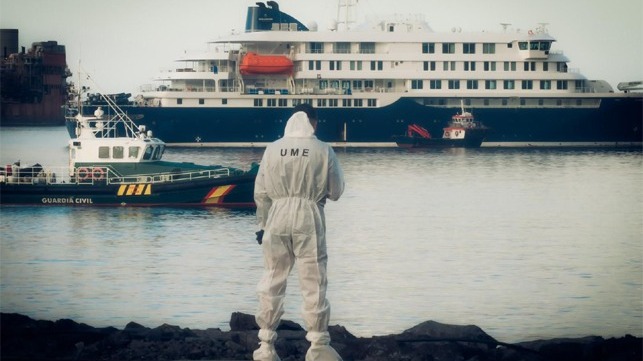
Complex Medical Evacuation Underway After Cruise Reaches Tenerife

evacuation of cruise ship
Passengers and some of the crew are disembarking the expedition cruise ship in Tenerife (Spain's Ministerio Defensa)

Published May 10, 2026 2:16 PM by The Maritime Executive


Passengers began disembarking from the exploration cruise ship Hondius on Sunday in Tenerife and are being immediately evacuated by their individual countries. The complex operation has seen planes from at least six countries removing portions of the passengers as well as some of the cruise ship’s crewmembers, and in an agreement with the local authorities, none of them are being permitted entry into Tenerife.

The Hondius arrived at the industrial port of Grandilla in southern Tenerife at 0624 local time on Sunday, May 10. The ship had departed Cape Verde at 1915 CET on May 6 after two crewmembers and one passenger were disembarked, and additional medical personnel were placed on the ship. Under an agreement with the local authorities, the cruise ship is being held at anchor and not permitted to dock in the port.

The vessel’s operator, Oceanwide Expeditions, reports that none of the passengers or crew still onboard are showing any symptoms of hantavirus, but a high level of precaution is being taken during the disembarkation process. Passengers are grouped by nationality and are only ferried to shore when the country’s evacuation flight is ready to receive the people. Local boats were being used to bring the people ashore, or the company said the Zodiac craft from the ship could be used if required.

Personnel on the dock are all in protective clothing, as are the passengers, who are also being sprayed with disinfectant and who are only being permitted to remove a limited number of items from the ship. They are being checked for symptoms and then placed aboard the evacuation flights. Spain was first taking a dozen people, and since then, planes from the Netherlands, which took its citizens along with Germans, Belgians, and Greeks, were followed by evacuations from France, Turkey, the United States, the United Kingdom, Ireland, and Norway. Australia is sending an evacuation plane due to arrive on Monday that will take its citizens, as well as those from New Zealand and other Asian countries.

The World Health Organization continues to say the danger of further transmission is low. It is, however, recommending 42-days of isolation, quarantine, or observation since the people were first exposed to the virus. Most of the countries reported that the individuals would be taken to military or government facilities for further observation, and then some would be released for home quarantine.

Contact tracing remains a primary concern for the passengers who disembarked during the cruise. The UK Defence Ministry reported on Sunday that it has airlifted two medical clinicians and six military personnel, along with medical supplies, to the remote island of Tristan da Cunha after a passenger who disembarked the cruise is now reported to be ill. However, another person who was on the flight from South Africa, where the ill passenger from the cruise ship was removed, has now tested negative for Hantavirus.

The plan is that once the cruise ship completes the disembarkations in Tenerife, it will sail to Santa Cruz on Tenerife. It will remain isolated while it bunkers and takes on necessary supplies. It will then sail to Rotterdam, a trip that will take around five days, where it will undergo further disinfection.

As of the last count released by the WHO, a total of eight people are ill, with six confirmed cases of hantavirus. Three people died, and four remain in hospitals.

Divided By Contagion: Health As Sovereign Responsibility – OpEd


May 10, 2026
By Ramesh Thakur

On 25 May 2025, after three years of negotiation under the auspices of the World Health Organization (WHO), the Pandemic Agreement was adopted. In reality, the vote was a provisional outcome of an incomplete treaty which postponed decisions on a number of contentious articles, including the required financing, sharing of intellectual property and biological samples, and transfer of manufacturing know-how and pharmaceutical products on concessional terms, to follow-up negotiations


The objective of the treaty ‘is to prevent, prepare for and respond to pandemics’ and, to this end, its provisions will ‘apply both during and between pandemics.’

Parties also committed to developing a Pathogen Access and Benefit Sharing System (PABS), in the form of an annex to the pandemic treaty, through negotiations in order to promote rapid and timely sharing of materials and sequence information on pathogens with pandemic potential. In return, as part of benefit sharing, participating manufacturers would commit to donating a percentage of their real-time production of safe, high-quality, and effective vaccines, therapeutics, and diagnostics for the pathogen causing the pandemic emergency. An additional share of the products would also be made available to the WHO ‘at affordable prices.’

The treaty cannot be opened for signature until after the PABS has been negotiated and adopted. It will enter into force 30 days after 60 countries have ratified the treaty. A party may withdraw from the treaty at any time after two years from membership by giving a one-year notice.

The beleaguered WHO hosted a total of six rounds of oftentimes acrimonious negotiations on the plan to run the global infrastructure for future pandemics. The original timeline had set a negotiated PABS to be adopted by the World Health Assembly, the governing body of the WHO, at its annual session in May this year. Instead, on 1 May the WHO conceded that even the resumed sixth session of the Intergovernmental Working Group (IGWG) on the WHO Pandemic Agreement had failed to bridge the differences. Accordingly, the Health Assembly will be asked to extend the mandate of the IGWG so it can present an agreed PABS system for adoption in May 2027. The next IGWG negotiating session is scheduled for 6–17 July.

The Risk of Institutionalising WHO Governance Deficits

The text currently under negotiation risks institutionalising the governance failures that defined the Covid-19 response rather than correcting them. It concentrates authority in the WHO without adequate accountability to member states, locks in emergency-mode assumptions about future health, and risks overriding the sovereign responsibility of national governments to determine health policy for their own populations. It would entrench existing inequities while burdening developing countries with unrealistic financial and compliance demands. It is therefore a bad deal for low- and middle-income countries, which make up the majority of the world’s population.

To be clear, the talks are not failing because countries disagree—that is to be expected in any serious negotiation. They are failing because dissent on the parameters of a contested framework is being managed and deflected, rather than engaged and accommodated. The process appears designed to produce agreement using the language of creative ambiguity. When an agreement becomes a proxy for institutional success that masks substantive disagreement over purpose and pathways, the goal has shifted from ‘getting it right’ to simply ‘getting it done.’


Rather than prompting a fundamental rethink, these concerns are being absorbed into incremental adjustments—tweaks to language, minor concessions on access or vague commitments to future flexibility. The concerns raised by Global South delegations reflect real structural tensions in the global health system between public and private goods, donors and recipients, and centralised control and national sovereignty. These cannot be resolved through procedural compromise alone.
The North-South Divide on the WHO Pandemic Agreement

In my major book on the United Nations (Cambridge University Press, 2006 and 2017), I identified the North-South divide as one of the major undercurrents running through the world’s peak international organisation. I built on that work for a briefing paper for Friedrich Ebert Stiftung in 2008, Towards a Less Imperfect State of the World: The Gulf between North and South. That divide remains an important dimension of the politics of the UN system.

As reported among others by Kerry Cullinan for Health Policy Watch on 23, 25, 30 March, and 5 May, ‘final’ negotiations over it were contentious and failed to arrive at a consensus. The split is largely along the global North-South divide. Between them, the Africa Group and the Group for Equity represent the vast majority of WHO member states. They are reported to ‘have become increasingly frustrated’ by the developed countries acting to protect the interests of their pharmaceutical companies instead of agreeing to an equitable sharing of obligations and benefits. Speaking for both groups, South Africa noted that member states were ‘still far from reaching consensus on the text of the Pandemic Agreement annex’ and expressed ‘deep regret’ at the unsatisfactory outcome.


One the one side, the WHO is facing huge pressure from developed countries. The US has cut all funding and Germany has slashed support as well. A quarter of the WHO’s staff are being let go. This has left the WHO ever more reliant on its three biggest donors—Bill Gates (16.8 percent), the vaccine alliance GAVI (which itself gets substantial Gates Foundation funding) and the EU.

On the other side, many developing countries argue that the proposed deal is the latest example of the WHO’s agenda having been captured by Western pharmaceutical companies which take funding from more critical current needs like fighting malaria and TB. They bridle at a power structure perceived to be neocolonial.

Afro-Asian countries are not rejecting cooperation. They are questioning whether the proposed text will deliver equitable outcomes. It risks creating a system in which the costs of preparedness are socialised but benefits are part-privatised. Countries are obligated to share pathogen data—effectively contributing to a global public good. That data will then be used within a complex architecture of advance purchase agreements, manufacturing guarantees, and research incentives that largely benefit a small number of pharmaceutical firms and the Global North countries in which they are based. Many lower- and middle-income countries see a system in which they are asked to contribute data, commit funds, and accept binding rules—while receiving only legally uncertain access to the resulting products, often at negotiated discounts that remain contingent and limited.

To digress briefly but not irrelevantly, many countries in the Global South have muscle memory of the unequal nonproliferation-disarmament obligations of the 1968 Nuclear Nonproliferation Treaty (NPT). Non-nuclear weapon states accepted binding and specific obligations not to acquire the bomb and to adopt IAEA-supervised safeguards to ensure peaceful uses of nuclear power (Articles 2, 3). In return, the five nuclear-weapon states (US, USSR/Russia, UK, France, China) committed ‘to pursue negotiations in good faith on effective measures relating to cessation of the nuclear arms race at an early date and to nuclear disarmament’ (Article 6).

In other words, the disarmament obligation was aspirational, vague, and open-ended and, 58 years later, is yet to be honoured. The same five countries are also the five permanent members (P5) of the UN Security Council and rigorous in efforts to enforce the nonproliferation obligations through their P5 status. The majority of NPT states parties got so frustrated that in 2017 they adopted the nuclear ban treatyagainst the united opposition of the P5 by a vote in the UN General Assembly.

As the Americans say, fool me once, shame on you. Fool me twice, shame on me.

During the most recent but inconclusive sixth negotiating session in March and April, reflecting the views of many delegations, Pakistan insisted that an agreement should not be rushed simply to ‘manufacture a multilateral success.’ Indonesia, speaking on behalf of the regionally diverse Group for Equity, said that ‘some of the sticky issues are not about time but the willingness to find meaningful solutions. The time pressure alone should not lead us toward weak design, diluted commitments, or lowered expectations.’ When an agreement becomes a proxy for institutional success that masks substantive disagreement over purpose and pathways, the goal has shifted from ‘getting it right’ to simply ‘getting it done.’


At the same time, there is growing recognition that sovereignty comes with responsibility. At a conference hosted by the Economic Commission for Africa (ECA) in March, Clever Gatete, Executive Secretary of ECA observed that health sovereignty is part of national sovereignty. African Ministers and corporate leaders said that Africa must end reliance on foreign aid because ‘health security cannot be mortgaged to foreign funding.’

Similarly, the G20 leaders’ summit in South Africa in November had called for a move beyond traditional aid structures to build resilient, sovereign health systems across the Global South. On 3 April, the Accra Reset Chancery announced that an 18-member high-level panel had been formed to make recommendations on reforms in global health architecture and governance in order to strengthen equity and sovereignty for countries in the Global South.

As it happens, much of the heavy lifting has been done over the past 18 months by a ten-member panel of the International Reform Health Project (IHRP). The project has recently published two reports under the title The Right to Health Sovereignty. The Technical Report provides the analytical foundation, examining ethics, institutional history, disease burden, financing, governance structures, and legal frameworks. The Policy Report distils these findings into principles and reform pathways for policymakers.
Regionalised Burdens-Benefits Equation of Disease and Medical Interventions

The IHRP identifies several interrelated trends, including expansion beyond core public health functions (mission creep and drift), as well as centralisation of authority justified by emergency framing and growing dependence on earmarked and nonstate donor funding. These developments have not merely reduced efficiency; they have eroded trust and legitimacy. To restore faith and confidence, there is urgent need to affirm the notion of health sovereignty and the long-held traditional medical principles of beneficence, non-maleficence, patient confidentiality, and informed consent.

One of the most consequential flaws of WHO-centric global health governance highlighted by Covid-19 was how sharply different were the impacts of the disease across the world. Ditto the policy interventions in response.

The Policy Report documents the strikingly regional Covid mortality toll. Europe and the Americas experienced three to four times more Covid deaths than their population shares while Asia and Africa were three to five times under-represented. According to officially reported data, Covid-19 was the second biggest killer of Americans and the third biggest of the people of the United Kingdom in the four years 2020–23 inclusive. It fell outside the top ten for Egypt, India, Japan, and Singapore. It did not even make it to the top 25 killer diseases reported for the likes of China and Nigeria.


On the other side of the equation, there was an abundance of early warnings, from established, credible, and reputable bodies, on the range of grave harms that were likely to result from population-wide severe lockdown measures. There were impassioned attacks on the immoral and callous indifference of epidemiologists to the deadly consequences of their prescriptions for millions of lives and livelihoods around the world.

The BBC reported on 25 March 2020—that is, pretty much at the start of the Covid-19 pandemic—that ‘India’s poorest’ people ‘fear hunger may kill us before coronavirus.’ In January 2022, Unicef reported on the devastating setbacks to children’s education. Robert Jenkins, Unicef Chief of Education, said ‘we are looking at a nearly insurmountable scale of loss to children’s schooling.’

I argued early on that the biggest tragedy would be across the developing world, with tens and hundreds of millions more people pushed into extreme poverty, additional dead from increased infant and maternal mortality, hunger and starvation with more poverty and disrupted crop production and food distribution networks, sharp cutbacks in children’s immunisation and schooling, destruction of the informal sectors of the economy in which daily wage earners earn a pitiful living, and an upsurge in child labour and trafficking.

Lockdowns, which until 2020 the WHO had explicitly rejected for dealing with pandemics, forced 500 million children around the world out of school, half of them in India. Dr Sunita Narain, Director General of the Centre for Science and Environment, said in February 2021 that more than half the world’s additional 115 million people were pushed back into extreme poverty live in South Asia. India, she said, was all set to usher in a 375 million-strong ‘pandemic generation’ of children up to age 14 who are likely to suffer long-lasting impacts like increased child mortality, being underweight and stunted, and educational and work-productivity reversals.

Little wonder that in a sombre national address on 20 April 2021 shorn of his usual bombast and bravado, PM Narendra Modi ‘urged the states to…work together to save the country from lockdown’ (emphasis added).

Unicef’s State of the World’s Children 2023 report came to the alarming conclusion that ‘in just three years, the world has lost more than a decade of progress.’ Vaccination coverage had decreased in 112 countries and 67 million children had missed out on at least one vaccination over 2020–23 because of lockdowns-caused disruptions and diminished confidence in vaccines. Overall, Unicef recorded ‘the largest sustained backslide in childhood immunisation in 30 years.’ To compound the misery of rising vaccination hesitancy, the WHO reported that vaccination rates against measles fell in Europe and the UK with a 45-fold annual rise in measles casesin 2023. Polio cases were also up by 16 percent.

While some of this might be the lingering effect of lockdown-era disruptions of immunisation services, in part it also arose from falling trust in public health edicts and institutions that spilled over into more generalised vaccine hesitancy. Out of 55 countries that Unicef looked at, public perceptions of the importance of childhood vaccines fell in 52 countries, by as much as 44 percent in some cases. China, India, and Mexico were the only countries where faith in vaccines held firm. The report warned that ‘the confluence of several factors suggest the threat of vaccine hesitancy may be growing,’ including ‘uncertainty about the response to the pandemic…declining trust in expertise, and political polarisation.’

Subsidiarity

Sovereignty is the foundational principle of world order and of the entire multilateral order with the United Nations at the centre. ‘Subsidiarity’ is the principle that policy decisions are taken at the lowest possible level and closest to where they will have their effects.

In the five-year period from January 2020–25 in which 7.1 million people died with Covid, about 203.5 million people would have died from non-communicable diseases and another 38.5 million from non-Covid infectious diseases. (It’s worth emphasising that the Covid death toll refers to deaths with Covid. Deaths fromCovid would have been considerably fewer.) In India, Covid-related deaths in the three years 2020–22 (the deadliest years for Covid) were fewer than deaths, in order, from heart diseases, lung disease, stroke, flu and pneumonia, cancers, TB, diarrhoea, diabetes, and even traffic accidents—and almost the same as from deaths by suicide, in many of which the Covid policy harms would have been a contributory factor.

As already noted, the balance of Covid risks and policy-intervention benefits varied between rich and poor countries and between those with good public health infrastructure (for which economic prosperity is a key enabling condition) and those without. Therefore authorities have to work out the best mix of mitigation measures for their own jurisdiction and not fall into the trap of ‘What’s good for Europe is good for Africa’ approach.

This is why the primary responsibility for people’s health should always remain with the countries directly. Regional organisations like the Southern African Development Community (SADC) and the Association of Southeast Asian Nations (ASEAN) should have secondary responsibility for coordinating health policies and initiatives within their jurisdictions. And global institutions like the WHO should be restricted to providing normative guidance, technical support and certification, and data.

International Cooperation


The last remains important because international cooperation in health is necessary and valuable. Cross-border surveillance, data sharing, and technical assistance have contributed to dramatic gains in life expectancy, particularly in developing countries. But multilateral cooperation derives legitimacy from voluntary state participation. When authority drifts towards centralised technocratic bodies detached from domestic accountability, legitimacy weakens—even if intentions are benign.

Accordingly, the goal of reforming global health is not institutional destruction, but restoration of legitimacy through clarity of purpose and accountability. The Policy Report advances a conception of health sovereignty of individuals and countries that is grounded in responsibility, not isolationism. People bear primary responsibility for ensuring their individual health and states for protecting their populations’ health. International organisations exist to support states—not to replace or override them.

The IHRP reports elucidate principles for reforming the WHO—or, if necessary, establishing a successor International Health Organisation (IHO). The IHO must be given limited and clearly defined mandates, with success measured by contraction and redundancy, not expansion of mandates and growth of authority, personnel, and resources. The report pays particular attention to decentralised authority. Emergency powers must be proportionate to demonstrated, evidence-based risk and the highly-differentiated disease burden in the Global South compared to the global North.

The reports aim to promote cooperation, coordinated response, science-based decision-making, and a return to foundational determinants of health over pharmaceutical and technological interventions. Effective cooperation requires legitimacy—and legitimacy requires ethics, evidence, proportionality, respect for the sovereign responsibility of individuals and states, and subsidiarity as the organising principle of the architecture of national, regional, and global health governance.

This article was pubished at Brownstone Institute

Burkinabe Forces’ Brutal Tactics Weaken Counterterror Fight


By 

Burkina Faso’s military and pro-government forces are accused of killing hundreds of civilians between January 2023 and August 2025, according to a recent report by Human Rights Watch (HRW).

Of the 1,837 civilians killed in Burkina Faso during that time, more than 1,200 were slain by the Burkinabe military and allied militias known as the Volunteers for the Defense of the Homeland (VDPs). Both Burkina Faso’s military junta, led by Capt. Ibrahim Traoré, and the VDPs are accused of ethnic cleansing in Fulani communities.

One of the deadliest attacks on civilians came on December 14, 2023, when more than 200 Burkinabe soldiers and VDPs entered the town of Bouro on motorbikes, in pickups and armored vehicles around 9 a.m. and massacred at least 211 civilians. Witnesses said the military and VDPs accused them of collaborating with Islamist fighters.

One man lost 19 relatives in the attack.

“I found my family and my neighbor’s family massacred,” Samer, a pseudonym, told HRW. “My wives [and] my children were dead…. The only survivor [from my family] was my 11-year-old son…. I found the bodies lying on the ground, bullets in their heads, chests, stomachs. My little one was wounded in the left leg…. I took him out of a pile of corpses. I found five other injured children from my neighbor’s family.”

Samer tended the children’s wounds with torn clothing before fleeing with them to Mali.

Burkina Faso’s military and the VDPs are using indiscriminate violence in a way that mimics terror groups such as the al-Qaida-affiliated Jama’at Nusrat al-Islam wal-Muslimin (JNIM), Ilaria Allegrozzi, senior Sahel researcher at HRW, told Reuters. Allegrozzi added that the behavior of Burkina Faso’s security forces is part of a regional pattern.

Neighboring Mali and Niger are also under military rule, and the militaries of both countries have been accused of committing atrocities against civilians. Malian government forces and their partners killed up to four times as many civilians as terrorists over the last two years, according to the Armed Conflict Location and Event Date (ACLED) project. Russian mercenaries operating alongside Malian troops are also accused of committing atrocities against civilians. The heavy-handed tactics are having the opposite of the intended effect as they drive civilians into the arms of terror groups.

“As state responses increasingly rely on retaliation and collective punishment, more civilians find themselves trapped in ​areas under jihadist control, where JNIM is consolidating its influence through coercion and strategic engagement with local populations,” said Heni Nsaibia, ACLED’s senior analyst for West Africa.

Between March 10 and March 11, 2025, the Bukinabe military and pro-government fighters massacred more than 130 ethnic Fulani civilians during an attack in the western town of Solenzo. It was part of a Bukinabe special forces operation called “Green Whirlwind 2,” which resulted in widespread civilian deaths and displacement.

“The viral videos of the atrocities by pro-government militias near Solenzo sent shock waves through Africa’s Sahel region, but they told only part of the story,” Allegrozzi said on HRW’s website. “Further research uncovered that Burkina Faso’s military was responsible for these mass killings of Fulani civilians, which were followed by deadly reprisals by an Islamist armed group. The government needs to impartially investigate these deaths and prosecute all those responsible.”

Traoré vowed to tackle terrorism when he seized power in September 2022, but JNIM offers a particularly violent, unrelenting challenge. In September 2024, for example, the group claimed responsibility for attacking hundreds of civilians ordered by the government to dig a defensive trench around the town of Barsalogho, which was a VDP stronghold. JNIM claimed it killed 300 members of the Burkinabè military and militia members during that attack and did not apologize for slaughtering civilians forced to dig the trench.

“This would not be an excuse to spare them,” JNIM’s Sharia Committee in Burkina Faso said in a statement to HRW. “Anyone who … follows this regime … deserves to be held accountable.”

Amid the violence, Traoré’s government is cracking down on civil society through repressive laws and by dissolving civic groups, HRW, the Kisal Observatory and a consortium of other organizations reported on April 26. Eleven days earlier, the government announced the dissolution of 118 civil society organizations, many engaged in human rights work.

“The mass dissolution of civil society groups is the Burkina Faso junta’s latest effort to silence dissent and avoid scrutiny of its grim human rights record,” Binta Sidibé Gascon, president of the Kisal Observatory, a human rights monitoring organization, said in a story on HRW’s website. “The decision reinforces a climate of fear that is crippling independent civic activity.”

The government has also expelled or banned dozens of media outlets and international organizations, conscripted critics, detained human rights workers, enforced arbitrary arrests and committed forced disappearances.