USA to examine SMRs for commercial shipping
_39116_71552.jpg)
"Global competitors are advancing the integration of nuclear propulsion into the broader maritime industry, including shipyards, ports, insurance regimes, and logistics networks, which places the US at a strategic disadvantage in the absence of domestic small modular reactor (SMR) development," the Maritime Administration (MARAD) said. "Durable adoption of SMR propulsion technology, a modern-day maritime transition, has great potential not only as a result of engineering breakthroughs, but also when the US Government helps reduce systemic uncertainty, align regulatory structures, and enable market conditions that allow private capital and operators to scale new technologies."
As a first step, the Maritime Administration has issued a Request for Information, calling on innovators and industry stakeholders to help develop an SMR model that "revitalises US shipbuilding, cuts costs, and secures energy dominance".
The Request for Information (RFI) is seeking input from industry and innovators to advance: deploying reliable, high-power energy to allow commercial ships to travel further and faster; SMRs that will largely eliminate fuel costs and reduce maintenance requirements; reinforcing US supply chains and securing energy independence to bolster its national defence; identifying streamlined deployment methods to integrate nuclear power across entire fleets and logistical networks; integrating SMR production into US shipyards to build strong robust workforce pipelines and new credentialing standards; and establishing liability, insurance, and inspection frameworks to ensure seamless port access before construction begins.
"This RFI seeks industry insight into building a coherent US system capable of long-term commercial adoption, while providing global leadership," the Maritime Administration said. "Specifically, the purpose of this RFI is to investigate if advancements in SMR technology and novel concept development are usable, scalable, and can be made commercially viable. This includes integration of SMR-propelled vessels into international regulatory regimes." The agency said it is particularly interested in concepts that "treat nuclear propulsion as commercial infrastructure rather than a technology demonstration, and that demonstrate clear pathways to scalable, repeatable maritime operations".
The Maritime Administration - whose mission is to foster, promote and develop the USA's maritime industry to meet the country's economic and security needs - noted the SMR initiative advances President Donald Trump's Executive Orders on Unleashing American Energy and Restoring America's Maritime Dominance.
Comments on the Request for Information can be submitted by 5 August.
To support the development of these SMRs, the Maritime Administration is collaborating with the US Coast Guard, the Nuclear Regulatory Commission, and the Department of Energy. It said it will collect additional input through other forums, including public workshops, listening sessions, and technical exchanges.
"Under President Trump's leadership, the US is reclaiming its rightful place as a global sea power," said US Transportation Secretary Sean Duffy. "To secure this future for America's shipbuilding industry, we need to innovate. By partnering with industry experts and outside-the-box thinkers to develop a strong SMR model, we will deliver a state-of-the-art energy source that cuts costs and bolsters national security—all at the Speed of Trump."
The Maritime Administration's Stephen Carmel added: "To successfully introduce SMRs, we must view this through a system-transition lens rather than just as a technology demonstration. We are seeking critical insights on how the government can help reduce systemic uncertainty, align regulatory structures, and enable the market conditions necessary for private capital and operators to scale these groundbreaking technologies."
Licensing of US pilot SMRs advances
_43354.jpg)
The Department of Energy's Idaho Operations Office (DOE-ID) approved Aalo's Documented Safety Analysis for the Aalo-X on 30 April. The Documented Safety Analysis is the authoritative safety basis for a DOE nuclear facility. It demonstrates in detail that a facility can be operated safely across its full range of normal, off-normal, and accident conditions. It is one of the most rigorous regulatory gates in the DOE process. Because the Aalo-X Critical Test Reactor is an experimental facility located on DOE land, it is being authorised under the DOE framework rather than the NRC. For a commercial reactor, the closest analogue would be the Final Safety Analysis Report issued by the Nuclear Regulatory Commission (NRC).
Approval of the DSA advances Aalo into its final pre-operations phase, the Operational Readiness Review, in which the DOE verifies that the people, facility, and programmes can be cleared to operate as documented.
Aalo Atomics broke ground in August last year on land leased from DOE at the Idaho National Laboratory (INL) to start construction of its first experimental reactor, the Aalo-X. Aalo said it planned to complete construction and achieve criticality by 4 July this year, the target date set by the US Department of Energy for at least three test reactors to reach criticality under the programme to expedite the testing of advanced reactor designs it announced in June 2025. Aalo-X will be manufactured at Aalo's pilot factory in Austin, Texas, before being transported to and installed at the INL site.
In the Aalo-X Critical Test Reactor (CTR), Aalo will test its full-scale nuclear core, with fuel equivalent to what is necessary for 10 MWe, before adding sodium coolant to the equation. The goal is to achieve criticality, a self-sustaining nuclear reaction, at low power and with reduced heat generation. The Critical Test Reactor contains nuclear fuel, moderator, control rod drive mechanisms, shielding, and instrumentation systems that are direct analogues of what will operate in the 10 MWe Aalo-X power reactor being built next door. Operating the Critical Test Reactor will validate the company's neutronics and offer key test data that verifies its computational models.
The test reactor is the precursor to the Aalo Pod, a 50 MWe XMR (Extra Modular Reactor) power plant purpose-built for data centres - demand for which is increasing rapidly following the widespread adoption of AI. Each fully modular Aalo Pod will contain five factory-built, sodium-cooled, Aalo-1 reactors, using low-enriched uranium dioxide fuel. The company says it will be in commercial use by 2029.
"Our team's experience with the Documented Safety Analysis brought to light many facets of compliance that we'll carry forward to the commercial licensing process when building Aalo Pods for AI data centres," Aalo said. "We radically improved our internal competencies on nuclear licensing, and as such, we laid the foundation for regulatory success during commercial scale-up."
Aurora powerhouse PDC
Nuclear technology company Oklo announced that the NRC has approved the Principal Design Criteria (PDC) topical report for its Aurora powerhouse at INL.
_8f5cbc45.jpg)
Oklo's rendering of an Aurora powerhouse (Image: Oklo)
The topical report was approved on an accelerated review schedule, reflecting the NRC's efforts to modernise licensing pathways for advanced reactors while maintaining stringent safety standards, following executive orders issued in May 2025 to streamline licensing procedures. It also follows the Accelerating Deployment of Versatile, Advanced Nuclear for Clean Energy Act, or ADVANCE Act, which calls for a more efficient path to deployment for advanced nuclear technology.
The Principal Design Criteria topical report was approved in less than half the traditional review timeline. Oklo also received notice of the report's acceptance in just 15 days compared with the typical 30 to 60-day period following submission to the regulator.
Oklo said the approval clears the path for the report to be referenced in future applications and reduces the need to re-review established material. The company's Principal Design Criteria topical report establishes a regulatory framework that defines the fundamental safety, reliability, and performance requirements to guide future reactor licensing and design activities.
"This milestone reflects strong work by the Oklo team and timely engagement by the regulator," said Oklo co-founder and CEO Jacob DeWitte. "Performance-based licensing, clear criteria, and efficient reviews are important to advancing modern nuclear projects safely and responsibly."
Last month, Oklo received DOE approval for the Nuclear Safety Design Agreement for its first Aurora powerhouse at INL. The Nuclear Safety Design Agreement is the first step under DOE's Reactor Pilot Program authorisation licensing pathway.
Oklo held a groundbreaking ceremony at INL for the Aurora-INL sodium-cooled fast reactor in September last year.
The Aurora powerhouse is a fast neutron reactor that uses heat pipes to transport heat from the reactor core to a supercritical carbon dioxide power conversion system to generate electricity. Building on the design and operating heritage of the Experimental Breeder Reactor II (EBR-II), which ran in Idaho from 1964 to 1994, it uses metallic fuel to produce electricity and usable heat, and can operate on fuel made from fresh HALEU or used nuclear fuel.
Funding boost for Bruce C pre-development work
_80308_74311.jpg)
The province's Minister of Energy and Mines, Stephen Lecce, said: "At a time when our economy faces threats from abroad, Ontario's government is doubling down on made-in-Canada nuclear power."
The Independent Electricity System Operator has been directed to enter into a cost-sharing and recovery agreement for the pre-development activities, which are forecast to continue until around 2030.
The pre-development work "includes ongoing readiness activities such as technology selection, workforce and commercial planning, estimating the cost of site preparation activities, developing cooling water strategies, community readiness, and Indigenous engagement in addition to continuing the Impact Assessment process".
The Bruce C project - which would have a proposed capacity of 4.8 GW - is also currently proceeding with a federal integrated Impact Assessment and Licence to Prepare Site application led by the Impact Assessment Agency of Canada and the Canadian Nuclear Safety Commission. It is currently in the Impact Statement phase "which includes engagement with the public, municipal governments, and Indigenous communities".
Ontario's government says the proposed new nuclear power plant will provide enough power for 4.8 million homes and add CAD238 billion into Canada's economy over its lifetime.
Lecce said: "The Bruce C project will advance generational employment creating 18,900 net-new jobs, transforming Bruce Power into the world’s largest nuclear generating facility. Our government is thinking big and long-term as we build on-time and on-budget, leading the largest nuclear expansion on the continent that will help put 150,000 Canadians to work."
James Scongack, Bruce Power’s Chief Operating Officer and Executive Vice-President, said: "Advancing early planning for Bruce C allows us to responsibly explore how additional nuclear generation on the Bruce site can play a crucial role in supporting Ontario’s long‑term energy needs and drive economic stability and growth.
"This work is about taking the right steps in gathering information, engaging meaningfully with Indigenous communities and municipalities, and ensuring that any future decisions have been well thought out and carefully scrutinised."
Bruce Power said it was entering into agreements with the Municipality of Kincardine, the Town of Saugeen Shores, and the County of Bruce to provide annual funding to support assessment work, which will help identify "potential impacts to municipal infrastructure and services such as housing, roads, emergency services, community amenities, water and wastewater infrastructure, land development, labour and social infrastructure".
It was also continuing to engage with the Saugeen Ojibway Nation, on whose territory the Bruce Power site is located, "to shape the project to reduce environmental and other impacts while establishing long-lasting community benefits - the announcement today will support research and engagement on issues of importance" to the Saugeen Ojibway Nation.
Background
The Bruce site, 18 kilometres north of the town of Kincardine in Bruce County, is home to eight operating Candu units: units 1-4 are known together as Bruce A and units 5-8 as Bruce B. The new project would be sited within the existing 932-hectare site, with new intake and discharge structures in Lake Huron. Alternative cooling strategies will be evaluated as part of the impact assessment process.
Bruce Power formally notified Canadian regulators of its intention to launch an Impact Assessment process for up to 4,800 MWe of new capacity at the Bruce site in October 2023. The federal government announced CAD50 million of funding in February 2024 to support pre-development feasibility work. In August 2025 the Impact Assessment Agency of Canada, in collaboration with the Canadian Nuclear Safety Commission, issued the formal Notice of Commencement of Impact Assessment under the country’s Impact Assessment Act.
With nuclear currently responsible for 50% of Ontario's total generation and hydro contributing 24%, Ontario already has one of the cleanest grids in the world and the Energy for Generations plan published in June 2025 sees nuclear power - including required new capacity - "continuing to serve as the backbone of the province's electricity system providing the 24/7 baseload power the province's economy requires" as demand continues to rise.
USA and Japan mark historic HALEU shipment
_38339.jpg)
The successful transfer of the material was announced by the US Department of Energy's National Nuclear Security Administration, in partnership with Japan's Ministry of Education, Culture, Sports, Science and Technology and the Japan Atomic Energy Agency, and was completed in close partnership with the UK's Nuclear Transport Solutions and Civil Nuclear Constabulary. It is the largest single international shipment of uranium in the history of the National Nuclear Security Administration and signifies a continuation of the long-standing nuclear security and nonproliferation cooperation between the two nations, it said.
HALEU - uranium enriched to contain between 5% and 20% uranium-235 - is crucial for next-generation nuclear fuels and will be used by many advanced reactors. The USA is working to build up its supply chain for the material: the Energy Act of 2020 directed the establishment of the HALEU Availability Program to ensure access to HALEU for civilian domestic research, development, demonstration, and commercial use, and an Executive Order issued by President Donald Trump in April 2025 mandates the Department of Energy to ensure a long-term supply of the material and to reduce reliance on foreign sources of fuel. The material from Japan will - once processed - help bridge the gap between supply and demand under the programme, the NNSA said.
_c855cc11.jpg)
Matthew Napoli and Japanese Ambassador Shigeo Yamada celebrate the transfer (Image National Nuclear Security Administration)
The HALEU that has been shipped to the USA had originally been intended to fuel the Japan Atomic Energy Agency's Fast Critical Assembly - a facility which had operated since 1967 to study the neutronic characteristics of fast reactors. In March 2014, then-Japanese prime minister Shinzo Abe and US president Barack Obama pledged to remove and dispose of all the highly-enriched uranium research reactor fuel from the reactor under the auspices of the Global Threat Reduction Initiative set up by the USA in 2004, with the Fast Critical Assembly itself being converted to use low-enriched uranium and reassigned to transmutation and disposition of wastes.
The material will be reconstituted into a form usable for US industry at the National Nuclear Security Administration's Y-12 National Security Complex in Oak Ridge, Tennessee.
"This milestone accelerates our progress towards a secure and independent energy future, while reaffirming our commitment to nuclear nonproliferation,” said Matthew Napoli, National Nuclear Security Administration's Deputy Administrator for Defense Nuclear Nonproliferation. "Through this partnership with Japan, we are fuelling the next generation of nuclear power, and solidifying America's energy dominance."
Concreting completed of Kursk II's third reactor building foundation
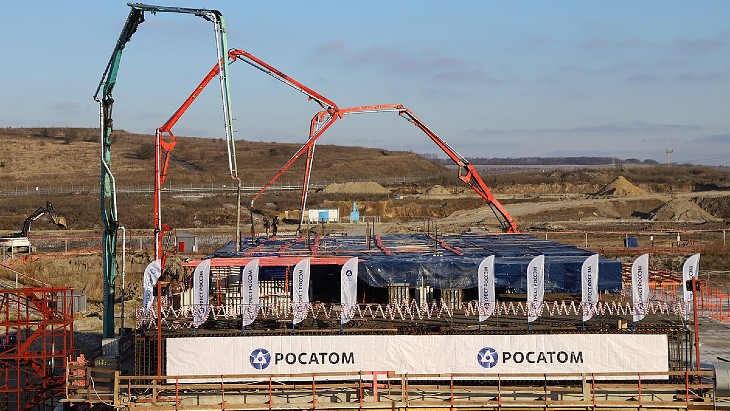
About 200 workers were involved in the pouring of concrete to form the 5,400-square-metre slab, a process which took four months, said Rosatom, Russia's state nuclear corporation. It added that throughout the process there was "multi-level quality control, with specialists monitoring dozens of important parameters daily".
Alexander Khazin, Project Director for the Construction of Power Units 3 and 4 at Kursk II, said: "Completing the concrete pouring of the reactor building's foundation is a crucial stage of construction, after which the installation of reinforced concrete blocks and the concrete pouring of the main power unit building's walls will begin. Next, specialists will begin erecting the reactor building's walls."
Another key event this year for the project - for which the International Atomic Energy Agency lists construction as starting on 31 January - is set to be the installation of the first elements of the reactor building's internal containment shell.
Kursk NPP Director Alexander Uvakin said: "The safety and stability of any facility, especially one as complex as a nuclear power plant, depends on its foundation. I express my gratitude to the team, whose experience, collaboration, and hard work enabled us to complete yet another key task as part of one of the nuclear industry's leading projects at a high level and ahead of schedule."
Background
Kursk II is a new nuclear power plant in western Russia, about 60 kilometres (37.5 miles) from the Ukraine border, that will feature four of the new VVER-TOI reactors, the latest version of Russia's large light-water designs. They have upgraded pressure vessels and a power rating of 1,250 MW.
Construction of the first unit began in 2018, its polar crane was installed in October 2021 and the reactor vessel was put in place in June 2022. Concreting of the outer dome of the first unit was completed in August 2023. It was commissioned at the end of last month. The second unit is also under construction and the target is for all four units to be in operation by 2034.
Rosatom says the service life of the main equipment has doubled, and that the VVER-TOI units feature a mix of passive and active safety systems and include a core meltdown localiser. The new units at Kursk II will replace the four units at the existing, nearby Kursk nuclear power plant, which are scheduled to shut by 2031.
The first unit was shut down after 45 years of operation in December 2021 and the second unit followed in January 2024. The original design life for the four RBMK-1000 reactors at the plant was for 30 years but had been extended by 15 years following life extension programmes.
Site of Polish plant deemed suitable
_83018.jpg)
The preliminary site assessment covered: seismic, tectonic, geological-engineering, hydrogeological, hydrological and meteorological conditions of the site area; external events resulting from human activity in the area; external events resulting from the action of natural forces in the area; population density and development of the area; and the possibility of implementing emergency plans in the event of a radiation incident in the area.
A team of specialists from the National Atomic Energy Agency (PAA) assessed the 700-page preliminary siting report to ensure nuclear safety and radiological protection at the site under consideration, based on compliance with the requirements specified in the law.
"As a result, it was determined that all legally required analyses had been conducted and that none of the factors precluding the construction of nuclear power facilities, which are also the nuclear facilities covered by the report, existed at the site under consideration," the PAA said. "Therefore, the preliminary assessment concluded that the Lubiatowo-Kopalino location allows for the maintenance of nuclear safety and radiological protection, and therefore there are no circumstances that would preclude the construction of a nuclear power plant there."
Marek Woszczyk, President of the Management Board of Polskie Elektrownie Jądrowe (PEJ), said: "The basis for preparing the Preliminary Site Report was material collected by our experts during unprecedented site and environmental studies related to the ongoing investment. There are no shortcuts in nuclear energy, and safety is paramount. According to the Atomic Energy Law, a nuclear facility may only be located in an area that allows for, among other things, ensuring nuclear safety, radiological protection, and physical security during commissioning, operation, and decommissioning."
Following detailed environmental and location studies that began in 2017 with 92 potential sites, PEJ announced in December 2021 that the coastal towns of Lubiatowo and Kopalino in Poland's Choczewo municipality in the province of Pomerania had been named as the preferred location for the country's first large nuclear power plant.
_947666e4.jpg)
The planned plant (Image: PEJ)
Obtaining an opinion from the President of the PAA on nuclear safety and radiological protection regarding the preliminary siting report is not mandatory. However, PEJ said it is important "because, after the amendment to the Special Nuclear Act, currently being considered by the Sejm (the lower house of parliament), enters into force, it will be one of the documents attached to the application for a permit from the President of the PAA to perform qualified preliminary construction works at the nuclear power facility."
On 31 March this year, PEJ submitted an application to the President of the PAA for a construction permit, which includes a Location Report presenting full, more detailed analyses and measurements. Pursuant to the provisions of the Atomic Energy Law, the President of the PAA will issue a decision regarding a permit to build the plant within 24 months of the submission of the application. Obtaining this permit by PEJ is necessary for the Pomeranian Voivode to issue a building permit.
In November 2022, the then Polish government selected Westinghouse AP1000 reactor technology for the construction of the country's first nuclear power plant, comprising of three units, at the Lubiatowo-Kopalino site.
PEJ said it expects to pour first concrete for the plant's first unit in the fourth quarter of 2028. In order to meet this schedule, the company must obtain both a construction permit from the PAA and a building permit from the Pomeranian Voivode. PEJ said it plans to submit a building permit application in 2027.
Construction of each reactor is expected to take about seven years. This will be followed by approximately one year of testing and commissioning. The first reactor will begin commercial operation in 2036, the second in 2037, and the third in 2038.
Innovative thorium-based fuel concludes irradiation campaign
_88913.jpg)
ANEEL - its name is taken from Advanced Nuclear Energy for Enriched Life - has been developed for use in pressurised heavy water reactors (PHWRs) and Candu reactors. Clean Core Thorium Energy says it can offer significantly improved performance with existing proven heavy water reactor systems by leveraging thorium's "inherently superior" nuclear, thermal and physical properties while retaining the same external dimensions and configuration design as in currently used natural uranium fuel bundles. The fuel retains the same external geometry as existing fuel for PHWR and Candu reactors, including 19- and 37-element designs. It can be used to replace current fuel bundles, without any significant modifications to the reactor, to reduce life-cycle operating costs and waste volumes, increase safety and accident tolerance, and result in additional proliferation resistance, the company claims.
The Advanced Test Reactor irradiation campaign involved twelve ANEEL fuel rodlets that were loaded into the reactor in May 2024 and designed to reach three burnup targets: 20, 40, and 60 GWd/MTU. Eight rodlets exceeded the first two burnup targets last year and are currently undergoing post-irradiation examination (PIE) at Idaho National Laboratory's (INL's) Materials and Fuels Complex. Less than two years after irradiation began, the remaining four rodlets have now reached the highest burnup target, over 60 GWd/MTU - representing more than eight times the typical discharge burnup of traditional PHWRs and Candu reactors - and will be transferred to the Materials and Fuels Complex following a short cooling period.
"The irradiation campaign represents an important step in generating real-world performance data for ANEEL fuel under reactor conditions," Clean Core Thorium Energy said. "Results obtained during PIE will provide detailed insight into fuel behaviour, microstructure, and performance at high burnup levels."
It added: "This testing highlights the potential of ANEEL fuel to dramatically improve fuel utilisation in existing reactor fleets and paves the way for near term commercialisation."
The company noted that post-irradiation examination results obtained to date are consistent with findings reported in the literature and suggest that ANEEL fuel performs well, with some test rodlets exhibiting superior fission gas retention compared with traditional UO2 fuel. Initial observations also show that ANEEL fuel maintains structural integrity and favourable fission gas retention behaviour throughout irradiation.
"Surpassing 60 GWd/MTU of burnup in the Advanced Test Reactor marks an important milestone for the ANEEL fuel programme," said Clean Core Thorium Energy CEO Mehul Shah. "This irradiation campaign provides meaningful performance data and demonstrates that thorium-HALEU fuel can achieve burnup levels comparable to those seen in PWR fuels while offering improved fuel utilisation, enhanced safety characteristics, inherent proliferation resistance, and meaningful reductions in long-lived nuclear spent fuel radioisotopes. Our objective has been to introduce thorium into the nuclear fuel cycle in a practical way using existing reactors, and this milestone represents a significant step toward that goal."
Kelley Walker, principal investigator for the irradiation campaign at INL, added: "This final portion of the irradiation experiment has been several years in the making and I congratulate Clean Core on their major accomplishment. This has been an exciting project to support, and I'm eager to see what can be learned from the upcoming high burnup sample PIE results."
Last month, Clean Core Thorium Energy signed an agreement with Canadian Nuclear Laboratories (CNL) for the manufacture of demonstration irradiation bundles of its patented ANEEL thorium and high-assay low-enriched uranium (HALEU) fuel. Demonstration irradiation bundles are full-scale ANEEL fuel bundles matching actual reactor fuel bundles designed for interface and irradiation testing. Manufactured by Canadian Nuclear Laboratories at the Chalk River Laboratories, these bundles will enable Clean Core Thorium Energy to conduct demonstration irradiation which will provide practical, in-reactor data to support future qualification and potential deployment of ANEEL fuel in Candu reactors and other PHWRs. The demonstration fuel bundles are to undergo irradiation testing at INL's Advanced Test Reactor, targeting burnup levels exceeding 60 GWd/MTU.
Clean Core Thorium Energy said it is "already planning its next milestone: a demonstration irradiation in a commercial power reactor that will move ANEEL fuel from proven test concept to commercial reality".
Podcast: Will Spain rethink nuclear energy phase-out plan?
The most pressing issue is the decision expected later this year by the Spanish government on whether to award a three-year reprieve to Almaraz nuclear power plant units 1 and 2. They are currently scheduled to be shut down in 2027 and 2028, respectively, as part of a 2019 agreement related to the phase-out policy.
Ugalde says that the three-year operating extension would allow time for consideration of whether there should be a more fundamental change to the phase-out plan. She notes that similar reactors in the USA are now licensed to operate for 80 years. The nuclear energy sector has "a lot of support from public opinion and from political parties", she says, although it is up to the current government to decide.
She also talks about what impact last year's blackout has had on the case for nuclear energy. She says: "If we want an energy transition in Spain that actually works, nuclear and renewables need to work together, with system stability always in mind."
The world has changed a lot since 2019, with COVID-19 and then wars taking place in Ukraine and more recently Iran. Added to this there has been the development of artificial intelligence, with its predicted need for vast amounts of power in the future.
"The debate is becoming much more pragmatic because people are paying closer attention to things like stability, security of supply, and price. And nuclear is seen as part of the solution. And with public opinion, for example, we have a survey done by the Royal Elcano Institute which shows that from 2023 to 2025, the support for extending planned lifetimes changed from 43% in 2023 in favour to 66% in favour in 2025. So more or less two-thirds of respondents now think Spain's existing nuclear plants should keep operating," she said.
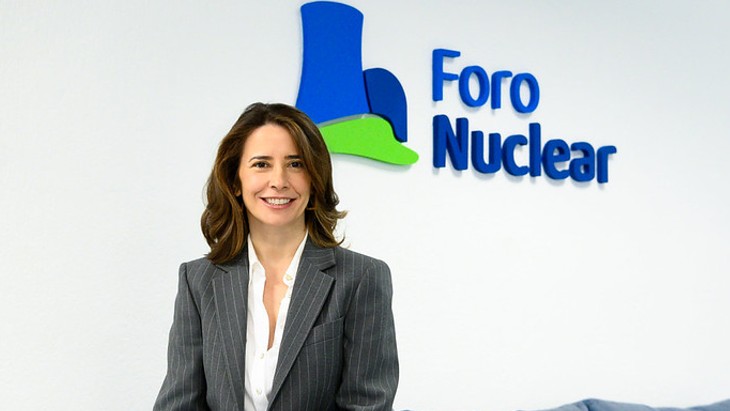
(Image: Foro Nuclear)
Ugalde, who took over her current role at Foro Nuclear in March, also talks about her background and work in the Spanish nuclear industry, and with World Association of Nuclear Operators.
Spain's seven operating nuclear power reactors - Almaraz I and II, Ascó I and II, Cofrentes, Trillo and Vandellós II - generate about 20% of its electricity. Under the country's nuclear phase-out plans, four reactors are scheduled to close by the end of 2030 - including the two Almaraz ones - while the remaining three reactors will shut by 2035.
The Almaraz plant currently supplies more than 7% of the electricity consumed in Spain, equivalent to 4 million homes, and employs about 4,000 people. Almaraz units I and II are pressurised water reactors with a net capacity of 1011 MWe and 1006 MWe, respectively. Unit I entered commercial operation in 1983 with unit II following the next year. The plant is owned by Iberdrola (53%), Endesa (36%), and Naturgy (11%).
You can listen and subscribe on all major podcast platforms:
World Nuclear News podcast homepage
Apple
Spotify
Amazon Music
Episode credit: Presenter Alex Hunt. Co-produced and mixed by Pixelkisser Production
"This has been a fantastic collaborative effort between NTS and PNTL," said NTS Director of Shipping Conner Love. "It demonstrates the world-leading expertise we possess in nuclear shipping and engineering. We are proud to have worked on the successful completion of this project, but this is just the beginning as we embark on a series of vital spent fuel movements around the globe."
Another of PNTL's ships, Pacific Egret, will be adapted in the near future to transport the new flask.
PNTL is owned mainly by NTS - part of the UK's Nuclear Decommissioning Authority - and partly by Orano and a consortium of Japanese utilities which use its services.
PNTL operates three diesel-powered specialist ships for the transport of high-level waste and other nuclear material: the Pacific Heron, the Pacific Egret and the Pacific Grebe. So far, PNTL has shipped more than 2000 nuclear casks some 5 million miles to countries including Belgium, Finland, France, Germany, Greece, Italy, Japan, the Netherlands, Portugal, Sweden, Switzerland and the USA.
Urenco’s Capenhurst site produces LEU+ in first trial run
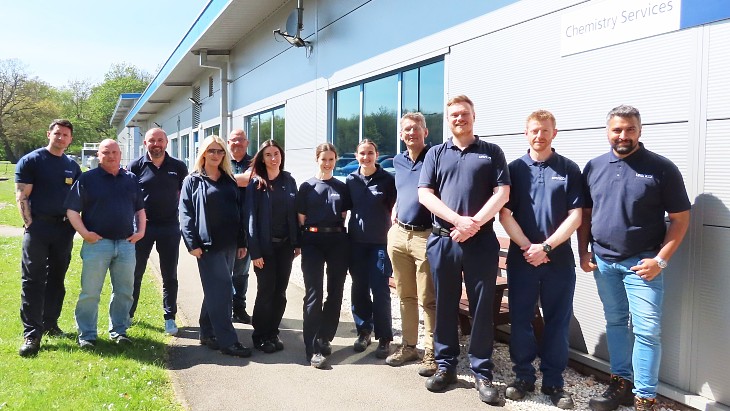
Low-enriched uranium plus (LEU+) is uranium enriched to between 5% and 10% U-235. The production trial took place over five days to 1 May, following permission from the Office for Nuclear Regulation, achieving samples at 7%.
Magnus Mori, Head of Advanced Fuels, Commercial for Urenco, said: "Urenco is committed to enriching uranium for the reactors of today and tomorrow. This production trial of LEU+ at Capenhurst has provided a successful outcome and demonstrates our commitment to advancing the nuclear industry in the UK and globally. We are continuing to focus on implementing other operational measures for LEU+, including transport solutions, as a next step."
The nuclear fuel cycle
Unenriched, or natural, uranium contains about 0.7% of the fissile uranium-235 (U-235) isotope. ("Fissile" means it's capable of undergoing the fission process by which energy is produced in a nuclear reactor). The rest is the non-fissile uranium-238 isotope. Most nuclear reactors need fuel containing between 3.5% and 5% U-235. This is also known as low-enriched uranium, or LEU. Advanced reactor designs that are now being developed - and many small modular reactors - will require higher enrichments still. This material, containing between 5% and 10% U-235 - is known as LEU+, with that from 10% to 20% U-235 known as high-assay low-enriched uranium, or HALEU.
Enrichment increases the concentration of the fissile isotope by passing the gaseous UF6 (uranium hexafluoride) through gas centrifuges, in which a fast-spinning rotor inside a vacuum casing makes use of the very slight difference in mass between the fissile and non-fissile isotopes to separate them. As the rotor spins, the concentration of molecules containing heavier, non-fissile, isotopes near the outer wall of the cylinder increases, with a corresponding increase in the concentration of molecules containing the lighter U-235 isotope towards the centre.
Enriched uranium is then reconverted from the fluoride to the oxide - a powder - for fabrication into nuclear fuel assemblies.
The need for LEU+
The use of LEU+ fuel can support longer operating cycles for current light-water reactors and also can help with the deployment of new accident-tolerant fuel designs.
Urenco says that LEU+ can also be used by advanced reactor designs which require HALEU as they will be able to "utilise LEU+ initially to speed up deployment timelines". It adds that LEU+ can also serve as feedstock for producing HALEU, increasing the potential output of future HALEU enrichment facilities.
The next steps
Urenco's US division produced its first LEU+ fuel in December and Urenco says that it plans to make LEU+ commercially available from the UK "in the near future", which will support the existing US capability. It says LEU+ could be transported to fabricators from early 2027 to complete the next stage of the fuel cycle.
The UK project received support from the Department for Energy Security and Net Zero’s Nuclear Fuel Fund.
Norwegian municipalities initiate investigation work
_15015.jpg)
Nuclear project developer Norsk Kjernekraft submitted a proposal to the ministry in November 2023 for an assessment of the construction of a small modular reactor (SMR) power plant in the municipalities of Aure and Heim in Trøndelag county. In April 2025, the Ministry of Energy, the Ministry of Health and Care Services, the Ministry of Justice and Public Security, and the Ministry of Climate and Environment requested the Norwegian Water Resources and Energy Directorate, the Norwegian Radiation and Nuclear Safety Authority, and the Norwegian Directorate for Civil Protection prepare an Environmental Impact Assessment programme for the proposed plant.
The Ministry of Energy, the Ministry of Health and Care Services, and the Ministry of Climate and Environment established an impact assessment programme for the plans for the proposed plant in February this year, allowing investigation work to begin for the project - the first of ten projects that Norsk Kjernekraft is implementing in Norwegian municipalities. The study programme for Aure and Heim is scheduled to take two years to complete.
Last month, several other municipalities proposing SMR power plants announced they had decided to initiate investigation work for their respective projects based on the framework prepared for the project in Aure and Heim. Several of the topics in the programme are general and directly transferable to other projects.
Øygarden Kjernekraft AS, which previously submitted a proposal for an investigation programme for a possible nuclear power plant in Øygarden, said it has now decided to initiate investigation work for the project. In the first phase, the company will focus particularly on the topics in chapter 4.5 of the study programme for Aure and Heim, which deals with the non-proliferation of nuclear material and its security control. "This is an area where there are already established international standards, and where Norway will be part of a comprehensive and existing control regime," said Håvard Kristiansen, Director of Licensing and Nuclear Safety at Norsk Kjernekraft. "The investigation work will include answers to how a facility can be designed and operated in accordance with requirements from international bodies such as the International Atomic Energy Agency, as well as how supervision and control of nuclear material can be implemented in practice."
Meanwhile, Dalane Kjernekraft AS - which has proposed a nuclear power plant in the Dalane region - has decided to initiate investigation work for the project, initially focusing on the topics in Chapter 4.1 and Chapter 12 of the study programme for Aure and Heim. This includes the design of the nuclear plant itself, as well as assessments of costs and financing, topics that are closely related. "Chapter 4.1 provides guidelines for how the facility should be designed and planned," said Steffen Oliver Sæle, CEO of Dalane Kjernekraft AS and Chief Engineer of Norsk Kjernekraft. "This covers everything from technology choices and safety solutions to space requirements and integration with existing infrastructure." Idar Sønstabø, Chairman of the Board of Dalane Kjernekraft AS, added: "Chapter 12 is about getting a realistic picture of costs and financing. This is crucial for assessing whether and how a project can be realised."
Lister Kjernekraft AS has also decided to initiate investigation work for its project to build a nuclear power plant in the Lister region. In the first phase, Lister Kjernekraft will focus particularly on the topics in chapter 4 of the study programme, with emphasis on securing the facility, nuclear fuel and the fuel cycle. "These are fundamental conditions for all nuclear power projects," said Øyvind Aas-Hansen , Director of Government and Society at Norsk Kjernekraft. "It is about how the plant is to be secured, how fuel is handled throughout its life cycle, and how requirements for safety, control and non-proliferation are met." The investigation work will include assessments of physical security of the facility, emergency preparedness, handling of nuclear fuel, and how the fuel cycle can be organised in line with international requirements and best practice.
Grenland Kjernekraft AS's investigation work for its project for a plant in Grenland will initially focus on topics related to decommissioning, in line with Chapter 8 of the study programme for Aure and Heim. This includes how a nuclear power plant should be decommissioned and cleaned up once it is decommissioned. The investigation work will include how the facility can be designed for efficient and safe decommissioning, handling of radioactive material, and how costs and responsibilities can be managed throughout its entire lifespan. "Having a clear plan for the entire life cycle, including decommissioning, is crucial for confidence in nuclear power," said Susanne Møgster Sperrevik, Director of Corporate Governance at Norsk Kjernekraft. "Since this forms a central part of the ongoing political debate, this is an area we want to shed light on in depth at an early stage."
Varanger Kjernekraft AS also announced it had decided to initiate study work for its project in Vardø - the second location to be proposed, after the project in Aure and Heim. Its investigation will initially focus on identifying the expertise needed throughout the facility's life cycle, in line with Chapter 5 of the study programme for Aure and Heim. "We will identify what expertise is needed both in the development phase and in the long-term operating phase, and use that as the basis for a strategy for how it can be developed or attracted," Kristiansen said. "This is also an important contribution to answering the question of whether Norway has sufficient expertise to develop nuclear power."
Fensfjorden Kjernekraft AS has decided to initiate work on an impact assessment for a possible nuclear power plant Austrheim and Alver municipalities in the Mongstad region. In the initial phase, Fensfjorden Kjernekraft will prioritise the investigation of topics including radiation protection and handling of radioactive waste. "These are areas of expertise that require special expertise that we have to a lesser extent locally today, and they are topics that concern the population," said Morten Sognnes, board member of Fensfjorden Kjernekraft and mayor of Austrheim municipality. "Therefore, we want to shed light on these topics early on, so that they receive extra thorough treatment."
"This is the start of a long-term effort to assess nuclear power as a possible part of future energy supply," Sperrevik said. "We have noted that the assessment programme for Aure and Heim requires the project owner to assess alternative locations both regionally and nationally. The goal of starting assessment work in several locations is to ensure a good decision-making basis for such an assessment - both for Norsk Kjernekraft and our subsidiaries, but not least for authorities, local communities and other stakeholders."
Brookfield and The Nuclear Company target VC Summer project
A joint venture established by global investment firm Brookfield and nuclear project development and delivery company The Nuclear Company is to project manage the completion of the two VC Summer AP1000 units in South Carolina.
_20642.jpg)
The partnership will specialise in the development of Westinghouse nuclear reactor technology, with the ambition of establishing a world-leading nuclear project execution company, the partners said. It will offer execution capabilities for the deployment of nuclear projects based exclusively on Westinghouse reactor technology, including AP1000 and AP300, in addition to end-to-end project management, licensing support, and oversight of engineering, procurement, construction and commissioning activity.
Brookfield Asset Management and Cameco acquired Westinghouse in 2023. The Nuclear Company, launched in 2024, aims to modernise nuclear construction through a "design-once, build-many" approach, backed by a proprietary AI-driven platform that it says transforms reactor construction into a data-driven, predictable process.
Construction of two AP1000 units began at VC Summer in 2013 but construction was abandoned in 2017 following reactor vendor Westinghouse's filing for bankruptcy in March that year. Majority owner SCE&G (now Dominion Energy South Carolina) then transferred its interest in the assets to South Carolina state-owned utility Santee Cooper. Santee Cooper announced last year that it was in negotiations with Brookfield Asset Management about the potential completion of the units.
Brookfield said it has - with Santee Cooper's support - selected the new company to project manage the completion of the two VC Summer units, which it says is "one of the most execution-ready nuclear development opportunities in America".
The new company will support due diligence activity for the project and oversee the delivery should it move forward to Final Investment Decision. Development of the project remains subject to further evaluation, regulatory approvals, and the execution of definitive agreements.
Last year, the US Government, Cameco and Brookfield announced a strategic partnership for the construction of at least USD80 billion of new reactors across the USA using Westinghouse nuclear reactor technology.
The new joint venture reflects Brookfield's approach to large-scale infrastructure investment and focus on partnering with experienced operators, Brookfield Managing Partner Wyatt Hartley said: "By combining our global infrastructure development capabilities with nuclear project delivery expertise, we believe this platform has the potential to accelerate the American nuclear resurgence, building on the momentum of the Westinghouse partnership with the US Government."
"Our team was built on the field of Vogtle and on some of the most complex energy projects in the world," Joe Klecha, Chief Nuclear Officer of The Nuclear Company, said. "We know what it takes to deliver nuclear. What's been missing is a model that brings together the people, the capabilities, and the capital to do it at speed and scale. That's what this partnership creates."
The formation of the new partnership is subject to approvals and conditions.
Ship modified for transport of used MOX fuel
_84863.jpg)
French nuclear fuel company Orano's TN Eagle flask design - 5 metres long, 3 metres in diameter, weighing 150 tonnes - was approved by the French Nuclear Safety Authority in 2020 and by the US Nuclear Regulatory Commission in November 2023. Orano has received numerous orders for several dozen TN Eagle casks from French and international customers.
The Pacific Grebe is the first in Pacific Nuclear Transport Limited's (PNTL's) fleet to be adapted to accommodate the new flask.
The engineering challenge of fitting the package, which is the largest ever transported by PNTL's parent company, Nuclear Transport Solutions (NTS), was undertaken by the organisation's transport experts and specialist engineers.
An adapter plate was produced to ensure the cargo would securely fit within the ship's hold. This required millimetre precision, along with the manufacture of a specialist tool to ensure the ship's removable decks aligned perfectly with the new TN Eagle flask, which would carry the material.
Following initial trials at Barrow Marine Terminal in Cumbria, UK, a full-scale test fitting took place in Cherbourg, France, using the specialist vessel operated by PNTL, NTS's specialist shipping division. The was successfully placed in the ship's various holds to check compatibility.
Fuel loading completed at two new Chinese units
_64496.jpg)
On 30 April, China's National Nuclear Safety Administration (NNSA) issued a 40-year operating licence for unit 2 of the Taipingling plant in Guangdong province.
The first nuclear fuel loading operation - which involved inserting a total of 177 fuel assemblies into the core of the reactor - was completed at 11:45 local time on 3 May.
"The completion of the first fuel loading of unit 2 marks the successful transition of the unit from the engineering construction phase to the new stage of nuclear commissioning, and represents a crucial step towards achieving the goal of full completion and commissioning of the first phase of the project," China General Nuclear (CGN) said.
The Taipingling plant will eventually have six Hualong One reactors, with a total investment exceeding CNY120 billion (USD17 billion). The construction of the first and second units began in 2019 and 2020, respectively. Hot testing of unit 1 was completed in September 2024, with that of unit 2 completed in July 2025. Unit 1 attained a sustained chain reaction for the first time (referred to as first criticality) on 3 February this year and was connected to the grid on 13 February. It entered commercial operation last month.
"Building upon the successful experience of unit 1's construction and commissioning, the team further optimised construction techniques and management processes, successfully completed the unit 2 hot-state performance test, and implemented a series of digital applications, including digital handover, digital transformation of spare parts, and exoskeleton robots," CGN noted.
Construction of the second phase of the Taipingling plant - units 3 and 4 - was approved by China's State Council in December 2023, with construction of unit 3 getting under way in June last year.
Once all six units are completed and put into operation, the annual power generation will exceed 55 billion kilowatt-hours, CGN said. It will also reduce standard coal consumption by about 16.65 million tonnes and carbon dioxide emissions by about 50.82 million tonnes annually.
Changjiang unit loaded
Meanwhile, the process of loading 177 fuel assemblies into the core of unit 3 at the Changjiang nuclear power plant in Hainan province has also been completed.
_f9db0f81.jpg)
(Image: China Huaneng)
The first fuel assembly was loaded into the reactor core on 30 April. Following a 63-hour process, the final fuel assembly was inserted at 04:12 local time on 3 May.
China Huaneng said the milestone "marks a crucial step towards the unit's subsequent nuclear commissioning and grid connection".
First concrete was poured for the base slab of unit 3's nuclear island in March 2021, with that of unit 4 being poured in the December of that year.
Cold hydrostatic testing - carried out to confirm whether components and systems important to safety are properly installed and ready to operate in a cold condition - were completed at unit 3 in April last year. These were followed by hot functional tests, which involved increasing the temperature of the reactor coolant system and carrying out comprehensive tests to ensure that coolant circuits and safety systems are operating as they should.
Changjiang Phase II - units 3 and 4 - represents a total estimated investment of CNY40 billion (USD6.4 billion), according to China Huaneng, which holds a 51% share in the project, with China National Nuclear Corporation (CNNC) holding the remaining 49%. The construction period is expected to be 60 months. Both Hualong One units are scheduled to be fully operational in early 2027.
The Changjiang nuclear site is already home to two operating CNP-600 pressurised water reactors (PWRs) - Changjiang 1 and 2 - which entered commercial operation in 2015 and 2016, respectively. In 2021, CNNC also began construction of a demonstration ACP100 small modular reactor at the site. The multi-purpose 125 MWe PWR - also referred to as the Linglong One - is designed for electricity production, heating, steam production or seawater desalination.

No comments:
Post a Comment