Sunday, May 10, 2026


Cenovus chief warns Canada risks losing oil competitiveness

Credit: Cenovus

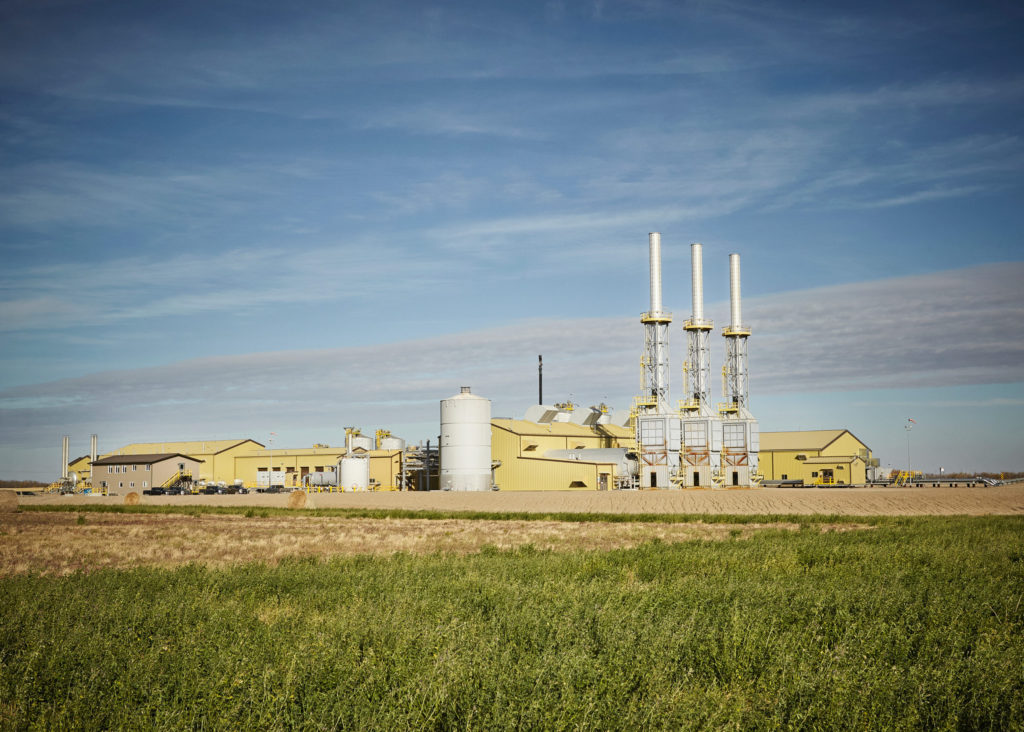
Cenovus Energy (TSX, NYSE: CVE) chief executive Jon McKenzie used the company’s latest earnings call to deliver a forceful defense of Canada’s oil sands industry, arguing the country risks losing investment, jobs and economic influence unless it changes course on energy policy.

Speaking after reporting a sharp jump in first-quarter profits, McKenzie said the national conversation around oil sands development has become “myopically focused on the climate agenda,” while overlooking the sector’s role in supporting affordable and reliable energy supplies.

He argued that hydrocarbons will remain a critical part of the global energy mix for decades, and Canada boasts both the quantity and quality of resources to be at the forefront. Its oil sands, he noted, continue to rank among the world’s most responsibly produced sources of crude.

And yet, despite its status as a top 10 oil-producing nation, McKenzie warned that Canada’s regulatory framework and carbon policies have made the country increasingly uncompetitive compared with rival jurisdictions, including the US and parts of the Middle East.

Capital has steadily migrated elsewhere as lengthy approval processes and higher operating costs discourage new investment, he stressed, pointing to the fact that only one new greenfield oil sands project has been approved and built in Canada since 2013, despite persistent global demand growth for oil.

“We have to be pretty thoughtful about a set of policy environments that really do allow us to grow and fill a pipeline,” McKenzie said. “We have to have a competitive market that allows for greenfield development.”

Strong Q1 results

The comments came as Cenovus posted stronger-than-expected first-quarter results, buoyed by higher oil prices, stronger refining margins and increased production following its acquisition of MEG Energy.

The Calgary-based company reported net earnings of C$1.57 billion ($1.15 billion) for Q1 — nearly double that of last year — and record upstream production of more than 972,000 barrels of oil equivalent per day, while also raising its quarterly dividend by 10%.

Bloomberg reported earlier this week that the province of Alberta is still locked in negotiations with Canadian Prime Minister Mark Carney over details related to a carbon tax for industrial emissions, which was proposed at C$130 ($95) per metric ton, per a memorandum of understanding signed last year.

McKenzie said he disapproves of the tax. “The industrial carbon tax is unique to Canada,” he told Bloomberg, arguing that this would give oil companies a stronger incentive to invest abroad.

Cenovus Energy closed Thursday’s session down 1.7% at C$38.84 apiece, with a market capitalization of C$72.8 billion ($53.3 billion) Earlier this week, it had rallied to an all-time high of C$42.01.


Mining resumes at Baowu-led Simandou site as workers end strike

Simandou project site. Credit: Rio Tinto

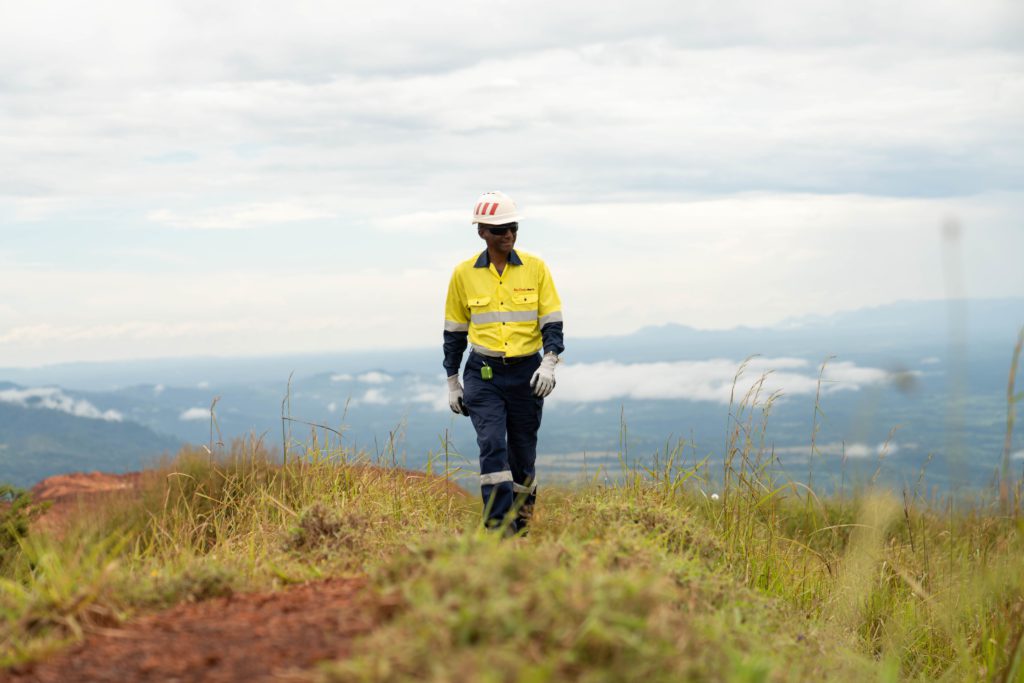
Mining operations resumed on Thursday at two blocks of Guinea’s giant Simandou iron ore project operated by a consortium led by China’s Baowu Resources after workers ended a strike, according to a document seen by Reuters and a union executive.

Workers at Simandou’s blocks 1 and 2 mine, operated by Baowu Winning Simandou Consortium (BWCS), went on strike on April 28, urging the company to comply with Guinea’s mining labour regulations on pay.

BWCS workers said the company failed to apply a unified mining pay structure introduced by Guinea last year. Baowu said it was in compliance with all Guinean regulations on labour and wages.

A union executive and a BWCS source said operations at the mine resumed Thursday morning following an agreement, seen by Reuters, that was signed on Wednesday between management, union representatives and Guinea’s labour and mining officials.

The immediate focus is on resuming operations while continuing talks with unions to fully resolve the dispute, the BWCS source said.

Under the deal, BWCS committed to applying the national collective agreement for the mining sector signed in February 2025, maintaining agreed worker classifications, and ensuring that changes do not reduce existing pay entitlements.

The agreement sets fixed pay increases for different job grades.

Management and unions will hold further talks under the supervision of Guinea’s labour inspectorate to resolve outstanding classification issues by May 20.

Upon signing the accord, workers and BWCS pledged to comply with labour laws governing strikes and to resume operations immediately, according to the agreement.

Baowu, the world’s largest steelmaker, took control of blocks 1 and 2 of Simandou this year. The remaining half – blocks 3 and 4 – is operated by Simfer, a Rio Tinto-led joint venture.

($1 = 8,753.0000 Guinea francs)

(By Maxwell Akalaare Adombila; Editing by Robbie Corey-Boulet and Joe Bavier)

Mass support for petition to protect Argentina glaciers from mining expansion

In Argentina, more than 850,000 people have signed a petition to protect the country's glaciers, joining the class action suit brought before the courts by a group of environmental NGOs which aims to halt the implementation of an amended law on glacier protection passed by Argentina's parliament last month.


Issued on: 09/05/2026 - RFI

Perito Moreno glacier, in Los Glaciares National Park in southern Argentina.
 © Luca Galuzzi / Wikimedia Commons CC


The amendment to the national Glacier Law relaxes restrictions on mining and oil activities in the areas surrounding glaciers.

This reform was spearheaded by Javier Milei, Argentina’s climate-sceptic president, and by the authorities of mining provinces in the Andes, such as San Juan and Mendoza, which have their sights set on copper and lithium reserves.

From now on, these provinces will decide which areas should be protected from mining activity – and which should not.

Access to water

The environmental organisations, including the Environment and Natural Resources Foundation, the Argentine Association of Environmental Lawyers and Greenpeace, argue that the amendment jeopardises access to water for more than 7 million people.

The appeal was filed with the federal courts in the province of La Pampa, in the centre of the country – which relies on water supplies from the glaciers of its neighbours, the mining provinces of San Juan and Mendoza.

La Pampa governor Sergio Ziliotto is concerned that his province’s rivers will dry up due to his neighbours’ mining ambitions. His administration has filed a legal challenge to suspend the law’s implementation, pending the Supreme Court’s ruling on the merits of the case.

However, it is difficult to predict the court’s decision, as Argentina is a federal state and the constitution stipulates that its provinces own their natural resources and may therefore use them as they see fit.


However, the constitution also stipulates that the federal government must set a minimum standard of environmental protection for the whole country – making the legal case a question of interpretation of the constitution.

The organisers of the class action suit claim the amendment to the law is unconstitutional, as it violates the principle of non-regression in environmental protection enshrined in international treaties signed by Argentina.

This article was adapted from the original version in French by RFI's correspondent in Buenos Aires, Théo Conscience.


Argentina mining chamber urges extension to investment incentives

Stock image.

Argentina’s flagship investment incentive scheme for large projects should be extended beyond its current 2027 deadline, the head of the country’s main mining chamber said Thursday, arguing the program has been key to unlocking billions of dollars in planned investments.

Roberto Cacciola, president of the Argentine Chamber of Mining Companies (CAEM), said the Incentive Regime for Large Investments (RIGI) has helped attract capital to the sector by offering tax, currency and legal stability benefits for projects worth more than $200 million.

The scheme should be broadened to cover smaller projects, which play a key role in job creation and supporting local supply chains, Cacciola said.

“I think it would be a big mistake (not to expand it),” Cacciola said on the sidelines of the Expo San Juan Mining conference.

On Thursday, Argentine President Javier Milei said on X that he would send to Congress a “Super RIGI” law to promote investment in new sectors, without giving more details.

Argentina’s mining sector is expected to draw about $2 billion in investment this year, Cacciola said, led by projects such as BHP’s $800 million push into the Vicuna copper development with partner Lundin Mining. Many of these investments have been encouraged by RIGI, he added.

The government, however, has indicated the program is temporary. Mining Secretary Luis Lucero recently told Reuters authorities are not planning to extend the current application deadline, which already runs through July 2027.

Seven mining projects have so far been approved under RIGI, representing $8.1 billion in investment, with 13 more under review. Total submitted and approved projects amount to more than $50 billion, Lucero said.

Electoral risk

Analysts have said companies are likely to accelerate applications ahead of Argentina’s 2027 presidential election.

“I think that between now and the middle of 2027 there will be a significant number of filings from companies that will want to hedge their projects against the electoral risk of next year,” Marcelo J. Garcia of consultancy Horizon Engage said.

Concerns about policy continuity are already present among multinational mining firms, Cacciola said. “The parent companies naturally have it on their agenda… I’m sure they’re concerned,” he said, pointing to uncertainty over regulatory stability, fiscal policy and the broader macroeconomic outlook.

Argentina’s sweeping economic adjustment under Milei has helped stabilize key indicators and boosted export-oriented sectors such as mining, though it has also weighed on consumption, domestic demand and real wages, denting the government’s popularity.

Still, Garcia said underlying investor interest in Argentina’s mining potential remains strong.

“They know that the path will likely not be linear,” he said. “They could adapt to an adjustment of conditions if the general course of promoting mining development is not modified.”

(By Lucila Sigal and Cassandra Garrison; Editing by Elaine Hardcastle)


UK Cites Use of Non-Genuine Parts Contributing to Vessel Engine Fire

offshore geosurvey vessel
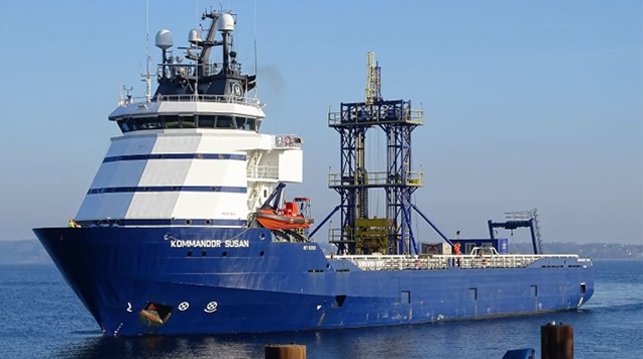
MAIB warns of using non-standard replacement parts which it blames for the fire ( Wolfgang Berthel - Vessel Finder)

Published May 7, 2026 6:59 PM by The Maritime Executive


The UK’s Marine Accident Investigation Branch (MAIB) is highlighting the dangers of using substandard components in the engines of vessels in its latest accident report. It found that premature wear of bearings caused catastrophic engine failure and fire.

MAIB has released its serious marine casualty investigation report into the engine failure and fire on board Kommandor Susan that occurred on the Firth of Forth, Scotland, on January 25 last year while the vessel was conducting sea trials. The failure of the vessel’s diesel generator engine resulted in an engine room fire and a complete power blackout.

The 14 crewmembers managed to respond promptly, extinguishing the fire and mustering safely. However, the loss of propulsion saw the vessel begin to drift, with attempts to deploy anchors being unsuccessful because the anchor winches required electrical power to operate. The 83-meter vessel sailing under the United Kingdom’s flag was eventually returned to Leith harbour, assisted by two tugs. There were no injuries or impact on the environment.

In its investigation, MAIB established that the engine failure was caused by premature wear of bearings fitted during a major overhaul in 2019. Notably, the components were not approved by the engine’s original equipment manufacturer and exhibited weaker material bonding than genuine parts. In the report, MAIB contends that the extended service intervals applied to the engines were valid only for original equipment components, making the use of substitute parts a critical factor in the failure.

Built in 1999, Kommandor Susan (3,388 dwt) was originally an offshore supply vessel. In 2018, she was sold to Hays Ships before changing ownership again in 2022 when she was acquired by Gardline Shipping. In 2019, the vessel was converted to work in the specialist site investigations sector, specifically performing offshore geotechnical and geophysical surveys.

The vessel’s propulsion system comprised four Caterpillar 3516B-TA diesel generator engines, with part of the significant work during the conversion including a complete overhaul of the engines. Following the engine fire and subsequent fire, a Caterpillar authorized agent undertook a detailed inspection that established that many of the major components of the rotating assembly were not original. The components identified included pistons, connecting rods, and bearings.

“Post-failure inspection revealed that non-original equipment manufacturer (OEM) bearings were fitted during the overhaul. These bearings had a copper backing layer instead of the aluminum layer found in genuine Caterpillar bearings; weaker bonding of these layers reduced durability,” noted the report.

The report added that the catastrophic failure of Kommandor Susan’s engine and resultant engine room fire was caused by the premature wear of non-OEM components that were fitted without Hays Ships’ knowledge during the engine’s last major overhaul. Following the investigation, the current owner, Gardline Shipping, has since rebuilt the vessel’s engines with genuine Caterpillar spares. Owing to the actions taken, MAIB has not issued any recommendations.

Top photo by  Wolfgang Berthel - courtesy of Vessel Finder


Salvors Refloat Grounded Drill Rig off the Coast of Tunisia

Ocean Valiant aground, 2025 (social media)

Published May 7, 2026 10:10 PM by The Maritime Executive


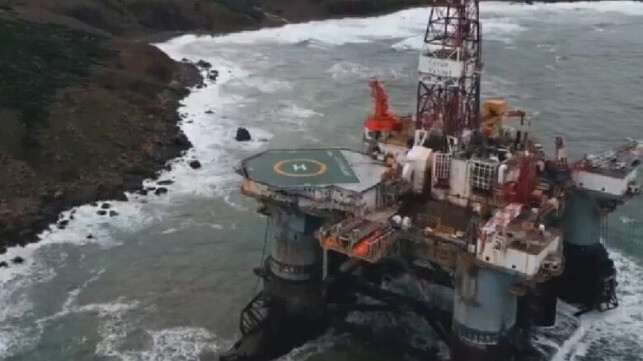
Tunisian salvors have refloated the drill rig Ocean Valiant, which drifted aground in the Bizerte region last year.

The 1988-built Ocean Valiant was previously owned by Diamond Offshore, and was decommissioned and slated for demolition in Turkey. In January 2025, Ocean Valiant was under tow by the AHTS SPM Neel Pratap 180 (ex name Maersk Tracer) in the Mediterranean, bound for its final destination, when the weather turned rough. In worsening surface conditions, the towline parted; the Tunisian Navy, Coast Guard, Office of Merchant Marine, local government and local port authority attempted to intervene and render assistance, but ultimately without success. The AHTS was unable to reestablish a tow, and the rig drifted onto Tunisia's rocky shoreline near the village of Al Houichette (roughly 37.3014 N, 9.5451 E).


An extended period of poor weather followed, preventing an immediate refloat attempt, but no injuries or pollution were reported. The operator said that SPM Neel Pratap 180 remained on scene after the grounding to "safeguard" the rig, and an investigation got under way. Salvors mobilized to the scene with Turkish anchor handlers in March 2025, but no further progress was reported. 

This month, salvors continued the task of refloating and removing the Ocean Valiant after it had spent more than a year on the rocks. The operation succeeded at last on May 5, and the Ocean Valiant was freed to continue its final voyage, according to local outlet Tunisie Numerique. 

Body From Capsized Cargo Vessel Mariana Has Been Identified

Five crewmembers remain missing

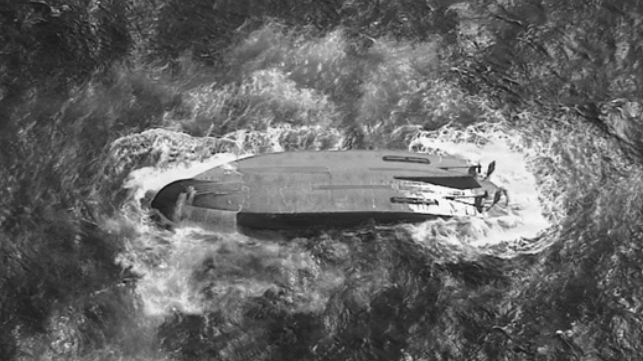
The upturned hull of the Mariana (USCG)

Published May 7, 2026 11:29 PM by The Maritime Executive


Families of the lost crewmembers of the cargo ship Mariana have confirmed the identity of the sole body that divers recovered from the vessel's upturned hull. The victim has been identified as crewmember Chet Brochon, a local health care provider told the Pacific Daily News.

Mariana is a former offshore supply vessel converted to serve as a short-haul cargo vessel for operations between Guam, Tinian and Saipan. The vessel put to sea in advance of the arrival of Typhoon Sinlaku last month. It made a distress call reporting the failure of its starboard engine on April 15, then dropped out of contact, and its AIS signal ceased at about the same time. 

After a two-day search, an HC-130 Hercules aircrew spotted a capsized vessel ]about the size of Mariana at a position off the coast of Pagan, an uninhabited outlying island. Search crews also found a debris field and a partially-inflated liferaft, but no signs of survivors. 

Pararescue divers attended the scene on April 20, and with the assistance of the Coast Guard, they retrieved one body from the wreck. All five of the remaining crewmembers are missing; the Coast Guard has identified them as Landon Delos Reyes, Vincent Agulto, Captain Frederick “Fred” Nosek Jr., Jose Ramirez and Mohammed Rahaman.

The U.S. Coast Guard suspended its search operation last week. Surveillance operations conducted by the Japan Coast Guard remained under way as recently as Tuesday. 


Somali Pirate Group Abandons Dhow Citing Increased Security Warnings

dhow off Somalia
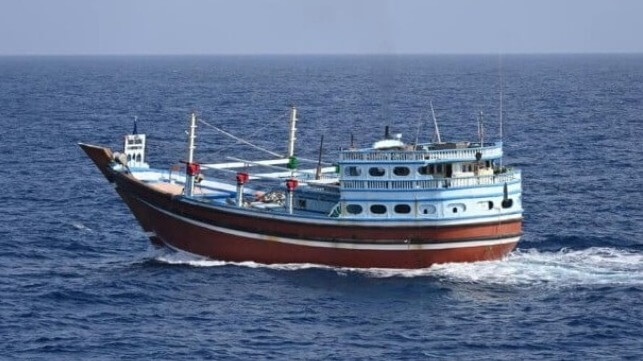
Pirates gave up one dhow with reports they were running out of supplies and ships were heading the security warnings (Indian Navy file photo)

Published May 7, 2026 6:45 PM by The Maritime Executive


One of what appear to have been several pirate action groups on the prowl in recent days in the Gulf of Aden has reportedly abandoned their efforts. The French news agency AFP, citing sources in the Puntland region of Somalia, says the group was running low on supplies aboard a seized dhow and that the warnings from MSCIO and Atalanta have increased the security posture across the region.

An 11-member pirate action group reportedly had set out from the Garacad region in Somalia in late April. Following the now familiar tactics, they found an Emirati dhow, Fahad-4, which was reported to be laden with a cargo of lemons. They seized the vessel and made it their mothership to begin the prowl for a lucrative merchant ship target.

MSCIO reports that the Fahad-4 was “almost certain” the vessel used to approach the tanker Minerva Pisces, a Malta-flagged 105,475-dwt crude oil tanker. The vessel was in transit, likely fully laden, from Saudi Arabia to Kenya when it was approached on April 28.

According to the report, a mothership crossed the bow of the tanker, coming within about 1.2 nautical miles. A skiff was then spotted approaching and came within 400 meters of the tanker. The Minerva Pisces increased speed and executed evasive maneuvers while its boarded security personnel displayed weapons. The skiff withdrew when it saw the armed guards. The tanker arrived in Mombasa without further incidents.

The group appears to have remained on the prowl, but there were repeated warnings posted by the authorities after a series of incidents. According to the sources speaking to AFP, the group abandoned the dhow on May 4.

While this one group has been at least temporarily stopped, at least three other merchant ships have been seized and remain in the hands of the pirates. Today, MSCIO issued a notice reporting the boarding of the tanker Eureka on May 2. It says the tanker was seized while at anchorage off Qana Port, Shabwa, Yemen. Atalanta is tracking the tanker and reports it was underway toward the Somali coast.

In April, pirates seized the Honour 25, a Palau-flagged product tanker. Days later, another group took control of the Saint Kitts and Nevis-flagged general cargo ship Sward. Both ships remain under the control of pirates off the coast of Somalia.

AFP cites analysts who speculated the current surge in pirate activity could, in part, be due to the jump in oil prices, making tankers more lucrative targets. They report that the renewed activity, which started in late 2023, may also have been due to the diverting of resources to address the strikes coming from the Houthis in Yemen.

Reports from Pakistan indicate that a local authority was able to make contact with the pirates controlling the Honour 25. However, the pirates refused to deal with them, demanding that representatives of the Pakistani government lead the negotiations. The report says there are 17 crew on the tanker, including 10 from Pakistan. The pirates are also reported to be seeking contact with the governments of Indonesia, Myanmar, and Sri Lanka, as the other seven crew aboard the tanker are from those countries.

At least two vessels had reported approaches over the past few weeks, but used their armed guards to scare off the pirates. In one case, there was a report of an exchange of gunfire before the pirates withdrew. MSCIO and Atalatan have been warning ships to remain at least 150 nautical miles from the coast and avoid the region if possible.

Greek Fisherman Find Ukrainian Drone Boat in the Ionian Sea

Ukraine drone boat
Via Greek social media

Published May 8, 2026 2:50 PM by The Maritime Executive


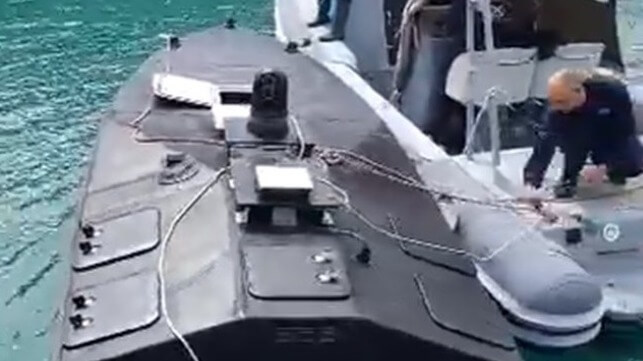
On Thursday, Greek fishermen located a five-meter drone boat of a familiar Ukrainian design at the island of Lefkada, northwest of the Peloponnese on the Ionian Sea. The boat - positively identified as a Ukrainian Magura V3 - was handled as a potential explosive device and was dismantled by EOD experts to ensure safety. 

The boat was discovered in a cave near the island's southwest tip. The fishermen who recovered it reported that the boat's engine was running and it was moving in circles - suggesting that it was engaged in operational activity shortly before the time of its discovery, recently enough that it had not yet run out of fuel. Images of the boat suggest artisanal construction: rough seams, exposed wires, matte-black paint and recreational-grade deck hatches. An electro-optical camera was mounted at the highest point of the deck, with a Starlink terminal next to it. The characteristics and size are consistent with Ukraine's Magura suicide drones, one-way attack boats that carry an explosive payload weighing several hundred kilos; Greek authorities confirmed the vessel's identity on Friday. 

Bystander video from the boat's arrival shows that the engine was still running as the suspected bomb boat was brought into a public marina, towed alongside by a small launch. 

Reports differ on whether the boat contained explosives at the time it was discovered. Former Hellenic Coast Guard Admiral Nikolaos Spanos (ret'd) told local outlet Flash that the vessel is believed to have carried an explosive charge, and had more than one detonation mechanism - and that the detonators were armed and ready to initiate a blast. 

"If this boat had hit any boat or ship, today we would be mourning I don't know how many victims. It is serious," he told Flash. 

The boat was later dismantled by EOD specialists from the Greek military. They determined that it did have detonators, but was not armed with explosives. It is unclear what its activities might have been off the coast of Lefkada. 

Two Russian vessels were attacked in the Central Mediterranean region within the last six months, and Ukrainian strikes are broadly suspected - though unproven. The most serious of the two, a crippling attack on the LNG carrier Arctic Metagaoz in March, is still an active and serious marine casualty concern off the coast of Libya. 

The lost drone boat raises an operational concern for navies and special-warfare units: what happens when a secret drone boat loses steerage, propulsion or comms? Without a support vessel nearby, drone boats have no personnel available to conduct repairs; if left adrift, they pose the risk of inciting a diplomatic incident, injuring civilians, or allowing any secret technological details to leak to the party that finds and recovers the boat. 


Two Spanish Police Officers Killed in High Speed Drug Boat Chase

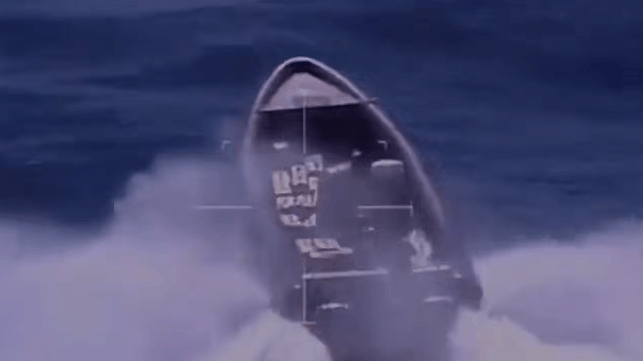
Suspected smuggling boat attempting to evade capture (Guardia Civil file image)

Published May 8, 2026 10:44 PM by The Maritime Executive


Two Spanish police officers were killed during a high-speed boat chase off the coast of Andalusia, on the Atlantic side of the Strait of Gibraltar, the Guardia Civil confirmed Friday. 

The officers' union for the Guardia Civil said said that at about 0800 hours on Friday, a drug boat chase about 70 nm off Huelva, a 60-meter high speed interceptor and a RIB boat collided. An officer identified as German Perez, 55, was killed at the scene, and a second officer later died of injuries sustained in the crash. Two others sustained serious injuries that left them incapacitated and in need of medical treatment. 

The union for Guardia Civil officers said that the casualty was foreseeable, a consequence of policies that had been discussed before. 

"This is not an unforeseen accident. It is the direct consequence of a documented risk situation, analyzed and formally reported to the Administration, which chose not to act," AUGC alleged in a statement. 

The union said that it had previously asked for a risk assessment for maritime interdictions targeting drug smugglers; a minimum crew size of four people for boarding missions; a restriction on the use of RIBs to limit their deployment for surveillance only; and a review of the procedure for activating 60-meter fast pursuit boats.  

Andalusia is a hotbed for cocaine smuggling in southwestern Spain, and now handles a substantial volume of imports for Western Europe. The area's estuaries (notably around Huelva) receive "final mile" deliveries of cocaine shipped via the South America-Canary Islands route. After taking on cargo in a ship-to-ship transfer at sea, high speed boats deliver the drugs to the riverine waterways along the Gulf of Cadiz. 

"Drug trafficking didn't choose Huelva by chance. Increasing police pressure in the Campo de Gibraltar pushed criminal organizations westward, solidifying the Huelva coast as one of the main entry points for drugs into Europe. The Huelva Command operates with nearly 300 fewer officers than it should have, a deficit of close to 20% of its theoretical staff," AUGC claimed in a statement.

The agency pointed to a podcast interview that a narco-trafficking skipper did with Spanish influencer Mowlihawk last month. "The Civil Guard officers are helpless, they can't handle it," the longtime smuggler said on camera, noting that he expected the final penalties for getting caught to be in the range of one to three years in prison. 

The amounts involved in the region's trafficking networks can be huge: this week, Spanish authorities set a new world record with a 30-tonne cocaine bust aboard a small freighter off the Canary Islands. Authorities believe that this vessel - like many others before it - was planning to transfer its drug cargo to Andalusia's speedboat operators for the long northbound transit to mainland Spain. 

Op-Ed: China's Gray Zone Fleet is Undermining Taiwan's Control at Sea

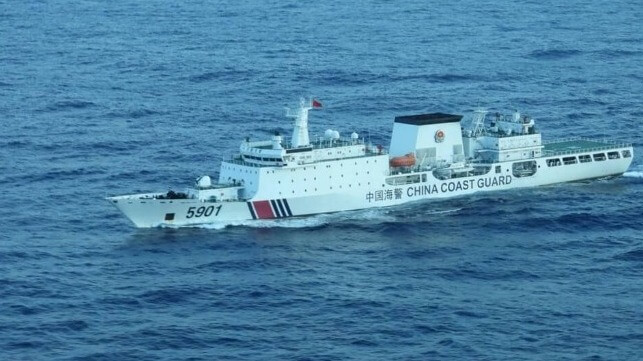
CCG 5901
CCG file image

Published May 8, 2026 11:47 PM by The Strategist


[By Nathan Attrill]

China’s pressure on Taiwan increasingly relies on vessels that aren’t warships. Instead, Beijing is deploying a maritime grey-zone fleet: a network of civilian and paramilitary vessels used to harass, intimidate and probe Taiwan while remaining below the threshold of armed conflict.

This grey-zone fleet is better understood as an ecosystem of maritime actors – including China Coast Guard (CCG) vessels, maritime militia fishing boats, sand dredgers, logistics ships and commercial cargo vessels operating through opaque ownership structures – that can be mobilised to serve state objectives while maintaining plausible deniability.

Presence of Chinese naval warships clearly signals military escalation. But civilian vessels create uncertainty. When fishermen harass Taiwanese patrol boats or commercial ships loiter near subsea cables, Beijing can claim incidents are accidents or private activity rather than state-directed coercion.

Yet the pattern of activity around Taiwan suggests something more deliberate. Throughout 2025, Beijing increasingly used the maritime domain to probe and pressure Taiwan below the threshold of open conflict, turning Taiwan’s surrounding waters into a testing ground for coastal defence, law enforcement authority and escalation management.

A series of non-naval coercive incidents highlighted how China is expanding grey-zone activity through its coast guard, civilian vessels and commercial shipping networks—not as isolated provocations but as part of a broader effort to rehearse control over Taiwan’s maritime approaches.

Chinese coastguard activity in 2025, published by Taiwan’s Ministry of National Defense was also more evenly distributed across the year than in 2024. While 2024 featured sharper spikes, the following year saw a steadier tempo of operations, suggesting a shift toward sustained pressure rather than episodic signalling.

Collectively, these developments point to a deliberate strategy. Rather than preparing solely for invasion, Beijing appears increasingly focused on blockade, quarantine and intense subversion. The aim is to normalise Chinese presence, stretch Taiwan’s response capacity and gradually erode control over its near seas without triggering a conventional military response.

Around Taiwan, these civilian and paramilitary vessels have been used in several recurring ways.

One is mass presence and swarming. Large fleets of sand dredgers and fishing vessels have repeatedly appeared near Taiwan’s outlying islands, particularly around Matsu, sometimes numbering in the hundreds and overwhelming Taiwan’s coastguard patrol capacity.

Another pattern is law-enforcement encroachment. CCG vessels have increasingly entered waters near Taiwanese-controlled islands such as Kinmen, conducting patrols, inspections and boardings. After a fatal incident involving a Chinese speedboat near Kinmen in February 2024, Beijing intensified coastguard patrols and began portraying them as routine enforcement operations. These activities help normalise Chinese presence in waters long administered by Taiwan, gradually reshaping the operational environment.

A third pattern involves pressure on critical infrastructure. In early 2023, two subsea internet cables serving the outlying Matsu islands were severed within days of each other, leaving residents with severely degraded connectivity for weeks.

More recently, suspected cable incidents in 2025 involved vessels flying flags of convenience and exhibiting suspicious Automatic Identification System (AIS) tracking data – the shipborne transponder system that broadcasts a vessel’s identity, position, course and speed for maritime safety and monitoring. In one case, Taiwanese authorities detained the cargo ship Hong Tai 58 and later prosecuted its captain for intentionally damaging a cable linking Taiwan and Penghu.

Even when intent cannot be conclusively proven, such incidents expose vulnerabilities in Taiwan’s maritime digital infrastructure and demonstrate how commercial shipping networks can be leveraged for strategic signalling without overt military involvement.

China’s grey-zone fleet serves not only as a tool of day-to-day coercion but also to prepare the maritime environment for future crises. Chinese strategy emphasises integrating the navy, coastguard and maritime militia into a coordinated ‘three sea forces’ structure. Civilian vessels form the outer layer of activity – monitoring, obstructing and creating friction – while paramilitary and military forces provide escalation options behind them. This approach could prove particularly useful in a blockade or quarantine scenario, where large numbers of civilian vessels could monitor shipping, obstruct ports or support enforcement operations all while maintaining the appearance of non-military activity.

Countering this strategy requires recognising that China’s grey-zone fleet is not merely a fisheries management issue but a deliberate instrument of statecraft. Improving maritime transparency should be a priority. Integrating satellite imagery, AIS tracking and radar monitoring can help identify suspicious vessel behaviour and patterns of coordinated activity. Taiwan’s security partners should also focus on protecting critical infrastructure, particularly subsea cables, by strengthening monitoring along cable routes and improving rapid repair capacity.

Finally, Taiwan’s partners can help strengthen the island’s coastguard capacity. Enhanced surveillance tools, operational cooperation and legal frameworks for maritime enforcement would help Taiwan respond to large numbers of civilian vessels without escalating incidents into military confrontation.

China’s grey-zone fleet works because it exploits ambiguity, blurring the line between civilian activity and state coercion. The challenge for Taiwan and its partners is to remove that ambiguity before grey-zone pressure becomes a permanent feature of the Taiwan Strait.

Notable non-naval coercive incidents in the waters around Taiwan and near Taiwan-controlled outlying islands in 2025

Nathan Attrill is a senior analyst with ASPI’s Cyber, Technology and Security program. This State of the Strait update appears courtesy of ASPI and may be found in its original form here.


The opinions expressed herein are the author's and not necessarily those of The Maritime Executive.