Sunday, May 10, 2026

Tsingshan seeks LME listing for Indonesian aluminum

Stock image.

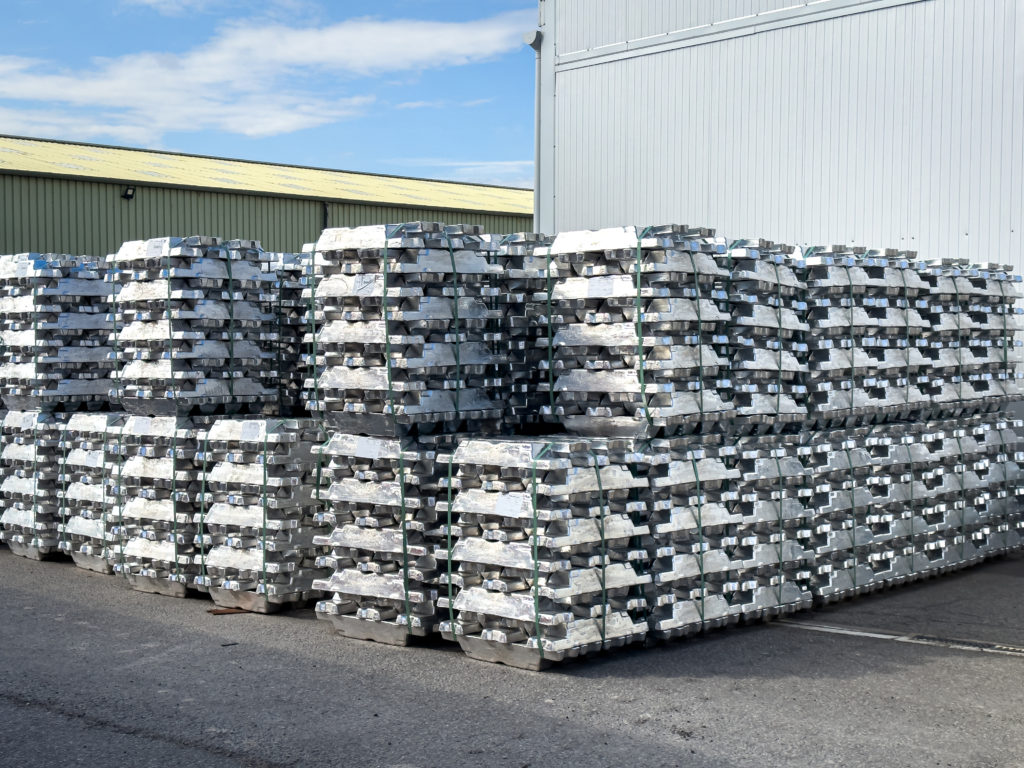
China’s Tsingshan Holding Group has applied for aluminum from its Hua Chin smelting joint venture in Indonesia to be deliverable on the London Metal Exchange, a notice from the bourse showed on Thursday.

If accepted, Hua Chin, where Tsingshan is partnered by fellow Chinese firm Huafon Group, would become only the second Indonesian high-grade primary aluminum brand to be accepted by the LME after that of state-owned Inalum.

The application comes as Indonesia ramps up production and exports of aluminum, potentially offsetting shortages caused by the war in the Middle East.

The second phase of Hua Chin, located on the island of Sulawesi, started up this year; the project has annual capacity of 480,000 metric tons of aluminum ingots, according to the LME notice.

Tsingshan is best known as the world’s biggest nickel producer; nickel cathodes produced by its Indonesian affiliate PT Eternal Nickel Industry are deliverable against the LME’s nickel contract.

(By Tom Daly and Dylan Duan; Editing by Mark Potter)

Cornish Metals secures $210M to fund UK tin mine revival

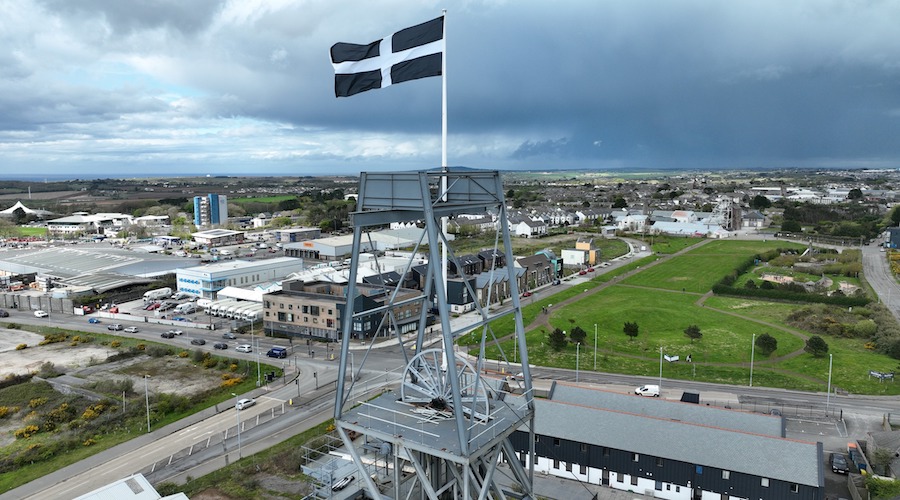
South Crofty tin project in the UK. (Image courtesy of Cornish Metals | Facebook.)

Cornish Metals (AIM: TIN) has secured a $210 million bond financing that moves the company closer to restarting the historic South Crofty tin mine in southwestern England after decades of failed revival attempts.

The six-year bonds carry a fixed 13.5% annual coupon rate, with the company saying the offering attracted strong demand from investors in Europe, North America and other international markets. Chief executive Don Turvey said the financing means Cornish “expect[s] to be fully funded” and on track to make a final investment decision on South Crofty this summer. 

In February, the company also received a non-binding letter of interest from the US Export-Import Bank for up to $225 million tied to future tin concentrate exports to the US.

AI boost

The financing comes amid a sharp rally in tin prices driven by rising demand tied to artificial intelligence infrastructure and electronics manufacturing. 

Tin prices climbed almost 40% in 2025 and have gained another 34% this year, approaching $54,000 per tonne. 

South Crofty operated for more than 400 years before low metal prices forced its closure in 1998. Several companies later attempted to revive the mine without success before Cornish Metals acquired the project in 2016.

14-year mine

Cornish says South Crofty is the highest-grade tin deposit not currently in production. The project hosts 2.9 million indicated tonnes grading 1.5% tin and 2.63 million inferred tonnes grading 1.42% tin, alongside a near-mine exploration target of between 6 million and 13 million tonnes grading 0.5% to 1.8% tin. 

A preliminary economic assessment released last year outlined a 14-year mine life with average annual production of 4,700 tonnes of tin and peak output of 5,000 tonnes in the fourth year.

US STATE CAPITALI$M

MP Materials adjusted profit beats Street on rising rare earths sales

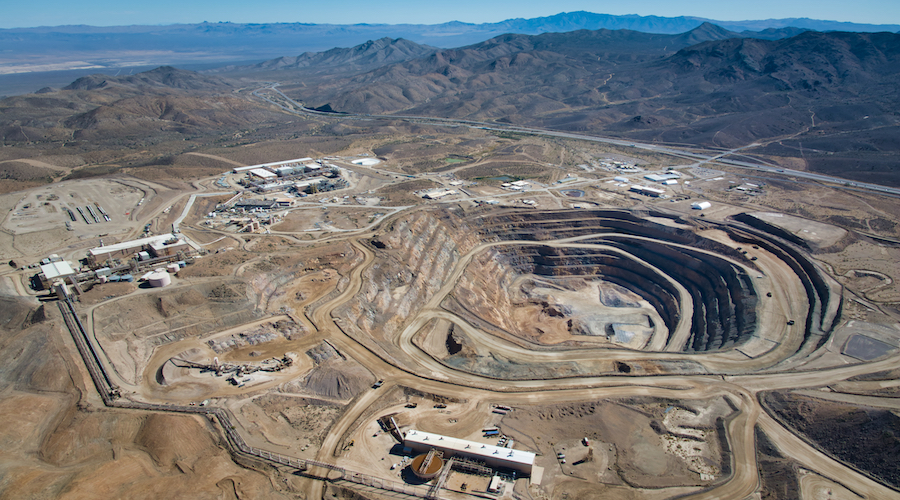
Aerial view of Mountain Pass mine and processing plant. (Image courtesy of MP Materials.)

Rare earths company MP Materials posted an adjusted profit on Thursday that beat Wall Street’s expectations due to its price support agreement with the US government and a sales jump that offset rising costs.

Its shares rose 3.7% to $71.68 in after-hours trading.

Rare earths are a group of 17 metals used to make magnets that turn power into motion. The US deal with MP was designed to loosen China’s grip on those materials, which go into weapons, electric vehicles and many electronics.

MP Materials controls the only rare earths mine in North America and processes those critical minerals in California. The company has also built a magnet facility in Texas.

For the quarter ended March 31, the Las Vegas-based company posted a net loss of $7.9 million, or 4 cents per share, compared to a net loss of $22.7 million, or 14 cents per share, in the year-ago quarter.

The quarterly results were boosted by $42.3 million in price protection income from the US government.

Excluding stock-based compensation expenses and other one-time items, MP earned 3 cents per share. By that measure, analysts expected the company to break even for the quarter, according to IBES data from LSEG.

Sales of magnets and rare earths rose during the quarter, pushing the company’s revenue up 49% to $90.6 million. Analysts expected revenue of $76.5 million.

The company’s operating costs jumped 64% to $157 million due partly to spending for starting up its magnetics division.

MP said it received a $32 million prepayment during the quarter from Apple as part of a magnet supply deal inked last July.

(By Ernest Scheyder; Editing by Sonali Paul)

CRONY CAPITALI$M

Gold Fields’ spat with Ghana contractor heads for arbitration

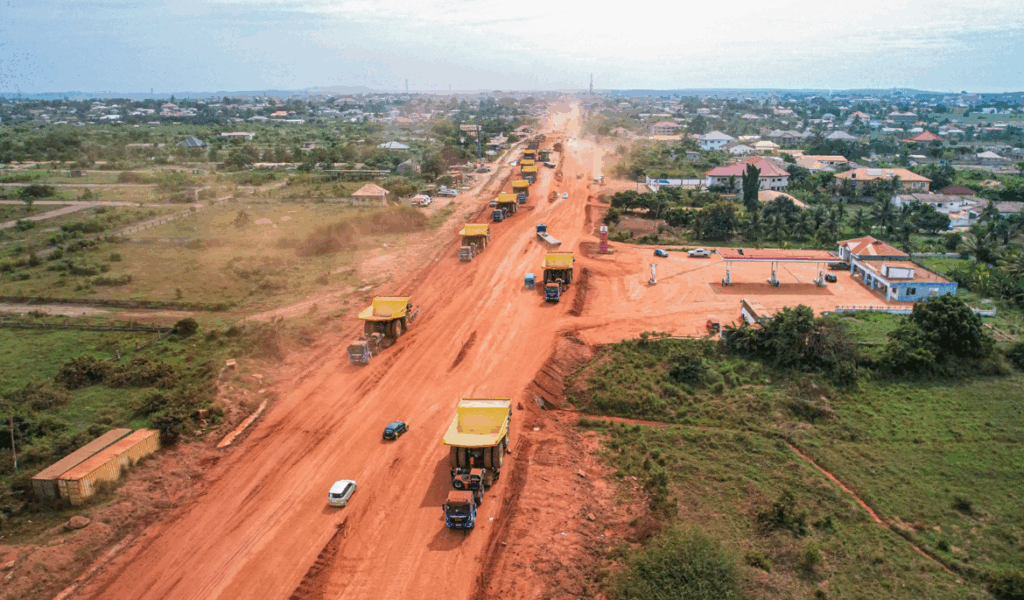
Credit: Engineers & Planners Co.

A $740 million dispute between Gold Fields Ltd. and a mining contractor in Ghana will be fought out in arbitration.

The Johannesburg-listed gold producer said in an update this week that its spat with Engineers & Planners Co. is “now progressing to arbitration.” The miner confirmed by email that E&P has initiated the proceedings, which will take place in Ghana rather than an international tribunal.

E&P – whose owner and chief executive officer is the brother of Ghanaian President John Mahama – began dispute resolution processes in March, Gold Fields previously said. The contractor is claiming $474.9 million over the Tarkwa mine and $264.7 million for the Damang asset, a company report showed.

E&P told Bloomberg in April that its allegations concern “underpayment” for work performed at both operations. It said at the time that the firm was “looking forward to an amicable resolution” and hoped to settle the matter “without recourse to arbitration.”

While Gold Fields is trying to renew Tarkwa’s mining leases, which expire next year, the company last month transferred Damang to the government. The state then held a tender for the mine that was won by E&P.

E&P has been employed at Gold Fields mines in Ghana for more than 20 years, as a contractor responsible for services including drilling, blasting, loading and hauling ore.

A lawyer for E&P declined to comment on the arbitration other than to confirm that it’s based on the earlier allegations. Gold Fields said in the update this week that it’s “committed to resolving these matters in an orderly manner, while maintaining operational stability at Tarkwa.” The company said in March that it “disagrees with E&P’s position.”

Gold Fields, which operates mines across Africa, Australia and South America, produced about 2.5 million ounces of gold last year. Tarkwa was the largest single operation, accounting for almost a fifth of total output.

(By William Clowes)

MONOPOLY CAPITALI$M

Nickel associations of Indonesia, Philippines sign agreement on cooperation

Nickel pig iron plant in Indonesia. (Image from Nickel Mines Ltd.)

The nickel associations of Indonesia and the Philippines on Friday signed a memorandum of understanding on nickel cooperation, Indonesia’s coordinating ministry of economics said.

The agreement includes the exchange of information, joint development of nickel downstream processing technology, and human resource development to support a sustainable nickel industry ecosystem, the ministry said.

The signing was witnessed by Indonesia’s chief economics minister Airlangga Hartarto and the Philippines’ trade and industry minister Cristina Roque.

“The Philippines will no longer be only an exporter of raw nickel ore as it will be integrated into a higher-value regional supply chain, while Indonesia will secure a reliable supply for its battery and stainless industries,” Airlangga said.

Indonesia exported $9.73 billion of nickel products last year, Airlangga said, adding that smelters in Indonesia required supplies with the proper silicon-to-magnesium ratio which can be supplied by the Philippines.

(By Ananda Teresia and Stefanno Sulaiman; Editing by John Mair)

CRIMINAL CAPITALI$M

Oil price bets ahead of Iran war news totalled $7 billion, reporting shows

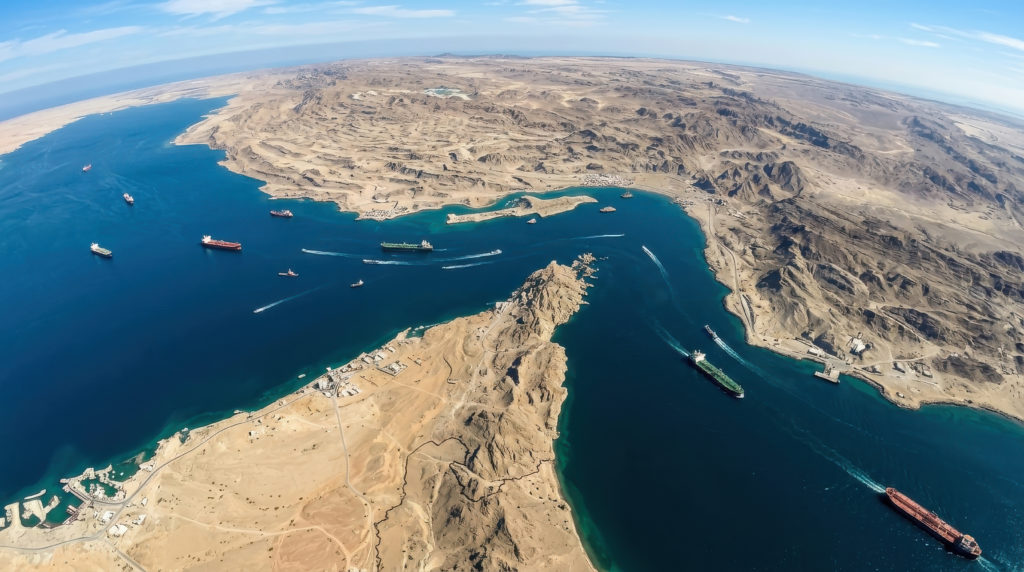
Satellite view of the Strait of Hormuz strategic maritime chokepoint. AI-generated stock image by ink drop.

A series of well-timed market bets on falling oil prices totalling as much as $7 billion during March and April spread across multiple exchanges and types of fuel and derivatives just before major Iranian policy announcements by ​US President Donald Trump, according to traders, market experts and Reuters analysis of exchange data.

The size exceeds previously reported bets amounting to $2.6 billion, which have already prompted the US administration to warn staff against using ‌nonpublic information for financial benefit. The US Commodity Futures Trading Commission (CFTC) is investigating, a person familiar with the matter told Reuters in April, although the CFTC has yet to officially confirm a probe is underway.

Reuters could not establish who placed the bets and whether they originated in the US or elsewhere. They included short positions, or bets that prices would fall, for derivatives including ICE, CME crude, diesel and gasoline futures.

The bets took place on two major exchanges that host benchmark global oil and fuel futures trade: the Intercontinental Exchange (ICE) and Chicago Mercantile ​Exchange (CME). Both exchanges declined to comment. The CME is investigating the trades, a source familiar with the matter told Reuters.

The well-timed trades have triggered calls from legal experts and lawmakers for regulators to investigate whether ​they were based on inside information or leaks.

Traders first spotted unusual trades on March 23. The trades were executed minutes before Trump announced a delay to threatened attacks on ⁠Iranian power infrastructure, triggering an oil price fall.

The same pattern repeated on April 7, before Trump announced a ceasefire with Iran that triggered a fall of as much as 15% in benchmark ICE Brent futures. It happened again on April 17, ​when Iranian officials and Trump spoke about reopening the Strait of Hormuz, and then again on April 21, when Trump extended the ceasefire.

Reuters and other media reported those trades on the most actively traded front-month contracts for the two global crude ​benchmarks, Brent and West Texas Intermediate . The value of those bets on those four days in March and April stood at around $2.6 billion, according to Reuters initial calculations.

The US Justice Department, CFTC and White House did not immediately respond to requests for comment.

However, a further analysis of trading data across exchanges and contracts showed traders executed similar bets at exactly the same dates and times for European diesel and US gasoline futures as well as longer-dated contracts for Brent and WTI, bringing the total to around $7 billion, based on ​Reuters calculations.

A sell bet – or short selling – means the person executing the trade borrows the derivative from a counterparty, sells it and later buys it back more cheaply when the price falls, keeping the remaining cash as profit.

On ​March 23 and on April 7, 17 and 21, oil prices plunged by over 10%. Reuters calculations show that a short seller with $7 billion could have made hundreds of millions of dollars in profits, depending on the timing of the bets.

The trades ‌look “well informed” as ⁠they preceded major announcements, said Adi Imsirovic, from the Center for Strategic and International Studies (CSIS), and a veteran oil trader. US authorities, such as the CFTC, can access exchange data to trace who placed the trades and investigate if it decides to, he added.

On Thursday, ABC reported the US Department of Justice was investigating $2.6 billion in oil trades related to the Iran war. The DOJ was not immediately available for comment.

The CFTC’s enforcement director said in March the agency was aware of speculation regarding insider trading in CFTC-regulated markets and was “watching”.

Billions of dollars

“Let’s stay with the facts. The volumes were highly unusual. They were concentrated. They were ahead of key announcements,” said Jorge Montepeque from Onyx Capital Group, ​who helped design the modern system of setting oil ​prices at pricing agency Platts in the 1990s.

Brent crude ⁠and low-sulphur gasoil futures trade on the Intercontinental Exchange, while West Texas Intermediate crude and gasoline futures trade on the New York Mercantile Exchange, which is owned by CME Group.

On March 23, Trump announced a delay to threatened attacks on Iranian power infrastructure at 11:05 GMT. LSEG data shows that between 10:49 and 10:50 GMT that day, traders ​placed bets on 20,000 lots of Brent and WTI futures. The selling was spread across the first, second and third month contracts, worth some $1.35 billion, plus an ​additional $122 million in ICE gasoil – ⁠diesel – futures , and $81 million in US gasoline futures , all worth a total $2.2 billion.

“Those quantities are not going to escape scrutiny,” said Robert Frenchman, a lawyer at Dynamis LLP in New York, who has previously worked on white-collar crime and insider trading cases.

Trump’s March 23 ceasefire announcement triggered a decline in crude futures of as much as 15%, one of the largest intraday drops on record. The announcement also sent gasoline and gasoil futures down around 12%.

On April 7, sell orders on oil and ⁠gasoline prices worth $2.12 ​billion took place between 19:44 and 19:45 GMT, well after the market settled, a time when volumes are usually thin. Minutes later, ​Trump announced a two-week ceasefire with Iran.

On April 17, nearly $2 billion in Brent, WTI, gasoil and gasoline futures were sold at 12:24-12:25 GMT, minutes before Iranian Foreign Minister Abbas Araqchi said Hormuz would reopen, followed by multiple social media posts by Trump and US officials. On April 21, some $830 million ​worth of Brent and WTI contracts were sold just 15 minutes before Trump extended the ceasefire.

(By Amanda Cooper, Dmitry Zhdannikov, Alun John, Alex Lawler, Robert Harvey and Michelle Price; Editing by Simon Webb and David Gregorio)
Africa-focused Atlantic Lithium agrees $210mn takeover by China’s Huayou Cobalt

Africa-focused Atlantic Lithium agrees $210mn takeover by China’s Huayou Cobalt
/ bne IntelliNews
By bne IntelliNews May 8, 2026

Atlantic Lithium Ltd (AIM/ASX: ALL), an Africa-focused lithium exploration and development company advancing projects in Ghana and Côte d’Ivoire, has agreed to a proposed $210mn takeover by China’s Zhejiang Huayou Cobalt Co. Ltd, as consolidation accelerates across the global battery minerals sector.

The companies said Zhejiang Huayou Cobalt intends to acquire all issued shares in Atlantic Lithium for $0.25 per share in cash under a binding scheme implementation deed.

The offer values Atlantic Lithium at approximately $210mn and represents a strategic move by the Chinese battery materials group to strengthen its upstream lithium resource exposure in Africa.

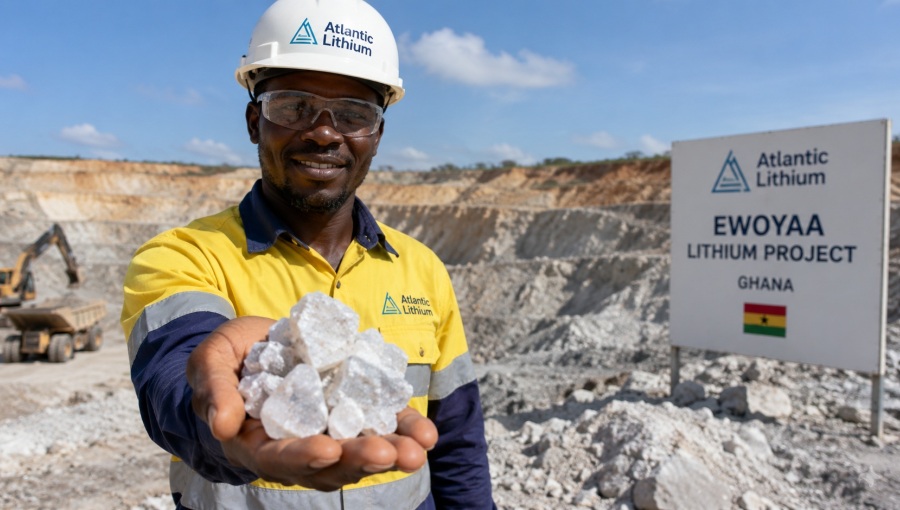
"Huayou's proposal acknowledges Ewoyaa as a highly attractive hard-rock lithium asset capable of serving the growing global electric vehicle and energy storage markets," Atlantic Lithium CEO Keith Muller commented.

The proposed acquisition centres on Atlantic Lithium’s flagship Ewoyaa lithium project in Ghana, one of the most advanced spodumene lithium developments in West Africa. The transaction remains subject to shareholder, regulatory and court approvals, as well as customary closing conditions.

Ewoyaa is expected to become Ghana’s first lithium-producing mine and has attracted increasing strategic interest amid rising long-term demand for battery raw materials used in electric vehicles and energy storage systems.

Atlantic Lithium has also been expanding exploration activities across Côte d’Ivoire, where the company holds additional lithium and pegmatite exploration licences aimed at building a broader regional portfolio.

Huayou Cobalt, one of China’s major battery materials producers, has been actively securing lithium, cobalt and nickel assets globally as Chinese companies seek to strengthen supply chains for the electric vehicle sector.

“The acquisition of the Ewoyaa project complements our existing battery metal mining operations in Africa and represents a logical transaction for Huayou as we continue to build a new energy materials business," Huayou chairperson and president Chen Hongliang commented.

Ghana has been positioning itself as an emerging critical minerals producer alongside established gold and manganese operations, with the government increasingly emphasising downstream processing, local participation and value addition in the mining sector.

Atlantic Lithium previously secured a mining lease for Ewoyaa and has been working through permitting, financing and development arrangements for the project, including infrastructure and export planning linked to Ghana’s Atlantic coastline.

US and South Africa hold talks on mining deals, FT reports

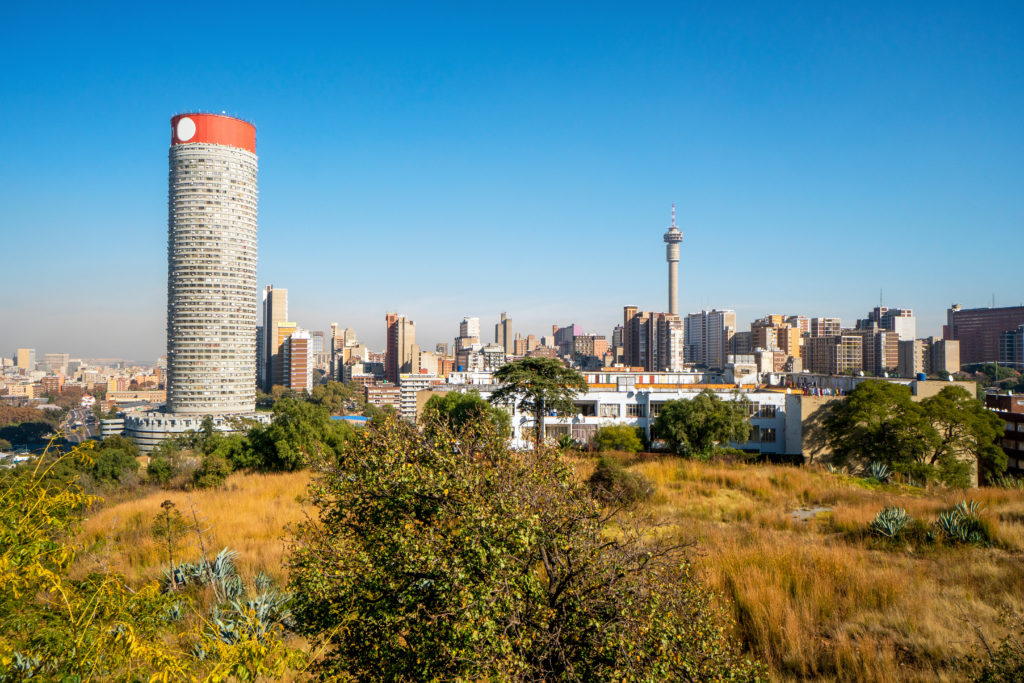
Johannesburg, South Africa. Stock image.

The US and South Africa have started preliminary discussions over potential resources deals including bilateral investments in mining, energy and infrastructure, the Financial Times reported on Friday.

Around 25 officials from both countries met in Johannesburg on Wednesday to discuss minerals co-operation, the highest-level meeting to take place between the estranged countries this year, the FT reported citing several attendees.

Reuters could not immediately verify the report.

(By Rhea Rose Abraham; Editing by Kim Coghill)


Colombia's Petro pitches Caribbean coast as bitcoin mining hub on clean energy surplus

Colombia's Petro pitches Caribbean coast as bitcoin mining hub on clean energy surplus
The Colombian leader has warned that crypto mining reliant on fossil fuels risks worsening climate change, conditioning his support on clean-energy sourcing.
By Cynthia Michelle Aranguren Hernández May 6, 2026

Colombian President Gustavo Petro has proposed turning the country's Caribbean coast into a bitcoin mining centre powered by surplus clean energy, framing the initiative as a potential driver of regional economic development.

In a post on X on May 5, Petro singled out Barranquilla, Santa Marta and Riohacha as candidate sites, stating the plan would amount to "an immense boost to the development of the Caribbean." He pointed to the experiences of Venezuela and Paraguay, where low-cost hydroelectric and renewable power have attracted crypto mining investment, as a regional blueprint Colombia could replicate.

A 2024 World Bank report found Colombia generates around 75% of its electricity from renewable sources, more than twice the global average, while the Caribbean coast holds largely untapped wind and solar capacity. National grid data show Colombia had 21,287 megawatts of installed renewable capacity as of end-2025, according to operator XM.

According to Cointelegraph, Paraguay currently commands roughly 4.3% of global bitcoin hashrate, making it the fourth-largest mining jurisdiction behind the US, Russia and China, with industrial power priced between $0.037 and $0.050 per kilowatt-hour thanks to surplus output from the Itaipú dam.

Petro also called for dialogue with the Wayúu indigenous community — Colombia's largest indigenous group, which resides mainly along the Caribbean coast — proposing co-ownership as part of any future project structure. No mining partner or launch date has been announced.

The president has warned that crypto mining reliant on fossil fuels risks worsening climate change, conditioning his support on clean-energy sourcing. 

The bold proposal, however, faces a pressing political constraint: Petro's term ends in August, and Colombia holds a presidential election on May 31. The leftist leader cannot seek re-election under constitutional term limits, while leading candidates have yet to state clear positions on bitcoin mining or digital assets. Analysts note that meaningful progress would still require regulatory clarity, grid investment and legal certainty to draw private capital. 

The broader economic context sharpens the stakes. Colombia's GDP is projected to expand at 2.8% in both 2026 and 2027, a pace the OECD characterises as insufficient to close the income gap with more advanced economies, while fiscal deficits are set to remain well above 4% of GDP with the fiscal rule still suspended. Against that backdrop, industry body SER Colombia estimates that around $5bn in investment is needed to avert a structural energy supply deficit by 2027, even as the country targets 4.2 GW of installed renewable capacity this year.

Meanwhile, oil and gas still account for roughly 5% of GDP and more than 43% of exports. The Petro administration, which has made the environment a central policy issue, has sought to unwind that structural dependence by halting new exploration contracts.

In such a fiscal and energy context, attracting capital-intensive bitcoin mining to consume surplus Caribbean renewables carries a logic beyond the headline: it would monetise idle generation capacity, diversify foreign-currency inflows and test whether digital-infrastructure investment can partially offset the revenue drag from a deliberate fossil-fuel wind-down, all without burdening the sovereign balance sheet.


Colombia urges Glencore to discuss Cerrejon coal mine closure with local authorities


Cerrejón, one of the world’s largest and lowest-cost open-cut thermal coal operations. Credit: Glencore

Colombia’s government on Friday said it will ask miner Glencore to meet with authorities in the northern province of La Guajira as well as community representatives to discuss the closure of the Cerrejon coal mine, one of the world’s largest open-pit coal mines, the Ministry of Mines and Energy said in a statement on Friday.

Glencore operates the Cerrejon mine under concession, and the license is due to expire in 2034. The Cerrejon mining operation includes a large mining site, a 150-kilometer-long railway line, and a port on Colombia’s Caribbean coast.

“We don’t have to wait for the remaining years of the concession to run out,” Edwin Palma, Minister of Mines and Energy, said in a statement calling for closure talks.

Glencore and the Cerrejon mine did not immediately respond to requests for comment.

In July of last year, Colombian President Gustavo Petro said he was prepared to unilaterally amend Glencore’s concession contract if the company continued to export the mine’s coal to Israel. The company said that it had complied with Petro’s request.

Cerrejon ended 2025 with a production of 16.8 million tons of coal, a 12.5% decline compared to the 19.2 million tons reported in 2024.

The closure discussions between Glencore, local authorities and community leaders would address “investments in energy, but also in workforce retraining, workforce development, and new ventures centered on clean energy,” Palma said in a statement.

Petro, whose four-year term ends in August, banned the signing of new exploration contracts for hydrocarbons and minerals such as coal to drive a transition toward clean and renewable energy.

(By Nelson Bocanegra; Editing by Brendan O’Boyle and Sarah Morland)

Nine dead in mining accident in Colombia

05.05.2026, 11:16 Uhr

Nine miners have died in an accident in central Colombia. 

Six other workers were rescued alive following the explosion at the coal mine in the town of Sutatausa, north of the capital Bogotá, the National Mining Authority (ANM) announced on Monday. 

The injured were taken to a nearby hospital and received medical treatment, the authority said.

According to the authority, safety deficiencies were identified during an inspection in early April. The inspection highlighted the danger posed by coal dust and the potential build-up of methane gas. 

Appropriate measures to improve safety were recommended, ANM said. It announced that it would further strengthen its supervision of mining operations.

In coal mines, inadequate ventilation can lead to the formation of explosive mixtures of gas and dust.

Rare Earths Americas surges after debut, bets on US discovery

The company is advancing a portfolio of prospective heavy rare earth projects. (Image courtesy of Rare Earths Americas.)

Rare Earths Americas (NYSE: REA) made its debut on the NYSE American Wednesday, raising $63.3 million and hitting its target $368 million valuation in an oversubscribed IPO aimed at advancing its four exploration-stage projects in Brazil and the US.

REA stock was trading at just over $24 a share in Friday afternoon dealings, up sharply on the day and now more than 26% above its IPO price of $19 for a market capitalization of $463 million on the exchange that caters to emerging growth companies.

The company, which is focused on heavy rare earth elements used in permanent magnets and defense applications, says its Shiloh exploration district in Georgia could fundamentally alter the US’ rare earth supply.

“This is the first regular-way IPO for something like what we’re doing,” CEO Don Swartz told MINING.COM in an interview on Wednesday, referring to the scarcity of traditional US public listings among rare earth development companies.

Most rare earth juniors have historically listed on the ASX or TSX, while higher-profile North American names such as MP Materials and USA Rare Earth entered public markets through SPAC transactions.

Swartz said the NYSE American listing was designed to attract a broader pool of institutional investors focused on securing Western supply chains for critical minerals.

“Securing Western supply of magnet materials is something everyone is hyper-focused on,” he said.

Rare Earths Americas controls four exploration projects, including ionic clay deposits in Brazil and a monazite-rich sands project in Georgia that management believes could represent the source rock for rare earth-bearing mineral sands already mined along the US coastal plain.

“There hasn’t been a novel rare earth discovery in the US in probably 40 years,” Swartz said.

The company’s most advanced asset is the Alpha project in Bahia, Brazil, where engineering work is underway toward a SK-1300 initial assessment, broadly comparable to a preliminary economic assessment.

Swartz said Alpha shares similarities with Brazilian ionic clay developers such as Aclara Resources and Serra Verde in terms of grades and scale.

Despite the advanced Brazilian work, the company plans to direct a significant portion of exploration spending toward Georgia.

“The funding is slanted towards Georgia because of the asymmetry,” Swartz said, adding that success there could dramatically reshape the company’s valuation.

Unlike many hard-rock rare earth deposits, the Georgia project is shallow, free-digging and potentially amenable to gravity separation methods commonly used in mineral sands operations.

The strategy, he said, is to produce a concentrate that can already be handled by existing Western processors, including Energy Fuels (TSX: EFR, NYSE-A: UUUU) at its White Mesa mill in Utah, rather than pursuing technically complex separated oxide production.

“The further you go down toward separated oxide, the more technical risk you introduce,” said Swartz, a mining engineer by training.

Swartz also said funding would be directed at all four of the company’s projects.

Rare Earths Americas has assembled a board and management team with ties to several well-known mining and critical minerals ventures, including Piedmont Lithium, Hyperion Metals and Brazilian Rare Earths.

The company, which started last year, said it quietly began assembling exploration rights in Georgia in early 2025 before raising private capital ahead of the IPO.

“We’ve been intentionally quiet,” Swartz said. “This isn’t a PowerPoint company. It’s people that have built things over the years.”