Sunday, May 17, 2026

Republicans furious as Hegseth blindsides Congress with shock troop cancellation

Nicole Charky-Chami
May 15, 2026 
RAW STORY
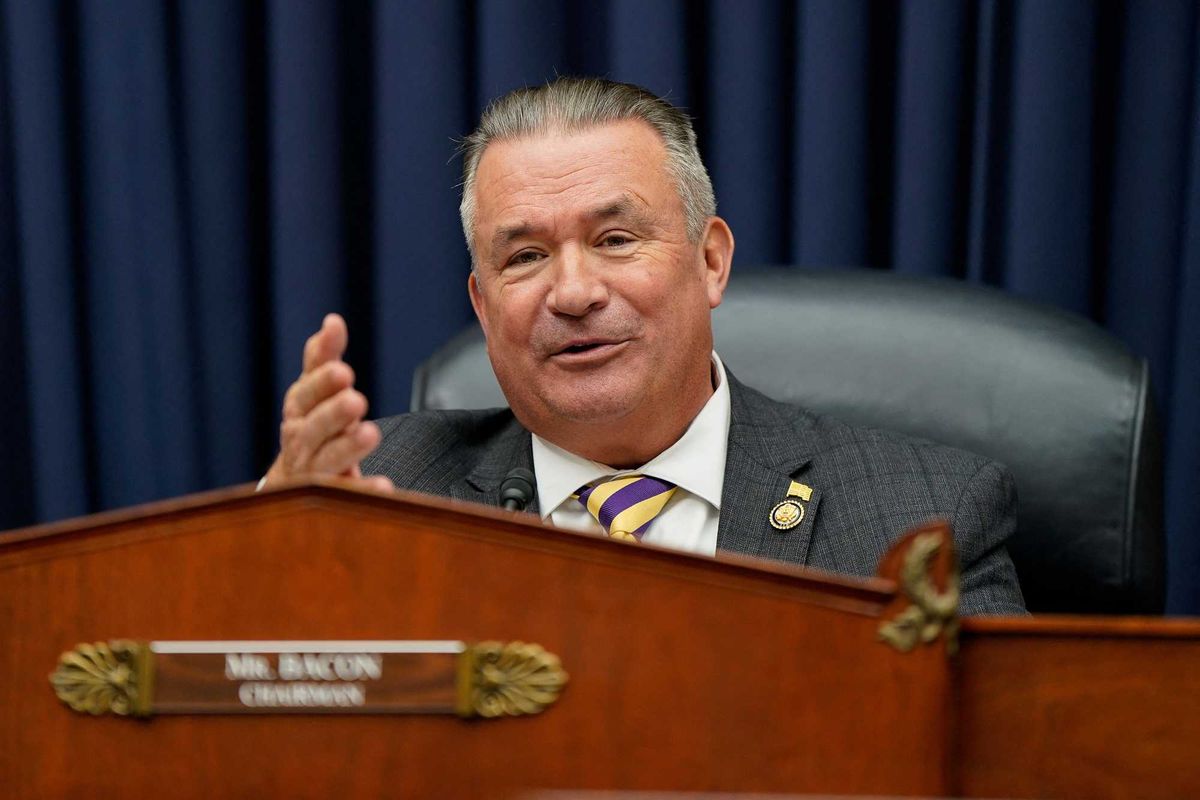

Chair of the HASC Subcommittee on Cyber, Information Technologies, and Innovation, U.S. Representative Don Bacon (R-NE) speaks during a House Armed Services subcommittee hearing entitled "Cyber Posture of the Department of Defense," on Capitol Hill in Washington, D.C., on April 21, 2026. REUTERS/Elizabeth Frantz

The Pentagon blindsided Republican lawmakers Friday after abruptly scrapping a 4,000-troop deployment to Poland, a decision that reportedly surprised Army leaders, according to Politico.

Army leaders admitted they had no real answers about the shock cancellation, leaving Congress furious over the last-minute move as Republican lawmakers have had conflicting views from the Trump administration involving security efforts in Europe, Politico reported. Last year, lawmakers had established limits for troop withdrawals as tensions mounted over whether the Trump administration would pull back on sending troops to support European allies.

Rep. Don Bacon (R-NE) called it "a slap in the face" to America's NATO allies.

"I just want to say this is a slap in the face to Poland; it’s a slap in the face to our Baltic friends," Bacon said. "It’s a slap to the face of this committee."

"We don’t know what’s going on here, but I can just tell you we’re not happy with what’s being talked about, particularly since there’s been no statutory consultation with us," said Armed Services Chair Mike Rogers.

Defense Secretary Pete Hegseth opted to cancel the plan — and lawmakers wanted to know why — demanding that Army Secretary Dan Driscoll and acting Chief of Staff Gen. Christopher LaNeve explain what prompted the plan to change, Politico reported.

"The pair indicated the administration only made the decision in recent weeks and did not provide a rationale for it," according to Politico.
'Angry' voters let loose on Trump in devastating new polling

David McAfee
May 17, 2026 
RAW ST0RY

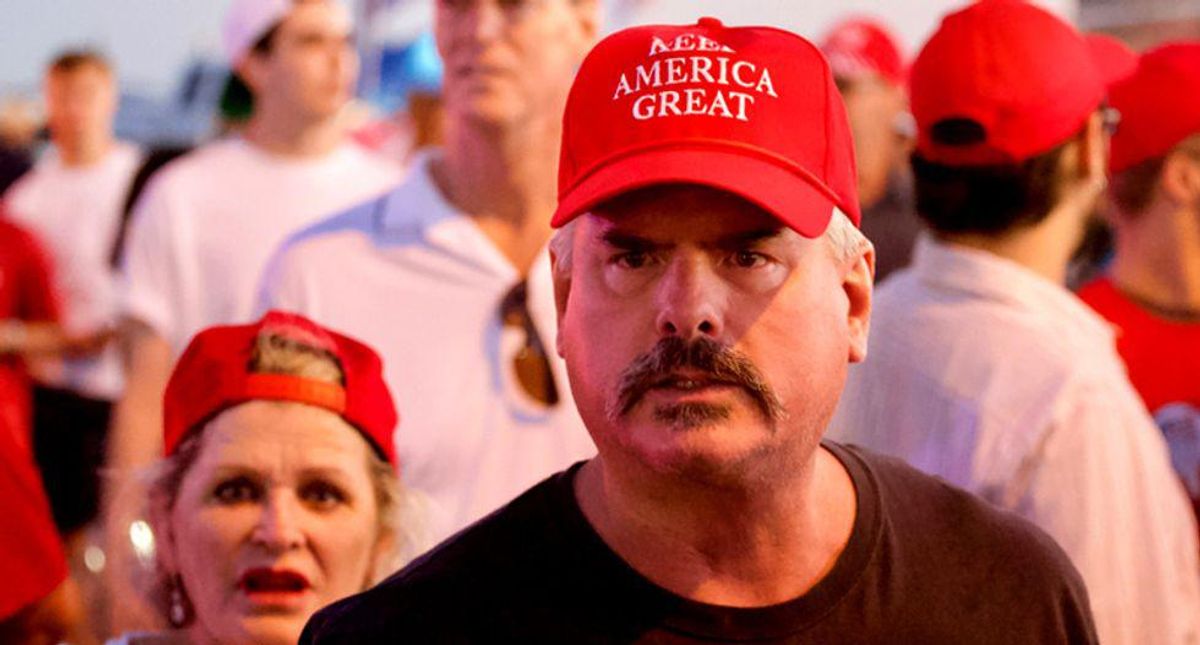
Trump supporters and protesters gather outside a campaign rally (and accompanying anti-Trump protest) for President Trump and US Senate candidate Martha McSally. (Eric Rosenwald / Shutterstock.com)


A devastating new CBS News/YouGov poll released Sunday shows President Donald Trump paying a steep political price as Americans grow increasingly stressed, frustrated and angry over his handling of the economy — with his overall approval rating sinking to the lowest level of his second term.

Two-thirds of Americans now say Trump's policies are making the economy worse in the short term, and most describe their feelings about the administration's economic approach as either "frustrated" or "angry," according to the survey of 2,064 adults conducted May 13–15.

Trump's ratings on handling the economy and inflation continue to slip — and the erosion is now showing up among his own base. While Republicans still give him sky-high marks on immigration (89%) and his overall job performance (85%), his approval on inflation among Republicans has cratered to just 63%, with the gap widening since the Iran conflict sent oil prices climbing.

The numbers paint a grim economic picture overall for Trump. Three-quarters of Americans say incomes aren't keeping up with inflation, ratings of the U.S. economy have slid to levels not seen since 2023, and a majority expect either a recession or slowdown ahead. Most describe the economy as "uncertain," and more call it "unfair" than "fair," according to CBS.

Americans aren't exactly running into Democrats' arms, either — neither party is viewed by a majority as helping with the cost of living, though Democrats hold a slight edge, according to the data. A sizable one-third think neither side has a better economic approach or aren't sure.

The margin of error is ±2.7 points.
Disgusted NY Times writer nails 'egregious' irony in court upending America's 'high point'


60 YR GOP CAMPAIGN AGAINST THE VOTING RIGHTS ACT


Travis Gettys
May 16, 2026 
RAW STORY


Supreme Court Associate Justices Samuel Alito and Clarence Thomas wait for their opportunity to leave the stage at the conclusion of the inauguration ceremonies in the Rotunda of the U.S. Capitol on January 20, 2025 in Washington, D.C. Chip Somodevilla/Pool via REUTERS


There's a bleak irony in the right-wing U.S. Supreme Court striking down one of the highest points in American democracy, argued New York Times columnist Jamelle Bouie.

The conservative majority severely weakened Section 2 of the Voting Rights Act in a 6-3 decision in Louisiana v. Callais, ruling that protecting minority representation in congressional maps is unconstitutional, and Bouie argued in a new column titled "the law they hate was a high point in our history" that they had betrayed democratic values.

"The Voting Rights Act of 1965 wasn’t the top-down dictate of a rogue, liberal Supreme Court — if such a thing has ever existed," he wrote. "It wasn’t the brainchild of out-of-touch bureaucrats in Washington, nor was it some kind of martial settlement imposed on the states of the former Confederacy."

"It was, instead, an achievement of the most effective social movement of the postwar United States," the columnist added. "The Voting Rights Act revitalized American democracy and stands as one of its great achievements."

The swift response to the ruling by Republican state legislatures made the landmark law appear to have been an imposition by an outside force, but Bouie said it was instead the years-long work off grassroots activists who risked their lives to secure their fundamental rights, and the act was signed into law by a president elected in one of the largest landslides in U.S. history and reauthorized by Congress over and over.

"If there is any single law that you could plausibly say represents the general will of the American people, it might be one that was reaffirmed nearly every decade for 40 years by the people’s representatives," Bouie argued. "This isn’t just a historical point or a piece of idle trivia. It is essential. And it gets to what is so egregious about the court’s campaign against the law."

The Voting Rights Act was an effort to fulfill the promise of the Constitution's 15th Amendment, itself the result of the sacrifices made in the Civil War, to make democracy real for all Americans, Bouie argued, and he bitterly noted the irony of this particular court undoing those hard-won gains.

"The Voting Rights Act has more — much more — democratic legitimacy than this Supreme Court has ever enjoyed," Bouie wrote. "After all, most of this court’s conservative majority was appointed by presidents who entered office as winners of the Electoral College but not the popular vote."

"It is that relative difference in democratic legitimacy that makes this court’s voting rights jurisprudence so offensive," he added.


Black clergy strategize, preach and urge election turnout after Voting Rights Act gutting

(RNS) — 'We need accountability. We need to set goals, track registrations, follow up to ensure that those who register actually vote,' a Church of God in Christ bishop said at an 'emergency’ meeting.


Protesters fill the halls in the Louisiana Legislature in Baton Rouge during a Senate committee hearing Friday, May 8, 2026 on redistricting. (AP Photo/Jack Brook)

Adelle M. Banks and Jack Jenkins
May 8, 2026
RNS


(RNS) — On the first Sunday (May 3) after the Supreme Court decided to hollow out the Voting Rights Act, the Rev. Richelle Lewis-Castine offered some clear advice to her congregation in Patterson, Louisiana.

“I encouraged them to early vote,” said the pastor of an African Methodist Episcopal Church. “I encouraged them to make sure that they get the information, that they’re reading carefully, and to encourage other people — especially those groups in their families who would not normally vote — to vote because it is so very important at this hour.”


Rev. Richelle Lewis-Castine is the president of the 8th Episcopal District Women in Ministry and an ordained elder in the AME Church that has pastored many churches in the Central North Louisiana Conference. Photo courtesy PREACH Facebook

Lewis-Castine is among a group of Black clergy taking proactive measures in the wake of the ruling, which is already reshaping election processes across the country — including prompting Louisiana legislators to meet on Friday (May 8) to debate redrawing their congressional maps after the court’s declaration. The 6-3 ruling stated, in the words of Justice Samuel Alito, “That map is an unconstitutional gerrymander,” referring to Louisiana’s second majority-Black district.

The New National Christian Leadership Movement, a faith-based social justice group, announced it would gather pastors and community leaders to protest at the Louisiana State Capitol, where the first redistricting hearing was held in Baton Rouge.

On Friday, social media posts from Baton Rouge news outlets showed a crowd of dozens of people outside the hearing room at the state capitol repeatedly shouting “Shut it down!”

Pastor Debra Morton, co-overseer of the New Orleans-based Greater Saint Stephen Full Gospel Baptist Church, received a text about the protest and shared it with others, including people who joined her for a regular midweek prayer session. In speaking to worshippers, she urged action rather than despair.

“I spoke to our congregation on our prayer call this past Wednesday morning, saying to them, we must, one, vote,” she said, pointing to the capitol event as an example. “In addition to that, not be discouraged, not let it take us down, but that we must go to the polls, and then we must fight.”

During the state Senate hearing, the Rev. Gregory White of Beech Grove Baptist Church in Baton Rouge spoke in support of a bill that would maintain both of the majority-Black congressional districts in Louisiana. He said he didn’t intend to speak at the hearing, but was inspired by the waves of protesters and speakers who voiced opposition to other plans that would eliminate one or both of the districts. He cited Luke 18, referring to a parable Jesus tells in the Bible about a corrupt judge who initially denies a widow seeking justice before eventually relenting due to her persistence.

“Well, you are the judge, and here are the people,” White said, addressing the senators. “And they keep on coming. And they keep on coming. And they keep on coming. I just want you to think about it.”

When he finished speaking, state Sen. Caleb Kleinpeter, a Republican who moderated the meeting, asked the pastor to repeat the passage, then paused to write it down.

RELATED: Black church leaders revive civil rights playbook to mobilize voters for midterms

A few days earlier, African American ministers from across the country and a range of denominations gathered for an online “Emergency Black Clergy Zoom Meeting” hosted by Bishop Erika Crawford, leader of the AME district that includes Louisiana, and the Rev. Barbara Williams-Skinner, co-convener of the National African American Clergy Network. Between prayers led by executives of the Progressive National Baptist Convention and the African Methodist Episcopal Zion Church, other denominational leaders on Tuesday took turns sharing their strategies as legislators in Florida and Tennessee were making new congressional maps that could change the current election season.


Bishop Talbert Swan II speaks during the “Emergency Black Clergy Zoom Meeting.” Video Screengrab

Bishop Talbert Swan II, director of social justice ministry for the Church of God in Christ, a predominantly Black Pentecostal denomination, ticked off the various ways his denomination hopes to prepare its members to vote.

“We want every COGIC church to become a voter registration hub — that means setting up registration tables at every service, training volunteers and ensuring that every eligible member is registered, not occasionally, but consistently,” Swan said. “We need accountability. We need to set goals, track registrations, follow up to ensure that those who register actually vote.”

Bishop Charley Hames Jr., chair of the commission on social justice and human concerns for the Christian Methodist Episcopal Church, referred to the Supreme Court decision as a “massacre of our rights,” prompting calls to action in his denomination.

“We put out a call to our church to have, No. 1, designated voter engagement captains at every local church by the first Sunday in June, charged with verifying registration, assisting with mail ballots and organizing rides to the polls,” he said. “We are reenacting Souls to the Polls Sundays, on the Sunday preceding Election Day, encouraging early voting wherever the law permits.”

Hames said there will be renewed initiatives with local NAACP branches, ecumenical groups and Black sororities and fraternities — as have been done in the past — and young adults will be encouraged to become political candidates.

“Whether it is a local race, whether it is the state seat, whether it’s school board, we are engaging our young people to run for office,” Hames said.

Though a range of Black leaders has criticized the high court’s decision, their responses were not monolithic. Some Black conservatives, including members of Project 21, a leadership network of the National Center for Public Policy Research, sided with the high court’s ruling.

“The Constitution demands that government classifications based on race remain the exception — not the rule,” said Linda Lee Tarver, a Christian book author and a Project 21 ambassador and mentor, in a statement. “The legacy of the Civil Rights Movement was to secure equality of opportunity and equal treatment under the law, not to institutionalize racial line-drawing as a default feature of our political system.”


Rev. Marques Smith. Courtesy Smith

But in Louisiana, the Rev. Marques Smith, pastor of two AME churches in New Orleans that are on the verge of merging, said he has stressed to his congregants that “the decision by the governor disenfranchises everybody,” referring to Louisiana Gov. Jeff Landry’s suspension of the primary elections for U.S. House seats the day after the high court’s decision.

“I encouraged them — you could say, implored them — that they should cast their ballot,” Smith said of his congregants. “The vote has not been canceled. Still go cast your vote. We’re still encouraging early voting so that we as a congregation could be available on voting day to help our friends and neighbors get to the polls.”

During Sunday’s worship service, he said he passed the microphone to an 89-year-old veteran of a march with the Rev. Martin Luther King Jr., who told his fellow congregants that it “hurt his heart” that voting rights debates were continuing.

Black clergy have also rushed to push back against redistricting efforts launched in other parts of the South in response to the Supreme Court ruling.

Clergy in Memphis, such as the Rev. J. Lawrence Turner of Mississippi Boulevard Christian Church, participated in several demonstrations this week to condemn a Republican-led effort to break apart a majority-Black district based in the city. Turner called it a “deliberate restructuring of power” that disproportionately targets “specifically Black communities.” Tennessee Republicans voted to eliminate the district on Thursday, but clergy have vowed to respond with legal challenges and surges of voter turnout.

“We’ve been here before, and every time this nation has tried to draw us out of history, we have found a way to draw ourselves back in,” said the Rev. Earle Fisher, pastor of Abyssinian Missionary Baptist Church in Memphis, in a news conference with other clergy this week.
Trump Says US Fighting Iran War ‘To Help Israel... Saudi Arabia... Qatar... UAE... Kuwait’—China Too

“Trump again says the quiet part out loud—America entered the Iran war to support a genocidal ethno-state and brutal absolute autocracies, all of whom are his political and commercial financiers.”


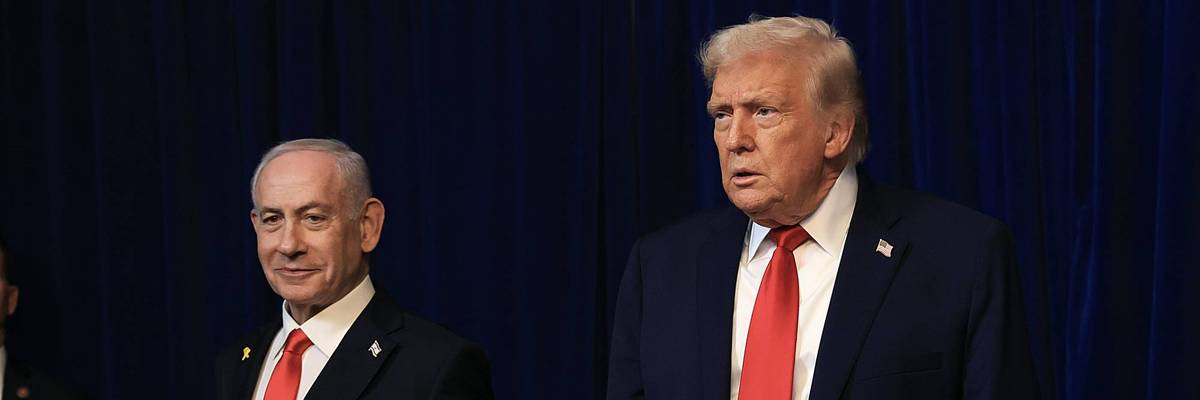
US President Donald Trump holds a press conference with Israeli Prime Minister Benjamin Netanyahu at his Mar-a-Lago club on December 29, 2025, in Palm Beach, Florida.
(Photo by Joe Raedle/Getty Images)

Stephen Prager
May 15, 2026
COMMON DREAMS

During his campaign for reelection, one of President Donald Trump’s central pitches was that the US needed to stay out of foreign wars in order to prioritize “America first.”

But his decision to join Israel and launch a massive war with Iran, which has caused turmoil across the American economy, has left many voters rather skeptical of these motivations, believing the war benefits other nations—particularly Israel—more than the US.

That perception has not been assuaged by statements from officials like Secretary of State Marco Rubio, who acknowledged in the early days of the war that a so-called “imminent threat” to the US only existed because Israel had planned to attack, or by the president’s recent comment that he doesn’t “think about Americans’ financial situation” regarding the war.

In an interview with Sean Hannity on Fox News on Thursday, Trump appeared to further affirm that the Iran invasion’s impact on his own country is far from top-of-mind.


Trump was asked by Hannity about his weekslong effort to reopen the Strait of Hormuz, which Iran closed in response to the war’s launch, causing a spike in global oil prices that has hit the US. Reopening the strait has become one of Trump’s main demands as he pushes for a deal with Iran, even though it was open before the war began.

But Trump said on Thursday that other countries “need the strait more than we need it open.” He cited his administration’s aggressive expansion of oil drilling, which he has claimed would make the US more resilient to the oil shock, although it hasn’t been enough to stop gas prices from soaring above $4.50/gallon on average.

“We don’t need it at all,” Trump said, to which Hannity responded incredulously, “We don’t need it at all?”

“We don’t need it at all,” Trump reiterated. “I mean, you could make the case, you know, like why are we even, we’re doing it to help Israel, and to help Saudi Arabia, and to help Qatar and [the United Arab Emirates] and, you know, Kuwait and other countries, Bahrain—”

Hannity interjected: “It also helps China.”

Speaking of his summit this week with Chinese leaders, including President Xi Jinping, Trump said: “Actually, I told him today, I said, ‘You know, we’re helping you, and we’re helping you in another way,’ because I don’t think they want, I don’t think China wants Iran to have a nuclear weapon either.’”

Trump’s director of national intelligence, Tulsi Gabbard, testified in a written statement to Congress in March that Iran had not tried to rebuild its nuclear enrichment capability after earlier US and Israeli attacks last June, which undercut one of the administration’s primary rationales for war.

Trump’s former National Counterterrorism Center director, Joe Kent, said last week that the US intelligence community agreed in the days leading up to the war that “Iran wasn’t developing a nuclear weapon,” but said that these assessments were undermined by persuasion from “a foreign government—Israel,” which “won the argument and forced us into this war.”

Many of the US’s Persian Gulf allies have publicly tried to distance themselves from the war, especially in the face of retaliation from Iran. But The Associated Press has reported that countries like the UAE, Saudi Arabia, Kuwait, and Bahrain have pushed Trump behind the scenes to continue escalating the war in an effort to weaken Iran militarily and force more permanent changes to the regime.

Some have noted the Trump family’s close personal ties to the Gulf regimes—from his family’s cryptocurrency venture which is buoyed by a $500 million investment from a powerful member of Abu Dhabi’s ruling family; to his son in law Jared Kushner’s private equity firm, which has received $2 billion from Saudi Arabia’s public investment fund; to his real estate empire which has lucrative Trump-branded properties popping up across the region.

Independent journalist Borzou Daragahi said that with his latest comments, “Trump again says the quiet part out loud—America entered the Iran war to support a genocidal ethno-state and brutal absolute autocracies, all of whom are his political and commercial financiers.”

Sherpa guides set new Everest records amid busy season

17.05.2026, DPA

Photo: Narendra Shahi Thakuri/dpa

By Roshan Shedai, dpa

Veteran Nepali climbers Kami Rita Sherpa and Lhakpa Sherpa have each set new Everest records in their respective male and female categories, officials said on Sunday.

Kami Rita, 56, reached the 8,848-metre summit at around 10:12 am, completing a record 32nd ascent while leading an international expedition team, according to Mingma Sherpa, chairman of expedition operator Seven Summit Treks.

Lhakpa Sherpa, widely known as the “Mountain Queen,” reached the summit at 9:30 am, after having ascended the world's highest peak for the 11th time as part of an expedition organized by the Seven summit club agency, according to Khimlal Gautam, coordinator at the Department of Tourism’s Everest base camp.

"Both climbers were descending with their team after successful ascents," Gautam told dpa.

Born in 1973, Lhakpa Sherpa first summited Everest in 2000 via the southern route and has since become one of the most experienced female climbers on the peak. By May 2022, she had completed 10 ascents, including nine via the northern route, according to Guinness World Records.

Kami Rita first summited Everest in 1994 and has climbed almost every year since, according to Guinness World Records.

Both climbers began their careers as porters before becoming professional guides.

Nepal has issued a record 494 Everest climbing permits for the 2026 spring season, with hundreds of guides and support staff deployed on the mountain.

"Aound 70 climbers reached the summit on Sunday, with total Everest ascents this season already exceeding 100," Gautam said.

Expedition operators say the high number of climbers has been driven partly by restrictions on the Tibet side imposed by Chinese authorities, while delayed route openings and unstable ice conditions have narrowed the ascent window.

Sherpas, an ethnic group native to Nepal’s Himalayan region, are widely employed as high-altitude guides and support staff in commercial expeditions.

Everest can be climbed from both Nepal and Chinese-administered Tibet, though the southern route remains the most commonly used. Nepal recently raised the climbing permit fee to $15,000 from $11,000 for foreign climbers.


 NATIONALISM IS FASCISM

Bahlsen chief rejects AfD, urges German companies to take a stand

17.05.2026 DPA

Photo: Michael Matthey/dpa

Alexander Kühnen, chief executive of Bahlsen, one of Germany’s best-known biscuit makers, has called on companies to take a clear stand in support of democracy and said the far-right, anti-immigrant Alternative for Germany (AfD) is not a viable option for the country.

Referring to the company’s values, Kühnen said: “When I look at which parties represent these values, they are the democratic parties. And there are clear limits. Positions such as 'remigration' are not acceptable to us.”

Remigration is a term used by far-right extremists to refer to the deportation of large numbers of people of foreign origin from Germany, including by force.

Kühnen also justified his opposition to the nationalist populist party on economic grounds. 

“We need skilled workers, we need open trade in Europe, we need stable economic conditions,” Kühnen said in comments issued on Sunday. “Against this backdrop, the AfD is not an option for me — neither from a business perspective nor personally.”

The relationship between businesses and the AfD, which has been gaining ground in opinion polls and is expected to perform strongly in regional elections in September, has been a subject of debate for some time.

For instance, in October, the Association of Family Businesses invited AfD representatives to an event for the first time. Following strong criticism from politicians and business leaders, as well as the withdrawal of prominent member companies, the association later reversed its position, with its president Marie-Christine Ostermann calling the move a mistake.

Kühnen, for his part, stressed that isolationist ideas do not fit with the Hanover-based family business, the maker of the Leibniz biscuits and popular cookies.

'If I think in purely national terms — believing that only certain nationalities should work here — then that simply does not fit with who we are."

He urged other German companies to show leadership. 

“I strongly believe in democracy and that we have a responsibility to defend it,” Kühnen said. “As business leaders, we bear responsibility — and a great deal of it.” He added that people in such positions should make greater use of their influence “for a good cause,” including protecting democracy.


US lets waiver on Russian oil sanctions lapse

17.05.2026, DPA

Photo: Valerie Plesch/dpa

The United States has allowed a waiver that had eased sanctions on Russian oil amid rising energy prices caused by the Iran war to lapse.

In April, the US Treasury issued a waiver authorizing the delivery and sale of Russian-origin crude oil and petroleum products loaded onto vessels as of April 17. The waiver was set to expire on Saturday. As of late on Saturday no amended orders appeared on the agency's website.

Russia's oil sector has been targeted by US sanctions for years. With the April exemption, Washington sought to calm global energy markets. The US had already granted such a waiver in mid-March, which expired on April 11.

Critics said the measure strengthened Russia financially. The Kremlin uses revenue from the oil industry to finance its war against Ukraine.

Democratic senators Jeanne Shaheen and Elizabeth Warren on Friday had called on the Trump administration not to extend the waiver.

"Treasury must finally end its ill-conceived policy of helping Russia make even more money from President [Donald] Trump’s reckless war in Iran," they said in a joint statement.

The senators also said there was no sign that the measure was reducing costs for US families, pointing to petrol prices in the country.

Petrol prices in the US have risen significantly since the start of the Iran war. On Saturday, Americans paid an average of $4.52 per gallon (3.785 litres), according to a breakdown by the automobile association AAA. At the start of the war launched by the US and Israel in late February, the average price was $2.98 per gallon.


Covid-era conspiracy theories accuse Bill Gates of 'creating' hantavirus outbreak


Issued on: 12/05/2026 - FRANCE24

05:36 min From the show


As the number of confirmed hantavirus cases from the Dutch-flagged cruise ship MV Hondius reaches nine, social media users have firmly revived Covid-19-era conspiracy theories of "bioweapons" and "plandemics", making the online rhetoric feel eerily familiar. Among these resurrected theories, the name of American billionaire philanthropist Bill Gates has once again emerged.

Similar to viral posts in 2020, internet users have shared unfounded claims that an episode of The Simpsons "predicted" the hantavirus outbreak years ago, or claimed hantavirus was mentioned in the Epstein files.

In the same vein, old comments from Bill Gates have resurfaced and are being heavily shared. In a clip from his 2025 interview on ABC's "The View", Gates warned that future pandemics could be worse than the coronavirus, saying: "It won't be the last pandemic. The next one could be far more severe."

The reemergence of this video triggered viral posts claiming it "proved" Gates was "planning" a pandemic, or that as a top contributor to the World Health Organization via his foundation, he's benefiting from a potential pandemic by exploiting health crises, as he tries to make money from mass vaccination.

Not only is Gates far from the only voice who's warned of vigilance towards new outbreaks, the WHO has remained firm in its assessment that hantavirus is unlikely to become a pandemic at all.

The Gates conspiracy theories have been unfounded for six years, and remain so, but it's no surprise to see his name return to the eye of the storm as coronavirus conspiracy theories are rehashed.


Vedika BAHL  explains in Truth or Fake.


'Plandemic, Covid 2.0': Fact-checking viral conspiracy theories about hantavirus


Issued on: 11/05/2026 - FRANCE24

05:07 min From the show


As the world saw with Covid-19, the only thing that spreads faster than a virus is misinformation, and hantavirus is no exception. Despite only a few confirmed cases, conspiracy theories have swirled on social media, falsely claiming hantavirus is a planned pandemic, or a ploy to disrupt the US midterm elections. Others allege it's a "bioweapon" created by big pharma to "poison" people or even that it's a side effect of the Pfizer Covid-19 vaccine.

Many Covid-era conspiracy theories have been revived since the outbreak of hantavirus on a cruise ship, likely amplified due to the anti-vaxx movement and fears about a new global pandemic.

As with the coronavirus, theorists allege hantavirus is a planned pandemic – or "plandemic" – created by Big Pharma and vaccine manufacturers; a "biological weapon" created in a laboratory to push vaccines onto the masses.

Known conspiracy theorists Alex Jones and Marjorie Taylor Greene (who was notorious for sharing false narratives during the Covid-19 pandemic) amplified these claims on their platforms, with Greene also sharing fake news that anti-parasitic drug Ivermectin could be used to cure hantavirus as it "blocks RNA viruses from entering the nucleus, preventing replication".

In reality, there's no research that Ivermectin could be used as a treatment, and hantavirus replicates in the cytoplasm, not the nucleus, rendering Ivermectin useless against its replication.

Global public health guidance also does not predict that a pandemic due to the hantavirus is likely. As Maria Van Kerkhove, Director of Epidemic and Pandemic Management at the World Health Organization recently said at a briefing: "This is not Covid, this is not the start of a Covid pandemic. This is not the same situation we were in six years ago. It doesn't spread the same way."

Internet users also falsely claimed that hantavirus is a "planned side effect" of the Pfizer-BioNTech Covid-19 vaccine, sharing a Pfizer document that references "hantavirus pulmonary infection" as part of a list of adverse events of special interest. This document in fact lists health conditions that scientists monitor during vaccine trials, not side effects.

Vedika Bahl fact-checks the viral conspiracy theories in Truth or Fake.


Trump shares fake quotes, falsely accuses Obama of treason in late-night rant


Issued on: 13/05/2026 - FRANCE24


05:18 min From the show

In a late-night social media blitz before his high-stakes China visit, US President Donald Trump unleashed a string of debunked conspiracy theories, AI-generated images and attacks on his political rivals. Posting 55 times in a span of three hours, Trump tore into former president Barack Obama, accusing him – without evidence – of treason and espionage during Trump's 2016 election campaign. He also revived falsehoods that the election was "stolen" from him in 2020, and attacked The New York Times.

In his frenzy, Trump reposted comments that Obama should be "arrested" and "prosecuted" for allegedly wiretapping Trump Tower during the 2016 presidential campaign. This is despite zero evidence that anyone – let alone Obama himself – wiretapped Trump Tower at the time, and a 2017 court filing from the Justice Department also affirming it had found no basis to support the claims.

Trump also shared a quote attacking Obama that never existed, claiming Senator John Kennedy of Louisiana demanded Obama "return $120 million that he allegedly earned through ownership related to Obamacare". Kennedy himself told digital outlet NOTUS he'd heard of the claims online, but that he "didn't say that. I don't know the basis of it".

Trump also revived conspiracy theories about his defeat in the 2020 presidential election, claiming "2.7 million Trump votes nationwide" had been deleted due to Dominion voting technology, including "over 1 million Pennsylvania votes switched from President Trump to Biden." This is false information with no factual basis, but one that the US president continues to rehash.

The New York Times was also blasted for its coverage of Trump's project for the Lincoln Memorial Reflecting Pool. In a 400-word rant, the US leader said the paper was "failing" and "losing subscribers on an hourly basis", after the paper pointed out that Trump's project was significantly more expensive than the $1.8 million price tag originally attributed. Trump did not actually dispute the figures given by the NYT, and the outlet is in fact gaining readership, not losing it, reporting last week that it had surpassed 13 million subscribers.

Vedika BAHL goes through Trump's tirade in Truth or Fake.


EXPLAINER

Why did Saudi Arabia and the UAE allegedly carry out secret bombing raids on Iran?


The United Arab Emirates and Saudi Arabia in April secretly carried out a series of air strikes against Iran during the US-Israeli war against Tehran, the Wall Street Journal and Reuters reported this week. Analysts say these raids – which neither country has confirmed – would have been clandestine counterattacks following Tehran’s drone and missile strikes against Gulf state infrastructure.


Issued on: 14/05/2026 - FRANCE24

 F-15SA fighter jets are seen during a graduation ceremony and air show marking the 50th anniversary of the founding of King Faisal Air College in Riyadh, Saudi Arabia, 
 © Faisal Al Nasser, Reuters

At least two Gulf states “secretly” carried out bombing raids on Iran during the latest US-Israeli war against Tehran, officials speaking on condition of anonymity told the media earlier this week.

The United Arab Emirates struck several Iranian sites in early April, including an oil refinery on Lavan Island in the Persian Gulf, the Wall Street Journal reported on Monday, citing people familiar with the matter.

And Saudi Arabia also launched “numerous” air strikes against Iran towards the end of March, Reuters news agency reported Tuesday, citing two Iranian officials and two Western officials briefed on the matter.

Ready and willing

There has been no official confirmation of what would be a significant escalation in the conflict that has swept the Middle East, whether from Washington, Tehran, Riyadh or Abu Dhabi. If the attacks indeed took place, it would be the first time that the two Gulf states have carried out direct attacks on the Islamic Republic.

"For the UAE strikes, there are photos that seem to confirm Emirati military involvement,” said Veronika Hinman, deputy director for the Portsmouth Military Education Team at the University of Portsmouth.

Images showing French Mirage fighter jets and Chinese Wing Loong drones – both of which are used by the UAE – flying over Iran have been identified by independent military analysts on social media.

To judge how likely it is that Riyadh and Abu Dhabi carried out these attacks, “we first have to ask ourselves if they are militarily capable of it”, said Shahin Modarres, a specialist in Iran and Middle East conflicts at the International Team for the Study of Security (ITSS) Verona.

Modarres said the answer was a firm yes.

“These two countries have the most modern and most well-equipped air forces in the region,” he said. “There’s no doubt they have the means to carry out precision strikes against Iranian infrastructure.”

But do they have the political will to do it? Both countries say they refused to allow Washington to use their airspace to carry out strikes against Tehran in the lead-up to the war, appearing united in the desire to avoid being dragged into the fight.
A warning to Tehran

The war seems to have put that desire under heavy strain. Tehran has pounded both countries with drones and missiles throughout the conflict, hoping to raise the cost of the US-Israeli war on Iran by damaging critical energy infrastructure and shattering the Gulf states’ long-cherished image as safe havens for international investors.

“While Saudi Arabia was affected, no country was targeted as much as the UAE,” Hinman said. The Wall Street Journal reported that Iran targeted the Emirates with more than 2,800 drones and missiles over the course of the war – more, even, than it had fired against Israel.

Did Iran go too far? If the reports are true, said Andreas Krieg, a senior lecturer at the School of Security Studies at King’s College London, the aim of the Saudi and Emirati attacks seem to have been to set a stark precedent with the Islamic Republic.

“If Iran can inflict costs on Gulf infrastructure, then the Gulf states can also inflict costs within Iran,” he said.

The Emirati decision to send a message to Tehran through military force may not be entirely surprising.

“The UAE has adopted a more aggressive stance, officially warning that it has the right to defend itself and aligning itself more closely with Israel from an operational standpoint,” Modarres said.

As Tehran unleashed its drones and missiles against the Emirates, Israel sent Iron Dome anti-air missile batteries to the UAE, as well as personnel trained to use them, to help the country stave off further attacks.

Israeli Prime Minister Benjamin Netanyahu also made a discreet visit to the UAE during the conflict, his office stated Wednesday, further strengthening the burgeoning ties between the two countries. The UAE, which normalised diplomatic relations with Israel in 2020 as part of the US-brokered Abraham Accords, denies that this visit took place.

Tehran seems unconvinced. Iran’s Foreign Minister Abbas Araghchi on Thursday lashed out at Abu Dhabi during a BRICS summit in India, accusing the UAE of being “an active partner” in the US-Israeli aggression against the Islamic Republic.

"I must say that the UAE was directly involved in the act of aggression against my country. When this aggression began, they even refused to condemn it," Araghchi said.

"It also became clear that they participated in these attacks and may have even acted directly against us," he added.

Saudi Arabia, on the other hand, “has adopted a much more cautious approach, favouring diplomatic channels through Pakistan, Oman and Qatar to make it clear that it had absolutely no intention of joining a war alongside Israel,” Krieg said.
Secret strikes

It’s for this reason, Hinman said, that the bombing runs had been kept well under wraps.

“The idea would be to prevent these air strikes from leading to an escalation of tensions as much as possible,” she said.

By carrying out the strikes in secret, Krieg said, Saudi Arabia “didn’t want to publicly humiliate Iran, which would likely have forced Tehran to retaliate”.

“This is a message intended for the authorities, who need to know where the strike came from – not for the whole country,” he said.

Krieg added that the UAE had even more reason to maintain plausible deniability over the strikes: “They don’t want these strikes to feed into the Iranian discourse that paints the UAE as Israel’s Arab partner.”

© France 24
02:11


For its part, Iran has a dilemma on its hands. If the ceasefire with the US falls through and the missiles again fly, can Tehran follow the same strategy of launching air strikes across the whole region?

Krieg said that the Iranian authorities “must now reckon with the possibility of direct retaliation from the Gulf states”.

Such an outcome would be militarily dangerous for Tehran – and maybe even damaging for its public image, Modarres said.

“Their official line is that Iran is the victim of a war of aggression waged by the United States and its Israeli ally,” he said. “But a more overt involvement by the Gulf states would undermine that narrative.”

But it’s a course that could prove just as risky for the Gulf states themselves.

“From the moment that they began bombing inside Iran, the line between defensive strikes and active participation in the conflict became blurred,” Krieg said.

He said that the UAE was in a particularly vulnerable position.

“Iran sees Abu Dhabi as more threatening due to their already more aggressive diplomatic stance,” he said.

If these strikes are confirmed, their impact will likely linger long into the future.

“It’s hard to turn back the clock and restart negotiations as though nothing has happened,” Hinman said.

“We are likely witnessing a growing desire among these Gulf states to take charge of their own defence without always having to rely on US support,” Modarres said. To put it another way, while Washington might be glad in the short term to see its allies in the region throwing themselves more actively into its war against Iran, these strikes may also be a warning sign that the Gulf states are looking to cast off the heavy shield of Captain America.

This article has been translated from the original in French.