Sunday, May 17, 2026

Super El Niño: Why some Americans are prepping for the big one


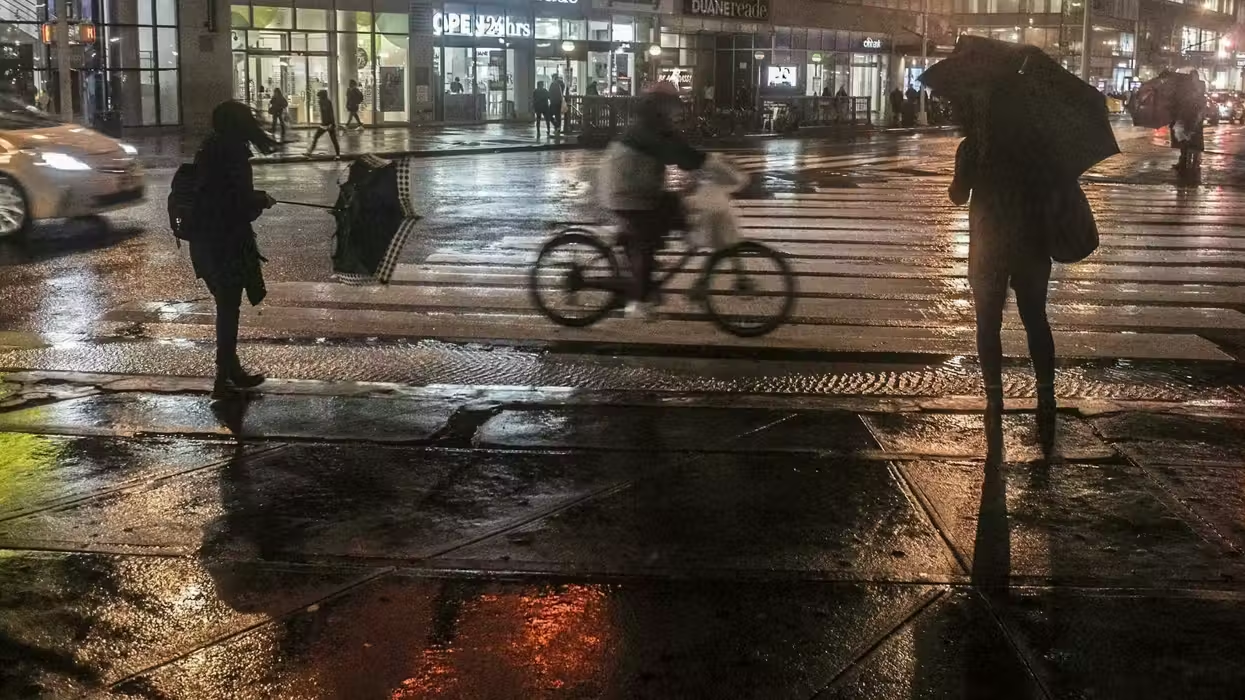
A street scene on a rainy night. One person's umbrella has blown in reverse. A cyclist pedals into the rain. Another person leans into the downpour. El Niño can mean a rainy U.S. Southwest, warmer winters in the North and less Atlantic hurricane activity – but not always. Bill Tompkins/Getty Images
May 15, 2026

Talk of a “super El Niño” developing in 2026 is gaining momentum, with concerns rising that this climate pattern could bring extreme rainfall, heat, drought and destructive flooding around the world.

The signals appear to be in place: The tropical Pacific is warming along the equator, and computer models point toward extreme conditions by the end of the year.

However, forecasting El Niño is not like predicting next week’s weather. Forecasts for El Niño typically aren’t reliable before late spring – not because scientists don’t understand the system, but because we understand its limits.

As an ocean-atmospheric scientist who studies El Niño, I spend a lot of time thinking about what scientists can forecast confidently – and what remains uncertain. Here’s what we know about the current event, what we still don’t, and why many regions should begin preparing now, even if a strong, or “super,” El Niño never fully materializes.

Why is El Niño hard to forecast in spring

The starting point for any El Niño forecast is the heat stored beneath the surface of the eastern equatorial Pacific Ocean. Computer models use data about those conditions to simulate how ocean temperatures will evolve over the coming months, and how they affect weather patterns around the world.

Right now, an exceptionally large reservoir of warm water sits beneath the surface there. In principle, this ocean heat should be a reliable signal of El Niño developing. In practice, what happens next depends heavily on what the atmosphere does.

The warm reservoir was shaped by a burst of wind activity in early 2026. Normally, the Pacific trade winds blow from east to west along the equator, pushing warm water toward Asia and leaving cooler water near South America. But in April, a pair of cyclones straddling the equator caused the wind direction to reverse. This short-lived reversal triggered a downwelling Kelvin wave – a pulse of energy beneath the ocean surface moving eastward along the equator.

That subsurface pulse has now reached the eastern Pacific, helping fuel intense warming off South America. At the ocean surface, this can resemble the early stages of a strong El Niño.

But there is a catch.

For El Niño to develop fully, the ocean and atmosphere need to lock into a feedback loop: Warmer surface waters weaken the trade winds, triggering more downwelling Kelvin waves that push warm water eastward and reinforce the warming. But that loop doesn’t engage automatically. It requires repeated bursts of eastward winds to sustain the process.

Until that feedback loop takes hold, the ocean-atmosphere system is in an unpredictable phase. It might tip into a super El Niño. It might not.

Spring is precisely when forecasts are most uncertain. Impressive early signals can fade if the winds don’t cooperate.

There’s a further complication: When models detect strong subsurface warming, they can simulate a stronger feedback loop than actually develops.

The result is that models can look too confident – even alarming – despite the system not being locked in. As of mid-May 2026, the wind patterns needed to amplify the warming have not clearly emerged.

We’ve seen this scenario play out before. In both 2014 and 2017, forecast models were pointing toward strong El Niño conditions by midyear. In both cases, the anticipated wind patterns never fully materialized and El Niño either stayed weak or returned to a neutral state. The early signals were real, but the expected follow-through didn’t happen.

So what do the forecasts suggest?

The current forecasts for 2026-27 still span a wide range in mid-May – from expecting weak to strong El Niño conditions.

How the winds behave in the coming weeks will determine what develops. If trade winds weaken again at the right moment, it could tip the system into self-sustaining warming – the kind that’s hard to stop.

As of mid-May, long-range weather forecasts weren’t showing strong eastward wind bursts on the horizon that could strengthen El Niño. In fact, quite the opposite was expected for the second half of May: a burst of winds blowing in the opposite direction. A full month without major eastward wind activity would be a meaningful brake on ocean warming.

The Pacific has loaded the dice for El Niño, and the National Oceanic and Atmospheric Administration’s May outlook reflects elevated odds of El Niño developing and potentially strengthening later in the year. By NOAA’s mid-June update, the picture should be substantially clearer.

El Niño intensity matters for weather worldwide

The difference between a weak El Niño and an extreme one is not subtle. It reshapes climate patterns across the globe – and with them, real-world risks.

If El Niño intensifies into a strong or “super” event, it can drive drought in the Amazon, fires in Indonesia, flooding in Peru and heavy rainfall in parts of California and southern South America. These effects could materialize by the Northern Hemisphere winter, when El Niño typically peaks.

In some regions, the stakes are immediate.

In India, the monsoon rains, which support agriculture and water supplies for hundreds of millions of people, have historically weakened during strong El Niño events. Even modest shifts in monsoon strength can bring food and water shortages, and harm economies.

At the same time, when El Niño is strong, hurricane activity in the Atlantic is typically suppressed – a rare upside – while the eastern Pacific often becomes more active with storms.

El Niño can even push global temperatures temporarily higher, as changes in cloud cover and the amount of heat the ocean releases alter the planet’s energy balance.

In contrast, a weak El Niño produces far more muted effects. This is why predicting intensity matters.

Using uncertain forecasts in real-world decisions

Because El Niño forecasts deal in probabilities, deciding how to prepare for the seasons ahead should be based on managing risk – not waiting for certainty.

El Niño’s impact does not occur everywhere at once. Some effects emerge quickly. Its impact on the Indian monsoon and Atlantic hurricane activity unfold over the summer and early fall.

Other impacts arrive later, toward the end of the year when El Niño peaks, bringing extreme rainfall to parts of South America between November and January. In Southeast Asia, scorching heatwaves often emerge even later, in April of the following year.

In regions like India, decisions about how to respond to El Niño risks cannot wait for more certainty. Communities need to prepare their water infrastructure now in case El Niño means the monsoon season brings too little rain.

Even where forecasts suggest reduced risks – such as a quieter Atlantic hurricane season – it would be a mistake to assume safety. Destructive hurricanes still hit in otherwise quiet years.

Pedro DiNezio, Associate Research Professor in Climate Modeling, University of Colorado Boulder

This article is republished from The Conversation under a Creative Commons license. Read the original article.
Trump's presidency is making America 'weird': NYT


May 17, 2026 
 ALTERNET

President Donald Trump’s presidency is so weird, it is causing ripple effects that is making America as a whole much more weird.


Beginning with an anecdote about right-wing pundit Tucker Carlson claiming to have been physically attacked in his bed by a demon and FEMA Office of Response and Recovery head Gregg Phillips, The New York Times went on to describe how Trump has created a culture that brings out the downright weirdness in American life.

“The backdrop of all this is the peculiar atmosphere of contemporary public life — claustrophobic, faintly hallucinatory, where what we know as real feels like sand shifting under our feet,” wrote The New York Times’ Katya Ungerman on Sunday. “The first lady, Melania Trump, walks a humanoid robot down a White House red carpet and later tells the audience to imagine a future humanoid educator named ‘Plato.’ A former intelligence official testifies under oath that the United States has been secretly retrieving and reverse-engineering crashed U.F.O.s for decades, and that nonhuman ‘biologics’ have been recovered.”


Ungerman added, “Demonic vexation, teleportation, increased interest in religious practice — those phenomena are all signs that life feels, to many, increasingly charged with unseen forces. You might say it has been re-enchanted. There’s a widespread feeling that the material explanation is no longer sufficient; that something uncanny, maybe even numinous, is diffused into the texture of ordinary American life.”

A recent survey by Pew discovered that three out of ten Americans in 2024 consulted astrology, tarot cards or fortune tellers at least once a year. More Americans than ever use alternative medicinal practices like energy healing during pregnancy.


“In 1917, the sociologist Max Weber argued that a long process of rationalization, culminating in modernity, was eliminating ‘mysterious incalculable forces’ from the world,” Ungerman explained. “Science would explain; technology would master; and magic would disappear. For a brief stretch of modern history, he seemed right: The enduring human instinct to believe in the otherworldly declined as empiricism, common evidentiary standards and, for the shortest period of all, mass media produced a rough consensus about what was real. Now we seem to be sliding back.”

Ungerman attributed this change to people being overwhelmed by the information available to them in the era of digital technology, AI making it easier for people to doctor evidence and people losing faith in institutions like governments, churches, businesses and established scientists.

“In a Rolling Stone article about A.I.-induced spiritual crises, the writer Miles Klee spoke to an unnamed source whose partner had messaged extensively with ChatGPT,” Ungerman wrote, describing a piece about a serial stalker and supporter of the so-called “manosphere” who ultimately pleaded guilty to 11 counts of various stalking-related charges. “Eventually, the partner came [to] believe he was God. He had an ecstatic experience with a product that has a stake in keeping him engaged; his story might have ended differently inside a spiritual community, where someone could have told him to slow down.”


He added, “The world we’re moving into will look more like the one before the modern era than like the one we grew up in. It will be saturated with the supernatural. Everyone will believe in something. The question is in what.”

There are signs, though, that Americans are rejecting the “weird” fixations of Trump and his movement. Earlier this month Semafor journalists Shelby Talcott and Burgess Everett reported that "Trump is still facing questions from within the GOP about how determined he is to keep control of Congress, as he seeks longer-term, legacy-defining foreign policy achievements amid declining approval ratings."

Even though most Americans are opposed to Trump’s primary focuses, including building a White House ballroom and promoting AI, a Republican insider told Semafor that Trump is “clearly not” motivated about winning the midterms and said “his mission goes so far beyond one election cycle or one midterm.”
13 of the Nearly 200 People Murdered by Trump and Hegseth Identified for First Time

“It’s a double tragedy—not only because of the unlawful killings, but because the victims are erased, reduced to anonymity,” said one human rights advocate.


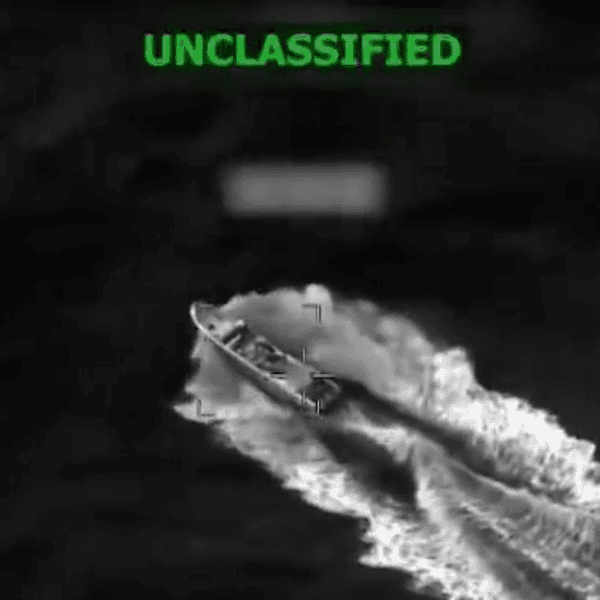
Four victims of the Trump administration’s boat bombings, Eduard Hidalgo, Dushak Milovcic, Ricky Joseph, and Chad Joseph, are seen in a composite image.
(Photo: Courtesy of CLIP)

Julia Conley
May 15, 2026
COMMON DREAMS

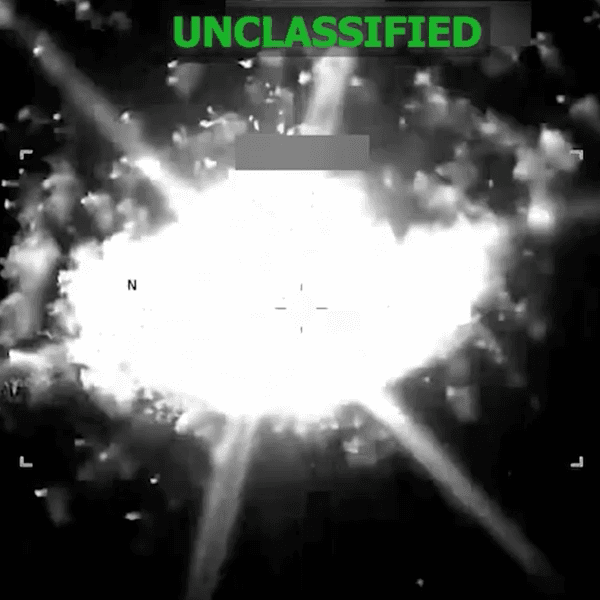
The 57 confirmed bombings of boats that the Trump administration has carried out so far since last September have shattered families and communities across Latin America, with Defense Secretary Pete Hegseth and US Southern Command never acknowledging the identities of the at least 192 people they’ve killed, beyond declaring them “narco-terrorists.”

But despite the concerted effort to keep the names and any information about the victims hidden—their identities “blown away over vast stretches of ocean,” as a new report states—20 journalists led by the Latin American Center for Investigative Journalism (CLIP) managed to identify 13 of the men whose killings have been called “murders” by legal experts and rights advocates.


‘These Are Murders’: Trump Killing Spree Hits At Least 185


‘3 More Murders at Sea’: Trump Boat-Bombing Spree Continues

The journalists and researchers represented CasaMacondo, Verdad Abierta, 360-grados.co, and NGO El Veinte in Colombia; Alianza Rebelde Investiga in Venezuela; the Trinidad and Tobago Guardian; and Airwars in the UK.

The investigation, titled “Bombed, Without the Right to a Defense,“ was completed despite widespread fears of speaking out about the bombings in the affected communities.

“Some relatives of victims in Venezuela and in Santa Marta, Colombia, say they have received threats, as sources confirmed to journalists in this alliance,” reads the report. “Authorities have remained largely opaque, and the officials willing to talk do so only off the record, wary of dragging their countries into conflict with [US President Donald] Trump.”

Three people named in the report had already been identified publicly in legal complaints—Trinidadians Chad Joseph and Rishi Samaroo, whose families filed a complaint in the US federal court; and Colombian Alejandro Carranza Medina, whose family filed a petition with the US-based Inter-American Commission on Human Rights.

The men identified for the first time by CLIP include:Juan Carlos Fuentes, a bus driver who told his family he was “going to have to do something risky to see if I can make ends meet” after his bus broke down, and who left behind three children and a grandson;
Luis Ramón Amundarain, a motorcycle taxi driver and fisherman with a wife and five children;
Eduard Hidalgo, a fisherman who had been deported from the US in December 2025;
Jesús Carreño of Venezuela;
Eduardo Jaime, a “beloved indoor soccer player” in his hometown of Güiria, Venezuela;
Dushak Milovcic, a student at the National Guard Academy in Venezuela who became involved in drug transporting, starting as “a lookout for smugglers”;
Ricky Joseph, a well-known fishmerman in Savannes Bay, Saint Lucia, whose family lost contact with him after a bombing on February 13 and who is believed to be one of the victims;
Pedro Ramón Holguín Holguín, who was registered as a fish and seafood wholesaler in Ecuador;
Carlos Manuel Rodríguez Solórzano, who was rescued by Costa Rican authorities but died following an attack on his boat;
Luis Alí Martínez, who had a criminal record for drug trafficking and other crimes;
Ronald Arregocés of Riohacha, Colombia;
Adrián Lubo, of Riohacha, Colombia, who was called “a great captain” by a person who knew him; and
Robert Sánchez, who was traveling with his cousin, Amundarain, when the boat they were on was bombed.

Another man was identified by his nickname, and two unnamed people, including an Ecuadorian man who helped survivor Jonathan Obando escape a bombing and later died, were included in the report.

“It’s a double tragedy—not only because of the unlawful killings, but because the victims are erased, reduced to anonymity,” John Walsh, of the Washington Office on Latin America (WOLA), told CLIP and the reporting alliance.

The report emphasizes that all of the victims it identified came from poor families and communities. In Uribia, Colombia, where at least two bodies washed ashore after a boat attack, 92% of residents “lack adequate education, healthcare, or basic public services.”

“In those conditions, recruiting young men to transport cocaine is easy work—and the pay can be good,” reads the report.

A boatman in Uribia told CLIP that “most people here aren’t the owners” of vessels or the drugs they carry. “The people who own the cargo are almost always outsiders—even international players.”

María Teresa Ronderos, director and co-founder of the CLIP, told The Guardian the report affirms that despite the administration’s repeated claims that the military is defending “our nation’s interest” and protecting Americans from those who are “trafficking deadly narcotics” like fentanyl and cocaine, “the US is not taking down any Pablo Escobar or Joaquín ‘El Chapo’ Guzmán.”

“Despite the US claim that the strikes are fighting narco-terrorism, what is actually happening is that young people living in extremely precarious conditions, doing whatever work they can to support their families, are being targeted,” Ronderos said.


The boat that Fuentes and Amundarain, who had both gone to Trinidad and Tobago to work, were on was traveling from the Caribbean country to Venezuela, calling into question the claim that the vessel was trafficking drugs.

“Boats carry drugs from South America northwards, not the reverse,” Ronderos told The Guardian.

Legal experts have emphasized that even in the cases of victims who were involved in the drug trade, the bombings still legally qualify as extrajudicial killings, or even murder. Trump informed Congress in October that the White House views the US as being in an armed conflict with drug cartels in Latin America, claiming a rationale for carrying out the boat strikes. But no conflict has officially been declared, and rights experts warn that the military has clearly violated international law by targeting the survivors of some of the boat attacks in “double-tap” strikes.

“The deaths of Joseph and Samaroo were clearly extrajudicial killings,” Steven Watt, an attorney with the ACLU who is working on the case brought by the two Trinidiadian families, told CLIP. He added that “the Trump administration’s argument—that a ‘war on drugs’ justifies violent strikes like these—cannot legally excuse the killings.”

Brian Finucane of the International Crisis Group told CLIP that “the law of war permits violence otherwise prohibited, but only during genuine armed conflict—a threshold the Trump administration has failed to meet, as it has not even identified who the US is supposedly fighting.”

“Beyond that foundational problem, the administration’s suggestion that vaguely defined ‘enablers’ may be targetable raises further concerns that it is violating the rules of its own bogus legal paradigm,” Finucane said.

Ronderos added that “there is no death penalty for cocaine trafficking.”

“So the fact that they were killed without even having the chance to defend themselves is deeply troubling,” she told The Guardian.

In accordance with international and domestic laws, the US has historically treated drug trafficking on the high seas as a criminal offense and has ensured those who are found trying to bring drugs to the US are brought to justice in court.

A spokesperson for US Southern Command told the reporters that the bombings have been “deliberate, lawful, and precise, directed specifically at narco-terrorists and their enablers,” and that the US has “full confidence in the operations and intelligence professionals who inform our missions.”

But the administration has not released any evidence showing the strikes have targeted major drug trafficking operations, and as Common Dreams reported last month, data from US Customs and Border Protection shows little evidence that the strikes are stopping the flow of illicit substances.

“CBP’s seizures of fentanyl at the US-Mexico border had been declining, often sharply, since mid-2023. But since early 2025, the declines stopped,” said Adam Isacson of WOLA at the time. “Halfway into fiscal 2026, seizures are almost exactly half of 2025’s full-year total: a flat trendline.”

Finucane told The Guardian that the boat strikes have never been “a serious counter-drug operation.”

“I think this was in part a military spectacle to give the illusion of the administration doing something ‘macho’ about drugs,” Finucane said.

Walsh said Hegseth and Trump “want to impress the public, to make Americans believe that they, unlike previous governments, are finally ending the terrible problem of drug trafficking.”

“The profound cruelty and indifference with which they order these systematic and intentional killings allows them to project this menacing image of faceless ‘narco-terrorists,’” he added. “In doing so, they shock many Americans while numbing their sense that the US officials responsible for these murders should be held accountable.”


When Killing Becomes Commonplace

by | May 14, 2026

“It is forbidden to kill; therefore all murderers are punished
unless they kill in large numbers and to the sound of trumpets.”
— Voltaire (1694-1778)

Last week, when the Pentagon resumed its attacks on small boats in the Caribbean and eastern Pacific Ocean, the media barely noticed. The U.S. military has now destroyed 56 vessels and killed 190 persons. The killings began in September 2025 and have continued to this month.

The attacks caused a stir a few months ago when one of the strikes disabled the boat at which the attack was aimed but failed to kill all the passengers. When a follow-up strike was ordered, it succeeded where the initial strike had failed. The admiral who ordered the murder of the survivors told members of Congress in secret that he believed he was following orders. The secretary of defense denied that he ordered the survivors to be killed.

Killing survivors is expressly prohibited by federal law as well as by the Uniform Code of Military Justice. And, of course, ordering the killing of innocents is always unlawful.

So, the Pentagon made two changes. It produced more lethal strikes so as not to be burdened with the problem of survivors, and it either stopped killing survivors or stopped revealing that it killed them.

Everyone who professionally monitors the government expects that it will not be truthful when the truth is unpleasant or reveals criminal behavior. This expectation is realistic, considering history and Supreme Court rulings that permit the government to lie.

The Navy rescued two survivors whom it failed to kill. Under the law, rescuing is to be done by the Coast Guard. But that law was written when the Coast Guard was in the Department of Defense. Today, it is in the Department of Homeland Security, which is largely mistrusted by the DoD.

So, rather than share information about its attempted murders with a department of the government over which it has no control, rather than having a team ready and nearby to rescue survivors, the Pentagon assigned the Navy to arrive long afterward and rescue two fishermen.

But the Navy didn’t know what to do with them, so its legal team asked Department of Justice lawyers for guidance. They asked the DoD what evidence of crimes it had on these fishermen, whereupon the DoD was unable to provide an answer that would rise to the level of probable cause — the legal standard for charging and detaining anyone.

Probable cause is a level of evidence such that a neutral person would conclude that it is more likely than not that the detained persons committed a stated crime. At that point, the DoJ told the DoD to return these would-be victims to their home countries.

In 56 attacks, and one follow-up attack, only three persons survived. Two of them have hired American lawyers and have served notice of their intention to sue the federal government for its attempted murder of them.

The government initially claimed that these killings were of known drug dealers and this was part of a law enforcement operation. Yet, under federal law, the military is prohibited from engaging in law enforcement.

When confronted with that, the White House claimed that the folks in the boats were enemy combatants, and thus susceptible to targeting by the military. But that would require some empirical evidence of their use of force or violence against U.S. personnel, of which the government revealed none.

Then, the White House likened the effect of the sale of drugs as a war on the American people and offered that the job of the military is to defend the country in wartime from what it called narco-terrorists. Yet, controlled dangerous substances are initially ingested voluntarily either by those looking to become addicted and separated from reality, or by those who believe that they — not the government — own their own bodies.

It is clear that none of the government’s changing justifications for these killings amounts to a legally cogent argument. The Constitution requires due process — notice, fair trial, right to appeal — and it permits only judges to impose sentences; and it requires judges to impose only sentences that have been prescribed by law.

Stated differently, the president cannot order the killing of a person because he thinks or fears — or even knows — of their criminal behavior. It is apparently of no moment to him that drug dealing is not a capital offence.

The Voltaire quotation at the top of this piece about murders and trumpets has haunted me since I first read it as a college student. The reference to the trumpets was Voltaire’s way of calling attention to government wars and executions, many of which in his day were often accompanied by trumpets.

But trumpets or not, all this raises the question: How can an act that is intrinsically evil — the intentional killing of the legally innocent — become moral or lawful just because it is committed by government officials? The short answer is: IT CANNOT. Moreover, intrinsically evil acts can never produce moral outcomes, because the toleration of pure evil will propagate it.

In America, all persons are innocent until proven guilty beyond a reasonable doubt and to a moral certainty. This principle has been a bedrock of Anglo-American jurisprudence for 600-plus years. The president and all in government take an oath of fidelity to the Constitution, whose values embody this principle.

A government is illicit when it violates the very laws it enforces. When the government breaks its own laws, it invites others to do so. When it kills innocents, it invites others to do so. It is always immoral and criminal for anyone intentionally to extinguish innocent human life.

And now, Trump’s ordered killings are so commonplace, there is little coverage and less outrage. But we will see both when the killings come home.

Andrew P. Napolitano, a former judge of the Superior Court of New Jersey, is the senior judicial analyst at Fox News Channel. Judge Napolitano has written seven books on the US Constitution. The most recent is Suicide Pact: The Radical Expansion of Presidential Powers and the Lethal Threat to American Liberty. To find out more about Judge Napolitano and to read features by other Creators Syndicate writers and cartoonists, visit www.creators.com. COPYRIGHT 2025 ANDREW P. NAPOLITANO – DISTRIBUTED BY CREATORS.COM


Those with Trump in China have something in common — and it's not the interest of America


Robert Reich
May 14, 2026 
ALTERNET

Trump calls the entourage of 12 CEOs accompanying him to China an “incredible gathering” of America’s “Greatest Businessmen/women.”

Well, it may be an incredible gathering. But to characterize them as America’s greatest business leaders — who are assumed to be leading America’s competitive charge against China — is misleading.

The American CEOs traveling with Trump to China don’t think of themselves as being in competition with China. In fact, they’d like nothing better than to make more money for themselves and their shareholders by setting up more lower-cost, highly productive factories and research facilities in China and hiring more Chinese talent.


It’s an important distinction. The CEOs of Chinese companies are in business not only to make money but also to strengthen China’s geopolitical power in the world. The CEOs of American companies want to make gobs of money, of course, but they couldn’t give a rat’s ass about strengthening America’s geopolitical power in the world.

This basic difference is airbrushed away in breathless media stories about the competitive race between the American and Chinese economies — the so-called “race for supremacy” in AI, advanced semiconductors, supercomputers, solar wafers, biotechnology, and other industries of the future.


The distinction never appears in the breezy press coverage of Trump’s trip to China, along with his “U.S. corporate” delegation.

Take Elon Musk, obviously a conspicuous presence in Trump’s CEO delegation. Musk’s Tesla Gigafactory Shanghai produces over a third of Tesla’s global car sales. It’s also Tesla’s most productive factory. In February 2025, Musk opened a second factory in Shanghai, a $200-million plant focused on producing Megapack batteries. Nearly 40 percent of Tesla’s entire battery supply chain relies on Chinese companies.

All good for Musk and for Tesla shareholders, but what about American workers, who aren’t getting this work? What about America’s national security, which could be compromised if China gains further global dominance over batteries (as well as other renewables)? Do you think Musk cares?


Or consider Apple’s Tim Cook, also in Trump’s CEO delegation. China has become the gravitational core of Apple’s supply chain. Indeed, much of Apple’s success is due to Cook’s move to consolidate virtually all of his company’s manufacturing in China. About 90 percent of iPhones are assembled there, backed by massive investments in local supplier expertise and infrastructure. Cook explains that he’s taking advantage of China’s “unmatched” expertise in advanced tooling and manufacturing.

Since 2008, Apple has worked with Chinese suppliers to train 30 million workers there and has transferred practical engineering knowledge of how to make complex things from American engineers to thousands of Chinese engineers in hundreds of Chinese factories and research centers. Apple’s Cupertino, California, headquarters has sent so many American engineers to China to teach Chinese engineers that it even persuaded United Airlines to schedule three weekly flights from San Francisco to Chengdu and Hangzhou.

A third CEO in Trump’s delegation is Jane Fraser, CEO of Citigroup. Her goal has been to expand the bank’s (and its clients’) investments in China by growing Citigroup’s team in China and capturing market share for the corporation in high technology and advanced manufacturing.


Fraser’s moves may be good for Citigroup’s bottom line, but they may not be good for America. As she connects international investors with opportunities within China, she may be siphoning off potential investments in high technology and advanced manufacturing in the United States.

Another American CEO in Trump’s delegation is Jensen Huang, CEO of Nvidia. Huang’s goal is to get China to buy Nvidia’s AI and its advanced H200 processors, even at the risk that Chinese computer scientists and engineers might reverse-engineer them, as they have so many other technologies America once dominated.

Huang argues that with roughly half of all the world’s AI researchers, China is strategically vital for American tech companies. Huang may be right, but what’s strategically vital for American AI companies may not be in the strategic interest of the United States. The capacities that increase these corporations’ profits and returns to their American investors (including the pay packages of their CEOs) do not necessarily increase the productivity, knowledge, or strategic strength of America’s AI.

Doesn’t Trump know this? Does he assume that the rest of us don’t know? Is he really ignorant of the fact that Chinese corporations are tethered to China, but the CEOs of Tesla, Apple, Nvidia, and other so-called “American” corporations are not strategically bound to America? American CEOs aren’t paid to worry about the competitiveness of the United States, nor the number of good jobs in America, nor even about American national security.


Maybe Trump knows all this but doesn’t care. When it comes to making big money doing global deals, Trump’s merry band of CEOs has about as much loyalty to the United States as does Trump himself.


Robert Reich is a professor of public policy at Berkeley and former secretary of labor. His writings can be found at https://robertreich.substack.com/.
Measles rages in Florida as DeSantis touts 'freedom'

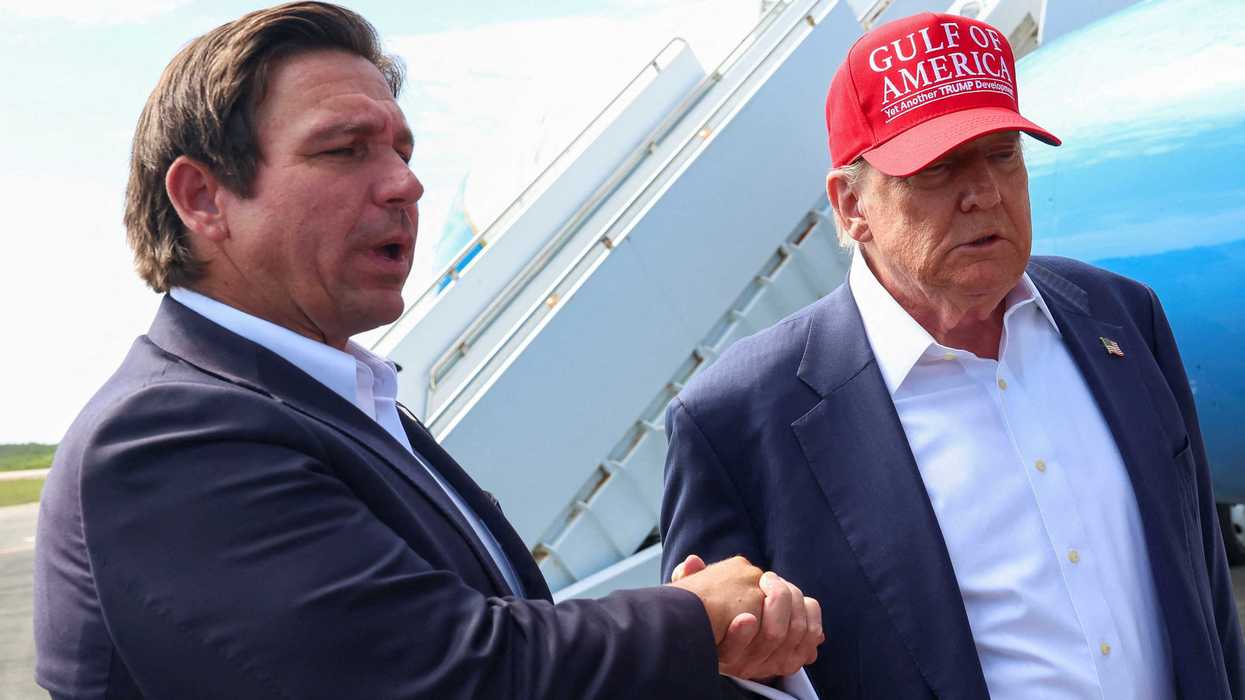
U.S. President Donald Trump with Florida Governor Ron DeSantis in Ochopee, Florida, U.S., July 1, 2025. REUTERS/Evelyn Hockstein/File Photo

May 16, 2026 

“Convenient mythologies require neither evidence nor logic.” — Edward S. Herman, “Manufactured Consent: The Political Economy of Mass Media”

In a number of articles on its website, PEN America explains in striking detail the right-wing Trojan horse of “parental rights,” illuminating the threat caused by policymakers focused on this theater in the culture war.

PEN — which has gained a global reputation for standing “at the intersection of literature and human rights to protect free expression in the United States and worldwide” — argues that “parents’ rights” is not a source of freedom as claimed, but the crux of an ideological rigidity exercised by MAGA Republicans.

Replace the terms “books” and “literature” with “vaccinations” in the narratives, and the poisonous effects of “parents’ rights” and “medical freedom” on Florida’s public health system becomes clear.

Under the guise of “freedom,” the DeSantis administration including Surgeon General Joe Ladapo has established policies that have directly contributed to the measles outbreak that has spread across the state.

Yet, despite the proliferation of this disease, which has placed Florida fourth in the United States with 152 confirmed cases in 2025-26 and 145 confirmed cases so far this year, state officials have acted as if “there’s nothing to see here.”

Collier County is the center of an outbreak that began in January at Ave Maria University. The number of reported cases out of Collier has remained steady at 106, with most cases affecting those aged 15 to 24. According to the Florida Department of Health, Florida is up to 150 cases this year as of the week ending May 2. Officials note that there is “a continuing slowdown in infections after outbreaks earlier this year.”

Contagion

Measles is one of the most contagious communicable diseases on record. With the measles, mumps, and rubella (MMR) vaccine, measles is easy to control. The MMR vaccine is credited with saving the lives of millions of people globally over the past 50 years.

Traditional medical experts warn that unvaccinated children need to stay home after measles exposure to stop transmission of this highly contagious disease. If not, chances of a prolonged outbreak increase significantly. Among unvaccinated people, nine of 10 who’re exposed will get infected.

Gov. Ron DeSantis, Republican legislators, and some health officials might have avoided the outbreak had they treated it as a strictly health-related issue not a politically charged one. And if DeSantis and Ladapo weren’t so cavalier about tossing around inaccurate data, taking problems out of context, or selectively presenting information, Florida wouldn’t be in this situation.

Experts point to vaccine hesitancy and fear sown by MAGA Republicans as reasons why fewer parents are interested in vaccinating their children. According to Politico, vaccine hesitancy has “evolved into a central pillar of the MAGA movement’s health policy, often blending medical skepticism with a desire to dismantle public health regulations.”

Skepticism of COVID-19 vaccines, and a growing distrust of traditional childhood vaccines, are “closely tied to the “Make America Healthy Again” (MAHA) agenda led by figures such as Robert F. Kennedy Jr.,” Politico writes.

The publication cites a 2023 Morning Consult poll showing that “as the number of voters more doubtful of vaccines has risen — despite scientific evidence that they’re safe and effective — it has come almost exclusively from one political party. While opposition to more established vaccines is still far from a majority position among Republicans, significant numbers question their safety and say Americans shouldn’t be encouraged to get them.”

Hubris

Katelyn Jetelina and Kristen Panthagani capture perfectly the hubris surrounding Florida’s widening measles epidemic.

Jetelina, an epidemiologist, and Panthagani, an emergency physician at Yale University, have written that by ignoring common sense and medical advice, Florida’s health officials risk a mushrooming measles outbreak. Negligence by Lapado, DeSantis, and the MAHA crew has endangered citizens and inflamed the outbreak.

“This is happening in a state with a growing skepticism of vaccinations and an ongoing debate between individualism and the good of the larger population that came to a head during the COVID pandemic,” the authors write in a 2024 opinion piece in Scientific American.

“But containing measles, which can spread quickly, should not be up for debate. Yet this is what is happening in Florida, and it’s putting children’s health at risk.”

A 2025 study from the Cureus Journal of Science and Medicine, published in PubMed, examines how “declining vaccine uptake and growing vaccine hesitancy created pockets of susceptibility that enabled the outbreak.”

DeSantis and Lapado are vigorously pushing to make it easier for parents to opt their children out of mandatory school vaccines — a proposal the Florida House refused to pass in the 2026 regular session and the just-completed special session.

‘Parental rights’


“Since 2021, the Sunshine State has led the country in advancing the parental rights agenda. Contrary to its name, this agenda has used fuzzy, coded language to manufacture moral panic, and to deliver control over what students can read and learn in schools not into the hands of all parents but to a particular segment of citizens — some not even parents but community members,” PEN America officials and researchers said.

“The cumulative effect has been to privilege some parents’ ideological preferences above all others, tie the hands of educators, and limit students’ access to information through curricular prohibitions and book bans.”

The same dynamic applies to health care and vaccines.


In its report on “parental rights” legislation, PEN cautioned that despite the fact that encouraging greater parental involvement in schools can seem like common sense, “these bills have an ulterior motive driving them: to empower a vocal and censorship-minded minority with greater opportunity to scrutinize public education and intimidate educators with threats of punishment.”

In Florida, the DeSantis administration and Republicans in the Legislature have taken up the battle cry. Ladapo and DeSantis announced in a press conference their intention of eliminating childhood vaccine mandates. Medical experts note that all 50 states enforce childhood vaccine mandates, with all states allowing medical exemptions and more than half — including Florida — allowing religious exemptions

Lyndon Haviland of the CUNY School of Public Health and Health Policy blames the “perfect storm” of vaccine skepticism, failed leadership, and broken trust as the core reasons for the outbreak.

The eruption of measles in Texas, Florida, and elsewhere, she contends, aren’t isolated events.

Manufactured distrust


“Cases have also surfaced in Alaska, California, New Mexico, New York City, Georgia, Rhode Island, New Jersey and Pennsylvania. Concern that reports will continue to grow is rising,” she writes.

“It’s especially worrisome considering that the measles virus was completely eliminated in the U.S. as recently as the year 2000. The U.S. Centers for Disease Control and Prevention attributed this achievement to a “highly effective vaccine program in the United States, as well as better measles control in the Americas region.”

So, how did we get here?

“The answer: distrust. Distrust in health experts, who years ago were revered as national authorities on serious medical issues. Distrust in public health agencies, the CDC, and the Food and Drug Administration specifically, once respected as credible information resources. Distrust in the strength and rigor of vaccine testing protocols, the pharmaceutical industry itself and the broader politicization of public health.”

Haviland and other health experts fear ‘America, which was once considered a world leader in public health, has lost decades of progress in preventing the spread of a deadly disease with a provably safe therapy that has successfully saved millions of American lives.”

The focus on vaccine hesitancy “underplays the significant backlash against vaccines and the flood of anti-vaccine misinformation to which many Americans have been subjected,” Haviland continues.

“The reality is that Americans are increasingly adopting a more dismissive mindset in the way they view vaccine efficacy. Skepticism, rather than hesitancy, is a more accurate term to describe America’s perception of vaccines — and it shows no sign of slowing down.”

A certain arrogance

There is a certain arrogance the MAGA multitude carry. They act as though they have a direct line to God and the divine right to determine what’s best for the rest of us. Hence, the series of seemingly endless toxic, selfish crusades that former youth pastor and author John Pavlovitz argues “amplify baseless anti-science propaganda.”

This poisonous mindset has a human cost. Almost 90,000 people in the Sunshine State have died because of COVID; others have succumbed to preventable diseases like the flu.

There’s no telling when this measles outbreak will end but many in health circles and elsewhere will not stop fighting to protect America’s people against this destructive public health crisis.

Kevin Griffis, the Center for Infectious Disease Research and Policy’s director for media relations and public affairs, in an April 22 opinion piece wrote, “Americans can handle hard truths. What they should not have to tolerate is selective concern dressed up as science. … Public health depends on trust. Trust depends on honesty.”

“When the nation’s top health official pretends otherwise — or claims ignorance when it is politically convenient, so as not to raise the ire of MAHA activists — it is not public health leadership. It is yet another example of politics and ideology trumping evidence.”

 Public Health Experts Point to Trump Aid Cuts as WHO Declares Emergency Over Ebola Outbreak in DRC, Uganda


“Before the second Trump administration, USAID would have been on the ground,” said one public health expert.


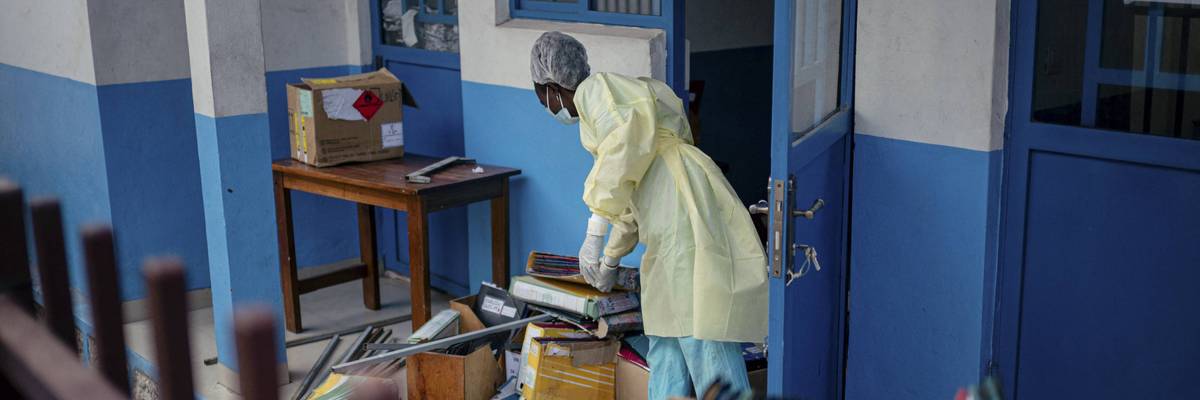
Staff members at CBCA Virunga Hospital prepare rooms intended for possible suspected Ebola cases following official announcements that the disease had been detected in Goma, Democratic Republic of Congo, on May 17, 2026.
(Photo by Jospin Mwisha/AFP via Getty Images)

Julia Conley
May 17, 2026
COMMON DREAMS


The World Health Organization’s official designation of an Ebola virus outbreak in the Democratic Republic of Congo and Uganda as a public health emergency of international concern on Sunday came just a day after the world learned that the disease was spreading at all—a highly unusual chain of events, public health experts said, and one that suggested the virus has been circulating for weeks without the outbreak being detected.

WHO Director-General Tedros Adhanom Ghebreyesus said Sunday that eight laboratory-confirmed cases, 246 suspected cases, and 80 suspected deaths had been reported in at least three health zones across Ituri Province in the DRC. In Kampala, the densely populated capital of neighboring Uganda, two lab-confirmed cases and one death were reported within 24 hours of each other.


‘Children Are Dying’: Trump-Musk Gutting of USAID Helps Push Somalia to Brink of Famine


The victims in Kampala had no apparent link to one another; both had recently traveled from Congo.

The confirmed cases in Congo include some that have been reported in Kinshasa, the capital. The fact that the disease has been able to spread to two large cities with international airports, and the “clusters of deaths across the province of Ituri” point to “a potentially much larger outbreak than what is currently being detected and reported, with significant local and regional risk of spread,” said WHO.

“At least four deaths among healthcare workers in a clinical context suggestive of viral haemorrhagic fever have been reported from the affected area, raising concerns regarding healthcare-associated transmission, gaps in infection prevention and control measures, and the potential for amplification within health facilities,” the agency said.

Dr. Ashish Jha, who served as the White House Covid-19 response coordinator, said the numbers being reported could make the outbreak “one of the 10 biggest Ebola outbreaks in history.”

“We’re just hearing about this now? That makes no sense. Those numbers take weeks to accumulate,” said Jha, adding that the fact that suspected cases have been detected in capital cities as well as Bunia, the provincial capital of Ituri, “matters enormously for spread.”

Tedros emphasized that the outbreak is considered “extraordinary” because there is no approved vaccine or therapeutics for Ebola caused by the Bundibugyo virus, as this strain is. WHO sent a team to investigate in Ituri after first being notified of suspected Ebola cases on May 5, but initial samples tested negative, as available field equipment was only able to detect the Zaire strain of the disease.

The US Centers for Disease Control and Prevention (CDC) and global partners “need to surge resources in,” Jha said. “A slow response creates unnecessary risks to people everywhere.”


WHO, which President Donald Trump withdrew the US from last year, said the public health emergency designation was made to ramp up surveillance and infection prevention in the countries where the outbreak is occurring, enhance preparedness in bordering countries, and spread awareness in the international community.

The Ebola outbreak is the second to hit Uganda since Trump slashed foreign assistance funding, including by dismantling the US Agency for International Development. Earlier this month, CNN reported that the administration plans to divert $2 billion in global health program funding to cover the cost of closing USAID.

US foreign spending dropped by 56.9% after Trump shut down the agency as well as smaller aid programs and pushed Congress to rescind previously approved foreign assistance. USAID played a critical role in responding to the 2014 Ebola outbreak in West Africa.

In March 2025, when an Ebola outbreak was reported in Uganda, US officials warned that Trump’s actions on foreign assistance at that point, including the termination of USAID grants, was impeding the Ugandan government’s ability to procure lab supplies, diagnostic equipment, and protective gear for medical workers.

Dr. Herbert Luswata, president of the Uganda Medical Association, told The New York Times at the time that the country’s ability to respond to Ebola was notably different than it had been during a previous outbreak in 2022, when dozens of medical workers volunteered to help treat patients.

The lack of funds and protective equipment had “left many afraid to help this time,” the Times reported.

“With no USAID money and CDC expertise, it was like Uganda was left to die,” Luswata told the Times.

Dr. Craig Spencer, an emergency medicine physician who survived Ebola in 2014, told CBS Saturday that “before the second Trump administration, USAID would have been on the ground” to respond to the current outbreak.

“The CDC would have been on the ground at a moment’s notice, maybe even before a moment’s notice, of a new outbreak of Ebola because we were in a bunch of countries,” said Spencer. “We created relationships beforehand.”

Last year, Trump megadonor Elon Musk, who was then leading efforts to slash government spending at the Department of Government Efficiency, said DOGE had “accidentally” canceled US support for Ebola prevention but claimed the funding had been “restored...and there was no interruption.”

But a number of Ebola-related contracts were in fact cut, accounting for $1.6 million out of $2.2 million that had previously gone toward the prevention efforts.

In recent weeks, public health experts have also warned that Trump’s cuts to the CDC and other public health programs have left the US ill-prepared to respond to the hantavirus outbreak that originated on a cruise ship.

Jeremy Konyndyk, president of Refugees International and former leader on USAID’s Covid-19 and disaster relief response work, said the current Ebola outbreak is “very worrying” and appeared to be the result of a “massive surveillance failure.”

“It is really unusual for an Ebola outbreak to get to this scale before being detected; particularly in DRC, which has a lot of Ebola experience,” said Konyndyk.


“I can’t help but wonder,” said Konyndyk, “if the drawdown of USAID and CDC health interventions by DOGE undermined some of the surveillance and detection initiatives that might have helped to catch this earlier.”

WHO emphasized that the current crisis in DRC and Uganda requires “international coordination and cooperation to understand the extent of the outbreak, to coordinate surveillance, prevention, and response efforts, to scale up and strengthen operations and ensure ability to implement control measures.”


Ebola outbreak is a global health emergency, WHO says

AP photo
Copyright Copyright 2026 The Associated Press. All rights reserved

By Nathan Rennolds
Published on

The World Health Organization said that it could be a "much larger" outbreak than what is currently being identified and reported but that is does not meet the criteria of a pandemic emergency.

The World Health Organization has declared an Ebola outbreak in the Democratic Republic of the Congo and Uganda as a global health emergency.

In a statement on Sunday, the agency said its Director-General had consulted with the two nations and determined that the outbreak met the criteria of a "public health emergency of international concern."

As of Saturday, around 246 suspected cases and 80 suspected deaths had been reported across the DRC's Ituri Province, with eight laboratory-confirmed cases.

A further two lab-confirmed cases have been reported in the Ugandan capital Kampala and one in Kinshasa, the capital of the DRC.

"There are significant uncertainties to the true number of infected persons and geographic spread associated with this event at the present time," the World Health Organization said in its statement, adding that there was also "limited understanding of the epidemiological links with known or suspected cases."

The agency said that while the outbreak constituted a global health emergency, it did not meet the criteria of a pandemic emergency.

Ebola is a severe illness first identified in 1976. According to the Centers for Disease Control and Prevention, up to 90% of cases of Ebola are fatal. Symptoms can include fever, weakness, diarrhea and vomiting.

The Africa Centres for Disease Control and Prevention is "closely monitoring" the situation and said it was working with authorities and partners to deliver a "rapid, coordinated response" that aims to interrupt transmission and reduce the risk of cross-border spread.


WHO declares Ebola outbreak in DRC a health emergency 'of international concern'

Kinshasa (AFP) – An Ebola outbreak in the Democratic Republic of Congo has killed more than 80 as authorities warned there was no vaccine for the strain in a crisis that the World Health Organization declared an international health emergency on Sunday.

Issued on: 17/05/2026 - RFI

There is significant cross-border population movement in the border region between Uganda and DR Congo © John WESSELS / AFP


A total of 88 deaths and 336 suspected cases of the highly contagious haemorrhagic fever have been reported, the Africa Centres for Disease Control and Prevention (CDC Africa) said in an update on Saturday.

The Geneva-based WHO said early on Sunday the outbreak caused by the Bundibugyo strain of Ebola constituted a "public health emergency of international concern" – the second-highest level of alert under international health regulations.

The global health body warned the true scale of the number of cases and spread was not clear but stopped short of declaring a pandemic emergency, the highest alert level introduced in 2024.

Medical aid group Doctors Without Borders (MSF) said it was preparing a "large-scale response", calling the rapid spread of the outbreak "extremely concerning", in warnings echoed by authorities.

"The Bundibugyo strain has no vaccine, no specific treatment," DR Congo's Health Minister Samuel-Roger Kamba said.

"This strain has a very high lethality rate, which can reach 50 percent."

The strain – which was first identified in 2007 – has also killed a Congolese national in neighbouring Uganda, officials said Saturday.

Vaccines are only available for the Zaire strain, which was identified in 1976 and has a higher fatality rate of 60-90 percent.

Health officials had confirmed the latest outbreak Friday in Ituri province in northeastern DRC, bordering Uganda and South Sudan, according to CDC Africa.


Officials have warned of a high risk of spread in what is the 17th Ebola outbreak the DRC has suffered 
© JOHN WESSELS / AFP/File


No vaccine for latest Ebola outbreak, DRC warns as as toll hits 80

"We've been seeing people die for the past two weeks," said Isaac Nyakulinda, a local civil society representative contacted by AFP by phone.

"There is nowhere to isolate the sick. They are dying at home and their bodies are being handled by their family members."

According to Kamba, patient zero was a nurse who reported to a health facility in Ituri's provincial capital Bunia on April 24, with symptoms suggesting Ebola.

Symptoms of the disease include fever, haemorrhaging and vomiting.

"The number of cases and deaths we are seeing in such a short timeframe, combined with the spread across several health zones and now across the border, is extremely concerning," says Trish Newport, MSF Emergency Programme Manager, which is mobilising medical and support staff to the area.

Large-scale transport of medical equipment is a challenge in DR Congo, a country of more than 100 million people which is four times the size of France but has poor communications infrastructure.

High risk of spread

It is the 17th Ebola outbreak to hit the DRC, and officials warned of a high risk of spread.

"There are significant uncertainties to the true number of infected persons and geographic spread," the WHO said.

But it added the high positivity rate of initial samples, the confirmation of cases in two countries, and the increasing reports of suspected cases, "all point towards a potentially much larger outbreak than what is currently being detected and reported, with significant local and regional risk of spread."

The previous outbreak of Ebola – which has killed around 15,000 people in Africa over the past 50 years, despite advances in vaccines and treatment – was last August in the central region.

That episode killed at least 34 people, before being declared eradicated in December.

Nearly 2,300 people died in the deadliest outbreak in the DRC between 2018 and 2020.

Ebola, believed to have originated in bats, can cause severe bleeding and organ failure.

Outbreaks over the past half century have seen a mortality rate among those affected of between 25 percent and 90 percent, according to WHO.

The virus spreads from person to person through bodily fluids or exposure to the blood of an infected persons, who become contagious only once they display symptoms. The incubation period can last up to 21 days.

Click here for explanatory graphics on Ebola.