Sunday, May 17, 2026


Former Chávez VP: Venezuela needs a new ‘struggle for liberation’
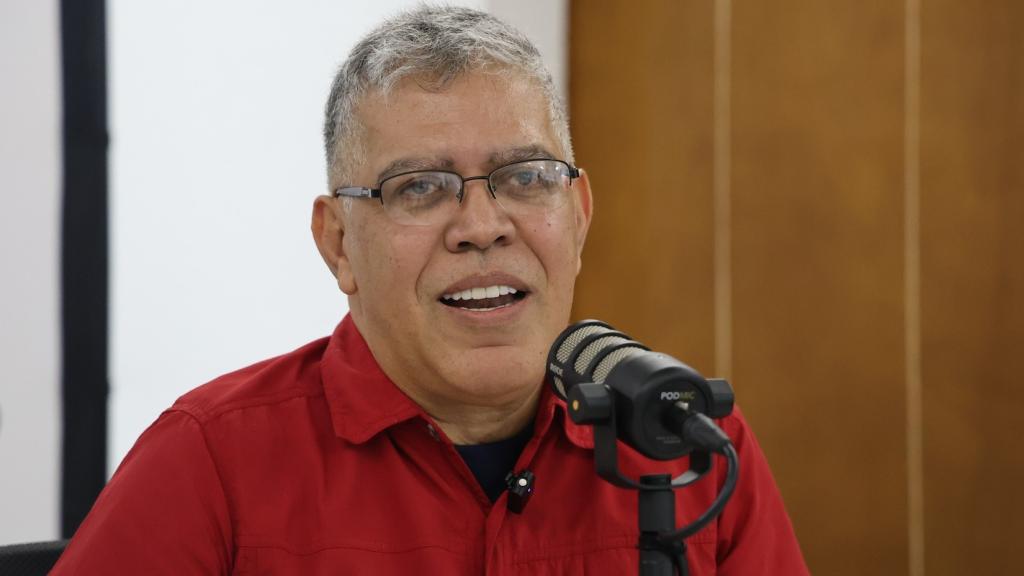
Elias Jaua

United States President Donald Trump signaled again this week he was “seriously considering a move to make Venezuela the 51st state.” The statement comes just months after the US military assault on the South American country and kidnapping of its president, Nicolás Maduro.

Venezuela’s Acting President Delcy Rodríguez responded saying her country was “not a colony” and that “President Trump knows that we have been working on a diplomatic agenda of cooperation.”

But for Elías Jaua, a former vice-president under Hugo Chávez and current Director of the Centre for Studies on Socialist Democracy (CEDES), Venezuela is today under US “military occupation,” “coercive tutelage” and “neo-colonial administration.” Speaking to LINKS International Journal of Socialist Renewal, he said the Venezuelan state should be denouncing this “serious act of aggression”.

Interviewed by Federico Fuentes, Jaua discussed Trump’s plan for Venezuela, the domestic political factors that facilitated the January 3 assault, why the US left the government in power, and how competing political forces and the population have responded since.

A committed Chavista, socialist and revolutionary, Jaua also outlined his views on the Maduro government and the United Socialist Party of Venezuela, the state of popular participation, and the solidarity Venezuela needs today.

You have referred to Venezuela’s situation after January 3 as a “ military occupation”. Could you explain why?

This is based on what the Venezuelan government as well as Trump and [US Secretary of State Marco] Rubio have officially declared.

The US government said that, under the threat of further large-scale infrastructure destruction and removal of more leaders, Venezuela accepted Trump’s plan.

So, undoubtedly, the public threat of a larger-scale military attack exists. This implies military coercion. It also explains what has happened since in Venezuela.

What is Trump’s plan for Venezuela?

The most visible aspect of his plan — and openly stated by the Trump administration — is controlling Venezuela’s oil sales and depositing the income into a US Treasury Department administered fund. Only some money will be handed back to allow the Venezuelan state to keep functioning.

No further explanation is needed to comprehend the gravity of a situation where a nation has been forced to allow its main income stream to be administered by another country.

This is nothing more than tutelage under coercion and the neo-colonial administration of one government by another. That is what they have imposed on Venezuela.

Subsequently, the US’ goals then expanded to include gold and other strategic minerals. Venezuela’s foreign policy has also been curtailed on issues such as solidarity with Cuba, Iran and Palestine.

This constitutes a very serious act of aggression. Such actions are outside all international legal frameworks. The international community should be seriously concerned about a country being subjected to these conditions.

You wrote that the “inability or unwillingness to manage the political conflict within a national and democratic framework” opened the door to foreign interference. What internal factors help us understand January 3?

Well, it was a long journey to January 3, but I will summarise it.

From the outset of the Bolivarian Revolution, which began with Commandante Hugo Chávez’s election win in 1998, a section of the opposition opted to call for foreign interference, in a bid to halt this revolutionary democratic process.

From 2001–2002, [when the right-wing opposition launched a failed coup in April 2002 and then tried to shut down the oil industry between December 2002–January 2003], an external agent became involved in this national political conflict. This shaped the course of events over the next two decades.

This conflict worsened after Chávez's death. At the time, the opposition falsely believed his death had weakened the Bolivarian Revolution’s foundations to the extent that they could quickly resolve it by overthrowing President Maduro, who was elected in 2013.

So, in 2014, we had the so-called La Salida [The Exit, a wave of violent protests between January-February]. This was an insurrectionary strategy to overthrow the government.

After this strategy failed, the US government began openly involving itself in Venezuelan politics. This started when the Barack Obama administration declared Venezuela an “unusual and extraordinary” threat.

What specifically changed?

I believe this is when we lost what I call the “domestic management” of the national conflict. Despite all the foreign interference since 2002, at least until 2013 the conflict was managed democratically among domestic Venezuelan forces.

In 2004, the national conflict was managed via a political agreement between Chavismo and the entire opposition. This enabled a long period of political stability, and economic growth, poverty reduction, and lower inequality. All this occurred after the 2004 presidential recall referendum — a constitutional process that ultimately reaffirmed Chávez’s presidency.

But from 2014–15 onwards, the US started directly intervening in the attempts by domestic forces to secure a political resolution to the national conflict. They imposed conditions on, and sabotaged, agreements.

I was part of the negotiating team in the Dominican Republic ahead of the 2018 elections, where we were on the verge of signing an agreement with the opposition. However, this was called off on the US’ instructions.

Then came the Trump administration, and the establishment and recognition of [opposition leader] Juan Guaidó’s parallel government.

How did the Maduro government respond to this change?

At this point, the national government sought to establish direct dialogue with the US government, something it ultimately achieved.

Thus, negotiations stopped solely involving domestic forces. Both the opposition (which sought, encouraged and opened the doors to foreign intervention) and the government (which wanted to recognise the US as the sole negotiating partner) contributed to the loss of domestic management over the national conflict.

From there, the situation escalated until January 3, with the grave consequences of a treacherous military attack and subsequent US occupation and tutelage over Venezuela.

On top of the economic tutelage and illegal and arbitrary administration of our resources, today the fundamental political decisions affecting Venezuela are not being resolved nor decided in Venezuela. The majority of political forces now look to the White House to see what they decide, to see when they will call elections and whom they will endorse as candidates.

The main cause of the current political situation lies in having allowed the management, regulation and containment of the national conflict to slip from the hands of Venezuelans, especially over the past 10 years.

This allowed US intervention to achieve its objectives — seize control of energy and mining resources and strike a blow against the people’s resistance — as part of its bid to re-establish itself as a hegemonic power.

What has been the mood of the population since January 3?

There are mixed feelings. Regarding Maduro’s kidnapping, one section of the population condemns it, but another section celebrates it and identifies with these events. That is at one level.

But then there is the level of perceptions regarding the act of military aggression and tutelage that has only just begun, which causes anguish, pain, and a sense we are losing our republic. People do not fully understand what our new status with the US is, but every day reality demonstrates that this status is that of a state under tutelage. This generates a sense of shame, which grows stronger daily.

There is also another level, a sense of expectation that the country’s economic and social situation will improve. In those early days, amid the confusion and pain, among both those who celebrated and rejected the military aggression, the underlying sentiment was: “Look, everything is going to get better.” We were already imagining ourselves in a state of economic prosperity.

This was because Venezuelans — especially since Chávez’s death — have been subjected to systematic aggression, which undermined the entire system of social rights, political participation and hope in building something different.

Underneath all the feelings being expressed on one side or the other about the country and the government, everyone wants the situation to improve. But there has been no significant change. Four months have passed and the day-to-day economic situation of Venezuelan families is worse than before January 3.

Despite all the talk of possible regime change, Trump left the government in power. Why do you think that was?

First, because of US domestic politics. Trump plays heavily on linking domestic and international policy — what is known as “intermestic” politics.

A key part of his program was that the US should stop promoting regime change in other countries. So, achieving his goals without removing the government in Caracas fitted perfectly with his rhetoric and election promises.

That is why he tried to repeat the formula in Iran: assassinate the Ayatollah, leave the Iranian leadership in place, come to an understanding with them and say there was no regime change. I believe that was the intention.

Second, the need for political stability and realising that the Venezuelan opposition lacked the leadership, strength and authority to guarantee political stability in the short term.

Above all, the attack on Venezuela and kidnapping of Maduro and Cilia Flores must be understood as a prelude to the attack on Iran. Trump assessed that, by controlling Venezuela’s oil reserves, the US could risk going to war with Iran without being impacted by the closure of the Strait of Hormuz, at least in terms of its energy security.

However, his assessment overlooked the damage caused by US sanctions on Venezuela’s oil industry. It will take at least four years to fully recover production levels, according to experts, and that is if all sanctions are lifted and billion-dollar investments are made — which so far are not forthcoming.

I believe this goes some way to explaining why the temporary constitutional succession, as provided for in the Constitution, has been recognised by the Trump administration, and instead, under coercion, a tutelage relationship has been established with the current Venezuelan government.

Where does this leave the traditional opposition?

The opposition has been left in a quite disconcerted state. Ever since 2002 they have dreamt of a military occupation, on even a larger scale, involving occupying troops and the annihilation of all popular forces. They imagined the occupiers would take them in a helicopter and place them in Miraflores [the presidential palace]. So, all this has left them somewhat out of place.

Nevertheless, they are using all their lobbying mechanisms in the US to try and force an election in Venezuela, believing they will win.

Clearly, there are differing views on the new government of Acting President Delcy Rodríguez. In your opinion, how can we characterise the current government and its actions?

The current government must be characterised, and its actions understood, on the basis that it is subject to military coercion with national resources being administered by a foreign government. That is the reality.

Now, the set of policies enacted, particularly regarding oil and mining, undoubtedly represent a step backwards with respect to the gains and achievements in terms of sovereignty that Venezuela had made over almost 100 years, and which had been consolidated and expanded during Chávez’s government.

The Hydrocarbons Law, for example, after its reform just days after the military attack, establishes that operational control of the entire oil production process, from extraction to commercialisation, can be handed over [to private hands]. This takes us back to a situation similar to the 1930s.

Very serious changes have occurred, such as allowing oil royalties to be set as low as zero. There can now be oil concessions where the concessionaire does not pay a single cent in royalties to the resource owner, which is the Venezuelan nation. 

These are some of several changes that have seriously set back Venezuela’s oil sovereignty.

Given the situation, could the government be doing anything different? If so, what could be done?

I am very careful about giving advice to the government or speculating on what it should or should not do. I was in the government and I know that in government you have information that is not public, access to more precise data, which forces you to make certain decisions.

I can only say that the decision to not respond to the January 3 military attack seems to have been the right decision at the time, to prevent the total destruction of our Armed Forces and huge harm to the civilian population. But four months on, the Venezuelan state should be denouncing internationally the coercion to which it is being subjected.

In your “Manifesto for the Democratic Republic”, you propose a “national agreement” to “declare to the world that the vast majority of Venezuelans do not accept being a state under tutelage nor a colony.” Could you explain your proposal?

You asked me, “What could be done?” Well, the answer lies in this document.

The government cannot do this alone. It must be the nation as a whole — all the political and social forces, and a broad majority of the population — united behind this political and diplomatic demand. This demand should be raised in international forums, despite knowing these forums and international law are currently being ignored, because they still exist.

The republic should set a precedent so that in future it can make the needed claims over the serious acts being committed against Venezuela.

First: the unjustified, unprovoked and disproportionate military attack, which put at risk large sections of the civilian population in Caracas and other towns.

Second: the occupation, which is prohibited by United Nations resolutions that stipulate no country may plunder another’s resources. No government can claim the right to administer another country’s economic resources. No country can be coerced into making political, economic or legislative decisions under military threat.

The nation as a whole, all political forces, should raise this issue immediately at international bodies and among the free peoples of the world.

We must demand that the Venezuelan state be handed back control over its national income so that the state can address the serious problems caused by the political confrontation, the [US economic] blockade and sanctions, social unrest, violence, and so on, which have inflicted structural economic damage. This is the only way to resolve the most important issues facing the population: wages, education, health, public services. There can be no prosperity without a republic.

Such a national agreement implies resolving — or at least a containment — of the national political conflict in Venezuela and establishing a democratic, electoral, political and peaceful path forward. The decision to resolve this conflict domestically and democratically must be made by the Venezuelan nation, rather than being imposed by an occupying power.

My final point is that Venezuela must have the autonomy to formulate an independent foreign policy, which is a fundamental element of a sovereign state.

Undoubtedly, the Maduro government had to deal with an extremely difficult situation: sanctions, opposition violence, a deep economic crisis. Nevertheless, it was criticised by left sectors, who accused the government of implementing pro-capitalist and anti-worker policies. What is your assessment of the Maduro government?

Since 2018, many of us have criticised the government’s economic policy, particularly regarding wages.

Differences were also expressed over political methods that did not contribute to the national cohesion needed for a conflict of the magnitude that was looming. And on other aspects too, which were all expressed in internal and public documents.

Unfortunately, there was no space for a fraternal discussion on these and other issues.

What role is the United Socialist Party of Venezuela (PSUV) playing? From the outside, it seems there is little debate, discussion, or even political life within the party. Is that the case?

Any genuine spaces for discussion and debate within the party were lost a long time ago. This closure of political spaces for debate was justified as needed in the context of escalating foreign aggression, and led to a logic of war against all enemies.

However, many of us believe that in times of aggression, we must listen even more to the people, open up the debate even more, in order to hear the diversity of views on how to address the situation.

Creating spaces for deliberation, and accepting a plurality of opinions, would have strengthened cohesion, first, within Chavismo as a revolutionary force, and then of Chavismo as the driving force behind the social cohesion needed to confront an aggression such as Venezuela continues to experience.

Venezuela has been characterised by a high level of politicisation and grassroots organisation, particularly with the communes. What is the level of politicisation and organisation today?

Significant organisational structures remain both in the communes and within the party. Indeed, the PSUV is the only truly existing organisational structure with a territorial and sectoral presence today.

Part of the situation facing the country is that the opposition parties are not really parties at all. They do not have a presence on the ground, in working-class sectors, and so on. Most opposition leaders are simply social media commentators who are heavily funded by the US and European countries.

The main political activity of most opposition leaders, particularly over the past six years, has not been building parties or movements, but promoting military aggression, which they finally succeeded in bringing about on January 3.

However, deteriorating material and social conditions has led to a decline, not in levels of politicisation — because Venezuelan society is not depoliticised — but in political participation.

Indeed, the high level of political awareness among much of the population — both opposition and Chavista supporters — enabled them to understand the shift after 2018. They grasped that what had been a social struggle to transform the material conditions of people’s lives, with Chavismo’s successive victories leading to improvements and expansions of rights, had again become a classic conflict between power blocs, in which the vast majority gained nothing; on the contrary, they lost more every day.

This led to a decline in political participation. From then on, a democracy that had achieved voter turnouts of more than 80%, constant mass mobilisations in support of one political project or another, and enthusiastic participation at the local and sectoral levels, began to wane.

This decline has been reflected in high abstention levels in every election since 2015. It has also been reflected in the decline of political, social and local activism.

Among other things, people have been too busy just trying to survive: “I have to work three or four jobs; I no longer have time to go to a meeting, to go on a march, to participate in self-government”. The economic situation also had political consequences on participation.

That is why, undoubtedly, the January 3 military attack occurred amid a society, on both sides, exhausted by the conflict. Regardless of what the US planned, had the opposition possessed the organised political strength they claim to have, that day would have been the perfect opportunity to seize power through an insurrection. But that did not happen.

At the same time, we must also acknowledge a kind of hesitation among sectors that had historically supported the revolutionary process on that fateful day.

The question of solidarity with Venezuela has caused debates within the international left. What solidarity do the Venezuelan people need today?

At this moment, solidarity with Venezuela, with the country, with a people that is under attack and being plundered.

Fundamentally, the international left must understand that — beyond the government and whatever view one takes of it — Venezuela is a country that was militarily invaded, militarily occupied, and subjected to a policy of coercive tutelage. Therefore, the international left’s duty is to denounce this, regardless of whatever government is in power.

I always remember that we were young left-wing activists at the time of the [1989] Panama invasion, and there were few people we sympathised less with than [Panamanian leader] Manuel Noriega. But this was not about Noriega; it was about a sister people being invaded and massacred, and we, Latin American left-wing youth, rose up for months, marching, protesting and so on, against that invasion.

The international left must not discard the struggle for Venezuela’s liberation, because the Venezuelan people will have to wage a struggle for national liberation in the coming months and years.

And that struggle for national liberation from US government tutelage must count on the solidarity of the entire international left and extend beyond the left to those sectors that believe the world cannot become Trump’s world.

Now is the time to raise — with far greater force than ever — our anti-imperialist banners and denounce that they are trampling on international law, they are crushing nation states, they are committing crimes against humanity, such as the genocide in Gaza, which continue before the eyes of the world, or the attack on Iran. Regardless of what one may think of the regime in Iran, what is happening is unacceptable.

This obliges the international left to increase its capacity for organisation, communication and mobilisation, because the struggle against imperialism and the military aggression of empires against peoples has been a historic banner of the left. Today, the cause of humanity demands that we fight.

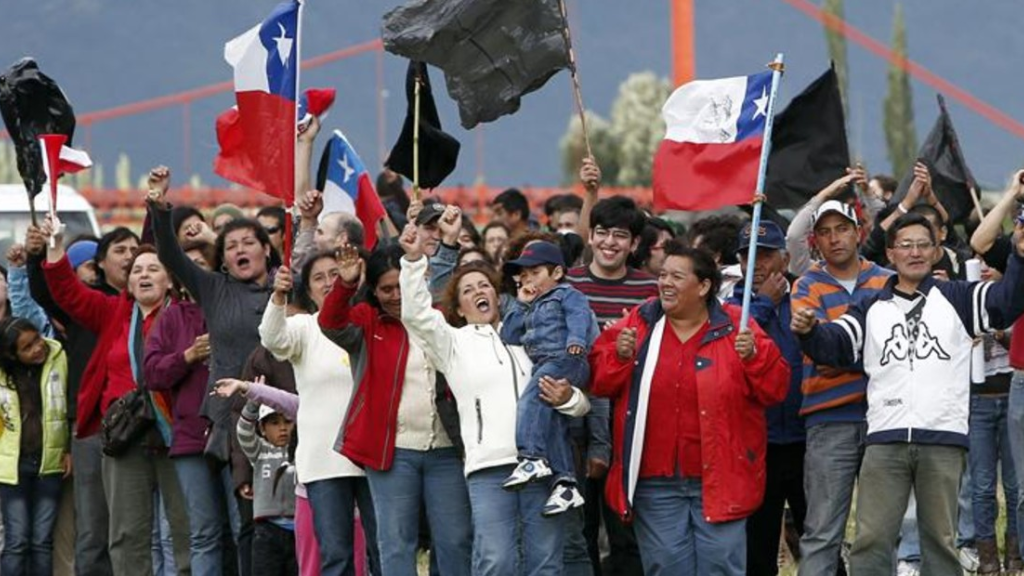
Strikes and resurgent trade unionism in Chile: Interview with Domingo Pérez Valenzuela


The labour movement is in crisis across much of the world. One exception is Chile. Since the mid-2000s, the South American country has seen a sustained upward trend in strikes and labour mobilisations. But does this represent a genuine revitalisation of trade unionism — and what are its limits?

Domingo Pérez Valenzuela is a Chilean sociologist whose research focuses on labour geography, trade union movements and strike dynamics in contemporary Chile. He is an academic at the Institute of International Studies (INTE), Arturo Prat University, in Iquique, Chile, and Director of the Observatorio de Huelgas Laborales (OHL, Labour Strike Observatory), which has systematically recorded strikes in Chile since 2010. He is co-author, with Rodrigo Medel, Diego Velásquez, Francisca Gutiérrez, Pablo Pérez and Maurizio Atzeni, of Huelgas laborales y revitalización sindical en Chile (Strikes and Trade Union Revitalization in Chile, OHL, 2025).

Pérez Valenzuela spoke with Serhii Shlyapnikov for LINKS International Journal of Socialist Renewal to discuss the resurgence of Chilean trade unionism in Chile, strengths and limitations of its strike model, and what lessons the country’s recent labour struggles offer for labour renewal internationally.

How did the OHL project come about?

The OHL emerged as a result of three factors.

First, there used to be a database for recording major strikes in Chile, which registered a huge number of labour stoppages that did not figure in official statistics and were little known about in the social sciences. This database stopped being maintained after 2010, because its creator [Alberto Armstrong, from the Pontifical Catholic University of Chile] unfortunately passed away.

Second, the 2010s saw the consolidation of a steep rise in strikes and social mobilisations, which had a significant impact on labour and social class studies.

Third, a group of researchers concluded that strikes were essential for reading capitalist society, as they facilitated a structural estimation of social conflict. So, around 2014–15, this group, together with the Centre for Social Conflict and Cohesion Studies (COES) and Alberto Hurtado University, founded the OHL.

The main objective was to register and study, from a social sciences perspective, all workers’ collective actions involving a deliberate withdrawal of labour over demands, requests or claims, regardless of their legal status.

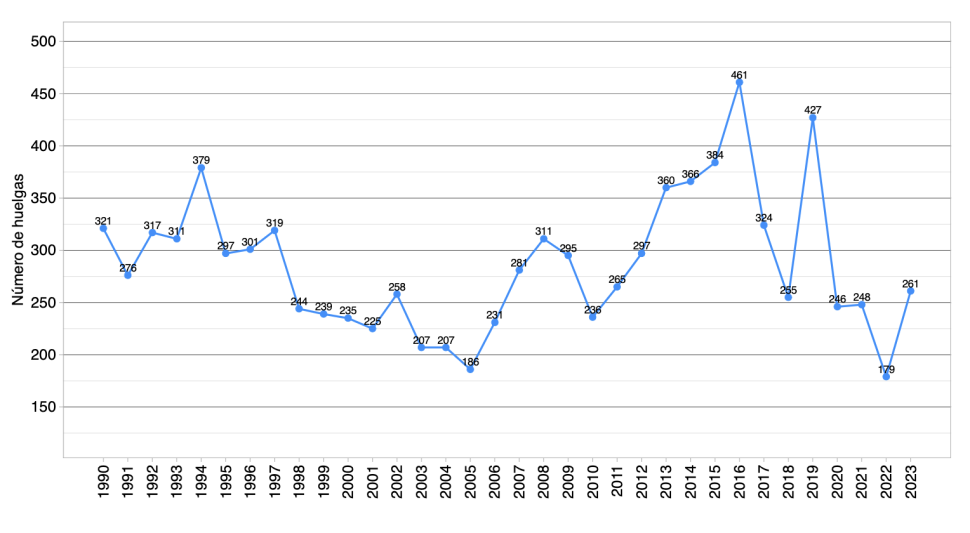
When did the trade union movement’s resurgence begin? The “Summary of Labour Strikes in Chile 2022–23” graph (below) shows that the strike wave peaked in 2015–19. Was it a consequence of the huge social protests between 2006–19?

Image
graph
Summary of Labour Strikes in Chile 2022–23

Many researchers and union leaders have sought to understand to what extent this trade unionism resurgence was, on the one hand, the product of one or several specific events and, on the other, the product of a long cumulative process.

There is a broad consensus that the first clear signals or revival came in 2006–07 when subcontract workers at Codelco [the National Copper Corporation of Chile], and then subcontractors in other strategic primary industries, staged strikes and radical actions that shook entire sectors, forced contracting companies to negotiate and exposed to the country what lay beneath economic growth: tens of thousands of precarious and discriminated workers, earning a fraction of what plant workers earned, under worse working conditions and without access to serious negotiations [with contracting companies]. Those strikes were a turning point for labour and society, and one of several “mobilisation milestones” achieved by different labour sectors in subsequent years, all of which we explore in the book.1

Confederacion de Trabajadores del Cobre
Confederation of Copper Workers

Then, 2006 saw an unprecedented school students’ rebellion and strong residents’ mobilisations for housing, followed by university mobilisations in 2011. After many other events, the October 2019 explosion finally occurred — a true popular rebellion in which Chilean society rediscovered that protest was possible and that the established order could be challenged on the streets.

During this protest cycle, many strikes evolved into stoppages at the comuna [local council] level, as well as general strikes for specific demands. Evidence suggests that trade unionism managed to become dynamic mainly through the labour strike wave that grew sharply from 2007, peaking with the largest mass political strike in the country’s history in 2019.2

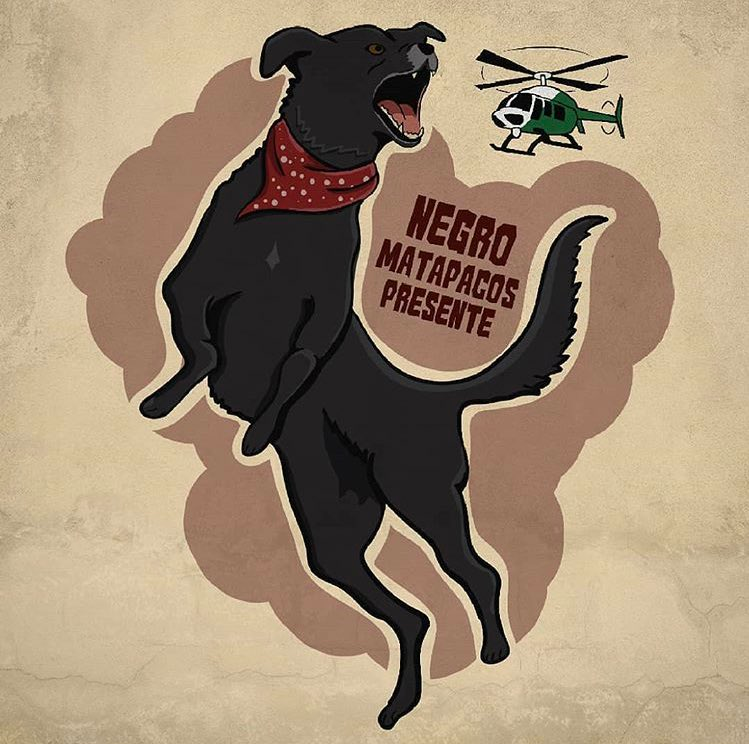
“Negro Matapacos” (Black Cop-Killer)
Black Cop-Killer, present

Of course, the strongest unions — those covering miners, public employees, and industrial and port workers — built their power through patient and sustained organisational work, often in silence and at high cost (including deaths), during years of centre-left and right-wing governments. But union forces also emerged for the first time in the service sector, covering bank, supermarket, telecommunications, warehouse and transport workers, among others. Here, social protest amplified what had been built from below.

What lessons can be drawn from the strikes in Chile? What can be replicated in other countries? Developing trade union culture through the use of the media? Developing workplace organising? Developing mutual support groups at the neighbourhood level?

The Chilean experience suggests that none of these three paths works alone. And that unions must also be prepared to mobilise, which was the most dynamic factor we observed. That said, there is a sequence that appears to show a way forward. Workplace organising is the foundation without which all other aspects become fragile, especially when a repressive and anti-union environment prevails at work and when the collective bargaining system is fragmented (as in Chile). A union that has no power in the workplace, that cannot stop production, that workers do not respect or trust, that employers do not fear, cannot sustain any of these other strategies for very long.

Neighbourhood mutual support networks, or even forms of community unionism, are an indispensable complement to creating a union movement at the local scale, sustaining long conflicts and uniting workers in various companies with similar conditions. Strike “resistance funds,” union halls shared between organisations, and community solidarity with workers’ organisations — all of this is real, not rhetorical, infrastructure that builds strength. The media — and today social networks — can be used against companies. They are also needed to spread information among dispersed workers and useful for communicating concrete victories. However, a union without a base will have nothing to communicate, or not be able to do so clearly. In turn, leaders or members without training in managing social networks can fall into traps and disorganisation.

All these factors, and others, allow us to tell when a union is strong and when it is not. But this opens up another huge debate: strong for what? The big debate is really about strategy: what do different unions want to achieve? This determines whether such factors will benefit a group, a sector or a portion of the working class.

In Chile, trade union strategies have historically been shaped by a high degree of organisational fragmentation. The predominant form of action has been isolated activity at the enterprise union level, in a context where only a minority of organisations (about a quarter) are affiliated to federations, confederations or national labour centres. At the same time, at the national coordinating level, the second predominant strategy has been a socio-political form of trade unionism, with these coordinating bodies being closely linked to the historic centre-left and left-wing parties. The main institutional expression of this has been the Central Unitaria de Trabajadores de Chile (CUT, Workers’ United Centre of Chile), the country’s largest labour confederation. However, even at this level there have been significant fractures, reflected in the existence of other labour centres, confederations and movements operating outside the CUT’s orbit, though without any broad transversal unity among them.

During the 2019–20 uprising, this scenario evolved dynamically. The outbreak was rapidly transformed into a popular revolt by social movements, especially neighbourhood class-struggle organisations and the feminist movement [Coordinadora Feminista 8M or March 8 Feminist Coordinating Committee] that focuses on building a general strike. The CUT took several days to interpret the situation and define its position. But thanks to its greater organisational stability and coordinating capacity, it managed to lead a broader Trade Union Bloc, with forces outside its traditional sphere, which called the largest political mass strike in the country’s history, constituting the rebellion’s high point.

This process bears important similarities to what Alexander Gallas and Jörg Nowak have written regarding contemporary mass strikes. Such mobilisations are no longer led primarily by the traditional, stable, industrial worker, but rather by precarious and frequently non-unionised sectors. Similarly, along the lines of the authors’ conclusion, the 2019 mass strike in Chile was initially a defensive response to a neoliberal offensive and deepening social precarisation. However, ultimately driven by the broader social rebellion, it took on an offensive character and advanced multiple structural demands, nearly bringing down the government.

The book looks at trade union resurgence along the four dimensions proposed by Behrens, Hamann and Hurd: membership, economic influence, political influence and institutional changes. Which of these dimensions contributed the most and least to the resurgence in Chile? Why?

In our book, we show how membership — in successful but initially limited experiences — and mobilisation energised the political and social dimensions. On the other hand, collective bargaining was not so successful; it did not lead to any major legislative changes nor the construction of broad alliances with political forces. Outside this general framework, strong Chilean unions — particularly large industry-wide federations — have managed to directly influence the creation of new unions, government programs, legislative agendas and constitutional negotiations, since 2019.

Membership remains weak, marked by unionisation rates in the private sector of about 15–20%. This structural situation, together with the difficulty of achieving unity, is what most limits or conditions the scenario I have described. Finally, the economic dimension, perhaps naturally, remains key. Chile is one of the most unequal countries in the world. This fuels workplace tensions. In turn, financial precarity makes unions generally poor. Therefore, sharing resources has become vital for them to project themselves into the future.

Is it easy to start a strike in Chile? What is the procedure? Is it true that the strongest unions (with the best contracts) resort to strikes more frequently?

Quite the opposite: it is always an intense and difficult process to carry out successfully, so its execution must come from a careful strategic analysis by the union.

Strictly speaking, in any society with high inequality, workers will begin to feel the first conflict simply because they want to organise at work. From there onwards, the conflict occurs under unequal conditions. Then, if a group of workers manages to establish a union after long silent, underground, hidden work, they find that the legal procedure to hold a strike is regulated and limited: the union must be in a formal process of collective bargaining, which has strict deadlines; there is a mandatory mediation stage; and the vote to go on strike requires an absolute majority of members.

Until the 2016 labour reform, companies also had the right to replace striking workers, which made work stoppages much more ineffective. After the reform, this changed to only allowing companies to maintain “minimum services,” which still means a total stoppage cannot occur.3

This explains why so many of the most significant strikes in recent decades have been technically illegal: powerful unions (primarily in terms of their size) have called strikes when needed or in response to urgent demands, while protecting themselves from possible reprisals.

That said, in comparative terms, the OHL found that conflict arises at an intermediate level of strength relative to employers, because if power is high, the union imposes its demands even before sitting down at the negotiating table. Due to the lack of institutional power, unions in Chile have to compensate for their lack of legal power through the power of mobilisation. When this power is high, you can choose to take legal or non-legal strikes, or alternate between them, depending on need and context.

When reading the chapters on specific strikes (Codelco subcontractors, teachers), one gets the impression that Chilean unions use the strategy of “trade unionism as a social movement” (street mobilisation, coalitions, direct action). Is this impression correct?

This impression is accurate for the most dynamic and long-standing sectors but not the majority of unions, given that in Chile union affiliation with federations, confederations and central bodies is a minority phenomenon.

What the literature calls “trade unionism as a social movement” — the combination of workplace negotiation and public space mobilisation — describes well the effect that subcontractor mobilisations had from 2006 onwards, but it does not describe these germinal events themselves. Rather, it was only in the 2010s that unions began to receive greater social support and to unite with other social sectors — still insufficiently — to achieve results.

What have been the most important strikes in Chile in the past two decades? Could you point to any strike that was a turning point?

The strikes from 2006 to 2008 unleashed deep labour unrest and produced real changes: a greater predisposition to unionise, legislation on subcontracting, new forms of alliances, and increased scientific research on workers’ power.

After that, I would say that a series of mobilisation milestones took place. Many of these had a large community impact when they occurred within key industries in a region. Other milestones had strong public repercussions when they took on a mass character in cities, such as the mobilisations by education and health workers. But among this series of milestones that were fundamental, the most powerful were the local council-scale mobilisations, such as the regional strikes in Aysén or Calama, where unions and communities paralysed an entire city to put forward their demands.4

The book also shows that the strongest unions are in the public sector and mining. Why does the public sector have strong unions, despite the lack of a legal right to strike?

This is one of the most striking paradoxes of the Chilean case, although, to be precise, the strong levels of unionisation is limited to permanent public employees, and does not extend to fee-based contract workers, where the challenge of achieving unity remains.

The explanation has several layers. The first is institutional: public sector workers have job stability that private sector workers do not, because they benefit from much more effective regulations regarding grounds for dismissal. This reduces the individual cost of organising and going on strike. A public employee who participates in a work stoppage will not fear dismissal in the same way as a worker in a private company, where firing someone is very easy.

The second layer is historical: public sector unions covering teachers, healthcare workers, municipal employees, etc, have decades of organising culture and a national structure. They know how to hold assemblies, manage internal conflicts or share organisational resources with other groups seeking to unionise or with social movements.

The third layer is socio-structural: a strike by teachers or hospital workers receives immediate public visibility, which tends to politicise these movements. If the employer state is also a political state that sometimes seeks to make public work precarious, public employees respond as a union movement. Unity, then, is and has been their greatest strength.

What about mining? Why has this sector also seen a sustained resurgence?

Mining concentrates conditions that are almost unique for union power. The strategic position of Chilean copper in the global economy — the country produces about 25–30% of the world’s copper — means that a stoppage at Codelco or at Escondida is felt in international commodity markets.

Added to this are the cohesive nature of mining communities. Cities such as Calama, El Salvador or Chuquicamata are largely mining towns, where the union is not just a labour institution but the centre point of social, sporting and cultural life. This community implantation is what allows long strikes to be sustained. Union communities also have a strategic advantage: companies depend on vulnerable transport routes and facilities located in geographical areas where workers’ power has pushed back police forces through united mobilisation. The unions themselves, in turn, have been very strategic in analysing the potential for mobilising labour in these communities.

In many countries, mines are closing and workers are trying to leave such places. In Chile, is it older workers that mainly work in mines or are young people also seeking employment there due to high wages? What can you tell us about the social profile of miners?

The profile of miners is heterogeneous and changing. High wages in large-scale mining attracts many young people with technical training from institutes and universities. Once in the mine, they learn from older generations of the unionised working class, both plant workers and contractors. This, however, poses a challenge for classical trade unionism. The new generations often bring very specific practices and are focused on wages and working conditions, rather than solutions to the broader challenges of uniting different labour groups across thousands of contracting companies and within the plant itself. There are different paths to politicisation.

Chile had a left-wing government when Gabriel Boric was president. To what extent did this help trade unions and social movements?

At the OHL, we have not analysed this, as we have concentrated on researching workers’ agency and conflict in the labour process. That said, personally, I believe it is a mistake — one often made in the international media — to associate Boric’s government with the left, given that its main reference point is “progresismo” (progressivism), which seeks a broad alliance between the centre-left and liberals. Its driving force, moreover, was the middle classes. Even so, many left-wing people organised to support this government. But the relationship was more complex than a simple sum of its parts.

Boric came to power in 2022 with an agenda that included historic trade union demands, mainly advocated by the Communist Party: reduction of the workday, better protection for platform workers, collective bargaining reform. Some of those promises were fulfilled: in 2023, the work week was reduced to 40 hours. This was an advance that the trade union movement applauded.

The government had to deal with deep tensions, an unprecedented pandemic, market pressures, a radical sector that refused to support it, the defeat of the constituent process in the September 2022 referendum, and public opinion, which grew more conservative as changes (either minor or radical) failed to materialise. This led the government to moderate its agenda, with structural reforms, such as industry-wide collective bargaining, left pending until the last days.

There is broad union consensus that bargaining across entire occupational sectors, instead of company by company, would have radically changed the balance of forces. Some, however, also warned this was not a panacea, and could result in union bureaucratisation if the balance of forces at the grassroots did not change.

What threat does the new right-wing José Antonio Kast government pose to trade unions?

Kast and the Republican Party, although only one portion of the ruling class, represent an ideological right-wing force that is not afraid to confront other political sectors. This threat is not abstract. The most direct threat is to reverse or weaken recent labour reforms: roll back the 40-hour work week law, enable employer irregularities, and provide fewer resources for labour inspection. But the government has already accumulated multiple tensions, and many issues remain on the table, from the significant weakening of real wages to the privatisation of state-owned companies.

Today, the far right is once again proposing a wave of anti-popular initiatives. But recent history teaches us that trade union movements can not be easily dismantled by governments. Augusto Pinochet’s dictatorship tried to destroy trade unionism through direct repression but never fully succeeded. The government of mega-capitalist Sebastián Piñera militarily repressed a social uprising, but he too failed to dismantle union forces.

What films or books on the Chilean labour movement can you recommend?

Tejedores de la revolución (Weavers of the Revolution) by Peter Winn is one of the best books on Chilean labour history. It follows the Yarur textile factory workers during the Unidad Popular (Popular Unity) period: how they organised, how they pushed beyond what then-president Salvador Allende wanted, and how they experienced defeat. It is history from below.

In terms of more recent developments, El renacer de la huelga obrera en Chile (The Rebirth of the Workers' Strike in Chile) by Antonio Aravena and Daniel Núñez, details the resurgence of union mobilisation, looking at the struggles of subcontract workers between 2006–08. It highlights the new forms of organisation and collective action that converted spontaneity into organisation in the sector.

From a broader perspective, there is Building Power to Shape Labor Policy: Unions, Employer Associations, and Reform in Neoliberal Chile by Pablo Pérez, which delves into “class power” to explain why Chilean trade unionism has struggled to influence institutional power, despite the country's political changes.

Rodrigo Medel and Sebastián Osorio’s Sindicalismos en Chile: Desde la reestructuración neoliberal a la posdictadura (Trade Unionisms in Chile: From Neoliberal Restructuring to the Post-Dictatorship Era) offers a multi-sectoral study.

Finally, Guía de Acción Sindical (Trade Union Action Guide), which was recently published and is available for free and online, draws together and synthesises many of the tactics and innovations of unions in terms of membership, bargaining, and strikes.

As for the OHL, we have produced many annual reports that provide a first-hand, rigorous and accessible source of information on contemporary labour conflict. Among them is our 2018 Report, which includes an important comparative perspective, and our 2019 Report, which focuses on the general strike at the centre of the social uprising.

As for documentaries, I have to mention the feature film, Pueblo en huelga (People on Strike), which I was invited to collaborate on. It follows 11 labour struggles, in sectors such as retail, warehouses, education and industries, during the 2010s, culminating in the 2019 social revolt, all of which centred on the demand for dignity at work.

  • 1

    Note by S.Shlyapnikov: The Codelco subcontractors’ strike took place between June 25–July 31, 2007. It involved 28,000 workers employed by subcontracting and contracting companies providing services at Escondida, the world’s largest copper mine. Subcontractors demanded equal pay with permanent workers employed by Codelco at the mine. The movement's leader was Cristián Cuevas, President of the Confederation of Copper Workers (CTC) and, at the time, a member of the Communist Party of Chile.

  • 2

    Note by S.Shlyapnikov: The 2019 Estallido Social (Social Outburst) was a wave of popular protest that took place from October 7, 2019 to March 18, 2020. The formal trigger was a rise in metro train fares. After the first weeks of protest, then-president Sebastian Piñera declared a state of emergency, deploying troops to Santiago and then other regional capitals. By February 2020, 36 deaths and more than 11,000 injuries were recorded. The Social Outburst also gave rise to new cultural symbols, such as the dog “Negro Matapacos” (Black Cop-Killer) and the “Dark Avengers” or “Chilean Avengers”. The protests ended after a security force crackdown, the onset of the COVID-19 pandemic, and the decision to hold a referendum on a new constitution.

  • 3

    Note by S. Shlyapnikov : Unlike in the United States, there is no official vote to certify a union as the exclusive representative of all workers. The union represents only its members. At the same time, collective bargaining is decentralised and takes place at the company level.

  • 4

    Note by S. Shlyapnikov: The Aysén strike began on February 18, 2012, in the city of Puerto Aysén, located 1640 kilometres south of Santiago. Residents protested against the high cost of living, the lack of quality healthcare and education, poor transportation links with other regions, and the fact that profits from natural resource extraction (mainly gas and water) went to the central government rather than remaining in the region.


US Trapped by Iran’s Resilience; Why the Solution Is Agreement, Not Attrition


by | May 15, 2026

In recent months, a painful but increasingly undeniable conclusion has begun to emerge across Western think tanks, mainstream media, and U.S. intelligence assessments: contrary to Washington and Tel Aviv’s initial expectations, Iran has neither collapsed, fragmented, nor moved toward surrender. On the contrary, the conflict has exposed layers of what can only be described as Iran’s “structural resilience” – a resilience many in the West either underestimated or failed to include in their strategic calculations altogether. The central question is no longer whether the United States can inflict damage on Iran. The real question is whether such pressure is actually capable of producing Washington’s desired political outcome.An increasing number of Western analyses now suggest the answer is no. The United States and its allies are gradually realizing that they are confronting a country capable of enduring pressure, reproducing internal control, managing crises, and exporting the costs of war beyond its borders. This reality has drawn Washington into what may be called “the trap of Iranian resilience” – a situation in which continued pressure no longer changes Tehran’s behavior but instead exponentially raises the costs for America itself.

In the early stages of escalating confrontation, the dominant assumption in Washington was that a combination of military strikes, maritime pressure, infrastructure destruction, and psychological warfare could disrupt Iran’s decision-making system. Yet even some recent U.S. intelligence assessments now acknowledge that Iran possesses the capacity to withstand sustained pressure over a prolonged period. When classified evaluations speak of Iran’s ability to endure months of maritime pressure and blockade, it effectively means that America’s most important coercive lever has failed to produce the rapid strategic results initially anticipated. This issue extends far beyond the military battlefield. One of the most significant dimensions of Iran’s resilience lies in its ability to transfer the costs of conflict to the global economy. Rising insecurity along energy routes, scattered attacks in strategic waterways, and disruptions to maritime security have directly affected global energy markets. The surge in oil prices beyond psychologically critical thresholds is not merely an economic indicator; it is a geopolitical message. Iran has demonstrated that if it is forced to bear the costs of war, those costs will not remain confined within its own borders. Instead, part of the burden will be shifted onto the global economy, international energy markets, and even the domestic political environment inside the United States. This is precisely where America’s strategy begins to erode. Washington has entered a conflict that becomes more costly the longer it continues – from inflationary pressure and domestic political divisions to the depletion of military stockpiles and growing criticism regarding the war’s unclear objectives. What was initially framed as an operation to rapidly contain Iran has increasingly become a stage upon which the limitations of American power are being exposed.

Inside Iran, meanwhile, the war has not produced the kind of social collapse many Western circles expected. New Western analyses openly acknowledge that the wartime atmosphere has actually helped the Iranian state reassert security control over public space. The political system has relied on loyalist networks, security organization, and the cohesion of the regime’s hard core to reinforce social control. In other words, rather than weakening the political structure, the conflict has given it an opportunity to redefine and rebuild its security order. This point is strategically significant for the United States because a major part of the initial calculations rested on the assumption that external pressure could widen internal fractures and transform public dissatisfaction into political crisis. Yet even some Western media outlets now concede that the wartime environment has reduced the visibility and activity of opposition groups while restoring a more securitized atmosphere in urban spaces. This means one of the central indirect objectives of maximum pressure has also failed to materialize.

At the same time, Iran’s power structure has not suffered the kind of paralysis Western strategists anticipated. Recent intelligence assessments suggest that even under wartime conditions, Iran’s political system has managed to establish a form of controlled distribution of power – a model in which decision-making is coordinated across institutions, preventing a complete breakdown of command structures. This is precisely what distinguishes Iran’s structural resilience from many other regional actors. In numerous states, severe military pressure can trigger the collapse of the chain of command. In Iran, however, the system appears designed to preserve operational continuity even under crisis conditions.

In the military sphere, the West is also gradually recognizing that the complete destruction of Iran’s deterrence capabilities is nearly impossible. The survival of significant portions of Iran’s missile infrastructure and launch capabilities sends a clear message: even large-scale attacks cannot reduce Iran’s capacity for retaliation to zero. This is why many newer Western analyses have replaced earlier ambitions of collapse or regime transformation with the more limited concept of “containment.” That shift in language is, in reality, an indirect admission that the original strategic goals have failed.

Perhaps the most important factor complicating the equation, however, is the international dimension of the conflict. The confrontation with Iran is no longer merely a bilateral struggle. Growing Russian support and the emergence of a broader anti-Western alignment around Tehran indicate that this conflict is increasingly becoming part of a larger global power competition. Military technology transfers, intelligence cooperation, and logistical support provide Iran with the means to sustain a prolonged war of attrition. This poses a major challenge for the United States because Washington is no longer dealing solely with Iran, but with a network of actors who increasingly view the weakening of American influence as aligned with their own strategic interests.

Under such circumstances, continued attempts to break Iran’s resilience look less like a realistic strategy and more like a gradual erosion of American power itself. The experience of recent years has demonstrated that Iran cannot be managed through formulas designed for fragile states. Economic pressure alone did not collapse the political system. Military threats did not produce surrender. War itself failed to destroy the cohesion of the state. On the contrary, every stage of external pressure appears to have activated new mechanisms of adaptation and reconstruction within Iran.

This raises the central question: if breaking Iran is not possible, then what is the logical alternative?

An increasingly serious answer is beginning to emerge even within some Western circles: accepting the reality of Iran’s resilience and moving toward a fair agreement. The United States must recognize that the issue with Iran is not one of elimination or collapse, but rather the management of an established regional power. The longer Washington delays acknowledging this reality, the greater the costs it will incur – economically, strategically, and geopolitically.

A negotiated settlement with Iran should not be viewed as a sign of American weakness. Rather, it would represent an acknowledgment of the limits of power in a world no longer governed by the unipolar assumptions of past decades. Iran has demonstrated an ability to absorb pressure, impose costs, and buy time. Under such conditions, continuing a war of attrition only deepens the crisis.

Ultimately, perhaps the most important lesson of this confrontation for the United States is that not every power can be managed through a strategy of “pressure until surrender.” Some states – especially those possessing geopolitical depth, cohesive security structures, and asymmetric warfare capabilities – cannot be broken; they can only be engaged through compromise. Iran today occupies precisely such a position: a country not on the verge of collapse, but one increasingly forcing the West to recognize that the path out of crisis lies not in fantasies of defeating Iran, but in accepting reality and pursuing a balanced and sustainable agreement.

Greg Pence is an international studies graduate of University of San Francisco and my articles have been published on websites like Middle East Monitor.