Monday, June 29, 2026


Nigeria’s Major Lithium Reserve Discovery Near Abuja Explained
BYMUFLIH HIDAYATON JUNE 26, 2026

The Geological Lottery Africa Has Been Sitting On

For decades, the dominant narrative around African resource wealth has centred on a familiar paradox: a continent holding an extraordinary share of the world's critical minerals, yet capturing a disproportionately small fraction of the economic value those minerals generate. Nowhere is this tension more visible than in Nigeria, where a Nigeria lithium reserve discovery is forcing an economy historically anchored to crude oil revenues to confront the scale of what lies beneath its non-petroleum geology.

The global energy transition has fundamentally reordered the strategic value of specific minerals. The critical minerals demand for lithium, nickel, platinum group metals (PGMs), and rare earth elements has moved these resources from industrial footnotes to the centrepiece of geopolitical supply chain strategy across the United States, European Union, and China. Against this backdrop, two significant mineral discoveries announced at the African Natural Resources and Energy Investment Summit 2026 in Abuja have placed Nigeria at the centre of a conversation it has long been absent from

Two Discoveries, One Strategic Signal

The Kaduna Polymetallic Province: Breadth Over Single-Commodity Exposure

The first announcement involved the identification of a world-class polymetallic mineral province in Kaduna State, verified by the Nigerian Geological Survey Agency (NGSA). The deposit was identified by Steron Mining and Company Limited in collaboration with the NGSA, which subsequently confirmed the geological findings.

What makes polymetallic provinces commercially distinct is their multi-revenue architecture. Rather than depending on a single commodity price cycle, operators can generate simultaneous cash flows across several mineral streams. The Kaduna deposit contains high-grade concentrations of:

  • Platinum group metals (PGMs)
  • Gold
  • Nickel
  • Copper
  • Lithium
  • Rare earth elements (REEs)

Nigeria's Minister of Solid Minerals Development, Dr. Dele Alake, characterised the Kaduna find as a landmark breakthrough with the potential to elevate Nigeria's standing in the global market for strategic minerals used in clean energy technologies and advanced manufacturing. The high-grade nature of the deposits was specifically highlighted as a differentiating quality factor.

Investor Insight: Polymetallic deposits provide a natural hedge against single-commodity price downturns. If lithium prices soften, for instance, gold or PGM revenues can support project economics. This structural diversity makes the Kaduna province considerably more resilient than a pure-play lithium discovery.

The Abuja Lithium Reserve: 3.3 Million Metric Tonnes Confirmed

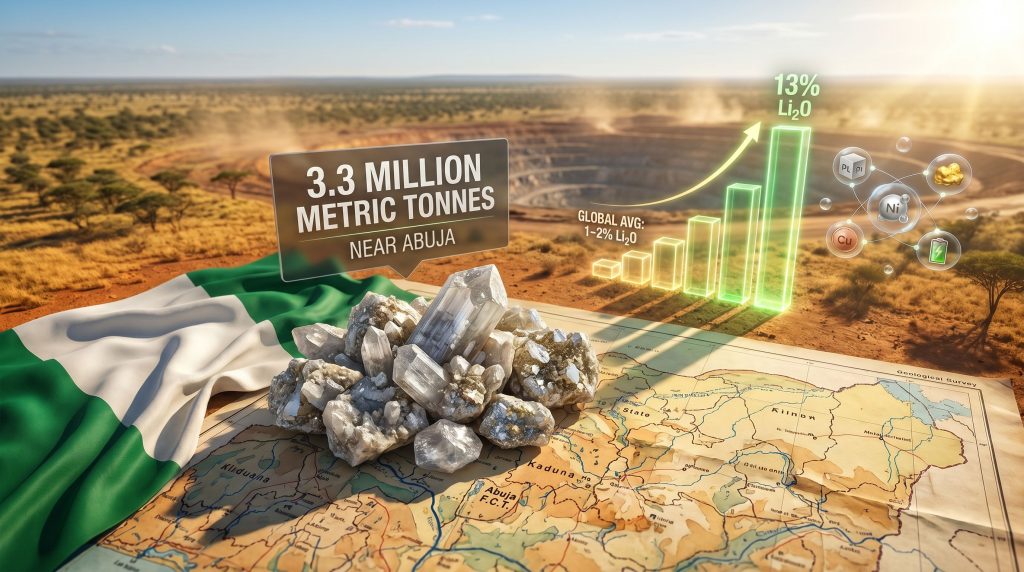
Separately, Steron Mining and Company Limited disclosed an estimated 3.3 million metric tonnes of lithium reserves at its mining site near Abuja. This constitutes one of the most significant standalone Nigeria lithium reserve discovery announcements in the country's recorded mining history and was unveiled at the same 2026 summit.

The dual-announcement format is itself strategically significant. By revealing a polymetallic province in Kaduna alongside a discrete lithium reserve near the capital, Nigeria's mining sector is signalling breadth of geological opportunity rather than a concentrated single-site story. This matters to institutional investors who assess country-level mineral prospectivity rather than individual project economics alone.

How Nigerian Lithium Grades Stack Up Against Global Benchmarks

Understanding Li₂O Concentration as a Commercial Threshold

One of the least understood aspects of lithium investment outside specialist circles is the critical role of ore grade in determining project viability. Understanding how lithium mining works reveals that lithium oxide concentration, expressed as a percentage of Li₂O, is the primary commercial benchmark for hard-rock spodumene deposits.

The following thresholds are widely used across the industry:

Li₂O Grade Range Commercial Classification Below 1.0% Sub-economic; generally not viable
1.0% to 2.0% Minimum viable threshold for most projects
2.0% to 4.0% Good commercial grade
4.0% to 6.0% High quality; strong project economics
Above 10.0% Exceptionally rare; premium-tier deposit


Against these benchmarks, Nigerian lithium geology stands out sharply. ASX-listed Chariot Resources Limited, which secured six mining licences across Nasarawa, Kogi, Kwara, Ekiti, and Cross River states, independently verified spodumene extraction grades ranging from 2.66% to 5.96% Li₂O across its licensed sites. Certain Nigerian deposits have recorded concentrations approaching 13% Li₂O — a figure that would place them among the highest-grade hard-rock lithium sources identified anywhere on earth.

Technical Note: High-grade deposits do more than improve headline economics. They reduce the volume of ore that must be processed to yield a tonne of lithium carbonate equivalent (LCE), directly lowering energy consumption, processing costs, and environmental footprint per unit of output. For frontier jurisdictions where energy infrastructure is constrained, this grade advantage is operationally meaningful.

Nigeria's Lithium Landscape: A Comparative Overview


Site or ProgrammeLocationReserve / GradeVerified BySteron Mining
 Lithium Reserve Near Abuja ~3.3 million metric tonnes NGSA
Kaduna Polymetallic Province Kaduna State PGMs, gold, nickel, copper, Li, REEs NGSA + Steron Mining
Chariot Resources Licensed Sites Nasarawa, Kogi, Kwara, Ekiti, Cross River 2.66% to 5.96% Li₂O spodumene Independent verification
National Lithium Belt Estimate 10+ states $34B to $700B estimated value NGSA mapping


Nigeria's lithium-bearing geology spans at least ten states, tracing a belt mapped by the NGSA that extends from the northwest toward the southeast, approaching the Cameroon border. Total estimated reserve value across this belt ranges from $34 billion to $700 billion depending on methodology, commodity pricing assumptions, and deposit scope — a variance that itself illustrates how early-stage much of this geology remains. Furthermore, recent research published in geochemical literature reinforces the geological significance of Nigeria's lithium-bearing pegmatite formations across these states.

Who Is Deploying Capital Into Nigeria's Lithium Sector

Chinese Investment Leads the Committed Capital Wave

Jiuling Lithium Mining Company and Canmax Technologies have collectively committed investments exceeding $1.3 billion to establish lithium processing infrastructure in Nasarawa and Kaduna states. This level of financial commitment from Chinese industrial capital is not incidental. It mirrors a well-established strategic playbook: secure upstream supply access while simultaneously building downstream processing capacity inside the producing country.

What is less commonly discussed is the value-capture implication of this model. When foreign processors build in-country facilities, host nations gain jobs and tax revenues — but the highest-margin stages of the lithium value chain, including battery precursor chemicals and cathode active materials, typically remain in the investor's home jurisdiction. Moreover, Chinese companies are actively grabbing stakes in Nigeria's lithium and EV future, making Nigeria's ambition to capture more than raw export value all the more dependent on deliberate policy architecture around domestic processing mandates.

Australian Junior Mining Enters the Picture

The involvement of ASX-listed Chariot Resources Limited carries a different signal than Chinese industrial investment. Australian junior mining companies operate on exploration risk capital, meaning their entry is driven by geological conviction rather than downstream supply security. Their independently verified grades of 2.66% to 5.96% Li₂O across multiple licensed states represent a technically credible exploration outcome that adds weight to the broader thesis about Nigerian lithium prospectivity.

Saudi Capital Being Actively Courted

Nigeria has separately pitched $600 million in lithium and gold projects to Saudi investors, reflecting a deliberate strategy to build an investor base diversified beyond Chinese capital. This matters geopolitically: dependence on a single foreign investor class in a critical mineral sector creates leverage vulnerabilities that sovereign resource strategies should seek to mitigate.

The Structural Barriers That Could Limit Nigeria's Potential

Infrastructure: The Invisible Cost Multiplier

High ore grades and large reserve tonnages are necessary but not sufficient conditions for a successful mining operation. Nigeria's mining sector faces a set of infrastructure constraints that add cost at every stage of the value chain:

  • Transport corridors: The absence of dedicated rail links between mineral-bearing states and export ports adds significant cost-per-tonne relative to more developed mining jurisdictions.
  • Power reliability: Mineral processing is energy-intensive. Grid instability in Nigeria raises operating costs and complicates the business case for in-country processing ambitions.
  • Port capacity: Export scalability depends on adequate port infrastructure to handle bulk mineral shipments competitively.

These are not insurmountable problems, but they require capital investment that typically must precede, or run in parallel with, mining development rather than following it.

Artisanal Mining: A Hidden Depletion and Governance Risk

Unregulated artisanal and small-scale mining (ASM) activity across Nigeria's lithium-bearing states creates a compound problem that is often underappreciated by outside investors:

  1. Resource depletion: Surface and near-surface high-grade material — often the most economically significant portion of a deposit — can be extracted ahead of formal development, reducing the resource base available for bankable feasibility studies.
  2. Environmental liability: ASM activity can create ground disturbance and contamination that complicates future environmental permitting for formal operators.
  3. Revenue leakage: Minerals extracted through informal channels bypass royalty and tax collection systems, reducing the fiscal benefit to the state and undermining the revenue diversification argument.

Formalising ASM activity is a stated government priority under the Ministry of Solid Minerals Development's reform programme. However, the operational complexity of transitioning thousands of informal operators into a regulated framework should not be underestimated.

Regulatory Maturity and the Timeline to Bankable Feasibility

Risk Callout: In frontier mining jurisdictions, the gap between a verified resource discovery and a definitive feasibility study — the document required before project financing can be secured — routinely spans five to ten years. Regulatory clarity, transparent royalty frameworks, and enforceable environmental compliance mechanisms are not optional features of an attractive investment environment; they are prerequisites.

Nigeria's mining regulatory infrastructure has historically been less developed than its petroleum sector equivalent. The Nigerian Minerals and Mining Act and its associated regulations provide a framework, but investor confidence requires consistent application of that framework over time, not just its existence on paper.

Nigeria Within Africa's Broader Critical Minerals Competition

How Africa's Major Critical Mineral Producers Compare


CountryPrimary Critical MineralNotable Development Status

Nigeria Lithium, PGMs, REEs, Nickel, Gold 3.3Mt lithium reserve near Abuja; Kaduna polymetallic province verified
Zimbabwe Lithium Africa's largest lithium producer; mineral-for-infrastructure arrangements with China
DRC Cobalt, Copper Approximately 70% of global cobalt supply; persistent governance challenges
Zambia Copper $372M UK investment commitment in copper assets
Kenya Rare Earth Elements Preliminary US agreement on $62.4B estimated untapped REE deposits
Namibia Uranium, Lithium Growing junior miner interest; emerging exploration profile

Nigeria's Competitive Differentiators Within This Landscape

Several factors distinguish Nigeria's positioning relative to peer African mineral producers:

  • Commodity diversity: The combination of lithium, PGMs, gold, nickel, copper, and REEs across multiple provinces creates a broader investment proposition than single-commodity producers.
  • Economic scale: As Africa's largest economy by GDP, Nigeria brings capital market depth, existing trade infrastructure, and domestic industrial demand that smaller mineral-rich nations cannot replicate.
  • Coastal access: Unlike several landlocked competitors in the critical minerals space, Nigeria's port access provides a latent logistical advantage provided internal connectivity is improved.
  • Geological belt continuity: The NGSA-mapped lithium belt traversing more than ten states suggests a systemic geological endowment rather than isolated deposits — a distinction that matters for long-term sector scale.

From Oil Dependency to Mineral Diversification: The Economic Reframing

Why the Solid Minerals Sector Carries Structural Importance Beyond Revenue

Nigeria's petroleum revenues have historically accounted for the dominant share of government foreign exchange earnings, creating a structural vulnerability to oil price cycles that has periodically destabilised public finances. The solid minerals sector's contribution to GDP has remained marginal despite the geological evidence of significant endowment — a gap the current administration is explicitly seeking to close.

A successfully developed critical minerals sector would deliver economic benefits across several dimensions:

  • A countercyclical revenue stream decoupled from crude oil price movements
  • Foreign direct investment inflows spanning exploration, processing, logistics, and services
  • Technical workforce development in geology, mining engineering, and environmental management
  • Downstream industrial development potential in battery component manufacturing over the long term

The Value-Addition Question: Who Captures the Margin?

The most strategically important question facing Nigeria's minerals sector is not whether lithium can be extracted, but at what point in the value chain Nigerian entities capture economic benefit. The progression from raw ore to refined lithium carbonate to battery-grade lithium hydroxide to cathode active material represents a series of value-addition steps, each carrying progressively higher margins.

Nigeria's stated objective of building in-country processing capacity aligns with this logic. However, investment structures that place processing infrastructure under foreign ownership — even when physically located in Nigeria — can still result in the majority of value-added margin flowing offshore. Structuring investment agreements to ensure progressive local content requirements and domestic value retention will be as important as attracting the initial capital. Consequently, trends in African mining finance suggest that host nations are increasingly seeking equity participation rather than royalty-only arrangements to better retain in-country value.

Frequently Asked Questions: Nigeria Lithium Reserve Discovery

How large is Nigeria's newly confirmed lithium reserve near Abuja?

Steron Mining and Company Limited has identified an estimated 3.3 million metric tonnes of lithium reserves at its mining site near Abuja, disclosed at the African Natural Resources and Energy Investment Summit 2026.

What minerals were confirmed in the Kaduna polymetallic province?

The Kaduna deposit contains verified high-grade concentrations of platinum group metals, gold, nickel, copper, lithium, and rare earth elements, confirmed by the Nigerian Geological Survey Agency in collaboration with Steron Mining.

How does Nigerian lithium grade compare to global averages?

Nigerian deposits are notably high-grade relative to global norms. Verified spodumene grades from licensed sites range between 2.66% and 5.96% Li₂O, while certain deposits have recorded concentrations approaching 13% Li₂O against a global commercial average of 1% to 2%.

What is the estimated total value of Nigeria's lithium reserves nationally?

Estimates vary significantly based on methodology and commodity pricing. Nigeria's total lithium reserve value across more than ten lithium-bearing states has been cited at figures ranging from $34 billion to $700 billion.

Which companies are currently active in Nigeria's lithium sector?

Key operators include Steron Mining and Company Limited (Abuja reserve and Kaduna polymetallic province), Chariot Resources Limited (ASX-listed, six licensed sites), Jiuling Lithium Mining Company, and Canmax Technologies, the latter two having committed a combined total exceeding $1.3 billion in processing infrastructure.

What are the primary risks facing Nigeria's lithium development timeline?

The main constraints include inadequate transport and energy infrastructure, widespread artisanal mining activity creating resource depletion and permitting complications, regulatory framework maturity relative to more established mining jurisdictions, and the extended timeline typically required to convert exploration discoveries into producing mines.

Key Takeaways

  • Nigeria has confirmed two major mineral discoveries: a polymetallic province in Kaduna State and a 3.3 million metric tonne lithium reserve near Abuja, both verified by the NGSA
  • Nigerian lithium is commercially differentiated by exceptionally high ore grades, with verified deposits reaching up to 13% Li₂O against a global commercial average of 1% to 2%
  • Total national lithium reserve value estimates span $34 billion to $700 billion across more than ten states
  • Chinese companies alone have committed over $1.3 billion in processing infrastructure, with Saudi and Australian capital also entering the sector
  • Structural barriers including infrastructure deficits, artisanal mining activity, and regulatory development gaps must be systematically addressed to convert geological potential into sustained export revenue
  • The value-addition question — determining how much of the lithium value chain margin is retained within Nigeria rather than captured offshore — will ultimately define whether this Nigeria lithium reserve discovery reshapes the country's economic structure or simply replicates the extractive model that characterised its oil era

This article contains forward-looking assessments based on publicly available geological data, investment announcements, and industry benchmarks. Reserve estimates, valuation ranges, and development timelines are subject to material change as exploration and feasibility work progresses. Nothing in this article constitutes financial or investment advice.

 

Congo eyes coops, credit scheme to fund mine workers’ equity stakes


Image courtesy of Katanga Mining Ltd

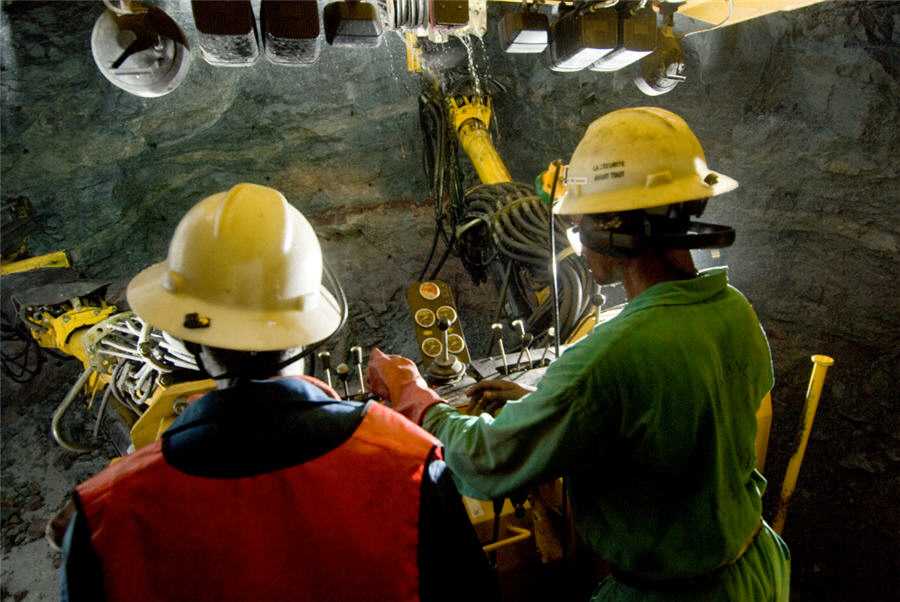
The Democratic Republic of Congo is considering a plan to help mining employees acquire mandatory stakes in the companies they work for through worker cooperatives and company-financed credit, a draft decree seen by Reuters on Tuesday showed.

Authorities in the world’s top cobalt and second-largest copper producer are preparing rules to enforce a law requiring miners to reserve 10% of their equity for Congolese nationals, including 5% for their employees.

Congo introduced the rule in 2018, but no company has yet complied. In January, the government asked miners – the majority of them multinationals including Glencore, Ivanhoe and China’s CMOC – to show proof of compliance by the end of July or risk sanctions.

As commodities prices surge, African countries are increasingly seeking a larger share of their mineral wealth.

Worker cooperatives and interest-free credit

Under the decree drafted by Congo’s mines ministry, companies would be required to sell shares to their employees on interest-free credit.

The workers’ stakes would be held through cooperatives, while a separate 5% of equity would be reserved for other Congolese nationals, who could hold shares either directly through Congolese-owned companies or via public social security institutions.

A mining executive told Reuters on Monday that a draft of the decree was shared with workers for input.

Under the credit-backed system, workers would reimburse their loans through the withholding of up to 80% of their annual dividends until the debt is fully repaid, according to the draft decree seen by Reuters.

Companies will, meanwhile, not be allowed to dilute the 10% equity for Congolese nationals irrespective of capital increases, the decree added.

Congo’s mines ministry and Chamber of Mines did not immediately respond to requests for comment.

Labour groups say the success of the law’s 5% worker equity requirement would depend on how the financing arrangements are ultimately structured.

Speaking after discussions with the mines ministry, Juresse Lokosha, head of the Union for Social Peace, said access to shares will not be automatic for all workers but would instead depend on their ability to mobilize financing, whether privately or through a company-backed credit scheme.

Authorities are, therefore, encouraging pooled structures to lower entry barriers, he added.

(By Ange Adihe Kasongo, Maxwell Akalaare Adombila and Ashitha Shivaprasad; Editing by Joe Bavier)


Mining billionaire calls on China to push green ship fuel deal


Andrew Forrest, Fortescue Metals’ chairman. (Image by Fortescue, Twitter/X.)

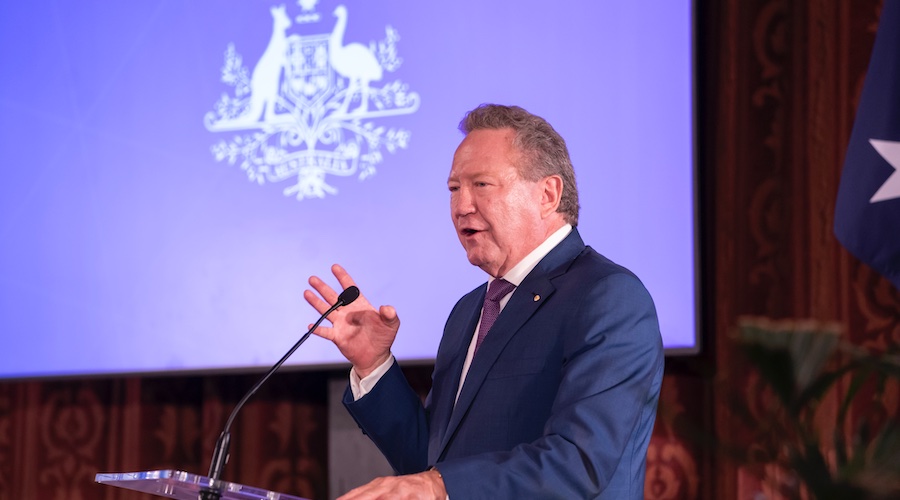
China should be pushing to decarbonize global shipping fuel after plans to charge emissions fees stalled last year because of US opposition, according to Australian billionaire miner Andrew Forrest.

The International Maritime Organization in October postponed by a year a decision on the landmark charge after attacks on the proposal from US President Donald Trump. China had supported a draft proposal in April 2025, but didn’t push back against the delay.

Penalties against shipping emissions would stand to benefit green hydrogen, a technology touted by both China and Forrest, who made his fortune as the founder of iron ore miner Fortescue Ltd. The billionaire in recent years has focused on pivoting to green technologies, although progress has been uneven.

“I need China to really lean forward on the International Maritime Organization proposal to trend itself to go green,” Forrest said Tuesday during a panel discussion at a World Economic Forum event in Dalian, China. “There’s huge vested political interest in the United States because they don’t want to see the world’s shipping industry go green.”

The US is the world’s largest oil and gas producer, while China is investing heavily in green hydrogen, which is made from water and carbon-free electricity. That hydrogen can then be blended into ammonia or methanol to produce an emissions-free shipping fuel.

BloombergNEF projects China will have 5 million tons of green ammonia production by 2030, far above the next biggest producer India at a projected 1.6 million metric tons. China is the cheapest producer, but the fuel remains two to three times more expensive than the ammonia generated by natural gas.

Securing demand for all that fuel has been more difficult. In 2025, for example, hydrogen output only rose by 11,000 tons in China despite the country adding 44,000 tons of production capacity, indicating that many projects are operating at only a fraction of their full utilization, according to BloombergNEF.

(By Lili Pike)


BHP and Rio Tinto test electric trucks to clean up iron ore


One of two Cat 793 XE Early Learner battery-electric haul trucks being tested. (Image courtesy of Caterpillar.)

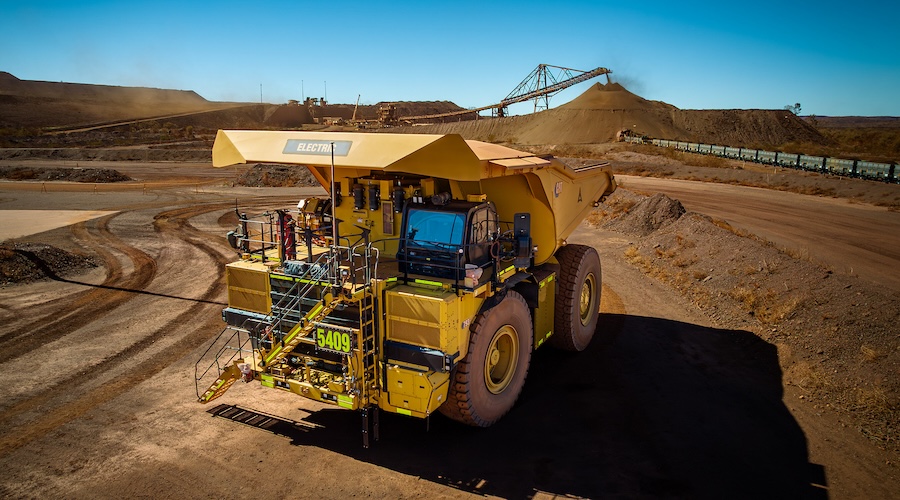
BHP (ASX: BHP), Rio Tinto (ASX: RIO) and Caterpillar (NYSE: CAT) have launched an industry-first trial of battery-electric haul trucks in Western Australia’s Pilbara, a key step in efforts to reduce emissions from some of the world’s largest mining operations.

The companies unveiled two Cat 793 XE Early Learner battery-electric haul trucks at BHP’s Jimblebar iron ore mine, where the vehicles have undergone three months of initial testing following safety validation at Caterpillar’s Tucson Proving Ground in Arizona, US.

Jimblebar is home to two of seven Caterpillar battery-electric haul trucks currently being tested globally. The trial will assess the trucks’ technical performance, charging requirements and commercial viability in one of mining’s most demanding operating environments.

“These trucks exemplify what can be achieved when leaders in our industry collaborate to find a solution to a complex problem,” Western Australia Mines and Petroleum Minister David Michael said.

“We can’t underestimate what a feat it is to have such innovative, cutting-edge technologies rolled out in the Pilbara.”

Charging challenge

The project will evaluate both static and dynamic charging systems, including technology designed to charge the trucks while they are moving. More than 100 operating hours and 200 test laps have already generated data on safety, maintenance and performance.

The trial reflects growing pressure on major miners to decarbonize heavy equipment fleets, one of the industry’s largest sources of operational emissions.

Success in the Pilbara could help accelerate adoption of battery-electric mining equipment across the global resources sector while supporting net-zero ambitions at major producers.


Human rights allegations at critical minerals mines jump 73%


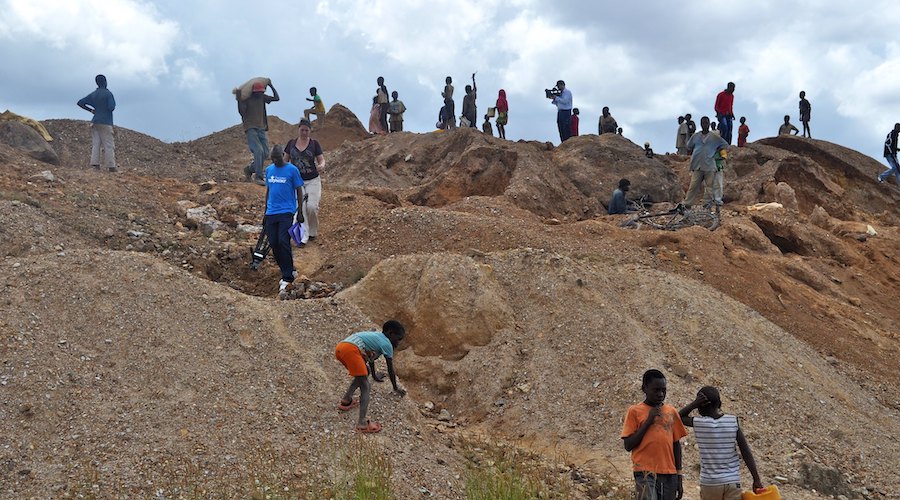
Artisanal cobalt mining site in DRC. (Reference image by Fairphone, Flickr.)

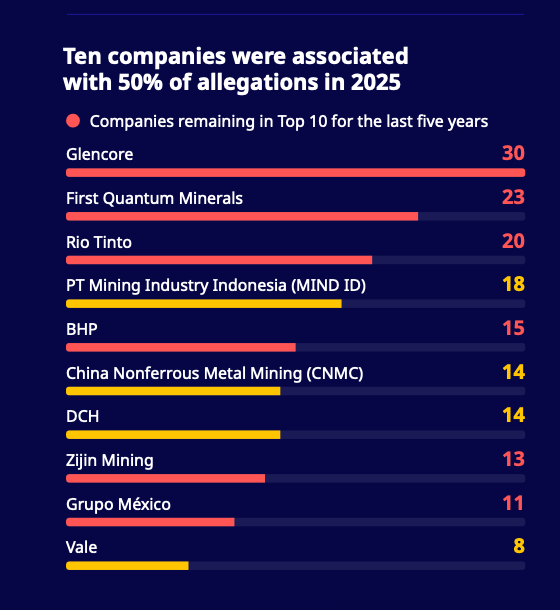
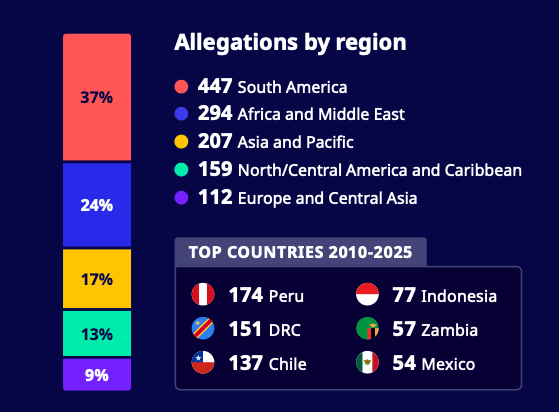
The global rush to secure copper, lithium and other energy-transition minerals drove a 73% increase in human rights abuse allegations at major mining operations in 2025, underscoring mounting social and environmental risks linked to the clean energy supply chain.

The Business and Human Rights Resource Centre’s 2026 Transition Minerals Tracker recorded 329 allegations of abuse last year, up from 156 in 2024, bringing the total since 2010 to 1,226 allegations across 299 mining operations producing key transition minerals including copper, cobalt, lithium, nickel and rare earth elements. 

The report also documented 42 attacks against human rights and environmental defenders, more than 50% higher than the previous year.

“Growing mineral demand is also fuelling environmental and human rights risks to Indigenous Peoples and local communities, as well as rising conflict between industry and communities where these harms materialize,” the report said. It found allegations increasingly centred on water pollution, worker safety, land rights and impacts on Indigenous communities.

South America leads

The findings highlight a growing challenge for governments and companies racing to secure supplies of minerals needed for electrification, renewable power and battery manufacturing. South America remained the region with the highest number of recorded allegations, while Africa posted the sharpest increase, with reported abuses more than doubling from a year earlier. 

Copper mining accounted for about 60% of all allegations in 2025, reflecting the metal’s central role in global decarbonization efforts.

The report argues that neglecting community concerns and human rights protections ultimately threatens the energy transition itself. It recorded 61 protests, 10 strikes and 44 lawsuits or regulatory actions linked to mining operations in 2025, with at least 27 cases resulting in mine suspensions, slowdowns or closures. Researchers said those disruptions create material risks for mining companies, investors and downstream manufacturers that depend on reliable mineral supplies.

Supply risks

Indigenous Peoples remained disproportionately affected, accounting for 17% of allegations despite representing about 6% of the global population. Worker-related complaints also surged, with 92 allegations involving labour rights or occupational health and safety issues, including 22 reports of work-related deaths. The tracker found only 56% of mines associated with allegations were covered by publicly available human rights policies.

The Business and Human Rights Resource Centre said the data show that stronger human rights safeguards, meaningful community engagement and fair benefit-sharing arrangements are essential to building resilient mineral supply chains. Without those measures, the organization warned, rising opposition, litigation and operational disruptions could undermine both mining investments and the broader transition to low-carbon energy.

Read the full report here.


Botswana’s Debswana plans 20% diamond output hike in 2026


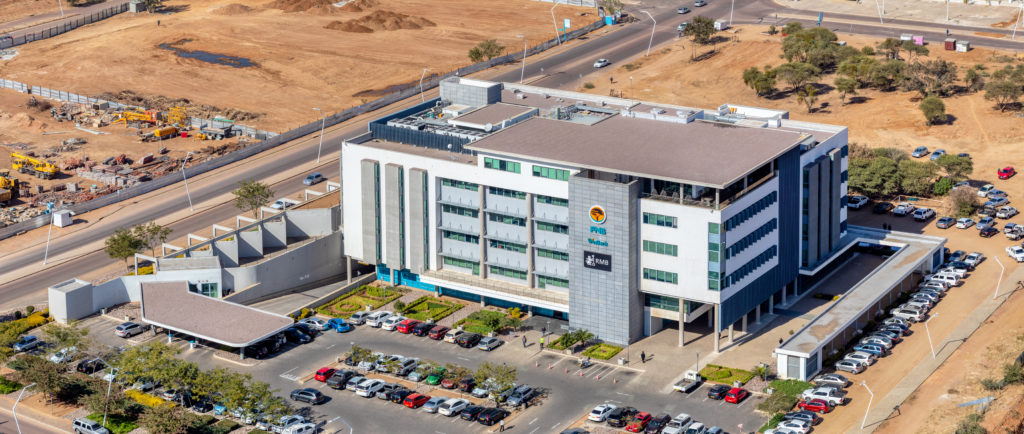
First National Bank, Gaborone, Botswana. Stock image.

Botswana’s Debswana Diamond Company expects to raise diamond production by about 20% this year, a central bank official said on Wednesday, a potential boost to an economy seeking to recover from a prolonged downturn in the global diamond market.

Debswana — a joint venture between the Botswana government and De Beers that produces about 90% of the country’s diamonds — plans to increase output to 18 million carats in 2026 from 15 million carats last year, when production was cut sharply in response to weak demand.

“(The increase in production) is what would be driving the economy this year,” Thato Mokoti, the central bank’s deputy director for research and financial stability, told a press briefing.

A company spokesperson confirmed the planned production increase.

Diamonds typically account for about a third of Botswana’s fiscal revenues and roughly three-quarters of its foreign exchange earnings, leaving the economy highly exposed to swings in global demand.

A downturn that began in 2023 — driven by economic uncertainty and rising competition from lab-grown stones — forced producers to scale back.

Debswana reduced output by 16% last year, while Botswana’s broader economy contracted for two consecutive years.

In February, Finance Minister Ndaba Gaolathe said the economy was expected to rebound to growth of 3.1% in 2026, hinging in large part on a recovery in diamond production and demand.

Minerals and Energy Minister Bogolo Joy Kenewendo told Reuters on Tuesday that Botswana is seeing a soft recovery in diamond demand in key consumer markets such as the US and China, supported in part by a global marketing campaign for natural diamonds.

Before the downturn, Debswana typically produced about 24 million carats a year.

Managing director Andrew Motsumi told the media on Tuesday that Debswana is restructuring to become leaner and more efficient, with plans to cut annual operating costs by a third to 6 billion pula ($416 million) by 2028.

($1 = 14.4092 pulas)

(By Brian Benza; Editing by Nelson Banya and Ros Russell)


Billionaire Ira Rennert agrees to $150 million settlement of Peru smelter claims


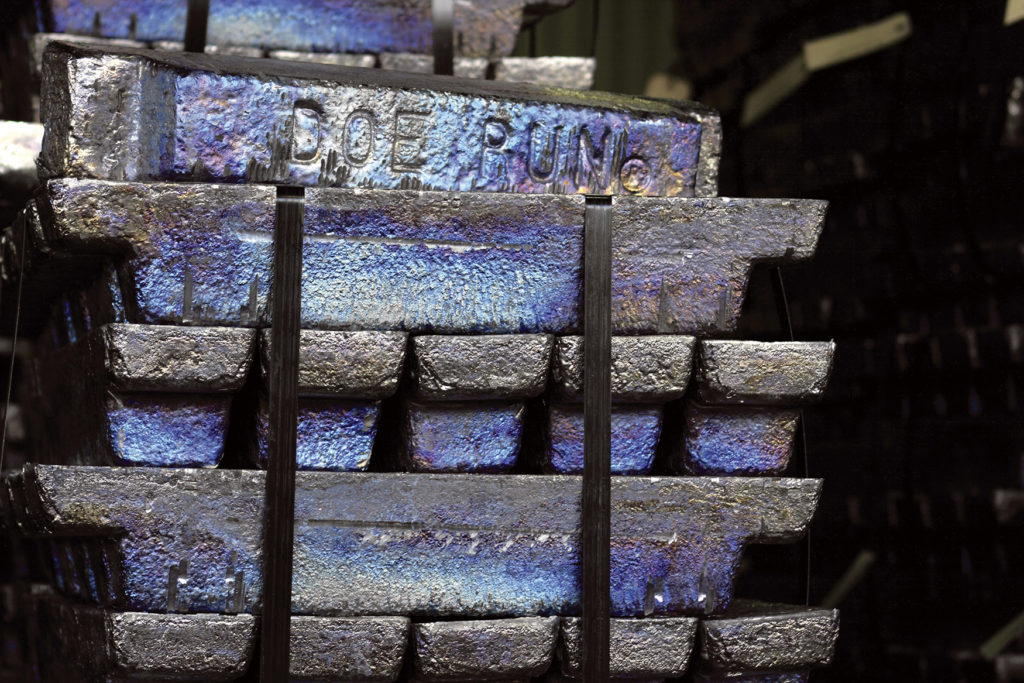
Doe Run produces lead metal and alloys including 1-ton lead blocks, 100-pound lead ingots and 60-pound ingots, also known as pigs. (Image: Doe Run Resources)

Billionaire Ira Rennert agreed to pay $150 million to resolve more than a thousand claims that a lead smelter owned by his companies poisoned residents of a Peruvian town, reaching a deal on the eve of a US trial that was nearly two decades in the making.

Attorneys for residents of La Oroya, Peru, said they’d reached the accord just as the first set of lawsuits over the smelter’s pollution was headed to trial June 29 in St. Louis. The settlement with Rennert’s company, Doe Run Resources Corp., resolves almost a third of the suits filed by people living in the Andean highlands town who were seeking billions of dollars in damages.

Doe Run said the settlement covers suits by more than 1,380 La Oroya residents who’d alleged long-term health problems from smelter emissions and tainted water. That suggests each person who agreed to the deal would get about $109,000. However, almost 3,000 claims remain unresolved, according to the lawyer handling those cases, which have no trial dates.

The billionaire’s wealth — estimated at $6.6 billion — was expected to be featured at the trial that had been scheduled next week. The 92-year-old industrialist is best-known for owning the largest mansion on the Hamptons on Long Island.

“This resolution is the culmination of 19 years of relentless work to obtain justice for children who were innocent victims” of the smelter’s emissions, Jerome Schlichter, a lawyer for the Peruvians, said in a press release late Tuesday announcing the deal.

Doe Run officials decided to settle the cases to put the long-running environmental issue behind them and “focus on what matters — running our business, serving our customers, and investing in new technologies for the future,” chief executive officer Matthew Wohl said in a statement Tuesday.

Production boost

The first La Oroya suits were filed in 2007 by Catholic nuns who worked with poor children in Peru. They alleged Rennert executives reneged on promises to clean up pollution at the smelter site, which had operated since 1922. Rennert’s companies bought it from the Peruvian government in 1997 and immediately ramped up production, court filings show.

Wohl said Doe Run invested more than $300 million to improve conditions in La Oroya and reduce emissions, but that Peru “abdicated its responsibilities” to clean up the site. Doe Run’s lawyers also argued residents’ claims should be litigated in Peru, but the suits were allowed to proceed in the US after a long legal fight.

Children who lived near the smelter were exposed to toxins including arsenic, cadmium and sulfur dioxide, along with lead that the smelter belched into La Oroya’s air and water, the plaintiffs alleged. Nine of 10 kids had lead levels in their bodies that could cause permanent ailments, according to a 2005 Saint Louis University study cited in court filings.

The cases are being litigated in federal court in St. Louis because Doe Run is based in the city. Its parent company, Renco Group, is based in New York. The firms operated the La Oroya smelter over a 10-year-period until it sought bankruptcy protection in 2009. In 2023, the plant reopened under control of worker-owned Metallurgical Business Peru SAA, which isn’t involved in the cases.

In court filings, Rennert complained La Oroya residents improperly sought to make his wealth the main issue in the first trial. His attorney, Jennifer Saulino, told US District Judge Catherine Perry at a June 9 pre-trial hearing that any reference to Rennert’s wealth — “his wife’s jewelry and furs and his house — would only serve to inflame the jury.”

Realtor.com notes his Sagaponack mansion – valued at $425 million and known as “the house that ate the Hamptons” – boasts 29 bedrooms and 39 bathrooms. It includes a basketball court, pool, two tennis courts, and a movie theater with a 164-seat capacity. It also has a 100-car garage.

The case is AOA v. Doe Run Resources Corp., No. 11-cv-00044-CDP, US District Court for the Eastern District of Missouri (St. Louis).

(By Jef Feeley, Carla Samon Ros and Tim Bross)


China plans whistleblower hotline to help it catch critical mineral smugglers


Stock image.

China on Wednesday announced plans for a whistleblower hotline ​to encourage citizens to report smuggling ‌of restricted critical minerals, as Beijing continues its crackdown on a sector that has provided so much diplomatic ​leverage.

Organizations and citizens can report a ​wide range of export control breaches, including ⁠transshipment, to the Ministry of Commerce, which ​said it may in some cases grant rewards.

Tipsters ​must call during business hours, with the hotline closed for 2.5 hours over lunch. Information can also be ​submitted via an online form.

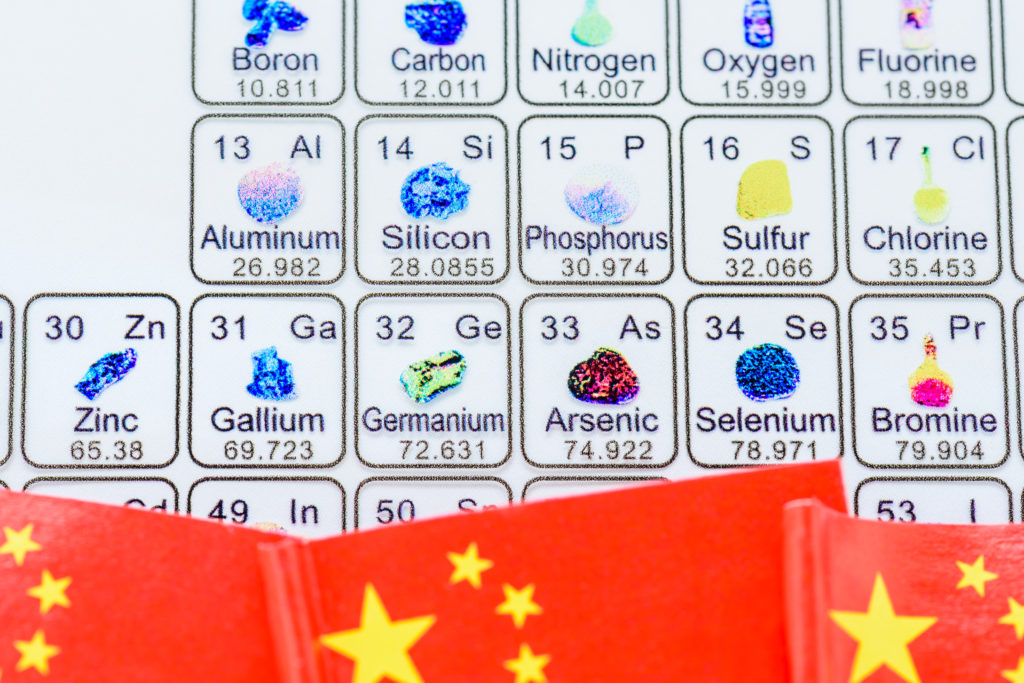
China processes the ​vast majority of the world’s rare earths, and used its ‌control ⁠over production to great diplomatic effect during the trade war with the US.

Because previous rounds of Chinese rare earth export controls were undermined ​by massive smuggling, ​the latest ⁠restrictions have coincided with a state-led crackdown on attempts to circumvent ​the regime.

China’s spy agency said last ​year ⁠that foreign agents were colluding with domestic lawbreakers to steal rare earths and vowed to crack down ⁠on ​the practice.

Two Japanese nationals suspected ​of smuggling rare earths were detained last month.


(By Lewis Jackson; Editing by Tomasz Janowski and Jan Harvey)


Chinese brokerages push for LME membership to expand global metals role


Stock image.

Three Chinese brokerages – Yongan Futures, Orient Futures and ​Guotai Junan Futures – are preparing to apply for membership of the London Metal Exchange, sources familiar with the ‌matter said, in a move that would boost China’s presence on the world’s biggest marketplace for industrial metals.

The push reflects efforts by Chinese firms to capture a larger share of revenue from metals derivatives trading and further the brokers’ ambitions for global expansion.

Only six of the exchange’s more than 40 ​clearing members – firms that clear and settle trades – are Chinese, leaving the world’s top metals consumer under-represented.

Guotai Junan ​Futures is already in the process of applying for LME membership, one source said.

Orient Futures ⁠also has plans, though the timeline is unclear, two sources said.

Hangzhou-based Yongan is preparing its own application after setting ​up a UK entity last year, according to four sources who declined to be named as the plan is not ​public.

The three brokers are major players on China’s main metals bourse, the Shanghai Futures Exchange, and have established subsidiaries in Singapore over the past decade.

Leveraging London’s advantages

Yongan, whose British arm is known as Yongan International Financial (UK), recently hired Zhang Wei to head up the operation and guide the ​brokerage through the LME approval process, the sources said. Company registration documents show Zhang was appointed as director in April.

Zhang ​previously worked for an existing Chinese LME member, GF Financial Markets, in London, as well as for China Merchants Securities, which resigned its ‌LME ⁠membership in early 2021 after six years.

Zhang was not reachable for comment, while Yongan did not respond to a request for comment.

Orient Futures and Guotai Junan did not respond to requests for comment.

On an interactive investor platform this month, Yongan said it was applying for a regulatory licence from Britain’s Financial Conduct Authority and establishing a “solid foundation for legal and compliant operations in the ​UK and European markets”.

Two ​sources said the licence ⁠would be a precursor to an LME membership application, though Yongan did not mention the exchange.

“In the future, leveraging the advantages of London as an international financial centre and collaborating with ​resources in Hong Kong and Singapore, we aim to become a leading cross-border integrated financial ​services provider,” it ⁠said.

The LME, owned by Hong Kong Exchanges and Clearing, posted record futures trading volumes of 183.3 million contracts last year, up 7.7% from 2024. But these were mostly routed through non-Chinese clearing members which make money on every trade.

CLSA UK, owned by China’s ⁠CITIC Securities, ​was approved as an LME member last month and will begin trading on ​Monday.

“As the world’s largest industrial metals producer and consumer, China is fundamental to the global metals market and represents significant activity in the LME market,” an ​LME spokesperson said, declining to comment on applications.

(By Tom Daly and Pratima Desai; Editing by Veronica Brown and Elaine Hardcastle)


Chinese copper supplier says US demand can bear Trump’s tariffs

Zhejiang Hailiang’s facility in Houston. Credit: Zhejiang Hailiang

Chinese copper manufacturer Zhejiang Hailiang Co. is betting its American customers won’t balk at higher prices if the US follows though on placing tariffs on the refined metal.

The Hangzhou-based maker of copper tubes has expanded to locations from Indonesia to Morocco to get closer to clients and escape trade restrictions. Its operations include a plant in Houston that’s nearing full capacity after delays to construction during Covid.

“We’re not concerned about the cost increases because we can fully pass those onto clients,” Yan Yuhao, a trader and senior analyst with the company, said in an interview. “US consumers are very different from Chinese consumers. We are amazed by the resilience of US spending power.”

The Trump administration’s looming decision on whether to tariff refined copper has electrified the global market, juicing the premium paid for metal in the US and creating lucrative opportunities for traders. While the policy is aimed at shoring up domestic copper production, it also threatens to fan the inflationary pressures that Washington has struggled to control.

Yan said the need to cut dependence on foreign copper, a metal crucial to hi-tech manufacturing and power transmission, means the administration is highly likely to impose tariffs sooner or later.

But the idea that heftier costs for refined copper won’t derail demand is relatively alien to Hailiang’s home market. Until the Iran war, Chinese factories had only experienced deflation since the pandemic ended. That’s left buyers far more resistant to chasing copper prices higher during rallies.

Hailiang’s Texas plant makes tubes for autos, plumbing and air conditioners and is close to full capacity of 90,000 tons a year, said Yan. Trump’s tariffs on semi-finished copper last year have already boosted the company’s fortunes and its stock in Shenzhen has more than doubled over the past 12 months.