Saturday, July 18, 2026

NH3 AMMONIA

Proving Phase
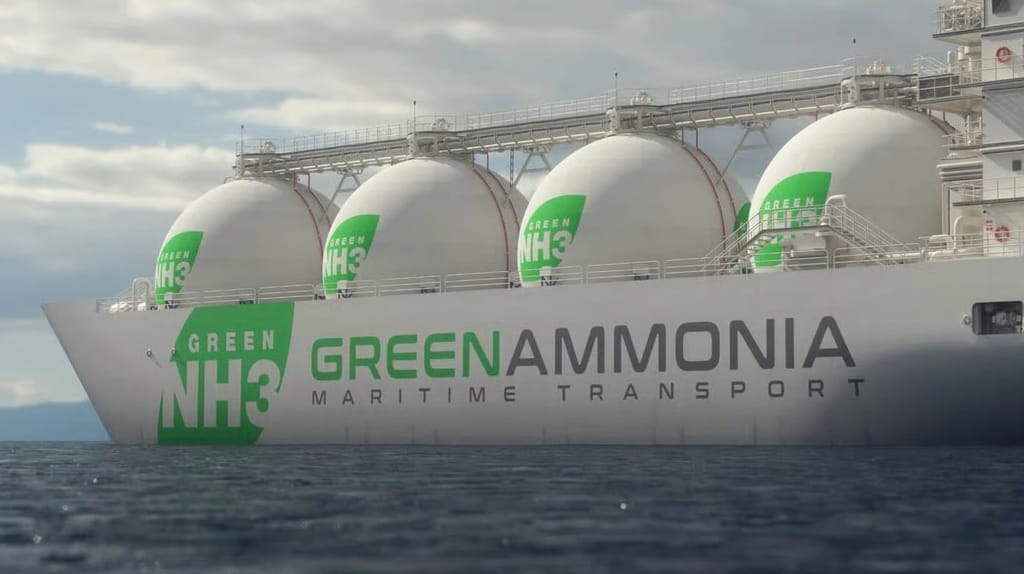
Green Ammonia ship

Published Jul 16, 2026 5:03 PM by Sean M. Holt

(Article originally published in May/June 2026 edition.)

For years, ammonia has held a strange place in shipping's transition – promising, commercially uncertain, operationally uncomfortable. It carries no carbon atoms, can be made from renewable hydrogen and nitrogen, and may eventually serve deep-sea trade routes that batteries cannot reach.

But it's also toxic, corrosive, and unforgiving. "Ammonia slip," where unburned ammonia escapes through combustion or exhaust, is a real concern when injection timing and combustion pressure are poorly controlled.

The question is no longer whether ammonia can work. It's what evidence would prove it is becoming real.

CONFLICTING SIGNS

That question is sharper because the regulatory backdrop has weakened.

The IMO approved its draft Net-Zero Framework at MEPC 83 in April 2025, pairing a marine fuel standard with greenhouse gas pricing for large ships. But the extraordinary MEPC session in October 2025 adjourned for a year, pushing the earliest likely entry into force from 2027 to 2028. Long-lived assets still need ordering, but the compliance signal has moved backward.

The demand signal has not.

DNV estimates that by 2030 alternative-fueled ships could consume over 50 million tons of oil-equivalent, low-GHG fuels annually. The IEA is starker: Oil products still account for over 99 percent of international shipping energy, and biofuels supplied less than 0.5 percent in 2022. Under its net-zero pathway, low-emission fuels would need to reach almost 15 percent by 2030.

Price tells another part of the story. Very low sulfur fuel oil (VLSFO) remains the baseline, listed in Singapore at $781 per metric ton on May 29, 2026, against a global average of $893.50. Methanol looks cheaper by the ton, but on a VLSFO-equivalent energy basis, Singapore grey methanol translates to $1,345.50 per ton.

Biofuel premiums stay volatile with a recent Singapore B30 assessment carrying a $243 premium over VLSFO. LNG belongs here too with infrastructure and momentum that ammonia lacks: The dual-fuel LNG ships orderbook rises from 781 today to more than 1,400 by 2030.

By contrast, DNV reports 39 ammonia-capable ships, mainly carriers and bulkers, on order, with early deliveries expected around now. Ammonia enters a crowded contest where regulation, energy density, infrastructure, price, lifecycle emissions, safety confidence and willingness to pay all matter.

BUILDING THE VALUE CHAIN

ITOCHU Corporation sees ammonia moving from concept into first proof. Takeo Akamatsu, General Manager of the Green Innovation Business Unit in ITOCHU's Plant Project, Marine & Aerospace Division, says the conversation has changed materially.

"It's shifting from R&D to demonstration, especially after the NH3 (ammonia) engine is completed," he says. "Once the first ship with an NH3 engine is delivered, it may shift from demonstration to commercialization for early movers, but on a small scale."

ITOCHU does not frame the transition as a single vessel, fuel or port. Akamatsu describes an integrated project across the chain: downstream, ammonia-fueled ships; midstream, bunkering and supply; and upstream, clean ammonia production.

"As a first mover, our position is limited to a bunkering developer, but we will develop for both down and up," he explains. "ITOCHU's role is to support first movers who secure NH3-fueled ships as bunker suppliers in Singapore from the 2027 fourth quarter, once our bunkering ship is ready."

That vessel is central, and Akamatsu distinguishes it from a conventional carrier: "It's a purpose-built ship as an NH3 bunkering ship, not an NH3 carrier." The point is to demonstrate bunkering itself – a first-generation solution that will evolve through trials and new technology. It's where progress becomes less about engineering and more about permission to operate.

"We need society acceptance," Akamatsu says, which includes port workers and nearby communities. "We need to provide reassurance to those parties who are against ammonia bunkering in their society, which cannot be achieved through a one-time demonstration only."

Using it as fuel pulls bunkering crews, receiving vessels, regulators and responders into the safety case.

ITOCHU also sees adoption as demand-led. Dual-fuel vessels can still burn conventional fuel, so supply alone will not create the market. "Alternative fuel should be initiated by the demand side first," Akamatsu says. "Once the NH3 engine is ready, we believe a commercial decision by the end-user is key."

Ammonia doesn't scale because there's fuel. It scales when owners, charterers and cargo owners decide to use it.

FROM OPTIONALITY TO EVIDENCE

Jon Løken, Sales Director at CFARER - A DNV Company, formerly known as DNV Maritime Software, has long been cautious on ammonia. His view has shifted, but not into cheerleading.

The industry, he argues, must separate evidence from optionality. The orderbook still matters, but the better metric may be whether fuel is actually being booked. He points to zero-carbon ammonia booked in China for delivery in 2027. "The moment I heard about that, I felt, okay, now we're talking reality here. It's no longer a theory."

Geopolitics may be accelerating that shift. Disruption around the Red Sea and the Strait of Hormuz has reminded operators and governments that the fuel transition is also a question of supply-chain resilience, and Løken sees China moving hard where energy security, industrial policy and shipping economics overlap.

Still, "ammonia-ready" does not mean ammonia will be used. He compares it to old "HD-ready" televisions, where readiness did not always mean capability. The sharper distinction is "ultra-ready."

"Ultra-ready means that you actually install the dual injection system," he explains. "You install all the parts, the pipes and everything, and also test it so that you can technically go straight into using ammonia."

The conversion burden is not trivial. Activating an ammonia-ready vessel may currently require around 50 days in drydock. "There are ships in the yards who were supposed to be ammonia ready that are being taken out early from the yards because they don't have time to stay and finish the ammonia part of the engine," Løken says.

In a strong charter market, owners choose revenue today. "Converting the ammonia-ready ships is going to be a less likely scenario," he adds. "We're probably going to see more actual ammonia ships being ordered for the future."

EARLY USERS

Early use will be selective. "You're probably looking at something like 10 percent of your annual fuel consumption being ammonia," Løken says, assuming access to near-zero-carbon supply.

Ammonia may first appear on specific routes, compliance windows or cargo ecosystems, not as a full replacement. Stricter emission control areas could become a demand trigger near ports and sensitive coasts with China and parts of Africa worth watching.

The segments may surprise the market. "There are a surprising amount of bulk carriers being prepared for ammonia," Løken says. "Bulk is becoming kind of technological forerunner." That aligns with ITOCHU's view that Capesize bulkers, Aframax tankers and car carriers could make Singapore a natural demonstration port.

Geography matters too. Singapore has scale and policy momentum, but clean ammonia may be easier to implement where renewable energy is near major routes. Løken points to Egypt and the Suez Canal. "You have space, you have sun [solar power], and you have ships going through that canal," he says, calling it "a holy trinity of future fuels in maritime."

He raises a more speculative case: If Indonesia develops reliable clean energy and ammonia production, the Sunda Strait could gain strategic importance for Asia-Europe trade, offering an alternative to routing all traffic through Singapore and the Strait of Malacca.


DECISION TIME

The evidence is no longer only in the orderbook. It's in booked fuel, tested injection systems and the slow work of earning a community's permission to bunker a toxic fuel at the quay. That is where ammonia's future will actually be decided.

The opinions expressed herein are the author's and not necessarily those of The Maritime Executive.

 

ABP Southampton Welcomes Record-Breaking Vehicle Carrier Glovis Lighthouse

Southampton UK port
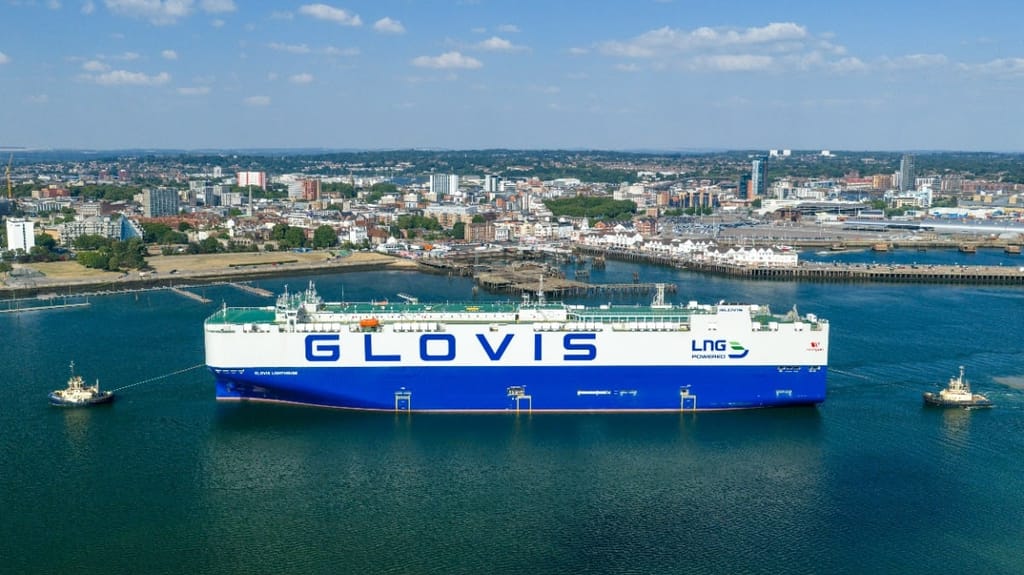
The arrival of the Glovis Lighthouse in Southampton, being manoeuvred to berth at ABP Solent Gateway (Solent Sky Services)

Published Jul 17, 2026 8:28 PM by The Maritime Executive


[By ABP Ports]

  • The Glovis Lighthouse called at ABP Southampton on the 14th of July.
  • It is the largest vehicle carrier to call at the Port of Southampton by capacity.
  • The vessel is making its maiden voyage, with Southampton being its first port call in Europe.
  • Glovis Lighthouse can carry up to 10,800 car equivalent units (CEU) and measures 230 metres in length, making it among the largest class of car carriers available to date.
  • The vessel called at Southampton's recently deepened and lengthened berth at Solent Gateway.

Associated British Ports (ABP) was delighted to welcome the Glovis Lighthouse to the Port of Southampton this week, the largest vehicle carrier to call at the port by capacity and one of the largest and newest vessels of its type in the world. The vessel’s arrival highlighted both Southampton’s role as a leading destination port for global automotive makers and ABP’s investment to facilitate the very largest vessels in the world.

The vessel arrived at Southampton's Solent Gateway facility on its maiden voyage and first port call in Europe.

Paul Reeves, Head of Commercial, ABP said: "We are delighted to have welcomed the Glovis Lighthouse to the Port of Southampton and to Solent Gateway on its first visit to Europe. As the largest vehicle carrier by capacity ever to call at Southampton, its arrival demonstrates the benefits of our investment in Solent Gateway and reinforces Southampton's position as a leading hub for the automotive industry and international trade."

The Glovis Lighthouse is one of the world's largest vehicle carrier ships, with capacity for 10,800 car equivalent units (CEU). It measures 230 metres in length and 40 metres in width and represents the latest generation of ships serving the global automotive industry. The dual-fuel vessel is capable of operating on liquefied natural gas (LNG) and is expected to reduce carbon emissions by approximately 24% when compared to conventional fuels. Its energy efficiency performance significantly exceeds current regulatory standards.

Mark Bath, General Manager at Wainwright Bros & Co Ltd, ship’s agent for the Glovis Lighthouse said “We’re delighted to be playing our key role in making this historic vessel call happen. As a Southampton based Agent with a proud heritage going to back to our formation in the city in 1899 its great to play our part in keeping Southampton at the forefront of the global automotive logistics trade. Wainwright Bros. is proud to act as appointed Port Agent for Glovis since 2010 and we look forward to continuing to enable their calls to Southampton and working closely with the expert team at ABP.”

The vessel's arrival showcases the enhanced capabilities of Solent Gateway, ABP's newest automotive terminal at the Port of Southampton. The Glovis Lighthouse berthed at the recently deepened and lengthened berth at Solent Gateway, part of an investment programme designed to accommodate the new generation of larger vehicle carriers entering global trade routes.

As one of the United Kingdom's leading automotive gateways, Solent Gateway plays a vital role in connecting vehicle manufacturers with international markets. The successful handling of Glovis Lighthouse demonstrates how investment in Southampton's infrastructure is enabling the port to support larger ships, growing trade volumes and the evolving needs of the global automotive sector.

A plaque and key ceremony was held onboard to commemorate the vessel's maiden call at the Port of Southampton and first arrival in Europe. The visit marks another milestone for Southampton's automotive operations and highlights the port's ability to accommodate the latest generation of vehicle carrier vessels serving international trade routes.


The products and services herein described in this press release are not endorsed by The Maritime Executive.


Saronic Finalizes Plan to Build Giant Shipyard at Port of Brownsville

Project ranks among the most substantial investments in American shipbuilding in a generation

Saronic Brownsville
Courtesy Saronic Technologies

Published Jul 16, 2026 7:09 PM by The Maritime Executive


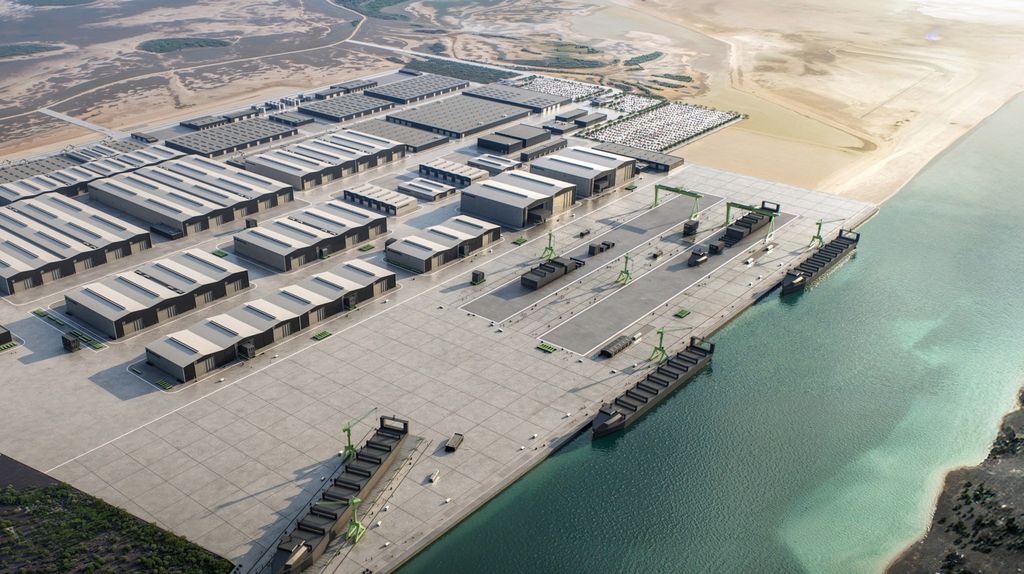
The unmanned naval vessel startup Saronic has agreed to build a giant new shipyard at the port of Brownsville, with support from the state of Texas and a substantial property-tax credit package from the local county. 

"When this shipyard gets fully built out, there will be about 10,000 employees. Saronic is going to be providing about $750 million in annual paychecks to Texans. That's game-changing for the population of Texas. As Governor, I'm proud that Saronic calls Texas home," said Texas Gov. Greg Abbott in a statement. 

Austin-based Saronic plans to spend about $3.3 billion to build what it believes will be the largest shipyard in the United States. The company wanted to build in Brownsville because of plentiful waterfront space, a substantial workforce, and advantages in infrastructure and logistics. Partnerships with local training institutes will help local workers prepare for employment at the yard's high-tech new complex. 

"Built from the ground up to deliver ships at a speed and scale not seen since World War II, this investment is about more than constructing a shipyard. It is about rebuilding the industrial capacity, workforce, and manufacturing advantage required to ensure American maritime leadership for decades to come," said Saronic co-founder and CEO Dino Mavrookas in a statement. 

Saronic is known best for its small autonomous patrol boats and for its entry into the Medium Unmanned Surface Vessel (MUSV) competition, a crewboat-sized naval USV that can carry several containerized payloads on an open aft deck. It is vertically integrated for engineering R&D and manufacturing - it also owns the former Gulf Craft yard in Franklin, Louisiana - and it has long signaled its ambitions to become a large-scale shipbuilder for the Navy. But Mavrookas told USNI and other outlets earlier this week that the company plans to build ships up to 850 feet long - big enough for a fully-manned destroyer, cruiser or amphib, not just a 180-foot unmanned vessel. If built out to full possible size of 4,000 acres, it would be one of the largest shipyards in the world. The yard announced this week is just "phase one," Mavrookas told USNI - and he confirmed that the company has ambitions to build manned warships with a technological edge. 


HD Hyundai and Kiewit Offshore Announce Partnership for US Shipbuilding

US shipbuilding Hyundai Kewit

Published Jul 17, 2026 6:51 PM by The Maritime Executive

[By Kiewit Offshore Services]

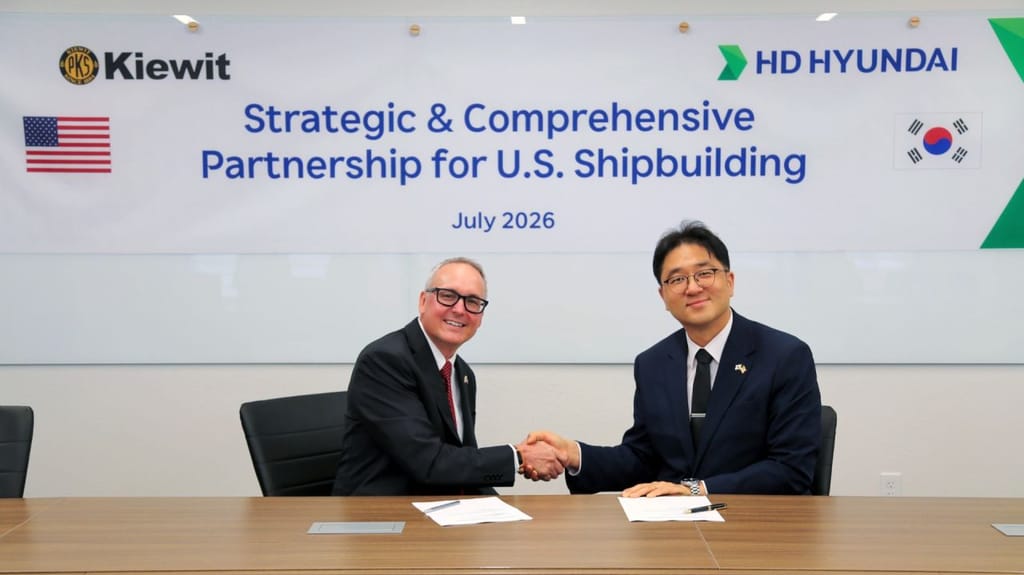
HD Hyundai and Kiewit Offshore Services, Ltd. (KOS) today announced they have entered into a Strategic Partnership Agreement to pursue collaboration on shipbuilding projects serving the U.S. market and other areas of mutual strategic interest. Building on a relationship between the companies that spans decades, the agreement brings together one of the world’s leading shipbuilders and diversified technology providers with one of North America’s premier engineering, construction and fabrication organizations. The partnership is intended to support the expansion of U.S. shipbuilding capacity, strengthen the nation’s maritime industrial base, increase domestic manufacturing capability, and provide a framework for the companies to explore additional opportunities that leverage their complementary capabilities.

The agreement was signed during a ceremony held July 16 at the KOS headquarters in Ingleside, Texas. Hannae Choi, Executive Vice President and Head of the Corporate Planning Office at HD Korea Shipbuilding & Offshore Engineering, and Chad Johnson, President of Kiewit Offshore Services, Ltd., participated in the signing.

This collaboration is designed to strengthen U.S. shipbuilding capabilities and reinvigorate the nation's maritime industrial base. By combining complementary expertise from two long-established industry leaders, the partnership supports efforts to expand domestic fabrication capacity, strengthen supply chain resilience and advance strategic collaboration among trusted allies.

Under the agreement, the companies will collaborate on opportunities supporting shipbuilding programs in the U.S., including the fabrication of ship blocks and modules. The partnership combines HD Hyundai's globally recognized expertise in ship design, advanced manufacturing, procurement and shipbuilding technology with Kiewit's extensive capabilities in large-scale fabrication, construction and complex project execution. Together, the companies will explore opportunities to leverage advanced manufacturing methods and proven production practices to help expand domestic shipbuilding capacity.

"The United States is a strong ally and a key business partner for us," said Choi. "Through our cooperation with KOS, we intend to actively support the expansion of U.S. shipbuilding and maritime infrastructure, while also exploring additional areas of collaboration, including opportunities involving floating assets."

"Kiewit has a long history of delivering some of North America's most complex industrial and marine projects," said Johnson. "By combining our extensive fabrication and EPC project execution expertise with HD Hyundai's shipbuilding experience, we're creating new opportunities to support the growth of U.S. shipbuilding while helping strengthen the nation's maritime industrial base for the future."

HD Hyundai brings more than five decades of experience delivering some of the world's most advanced commercial, offshore and naval vessels from its shipyards in South Korea and abroad. As the world's largest shipbuilder and a global leader in marine engines, HD Hyundai combines large-scale, digitally integrated manufacturing capabilities with deep engineering, procurement and construction expertise across the full maritime value chain. Through this partnership with KOS, HD Hyundai is committed to supporting U.S. shipbuilding programs and helping expand America's shipbuilding capacity under the Korea–U.S. industrial cooperation framework.

KOS brings decades of experience delivering complex fabrication and marine construction projects from its Gulf Coast facilities. As part of Kiewit Corporation, KOS combines large-scale fabrication capabilities with deep engineering, procurement and construction expertise, positioning the company to support commercial and government shipbuilding programs and help expand U.S. shipbuilding capacity.

The products and services herein described in this press release are not endorsed by The Maritime Executive.

Philly Shipyard to Build Missile Tracking Vessels Under New MARAD Contract

Missile tracking vessel on training ship hull
Hanwha Philly Shipyard will build two missile tracking vessels in a project overseen by TOTE for MARAD (TOTE Services)

Published Jul 17, 2026 4:04 PM by The Maritime Executive

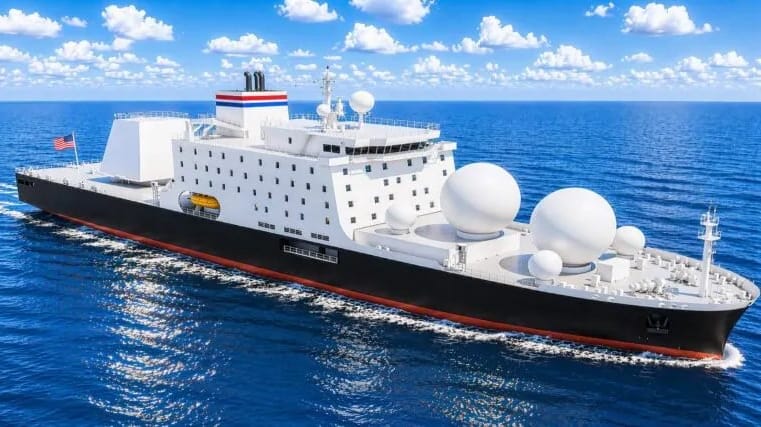
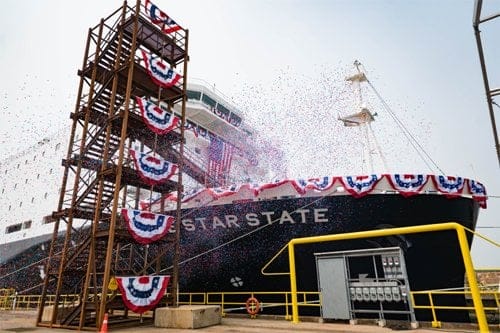
During the christening ceremony for the fourth U.S. Maritime Administration training ship, Lone Star State, it was revealed that the Trump administration plans to award construction contracts to TOTE Services and the Hanwha Philly Shipyard for two missile tracking ships. The shipyard has been lobbying for work from MARAD and the U.S. Navy since its acquisition by South Korea’s Hanwha Systems and Hanwha Ocean in December 2024.

U.S. Department of Transportation Secretary Sean P. Duffy and White House Office of Management and Budget Director Russell Vought today announced a $2 billion investment to build two new military ships at the Hanwha Philly Shipyard.

The two new ships – known as Missile Range Instrumentation Vessels (MRIV) –  will replace two 50-year-old ships in the U.S.’s Missile Defense Agency fleet, said Duffy. In building these state-of-the-art vessels, he said the administration is equipping the military with advanced tracking capabilities to observe missile interception tests over the Pacific Ocean, gather mission-critical data, and support range safety operations. 

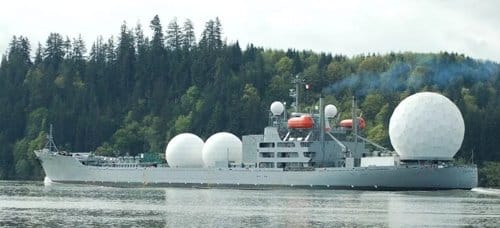
The new vessels are known as “Golden Defender” because of their role in the Trump administration's plans for a “Golden Dome” missile defense system. They will replace the Pacific Tracker and Pacific Collector, which currently support missile range instrumentation missions, and were constructed in 1965 and 1970, respectively. Pacific Tracker was converted in 2009 from a Moore-McCormack Lines’ cargo ship, while Pacific Collector was converted in 2006 from a MARAD survey ship.


Pacific Tracker is based on a 1965-built cargo ship (TOTE Services)


TOTE Services reports the project will be an extension of the current vessel construction manager program, which it has implemented for the construction of the five training ships. The first Missile Range Instrumentation Vessel is scheduled for delivery in 2030.

The program will use the proven hull form of the training ships and leverage the active production line, existing supply chain, and workforce in place at the yard. TOTE highlights that this will permit it to reduce acquisition costs for the vessels by at least 50 percent.


Lone State State training vessel was christened on Friday ahead of its delivery to Texas this fall (MARAD)

The announcement came as officials gathered to celebrate the christening of the Department of Transportation’s fourth national security multi-mission vessel (NSMV)—Lone Star State. The ship recently completed sea trials and will train the next generation of merchant mariners at Texas A&M Maritime Academy. 

“What an incredible day for the nation’s maritime industry,” said U.S. Transportation Secretary Sean Duffy. “In christening the Lone Star State, we are sending a message that the next generation of maritime leaders are worth investing in.” 
 
TOTE Services has overseen the project and delivered four NSMVs to MARAD. The fifth and final NSMV—the Golden State—will be delivered to California’s Cal Poly Maritime Academy in summer 2027.


JPMorganChase Provides $24M to Strengthen Philadelphia’s Naval Shipbuilding

Philadelphia Naval Shipyard
File image courtesy Hanwha

Published Jul 16, 2026 4:33 PM by The Maritime Executive


Leading U.S. investment firm JPMorganChase will provide $24 million to help strengthen Philadelphia’s shipbuilding and maritime manufacturing sector. The combination of loans, investments, and philanthropic grants comes as the Trump administration continues to struggle with its plan to revitalize the American merchant marine and naval shipbuilding capacity.

The program was announced by well-known CEO Jamie Dimon, reporting that the company will make $18 million in investments and loans, and provide $6 million in philanthropic grants. He said the focus is on skills training, regional collaboration, and small business suppliers. They hope to connect local job and business opportunities, especially in financial emprovished areas of Philadelphia, with national competitiveness and resilience priorities. 

The projects clearly align with the White House priorities and goals. As one of the world’s largest financial firms, JPMorganChase has a complex relationship with the administration and personally with Donald Trump. Dimon has been at odds with some of the policies, and in January, Trump accused the company of having closed bank accounts and relationships in January 2021 for “political reasons.” In a $5 billion lawsuit, Trump claims the bank stopped relationships with the Trump organization for purely political motives.

“America can compete and lead in shipbuilding again—it starts with more skilled workers and secure supply chains,” said Jamie Dimon, Chairman and CEO of JPMorganChase, announcing this new initiative. “We need to train people for the jobs shipbuilders urgently need, connect them to good careers and strengthen the suppliers and partners that keep a shipyard running. When we build the workforce and the supply chain together, we create good careers for workers and a stronger, more resilient maritime industry that supports our national security and our economy.”

The company cites research from its Industry and Policy Thematics team saying the decline in U.S. shipbuilding reflects a set of interconnected structural challenges, including high input costs, constrained supply chain capacity, aging shipbuilding infrastructure, unreliable demand, inconsistent requirements, and workforce shortages. The JPMorganChase Policy Center and Center for Geopolitics also highlighted the scale of the workforce gap, estimating demand for 250,000 new skilled shipbuilding workers over the next decade.

Among the elements of the program, the financial institution will invest $13 million as part of a $40 million transaction to support Rhoads Industries. It will support the construction of a new 95,000-square-foot high-bay submarine manufacturing and assembly facility planned for the Philadelphia Navy Yard site. 

A $5 million low-cost loan, along with a $1.5 million grant, will go to PIDC Community Capital. It will be used to provide lending products for small businesses, such as commercial real estate acquisition and construction, leasehold improvements, and working capital. The grant will support as many as 100 commercial maritime supplies with technical assistance.

The Greater Philadelphia Growth Partnership will get a $2.4 million grant to focus on programs related to training. The Skills Initiative at University City District will also get a $2 million grant to help scale workforce models.

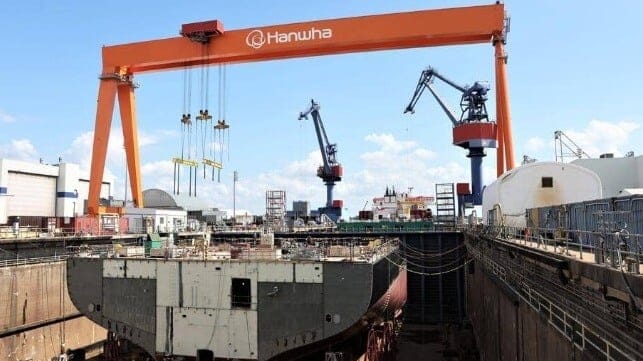
It comes as there are already large investments underway in the shipbuilding sector, and specifically, the operations at the former Philadelphia Navy Yard. Speaking on Bloomberg TV, Hanwha highlighted that it is investment $5 billion to expand the Philadelphia Shipyard. It is also enhancing the operation with South Korean shipbuilding technology and workforce training.

It recently came out that the Trump administration had asked South Korea if it could build destroyers and oilers for the U.S. Navy. Donald Trump acknowledged the desires, confirming that the U.S. was exploring South Korean shipbuilding capabilities. South Korea’s big three shipbuilders, HD Hyundai, Samsung, and Hanwha Ocean, had each announced acquisitions and partnerships in the United States as part of the broader Korean initiative to “Make American Shipbuilding Great Again.”


FPSO Will Validate Wind-Assisted Kite Traction Towing on Trip to Suriname

FPSO deploying wind-assisted propulsion
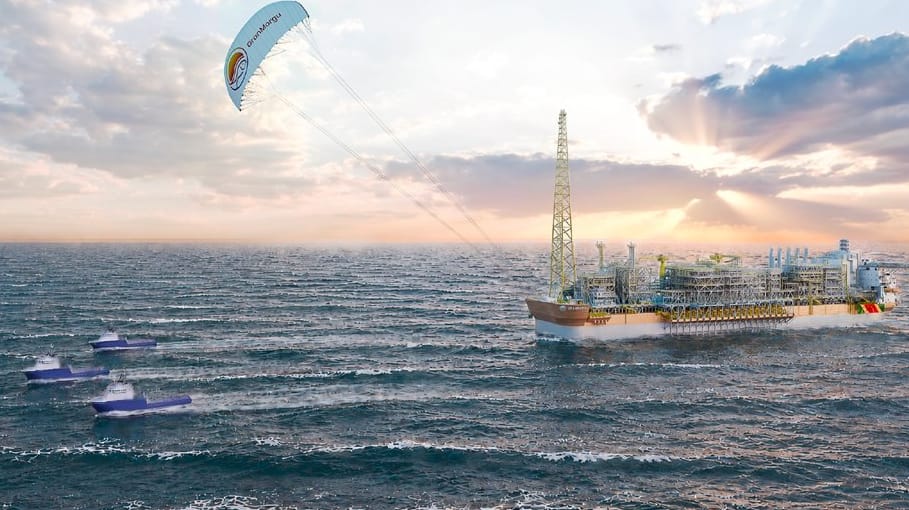
The plan calls for validating the technology by using the kite sail to deliver the FPSO from China to Suriname (SBM Offshore)

Published Jul 16, 2026 6:22 PM by The Maritime Executive


A novel project looks to validate the potential of kite sails for vessels as part of a towing operation to position a massive new FPSO during its trip from China to Suriname in South America. SBM Offshore and Technip Energies Joint Venture (STS JV) and TotalEnergies EP Suriname signed an agreement with France’s Beyond the Sea to develop, install, test, and operate a Wind Assisted Towing System (WATS) on the GranMorgu FPSO.

Being constructed by SBM Offshore with topsides designed by Technip Energies, the GranMorgu will be Suriname’s first large-scale deep offshore oil development. The vessel, which will store roughly 1.6 million barrels of oil and handle 500 million cubic feet of associated gas per day, is due to be positioned by 2028 nearly 100 miles off the coast and operated by TotalEnergies. The FPSO unit will have an overall length of approximately 275 meters (902 feet).

Beyond the Sea will develop its SeaKite 2400 system for the application. The operators are looking to reduce towing duration and fuel consumption by implementing a kite traction system during the towing of the FPSO from the construction site in China to its final destination in Suriname. The tow will also serve as a case to validate this technology for large-scale vessels.

The project will be delivered through a phased R&D approach, covering technology development and qualification, costs, and operational readiness, as well as an intensive onshore test program before integration on the FPSO in China. Other objectives are to validate the kite’s wing launching and recovery system, as well as to collect data for the system sizing optimization using digital modelling during a potential 9,000 nautical mile journey.

Several companies have been exploring the concept of kite sails as another form of wind-assisted propulsion. While rigid sails and aerofolios or rotors have been the most talked about examples, other efforts have looked at the sails. One version was tested on Ro-Ro cargo ships for Airbus, and Japan’s Kawasaki Kisen Kaisha (“K” LINE) is developing its Seawing Automated Kit System as a system to deploy on the company’s large bulkers.

Founder of Beyond the Sea, Yves Parlier, called the FPSO project an important step in the development of their technology, and in a particularly demanding offshore environment. He said the collaboration would enable the company to take a new step in the traction capacity of its systems and to measure their concrete impact in the service of maritime decarbonization.


Sweden Permits Two Offshore Wind Farms, Denies 11 Due to Defense Concerns

Sweden onshore wind farm
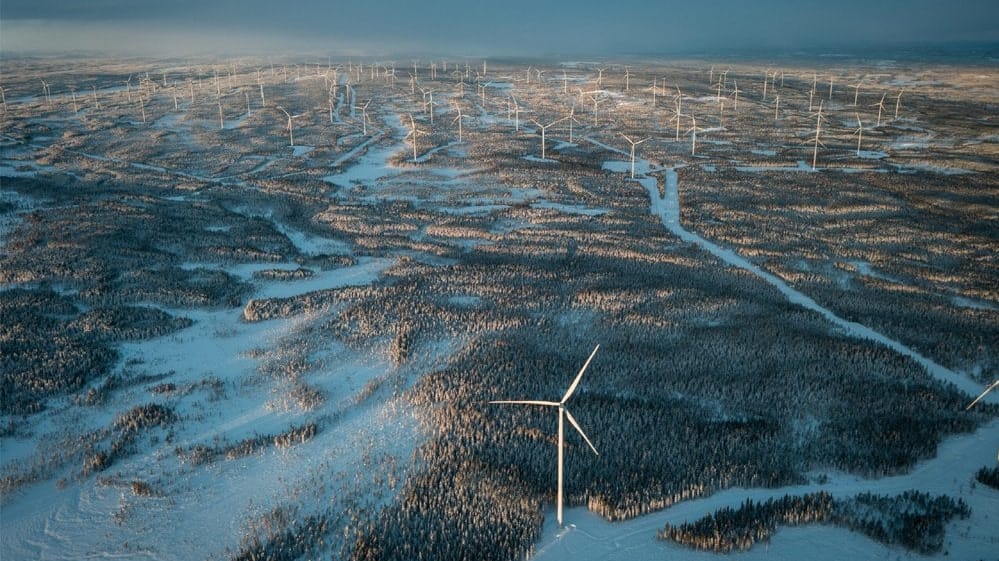
Sweden's Markbygden 1101 is reported to be the largest onshore wind farm in Europe (SVEVIND Energy)

Published Jul 16, 2026 7:04 PM by The Maritime Executive


While saying that Sweden needs to develop new power sources and critically green power to remain competitive, the government had nonetheless decided to deny 11 pending applications. It was the latest move by the government, which also denied 13 applications in 2024, citing defense concerns.

“The government assesses that the applied for activities would, among other things, have an unacceptable impact on our defense capabilities,” said the Ministry of Climate and Enterprise. “However, the decisions do not mean that the affected sea areas will be excluded in the future. They may become relevant again after the transition to an auction system for offshore wind power.”

It continues a position that was established by the government in late 2024. At the time, Sweden’s Armed Forces had provided documentation that showed the wind farm would delay the country’s ability to react to incoming missiles and the activity of submarines.

The government has granted three offshore wind farm permits, two in the Kattegat and one in southern Skagerrak. The most advanced of the projects is Vattenfall’s 1.2 GW Kattegat Syd, which could be operational by the early 2030s. OX2 and Ingka Investments have also received construction permits for their Galatea-Galene project, which would have 400 MW.

While the Ministry reported 11 permits were rejected, it, however, accepted two projects and granted permits. These are Fyrskeppet Offshore in the southern Bothnian Sea and Vidar in the northern Skagerrak.

Fyrskeppet Offshore will be built approximately 35 miles east of Söderhamn and will include up to 93 wind turbines. The park is expected to be able to deliver between 8 and 11 TWh of electricity per year. Vidar will be built just over 20 miles southwest of Strömstad and will include up to 75 wind turbines. The park is expected to be able to deliver up to 7.8 TWh of electricity per year.

According to the permit, the new wind farms must be completed within ten years, that is, no later than 2036. Before the farms can begin construction, a decision is required, among other things, on a permit to lay underwater cables to connect the wind farms to the mainland's main grid for the distribution of electricity.

While the Swedish government has been hesitant to permit offshore wind farms, it has moved quickly onshore. Estimates report Sweden has as much as 16 GW of installed onshore wind power generation capacity. The government today, July 16, reported it had given the go-ahead for what will be one of Europe’s largest onshore wind power projects. It will cover 6,800 hectares and have a capacity for up to 600 MW, depending on the grid, 

Sweden has rapidly expanded its onshore wind capacity. Estimates are that the country produces more than 20 percent of its electricity needs from onshore wind. Its Markbygden 1101 project is reported to have a total permit capacity of 3.4 GW, which would make it the largest onshore wind farm in Europe.


Balenciaga Shipyard Restarts Operations with First Keel Laying

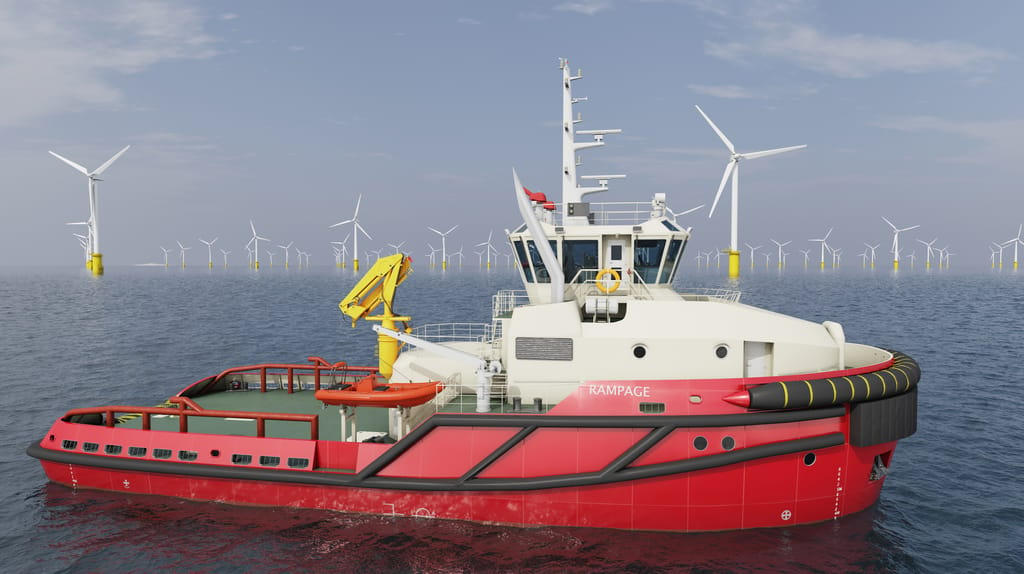
tugboat

Published Jul 17, 2026 8:22 PM by The Maritime Executive

[By Balenciaga Shipyard]

Balenciaga Shipyard today held the keel laying ceremony of its first vessel since restarting operations, marking a significant milestone in the recovery and renewal of one of the Basque Country’s most historic shipbuilding facilities. The ceremony, held at the yard in Zumaia, Gipuzkoa, was attended by representatives of AD Ports Group, the Basque Government, institutional partners, suppliers, and the shipyard’s own workforce.

Balenciaga Shipyard, formerly known as Astilleros Balenciaga S.A., has been part of the Basque maritime landscape since 1921. Over more than a century, the yard has built hundreds of vessels, becoming a reference in the Spanish naval industry and a cornerstone of the local economy in Zumaia and the surrounding area. The yard’s recent acquisition by SAFEEN Drydocks, a subsidiary of AD Ports Group of Abu Dhabi, has opened a new phase in its history — one defined by renewed investment, industrial ambition, and a commitment to the Basque workforce and community.

“Today we celebrate that Balenciaga is back. It’s been a long and arduous journey but we never gave up. I want to thank the employees and their families for believing in Balenciaga’s future. Finally, a heartfelt welcome to our new partners who can count on our support to continue the illustrious history of this centenary company”.
Mikel Jauregi, Minister of Industry, Energy Transition and Sustainability for the Basque Government.

The keel laying ceremony is a centuries-old maritime tradition marking the moment when the structural backbone of a vessel is formally laid down. Today’s ceremony signals not only the physical start of construction but the broader restart of Balenciaga Shipyard as an active, forward-looking operation.

“This keel laying is more than the start of a build, it is proof that Balenciaga Shipyard is back. The people of this yard have kept its spirit alive through difficult years, and today we begin to build on that foundation. We are grateful to AD Ports Group for their commitment and to everyone who has believed in this yard.”
Santiago Bardal, Director General, Balenciaga Shipyard

The vessel under construction is an offshore support tug, one of two offshore tugs being built which form part of an active order book that positions Balenciaga Shipyard as a credible and competitive builder for the European offshore and renewable energy market. The yard is targeting further contracts in the offshore wind sector, where demand for specialized vessels continues to grow.

Under its new ownership, Balenciaga Shipyard is investing in its workforce, facilities, automation, and supply chain. The yard is working with local and regional industrial partners, maintaining its role as an anchor employer in Zumaia and the broader Gipuzkoa economy.

“The restart of operations at Balenciaga Shipyard marks an important milestone in our long-term commitment to strengthening advanced shipbuilding capabilities in Europe and supporting the growth of the offshore and renewable energy sectors. This first keel laying under new ownership demonstrates the confidence we have in the yard’s people, heritage, and technical expertise, as well as its potential to deliver specialized vessels for customers across key international markets.”
Captain Ammar Al Shaiba, CEO - Maritime & Shipping Cluster, AD Ports Group
 

The products and services herein described in this press release are not endorsed by The Maritime Executive.


Repsol Supplies First Bioethanol to Maersk in the Port of Barcelona

Barcelona

Published Jul 17, 2026 8:16 PM by The Maritime Executive

[By Repsol]

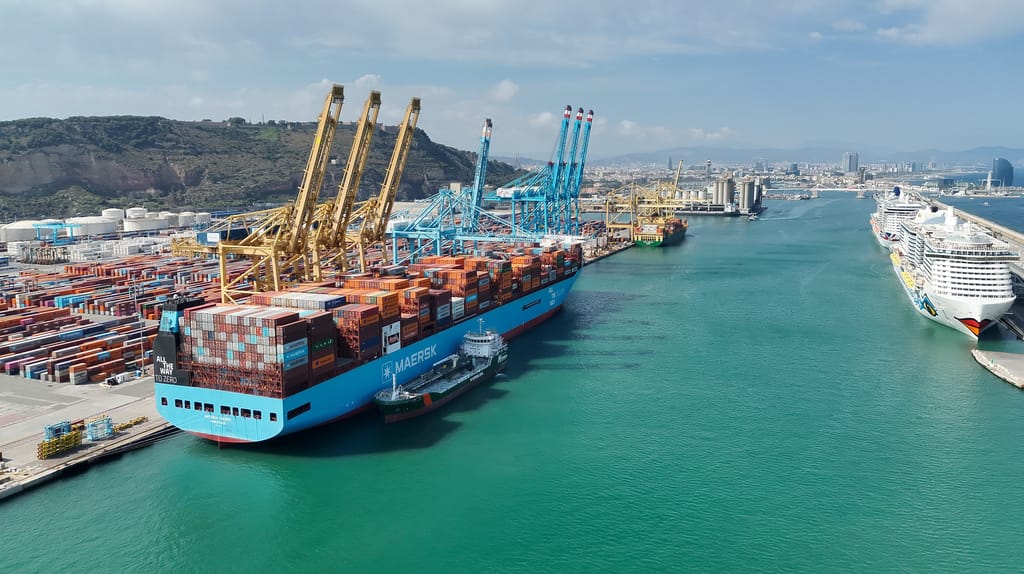
Repsol has successfully supplied 2,800 tons of bioethanol to a Maersk container vessel, Antonia Maersk, in the first bunkering operation of its kind in the Port of Barcelona and one of the first in the Mediterranean. 

The operation demonstrates growing demand for alcohol-based marine fuels, as well as the readiness of the infrastructure, logistics, and operational capabilities required to support their deployment at commercial scale. It also highlights the readiness of the wider value chain needed to support the deployment of other alcohol-based marine fuels, including methanol. 

This operation further strengthens Repsol's multi-energy offering, combining conventional marine fuels, renewable fuels, and emerging low-carbon solutions to help customers advance their decarbonization strategies. 

Juan Abascal, Repsol's Executive Managing Director of Industrial Transformation and Circular Economy, said: "With this supply, we reaffirm our commitment to the decarbonization of maritime transport through solutions that are available today and ready to scale in the future. At Repsol, we provide shipping companies with a reliable supply chain and a multi-energy strategy that combines different renewable fuels to support the sector in a safe, competitive, and sustainable transition". 

The supply took place in the Port of Barcelona under fully commercial conditions, bringing together key players across the maritime value chain and demonstrating how collaboration can accelerate the adoption of lower-emission solutions in shipping. 

The delivery was carried out by Bahía Candela, Repsol's newest bunker vessel, operated by Mureloil and designed to supply both conventional marine fuels and next-generation energy products. During the bunkering operation, Bahía Candela operated using its battery system, enabling the fuel transfer to be completed with zero local emissions, and further reducing the environmental footprint of the operation. 

Prior to the bunkering, Maersk tested ethanol on one of its smaller vessels, the 1,800 TEU feeder vessel Laura Maersk, which in 2023 became the world's first dual-fuel container vessel able to operate on methanol. Today, Maersk has 23 dual-fuel container vessels designed to operate on methanol; however, the company continues to explore ethanol as an alternative fuel for its methanol-enabled vessels. Laura Maersk has performed sailings on 100% ethanol as well as blends of ethanol and methanol. 

"Following the successful ethanol trials conducted on Laura Maersk, this latest bunkering of Antonia Maersk marks another important step in our efforts to explore scalable low-emission fuel solutions. As the first ethanol trial on one of our large dual-fuel vessels, with a capacity of 16,000 TEU, it allows us to deepen our understanding of ethanol's operational potential at scale. Building on the experience we have gained with methanol, we are working closely with port authorities and industry partners to develop the infrastructure and procedures needed to support ethanol bunkering. Ethanol is one of several pathways we are pursuing to diversify our future fuel portfolio and help accelerate the development of new, viable liquid marine fuel markets", said Emma Mazhari, Vice President Energy Markets at Maersk. 

José Alberto Carbonell, President of the Port of Barcelona, highlighted: "This operation demonstrates that the Port of Barcelona is ready to support the deployment of new low-carbon fuels at scale, as part of our Energy Transition Plan. As the Mediterranean's leading logistics and energy hub, we are committed to providing the infrastructure, operational capabilities and collaborative environment needed to accelerate the maritime sector's decarbonisation. Projects like this show how ports, shipping companies and energy providers can work together to turn the energy transition into a reality". 

The successful completion of this operation sends a clear message to the industry: alcohol-based marine fuels can already be supplied efficiently and scaled quickly. 

The experience gained through the collaboration between Repsol, Maersk, Mureloil and the Port of Barcelona provides a practical blueprint for future deployments across the Mediterranean and other strategic maritime hubs.
 

The products and services herein described in this press release are not endorsed by The Maritime Executiv


Pirates Seize Small Product Tanker off Yemen

location of tanker seized
The Gulf of Aden has become a hotbed of pirate activities this year (UKMTO)

Published Jul 17, 2026 12:38 PM by The Maritime Executive

A small chemical tanker sailing near Yemen issued a distress call on Friday morning, July 17, and it appears to have been boarded by up to seven armed pirates. The authorities in Somalia and elsewhere are investigating the incident as the vessel appears to be heading toward the Somali coast.

Reports are identifying the tanker as the Asana, apparently managed from South Korea and registered for a company in the Marshall Islands. The ship’s details are unclear, with Equasis listing its flag as “unknown,” while most sources show the vessel registered in Tanzania.

Built in 1992, the ship is reported to be 10,960 dwt. It is 127 meters (417 feet) and has been operating as the Asana for the past three years since 2023.

The boarding took place approximately 63 nautical miles south of Al Mukalla, Yemen. The area has emerged in recent weeks as a hotbed for piracy activity, with several vessels reporting that they had been approached. Pirates boarded a bulker named Golden Arsenal earlier in the month. The crew was able to secure themselves in a citadel, and the Indian Navy responded. The pirates flew the ship when they were unable to breach the citadel to reach the crew.

Earlier reports said the Asana was drifting. MSCIO, however, is reporting the vessel appears to be back underway. Ambrey is saying that a Korean warship was attempting to reach the vessel.

This latest incident comes as reports said that talks for the release of the seafarers from three ships held off Somalia since April are now in an “advanced stage.” A total of 44 seafarers are being held aboard three vessels, Honour 25, Eureka, and Sward, with the IMO, Egyptian officials, and others expressing concern for the safety of the crew from the vessels. Egypt had instructed its representatives to intensify efforts to release its nationals who were kidnapped from the vessels.

The increase in oil and product prices as a result of the closure of the Strait of Hormuz has made these vessels more valuable targets for pirates. Two of the ships currently being held are product tankers, with unconfirmed reports in the media that the pirates increased their financial demands for the release of the crews.