Greentech New Deals in the Cities
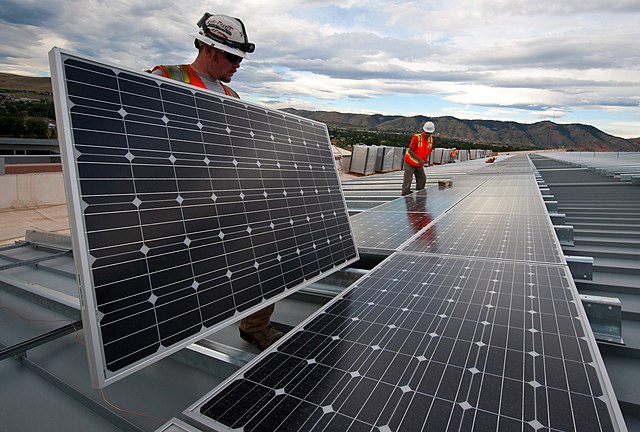
In Trump’s America the Greentech Revolution is being waged from below.
Although Trump’s attacks have slowed the advance of fossil-free technologies in the US, they have not prevented communities, cities, and states from creating their own Greentech New Deals. They are taking advantage of the enormous reduction in the cost of renewable energy and of technologies that use it despite Trump’s attempts to obliterate them.
Alongside the widespread pro-democracy resistance to Trump and MAGA, there is a constructive program being developed and implemented from below, utilizing the Greentech Revolution to make Green New Deals practical and affordable. Greentech and climate protection are at its core. But it also includes the full range of pro-people, pro-social programs represented by the Green New Deal.
Back in 2007, Xcel Energy won backing from the governor of Minnesota for a gas power plant in Becker, near Minneapolis, designed to replace coal-fired generators scheduled for shutdown in the mid-2020s. But clean energy advocates campaigned for better and cheaper alternatives, and regulators eventually baulked at the $1 billion price tag. Xcel gave up on the gas plant plan and instead proposed the Sherco Energy Hub, a 710-megawatt solar facility which includes a 600-megawatt storage system, the largest battery energy storage system in the Midwest. An Xcel spokesperson said, “Batteries help us store energy when it’s inexpensive to produce and dispatch it when needed, allowing us to continue delivering reliable electricity to customers while keeping bills low.” The site will also provide grazing for nearly 2,000 sheep, reducing mowing costs while also letting local sheep farmers expand their herds. Xcel also announced plans to close all its remaining coal fired plants in the region. Sherco’s solar plant will start producing electricity in 2026.
Sherco shows how Greentech’s reduction in the cost of energy and facilitation of battery storage opens the door for communities and governments to demand that fossil fuels be replaced by renewable energy. As climate journalist Tina Casey commented on CleanTechnica, the Sherco facility “demonstrates how community efforts and basic economics can push the needle on the energy transition.”
Manchester Public Schools is a suburban school district outside of Hartford CT with 17 schools, four of which are Title I schools serving low-income communities. While the state had many solar programs, by 2020 private solar developers had concluded that Manchester would “never do a project.” But in 2022, with support from the Connecticut Green Bank, solar panels were installed at 6 of Manchester’s 17 public schools, adding 1.6 MW to the town’s solar energy capacity. Now Manchester has three net-zero energy school buildings and is adopting cutting-edge technologies like ground source heat pumps. Manchester also has additional ongoing investments in net-zero buildings, including a new library. Solar installations are projected to save the Town of Manchester approximately $100,000 annually. Beyond financial savings, these renewable energy systems are now valuable educational tools, reportedly sparking curiosity and environmental awareness among students.
In Seattle, drayage trucks contribute significantly to air pollution, disproportionately impacting low-income communities along freight corridors in the Duwamish Valley. According to Seattle’s then-mayor Bruce Harrell, “Seattle’s port is the backbone of our economy, but diesel drayage trucks that transport goods are some of the Duwamish Valley neighborhoods’ heaviest polluters.” Seattle has now developed a Heavy Duty Electric Trucks Pilot to provide incentives for purchasing electric drayage trucks. The program results in part from interviews conducted with drayage truck drivers who pointed out electric trucks were too expensive for them to buy. The drivers’ insights helped shape a new approach that, according to the city’s Office of Sustainability and Environment, “centers equity to ensure a just transition for truck drivers, particularly independent owner-operators, who are critical to our region’s supply chain and who bear disproportionate environmental and economic burdens.”
Funding for the program comes from Seattle’s JumpStart Payroll Expense Tax on extremely high salaries. The funding was recommended by Seattle’s Green New Deal Oversight Board, which develops budget and policy recommendations for environmental initiatives in partnership with communities. Said then-Mayor Harrell, “Through the Heavy Duty Electric Trucks Pilot, we’re investing in the technology that will ultimately reduce emissions in frontline communities while also supporting drivers to ensure they have real opportunities in the zero-emission economy.” The trucks are expected to be in operation by the end of 2026.
The drayage truck program is only one small component of Seattle’s much broader community participation climate effort. For example, Greenspace, Seattle’s Office of Sustainability & Environment, partnered with Seattle’s Green New Deal Oversight Board, the Martin Luther King Jr. County Labor Council (MLK Labor), and the Urban League of Metropolitan Seattle to pilot “climate community assemblies” that included union members and workers, community members, and social justice and youth advocates to make decisions, influence government, and shape solutions. The Urban League’s neighborhood-based assembly focused on climate preparedness for BIPOC and working-class community members. MLK Labor, a labor council representing more than 100,000 workers in King County, led a worker assembly focused on workplace safety, green job standards, and improving public infrastructure to be ready for extreme weather. A follow-on project will turn ideas developed by the assemblies into policies for the city. And future community assemblies will help shape Seattle’s Climate Action Plan Update.
On the site of an abandoned psychiatric hospital in Southeast Washington, DC, a renewable energy project called Sycamore & Oak has just opened a “microgrid” — a self-contained system that includes energy generation and consumption. Solar panels provide electricity during daylight hours and charge batteries that continue to provide electricity during the night. The project’s workforce development program trained a cohort of 10 local residents, most of whom are from Ward 8 where the project is located, for the installation. According to Jordan Taylor of GRID Alternatives, the nonprofit that provides solar installation and workforce development for the project, “Ultimately the Black-owned businesses that are supported by Sycamore & Oak get to receive lower-cost power.” With fuel-based energy, “you’re emitting fossil fuel pollution into the local community,” which is “usually a low-income or disadvantaged community.” Taylor said that improvements in building science are not only better for the environment, but more cost-effective. These range from construction techniques to long-term energy usage over the lifetime of a building. “We can build the same structure for 90% less energy consumption. That’s both a cost-savings measure, as well as an energy efficiency and ecologically friendly one.”
In June 2026, Montgomery County MD announced 20 clean energy and energy efficiency projects. According to the Montgomery County Executive, the initiatives will “support practical projects that improve energy efficiency, strengthen emergency preparedness, and create more resilient public spaces, particularly in communities that are more vulnerable during extreme weather events. These investments will lower long-term operating costs for taxpayers while helping the County make meaningful progress toward our climate goals.”
The projects have a strong Greentech element. They include solar-powered backup systems at seven recreation centers; an agrivoltaics demonstration project at the Agricultural History Farm Park; and building automation system upgrades. County official David Dise says, “We are proudly advancing Montgomery County’s climate goals through innovative green energy solutions, including microgrids and resilience hubs.”
In the Bryant community in Ann Arbor MI, a quarter of residents spend more than a third of their incomes on utilities. After years of campaigning by local energy activists, 80% of Ann Arbor voters approved a new Sustainable Energy Utility. Operating alongside the existing privately-owned utility, the SEU will purchase, install, and maintain solar panels, battery backup systems, and other fossil-free energy infrastructure in residents’ homes. Those who choose to join pay a small monthly fee – far less than they save from their free solar installation. The city will own the facilities, but residents can sell whatever electricity they don’t need themselves. The plan will pilot in Bryant and spread to other locations in the city. The SEU could also build its own microgrids, for example putting solar panels on schools to provide power during school hours and then supplying other SEU users when school is out. Derrick Miller of the nonprofit Community Action Network says, “When we started having a conversation about how to decarbonize the neighborhood about four years ago, it felt outlandish. Now, it doesn’t feel like anyone can stop us.”
Alongside the Cow Palace arena just south of San Francisco, construction has begun on the Cormorant Energy Storage Project, whose 250-megawatt capacity will make it the largest battery array in any major US urban area. It will supply energy to MCE, a community choice aggregator which purchases electricity on behalf of local residents as an alternative to for-profit utilities. The battery will bring $73 million of property tax revenue to Daly City; the developer will donate $1.5 million in community benefits.
These are only a small sampling of the Greentech-facilitated programs in American cities, but they illustrate the diversity of such initiatives. They show that Greentech-facilitated programs are in place in every region of the country, in jurisdictions large and small, and in localities blue and red, exhibiting myriad forms of both energy production and energy consumption.
Such initiatives have been retarded by Trump’s attempts to wipe out Greentech. They have also met resistance from local MAGA and NIMBY forces. But as these examples show, they are continuing to bloom.
These initiatives are significant for several reasons. They directly improve the lives of the people they affect and reduce the emission of climate-destroying greenhouse gases. They demonstrate concretely how climate protection, racial and economic justice, grassroots democracy, and quality of life can be combined. They show that people acting together can overcome Trump’s anti-Greentech counter-revolution. And looking forward, they lay a foundation for the triumph of a Greentech New Deal once Trumpian resistance is overcome.

While Trump conducts his war against Greentech, many US states are forging ahead with energy expansion based on sun, wind, and water. Greentech’s slashing of the cost of renewable energy production and use has made states turn to it not only to protect the climate but to make energy affordable for their people.
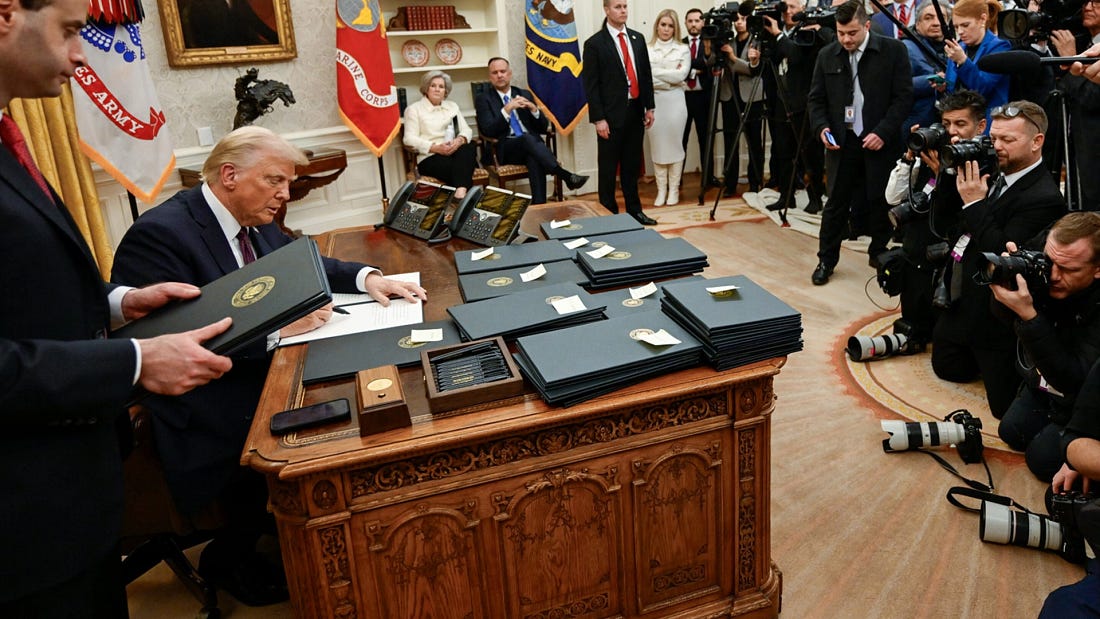
The US federal system gives states a powerful position in energy policy. States regulate electric generation, local distribution of electricity, and infrastructure siting. They can set policy in myriad other areas from urban planning to public transit to housing that can help shape the utilization of climate-protecting Greentech.
Meanwhile, recent headlines have publicized retrenchment in state climate policies. New York state abandoned its commitment to reduce greenhouse gas emissions by 40% from 1990 levels by 2030, substituting weaker and squishier targets. California also relaxed requirements for emission reductions – although the change continues to be contested in the state legislature. In both cases energy affordability was given as a reason, although advocates of both changes acknowledged that they would not bring down energy prices any time soon. Both New York and California changes were preceded by heavy fossil fuel industry lobbying.
Such retreats register the reality that Trump’s attacks are restricting the development of the Greentech New Deal. Federal defunding of climate-protecting initiatives has made them more expensive; regulatory changes and subsidies have advantaged fossil fuels; and legal attack has undermined the Greentech revolution. But these retreats should not conceal the advances the Greentech Revolution has made in US states even during the first year-and-a-half of the Trump era.
Today’s Greentech advances in the states typically combine climate protection with affordability. That’s possible because Greentech has made production and use of renewable energy so much cheaper – rendering fossil fuels non-competitive.
California–Two steps forward, one step back?
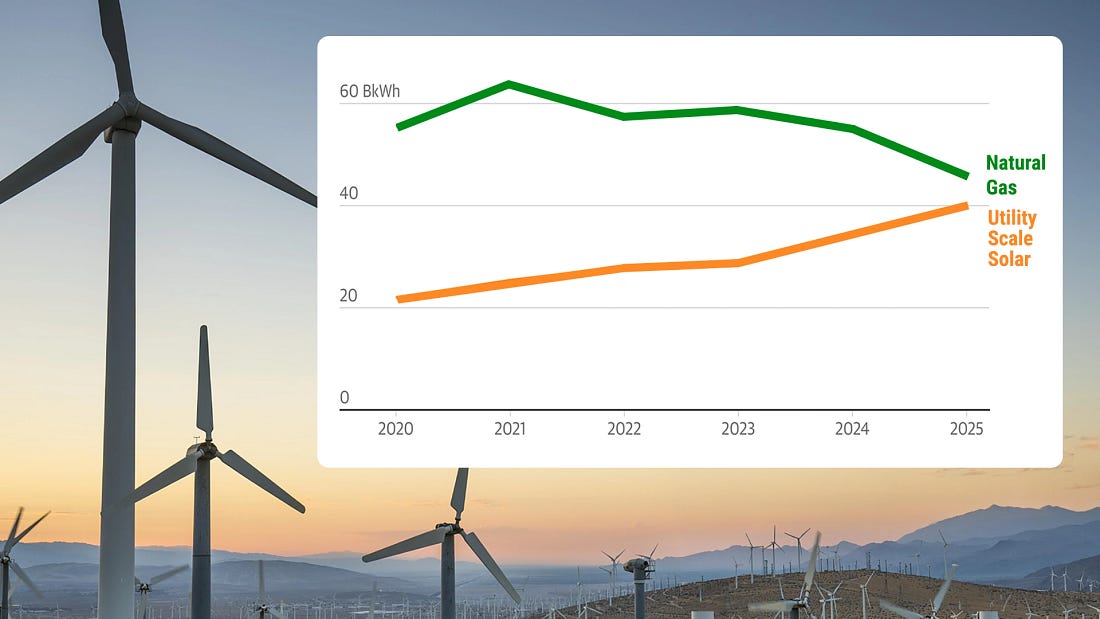
California, now the world’s fourth largest economy, illustrates the collision of the irresistible force of the Greentech Revolution with the immovable object of the Trumpian fossil fuel counter-revolution. In recent years it has faced devastating heatwaves, droughts, storms, wildfires, and other extreme weather conditions resulting from global warming. Not surprisingly, an overwhelming proportion of Californians worry about climate change and back policies to fight it. In 2006 California passed AB 32, the Global Warming Solutions Act, which set targets for greenhouse gas emissions and sets a declining limit on total emissions by the state’s major polluters. Over the next twenty years California substantially raised its targets and implemented many other climate protection policies. From 2001 to 2019, California reduced its carbon emissions by 25%, leaving a typical Californian emitting only half as much as other Americans.
In 2024, California’s natural gas generation fell by 8%; coal is expected to soon be eliminated entirely from its electrical supply. By the end of 2025 the state had 2.5 times more battery storage available than it did in 2022.
As soon as Trump was inaugurated president, he began a massive attack on California’s climate protection efforts. For example, he attacked the state’s first-in-the-nation ban on the sale of new gas-powered cars by 2035. The state sued to preserve the ban. In 2025 it extended the cap and trade program, renamed cap and invest, by 15 years. Then Governor Newsom, under heavy lobbying from California’s oil industry, announced a new plan which offers free pollution permits worth as much as $4 billion to oil refineries and other major polluters. Legislative leaders are refusing to accept the plan, however, and have refused to fund many of Newsom’s other programs until he abandons his plan. Contested negotiations are expected to continue until the legislative session ends in September. The result is hanging in the balance.
Other states go Greentech
The California climate drama should not obscure what is happening in other states.
Soon after Trump’s inauguration, Massachusetts Gov. Maura Healey issued an executive order that directs the state to procure 10 GW of clean energy and 5 GW of battery storage by 2035. The governor’s office projects up to $10 billion in savings for residents and businesses. Massachusetts also announced $180 million in immediate utility rate reductions. This cut residential electricity bills by up to 25 percent for two months.
Upon her inauguration, New Jersey Gov. Mikie Sherrill declared a state of emergency on utility costs. An executive order directed the New Jersey Board of Public Utilities to pursue rate relief by pausing new hikes and delivering residential bill credits. Another ordered rapid expansion of solar and battery storage and streamlining of the permitting process. In March, the BPU approved the expansion of the state’s community solar program, adding 3 GW of new capacity, with low-income households guaranteed a discount of at least 25 percent on their bills. According to American Progress, this expansion was the largest of a state-run program in the country’s history, and the program has already delivered more than $70 million in bill credits to households across the state. The governor also signed a measure that increases transmission-scale storage across the state, helping store low-cost clean energy and deploy it during peak demand to reduce price spikes and improve reliability.
In Pennsylvania, the PA EDGE (Pennsylvania Economic Development for a Growing Economy) creates tax credit programs for billions of dollars in energy and advanced manufacturing investment, including clean energy technologies. In June 2026 the Pennsylvania House put a cap on profits from utility company investments in infrastructure and eliminated nearly $1.7 billion in taxes that electricity companies now pass along to consumers as part of their bills.
In Virginia, a clean energy package includes streamlining solar siting, expanding storage connections to the grid, limiting carbon-emitting backup generators at data centers, and expanding virtual power plant programs that let utilities draw on distributed clean energy sources such as rooftop solar and home batteries.
The obstacles fall
One of the main objections to renewable energy has always been that it becomes unavailable when the sun doesn’t shine or the wind doesn’t blow. This objection has been largely overcome by Greentech’s radical reduction in the cost of energy storage. As a result, the most recent wave of state programs has put battery storage front and center.
Illinois’s Clean and Reliable Grid Affordability Act instructs the state to procure three gigawatts of new battery storage by 2030 to help stabilize electricity prices. It also includes a “storage for all” program that provides incentives for income-qualified households and businesses to install battery systems co-located with solar projects. The Illinois Power Agency expects the act to save customers $13.4 billion over two decades.
Pennsylvania is investing $22 million to help battery manufacturer Eos Energy Enterprises expand battery manufacturing operations in the Pittsburgh area. The expansion is expected to create 735 new jobs in Allegheny County. Last year the workers at Eos Energy voted to join the United Steelworkers Union. Eos also announced a plan to develop energy storage projects across Pennsylvania.
New technology doesn’t always mean greater complexity. Witness the emergence of small solar systems that hang on a balcony and plug right into a wall socket. More than a million homes in Germany now have such “balcony power plants,” but they are forbidden in the US. Last year the Utah legislature voted unanimously to let residents use plug-in collectors. 23 other state legislatures are now considering similar bills. According to the New York Times, such legislation would “eliminate one of the technology’s biggest barriers in the United States”: homeowners or renters could install plug-in systems “without approval from their local utility.”
A common complaint against large-scale solar projects is that they use up land that would otherwise be available for agriculture. However, solar projects are now actually supporting agriculture by the new techniques known as agrivoltaics. State policies are now promoting agrivoltaics. Last year, the New Jersey Board of Public Utilities launched a new dual-use pilot project to organize and accelerate agrivoltaics development in the state. The three-year pilot program calls for up to 200 megawatts of solar power, with Rutgers University applying its agrivoltaics research to develop best practices and guidelines. Connecticut, Maryland, and Virginia also have agrivoltaics programs under way.
Renewable energy projects can also contribute to improved land use by utilizing currently degraded spaces like landfills and contaminated industrial sites. An example is New Jersey’s Brownfields Redevelopment Incentive Program, accompanied by a Landfill to Solar online guide for local governments and solar developers, created by the Governor’s Office of Climate Action and the Green Economy. An already completed example is the Toms River project, the largest solar power plant in New Jersey and also the largest solar array on a Superfund site anywhere in the US.
Beyond the blue
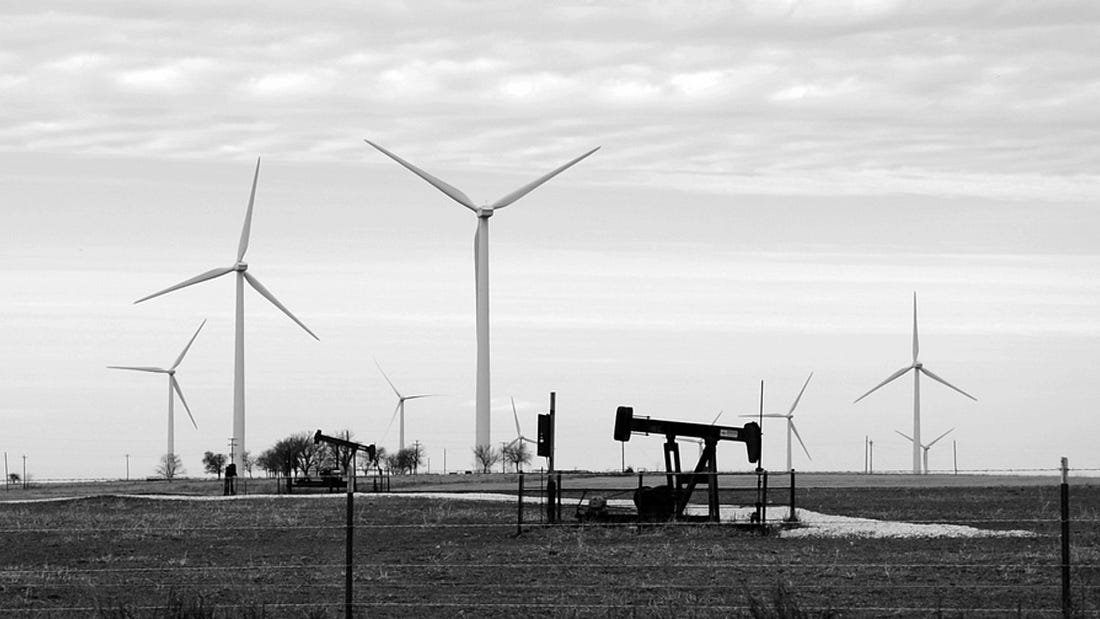
The expansion of Greentech in the Trump era has by no means been limited to blue states. Some of the most extensive installations of Greentech are in red states – witness Texas. Utility-scale solar plants produced 45 terawatts from January through September, 2025, up 50% from 2024 and nearly four times what they generated in 2021. Wind power also continued to climb, producing 87 terawatts through September – a 4% increase from 2024 and 36% more than in 2021. Together, wind and solar supplied more than a third of Texas’ electricity in the first 9 months of 2025. Battery use is also growing. Three of the four largest US battery storage projects scheduled to open in 2026 are in Texas. Solar collection and battery storage are now being systematically combined: one dual project is adding 837 megawatts of solar power and 418 megawatts in battery energy storage capacity.
In Nevada, generally regarded as a “purple” state, a third of all energy demand is now met by solar panels. The state has the highest solar electricity generation per capita in the country, as well as the most solar-industry jobs per capita. The goal of producing half of its electricity from renewables by 2030 is enshrined in the state’s constitution. The Las Vegas region has the highest concentration of residential rooftop solar in the continental US. The city’s chief sustainability officer attributes this in part to the city’s easy permitting. “You’re pretty much in and out of our office with a permit in 30 minutes.”
In the absence of federal support, states are reaching out to each other to create regional alliances to implement Greentech. For example, thirteen states have formed the Geothermal Power Accelerator collaboration to rapidly expand geothermal power development. Another example: The California State Legislature passed Assembly Bill 825 to begin the process of establishing a regional electricity partnership across the West. In late June, the state of Washington joined the partnership along with California and Quebec. And, after briefly withdrawing, Virginia rejoined the 11-member northeastern Regional Greenhouse Gas Initiative.
In some states like Texas, the Greentech boom is occurring without much attempt to reap its potential social benefits. But in many states, as we will see in a subsequent commentary in this series, the Greentech revolution is enabling a broader program for jobs and justice that embodies the principles of the Green New Deal. That in turn is laying the basis for a national Greentech New Deal to come.
Looming over recent climate politics has been the issue of energy affordability. Because Greentech has made the production and use of renewable energy so much less costly than fossil fuel energy, states have accelerated their introduction of it. But the energy cost squeeze on consumers has in some cases also led states to shortsightedly reduce investment in Greentech and unleash fossil fuels.
These dynamics are now being exacerbated by the escalation in fossil fuel prices and the threat of energy insecurity that have accompanied the Iran war. The relative expense and unreliability of fossil fuel energy is likely to accelerate Greentech in the states. States that don’t want to render their economies “stranded assets” should go all out for the Greentech revolution right now.
This article also appears in Jeremy Brecher’s STRIKE! newsletter.


No comments:
Post a Comment