It’s possible that I shall make an ass of myself. But in that case one can always get out of it with a little dialectic. I have, of course, so worded my proposition as to be right either way (K.Marx, Letter to F.Engels on the Indian Mutiny)
Saturday, July 18, 2026
LNG Canada equity option agreement reached with five First Nations
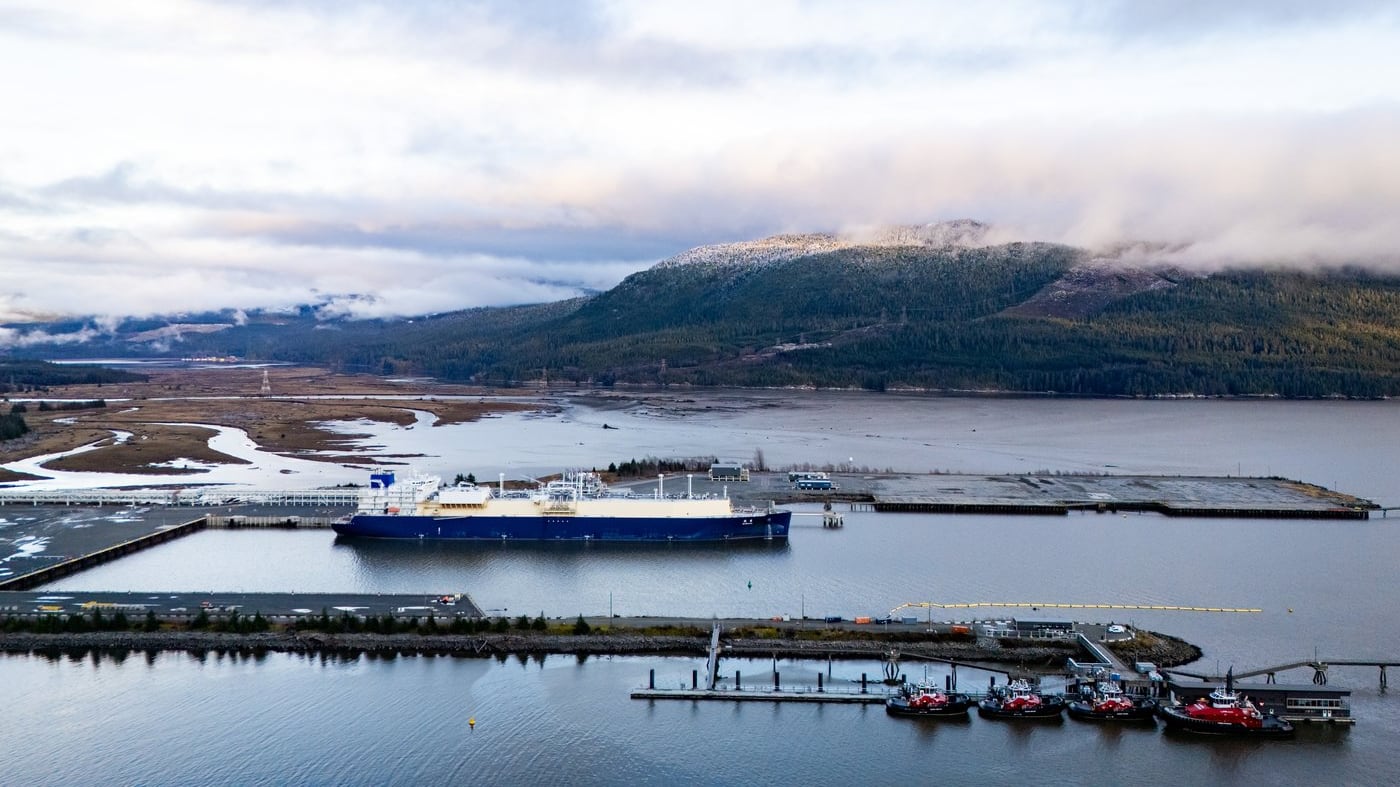
Wudang, a liquefied natural gas (LNG) tanker, fills up at an LNG Canada facility, in an aerial view, in Kitimat, B.C., on Thursday, November 13, 2025. THE CANADIAN PRESS/Ethan Cairns
KITIMAT — LNG Canada has reached an agreement with five neighbouring First Nations in northern B.C. that would provide them an option to invest up to $1-billion in the project’s proposed second phase.
The equity option agreement is with MNT Investments LP, which includes development organizations from the Gitga’at, Gitxaała, Haisla, Kitselas and Kitsumkalum.
MNT would be able to buy a majority stake in a special-purpose entity that would, in turn, buy a storage tank to be built as part of LNG Canada’s second phase.
The tank would then be leased back to LNG Canada for as long as the project in Kitimat, B.C., operates.
LNG Canada, led by Shell Canada alongside four Asian companies, aims to make a final investment decision by year-end on an expansion project that would double the current plant’s planned output.
The equity option agreement with the First Nations is conditional on the partners approving Phase 2, which has been referred to the federal major projects office.
This report by The Canadian Press was first published July 14, 2026.
‘An emergency measure’: Wood products industry calls on Ottawa to impose tariff on foreign goods
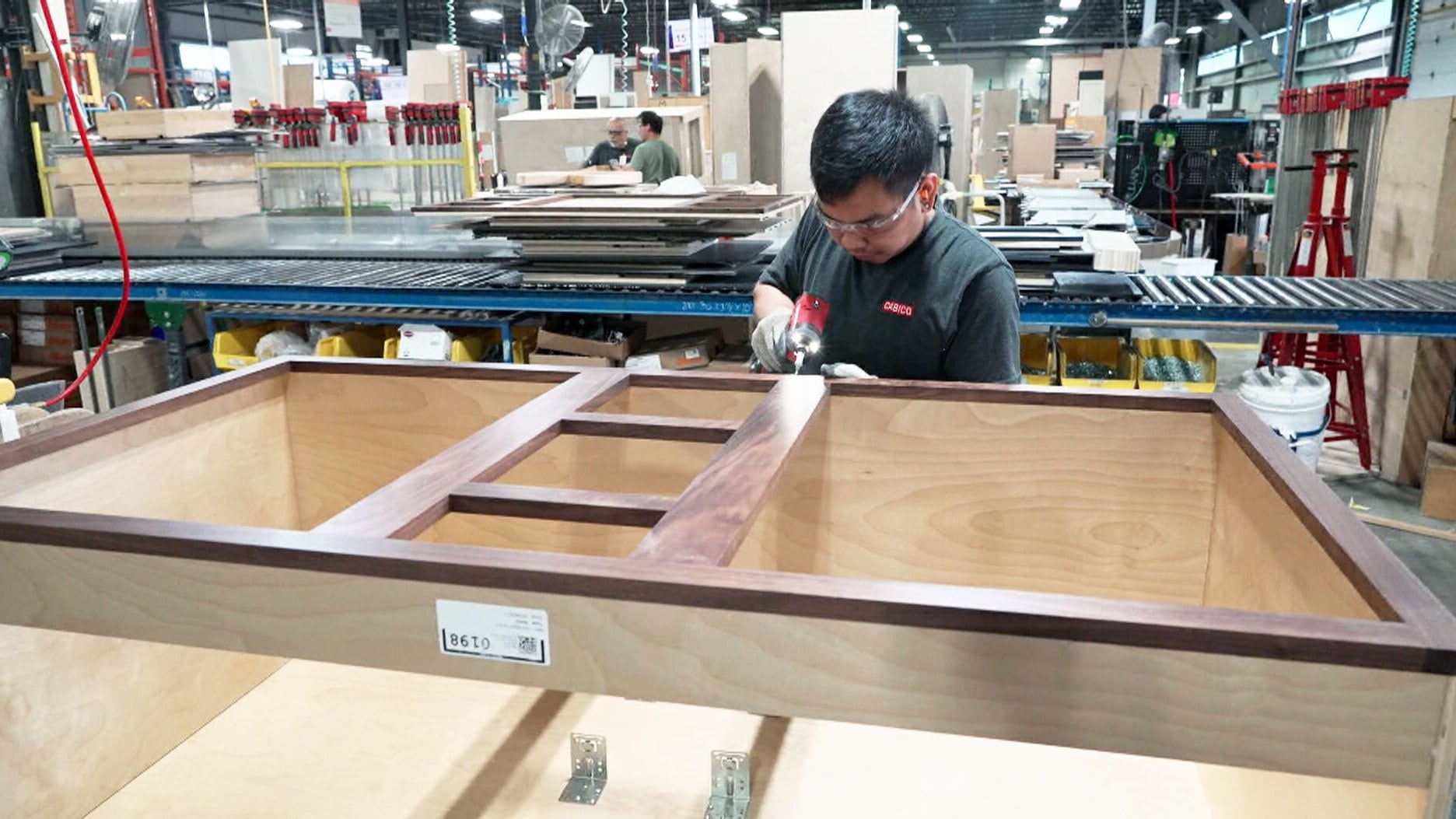
COATICOOK, Que. – Even though there are up to 15,000 moving parts on any given day at Alain Ouzilleau’s custom cabinet plant in Coaticook, Que., it’s only running at half capacity.
Ouzilleau spent $25 million to expand Cabico&Co’s operations over the last five years, with a new 50,000-sq. ft building and state-of-the-art robots. But instead of growth, the double hit of 25 per cent U.S. tariffs and a flood of foreign imports now has him breaking even.
He laid off about 200 of his 700-person workforce, which includes the company’s second plant in St. Catharines, Ont.
“It’s very frustrating and painful,” he said. “We love our people.”
U.S. President Donald Trump threatened to double those tariffs to 50 per cent in January, but delayed that move by a year. However, even at the 25 per cent level, Ouzilleau says Cabico&Co “cannot be profitable.”
“We’re breaking even, but we want to continue to invest. We want to continue to grow,” he told CTV News at the plant. “One of the options we’ll have to start looking at, to continue to protect our Canadian jobs, will be to look at having operations south of the border, which I would hate to do.”
Ouzilleau is a member of the Canadian Wood Products Alliance (CWPA), which represents the kitchen cabinet, hardwood flooring and wood furniture industries. They have been pushing the federal government for help, and Ouzilleau says the biggest “milestone” was securing the launch of a rare trade tool: a safeguard inquiry into foreign imports.
The Canadian Kitchen Cabinet Association (CKCA) says that concern focuses on the short term while ignoring a longer-term risk if measures aren’t taken to protect the industry. (Abigail Bimman/CTV News
“It allows companies to impose tariffs in a time of emergency, when precisely like this, when there’s a flood of product coming into the market, and it allows countries to save their industries from a massive change in in trade flows,” explained William Pellerin, a partner with McMillian LLP who is representing the CWPA.
But the Canadian International Trade Tribunal (CITT) doesn’t have to report to Finance Minister Francois-Philippe Champagne with a decision until Jan. 15, 2027. In the meantime, the wood products industry is pushing for provisional tariffs of 100 per cent or more.
“This is an emergency measure,” Pellerin said. “It’s needed now, and we can’t wait until February, or the industry will be gutted.”
Pellerin explains the issue with foreign imports is also connected to tariffs. Other countries around the globe face high tariffs to sell to the U.S. and see Canada as an attractive alternative. He says that’s why the CWPA is calling for such a high tariff in the interim.
“When companies like Cabico are all of a sudden flooded and don’t know what to do, a safeguard is what they’re asking for to impose… a tariff for three years – no more, not renewable – just so that people can catch their breath, so that their business doesn’t die in the meantime, until companies can readjust,” he said.
The CWPA says 3,000 jobs have already been lost in Quebec alone, with another 7,000 at risk by 2028.
But the Retail Council of Canada (RCC) doesn’t support provisional tariffs, warning they will raise prices for Canadians. The group is acting as an intervenor during the CITT’s inquiry, which it describes as in the “early days.”
“We’re very much against any sort of pre-emptive action by the government,” Matt Poirier, vice-president of federal government relations for the RCC, told CTV News.
“If we have to pay a 100 per cent tariff or whatever percentage tariff on these goods, those costs will be passed on to the consumer because retailers, everyone in the supply chain, frankly, is stretched to the limit at the moment,” Poirier said. “So any new cost, in addition to all the inflation that we’re seeing, all the disruptions that we’re seeing, will need to be passed on.”
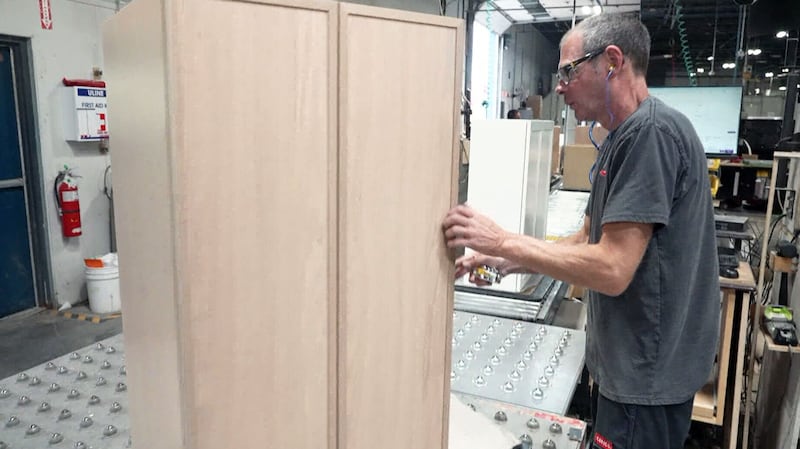
Layoffs at Cabico&Co’s plant impact the broader supply chain, as well as the local economy. (Abigail Bimman/CTV News)
The Canadian Kitchen Cabinet Association (CKCA) says that concern focuses on the short term, while ignoring a longer-term risk if measures aren’t taken to protect the industry.
“If Canadian manufacturers continue to disappear, Canadians will ultimately have fewer domestic suppliers, less competition and fewer choices,” said CKCA president Luke Elias.
“We will become increasingly dependent on imported products and far more vulnerable to global supply chain disruptions, trade disputes, currency fluctuations and decisions made outside of Canada,” Elias said in an email to CTV News. “That is not a stronger marketplace for consumers. It is one with less resilience, less competition and, ultimately, higher prices.”
The federal government hasn’t responded to the request yet – nor has it ruled it out.
“The government is closely monitoring imports and continues to assess whether additional action is warranted while the CITT inquiry is ongoing,” John Fragos, a spokesperson for the finance minister, told CTV News in a statement.
“The government has been in constant partnership with the forestry and wood sector and, through consultation with stakeholders, introduced a myriad measures to better support the sector, understanding the vital role it plays in rural and remote communities across the country – and in propelling the economy ahead,” read part of the statement.
Ouzilleau took CTV News on a tour of the entire production in Coaticook, located in the Eastern Townships, 15 minutes from the Canada-U.S. border shared with Vermont.
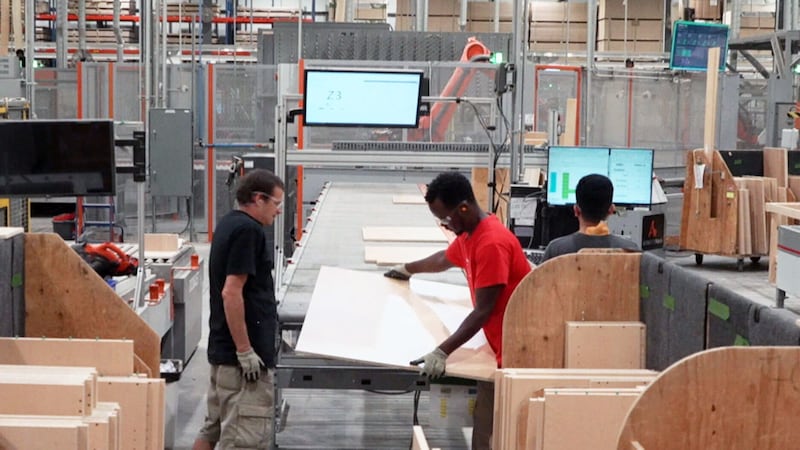
With the plant only operating at half capacity, he showed us multiple machines sitting silent and an area used as storage, waiting for a fourth line complete with robot that was supposed to be up and running.
He says layoffs at his plant impact the broader supply chain, as well as the local economy.
“If we produce less cabinets, guess what? In the forest, they’re cutting less trees, and the sawmills don’t have as much work. It’s the whole supply chain that is suffering, down to the local restaurant in Coaticook.”
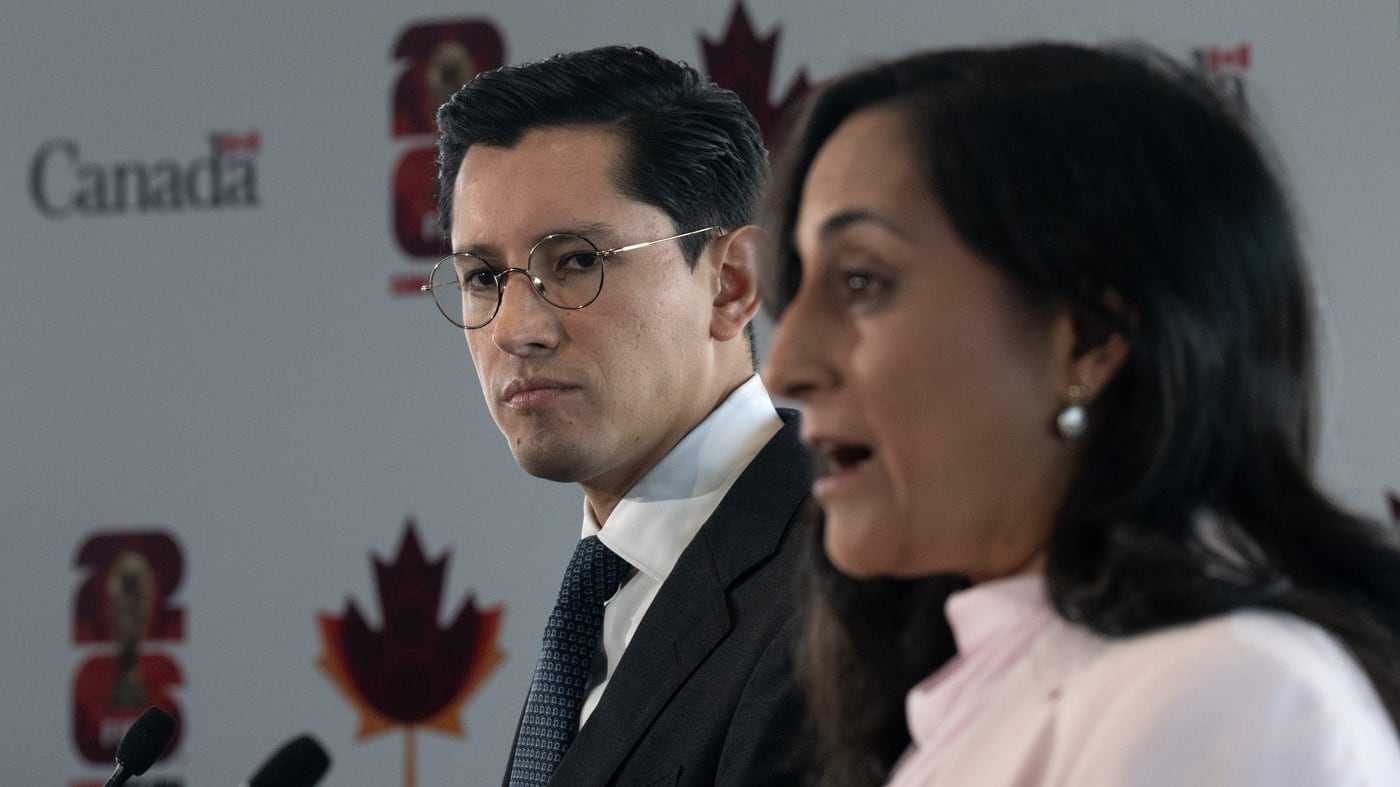
Mexico’s Secretary of Foreign Affairs Roberto Velasco Alvarez, left, looks on as Minister of Foreign Affairs Anita Anand responds to a question during a news conference in Ottawa, Friday, July 17, 2026. THE CANADIAN PRESS/Adrian Wyld
OTTAWA — Mexico’s foreign affairs minister said Friday his government will engage in trilateral talks with the U.S. and Canada on the continental trade pact when “it’s appropriate.”
Roberto Velasco Alvarez, who was in Ottawa to meet with Foreign Affairs Minister Anita Anand, was asked whether Mexico would consider making a bilateral agreement with the United States that leaves Canada behind.
“The (Canada-U.S.-Mexico Agreement) is a trilateral agreement,” Velasco responded. “And of course I think the three countries agree that that architecture should continue.”
The Trump administration opted not to renew the trade pact, better known in Canada as CUSMA, at the start of July. Mexico and Canada had both requested a 16-year extension.
The U.S. decision triggered rolling annual reviews for up to a decade, at which point the agreement will expire if the partners can’t agree on an extension.
Prime Minister Mark Carney has received pushback over his approach to trade negotiations from some opposition Conservatives who claim that Mexico is further ahead in trade talks.
Mexico and the U.S. are set to hold their third round of official negotiations next week, but Ottawa and the Trump administration have not started similar talks.
CUSMA was negotiated during U.S. President Donald Trump’s first administration to replace the North American Free Trade Agreement.
There were times during the tumultuous negotiations when Mexico and the United States were talking without Canada. Ultimately, all three countries signed the agreement and called it a success.
Velasco and Anand both said there are separate issues between the three countries that need to be negotiated bilaterally.
“There are many issues that their own nature is bilateral and because of that we need to work with the United States each to resolve them,” Velasco said. “Of course, when it’s appropriate, we have trilateral conversations.”
When asked whether the increasing share of Mexico’s EV market held by Chinese electric vehicle makers has become an obstacle to negotiations, Velasco said it’s part of CUSMA talks with the United States.
Carney’s move to allow a limited number of Chinese electric vehicles into Canada in exchange for tariff relief on agriculture goods has been roundly criticized by the Trump administration.
The continental trade agreement has shielded Canada and Mexico from many of Trump’s tariffs but industries like steel, aluminum, automobiles and cabinetry are being slammed with separate duties.
Those sector-specific duties have been a key issue for Canada’s negotiators but Trump seems unwilling to shift his stance on the tariffs.
Canada’s trade and investment relationship with Mexico and the United States is important, Anand said.
“We’ll keep working on all fronts,” she said. “We will work hard on the bilateral relationship with Canada and the United States, and we’ll also work on the trilateral relationship.”
Trump officials have discussed wide-ranging issues with Mexico that are distinct from U.S. trade irritants with Canada.
United States Trade Representative Jamieson Greer said Wednesday the “trade deficit in Mexico really is a challenge.” He said there are issues with Mexico regarding overcapacity, subsidies, unfair trading practices and monetary policy.
Greer also said he talks to his Canadian counterparts weekly but “we just haven’t seen a lot of movement.”
While the Canada-U.S. relationship has been rocked by Trump’s tariffs and threats of annexation, the American architect of CUSMA said he’s not worried about the trade deficit with Canada.
Robert Lighthizer, the United States trade representative during the first Trump administration, said “there’s nothing wrong with having a trade deficit with someone who’s giving you energy.”
During a panel discussion at the Aspen Security Forum in Colorado Thursday, Lighthizer said he had a lot of respect for Carney, calling him a “super person.”
While the Canada-U.S. relationship has faced strain, Lighthizer said he believes it will recover.
“I think we come out of it because the fundamentals are so good between the United States and Canada,” he said.
This report by The Canadian Press was first published July 17, 2026.
By Kelly Geraldine Malone in Washington, with files from Dylan Robertson in Ottawa