Saturday, July 18, 2026

Brazil calls Trump’s 25% tariff unjustifiable, vows to impose reciprocal tariffs


Published:
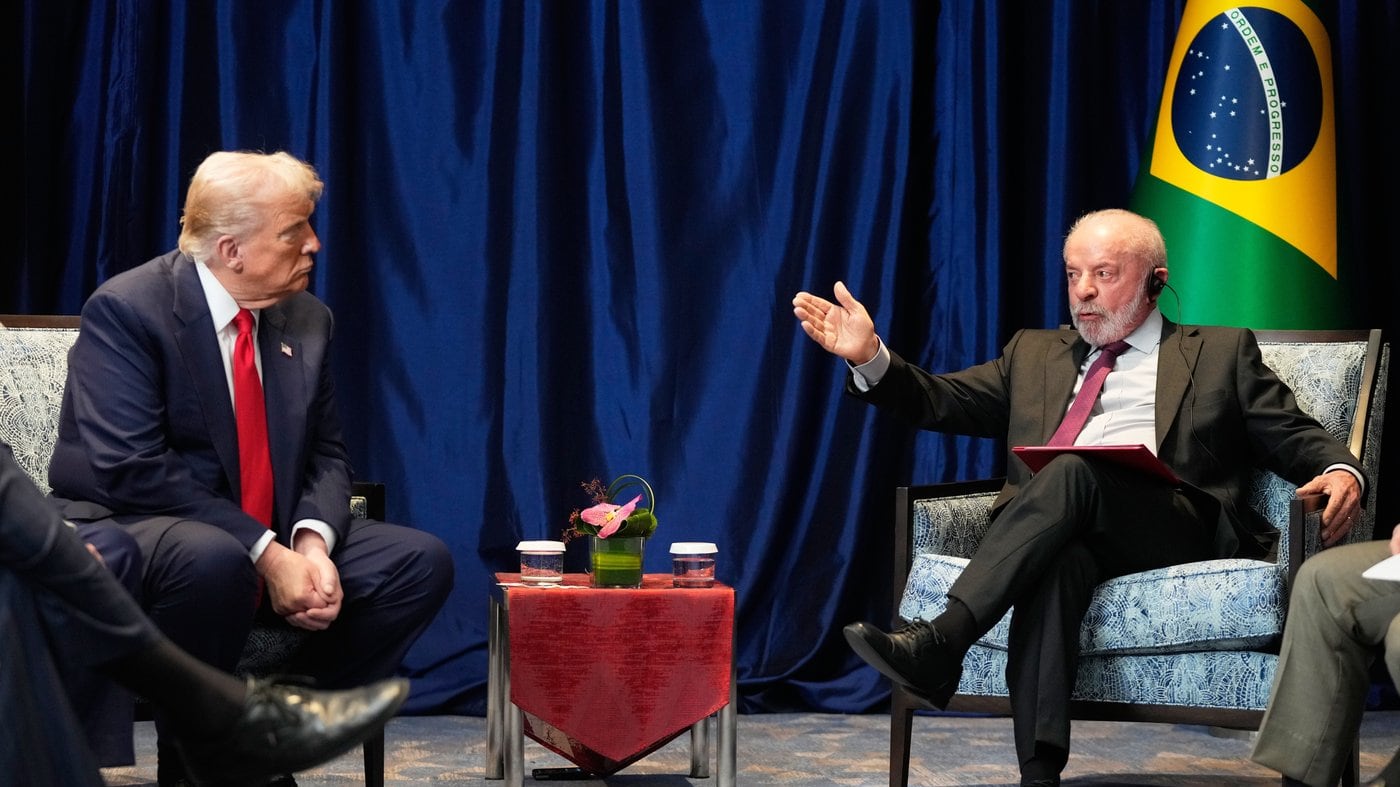
U.S. President Donald Trump meets with Brazil's President Luiz Inacio Lula da Silva
 on the sidelines of the ASEAN Summit in Kuala Lumpur, Malaysia, Oct. 26, 2025. (AP Photo/Mark Schiefelbein, File)

RIO DE JANEIRO — Brazil has described the latest U.S. tariffs on certain Brazilian imports as unjustifiable and politically motivated and threatened on Thursday to impose reciprocal tariffs against U.S. products. The country’s top diplomat criticized U.S. Secretary of State Marco Rubio for the move.

The U.S. said on Wednesday it would impose a new 25 per cent tariff on certain imports from Brazil, citing unfair trade practices by the world’s 10th-biggest economy.

Brazil’s Foreign Minister Mauro Vieira accused Trump administration officials of pressuring the South American nation to give American companies exclusive access to some sectors of its economy. He said Brazil has never left the negotiating table.

The tariffs, first proposed last month, will take effect July 22. The order exempts some goods that are not produced in the U.S. or that officials worry would disrupt supply chains — including coffee, beef, oranges and orange juice and aircraft components.

Brazil’s government said the decision hits about 3,000 items, but is yet to decide whether and how it could retaliate with a law its Congress passed in 2025 in response to President Donald Trump’s tariffs.

In a statement late Wednesday, the office of President Luiz Inácio Lula da Silva refuted the U.S. allegations of unfair trade practices. It said 76 per cent of imports from the U.S. entered Brazil duty-free in 2025, and said the average tariff effectively applied to U.S. products was only 3.1 per cent.

It said it has taken steps to impose reciprocal tariffs, along with other trade-related countermeasures, through its own law and through the World Trade Organization’s dispute settlement mechanism.

Vieira said Rubio made statements that are “unacceptable, offensive to the Brazilian people and the Brazilian government” after the new tariffs were announced. Rubio said in a post on X that the tariffs were the result of Lula putting “his own ego ahead of making a deal” and not negotiating with the U.S. in good faith.

“Rubio launches a crude and arrogant attack on the Head of State of a friendly nation, who has personally sought to open channels for dialogue on several occasions,” Vieira told a press conference in the capital, Brasilia. ”What Secretary Rubio dismisses as ‘ego’ is, in fact, President Lula’s steadfast resolve to defend Brazil’s sovereignty and the interests of our businesses and workers.”

U.S. has a robust trade surplus with Brazil

The United States has for years run a massive trade deficit with the rest of the world, and Trump has cited the lopsided trade numbers to justify his aggressive use of tariffs.

But Brazilian imports make an unusual target: The U.S. has persistently piled up trade surpluses with Brazil. Last year, in fact, U.S. exports to Brazil exceeded imports by nearly $42 billion; only the United States’ trade surpluses with the Netherlands and the United Kingdom were higher.

The new tariff puts pressure on national exports and increases insecurity for companies in both countries, Brazil’s National Confederation of Industry said in a statement Thursday.

The Trump administration first imposed a 50 per cent tariff on Brazilian imports last July. He cited what he called a “witch hunt” against former President Jair Bolsonaro. Trump’s ally was on trial at the time for attempting a coup despite his 2022 electoral defeat to Lula and was later convicted. Some of those tariffs were later rescinded.

Trump at the time also accused Brazil of unfair trade practices and said he had directed U.S. Trade Representative Jamieson Greer to initiate an investigation under Section 301 of the Trade Act of 1974.

That led the office to charge Brazil with lax anti-corruption enforcement and unfair tariffs, among other things, in June. One of the targets of the investigation is Brazil’s popular PIX payment system, which is run by the country’s central bank and is overwhelmingly free of charge.

Scott Lincicome, a trade analyst at the libertarian Cato Institute, said the U.S. administration might have had a legitimate Section 301 case if it narrowly targeted Brazil’s restrictions on trade in digital services. Instead, it threw in a bunch of other allegations.

“It’s a pretty clear case of the administration simply finding an excuse and finding a law that allows them to impose the tariffs they want to impose,’’ Lincicome said.

Welber Barral, a trade lawyer and former Brazilian foreign trade secretary, said the move comes as his country’s exports to the U.S. are now less than 10 per cent of its total for the first time in two centuries.

“Brazil is diversifying to other destinations,” Barral said. “Brazil is negotiating with Canada through the Mercosur. Other deals will also come out as the American market closes.”

Brazil elections may be impacted

Brazilian officials have blamed the Bolsonaro family — the main political opponents of Lula — for the latest round of tariffs. The move was announced shortly after Sen. Flávio Bolsonaro, a presidential hopeful in October’s elections and son of the former president, visited Trump, Rubio and other U.S. officials in Washington in May.

Sen. Bolsonaro reposted Rubio’s statement, adding: “Lula is no longer fit to be the president of Brazil. We are on a plane without a pilot.” He also described Lula as “the Brazilian Biden” and said he “is grumpy, reckless, and has become a danger to our nation.”

Flávio Bolsonaro is expected to be confirmed as Lula’s main election rival on July 25 at his Liberal Party’s convention in Sao Paulo, though his bid has struggled to overcome the findings of a police investigation which showed he received millions of dollars from a disgraced banker to finance a movie about his father. He has denied any wrongdoing.

The two leading presidential candidates have previously traded barbs over their responses to the deeply unpopular U.S. tariffs, suggesting that they believe how they are perceived as handling them will be a key factor in the vote.

___

Mauricio Savarese and Eléonore Hughes, The Associated Press

Savarese reported from Sao Paulo.

Paul Wiseman contributed to this report from Washington D.C.


Iraq grants Starlink licence as Washington summit yields $60bn in US deals

Iraq grants Starlink licence as Washington summit yields $60bn in US deals
/ bne IntelliNewsFacebook

By bne IntelliNews July 18, 2026

Iraq has granted Starlink a licence to provide satellite internet services, the Communications and Media Commission said, after an agreement was signed in Washington on July 17.

The signing ceremony at the US Chamber of Commerce was attended by Prime Minister Ali al-Zaidi and the commission's executive chairman, Baligh Abu Kalal.

The commission, Iraq's converged telecoms and media regulator, said Starlink's entry would widen internet access for consumers and businesses, particularly in remote areas where fixed and mobile infrastructure remains limited, and would support investment and the government's digital transformation programme.

Starlink, operated by Elon Musk's SpaceX, delivers broadband through a constellation of satellites in low Earth orbit, bypassing the ground-based networks on which Iraqi connectivity has traditionally depended. The regulator approved the company's operating licence in June, a decision welcomed at the time by al-Zaidi and Tom Barrack, the US special presidential envoy for Iraq.

The deal was one of 48 agreements and memoranda of understanding Iraq signed with the US government, international companies and global institutions during the Washington summit, with energy, infrastructure and technology projects making up the largest share. Initial agreements with US firms were worth more than $60bn in total, including a deal with Chevron to rebuild the crude pipeline from Kirkuk to Baniyas in Syria.

"We are using an open-door policy," al-Zaidi told the summit. "Everybody who has a project can come and talk to us."

Starlink's arrival adds a new competitor to a telecoms market the regulator has been working to clean up. The commission has spent three years pursuing debts owed by mobile operator Korek Telecom and began seizing the company's assets in May, while pledging to accelerate Iraq's 5G rollout and attract foreign investment to the sector.

Negotiations over Starlink's entry ran through two Iraqi governments. Former prime minister Mohammed Shia al-Sudani met SpaceX delegations in May and December 2025 to discuss licensing, coverage areas and the terms of the company's market entry.

U.S. oil firms sign deals with Iraq to develop alternative shipping routes


Published:

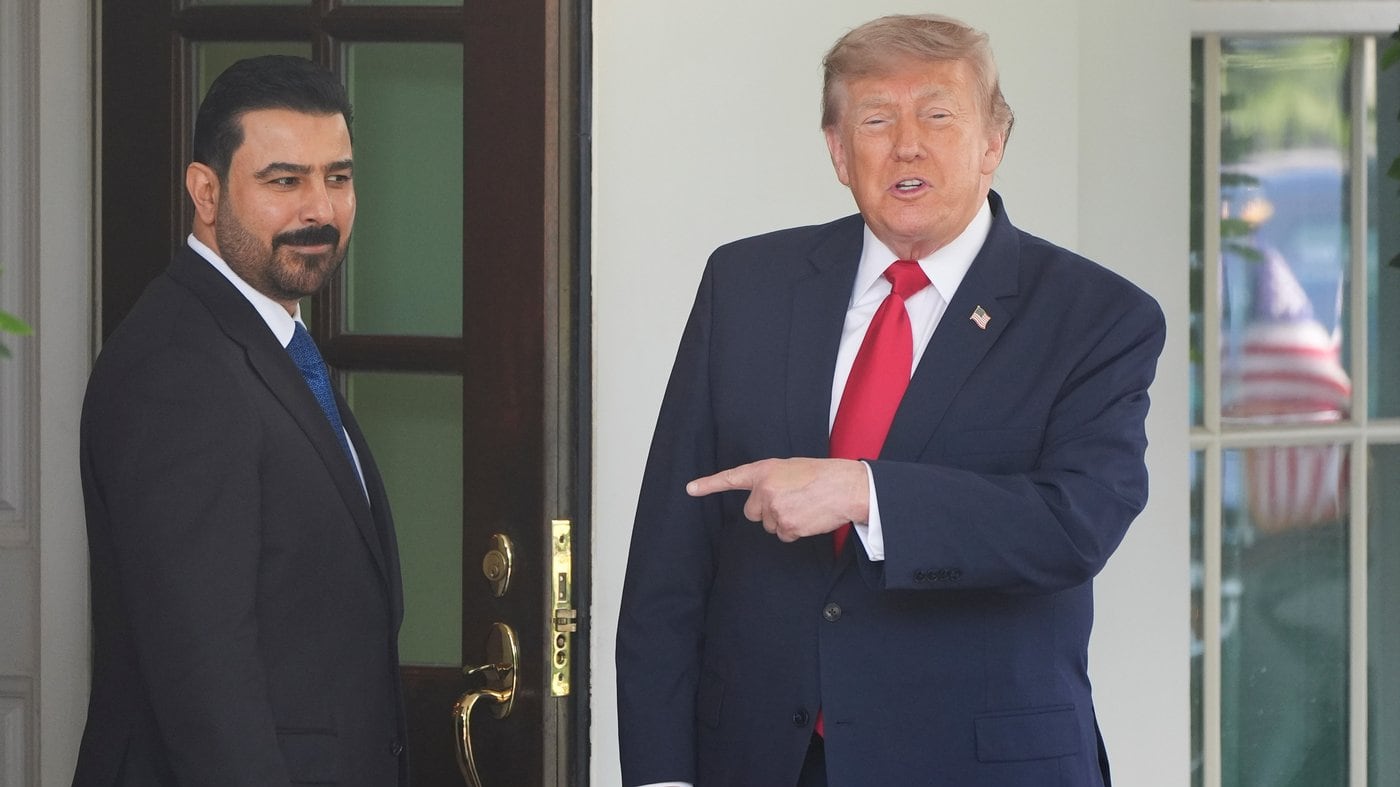
President Donald Trump, gestures as he greets Iraq's Prime Minister Ali al-Zaidi at the White House, Tuesday, July 14, 2026, in Washington.(AP Photo/Alex Brandon)

WASHINGTON — U.S. companies signed roughly US$60 billion in agreements and partnerships with the Iraqi government Friday, including deals intended to create alternative routes for shipping oil out of the Persian Gulf.

The deals, signed at the U.S. Chamber of Commerce, also involved other industries, including healthcare, communications and infrastructure.

It’s not clear when the oil deals will be able to create viable alternatives to the Strait of Hormuz, through which about a fifth of the world’s oil flows. Goldman Sachs estimates that pipelines in just one country take at least two and a half years to build, and these pipelines would travel through two or more nations.

Iran has sought to close the Strait repeatedly since the U.S.-Iran war began Feb. 28, causing sharp gyrations in oil and gas prices.

On Friday afternoon, the price of West Texas crude rose nearly 5 per cent to US$88 a barrel, up from about US$67 before the war began. It had topped US$110 in early April before falling back after a truce was reached. It has since risen on renewed conflict between U.S. and Iran

Thomas Barrack, U.S. Ambassador to Turkey, said the oil pipeline agreements would lead to a program “that will make the Strait of Hormuz an afterthought.”

The signings followed a meeting between Iraqi Prime Minister Ali Falah al-Zaidi Thursday with executives of Chevron in Houston, at which al-Zaidi urged the U.S. energy company to expand and accelerate its investments in Iraq.

In a speech Friday, al-Zaidi said Iraq’s economy is seeking long-term investment and partnerships, not merely contractors to carry out projects.

Al-Zaidi stressed his government’s commitment to communication, dialogue and cooperation with the U.S. Chamber of Commerce, describing it as “the place where economic decisions are made.”

On Friday, Chevron signed three agreements with the Iraqi government. Jake Spiering, Chevron’s president of corporate business development, said two would focus on boosting oil production, while a third would involve “investing in a pipeline that’s going to create another export route out of Iraq to world markets. This is very important for energy security.”

In a note released earlier this week, analysts at Goldman Sachs estimated that seven different pipelines in the region under development could, by the end of 2028, carry about 60 per cent of the oil currently shipped through the Strait.

The pipelines could carry roughly 14 million barrels per day by then, Goldman estimated. Roughly 23 million barrels per day were shipped through Hormuz before the Iran war.

After the U.S. and Israel launched their war on Iran Feb. 28, oil-rich Iraq — which is home to both Iran-backed militias and U.S. bases — found itself in the crosshairs. Syria, meanwhile, has been one of the few regional countries that has managed to stay on the sidelines of the conflict. Damascus has promoted Syria — still grappling with the aftermath of its own 14-year civil war — as a bastion of stability and has offered it as an alternative transit route for energy shipments.

With the war dramatically reducing oil exports through the Strait of Hormuz, some oil shipments have instead been trucked from Iraq into Syria and shipped to European markets via Syria’s Baniyas port, bypassing the Hormuz route. A key border crossing between northern Iraq and Syria reopened in April after being closed for more than a decade, with officials touting it as an additional route for energy exports

The overland route is less efficient and more expensive than shipping exports through the strait. The pipeline project envisioned would allow for exporting a larger volume of oil from Iraq to Syria and Turkey.

---

Christopher Rugaber And Qassim Abdul-zahra, The Associated Press

Oil prices may be driving the U.S.- Iran war, instead of just reacting to it, explains expert


Updated:

Lower oil prices may actually be driving the U.S. Iran war, instead of just reacting to it, says a geopolitical expert.

The price of oil is an independent variable in the ongoing conflict. While most investors naturally want to predict it using war as a catalyst, the opposite may be true, explains Marko Papic, chief investment strategist at BCA Research.

“I think oil prices are what are catalyzing kinetic activity,” says Papic, adding that oil prices are likely influencing how aggressively the two sides behave.

Papic says when oil prices fall to a level that is comfortable for the U.S. and Iran government, they have room to maneuver, which allows them to react to domestic political pressure, act tough and engage in ‘kinetic action.’

“But when oil prices get to an uncomfortable level, you start hearing them talk about going to Islamabad to figure out how to get vessels through,” he says, pointing to when Pakistan initiated its vessel transit agreement with Iran to allow 20 Pakistani-flagged vessels to sail through the Strait of Hormuz when Brent Crude hit a four-year high at US$126.

On the flip side, Papic points to a situation over two weeks ago when Brent Crude fell below US$70. It dropped to its lowest level since before the U.S.–Iran war, after concerns about oil supply eased and tankers began moving through the Strait of Hormuz again

“That made both sides pretty comfortable with going back towards aggression,” says Papic .

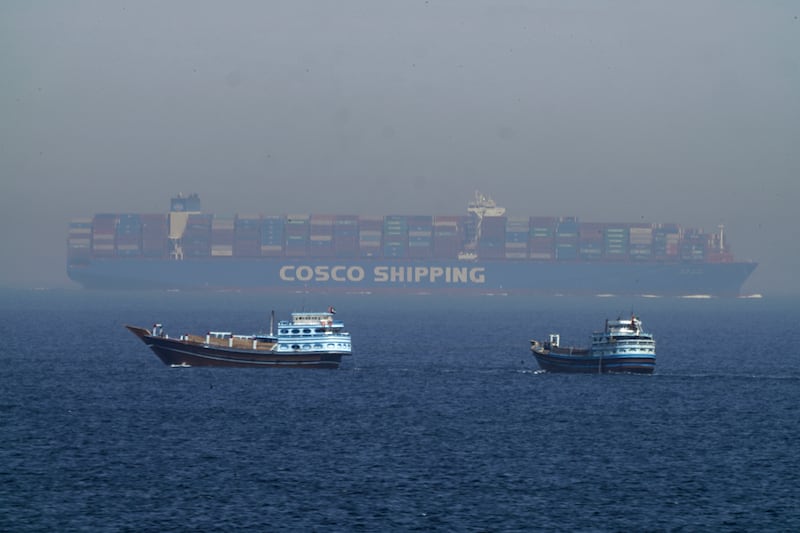
Two traditional dhows sail by a large container ship in the Strait of Hormuz Friday, May 19, 2023. (AP Photo/Jon Gambrell)

He expects that dynamic to reverse.

“As we get back to US$90 to US$95, you’re going to see both sides step off the gas,” says Papic.

A lower trading range

Papic says the conflict has created a potential trading range of between US$70 and US$95 per barrel for Brent crude.

That is lower than the US$95-to-US$120 range he associated with the height of the conflict, when investors faced greater uncertainty about whether the two sides could de-escalate and restore shipping through the Strait of Hormuz.

He says the earlier ceasefire and memorandum of understanding demonstrated that both sides were capable of reaching an arrangement.

Papic says the market was previously questioning whether Iran and the U.S. could “land the plane” and increase traffic through the key shipping route, despite damage to critical infrastructure in the Middle East.

“And the answer was answered with the ceasefire, with the Memorandum of Understanding (MOU). It’s already been done. Given that they’ve been able to land the plane once. I don’t see why they can’t do it again,” says Papic.

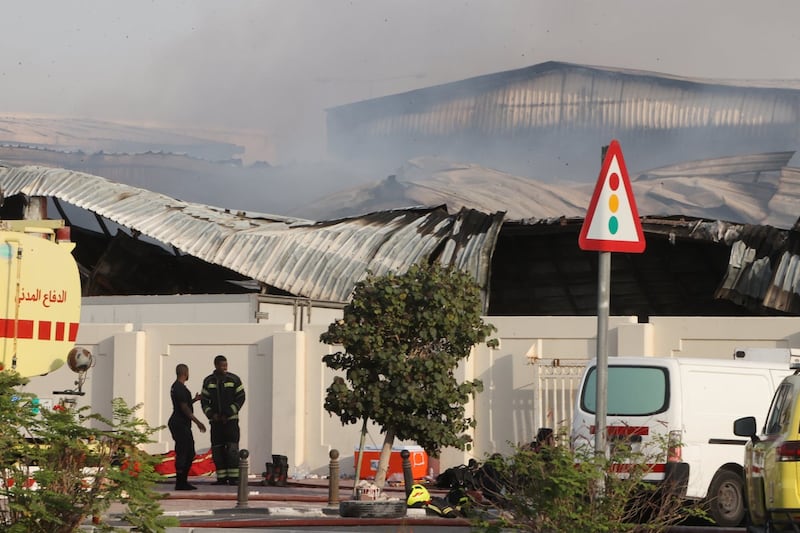
Firefighters work as smoke rises outside a damaged warehouse in an industrial area in Al Rayyan, Qatar, following an Iranian strike, Sunday, March 1, 2026. (AP Photo)

He says the experience has reduced the probability of a worse case scenario in the eyes of investors, but the worst case scenario is not completely off the table.

He highlights that the recent MOU only brought 40 per cent of the blocked oil traffic back online, leaving 60 per cent of the disruption unresolved.

And the U.S. has already depleted its Strategic Petroleum Reserves to combat price spikes, dragging it down to historic lows.

" We’re basically plumbing the bottom,” says Papic.

“So somebody listening to me right now, they’re like, ”Well, oil prices should then be higher. No, no, no, no. They should be lower because the constraints to conflict are greater.”

Hormuz traffic expected to recover

Papic expects traffic through the strait to begin recovering over the next two weeks, particularly as oil prices approach US$90 per barrel.

While traffic now has fallen to zero, he says some ships had continued moving through the route earlier while Iran and the U.S. exchanged missile attacks.

He also says gasoline prices had not fallen by as much as crude prices“ so the pressure on Trump remains.”

“We’re now, I think, pretty much at the peak of this Hormuz War 2.0, if we want to call it that, post MOU conflict,” says Papic.

El Niño could push wheat and cocoa prices higher

Papic also warns that a strengthening El Niño weather pattern could put pressure on agricultural prices, particularly wheat and cocoa.

“We think those two are going to go up the most,” says Papic.

He says wheat prices could create political and fiscal pressure in countries like Egypt and Turkey that rely heavily on imports and lack the financial resources to cushion consumers from higher food costs.

“If you’re Saudi Arabia, if you’re the United Arab Emirates, you sell a lot of oil, you have a current account surplus, you can accommodate this increase in prices, so you can deal with it,” says Papic.

Anam Khan

Anam Khan

Opens in new window

Journalist, BNNBloomberg.ca