Monday, July 20, 2026

Four engine failures abort Starship's 13th launch bid at the last second
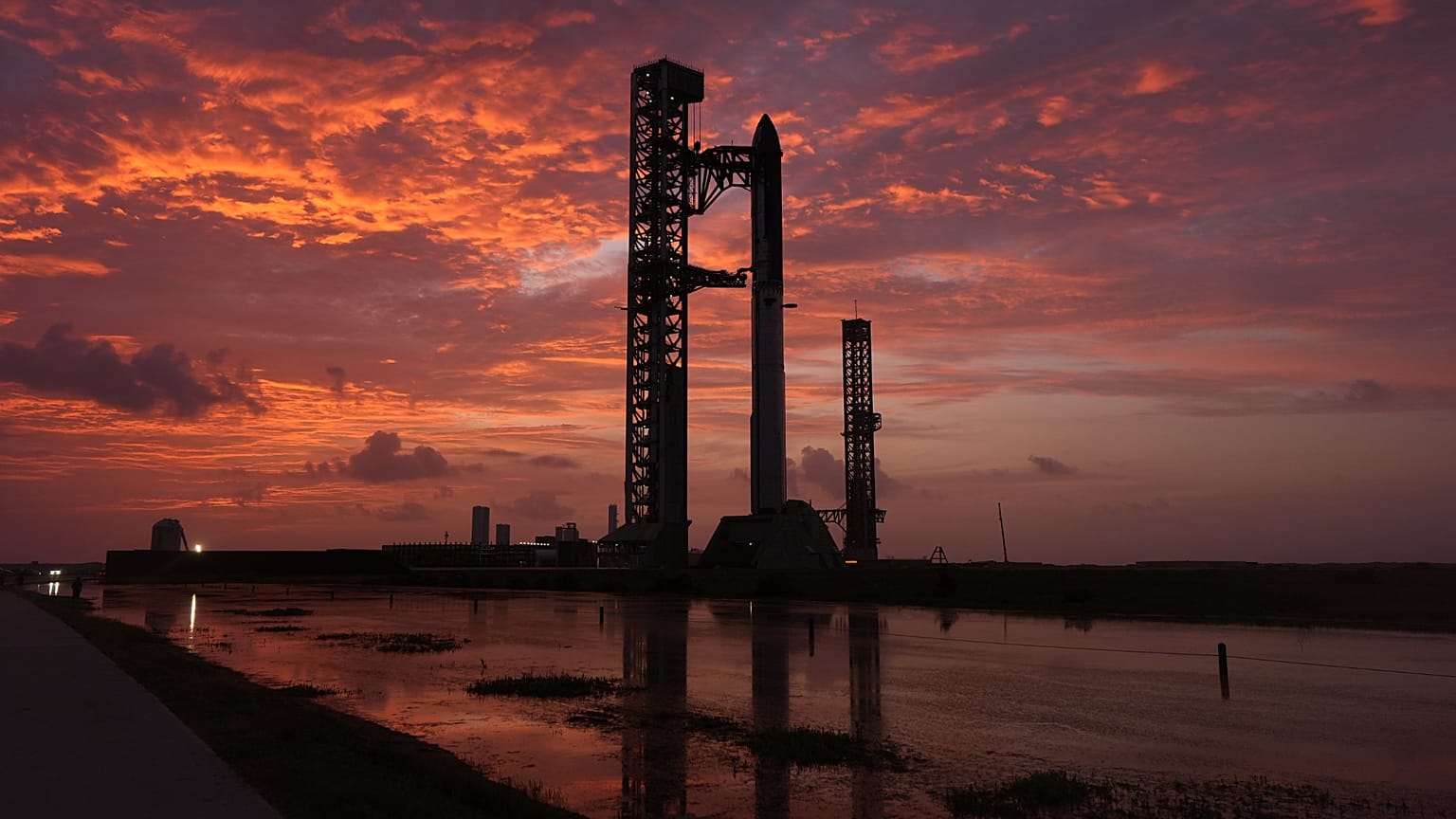
SpaceX's mega rocket Starship is prepared for a test flight from Starbase, Texas, Thursday, July 16, 2026. (AP Photo/Eric Gay)
Copyright AP Photo

By Una Hajdari with AP
Published on

The world's biggest rocket was grounded Thursday when four of its 33 engines failed to ignite, leaving SpaceX to replace two engines ahead of a new launch attempt early next week.

SpaceX's mega Starship rocket came within a second of blasting off on a test flight Thursday, but some of the engines failed to ignite, triggering a launch abort amid billowing clouds of smoke and vapour.

Elon Musk, the company's founder and CEO, said two engines will be replaced "to be confident of a good flight" before sending Starship from Texas on a space-skimming journey halfway around the world.

It will be the 13th flight for Starship, which at 124 metres tall with 33 main engines is the world's biggest and most powerful rocket.

SpaceX's launch webcast showed engine ignition beginning three seconds before the planned liftoff, viewed from a drone high above the pad.

Although the company did not elaborate, onscreen data showed four engines failing to fire, with the remaining 29 immediately shutting down and keeping the rocket anchored to the pad. It was the first time a full-scale Starship experienced a last-second abort.

The launch team immediately began draining fuel from the rocket.

"Most probable launch timing is early next week," Musk said via X.

Everything was going SpaceX's way, even the weather, until the partial engine failure.

The rocket's automatic launch system worked as planned by halting everything — too few operating engines could have doomed the launch. Some earlier Starship flights ended in explosive fireballs.

Musk's most advanced Starlinks aboard

Twenty of SpaceX's newest and most advanced Starlinks were on board for release during the planned hour-long flight from Starbase, the company's hub near the Texas-Mexico border.

The internet satellites were to attempt communicating with Starlinks already in orbit while photographing Starship's heat shield.

Neither the first-stage booster nor the spacecraft were meant to be recovered, with both ending up in the sea.

Putting astronauts back on the moon

NASA is counting on Starship to land its astronauts on the moon within the next few years.

The space agency has hired SpaceX and Jeff Bezos' Blue Origin to build and fly the lunar landers that will return humanity to the moon's surface after an absence of more than half a century.

Both companies need their landers — Starship and Blue Moon — ready to fly by next year so that the newly named Artemis III crew can practise docking their capsule with them in orbit around Earth.

The mission after that — Artemis IV, planned for no earlier than 2028 — would use one of those landers to take two astronauts to the moon's south polar region.


Unplanned impact: NASA says SpaceX rocket parts could hit Moon
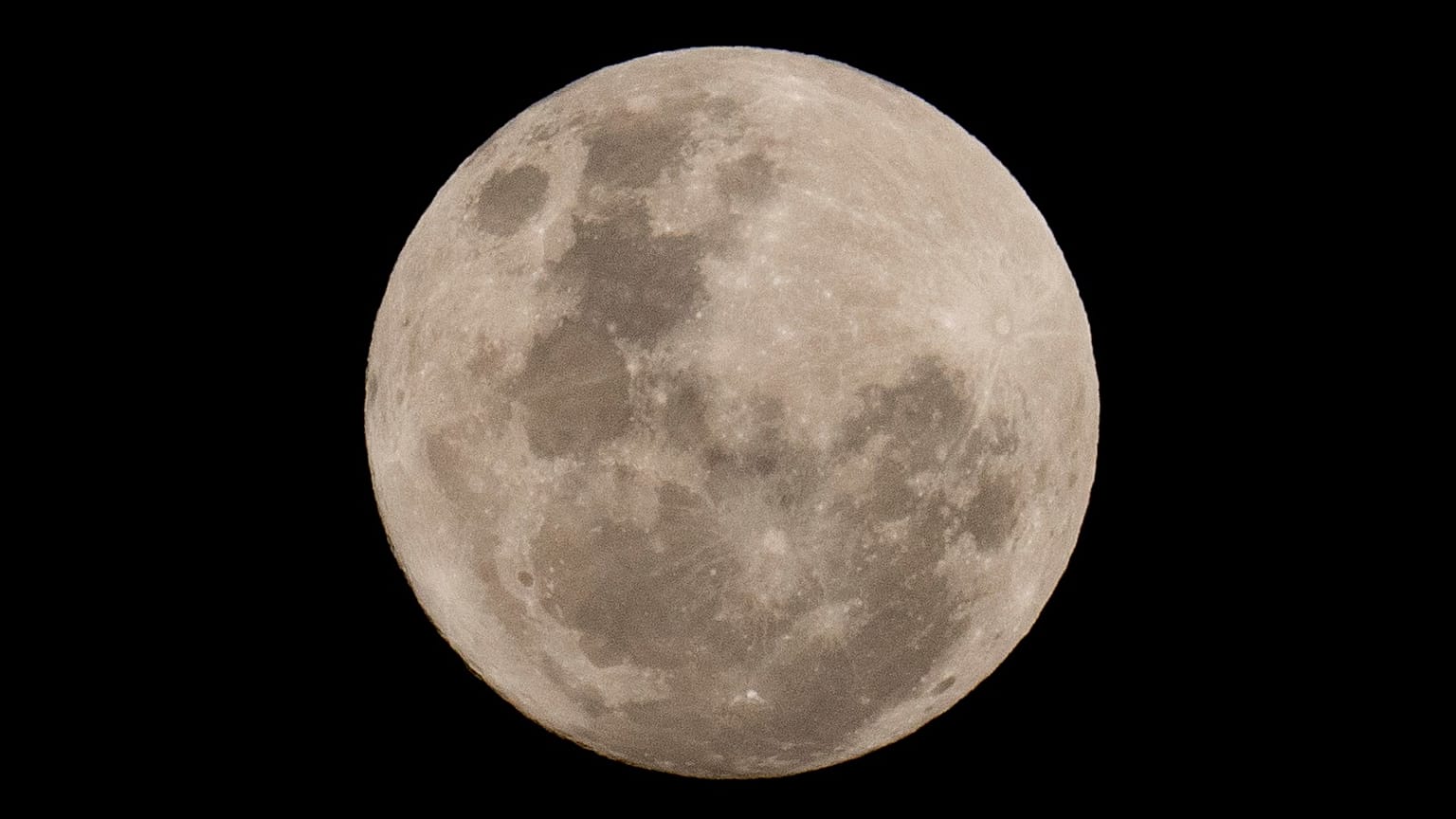
In August, a piece of a SpaceX rocket could crash into the Moon unexpectedly.
Copyright Esteban Felix/Copyright 2026 The AP. All rights reserved


By Franziska Müller
Published on


In August, parts of a SpaceX rocket are expected to crash into the Moon. It wasn't planned, but experts are monitoring it. Will the impact be visible from Earth?

Space exploration sometimes has consequences that are not immediately apparent. According to NASA scientists, a piece of rocket could collide with the Moon in early August.

In January 2025, around a year and a half ago, Elon Musk’s company SpaceX launched its "Falcon 9" rocket, sending two landers to the Moon. Now, US astronomer Bill Gray and the US space agency NASA, quoted by the news agency dpa, warn that an upper stage of the rocket could accidentally hit the Moon. Calculations suggest the impact is due to occur on 5 August.

The space portal Space.com reports that a panel discussion with experts on the impending impact was held in early July. It was organised by NASA’s Solar System Exploration Research Virtual Institute (SSERVI). The Moon is a dynamic environment, lunar observer Brian Day told the site; changes and impacts do occur.

Will the collision with the Moon be visible from Earth?

Experts are currently debating whether the collision will be visible from Earth. From Earth’s perspective, the rocket component could strike right at the edge of the lunar disc. The dust cloud created in the process could be illuminated by the Sun and thus become visible, the site adds.

The upper stage of the "Falcon 9" rocket weighs around four tonnes. According to the portal Space.com, the piece of space debris is currently travelling at more than two kilometres per second.

NASA considers the chances of observing the impact from Earth to be low. "I think it will be very, very hard to see, if not impossible," said William Cooke, a manager at the US space agency, according to the news agency dpa.

The calculation for the possible collision with the Moon was published back in September. It was carried out by astronomer Bill Gray of Project Pluto. He developed the Guide astronomy software, which allows amateur and professional astronomers to track near-Earth objects in space. His software predicted an impact on the Moon on 5 August 2026. Earlier calculations had even suggested that a collision in March was possible, as National Geographic also reported. He says the impact does not pose any danger.

Unplanned impacts caused by space debris

However, with the growing volume of space debris, such incidents could become more frequent.

A similar incident already occurred four years ago. Images from the "Lunar Reconnaissance Orbiter" probe showed space debris hitting the Moon. NASA scientists suspected a piece of an old Chinese rocket was behind the collision, but China rejected these reports. Impacts on the Moon also occur repeatedly for research purposes, though in those cases they are planned.

The predicted collision on 5 August 2026 was not planned. Elon Musk’s company has not yet responded to a dpa request for comment.

How The Sun Goes To ‘Sleep’ Could Reveal Future Space Weather When It Wakes


By


Key Takeaways:

  • Scientists have developed a new method to predict the strength of the Sun’s next solar cycle (Cycle 26) up to seven years before its peak, by identifying the number of sunspots at a newly-discovered “switch-off” point when extreme space weather suddenly ends.

  • The early prediction for Cycle 26 suggests a moderate cycle with a sunspot number of around 100–120 (similar to or weaker than Cycle 25), though a more accurate forecast will be possible in about two years once Cycle 25 reaches its switch-off point.

  • The approach builds on the ‘sunclock’ mapping of solar cycles and successfully predicted that Cycle 25 would be stronger than many earlier forecasts, helping explain recent intense auroral displays and geomagnetic storms. It also offers new insights into the solar dynamo process.

Scientists have developed a new way to predict the strength of the Sun’s next activity cycle up to seven years before it reaches its peak.

The new method uses the number of sunspots at a newly-identified ‘switch-off’ point in the solar cycle, when the Sun’s most extreme space weather suddenly comes to an end. Using this approach, researchers have made an early prediction for the strength of Solar Cycle 26.

A very early prediction shows a moderate Cycle 26 with a sunspot number of around 100-120, similar to or weaker than the current Cycle 25. However, exact predictions won’t be possible for another two years, and a weaker or stronger cycle are both still theoretically possible.

The research is being presented this week at the Royal Astronomical Society’s National Astronomy Meeting in Birmingham.

Sandra Chapman, Professor of Physics and Director of the Centre for Fusion, Space and Astrophysics at the University of Warwick, said: “The Sun doesn’t gently go to sleep and then gently wake up again.

“Instead, we’ve discovered that the most extreme space weather switches off quite suddenly at a specific point in every solar cycle. By identifying that point, we’ve found a new way to predict how active the next solar cycle is likely to be.”

Professor Chapman expects to refine the prediction in around two years, once Solar Cycle 25 reaches the newly-identified ‘switch-off’ point and the forecast can be based on observations rather than projections.

The Sun follows an approximately 11-year cycle during which its magnetic field reverses polarity, and the number of sunspots rises and falls. Sunspots are regions of intense magnetic activity that can produce powerful solar flares and coronal mass ejections, creating space weather that can affect satellites, communications, navigation systems and power grids on Earth.

Although astronomers have monitored sunspots for centuries, no two solar cycles are exactly the same. They vary in both length and intensity, making it difficult to predict how active the next cycle will be.

The new prediction method builds on Professor Chapman’s previously developed ‘sunclock’, which maps the Sun’s irregular cycles onto a standard clock. This revealed that the most extreme space weather does not gradually fade away but instead switches off at a distinct point in each solar cycle.

Professor Chapman’s team has found that the number of sunspots present at this switch-off point is closely linked to the peak number of sunspots in the following solar cycle. This provides a new forecasting method that can predict the strength of the next solar cycle around six to seven years before it reaches its maximum, giving a longer lead time than current methods, which rely on waiting until the solar minimum.

The new method also identifies a specific stage in the solar cycle when the magnetic field that drives the next cycle should become established. The research team hopes this will help improve understanding of the solar dynamo, the process that generates the Sun’s magnetic field.

Professor Chapman said: “We’re about two years away from the switch-off point for the current Solar Cycle 25. At the moment, we have to estimate where that point will be, but once we reach it we can use observations alone to make a much more precise prediction for Solar Cycle 26.

“That will still give us around seven years’ warning of how strong the cycle is likely to be.”

The method successfully predicted that Solar Cycle 25 would be stronger than many previous forecasts suggested, resulting in the stunning displays of aurora in recent years.

The UK experienced several historic solar storms in 2024 as Cycle 25 reached its ‘solar maximum’, most notably a series of extreme geomagnetic events from 10 to 13 May.

Triggered by a cluster of massive sunspots approaching solar maximum, these events produced the most powerful geomagnetic storms to impact Earth in over two decades. These resulted in widespread, vivid auroral displays across the UK, with northern lights seen as far south as Devon and Cornwall.

\

Libya’s New Oil Order Is Built On Shaky Ground – Analysis


By

By Hafed Al-Ghwell


Key Takeaways:


  • Libya’s latest NOC leadership reshuffle and ambitious production targets (aiming for 2 million bpd) represent more than corporate reform; they signal the emergence of oil institutions gradually replacing dysfunctional political ones in managing the country’s fragmented governance.

  • Despite renewed licensing rounds and international interest, investor caution persists due to political uncertainty, legal ambiguity (contracts with Tripoli vs. physical control by eastern authorities), and the risk of future governments revisiting agreements, leading to fewer blocks awarded than expected.

  • Oil revenues are increasingly used to sustain coexistence among rival elites (Dbeibah and Haftar networks) rather than incentivize genuine political reconciliation or institution-building, postponing elections and constitutional reform while creating a model of “corporate governance” that may stabilize finances short-term but undermines long-term state resilience.

Libya’s latest reshuffle of the National Oil Corporation has largely been interpreted as a corporate exercise: a new chairman, reconfigured board, renewed licensing rounds, and ambitious production targets aimed at restoring the country’s position among the Mediterranean’s leading oil producers. Many observers have even welcomed the changes as further evidence that Libya is finally turning the page after more than a decade of conflict.

Such optimism, however, mistakes administrative coordination for institutional recovery.

After all, Libya is quietly constructing a new political order in which oil no longer finances the state but increasingly performs the functions of the state itself. Every major political initiative undertaken during the past year — the NOC reshuffle, the unified national budget, the renewed partnership between the NOC and the Central Bank of Libya, Washington’s mediation efforts, and the return of international oil companies — points to the same conclusion.

Rather than rebuilding sovereign institutions capable of governing, rival elites are designing an economic architecture capable of governing without them as corporate governance gradually replaces constitutional governance.

Many post-conflict countries negotiate political settlements before restoring economic institutions. Libya is attempting the reverse. Oil revenues are becoming the mechanism through which political compromise is purchased rather than the dividend produced after compromise has been achieved. Such a model can preserve stability for years. Building a capable state, however, requires something fundamentally different.

Former NOC Chairman Farhat Ben Gdara’s departure and the appointment of Masoud Suleman are broadly portrayed as routine executive succession. Such descriptions overlook the institutional redesign accompanying this transition. Membership of the board of directors changed alongside executive management structures. Decision-making committees overseeing procurement, investment approvals, and strategic planning were also recalibrated. Authority is now concentrated within a leadership configuration acceptable to both western political actors aligned with the Government of National Unity led by Abdul Hamid Dbeibah and eastern authorities linked to Khalifa Haftar’s Libyan National Army.

Such adjustments were designed to preserve political equilibrium rather than corporate efficiency. Every board appointment inside the NOC now carries consequences extending far beyond petroleum resources management. Committee memberships increasingly determine access to engineering contracts worth billions of dollars, infrastructure spending, foreign partnerships, and procurement pipelines. Executive offices once occupied by technocrats now influence questions ordinarily settled through functioning ministries, legislatures or unified governments.

Many observers continue obsessing over Cabinet appointments in Tripoli or UN-sponsored diplomatic tracks. Meanwhile, financial influence increasingly flows through an entirely different channel. Decisions taken inside the NOC now shape Libya’s political economy more directly than many decisions taken inside government itself. Corporate committees increasingly exercise powers resembling constitutional institutions in a new reality that is emerging across Libya.

Oil, besides being Libya’s economic lifeblood, has become the country’s preferred instrument for managing political fragmentation.

Take for instance, planned production targets. Official plans seek to increase crude output to 1.6 million barrels per day by the end of this year before eventually reaching 2 million bpd. To this end, greenfield developments have accelerated, mature fields are undergoing redevelopment, and even major downstream assets such as the Ras Lanuf refinery are returning to the center of national planning. Moreover, fresh licensing rounds have attracted many oil majors.

These headline figures suggest remarkable commercial momentum, yet the underlying market response tells a different story.

Libya’s first licensing round in more than 17 years initially attracted applications from 44 companies, with 37 ultimately prequalified. Expectations quickly emerged that Libya had regained its position as one of Africa’s most attractive upstream destinations. However, enthusiasm steadily diminished as investors moved from preliminary interest to binding commercial commitments. Only five of the 22 offered blocks were ultimately awarded. Most prospective investors chose to remain on the sidelines rather than convert optimism into capital.

Geology did not discourage investors. Politics did.

Libya may possess Africa’s largest proven crude reserves, relatively low production costs, and exceptional proximity to European markets, but several international companies nevertheless concluded that political and institutional uncertainty outweighed geological opportunities. Due diligence produced a considerably more cautious assessment than early market enthusiasm had suggested.

Many analysts attributed that hesitation primarily to security concerns, but legal geography presented another complication.

International companies sign contracts with the internationally recognized government in Tripoli because only the GNU possesses the legal authority to conclude internationally recognized petroleum agreements. Yet many producing assets, particularly across the Sirte Basin, remain physically secured by eastern authorities aligned with Haftar’s military command. Legal legitimacy, therefore, originates in one administration, while operational continuity depends on another. Investors purchase legal certainty from one center of power, while simultaneously relying on a different center of power to protect their physical assets.

Few petroleum provinces anywhere in the world require companies to separate legal sovereignty from territorial sovereignty in quite this manner. Every exploration agreement, therefore, carries constitutional risk alongside commercial risk.

Future governments eventually emerging from a genuine national settlement may revisit agreements concluded during prolonged institutional division. Arbitration may become as significant to Libya’s future energy sector as exploration itself.

Such legal ambiguity explains why production targets should be interpreted cautiously.

Official ambitions of reaching 2 million bpd depend less on discovering additional hydrocarbons than on attracting sustained investment over many years. Most awarded acreage will require years of exploration, appraisal and development before contributing meaningful production. Short-term output growth, therefore, depends overwhelmingly upon reinvestment in existing fields rather than transformational discoveries.

What is more, production forecasts consequently serve another political purpose, because higher output expands the volume of distributable rents.

Conventional economic analysis assumes additional production naturally strengthens prospects for political reconciliation because growing prosperity reduces conflict. Libya, however, operates under a different dynamic. Every additional barrel exported generates more fiscal space through which rival governing networks can continue coexisting without resolving the constitutional disputes separating them.

Oil, therefore, postpones political urgency.

Expanding revenues reduce immediate pressure to negotiate elections, constitutional reform or institutional reunification because competing elites continue accessing the same national resource through an increasingly coordinated financial arrangement. Political compromise gradually becomes less necessary when hydrocarbon revenues continue satisfying the principal actors sustaining the status quo.

Public diplomacy continues emphasizing reunification, elections, and inclusive governance. However, practical negotiations increasingly revolve around constructing an arrangement acceptable to the Dbeibah and Haftar power centers following the central bank’s warnings that indefinitely financing two parallel governments is economically unsustainable.

Such a development carries major implications because Libya is no longer attempting to build political institutions capable of managing oil wealth. Instead, it is redesigning its oil institutions to manage political fragmentation.

Such a model may continue producing respectable macroeconomic figures for several years. Institutional resilience, however, follows an entirely different pathway. The country’s most valuable asset is gradually becoming something much larger than a national oil company. It is evolving into Libya’s principal mechanism for preserving an unfinished political settlement — one board meeting, one procurement decision, and one revenue transfer at a time.


  • Hafed Al-Ghwell is senior fellow and program director at the Stimson Center in Washington and senior fellow at the Center for Conflict and Humanitarian Studies. X: @HafedAlGhwell
UK launches hi-tech mission to study Greenland ice melt

AFP
July 16, 2026
The RRS Sir David Attenborough, moored at port in Harwich, eastern England
 – Copyright AFP HENRY NICHOLLS

A team of international scientists sets sail Thursday from Britain for Greenland to study its rapidly melting ice using drones, mini-submarines and autonomous swimming robots.

Greenland’s ice sheet, made up of millions of cubic kilometres of freshwater, is melting rapidly due to global warming, and scientists believe it could disrupt key Atlantic currents that control the world’s weather.

But because of the hazardous environment, where blocks of ice “calve” or fall off unpredictably, scientists have struggled to study the melt up close.

The RRS Sir David Attenborough polar research ship, named after the famed British naturalist and television presenter, was leaving southeastern Harwich with dozens of international scientists on board.

The £20-million ($27-million) project, led by the British Antarctic Survey, is funded by the UK government.

For around five weeks, the scientists will sail in fjords that fringe southeast Greenland, studying glaciers from all angles.

They will fly drones with high-resolution cameras and lower autonomous robots that can dive hundreds of metres to the seabed and screw themselves to the ice wall.

“Marine robots can go right up against the ice… where people cannot go because it would be completely unsafe for them,” said project leader Kelly Hogan, a marine geophysicist.

The team wants to capture granular details because scientists still “don’t really understand how the ocean water melts the ice”, said British marine physicist Mark Inall.

Scientists see signs that huge volumes of melting Greenland ice are affecting the powerful currents that move hot and cold water around the Atlantic and help to regulate the climate.

The current UK climate change model for the next century forecasts disruption of one such current, the North Atlantic Subpolar Gyre, within decades, affecting regional fisheries and marine life.

“Our best models at the moment say these changes could happen as early as the 2040s,” said Hogan, a scientist at the British Antarctic Survey.

But she told AFP these simulated scenarios are known to have inaccuracies and the expedition aims to “get the melting Greenland ice sheet really well represented in the models”.

“We are directly feeding into the UK’s best model for climate prediction, so I think we can make a real difference to that,” she said.

An ocean scientist who specialises in modelling data, Paul Holland, also from the British Antarctic Survey, will be on board to work directly with the findings, as the “problem is so urgent”.

“We don’t have time to just wait for scientists to do all of this and then wait for the climate modelling centres to catch up,” he said.


– ‘Huge uncertainty’ –


Holland cited the potential role of the melting Greenland ice on the Atlantic Meridional Overturning Circulation (AMOC), a vast ocean current system that functions as a kind of conveyor belt, regulating the global transfer of heat from the tropics into the northern hemisphere.

Scientists broadly agree the AMOC is weakening because of accelerating Greenland melt-off, but debate persists over how fast this is happening and whether the system could collapse this century.

A shutdown would have dire consequences, including much harsher winters in northern Europe and higher sea levels around the North Atlantic.

For Holland, there is “huge uncertainty”, but “we know for sure that increasing greenhouse gases is making these worse outcomes more likely”.

“We can still make a difference in terms of the precise impacts and the exact likelihood of AMOC shutdown,” he said.

Some scientists have suggested the AMOC’s collapse is already inevitable, but “that is not at the moment the consensus view,” said Inall.

“It seems like the AMOC is slowing down, and that’s probably going to continue,” US glaciologist Erin Pettit told AFP.

“But exactly how much impact (this) will have is part of what we’re hoping to figure out.”
From coal pits to wind turbines, Polish miners rise to the occasion

AFP
July 17, 2026
Miners taking part in wind turbine operation training at the Gorzyca Wind Farm – Copyright AFP Wojtek RADWANSKI

From the top of a wind turbine nearly 100 metres above the ground, Grzegorz Witek, a coal miner, gazes at the horizon.

It’s a far cry from basin depths in Silesia — a historic coal mining region in southern Poland where he still extracts the ore.

Once Poland’s black gold, the sector is now surviving only on life support as the country slowly transitions to cleaner energy sources.

Along with seven other miners, Witek took the hours-long journey to Gorzyca in western Poland to take part in a training programme run by EDF Power Solutions Poland, helping coal miners transition into the wind industry.

Even at the lowest point of a wind turbine, Witek expresses his awe at “the feeling of freedom” compared to the fourteen years he spent at the bottom of a mine.

“Down there it’s always dark, there’s no outside world, no sun,” he tells AFP.

“With wind turbines, we’re moving up to the next level,” he adds.

Before climbing real pylons, participants completed three weeks of training at the Vulcan centre in Szczecin, a Baltic port city in the north-west of the country, learning maintenance and safety skills such as how to evacuate a tower.

While it is a big transition for workers used to navigating the depths of coal basins, instructor Michal Rak says the miners have valuable advantages.

Already accustomed to extreme environments, they are quick to adapt to the wind farm’s conditions.

“After working a kilometre underground, finding themselves hundreds of metres above the ground doesn’t really faze them,” he says.

Aware of the risks, they “don’t take things lightly,” he adds.


– Wind is the future –


For 29-year-old Patryk Paja, who spent three years in the mines, wind is the future.

“The mining sector is dying out in Poland and you have to change something in your life,” he says, harnessed and ready to take the elevator to the top of a turbine.

In the mine where he works, the tunnels run as deep as 1,300 metres below the surface.

“We’re switching to green energy, coal is over,” he adds.

Wind turbines are an increasingly common sight around the training area in Gorzyca and throughout the country, where coal still accounts for over half of Poland’s electricity production, the highest in the European Union.

More than a valuable economic resource, the dark ore has become one of the pillars of Polish identity — with miners long wielding political influence.

But Poland’s energy model is running out of steam.

Mining companies are racking up losses despite government support — which totalled 2.1 billion euros ($2.4 billion) in 2024.

Extracting a tonne of coal now costs nearly twice as much as importing it, and domestic production no longer fully covers the country’s needs.

Coal’s share in electricity production has also fallen — from around 90 percent in 2008 to nearly 50 percent today.

Sun and wind now produce more than 30 percent of electricity, and the government is counting on 50 percent as early as 2030 and up to 69 percent in 2040.

Poland’s first nuclear power plant is expected to go online in 2036.


– Exponential growth –


This transformation goes hand in hand with a steady drop in mining jobs.

The sector, which employed nearly 400,000 people at the end of the communist era, now has a total workforce numbering only 70,000.

Meanwhile, the government is projecting the creation of around 300,000 jobs tied to the energy transition by 2030.

“Recruitment needs in the wind sector will grow exponentially in the coming years,” Alicja Chilinska-Zawadzka, president of EDF Power Solutions Poland, tells AFP.

For the past three years, the French group’s subsidiary has been funding and organising retraining programs.

Around fifty miners have already taken part, and all of them have received job offers.

Interest in the program is also increasing with time.

“During the first round, there were five miners for ten places. In the end, over the years, we’ve had four times as many applicants as slots,” says Mariusz Tomalik, spokesperson for the Mine Restructuring Company (SRK).

With ten years in the mines behind him, 41-year-old Marek Mikolajczyk is glad he took the leap.

After undergoing training, he has been working on wind turbines for a year and a half.

“The work is more pleasant, lighter, and less dangerous,” he says.

What’s more, his new job offers a higher salary, a better atmosphere, and the possibility of travel.

There’s only one drawback: “long separations from the family during assignments,” he says from Kosovo, where he is helping install a wind farm.

Fellow miner Patryk Paja hopes to follow the same path soon.

“I surely won’t make it to retirement in the mine, so I might as well move into a sector with a future,” he says.

“Instead of going down, we’ll be going up,” he adds.


Hungary to offer larger-than-planned wind capacity after strong investor interest

Hungary to offer larger-than-planned wind capacity after strong investor interest
/ bne IntelliNewsFacebook
By bne IntelliNews July 20, 2026

Hungary will make nearly 1,000MW of new grid connection capacity available for wind power projects, exceeding its 700MW commitment to the European Union due to stronger-than-expected demand, Economy and Energy Minister Istvan Kapitany announced on Facebook on July 17.

The expansion would mark a major shift after almost a decade of limited wind power development in Hungary. New wind projects effectively stalled after restrictions introduced in 2016 made investment difficult by limiting turbine locations near populated areas.

Regulations were eased in 2024, reducing minimum distance requirements and opening the way for renewed development. However, the change came after the change of government as the government sealed an agreement with the EU in unlocking RRF funds.

Kapitany said the programme to expand wind power and upgrade the grid is designed to create a more balanced electricity system and remove bottlenecks.

The expansion of wind power was needed to create a more balanced electricity system, complementing Hungary’s rapidly growing solar capacity and improving energy security.

The government plans to provide at least 4,000 MW of new wind power connection opportunities by 2030, up from 330 MW at present.

A public consultation will be launched next week, and energy regulator MEKH is expected to prepare a detailed technical and grid assessment by mid-August, according to Kapitany. After that, the first tenders would be announced.

The government is ensuring the required grid capacity, transparent rules and a predictable investment environment," he said, adding that expanding wind power capacities serves Hungary's energy independence, competitiveness and the long-term security of its energy supply.


New science report could boost climate suits against oil giants

AFP
July 16, 2026
Scientists can now detect the fingerprint of climate change on individual extreme weather events, such as heat waves, with a high degree of confidence, according to the United States’ top scientific advisory body – Copyright AFP/File ANGELA WEISS

Climate lawsuits seeking massive damages from fossil fuel companies increasingly hinge on the question: how reliably can scientists pin specific extreme weather to human-caused climate change?

Very confidently for events like heat waves and heavy rainfall — but much less so for others, like thunderstorms and tornadoes, according to a major new report published Thursday by the United States’ top science advisory body.

Entitled “Attribution of Extreme Weather and Climate Events and their Impacts,” the 254-page paper updates a 2016 assessment by the same institutions, the National Academies of Sciences, Engineering, and Medicine (NASEM).

“Significant progress has been made over the last decade, with major advancements in methods and modeling that allow for more robust assessments of extreme events,” said James Hurrell, a professor of atmospheric science at Colorado State University and chair of the committee that wrote the report.

Operating under a charter signed in 1863 by president Abraham Lincoln, the prestigious Academies are independent nonprofit institutions tasked with advising the government on scientific policy.

But these are no ordinary times under the administration of President Donald Trump, who has attacked the very idea that burning fossil fuels is warming the planet.


– Getting specific –


Scientists have no such doubts. They have known for decades that climate change is altering the frequency and intensity of several types of extreme weather events, including hurricanes, heat waves and extreme rainfall.

But the field of attribution science allows them to move beyond detecting broad trends to investigating individual events — what the authors call extreme event attribution (EEA) — which can provide vital information to policymakers.

EEA studies compare an event’s characteristics, such as its probability and intensity in the current climate, to a “counterfactual” world without human-caused emissions.

The authors found that EEA capabilities have improved markedly over the past decade, thanks to advances in understanding physical drivers of events, expanded observational data from satellites and radar, new statistical techniques and better models.

But the gains are uneven, and significant challenges remain for certain types of events. Global models, for example, lack the resolution to capture climate change’s impact on severe thunderstorms, even as confidence for hurricanes is higher.

Confidence estimates are also lower for underdeveloped parts of the world, where a lack of consistent, long-term records limits attribution science’s reach.

Another emerging field is extreme event impact attribution (EEIA), which studies how far human-caused climate change has shaped the impacts of an extreme event — human health effects or economic losses, for instance. The authors said this sub-field has enormous potential but remains in its infancy.

They also called for a common framework for attribution studies, noting that differing methods “sometimes leads to confusion among the public and other stakeholders when studies of the same event produce different results.”


– Sowing doubt –


Still, the results are likely to boost the multitude of lawsuits working their way through courts across the country.

Oregon’s Multnomah County, for example, is suing fossil fuel giants for more than $51 billion over pollution that fueled a deadly 2021 heat dome in the Pacific Northwest, during which hundreds died.

Ahead of the report’s publication, Republican lawmakers sought to cast doubt on the authors’ work, sending a letter in April to the president of NASEM alleging bias and demanding details on the authors’ professional ties.

Energy In Depth, an oil industry blog, singled out Delta Merner, a scientist with the nonprofit Union of Concerned Scientists, for criticism in a January 2, 2025 post, and she left the panel the same day.

At the federal level, the Trump administration has sued Democratic-led states pursuing climate damages claims against oil and gas majors, and has sought to strike down state “Climate Superfund” laws requiring polluters to pay for the consequences.

Republicans in Congress, meanwhile, have introduced the “Stop Climate Shakedowns Act,” a bill that would block climate damage lawsuits from proceeding in court — a move critics call a de facto immunity shield for fossil fuel companies.


‘Almost one in three people cannot afford a healthy diet’, UN warns

‘Almost one in three people cannot afford a healthy diet’, UN warns
Copyright Cleared/Canva

By Marta Iraola Iribarren
Published on

Nearly three billion people globally are unable to afford a healthy diet, as the cost of eating healthy has spiked in recent years.

The global cost of a healthy diet has increased 25% over the past five years, exceeding the extreme poverty line — living on less than $3.00 (€2,62) a day — the United Nations warned.

“As a result, 2.69 billion people, almost one in every three people in the world, still cannot afford a healthy diet,” said Máximo Torero Cullen, chief economist of the Food and Agriculture Organization (FAO) at the United Nations, speaking to reporters ahead of the launch of the State of Food Security and Nutrition in the World report on 21 July.

He added that the current cost of a healthy diet, one that meets all nutritional needs, is 4.28 per person per day, adjusted for differences in the cost of living between countries, which is over the extreme poverty line —an international standard to measure absolute poverty – which is set at$3 (€2,62) per person per day.

Most of the expenditure does not go to getting enough calories but to having nutrient-rich foods in the diet.

“Calories are relatively inexpensive,” Torero said, “but nutrition is not.”

Staple foods, the main foods people eat every day, such as grains and root vegetables, make up most of a person's daily calories and represent only 13% of the cost of a healthy diet.

“In contrast, fruits and vegetables provide only 5% of the calories but account for 16% of the cost, so significantly more expensive than cereals, and animal source foods account for almost 30% of the cost,” Torero noted.

Therefore, the challenge “is not to produce enough calories but to make nutrient-rich foods more affordable,” he said.

An unhealthy diet is one of the leading risks for the global burden of disease, mainly for noncommunicable diseases such as cardiovascular diseases, diabetes, and cancer, according to the World Health Organization (WHO).