Zimbabwe’s Surprise Lithium Ban Scrambles Global Battery Supply Chains
- Zimbabwe fast-tracked a ban on raw lithium exports to encourage domestic refining and keep more profits from the battery metals boom within the country.
- The sudden policy shift has triggered chaotic mining activity, stockpiling, and disruptions to Chinese battery supply chains that rely heavily on Zimbabwean spodumene.
- The move reflects a broader geopolitical shift as resource-rich nations seek greater control over critical minerals needed for the global energy transition.
This week, Zimbabwe took a historic step to protect its own value chains from external exploitation by fast-tracking a ban on raw lithium exports, effective until further notice – and the impacts have been widespread both domestically and abroad. The February 25 ban was immediate and unexpected, as were its impacts on global battery supply chains and local mining operations.
Originally, the export ban was planned for January 2027, with the intent of incentivizing the local processing and refining of lithium instead of leaving value additions – and their associated profits – to importing nations. Zimbabwe is the largest producer of lithium in Africa, and has some of the largest proven lithium reserves in the world, according to figures from the US Geological Survey (USGS).
Africa is rich in resources central to the clean energy transition. While this opens up a world of opportunity for many developing economies around the continent, it also comes with significant tradeoffs, including energy autonomy and the ability to keep the profits from African primary resources within Africa, where they are sorely needed. African leaders are faced with a dilemma – accepting international investment in exchange for exporting energy resources needed within Africa, or taking the much more difficult, costly, and time-consuming option of building up homegrown value chains.
Unfortunately, Zimbabwe’s surprise ban has had some unintended negative consequences on the ground. "Regrettably, in the period following that announcement, we witnessed an unprecedented and unacceptable scramble," Zimbabwe information ministry's Nick Mangwana said in a statement on social media. "Instead of preparing for value addition, some actors engaged in a frenzy of mining activity, seeking to extract and export as much raw lithium as possible before the deadline," he went on to say.
According to a report from Africa News, some insiders also report that large quantities of lithium have been "illicitly stockpiled in a neighbouring country." Mangwana has denounced this tactic as a "plunder" of Zimbabwe's "economic future".
The move has also had immediate ramifications for Chinese battery manufacturers and global lithium-ion battery value chains, especially already-volatile EV markets. Historically, most of Zimbabwe’s lithium exports have gone to Chinese markets, and the South African nation has become “a critical supplier to China’s lithium ecosystem” according to Business Insider Africa.
“For China, which dominates global lithium processing and battery manufacturing, the policy shift represents a direct supply shock,” the Business Insider report states. “Despite its midstream dominance, China remains dependent on imported hard-rock spodumene concentrate, sourced largely from Africa and Australia, to feed its vast refining capacity.”
China has been working hard to establish dominance in clean energy supply chains in emerging economies for years now. Influence in developing countries rich in primary energy manufacturing materials is a central pillar of China’s energy security strategy and its mission to become the world’s first electro-state as well as the “center of gravity for global energy markets.”
The spread of China’s influence has been rapid, extreme, and shadowy across the African continent. A 2025 report from the China Global South Project (CGSP) revealed that “in the years between 2020 and 2024, Chinese companies and financiers have been involved in 84 energy projects across the continent, with a combined capacity of more than 32 gigawatts – enough electricity to light up over 135 million urban African homes, or more than half a billion rural homes, every year,” CGSP summarizes.
But exporting all that potential to China presents a huge issue for Africa’s energy future. Today, approximately 600 million people in Africa lack access to electricity, and the continent’s energy demand is expected to increase by a factor of three over the next decade as sub-Saharan Africa grows, develops, and industrializes. Meeting projected demand will require power generation capacity to increase tenfold by 2065.
Some critics argue that Zimbabwe’s decision to try to homeshore value chains has come too late, but the move is in line with a much larger shift in global geopolitics. “While China maintains a commanding position in refining and battery production, upstream resource holders are increasingly asserting leverage,” reports Business Insider Africa.
By Haley Zaremba for Oilprice.com
Rio Tinto slows Quebec lithium plant build, timeline intact
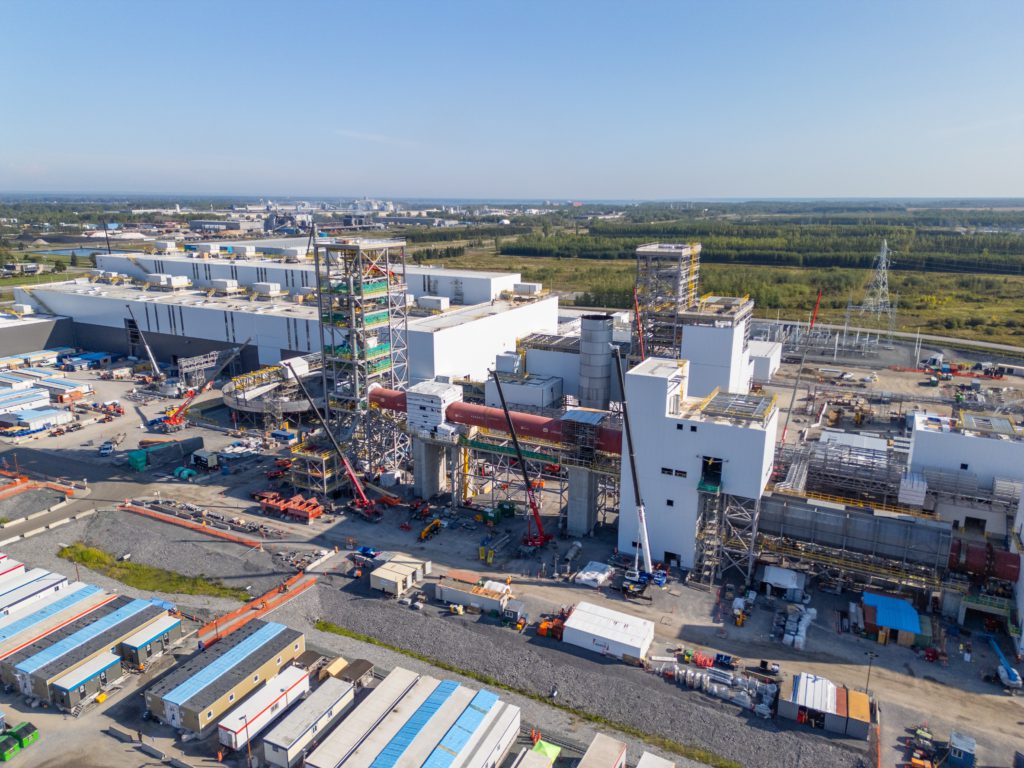
Rio Tinto (ASX, LSE: RIO) will slow the construction of its Nemaska lithium processing plant in Quebec due to rising costs, but sees no major changes to the timeline to production.

In the coming months, the company plans to slow the pace of plant build to allow the project team to complete the optimization work, the Australian miner said in a statement on Friday. During that period, its contractual workforce is expected to be reduced.
In an emailed statement to MINING.COM, Rio Tinto said while its contractual workforce will be reduced by half, the company will still have several hundred workers to continue work on the project.
The update comes just weeks after the Australian miner gained control over Nemaska — which includes the proposed lithium hydroxide conversion plant in Bécancour — in a bid to expand its battery materials business.
The facility is currently about 70% complete and is projected to have an annual production capacity of 32,000 tonnes.
In mid-February, Rio Tinto increased its ownership of Nemaska to 53.9% — thus becoming its majority owner — and said it plans to invest $300 million on the Quebec lithium operation. The Quebec government, which holds the remaining 46.1%, also pledged to invest $200 million in Nemaska.
Commissioning of the Bécancour plant was initially planned for this year, with first production expected in 2028.
Timeline intact
According to Rio Tinto, the reduction in workforce is not expected to cause a major change in the project’s timeline. Some activities at the Bécancour site will continue, while others will be paused or deferred.
“Rio Tinto remains fully committed to the Bécancour project and to Québec, which is a critical hub for its global lithium growth strategy,” it stated.
Earlier, a source cited by Bloomberg said that building of the lithium facility is expected to fully restart in 2027.
The Bécancour site is part of Nemaska’s fully integrated spodumene-to-lithium project in Québec, anchored by the Whabouchi deposit in the James Bay region. It is designed to be a 26-year, open-pit and underground operation producing 200,000 tonnes of concentrates annually.
Rio Tinto, which entered the project through its acquisition of Arcadium a year ago, is currently reviewing whether the Whabouchi deposit presents the optimal spodumene supply strategy for Bécancour in comparison to its Galaxy hard rock lithium project, also in James Bay.
The evaluation is expected to be completed in the second half of 2026, it noted. Bloomberg said earlier that the company is leaning towards the Galaxy project.
How a Texas Oil Belt Became America's Next Lithium Frontier
- Soaring global demand and rising prices for lithium are fueling a resurgence in worldwide extraction efforts, with major geopolitical implications as the US seeks to ease its reliance on China's dominant supply chain.
- Northeast Texas is poised for a domestic lithium boom due to massive deposits in the Smackover Formation, attracting major energy companies like ExxonMobil and Chevron, who plan to start production as soon as 2027.
- The rush to extract lithium domestically presents significant trade-offs, including major threats to public and environmental health from the water-intensive process and potential for leaching toxins into freshwater resources.
2026 is shaping up to be a ‘hot year for lithium.’ The metal, which is sometimes referred to as ‘white gold’ due to skyrocketing demand for the stuff, is integral in the production of all kinds of technology and clean energy manufacturing. You probably have at least one lithium-ion battery within arms reach at this very moment inside of your phone or smartwatch or any number of other rechargeable devices.
And while lithium prices have been volatile for years as producers struggle to match production with demand growth, they are now on the rise. “What happens next could have big implications for mining and battery technology,” reports the MIT Technology Review. Higher lithium prices mean that there will be a resurgence in the worldwide race for extraction, with major implications for global geopolitics.
At present, China dominates global lithium supply chains. Beijing controls an estimated 72 percent of the global lithium-ion market, and Chinese companies control a quarter of the world’s lithium mining capacity. Even more striking, in 2024, more than 80 percent of battery cells on the planet were made in China, raising major questions and concerns as to geopolitical risk and market resilience in tech supply chains.
The United States has been seeking to ease its reliance on Chinese lithium and friendshore its supply chains for years now, but forging trade relationships with major lithium producers in South America has proven difficult. Rising lithium prices will make it more feasible and worthwhile for companies outside of China to start their own extraction operations and diversify the global market, opening new opportunity for a North American lithium boom.
The United States is home to considerable lithium supplies, it's just a matter of building up a domestic industry around the metal’s extraction and processing. Currently, there is only one operating lithium mine in the United States, the Silver Peak mine in Nevada’s Esmeralda County. But that is going to change in a hurry as the Trump administration and the domestic sector rush to build up a U.S.-based lithium industry.
That goal could soon totally transform Northeast Texas, which sits atop massive natural deposits of the white gold. “The Smackover Formation, which broadly sweeps from East Texas to Florida and once gushed with oil, is now being hailed as containing some of the purest lithium brine in the world,” the Dallas Morning News reported this week.
And the private sector is taking notice. “Already, some of the world’s largest energy companies, like ExxonMobil and Chevron, have staked claim to portions of the Smackover Formation, announcing drilling and large acquisitions of land,” The Dallas Morning News continued. ExxonMobil plans to produce lithium starting in 2027.
While this could prove beneficial for the nation’s energy autonomy and for local economies in need of jobs as the shale revolution cools down, there are some major trade-offs associated with homeshoring lithium extraction. Lithium extract poses significant threats to public and environmental health thanks to the toxic chemicals and heavy metals involved in the process. Not only is lithium extraction an extremely water-intensive operation, it also poses significant risk to freshwater resources in the form of leaching toxins into the soil and water table.
Plus, there is concern that the lithium boom may not offer long-term prosperity to Northeast Texas. “Businessmen are quick to assure residents that the race for lithium isn’t a gold rush or boom-and-bust scenario, but some have admitted the early stages, including landmen knocking on doors for leasing, has felt a little like the Wild West,” reports the Dallas Morning News.
With the historic volatility of lithium prices, there is cause for concern that the white gold rush will be short lived in the United States. If so, the environmental and health hazards associated with a lithium boom could outlast the financial benefits by far.
By Haley Zaremba for Oilprice.com

No comments:
Post a Comment