'No cherry-picking': Pressure mounts on Ireland to stop alumina sales to Russia
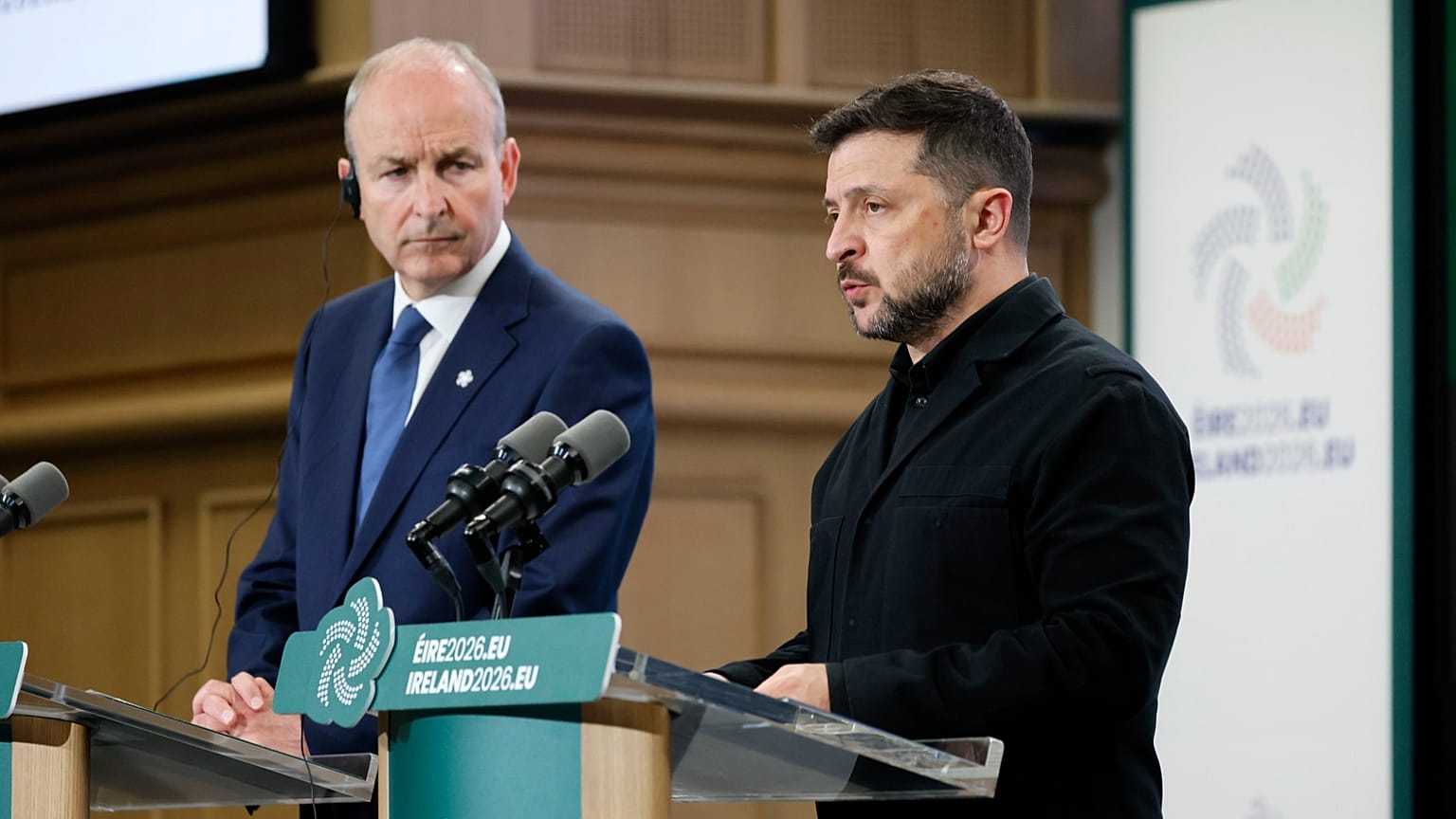
The scandal over alumina sales to Russia continues to dog Ireland as it takes over the rotating presidency of the EU Council, but Dublin says it will not commit to sanctions until an internal investigation is concluded.
Ireland is under mounting pressure to end its alumina sales to Russia, as the risk of propping up Moscow's war machine becomes an explosive liability.
The government in Dublin is weighing whether to allow EU sanctions on the raw material, which is sold as a white powder and is essential to the manufacture of aluminium, which is commonly found in weapons on the battlefield in Ukraine.
However, no decision will be taken until an internal probe to determine the final destination of alumina exports is completed. The probe is in its final stages.
"We will discuss (the findings) with the European Commission, but the Commission has never put alumina on a sanctions list, so that's an important point, nor have we had to lobby, in any shape or form, in respect of this issue," Irish Prime Minister Micheál Martin said on Thursday during a briefing attended by Euronews.
The deliberations, Martin noted, should take into account the potential disruption to local jobs, the environment and Europe's alumina supply chain. Once these "various factors" are considered, the premier said, Dublin will "develop an approach" with the Commission to deal with the "core issue" – a promise that stops short of committing to sanctions.
"We don't want material to be supportive of the Russian war effort," he said. "Europe has to be ever vigilant that we continue to support Ukraine in very practical terms."
Meanwhile, Deputy Prime Minister Simon Harris said that "the best way" to tighten the screws on Moscow's high-intensity war machine was through economic sanctions. Harris described his country as an "enthusiastic" supporter of the policy.
"Ireland will never cherry-pick when it comes to sanctions. It will never cherry-pick the criteria. The criteria are clear. The criteria must be applied. That's important," Harris said in Dublin. "But it's important that we establish the facts."
Harris said the issue of Irish-made alumina had been examined "many times in the past" and the information provided had "led to the satisfaction" of both EU and US authorities.
The two men's comments come on the heels of a headline-making visit by Ukrainian President Volodymyr Zelenskyy to attend the opening ceremony of the Irish presidency of the EU Council, which began on 1 July.
Zelenskyy made it clear he wants the alumina trade with Russia to stop.
"Every tonne of raw materials that ends up in Russia is used against us in this war. This is what we understand. This is how we see it," Zelenskyy said on Tuesday, speaking next to Martin at a joint press conference.
"When the economy is shrinking, we can see that immediately, just as it shrinks Russia's capability to perform massive attacks. All of that is reflected in the quantity of casualties in Ukraine, to be honest."
Zelenskyy's visit to Dublin was followed by a wave of Russian strikes against Kyiv that killed at least 21 people.
A damaging scandal
Ireland has been in damage control since a media consortium published a bombshell investigation in late March exposing the business ties between Aughinish Alumina, Europe's largest alumina refinery, and the Russian economy.
According to the findings, the sprawling plant, based in western Ireland, sells alumina to Russian smelters owned by its parent company, United Company Rusal, which in turn sells the metal to a trader that supplies aluminium to sanctioned defence manufacturers.
The weapons made by these manufacturers have been deployed to kill Ukrainian civilians and bombard civilian infrastructure, the investigation found. (The journalists traced Irish alumina to the Russian trader, but not to a specific product.)
Separately, Swedish authorities have concluded that Rusal, the parent company of Aughinish, remains under the effective control of Oleg Deripaska, a Russian oligarch with close ties to the Kremlin who is under EU sanctions
Aughinish insists its activities are entirely legal because alumina has been spared from any trade restrictions. The company says alumina exports to Russia represented about 45 percent of all sales in 2025 and expects the share to be similar at the end of 2026.
Virtually all EU-made alumina sent to Russia originates in Ireland.
Aughinish has reportedly told the Irish government that EU sanctions on alumina would be so disruptive for its operations that it would require the government to take over the plant to salvage hundreds of jobs and guarantee a critical supply chain.
On Thursday, both Micheál Martin and Simon Harris pushed back against the company's claims, even though they echoed some of its concerns.
"We're not accepting threats from any quarter," Martin said.
Harris, who also serves as finance minister, rejected what he called a "binary" choice between state rescue and bankruptcy. He noted that he had not been involved in any discussions involving a potential nationalisation.
"There have to be ways to address the issue that enable crucial supply chains to continue into the European Union and enable absolute clarity that there are (no links) in any manner or means to Putin's regime in relation to the war," Harris said
"I don't think these issues are binary at all because Europe has shown, time and time again, how it has managed to put in place ways to protect our economy, our own supply chains," he added.

No comments:
Post a Comment