US job growth plummets as eurozone unemployment holds at record low
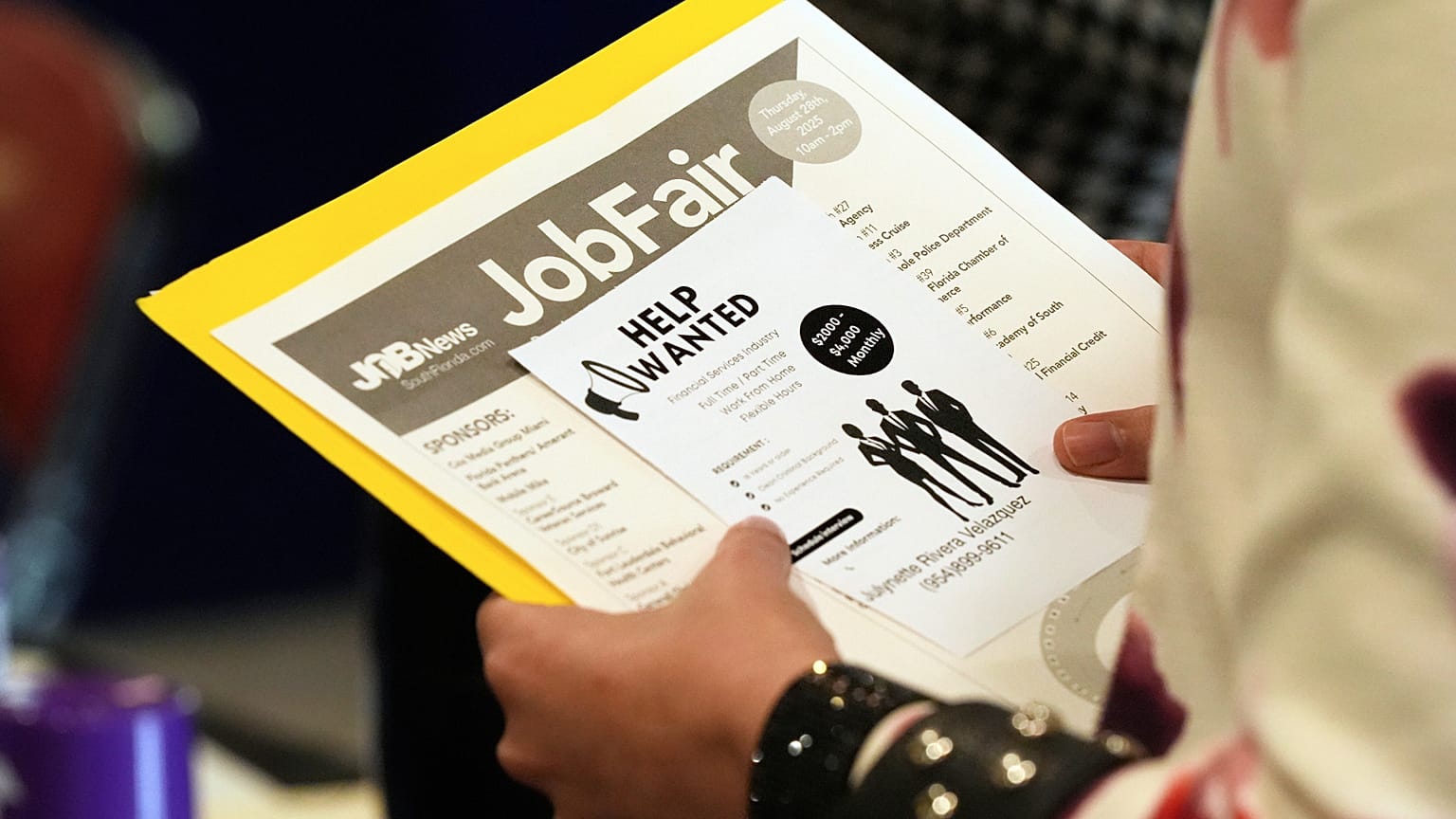
New labour market data highlights a growing transatlantic divide, with US payroll additions slowing drastically, while the Eurozone unemployment rate remains anchored at an all-time low.
Fresh employment figures released on Thursday expose a diverging trajectory for the world's most prominent advanced economies, as severe hiring slowdowns in the US contrast with historic resilience in European labour markets.
According to the US Bureau of Labor Statistics, nonfarm payrolls increased by a mere 57,000 in June. This figure drastically missed market expectations, which had anticipated an addition of 113,000 jobs, and it marks a steep decline from the 172,000 positions created in the previous month.
Despite the sharp cooling in overall job creation, the US unemployment rate unexpectedly ticked down to 4.2%, representing a slight improvement from the 4.3% recorded in May.
Other metrics present a nuanced picture of the American economy.
Initial jobless claims remained perfectly steady at 215,000 for the week, defying analyst estimates that predicted a slight increase of around 218,000. Meanwhile, continuing claims fell slightly to 1.814 million, dipping below the projected 1.820 million.
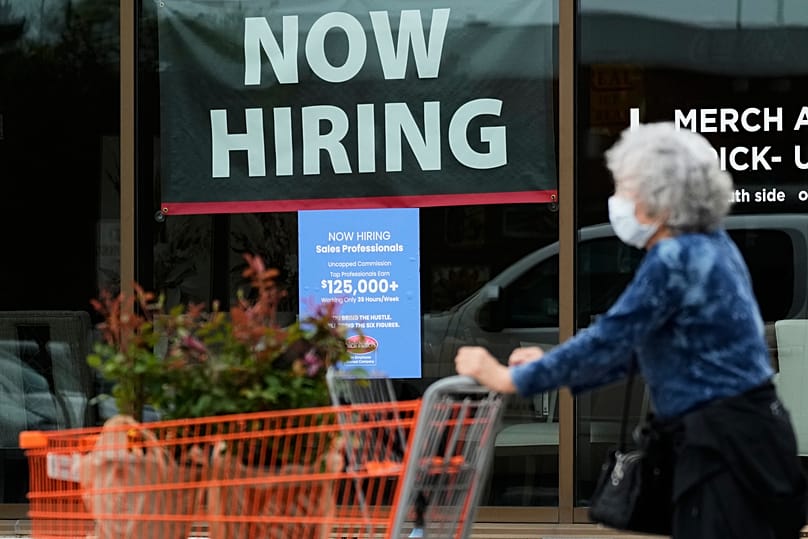
Across the Atlantic, the European employment landscape continues to demonstrate remarkable steadfastness.
According to data published by Eurostat, the Eurozone unemployment rate remained stable at 6.2% in May, holding firm at a record low for the currency bloc.
This figure perfectly aligns with market projections and underscores the enduring tightness of the European job market, even as broader economic uncertainties linger across the continent.
Central bank implications
The latest employment reports arrive at a critical juncture for both the US Federal Reserve and the European Central Bank and their respective monetary policy outlooks.
In the US, the severe drop in nonfarm payroll growth provides compelling evidence that the labour market is finally softening under the weight of restrictive financial conditions.
The Federal Reserve opted to halt its interest rate hikes in June, keeping borrowing costs steady as policymakers evaluate the delayed impact of their previous tightening cycle.
While the drop in the headline unemployment rate to 4.2% paints a slightly mixed picture, the dismal 57,000 payroll figure is likely to reinforce the cautious stance.
Analysts suggest that if payroll numbers continue to print this low, the Federal Reserve might face pressure to discuss rate cuts later in the year to prevent a broader economic contraction in 2026, but for now a single soft print is likely not enough.
"The payrolls miss reads as a growth wobble, and the knee-jerk is to price cuts back in. That's the trap. Unemployment just fell to 4.2%, so a hawkish Fed has all the cover it needs to look through one soft payroll print, and relief may not come," said Iggy Ioppe, CIO at Theo.
"A soft print will immediately soften hike pressure, and you'll see it in the repricing before the headline settles, but weaker data is not automatically bullish. The Warsh Fed has put more weight on inflation credibility and less on forward guidance, so one soft report may not be enough to move a Fed still focused on inflation," concluded Fabian Dori, CIO at Sygnum Bank.
Conversely, for the European Central Bank there is no substantial doubt about whether there will be a change of course toward favouring rate cuts.
The unwavering 6.2% unemployment rate in the Eurozone highlights persistent domestic demand for workers and maintains inflation as a priority issue.
The ECB proceeded with another interest rate hike in June, citing stubborn price pressures. With employment hovering at historic highs, European policymakers may feel fully justified in maintaining a strict, hawkish posture.
The steadfastness of the European labour force gives the central bank a sturdy economic foundation to absorb tighter financial conditions without triggering an immediate recession.
Spain jobless total falls below 2.3 million for first time since January 2008
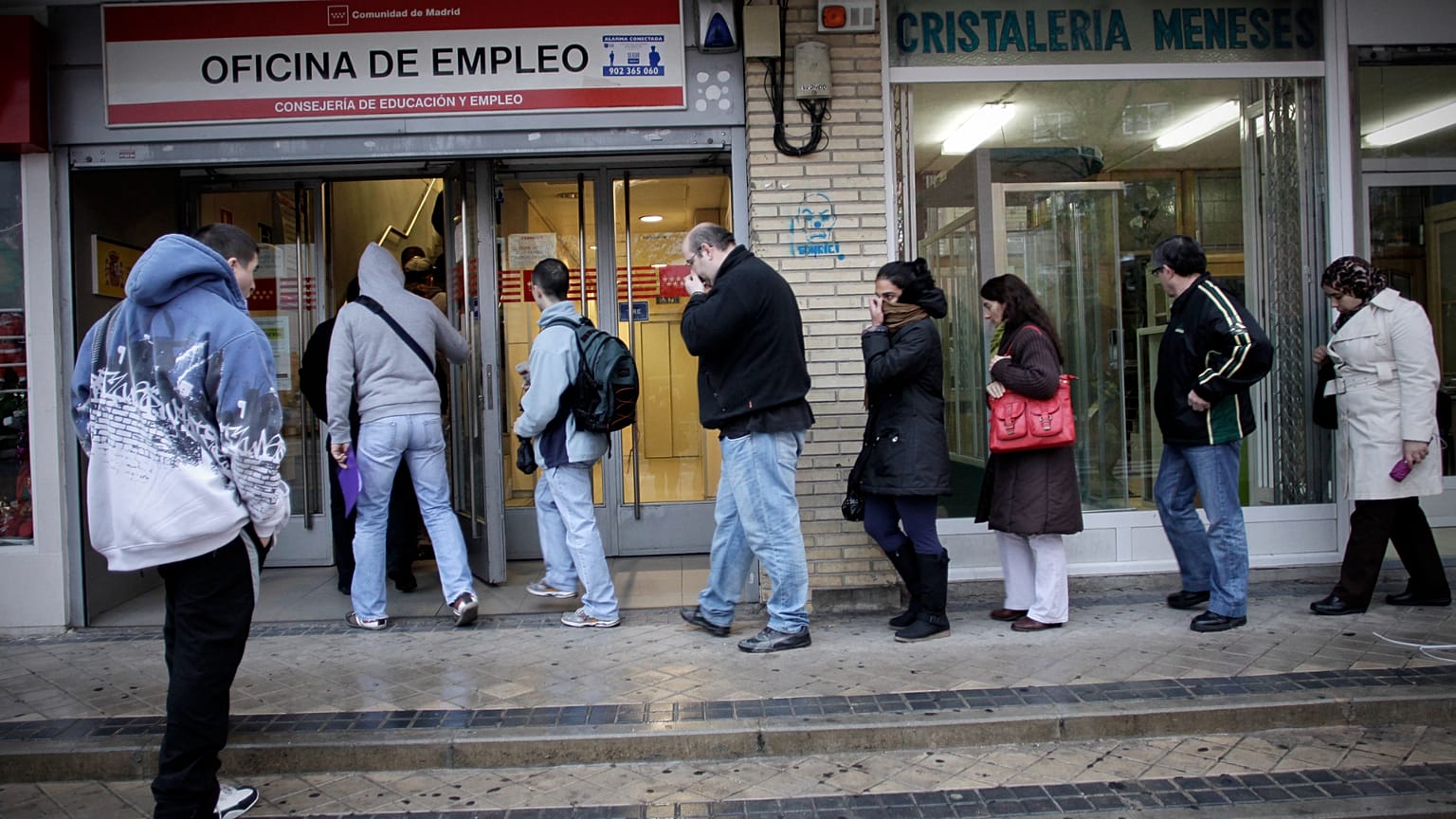
The State Public Employment Service recorded 2,291,982 jobseekers in June, 28,739 fewer than in May, dropping below 2.3 million for the first time since January 2008. Social Security membership also hit a record high.
The figures released on Thursday by the Ministry of Labour confirm a trend that has been taking shape for months. Registered unemployment fell in June by 28,739 people compared with May, bringing the total number down to 2,291,982 unemployed people. Such a low figure had not been seen since January 2008, in other words, before the financial crisis hit.
The drop is not evenly spread across sectors. Services account for almost all of the adjustment, with 28,498 fewer unemployed, driven by the start of the tourist season.
Industry follows, with 2,829 fewer jobless, construction with 1,326, and agriculture, which records a decrease of 384. There is, however, one figure that breaks the trend: the number of people with no previous employment history has risen by 4,298, a sign that those looking for their first job, or trying to return to the labour market after time away, are finding it harder to get a foothold.
By age group, youth unemployment continues to fall: 5,155 fewer young people than in May and 6,907 fewer than a year ago, taking the total to 159,800, the lowest figure in the entire historical series for this group. The year-on-year decline is more pronounced among young women, with 4,090 fewer unemployed, than among men, with 2,817.
Women, the driving force behind the fall in unemployment
Female unemployment has fallen below 1.4 million for the first time since August 2008. There are currently 1.39 million women out of work, compared with 903,673 men. Over the past month the drop has been almost 16,000 women and 13,000 men; over the past year, 72,000 and 41,000 respectively.
Second Deputy Prime Minister and Minister of Labour, Yolanda Díaz, linked part of this improvement to the ongoing process of regularising workers’ status, which she said has allowed jobs that previously existed without legal recognition to "come to light" and now be counted both in affiliation figures and in the recognition of labour rights. In the case of women, the number of female contributors has increased by around 300,000 over the past year, bringing the total to 10.6 million, the highest figure ever recorded in Spain.
Among unemployed foreign nationals, the figure is also down: 342,086 people, 4,208 fewer than in May and 10,068 fewer than a year ago.
Social security registrations hit another record as retail drives the summer
Social Security recorded an average of 128,533 more contributors than in May, reaching 22.47 million, an all-time high. Once the calendar effect is stripped out, the seasonally adjusted figure also sets a record, above 22.2 million. Over the past 12 months the system has gained 600,595 contributors and shed 113,981 unemployed people.
Wholesale and retail trade lead monthly growth with 39,325 new registrations, ahead of hospitality, with 37,696, and administrative and support service activities, with 29,316. Looking at the full year, other sectors are providing the momentum: health and social services have added 78,373 members and construction, 66,280.
The number of self-employed workers continues to rise, reaching 3.47 million after adding 12,000 in the month and 50,800 over the year.
Affiliation of foreign workers has reached 3.45 million, more than half a million of them self-employed, with an increase of 86,630 people in June and 350,163 over the past 12 months; they now account for more than 15% of all contributors. The Minister for Social Security, Elma Saiz, pointed out that Spain has provided 54.5% of all the jobs created in the European Union during this period.

No comments:
Post a Comment