Spain is entering its highest wildfire risk season, with several fronts either active or under surveillance.
The country has just emerged from a record-breaking heatwave that left hundreds dead and pushed temperatures beyond 45°C in parts of the south, leaving soils parched and vegetation desiccated across much of the country.
Following a record dry spell in May, the topsoil has been stripped of moisture, eliminating the land's natural ability to cool itself – and creating near-ideal conditions for fires to ignite and spread. Authorities have warned of a high risk of wildfires amid a worsening drought, with the accumulated heat expected to persist into early July.
Where are wildfires burning in Spain?
In Aragon, the fire in Leciñena, Zaragoza, remains the most worrying after devastating around 2,200 hectares, while another blaze declared in La Fueva, Huesca, forced the preventive evacuation of Morillo de Monclús and Formigales.
The region enters July after two major wildfires in just a few days: the one in Leciñena and another in Tamarite de Litera-Alcampell, which burned around 4,000 hectares and triggered evacuations in three towns. This fire is joined by a blaze declared in the area around the Despeñaperros Natural Park in Jaén, which remains active this Thursday (2 July).
The INFOCA Plan (Forest Fire Emergency Plan of the Autonomous Community of Andalusia) has declared Operational Situation 1 – a state of emergency indicating a wildfire threatens, or has already affected, people and properties – and aerial firefighting has resumed after a night of work in the area.
The fire has led to the preventive evacuation of almost 200 people, including residents of Miranda del Rey and children from a nearby farm school.
Meanwhile, in the Canary Islands, the regional government has lifted the forest fire alert on Gran Canaria, Tenerife, La Palma, La Gomera and El Hierro as of 8am this Thursday, although it is keeping a pre-alert for forest fire risk in place.
The situation coincides with the start of the period of highest forest-fire danger. According to data from the European Forest Fire Information System (EFFIS), Spain has already lost nearly 50,000 hectares so far in 2026, compared with the 39,700 hectares recorded by the Ministry for Ecological Transition up to 21 June.
The discrepancy is down to the methodology used by each source: while the ministry compiles official reports from the autonomous regions, EFFIS makes a continuous estimate using satellite imagery.
15,900 hectares burned in June
June has so far been the most destructive month of the year, with around 15,900 hectares scorched across Spain. By province, Cantabria tops the tally, with around 15,500 hectares affected, while Álava stands out for having burned some 100 hectares, a figure far higher than usual at this point in the year, according to an analysis by Spanish broadcaster RTVE.
So far in 2026, Spain has recorded 14 major forest fires, defined as those that exceed 500 hectares. The most recent have broken out in San Bartolomé de la Torre and Villanueva de los Castillejos, in Huelva; Alcampell, in Huesca; Obejo, in Córdoba; and Congosto, in León.
The wider European context is also worrying. Across the European Union, around 130,400 hectares, 16 per cent more than is normal for this time of year, have already burned. The figures are still provisional and may change as satellite estimates and the official reports from the autonomous regions are updated.
Wildfires spread across southern France, as
heatwave reignites forest concerns
Wildfires have broken out across southern France, forcing evacuations and stretching firefighting teams as the country prepares for the third heatwave of the summer, with the country's forests under increasing threat from climate change and disputes over logging.
Issued on: 02/07/2026 RFI

A Dash Fireguard aircraft flies over a wildfire in Pouzols-Minervois, southern France, 2 July. AFP - LIONEL BONAVENTURE
Firefighters were battling on Thursday to bring a major blaze in the Aude region, near the border with Spain, under control, after flames spread through dry vegetation in difficult conditions.
Local authorities said weather conditions remained unfavourable, with high winds risking spreading the fire farther.
The fire, which began on Wednesday, came days after a record-breaking heatwave across much of Europe and as France’s weather office warned that another spell of extreme heat could hit next week.
French health authorities estimate last week's record temperatures may have caused 1,000 excess deaths.
By late Wednesday, the blaze had covered 800 hectares. “The fire is contained at times, but it is not under control," the local prefecture reported at around 11pm.
According to the Feux de Foret wildfire tracking site, posting on social media platform X (formerly Twitter), "high temperatures and strong winds" are increasing the risk of fires spreading.
Hundreds of firefighters were mobilised in the Hérault and Aude departments, with drought, strong winds and difficult terrain hampering efforts to contain the flames. With no access routes in the hilly area, water-dumping aircraft were deployed to help crews on the ground.
Temperatures of around 30C, combined with strong wind gusts, helped drive the fire through low, very dry vegetation. Around 200 people were evacuated or confined in the communes of Pouzols-Minervois and Mailhac, officials said.
Strong winds on Wednesday night carried smoke across the region, including to Marseille airport, where pilots on at least one incoming flight reportedly has to reassure passengers that the burning smell was not coming from the aircraft.
Forests under threat
The fires have added urgency to a wider debate over the future of France’s forests, which are threatened by rising temperatures, drought, disease and insect pests as well as more frequent fires.
Forests remain one of France's chief natural tools for limiting climate change. As trees grow, they absorb carbon dioxide from the atmosphere and store it in their wood, roots and soils. This makes forests France’s main land-based carbon sink and a key part of the country’s target of reaching carbon neutrality by 2050.
But that role is being compromised. The latest national inventories show French forests now absorb around 50 million tonnes of CO2 equivalent a year, representing nearly 10 percent of national emissions. In the early 2010s, they were capturing almost twice as much.
Repeated droughts are slowing tree growth, heatwaves are increasing tree mortality and forests are becoming more vulnerable to disease and pests. In addition to these threats there is another factor linked to human behaviour: more intensive timber harvesting.
The environmental organisation Canopée – "Canopy" in English – has accused the government of pursuing a strategy that is incompatible with its climate commitments.
Its criticism focuses on the draft third National Low-Carbon Strategy – known as SNBC 3 – which sets out France’s roadmap for achieving carbon neutrality by 2050. Under this strategy, annual timber harvests would rise from around 53 million cubic metres at present to 60 million cubic metres by 2030.
Wood energy debate
For the government, the increase is intended to serve several goals. Timber is expected to replace some high-emission materials such as concrete or steel, supply district heating networks, produce more wood pellets for heating and contribute to aviation fuels.
Canopée contests that approach, calculating that the planned increase in timber harvesting would further reduce the forest carbon sink by around 11 million tonnes of CO2 a year from 2030 onwards.
That would account for much of the shortfall that could prevent France from meeting its European carbon storage obligations.
The organisation says the rise is being driven largely by the growing role of wood in the energy transition, including heating, district heating networks and synthetic fuel production.
It says several planned biomass power stations, pellet plants and aviation fuel projects would already account for nearly 70 percent of the additional wood energy volumes envisaged by the SNBC.
The report also challenges the automatic classification of wood energy as carbon-neutral, saying that burning forest biomass releases stored carbon dioxide immediately, while reabsorption through tree regrowth can take decades.
Canopée argues that preserving the carbon sink should now become the priority of forest policy, even if that means reducing some uses of wood, particularly for energy.
The debate now centres on how France can protect forests increasingly exposed to fire, and preserve their role as carbon sinks. 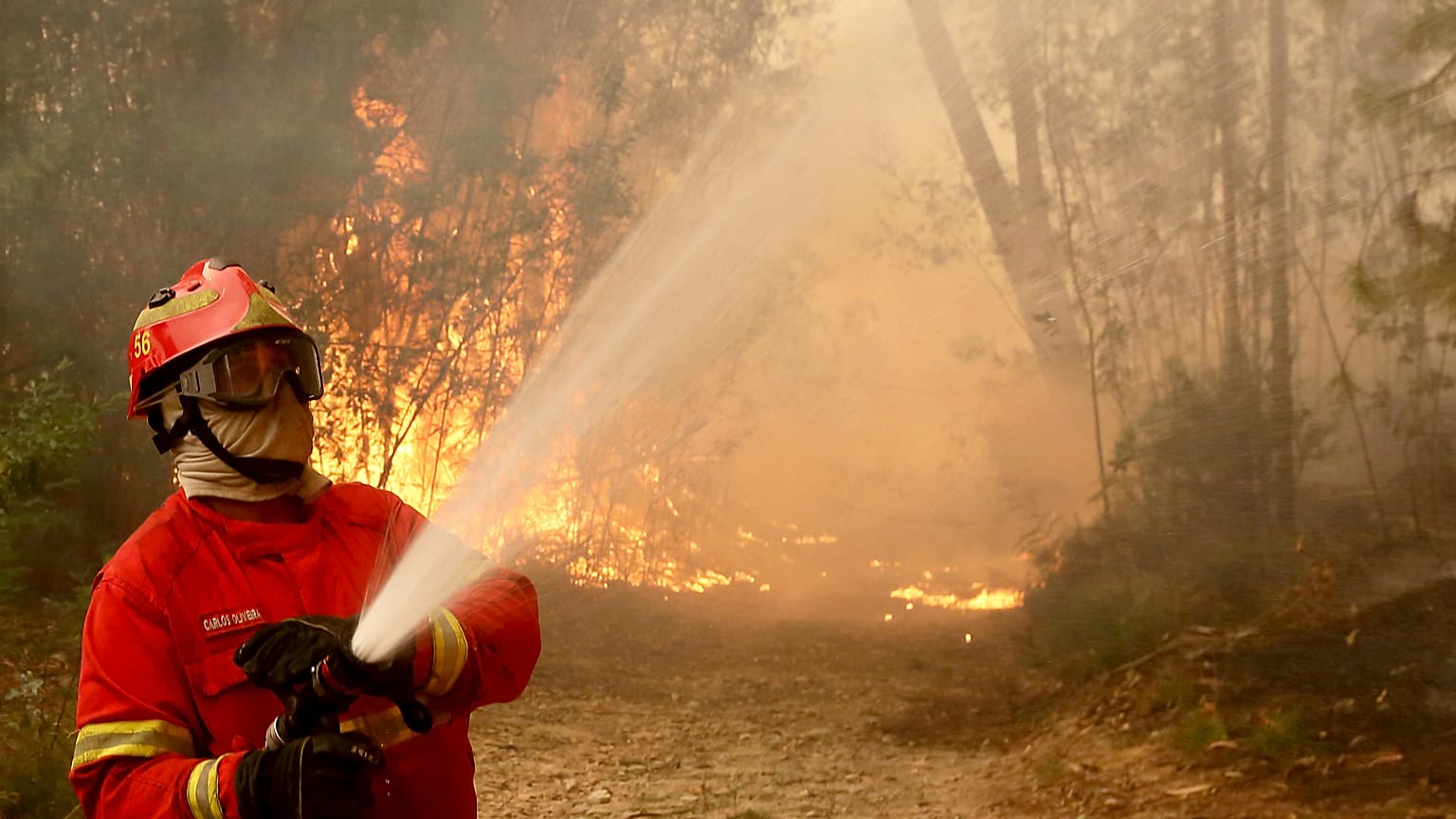

No comments:
Post a Comment