Wednesday, July 14, 2021

#FreeBritney: online army rallies behind 'silenced' Spears

Issued on: 14/07/2021 - 
Online, the #FreeBritney movement has united fans from the US to Asia and Latin America Frederic J. BROWN AFP/File


Paris (AFP)

When two comedians started a podcast about Britney Spears's quirky Instagram posts, they had no idea it would fuel a global online movement uniting superfans with rights activists in outrage over the star's legal situation.

Britney's Gram began in 2017 as a lighthearted podcast in which hosts Tess Barker and Babs Gray dissected the eccentric mix of memes, selfies and dance videos posted on the singer's account.

But the pair grew increasingly intrigued -- and concerned -- by the legal conservatorship that Spears had been under since 2008. The arrangement gave the popstar's father widespread control over her finances and personal life, while forcing her to pay lawyers hundreds of thousands of dollars in fees.

"The podcast organically started to transform into more of an investigative podcast," Barker said, ahead of the latest court hearing over Spears's conservatorship in Los Angeles on Wednesday.

The comedians spent hours sifting through court documents, hoping to understand whether the arrangement was really working as intended: protecting 39-year-old Spears, who had suffered a high-profile breakdown in the mid-2000s under the intense glare of the paparazzi.

Other fans-turned-sleuths began obsessively combing the singer's cryptic, emoji-laden posts for clues about her well-being. Increasingly they worried that she had been "silenced" under the conservatorship, unable to speak out about how unhappy she really was.

In 2019, when Spears's Instagram had been mysteriously inactive for weeks, an audio message from a key source landed in the podcast's inbox. The caller, who identified himself as a former paralegal, alleged that Spears had been forced into a mental health facility months earlier.

"You guys are onto something," he told Barker and Gray. "What is happening is disturbing to say the least."#photo1

The message, which aired in a viral episode of the podcast titled "#FreeBritney", sent shockwaves through Spears's fanbase -- but it would also gain the attention of campaigners with no interest in gyrating dance moves or hits like "Baby One More Time".

- The power of online fandom -


Hundreds of thousands of online posts have been tagged #FreeBritney -- half a million tweets alone on June 23 when Spears gave bombshell testimony, saying she had been drugged against her will and was not even allowed to control her own contraception.

While local fans have staged protests outside the courthouse, the online campaign spans globally, from Britain to the Philippines. A quarter of #FreeBritney tweets are posted from Brazil, according to Twitter analysis tool Hashtagify.

"In the past people could show up at a courthouse with signs saying 'I love you', but it's way different if you show up on Twitter. You've got a global reach," said Katherine Larsen, editor of the Journal of Fandom Studies.#photo2

She sees the #FreeBritney movement as part of a growing trend "where fans have been able to harness social media and get something done", pointing to followers of K-pop superband BTS -- who raised $1 million in a day for the Black Lives Matter movement -- as another example.

Like many fans, Andrea Corina Lopez felt compelled to join the campaign because she felt a personal connection with Spears, having similarly struggled with her mental health.

She set up a #FreeBritney YouTube channel from her home in Chile to help Spanish-speakers follow the latest developments -- partly because of the chilling realisation that "what is happening to her could happen to someone like me".

As the movement has gained steam, disparate groups have joined forces.#photo3

Disability and civil rights campaigners say Spears's case highlights how easily vulnerable people can be abused; lawyers have chipped in to help fans understand the finer points of conservatorship legislation.

"There are many people who are part of the #FreeBritney movement who don't even listen to her music," said Gray, who has just launched a new deep-dive podcast with Barker into the guardianship, "Toxic".

- Vindication -


For fans, the fact that Spears's conservatorship has now captured public attention is vindication of their efforts to raise the alarm -- in some cases, for years.

Jordan Miller, who runs the fansite BreatheHeavy, was signing posts "Free Britney" as early as 2009.

"It took years of writing about it, speaking about it, for the world to see what it felt like I had been seeing for a long time," he said.

Fans who saw something sinister in Spears's legal arrangements were initially met with skepticism. This was not helped by the conspiratorial leanings of some #FreeBritney activists, convinced that each of her Instagram posts was laced with coded messages.#photo4

But all factions of the movement agree on one thing: they're looking forward to a day when the hashtag can be retired for good.

"A happy ending is Britney Spears just getting to enjoy the same liberties that we think everybody should be able to enjoy," said Barker.

© 2021 AFP
#HANDSOFFTIGRAY
Ethiopia leaders threaten new offensive against Tigray rebels


Issued on: 14/07/2021 -
The Tigray Defence Forces (TDF) recaptured the regional capital Mekele at the end of June Yasuyoshi Chiba AFP/File


Addis Ababa (AFP)

Ethiopian leaders warned Wednesday they were ready to launch a new offensive against their "enemies" after rebels pushed deeper into Tigray, effectively tearing up a government-declared ceasefire in the war-torn region.

Tigrayan forces this week claimed a series of fresh battlefield gains, two weeks after sweeping through much of the northern region and recapturing Tigray's capital Mekele in a stunning turnaround eight months into the conflict.

Prime Minister Abiy Ahmed, a winner of the Nobel Prize, said the government -- which announced its ceasefire on June 28 -- chose peace at a "cost" in the hope it would quell fighting, allow farmers to plant harvest, and facilitate aid into the stricken region.

But Ethiopia's enemies were "unable to rest without conflict" and posed a threat that must be curbed, he said.

"We will defend and repel these attacks by our internal and external enemies, while working to speed up humanitarian efforts," Abiy said in a statement posted on Twitter.

His warning was echoed by General Bacha Debele of the Ethiopian National Defence Force who said it was "ready to restart the offensive and re-enter the areas occupied" by the Tigrayan rebels, according to state media.

Military forces in the neighbouring region of Amhara that had controlled swathes of Tigray before the war and are fighting in support of the federal army issued similar threats.

Abiy, who won by a landslide in June elections to secure a five-year term, urged Ethiopians to stand behind the army in defence of the nation and resist "outside pressure and internal provocation".

- New offensive -


The 44-year-old leader sent troops into Tigray last November after accusing the region's once-dominant ruling party, the Tigray People's Liberation Front (TPLF), of orchestrating attacks on Ethiopian military bases.

Abiy quickly declared victory but in June the rebels recaptured Mekele, dramatically changing the face of a conflict that has killed thousands of people and pushed the region to the brink of famine.

Abiy and Ethiopian officials characterised their troop withdrawal from Mekele as a strategic move.#photo1

But the rebels, rebranded as the Tigray Defence Forces (TDF), described it as a major victory and decried the ceasefire as a "joke".

They later accepted it "in principle" while demanding the complete withdrawal from Tigray of Eritrean forces and Amhara militia.

But on Tuesday, the TDF announced a new phase of the war, claiming it had seized Alamata, the main town in the region's south, and pushed westward toward fertile farmland long contested by ethnic Amharas.

The United States has raised concerns about ethnic cleansing in western Tigray, where Amharan forces have been accused of expelling thousands of people from land they claim rightfully belongs to them.

A spokesman for the Tigrayan forces told AFP the rebels would "liberate every square inch of Tigray".

- 'Needless suffering and death' -

The rebel claims could not be independently confirmed as communications were largely down in the area.

But the United Nations and humanitarian sources reported fighting around several towns in western Tigray, and confirmed that clashes between rival forces in a refugee camp had sent people fleeing.

The US ambassador to the UN, Linda Thomas-Greenfield, voiced concern on Wednesday at reports of expanding conflict in Tigray, saying that "continued fighting will only lead to needless suffering and death".

"All parties to the conflict should immediately agree to a negotiated ceasefire and political dialogue," the ambassador said in a statement.

The war has been characterised by atrocities against civilians, including grisly massacres and rampant sexual violence, including allegedly by Eritrean forces.

The UN Human Rights Council on Tuesday called for an immediate end to all violations in Tigray and for Eritrean troops to quickly withdraw in a verifiable manner.#photo2

In his statement Wednesday, Abiy accused Tigrayan forces of conscripting and drugging child soldiers, and claimed the army had a "moral responsibility" to intervene on their behalf.

The war has badly damaged Abiy's standing as a peacemaker, and strained Ethiopia's ties with traditional allies that a few years ago were praising the young leader's committment to democratic reforms.

Western powers have demanded the ceasefire be accompanied by unfettered aid access and the withdrawal of Eritrean troops, warning of possible sanctions should these conditions not be met.

The World Food Programme said this week that it had reached Mekele with food supplies but far more was needed to address the massive need in a region where the United Nations says famine conditions are already present.

© 2021 AFP
#HANDSOFFTIGRAY

‘Purely ethnic profiling’: New wave of Tigrayans detained


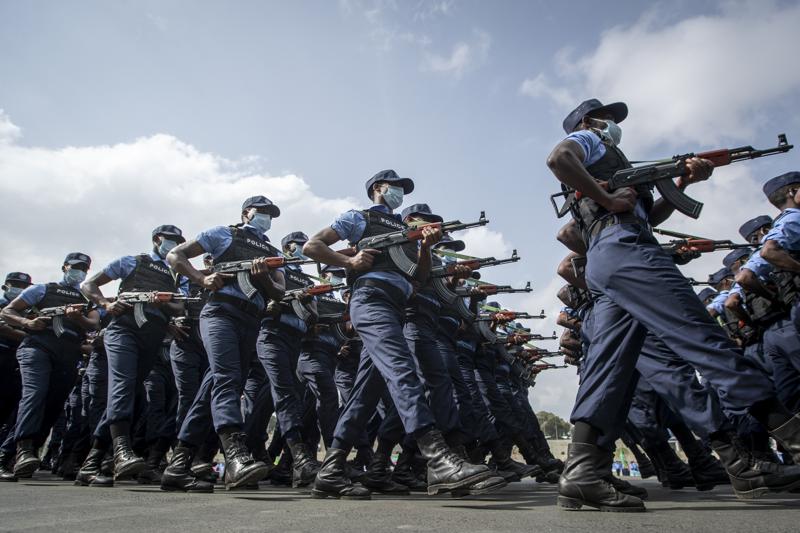
 In this Saturday, June 19, 2021 file photo, police march during a parade to display new police uniforms and instruct them to maintain impartiality and respect the law during the general election, in Meskel Square in downtown Addis Ababa, Ethiopia. Witnesses say thousands of Tigrayans are being detained by police and their businesses closed in a new wave of ethnic targeting by Ethiopian authorities over the eight-month conflict in the Tigray region. (AP Photo/Ben Curtis, File)


ADDIS ABABA, Ethiopia (AP) — Witnesses say thousands of Tigrayans are being detained and their businesses closed in cities across Ethiopia in a new wave of ethnic targeting by authorities over the eight-month conflict in the Tigray region.

The detentions follow the dramatic turn in the war last month when resurgent Tigray forces marched into the regional capital, Mekele, as Ethiopian soldiers retreated and Ethiopia’s government announced a unilateral cease-fire. An earlier wave of detentions followed the start of the war in November after months of tensions between the government and Tigray’s leaders.

Meron Addis, a 32-year-old attorney who has raised money for food and other aid to people in Tigray and has been outspoken about the toll on civilians, told The Associated Press that two plainclothes police officers came to her home in the capital, Addis Ababa, on June 28 and accused her of storing weapons. Then dozens of uniformed officers searched the place without presenting a warrant, she said.

After finding no weapons, they took her to a police station where she was charged with expressing support for the Tigray forces and spreading hate on social media. She met several other Tigrayans while in custody and was released a week later.

Police told her she was helping the “junta,” a common term used by authorities for the Tigray fighters. “You are causing friction between the government and the people of Tigray by posting pictures on Facebook of children and victims of the war, hunger and rape,” she said they told her. After her release, two of her relatives were detained.

Another detainee who was released last week told the AP that several dozen other Tigrayans were held in a center in the outskirts of the capital.

“At first we were told that we were suspected of having links with the (Tigray fighters). Once in jail, they began accusing us of sending money to support terrorists and vowed we won’t be released unless Ethiopian prisoners of war under the control of the (Tigray forces) are released,” he said. “None of us were brought to court.” Like many others, he spoke on condition of anonymity for fear of reprisals.

With Ethiopia’s government having declared Tigray’s ruling party a terrorist group, ordinary Tigrayans across the country are under even more pressure even as they seek to speak out about alleged war atrocities and send aid to the region as hundreds of thousands of people face the world’s worst famine crisis in a decade,

And Prime Minister Abiy Ahmed in a speech after the Ethiopian forces’ retreat alleged that ordinary Tigrayans had supported the Tigray fighters.

The new wave of mass detentions has not been publicly acknowledged by security officials. Federal police spokesman Jeylanr Abdi didn’t respond to questions, but the federal police told the Addis Standard media outlet they don’t arrest citizens based on ethnicity.

The governmental Ethiopian Human Rights Commission, however, said it is monitoring the detentions of Tigrayans and media workers suspected of links to the situation in Tigray. “Such measures aggravate the public’s concerns on the risk of ethnic profiling,” it said in a statement.

A Tigrayan activist told the AP the detentions appear to be occurring in major cities across Ethiopia. “People who have never set foot in the Tigray region and those who have no knowledge of politics are becoming victims,” he said, adding that some are fleeing the capital out of fear of being detained.

A letter from Tigrayan lawyers to the Ethiopian Human Rights Commission, obtained by the AP, said the fate of thousands of people remains unknown. And “hundreds of Tigrayan businesses in Addis Ababa, including restaurants, bars, cafes and other places, have been closed and sealed with no apparent reason than the claim of security concerns,” it reads. “This campaign against Tigrayans must be stopped because it is a dangerous practice that violates the rights of citizens without sufficient evidence.”

One lawyer, Tesfalem Berhe, said he has compiled a list of 103 Tigrayans detained in the capital in the past few weeks. Many were taken at shops, cafes and bus stations because their IDs showed their ethnicity or because they were speaking Tigrinya, he said. Others were taken from their homes.

“They are disappeared,” he said, estimating that tens of thousands have been detained. “They are not given access to their families and lawyers. ... There is no allegation of crime. It is purely ethnic profiling.“

A Tigrayan civil servant in the capital told the AP he watched as a colleague was detained by two plainclothes officers at the health center where he worked. When the colleague’s manager asked why, the officers cited unspecified “security reasons.”

“I’m very nervous because we hear about lots of people being arrested. I worry the police and security services are monitoring us, so I barely talk on the phone,” the civil servant said. “For every Tigrayan in Addis Ababa, it’s hard for us at this time because of the political situation.”

Tsegazeab Kidanu, a volunteer coordinator for a civil society group that campaigns against human rights abuses in Tigray, was detained at his home on June 29 while he was watching TV in his pajamas, a relative said. Again, a warrant wasn’t presented. He wasn’t charged.

Authorities later told his lawyer, Tesfalem, that he had been released, but his whereabouts remain unknown.

AP PHOTO/VIDEO ESSAY
'I came here to fight': Rare footage of Ethiopia's Tigray

Obtained by The Associated Press and smuggled out of Tigray, a rare look at scenes of jubilation in the city of Mekele. 


Tigrayans gather to see Tigray's president Debretsion Gebremichael speaking in public for the first time after the capture of the regional capital by Tigray forces, in Mekele, in the Tigray region of northern Ethiopia on Thursday, July 1, 2021. Tigray leaders have rejected a unilateral cease-fire that Ethiopia’s government announced as its soldiers retreated from Mekele, and they have vowed to chase “enemies” out of the rest of the Tigray region. (AP Photo)


Captured members of the Ethiopian National Defense Force are marched through the streets to prison under guard by Tigray Forces as hundreds of residents look on, in Mekele, in the Tigray region of northern Ethiopia on Friday, July 2, 2021. While the Tigray forces now control large areas, the region has remained largely cut off from the world, with transport and communications links severed or blocked. (AP Photo)


Tigray's president Debretsion Gebremichael speaks in public for the first time after the capture of the regional capital by Tigray forces, in Mekele, in the Tigray region of northern Ethiopia on Thursday, July 1, 2021. Tigray leaders have rejected a unilateral cease-fire that Ethiopia’s government announced as its soldiers retreated from Mekele, and they have vowed to chase “enemies” out of the rest of the Tigray region. (AP Photo)


In this image from video, Tigrayans who want to join the Tigray forces line up outside a recruitment center in Mekele, in the Tigray region of northern Ethiopia on Tuesday, July 6, 2021. After months of fear in the regional capital occupied by Ethiopian soldiers and forces from neighboring Eritrea who pursued the Tigray regional leaders, crowds of Mekele residents rushed to the local security bureau to sign up to fight. (AP Photo)


MEKELE, Ethiopia (AP) — The 16-year-old girl hoped to go to war. Inspired by the sight of resurgent local forces marching in to retake the capital of Ethiopia’s Tigray region six months after being forced to flee, Meron Mezgeb waited in a crowd seeking to get a gun and join them.

“I came here because I saw girls like me being raped” by combatants, she said. “I actually wanted to go (fight) at the beginning but I was told I was too young. But because I saw my comrades come, I came here to fight alongside them.”

The scenes of jubilation and determination in the city of Mekele, in video obtained by The Associated Press and smuggled out of Tigray days later, are a rare look at the dramatic turn in a conflict that has threatened to destabilize one of Africa’s most populous and powerful countries.

After months of fear in a city occupied by Ethiopian soldiers and forces from neighboring Eritrea who pursued the Tigray regional leaders, crowds of Mekele residents rushed to the local security bureau to sign up to fight.

They were buoyed by the striking sight of a long parade of thousands of Ethiopian soldiers now held as prisoners of war, and by Tigray leaders walking openly in the city again. Residents lining the streets jeered the prisoners, and cheered their leaders.

The Tigray leaders have rejected a unilateral cease-fire that Ethiopia’s government announced as its soldiers retreated from Mekele, and they have vowed to chase “enemies” out of the rest of the Tigray region. With the retreat of Ethiopian and Eritrean forces, that means fighting against forces from the neighboring Amhara region who seized large parts of western and southern Tigray during the eight-month war.

“The fighting will not be limited simply to the Tigray borders” if needed, the Tigray president, Debretsion Gebremichael, said in an interview. “We have to have some guarantee that they will not come back again.”

While the Tigray forces now control large areas, the region has remained largely cut off from the world, with transport and communications links severed or blocked. After months of looting and destruction that witnesses have blamed on Ethiopian and allied forces, the United Nations is still highly concerned about the fate of millions of civilians as food runs short amid famine conditions.

Only on Monday, days after Ethiopian Prime Minister Abiy Ahmed told the U.N. secretary-general that Tigray would be open to “immediate” aid, did the U.N. World Food Program announce that 50 trucks of badly needed supplies had rolled into Mekele. Two weeks had passed since such aid last arrived, and the WFP warned that “double this number of trucks needs to be moving in every day to meet the vast humanitarian needs in the region.”

For residents, the U.N. convoy was a welcome sight. But the months of conflict mean a return to normal is still far away.

“I am a driver,” said Hiluf Abrha, another resident hoping to join the Tigray forces. “Because the Amhara forces committed a lot of atrocities, because they killed my uncle, I parked my truck and came here to register so that I can join the struggle.”


A long parade of thousands of Ethiopian soldiers now held as prisoners of war. (AP Video)

For the prisoners of war, many of whom the Tigray leaders have said will be released, conditions are challenging because of the destruction that Ethiopian and allied forces waged for months against almost all health centers across Tigray.

At a camp for the prisoners, soldiers lay on the ground, some trying to nurse injuries with little care available. “This is more than our capacity,” said Yusuf Ibrahim, medical coordinator for the Tigray forces. He called for more international aid.

“They can only do for us when they have something for themselves first. It is difficult for me to say they haven’t helped us, they have helped us as much as they can,” said one prisoner, Menor Arrarso, who said there was nothing to eat or wear.

He showed his wounded hand and said he had walked more than 100 kilometers (60 miles) in that condition.


Scenes from a camp for Ethiopian prisoners of war. (AP Video)

“They couldn’t provide us with transportation when we came here,” he said. “Two or three people died right here among us who could have been saved had we gone to our homes and gotten treatment. This is because here there is a lack of treatment.”

Another prisoner, Sewareg Bireda, agreed. Aside from the lack of food, “they don’t give us the necessary additional medicine, like painkillers. Apart from that, they are helping us as much as they can.”

More than 6,000 Ethiopian soldiers and officers had been detained, the Tigray president said.

“We are committed to keep them well as long as they are with us,” he said. “And after a while, yes, our plan is ... they have to be free, wherever they want.”

But if evidence emerges that any prisoner had committed an atrocity in the war, he added, “we will keep them because they have to go to court.”


EU launches bold green revolution, proposes ban on new petrol cars by 2035

European Commission President Ursula von der Leyen (C) presents the EU's new climate policy proposals, Brussels, Belgium, July 14, 2021. © Yves Herman, REUTERS


Text by: FRANCE 24
Issued on: 14/07/2021 -

The EU went into battle on Wednesday to secure a path to its bold pledge of carbon neutrality by 2050, triggering an epic political clash over electric cars and fuel prices that could last for years.

The mammoth plan was unveiled by the European Commission and is intended to transform the bloc's economy from fossil fuel dependency to a world of net-zero emissions.

Brussels also hopes to establish Europe as the unquestioned leader on meeting the goals of the Paris climate accord.

"Europe is now the very first continent that presents a comprehensive architecture to meet our climate ambitions," EU Commission chief Ursula von der Leyen told reporters in Brussels.

"We have the goal, but now we present the roadmap to how we are going to get there," she added.

The myriad proposals include an effective ban on the sale of new petrol-driven cars from 2035, one of the boldest moves against gas-guzzlers ever, and one that has already raised concerns in Paris and Berlin.

The proposals were announced by the European Commission's environment supremo Vice President Frans Timmermans.

At the heart of the legislative package is the ambition to breathe new life into the EU's flawed Emissions Trading System (ETS), the world's biggest carbon market, where industry pays for the right to pollute.

The laws will now snake their way through the EU's legislative system amid high-stakes horse-trading in the European Parliament and among the bloc's 27 member states, egged on by industry lobbyists and green activists.

"Each state will have to defend its interests because their situations are very different in terms of industry, geography, energy supply and investment capacity," said a senior EU diplomat.

"Member states will see the ambition, see the effort needed to realise it and must decide if there are no insurmountable problems," the diplomat said.

The jockeying has already begun, with powerful interests fighting hard to win special treatment -- or extra time -- before the constraints of a greener Europe come into force.

Environmentalists swiftly denounced the laws as not going far enough -- with the European Environmental Bureau decrying a plan that was "unfit and unfair" to fight climate change effectively.

One major fear is resistance from the motoring public in a continent-wide replay of the "yellow vests" protests that erupted in France when the government imposed a new fuel tax in the name of defending the environment.

Pushback from the automotive industry


The move looks set to be fiercely opposed by some in the industry lobby as it makes its way through an intense negotiating and drafting process and scrutiny in the European parliament.

The European Automobile Manufacturer's Association (ACEA) said it supported efforts to make the EU carbon neutral by 2050, as envisaged by draft climate laws.

"However, banning a single technology is not a rational way forward at this stage," it added.

Pressure group Transport and Environment welcomed the plan as a "turning point" for green motoring.

But executive director William Todts warned: "The problem is carmakers will only have to start selling those cleaner cars in 2030.

"Our planet cannot afford another nine years of big talk but little action from the auto industry."

Oliver Zipse, president of the ACEA lobby group and chief executive of BMW, stressed that the plan would "only be successful with mandatory targets for the ramp-up of charging and refuelling infrastructure in all member states.

"This will be essential to charge the millions of electric vehicles that European automakers will be bringing to market in the coming years," he said.

'Fit for 55'

The legislative push is being promoted as the "Fit for 55" package, as its central aim is to align existing EU laws and targets with a deepened 55 percent net emissions reduction by 2030.

The previous objective was a cut of at least 40 percent from 1990 levels.

Another pillar is a carbon levy that will be paid by non-European companies at the bloc's external border to ensure dirtier imports aren't allowed an unfair advantage.

The levy will be called a "carbon border adjustment mechanism" and polluting companies importing goods into the EU will have to buy ETS carbon permits, a move likely to antagonise EU trading partners like Russia, China and India.

Last-minute infighting

To ease the blow, European rivals of the importers -- industries such as steel, cement, aluminium, fertilisers and electric power -- would see their existing free carbon permits phased out.

Sources reported of serious infighting at the European Commission as the final touches were being put on the proposals.

Especially sensitive were measures to impose sustainable and probably more expensive fuels in public-facing sectors such as transport, heating and cooling -- as well as construction.

"Given the social and economic consequences of this 'mother of all laws', its passage risks turning into a painful ordeal with an uncertain outcome," warned Belgian MEP Johan Van Overtveldt, a conservative.

Another big battle will come from airlines over a measure to tax aviation fuel for intra-European flights. Tourist destinations such as Spain, Portugal and Greece will hope to defang the proposal.

Mainly eastern member states, such as Poland, which rely on coal, will resist tighter emissions reduction targets and demand financial aid to change their ways.

And environmentalists are unconvinced by plans to promote natural carbon sinks like forests and meadows, fearing an effort to conceal a lack of ambition in cutting emissions off at the source.

(FRANCE 24 with AFP)


Acclaim, fundraising spread unevenly among Black colleges

By PIPER HUDSPETH BLACKBURN, JEFF AMY and LARRY FENN

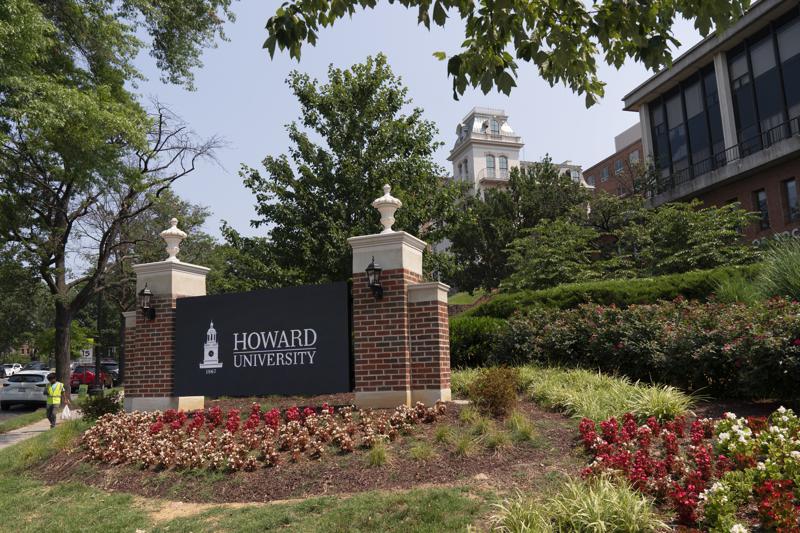
FILE - In this July 6, 2021, file photo, an electronic signboard welcomes people to the Howard University campus in Washington. Two high-profile faculty appointments this week could be a fundraising and enrollment bonanza for Howard University, one of the nation’s most prestigious Black colleges. (AP Photo/Jacquelyn Martin, File)


ATLANTA (AP) — Two recent high-profile faculty appointments could be a fundraising and enrollment bonanza for Howard University, one of the nation’s most prestigious Black colleges. Many other Black schools are not so fortunate; in fact, many are struggling.

Some, especially smaller private colleges, have been fighting for their survival for years, with weak endowments, aging buildings and steady enrollment declines, all made worse by the coronavirus pandemic.

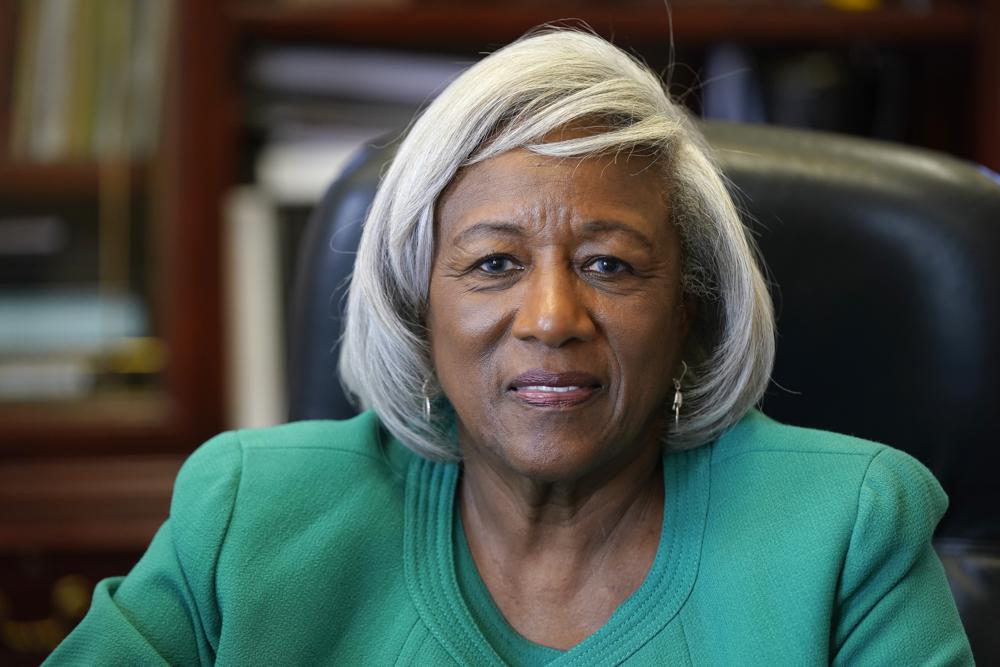
“While larger HBCUs often have the funding resources necessary to attract accomplished talent like Nikole Hannah-Jones and Ta-Nehisi Coates, many smaller institutions need donors to step forward, contributing much-needed financial resources for us to compete,” said Dr. Paulette Dillard, president of Shaw University, a private Black university in Raleigh, North Carolina.

Hannah-Jones accepted a faculty position at Howard amid controversy over whether she would be granted tenure at the University of North Carolina after critics questioned her credentials, specifically her Pulitzer Prize-winning work “The 1619 Project,” which traces the country’s history with slavery. Coates, a Howard graduate, is a journalist and best-selling author who also recently joined Howard’s faculty.


Billions of dollars in federal virus relief will help higher education, but it may not be enough to change the long-term fortunes of some historically Black schools. An Associated Press analysis of enrollment and endowment data shows wide disparities among 102 historically Black colleges and universities, and a further divide between private and public institutions.

As one example, the five wealthiest private Black colleges had endowments ranging from $73,000 per student to more than $200,000, far above the median endowment of less than $16,000 per student. The largest endowment for a public Black college was less than $25,000 per student, though the public schools also receive state aid.


Overall enrollment in historically Black colleges has declined 11% in the most recent 10-year period for which data is available, from 325,609 in 2010 to 289,507 in 2019. Enrollment at some campuses dropped by half during that span, and several administrators said enrollments dropped further during the coronavirus pandemic last year.

As a rule, Black colleges also haven’t had the fundraising ability of other universities. The cumulative endowment for all historical Black colleges through 2019 was a little more than $3.9 billion. That’s about equal to the endowment for the University of Minnesota alone.


Of that amount, just eight private Black colleges held 54% of the total: Spelman College, Hampton University, Meharry Medical College, Xavier University of Louisiana, Morehouse College, Tuskegee University, the Morehouse School of Medicine and Howard, which counts Vice President Kamala Harris among its graduates.


Last summer’s protests over racial injustice brought renewed attention to historically Black colleges and universities and led to a surge in private donations, at least for some.

Mackenzie Scott, the ex-wife of former Amazon founder Jeff Bezos, gave $560 million to 22 Black colleges, including some with very limited endowments, as well as to the Thurgood Marshall College Fund and the United Negro College Fund, both of which raise money for Black colleges and universities. Netflix founder Reed Hastings and his wife, Patty Quillin, split $120 million among the United Negro College Fund, Spelman and Morehouse. Former New York mayor and entrepreneur Michael Bloomberg pledged $100 million for student aid at the four historically Black medical schools.

“It’s allowing the schools to see the opportunity to be bigger than they previously thought was possible,” said Harry Williams, president and chief executive of the Thurgood Marshall fund.

Yet many lesser-known schools continue to struggle and scrape for money. Shaw, one of the oldest historically Black colleges in the South, has an endowment worth just $8,436 per student and did not benefit significantly from the wave of private giving last year, said David Byrd, the college’s vice president of finance.

The college is able to “pay the bills” and get by, he said, but still has $26 million in deferred maintenance. Shaw and other smaller Black colleges that mostly depend on tuition are counting on help from the federal coronavirus relief championed by President Joe Biden and passed by Congress this spring. That aid package will send roughly $2.6 billion to historically Black colleges, although the U.S. Department of Education has not yet announced how it will allocate the money.

Shaw plans to use the money to fix older buildings and dormitories and expand a variety of student services. The federal aid can be used to make up for lost tuition income during the pandemic, hire more faculty, offer pay raises and upgrade heating and air-conditioning systems.


Dr. Paulette Dillard, President of Shaw University, a private Black university is shown on campus in Raleigh, N.C., Monday, July 12, 2021. Two high-profile faculty appointments this week could be a fundraising and enrollment bonanza for Howard University, one of the nation’s most prestigious Black colleges. “While larger HBCUs often have the funding resources necessary to attract accomplished talent like Nikole Hannah-Jones and Ta-Nehisi Coates, many smaller institutions need donors to step forward, contributing much-needed financial resources for us to compete,” said Dr. Dillard. (AP Photo/Gerry Broome)

Wilberforce University in Ohio, another small historically Black private college, plans to use its pandemic relief money in similar ways, after the government forgave much of the university’s $25 million in federal debt.

“The bottom line: It’s very beneficial to the faculty, staff and students at this university, because now we have some additional opportunities for support,” said William Woodson, Wilberforce’s financial vice president.

Student debt is a significant drag on graduates of historically Black colleges, and administrators say it hurts enrollment. Limited endowments mean their campuses can’t subsidize tuition as much as wealthier colleges.

A large percentage of students enrolled at historically Black colleges come from the poorest families, those making $20,000 a year or less, which forces them to borrow. Federal figures show the typical Black college graduate who borrowed money owes $52,000 in student loan debt, roughly double what the typical white student owes.

In addition to giving more financial aid to students, many Black colleges are considering using their federal pandemic money to create campus work-study jobs through which students can earn income, provide subsidized child care, buy personal computers and help students pay for high-speed internet connections.

At Shaw, officials hope renewed national interest in historically Black colleges and the role they play could spark enthusiasm for schools with much smaller endowments that have had to choose between updating buildings, closing programs or keeping tuition affordable for their students.

More than 80% of Shaw’s undergraduates are eligible for federal Pell Grants, compared to roughly 45% of Howard students. But Byrd, the school’s financial officer, said that’s also where the university has had an impact for the past century and a half: giving low-income students the tools to find a career and succeed.

He said it’s “really tough to predict” how long it will take for the university to recover from the pandemic. Its finances are primarily driven by tuition and donations, yet enrollment has dropped by nearly 53% from 2010 to 2019. He cited the need for continued federal relief or private donations that trickle down to the smaller schools.

“People think we want a handout for nothing. We have a proven track record for producing a certain type of kid for 150 years,” Byrd said. “So, it’s not really a handout; it’s an investment.”

___

Hudspeth Blackburn reported from Louisville, Kentucky. Fenn reported from New York.

___

Hudspeth Blackburn is a corps member for the Associated Press/Report for America Statehouse News Initiative. Report for America is a nonprofit national service program that places journalists in local newsrooms to report on undercovered issues.
Biden pitches huge budget, says Dems will ‘get a lot done’

By ALAN FRAM and LISA MASCARO


1 of 9
President Joe Biden joins Senate Majority Leader Chuck Schumer, D-N.Y., and fellow Democrats at the Capitol in Washington, Wednesday, July 14, 2021, to discuss the latest progress on his infrastructure agenda. (AP Photo/Andrew Harnik)

WASHINGTON (AP) — President Joe Biden made a quick foray to the Capitol Wednesday hunting support for his multitrillion-dollar agenda of infrastructure, health care and other programs, a potential landmark achievement that would require near-unanimous backing from fractious Democrats.

His visit came a day after Senate Democratic leaders capped weeks of bargaining by agreeing to spend a mammoth $3.5 trillion over the coming decade on initiatives focusing on climate change, education, a Medicare expansion and more. That’s on top of a separate $1 trillion bipartisan compromise on roads, water systems and other infrastructure projects that senators from both parties are negotiating, with Biden’s support.

The president spent just under an hour at a closed-door lunch with Democratic senators in the building where he served for 36 years as a Delaware senator and where his party controls the House and Senate, though just barely. Participants said Biden paced the room with a microphone taking questions and received several standing ovations.

“It is great to be home,” Biden told reporters after his first working meeting at the Capitol with lawmakers since becoming president. “It is great to be with my colleagues, and I think we are going to get a lot done.”

Democrats’ accord on their overall $3.5 trillion figure was a major step for a party whose rival moderate and progressive factions have competing visions of how costly and bold the final package should be. Many agree that bolstering lower-earning and middle-class families, and raising taxes on wealthy people and big corporations to help pay for it, would nurture long-term economic growth and pay political dividends in next year’s elections for control of Congress.

Sen. Chris Murphy of Connecticut said the president urged them to consider whether their plan would help people in his blue-collar hometown of Scranton, Pennsylvania. “His point was that we need to be thinking about folks who have given up on democracy,” Murphy said.

The Democrats’ agreement on a topline spending figure is merely an initial move that leaves the toughest, unresolved work for later. They must translate their plan into legislation with specific spending and revenue figures, then line up the needed votes to enact it, a process likely to grind right through autumn.

With unanimous Republican opposition likely, Democrats would need support from all their lawmakers in the 50-50 Senate and could lose no more than three votes in the House.

Sen. Lindsey Graham of South Carolina, top Republican on the Budget Committee, belittled the emerging plan as a wasteful liberal wish list that would fuel inflation and boost taxes.

“Count me in for real infrastructure. Count me out for a tax and spend plan from Hell,” he said in a statement.

But Senate Majority Leader Chuck Schumer of New York said Republicans simply want to help the rich. “They don’t want their taxes to rise. They don’t want the government to help people,” he said.

To reach their legislative goal, Democrats want to approve a budget resolution before Congress’ August recess that would let them push a subsequent, sprawling spending bill actually financing their priorities through the Senate by a simple majority vote. Without that protection, Republicans could kill the follow-on spending measure with a filibuster that would require an insurmountable 60 votes to overcome. The budget resolution itself cannot be filibustered.

Democrats said little about one challenge they will face. The measures Democrats are working on total a bit less than the roughly $4.5 trillion for new spending that Biden wants for infrastructure, family services, climate change and other programs. To accommodate their lower figure, lawmakers will have to curtail or eliminate some of his proposals.

In an unsurprising harbinger of potential problems, West Virginia Sen. Joe Manchin, perhaps the chamber’s most conservative Democrat, signaled to reporters that he would oppose proposals to curb fossil fuels, long a lifeblood for his state’s economy. His demands to trim other spending forced Democrats to drop a long-time progressive goal, a minimum wage increase, from pandemic relief legislation early this year.

Manchin said of cutting fossil fuels, which are major contributors to global warming, “It won’t happen, it can’t happen and it doesn’t do a darn thing but makes the world worse.” He said he believed Democrats could achieve their spending plans ”if they understand fossil is going to play a part.”

Key backing for the overall plan has come from Senate Budget Committee Chairman Bernie Sanders, I-Vt., a self-proclaimed democratic socialist and a leader of the Democrats’ progressive wing. He’s repeatedly called the agreement historic and said Wednesday that while he’d like more spending — he earlier sought $6 trillion — the reality is that all 50 Democratic senators are needed to prevail.

“I think this is very, very significant,” he said.

House Speaker Nancy Pelosi, D-Calif., said the Senate plan would address her chamber’s Democratic priorities on climate, health care and family services and make “historic, once-in-a-generation progress for families across the nation.” Yet in a letter to colleagues, she seemed to leave the door open to a push for more, saying, “Every member should know that we will fight to ensure that our priorities become law.”

Rep. Pramila Jayapal, D-Wash., who chairs the Congressional Progressive Caucus, told reporters that while her group’s support isn’t guaranteed, “We see this as a very big, positive step forward.”

Details of the package began emerging, even though all are merely proposals that await final decisions later.

A senior Democratic aide said the party will seek extensions of tax credits for children, child care and some low-income people, money for environmentally friendly energy technologies and a federal standard aimed at encouraging a shift to clean energy. The plan would fund pre-kindergarten for toddlers, aid for college students, paid family leave, food and housing programs and a pathway to citizenship for potentially several million immigrants in the U.S. illegally, said the aide, who spoke on condition of anonymity to describe Democrats’ plans.

Also included is a top progressive priority — an expansion of Medicare, the health insurance program for older Americans, to include vision, dental and hearing coverage. Sanders suggested there also might be an effort to lower that program’s eligibility age to 60.

That would be expensive, but the senior aide said Democrats are also looking at savings from letting the government negotiate prescription drug costs. The aide said there would also be language barring tax boosts on people earning under $400,000 annually, on small businesses and on family farms.

Sen. Mark Warner, D-Va., a leading moderate who helped shape the agreement, said the entire measure would be paid for with new revenue. Senate Finance Committee Chairman Ron Wyden, D-Ore., said he in an interview that he’s working on proposals to “ensure that the super wealthy and mega-corporations pay their fair share” of taxes and for extra funding for the IRS to crack down on tax scofflaws.

___

AP writers Kevin Freking, Mary Clare Jalonick and Jonathan Lemire contributed.
THAT'S TRILLION WITH A CAPITAL T
Sanders, Biden meet as infrastructure bill swells past $3.5T


By LISA MASCARO and JONATHAN LEMIRE

1 of 7

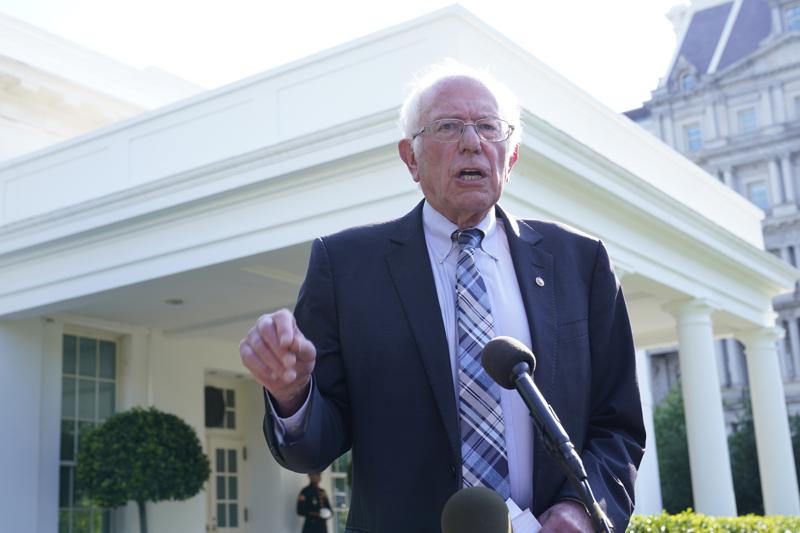
Sen. Bernie Sanders, I-Vt., talks to reporters outside the West Wing of the White House in Washington, Monday, July 12, 2021, following his meeting with President Joe Biden. (AP Photo/Susan Walsh)

WASHINGTON (AP) — Emerging from a private meeting at the White House, Sen. Bernie Sanders said Monday that he and President Joe Biden are on the same page as Democrats draft a “transformative” infrastructure package unleashing more than $3.5 trillion in domestic investments on par with the New Deal of the 1930s.

Sanders, chairman of the Senate Budget Committee, and Democrats on his panel also huddled privately at the Capitol for two hours late Monday with Senate Majority Leader Chuck Schumer, D-N.Y., and key White House advisers during a consequential time for Biden’s top priority. Congress is racing to put together a sweeping proposal financing infrastructure, family assistance and other programs for initial votes later this month.

Sanders, I-Vt., said he had a “very good discussion” with Biden .

“He knows and I know that we’re seeing an economy where the very, very rich are getting richer while working families are struggling,” Sanders told reporters.

Sanders said he and the president did not discuss a topline figure, but the Vermont senator mentioned his own more far-reaching $6 trillion proposal, which includes expanding Medicare for older adults. Later at the Capitol, he told reporters that the Democrats’ package would be bigger than $3.5 trillion, an amount floated as in line with Biden’s initial proposal.

“The end of the day we’re going to accomplish something very significant,” Sanders said.

After Democrats’ evening meeting at the Capitol, Sanders said lawmakers were still discussing overall spending and other figures.

“What we’re trying to do is a multitrillion-dollar bill which is going to address long neglected problems of the working families in this country” and the problem of climate change, he told reporters.

Other lawmakers said senators would meet again Tuesday.

Biden’s big infrastructure proposals are moving through Congress on various tracks — each potentially complementing or torpedoing the other.

A bipartisan group of 10 senators unveiled a nearly $1 trillion package of traditional infrastructure for roads, bridges, broadband and some climate change investments in electric vehicles and resiliency for extreme weather conditions.

Senators in the bipartisan group are struggling to draft their proposal into legislation but hope to have a bill ready as soon as this week. Disagreements are emerging over how to pay for it.

“Pay-fors are still up in the air,” said Sen. Mike Rounds, R-S.D.

The rest of Biden’s ideas are being collected into the much broader multitrillion-dollar package that could be approved by Democrats on their own under a special budget reconciliation process that allows passage with 51 votes in the Senate, rather than the typical 60-vote threshold that’s needed to overcome a Senate filibuster.

Sanders, as chair of the Budget Committee, has been leading his colleagues in a series of private conversations. A one-time Biden rival for the presidency, Sanders now holds an influential position shaping the president’s top priority.

“My job is to do everything I can to see that the Senate comes forward with the strongest possible legislation to protect the needs of the working families of this country,” Sanders said at the White House.

___

Associated Press reporters Alan Fram and Kevin Freking in Washington contributed to this report.
South Korea unveils $190 billion 'New Deal 2.0' economic plan

By Thomas Maresca

A two-seat drone to be used as a taxi hovers on a demonstration flight over Seoul in November. South Korea has a robust technology infrastructure. File Photo by Thomas Maresca/UPI | License Photo


SEOUL, July 14 (UPI) -- South Korean President Moon Jae-in on Wednesday announced a stimulus package of $191 billion focusing on digital technology and green energy projects that he dubbed the "Korean New Deal 2.0."

The program is an expanded version of the $139 billion initiative launched one year ago as a response to the COVID-19 pandemic.

"The Korean version of the New Deal is a project that started in the midst of a crisis," Moon said in a televised address on Wednesday. "Moving beyond simply overcoming the challenges at hand, it has evolved as a national development strategy and has given us hope to take a leap forward into becoming a global pacesetter."

The original project included a Digital New Deal, which looked to leverage South Korea's robust technology infrastructure to take a leading role in industries such as 5G, artificial intelligence and big data.


RELATED  Tesla captures nearly half of Korean electric vehicle market

Meanwhile, the program's Green New Deal looked to move South Korea away from its dependency on fossil fuel with investments in renewable energy, eco-friendly buildings, electric vehicles and telemedicine.

The new plan looks to expand digital investments into connected virtual platforms known as the metaverse, as well as further promote technologies such as blockchain and cloud computing.

The revised New Deal 2.0 will also expand on green energy investment, including a new category targeted at reaching South Korea's carbon neutrality goals through efforts such as an increase in hydrogen vehicle use and expanded emissions monitoring.

A total of 2.5 million jobs are expected to be created by 2025 under the policy initiatives, South Korea's Ministry of Finance and Economy said in a statement released Wednesday, representing an increase of 600,000 jobs over the target of the original program.

A new element introduced Wednesday was the Human New Deal, a $44 billion investment in promoting inclusive growth and strengthening the social safety net through efforts such as job training, education and childcare support.

South Korea's economy as a whole has weathered the COVID-19 pandemic well, with the government projecting GDP growth to exceed 4% in 2021 on the back of strong exports, but smaller businesses have been suffering.

Nearly eight in 10 owners of small storefront businesses have seen their revenues drop this year, by an average of 21.8%, according to a survey released on Monday by the Korea Economic Research Institute.

Widening income inequality, skyrocketing real estate prices and a tightening job market have also left younger South Koreans uncertain about the future, the finance ministry said.

"With the Human New Deal, we aim to give hope to people in their 20s and 30s and secure the country's social and labor safety net," Deputy Finance Minister Han Hoon said at a press briefing to announce the new plans.

Moon, whose single five-year term ends next year, touted the Korean New Deal 2.0 initiative as a long-term roadmap for South Korea.

"We have turned the COVID-19 crisis into an opportunity and showcased our potential," he said. "The Korean New Deal will be our strongest policy tool. It is our hope for overcoming COVID-19 and it is a future strategy for South Korea, going beyond my own administration."

North Korea's media attacks South's Lee Jun-Seok for gender remarks


South Korea’s main opposition leader, Lee Jun-seok, has proposed abolishing Seoul’s Ministry of Gender Equality and Family. File Photo by Yonhap/EPA-EFE

July 14 (UPI) -- North Korea's propaganda services issued a series of condemnations of new South Korean opposition leader Lee Jun-seok on Wednesday after he proposed abolishing Seoul's gender and unification ministries.

Ri Myong Jong, identified as an ethnic Korean sociologist in China, said in an article on propaganda site Meari that Lee's rise in politics and his alleged views on women's issues "reflect the backwardness of South Korean society."

"Lee Jun-seok and the [presidential] candidates of the People Power Party are treating the issue of discrimination against women as insignificant, and are even discussing the abolition of the [South's] Ministry of Gender Equality and Family," Ri said.

"The argument is reminiscent of neo-Nazi sophistry that 'the Holocaust is falsehood.'"

Last week. during a local radio interview, Lee had proposed dissolving the gender ministry, saying some institutions were meant to be "boldly thrown away when cleaning the house," according to JoongAng Daily.

Lee and his colleagues in the conservative PPP have cited the ministry's inaction on sexual assault cases, including those involving former Seoul Mayor Park Won-soon, who died last year, and former Busan Mayor Oh Keo-don. Both politicians were affiliated with the ruling Democratic Party.

In the Meari article Ri said, "misogyny and anti-feminism were being publicly advocated" in the South.

The rise of Lee as main opposition leader is a "shameful" development for the South where "all kinds of social conflicts and contradictions are exploited as weapons by politicians," the article in Meari stated.

A separate statement published on the site of North Korean propaganda service Uriminzokkiri claimed that Lee was a "ruthless" supporter of "old-fashioned politics."

Lee, who graduated from Harvard University with a bachelor's degree in economics and computer science in 2007, has been credited with bringing his party greater support from young South Korean men in their 20s and 30s.

RELATEDNorth Korean singer conferred high honors by Kim Jong Un

Lee also has proposed abolishing the unification ministry, citing lack of government action on the North Korean demolition of the inter-Korean liaison office in Kaesong and the death of a South Korean fisheries ministry officer in the North.

North Korean propaganda did not address Lee's comments regarding the unification ministry Wednesday.

COMRADE KIM HAS SHRUNK