Thursday, July 15, 2021

Cuba: Government tries to placate protesters with concessions

Cuban President Miguel Diaz-Canel took some blame for the protests and the government announced easing customs measures after demonstrations rocked the country.



President Miguel Diaz-Canel addressed the nation in a televised speech


The Cuban government on Wednesday has shown signs of concession to the unprecedented protests.

Cubans had taken to the streets to demonstrate against economic hardship marked by shortages of food, electricity and other essentials.

The government had only blamed social media and the United States for inciting the protests. But President Miguel Diaz-Canel admitted on Wednesday that failings by his government played a role in the unrest.

Shortly before the president spoke on television, Cuban Prime Minister Manuel Marrero announced relaxing some customs measures and made new promises to protesters.

Watch video02:01 Crisis-stricken Cuba sees largest protets in decades


What did Diaz-Canel say?


While the Cuban president reiterated his accusations against the United States, he also offered some self-criticism for the first time.

"We have to gain experience from the riots," he said. "We also have to carry out a critical analysis of our problems in order to act and overcome, and avoid their repetition.

"Our society is not a society that generates hatred and those people acted with hatred," Diaz-Canel said, calling for "peace, harmony among Cubans and respect."

Diaz-Canel added that Cubans must "overcome our disagreements between all of us. What we have to promote, even though we have different points of view on certain issues, is between all of us to try to find solutions."

President Miguel Diaz-Canel was on the street when thousands of Cubans protested over the weekend

What measures did Cuba announce?


Cuban citizens who go on foreign trips can bring home toiletries, food and medicine — some of the hardest products to find in Cuba — without paying customs, Marrero said.

Under Cuban law, travelers arriving here can bring up to 10 kilograms (22 pounds) of medicine tax-free. They can also bring in limited amounts of food and personal hygiene gear but must pay customs duties.

But starting Monday and until the end of 2021, the limits and duties are lifted, Marrero said.

The prime minister also said the government was working on improving the national electricity system.

Officials will also seek to improve the supply of medicines, Marrero said.

Meanwhile, Economy Minister Alejandro Gil announced that the government would institute long-promised rules for business owners to set up small- and medium-sized enterprises.


What is the situation in Cuba?

On Sunday, anti-government protests erupted over shortages of food and medicine and electricity outages.

Some protesters demanded a faster pace of the COVID vaccination rollout, and some called for political change in Cuba, where the Communist Party has ruled for six decades.

Security forces arrested dozens of protesters as officials accused demonstrators of looting and vandalism.

Local rights groups said more than 5,000 people, including 120 activists and journalists, have been arrested, according to reports compiled by online news site 14ymedio.

Internet outages, restrictions on social media and messaging platforms were also reported.

The COVID-19 pandemic, inefficiencies in the state-run economy and the tightening of US sanctions on the island have pushed Cuba into its worst crisis in years.
Cuba restores internet access after protests, but not social media

Issued on: 14/07/2021
Protests that broke out in Cuba on Sunday were the largest since the revolution of the 1950s and come as the country endures its worst economic crisis in 30 years
 ADALBERTO ROQUE AFP/File

Havana (AFP)

Cuban authorities restored internet access on Wednesday following three days of interruptions after unprecedented protests erupted over the weekend, AFP journalists said.

Access to social media and messaging apps such as Facebook, WhatsApp and Twitter remained blocked on 3G and 4G, however.

Social media is the only way Cubans can access independent media, while messaging apps are their main means of communicating amongst themselves.

One person has died and more than 100 were arrested, including independent journalists and opposition activists, since the anti-government protests broke out in the communist-ruled island over the worst economic crisis in decades.

Web monitoring group NetBlocks reported disruptions from Monday in Cuba on major social media and communications platforms.

Cuba was quick to blame a half-century of US economic pressure for the crisis, but the downturn also comes amid strict measures against Covid-19 and an uptick in cases.

Foreign Minister Bruno Rodriguez on Tuesday said the United States had incited social unrest through a Twitter campaign using the hashtag #SOSCuba.

"It's true that we don't have mobile internet, but we're also lacking medicines," Rodriguez said.

"I have to tell you, Cuba will not renounce its right to self-defense."

The US on Tuesday urged Cuba to end the internet restrictions and demonstrate "respect for the voice of the people by opening all means of communication, both online and offline."

Streets in the capital Havana were calm on Wednesday, but there was a visibly larger security presence, particularly around the parliament building, where protesters shouting "Down with the dictatorship," "Freedom" and "We're hungry" gathered on Sunday.

New calls went out on social media on Tuesday for a protest outside the parliament building, which was surrounded by police vehicles.

NetBlocks said some Cubans have been able to get around the internet restrictions by using virtual private networks, or VPNs.

Wednesday, July 14, 2021

Reviving Scotland's 'disappearing' marine life with no-take zones

Dredging had devastated the once rich waters around the Scottish isle of Arran. But a small protected area has created a flourishing pocket of marine life and campaigners want to establish similar areas around Scotland.


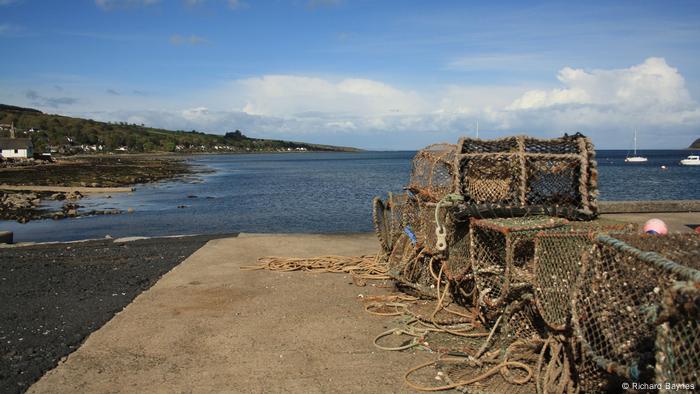
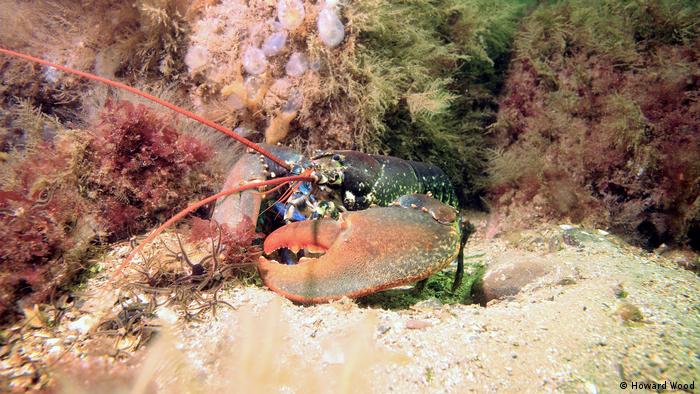
A community initiative on the Scottish isle of Arran has helped boost lobster numbers in the surrounding waters


It was the pace of change that made Howard Wood realize something was going badly wrong. In the 1970s, when he started scuba diving in the crystal-clear seas off the Scottish isle of Arran, the seabed was a mass of colorful fish, shellfish and plants.

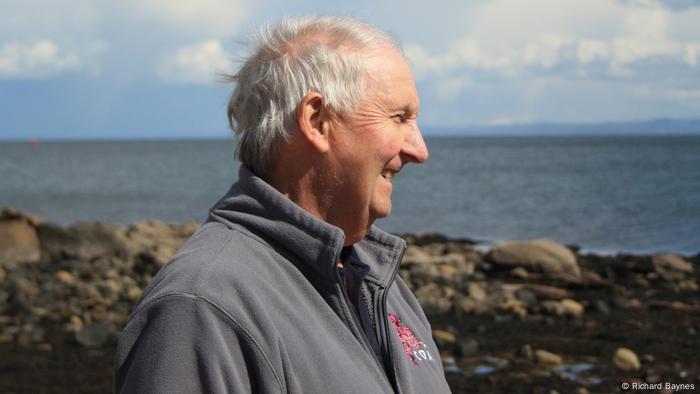
"By the late 80s you were seeing species disappear year on year — you realize that this isn't a long slow evolution of change, this is rapid," said Wood, a diver and co-founder of the Community of Arran Seabed Trust (COAST).

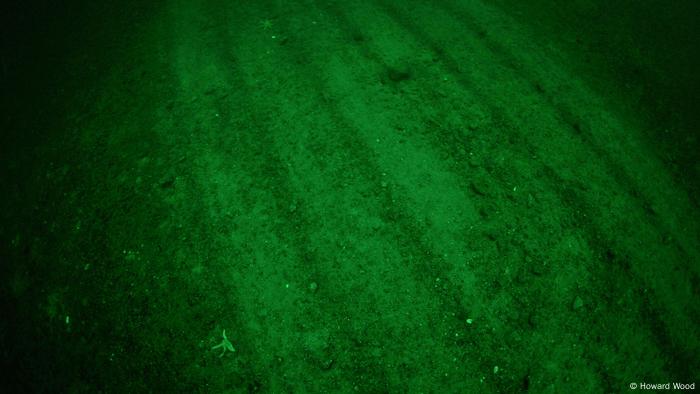
He was witnessing the impact of a new type of dredger that could be used to scrape up scallops — a prized shellfish — on seabeds previously unfishable this way. And then, in 1984, the UK scrapped laws, dating to the 19th century, that had banned most trawling within 3 miles (5 kilometers) of Scotland's shores.
From barren to abundant

By the early 1990s the seabed was becoming an underwater desert, Wood remembers. So, in 1995 he and a few friends started pushing for the establishment of a no-take zone (NTZ) — an area set aside by the government where no extractive activity is allowed — on the island's coast.

Wood had been inspired by his friend Don McNeish, who had witnessed the transformative effect of the Leigh no-take zone near Auckland, New Zealand. The area was one of the world's first such zones, where no fishing of any kind or extraction of any resources is allowed.

Lamlash Bay attracts recreational anglers and scuba divers


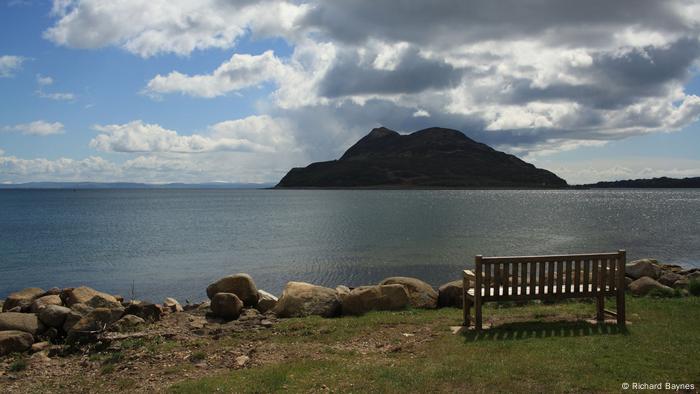
After 13 years of campaigning, in 2008 the Scottish government designated a no-take zone in 2.67 square kilometers (1.03 square miles) of the northern side of the island. The zone was established around Lamlash Bay — a picture-postcard slice of silver sea studded with the huge rock of Holy Island. It's now totally protected from all fishing and other extraction.

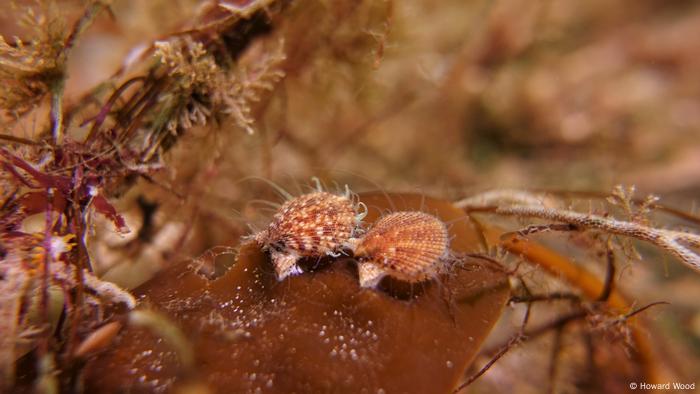
Studies over the first five years of the NTZ by government marine scientists found little change in scallop populations. One 2010 study led by two marine biologists from York University had described an "ecological meltdown" in The Firth of Clyde, where Lamlash Bay lies, as a result of overfishing. It stated some fish populations had fallen as much as 99%.

But the benefits of the Lamlash zone are now becoming apparent, according to marine ecologist Bryce Stewart from York University in England, who has been studying the area.

Howard Wood has lived on Arran for most of his life and started a grassroots initiative to save its underwater life


"We've seen a general increase in biodiversity compared to the areas just next to it," he said. "We've got nearly four times the density of king scallops in the NTZ than back in 2010, and they're also much bigger, much older and much more reproductively productive. We have also seen a big increase in the number of lobsters."

Lobsters are now four times more abundant in the no-take zone compared to the areas around it. Seaweeds, corals and other forms of life have blossomed as well, according to Wood.

Getting the community on board


The UK now has four no-take zones, and the idea is spreading further afield. Wood says COAST has been contacted for advice on setting up such zones from individuals and organizations across the world, including places like Spain and Mauritius.

His response to these requests is to "get the community on board and the politicians will slowly follow."


Wood noticed that the once abundant sea life had started to disappear


Raising awareness and educating people about life under the waves helps increase community support, according to Jenny Stark, who leads the organization's outreach program. COAST showed films to local community groups to help win initial support and continues to promote its message through films and educational displays at its visitor center in Lamlash Bay.

"By showing people these amazing things that some people think you'd only find in tropical seas, they realize there's stuff on our doorstep that needs to be protected," said Stark. "We can show the community the change. Underwater photography and footage are vital — a picture paints a thousand words."

The boost in marine life in waters around the no-take zone has helped win support from fishing communities too, Wood says. Some fishers were initially worried about losing a fishing ground and feared it could be the start of wider restrictions. Once the zone was established there were still some incursions by "pirate" operators, running with no lights on in the hope of avoiding detection, but these now seem to have stopped.


The Scottish Creel Fishermen's Federation hope no-take zones will protect their livelihoods

Alistair Sinclair from the Scottish Creel Fishermen's Federation (SCFC) — who catch lobsters, langoustines and crabs in steel-and-net traps — says his organization backs the idea of similar zones across Scotland because "everybody benefits," from the fishers to the local community and recreational anglers and divers.

"That's where we have to look ... for future generations of fishermen, their communities and the service industries that make their livelihoods from the fishing industry," said Sinclair.

A 2020 report by international ocean conservation organization Oceana showed that out of the 10 most economically important species in UK waters, only three were healthy and sustainably fished. Southern North Sea crab and North Sea cod were found to be critically overfished.

Scallop populations have increased in Lamlash Bay and other life is flourishing too

Creating savings for future generations

The SFCF, COAST and others are now campaigning for a new 3-mile limit to be introduced across Scotland. That would stop inshore trawling and dredging for shellfish. But many fishermenoppose it. .

The Scottish Fishermen's Federation says the limit won't help make fish populations sustainable and that instead of a blanket ban, individual marine areas or features should be given protected status where there is scientific evidence it's required.

But Sinclair, who is campaigning for the 3-mile limit, says people are complaining that fish are disappearing along the Scottish coast.

"That is due to trawl activity, and you can only take so much out the bank until there's nothing left in the bank," he added.

The hope is that with more protection measures, inspired by Howard Wood's work, Scotland can put something into the bank for future generations.
WTO convenes trade ministers to net fisheries deal

Issued on: 15/07/2021
"The health of our oceans and our planet is at stake," if global fishing talks flounder, WTO chief Ngozi Okonjo-Iweala said TANG CHHIN Sothy AFP/File


Geneva (AFP)

The World Trade Organization will host a ministerial meeting this week aimed at breathing life into drawn-out negotiations towards banning subsidies that favour overfishing, but numerous sticking points remain.

Before Thursday's meeting, WTO chief Ngozi Okonjo-Iweala voiced hope that trade ministers from the organisation's 164 member states could finally move towards clinching a "historic" agreement.

"The health of our oceans and our planet is at stake," she warned in a video address last week. "We simply cannot afford to miss this opportunity."

The talks aim to ban subsidies that contribute to illegal and unregulated fishing, as well as to overfishing, threatening the industry's sustainability.

While fishing should in theory be held in check by the environment, with low fish stocks pushing up costs, subsidies can keep unprofitable fleets at sea.

Global fisheries subsidies are estimated at between $14 billion and $54 billion a year, according to the WTO.

It is widely agreed that action is needed to protect a crucial resource that millions of people depend on for their livelihoods.

But 20 years of negotiations have failed to clinch a deal, with unresolved disagreements over a range of issues, including a UN demand that developing countries and the poorest nations receive special treatment.

After missing the last UN deadline to reach an agreement by December 2020, talks have intensified in recent months however.

- 'Historic' -

Okonjo-Iweala, who took the reins of the global trade body in March, has made clinching the long-awaited fisheries deal by the end of this year a priority.

Thursday's meeting, which will be closed to the media, will see trade ministers discuss a draft text presented in May by Colombian ambassador Santiago Wills.#photo1

Okonjo-Iweala voiced optimism that talks on the text, which according to Wills proposes "compromise language" in a range of areas, would succeed.

"After two decades of negotiations at the World Trade Organization and marathon discussions this year, we have before us a draft text of an agreement that will put into action the global ambition to end harmful fishery subsidies," she said.

"We are on the cusp of forging an agreement at the WTO that is historic in more ways than one," she said, stressing that a deal would also show that "members can come together and act on issues of the global commons."

Reaching any kind of an agreement at the WTO can be hard, because all decisions require a consensus among all member states.

- Special treatment? -

"It is my sincere hope that everyone approaches this revised text on the perspective of finding in it a possible compromise for a successful conclusion to the negotiations," Wills said last week.

But a number of sticking points remain and NGOs warn against rushing to the finish line at any cost.#photo2

"It's critical that WTO members do not sacrifice environmental outcomes for the sake of speed when negotiating a fisheries subsidies agreement," Isabel Jarrett of The Pew Charitable Trusts told AFP.

One of the main stumbling blocks has been a UN demand that developing countries and the poorest nations receive so-called special and differential treatment, or SDT.

While special treatment for the poorest countries is widely accepted, demands from some self-identified developing countries to be exempt from subsidy constraints has proved difficult to swallow.

Many of the major fishing nations are considered developing countries by WTO, including China, which has one of the world's biggest fishing fleets.

An EU official told reporters this week that a declaration from China that it was prepared to assume "full commitments without claiming SDT" would be "very helpful" to the talks.

There is also disagreement over how broad the fisheries deal should be.#photo3

There appears to be consensus around excluding fish-farming and continental fishing from subsidy constraints.

But some developing countries are calling for fuel subsidies, including through tax deduction schemes like those widely used in the EU, to be included in the deal -- something the bloc flatly rejects.

The text is also unlikely to satisfy countries like the United States, whose calls to include a ban on forced labour on fishing vessels have gone unheeded.

© 2021 AFP

Mexico announces new steps to protect near-extinct porpoise

Issued on: 15/07/2021 -
Conservationists believe there are only 10 vaquita porpoises left alive 

HO Sea Shepherd Conservation Society/AFP/File

Mexico City (AFP)

The Mexican government on Wednesday announced new measures aimed at saving the critically endangered vaquita porpoise, the world's rarest marine mammal.

The regulations aim to improve surveillance and supervision of fishing in the northern Gulf of California -- the only place in the world where the vaquita is found.

Potential actions include the partial or total closure of a vaquita sanctuary in the Gulf to fishing boats for up to one month, the National Aquaculture and Fisheries Commission said.

The agriculture and environment ministries, together with the navy, will decide whether it is necessary to shut the refuge to fishing depending on vessel movements, it said in a statement.

The commission stressed the importance of respecting the sanctuary’s core area where all commercial fishing is banned.

Mexico has long faced pressure to do more to protect the vaquita, the world's smallest porpoise, known as the "panda of the sea" for the distinctive black circles around its eyes.

According to conservationists, there are believed to be only 10 vaquitas left.

The porpoise has been decimated by gillnets -- which are banned in the upper Gulf of California -- used to fish for another species, the endangered totoaba fish.

The totoaba's swim bladder is considered a delicacy in China, and can fetch tens of thousands of dollars on the black market.

Mexico's announcement came days after the UNESCO World Heritage Center expressed concern that the vaquita was in danger of disappearing forever unless "decisive action" is taken.

The Gulf of California's islands and protected areas became a UNESCO World Heritage site in 2005.

Their state of conservation is due to be reviewed later this month at the 44th session of the World Heritage Committee.

© 2021 AFP


Mexico abandons fishing-free zone for endangered porpoise


FILE - In this July 8, 2017 file photo, a young woman with the World Wildlife Fund carries a papier mache replica of the critically endangered porpoise known as the vaquita marina, during an event in front of the National Palace in Mexico City. The Mexican government announced Wednesday, July 14, 2021, that it is officially abandoned the policy of maintaining a fishing-free zone around the last 10 or so remaining vaquita marina. (AP Photo/Rebecca Blackwell, File)

MEXICO CITY (AP) — The Mexican government officially abandoned the policy of maintaining a fishing-free zone around the last 10 or so remaining vaquita marina.

The measure announced Wednesday replaces the fishing-free “zero tolerance” zone in the upper Gulf of California with a sliding scale of punishments if more than 60 boats are seen in the area on multiple occasions.

Given that Mexico has been unable to enforce the current restrictions — which bans boats in the small area — the sliding-scale punishments also seem doomed to irrelevance.

Environmental experts say the move essentially abandons the world’s most endangered marine mammal to the gill nets that trap and drown them. The nets are set for totoaba, a fish whose swim bladder is a delicacy in China, and sells for thousands of dollars per pound (kilogram).

Alex Olivera, the Mexico representative for the Center for Biological Diversity, said the rules establish a sliding scale of responses to a situation that shouldn’t be allowed to occur in the first place. For example, the Agriculture and Fisheries Department says it will use 60% of its enforcement personnel if 20 fishing boats or less are seen in the restricted area.

“This is stupid. They are waiting to count boats in an area designated as ‘zero tolerance,’ where there shouldn’t be a single boat,” Olivera said. “They are letting in dozens of boats.”

“This is the end of the concept of zero tolerance,” Olivera said. “There is just going to be dissuasion.”

One conservation expert who is familiar with the case, but who cannot be quoted by name for fear of repercussions, said the new rules “imply not protecting the vaquita.”

“It appears that fisheries authorities want to drive the vaquita to extinction,” the expert said.

Two ships from the conservationist group Sea Shepherd have worked with Mexican marines to try to grab banned fishing nets from the area, but they are frequently outnumbered and attacked by fishermen, who have no fear at all of the marines.

In January, two fishermen rammed their small boat into a larger vessel used by Sea Shepherd to haul out nets. Sea Shepherd said its vessel, the Farley Mowat, was pulling illegal gill nets out of the waters of the gulf, also known as the Sea of Cortez, when people on a group of about a half dozen small, open fishing boats began tossing gasoline bombs at the vessel, setting the bow and another part of the ship afire.

The nets confiscated by Sea Shepherd vessels are expensive, so fishermen often harass the conservationists’ boats to try to get them back. The fishermen claim they have not received compensation from the Mexican government for lost fishing income. Groups representing fishermen were not immediately available to comment.

The upper Gulf of California is the only place the vaquita lives.

Mexico’s Environment Department had previously said the drop in the number of vaquitas and the area where they have been seen in recent years justified reducing the protection zone, which in theory once covered most of the upper Gulf.

Formally known as the vaquita “reserve,” that zone starts around the Colorado river delta and extends south past the fishing town of San Felipe and near Puerto Peñasco.

But as vaquita numbers dwindled to a few dozen, and then to less than a dozen, scientists and environmentalists decided to make a last-ditch stand in the ‘zero tolerance’ zone, a far smaller area where the last vaquita were seen.

Their numbers are confirmed by subaquatic listening devices that graph the squeaks and squeals the animals make, even as visual sighting become rare.
Foe to friend: Fishermen join fight to save endangered Pakistan dolphin


Issued on: 15/07/2021 -
Indus River dolphins once swam from the Himalayas
 to the Arabian sea Asif HASSAN AFP


Sukkur (Pakistan) (AFP)

Freshwater dolphins are flourishing in a stretch of Pakistan's main river after a helping hand from fishermen mobilised to defend a rare species driven to near-extinction.

Identifiable by their saw-like beaks, Indus River dolphins once swam from the Himalayas to the Arabian sea, but now mostly cluster in a 180-kilometre (110-mile) length of the waterway in southern Sindh province.

A glimpse of a dolphin cutting through muddy water to gasp for air is a regular sight along the mighty river, but most villagers nearby were unaware their neighbours were on the brink of extinction.

"We had to explain that it was a unique species only found in the Indus and nowhere else," Abdul Jabbar, who gave up fishing for a job on the dolphin rescue team, told AFP on the banks of Dadu Canal, which he patrols by motorbike.

Decades of uncontrolled fishing and habitat loss caused by pollution and man-made dams saw the dolphin population plummet to around 1,200 at the turn of the century.#photo1

They are classed as an endangered species by the International Union for Conservation of Nature, which says their numbers have fallen by more than 50 percent since the 1940s.

- Dolphin hotline
-

In a bid to turn around the fortunes of the mammals, Pakistani wildlife officials began a painstaking door-to-door awareness campaign with the local fishing community on the riverbanks and arterial canals.

They offered advice on dolphin-friendly nets and warned against harmful and illegal poison-fishing -- the practice of using chemicals to kill small fish used for poultry feed.#photo2

The World Wide Fund for Nature also offered up one million rupees ($6,300) worth of loans, encouraging fishermen to set up alternative businesses.

With the help of the provincial wildlife department, they established a dolphin monitoring network of 100 volunteers and a handful of paid staff, and a 24-hour phone helpline for villagers to call if they see a dolphin in distress.

Jabbar's commitment is now boundless.#photo3

He recently missed the birth of his child when a dolphin became trapped in one of the river's canals.

"The doctors were preparing for the caesarean and I needed to be with my wife. But when the call came, I rushed that night to rescue the dolphin," he told AFP.

The latest survey, from 2017, showed numbers had rebounded to about 1,800 and wildlife officials expect the population has increased further since.

- Diminishing territory -

Local legend has it that the first Indus River dolphin was once a woman, transformed by a curse from a holy man angry that she forgot to feed him one day.

Previous generations believed the dolphins -- known locally as bullen -- were cursed.

They have evolved to be functionally blind, allowing for a sharpened sense of sonar as they cut through the muddy waters of the river hunting for prey.#photo4

Harmful fishing practices are not the only hazards facing dolphins.

Every January, when water levels are at their lowest, the floodgates to canals are shut for cleaning, creating pools and lagoons that become death traps for stranded marine life.

Wildlife Department official Adnan Hamid Khan told AFP that the recent steady rise in dolphins had been a "success story".

"But with a larger population comes food shortages, decreased range of movement -- their breeding ground and territory has shrunk."

Indus River dolphins first came under threat during British colonial rule when dams were built to control the waterway's flow, and later from the discharge of hazardous chemicals when factories sprung up along its banks.

Untreated sewage from rapidly expanding cities and towns is also dumped into the water, Khan said.

But with fishermen on their side, there is some hope for the species.

"Now we save the dolphins with as much dedication as we would a human being," said Ghulam Akbar, another volunteer monitor who also turned to farm fishing in an attempt to limit his impact on the river.

"They breathe like we humans do. Every compassionate man should save them."

© 2021 AFP

Rights groups raided as Belarus pursues crackdown

Issued on: 14/07/2021 - 
Nine rights activists were reportedly detained including Ales Belyatsky SERGEI GAPON AFP/File

Moscow (AFP)

Belarusian security services on Wednesday raided a dozen human rights and opposition groups as President Alexander Lukashenko's regime clamps down on civil society in a months-long crackdown on dissent.

The raids came a day after Lukashenko vowed to "find and bring to justice" all of his country's "wretched NGOs" in a meeting with Russian leader and key ally Vladimir Putin.

The notorious KGB targeted at least five independent human rights organisations -- including the prominent Vyasna group and the Belarusian Helsinki Committee -- and detained several activists.

Vyasna has been monitoring mass arrests that followed huge anti-Lukashenko protests last year. The group said that at least nine rights activists were detained including its chairman, Ales Belyatsky.

The head of the Belarusian Helsinki Committee Oleg Gulak wrote on Facebook early Wednesday that the group's "office door is being broken down".

Two opposition groups and the Belarusian Association of Journalists -- which won an international media award last year -- also reported raids.

The head of an organisation campaigning to abolish the death penalty, Andrei Poluda, was detained following a raid at his home.

In Minsk, raids also took place at an organisation promoting gender equality in the workplace, a social charity, the Belarusian union of writers, an independent trade union and an economic research centre.

The home of prominent independent economist Yaroslav Romanchuk was also raided.

Activists in regional cities had also been targeted, the group said.

In the western city of Grodno, officials raided the home of activist Viktor Sazonov and "took him with them." His whereabouts were unknown, the group said.

- 'New wave' of repression -

In Orsha, a city near the Russian border, authorities "took the editor of regional website orsha.eu and activist Igor Kazmerchak."

In the Western city of Brest, the home of an activist campaigning for the rights of refugees hoping to cross into the EU from Belarus -- Kirill Kafanov -- was raided.

In a statement, Vyasna said the "real motive behind the persecution" was the "uncompromising struggle of the entire human rights community of Belarus for the promotion of human rights and democratic values".

It said later its chairman Belyatsky and five others were being questioned by investigators.

Vyasna demanded that authorities end a "new wave" of repression against Belarusian civil society. It also vowed to continue its work and called on international rights organisations to protest against the raids.

Exiled Belarusian opposition leader Svetlana Tikhanovskaya said the list of targeted groups and individuals is growing.

"The regime is hiding its lack of control with violence and lawlessness," she said in a statement.

"They hope they can feel power again if everyone in the country falls silent."

Amnesty International's Director for Eastern Europe and Central Asia, Marie Struthers, said the day's "massive attacks" showed that "nowhere near enough has been done to end this crisis."

"All those detained today must be released immediately, and this campaign against civil society must end," she said.

The Warsaw-based European Platform for Democratic Elections condemned the raids and said they "must be seen in close context with a recent visit of Alexander Lukashenko to Vladimir Putin".

In the meeting with Putin, Lukashenko accused rights groups of spreading "terror", according to a transcript on the Kremlin website.

Lukashenko has been hit with a slew of sanctions by Western nations but they appear to have had a limited effect on Lukashenko who maintains backing from key creditor Russia.

Vyasna -- which means "Spring" in Belarusian -- was founded in 1996 to help the families of political prisoners.

Last week, authorities raided the offices of several regional newspapers and banned online access to Nasha Niva, the country's oldest newspaper.

Those raids came a day after one of Lukashenko's main challengers -- Viktor Babaryko -- was sentenced to 14 years in prison.

Lukashenko, the long-serving authoritarian leader who sparked mass rallies by claiming a sixth presidential term last year, has drawn condemnation from the West whose leaders say the vote was not free or fair.

© 2021 AFP
Amnesty urges end to immunity in Lebanon blast probe

Issued on: 14/07/2021 -
A vehicle covered with pictures of victims of the August 4 blast is seen during a protest demanding accountability as the anniversary approaches of Lebanon's worst peace-time disaster, near the Justice Palace in Beirut on July 14, 2021
 IBRAHIM AMRO AFP

Beirut (AFP)

Rights group Amnesty International Wednesday urged Lebanon to lift the immunity of officials summoned in the Beirut port blast probe, warning not doing so would be an "obstruction of justice".

The detonation of a huge stockpile of fertiliser at the port on August 4 last year killed more than 200 people, injured thousands, and wrecked huge swathes of the capital.

It emerged afterwards that officials had known about the explosive substance being stored unsafely at the port for years.

But almost a year later an investigation has yet to hold anyone to account, and the families of the victims say political interference has derailed the process.

The lead investigator, Tareq Bitar, has requested immunity be lifted so he can question a top intelligence official and three former ministers in the case, but so far to no avail.

"We stand with these families in calling on Lebanese authorities to immediately lift all immunities granted to officials, regardless of their role or position," said Lynn Maalouf, Amnesty's deputy director for the Middle East and North Africa.

"Any failure to do so is an obstruction of justice, and violates the rights of victims and families to truth, justice and reparations."

Amnesty's plea came after Lebanese police fired tear gas on Tuesday during scuffles with demonstrators outside the home of caretaker interior minister Mohammad Fahmi.

Fahmi earlier this month rejected a request by the investigating judge to question Abbas Ibrahim, the head of the General Security bureau, one of the country's top security agencies.

Parliament has said it needed more evidence before it waived protection for three former ministers who are also lawmakers, a position that a judicial source said the lead investigator has rejected.

On Wednesday afternoon, dozens of relatives of the victims again gathered outside the main law courts in Beirut to demand justice, holding up pictures of their lost loved ones.

The government stepped down after the port explosion, but has remained in a caretaker capacity through 11 months of endless political wrangling over the make-up of the next cabinet.

Lebanon desperately needs a new government to launch reforms so that it can unlock aid to save the country from one of the planet's worst economic crises since the 1850s.

Premier designate Saad Hariri on Wednesday said he had presented President Michel Aoun with a new line-up of ministers "able to stop the collapse", and the latter said he would study it.

© 2021 AFP
Polish court defies EU as critics warn on 'Polexit'
OVER LGBTQ HUMAN RIGHTS AND WOMEN'S REPRODUCTIVE RIGHTS


Issued on: 14/07/2021 - 
"We are in the process of a legal Polexit which is taking place step by step," Poland's independent human rights ombudsman Adam Bodnar (pictured April 2021) told reporters Wojtek RADWANSKI AFP/File


Warsaw (AFP)

Poland's Constitutional Court defied the European Union on Wednesday with a ruling that government critics said puts a question mark over the country's future membership of the bloc.

The court ruled that any interim measures issued by the EU Court of Justice against Poland's controversial judicial reforms were "not in line" with the Polish constitution.

"We are in the process of a legal Polexit which is taking place step by step," Poland's independent human rights ombudsman Adam Bodnar told reporters after the ruling.

ADVERTISING


Former EU chief Donald Tusk, head of the opposition Civic Platform party, accused the governing right-wing populist Law and Justice (PiS) party of "leaving the EU".

"Only we Poles can successfully oppose this," he tweeted.

But Justice Minister Zbigniew Ziobro hailed the ruling, saying it was "against interference, usurpation and legal aggression by organs of the European Union".

The ruling came after the EU court earlier on Wednesday issued an interim order for Poland to immediately suspend the activities of the "disciplinary chamber" of the Supreme Court -- a newly established institution set up as part of the reforms.

- 'Polexit from EU legal order' -

Warsaw and Brussels have been at loggerheads for years over reforms pushed through by the PiS government.

The government argues the reforms are necessary to tackle corruption and end Communist-era legacies in the judiciary.

But the European Commission says they undermine rule of law and has sought to bring Poland, as well as Hungary, back into line with what it sees as European democratic norms.

The Constitutional Court itself underwent controversial reforms in 2016 designed by the PiS government, leading critics both in Poland and abroad to argue it is stacked with PiS allies.

The Polish law on reforming the judiciary, which came into force in February last year, prevents judges from referring questions of law to the European Court of Justice and creates a body that rules on judges' independence without regard to EU law.

It also set up a "disciplinary chamber" to oversee Supreme Court judges, with the power to lift their immunity to expose them to criminal proceedings or cut their salaries.

More confrontation over the reforms is expected on Thursday.

The EU court is set to issue another ruling on the legitimacy of the "disciplinary chamber", while Poland's Constitutional Court is holding a hearing and may rule in a wide-reaching case on whether EU or national law should have primacy in Poland.

The possibility of a clear challenge to the primacy of EU law in Poland has been interpreted by some experts as a tentative first step towards a Polish exit from the EU -- even though opinion polls show EU membership remains very popular among Poles.

Laurent Pech, a professor of European law at Middlesex University London, tweeted that the Constitutional Court decision represented "Polexit from EU legal order".

© 2021 AFP
Newfound sections 'prove' ancient wall protected Jerusalem's east flank

Issued on: 14/07/2021 - 
Israeli archaeologists unveil a section of wall that they have unearthed and which they say helps confirm the existence of a wall that once protected the entire eastern flank of ancient Jerusalem Emmanuel DUNAND AFP

Jerusalem (AFP)

Archaeologists said Wednesday that the recent discovery of two stretches of stone bulwark from the Iron Age "unequivocally" prove a huge wall once protected the entire eastern flank of ancient Jerusalem.

Previous finds over the decades had uncovered two sections, one stretching for 90 metres and the other 30 metres, but a 70-metre gap between those two segments left doubts as to whether the ancient city of Jerusalem, with its First Temple, was shielded by an uninterrupted eastern wall.

The newly discovered segments consist of 14 metres and three metres.

"Now that we found another two sections... we can conclusively say that the City of David in Jerusalem, the eastern slope, was surrounded by a massive wall," archaeologist Filip Vukosavovic, who led the excavation for the Ancient Jerusalem Research Centre, told AFP.

The archaeological site lies in Silwan, a Palestinian neighbourhood in east Jerusalem just south of the Old City. East Jerusalem was occupied by Israel in the 1967 Six-Day war and was later annexed by the Jewish state.

"The two segments that we found are actually the missing link between the previous two sections found in the City of David, and for years we've been trying to find it," Vukosavovic said.

The City of David, as the biblical patriarch called ancient Jerusalem after conquering it in the 10th century BC, was capital of the Judean Kingdom, which lasted until 586 BC, when it was overrun by the Babylonian king Nebuchadnezzar II and then destroyed.

The Israel Antiquities Authority said Wednesday in a statement: "it seems that the debate has been settled, and that this was unequivocally the eastern wall of ancient Jerusalem."

A stone Babylonian stamp seal depicting gods and a clay stamp seal impression bearing the Judaean name Tsafan were found near one of the newly unearthed sections.

The entire wall, rising from the bedrock of the sloping hill, was likely built around the eighth century BC, and served "the main defensive line in case of attacks on Jerusalem," Vukosavovic said.

"I can tell you absolutely that when the Babylonians arrived, approximately a year and a half before they destroyed the city, it is this wall they see, stone for stone," he told journalists.

The newly found longer segment of the wall was within the "City of David National Park", run by hardline settler organisation Elad, which seeks to bolster the Jewish presence in east Jerusalem.

© 2021 AFP