Saturday, March 16, 2024


Tajikistan’s Controversial Roghun Dam 'Too Big to Fail'

  • Tajikistan prioritizes completing the Roghun dam to address energy shortages.
  • The project faces criticism for its environmental impact, high costs, and displacement of residents.
  • International institutions are urged to reconsider funding the project due to sustainability concerns.
Dam

When it comes to energy bets, Tajikistan is all-in on hydropower.

Having spent much of the last decade and several billion dollars building the Roghun "megadam," the project is clearly too big to fail from the point of view of Tajikistan's leadership.

But amid spiraling costs and long-standing questions about the environmental and human impacts, its critics contend that Roghun is also too big to be sustainable.

Tajikistan is not alone in eying Roghun's potential 3,600 megawatts of installed capacity.

While millions of Tajiks continue to live without power or have it for just a few hours per day, especially in the colder months, Roghun is an important piece of the energy-security puzzle in Tajikistan's electricity-strapped neighborhood, with Uzbekistan, Afghanistan, and Pakistan all potential customers.

So there is a lot at stake.

And that is without considering whether large-scale hydropower is a wise direction for a region where climate change is set to continue the erosion of river-feeding glaciers.

But while some of Tajikistan's Central Asian neighbors are already diverting resources to smaller solar and wind projects to plug their deficits, megadams new and old are still the order of the day for Dushanbe.

Supply Outrunning Demand

On March 9, a delegation from the board of executive directors at the World Bank Group wrapped up a regional tour of Central Asia that included talks in Tajikistan with Roghun's ultimate champion, President Emomali Rahmon, as well as a trip to the dam's partly operational hydropower plant (HPP).

The group's press release gave little in terms of the details of the talks, but they included "a particular focus on climate change within the prism of the water-energy nexus."

The visit came on the back of both negative and positive developments for Tajikistan's power sector.

The negative was a massive and as-yet-unexplained power outage that plunged the vast majority of the country, including the capital, Dushanbe, into darkness for several hours on March 1.

Local media outlet Asia-Plus cited a source that attributed the outage to an "accident" at the Norak HPP that currently supplies around half of Tajikistan's power.

Another outlet, Dushanbe TV, cited a source claiming a "technical accident on the main republican high-voltage lines."

State power company Barki Tojik did not provide RFE/RL's Tajik Service with a comment.

Just days later, on March 4, Deputy Energy and Water Minister Sorbon Kholmuhammadzoda was dismissed. A government decree said he would assume a new post, although it is unclear what that will be.

More encouraging was news issued by the World Bank last month, and confirmed by the Taliban last week, that the all-important Afghan leg of CASA-1000 -- a four-country regional power project in which Tajikistan is expected to play the role of top provider -- is back on track.

CASA-1000 had been de facto suspended since the Taliban's return to power in Afghanistan in 2021, but the World Bank announced it would move forward with financing pylons and other infrastructure in the Afghan section "in a ring-fenced manner" to ensure distance from the radical government that is yet to gain international recognition.

When CASA-1000 eventually becomes reality, Tajikistan should transmit 70 percent of an approximately 1.3 gigawatts of electricity to the power-starved Afghan and Pakistani grids, with Kyrgyzstan due to receive the remainder.

But the power-transportation infrastructure is of little use if Tajikistan doesn't have the spare energy.

With colder-than-usual temperatures recently hitting Central Asia in the final lap of winter, Tajikistan's annual but now worsening power shortages have had some tragic consequences.

In recent weeks, RFE/RL's Tajik Service has reported multiple carbon-monoxide deaths, including of children, as rural families load up their stoves to get through the freezing nights.

And if reports of the Dushanbe blackout being connected to an accident at the Soviet-era Norak HPP are true, that means progress at Roghun -- where only two of six 600-megawatt units are currently online -- cannot come fast enough.

Bulldozing On

In December, Rahmon said he expected the third unit of Roghun to come online in 2025.

His personal attachment to the project is clear. In 2016, when construction began, he clambered into a bulldozer to move earth around the site in a grandiose ground-laying ceremony. Some political subordinates of the long-serving leader have even called for the HPP to take his name.

At the time of its ground-laying, the government's estimate for the total cost was just under $4 billion. Following a long construction delay during the coronavirus pandemic, the most recent government estimate put the project's total cost at $6 billion.

The Italian-based company Webuild (formerly Salini Impregilo) is the project's principal contractor. But there is no clear path to financing the final stages of a facility that Dushanbe wants to be the tallest of its kind in the world at 335 meters.

Norak, which is 300 meters high, once held this honor but was displaced from the top more than a decade ago by China's Jinping-I dam, which has a height of 305 meters.

Roghun has thus far been financed with a combination of state budget funds and borrowed money. The former have been disproportionately large for Central Asia's poorest country, reportedly outweighing all other infrastructural spending.

The latter has included a $500 million, 7.1 percent-yield eurobond issued in 2017, the success of which Reuters hailed as "the latest indication of the undiminished thirst for high-yield debt, even from frontier markets -- so-called because of their poverty and rock-bottom credit scores."

Tajikistan is clearly hoping that international institutions will pick up the rest of the tab.

In a release this month, a group of 17 environment- and government-focused nonprofit organizations -- including the Prague-headquartered watchdog CEE Bankwatch Network -- called on the World Bank, the Asian Infrastructure Investment Bank, and the European Investment Bank to "reconsider" an apparent collective-funding pledge of up to $600 million to support Roghun, branding the project's current Environmental and Social Impact Assessment unfit for its purpose.

The coalition had in February referred to Roghun as "a sad reminder of the Soviet ideology of exerting total control over nature," while pointing out that at least 46,000 people would have to be displaced for a dam that it said might not reach full operational capacity until 2040.

"The development of the [Roghun] HPP project on the Vakhsh River is of great concern due to its enormous associated social and environmental risks, not only to Tajikistan but to the region as a whole," the organizations wrote.

One important former Roghun critic has in recent years become a cautious supporter.

That is partly because Tajikistan's downstream neighbor Uzbekistan -- a water-stressed country of around 35 million people -- has prioritized better regional relations under President Shavkat Mirziyoev than did his late, hard-line predecessor, Islam Karimov.

But it is also because Uzbekistan is increasingly unsure which it needs more -- water or electricity -- with deliveries from Tajikistan potentially easing one of those problems.

Tajikistan, for its part, has begun talking up other "green technologies" to plug its deficits.

But in comparison to the region's renewable pacesetters, Uzbekistan and Kazakhstan -- which are also mulling nuclear power -- this appears to currently be little more than an idea.

At the Effective Energy In Tajikistan conference in Dushanbe in October, Tajik officials said solar and wind energy could contribute up to 70 megawatts to Tajikistan's energy mix by 2030.

But then-Deputy Energy and Water Minister Kholmuhammadzoda was clear what the government's priority was. "In the next seven years, energy [production] capacity in Tajikistan will increase by an additional 4,000 megawatts of electricity due to the commissioning of the Roghun hydroelectric power station and the reconstruction of other hydroelectric power stations, such as Norak, Sarband and Kairakkum," he said.

So it's hydro or bust. Or perhaps, "hydro and bust."

By RFEE/RL

Glencore’s Nordenham zinc smelter starts ramping up output

Reuters | March 15, 2024 |

Credit: Glencore Nordenham

Commodity trader and miner Glencore last month started ramping up production at its Nordenham zinc smelter, which has been on care and maintenance for more than a year, a source with knowledge of the matter said.


Nordenham in Germany halted production in 2022 along with some other smelters in Europe producing energy-intensive zinc and aluminum because of surging power prices after Russia invaded Ukraine.

The source did not say how much was currently being produced or when the smelter would be at full capacity.

The smelter produces about 165,000 tonnes of zinc and zinc alloys per year, its website says.

Glencore bought the Nordenham smelter after it filed for insolvency in May 2020, when the Covid-19 pandemic hit demand for the metal used to galvanize steel.

Prices of zinc on the London Metal Exchange (LME) at around $2,570 a metric ton are up more than 10% since hitting a seven-month low at $2,278 on February 12.

(By Pratima Desai; Editing by Jane Merriman)
Cost advantage of natural hydrogen sparks energy companies’ interest – report

Staff Writer | March 15, 2024 |

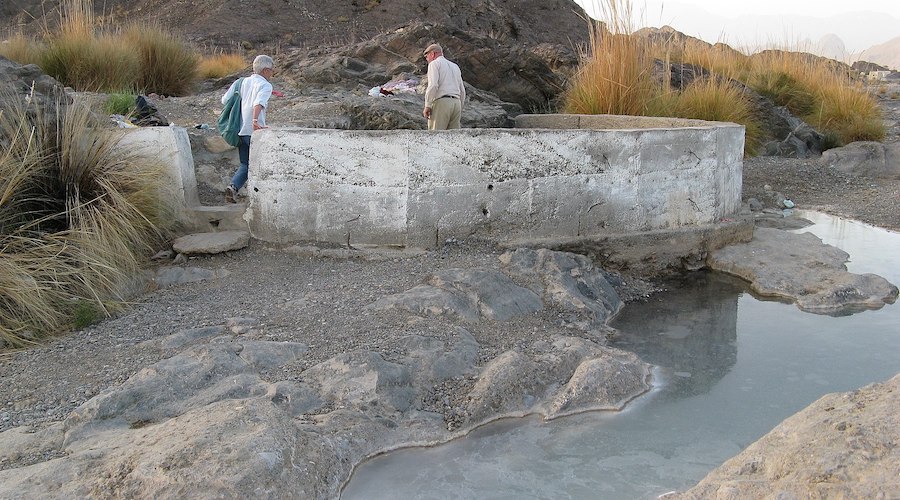
Alkaline spring with H2 gas at Bahla, Oman.
 (Reference image by Raymond M. Coveney, Wikimedia Commons.)

At the end of 2023, 40 companies were searching for natural hydrogen deposits, up from just 10 in 2020, new research by Rystad Energy shows.


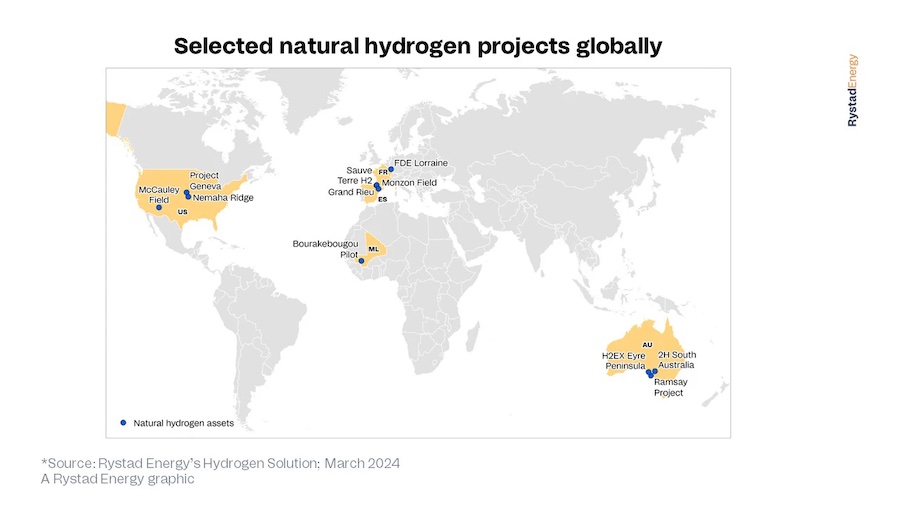
According to the Oslo-based business intelligence company, exploration efforts are underway in Australia, the US, Spain, France, Albania, Colombia, South Korea and Canada.

In its report, Rystad points out that one of the most promising elements of natural hydrogen – also called white or gold hydrogen – is its cost advantage over other forms of hydrogen due to its natural occurrence.

Grey hydrogen, produced from fossil fuels, costs less than $2 per kilogram of hydrogen on average, while green hydrogen, produced using renewable electricity, is currently more than three times pricier. The cost of renewable hydrogen is expected to come down as electrolyzer pricing falls in the coming years, and yet, white hydrogen is still expected to be cheaper

.

At present, Canada-based producer Hydroma extracts white hydrogen at an estimated cost of $0.5 per kg. Depending on the deposit’s depth and purity, projects in Spain and Australia aim for a cost of about $1 per kg, solidifying white hydrogen’s price competitiveness.

In addition to the cost advantage, white hydrogen can also have a low carbon intensity. At a hydrogen content of 85% and minimal methane contamination, the carbon intensity is around 0.4 kg carbon dioxide equivalent (CO2e) per kg hydrogen gas (H2) – including embodied emissions and hydrogen emissions. At 75% hydrogen and 22% methane, the intensity rises to 1.5 kg CO2e per kg H2.

“Although still in its infancy with lots of uncertainty, white hydrogen has the potential to be a game-changer for the clean hydrogen sector as an affordable, clean natural resource, thereby shifting the role of hydrogen from an energy carrier to part of the primary energy supply. However, the actual size of the reserves is still unclear, and the transportation and distribution challenges of hydrogen remain”, Minh Khoi Le, head of hydrogen research at Rystad, said in a media statement.

Through the US Inflation Reduction Act, companies are eligible to receive production tax credits (PTC) when the lifecycle carbon intensity is below 4 kg CO2e per kg H2. The highest PTC tier grants $3 per kg if hydrogen production meets the carbon intensity threshold of 0.45 kg CO2e per kg H2. As such, low-carbon white hydrogen production in the US could be eligible for the highest PTC, making it appealing for producers.

Not a new thing


Le explained that despite being accidentally discovered in Mali approximately 37 years ago, the accumulation of hydrogen underground was previously thought to be unlikely due to hydrogen’s ability to seep through rock layers. However, new equipment, such as hydrogen-sensing gas probes, are now available to detect dissolved hydrogen in rock formations at depths of up to 1,500 metres. These probes use spectrometers to measure and analyze dissolved gases in deep boreholes. Researchers are currently developing probes that can reach deeper depths, up to 3,000 meters underground.

White hydrogen is mainly produced through natural reactions, such as serpentinization, where water reacts with iron-rich minerals at elevated temperatures. Enhanced serpentinization using catalysts such as magnetite, could help to accelerate natural hydrogen-producing reactions.

Radiolysis of water is another source of natural hydrogen. This process involves radioactive elements within the earth’s crust splitting water due to ionizing radiation.

The word is spreading

Rystad Energy’s report notes that the South Australian government added hydrogen to its list of regulated substances in 2021. This led to many companies applying for exploration permits in the region, with Gold Hydrogen securing a five-year license to develop its Ramsay project. The company found high hydrogen concentrations of up to 86% during drilling in late 2023. Gold Hydrogen plans to conduct further drilling in 2024 and launch a pilot feasibility study.

The dossier also highlights the fact that governments in countries like France and the US have promised financial support to expedite the exploration and extraction of naturally occurring hydrogen projects. Currently, there is only one operational white hydrogen project in Bourakebougou, Mali, producing around 5 tonnes of hydrogen annually. This small-scale project has been in operation for a decade, providing power to a village. Other projects in various parts of the world are still at an early exploration stage, with the first European natural hydrogen production expected to start in 2029.
Graphjet Technology, Energem merge to create direct biomass-to-graphite company

Staff Writer | March 15, 2024 | 


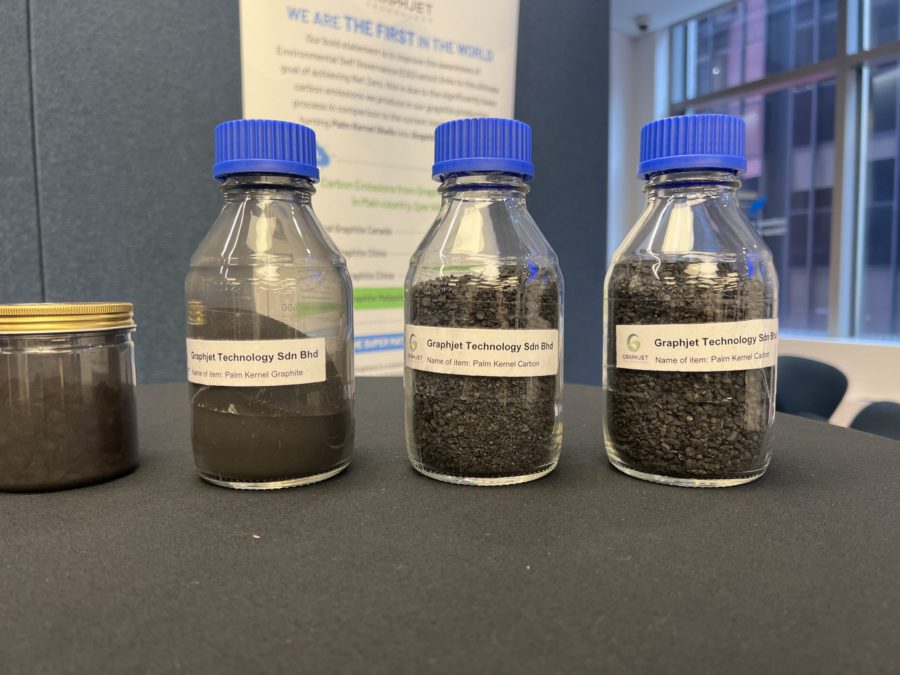
Image from Graphjet Technology.

Graphjet Technology, developer of technologies to produce graphite and graphene directly from agricultural waste, and Energem (Nasdaq: ENCP, ENCPW) closed their previously announced merger and on Friday, Graphjet’s ordinary shares start trading as (Nasdaq: GTI).


Graphjet’s warrants will be delisted from Nasdaq and begin trading on the OTC as (GTIWW). The transaction creates the only pure-play publicly traded direct biomass-to-graphite company, establishing Graphjet as the leading source of graphite and graphene for the U.S market, the company said.

Graphjet has raised $5.8 million through the transaction and said it anticipates that additional fundraising will be necessary to accelerate its growth strategy and expand its manufacturing capacity.

Graphjet’s technology uses eco-sensitive methods in a circular solution using waste and its processes eliminate emissions and pollutions, it said. The company has a $30 million offtake agreement with Toyoda Gosei and has accelerated the timeline for its planned manufacturing plant in Malaysia.

“We are thrilled to list Graphjet on the Nasdaq, particularly at this crucial moment of critical material demand and limited availability for the U.S. market,” CEO Aiden Lee said in a press release.

“With China dominating more than 97% of all graphite production, we look forward to becoming the leading supplier to the U.S. market to support its burgeoning battery storage and EV industries,” Lee said. “Our patented technologies are capable of producing graphite and graphene directly from agricultural waste, which fills a critical supply need for these highly strategic materials, as demand is expected to continue to accelerate over the next several years.”

Graphjet said its commercial and patented vertically integrated technologies and process cuts the carbon footprint by 83% while reducing costs by 80%.

Graphjet’s stock advanced on the Nasdaq on Friday during a generally down day on the US market, affording the company a $1.76 billion market capitalization.
Column: Iron ore faces China fundamentals and sentiment hurdles

Reuters | March 15, 2024 | 

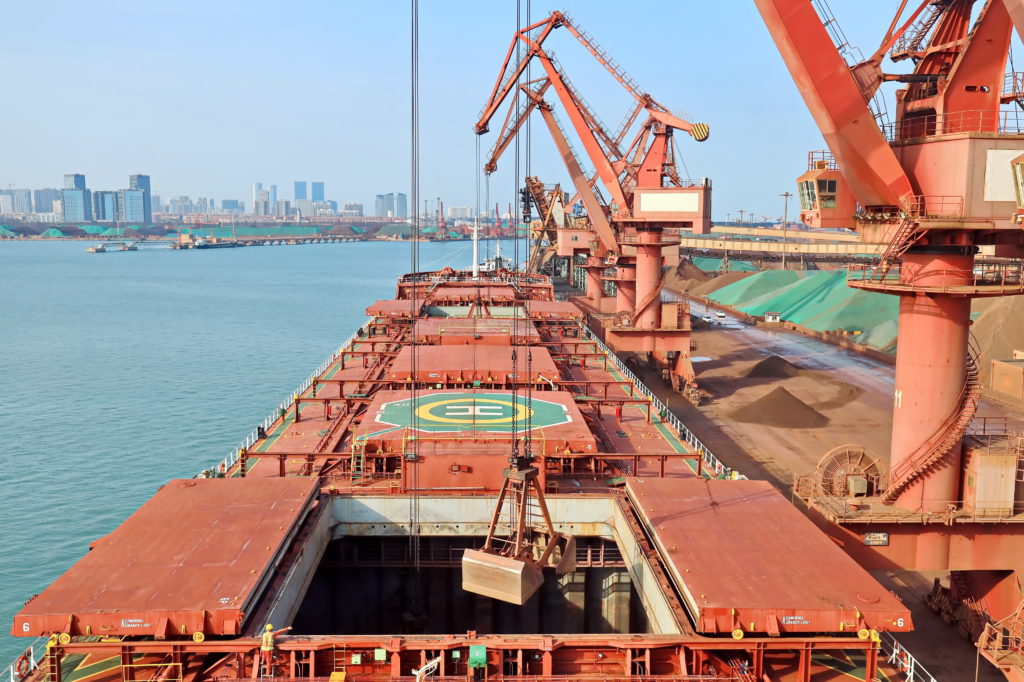
Stock image.

The tables have turned on iron ore with prices coming under pressure from a combination of fundamental and sentiment factors in dominant importer China that are likely to persist over the short term.


The price of Singapore Exchange iron ore contracts dropped to $110.05 a metric ton on Wednesday, the lowest close since Aug. 31 and down 23.4% from the peak so far in 2024 of $143.60, reached on Jan. 3.

The main domestic benchmark in China, the Dalian Commodity Exchange futures contract fell to 819.5 yuan ($114.04) a ton on Wednesday, a five-month low and down 19.2% from the peak so far this year of 1,014 yuan on Jan. 4.

On the fundamental side of the equation, there are signs that China’s strong appetite for imported iron ore the first two months of the year has moderated in March, and port inventories have swelled.

China, which buys more than 70% of global seaborne iron ore, is on track to import 99.62 million tons of the key steel raw material in March, according to data compiled by commodity analysts Kpler.

Imports may be lower than the Kpler estimate, with LSEG data pointing to arrivals of 91.4 million tons in March, which would be the weakest month since April last year.

Official customs data showed imports in the first two months of 2024 coming in at 209.45 million tons, up 8.1% from the same period in 2023, and giving a daily average of 3.49 million tons.

Even assuming the more optimistic Kpler data for March gives an expected daily import figure of 3.21 million tons, which would be 8% below the rate for the first two months.

One factor that is worth noting is that imports are likely dropping in March because of the high prices that prevailed for much of the first two months of the year, when cargoes arriving this month would have been arranged.

Iron ore in Singapore was still above $130 a ton on 
Feb. 16, and it is only since then that prices have moderated to the current level.


Stockpiles build

Another reason for the decline in imports is that China’s port inventories have been rising strongly in recent weeks, and are back to what are comfortable levels for this time of year by historic standards.

Stockpiles monitored by consultants SteelHome rose to 138.2 million tons in the week to March 8, up from 134.9 million the prior week.

They are now 31.7% higher than the 7-1/2-year low of 104.9 million tons hit in late October.

The current level of inventories is almost exactly the same as the 138.6 million tons recorded for the same week in March last year.

In addition to softer fundamentals, the iron ore market is being hurt by the worsening sentiment surrounding key parts of China’s economy, including the key residential property sector.

There are fears Beijing isn’t doing enough to stimulate the sector, which has been beset by problems including liquidity issues at major developers and waning interest among buyers.

While senior officials have said they will support the housing sector, it remains to be seen whether any new steps will prove effective.

Outside of construction there are also problems with manufacturing, with the official Purchasing Managers’ Index shrinking for a fifth month in February, coming in at 49.1 points, down from 49.2 in January, and staying below the 50-level that separates growth from contraction.

Overall, the outlook for China’s iron ore demand has darkened after the strong start to 2024, and it will likely take a sustained period of lower prices and improved sentiment to lift the clouds.

(The opinions expressed here are those of the author, Clyde Russell, a columnist for Reuters.)

(Editing by Lincoln Feast)
Congo rebels block trade routes, threatening supply of key metal

Bloomberg News | March 15, 2024 | 

M23 troops in Bunagana, Democratic Republic of the Congo. Credit: Wikimedia Commons

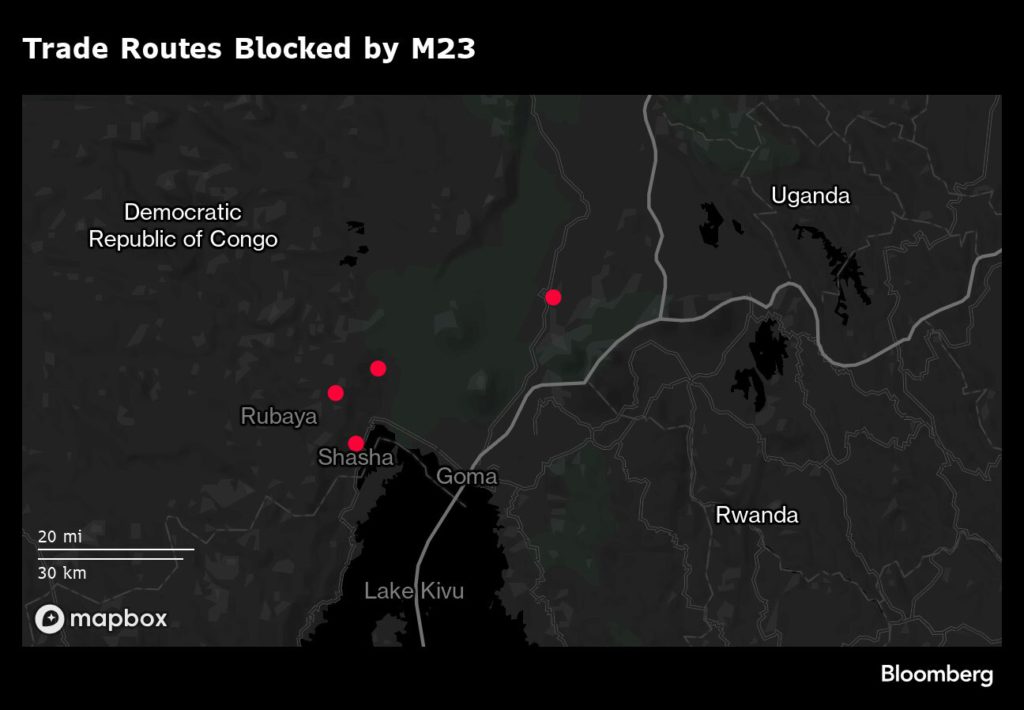
The world’s supply of tantalum, an essential component in most computers and mobile phones, is under threat as armed rebels in eastern Democratic Republic of Congo have encircled a key trading hub.


Since last month, the M23, a rebel group that Congo says is backed by neighboring Rwanda, has blocked trade routes to the city of Goma and is helping to smuggle tantalum from some of the country’s richest deposits, according to Congolese government and military officials and United Nations experts.

“They’re taking it to Rwanda,” likely through Virunga National Park, Lt. Col. Guillaume Ndjike Kaiko, a regional spokesperson for Congo’s military, said in an interview in Goma, the lakeside capital of North Kivu province that borders Rwanda. Rwanda’s government denies the accusations.

Tantalum is on a list of mineral resources that have raised international red flags for helping to fund years of conflict in Congo. For over a decade, industry groups that include companies like Intel Corp. and Apple Inc. have made efforts to ensure their mineral supply chains are conflict-free.

However, the renewed M23 offensive, focused on North Kivu, has left more than a million people in squalid camps and is tainting the region’s mineral output. Last week, the Responsible Minerals Initiative, which helps more than 400 of the world’s biggest corporations avoid purchasing metals that fuel or fund violence, warned its members about sourcing metal from the region in letters seen by Bloomberg.

The US and European Union have laws discouraging companies from purchasing minerals linked to the conflict. Virginia-based RMI did not respond to an email requesting comment.

“The falsehood that Rwanda is somehow involved in enabling smuggling provides cover to the DRC government who have abjectly failed to implement any meaningful ethical standards in their own mineral supply chain, to the benefit of many foreign powers,” government spokesperson Yolande Makolo said in a text message.

Congo and Rwanda were the world’s top two sources of tantalum in 2023, 
according to US Geological Survey estimates.

Congolese government data show North Kivu accounted for about half the country’s supply to the world in 2022. The province’s exports dropped 59% last year as the M23 advanced and an ownership dispute erupted over the country’s largest mine, Rubaya, according to a provincial mining report seen by Bloomberg.
Decades of conflict

The current fighting in North Kivu has its roots in the mid-90s when the aftermath of the genocide in Rwanda spread across the border. Rwanda and the M23 say Congo’s government still protects militias with links to that violence, which killed an estimated 800,000 Rwandan Tutsis and moderate Hutus. The M23 is mainly led by Tutsis from Congo.

More than 100 armed groups are now active in the region, clashing over land, economic and political access and ethnic grievances.

Most mining at Rubaya and nearby tantalum sites is done by hand and is currently overseen by a loose coalition of armed groups known as Wazalendo, allied with Congo’s army, according to a United Nations experts’ report. However, the output now ends up in areas controlled by the rebels they’re fighting, Congolese officials say.

The M23 had limited involvement in the mineral trade when it launched its most recent rebellion in late 2021. That seems to have changed since the beginning of the year as the group encircled Goma — North Kivu’s main trading hub.

Official tantalum shipments from the province almost entirely stopped after M23 moved south and took control of the town of Shasha last month, cutting off the last main transport route to Goma from the Rubaya area, according to Ndjike and provincial mining statistics.

For Congo, the costs of the spiraling violence are massive. As locals flee their towns and villages for safety in displacement camps, aid groups say responding to the crisis will cost billions of dollars.

“The objective here is minerals, it’s to get the minerals that are found in our zone of responsibility,” Ndjike said of the current wave of fighting. “And it has an impact that’s not only economic but also humanitarian.”

(By Michael J. Kavanagh)
ALASKA
Northern Dynasty takes legal actions against EPA over vetoed Pebble project

Staff Writer | March 15, 2024 |

Drilling at the Pebble project in Alaska. (Image courtesy of Northern Dynasty Minerals.)

Northern Dynasty Minerals (TSX: NDM) (NYSE American: NAK) said on Friday it has filed two separate actions in the federal courts challenging the US government’s actions to prevent the company from building a mine at its Pebble project in Alaska.


The first, and main focus of Northern Dynasty’s legal actions, was filed with Alaska’s federal district court, seeking to vacate the US Environmental Protection Agency’s (EPA) veto of a development at Pebble.

The proposed mine would have become the largest copper, gold and molybdenum extraction site in North America. However, for the better part of two decades, the project was met with strong resistance due to its potential environmental impact. The Bristol Bay area, where the mine would be located, is home to the world’s largest sockeye salmon fisheries.

In January 2023, the EPA made its decision to block Northern Dynasty’s US-based subsidiary from storing mine waste in the Bristol Bay watershed, essentially killing the project.

In its complaint, the company alleges that the EPA veto was issued in violation of various federal statutes regarding Alaska’s statehood rights and a land exchange approved by Congress.

Specifically, it claims that the veto decision was based on an “overly broad legal interpretation” of EPA’s jurisdiction, which has since been overruled by the Supreme Court, its geographic scope exceeds that allowed by the statute, and it was based on information previously developed by EPA in what it calls “an illegal pre-emptive veto process” that was designed to reach a predetermined result.

The company also says the factual basis stated to support the veto is directly contradicted by the July 2020 environmental impact statement published by the United States Army Corps of Engineers (USACE), which is an important part of the administrative record.

“The EPA has not demonstrated that either the development of the Pebble deposit will have unacceptable adverse effects under Section 404(c), or that there are any impacts to Bristol Bay fisheries that would justify the extreme measures in the final determination (veto),” Northern Dynasty said in a news release.

“Whatever authority the EPA may have under section 404(c), the general provision in the Clean Water Act cannot authorize the EPA to take action to block the specific economic activity that was Congress’s express purpose for granting these lands to the State of Alaska under the Cook Inlet Land Exchange,” Northern Dynasty CEO Ron Thiessen said.

The other legal action was filed with the US Court of Federal Claims in Washington, DC, claiming that the actions by the EPA represent an unconstitutional “taking” of Northern Dynasty’s property. To that extent, the company is asking the court to defer considering this action until the above-mentioned EPA veto case is resolved.

“Our permitting strategy is focused entirely on winning the EPA veto case and permitting the Pebble project. We have filed a takings case against the federal government to preserve our ability to seek compensation for a violation of our rights in line with the protections under the Fifth Amendment,” the company said.

Still, according to Thiessen, the company’s priority is to advance the district federal court complaint, because “overturning the illegal veto removes a major impediment from the path of getting the permit to build the proposed mine.”

Over an estimated 20-year mine life, Pebble is expected to churn out 6.4 billion lb. of copper; 7.4 million oz. of gold and 300 million lb. of molybdenum, plus 37 million oz. of silver and 200,000 kg of rhenium.

Northern Dynasty’s shares rose by 1.1% to C$0.44 by 10:45 a.m. ET, trading between a 52-week range of C$0.28-C$0.58. The company has a market capitalization of C$239.6 million ($177.3m).
Economy chief says Chile’s lithium products likely to get US subsidies

Bloomberg News | March 15, 2024 |

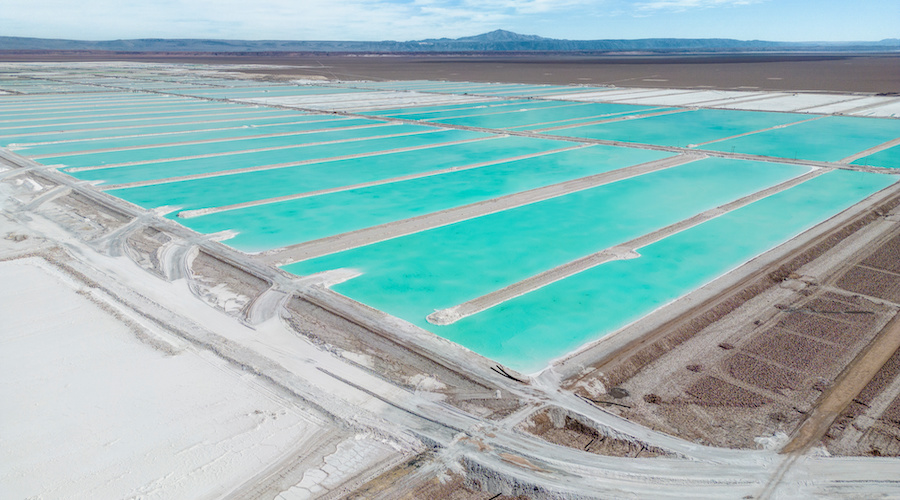
Lithium evaporation ponds in northern Chile. (Image by: freedom_wanted | AdobeStock.)

Chile is betting that components made with its lithium will qualify for subsidies under the US Inflation Reduction Act, potentially attracting a wave of fresh investment from companies seeking to tap into the country’s vast reserves of the battery metal.


Economy Minister Nicolas Grau, who expects talks with the Biden administration to conclude this year, said a positive decision would allow locally-manufactured lithium cathode to be built into electric vehicles that receive US subsidies.

“We’re very optimistic that it will happen,” Grau said in an interview from his office in downtown Santiago. “The way the law is framed creates the opportunity.”

As a major producer of key electric vehicle ingredients such as lithium and copper, Chile is at the forefront of the global transition to clean energy. President Gabriel Boric’s leftist administration introduced last year a national lithium policy that, while giving the state a bigger role in the sector, aims to open up new areas to mining as well as encourage more investments in plants to turn semi-processed metal into battery components.

If extended to value-added Chilean lithium, the subsidies will make it more attractive for US companies to invest in the country, said Grau, who holds a doctorate in economics from the University of Pennsylvania.

While raw materials like lithium produced in US trading allies clearly qualify for the subsidies, there is less clarity on value-added products such as cathode used in rechargeable batteries.

The US State Department did not immediately respond to a request for comment.

The Inflation Reduction Act is intended to encourage carmakers to produce more electric vehicles in North America and secure the key minerals from friendly nations with free-trade agreements, like Chile and Australia, while ensuring independence from economic rival China.
Tesla and LG

After visiting an Albemarle Corp. lithium processing facility during a trip to Chile this month, US Treasury Secretary Janet Yellen said the US is likely to increase its imports of the metal from the country.

Companies that have held meetings with the Chilean government on lithium in recent months include Tesla Inc., which started local operations this year, and LG Energy Solution Ltd.

In 2023, roughly 65% of Chile’s lithium exports went to China, while 25% went to South Korea, according to government statistics. Producers have been hit by a slump in prices last year, though Grau said analyst forecasts indicate the medium-term outlook remains bright.

The new US-Chile tax treaty, which is designed to prevent companies from being taxed twice on the same income, will facilitate investment between both nations, Grau said.

(By Matthew Malinowski and James Attwood)


Lithium permit freeze limited to new projects, Argentina province says

Bloomberg News | March 15, 2024 

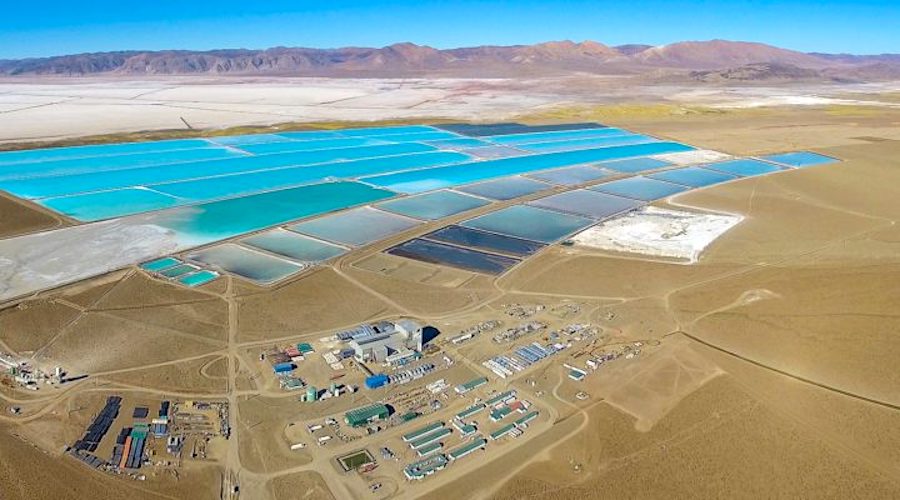
The Sal de Vida lithium project in Argentina. (Image courtesy of Allkem Ltd.)

The Argentine province of Catamarca said a court ruling to halt the awarding of lithium permits only affects new projects, leaving companies such as Arcadium Lithium Plc and Posco Holdings Inc. free to continue producing the metal and developing existing projects.


The ruling, which comes amid community concerns over mining’s impact on waterways, requires the Catamarca government to abstain from handing out new licenses as it prepares a report into the industry’s environmental impact, a provincial official said. The province’s first step will be to deliver to the court existing environmental reports that have already been approved.

The court’s decision, which follows a suit filed by an Indigenous group, covers the Los Patos River-Salar del Hombre Muerto area, home to some of country’s biggest lithium deposits. While four projects awaiting licenses will be affected by the permitting freeze, existing operations and projects already under development can continue as normal, the official said.

Still, the case underscores heightened environmental and social scrutiny on an extraction method that involves pumping up huge volumes of lithium-laced brine from South American salt flats, with much of the water lost in an evaporation process. The industry’s ability to prove its green credentials is crucial as demand for the battery metal accelerates in the shift toward electric vehicles.

Arcadium, formed from the merger of Livent Corp. and Allkem Ltd., declined to comment as it prepares a statement on the court ruling.

(By James Attwood)

Friday, March 15, 2024


EU Ombudsman Calls for Reforms in EU Coast Guard in Wake of 2023 Tragedy

Frontex EU Coast Guard
EU Ombudsman calls for changes to the EU Coast Guard operation (file photo)

PUBLISHED MAR 15, 2024 1:16 PM BY THE MARITIME EXECUTIVE


The European Union’s Ombudsman issued a report critical of the handling of the 2023 migrant boat tragedy in the Mediterranean where more than 600 people are thought to have drowned. It is also questioning more of the fundamental issues related to the operations of the EU’s Border and Coast Guard agency Frontex. 

The report finds that the EU’s Border and Coast Guard Agency is unable to fully fulfill its fundamental obligations and is too reliant on member states. It calls on EU legislatures both to investigate the handling of the migrant crisis in the Mediterranean and to address the fundamental rights gap for Frontex.

Frontex describes its mission as supporting and coordinating the efforts of member states for border security and cross-border crime. While the agency has extensive resources when it comes to maritime situations, the report highlights Frontex operates in support of member state agencies which must request assistance and can also redirect Frontex. Previous reports have accused individual states of sending Frontex away or refusing its resources while efforts were made to “push back” migrants.

“Frontex includes ‘coast guard’ in its name, but its current mandate and mission clearly fall short of that,” concludes Ombudsman Emily O’Reilly in the recently released report. “If Frontex has a duty to help save lives at sea, but the tools for it are lacking, then this is clearly a matter for EU legislators.”

O’Reilly’s investigation was one of several launched after a migrant boat named Adriana sunk last year. Greece’s Ombudsman and the Greek Naval Court are still investigating the incident but the Hellenic Coast Guard declined an internal review despite accusations that its boat contributed to the sinking and covered up its actions by seizing survivors’ cellphones.

The boat had been identified as a risk by Italian authorities, Frontex, and international aid groups after it left Libya on June 10 overcrowded with approximately 750 people including children. The vessel was in Greece’s region and four days later foundered with only around 100 people saved. Approximately 80 bodies were recovered.

While looking at the actions of Frontex as they related to the Adriana, the Ombudsman also investigated the agency’s response in other maritime emergencies, its mandate, and its structure. The report concludes that Frontex has no internal guidelines on issuing emergency signals and that there is a failure to ensure fundamental rights monitors are sufficiently involved.

In the case of the Adriana, a Frontex surveillance plane spent 10 minutes over the vessel on June 13 during a standard maritime surveillance patrol. It shared video footage and information about the boat’s conditions and sea state with the Italian and Greek authorities. Frontex highlighted the overcrowding and that no lifejackets were visible, but concluded the boat was not in immediate danger and did not issue a Mayday. Frontex says it believed Greece was handling the situation.

The report acknowledges it is contested if a Mayday should have been issued and if it would have prevented the tragedy. An internal report at Frontex however concluded while the agency complied with its obligations, in the future similar cases should be more thoroughly assessed.

Frontex made four additional offers of assistance on June 13 and 14 to the Greek authorities but received no reply. A second pre-planned surveillance on June 13 was diverted and Frontex did not return to the Adriana until after the vessel was lost. Under the current regulations, Frontex needed Greek permission to go to the location of the Adriana

“It is not unlikely that there will be a repeat of the Adriana tragedy unless there are significant changes to the legal and operational framework for responding to maritime emergencies,” concludes the Ombudsman. The report observes boats in distress carrying refugees and asylum seekers can not as it now stands rely on proactive SAR operations at the EU level.

The Ombudsman has no legal authority to require changes but writes the incident should cause wider reflections on the changes needed to demonstrate the EU’s commitment to saving lives at sea. A request was made for Frontex to resolve internal issues, while the report calls on the EU to establish an independent commission to assess the reasons for the large number of deaths in the Mediterranean.  The report also wants to consider whether Frontex should suspend or terminate activities when a member state has persistent violations of fundamental rights.

The Ombudsman calls on EU legislators to reflect on and address the clear fundamental rights gap in the way the system operates today.


Siport21 Develops Simulator for Evaluating Cost-Benefit & Carbon Footprint

Siport21

PUBLISHED MAR 15, 2024 8:45 PM BY THE MARITIME EXECUTIVE


[By: Siport21]

The electrification of ports should be a reality in the European Union by 2030. It is therefore necessary to invest in infrastructure able to supply power to the moored vessels so that they can switch off their auxiliary engines, decreasing the greenhouse gas emissions.

To achieve this, the European Union ports must implement OPS (Onshore Power Supply) technology to permit the vessel connection to the electricity grid. This system must ensure sufficient shore-side electrical power to meet a high percentage of demand based on their average annual throughput of container ships, passenger ships, and ro-ro vessels.

These installations require a large investment. For this reason, it is essential to accurately establish the need for energy. Siport21 has recently developed a methodology to define the sizing and optimize OPS facilities in ports. The results of a practical case were presented in Marlog 13 “The International Maritime Transport and Logistics Conference”, organized by the Arab Academy for Science, Technology and Maritime Transport in Alejandria (Egypt).

The simulator provides an estimate of hourly power demand over the course of a year associated with probability levels. This methodology will help ports to have probability-based estimates and their seasonal distribution. It will therefore be essential for decision- making, evaluating the cost-benefit of the investment to be made and the total power to be installed. In addition, the tool also shows the results of the decrease in carbon footprint in the port due to the operation of the OPS.

The products and services herein described in this press release are not endorsed by The Maritime Executive